EP2543666A1 - Composé organique marqué à l'iode radioactif ou sel de ce composé - Google Patents
Composé organique marqué à l'iode radioactif ou sel de ce composé Download PDFInfo
- Publication number
- EP2543666A1 EP2543666A1 EP11750349A EP11750349A EP2543666A1 EP 2543666 A1 EP2543666 A1 EP 2543666A1 EP 11750349 A EP11750349 A EP 11750349A EP 11750349 A EP11750349 A EP 11750349A EP 2543666 A1 EP2543666 A1 EP 2543666A1
- Authority
- EP
- European Patent Office
- Prior art keywords
- compound
- radioactive iodine
- salt
- formula
- tau protein
- Prior art date
- Legal status (The legal status is an assumption and is not a legal conclusion. Google has not performed a legal analysis and makes no representation as to the accuracy of the status listed.)
- Withdrawn
Links
- 0 CCC(CC(*C1)=*)C1=O Chemical compound CCC(CC(*C1)=*)C1=O 0.000 description 4
- NQLINXSOSLXAPJ-UHFFFAOYSA-N CCC(C1)C(C)C=CC1(C)C1OC(C=O)=CC1 Chemical compound CCC(C1)C(C)C=CC1(C)C1OC(C=O)=CC1 NQLINXSOSLXAPJ-UHFFFAOYSA-N 0.000 description 1
- ZLCSFXXPPANWQY-UHFFFAOYSA-N CCc1cccc(C)c1 Chemical compound CCc1cccc(C)c1 ZLCSFXXPPANWQY-UHFFFAOYSA-N 0.000 description 1
Images






Classifications
-
- C—CHEMISTRY; METALLURGY
- C07—ORGANIC CHEMISTRY
- C07D—HETEROCYCLIC COMPOUNDS
- C07D417/00—Heterocyclic compounds containing two or more hetero rings, at least one ring having nitrogen and sulfur atoms as the only ring hetero atoms, not provided for by group C07D415/00
- C07D417/02—Heterocyclic compounds containing two or more hetero rings, at least one ring having nitrogen and sulfur atoms as the only ring hetero atoms, not provided for by group C07D415/00 containing two hetero rings
- C07D417/06—Heterocyclic compounds containing two or more hetero rings, at least one ring having nitrogen and sulfur atoms as the only ring hetero atoms, not provided for by group C07D415/00 containing two hetero rings linked by a carbon chain containing only aliphatic carbon atoms
-
- A—HUMAN NECESSITIES
- A61—MEDICAL OR VETERINARY SCIENCE; HYGIENE
- A61K—PREPARATIONS FOR MEDICAL, DENTAL OR TOILETRY PURPOSES
- A61K51/00—Preparations containing radioactive substances for use in therapy or testing in vivo
- A61K51/02—Preparations containing radioactive substances for use in therapy or testing in vivo characterised by the carrier, i.e. characterised by the agent or material covalently linked or complexing the radioactive nucleus
- A61K51/04—Organic compounds
- A61K51/041—Heterocyclic compounds
- A61K51/044—Heterocyclic compounds having nitrogen as a ring hetero atom, e.g. guanethidine, rifamycins
- A61K51/0453—Heterocyclic compounds having nitrogen as a ring hetero atom, e.g. guanethidine, rifamycins having five-membered rings with two or more ring hetero atoms, at least one of which being nitrogen, e.g. tetrazole
-
- C—CHEMISTRY; METALLURGY
- C07—ORGANIC CHEMISTRY
- C07D—HETEROCYCLIC COMPOUNDS
- C07D405/00—Heterocyclic compounds containing both one or more hetero rings having oxygen atoms as the only ring hetero atoms, and one or more rings having nitrogen as the only ring hetero atom
- C07D405/02—Heterocyclic compounds containing both one or more hetero rings having oxygen atoms as the only ring hetero atoms, and one or more rings having nitrogen as the only ring hetero atom containing two hetero rings
- C07D405/06—Heterocyclic compounds containing both one or more hetero rings having oxygen atoms as the only ring hetero atoms, and one or more rings having nitrogen as the only ring hetero atom containing two hetero rings linked by a carbon chain containing only aliphatic carbon atoms
-
- C—CHEMISTRY; METALLURGY
- C07—ORGANIC CHEMISTRY
- C07D—HETEROCYCLIC COMPOUNDS
- C07D405/00—Heterocyclic compounds containing both one or more hetero rings having oxygen atoms as the only ring hetero atoms, and one or more rings having nitrogen as the only ring hetero atom
- C07D405/14—Heterocyclic compounds containing both one or more hetero rings having oxygen atoms as the only ring hetero atoms, and one or more rings having nitrogen as the only ring hetero atom containing three or more hetero rings
Definitions
- the present invention relates to a radioactive iodine-labeled organic compound or a salt thereof.
- tauopathies Diseases having a common pathological characteristic which a structure having a tau protein aggregate as a main constituent component develops in the brain are called tauopathies.
- Alzheimer's disease, frontotemporal dementia, Pick's disease, corticobasal degeneration, progressive supranuclear palsy, or the like are known as representative tauopathies.
- Tauopathies are often accompanied by serious dementia, which has a large effect on patients and their families. Therefore, it is important to diagnose them at as early a stage as possible. Furthermore, the number of patients affected by these diseases has been increasing in recent years on a background of an aging society, and early diagnosis and therapy therefor have become matters of serious public concern.
- tau protein aggregate develops in the brain of tauopathy patients, and such a pathological change is thought to have an important role in the symptoms of these diseases. Therefore, much research for the purpose of diagnosis or treatment of a tauopathy has been carried out using an aggregated tau protein as a main target. So far, various tau protein fibrosis inhibitors including rhodanines have been discovered as compounds having affinity toward a tau protein aggregate (non-patent document 1 and non-patent document 2). Furthermore, various quinoline derivatives and benzimidazole derivatives have been disclosed as biomarkers targeting a tau protein aggregate (non-patent document 3, patent document 1 and patent document 2).
- the present invention has been accomplished in light of the above-mentioned circumstances, and it is an object thereof to provide a novel radioactive organic compound having affinity toward a tau protein aggregate, and a tauopathy diagnostic agent containing this compound.
- R 1 is a sulfur atom or a nitrogen atom
- R 2 is a substituent represented by the following formula (2) or formula (3)
- R 3 is a radioactive iodine.
- an imaging agent used in imaging of a tau protein the imaging agent containing a compound represented by the above Formula (1) or a salt thereof.
- an injection containing a compound represented by the above formula (1) or a salt thereof there is provided an injection containing a compound represented by the above formula (1) or a salt thereof.
- a radioactive iodine labeling precursor containing a compound represented by the following formula (4) or a salt thereof.
- R 1 is a sulfur atom or a nitrogen atom
- R 2 is a substituent represented by the above formula (2) or the above formula (3)
- R 4 is a trialkylstannyl substituent with alkyl chains having a length of 1 to 4 carbon atoms, a trialkylammonium substituent with alkyl chains having a length of 1 to 4 carbon atoms, or a triphenylstannyl substituent.
- a method for producing a compound represented by the above formula (1) or a salt thereof the method involving radioiodinating the radioactive iodine labeling precursor.
- an apparatus for producing a compound represented by the above formula (1) or a salt thereof by radioiodinating the radioactive iodine labeling precursor there is provided an apparatus for producing a compound represented by the above formula (1) or a salt thereof by radioiodinating the radioactive iodine labeling precursor.
- radioactive iodine-labeled organic compound having high selectivity for a tau protein and superior brain delivery properties.
- the present invention is a compound represented by the above formula (1) or a salt thereof, and is preferably a rhodanine derivative represented by the following formula (5) or a thiohydantoin derivative represented by the following formula (6).
- a compound represented by the formula (5) corresponds to a compound for which in the formula (1) R 1 is a sulfur atom and R 2 is a substituent represented by the above formula (2).
- R 2 of the formula (6) is a 2-(4-imidazolyl)ethyl group or an ethoxycarbonylethyl group.
- a compound represented by the formula (6) having an ethoxycarbonylethyl group as R 2 corresponds to a compound represented by the above formula (1) having a nitrogen atom as R 1 and a substituent represented by the above formula (2) as R 2 .
- a compound represented by the above formula (6) having a 2-(4-imidazolyl)ethyl group as R 2 corresponds to a compound represented by the above Formula (1) having a nitrogen atom as R 1 and a substituent represented by the above formula (3) as R 2 .
- R 3 is a radioactive iodine. It is not necessary to particularly limit the radioactive iodine, but a radioactive iodine selected from the group consisting of 123 I, 124 I, 125 I, and 131 I may preferably be used, and more preferably 123 I may be used.
- a nuclide that can be used in nuclear medicine diagnostic imaging such as single photon emission computed tomography (SPECT) may be used.
- SPECT single photon emission computed tomography
- a compound represented by the formula (1) may form a salt, and examples of the salt include acid addition salts such as an inorganic acid salt such as hydrochloride, sulfate, hydrobromide, phosphate, and an organic acid salt such as acetate, trifluoroacetate, succinate, maleate, fumarate, propionate, citrate, tartarate, lactate, oxalate, methanesulfonate, p-toluenesulfonate. Furthermore, a compound represented by the formula (1) or a salt thereof may be a hydrate.
- a method for producing a compound represented by the formula (1) or a salt thereof is now explained.
- a compound represented by the formula (1) or a salt thereof may be obtained by labeling a compound represented by the above formula (4) or a salt thereof with a radioactive iodine.
- a compound represented by the formula (5) may have a compound represented by the following formula (7) or a salt thereof as a radioactive iodine labeling precursor
- a compound represented by the formula (6) may have a compound represented by the following formula (8) or a salt thereof as a radioactive iodine labeling precursor.
- a compound represented by the above formula (7) corresponds to a compound represented by the above formula (4) having a sulfur atom as R 1 and a substituent represented by the above formula (2) as R 2 .
- R 2 is a 2-(4-imidazolyl)ethyl group or an ethoxycarbonylethyl group.
- a compound represented by the above formula (8) having an ethoxycarbonylethyl group as R 2 corresponds to a compound of the above formula (4) having a nitrogen atom as R 1 and a substituent represented by the above formula (2) as R 2 .
- a compound of represented by the above formula (8) having a 2-(4-imidazolyl)ethyl group as R 2 corresponds to a compound represented by the above formula (4) having a nitrogen atom as R 1 and a substituent represented by the above formula (3) as R 2 .
- R 4 is a trialkylstannyl substituent with alkyl chains having a length of 1 to 4 carbon atoms, a trialkylammonium substituent with alkyl chains having a length of 1 to 4 carbon atoms, or a triphenylstannyl substituent.
- a trimethylstannyl substituent or a tributylstannyl substituent may preferably be used as the trialkylstannyl substituent for R 4 .
- the important point is that it may be a group that can be used in a precursor compound of the radioactive iodine-labeled compound. Since this compound has a functional group represented by R 4 , it may suitably be used as a precursor of the radioactive iodine-labeled compound related to the present invention.
- the 5-(3-bromophenyl)furan-2-carbaldehyde is dissolved in 1,4-dioxane, bis(tributyltin) is added thereto, and triethylamine and a catalytic amount of tetrakis(triphenylphosphine)palladium are added thereto.
- This reaction liquid is heated to reflux while stirring to thus carry out a reaction, and the solvent is removed by evaporation under reduced pressure after the reaction, to give 5-(3-(tributylstannyl)phenyl)furan-2-carbaldehyde ( FIG. 1 , step 2).
- an equivalent or more of bis(tributyltin) with respect to the 5-(3-bromophenyl)furan-2-carbaldehyde may be added.
- step 4 of FIG. 1 may be carried out with using the resulting reaction product.
- a method for producing a radioactive iodine-labeled organic compound related to another aspect of the present invention is now explained.
- a radioactive iodine-labeled organic compound related to the present invention may be produced using a production apparatus equipped with at least a reaction vessel, which serves as a reaction location, and the apparatus is preferably equipped with a member that can provide shielding from radiation emitted from the reaction vessel.
- Synthesis of a radioactive iodine-labeled organic compound related to the present invention may be carried out by dissolving a labeling precursor compound synthesized by the above-mentioned procedure in an inert organic solvent, adding thereto a radioactive iodine-labeled sodium iodide solution or the like obtained by a known method, and adding an acid and an oxidizing agent to thus carry out a reaction.
- a labeling precursor compound synthesized by the above-mentioned procedure in an inert organic solvent
- a radioactive iodine-labeled sodium iodide solution or the like obtained by a known method
- an acid and an oxidizing agent to thus carry out a reaction.
- Various solvents having unreactivity with the labeling precursor, sodium iodide, and the like may be used as the inert organic solvent for dissolving the labeling precursor compound, and methanol may preferably be used.
- the acid may be used as the acid, and hydrochloric acid may preferably be used.
- the oxidizing agent is not particularly limited as long as it can oxidize iodine in a reaction solution, and hydrogen peroxide or peracetic acid may preferably be used.
- the amount of oxidizing agent added may be an amount sufficient for oxidizing iodine in the reaction solution.
- An imaging agent for a tau protein related to the present invention may be prepared as a liquid in which a radioactive iodine-labeled organic compound related to the present invention is formulated in water, physiological saline, Ringer solution, or the like that has been adjusted to have an appropriate pH as desired, in the same manner as for other generally known radioactive diagnostic agents. It is necessary for the concentration of the present compound in this case to be no greater than a concentration that can give stability of the present compound that is formulated.
- the form of administration of the present compound is preferably an injection, and the amount administered is not particularly limited as long as it gives a concentration that is sufficient for imaging of the distribution of the compound that is administered.
- an 123 I-labeled compound about 50 to 600 MBq per adult with a weight of 60 kg may be intravenously or locally administered.
- the distribution of the present compound that is administered may be imaged by a known method.
- a tauopathy (a disease due to the accumulation of a tau protein in the brain) may be diagnosed by the image obtained in such a way, and it becomes possible to noninvasively diagnose Alzheimer's disease, frontotemporal dementia, Pick's disease, corticobasal degeneration, progressive supranuclear palsy, and the like.
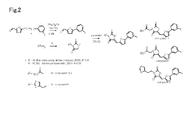
- Table 1 Names of compounds used in Examples Compound name (Shown in FIG. 1 and FIG. 2 ) Common name Compound 1 (Z)-Ethyl-2-(5-((5-(3-iodophenyl)furan-2-yl)methylene)-4-oxo-2-thioxothiazolidin-3-yl) acetate (non-radioactive iodinated compound) Compound 2 (Z)-Ethyl-2-(4-((5-(3-iodophenyl)furan-2-yl)methylene)-5-oxo-2-thioxoimidazolidin-1-yl) acetate (non-radioactive iodinated compound) Compound 3 (Z)-3-(2-(1H-Imidazol-4-yl)ethyl)-5-((5-(3-iodophenyl) furan-2-yl)methylene)-2-thioxoimidazolidin-4-one (
- glycine ethyl ester hydrochloride 140 mg, 1 mmol
- bis(carboxymethyl) trithiocarbonate 224 mg, 1 mmol
- 2-propanol 6 mL
- triethylamine 0.6 mL
- results of NMR analysis and mass spectrometry of the obtained compound 1 were as follows.
- the results of NMR analysis and mass spectrometry show the results of measurement using a JNM400 NMR apparatus made by JEOL and an LCMS-2010 mass spectrometer made by Shimadzu Corporation.
- 5-(3-Bromophenyl)furan-2-carbaldehyde 50 mg, 0.2 mmol was dissolved in 1,4-dioxane (5 mL), bis(tributyltin) (0.4 mL), tetrakis(triphenylphosphine)palladium (50 mg, 0.04 mmol), and triethylamine (4 mL) were added thereto, and the mixture was heated to reflux for 3 hours while stirring.
- Ethanol solutions (1 mg/ mL) (50 ⁇ L) of labeling precursors 1 to 3 synthesized in Examples 4 to 6 were prepared, Na[ 125 I] (3.7-7.4 MBq (0.1-0.2 mCi)) was added thereto, and 1 mol/L hydrochloric acid (50 ⁇ L) and 3 vol% H 2 O 2 aqueous solution (50 ⁇ L) were added thereto. After a reaction was carried out at room temperature (25°C) for 5 minutes, the reaction was quenched by adding a saturated sodium bisulfite aqueous solution (100 ⁇ L) as a reducing agent.
- reaction liquid was neutralized by adding a saturated sodium bicarbonate aqueous solution (100 ⁇ L), the target product was extracted with ethyl acetate. Water was removed from the product by passing it through a column charged with anhydrous sodium sulfate, and the solvent was then evaporated off by nitrogen gas.
- Radioactive iodine-labeled compounds 1 to 3 were diluted with physiological saline containing 10% ethanol to give sample solutions. Each of the sample solutions containing radioactive iodine-labeled compounds 1 to 3 was administered to a group of five 5-week-old ddY mice (male 26-28 g) via the tail vein (6.66-18.5 kBq (0.18-0.5 ⁇ Ci) per each mice) (100 ⁇ L). Mice were decapitated after 2, 10, 30, and 60 minutes, and then each organ was then removed after blood collection, and radiation counts were measured in a ⁇ counter. In the present specification, measurement by a ⁇ counter was carried out using a PerkinElmer WIZARD 3 1480.
- Tables 2 to 4 show the results of radioactive iodine-labeled compound 1.
- Table 3 shows the results of radioactive iodine-labeled compound 2.
- Table 4 shows the results of radioactive iodine-labeled compound 3. As shown in Tables 2 to 4, it was confirmed that each radioactive iodine-labeled compound moved quickly into the brain after administration.
- Table 2 Amount of radioactivity in each organ at different times after administering radioactive iodine-labeled compound 1 %ID/g 2 minutes 10 minutes 30 minutes 60 minutes Blood 6.70 ⁇ 0.53 3.58 ⁇ 0.37 2.27 ⁇ 0.44 1.59 ⁇ 0.14 Brain 0.23 ⁇ 0.02 0.16 ⁇ 0.01 0.15 ⁇ 0.03 0.11 ⁇ 0.02 Spleen 6.70 ⁇ 0.54 4.11 ⁇ 0.80 2.66 ⁇ 0.84 1.94 ⁇ 0.40 Pancreas 1.74 ⁇ 0.19 1.75 ⁇ 0.18 1.16 ⁇ 0.17 0.73 ⁇ 0.08 Stomach 0.75 ⁇ 0.17 1.53 ⁇ 0.44 3.65 ⁇ 0.78 4.51 ⁇ 0.38 Intestine 1.77 ⁇ 0.33 7.97 ⁇ 1.24 15.1 ⁇ 1.82 21.0 ⁇ 2.73 Kidney 8.50 ⁇ 0.83 7.64 ⁇ 0.69 6.42 ⁇ 1.17 3.91 ⁇ 0.18 Liver 43.1 ⁇ 2.07 29.5 ⁇ 2.17 14.7 ⁇ 2.27 11.3 ⁇ 0.87 Heart 9.
- Table 3 Amount of radioactivity in each organ at different times after administering radioactive iodine-labeled compound 2 %ID/g 2 minutes 10 minutes 30 minutes 60 minutes Blood 9.49 ⁇ 0.82 2.38 ⁇ 0.88 1.79 ⁇ 0.11 1.50 ⁇ 0.10 Brain 0.57 ⁇ 0.07 0.32 ⁇ 0.02 0.18 ⁇ 0.02 0.10 ⁇ 0.03 Spleen 9.16 ⁇ 2.04 12.2 ⁇ 2.28 13.6 ⁇ 4.29 10.0 ⁇ 2.49 Pancreas 1.79 ⁇ 0.27 0.98 ⁇ 0.08 0.56 ⁇ 0.10 0.45 ⁇ 0.08 Stomach 0.93 ⁇ 0.36 3.39 ⁇ 3.03 3.39 ⁇ 2.98 5.32 ⁇ 2.68 Intestine 1.85 ⁇ 0.26 7.88 ⁇ 1.46 17.7 ⁇ 2.22 23.4 ⁇ 5.37 Kidney 9.21 ⁇ 0.68 9.11 ⁇ 1.15 3.86 ⁇ 0.85 2.68 ⁇ 0.75 Liver 32.2 ⁇ 1.67 32.1 ⁇ 2.09 22.6 ⁇ 3.42 20.2 ⁇ 1.93 Heart 7.
- Table 4 Amount of radioactivity in each organ at different times after administering radioactive iodine-labeled compound 3 %ID/g 2 minutes 10 minutes 30 minutes 60 minutes Blood 8.16 ⁇ 1.21 2.77 ⁇ 0.21 2.11 ⁇ 0.28 1.48 ⁇ 0.27 Brain 1.54 ⁇ 0.10 1.30 ⁇ 0.12 0.66 ⁇ 0.08 0.25 ⁇ 0.02 Spleen 9.23 ⁇ 0.63 10.9 ⁇ 2.78 8.51 ⁇ 2.68 8.46 ⁇ 2.57 Pancreas 3.30 ⁇ 0.86 2.15 ⁇ 0.23 1.15 ⁇ 0.18 0.86 ⁇ 0.08 Stomach 1.33 ⁇ 0.25 2.67 ⁇ 1.59 4.55 ⁇ 1.28 7.45 ⁇ 5.07 Intestine 2.55 ⁇ 0.16 7.41 ⁇ 1.21 17.3 ⁇ 1.67 23.6 ⁇ 2.39 Kidney 12.5 ⁇ 0.76 7.34 ⁇ 0.70 4.97 ⁇ 0.71 3.37 ⁇ 0.30 Liver 35.0 ⁇ 2.27 33.3 ⁇ 1.41 27.2 ⁇ 2.05 22.8 ⁇ 2.13 Heart 8.
- Example 9 Competitive inhibition experiment using thioflavin S (ThS) as ligand
- Tau-441 expression vector (provided by graduate School of Medicine, Osaka City University) was transferred to E. coli (BL21), culturing was carried out, and a tau protein was extracted and purified. Heparin (0.1 mg/ mL) was added to the purified tau protein (1 mg/ mL), and incubation in a 50 mmol/L MES buffer (pH 6.8, 100 mmol/L sodium chloride, 0.5 mmol/L EGTA) at 37°C was carried out for 3 days, thus preparing an aggregate. Formation of the tau protein aggregate was confirmed by SDS-PAGE and thioflavin S fluorescence assay.
- a is a fluorescence spectrum of a sample (sample I) containing only thioflavin S at 1.5 ⁇ mol/L
- b is a fluorescence spectrum of a sample (sample II) that is 0.2 ⁇ mol/L of the tau protein aggregate in sample I.
- c is a fluorescence spectrum of a sample that is 0.1 ⁇ mol/L of compound 1 in sample II
- d is a fluorescence spectrum of a sample that is 0.3 ⁇ mol/L of compound 1 in sample II
- e is a fluorescence spectrum of a sample that is 0.9 ⁇ mol/L of compound 1 in sample II
- f is a fluorescence spectrum of a sample that is 2.7 ⁇ mol/L of compound 1 in sample II.
- c is a fluorescence spectrum of a sample that is 0.1 ⁇ mol/L of compound 2 in sample II
- d is a fluorescence spectrum of a sample that is 0.3 ⁇ mol/L of compound 2 in sample II
- e is a fluorescence spectrum of a sample that is 0.9 ⁇ mol/L of compound 2 in sample II
- f is a fluorescence spectrum of a sample that is 2.7 ⁇ mol/L of compound 2 in sample II.
- c is a fluorescence spectrum of a sample that is 0.1 ⁇ mol/L of compound 3 was added to sample II
- d is a fluorescence spectrum of a sample that is 0.3 ⁇ mol/L of compound 3 in sample II
- e is a fluorescence spectrum of a sample that is 0.9 ⁇ mol/L of compound 3 in sample II
- f is a fluorescence spectrum of a sample that is 2.7 ⁇ mol/L of compound 3 in sample II.
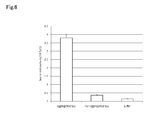
- Example 10 Tau protein binding experiment using size exclusion chromatography
- the radioactivity of an eluted fraction of the tau protein aggregate or the non-aggregated tau protein was measured in a ⁇ counter.
- the same experiment was carried out using mixed solutions of PBS buffer and radioactive iodine-labeled compound 1 (2.0 kBq (0.055 ⁇ Ci)), radioactive iodine-labeled compound 2 (2.0 kBq (0.055 ⁇ Ci)) or radioactive iodine-labeled compound 3 (2.0 kBq (0.055 ⁇ Ci)), and then the radioactivity of the same fractions as those in which the tau protein aggregate had been eluted in the above-mentioned experiment was measured in a ⁇ counter.
- FIG. 6 is a graphic showing the results using radioactive iodine-labeled compound 1.
- FIG. 7 is a graphic showing the results using radioactive iodine-labeled compound 2.
- FIG. 8 is a graphic showing the results using radioactive iodine-labeled compound 3.
- the radioactivity of a fraction of the tau protein aggregate is shown as 'aggregated tau'
- the radioactivity of a fraction with eluted non-aggregated tau protein is shown as 'non aggregated tau'
- the radioactivity of a control is shown as 'buffer'.
- radioactive iodine-labeled compound 1 radioactive iodine-labeled compound 2
- radioactive iodine-labeled compound 3 have the property of specifically binding to a tau protein aggregate.
- Example 8 it can be seen that radioactive iodine-labeled compounds 1 to 3 all have the property of moving quickly into the brain after being intravenously administered. Taking this result into consideration as well, the radioactive iodine-labeled organic compound related to the present invention is thought to have the property of moving into the brain at an early stage after intravenous administration and binding to a tau protein aggregate. Therefore, it is suggested that the radioactive iodine-labeled organic compound related to the present invention enables an aggregate of a phosphorylated tau protein accumulated in the brain to be visualized as a nuclear medicine image.
- Example 11 Evaluation experiment of binding to amyloid ⁇
- a ⁇ (1-42) peptide purchased from Peptide Institute, Inc.
- a PBS buffer containing 1 mmol/L of EDTA was dissolved in 2 mL of a PBS buffer containing 1 mmol/L of EDTA and incubated at 37°C for 42 hours, thus preparing an A ⁇ 42 aggregate.
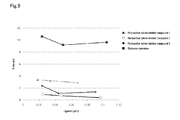
- a glass tube was charged with a 10 vol% ethanol aqueous solution (900 ⁇ L), A ⁇ 42 aggregate (50 ⁇ L, final concentration 30 nmol/L), and radioactive iodine-labeled compound 1, radioactive iodine-labeled compound 2, or radioactive iodine-labeled compound 3 (each 50 ⁇ L, 0.018-0.097 ⁇ Ci), and incubation was carried out for 3 hours.
- B/F separation was carried out using a cell harvester (Brandel, M-24), and the radioactivity on the filter was measured in a ⁇ counter. The proportion (%) of the radioactivity count on the filter relative to the radioactivity count of each sample used was determined, and binding of each compound to the A ⁇ 42 aggregate was evaluated.
- a chalcone derivative 4-dimethylamino-4'-iodochalcone (hereinafter, called a chalcone derivative) was prepared in accordance with a method described in the literature ( Ono et al., Bioorg Med Chem, 15, 6802-6809, 2007 ), and the same experiment was carried out (radioactivity count in sample: 0.85-0.37 kBq (0.023-0.01 ⁇ Ci)).
- FIG. 9 shows the results. As shown in this figure, the chalcone derivative used as a control exhibited binding to the A ⁇ 42 aggregate, but binding of radioactive iodine-labeled compound 1, radioactive iodine-labeled compound 2, and radioactive iodine-labeled compound 3 to the A ⁇ 42 aggregate was significantly lower. Together with Examples 9 and 10 above, this result suggests that the compound related to the present invention has specific binding to a tau protein aggregate.
- Example 12 in vitro Autoradiography experiment using Alzheimer's disease patient-derived brain slice
- a postmortem brain slice (paraffin-embedded slice) of the hippocampus of an Alzheimer's disease patient was purchased from BioChain.
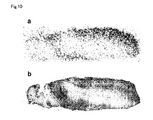
- the brain slice was deparaffinized, a 10% ethanol-containing PBS solution (3.07 kBq/mL (0.083 ⁇ Ci/mL)) of radioactive iodine-labeled compound 3 was added thereto, and a reaction was carried out for 1 hour. Subsequently, the sample was washed in sequence with a saturated lithium carbonate 50 vol% ethanol aqueous solution (2 minutes ⁇ 2), a 50 vol% ethanol aqueous solution (2 minutes ⁇ 2), and purified water (30 seconds ⁇ 2).
- the sample was exposed to light on an imaging plate for 48 hours, and analyzed using a bioimaging analyzer (model: BAS-5000, Fuji Photo Film Co., Ltd.). Furthermore, an adjacent slice was stained by an anti-phosphorylated tau protein antibody (AT8, Thermo).
- the results are shown in FIG. 10 .
- the radioactivity distribution ( FIG. 10a ) of radioactive iodine-labeled compound 3 coincided with the distribution ( FIG. 10b ) of the phosphorylated tau protein observed in the antibody stained slice.
- This result shows that radioactive iodine-labeled compound 3 has the property of binding to a phosphorylated tau protein in the brain.
- radioactive iodine-labeled compounds 1 to 3 all have the property of moving quickly into the brain after being intravenously administered. Taking this result into consideration, it is thought that the compound related to the present invention has the property of moving into the brain at an early stage after intravenous administration and binding to a phosphorylated tau protein aggregate. Therefore, it is suggested that the radioactive iodine-labeled organic compound related to the present invention enables an aggregate of a phosphorylated tau protein accumulated in the brain to be visualized as a nuclear medicine image.
- the dissociation constant (K d ) of thioflavin S used as a competitive ligand was first determined by a saturation experiment in order to calculate inhibition constants of compounds 1 to 3. That is, a mixed solution of a 10 vol% ethanol aqueous solution of thioflavin S (0.1-12.8 ⁇ mol/L) and the tau protein aggregate (final concentration 0.2 ⁇ mol/L, prepared in Example 9) or the A ⁇ 42 aggregate (final concentration 2.2 ⁇ mol/L, prepared in Example 11) was incubated for 30 minutes, and the fluorescence intensity was measured using a fluorescence plate reader (FLEX STATION, Molecular Devices).
- the fluorescence intensity was measured at Ex 440 nm and Em 510 nm for the tau protein aggregate and Ex 440 nm and Em 490 nm for the A ⁇ 42 aggregate.
- a saturation curve was prepared using GraphPad Prism, and the K d value for thioflavin S was calculated.
- a mixed solution of a 10 vol% ethanol aqueous solution of thioflavin S (1.5 ⁇ mol/L) and a test compound (0.6 nmol/L to 10 ⁇ mol/L) together with the tau protein aggregate (final concentration 0.2 ⁇ mol/L, prepared in Example 9) or the A ⁇ 42 aggregate (final concentration 10 ⁇ g/ml, prepared in Example 11) was incubated for 30 minutes.
- the same inhibition experiment was carried out using the A ⁇ 42 aggregate, which has the same kind of ⁇ sheet structure as the tau protein aggregate.
- the Ki values (A ⁇ 42 in Table 5) of compounds 1, 2, and 3 were 752, 864, and 469 nmol/L respectively, and all the derivatives showed high binding to the tau protein aggregate compared with the A ⁇ 42 aggregate.
- Example 14 Evaluation of binding to human brain neurofibrillary tangles using Alzheimer's disease patient-derived brain slice
- a fluorescent staining experiment with compound 3 using an Alzheimer's disease patient brain slice was carried out in order to evaluate binding to human brain neurofibrillary tangles.
- a postmortem brain slice (paraffin-embedded slice) of an Alzheimer's disease patient purchased from BioChain was washed with xylene (5 minutes ⁇ twice), ethanol, ethanol, a 95 vol% ethanol aqueous solution, an 85 vol% ethanol aqueous solution, and a 70 vol% ethanol aqueous solution (1 minute ⁇ once) to thus carry out deparaffinization.
- a test compound 200 ⁇ mol/L/50 vol% ethanol aqueous solution
- the slice was washed with 50 vol% ethanol, and examined using a fluorescence microscope.
- the same slice was stained using thioflavin S (0.125 wt%, 50 vol% ethanol aqueous solution) for 10 minutes.
- immunostaining using an anti-phosphorylated tau protein antibody (AT8) was carried out. Activation of antigen was carried out in a 0.01 mol/L citric acid buffer in an autoclave (121°C, 2 atm) for 15 minutes.
- the sample After being immersed in PBS-Tween20 for 2 minutes, the sample was reacted with 3 wt% BSA-containing PBS/0.1 wt% tritonX100-containing PBS at room temperature (25°C) for 1 hour, and reacted with an AT8 antibody solution (Thermo Scientific) at room temperature (25°C) overnight. After being washed with PBS-Tween20 for 2 minutes ⁇ three times, the sample was reacted with anti-mouse IgG (H + L), rabbit, and biotin-binding solution (VECTOR Laboratories) at room temperature (25°C) for 1 hour.
- H + L anti-mouse IgG
- VECTOR Laboratories biotin-binding solution
- the sample was reacted with a streptavidin biotin peroxidase complex solution (VECTOR Laboratories), which had been washed with PBS-Tween20 for 2 minutes ⁇ three times, at room temperature (25°C) for 1 hour. After being washed with PBS-Tween20 for 2 minutes ⁇ three times, the sample was reacted with a diaminobenzidine solution (Tris buffer) at room temperature (25°C) for 1 minute. The reaction was quenched by washing with distilled water for 1 minute. After encapsulating, the sample was examined using a microscope.
- FIG. 11 Prominent fluorescence accumulation of compound 3 was observed in an anti-phosphorylated tau protein antibody (AT8) immunostaining positive site of the brain slice. It is clear from this result that compound 3 has the property of binding to a tau protein aggregate accumulated in the human brain.
- FIG. 11A is a view showing the result of fluorescent staining by compound 3
- FIG. 11B is a view showing the result of staining by anti-phosphorylated tau protein antibody.
- the compound and tauopathy diagnostic agent related to the present invention can be used in the field of radioactive pharmaceutical product production.
Landscapes
- Chemical & Material Sciences (AREA)
- Organic Chemistry (AREA)
- Health & Medical Sciences (AREA)
- Life Sciences & Earth Sciences (AREA)
- Pharmacology & Pharmacy (AREA)
- Physics & Mathematics (AREA)
- Medicinal Chemistry (AREA)
- Optics & Photonics (AREA)
- Proteomics, Peptides & Aminoacids (AREA)
- Epidemiology (AREA)
- Animal Behavior & Ethology (AREA)
- General Health & Medical Sciences (AREA)
- Public Health (AREA)
- Veterinary Medicine (AREA)
- Medicines Containing Antibodies Or Antigens For Use As Internal Diagnostic Agents (AREA)
- Plural Heterocyclic Compounds (AREA)
Applications Claiming Priority (2)
| Application Number | Priority Date | Filing Date | Title |
|---|---|---|---|
| JP2010061477 | 2010-03-01 | ||
| PCT/JP2011/001075 WO2011108236A1 (fr) | 2010-03-01 | 2011-02-24 | Composé organique marqué à l'iode radioactif ou sel de ce composé |
Publications (2)
| Publication Number | Publication Date |
|---|---|
| EP2543666A4 EP2543666A4 (fr) | 2013-01-09 |
| EP2543666A1 true EP2543666A1 (fr) | 2013-01-09 |
Family
ID=44541906
Family Applications (1)
| Application Number | Title | Priority Date | Filing Date |
|---|---|---|---|
| EP11750349A Withdrawn EP2543666A1 (fr) | 2010-03-01 | 2011-02-24 | Composé organique marqué à l'iode radioactif ou sel de ce composé |
Country Status (5)
| Country | Link |
|---|---|
| US (1) | US8476449B2 (fr) |
| EP (1) | EP2543666A1 (fr) |
| JP (1) | JP5073871B2 (fr) |
| CA (1) | CA2791491A1 (fr) |
| WO (1) | WO2011108236A1 (fr) |
Cited By (3)
| Publication number | Priority date | Publication date | Assignee | Title |
|---|---|---|---|---|
| CN106045986A (zh) * | 2016-05-31 | 2016-10-26 | 广东工业大学 | 一种新型吩噻嗪衍生物及其制备方法与应用 |
| CN106045987A (zh) * | 2016-06-21 | 2016-10-26 | 广东工业大学 | 一种具有多功能近红外荧光磁性纳米微粒及其制备和应用 |
| EP3339309A4 (fr) * | 2015-08-19 | 2019-03-20 | Kyoto University | Composé dérivé de pyrido[1,2-a]benzimidazole marqué d'un halogène radioactif |
Families Citing this family (1)
| Publication number | Priority date | Publication date | Assignee | Title |
|---|---|---|---|---|
| CN107207499A (zh) | 2015-03-04 | 2017-09-26 | 国立大学法人京都大学 | 经放射性碘标记的吡啶并[1,2‑a]苯并咪唑衍生物化合物 |
Family Cites Families (6)
| Publication number | Priority date | Publication date | Assignee | Title |
|---|---|---|---|---|
| ES2274973T3 (es) | 2001-04-23 | 2007-06-01 | The Trustees Of The University Of Pennsylvania | Inhibidores de la agregacion de placas amiloides y agentes de obtencion de imagenes diagnosticas. |
| JP2004067659A (ja) | 2002-06-12 | 2004-03-04 | Bf Kenkyusho:Kk | タウ蛋白蓄積性疾患の診断プローブとしてのベンゾイミダゾール環含有化合物 |
| EP1574500A1 (fr) | 2002-12-16 | 2005-09-14 | BF Research Institute, Inc. | Derive de quinoline utilise comme sonde pour le diagnostic d'une maladie associee a une accumulation de la proteine tau |
| RU2008150377A (ru) * | 2006-05-19 | 2010-06-27 | Нихон Меди-Физикс Ко., Лтд. (Jp) | Новое соединение, обладающее сродством к амилоиду |
| EP2213671A4 (fr) | 2007-10-26 | 2012-02-22 | Nihon Mediphysics Co Ltd | Nouveau composé présentant une affinité pour l'amyloïde |
| US7947717B2 (en) * | 2008-07-18 | 2011-05-24 | Burnham Institute For Medical Research | Inhibitors of lethal factor protease |
-
2011
- 2011-02-24 EP EP11750349A patent/EP2543666A1/fr not_active Withdrawn
- 2011-02-24 WO PCT/JP2011/001075 patent/WO2011108236A1/fr not_active Ceased
- 2011-02-24 US US13/582,047 patent/US8476449B2/en not_active Expired - Fee Related
- 2011-02-24 JP JP2012503002A patent/JP5073871B2/ja not_active Expired - Fee Related
- 2011-02-24 CA CA2791491A patent/CA2791491A1/fr not_active Abandoned
Non-Patent Citations (2)
| Title |
|---|
| No further relevant documents disclosed * |
| See also references of WO2011108236A1 * |
Cited By (5)
| Publication number | Priority date | Publication date | Assignee | Title |
|---|---|---|---|---|
| EP3339309A4 (fr) * | 2015-08-19 | 2019-03-20 | Kyoto University | Composé dérivé de pyrido[1,2-a]benzimidazole marqué d'un halogène radioactif |
| CN106045986A (zh) * | 2016-05-31 | 2016-10-26 | 广东工业大学 | 一种新型吩噻嗪衍生物及其制备方法与应用 |
| CN106045986B (zh) * | 2016-05-31 | 2019-12-06 | 广东工业大学 | 一种新型吩噻嗪衍生物及其制备方法与应用 |
| CN106045987A (zh) * | 2016-06-21 | 2016-10-26 | 广东工业大学 | 一种具有多功能近红外荧光磁性纳米微粒及其制备和应用 |
| CN106045987B (zh) * | 2016-06-21 | 2019-04-23 | 广东工业大学 | 一种具有多功能近红外荧光磁性纳米微粒及其制备和应用 |
Also Published As
| Publication number | Publication date |
|---|---|
| JP5073871B2 (ja) | 2012-11-14 |
| CA2791491A1 (fr) | 2011-09-09 |
| EP2543666A4 (fr) | 2013-01-09 |
| JPWO2011108236A1 (ja) | 2013-06-20 |
| US20120330024A1 (en) | 2012-12-27 |
| WO2011108236A1 (fr) | 2011-09-09 |
| US8476449B2 (en) | 2013-07-02 |
Similar Documents
| Publication | Publication Date | Title |
|---|---|---|
| US7700616B2 (en) | Compounds and amyloid probes thereof for therapeutic and imaging uses | |
| KR101946089B1 (ko) | 영상화제의 합성 및 사용을 위한 조성물, 방법 및 시스템 | |
| TWI245764B (en) | Amyloid plaque aggregation inhibitors and diagnostic imaging agents | |
| JPWO2005016888A1 (ja) | アミロイド蓄積性疾患のプローブ、アミロイド染色剤、アミロイド蓄積性疾患の治療および予防薬、ならびに神経原線維変化の診断プローブおよび染色剤 | |
| EP2218464A1 (fr) | Composés pour la mesure non invasive d'agrégats de peptides amyloïdes | |
| KR101879431B1 (ko) | 황화수소 검출용 방사성 프로브 | |
| US8476449B2 (en) | Radioactive iodine labeled organic compound or salt thereof | |
| JPWO2007074786A1 (ja) | コンフォーメーション病診断プローブ | |
| US20150209452A1 (en) | Metal-binding bifunctional compounds as diagnostic agents for alzheimer's disease | |
| AU2012274639B2 (en) | Novel compound with amyloid affinity | |
| JP6609868B2 (ja) | 放射性ハロゲン標識ピリド[1,2−a]ベンゾイミダゾール誘導体化合物 | |
| WO2014132919A1 (fr) | Composition de diagnostic | |
| KR20210052435A (ko) | 방사성 이미다조티아디아졸 유도체 화합물 | |
| CN111356698B (zh) | 用于低氧成像、映射和治疗的标记物、缀合物、组合物和方法 | |
| JP6609866B2 (ja) | 放射性ヨウ素標識ピリド[1,2−a]ベンゾイミダゾール誘導体化合物 | |
| HK1240579A1 (en) | Radioactive iodine labeled pyrido[1,2-a]benzoimidazole derivative compound | |
| HK1193605A (en) | Novel compound with amyloid affinity |
Legal Events
| Date | Code | Title | Description |
|---|---|---|---|
| PUAI | Public reference made under article 153(3) epc to a published international application that has entered the european phase |
Free format text: ORIGINAL CODE: 0009012 |
|
| 17P | Request for examination filed |
Effective date: 20120927 |
|
| A4 | Supplementary search report drawn up and despatched |
Effective date: 20121102 |
|
| AK | Designated contracting states |
Kind code of ref document: A1 Designated state(s): AL AT BE BG CH CY CZ DE DK EE ES FI FR GB GR HR HU IE IS IT LI LT LU LV MC MK MT NL NO PL PT RO RS SE SI SK SM TR |
|
| DAX | Request for extension of the european patent (deleted) | ||
| 17Q | First examination report despatched |
Effective date: 20130917 |
|
| GRAP | Despatch of communication of intention to grant a patent |
Free format text: ORIGINAL CODE: EPIDOSNIGR1 |
|
| INTG | Intention to grant announced |
Effective date: 20140218 |
|
| STAA | Information on the status of an ep patent application or granted ep patent |
Free format text: STATUS: THE APPLICATION IS DEEMED TO BE WITHDRAWN |
|
| 18D | Application deemed to be withdrawn |
Effective date: 20140701 |