EP2544152A2 - Gestion de plusieurs couches d'affichage d'interface - Google Patents
Gestion de plusieurs couches d'affichage d'interface Download PDFInfo
- Publication number
- EP2544152A2 EP2544152A2 EP12175358A EP12175358A EP2544152A2 EP 2544152 A2 EP2544152 A2 EP 2544152A2 EP 12175358 A EP12175358 A EP 12175358A EP 12175358 A EP12175358 A EP 12175358A EP 2544152 A2 EP2544152 A2 EP 2544152A2
- Authority
- EP
- European Patent Office
- Prior art keywords
- display layer
- interface
- screen
- display
- displayed
- Prior art date
- Legal status (The legal status is an assumption and is not a legal conclusion. Google has not performed a legal analysis and makes no representation as to the accuracy of the status listed.)
- Ceased
Links
Images





Classifications
-
- G—PHYSICS
- G06—COMPUTING OR CALCULATING; COUNTING
- G06T—IMAGE DATA PROCESSING OR GENERATION, IN GENERAL
- G06T15/00—Three-dimensional [3D] image rendering
- G06T15/10—Geometric effects
-
- G—PHYSICS
- G06—COMPUTING OR CALCULATING; COUNTING
- G06T—IMAGE DATA PROCESSING OR GENERATION, IN GENERAL
- G06T11/00—Two-dimensional [2D] image generation
- G06T11/60—Creating or editing images; Combining images with text
-
- G—PHYSICS
- G06—COMPUTING OR CALCULATING; COUNTING
- G06T—IMAGE DATA PROCESSING OR GENERATION, IN GENERAL
- G06T2200/00—Indexing scheme for image data processing or generation, in general
- G06T2200/24—Indexing scheme for image data processing or generation, in general involving graphical user interfaces [GUIs]
Definitions
- the disclosure relates generally to interface management, and, more particularly to methods and systems for displaying interfaces with multiple display layers.
- a handheld device may have telecommunications capabilities, e-mail message capabilities, an advanced address book management system, a media playback system, and various other functions. Due to increased convenience and functions of the devices, these devices have become necessities of life.
- a handheld device can install a large amount of functions which are implemented as widgets, applications, virtual or physical buttons, or any other kind of executable program code. Due to the size limitation of screens or other classification requirements, several interfaces, such as menus or pages can be provided in the handheld device. Users can perform a switch operation to switch between the interfaces by using a virtual or physical key, or a touch-sensitive screen.
- a method for displaying interfaces for use in an electronic device comprises providing an interface comprising at least one interface object; selecting an interface display layer; obtaining a first object from an image; selecting a first display layer; and displaying the first object in the first display layer and the interface object in the interface display layer simultaneously on a screen of the electronic device, wherein the first displayer is above the interface display layer.
- the system includes a storage unit, a screen, and a processing unit.
- the storage unit stores a first object and an interface object.
- the screen displays multiple display layers, wherein when the multiple display layers are simultaneously displayed on the screen, all or a part of the data displayed in a lower display layer may be covered by data displayed in an upper display layer, and the upper display layer is visually above the lower display layer.
- the processing unit selects an interface display layer from multiple display layers and a first display layer above the interface displayer, and display the first object in the first display layer and the interface object in the interface display layer simultaneously on the screen.
- Methods for displaying interfaces may take the form of a program code embodied in a tangible media.
- the program code When the program code is loaded into and executed by a machine, the machine becomes an apparatus for practicing the disclosed method.
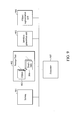
- Fig. 1 is a schematic diagram illustrating an embodiment of a system for displaying interfaces of the invention
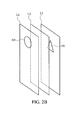
- Fig. 2A is a schematic diagram illustrating an embodiment of a multiple display layer structure of the invention.
- Fig. 2B is a schematic diagram illustrating a side-view of the multiple display layers in Fig. 2A of the invention.
- Fig. 3 is a flowchart of an embodiment of a method for displaying interfaces of the invention.
- Fig. 4 is a flowchart of another embodiment of a method for displaying interfaces of the invention.
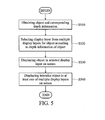
- Fig. 5 is a flowchart of another embodiment of a method for displaying interfaces of the invention.
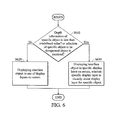
- Fig. 6 is a flowchart of an embodiment of a method for displaying interface objects of an interface of the invention.
- Fig. 7 is a flowchart of another embodiment of a method for displaying interfaces of the invention.
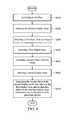
- Fig. 8 is a flowchart of another embodiment of a method for displaying interfaces of the invention.
- Fig. 9 is a schematic diagram illustrating an embodiment of an electronic device for displaying interfaces of the invention.
- Fig. 1 is a schematic diagram illustrating an embodiment of a system for displaying interfaces of the invention.
- the system for displaying interfaces can be used in an electronic device, such as a PDA (Personal Digital Assistant), a smart phone, a mobile phone, an MID (Mobile Internet Device, MID), a laptop computer, a car computer, a digital camera, a multi-media player, a game device, or any other type of mobile computational device, however, it is to be understood that the invention is not limited thereto.
- PDA Personal Digital Assistant
- a smart phone such as a PDA (Personal Digital Assistant), a smart phone, a mobile phone, an MID (Mobile Internet Device, MID), a laptop computer, a car computer, a digital camera, a multi-media player, a game device, or any other type of mobile computational device, however, it is to be understood that the invention is not limited thereto.
- MID Mobile Internet Device
- the system for displaying interfaces 100 comprises a screen 110, a storage unit 120, and a processing unit 130.
- the screen 110 can display data, such as texts, figures, interfaces, and/or information. It is understood that, in some embodiments, the screen 110 may be integrated with a touch-sensitive device (not shown).
- the touch-sensitive device has a touch-sensitive surface comprising sensors in at least one dimension to detect contact and movement of at least one object (input tool), such as a pen/stylus or finger near or on the touch-sensitive surface. Accordingly, users are able to input commands or signals via the screen.
- the data displayed on the screen is based on a multiple display layer structure, wherein a plurality of objects can be displayed in different display layers.
- Fig. 2A is a schematic diagram illustrating an embodiment of a multiple display layer structure of the invention
- Fig. 2B illustrates a side-view of the multiple display layers in Fig. 2A
- the multiple display layer structure has three display layers L1, L2 and L3, in which first object O1 is deployed to be displayed in the display layer L1, and second object 02 is deployed to be displayed in the display layer L3.
- first object O1 is deployed to be displayed in the display layer L1
- second object 02 is deployed to be displayed in the display layer L3.
- all or a part of the data displayed in a lower display layer may be covered by data displayed in an upper display layer.
- the upper display layer is visually above the lower display layer.
- the first object O1 and the second object 02 are retrieved from an image.
- An object segmentation operation is applied to the image.
- the detail operation of the object segmentation operation can be referred to Figs. 9-12 of the U.S. Provisional Application No. 61/ 505,298 filed July 7. 2011 , the entirety of which is/are incorporated by reference herein.
- the display layer L2 is for displaying an interface of an electronic device.
- the first object O1 is regarded as a foreground object, the first object O1 is displayed in the display layer L1, thus, the first object will not be covered by icons of the interface.
- the second object 02 is regarded as a background object, the second object 02 in the display layer L3, thus, the second object 02 may be covered by icons of the interface.
- a depth of the object is considered.
- the first object O1 contains a first depth and the second object 02 contains a second depth.
- the object When the depth of an object is greater than a predetermined value, the object is regarded as a foreground object, such as the first object 01. When the depth of an object is not greater than the predetermined value, the object is regarded as a background object, such as the second object 02.
- the storage unit 120 comprises a plurality of objects 121, each having corresponding depth information 122. It is understood that, in some embodiments, the system for displaying interfaces 100 may further comprise an image capturing unit, used for capturing at least one image. An object segmentation operation may be performed on the image to obtain the objects 121. It is noted that, the depth information can be used for 3D display, thus showing a 3D effect for corresponding objects on the screen 110. It is understood that, in some embodiments, the depth information can be obtained when the image is captured, or by assignment by users.
- the storage unit 120 further comprises at least one interface 122. It is understood that, in some embodiments, the interface 122 may be a page defined in by an Android system.
- the interface may include a menu of the electronic device.
- the interface 122 may comprise at least one interface object, such as a widget, an application icon, and/or a button.
- the processing unit 130 can perform the method for displaying interfaces of the present invention, which will be discussed further in the following paragraphs.
- Fig. 3 is a flowchart of an embodiment of a method for displaying interfaces of the invention.
- the method for displaying interfaces can be used in an electronic device, such as a PDA, a smart phone, a mobile phone, an MID, a laptop computer, a car computer, a digital camera, a multi-media player, a game device, or any other type of mobile computational device, however, it is to be understood that the invention is not limited thereto.
- each object of an image such as a background image can be displayed in a specific display layer according to the corresponding depth information.
- step S310 at least one object, and corresponding depth information are obtained. It is understood that, in some embodiments, an object segmentation operation can be performed to an image to obtain the object. As described, the depth information can be used for 3D display, thus showing a 3D effect for the corresponding objects on the screen.
- a display layer is selected from multiple display layers for the object according to the depth information of the object. Similarly, in the multiple display layer structure, when the multiple display layers are simultaneously displayed on a screen of the electronic device, all or a part of the data displayed in a lower display layer may be covered by data displayed in an upper display layer, and the upper display layer is visually above the lower display layer.
- a number of display layers can be predefined in the system, and the depth information of the object can be normalized based on the number of the display layers, such that a specific display layer can be accordingly specified for the object. Then, in step S330, the object is displayed in the selected display layer on the screen.
- Fig. 4 is a flowchart of another embodiment of a method for displaying interfaces of the invention.
- the method for displaying interfaces can be used in an electronic device, such as a PDA, a smart phone, a mobile phone, an MID, a laptop computer, a car computer, a digital camera, a multi-media player, a game device, or any other type of mobile computational device, however, it is to be understood that the invention is not limited thereto.
- objects of an image such as a background image can be respectively displayed in various display layers according to the corresponding depth information.
- step S410 a first object and a second object, and corresponding depth information are obtained.
- an object segmentation operation can be performed to an image to obtain the first object and the second object.
- the depth information can be used for 3D display, thus showing a 3D effect for the corresponding objects on the screen.
- step S420 the depth information of the first object and the depth information of the second object are compared.
- step S430 it is determined whether the depth information of the second object is greater than the depth information of the first object.
- step S440 a first display layer is selected from the multiple display layers for the first object, and a second display layer is selected from the multiple display layers for the second object, wherein the second display layer is visually under the first display layer.
- step S450 a first display layer is selected from the multiple display layers for the first object, and a second display layer is selected from the multiple display layers for the second object, wherein the second display layer is visually above the first display layer.
- the multiple display layer structure when the multiple display layers are simultaneously displayed on a screen of the electronic device, all or a part of the data displayed in a lower display layer may be covered by data displayed in an upper display layer, and the upper display layer is visually above the lower display layer.
- Fig. 5 is a flowchart of another embodiment of a method for displaying interfaces of the invention.
- the method for displaying interfaces can be used in an electronic device, such as a PDA, a smart phone, a mobile phone, an MID, a laptop computer, a car computer, a digital camera, a multi-media player, a game device, or any other type of mobile computational device, however, it is to be understood that the invention is not limited thereto.
- each interface object of an interface can be displayed in a specific display layer (or called an interface display layer).
- step S510 at least one object, and corresponding depth information are obtained.
- an object segmentation operation can be performed to an image to obtain the object.
- the depth information can be used for 3D display, thus showing a 3D effect for the corresponding objects on the screen.
- a display layer is selected from multiple display layers for the object according to the depth information of the object.
- all or a part of the data displayed in a lower display layer may be covered by data displayed in an upper display layer, and the upper display layer is visually above the lower display layer.
- a number of display layers can be predefined in the system, and the depth information of the object can be normalized based on the number of the display layers, such that a specific display layer can be accordingly specified for the object.
- the display layer is selected, in step S530, the object is displayed in the selected display layer on the screen.
- a specific display layer is selected from the multiple display layers for the interface object of the interface, and the interface object is displayed in the specific display layer on the screen.
- Fig. 6 is a flowchart of an embodiment of a method for displaying interface objects of an interface of the invention.
- step S610 it is determined whether the depth information corresponding to the object of the image is less than a predefined value, or whether a selection of an object of the image is received, in which the object is selected as a foreground object of the image.
- step S620 When the depth information corresponding to the object of the image is not less than the predefined value, or no foreground object selection of the image is received (No in step S610), in step S620, one of the multiple display layers is selected, and the interface object is displayed in the selected display layer on the screen.
- step S630 a specific display layer is selected from the multiple display layers, and the interface object is displayed in the specific display layer on the screen, wherein the specific display layer is visual under the display layer selected for the object of the image.
- the interface object when the interface object is displayed in the specific display layer, the interface object is displayed at a specific position of the screen according to a position of the object of the image to be displayed on the screen, such that the interface object displayed in the specific display layer is not covered by the object of the image displayed in the corresponding display layer.
- Fig. 7 is a flowchart of another embodiment of a method for displaying interfaces of the invention.
- the method for displaying interfaces can be used in an electronic device, such as a PDA, a smart phone, a mobile phone, an MID, a laptop computer, a car computer, a digital camera, a multi-media player, a game device, or any other type of mobile computational device, however, it is to be understood that the invention is not limited thereto.
- an effect can be applied to objects and/or display layers for various applications.
- step S710 at least one object, and corresponding depth information are obtained.
- an object segmentation operation can be performed to an image to obtain the object.
- the depth information can be used for 3D display, thus showing a 3D effect for the corresponding objects on the screen.
- a display layer is selected from multiple display layers for the object according to the depth information of the object.
- all or a part of the data displayed in a lower display layer may be covered by data displayed in an upper display layer, and the upper display layer is visually above the lower display layer.
- a number of display layers can be predefined in the system, and the depth information of the object can be normalized based on the number of the display layers, such that a specific display layer can be accordingly specified for the object.
- an effect is applied to the object or at least one of the multiple display layers.
- the effect may comprise an animation, or a replacement of a specific object in a specific display layer.
- action can be specified to be performed on the first object O1 in Fig. 2A , such as a rotation or a swinging action.
- an animation such as a waterfall animation or a defoliation animation can be applied to the display layer L2 in Fig. 2A .
- the second object 02 displayed in the display layer L3 in Fig. 2A can be replaced with another object or picture.
- the methods and systems for displaying interfaces can display objects of an image and/or an interface in various display layers based on corresponding depth information, such that a larger variety of applications can be accordingly developed, thus, enhancing the value of devices and increasing user experience.
- Fig. 8 is a flowchart of another embodiment of a method for displaying interfaces of the invention.
- the method for displaying interfaces can be used in an electronic device, such as a PDA, a smart phone, a mobile phone, an MID, a laptop computer, a car computer, a digital camera, a multi-media player, a game device, or any other type of mobile computational device, however, it is to be understood that the invention is not limited thereto.
- step S810 an interface containing at least one interface object is received by a processor of an electronic device.
- the processor selects an interface display layer for displaying the interface.
- the processor further set a predetermined value according to the interface display layer, and when a depth information of an object is not greater than the predetermined value, the object is regarded as a foreground object. If the depth information of the object is greater than the predetermined value, the object is regarded as a background object.
- step S830 a first object having a first depth information is obtained from an image.
- the processor selects a first displayer for displaying the first object according to the first depth information.
- the first depth information is not greater than the predetermined value, thus, the first display layer is above the interface display layer.
- step S840 the processor receives a second object having a second depth information.
- step S850 the processor selects a second display layer according to the second depth information. If the second depth information is greater than the predetermined value, the second display layer is under the interface display layer. If the second depth information is not greater than the predetermined value, the second display layer is the first display layer.
- the processor when the second depth information is not greater than the predetermined value but greater than the first depth information, the processor inserts the second display layer to be between the first display layer and the interface display layer. When the second depth information is not greater than both the predetermined value and the first depth information, the processor inserts the second display layer to be above the first display layer.
- the processor has to determine whether the received object is a foreground object or a background object according to corresponding depth information.
- a tag, mark or identification code is attached with the object to indicate that the received object is a foreground object or a background object.
- the interface display layer is the middle layer
- the foreground object is display in the front layer above the middle layer
- the background object is display in the background layer under middle layer.
- the display mechanism comprises more than three displayers.
- the processor can determine the layer for each object according to at least two predetermined value.
- each object contains layer information to indicate which display layer the object should be placed.
- the processor displays the second object in the second display layer, first object in the first display layer and the interface object in the interface display layer simultaneously on the screen of the electronic device.
- Fig. 9 is a schematic diagram illustrating an embodiment of an electronic device for displaying interfaces of the invention.
- the electronic device may be a PDA, a smart phone, a mobile phone, an MID, a laptop computer, a car computer, a digital camera, a multi-media player, a game device, or any other type of mobile computational device, however, it is to be understood that the invention is not limited thereto.
- the electronic device 900 comprises a screen 901, a storage 902 storing objects 903 and corresponding depth information 904, an interface generation unit 905, an object segmentation unit 906 and a processor 907.
- the screen 901 can display data, such as texts, figures, interfaces, and/or information. It is understood that, in some embodiments, the screen 901 may be integrated with a touch-sensitive device (not shown).
- the touch-sensitive device has a touch-sensitive surface comprising sensors in at least one dimension to detect contact and movement of at least one object (input tool), such as a pen/stylus or finger near or on the touch-sensitive surface. Accordingly, users are able to input commands or signals via the screen.
- the data displayed on the screen is based on a multiple display layer structure, wherein a plurality of objects can be displayed in different display layers.
- the object segmentation unit 906 When the electronic device 900 receives an image to be set as a dynamic wallpaper of the electronic device 900, the object segmentation unit 906 performs an objection segmentation process on the image to obtain at least one object.
- the objection segmentation process segments foreground objects and background objects of the image.
- the detail description can be referred to the Figs. 9-12 of the U.S. Provisional Application No. 61/ 505,298 filed July 7. 2011 and corresponding descriptions.
- the object segmentation unit 906 is a software or a program executed by the processor 907 or a graph processing unit (not shown in Fig. 9 ).
- the object segmentation unit 906 stores the acquired objects in the storage device 902, such as the objects 903 and corresponding depth information 904.
- the processor 907 receives an interface containing at least one interface object from the interface generation unit 905. Then, the processor 907 receives a first object of the objects 903 and corresponding first depth information. The processor 907 compares the first depth information with a predetermined value to determine whether the first object is a foreground object or a background object.
- the detail operation of the processor 907 can be referred to the steps S830-S850, and not described here for briefly. After that the processor 907 displays the objects 903 in the corresponding display layers and the interface objects in the interface display layer simultaneously on the screen 901.
- the effect applied in the step S740 can also be applied to the electronic device 900 to increase fun of the interaction between the user and the electronic device 900.
- Methods for displaying interfaces may take the form of a program code (i.e., executable instructions) embodied in tangible media, such as floppy diskettes, CD-ROMS, hard drives, or any other non-transitory machine-readable storage medium, non-transitory computer readable storage medium, wherein, when the program code is loaded into and executed by a machine, such as a computer, the machine thereby becomes an apparatus for practicing the methods.
- a program code i.e., executable instructions
- the methods may also be embodied in the form of a program code transmitted over some transmission medium, such as electrical wiring or cabling, through fiber optics, or via any other form of transmission, wherein, when the program code is received and loaded into and executed by a machine, such as a computer, the machine becomes an apparatus for practicing the disclosed methods.
- a machine such as a computer
- the program code When implemented on a general-purpose processor, the program code combines with the processor to provide a unique apparatus that operates analogously to application specific logic circuits.
Landscapes
- Physics & Mathematics (AREA)
- Engineering & Computer Science (AREA)
- General Physics & Mathematics (AREA)
- Theoretical Computer Science (AREA)
- Geometry (AREA)
- Computer Graphics (AREA)
- User Interface Of Digital Computer (AREA)
- Controls And Circuits For Display Device (AREA)
- Digital Computer Display Output (AREA)
Applications Claiming Priority (2)
| Application Number | Priority Date | Filing Date | Title |
|---|---|---|---|
| US201161505298P | 2011-07-07 | 2011-07-07 | |
| US13/543,390 US20130009991A1 (en) | 2011-07-07 | 2012-07-06 | Methods and systems for displaying interfaces |
Publications (2)
| Publication Number | Publication Date |
|---|---|
| EP2544152A2 true EP2544152A2 (fr) | 2013-01-09 |
| EP2544152A3 EP2544152A3 (fr) | 2013-02-20 |
Family
ID=46583852
Family Applications (1)
| Application Number | Title | Priority Date | Filing Date |
|---|---|---|---|
| EP12175358A Ceased EP2544152A3 (fr) | 2011-07-07 | 2012-07-06 | Gestion de plusieurs couches d'affichage d'interface |
Country Status (4)
| Country | Link |
|---|---|
| US (1) | US20130009991A1 (fr) |
| EP (1) | EP2544152A3 (fr) |
| CN (1) | CN102999247B (fr) |
| TW (1) | TWI496106B (fr) |
Families Citing this family (10)
| Publication number | Priority date | Publication date | Assignee | Title |
|---|---|---|---|---|
| CN104125386B (zh) * | 2013-04-25 | 2018-04-17 | 宏达国际电子股份有限公司 | 影像处理装置及其影像处理方法 |
| CN103607653A (zh) * | 2013-11-08 | 2014-02-26 | 四川长虹电器股份有限公司 | 基于3d模型开发电视天气动态壁纸的方法 |
| US9934714B2 (en) | 2014-03-18 | 2018-04-03 | Nvidia Corporation | Superresolution display using cascaded panels |
| CN105700766B (zh) * | 2014-11-27 | 2018-09-14 | 富泰华工业(深圳)有限公司 | 用户界面显示系统及方法 |
| KR20170000196A (ko) * | 2015-06-23 | 2017-01-02 | 삼성전자주식회사 | 객체의 속성 기반의 상태 변화 효과를 출력하기 위한 방법 및 그 전자 장치 |
| CN106527864B (zh) * | 2016-11-11 | 2020-01-14 | 厦门黑镜科技有限公司 | 一种界面显示方法及装置 |
| TWI645328B (zh) * | 2017-03-24 | 2018-12-21 | 華碩電腦股份有限公司 | 動態桌布的顯示方法、電子裝置及非暫態電腦可讀取記錄媒體 |
| CN107807785B (zh) * | 2017-11-21 | 2020-06-12 | 广州视源电子科技股份有限公司 | 一种在触摸屏上选择对象的方法及系统 |
| CN110442314B (zh) * | 2019-07-19 | 2022-11-29 | 咪咕动漫有限公司 | 一种显示方法、终端及计算机可读存储介质 |
| CN113873273B (zh) * | 2021-09-09 | 2023-12-26 | 北京都是科技有限公司 | 一种生成直播视频的方法、装置以及存储介质 |
Family Cites Families (17)
| Publication number | Priority date | Publication date | Assignee | Title |
|---|---|---|---|---|
| ATE500532T1 (de) * | 1998-02-20 | 2011-03-15 | Puredepth Ltd | Mehrschichtige anzeigevorrichtung und verfahren zur darstellung von bildern auf einer solchen anzeigevorrichtung |
| US20020085219A1 (en) * | 2000-08-11 | 2002-07-04 | Victor Ramamoorthy | Method of and system for generating and viewing multi-dimensional images |
| US7205959B2 (en) * | 2003-09-09 | 2007-04-17 | Sony Ericsson Mobile Communications Ab | Multi-layered displays providing different focal lengths with optically shiftable viewing formats and terminals incorporating the same |
| US7629986B2 (en) * | 2003-11-05 | 2009-12-08 | Bbn Technologies Corp. | Motion-based visualization |
| US7262783B2 (en) * | 2004-03-03 | 2007-08-28 | Virtual Iris Studios, Inc. | System for delivering and enabling interactivity with images |
| US7312798B2 (en) * | 2005-01-21 | 2007-12-25 | Research In Motion Limited | Device and method for controlling the display of electronic information |
| EP1746542A1 (fr) * | 2005-07-19 | 2007-01-24 | Spark Vision Ab | Système et méthode pour gérer de couches d'images numériques |
| JP5049515B2 (ja) * | 2006-06-06 | 2012-10-17 | キヤノン株式会社 | 情報処理装置および情報処理方法および情報処理プログラム |
| US20080172693A1 (en) * | 2007-01-16 | 2008-07-17 | Microsoft Corporation | Representing Television Programs Using Video Objects |
| US9131078B2 (en) * | 2007-07-27 | 2015-09-08 | Lagavulin Limited | Apparatuses, methods, and systems for a portable, image-processing transmitter |
| KR20100006003A (ko) * | 2008-07-08 | 2010-01-18 | 삼성전자주식회사 | 휴대단말기의 터치 인터페이스를 이용한 영상편집 방법 및장치 |
| JP4772163B2 (ja) * | 2008-11-18 | 2011-09-14 | パナソニック株式会社 | 立体視再生を行う再生装置、再生方法、プログラム |
| CN101771830B (zh) * | 2008-12-30 | 2012-09-19 | 华为终端有限公司 | 立体全景视频流生成方法、设备及视频会议方法和设备 |
| US20110043461A1 (en) * | 2009-08-24 | 2011-02-24 | Ming-Te Lai | Systems and methods for application management |
| JP2011139281A (ja) * | 2009-12-28 | 2011-07-14 | Sony Corp | 三次元画像生成装置、三次元画像表示装置、三次元画像生成方法およびプログラム |
| US9042636B2 (en) * | 2009-12-31 | 2015-05-26 | Disney Enterprises, Inc. | Apparatus and method for indicating depth of one or more pixels of a stereoscopic 3-D image comprised from a plurality of 2-D layers |
| US20120019688A1 (en) * | 2010-07-20 | 2012-01-26 | Research In Motion Limited | Method for decreasing depth of field of a camera having fixed aperture |
-
2012
- 2012-07-06 EP EP12175358A patent/EP2544152A3/fr not_active Ceased
- 2012-07-06 US US13/543,390 patent/US20130009991A1/en not_active Abandoned
- 2012-07-09 CN CN201210237757.3A patent/CN102999247B/zh not_active Expired - Fee Related
- 2012-07-09 TW TW101124576A patent/TWI496106B/zh not_active IP Right Cessation
Also Published As
| Publication number | Publication date |
|---|---|
| CN102999247B (zh) | 2017-06-06 |
| CN102999247A (zh) | 2013-03-27 |
| EP2544152A3 (fr) | 2013-02-20 |
| TWI496106B (zh) | 2015-08-11 |
| TW201303791A (zh) | 2013-01-16 |
| US20130009991A1 (en) | 2013-01-10 |
Similar Documents
| Publication | Publication Date | Title |
|---|---|---|
| EP2544152A2 (fr) | Gestion de plusieurs couches d'affichage d'interface | |
| US20250377846A1 (en) | Systems, Devices, and Methods for Dynamically Providing User Interface Controls at a Touch-Sensitive Secondary Device | |
| US11488406B2 (en) | Text detection using global geometry estimators | |
| US12307082B2 (en) | Scrollable set of content items with locking feature | |
| KR102665226B1 (ko) | 스타일러스로 사용자 인터페이스를 조작하기 위한 디바이스 및 방법 | |
| KR101393942B1 (ko) | 이동 단말기 및 이동 단말기를 이용한 정보 표시 방법 | |
| US8413075B2 (en) | Gesture movies | |
| CN106155549B (zh) | 触摸输入光标操控 | |
| KR102161764B1 (ko) | 카툰 이미지를 이용한 메신저 대화창 표시 방법 및 컴퓨터 판독 가능한 기록 매체 | |
| US20120284671A1 (en) | Systems and methods for interface mangement | |
| EP3096207B1 (fr) | Procédé de commande d'affichage, appareil de traitement de données et programme | |
| EP3594796A1 (fr) | Dispositif, procédé et interface utilisateur graphique permettant de régler l'apparence d'une commande | |
| EP2357556A1 (fr) | Affichage et occultation automatiques d'un clavier sur écran | |
| US20120284668A1 (en) | Systems and methods for interface management | |
| CN106575396A (zh) | 消息对话历史的快速导航 | |
| WO2016039863A1 (fr) | Écran d'accueil en mode paysage | |
| CN102985904A (zh) | 跳转、复选标记和删除姿势 | |
| EP3102998A1 (fr) | Dispositif, procédé et interface utilisateur graphique pour un clavier prédictif | |
| WO2014143633A1 (fr) | Dispositif, procédé, et interface utilisateur graphique pour écran parallaxe basé sur l'orientation | |
| US20160299657A1 (en) | Gesture Controlled Display of Content Items | |
| US20110258555A1 (en) | Systems and methods for interface management | |
| US20110043461A1 (en) | Systems and methods for application management | |
| US20140028720A1 (en) | Display Controller, Display Control Method And Computer-Readable Medium | |
| TWI514319B (zh) | 藉由虛擬物件編輯資料之方法及系統,及相關電腦程式產品 | |
| CN107924276B (zh) | 电子设备及其文本输入方法 |
Legal Events
| Date | Code | Title | Description |
|---|---|---|---|
| PUAI | Public reference made under article 153(3) epc to a published international application that has entered the european phase |
Free format text: ORIGINAL CODE: 0009012 |
|
| AK | Designated contracting states |
Kind code of ref document: A2 Designated state(s): AL AT BE BG CH CY CZ DE DK EE ES FI FR GB GR HR HU IE IS IT LI LT LU LV MC MK MT NL NO PL PT RO RS SE SI SK SM TR |
|
| AX | Request for extension of the european patent |
Extension state: BA ME |
|
| PUAL | Search report despatched |
Free format text: ORIGINAL CODE: 0009013 |
|
| AK | Designated contracting states |
Kind code of ref document: A3 Designated state(s): AL AT BE BG CH CY CZ DE DK EE ES FI FR GB GR HR HU IE IS IT LI LT LU LV MC MK MT NL NO PL PT RO RS SE SI SK SM TR |
|
| AX | Request for extension of the european patent |
Extension state: BA ME |
|
| RIC1 | Information provided on ipc code assigned before grant |
Ipc: G06T 19/00 20110101AFI20130114BHEP |
|
| 17P | Request for examination filed |
Effective date: 20130820 |
|
| RBV | Designated contracting states (corrected) |
Designated state(s): AL AT BE BG CH CY CZ DE DK EE ES FI FR GB GR HR HU IE IS IT LI LT LU LV MC MK MT NL NO PL PT RO RS SE SI SK SM TR |
|
| 17Q | First examination report despatched |
Effective date: 20141016 |
|
| RAP1 | Party data changed (applicant data changed or rights of an application transferred) |
Owner name: HTC CORPORATION |
|
| APBK | Appeal reference recorded |
Free format text: ORIGINAL CODE: EPIDOSNREFNE |
|
| APBN | Date of receipt of notice of appeal recorded |
Free format text: ORIGINAL CODE: EPIDOSNNOA2E |
|
| APBR | Date of receipt of statement of grounds of appeal recorded |
Free format text: ORIGINAL CODE: EPIDOSNNOA3E |
|
| APAF | Appeal reference modified |
Free format text: ORIGINAL CODE: EPIDOSCREFNE |
|
| STAA | Information on the status of an ep patent application or granted ep patent |
Free format text: STATUS: EXAMINATION IS IN PROGRESS |
|
| APBT | Appeal procedure closed |
Free format text: ORIGINAL CODE: EPIDOSNNOA9E |
|
| APAM | Information on closure of appeal procedure modified |
Free format text: ORIGINAL CODE: EPIDOSCNOA9E |
|
| STAA | Information on the status of an ep patent application or granted ep patent |
Free format text: STATUS: THE APPLICATION HAS BEEN REFUSED |
|
| 18R | Application refused |
Effective date: 20210615 |