EP2547055B1 - Vorkodierungsverfahren - Google Patents
Vorkodierungsverfahren Download PDFInfo
- Publication number
- EP2547055B1 EP2547055B1 EP12184323.9A EP12184323A EP2547055B1 EP 2547055 B1 EP2547055 B1 EP 2547055B1 EP 12184323 A EP12184323 A EP 12184323A EP 2547055 B1 EP2547055 B1 EP 2547055B1
- Authority
- EP
- European Patent Office
- Prior art keywords
- receiver
- transmitter
- subset
- precoding matrix
- transmitting
- Prior art date
- Legal status (The legal status is an assumption and is not a legal conclusion. Google has not performed a legal analysis and makes no representation as to the accuracy of the status listed.)
- Active
Links
Images
Classifications
-
- H—ELECTRICITY
- H04—ELECTRIC COMMUNICATION TECHNIQUE
- H04B—TRANSMISSION
- H04B7/00—Radio transmission systems, i.e. using radiation field
- H04B7/02—Diversity systems; Multi-antenna system, i.e. transmission or reception using multiple antennas
- H04B7/04—Diversity systems; Multi-antenna system, i.e. transmission or reception using multiple antennas using two or more spaced independent antennas
- H04B7/06—Diversity systems; Multi-antenna system, i.e. transmission or reception using multiple antennas using two or more spaced independent antennas at the transmitting station
- H04B7/0613—Diversity systems; Multi-antenna system, i.e. transmission or reception using multiple antennas using two or more spaced independent antennas at the transmitting station using simultaneous transmission
- H04B7/0615—Diversity systems; Multi-antenna system, i.e. transmission or reception using multiple antennas using two or more spaced independent antennas at the transmitting station using simultaneous transmission of weighted versions of same signal
- H04B7/0619—Diversity systems; Multi-antenna system, i.e. transmission or reception using multiple antennas using two or more spaced independent antennas at the transmitting station using simultaneous transmission of weighted versions of same signal using feedback from receiving side
- H04B7/0636—Feedback format
- H04B7/0639—Using selective indices, e.g. of a codebook, e.g. pre-distortion matrix index [PMI] or for beam selection
-
- H—ELECTRICITY
- H04—ELECTRIC COMMUNICATION TECHNIQUE
- H04B—TRANSMISSION
- H04B7/00—Radio transmission systems, i.e. using radiation field
- H04B7/02—Diversity systems; Multi-antenna system, i.e. transmission or reception using multiple antennas
- H04B7/04—Diversity systems; Multi-antenna system, i.e. transmission or reception using multiple antennas using two or more spaced independent antennas
- H04B7/0413—MIMO systems
- H04B7/0417—Feedback systems
-
- H—ELECTRICITY
- H04—ELECTRIC COMMUNICATION TECHNIQUE
- H04B—TRANSMISSION
- H04B7/00—Radio transmission systems, i.e. using radiation field
- H04B7/02—Diversity systems; Multi-antenna system, i.e. transmission or reception using multiple antennas
- H04B7/04—Diversity systems; Multi-antenna system, i.e. transmission or reception using multiple antennas using two or more spaced independent antennas
- H04B7/0413—MIMO systems
- H04B7/0456—Selection of precoding matrices or codebooks, e.g. using matrices antenna weighting
-
- H—ELECTRICITY
- H04—ELECTRIC COMMUNICATION TECHNIQUE
- H04L—TRANSMISSION OF DIGITAL INFORMATION, e.g. TELEGRAPHIC COMMUNICATION
- H04L1/00—Arrangements for detecting or preventing errors in the information received
- H04L1/0001—Systems modifying transmission characteristics according to link quality, e.g. power backoff
- H04L1/0023—Systems modifying transmission characteristics according to link quality, e.g. power backoff characterised by the signalling
- H04L1/0028—Formatting
- H04L1/0029—Reduction of the amount of signalling, e.g. retention of useful signalling or differential signalling
-
- H—ELECTRICITY
- H04—ELECTRIC COMMUNICATION TECHNIQUE
- H04L—TRANSMISSION OF DIGITAL INFORMATION, e.g. TELEGRAPHIC COMMUNICATION
- H04L1/00—Arrangements for detecting or preventing errors in the information received
- H04L1/02—Arrangements for detecting or preventing errors in the information received by diversity reception
- H04L1/06—Arrangements for detecting or preventing errors in the information received by diversity reception using space diversity
- H04L1/0618—Space-time coding
- H04L1/0631—Receiver arrangements
-
- H—ELECTRICITY
- H04—ELECTRIC COMMUNICATION TECHNIQUE
- H04L—TRANSMISSION OF DIGITAL INFORMATION, e.g. TELEGRAPHIC COMMUNICATION
- H04L25/00—Baseband systems
- H04L25/02—Details ; arrangements for supplying electrical power along data transmission lines
- H04L25/03—Shaping networks in transmitter or receiver, e.g. adaptive shaping networks
- H04L25/03006—Arrangements for removing intersymbol interference
- H04L25/03343—Arrangements at the transmitter end
-
- H—ELECTRICITY
- H04—ELECTRIC COMMUNICATION TECHNIQUE
- H04L—TRANSMISSION OF DIGITAL INFORMATION, e.g. TELEGRAPHIC COMMUNICATION
- H04L25/00—Baseband systems
- H04L25/02—Details ; arrangements for supplying electrical power along data transmission lines
- H04L25/03—Shaping networks in transmitter or receiver, e.g. adaptive shaping networks
- H04L25/03006—Arrangements for removing intersymbol interference
- H04L2025/0335—Arrangements for removing intersymbol interference characterised by the type of transmission
- H04L2025/03375—Passband transmission
- H04L2025/03414—Multicarrier
-
- H—ELECTRICITY
- H04—ELECTRIC COMMUNICATION TECHNIQUE
- H04L—TRANSMISSION OF DIGITAL INFORMATION, e.g. TELEGRAPHIC COMMUNICATION
- H04L25/00—Baseband systems
- H04L25/02—Details ; arrangements for supplying electrical power along data transmission lines
- H04L25/03—Shaping networks in transmitter or receiver, e.g. adaptive shaping networks
- H04L25/03006—Arrangements for removing intersymbol interference
- H04L2025/03777—Arrangements for removing intersymbol interference characterised by the signalling
- H04L2025/03802—Signalling on the reverse channel
- H04L2025/03808—Transmission of equaliser coefficients
Definitions
- the present invention relates to the feedback of precoding information in Multiple-Input-Multiple-Output (MIMO) systems.
- MIMO Multiple-Input-Multiple-Output
- MIMO refers to the use of multiple transmit antennas and multiple receive antennas for the transmission of a signal in order to improve performance.
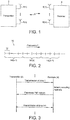
- a highly schematised block diagram of a MIMO system is shown in Figure 1 .
- the system comprises a transmitter 2 having multiple antennas 6(1)...6(n) and a receiver 4 having multiple antennas 8(1)...8(m).
- the transmitter may be a base station and the receiver may be a mobile terminal of a cellular communication system.
- the transmitter 2 transmits a signal on each of its antennas 6, and the receiver 4 receives the signal on each of its antennas 8.
- the transmitter may perform MIMO "precoding", which needs channel information to determine the relative amplitude and phase with which to transmit the signal on each antenna.
- channel state information is required at the transmitter. In general, this information has to be fed back from the receiver 4.
- a precoding matrix approach was proposed in D. Love and R. W. Heath, "Limited Feedback Precoding for Spatial Multiplexing Systems", in Proc. IEEE Globecom 2003, pp. 1857-1861 .
- the basic idea behind this approach is to quantize the MIMO channel using a codebook consisting of a set of pre-defined matrices. For each channel realization, the receiver finds the best (according to some performance criteria) precoding matrix from the codebook shared between the receiver and the transmitter, and then feeds only the index of this matrix to the transmitter.
- PMI precoding matrix indicator
- WO 2007/121568 discloses a method for MIMO antenna communication.
- An adaptive change in the rank of the wireless communication is detected in which the rank corresponds to a quantity of wireless communication streams.
- Wireless communication resources are scheduled. The scheduling takes into account the adaptively changed rank. Feedback mechanisms that work with the changing rank are used to reduce overhead.
- WO 2007/106980 discloses a method for transmitting and receiving MIMO signals, involving pre-coding each of at least two data symbols using a respective pre-coding codeword to preclude a corresponding plurality of pre-coded data symbols.
- a respective signal is transmitted from each of a plurality of antennas, the respective signal including one of the pre-coded signals and at least one pilot for use in channel estimation.
- the signals collectively further include at least one beacon pilot vector consisting of a respective beacon pilot per antenna, the beacon pilot vector containing contents known to a receiver for use by the receiver in determining the codeword used to pre-code the at least one data signal.
- the present invention provides a method comprising transmitting from a transmitter to a receiver over a wireless multiple-input-multiple-output channel, encoding precoding information fed back from the receiver to the transmitter, and transmitting an indication of and/or the size of a preferred subset of precoding matrices for use in the encoding.
- a method of transmitting a sequence of transmissions at respective time intervals from a transmitter to a receiver over a wireless multiple-input-multiple-output channel comprising one or more frequency intervals comprising:
- the steps of determining a preferred subset, selecting a respective precoding matrix and feeding back an index of the respective precoding matrix could be performed for each successive time interval in the sequence.
- a method of transmitting from a transmitter to a receiver over a wireless multiple-input-multiple-output channel comprising a series of frequency intervals comprising:
- the present invention may also be used in both the time and frequency domains together.
- the indication can be used to determine the subset at the transmitter and thereby decode compressed precoding matrix indices from the receiver.
- the transmitter e.g., base station
- transmits to a receiver e.g., UE
- a precoding matrix selected from a precoding codebook The selection of the precoding matrix is based on the precoding matrix indicator feedback from the UE receiver.
- the overhead of this PMI feedback is reduced using a differential encoding scheme (which means that the preferred precoding matrix index is signalled with respect to a subset of the precoding codebook).
- the method may comprise transmitting from the transmitter to the receiver using the respective precoding matrix to transmit on said successive frequency interval.
- the transmitter e.g. base station
- the receiver e.g. UE
- the method may comprise transmitting from the transmitter to the receiver using the respective precoding matrix to transmit on said successive frequency interval.
- the transmitter e.g. base station
- the receiver e.g. UE
- the transmitter may use the matrix index fed back from the receiver (e.g. UE) only as a possibility - in other words there is possibility for the transmitter to overrule the feedback (based on other information/constraints).
- the method may comprise feeding back an index of the first precoding matrix from the receiver to the transmitter, and transmitting from the transmitter to the receiver using the first precoding matrix to transmit on the first frequency interval.
- the method may further comprise resetting the differential encoding scheme upon detecting a condition.
- the determining based on said suitable metric may comprise determining a subset of matrices from said predetermined set having the greatest correlation with the first matrix.
- the method comprises determining from said predetermined set, separately from the determination of said preferred subset, a subset of most-probable precoding matrices having some conditional probability of being selected for transmission.
- Said condition may be that the most-probable subset differs from the preferred subset by a predetermined amount.
- Said condition may be that the selected precoding matrix is not in the preferred subset.
- Said condition may be that a periodic time has elapsed.
- Said resetting may comprise replacing the preferred subset with the most-probable subset.
- Said resetting may comprise indicating the respective index relative to the whole of said predetermined set.
- the method may comprise, for each successive time or frequency interval: determining, from said predetermined set of precoding matrices, a subset of most-probable precoding matrices having some conditional probability of being selected for transmission from the transmitter to the receive, and the feedback may be performed by indicating the respective index relative to the subset of most-probable precoding matrices.
- the determination of said most-probable precoding matrices may be based on calculation during the actual system operation.
- the present invention provides a computer program product which, when executed by a processor, performs the steps of any of the above methods.
- the present invention provides a receiver comprising multiple antennas and a processor programmed to perform the receiver steps of any of the above methods.
- the present invention provides a transmitter comprising multiple antennas and a processor programmed to perform the transmitter steps of any of the above methods.
- the present invention provides a wireless cellular communication system comprising the transmitter and receiver.
- Figure 1 shows schematically a transmitter 2 and receiver 4.
- the transmitter 2 transmits signals to the receiver 4 over a wireless MIMO channel.
- the channel is an Orthogonal Frequency Division Multiplexing (OFDM) channel comprising a plurality of frequency sub-bands 12, and the sub-bands are grouped together into groups of sub-bands 14.
- OFDM Orthogonal Frequency Division Multiplexing
- a respective precoding matrix is used for transmission on each group 14, or more generally each frequency interval which could be one or more sub-bands.
- Each precoding matrix specifies, for its frequency interval, the relative phase and amplitude with which to transmit from the multiple antennas 6 of the transmitter 2.
- the transmitter-receiver system constantly adjusts the precoding matrices using a method of feedback over a series of transmissions.
- the receiver determines the optimal matrix to use for each of the respective groups 14 when transmitting the next transmission at time t+1. It does this using any suitable performance criterion or criteria, for example by maximizing throughput or minimizing the mean square error (MSE).
- MSE mean square error
- the receiver 4 then feeds back the results of this determination to the transmitter 2, by means of the quantity referred to herein as precoding matrix indicator (PMI).
- PMI precoding matrix indicator
- the precoding matrices are selected from a predefined set of discrete matrices, or "codebook".
- codebook a predefined set of discrete matrices
- the indices are fed back according to a differential encoding scheme whereby most of the precoding matrices are indicated by relative indices measured relative to an absolute index of one of the other fed back indices.
- the indication of the precoding matrix for frequency interval 14(0) of an initial transmission in the series may be fed back as an absolute index
- the indications of the precoding matrices for all of the other transmissions 14(1)...14(X) of that signal, and/or the frequency intervals of subsequent transmissions may be fed back as a relative index, relative to that absolute index.
- the present invention resets the base index during an ongoing series of transmission.
- the subset of precoding matrices contains the matrices that are the most correlated with the initial precoding matrix.
- a subset ⁇ i containing the P most correlated precoding matrices with i is set.
- the receiver may then determine that the subset of matrices corresponding to absolute indices 0, 5, 6 and 15 are most correlated with the precoding index of the first interval 14(0).
- the correlation is preferably determined by the receiver by reference to a look-up table, which is also known to the transmitter. In this particular case, no signaling of the codebook subset is needed.
- the receiver If the receiver also determines that the precoding matrix for transmission on the adjacent second frequency interval 14(1) is the matrix with an absolute index of 6 for example, then it can encode that index for feedback as a relative index as an indication of one of the four possible matrices in that subset (in this case the third), requiring only two bits rather than the four bits which would be required if fed back as an absolute index as one of the sixteen possible matrices in the whole set.
- the receiver may then determine that the subset of matrices corresponding to absolute indices 5, 9, 3 and 2 are most correlated with the precoding index of the second interval 14(1) (again these are preferably pre-computed and read from a look-up table). If the receiver also determines that the precoding matrix for transmission on the adjacent second frequency interval 14(2) is the matrix with an absolute index of 9 for example, then it can encode that index for feedback as a relative index as one of the four possible matrices in that next subset (in this case the second). This continues for successive frequency intervals, encoding the index of each frequency interval relative to the previous one.
- the differential encoding scheme can be used to encode the precoding matrices from one time interval to the next.
- the indices could be encoded relative to a wideband PMI across the whole frequency band or a PMI for a part of a system band. This could also apply to encoding time intervals.
- this differential encoding scheme may fail if the precoding matrix determined at any stage is not one of the most-correlated subset. This may be a particular problem if an error propagates from each successive differential encoding to the next.
- the precoding feedback scheme may be reset based on differential encoding.
- the main drawback of the differential encoding schemes is error propagation.
- the receiver computes the transition probabilities, i.e., calculates the probability that the current channel precoding matrix index is j , knowing that the previous precoding matrix index is i. From these probabilities, the receiver can build, in parallel to the differential encoding subset, a subset of the most likely precoder transitions. Hence, if the differential subset deviates from the transition based subset, the differential encoder is reset.
- the reset can alternatively be implemented at fixed time intervals.
- the steady-state conditional probability defining the event that on the actual sub-band the optimal PMI is i knowing that the initial PMI is j is computed on the fly during the systems operation.
- these probabilities can be computed using a simple moving average finite impulse response (FIR) filter or an infinite impulse response (IIR) filter. From the computed probabilities, one can build the subset of the most likely precoder transitions to use for adjacent sub-bands.
- FIR finite impulse response
- IIR infinite impulse response
- a possibility for modelling the frequency correlation between the matrices is by using a Markov chain.
- the probability is a conditional probability, i.e. an outcome of a trial affects the probability of an outcome of a subsequent trial.
- Some embodiments of the invention resorts to the above idea to build the subset of preferred precoding matrices to be used to compress the precoding information.
- the receiver computes the transition probabilities, i.e., the probability that the current channel precoding matrix index is j , knowing that the previous (in time) precoding matrix index is i. These transition probabilities are then used to determine the subset of precoding matrices that are more likely to be chosen as preferred precoding matrices after a given precoding matrix.
- the reduction of the original codebook to this subset of precoding matrices corresponds to a reduction of the number of bits required to signal the new precoding index.
- the most likely precoding matrices in the future channel realization are determined for each precoding matrix from the steady-state transition probabilities.
- the same approach exploiting the correlation in the time domain can also be used to compress the precoding information in the frequency domain, where we compute the transition probabilities from a first frequency interval to a second frequency interval.
- the computation of the transition probabilities can be performed jointly or separately in time and in frequency, and the accumulation of data to compute the time-frequency transition probabilities can be performed based on the same or on different filter parameters in time and frequency.
- the calculation of the time-frequency transition probabilities can be performed based on a filter for each precoding matrix index.
- a MIMO system where the user equipment is required to feed back precoding information relative to a codebook of size L , over a system bandwidth containing N frequency intervals.
- ⁇ could be optimized separately for frequency correlation case or time correlation case depending on the coherence time or the coherence bandwidth of the channel and the speed of convergence desired.
- the receiver 4 may signal to the transmitter 2 the specific subsets that the receiver intends to use for PMI compression.
- the receiver determines a subset of matrices in order to encode the PMI as one of that subset, thus compressing the PMI information because it requires fewer bits to encode than if encoded as one of the whole set.
- this subset could be the most-correlated subset or the most-probable subset (i.e. the transition based subset).
- a first embodiment of the present invention solves this problem by transmitting an indication of the subset to be used for compression from the receiver to the transmitter.
- the transmitter uses the indication of this subset in the decoding of compressed precoding matrix indices.
- this might seem completely contrary to the idea of compression, since transmitting the subset increases overhead.
- the first embodiment of the present invention derives from the realization that the selected compression subset need only be reported back relatively infrequently to have a significant benefit in terms of following channel characteristics to improve accuracy.
- the subset need only be reported to the transmitter once in many frames. For example, considering rough orders-of-magnitude, a frame is of the order of 1ms whereas channel conditions may typically change over a matter of seconds.
- the extra signaling overhead incurred by reporting the compression subset need only be minimal, but it provides a substantial benefit because the compression computation performed at the transmitter need not be based on a long term average over all channels but instead can be refreshed in line with changes in channel conditions and can be performed specially in relation to the channel in question.
- the subset could be reported as part of the PMI report or any other suitable control signaling mechanism.
- this embodiment need not necessarily make use of the most-probable transmission based subset, although it may do.
- the compression subset may be found by computing one subset for each matrix index based on the transition probabilities, or based on the most correlated subset, or based on a different computation altogether.
- the differential encoding scheme may include a reset mechanism, such as using the most-probable transition subset as in the first embodiment, or may not do.
- the receiver 4 indicates to the transmitter 2 the preferred size of the codebook subset to be used for PMI compression. This has the advantage again of making the system more flexible to channel conditions. If the size was not reported by the receiver, the transmitter would simply have to have predetermined knowledge of a fixed subset size, whereas if the size is reported by the receiver then the subset size can vary depending on channel conditions.
- this indication could be transmitted from the receiver to the transmitter as part of the PMI report or by means of another control signalling mechanism. Also, as an example of order-of-magnitude, it may need only be transmitted perhaps once every few seconds (compared with a frame length of the order of 1ms).
- the feature of transmitting the size of the preferred subset from the transmitter as in the second embodiment can be used independently of the first embodiment or in conjunction with the first embodiment.
- the differential encoding scheme involves encoding a PMI for a frequency interval or time interval relative to some subset of PMIs derived based on another frequency interval or time interval, e.g. sending the index with respect to a preferred subset or a most-probable subset. For example, if the PMI of interval 14(1) is encoded relative to interval 14(0), and the PMI of interval 14(2) is encoded relative to interval 14(1), and so on.
- This relevant bandwidth could be the whole system bandwidth, as mentioned above, or it could be a part of the whole system bandwidth. It could be the whole bandwidth possible for the channel, or could be only the part of the band available or desired for transmission at any given time. In the case differential encoding relative to a partial band, the part of the band used could be chosen or determined in any way. But in one example, the user equipment (UE) splits the band into bandwidth parts, typically two or three, relative to which it encodes the initial PMI.
- UE user equipment
- the base station signals a set S of subbands to the UE, and the UE transmits the initial PMI encoded relative to the single PMI for that set S.
- the sub-bands of the set S need not be contiguous. Indeed, more generally in the case of differential encoding relative to a partial "relevant" bandwidth, the partial band in question need not comprise contiguous frequency intervals, although it may do.
- the meaning of the PMI for the relevant band is the PMI that the receiver 4 would prefer for the transmitter 2 to use (according to some suitable performance criterion or criteria such as throughput or mean square error) if it were to transmit to the receiver 2 over the whole or part of the system band in question. So in the case of the whole band, it is the PMI that would be preferred if the transmitter were to transmit over the entire band (the wideband PMI). And in the case of a partial band, it is the PMI that would be preferred if the transmitter were to transmit over only that part of the band.
- the receiver 4 uses the relevant band PMI for the encoding by deriving the most probable subset relative to the relevant band PMI, instead of from each preceding frequency interval or time interval in the series or sequence. That is, the receiver 4 calculates for each relevant band PMI index i what are the transition probabilities that an interval will require a PMI index j , and thus determines a most-probable subset for any interval based on a given relevant band PMI. Aside from the use if the relevant band PMI instead of preceding PMI, the most-probable subset is determined and used as in the second embodiment.
- the PMI of the first interval 14(0) is encoded relative to the most probable subset derived from the relevant band PMI
- the PMI of second interval 14(1) is also encoded relative to that same most probable subset, as is the PMI of the third interval 14(2), and so forth.
- only an initial PMI of a first interval in a series or sequence could be encoded relative to the whole or partial system band PMI.
- the PMI of interval 14(1) could be encoded relative to interval 14(0), and the PMI of interval 14(2) encoded relative to interval 14(1), and so on; but instead of the receiver 4 transmitting the initial PMI of the first interval 14(0) as an "absolute" index relative to the whole codebook, it could instead be encoded relative to a PMI for a given relevant bandwidth.
- the first PMI transmitted following the reset may be transmitted encoded relative to a given relevant band PMI (either whole or part of the system band).
- the above embodiments have been described only by way of example.
- the above description refers in places to subset reduction in the frequency domain
- the invention also applies to the case where the technique is adopted in the time domain (subset reduction from one reporting time to the next). That is, the technique is also valid in the time domain for the case of a single frequency interval, or both in the time and frequency domain.
Landscapes
- Engineering & Computer Science (AREA)
- Computer Networks & Wireless Communication (AREA)
- Signal Processing (AREA)
- Quality & Reliability (AREA)
- Power Engineering (AREA)
- Physics & Mathematics (AREA)
- Mathematical Physics (AREA)
- Radio Transmission System (AREA)
- Mobile Radio Communication Systems (AREA)
- Reduction Or Emphasis Of Bandwidth Of Signals (AREA)
- Transmitters (AREA)
Claims (9)
- Verfahren zum Übertragen einer Sequenz von Übertragungen zu jeweiligen Zeitintervallen von einem Sender (2) an einen Empfänger (4) über einen drahtlosen Multiple-Input-Multiple-Output-Kanal (10), der ein oder mehrere Frequenzintervalle (14) umfasst, wobei das Verfahren umfasst:auf der Basis von einem oder mehreren Leistungskriterien, die in Bezug auf eine zuvor empfangene Übertragung von dem Sender ausgewertet wurden, Auswählen einer ersten Vorcodierungsmatrix aus einem vorherbestimmten Satz von Vorcodierungsmatrizes zum Übertragen von dem Sender an den Empfänger zu einem ersten der Zeitintervalle an dem Empfänger undfür ein oder mehrere aufeinanderfolgende Zeitintervalle in der Sequenz:Bestimmen eines bevorzugten Teilsatzes von Vorcodierungsmatrizes aus dem vorherbestimmten Satz von Vorcodierungsmatrizes;auf der Basis von einem oder mehreren Leistungskriterien, die in Bezug auf die zuvor empfangene Übertragung ausgewertet wurden, Auswählen einer jeweiligen Vorcodierungsmatrix aus dem vorherbestimmten Satz zum Übertragen von dem Sender an den Empfänger auf dem aufeinanderfolgenden Zeitintervall an dem Empfänger undZurücksenden eines Indexes jener jeweiligen Vorcodierungsmatrix von dem Empfänger an den Sender unter Verwendung eines Differentialcodierungsschemas, wobei der jeweilige Index in Bezug auf den bevorzugten Teilsatz angegeben wird; dadurch gekennzeichnet, dassdas Verfahren weiterhin ein Übertragen einer Angabe von mindestens einem der bevorzugten Teilsätze von dem Empfänger an den Sender und/oder ein Übertragen der Größe von mindestens einem der bevorzugten Teilsätze von dem Empfänger an den Sender umfasst.
- Verfahren nach Anspruch 1, wobei die Schritte des Bestimmens eines bevorzugten Teilsatzes, des Auswählens einer jeweiligen Vorcodierungsmatrix und des Zurücksendens eines Indexes der jeweiligen Vorcodierungsmatrix für jedes aufeinanderfolgende Zeitintervall in der Sequenz durchgeführt werden.
- Verfahren zum Übertragen von einem Sender (2) an einen Empfänger (4) über einen drahtlosen Multiple-Input-Multiple-Output-Kanal, der eine Reihe von Frequenzintervallen (14) umfasst, wobei das Verfahren umfasst:auf der Basis von einem oder mehreren Leistungskriterien, die in Bezug auf eine zuvor empfangene Übertragung von dem Sender ausgewertet wurden, Auswählen einer ersten Vorcodierungsmatrix aus einem vorherbestimmten Satz von Vorcodierungsmatrizes zum Übertragen von dem Sender an den Empfänger auf einem ersten der Frequenzintervalle an dem Empfänger undfür jedes aufeinanderfolgende Frequenzintervall in der Reihe:Bestimmen eines bevorzugten Teilsatzes von Vorcodierungsmatrizes aus dem vorherbestimmten Satz von Vorcodierungsmatrizes;auf der Basis von einem oder mehreren Leistungskriterien, die in Bezug auf die zuvor empfangene Übertragung ausgewertet wurden, Auswählen einer jeweiligen Vorcodierungsmatrix aus dem vorherbestimmten Satz zum Übertragen von dem Sender an den Empfänger auf dem aufeinanderfolgenden Frequenzintervall an dem Empfänger undZurücksenden eines Indexes jener jeweiligen Vorcodierungsmatrix von dem Empfänger an den Sender unter Verwendung eines Differentialcodierungsschemas, wobei der jeweilige Index in Bezug auf den bevorzugten Teilsatz angegeben wird; dadurch gekennzeichnet, dassdas Verfahren weiterhin ein Übertragen einer Angabe von mindestens einem der bevorzugten Teilsätze von dem Empfänger an den Sender und/oder ein Übertragen der Größe von mindestens einem der bevorzugten Teilsätze von dem Empfänger an den Sender umfasst.
- Verfahren nach Anspruch 3 und Anspruch 1 oder 2, so dass das Verfahren in sowohl den Zeit- als auch den Frequenzdomänen zusammen angewendet wird.
- Verfahren nach einem vorhergehenden Anspruch, das ein Verwenden der Angabe umfasst, um den Teilsatz an dem Sender (2) zu bestimmen und dadurch komprimierte Vorcodierungsmatrixindizes von dem Empfänger (4) zu decodieren.
- Computerprogrammprodukt, das Code umfasst, der bei Ausführung durch einen Prozessor das Verfahren nach einem vorhergehenden Anspruch durchführt.
- Empfänger (4), der mehrere Antennen (8) und einen Prozessor umfasst und der dazu konfiguriert ist, die Empfängerschritte nach einem der Ansprüche 1 bis 5 durchzuführen.
- Sender (2), der mehrere Antennen (6) und einen Prozessor umfasst und der dazu konfiguriert ist, die Senderschritte nach einem der Ansprüche 1 bis 5 durchzuführen, wobei der Sender spezifisch dazu eingerichtet ist, mit einem Empfänger zu arbeiten, der die Empfängerschritte nach einem der Ansprüche 1-5 durchführt.
- Drahtloses Mobilfunkkommunikationssystem, das den Empfänger (4) nach Anspruch 7 und den Sender (2) nach Anspruch 8 umfasst.
Applications Claiming Priority (5)
| Application Number | Priority Date | Filing Date | Title |
|---|---|---|---|
| GBGB0800366.7A GB0800366D0 (en) | 2008-01-09 | 2008-01-09 | System and method of wireless communication |
| GBGB0802029.9A GB0802029D0 (en) | 2008-01-09 | 2008-02-01 | System and method of wireless communication |
| GB0805813.3A GB2456217B (en) | 2008-01-09 | 2008-03-31 | System and method of wireless communication |
| EP09700917.9A EP2232803B8 (de) | 2008-01-09 | 2009-01-08 | Verfahren differentiell kodierter rückmeldeinformationen in vorkodierten mimo-ofdm-systemen |
| PCT/EP2009/050184 WO2009087198A2 (en) | 2008-01-09 | 2009-01-08 | System and method of wireless communication |
Related Parent Applications (3)
| Application Number | Title | Priority Date | Filing Date |
|---|---|---|---|
| EP09700917.9A Division-Into EP2232803B8 (de) | 2008-01-09 | 2009-01-08 | Verfahren differentiell kodierter rückmeldeinformationen in vorkodierten mimo-ofdm-systemen |
| EP09700917.9A Division EP2232803B8 (de) | 2008-01-09 | 2009-01-08 | Verfahren differentiell kodierter rückmeldeinformationen in vorkodierten mimo-ofdm-systemen |
| EP09700917.9 Division | 2009-01-08 |
Publications (3)
| Publication Number | Publication Date |
|---|---|
| EP2547055A2 EP2547055A2 (de) | 2013-01-16 |
| EP2547055A3 EP2547055A3 (de) | 2013-04-17 |
| EP2547055B1 true EP2547055B1 (de) | 2020-04-01 |
Family
ID=39144683
Family Applications (3)
| Application Number | Title | Priority Date | Filing Date |
|---|---|---|---|
| EP09700917.9A Active EP2232803B8 (de) | 2008-01-09 | 2009-01-08 | Verfahren differentiell kodierter rückmeldeinformationen in vorkodierten mimo-ofdm-systemen |
| EP12184323.9A Active EP2547055B1 (de) | 2008-01-09 | 2009-01-08 | Vorkodierungsverfahren |
| EP12184325.4A Active EP2547056B1 (de) | 2008-01-09 | 2009-01-08 | Vorkodierungsverfahren |
Family Applications Before (1)
| Application Number | Title | Priority Date | Filing Date |
|---|---|---|---|
| EP09700917.9A Active EP2232803B8 (de) | 2008-01-09 | 2009-01-08 | Verfahren differentiell kodierter rückmeldeinformationen in vorkodierten mimo-ofdm-systemen |
Family Applications After (1)
| Application Number | Title | Priority Date | Filing Date |
|---|---|---|---|
| EP12184325.4A Active EP2547056B1 (de) | 2008-01-09 | 2009-01-08 | Vorkodierungsverfahren |
Country Status (9)
| Country | Link |
|---|---|
| US (1) | US8787842B2 (de) |
| EP (3) | EP2232803B8 (de) |
| JP (1) | JP5718645B2 (de) |
| KR (1) | KR20100112157A (de) |
| CN (1) | CN101971585B (de) |
| BR (1) | BRPI0907161A2 (de) |
| GB (2) | GB0800366D0 (de) |
| TW (1) | TWI452864B (de) |
| WO (1) | WO2009087198A2 (de) |
Families Citing this family (20)
| Publication number | Priority date | Publication date | Assignee | Title |
|---|---|---|---|---|
| GB0800366D0 (en) | 2008-01-09 | 2008-02-20 | Icera Inc | System and method of wireless communication |
| KR101587005B1 (ko) * | 2009-03-11 | 2016-02-02 | 삼성전자주식회사 | 다중안테나시스템에서 간섭완화를 위한 제어정보를 전송하기 위한 방법 및 장치 |
| KR101591403B1 (ko) * | 2009-04-30 | 2016-02-03 | 인텔렉추얼디스커버리 주식회사 | 프리코딩 행렬 결정 방법 및 장치 |
| US8923143B2 (en) * | 2009-06-29 | 2014-12-30 | Qualcomm Incorporated | Open loop channel reporting in a wireless communication system |
| CN102804607A (zh) * | 2009-09-02 | 2012-11-28 | 岩星比德科有限公司 | 使用具有自适应重置的精简码本的编码系统和方法 |
| JP5675824B2 (ja) * | 2009-10-05 | 2015-02-25 | コーニンクレッカ フィリップス エヌ ヴェ | 協調ビーム成形送信モードにおけるプリコーディングを通知するための方法 |
| ES2539227T3 (es) * | 2010-01-08 | 2015-06-29 | Huawei Technologies Co., Ltd. | Comunicación de información de estado de canal |
| CN102195755A (zh) * | 2010-03-10 | 2011-09-21 | 松下电器产业株式会社 | 反馈双极化天线的预编码矩阵索引的方法和设备 |
| US8391395B2 (en) * | 2010-04-01 | 2013-03-05 | Telefonaktienbolaget Lm Ericsson (Publ) | Precoder codebooks for effective channels with structured frequency-selectivity |
| CN102244559A (zh) * | 2010-05-12 | 2011-11-16 | 华为技术有限公司 | 一种预编码信息的发送和接收方法及装置 |
| US8891652B2 (en) * | 2010-06-24 | 2014-11-18 | Qualcomm Incorporated | Structured MIMO codebook |
| CN102739511B (zh) * | 2011-04-14 | 2015-06-24 | 富士通株式会社 | 数据处理系统及数据处理方法 |
| CN102916762B (zh) * | 2011-08-02 | 2017-08-18 | 瑞典爱立信有限公司 | 用于对预编码信号进行解码的方法和设备 |
| EP2813021A4 (de) | 2012-02-08 | 2015-07-01 | Ericsson Telefon Ab L M | Gemeinsame ack/nack-nachrichten |
| WO2013141772A1 (en) * | 2012-03-20 | 2013-09-26 | Telefonaktiebolaget L M Ericsson (Publ) | Methods and devices relating to mimo communications |
| US8983002B2 (en) * | 2012-10-02 | 2015-03-17 | Broadcom Corporation | Systems and methods for establishing transmission format parameters between communication devices |
| US10219169B1 (en) * | 2015-07-09 | 2019-02-26 | Quantenna Communications, Inc. | Hybrid MU-MIMO spatial mapping using both explicit sounding and crosstalk tracking in a wireless local area network |
| US10673512B2 (en) * | 2015-09-16 | 2020-06-02 | Telefonaktiebolaget Lm Ericsson (Publ) | Precoding over a beam subset |
| EP3871340B1 (de) * | 2018-10-23 | 2023-08-30 | Sckipio Technologies S.i Ltd | Datenverkehrsbewusste dynamische vektorisierung |
| CN112514278B (zh) * | 2018-11-13 | 2025-02-25 | 皇家飞利浦有限公司 | 用于减少反馈开销的方法和装置 |
Family Cites Families (10)
| Publication number | Priority date | Publication date | Assignee | Title |
|---|---|---|---|---|
| US6236687B1 (en) * | 1999-02-26 | 2001-05-22 | Trw Inc. | Decision directed phase locked loop (DD-PLL) for use with short block codes in digital communication systems |
| US6727847B2 (en) * | 2001-04-03 | 2004-04-27 | Rosum Corporation | Using digital television broadcast signals to provide GPS aiding information |
| CN1780326A (zh) * | 2005-01-05 | 2006-05-31 | 展讯通信(上海)有限公司 | 通话音量自适应调节方法 |
| EP2005614A4 (de) * | 2006-03-17 | 2012-02-22 | Nortel Networks Ltd | Mimo-systeme und verfahren mit geschlossener schleife |
| WO2007121568A1 (en) * | 2006-04-21 | 2007-11-01 | Nortel Networks Limited | Method and system for closed loop multiple input/output antenna environments in wireless communication |
| KR101325370B1 (ko) * | 2006-08-17 | 2013-11-11 | 인텔 코포레이션 | Mimo 무선 통신 시스템에서 효율적인 프리코딩 피드백을 제공하기 위한 방법 및 장치 |
| JP4709820B2 (ja) | 2006-10-30 | 2011-06-29 | 株式会社エヌ・ティ・ティ・ドコモ | 受信装置、送信装置及びプリコーディング情報を提供する方法 |
| EP1919098B1 (de) * | 2006-10-30 | 2009-07-22 | NTT DoCoMo Inc. | Empfänger und Verfahren zur Lieferung von Vorcodierungsinformation |
| US20080305745A1 (en) | 2007-06-05 | 2008-12-11 | Interdigital Technology Corporation | Method and apparatus for supporting uplink transmission of channel quality and coding information in a wireless communication system |
| GB0800366D0 (en) | 2008-01-09 | 2008-02-20 | Icera Inc | System and method of wireless communication |
-
2008
- 2008-01-09 GB GBGB0800366.7A patent/GB0800366D0/en not_active Ceased
- 2008-02-01 GB GBGB0802029.9A patent/GB0802029D0/en not_active Ceased
-
2009
- 2009-01-08 EP EP09700917.9A patent/EP2232803B8/de active Active
- 2009-01-08 KR KR1020107017698A patent/KR20100112157A/ko not_active Withdrawn
- 2009-01-08 TW TW098100487A patent/TWI452864B/zh active
- 2009-01-08 BR BRPI0907161-0A patent/BRPI0907161A2/pt not_active IP Right Cessation
- 2009-01-08 EP EP12184323.9A patent/EP2547055B1/de active Active
- 2009-01-08 EP EP12184325.4A patent/EP2547056B1/de active Active
- 2009-01-08 CN CN200980108348.XA patent/CN101971585B/zh not_active Expired - Fee Related
- 2009-01-08 US US12/812,362 patent/US8787842B2/en active Active
- 2009-01-08 JP JP2010541786A patent/JP5718645B2/ja active Active
- 2009-01-08 WO PCT/EP2009/050184 patent/WO2009087198A2/en not_active Ceased
Non-Patent Citations (1)
| Title |
|---|
| None * |
Also Published As
| Publication number | Publication date |
|---|---|
| BRPI0907161A2 (pt) | 2015-07-07 |
| US20110045783A1 (en) | 2011-02-24 |
| EP2232803B8 (de) | 2017-09-27 |
| EP2232803A2 (de) | 2010-09-29 |
| WO2009087198A3 (en) | 2009-11-12 |
| TW200939666A (en) | 2009-09-16 |
| US8787842B2 (en) | 2014-07-22 |
| GB0802029D0 (en) | 2008-03-12 |
| WO2009087198A2 (en) | 2009-07-16 |
| EP2232803B1 (de) | 2017-08-16 |
| KR20100112157A (ko) | 2010-10-18 |
| EP2547056A2 (de) | 2013-01-16 |
| EP2547055A2 (de) | 2013-01-16 |
| EP2547056A3 (de) | 2013-04-17 |
| TWI452864B (zh) | 2014-09-11 |
| GB0800366D0 (en) | 2008-02-20 |
| CN101971585A (zh) | 2011-02-09 |
| EP2547056B1 (de) | 2017-09-20 |
| CN101971585B (zh) | 2015-03-25 |
| JP5718645B2 (ja) | 2015-05-13 |
| JP2011509616A (ja) | 2011-03-24 |
| EP2547055A3 (de) | 2013-04-17 |
Similar Documents
| Publication | Publication Date | Title |
|---|---|---|
| EP2547056B1 (de) | Vorkodierungsverfahren | |
| US9960884B2 (en) | System and method for channel state information feedback in wireless communications systems | |
| EP2174428B1 (de) | Verfahren und system zum betrieb eines drahtlosen kommunikationssystems mit mehreren benutzern, mehreren eingängen und mehreren ausgängen (mu-mimo) | |
| JP5647195B2 (ja) | 多重入出力システムにおけるチャンネル品質情報フィードバック方法、データ伝送方法、ユーザ機器及び基地局 | |
| US8243610B2 (en) | System and method for precoding codebook adaptation with low feedback overhead | |
| CN102835054B (zh) | 预编码方法和系统 | |
| US8630311B2 (en) | System and method for reporting quantized feedback information for adaptive codebooks | |
| US20150030058A9 (en) | Cqi feedback for mimo deployments | |
| US20100222008A1 (en) | Method and Arrangements for Communication of Channel Quality Information in a Telecommunications System | |
| US8111176B2 (en) | Method for encoding vectors | |
| US20120069833A1 (en) | Channel state information reporting for a successively decoded, precoded multi-antenna transmission | |
| GB2456217A (en) | Differential feedback of precoding matrix index for MIMO, with resetting | |
| KR20090071796A (ko) | 다중 안테나 시스템에서 채널 정보 피드백 장치 및 방법 | |
| CN101656601A (zh) | 通信系统中反馈信息的方法、单元和处理器 |
Legal Events
| Date | Code | Title | Description |
|---|---|---|---|
| PUAI | Public reference made under article 153(3) epc to a published international application that has entered the european phase |
Free format text: ORIGINAL CODE: 0009012 |
|
| AC | Divisional application: reference to earlier application |
Ref document number: 2232803 Country of ref document: EP Kind code of ref document: P |
|
| AK | Designated contracting states |
Kind code of ref document: A2 Designated state(s): AT BE BG CH CY CZ DE DK EE ES FI FR GB GR HR HU IE IS IT LI LT LU LV MC MK MT NL NO PL PT RO SE SI SK TR |
|
| PUAL | Search report despatched |
Free format text: ORIGINAL CODE: 0009013 |
|
| AK | Designated contracting states |
Kind code of ref document: A3 Designated state(s): AT BE BG CH CY CZ DE DK EE ES FI FR GB GR HR HU IE IS IT LI LT LU LV MC MK MT NL NO PL PT RO SE SI SK TR |
|
| RIC1 | Information provided on ipc code assigned before grant |
Ipc: H04L 25/03 20060101AFI20130313BHEP Ipc: H04L 5/06 20060101ALI20130313BHEP |
|
| 17P | Request for examination filed |
Effective date: 20131017 |
|
| RBV | Designated contracting states (corrected) |
Designated state(s): AT BE BG CH CY CZ DE DK EE ES FI FR GB GR HR HU IE IS IT LI LT LU LV MC MK MT NL NO PL PT RO SE SI SK TR |
|
| STAA | Information on the status of an ep patent application or granted ep patent |
Free format text: STATUS: EXAMINATION IS IN PROGRESS |
|
| 17Q | First examination report despatched |
Effective date: 20170316 |
|
| GRAP | Despatch of communication of intention to grant a patent |
Free format text: ORIGINAL CODE: EPIDOSNIGR1 |
|
| STAA | Information on the status of an ep patent application or granted ep patent |
Free format text: STATUS: GRANT OF PATENT IS INTENDED |
|
| INTG | Intention to grant announced |
Effective date: 20191022 |
|
| GRAS | Grant fee paid |
Free format text: ORIGINAL CODE: EPIDOSNIGR3 |
|
| GRAA | (expected) grant |
Free format text: ORIGINAL CODE: 0009210 |
|
| STAA | Information on the status of an ep patent application or granted ep patent |
Free format text: STATUS: THE PATENT HAS BEEN GRANTED |
|
| AC | Divisional application: reference to earlier application |
Ref document number: 2232803 Country of ref document: EP Kind code of ref document: P |
|
| AK | Designated contracting states |
Kind code of ref document: B1 Designated state(s): AT BE BG CH CY CZ DE DK EE ES FI FR GB GR HR HU IE IS IT LI LT LU LV MC MK MT NL NO PL PT RO SE SI SK TR |
|
| REG | Reference to a national code |
Ref country code: GB Ref legal event code: FG4D |
|
| REG | Reference to a national code |
Ref country code: AT Ref legal event code: REF Ref document number: 1252800 Country of ref document: AT Kind code of ref document: T Effective date: 20200415 Ref country code: CH Ref legal event code: EP |
|
| REG | Reference to a national code |
Ref country code: DE Ref legal event code: R096 Ref document number: 602009061628 Country of ref document: DE |
|
| REG | Reference to a national code |
Ref country code: IE Ref legal event code: FG4D |
|
| PG25 | Lapsed in a contracting state [announced via postgrant information from national office to epo] |
Ref country code: BG Free format text: LAPSE BECAUSE OF FAILURE TO SUBMIT A TRANSLATION OF THE DESCRIPTION OR TO PAY THE FEE WITHIN THE PRESCRIBED TIME-LIMIT Effective date: 20200701 |
|
| REG | Reference to a national code |
Ref country code: NL Ref legal event code: MP Effective date: 20200401 |
|
| REG | Reference to a national code |
Ref country code: LT Ref legal event code: MG4D |
|
| PG25 | Lapsed in a contracting state [announced via postgrant information from national office to epo] |
Ref country code: LT Free format text: LAPSE BECAUSE OF FAILURE TO SUBMIT A TRANSLATION OF THE DESCRIPTION OR TO PAY THE FEE WITHIN THE PRESCRIBED TIME-LIMIT Effective date: 20200401 Ref country code: PT Free format text: LAPSE BECAUSE OF FAILURE TO SUBMIT A TRANSLATION OF THE DESCRIPTION OR TO PAY THE FEE WITHIN THE PRESCRIBED TIME-LIMIT Effective date: 20200817 Ref country code: GR Free format text: LAPSE BECAUSE OF FAILURE TO SUBMIT A TRANSLATION OF THE DESCRIPTION OR TO PAY THE FEE WITHIN THE PRESCRIBED TIME-LIMIT Effective date: 20200702 Ref country code: IS Free format text: LAPSE BECAUSE OF FAILURE TO SUBMIT A TRANSLATION OF THE DESCRIPTION OR TO PAY THE FEE WITHIN THE PRESCRIBED TIME-LIMIT Effective date: 20200801 Ref country code: CZ Free format text: LAPSE BECAUSE OF FAILURE TO SUBMIT A TRANSLATION OF THE DESCRIPTION OR TO PAY THE FEE WITHIN THE PRESCRIBED TIME-LIMIT Effective date: 20200401 Ref country code: FI Free format text: LAPSE BECAUSE OF FAILURE TO SUBMIT A TRANSLATION OF THE DESCRIPTION OR TO PAY THE FEE WITHIN THE PRESCRIBED TIME-LIMIT Effective date: 20200401 Ref country code: NO Free format text: LAPSE BECAUSE OF FAILURE TO SUBMIT A TRANSLATION OF THE DESCRIPTION OR TO PAY THE FEE WITHIN THE PRESCRIBED TIME-LIMIT Effective date: 20200701 Ref country code: SE Free format text: LAPSE BECAUSE OF FAILURE TO SUBMIT A TRANSLATION OF THE DESCRIPTION OR TO PAY THE FEE WITHIN THE PRESCRIBED TIME-LIMIT Effective date: 20200401 Ref country code: NL Free format text: LAPSE BECAUSE OF FAILURE TO SUBMIT A TRANSLATION OF THE DESCRIPTION OR TO PAY THE FEE WITHIN THE PRESCRIBED TIME-LIMIT Effective date: 20200401 |
|
| REG | Reference to a national code |
Ref country code: AT Ref legal event code: MK05 Ref document number: 1252800 Country of ref document: AT Kind code of ref document: T Effective date: 20200401 |
|
| PG25 | Lapsed in a contracting state [announced via postgrant information from national office to epo] |
Ref country code: HR Free format text: LAPSE BECAUSE OF FAILURE TO SUBMIT A TRANSLATION OF THE DESCRIPTION OR TO PAY THE FEE WITHIN THE PRESCRIBED TIME-LIMIT Effective date: 20200401 Ref country code: LV Free format text: LAPSE BECAUSE OF FAILURE TO SUBMIT A TRANSLATION OF THE DESCRIPTION OR TO PAY THE FEE WITHIN THE PRESCRIBED TIME-LIMIT Effective date: 20200401 |
|
| REG | Reference to a national code |
Ref country code: DE Ref legal event code: R097 Ref document number: 602009061628 Country of ref document: DE |
|
| PG25 | Lapsed in a contracting state [announced via postgrant information from national office to epo] |
Ref country code: ES Free format text: LAPSE BECAUSE OF FAILURE TO SUBMIT A TRANSLATION OF THE DESCRIPTION OR TO PAY THE FEE WITHIN THE PRESCRIBED TIME-LIMIT Effective date: 20200401 Ref country code: EE Free format text: LAPSE BECAUSE OF FAILURE TO SUBMIT A TRANSLATION OF THE DESCRIPTION OR TO PAY THE FEE WITHIN THE PRESCRIBED TIME-LIMIT Effective date: 20200401 Ref country code: AT Free format text: LAPSE BECAUSE OF FAILURE TO SUBMIT A TRANSLATION OF THE DESCRIPTION OR TO PAY THE FEE WITHIN THE PRESCRIBED TIME-LIMIT Effective date: 20200401 Ref country code: DK Free format text: LAPSE BECAUSE OF FAILURE TO SUBMIT A TRANSLATION OF THE DESCRIPTION OR TO PAY THE FEE WITHIN THE PRESCRIBED TIME-LIMIT Effective date: 20200401 Ref country code: RO Free format text: LAPSE BECAUSE OF FAILURE TO SUBMIT A TRANSLATION OF THE DESCRIPTION OR TO PAY THE FEE WITHIN THE PRESCRIBED TIME-LIMIT Effective date: 20200401 Ref country code: IT Free format text: LAPSE BECAUSE OF FAILURE TO SUBMIT A TRANSLATION OF THE DESCRIPTION OR TO PAY THE FEE WITHIN THE PRESCRIBED TIME-LIMIT Effective date: 20200401 |
|
| PLBE | No opposition filed within time limit |
Free format text: ORIGINAL CODE: 0009261 |
|
| STAA | Information on the status of an ep patent application or granted ep patent |
Free format text: STATUS: NO OPPOSITION FILED WITHIN TIME LIMIT |
|
| PG25 | Lapsed in a contracting state [announced via postgrant information from national office to epo] |
Ref country code: PL Free format text: LAPSE BECAUSE OF FAILURE TO SUBMIT A TRANSLATION OF THE DESCRIPTION OR TO PAY THE FEE WITHIN THE PRESCRIBED TIME-LIMIT Effective date: 20200401 Ref country code: SK Free format text: LAPSE BECAUSE OF FAILURE TO SUBMIT A TRANSLATION OF THE DESCRIPTION OR TO PAY THE FEE WITHIN THE PRESCRIBED TIME-LIMIT Effective date: 20200401 |
|
| 26N | No opposition filed |
Effective date: 20210112 |
|
| PG25 | Lapsed in a contracting state [announced via postgrant information from national office to epo] |
Ref country code: SI Free format text: LAPSE BECAUSE OF FAILURE TO SUBMIT A TRANSLATION OF THE DESCRIPTION OR TO PAY THE FEE WITHIN THE PRESCRIBED TIME-LIMIT Effective date: 20200401 |
|
| PG25 | Lapsed in a contracting state [announced via postgrant information from national office to epo] |
Ref country code: MC Free format text: LAPSE BECAUSE OF FAILURE TO SUBMIT A TRANSLATION OF THE DESCRIPTION OR TO PAY THE FEE WITHIN THE PRESCRIBED TIME-LIMIT Effective date: 20200401 |
|
| REG | Reference to a national code |
Ref country code: CH Ref legal event code: PL |
|
| GBPC | Gb: european patent ceased through non-payment of renewal fee |
Effective date: 20210108 |
|
| PG25 | Lapsed in a contracting state [announced via postgrant information from national office to epo] |
Ref country code: LU Free format text: LAPSE BECAUSE OF NON-PAYMENT OF DUE FEES Effective date: 20210108 |
|
| REG | Reference to a national code |
Ref country code: BE Ref legal event code: MM Effective date: 20210131 |
|
| PG25 | Lapsed in a contracting state [announced via postgrant information from national office to epo] |
Ref country code: FR Free format text: LAPSE BECAUSE OF NON-PAYMENT OF DUE FEES Effective date: 20210131 |
|
| PG25 | Lapsed in a contracting state [announced via postgrant information from national office to epo] |
Ref country code: LI Free format text: LAPSE BECAUSE OF NON-PAYMENT OF DUE FEES Effective date: 20210131 Ref country code: GB Free format text: LAPSE BECAUSE OF NON-PAYMENT OF DUE FEES Effective date: 20210108 Ref country code: CH Free format text: LAPSE BECAUSE OF NON-PAYMENT OF DUE FEES Effective date: 20210131 |
|
| PG25 | Lapsed in a contracting state [announced via postgrant information from national office to epo] |
Ref country code: IE Free format text: LAPSE BECAUSE OF NON-PAYMENT OF DUE FEES Effective date: 20210108 |
|
| PG25 | Lapsed in a contracting state [announced via postgrant information from national office to epo] |
Ref country code: BE Free format text: LAPSE BECAUSE OF NON-PAYMENT OF DUE FEES Effective date: 20210131 |
|
| PG25 | Lapsed in a contracting state [announced via postgrant information from national office to epo] |
Ref country code: HU Free format text: LAPSE BECAUSE OF FAILURE TO SUBMIT A TRANSLATION OF THE DESCRIPTION OR TO PAY THE FEE WITHIN THE PRESCRIBED TIME-LIMIT; INVALID AB INITIO Effective date: 20090108 Ref country code: CY Free format text: LAPSE BECAUSE OF FAILURE TO SUBMIT A TRANSLATION OF THE DESCRIPTION OR TO PAY THE FEE WITHIN THE PRESCRIBED TIME-LIMIT Effective date: 20200401 |
|
| P01 | Opt-out of the competence of the unified patent court (upc) registered |
Effective date: 20230521 |
|
| PG25 | Lapsed in a contracting state [announced via postgrant information from national office to epo] |
Ref country code: MK Free format text: LAPSE BECAUSE OF FAILURE TO SUBMIT A TRANSLATION OF THE DESCRIPTION OR TO PAY THE FEE WITHIN THE PRESCRIBED TIME-LIMIT Effective date: 20200401 |
|
| PG25 | Lapsed in a contracting state [announced via postgrant information from national office to epo] |
Ref country code: TR Free format text: LAPSE BECAUSE OF FAILURE TO SUBMIT A TRANSLATION OF THE DESCRIPTION OR TO PAY THE FEE WITHIN THE PRESCRIBED TIME-LIMIT Effective date: 20200401 |
|
| PG25 | Lapsed in a contracting state [announced via postgrant information from national office to epo] |
Ref country code: MT Free format text: LAPSE BECAUSE OF FAILURE TO SUBMIT A TRANSLATION OF THE DESCRIPTION OR TO PAY THE FEE WITHIN THE PRESCRIBED TIME-LIMIT Effective date: 20200401 |
|
| REG | Reference to a national code |
Ref country code: DE Ref legal event code: R082 Ref document number: 602009061628 Country of ref document: DE Representative=s name: WESTPHAL, MUSSGNUG & PARTNER PATENTANWAELTE MI, DE |
|
| PGFP | Annual fee paid to national office [announced via postgrant information from national office to epo] |
Ref country code: DE Payment date: 20251217 Year of fee payment: 18 |