EP2548392B1 - Procédé économe en énergie pour des communications dans un réseau de capteurs sans fil d'un système de commande industriel - Google Patents
Procédé économe en énergie pour des communications dans un réseau de capteurs sans fil d'un système de commande industriel Download PDFInfo
- Publication number
- EP2548392B1 EP2548392B1 EP10709489.8A EP10709489A EP2548392B1 EP 2548392 B1 EP2548392 B1 EP 2548392B1 EP 10709489 A EP10709489 A EP 10709489A EP 2548392 B1 EP2548392 B1 EP 2548392B1
- Authority
- EP
- European Patent Office
- Prior art keywords
- data packet
- data
- wireless
- packet
- aggregated
- Prior art date
- Legal status (The legal status is an assumption and is not a legal conclusion. Google has not performed a legal analysis and makes no representation as to the accuracy of the status listed.)
- Not-in-force
Links
Images


Classifications
-
- H—ELECTRICITY
- H04—ELECTRIC COMMUNICATION TECHNIQUE
- H04W—WIRELESS COMMUNICATION NETWORKS
- H04W28/00—Network traffic management; Network resource management
- H04W28/02—Traffic management, e.g. flow control or congestion control
- H04W28/06—Optimizing the usage of the radio link, e.g. header compression, information sizing, discarding information
- H04W28/065—Optimizing the usage of the radio link, e.g. header compression, information sizing, discarding information using assembly or disassembly of packets
-
- H—ELECTRICITY
- H04—ELECTRIC COMMUNICATION TECHNIQUE
- H04W—WIRELESS COMMUNICATION NETWORKS
- H04W84/00—Network topologies
- H04W84/18—Self-organising networks, e.g. ad-hoc networks or sensor networks
-
- Y—GENERAL TAGGING OF NEW TECHNOLOGICAL DEVELOPMENTS; GENERAL TAGGING OF CROSS-SECTIONAL TECHNOLOGIES SPANNING OVER SEVERAL SECTIONS OF THE IPC; TECHNICAL SUBJECTS COVERED BY FORMER USPC CROSS-REFERENCE ART COLLECTIONS [XRACs] AND DIGESTS
- Y02—TECHNOLOGIES OR APPLICATIONS FOR MITIGATION OR ADAPTATION AGAINST CLIMATE CHANGE
- Y02D—CLIMATE CHANGE MITIGATION TECHNOLOGIES IN INFORMATION AND COMMUNICATION TECHNOLOGIES [ICT], I.E. INFORMATION AND COMMUNICATION TECHNOLOGIES AIMING AT THE REDUCTION OF THEIR OWN ENERGY USE
- Y02D30/00—Reducing energy consumption in communication networks
- Y02D30/70—Reducing energy consumption in communication networks in wireless communication networks
Definitions
- the present invention is concerned with a method for communication from a plurality of device nodes in a wireless sensor network of an industrial control system or a process control system.
- the invention is concerned with a method for aggregating data packets in an energy-efficient way and wireless devices arranged with hardware and software devices for carrying out the method.
- Process industries can include branches of industry such as pulp and paper, pharmaceuticals, food production, oil and gas extraction, production, processing and the like.
- Wireless sensor networks are used to communicate measurements and some control data between wireless field devices such as sensors and the industrial control system. Wireless sensors often battery powered.
- Service life for a battery-powered wireless sensor depends on power use. Service life for a wireless sensor network also depends therefore on power use by individual wireless sensors.
- the radio receiver/transmitter of a wireless sensor typically consumes most power while sending a transmission, and power while listening for transmissions, and almost no power during an inactive state.
- Conventionally wireless sensors in a WSN are configured to use little or no energy during inactive periods, also called a during sleep state, conserving energy for a limited number of periods for listening for signals and/or for transmitting a signal.
- WirelessHART is a standard that was developed to be compatible with older HART standards for communication between industrial devices.
- WirelessHART [1] is quite a widely used standard in industry, and is based on the wired HART Communication Protocol that has been on the market since the 1980s.
- WirelessHART is a standard developed for the industrial process automation and control automation. It is a simple, robust, reliable, secure, self-healing and self-organizing multi-hop wireless mesh network.
- the WirelessHART technology is fully compatible with the HART standard but WirelessHART has all the benefits of the wireless technology.
- WirelessHART uses radios compliant with IEEE 802.15.4-2006 [2].
- WirelessHART is Time Division Multiple Access (TDMA) based where all the devices in the network are time synchronized. A pre-schedule with fixed time slots is used in order to reduce transmission collisions between devices. One cycle of slots are called a super frame where the devices have their send, receive, retransmission and alternative path slots.
- TDMA Time Division Multiple Access
- FIG. 2 shows a packet according to the WirelessHART standard which is divided into six layers.
- the Physical Layer 400 consists of a preamble, start flag (delimiter), and byte count, where the delimiter is used for training of a receivers radio.
- the Data Link Layer starts with a single byte value of 0x41 and the address specifier specifying 2 or 8 byte source and/or destination addresses.
- the Sequence Number and the network ID declares what network the device belongs to. If a device receives a packet from another network it will discard it.
- the Data Link Protocol Data Unit (DLPDU) 300 is the actual Data Link Layer packet and the DLPDU-specifier specifies: the packet priority, if the network key is used and the type of the packet.
- the data link layer ends with a Keyed Message Integrity Code (MIC) and a Cyclic Redundancy Check (CRC).
- MIC Keyed Message Integrity Code
- CRC Cyclic Redundancy Check
- the Network Layer 200 starts with a control byte specifying the size of the source and destination address, either 2 or 8 bytes.
- the control byte also specifies if Expanded Routing Information (ERI) is used.
- ERP Expanded Routing Information
- the forwarding devices decrement the TTL (time to live, eg 10 hops) and discards the packet if it becomes 0 except when it is 0xFF then it will not be decremented and is always forwarded onward by the devices.
- the ASN Snippet is the last 16 bits of the ASN when the Network Layer where invoked.
- the Graph ID is used to route the packet to the final destination and contains a list of devices which can be used.
- the Security Sub-Layer ensures a secure communication between the sender and the final destination, an end-to-end type of security.
- the length of the Sub-Layer depends on the type of security used. The type of security used is specified in the Security Control Byte (SCB). Session keyed uses a 1 byte nonce Counter, and Join and handheld keyed use a 4 byte nonce counter.
- SCB Security Control Byte
- Session keyed uses a 1 byte nonce Counter
- Join and handheld keyed use a 4 byte nonce counter.
- the Security Sub-Layer also includes a 4 byte MIC for the deciphering of the Network Layer payload.
- the Transport Layer 100 is enciphered and contains a transport control byte specifying the sequence number and if:
- the transport control is used to indicate communication error or command response status.
- the extended device status is used to indicate the status of the device.
- the Application Layer consists of the actual command. It includes the command number, the data length and the actual data.
- Minimizing the energy consumption of a battery powered device is very important. In general, to send one packet for each sensed data value is energy inefficient in most cases. In some cases Data aggregation, aggregation of the raw data may be used. One possible solution is to aggregate data from different devices as it traverses towards the destination.
- EP1626532 entitled Wireless building control architecture, assigned to Siemens Building tech AG, describes building automation systems and in particular, a wireless building control architecture that implements automation of building systems in which collections or groups of sensors or actuator data are aggregated.
- data packet aggregation is not supported in all wireless protocols suitable for industrial use.
- the above described version of the WirelessHART standard does not define a data packet which is constructed to facilitate data aggregation between different devices. This means that for each item of data generated by a wireless field device in a conventional wireless network the transmitted packet will have to travel all the way from the device to the destination, regardless of the size of the data. All these transmissions consume a large amount of energy in wireless devices with a limited energy supply.
- the requirement for security of the data being communicated means that the data is encrypted and can only be read by the sending or the receiving node, ie the data is protected by end-to-end security.
- US2009201898A1 entitled End-to-end packet aggregation in mesh networks describes aggregating packets that are destined for a selected wireless client, up to a size limit, taking into account the path to the selected mesh points as well as quality of service constraints.
- US2009060009A1 entitled Aggregate data frame generation, and assigned to Cisco Technology Inc., describes that an aggregate frame, such as an A-MSDU aggregate is generated from interleaved frames addressed to various received addresses. The incoming frames are regrouped by receiver address. The aggregate frame is generated from the regrouped frames.
- WO2008070738A1 entitled Enhanced management frame aggregation in a wireless network system, and assigned to Qualcomm Inc., describes methods to facilitate enhanced aggregation of management frames in a wireless communication system. It is described that management frames can be encapsulated into respective data frames, thereby allowing management frames to be aggregated with data frames. Further, indications can be provided to a receiving station to indicate the presence of an encapsulated management frame and/or encrypted management information within the aggregated frame.
- security aspects of WirelessHART networks are described.
- the aim of the present invention is to remedy one or more of the above mentioned problems. This and other aims are obtained by a method characterised by claim 1.
- a method for communication in a wireless sensor network (WSN) of an industrial control system comprising a plurality of device nodes and a gateway, comprising aggregating data originating from at least two data packets, said data packets including an encrypted part, and said method further comprising receiving at a first node at least one first data packet for a first destination address and aggregating data comprising a first said encrypted part from the at least one data packet with data including a second encrypted part from at least one second data packet intended for the first destination address, forming an aggregated data packet comprising the first said encrypted part and the second encrypted part, adding the size of the first said encrypted part to the Network & Security Sub-layer, and sending the aggregated data packet to another node or to said gateway.
- WSN wireless sensor network
- a method for communication in a wireless sensor network (WSN) of an industrial control system comprising receiving at a first node at least one first data packet for a first destination address and aggregating data from the at least one data packet with data from at least one second data packet intended for the first destination address, forming an aggregated data packet and sending the aggregated data packet to another node or to said gateway, said method further comprising receiving at the first node the at least one first data packet for the first destination address, saving the at least one first data packet in a Packet Buffer, adding data from at least one second data packet for the first destination address to the data stored in a buffer, and sending an aggregated data packet to another device or a gateway.
- WSN wireless sensor network
- a method for communication in a wireless sensor network (WSN) of an industrial control system comprising receiving at a first node at least one first data packet for a first destination address and aggregating data from the at least one data packet with data from at least one second data packet intended for the first destination address, forming an aggregated data packet and sending the aggregated data packet to another node or to said gateway, said method further comprising receiving at the first node the at least one first data packet for a first destination address and calculating an estimated size for the aggregated packet containing aggregated packet data from the at least one first data packet and the at least one second data packet and comparing the result with a predetermined maximum data packet size.
- WSN wireless sensor network
- a method for communication in a wireless sensor network (WSN) of an industrial control system comprising receiving at a first node at least one first data packet for a first destination address and aggregating data from the at least one data packet with data from at least one second data packet intended for the first destination address, forming an aggregated data packet and sending the aggregated data packet to another node or to said gateway, said method further comprising receiving at the first node the first data packet and re-using at least one Enciphered block from a Transport and Application Layer of the first data packet to form the aggregated data packet.
- WSN wireless sensor network
- a method for communication in a wireless sensor network (WSN) of an industrial control system comprising receiving at a first node at least one first data packet for a first destination address and aggregating data from the at least one data packet with data from at least one second data packet intended for the first destination address, forming an aggregated data packet and sending the aggregated data packet to another node or to said gateway, said method further comprising receiving at the first node the at least one first data packet and re-using at least one Enciphered block from a Transport and Application Layer of the first data packet and adding one further byte representing the size of the at least one Enciphered block forming the aggregated data packet.
- WSN wireless sensor network
- a method for communication in a wireless sensor network (WSN) of an industrial control system comprising receiving at a first node at least one first data packet for a first destination address and aggregating data from the at least one data packet with data from at least one second data packet intended for the first destination address, forming an aggregated data packet and sending the aggregated data packet to another node or to said gateway, said method further comprising forming the aggregated data packet from Aggregation application data originating from two or more data packets wherein the aggregated data packet comprises a Transport Layer including fields from the first data packet and fields from each successive data packet forming the aggregated data packet.
- WSN wireless sensor network
- a method for communication in a wireless sensor network (WSN) of an industrial control system comprising receiving at a first node at least one first data packet for a first destination address and aggregating data from the at least one data packet with data from at least one second data packet intended for the first destination address, forming an aggregated data packet and sending the aggregated data packet to another node or to said gateway, said method further comprising arranging routing and slot timing of said communication such that each preceding device in a route sends before the succeeding device in the same route.
- WSN wireless sensor network
- a method for communication in a wireless sensor network (WSN) of an industrial control system comprising receiving at a first node at least one first data packet for a first destination address and aggregating data from the at least one data packet with data from at least one second data packet intended for the first destination address, forming an aggregated data packet and sending the aggregated data packet to another node or to said gateway, said method further comprising forming the aggregated data packet to include information for implementing end-to-end security.
- this data packet aggregation method that maintains end-to-end security may be carried out by forming the information for implementing end-to-end security by adding information identifying the sender of each data packet included in part in the aggregated data packet.
- Using data aggregation between devices in a conventional wireless network saves energy and thereby prolongs the lifetime of the network.
- the disclosed proposed method makes it possible to save nearly 50% of energy, depending on the network topology, compared to sending a series of separate messages to the same destination address.
- the amount of bandwidth that is needed in a frame is reduced, i.e., more devices can be supported in the network or each device can transmit a larger amount of data.
- Another potential advantage by reducing the used bandwidth in an otherwise conventional wireless network is that the wireless network compatible with a standard such as WirelessHART will interfere less with other surrounding wireless networks, e.g., WLAN, ZigBee, Bluetooth, etc., and in particular networks operating in the 2.4GHz ISM frequency band.
- a standard such as WirelessHART
- Wireless sensor networks may be connected permanently or temporarily to control systems for monitoring and control purposes and are widely used in a number of different industrial environments, such as for instance pulp and paper processes, oil and gas production processes and electrical power production processes.
- industrial environments such as for instance pulp and paper processes, oil and gas production processes and electrical power production processes.
- This information is typically provided by the control system and usually in the form of one or more distributed control systems (DCS) and/or supervisory control and data acquisition (SCADA) systems.
- DCS distributed control systems
- SCADA supervisory control and data acquisition
- the control system relies in turn on a stable and timely flow of measurement data from sensors, actuators such as valves etc, temperature measurement, pressure measurements and so on.
- Reducing the energy consumption of the wireless sensor devices enables the network to be maintained for longer periods without battery replacements.
- the advantages of reduced energy use are particularly great in industrial installations with hundreds or thousands of wireless sensors.
- Servicing wireless sensor devices normally means stopping parts of a plant for some weeks, implementing rigorous safety routines in hazardous areas and deploying skilled engineers and technicians to locate and service the various devices.
- the requirement for security of communication of data means that the data is encrypted and can only be read by the sending or the receiving node, ie end-to-end security.
- end-to-end security By using the methods described data packet aggregation is achieved despite the requirement for end-to-end security.
- the security requirement is solved by taking the information necessary for reading the encrypted data from an original data packet and including it in the aggregated data packet. Thus end-to-end security is maintained, and no intermediate node can look up or access the information.
- a wireless device which is arranged for communication to a gateway in a wireless sensor network of an industrial control system comprising a plurality of device nodes, wherein the wireless communication is arranged for aggregating data originating from at least two data packets, the data packets including an encrypted part and wherein the wireless device comprises a circuit and a memory storage device arranged with suitable instructions to carry out a method of communication routing comprising the steps of; receiving at a first node at least one first data packet for a first destination address, and aggregating data comprising a first said encrypted part from the at least one data packet with data including a second encrypted part from at least one second data packet intended for the first destination address, forming an aggregated data packet comprising the first said encrypted part and the second encrypted part, adding the size of the first said encrypted part to the Network & Security layer, and sending the aggregated data packet to a gateway or another node.
- a wireless sensor network system of an industrial control system comprising a plurality of wireless device nodes arranged for communication to a gateway, wherein the wireless communication is arranged for aggregating data originating from a at least two data packets, said data packets including an encrypted part, wherein two or more wireless devices comprise a circuit and a memory storage device arranged with suitable instructions to carry out a method of communication routing comprising the steps of receiving at a first node at least one first data packet for a first destination address and aggregating data comprising a first said encrypted part from the at least one first data packet with data including a second encrypted part from at least one second data packet intended for the first destination address, forming an aggregated data packet, adding the size of the first said encrypted part to the Network & Security layer, and sending the aggregated data packet comprising the first said encrypted part and the second encrypted part to a gateway or another node.
- a computer program, and a computer program recorded on a computer-readable medium such as a computer program product, is disclosed in another aspect of the invention.
- FIG. 1 shows diagram of fields, blocks and slots of an aggregated data packet according to a first aspect of the invention.
- the diagram shows an Aggregated Data packet comprising a Transport and Application Layer 100 and a Network & Security Sub-layer 200.
- the two lower layers, Physical layer 400 and Data Link layer 300 present the aggregated data packet are the same as for a standard data packet (see Fig 2 ) and are not shown in Fig 1 for the sake of clarity.
- the Transport and Application Layer 100 in turn comprises two functional blocks, an Encrypted block 105 and an Aggregated Application data block 110.
- Encrypted block 105 comprises the fields present in the WirelessHART standard data packet (see Fig 2 ) namely Transport Control, Device Status, Extended Device Status, Command (CMD), Byte Count, and Data.
- the Aggregated application data block 110 comprises two subblocks. First, from the right, is an encrypted block Enciphered 115 containing data fields including a field for Data 111, the actual measurement data or other payload, from the Transport and Application layer of a data packet that has been aggregated. The fields are substantially the same as for a WirelessHART packet ( Fig 2 ) and encrypted, as they were in the original packet, hence the label Enciphered. The size of this encrypted block is described in a new field 120, new byte, added into the Aggregated application data block 110.
- the Aggregated application data block 110 comprises, fields from the Data Link layer of a data packet that has been aggregated. These fields include a field for the Source (Src) Address, SCB, Counter, MIC).
- the Aggregated Data packet is information from the first data packet in the form of blocks 105 and 200; the data and other information from the second data packet that has been aggregated is present in the Application data 110; any successive data packets that are aggregated are added out to the right, indicated here in a block ... (dots) with the reference number 110n.
- the Network & Security Sub-layer 200 is based on the Network & Security Sub-Layer of the WirelessHART packet ( Fig 2 ).
- Network & Security Sub-layer 200 differs from the standard WirelessHART packet in having an extra field, consisting of one or more bytes, shown as New byte 220 which describes the Encrypted size in a new field.
- the Encrypted size field of the Network & SS Layer 200 describes the size, number of bytes, of the first Encrypted block 105 of the Transport and & Application Layer.
- a device can receive a plain WirelessHART packet or a packet already aggregated by another device.
- the receiving device will not treat the packets differently. It is important to mention that a device not capable of performing aggregation will see an incoming aggregated packet as if it was an ordinary WirelessHART packet.
- a device When a device is scheduled to send it checks its buffer to see if there exists packets with the same destination address. If the device only finds packets with different destinations it will send them as ordinary WirelessHART packets. But it will try to aggregate the packets if two or more packets with the same destination address are found.
- the limitations of the packet length is specified in the IEEE 802.15.4 standard (133 bytes).
- the device When aggregating, the device will sum up the enciphered data lengths plus the 9 bytes un-enciphered fields for each packet. It will continue to do this until reaching the packet limit (minus an overhead amount (P header ) typically equal to around 30 bytes that is needed for the physical and data link layer) or until the buffer is empty of packets to the same destination. After finding the packets to aggregate, it will start to create a new packet by copying a lot of information from the oldest packet in the buffer with the same destination address. The physical layer and data link layer fields are copied from the oldest packet and the aggregating device sets the control byte bit in the network layer. This bit informs other devices that aggregation has been used. The aggregating device will copy the rest of the control byte bits from the oldest packet in the buffer.
- P header overhead amount typically equal to around 30 bytes that is needed for the physical and data link layer
- the graph ID and destination address are copied from the oldest packet to the new packet.
- the ERI fields are seldom used other for non integrated network devices and for testing or troubleshooting paths. Thus, when not used the field length is zero.
- the aggregating device After creating the packet with the fields described above the aggregating device start to include the packet specific fields. The packet specific fields are needed in order to decipher the packets at the destination.
- the aggregating device will, for each packet, copy the source address, create a new byte containing the length of the enciphered data followed by the SCB, counter and MIC fields and last the enciphered data, see Figure 1 .
- the aggregating device will not notice the difference between already aggregated packets and non aggregated packets.
- the aggregating device will copy the fields mention above and treat the other aggregated packets as enciphered data.
- the proposed aggregation algorithm can be seen in Figure 3 .
- the end-to-end security requirement may be solved by taking the information necessary for reading the encrypted data from an original data packet and including it in the aggregated data packet. Thus end-to-end security is maintained, and no intermediate node can look up or access the information.
- the sender identity 110 Src Address 2, 200 Src Address 1 Fig 1
- the sender identity is included in the encrypted part of the aggregated data packet with the payload data so that the end receiver (110, Dest Address) can look up the sender identity in a table and retrieve the correct key to decrypt the communication.
- Figure 3 shows a flowchart summarising steps in a method for aggregating data packets in wireless communication from a plurality of device nodes in a wireless sensor network according to a first aspect of the invention.
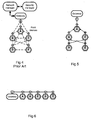
- the figure shows a process that takes place in a wireless node of a network such as in nodes A-E shown in Figures 4-6 .
- the following steps from Figure 3 are carried out:
- incoming data packets are received. Two or more data packets addressed to the same destination address are aggregated in the wireless node. Data from different packets addressed to the same destination are aggregated in the node so long as there is sufficient space in the total aggregated data packet, as compared to a predetermined size value.
- an incoming data packet is scanned. It may be an ordinary data packet or it may be an aggregated data packet. There may already be a data packet that the wireless node has generated or otherwise has stored intended for transmission. The wireless node aggregates any incoming packets intended for the same destination address up until the aggregated data packet reaches a predetermined maximum packet size, after which the aggregated data packet is transmitted. One or more aggregated data packets may be aggregated into a data packet, or into another aggregated data packet in any order, so long as maximum packet size is not exceeded.
- Figure 5 shows a simple network topology with a maximum of 3 hops to the gateway GW.
- device A in Figure 5 is the only device in the network which can communicate directly with the gateway.
- one possible routing graph extracted from this topology can be seen in Figure 5 .
- a schedule can be that devices D and E send their packets to device B.
- Device B send three packets (Device B's own, plus D and E's packets) to device A.
- Device C also sends a packet to device A, which in turn sends five packets (all the packets) to the gateway.
- the above example shows that using data aggregation between devices in a WirelessHART-compatible network saves energy and thereby prolonging the lifetime of the network.
- the number of slots that are needed in a super frame can be reduced, or, more devices can be added to the network.
- the WirelessHART network will interfere less with the other surrounding wireless networks, e.g. WLAN, Zig-Bee, Bluetooth.
- a wireless sensor network may also be connected to a node or access point or gateway of a wireless LAN, and/or may be another kind of wireless node, running any radio protocol suitable for an industrial milieu, such as any standard issued by the Bluetooth Special Interest Group (SIG), any variation of IEEE-802.11, WiFi, Ultra Wide Band (UWB), ZigBee or IEEE-802.15.4, IEEE-802.13 or equivalent, or similar.
- SIG Bluetooth Special Interest Group
- a radio technology working in the ISM band such as in a protocol from ABB called Wireless interface for sensors and actuators (Wisa) may be used.
- a control system or distributed control system may also include wireless communication carried out using Infra Red (IR) means and protocols such as IrDA, IrCOMM or similar.
- IR Infra Red
- the methods of data packet aggregation for wireless communication in wireless sensor networks as described above, in the Figure 3 and elsewhere in this specification may be carried out by a computer application comprising computer program elements or software code which, when loaded in a processor or computer, causes the computer or processor to carry out the method steps.
- the functions of processing data packets, saving data from data packets in one or more buffers, and aggregating data packets may be carried out by processing digital functions, algorithms and/or computer programs and/or by analogue components or analogue circuits or by a combination of both digital and analogue functions.
- the functions may be carried out standard processors or micro processors or by hardware or configurable hardware such as a Field-Programmable Gate Array (FPGA), Complex Programmable Logic Device (CPLD) or an Application Specific Integrated Circuit (ASIC).
- FPGA Field-Programmable Gate Array
- CPLD Complex Programmable Logic Device
- ASIC Application Specific Integrated Circuit
- the methods of the invention may, as previously described, be carried out by means of one or more computer programs comprising computer program code or software portions running on a computer or a processor and stored at least in part in memory and as such accessible by the one or more processors in a wireless node such as node A-E.
- the or each processor may have a memory storage unit, or may be connected to a memory storage unit of another unit such as a process system control unit or a PLC (programmable Logic Controller) or other system part thereof.
- the computer program comprises computer program code elements or software code portions that make the computer perform the method of data packet aggregation using algorithms and/or equations, data, stored values, predetermined values and calculations previously described.
- a part of the program may be stored in a processor as above, but also in a ROM, RAM, PROM, EPROM or EEPROM chip or similar memory means.
- the program in part or in whole may also be stored on, or in, other suitable computer readable medium such as a magnetic disk, such as a CD (compact disc) or a DVD (digital versatile disc), hard disk, magnetooptical memory storage means, in volatile memory, in flash memory, as firmware, stored on a data server or on one or more arrays of data servers.
- Other known and suitable media including removable memory media such as a USB memory stick and other removable flash memories, hard drives etc. may also be used.
Landscapes
- Engineering & Computer Science (AREA)
- Computer Networks & Wireless Communication (AREA)
- Signal Processing (AREA)
- Mobile Radio Communication Systems (AREA)
Claims (18)
- Procédé de communication dans un réseau de capteurs sans fil (WSN) d'un système de commande industriel, ledit réseau comprenant une pluralité de noeuds de dispositifs et une passerelle (GW), ledit procédé comprenant d'agréger des données provenant d'au moins deux paquets de données, lesdits paquets de données comprenant une partie cryptée (105), caractérisé par les étapes suivantes :recevoir au niveau d'un premier noeud (A) au moins un premier paquet de données pour une première adresse de destination ; etagréger des données (100, 200) comprenant une première dite partie cryptée (105) provenant de l'au moins un premier paquet de données avec des données (110, 115) comprenant une seconde partie cryptée (115) provenant d'au moins un second paquet de données destiné à la première adresse de destination ;former un paquet de données agrégées comprenant ladite première partie cryptée (105) et la seconde partie cryptée (115) ;ajouter la taille (220) de ladite première partie cryptée (105) à la sous-couche Réseau et Sécurité (200) ; etenvoyer le paquet de données agrégées à un autre noeud ou à ladite passerelle (GW).
- Procédé selon la revendication 1, comprenant en outre les étapes suivantes :recevoir au niveau du premier noeud (A) l'au moins un premier paquet de données pour la première adresse de destination, enregistrer (23) l'au moins un premier paquet de données dans le tampon de paquets, ajouter (37) des données (110, 115, 110n) provenant de l'au moins un second paquet de données pour la première adresse de destination aux données stockées dans un tampon, et envoyer (39) un paquet de données agrégées à un autre dispositif ou à une passerelle (GW).
- Procédé selon la revendication 1, comprenant en outre les étapes suivantes :recevoir au niveau du premier noeud (A) l'au moins un premier paquet de données pour une première adresse de destination et calculer une taille estimée pour le paquet agrégé contenant les données de paquet agrégées provenant de l'au moins un premier paquet de données et de l'au moins un second paquet de données, comparer le résultat à une taille de paquet de données maximale prédéterminée, et si la taille estimée du paquet de données agrégées est inférieure à la taille de paquet maximale prédéterminée, transmettre le paquet de données agrégées depuis le premier noeud (A).
- Procédé selon la revendication 1, comprenant en outre les étapes suivantes :recevoir au niveau du premier noeud (A) le premier paquet de données et réutiliser au moins un bloc crypté (115) provenant d'une couche de Transport et Application (100) du premier paquet de données pour former le paquet de données agrégées.
- Procédé selon la revendication 1, comprenant en outre les étapes suivantes :recevoir au niveau du premier noeud (A) l'au moins un premier paquet de données et réutiliser au moins un bloc crypté (115) provenant d'une couche de Transport et Application (100) du premier paquet de données, et ajouter un autre octet supplémentaire (120) représentant la taille de l'au moins un bloc crypté (115) formant le paquet de données agrégées.
- Procédé selon la revendication 1, comprenant en outre les étapes suivantes :former le paquet de données agrégées provenant de deux, ou plus, dispositifs sans fil, où le paquet de données agrégées comprend une sous-couche Réseau et Sécurité (200) comprenant des champs du premier paquet de données et de chaque paquet de données successif formant le paquet de données agrégées.
- Procédé selon la revendication 1, comprenant en outre les étapes suivantes :former le paquet de données agrégées pour inclure des informations (Adresse Src 2, Adresse Src 1) pour mettre en oeuvre une sécurité de bout en bout.
- Procédé selon la revendication 1, comprenant en outre que le routage et le cadencement dudit procédé de communication sont conçus de manière à ce que chaque dispositif précédent sur un itinéraire effectue l'envoi avant le dispositif suivant sur le même itinéraire.
- Dispositif sans fil conçu pour une communication vers une passerelle (GW) dans un réseau de capteurs sans fil (WSN) d'un système de commande industriel comprenant une pluralité de noeuds de dispositifs, où la communication sans fil est conçue pour agréger des données provenant d'au moins deux paquets de données, lesdits paquets de données comprenant une partie cryptée (105), caractérisé en ce que le dispositif sans fil comprend un circuit et un dispositif de stockage en mémoire conçus avec des instructions appropriées pour exécuter un procédé de communication comprenant les étapes suivantes :recevoir au niveau d'un premier noeud (A) au moins un premier paquet de données pour une première adresse de destination ; etagréger des données (100, 200) comprenant une première dite partie cryptée (105) provenant de l'au moins un premier paquet de données avec des données (110, 115) comprenant une seconde partie cryptée (115) provenant d'au moins un second paquet de données destiné à la première adresse de destination ;former un paquet de données agrégées comprenant ladite première partie cryptée (105) et la seconde partie cryptée (115) ;ajouter la taille (220) de ladite première partie cryptée (105) à la sous-couche Réseau et Sécurité (200) ; etenvoyer le paquet de données agrégées à une passerelle (GW) ou un autre noeud.
- Dispositif selon la revendication 9, comprenant en outre que le dispositif sans fil est un dispositif quelconque du groupe suivant : un dispositif de terrain sans fil, un capteur sans fil, un instrument sans fil, un compteur sans fil, un adaptateur sans fil d'un ou plusieurs dispositifs de terrain, un concentrateur, un routeur, un dispositif de gestion de réseau, un dispositif de gestion de la sécurité, une passerelle.
- Dispositif selon la revendication 9, comprenant en outre que le dispositif sans fil est configuré pour être compatible avec tout standard ou tout protocole du groupe comprenant : HART sans fil, ISA100.
- Dispositif selon la revendication 9, comprenant en outre que le dispositif sans fil est conçu pour être alimenté au moins en partie par une unité de stockage d'énergie comprenant tout dispositif du groupe comprenant : une batterie, un accumulateur, un condensateur, un condenseur.
- Dispositif selon la revendication 9, comprenant en outre que le dispositif sans fil est conçu avec un processeur et un dispositif de stockage en mémoire.
- Produit programme informatique comprenant des parties de code de logiciel ou de code informatique pour amener un ordinateur ou un processeur à exécuter les étapes d'un procédé selon l'une quelconque des revendications 1 à 8.
- Produit programme informatique ayant des parties de code de logiciel ou de code informatique stockées sur un support utilisable par un ordinateur comprenant un moyen de programme lisible par ordinateur pour amener un ordinateur à exécuter les étapes d'un procédé selon l'une quelconque des revendications 1 à 8.
- Système de réseau de capteurs sans fil (WSN) d'un système de commande industriel comprenant une pluralité de noeuds de dispositifs sans fil conçus pour une communication vers une passerelle (GW), où la communication sans fil est conçue pour agréger des données provenant d'au moins deux paquets de données, lesdits paquets de données comprenant une partie cryptée (105), caractérisé en ce que deux, ou plus, dispositifs sans fil comprennent un circuit et un dispositif de stockage en mémoire conçus avec des instructions appropriées pour exécuter un procédé de routage de communication comprenant les étapes suivantes :recevoir au niveau d'un premier noeud (A) au moins un premier paquet de données pour une première adresse de destination ; etagréger des données (100, 200) comprenant une première dite partie cryptée (105) provenant de l'au moins un premier paquet de données avec des données (110, 115) comprenant une seconde partie cryptée (115) provenant d'au moins un second paquet de données destiné à la première adresse de destination ;former un paquet de données agrégées ;ajouter la taille (220) de ladite première partie cryptée (105) à la couche Réseau et Sécurité (200) ; etenvoyer le paquet de données agrégées comprenant ladite première partie cryptée (105) et ladite seconde partie cryptée (115) à une passerelle (GW) ou un autre noeud.
- Système selon la revendication 16, comprenant en outre qu'au moins un dispositif sans fil dudit réseau de capteurs sans fil (WSN) est conçu pour une communication avec une passerelle (GW) ou un point d'accès.
- Système selon la revendication 16, comprenant en outre que le paquet de données agrégées est conçu pour inclure des informations (Adresse Src 2, Adresse Src 1) pour mettre en oeuvre une sécurité de bout en bout.
Applications Claiming Priority (1)
| Application Number | Priority Date | Filing Date | Title |
|---|---|---|---|
| PCT/EP2010/053337 WO2011113475A1 (fr) | 2010-03-16 | 2010-03-16 | Procédé économe en énergie pour des communications dans un réseau de capteurs sans fil d'un système de commande industriel |
Publications (2)
| Publication Number | Publication Date |
|---|---|
| EP2548392A1 EP2548392A1 (fr) | 2013-01-23 |
| EP2548392B1 true EP2548392B1 (fr) | 2013-11-13 |
Family
ID=42813102
Family Applications (1)
| Application Number | Title | Priority Date | Filing Date |
|---|---|---|---|
| EP10709489.8A Not-in-force EP2548392B1 (fr) | 2010-03-16 | 2010-03-16 | Procédé économe en énergie pour des communications dans un réseau de capteurs sans fil d'un système de commande industriel |
Country Status (4)
| Country | Link |
|---|---|
| US (1) | US9451498B2 (fr) |
| EP (1) | EP2548392B1 (fr) |
| CN (1) | CN102845100B (fr) |
| WO (1) | WO2011113475A1 (fr) |
Families Citing this family (18)
| Publication number | Priority date | Publication date | Assignee | Title |
|---|---|---|---|---|
| US9503380B2 (en) | 2012-06-08 | 2016-11-22 | Nec Corporation | Communication apparatus, communication method, and computer readable medium |
| JP5645031B2 (ja) * | 2012-11-21 | 2014-12-24 | 独立行政法人情報通信研究機構 | データ送受信方法 |
| FR3019957B1 (fr) * | 2014-04-09 | 2016-05-27 | Actility | Procedes de codage et decodage de trames dans un reseau de telecommunication |
| US20150295841A1 (en) * | 2014-04-14 | 2015-10-15 | Qualcomm Incorporated | Efficient packet aggregation using dynamic wait time |
| US9864864B2 (en) * | 2014-09-23 | 2018-01-09 | Accenture Global Services Limited | Industrial security agent platform |
| US9961104B2 (en) * | 2014-12-02 | 2018-05-01 | Empire Technology Development Llc | Side channel attack deterrence in networks |
| US20170183243A1 (en) * | 2015-03-26 | 2017-06-29 | Doug Reitmeyer | Systems and arrangements for mitigating environmental damage caused by storm water carried pollution |
| KR101995828B1 (ko) * | 2015-07-30 | 2019-07-04 | 엘에스산전 주식회사 | 데이터 송수신 시스템 |
| JP6265182B2 (ja) * | 2015-08-20 | 2018-01-24 | 横河電機株式会社 | 無線中継機器、処理装置、無線通信システム、及び無線通信方法 |
| CN106547260B (zh) * | 2016-10-26 | 2019-03-08 | 北京广利核系统工程有限公司 | 仪控系统中的通信方法、仪控系统用通信装置及仪控系统 |
| CN109842868B (zh) | 2017-11-29 | 2021-09-03 | 华为技术有限公司 | 一种帧聚合、网络设置帧发送方法及设备 |
| SE541441C2 (en) * | 2017-12-28 | 2019-10-01 | DeviceRadio AB | Method and a node for preventing latency in data packet transmission |
| EP3763166B1 (fr) * | 2018-03-08 | 2024-04-10 | Qualcomm Incorporated | Systèmes et procédés pour la planification de données en sens montant dans des systèmes de communication sans fil |
| US20210385152A1 (en) | 2018-08-24 | 2021-12-09 | Signify Holding B.V. | A method of and a node device for application data exchange |
| JP7166217B2 (ja) * | 2019-04-25 | 2022-11-07 | Thk株式会社 | 処理装置、処理済みデータの収集方法、及びデータ収集システム |
| CN113743569B (zh) * | 2020-05-29 | 2024-07-05 | 上海新氦类脑智能科技有限公司 | 脉冲信号发送方法、装置及存储介质 |
| US11531669B2 (en) * | 2020-08-21 | 2022-12-20 | Siemens Industry, Inc. | Systems and methods to assess and repair data using data quality indicators |
| CA3131473A1 (fr) | 2020-11-17 | 2022-05-17 | The Boeing Company | Systeme de communication mobile utilisant une gestion active de la bande passante |
Family Cites Families (12)
| Publication number | Priority date | Publication date | Assignee | Title |
|---|---|---|---|---|
| US8644341B1 (en) * | 2003-09-26 | 2014-02-04 | Sigma Designs Israel S.D.I. Ltd | MAC structure with packet-quasi-static blocks and ARQ |
| US7460524B2 (en) | 2003-12-07 | 2008-12-02 | Lucent Technologies Inc. | Method of frame aggregation |
| JP4528541B2 (ja) * | 2004-03-05 | 2010-08-18 | 株式会社東芝 | 通信装置、通信方法、および通信システム |
| US7860495B2 (en) | 2004-08-09 | 2010-12-28 | Siemens Industry Inc. | Wireless building control architecture |
| WO2008070738A1 (fr) | 2006-12-05 | 2008-06-12 | Qualcomm Incorporated | Agrégation amélioré des trames de gestion dans un système de réseau sans fil |
| US8942219B2 (en) * | 2007-04-13 | 2015-01-27 | Hart Communication Foundation | Support for network management and device communications in a wireless network |
| US7760629B2 (en) * | 2007-09-04 | 2010-07-20 | Cisco Technology, Inc. | Aggregate data frame generation |
| WO2009061110A1 (fr) | 2007-11-08 | 2009-05-14 | Lg Electronics Inc. | Procédé de transmission de données dans un réseau maillé sans fil et un format a-msdu |
| US8000468B2 (en) * | 2007-11-30 | 2011-08-16 | Industrial Technology Research Institute | Method and system for secure data aggregation in wireless sensor networks |
| US8559306B2 (en) * | 2008-02-13 | 2013-10-15 | Cisco Technology, Inc. | End-to-end packet aggregation in mesh networks |
| WO2009148263A2 (fr) * | 2008-06-03 | 2009-12-10 | Samsung Electronics Co., Ltd. | Système et procédé de réduction de surdébit de cryptage par concaténation de multiples paquets de connexion associés à une association de sécurité |
| US8509193B2 (en) * | 2009-07-21 | 2013-08-13 | Microsoft Corporation | Packet aggregation |
-
2010
- 2010-03-16 EP EP10709489.8A patent/EP2548392B1/fr not_active Not-in-force
- 2010-03-16 CN CN201080066235.0A patent/CN102845100B/zh not_active Expired - Fee Related
- 2010-03-16 WO PCT/EP2010/053337 patent/WO2011113475A1/fr not_active Ceased
-
2012
- 2012-09-14 US US13/618,962 patent/US9451498B2/en not_active Expired - Fee Related
Also Published As
| Publication number | Publication date |
|---|---|
| CN102845100A (zh) | 2012-12-26 |
| EP2548392A1 (fr) | 2013-01-23 |
| US9451498B2 (en) | 2016-09-20 |
| US20130064229A1 (en) | 2013-03-14 |
| CN102845100B (zh) | 2016-04-20 |
| WO2011113475A1 (fr) | 2011-09-22 |
Similar Documents
| Publication | Publication Date | Title |
|---|---|---|
| EP2548392B1 (fr) | Procédé économe en énergie pour des communications dans un réseau de capteurs sans fil d'un système de commande industriel | |
| EP2580899B1 (fr) | Procédé écoénergétique permettant une communication entre un réseau de capteurs sans fil et un système industriel de commande | |
| Wu et al. | Energy-efficient wake-up scheduling for data collection and aggregation | |
| EP2171924B1 (fr) | Support pour une gestion de réseau et des communications de dispositif dans un réseau sans fil | |
| Aju | A survey of zigbee wireless sensor network technology: Topology, applications and challenges | |
| US9002973B2 (en) | Delayed publishing in process control systems | |
| Patti et al. | Introducing multi-level communication in the IEEE 802.15. 4e protocol: The MultiChannel-LLDN | |
| CN102196458A (zh) | 一种无线宽带传感器网络的组网方法及装置 | |
| US20120051365A1 (en) | Beacon For A Star Network, Sensor Nodes In A Star Network, Method For Initializing A Gateway In A Star Network And Method For Operating A Star Network | |
| JP5868551B2 (ja) | 無線通信システム及び無線通信方法 | |
| Gupta et al. | A novel approach to improve network lifetime in WSN by energy efficient packet optimization | |
| Watanabe et al. | An energy-efficient architecture of wireless home network based on MAC broadcast and transmission power control | |
| Fanucchi et al. | Impact of network monitoring in IEEE 802.15. 4e-based wireless sensor networks | |
| Makashov et al. | Anti-jamming Wireless Sensor Network Model | |
| Wang et al. | Design of cable temperature wireless monitoring system | |
| CN120456170A (zh) | 通信方法及相关装置 | |
| Grieco | 6TiSCH T. Watteyne, Ed. Internet-Draft Linear Technology Intended status: Informational MR. Palattella Expires: April 23, 2014 University of Luxembourg | |
| Kaur et al. | A Study Analysis of IEEE 802.15. 4 Zigbee based WSN in Campus | |
| Saravanan et al. | Quality of Service for Wireless Sensor Network | |
| Zhang et al. | Street Lamp Management System Based on zigbee Technology Routing Design | |
| HAMID et al. | A Cluster-based MAC Protocol in Hierarchical Wireless Sensor Network for Efficient Data Collection |
Legal Events
| Date | Code | Title | Description |
|---|---|---|---|
| PUAI | Public reference made under article 153(3) epc to a published international application that has entered the european phase |
Free format text: ORIGINAL CODE: 0009012 |
|
| 17P | Request for examination filed |
Effective date: 20121016 |
|
| AK | Designated contracting states |
Kind code of ref document: A1 Designated state(s): AT BE BG CH CY CZ DE DK EE ES FI FR GB GR HR HU IE IS IT LI LT LU LV MC MK MT NL NO PL PT RO SE SI SK SM TR |
|
| REG | Reference to a national code |
Ref country code: DE Ref legal event code: R079 Ref document number: 602010011711 Country of ref document: DE Free format text: PREVIOUS MAIN CLASS: H04W0028060000 Ipc: H04W0084180000 |
|
| DAX | Request for extension of the european patent (deleted) | ||
| GRAP | Despatch of communication of intention to grant a patent |
Free format text: ORIGINAL CODE: EPIDOSNIGR1 |
|
| RIC1 | Information provided on ipc code assigned before grant |
Ipc: H04W 84/18 20090101AFI20130613BHEP |
|
| INTG | Intention to grant announced |
Effective date: 20130717 |
|
| GRAS | Grant fee paid |
Free format text: ORIGINAL CODE: EPIDOSNIGR3 |
|
| GRAA | (expected) grant |
Free format text: ORIGINAL CODE: 0009210 |
|
| AK | Designated contracting states |
Kind code of ref document: B1 Designated state(s): AT BE BG CH CY CZ DE DK EE ES FI FR GB GR HR HU IE IS IT LI LT LU LV MC MK MT NL NO PL PT RO SE SI SK SM TR |
|
| REG | Reference to a national code |
Ref country code: GB Ref legal event code: FG4D |
|
| REG | Reference to a national code |
Ref country code: CH Ref legal event code: EP |
|
| REG | Reference to a national code |
Ref country code: AT Ref legal event code: REF Ref document number: 641018 Country of ref document: AT Kind code of ref document: T Effective date: 20131215 |
|
| REG | Reference to a national code |
Ref country code: IE Ref legal event code: FG4D |
|
| REG | Reference to a national code |
Ref country code: DE Ref legal event code: R096 Ref document number: 602010011711 Country of ref document: DE Effective date: 20140109 |
|
| REG | Reference to a national code |
Ref country code: NL Ref legal event code: VDEP Effective date: 20131113 |
|
| REG | Reference to a national code |
Ref country code: AT Ref legal event code: MK05 Ref document number: 641018 Country of ref document: AT Kind code of ref document: T Effective date: 20131113 |
|
| REG | Reference to a national code |
Ref country code: LT Ref legal event code: MG4D |
|
| PG25 | Lapsed in a contracting state [announced via postgrant information from national office to epo] |
Ref country code: NL Free format text: LAPSE BECAUSE OF FAILURE TO SUBMIT A TRANSLATION OF THE DESCRIPTION OR TO PAY THE FEE WITHIN THE PRESCRIBED TIME-LIMIT Effective date: 20131113 Ref country code: SE Free format text: LAPSE BECAUSE OF FAILURE TO SUBMIT A TRANSLATION OF THE DESCRIPTION OR TO PAY THE FEE WITHIN THE PRESCRIBED TIME-LIMIT Effective date: 20131113 Ref country code: NO Free format text: LAPSE BECAUSE OF FAILURE TO SUBMIT A TRANSLATION OF THE DESCRIPTION OR TO PAY THE FEE WITHIN THE PRESCRIBED TIME-LIMIT Effective date: 20140213 Ref country code: HR Free format text: LAPSE BECAUSE OF FAILURE TO SUBMIT A TRANSLATION OF THE DESCRIPTION OR TO PAY THE FEE WITHIN THE PRESCRIBED TIME-LIMIT Effective date: 20131113 Ref country code: FI Free format text: LAPSE BECAUSE OF FAILURE TO SUBMIT A TRANSLATION OF THE DESCRIPTION OR TO PAY THE FEE WITHIN THE PRESCRIBED TIME-LIMIT Effective date: 20131113 Ref country code: LT Free format text: LAPSE BECAUSE OF FAILURE TO SUBMIT A TRANSLATION OF THE DESCRIPTION OR TO PAY THE FEE WITHIN THE PRESCRIBED TIME-LIMIT Effective date: 20131113 Ref country code: IS Free format text: LAPSE BECAUSE OF FAILURE TO SUBMIT A TRANSLATION OF THE DESCRIPTION OR TO PAY THE FEE WITHIN THE PRESCRIBED TIME-LIMIT Effective date: 20140313 |
|
| PG25 | Lapsed in a contracting state [announced via postgrant information from national office to epo] |
Ref country code: ES Free format text: LAPSE BECAUSE OF FAILURE TO SUBMIT A TRANSLATION OF THE DESCRIPTION OR TO PAY THE FEE WITHIN THE PRESCRIBED TIME-LIMIT Effective date: 20131113 Ref country code: BE Free format text: LAPSE BECAUSE OF FAILURE TO SUBMIT A TRANSLATION OF THE DESCRIPTION OR TO PAY THE FEE WITHIN THE PRESCRIBED TIME-LIMIT Effective date: 20131113 Ref country code: LV Free format text: LAPSE BECAUSE OF FAILURE TO SUBMIT A TRANSLATION OF THE DESCRIPTION OR TO PAY THE FEE WITHIN THE PRESCRIBED TIME-LIMIT Effective date: 20131113 Ref country code: CY Free format text: LAPSE BECAUSE OF FAILURE TO SUBMIT A TRANSLATION OF THE DESCRIPTION OR TO PAY THE FEE WITHIN THE PRESCRIBED TIME-LIMIT Effective date: 20131113 Ref country code: AT Free format text: LAPSE BECAUSE OF FAILURE TO SUBMIT A TRANSLATION OF THE DESCRIPTION OR TO PAY THE FEE WITHIN THE PRESCRIBED TIME-LIMIT Effective date: 20131113 |
|
| PG25 | Lapsed in a contracting state [announced via postgrant information from national office to epo] |
Ref country code: PT Free format text: LAPSE BECAUSE OF FAILURE TO SUBMIT A TRANSLATION OF THE DESCRIPTION OR TO PAY THE FEE WITHIN THE PRESCRIBED TIME-LIMIT Effective date: 20140313 |
|
| PG25 | Lapsed in a contracting state [announced via postgrant information from national office to epo] |
Ref country code: EE Free format text: LAPSE BECAUSE OF FAILURE TO SUBMIT A TRANSLATION OF THE DESCRIPTION OR TO PAY THE FEE WITHIN THE PRESCRIBED TIME-LIMIT Effective date: 20131113 |
|
| REG | Reference to a national code |
Ref country code: DE Ref legal event code: R097 Ref document number: 602010011711 Country of ref document: DE |
|
| PG25 | Lapsed in a contracting state [announced via postgrant information from national office to epo] |
Ref country code: CZ Free format text: LAPSE BECAUSE OF FAILURE TO SUBMIT A TRANSLATION OF THE DESCRIPTION OR TO PAY THE FEE WITHIN THE PRESCRIBED TIME-LIMIT Effective date: 20131113 Ref country code: RO Free format text: LAPSE BECAUSE OF FAILURE TO SUBMIT A TRANSLATION OF THE DESCRIPTION OR TO PAY THE FEE WITHIN THE PRESCRIBED TIME-LIMIT Effective date: 20131113 Ref country code: SK Free format text: LAPSE BECAUSE OF FAILURE TO SUBMIT A TRANSLATION OF THE DESCRIPTION OR TO PAY THE FEE WITHIN THE PRESCRIBED TIME-LIMIT Effective date: 20131113 Ref country code: PL Free format text: LAPSE BECAUSE OF FAILURE TO SUBMIT A TRANSLATION OF THE DESCRIPTION OR TO PAY THE FEE WITHIN THE PRESCRIBED TIME-LIMIT Effective date: 20131113 |
|
| PLBE | No opposition filed within time limit |
Free format text: ORIGINAL CODE: 0009261 |
|
| STAA | Information on the status of an ep patent application or granted ep patent |
Free format text: STATUS: NO OPPOSITION FILED WITHIN TIME LIMIT |
|
| PG25 | Lapsed in a contracting state [announced via postgrant information from national office to epo] |
Ref country code: DK Free format text: LAPSE BECAUSE OF FAILURE TO SUBMIT A TRANSLATION OF THE DESCRIPTION OR TO PAY THE FEE WITHIN THE PRESCRIBED TIME-LIMIT Effective date: 20131113 |
|
| 26N | No opposition filed |
Effective date: 20140814 |
|
| PG25 | Lapsed in a contracting state [announced via postgrant information from national office to epo] |
Ref country code: LU Free format text: LAPSE BECAUSE OF FAILURE TO SUBMIT A TRANSLATION OF THE DESCRIPTION OR TO PAY THE FEE WITHIN THE PRESCRIBED TIME-LIMIT Effective date: 20140316 |
|
| REG | Reference to a national code |
Ref country code: CH Ref legal event code: PL |
|
| REG | Reference to a national code |
Ref country code: DE Ref legal event code: R097 Ref document number: 602010011711 Country of ref document: DE Effective date: 20140814 |
|
| REG | Reference to a national code |
Ref country code: FR Ref legal event code: ST Effective date: 20141128 |
|
| REG | Reference to a national code |
Ref country code: IE Ref legal event code: MM4A |
|
| PG25 | Lapsed in a contracting state [announced via postgrant information from national office to epo] |
Ref country code: CH Free format text: LAPSE BECAUSE OF NON-PAYMENT OF DUE FEES Effective date: 20140331 Ref country code: FR Free format text: LAPSE BECAUSE OF NON-PAYMENT OF DUE FEES Effective date: 20140331 Ref country code: LI Free format text: LAPSE BECAUSE OF NON-PAYMENT OF DUE FEES Effective date: 20140331 Ref country code: IE Free format text: LAPSE BECAUSE OF NON-PAYMENT OF DUE FEES Effective date: 20140316 |
|
| PG25 | Lapsed in a contracting state [announced via postgrant information from national office to epo] |
Ref country code: SI Free format text: LAPSE BECAUSE OF FAILURE TO SUBMIT A TRANSLATION OF THE DESCRIPTION OR TO PAY THE FEE WITHIN THE PRESCRIBED TIME-LIMIT Effective date: 20131113 |
|
| PG25 | Lapsed in a contracting state [announced via postgrant information from national office to epo] |
Ref country code: IT Free format text: LAPSE BECAUSE OF FAILURE TO SUBMIT A TRANSLATION OF THE DESCRIPTION OR TO PAY THE FEE WITHIN THE PRESCRIBED TIME-LIMIT Effective date: 20131113 |
|
| PG25 | Lapsed in a contracting state [announced via postgrant information from national office to epo] |
Ref country code: MT Free format text: LAPSE BECAUSE OF FAILURE TO SUBMIT A TRANSLATION OF THE DESCRIPTION OR TO PAY THE FEE WITHIN THE PRESCRIBED TIME-LIMIT Effective date: 20131113 |
|
| PG25 | Lapsed in a contracting state [announced via postgrant information from national office to epo] |
Ref country code: SM Free format text: LAPSE BECAUSE OF FAILURE TO SUBMIT A TRANSLATION OF THE DESCRIPTION OR TO PAY THE FEE WITHIN THE PRESCRIBED TIME-LIMIT Effective date: 20131113 |
|
| PG25 | Lapsed in a contracting state [announced via postgrant information from national office to epo] |
Ref country code: MC Free format text: LAPSE BECAUSE OF FAILURE TO SUBMIT A TRANSLATION OF THE DESCRIPTION OR TO PAY THE FEE WITHIN THE PRESCRIBED TIME-LIMIT Effective date: 20131113 |
|
| PG25 | Lapsed in a contracting state [announced via postgrant information from national office to epo] |
Ref country code: BG Free format text: LAPSE BECAUSE OF FAILURE TO SUBMIT A TRANSLATION OF THE DESCRIPTION OR TO PAY THE FEE WITHIN THE PRESCRIBED TIME-LIMIT Effective date: 20131113 Ref country code: GR Free format text: LAPSE BECAUSE OF FAILURE TO SUBMIT A TRANSLATION OF THE DESCRIPTION OR TO PAY THE FEE WITHIN THE PRESCRIBED TIME-LIMIT Effective date: 20140214 |
|
| PG25 | Lapsed in a contracting state [announced via postgrant information from national office to epo] |
Ref country code: TR Free format text: LAPSE BECAUSE OF FAILURE TO SUBMIT A TRANSLATION OF THE DESCRIPTION OR TO PAY THE FEE WITHIN THE PRESCRIBED TIME-LIMIT Effective date: 20131113 Ref country code: HU Free format text: LAPSE BECAUSE OF FAILURE TO SUBMIT A TRANSLATION OF THE DESCRIPTION OR TO PAY THE FEE WITHIN THE PRESCRIBED TIME-LIMIT; INVALID AB INITIO Effective date: 20100316 |
|
| PG25 | Lapsed in a contracting state [announced via postgrant information from national office to epo] |
Ref country code: MK Free format text: LAPSE BECAUSE OF FAILURE TO SUBMIT A TRANSLATION OF THE DESCRIPTION OR TO PAY THE FEE WITHIN THE PRESCRIBED TIME-LIMIT Effective date: 20131113 |
|
| REG | Reference to a national code |
Ref country code: DE Ref legal event code: R081 Ref document number: 602010011711 Country of ref document: DE Owner name: ABB SCHWEIZ AG, CH Free format text: FORMER OWNER: ABB RESEARCH LTD., ZUERICH, CH |
|
| REG | Reference to a national code |
Ref country code: GB Ref legal event code: 732E Free format text: REGISTERED BETWEEN 20200206 AND 20200212 |
|
| PGFP | Annual fee paid to national office [announced via postgrant information from national office to epo] |
Ref country code: GB Payment date: 20220321 Year of fee payment: 13 Ref country code: DE Payment date: 20220322 Year of fee payment: 13 |
|
| REG | Reference to a national code |
Ref country code: DE Ref legal event code: R119 Ref document number: 602010011711 Country of ref document: DE |
|
| GBPC | Gb: european patent ceased through non-payment of renewal fee |
Effective date: 20230316 |
|
| PG25 | Lapsed in a contracting state [announced via postgrant information from national office to epo] |
Ref country code: GB Free format text: LAPSE BECAUSE OF NON-PAYMENT OF DUE FEES Effective date: 20230316 |
|
| PG25 | Lapsed in a contracting state [announced via postgrant information from national office to epo] |
Ref country code: GB Free format text: LAPSE BECAUSE OF NON-PAYMENT OF DUE FEES Effective date: 20230316 Ref country code: DE Free format text: LAPSE BECAUSE OF NON-PAYMENT OF DUE FEES Effective date: 20231003 |