EP2548687B1 - Hartlöten von Metallkomponenten - Google Patents
Hartlöten von Metallkomponenten Download PDFInfo
- Publication number
- EP2548687B1 EP2548687B1 EP12175957.5A EP12175957A EP2548687B1 EP 2548687 B1 EP2548687 B1 EP 2548687B1 EP 12175957 A EP12175957 A EP 12175957A EP 2548687 B1 EP2548687 B1 EP 2548687B1
- Authority
- EP
- European Patent Office
- Prior art keywords
- heating
- layer
- layers
- brazing
- components
- Prior art date
- Legal status (The legal status is an assumption and is not a legal conclusion. Google has not performed a legal analysis and makes no representation as to the accuracy of the status listed.)
- Not-in-force
Links
Images

Classifications
-
- B—PERFORMING OPERATIONS; TRANSPORTING
- B23—MACHINE TOOLS; METAL-WORKING NOT OTHERWISE PROVIDED FOR
- B23K—SOLDERING OR UNSOLDERING; WELDING; CLADDING OR PLATING BY SOLDERING OR WELDING; CUTTING BY APPLYING HEAT LOCALLY, e.g. FLAME CUTTING; WORKING BY LASER BEAM
- B23K1/00—Soldering, e.g. brazing, or unsoldering
- B23K1/19—Soldering, e.g. brazing, or unsoldering taking account of the properties of the materials to be soldered
-
- B—PERFORMING OPERATIONS; TRANSPORTING
- B23—MACHINE TOOLS; METAL-WORKING NOT OTHERWISE PROVIDED FOR
- B23K—SOLDERING OR UNSOLDERING; WELDING; CLADDING OR PLATING BY SOLDERING OR WELDING; CUTTING BY APPLYING HEAT LOCALLY, e.g. FLAME CUTTING; WORKING BY LASER BEAM
- B23K1/00—Soldering, e.g. brazing, or unsoldering
- B23K1/0004—Resistance soldering
-
- B—PERFORMING OPERATIONS; TRANSPORTING
- B23—MACHINE TOOLS; METAL-WORKING NOT OTHERWISE PROVIDED FOR
- B23K—SOLDERING OR UNSOLDERING; WELDING; CLADDING OR PLATING BY SOLDERING OR WELDING; CUTTING BY APPLYING HEAT LOCALLY, e.g. FLAME CUTTING; WORKING BY LASER BEAM
- B23K1/00—Soldering, e.g. brazing, or unsoldering
- B23K1/20—Preliminary treatment of work or areas to be soldered, e.g. in respect of a galvanic coating
- B23K1/206—Cleaning
-
- B—PERFORMING OPERATIONS; TRANSPORTING
- B23—MACHINE TOOLS; METAL-WORKING NOT OTHERWISE PROVIDED FOR
- B23K—SOLDERING OR UNSOLDERING; WELDING; CLADDING OR PLATING BY SOLDERING OR WELDING; CUTTING BY APPLYING HEAT LOCALLY, e.g. FLAME CUTTING; WORKING BY LASER BEAM
- B23K20/00—Non-electric welding by applying impact or other pressure, with or without the application of heat, e.g. cladding or plating
- B23K20/02—Non-electric welding by applying impact or other pressure, with or without the application of heat, e.g. cladding or plating by means of a press ; Diffusion bonding
- B23K20/023—Thermo-compression bonding
-
- B—PERFORMING OPERATIONS; TRANSPORTING
- B23—MACHINE TOOLS; METAL-WORKING NOT OTHERWISE PROVIDED FOR
- B23K—SOLDERING OR UNSOLDERING; WELDING; CLADDING OR PLATING BY SOLDERING OR WELDING; CUTTING BY APPLYING HEAT LOCALLY, e.g. FLAME CUTTING; WORKING BY LASER BEAM
- B23K20/00—Non-electric welding by applying impact or other pressure, with or without the application of heat, e.g. cladding or plating
- B23K20/16—Non-electric welding by applying impact or other pressure, with or without the application of heat, e.g. cladding or plating with interposition of special material to facilitate connection of the parts, e.g. material for absorbing or producing gas
-
- B—PERFORMING OPERATIONS; TRANSPORTING
- B23—MACHINE TOOLS; METAL-WORKING NOT OTHERWISE PROVIDED FOR
- B23K—SOLDERING OR UNSOLDERING; WELDING; CLADDING OR PLATING BY SOLDERING OR WELDING; CUTTING BY APPLYING HEAT LOCALLY, e.g. FLAME CUTTING; WORKING BY LASER BEAM
- B23K35/00—Rods, electrodes, materials, or media, for use in soldering, welding, or cutting
- B23K35/02—Rods, electrodes, materials, or media, for use in soldering, welding, or cutting characterised by mechanical features, e.g. shape
- B23K35/0222—Rods, electrodes, materials, or media, for use in soldering, welding, or cutting characterised by mechanical features, e.g. shape for use in soldering or brazing
- B23K35/0233—Sheets or foils
- B23K35/0238—Sheets or foils layered
-
- B—PERFORMING OPERATIONS; TRANSPORTING
- B23—MACHINE TOOLS; METAL-WORKING NOT OTHERWISE PROVIDED FOR
- B23K—SOLDERING OR UNSOLDERING; WELDING; CLADDING OR PLATING BY SOLDERING OR WELDING; CUTTING BY APPLYING HEAT LOCALLY, e.g. FLAME CUTTING; WORKING BY LASER BEAM
- B23K35/00—Rods, electrodes, materials, or media, for use in soldering, welding, or cutting
- B23K35/22—Rods, electrodes, materials, or media, for use in soldering, welding, or cutting characterised by the composition or nature of the material
- B23K35/24—Selection of soldering or welding materials proper
- B23K35/30—Selection of soldering or welding materials proper with the principal constituent melting at less than 1550°C
- B23K35/3006—Ag as the principal constituent
-
- H—ELECTRICITY
- H10—SEMICONDUCTOR DEVICES; ELECTRIC SOLID-STATE DEVICES NOT OTHERWISE PROVIDED FOR
- H10W—GENERIC PACKAGES, INTERCONNECTIONS, CONNECTORS OR OTHER CONSTRUCTIONAL DETAILS OF DEVICES COVERED BY CLASS H10
- H10W72/00—Interconnections or connectors in packages
- H10W72/071—Connecting or disconnecting
- H10W72/073—Connecting or disconnecting of die-attach connectors
-
- B—PERFORMING OPERATIONS; TRANSPORTING
- B23—MACHINE TOOLS; METAL-WORKING NOT OTHERWISE PROVIDED FOR
- B23K—SOLDERING OR UNSOLDERING; WELDING; CLADDING OR PLATING BY SOLDERING OR WELDING; CUTTING BY APPLYING HEAT LOCALLY, e.g. FLAME CUTTING; WORKING BY LASER BEAM
- B23K2101/00—Articles made by soldering, welding or cutting
- B23K2101/34—Coated articles ; Surface treated articles
-
- B—PERFORMING OPERATIONS; TRANSPORTING
- B23—MACHINE TOOLS; METAL-WORKING NOT OTHERWISE PROVIDED FOR
- B23K—SOLDERING OR UNSOLDERING; WELDING; CLADDING OR PLATING BY SOLDERING OR WELDING; CUTTING BY APPLYING HEAT LOCALLY, e.g. FLAME CUTTING; WORKING BY LASER BEAM
- B23K2103/00—Materials to be soldered, welded or cut
- B23K2103/08—Non-ferrous metals or alloys
- B23K2103/14—Titanium or alloys thereof
-
- B—PERFORMING OPERATIONS; TRANSPORTING
- B23—MACHINE TOOLS; METAL-WORKING NOT OTHERWISE PROVIDED FOR
- B23K—SOLDERING OR UNSOLDERING; WELDING; CLADDING OR PLATING BY SOLDERING OR WELDING; CUTTING BY APPLYING HEAT LOCALLY, e.g. FLAME CUTTING; WORKING BY LASER BEAM
- B23K2103/00—Materials to be soldered, welded or cut
- B23K2103/18—Dissimilar materials
- B23K2103/26—Alloys of Nickel and Cobalt and Chromium
Definitions
- the present invention relates to methods of bonding metal or metal alloy components and more particularly to bonding methods involving brazing.
- a conventional brazing process typically involves the heating of two metal components with a third metallic material, typically a brazing alloy, of lower melting point, disposed there-between such that the third metal melts and reacts with the parent materials to form a strong bond.
- a third metallic material typically a brazing alloy, of lower melting point, disposed there-between such that the third metal melts and reacts with the parent materials to form a strong bond.
- This differs from soldering in that the interaction between the brazing alloy and the parent materials is greater than that in soldering, at least in part because the temperatures involved in brazing processes are higher.
- US2798843 describes a method of plating a titanium alloy with silver and then using the silver layer to braze the titanium alloy.
- US4725509 describes a method of providing a titanium alloy with a layer of copper and nickel and then using the layer to braze the titanium alloy.
- US4674675 describes a method of bonding titanium to an iron-nickel alloy using diffusion welding of interlayers made up of vanadium and one or more of chromium, tungsten, platinum, iron or nickel.
- US5372298 describes a method of joining ceramic articles using a transient liquid bond.
- SMA's Shape memory alloys
- SMA's are intermetallic materials that exhibit a reversible martensitic transformation. In their high temperature (austenitic) state, the shape memory alloy behaves substantially like an ordinary metal. When the SMA cools down below a certain point (a martensite start temperature), the material transforms from a cubic structure to a monoclinic structure. Cycling the SMA between its martensitic and austenitic states by heating and cooling provides for a predictable actuator motion.
- Shape memory alloys have been found to be particularly sensitive to heat treatment to temperatures suitable for titanium bonding and a major drawback of the above-described approach for SMA brazing, is that for actuator applications (as well as other potential SMA applications) the heat required for brazing can destroy, or at least negatively impact upon, the delicate shape memory effect (SME) properties of the SMA.
- SME shape memory effect
- the inventor Whilst a combination of isothermal melting behaviour and relatively low alloy melting point makes eutectic alloys a widely-adopted choice for brazing applications, the inventor has also determined that the proposed brazing alloy promotes the formation of brittle copper-titanium intermetallic compounds during the brazing process that can reduce the strength of the joint and also adversely affect its fatigue life.
- the present invention derives from the basic premise of, interposing a plurality of metallic layers between metallic components to be bonded and heating the plurality of interposed layers to a temperature such that at least one of the layers only partially melts so as to form a brazing alloy and thereby bond the components together.
- the interposing of layers between the metal components may comprise applying a coating layer to at least one of the metal components to be bonded.
- the coating layer may comprise or substantially consist of a precious metal, such as, for example, silver.
- a method of bonding a first component comprising a titanium-containing alloy to a second metal component comprising: applying a coating layer to the first component in the region to be bonded, the coating layer comprising or consisting of a precious metal; interposing an intermediate metallic layer between the coating layer of the first component and the second component; holding the coating layer in contact with the intermediate layer; and heating the coating layer and the intermediate layer to initiate melting of at least one of said layers so as to form a bond between the first and second components.
- the heating of the coating and intermediate layers is such that at least one of the coating and intermediate layers only partially melts. A portion of at least one layer remains substantially solid throughout the bonding process, thereby forming a two-phase liquid.
- a coating layer may be additionally or alternatively applied to the second component.
- the coating layer on the second component may comprise or substantially consist of a precious metal.
- the intermediate layer is preferably sandwiched between the coating layers of the first and second components during the onset of heating.
- the brazing of the coating layer(s) with the intermediate layer according to the present invention has been found to reduce the formation of brittle intermetallic compounds during bonding.
- the intermediate layer may serve to prevent interdiffusion of the component materials during brazing.
- the intermediate layer may serve to reduce the temperature at which the onset of melting of the coating layer occurs.
- the intermediate layer may serve as melting point depressant for the layered arrangement.
- the material or element of the intermediate layer may have a melting point higher than that of one or both coating layers.
- the heating of the coating layer(s) and intermediate layer forms a brazing alloy in situ.
- the alloy typically comprises a combination of the coating layer(s) and intermediate layer materials.
- the heating may comprise heating the coating and/or intermediate layers to form a brazing alloy in situ such that the brazing alloy only partially melts.
- the method allows the melting of the metal coating layers to be controlled such that the formation of titanium intermetallics is minimised.
- the heating may comprise heating to, or beyond, a temperature at which the material of the first and/or second components is self fluxing.
- the heating of the layers comprises local heating of one or more of said layers.
- the heating may be achieved through resistance heating.
- An electric current may be passed through one or more of the first or second components or the layers there-between so as to generate heat therein.
- the bonding method may comprise a resistance brazing process.
- the coating layer may be applied to the first and/or second components by a deposition process such as an electro-deposition process.
- the coating layer may be applied by electroplating.
- the intermediate layer may be applied to an outer surface of the coating layer of at least one of the components.
- the intermediate layer may be applied by a deposition process such as an electro-deposition process.
- the intermediate layer may be applied by electroplating.
- Electroplating of interlayers is beneficial since it reduces oxidation and other contaminants on the parent material surfaces
- the second component may comprise a titanium alloy.
- the first or second component may comprise a shape memory material, such as a shape memory alloy.
- the first or second material may comprise a Nickel Titanium alloy.
- the local heating of the layers for brazing of the components is particularly beneficial when one of the components comprises a SMA, since the SMA can be maintained at a temperature substantially below the brazing temperature such that the shape memory properties of the SMA are not destroyed or adversely affected by the brazing process. That is to say the SMA behaviour remains substantially unchanged by the heat applied during the brazing process.
- the coating layer on the first and/or second component may comprise silver.
- the intermediate layer may comprise copper.
- a strong metallurgical bond is formed by electroplating silver onto each of the components, electroplating a thin layer of copper onto one of the silver layers and then resistively heating the surfaces together.
- the electroplating of the silver to the components in advance of the brazing process has been found to increase bond strength.
- a semi-solid alloy composition is formed in situ which rapidly interacts with the first and second components, thereby reducing process times.
- the present invention may also offer a greater degree of control of brazing alloy thickness and/or composition than compared to standard brazing alloys. Furthermore the brazing temperature can be adjusted by controlling the composition of the layers, which can provide a further advantage over the use of standard brazing alloys.
- SMA Shape Memory Alloy
- the present invention derives from the basic premise of the provision of a means for preventing the titanium-rich liquid from bridging the gap between the components to be joined, which in this example comprise SMA and titanium alloy parent materials.
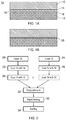
- FIG. 1 a there is shown an arrangement of a first component 10 comprising, or consisting of, a first material and a second component 12 comprising, or consisting of, a second material.
- the first material is Ti-6Al-4V and the second component 12 is a NiTi SMA.
- the first material 10 is prepared by cleaning the interface or surface to be bonded at stage 20. Conventional cleaning methods can be used to achieve a surface that is generally flat, smooth and free of grease or impurities.
- the first material 10 is electrolytically or otherwise treated so that the surface oxide layer is soluble in a silver containing electrolyte (or other precious metal containing electrolyte, corresponding to the first material).
- Material 10 then has a thin layer 14 of silver (or other precious metal) electrolytically deposited on the surface to give a complete covering of the surface region to be bonded.
- the layer 14 is typically of the order of a few microns, for example approximately 10 microns. However greater layer thicknesses may be applied depending on the desired join characteristics.
- stages 20 and 22 are also carried out for material 12 at stages 24 and 26. This may be done concurrently or sequentially with stages 20 and 22.
- both materials 10 and 12 have a corresponding layer 12, 14 of silver applied thereto in the region to be bonded.
- the layers 12 and 14 are substantially continuous and uniform, as far as possible using the relevant coating processes, over the region to be joined.
- one of the surface layers 14, 16 after being deposited on the corresponding component 10, 12, is then coated with a melting point depressant material layer 18. This is achieved in this example by a further electro-deposition/electroplating process using copper sulphate/sulphuric acid solution to deposit a thin copper layer on the material immersed therein.
- the volume of copper deposited is sufficient to initiate melting in the silver layers 12, 14 at a temperature below the melting point of silver, but there is insufficient copper to fully melt through the silver on either side of the joint.
- a pressure in the region of magnitude of 1 MPa has been found to be suitable, although it is envisaged that different forces/pressures will be applicable to different layer thicknesses and materials. Such layer thicknesses and associated forces can be determined by routine experimentation in order to achieve the desired effects described herein.
- the contact region between the components is then rapidly heated at stage 32 until melting of between 50-70% of the layers forming the brazing alloy is achieved.
- the layer construction is heated to approximately 90% of the melting point of the material of layers 14 and 16, that is to a temperature of approximately 860 °C in the case of silver-copper bonding. Any suitable conventional rapid heating techniques may potentially be applied but in the present example resistance heating was undertaken using the arrangement shown in Figure 3 .
- An electrode 34 is applied, in this example to the SMA side of the bond, so as to pass current through the assembly including the coating and intermediate layers and thereby heat the joining layers 14, 16 and 18 by electrical resistance.
- a cooling water supply 36 is provided to at least the SMA 12 to maintain the body of the SMA at a reduced temperature compared to that of the join. Typically the body temperature of the SMA material can be maintained at below 200°C to avoid degradation to the SMA properties.
- the intended heating method involves clamping the materials to be bonded between two water cooled electrodes so that the heat is generated at the interfaces within the joint and between the electrodes and the work piece. This method allows the shape memory alloy in the primary application to be cooled in the areas not being joined, through the water flowing around the electrodes.
- the heating is maintained so as to hold the desired temperature in the vicinity of the join for in the region of 1 to 2 minutes. A duration of 90 seconds at the brazing temperature was found to be adequate.
- the triple layer of the electrodeposited brazing alloy materials melts from the middle region (i.e. adjacent the intermediate layer 18) outwards.
- the bonding of the solid silver layer that is directly in contact with the parent materials is enhanced by the fact that the silver is already bonded to the parent material surface, instead of merely being placed in contact with the parent material, as is the case with conventional brazing alloys and processes.
- Silver-copper brazing alloys can be used to better effect according to the present invention than according to conventional brazing processes. This can be achieved by having a solid or partially solid interlayer 18 separating the two sides during brazing. Solid state bonding using pure silver can create bonds between SMA and Ti-6Al-4V, but the brazing temperature and duration to form an effective bond would use significant power and cooling water over an extended period of time to make each bond. Also there would be a high risk of oxygen entering the joint and making it brittle.
- the silver-copper combination advantageously forms a semi-solid, and an associated semi-solid bond, above the temperature at which titanium self-fluxes, but below the Ti-6Al-4V beta transus temperature.
- a partially liquid, silver-rich layer can bond to the titanium and SMA components rapidly due to the increased diffusion rates of liquids over solids. If a quantity of the brazing alloy remains solid then the two-phase liquid will have a high viscosity, providing resistance to displacement. Even though a pressure is applied to the parent materials to produce a gas-tight seal, the silver-rich liquid is lost because titanium/copper-rich liquid takes its place, not solely from the pressure itself.
- the proportion of solid to liquid in the brazing alloy is a function of the temperature and composition as indicated in Figure 4 .
- the amount of silver was set at 95% by weight, which is akin to the quantity of silver used in commercially available brazing foils.
- electroplated silver and copper layers which become an alloy in situ, it is possible to make use of bespoke foil thicknesses and compositions. Accordingly it has been found that a composition of 12-25% can be used.
- Copper reacts with titanium more rapidly than silver, which has a two-fold effect.
- the silver-copper alloy is more effective at wetting the titanium and SMA parent materials when there is a significant amount of copper present, being at least 5% by weight of the alloy. However if too much copper is present then the silver-copper liquid may start to leach titanium out of the parent materials, forming a titanium-copper liquid that can initiate the bridging phenomenon between the parent materials.
- the correct composition of silver and copper, between the two extremes described above, can produce a fast acting brazing alloy that produces a strong, ductile bond. Through using resistance brazing, this joint can be made without heating the surrounding SMA to a point where they lose their SME properties.
- At least one novel aspect of the present invention may be considered to reside in the creation of a brazing alloy in-situ using multiple layers, wherein one such layer is coated onto a component to be bonded.
- the provision of suitable material layers at the interface between the components to be joined allows for a joining structure that retains sufficient mechanical integrity during brazing such that it still acts as a barrier to diffusion between the parent materials of the components being joined. Welding inevitably forms brittle intermetallics in certain material joining combinations, so a third material interlayer is employed. This interlayer 18 prevents diffusion between the parent materials, whilst bonding them together through partial melting of the electroplated layers.
- aspects of this invention allow some of the brazing material to remain solid, physically separating the parent materials, and also partially melts so that a bond can be rapidly made.
- the silver layers are at least 20microns thick to avoid copper interacting with the Titanium alloy as TiCu intermetallic compounds which have lower strength.
- the bonding temperature and especially pressure can be reduced to avoid disruption of the parent materials. This is particularly important when joining shape memory alloys to other materials. Also the bond can be achieved in a rapid brazing process which avoids the need for a vacuum.
- the completed joint is allowed to cool, either naturally or through forced cooling using conventional techniques.
- FIG. 1 b The final form of the joined components 10 and 12 is shown in Figure 1 b , in which the previous arrangement of layers 14-18 has become a solid solution 38 of the material of layers 14 and 16 (i.e. silver) alloyed with the material of the intermediate layer (i.e. copper).
- the components 10 and 12 are thus joined by a substantially single layer of alloy 38 so as to provide a bonded article.
- One of the driving advantages of the present invention is that it allows a strong metallurgical bond to be formed between SMA and titanium components.
- the joining method is also applicable to any metal combination that can be coated with a precious metal such as silver or gold through electrochemical deposition, such as for joining titanium alloys to nickel alloys. It would also be possible to join nickel foams to titanium using this method.
- the invention may also be achieved by sputter coating the layers of any or all of brazing materials onto the relevant surfaces, although it is generally felt that this would be a less practical way of coating the surfaces prior to brazing. It will also be appreciated that other coating processes may be attempted for either the coating layers or else the intermediate layer, including other thin film deposition methods, such as physical/ chemical vapour deposition, ion beam or dipping the parent metal in a molten bath of the coating metal.
- silver is considered the primary choice of precious metal for providing a barrier layer that does not form brittle intermetallics, it could be substituted by other elements that do not form brittle intermetallics, such as gold or platinum.
- the melting point depressant selected for this application is copper due to its interaction with silver.
- any of a range of other metals could be used, so long as they form a binary eutectic with the precious metal being employed.
- This invention is intended to be used with parent metals that are self-fluxing at the intended bonding temperature to produce a fully metallic bond. This differentiates the process from a soldering operation, which would take place at low temperatures and require the use of a separate flux.
- the local heating could be applied through other conventional heating techniques, so long as the time at temperature could be accurately controlled.
Landscapes
- Engineering & Computer Science (AREA)
- Mechanical Engineering (AREA)
- Chemical & Material Sciences (AREA)
- Materials Engineering (AREA)
- Pressure Welding/Diffusion-Bonding (AREA)
- Ceramic Products (AREA)
Claims (14)
- Verfahren zum Binden einer ersten, Titanium umfassenden Komponente (10) an eine zweite metallische, Nickel enthaltende Komponente (12), wobei das Verfahren gekennzeichnet ist durch:Einfügen einer Vielzahl metallischer Schichten (14, 16, 18) zwischen die erste Komponente und die zweite Komponente; undErhitzen der Vielzahl metallischer Schichten, so dass durch Löten eine Bindung zwischen der ersten und der zweiten Komponente gebildet wird, wobei das Erhitzen das Erhitzen der Schichten auf eine Temperatur umfasst, bei der nur ein Teil der metallischen Schichten schmilzt,sodass wenigstens ein verbleibender Teil der metallischen Schichten während des Lötens fest bleibt, so dass eine zweiphasige Flüssigkeit gebildet wird.
- Verfahren nach Anspruch 1, wobei das Einfügen einer Vielzahl metallischer Schichten das Auftragen einer Belagschicht auf die erste Komponente in dem zu bindenden Bereich sowie das Einfügen einer Zwischenschicht zwischen der Belagschicht und der zweiten Komponente umfasst.
- Verfahren nach Anspruch 2, umfassend das Auftragen einer Belagschicht auf jede von der ersten und der zweiten Komponente sowie das Einfügen der Zwischenschicht zwischen den Belagschichten.
- Verfahren nach einem der vorhergehenden Ansprüche, wobei eine metallische Schicht als Schmelzpunkt-Senker für wenigstens eine andere der metallischen Schichten dient.
- Verfahren nach einem der Ansprüche 2 bis 4, wobei das Erhitzen der Belag- und der Zwischenschichten in situ eine Lötlegierung bildet, die eine Kombination aus den Belag- und der Zwischenschichtmaterialien umfasst.
- Verfahren nach einem der Ansprüche 2 bis 5, wobei die Belagschicht und/oder die Zwischenschicht unter Verwendung eines galvanischen Abscheidungsprozesses aufgetragen wird.
- Verfahren nach einem der Ansprüche 2 bis 6, wobei die Zwischenschicht auf eine Außenfläche der Belagschicht wenigstens einer der Komponenten durch einen Beschichtungsprozess aufgetragen wird.
- Verfahren nach einem der vorhergehenden Ansprüche, wobei das Erhitzen das Löten der ersten und der zweiten Komponente bei oder oberhalb einer Temperatur umfasst, bei der das Material der ersten und der zweiten Komponente selbstgängig sind.
- Verfahren nach einem der vorhergehenden Ansprüche, wobei das Erhitzen ein örtliches Erhitzen der zusammengefügten Komponenten und/oder Schichten durch Widerstandserhitzen umfasst.
- Verfahren nach einem der vorhergehenden Ansprüche, wobei die erste oder die zweite Komponente einen Formgedächtniswerkstoff, beispielsweise eine Formgedächtnislegierung umfasst.
- Verfahren nach Anspruch 10, wobei die andere der ersten und der zweiten Komponente eine Titaniumlegierung umfasst.
- Verfahren nach einem der vorhergehenden Ansprüche, wobei wenigstens eine metallische Schicht ein Edelmetall umfasst und wenigstens eine weitere metallische Schicht Kupfer umfasst.
- Verfahren nach einem der vorhergehenden Ansprüche, wobei wenigstens eine metallische Schicht und/oder Belagschicht eine Dicke im Bereich von 5-30 Mikrometern aufweist.
- Verfahren nach einem der vorhergehenden Ansprüche, wobei die erste und die zweite Komponente unter einer Druckkraft zusammengehalten werden, wobei sich die metallischen Schichten dazwischen befinden, so dass während des Erhitzens eine Druckkraft darauf ausgeübt wird, wobei das Erhitzen in einer Luftumgebung vorgenommen wird.
Applications Claiming Priority (1)
| Application Number | Priority Date | Filing Date | Title |
|---|---|---|---|
| GBGB1112376.7A GB201112376D0 (en) | 2011-07-19 | 2011-07-19 | Boding of metal components |
Publications (2)
| Publication Number | Publication Date |
|---|---|
| EP2548687A1 EP2548687A1 (de) | 2013-01-23 |
| EP2548687B1 true EP2548687B1 (de) | 2016-06-29 |
Family
ID=44586813
Family Applications (1)
| Application Number | Title | Priority Date | Filing Date |
|---|---|---|---|
| EP12175957.5A Not-in-force EP2548687B1 (de) | 2011-07-19 | 2012-07-11 | Hartlöten von Metallkomponenten |
Country Status (3)
| Country | Link |
|---|---|
| US (1) | US9120173B2 (de) |
| EP (1) | EP2548687B1 (de) |
| GB (1) | GB201112376D0 (de) |
Families Citing this family (37)
| Publication number | Priority date | Publication date | Assignee | Title |
|---|---|---|---|---|
| US8518204B2 (en) * | 2011-11-18 | 2013-08-27 | LuxVue Technology Corporation | Method of fabricating and transferring a micro device and an array of micro devices utilizing an intermediate electrically conductive bonding layer |
| US8646505B2 (en) | 2011-11-18 | 2014-02-11 | LuxVue Technology Corporation | Micro device transfer head |
| US8809875B2 (en) | 2011-11-18 | 2014-08-19 | LuxVue Technology Corporation | Micro light emitting diode |
| US8349116B1 (en) | 2011-11-18 | 2013-01-08 | LuxVue Technology Corporation | Micro device transfer head heater assembly and method of transferring a micro device |
| US8573469B2 (en) | 2011-11-18 | 2013-11-05 | LuxVue Technology Corporation | Method of forming a micro LED structure and array of micro LED structures with an electrically insulating layer |
| US9773750B2 (en) | 2012-02-09 | 2017-09-26 | Apple Inc. | Method of transferring and bonding an array of micro devices |
| US9548332B2 (en) | 2012-04-27 | 2017-01-17 | Apple Inc. | Method of forming a micro LED device with self-aligned metallization stack |
| US9162880B2 (en) | 2012-09-07 | 2015-10-20 | LuxVue Technology Corporation | Mass transfer tool |
| WO2014201187A2 (en) | 2013-06-12 | 2014-12-18 | Rohinni, Inc. | Keyboard backlighting with deposited light-generating sources |
| US10933489B2 (en) * | 2013-07-09 | 2021-03-02 | Raytheon Technologies Corporation | Transient liquid phase bonding of surface coatings metal-covered materials |
| US9296111B2 (en) | 2013-07-22 | 2016-03-29 | LuxVue Technology Corporation | Micro pick up array alignment encoder |
| US9087764B2 (en) | 2013-07-26 | 2015-07-21 | LuxVue Technology Corporation | Adhesive wafer bonding with controlled thickness variation |
| JP6318441B2 (ja) * | 2013-09-09 | 2018-05-09 | 株式会社ムサシノエンジニアリング | 接合方法 |
| US9153548B2 (en) | 2013-09-16 | 2015-10-06 | Lux Vue Technology Corporation | Adhesive wafer bonding with sacrificial spacers for controlled thickness variation |
| US9367094B2 (en) | 2013-12-17 | 2016-06-14 | Apple Inc. | Display module and system applications |
| US9768345B2 (en) | 2013-12-20 | 2017-09-19 | Apple Inc. | LED with current injection confinement trench |
| US9583466B2 (en) | 2013-12-27 | 2017-02-28 | Apple Inc. | Etch removal of current distribution layer for LED current confinement |
| US9450147B2 (en) | 2013-12-27 | 2016-09-20 | Apple Inc. | LED with internally confined current injection area |
| US9542638B2 (en) | 2014-02-18 | 2017-01-10 | Apple Inc. | RFID tag and micro chip integration design |
| US9583533B2 (en) | 2014-03-13 | 2017-02-28 | Apple Inc. | LED device with embedded nanowire LEDs |
| US9522468B2 (en) | 2014-05-08 | 2016-12-20 | Apple Inc. | Mass transfer tool manipulator assembly with remote center of compliance |
| US9318475B2 (en) | 2014-05-15 | 2016-04-19 | LuxVue Technology Corporation | Flexible display and method of formation with sacrificial release layer |
| US9741286B2 (en) | 2014-06-03 | 2017-08-22 | Apple Inc. | Interactive display panel with emitting and sensing diodes |
| US9624100B2 (en) | 2014-06-12 | 2017-04-18 | Apple Inc. | Micro pick up array pivot mount with integrated strain sensing elements |
| US9425151B2 (en) | 2014-06-17 | 2016-08-23 | Apple Inc. | Compliant electrostatic transfer head with spring support layer |
| US9570002B2 (en) | 2014-06-17 | 2017-02-14 | Apple Inc. | Interactive display panel with IR diodes |
| US9828244B2 (en) | 2014-09-30 | 2017-11-28 | Apple Inc. | Compliant electrostatic transfer head with defined cavity |
| US9705432B2 (en) | 2014-09-30 | 2017-07-11 | Apple Inc. | Micro pick up array pivot mount design for strain amplification |
| US9478583B2 (en) | 2014-12-08 | 2016-10-25 | Apple Inc. | Wearable display having an array of LEDs on a conformable silicon substrate |
| GB201505480D0 (en) * | 2015-02-12 | 2015-05-13 | Tata Motors Europ Technical Ct Plc And Tata Motors Ltd | Component joining method and component joining structure |
| EP3408728A4 (de) | 2016-01-15 | 2019-03-13 | Rohinni, LLC | Vorrichtung und verfahren für rückseitige beleuchtung durch eine abdeckung auf der vorrichtung |
| US20190016059A1 (en) * | 2017-07-13 | 2019-01-17 | General Electric Company | Additive manufacturing methods and related components |
| FR3073206B1 (fr) * | 2017-11-08 | 2021-03-19 | Safran Nacelles | Procede de fabrication de panneau structural et/ou acoustique pour nacelle d'ensemble propulsif d'aeronef, et dispositif s'y rapportant |
| US11686208B2 (en) | 2020-02-06 | 2023-06-27 | Rolls-Royce Corporation | Abrasive coating for high-temperature mechanical systems |
| CA3181027A1 (en) * | 2020-04-14 | 2021-10-21 | Stephen PETERKIN | Welded assembly and method of welding using electro-spark discharge |
| CN112935509B (zh) * | 2021-01-31 | 2022-07-22 | 赣州海盛硬质合金有限公司 | 大尺寸钛合金棒加工装置 |
| US20230201950A1 (en) * | 2021-12-27 | 2023-06-29 | Spirit Aerosystems, Inc. | Method of bonding metallic components to form machining preform |
Citations (1)
| Publication number | Priority date | Publication date | Assignee | Title |
|---|---|---|---|---|
| US5961853A (en) * | 1993-11-26 | 1999-10-05 | Ford Global Technologies, Inc. | Weld/brazing of light metal alloys |
Family Cites Families (14)
| Publication number | Priority date | Publication date | Assignee | Title |
|---|---|---|---|---|
| US2757269A (en) * | 1953-04-01 | 1956-07-31 | Gen Motors Corp | Process for brazing |
| US2798843A (en) | 1953-10-29 | 1957-07-09 | Rohr Aircraft Corp | Plating and brazing titanium |
| US3981429A (en) | 1970-10-16 | 1976-09-21 | Rohr Industries, Inc. | Method for plated foil liquid interface diffusion bonding of titanium |
| US4029479A (en) | 1973-01-29 | 1977-06-14 | Rohr Industries, Inc. | Plated foil for liquid interface bonding of titanium |
| FR2235206B1 (de) | 1973-06-26 | 1976-09-17 | Onera (Off Nat Aerospatiale) | |
| GB1438842A (en) | 1973-08-21 | 1976-06-09 | Rohr Industries Inc | Liquid interface diffusion method of bonding parts made of titanium or titanium based alloy |
| DE3305106A1 (de) * | 1983-02-15 | 1984-08-16 | Messerschmitt-Bölkow-Blohm GmbH, 8012 Ottobrunn | Verfahren zur herstellung der verbindung der werkstoffe titan und eisen-nickel-legierungen durch diffusionsschweissen mit hilfe von zwischenschichten |
| US4725509A (en) | 1986-02-18 | 1988-02-16 | United Technologies Corporation | Titanium-copper-nickel braze filler metal and method of brazing |
| US5102031A (en) * | 1991-03-11 | 1992-04-07 | General Motors Corporation | Method for depositing braze alloy to base metal surfaces using electric discharge process |
| US5372298A (en) | 1992-01-07 | 1994-12-13 | The Regents Of The University Of California | Transient liquid phase ceramic bonding |
| US6019736A (en) * | 1995-11-06 | 2000-02-01 | Francisco J. Avellanet | Guidewire for catheter |
| AT6994U1 (de) * | 2003-10-03 | 2004-07-26 | Plansee Ag | Verfahren zur herstellung eines verbundkörpers |
| CN101284323B (zh) | 2008-05-09 | 2010-06-02 | 哈尔滨工业大学 | 钛合金与铝合金或铝基复合材料超声预涂覆钎焊方法 |
| KR101054462B1 (ko) * | 2008-11-20 | 2011-08-05 | 한국수력원자력 주식회사 | 모재의 강도를 초과하는 접합강도를 갖는, 중간층을 이용한강계열 합금과 티타늄 또는 티타늄계열 합금 간의 고강도 이종금속 접합방법 |
-
2011
- 2011-07-19 GB GBGB1112376.7A patent/GB201112376D0/en not_active Ceased
-
2012
- 2012-07-11 EP EP12175957.5A patent/EP2548687B1/de not_active Not-in-force
- 2012-07-11 US US13/546,487 patent/US9120173B2/en active Active
Patent Citations (1)
| Publication number | Priority date | Publication date | Assignee | Title |
|---|---|---|---|---|
| US5961853A (en) * | 1993-11-26 | 1999-10-05 | Ford Global Technologies, Inc. | Weld/brazing of light metal alloys |
Non-Patent Citations (2)
| Title |
|---|
| REN-HAUR SHIUE ET AL: "Infrared Brazing Ti 50 Ni 50 and Ti-6Al-4V Using the BAg-8 Braze Alloy", MATERIALS TRANSACTIONS VOL. 46, NO. 9, 15 September 2005 (2005-09-15), pages 2057 - 2066, XP055166619, Retrieved from the Internet <URL:https://www.jim.or.jp/journal/e/pdf3/46/09/2057.pdf> [retrieved on 20150202] * |
| SHIUE R H ET AL: "Infrared brazing of Ti50Ni50 shape memory alloy using two Ag-Cu-Ti active braze alloys", INTERMETALLICS, ELSEVIER SCIENCE PUBLISHERS B.V, GB, vol. 14, no. 6, 4 January 2006 (2006-01-04), pages 630 - 638, XP027905570, ISSN: 0966-9795, [retrieved on 20060601] * |
Also Published As
| Publication number | Publication date |
|---|---|
| GB201112376D0 (en) | 2011-08-31 |
| EP2548687A1 (de) | 2013-01-23 |
| US20130019996A1 (en) | 2013-01-24 |
| US9120173B2 (en) | 2015-09-01 |
Similar Documents
| Publication | Publication Date | Title |
|---|---|---|
| US9120173B2 (en) | Bonding of metal components | |
| US4725509A (en) | Titanium-copper-nickel braze filler metal and method of brazing | |
| JP5102814B2 (ja) | 母材の強度を超過する接合強度を有する、中間層を使用した鋼系合金とチタンまたはチタン系合金との高強度異種金属接合方法及び該方法で接合された鋼系合金及びチタンまたはチタン系合金を含む高強度接合合金 | |
| US10857619B2 (en) | Control of intermetallic compound growth in aluminum to steel resistance welding | |
| KR100578511B1 (ko) | 접합강도와 내식성이 우수한 내환경성 클래드 판재 및 그제조방법 | |
| US20200230697A1 (en) | Multi-metallic articles of manufacture | |
| Mys et al. | Laser micro welding of copper and aluminum | |
| Ebrahimian et al. | Friction stir soldering: A novel route to produce graphite-copper dissimilar joints | |
| Liu et al. | Intermediate layer in titanium/steel dissimilar welding: a review | |
| CN114261156A (zh) | 一种钛合金钎焊用多层夹芯钎料箔及其制备方法 | |
| Akselsen | Joining of shape memory alloys | |
| Esser et al. | Laser micro welding of copper and aluminium using filler materials | |
| Islam et al. | Transient liquid phase bonding | |
| CN113334874A (zh) | 一种高强低熔点层状双金属互嵌复合材料及其制备工艺 | |
| Vignesh et al. | Comprehensive review: challenges, strategies, and prospects of brazing fillers for joining carbon-carbon composites with self and other materials | |
| Alves et al. | Corrosion Behavior of Ti6Al4V/Al2O3 Vacuum Brazed Joints with Ag-Cu Eutectic Filler | |
| Zhang et al. | A Review of Joining Processes for Controlling Mg–Ti Dissimilar Metal Joint | |
| Ramirez | Characterization of CSC-GMAW titanium-rich weld overlays | |
| Maksymova et al. | Producing nitinol brazed joints | |
| JP2006320673A (ja) | ゴルフクラブヘッドの異質金属部材の接合方法 | |
| KR20090109853A (ko) | 은 확산 제어층 및 은계 삽입재를 이용한 티타늄 또는티타늄계 합금과 강 계열 합금 간의 이종 접합부의 접합특성 향상 방법 | |
| Choe et al. | Fluxless Sn-Bi-Au bonding process using multilayer design | |
| Fisher | Transient Liquid Phase Bonding | |
| Negemiya et al. | Effect of Holding Time on Bonding Strength and Joint Interface Microstructure of Vacuum Diffusion Bonded Dissimilar Austenitic Stainless Steel-Titanium Alloy Joints | |
| Char et al. | Introductory Chapter: Overview |
Legal Events
| Date | Code | Title | Description |
|---|---|---|---|
| PUAI | Public reference made under article 153(3) epc to a published international application that has entered the european phase |
Free format text: ORIGINAL CODE: 0009012 |
|
| AK | Designated contracting states |
Kind code of ref document: A1 Designated state(s): AL AT BE BG CH CY CZ DE DK EE ES FI FR GB GR HR HU IE IS IT LI LT LU LV MC MK MT NL NO PL PT RO RS SE SI SK SM TR |
|
| AX | Request for extension of the european patent |
Extension state: BA ME |
|
| 17P | Request for examination filed |
Effective date: 20130701 |
|
| RBV | Designated contracting states (corrected) |
Designated state(s): AL AT BE BG CH CY CZ DE DK EE ES FI FR GB GR HR HU IE IS IT LI LT LU LV MC MK MT NL NO PL PT RO RS SE SI SK SM TR |
|
| 17Q | First examination report despatched |
Effective date: 20150209 |
|
| RAP1 | Party data changed (applicant data changed or rights of an application transferred) |
Owner name: ROLLS-ROYCE PLC |
|
| GRAP | Despatch of communication of intention to grant a patent |
Free format text: ORIGINAL CODE: EPIDOSNIGR1 |
|
| INTG | Intention to grant announced |
Effective date: 20160406 |
|
| GRAS | Grant fee paid |
Free format text: ORIGINAL CODE: EPIDOSNIGR3 |
|
| GRAA | (expected) grant |
Free format text: ORIGINAL CODE: 0009210 |
|
| AK | Designated contracting states |
Kind code of ref document: B1 Designated state(s): AL AT BE BG CH CY CZ DE DK EE ES FI FR GB GR HR HU IE IS IT LI LT LU LV MC MK MT NL NO PL PT RO RS SE SI SK SM TR |
|
| REG | Reference to a national code |
Ref country code: GB Ref legal event code: FG4D |
|
| REG | Reference to a national code |
Ref country code: CH Ref legal event code: EP |
|
| REG | Reference to a national code |
Ref country code: AT Ref legal event code: REF Ref document number: 808690 Country of ref document: AT Kind code of ref document: T Effective date: 20160715 |
|
| REG | Reference to a national code |
Ref country code: FR Ref legal event code: PLFP Year of fee payment: 5 |
|
| REG | Reference to a national code |
Ref country code: IE Ref legal event code: FG4D |
|
| REG | Reference to a national code |
Ref country code: DE Ref legal event code: R096 Ref document number: 602012019902 Country of ref document: DE |
|
| REG | Reference to a national code |
Ref country code: LT Ref legal event code: MG4D |
|
| PG25 | Lapsed in a contracting state [announced via postgrant information from national office to epo] |
Ref country code: NO Free format text: LAPSE BECAUSE OF FAILURE TO SUBMIT A TRANSLATION OF THE DESCRIPTION OR TO PAY THE FEE WITHIN THE PRESCRIBED TIME-LIMIT Effective date: 20160929 Ref country code: FI Free format text: LAPSE BECAUSE OF FAILURE TO SUBMIT A TRANSLATION OF THE DESCRIPTION OR TO PAY THE FEE WITHIN THE PRESCRIBED TIME-LIMIT Effective date: 20160629 Ref country code: LT Free format text: LAPSE BECAUSE OF FAILURE TO SUBMIT A TRANSLATION OF THE DESCRIPTION OR TO PAY THE FEE WITHIN THE PRESCRIBED TIME-LIMIT Effective date: 20160629 |
|
| REG | Reference to a national code |
Ref country code: NL Ref legal event code: MP Effective date: 20160629 |
|
| PG25 | Lapsed in a contracting state [announced via postgrant information from national office to epo] |
Ref country code: HR Free format text: LAPSE BECAUSE OF FAILURE TO SUBMIT A TRANSLATION OF THE DESCRIPTION OR TO PAY THE FEE WITHIN THE PRESCRIBED TIME-LIMIT Effective date: 20160629 Ref country code: LV Free format text: LAPSE BECAUSE OF FAILURE TO SUBMIT A TRANSLATION OF THE DESCRIPTION OR TO PAY THE FEE WITHIN THE PRESCRIBED TIME-LIMIT Effective date: 20160629 Ref country code: GR Free format text: LAPSE BECAUSE OF FAILURE TO SUBMIT A TRANSLATION OF THE DESCRIPTION OR TO PAY THE FEE WITHIN THE PRESCRIBED TIME-LIMIT Effective date: 20160930 Ref country code: RS Free format text: LAPSE BECAUSE OF FAILURE TO SUBMIT A TRANSLATION OF THE DESCRIPTION OR TO PAY THE FEE WITHIN THE PRESCRIBED TIME-LIMIT Effective date: 20160629 Ref country code: SE Free format text: LAPSE BECAUSE OF FAILURE TO SUBMIT A TRANSLATION OF THE DESCRIPTION OR TO PAY THE FEE WITHIN THE PRESCRIBED TIME-LIMIT Effective date: 20160629 Ref country code: NL Free format text: LAPSE BECAUSE OF FAILURE TO SUBMIT A TRANSLATION OF THE DESCRIPTION OR TO PAY THE FEE WITHIN THE PRESCRIBED TIME-LIMIT Effective date: 20160629 |
|
| REG | Reference to a national code |
Ref country code: AT Ref legal event code: MK05 Ref document number: 808690 Country of ref document: AT Kind code of ref document: T Effective date: 20160629 |
|
| PG25 | Lapsed in a contracting state [announced via postgrant information from national office to epo] |
Ref country code: BE Free format text: LAPSE BECAUSE OF NON-PAYMENT OF DUE FEES Effective date: 20160731 |
|
| PG25 | Lapsed in a contracting state [announced via postgrant information from national office to epo] |
Ref country code: EE Free format text: LAPSE BECAUSE OF FAILURE TO SUBMIT A TRANSLATION OF THE DESCRIPTION OR TO PAY THE FEE WITHIN THE PRESCRIBED TIME-LIMIT Effective date: 20160629 Ref country code: RO Free format text: LAPSE BECAUSE OF FAILURE TO SUBMIT A TRANSLATION OF THE DESCRIPTION OR TO PAY THE FEE WITHIN THE PRESCRIBED TIME-LIMIT Effective date: 20160629 Ref country code: IS Free format text: LAPSE BECAUSE OF FAILURE TO SUBMIT A TRANSLATION OF THE DESCRIPTION OR TO PAY THE FEE WITHIN THE PRESCRIBED TIME-LIMIT Effective date: 20161029 Ref country code: CZ Free format text: LAPSE BECAUSE OF FAILURE TO SUBMIT A TRANSLATION OF THE DESCRIPTION OR TO PAY THE FEE WITHIN THE PRESCRIBED TIME-LIMIT Effective date: 20160629 Ref country code: IT Free format text: LAPSE BECAUSE OF FAILURE TO SUBMIT A TRANSLATION OF THE DESCRIPTION OR TO PAY THE FEE WITHIN THE PRESCRIBED TIME-LIMIT Effective date: 20160629 Ref country code: SK Free format text: LAPSE BECAUSE OF FAILURE TO SUBMIT A TRANSLATION OF THE DESCRIPTION OR TO PAY THE FEE WITHIN THE PRESCRIBED TIME-LIMIT Effective date: 20160629 |
|
| PG25 | Lapsed in a contracting state [announced via postgrant information from national office to epo] |
Ref country code: SM Free format text: LAPSE BECAUSE OF FAILURE TO SUBMIT A TRANSLATION OF THE DESCRIPTION OR TO PAY THE FEE WITHIN THE PRESCRIBED TIME-LIMIT Effective date: 20160629 Ref country code: BE Free format text: LAPSE BECAUSE OF FAILURE TO SUBMIT A TRANSLATION OF THE DESCRIPTION OR TO PAY THE FEE WITHIN THE PRESCRIBED TIME-LIMIT Effective date: 20160629 Ref country code: AT Free format text: LAPSE BECAUSE OF FAILURE TO SUBMIT A TRANSLATION OF THE DESCRIPTION OR TO PAY THE FEE WITHIN THE PRESCRIBED TIME-LIMIT Effective date: 20160629 Ref country code: PT Free format text: LAPSE BECAUSE OF FAILURE TO SUBMIT A TRANSLATION OF THE DESCRIPTION OR TO PAY THE FEE WITHIN THE PRESCRIBED TIME-LIMIT Effective date: 20161031 Ref country code: PL Free format text: LAPSE BECAUSE OF FAILURE TO SUBMIT A TRANSLATION OF THE DESCRIPTION OR TO PAY THE FEE WITHIN THE PRESCRIBED TIME-LIMIT Effective date: 20160629 Ref country code: ES Free format text: LAPSE BECAUSE OF FAILURE TO SUBMIT A TRANSLATION OF THE DESCRIPTION OR TO PAY THE FEE WITHIN THE PRESCRIBED TIME-LIMIT Effective date: 20160629 |
|
| REG | Reference to a national code |
Ref country code: CH Ref legal event code: PL |
|
| REG | Reference to a national code |
Ref country code: DE Ref legal event code: R097 Ref document number: 602012019902 Country of ref document: DE |
|
| PG25 | Lapsed in a contracting state [announced via postgrant information from national office to epo] |
Ref country code: LI Free format text: LAPSE BECAUSE OF NON-PAYMENT OF DUE FEES Effective date: 20160731 Ref country code: CH Free format text: LAPSE BECAUSE OF NON-PAYMENT OF DUE FEES Effective date: 20160731 |
|
| REG | Reference to a national code |
Ref country code: IE Ref legal event code: MM4A |
|
| PLBE | No opposition filed within time limit |
Free format text: ORIGINAL CODE: 0009261 |
|
| STAA | Information on the status of an ep patent application or granted ep patent |
Free format text: STATUS: NO OPPOSITION FILED WITHIN TIME LIMIT |
|
| PG25 | Lapsed in a contracting state [announced via postgrant information from national office to epo] |
Ref country code: DK Free format text: LAPSE BECAUSE OF FAILURE TO SUBMIT A TRANSLATION OF THE DESCRIPTION OR TO PAY THE FEE WITHIN THE PRESCRIBED TIME-LIMIT Effective date: 20160629 |
|
| 26N | No opposition filed |
Effective date: 20170330 |
|
| REG | Reference to a national code |
Ref country code: FR Ref legal event code: PLFP Year of fee payment: 6 |
|
| PG25 | Lapsed in a contracting state [announced via postgrant information from national office to epo] |
Ref country code: IE Free format text: LAPSE BECAUSE OF NON-PAYMENT OF DUE FEES Effective date: 20160711 |
|
| PG25 | Lapsed in a contracting state [announced via postgrant information from national office to epo] |
Ref country code: LU Free format text: LAPSE BECAUSE OF NON-PAYMENT OF DUE FEES Effective date: 20160711 Ref country code: BG Free format text: LAPSE BECAUSE OF FAILURE TO SUBMIT A TRANSLATION OF THE DESCRIPTION OR TO PAY THE FEE WITHIN THE PRESCRIBED TIME-LIMIT Effective date: 20160929 Ref country code: SI Free format text: LAPSE BECAUSE OF FAILURE TO SUBMIT A TRANSLATION OF THE DESCRIPTION OR TO PAY THE FEE WITHIN THE PRESCRIBED TIME-LIMIT Effective date: 20160629 |
|
| PG25 | Lapsed in a contracting state [announced via postgrant information from national office to epo] |
Ref country code: HU Free format text: LAPSE BECAUSE OF FAILURE TO SUBMIT A TRANSLATION OF THE DESCRIPTION OR TO PAY THE FEE WITHIN THE PRESCRIBED TIME-LIMIT; INVALID AB INITIO Effective date: 20120711 Ref country code: CY Free format text: LAPSE BECAUSE OF FAILURE TO SUBMIT A TRANSLATION OF THE DESCRIPTION OR TO PAY THE FEE WITHIN THE PRESCRIBED TIME-LIMIT Effective date: 20160629 |
|
| PG25 | Lapsed in a contracting state [announced via postgrant information from national office to epo] |
Ref country code: MT Free format text: LAPSE BECAUSE OF NON-PAYMENT OF DUE FEES Effective date: 20160731 Ref country code: MK Free format text: LAPSE BECAUSE OF FAILURE TO SUBMIT A TRANSLATION OF THE DESCRIPTION OR TO PAY THE FEE WITHIN THE PRESCRIBED TIME-LIMIT Effective date: 20160629 Ref country code: TR Free format text: LAPSE BECAUSE OF FAILURE TO SUBMIT A TRANSLATION OF THE DESCRIPTION OR TO PAY THE FEE WITHIN THE PRESCRIBED TIME-LIMIT Effective date: 20160629 Ref country code: MC Free format text: LAPSE BECAUSE OF FAILURE TO SUBMIT A TRANSLATION OF THE DESCRIPTION OR TO PAY THE FEE WITHIN THE PRESCRIBED TIME-LIMIT Effective date: 20160629 |
|
| REG | Reference to a national code |
Ref country code: FR Ref legal event code: PLFP Year of fee payment: 7 |
|
| PG25 | Lapsed in a contracting state [announced via postgrant information from national office to epo] |
Ref country code: AL Free format text: LAPSE BECAUSE OF FAILURE TO SUBMIT A TRANSLATION OF THE DESCRIPTION OR TO PAY THE FEE WITHIN THE PRESCRIBED TIME-LIMIT Effective date: 20160629 |
|
| PGFP | Annual fee paid to national office [announced via postgrant information from national office to epo] |
Ref country code: FR Payment date: 20190725 Year of fee payment: 8 Ref country code: DE Payment date: 20190729 Year of fee payment: 8 |
|
| PGFP | Annual fee paid to national office [announced via postgrant information from national office to epo] |
Ref country code: GB Payment date: 20190729 Year of fee payment: 8 |
|
| REG | Reference to a national code |
Ref country code: DE Ref legal event code: R119 Ref document number: 602012019902 Country of ref document: DE |
|
| GBPC | Gb: european patent ceased through non-payment of renewal fee |
Effective date: 20200711 |
|
| PG25 | Lapsed in a contracting state [announced via postgrant information from national office to epo] |
Ref country code: FR Free format text: LAPSE BECAUSE OF NON-PAYMENT OF DUE FEES Effective date: 20200731 Ref country code: GB Free format text: LAPSE BECAUSE OF NON-PAYMENT OF DUE FEES Effective date: 20200711 |
|
| PG25 | Lapsed in a contracting state [announced via postgrant information from national office to epo] |
Ref country code: DE Free format text: LAPSE BECAUSE OF NON-PAYMENT OF DUE FEES Effective date: 20210202 |