EP2549736B1 - Dispositif et procédé de traitement d'images - Google Patents
Dispositif et procédé de traitement d'images Download PDFInfo
- Publication number
- EP2549736B1 EP2549736B1 EP12170830.9A EP12170830A EP2549736B1 EP 2549736 B1 EP2549736 B1 EP 2549736B1 EP 12170830 A EP12170830 A EP 12170830A EP 2549736 B1 EP2549736 B1 EP 2549736B1
- Authority
- EP
- European Patent Office
- Prior art keywords
- grey scale
- image
- regions
- pixels
- ternarization
- Prior art date
- Legal status (The legal status is an assumption and is not a legal conclusion. Google has not performed a legal analysis and makes no representation as to the accuracy of the status listed.)
- Not-in-force
Links
Images







Classifications
-
- H—ELECTRICITY
- H04—ELECTRIC COMMUNICATION TECHNIQUE
- H04N—PICTORIAL COMMUNICATION, e.g. TELEVISION
- H04N1/00—Scanning, transmission or reproduction of documents or the like, e.g. facsimile transmission; Details thereof
- H04N1/41—Bandwidth or redundancy reduction
-
- H—ELECTRICITY
- H04—ELECTRIC COMMUNICATION TECHNIQUE
- H04N—PICTORIAL COMMUNICATION, e.g. TELEVISION
- H04N1/00—Scanning, transmission or reproduction of documents or the like, e.g. facsimile transmission; Details thereof
- H04N1/40—Picture signal circuits
- H04N1/40062—Discrimination between different image types, e.g. two-tone, continuous tone
-
- G—PHYSICS
- G06—COMPUTING OR CALCULATING; COUNTING
- G06V—IMAGE OR VIDEO RECOGNITION OR UNDERSTANDING
- G06V30/00—Character recognition; Recognising digital ink; Document-oriented image-based pattern recognition
- G06V30/10—Character recognition
- G06V30/14—Image acquisition
- G06V30/148—Segmentation of character regions
- G06V30/15—Cutting or merging image elements, e.g. region growing, watershed or clustering-based techniques
-
- H—ELECTRICITY
- H04—ELECTRIC COMMUNICATION TECHNIQUE
- H04N—PICTORIAL COMMUNICATION, e.g. TELEVISION
- H04N1/00—Scanning, transmission or reproduction of documents or the like, e.g. facsimile transmission; Details thereof
- H04N1/387—Composing, repositioning or otherwise geometrically modifying originals
-
- G—PHYSICS
- G06—COMPUTING OR CALCULATING; COUNTING
- G06V—IMAGE OR VIDEO RECOGNITION OR UNDERSTANDING
- G06V30/00—Character recognition; Recognising digital ink; Document-oriented image-based pattern recognition
- G06V30/10—Character recognition
Definitions
- the invention relates to image processing device and method, and particularly to image processing and method for recognizing strokes and lines in an image.
- the technique of separating text and figures from a document image is very useful, and may be used for document layout analysis, document image layer compression, etc.
- Existing commercial products include a document image compression technique, it is capable of, for example under a condition of 300DPI sampling in color mode, compressing a typical magazine page into 40-60KB, which is about 5-10 times of the compression ratio of JPEG, while maintaining a subjectively similar image quality.
- the first stage of a typically existing image compression technique is separating foreground (text) from background (figures and document background) by the two dimensional Hidden Markov Model. It usually causes over-segmentation at the initial stage of separating the foreground, so some different filters are applied to delete most of the apparent errors.
- the invention proposes an image processing device according to claim 1, an image processing method according to claim 5 and a computer program according to claim 9. Further embodiments of the invention are disclosed in the dependent claims.
- an image processing device comprising: a local mean image generating section configured to generate a local mean image of an image to be processed; a binarization image generating section configured to generate a binarization image of the image, wherein in the binarization image, pixels corresponding to high frequency regions have a first grey scale and pixels corresponding to low frequency regions have a second grey scale; a ternarization image generating section configured to divide, based on comparison between the image and the local mean image, regions having the first grey scale in the binarization image into regions having the first grey scale and regions having a third grey scale, so as to generate a ternarization image; a filling section configured to recognize connected regions having the second grey scale in the ternarization image, to fill the connected regions with the first grey scale when a ratio of an amount of pixels having the first grey scale to that of pixels having the third grey scale at boundaries of the connected regions is greater than a predetermined threshold, and to fill the connected regions with the third grey scale when a ratio of an amount of pixels having the third grey scale
- an image processing method comprising steps of: generating a local mean image of an image to be processed; generating a binarization image of the image, wherein in the binarization image, pixels corresponding to high frequency regions in the image have a first grey scale and pixels corresponding to low frequency regions in the image have a second grey scale; dividing, based on comparison between the image and the local mean image, regions having the first grey scale in the binarization image into regions having the first grey scale and regions having a third grey scale, so as to generate a ternarization image; recognizing connected regions having the second grey scale in the ternarization image, filling the connected regions with the first grey scale when a ratio of an amount of pixels having the first grey scale to that of pixels having the third grey scale at boundaries of the connected regions is greater than a predetermined threshold, and filling the connected regions with the third grey scale when a ratio of an amount of pixels having the third grey scale to that of pixels having the first grey scale at boundaries of the connected regions is greater than the predetermined threshold; and recognizing strokes
- the image processing device and method according to the invention have for example the following features:
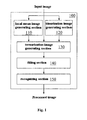
- FIG 1 illustrates an example of a configuration of the image processing device according to an embodiment of the invention.
- An image processing device 100 comprises a local mean image generating section 110, a binarization image generating section 120, a ternarization image generating section 130, a filling section 140 and a recognizing section 150.
- An image used as a processing object of the image processing device 100 may be grey scale image or color image (for a color input image, it may be converted into grey scale image by conventional method in the art), and the image may include contents such as figure, text, lines, etc.
- the image processing device 100 may perform smoothing process on the image using low pass filter (for example, Gauss filter), so as to inhibit noise due to the compression.
- low pass filter for example, Gauss filter
- Fig. 2A illustrates an example of input image used as the processing object of the image processing device 100, wherein the image includes large text in upper left portion, small text in lower left portion and a figure in the right side.
- the input image is provided to the local mean image generating section 110, and the local mean image generating section 110 calculates a local mean image based on the input image.
- the local mean image generating section 110 may calculate local mean values pixel by pixel using local window (for example a window of 5 pixels ⁇ 5 pixels or 7 pixels ⁇ 7 pixels), so as to generate a local mean image.
- the size of the local window used by the local mean image generating section 110 may be set according to the thickness of strokes and/or lines of the processing object image.
- Fig. 2B illustrates a local mean image generated by the local mean image generating section 110 from the exemplary input image shown in Fig. 2A .
- the input image is also provided to the binarization image generating section 120.
- the binarization image generating section 120 generates a binarization image from the input image.
- the binarization image may be a local variance image or a local gradient image
- the binarization image generating section 120 may calculate a local variance or a gradient pixel by pixel using a local window (for example a window of 5 pixels ⁇ 5 pixels or 7 pixels ⁇ 7 pixels), so as to generate a binarization image.
- the size of the local window used by the binarization image generating section 120 may be set according to the thickness of strokes and/or lines of the processing object image.
- Fig. 2C illustrates a local variance image generated by the binarization image generating section 120 from the exemplary input image shown in Fig. 2A .
- regions corresponding to high frequency regions (regions having high variance) in the input image have a grey scale 0 (black portion), while regions corresponding to low frequency regions (regions having low variance) in the input image have a grey scale 255 (white portion).
- the binarization image generating section 120 provides the binarization image generated from the input image to the ternarization image generating section 130.
- the ternarization image generating section 130 divides, based on comparison between the input image and the local mean image, regions having the first grey scale in the binarization image provided by the binarization image generating section 120 into regions having the first grey scale and regions having a third grey scale, so as to generate a ternarization image.
- the ternarization image generating section 130 divides the binarization image by the following rules to generate a ternarization image:
- parts of the regions having the first grey scale in the binarization image is converted into a third grey scale, for the corresponding pixels of such parts, the grey scale value of the input image is greater than the grey scale value of the local mean image.
- Fig. 2D illustrates a ternarization image generated from the binarization image in Fig. 2C based on comparison between the input image in Fig. 2A and the local mean image in Fig. 2B .
- the dark grey regions in Fig. 2D correspond to pixel regions in which the grey scale value in the input image in Fig. 2A is greater than the grey scale value of corresponding pixels in the local mean image in Fig. 2B .
- the ternarization image generating section 130 provides the generated ternarization image to the filling section 140.
- the filling section 140 recognizes connected regions having the second grey scale in the ternarization image, and fills the connected regions having the second grey scale with the first grey scale or the third grey scale by predetermined rules. Specifically, a connected region is filled with the first grey scale when a ratio of the amount of pixels having the first grey scale to the amount of pixels having the third grey scale at boundaries of the connected region is greater than a predetermined threshold, and a connected region is filled with the third grey scale when a ratio of the amount of pixels having the third grey scale to the amount of pixels having the first grey scale at boundaries of the connected region is greater than the predetermined threshold.
- the filling process performed by the filling section 140 aims at filling regions having the second grey scale which may exist inside thicker strokes or lines in the ternarization image, and the filling process uses the characteristic that a stroke or line object usually has higher consistency of boundary grey scale in the ternarization image.
- different thresholds may be set according to different input images and the size of the local window used by the local mean image generating section 110 and the binarization image generating section 120.
- Fig. 2E illustrates an example of a filled ternarization image of Fig. 2D .
- the white connected regions in large characters at upper left of Fig. 2D are filled with black in Fig. 2E because they satisfy the first grey scale filling condition
- parts of the white connected regions in small characters at lower left of Fig. 2D are filled with dark grey in Fig. 2E because they satisfy the third grey scale filling condition
- the filling section 140 may further determine whether to fill the connected regions having the second grey scale in the ternarization image according to one or all of the following criterions:
- the filling section 140 provides the filled ternarization image to the recognizing section 150.
- the recognizing section 150 recognizes strokes and/or lines in the image according to the consistency of grey scale at object boundaries in the filled ternarization image. Specifically, the recognizing section 150 recognizes strokes and/or lines according to the ratio of the amount of pixels having the first grey scale to the amount of pixels having the third grey scale at the boundary of a connected region (object) which is consisted by pixels having the first grey scale and pixels having the third grey scale in the filled ternarization image.
- T ratio 95%.
- different thresholds may be set according to different input images and the size of local window used by the local mean image generating section 110 and the binarization image generating section 120.
- Fig. 2F illustrates strokes and/or lines recognized by the recognizing section 150 from the filled ternarization image of Fig. 2E .
- large characters at upper left and small characters at lower left are recognized.
- the portion satisfying the recognizing condition in the figure section in the right side is also recognized as strokes and/or lines.
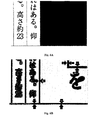
- Fig. 3A illustrates a specific example of recognizing dark text on bright background
- Fig. 3B illustrates a specific example of recognizing bright text on dark background.
- 1, 2, 3 and 4 in Figs. 3A and 3B are indicative of input image, ternarization image, filled ternarization image and recognized character, respectively.
- the image processing device can recognize both dark text on bright background and bright text on dark background.
- Fig. 4 illustrates an example of processing result of the image processing device according to the embodiment of the invention on an image portion which includes no stroke or line.
- the left side of Fig. 4 is a filled ternarization image, since there are a lot of pixels having the first grey scale as well as a lot of pixels having the third grey scale at the object boundary, the object does not satisfy the recognizing criterion, and thus no stroke or line is recognized.
- the image processing device 200 comprises a local mean image generating section 210, a binarization image generating section 220, a ternarization image generating section 230, a filling section 240, a quaternarization section 250, a directed dilation section 260 and an object separating section 270.
- the local mean image generating section 210, the binarization image generating section 220, the ternarization image generating section 230, and the filling section 240 are similar to the local mean image generating section 110, the binarization image generating section 120, the ternarization image generating section 130, and the filling section 140 described with reference to Fig. 1 , and descriptions thereof are omitted herein.
- the filling section 240 provides the filled ternarization image to the quaternarization section 250.
- the quaternarization section 250 divides, based on the grey scale value of the pixels in corresponding regions of the input image, regions having a second grey scale in the ternarization image into background region and figure region, wherein the background region has the second grey scale and the figure region has a fourth grey scale, so as to generate a quaternarization image.
- the quaternarization section 250 divides regions in the input image corresponding to the regions having the second grey scale in the filled ternarization image using a grey scale threshold, wherein the portion having higher grey scale value is divided into background portion, and the portion having lower grey scale value is divided into figure portion.
- the quaternarization section 250 may also divide the background portion and the figure portion according to the consistency of grey scale of the corresponding regions in the input image, that is, the grey scale variation range of the pixels in the region. For example, a region having smaller grey scale variation is divided into the background region, and a region having larger grey scale variation is divided into the figure region. According to a specific embodiment, in case of using 8 bit grey scale image, take the fourth grey as 192 (light grey).
- the quaternarization section 250 provides the quaternarization image to the directed dilation section 260.
- the directed dilation section 260 eliminates, by way of directed dilation, portions having the first grey scale and the third grey scale at boundaries of the background regions and the figure regions in the quaternarization image, thereby eliminating redundancy lines at the boundary of the background region and the figure region.
- the directed dilation section 260 performs directed dilation by the following rules:
- Figs 6A to 6C illustrate an example of performing directed dilation on the quaternarization image by the above rules.
- Fig. 6A is an input image
- Fig. 6B is a quaternarization image, wherein the white portion is the portion recognized as the background region, and the light grey portion is the portion recognized as the figure region.
- arrows a, b and c in Fig. 6B are indicative of portions to be directedly dilated by the above rules a-c, respectively.
- Fig. 6C illustrates an image processed by the directed dilation, wherein portions having the first grey scale (black) and the third grey scale (dark grey) are eliminated from the boundary of the background region and the figure region.
- the directed dilation section 260 provides the directedly dilated quaternarization image to the object separating section 270.
- the object separating section 270 separates, from the directedly dilated quaternarization image, regions having the first grey scale and/or regions having the third grey scale as strokes and/or lines.
- Fig. 7A illustrates an example of strokes and lines separated from the quaternarization image.
- the separated text portions having the first or third grey scale may include pixel portions having the third or first grey scale. Therefore, according to an embodiment, the object separating section 270 may further process the connected regions (object) consisted of pixels having the first grey scale and pixels having the third grey scale in the directedly dilated quaternarization image by the following rules:
- Fig. 7B illustrates a result of performing the above process on the objects in Fig. 7A .
- T ratio 95%.
- different thresholds may be set according to different input images and the size of the local window used by the local mean image generating section 210 and the binarization image generating section 220.
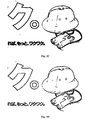
- Fig. 8 illustrates an example of processing result of the image processing device 200 according to the embodiment of the invention on an image including a figure, text and lines.
- the input image is as shown in Fig. 8A , wherein the input image includes background, text on the background ( “ ⁇ 01 7 )” ), a figure (photo), text in the figure region ( “ ⁇ “ ) and lines, etc.
- the output image is as shown in Fig. 8B , wherein the output image is a quaternarization image, that is, the pixels therein are divided into four categories: dark text or line (black, grey scale is 0), bright text or line (dark grey, grey scale is 128), figure region (light grey, grey scale is 192) and background region (white, grey scale is 255).
- the image processing device 200 is capable of separating text and lines in the background region as well as text and lines in the figure region, and it is capable of separating both dark text on bright background and bright text on dark background.
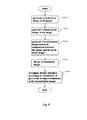
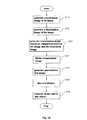
- Fig. 9 illustrates a flowchart of an image processing method according to an embodiment of the invention.
- step S110 generating a local mean image of an image to be processed
- step S120 generating a binarization image of the image, in which pixels corresponding to high frequency region in the image having a first grey scale, and pixels corresponding to low frequency region in the image having a second grey scale.
- step S130 dividing, based on comparison between the image and the local mean image, regions having the first grey scale in the binarization image into regions having the first grey scale and regions having a third grey scale, so as to generate a ternarization image;
- step S140 recognizing connected regions having the second grey scale in the ternarization image, filling the connected regions with the first grey scale when a ratio of an amount of pixels having the first grey scale to that of pixels having the third grey scale at boundaries of the connected regions is greater than a predetermined threshold, and filling the connected regions with the third grey scale when a ratio of an amount of pixels having the third grey scale to that of pixels having the first grey scale at boundaries of the connected regions is greater than the predetermined threshold;
- step S150 recognizing strokes and/or lines in the image according to consistency of the grey scale at object boundaries in the filled ternarization image.
- Fig. 10 illustrates a flow chart of the image processing method according to another embodiment of the invention.
- step S 210 generating a local mean image of an image to be processed
- step S220 generating a binarization image of the image, in which pixels corresponding to high frequency region in the image having a first grey scale, and pixels corresponding to low frequency region in the image having a second grey scale.
- step S230 dividing, based on comparison between the image and the local mean image, regions having the first grey scale in the binarization image into regions having the first grey scale and regions having a third grey scale, so as to generate a ternarization image of the image;
- step S240 recognizing connected regions having the second grey scale in the ternarization image, filling the connected regions with the first grey scale when a ratio of an amount of pixels having the first grey scale to that of pixels having the third grey scale at boundaries of the connected regions is greater than a predetermined threshold, and filling the connected regions with the third grey scale when a ratio of an amount of pixels having the third grey scale to that of pixels having the first grey scale at boundaries of the connected regions is greater than the predetermined threshold;
- step S250 dividing, based on grey scale values of pixels in corresponding regions of the image, regions having the second grey scale in the filled ternarization image into background regions having the second grey scale and figure regions having a fourth grey scale, so as to generate a quaternarization image;
- step S260 eliminating, through a directed dilation, regions having the first grey scale and the third grey scale at boundaries of the background regions and the figure regions in the quaternarization image;
- step S270 separating, from the directedly dilated quaternarization image, regions having the first grey scale and/or regions having the third grey scale as strokes and/or lines
- the invention may be embodied as a device, method or computer program product. Therefore, the invention may be implemented specifically in the following forms, i.e., it may be a complete hardware, complete software (including firmware, resident software, microcode, etc.), or a combination of the software and the hardware. In addition, the invention may be in the form of computer program product embodied in any tangible medium including program code available for a computer.
- Computer readable medium can be computer readable signal medium or computer readable storage medium, wherein the computer-readable storage medium may be, but not limited to, for example, electrical, magnetic, optical, electromagnetic, infrared, or semiconductor system, device, component or propagation medium, or any appropriate combination of the foregoing items.
- computer-readable storage medium More specific examples include: electrical connection having one or more conductors, portable computer disc, hard disc, Random Access Memory (RAM), Read-Only Memory (ROM), Erasable Programmable Read-Only Memory (EPROM or Flash memory), optical fiber, portable compact disc Read-Only Memory (CD-ROM), optical memory device, magnetic memory device, or any appropriate combination of the foregoing items.
- computer-readable storage medium may be any tangible medium containing or storing programs used by or associated with the instruction execution system, device or component.
- the computer program code used to execute the operation of the present invention may be compiled in any combination of one or more of programming languages, the program languages include object-oriented programming language, such as Java, Smalltalk, C++ and the like, and further include conventional procedural programming languages, such as "C" programming language or similar programming language.
- Program code may be completely executed on the user's computer, partly on the user's computer, as an independent software package, partly on the user's computer and partly on the remote computer or entirely on the remote computer or server.
- the remote computer may be connected to the user's computer by any kind of network including local area network (LAN) or wide area network (WAN), or may be connected to an external computer (for example via Internet by using Internet service provider).
- LAN local area network
- WAN wide area network
- Internet service provider for example via Internet by using Internet service provider
- Fig. 11 is a block diagram illustrating an example structure of a computer implementing the device and method of the invention.
- a central processing unit (CPU) 1101 perform various processes according to the program stored in the Read-Only Memory (ROM) 1102 or programs loaded from the storage section 1108 to the Random Access Memory (RAM) 1103.
- ROM Read-Only Memory
- RAM Random Access Memory
- data required when the CPU 1101 performs various processes is also stored as needed.
- CPU 1101, ROM 1102 and RAM 1103 are connected from one to another via bus 1104.
- Input/output interface 1105 is also connected to bus 1104.
- input section 1106 including keyboard, mouse, etc.
- output section 1107 including display, such as cathode ray tube (CRT), liquid crystal display (LCD), etc., and speakers and so on
- communication part 1109 including network interface cards such as LAN cards, modems and so on.
- the communication section 1109 performs communication process via network like the Internet.
- drive 1110 is also connected to the input/output interface 1105.
- Removable medium 1111 such as magnetic disc, optical disc, magneto-optical disc, semiconductor memory, and so on is installed on the drive 1110 as required, such that the computer program read out therefrom is installed in the storage section 1108 as required.
- programs constituting the software are installed from a network like the Internet or from a storage medium like the removable medium 1111.
- Such storage medium is not limited to the removable medium 1111, as shown in Figure 11 , which is stored with programs and distributed separately from the method to provide a user with program.
- the example of the removable medium 1111 includes magnetic disc, optical disc (including compact disc read only memory (CD-ROM) and digital versatile disc (DVD)), magneto-optical disc (including mini-disc (MD)) and semiconductor memory.
- the storage medium may be ROM 1102, or hard disc included in the storage section 1108 in which a program is stored and the program is distributed to a user with the method including the same.
- the invention also provides a computer program or a computer program product for carrying out any of the methods described herein, and a computer readable medium having stored thereon a program for carrying out any of the methods described herein.
- a computer program embodying the invention may be stored on a computer-readable medium, or it could, for example, be in the form of a signal such as a downloadable data signal provided from an Internet website, or it could be in any other form.
Landscapes
- Engineering & Computer Science (AREA)
- Multimedia (AREA)
- Signal Processing (AREA)
- Computer Vision & Pattern Recognition (AREA)
- Physics & Mathematics (AREA)
- General Physics & Mathematics (AREA)
- Theoretical Computer Science (AREA)
- Facsimile Image Signal Circuits (AREA)
- Image Analysis (AREA)
- Image Processing (AREA)
Claims (9)
- Dispositif de traitement d'image (100, 200) comportant :une section de génération d'image moyenne locale (110, 210) configurée pour générer une image moyenne locale d'une image d'entrée ;une section de génération d'image de binarisation (120, 220) configurée pour générer une image de binarisation de l'image d'entrée, où les pixels correspondant à des régions haute fréquence dans l'image d'entrée présentent une première échelle de gris et les pixels correspondant à des régions basse fréquence dans ladite image présentent une seconde échelle de gris ;une section de génération d'image de ternarisation (130, 230) configurée pour diviser, en fonction d'une comparaison entre l'image d'entrée et l'image moyenne locale, des régions présentant la première échelle de gris dans l'image de binarisation en régions présentant la première échelle de gris et régions présentant une troisième échelle de gris, de manière à générer une image de ternarisation de l'image d'entrée ;une section de remplissage (140, 240) configuréepour reconnaître des régions connectées présentant la seconde échelle de gris dans l'image de ternarisation,pour remplir les régions connectées avec la première échelle de gris lorsqu'un rapport d'une quantité de pixels présentant la première échelle de gris à celle des pixels présentant la troisième échelle de gris aux frontières des régions connectées est supérieur à un seuil prédéterminé, etpour remplir les régions connectées avec la troisième échelle de gris lorsqu'un rapport d'une quantité de pixels présentant la troisième échelle de gris à celle des pixels présentant la première échelle de gris aux frontières des régions connectées est supérieur au seuil prédéterminé, dans lequella section de remplissage effectue le remplissage à condition que la zone des régions connectées soit inférieure à un seuil prédéterminé et/ou qu'une consistance de l'échelle de gris des régions connectées atteigne un critère prédéterminé ; etune section de reconnaissance (150) configurée pour reconnaître des traits et/ou des lignes dans l'image d'entrée selon le rapport de la quantité de pixels présentant la première échelle de gris à la quantité de pixels présentant la troisième échelle de gris à la frontière d'une région connectée qui est constituée de pixels présentant la première échelle de gris et de pixels présentant la troisième échelle de gris dans l'image de ternarisation remplie.
- Dispositif de traitement d'image selon la revendication 1, comportant en outre :une section de quanternarisation (250) configurée pour diviser, en fonction des valeurs d'échelle de gris des pixels dans des régions correspondantes de l'image d'entrée, des régions présentant la seconde échelle de gris dans l'image de la ternarisation remplie en régions d'arrière-plan présentant la seconde échelle de gris et régions de forme présentant une quatrième échelle de gris, de manière à générer une image de quanternarisation.
- Dispositif de traitement d'image selon la revendication 2, comportant en outre :une section de dilatation dirigée (260) configurée pour éliminer, grâce à une dilatation dirigée, des régions présentant la première échelle de gris et la troisième échelle de gris aux frontières des régions d'arrière-plan et des régions de forme dans l'image de quanternarisation.
- Dispositif de traitement d'image selon la revendication 3, comportant en outre :une section de séparation d'objet (270) configurée pour séparer, à partir de l'image de quanternarisation dilatée de façon dirigée, des régions présentant la première échelle de gris et/ou des régions présentant la troisième échelle de gris en tant que traits et/ou lignes.
- Procédé de traitement d'image comportant les étapes consistant à :générer une image moyenne locale d'une image d'entrée ;générer une image de binarisation de ladite image, dans laquelle les pixels correspondant aux régions haute fréquence dans l'image d'entrée présentent une première échelle de gris et les pixels correspondant à des régions basse fréquence dans l'image d'entrée présentent une seconde échelle de gris ;diviser, en fonction d'une comparaison entre l'image d'entrée et l'image moyenne locale, des régions présentant la première échelle de gris dans l'image de binarisation en régions présentant la première échelle de gris et régions présentant une troisième échelle de gris, de manière à générer une image de ternarisation de l'image d'entrée ;reconnaître des régions connectées présentant la seconde échelle de gris dans l'image de ternarisation ;remplir les régions connectées avec la première échelle de gris lorsqu'un rapport d'une quantité de pixels présentant la première échelle de gris à celle des pixels présentant la troisième échelle de gris aux frontières des régions connectées est supérieur à un seuil prédéterminé, etremplir les régions connectées avec la troisième échelle de gris lorsqu'un rapport d'une quantité de pixels présentant la troisième échelle de gris à celle des pixels présentant la première échelle de gris aux frontières des régions connectées est supérieur au seuil prédéterminé,dans lequel, au cours des étapes de remplissage des régions connectées, le remplissage est effectué à la condition que la zone des régions connectées est inférieure à un seuil prédéterminé et/ou qu'une consistance de l'échelle de gris des régions connectées atteint un critère prédéterminé ; etreconnaître des traits et/ou des lignes dans l'image d'entrée selon le rapport de la quantité de pixels présentant la première échelle de gris à la quantité de pixels présentant la troisième échelle de gris à la frontière d'une région connectée qui est constituée de pixels présentant la première échelle de gris et de pixels présentant la troisième échelle de gris dans l'image de ternarisation remplie.
- Procédé de traitement d'image selon la revendication 5, comportant en outre une étape consistant à:diviser, en fonction des valeurs d'échelle de gris des pixels dans les régions correspondantes de l'image d'entrée, des régions présentant la seconde échelle de gris dans l'image de ternarisation remplie en régions d'arrière-plan présentant la seconde échelle de gris et régions de forme présentant une quatrième échelle de gris, de manière à générer une image de quanternarisation.
- Procédé de traitement d'image selon la revendication 6, comportant en outre une étape consistant à:éliminer, par l'intermédiaire d'une dilatation dirigée, des régions présentant la première échelle de gris et la troisième échelle de gris aux frontières des régions d'arrière-plan et des régions de forme dans l'image de quanternarisation.
- Procédé de traitement d'image selon la revendication 7, comportant en outre une étape consistant à:séparer, à partir de l'image de quanternarisation dilatée de manière dirigée, les régions présentant la première échelle de gris et/ou les régions présentant la troisième échelle de gris sous la forme de traits et/ou de lignes.
- Programme informatique qui, lorsqu'il est exécuté, effectue un procédé de traitement d'image selon l'une quelconque des revendications 5 à 8.
Applications Claiming Priority (1)
| Application Number | Priority Date | Filing Date | Title |
|---|---|---|---|
| CN201110209866.XA CN102890780B (zh) | 2011-07-19 | 2011-07-19 | 图像处理装置和方法 |
Publications (3)
| Publication Number | Publication Date |
|---|---|
| EP2549736A2 EP2549736A2 (fr) | 2013-01-23 |
| EP2549736A3 EP2549736A3 (fr) | 2013-11-06 |
| EP2549736B1 true EP2549736B1 (fr) | 2015-11-18 |
Family
ID=46640535
Family Applications (1)
| Application Number | Title | Priority Date | Filing Date |
|---|---|---|---|
| EP12170830.9A Not-in-force EP2549736B1 (fr) | 2011-07-19 | 2012-06-05 | Dispositif et procédé de traitement d'images |
Country Status (5)
| Country | Link |
|---|---|
| US (1) | US8907972B2 (fr) |
| EP (1) | EP2549736B1 (fr) |
| JP (1) | JP5900208B2 (fr) |
| KR (1) | KR101402442B1 (fr) |
| CN (1) | CN102890780B (fr) |
Families Citing this family (11)
| Publication number | Priority date | Publication date | Assignee | Title |
|---|---|---|---|---|
| CN103473785B (zh) * | 2013-09-29 | 2016-04-20 | 哈尔滨工业大学 | 一种基于三值化图像聚类的快速多目标分割方法 |
| CN106611406B (zh) * | 2015-10-27 | 2019-08-16 | 富士通株式会社 | 图像校正方法和图像校正设备 |
| US10909406B2 (en) * | 2018-01-08 | 2021-02-02 | Newgen Software Technologies Limited | Image processing system and method |
| JP6434180B1 (ja) * | 2018-04-20 | 2018-12-05 | 株式会社ノエビア | 弾性線維形成促進剤 |
| CN109993761B (zh) * | 2018-06-29 | 2021-04-09 | 长城汽车股份有限公司 | 一种三值图像获取方法、装置及车辆 |
| CN112037124B (zh) * | 2019-06-04 | 2024-07-09 | 中国石油化工股份有限公司 | 基于图像纹理合成的特征可调控的数字岩心重构方法 |
| CN110390698B (zh) * | 2019-06-21 | 2021-09-17 | 深圳市优必选科技股份有限公司 | 一种灰度传感器模组及其数据处理方法和机器人 |
| CN111063029B (zh) * | 2019-12-11 | 2023-06-09 | 深圳市优必选科技股份有限公司 | 地图构建方法、装置、计算机可读存储介质及机器人 |
| CN112150385B (zh) * | 2020-09-29 | 2023-05-12 | 四川虹美智能科技有限公司 | 红外图像滤波方法及装置 |
| KR102561360B1 (ko) * | 2021-06-04 | 2023-08-01 | 한국과학기술연구원 | 보정을 사용하지 않고 파이버스코프 이미지를 처리하는 방법 및 이를 수행하는 파이버스코프 시스템 |
| GB2627324A (en) * | 2022-09-15 | 2024-08-21 | Univ Qingdao Technology | Intelligent new energy rural house temperature regulation and control system integrating tunnel air and solar energy |
Family Cites Families (10)
| Publication number | Priority date | Publication date | Assignee | Title |
|---|---|---|---|---|
| JP4118749B2 (ja) * | 2002-09-05 | 2008-07-16 | 株式会社リコー | 画像処理装置、画像処理プログラムおよび記憶媒体 |
| KR100977713B1 (ko) * | 2003-03-15 | 2010-08-24 | 삼성전자주식회사 | 영상신호의 글자 인식을 위한 전처리 장치 및 방법 |
| CN100416597C (zh) * | 2004-12-23 | 2008-09-03 | 佳能株式会社 | 用于文档的自适应二值化的方法和设备 |
| JP2006309650A (ja) * | 2005-05-02 | 2006-11-09 | Calsonic Kansei Corp | ナンバー認識装置及方法 |
| JP4596174B2 (ja) | 2005-09-16 | 2010-12-08 | 富士フイルム株式会社 | 画像処理方法及び画像記録装置 |
| CN100517374C (zh) * | 2005-12-29 | 2009-07-22 | 佳能株式会社 | 从复杂背景文档图像提取文本的装置、方法 |
| JP4986976B2 (ja) | 2007-12-20 | 2012-07-25 | キヤノン株式会社 | 画像処理装置、画像形成装置および画像処理方法 |
| JP4902569B2 (ja) | 2008-02-19 | 2012-03-21 | キヤノン株式会社 | 画像符号化装置及びその制御方法 |
| JP5045619B2 (ja) | 2008-09-08 | 2012-10-10 | ソニー株式会社 | 画像処理装置および方法、並びにプログラム |
| CN101888469B (zh) * | 2009-05-13 | 2013-03-13 | 富士通株式会社 | 图像处理方法和图像处理设备 |
-
2011
- 2011-07-19 CN CN201110209866.XA patent/CN102890780B/zh not_active Expired - Fee Related
-
2012
- 2012-06-05 EP EP12170830.9A patent/EP2549736B1/fr not_active Not-in-force
- 2012-07-12 JP JP2012156686A patent/JP5900208B2/ja not_active Expired - Fee Related
- 2012-07-16 US US13/549,764 patent/US8907972B2/en not_active Expired - Fee Related
- 2012-07-16 KR KR1020120077184A patent/KR101402442B1/ko not_active Expired - Fee Related
Also Published As
| Publication number | Publication date |
|---|---|
| KR20130010841A (ko) | 2013-01-29 |
| EP2549736A3 (fr) | 2013-11-06 |
| CN102890780A (zh) | 2013-01-23 |
| US8907972B2 (en) | 2014-12-09 |
| JP2013025807A (ja) | 2013-02-04 |
| JP5900208B2 (ja) | 2016-04-06 |
| EP2549736A2 (fr) | 2013-01-23 |
| KR101402442B1 (ko) | 2014-06-03 |
| US20130027419A1 (en) | 2013-01-31 |
| CN102890780B (zh) | 2015-07-22 |
Similar Documents
| Publication | Publication Date | Title |
|---|---|---|
| EP2549736B1 (fr) | Dispositif et procédé de traitement d'images | |
| EP3117369B1 (fr) | Détection et extraction de composants de document image pour créer un document flux | |
| JP5274305B2 (ja) | 画像処理装置、画像処理方法、コンピュータプログラム | |
| JP3345350B2 (ja) | 文書画像認識装置、その方法、及び記録媒体 | |
| US8620080B2 (en) | Methods and systems for locating text in a digital image | |
| US10198628B2 (en) | Method and apparatus for determining a document suitability for server-based optical character recognition (OCR) processing | |
| CN105719243B (zh) | 图像处理装置和方法 | |
| JP7244223B2 (ja) | 電子文書における強調テキストの識別 | |
| US8024655B2 (en) | Compressing page descriptions while preserving high quality | |
| CN108830780A (zh) | 图像处理方法及装置、电子设备、存储介质 | |
| CN114519858A (zh) | 文档图像的识别方法、装置、存储介质以及电子设备 | |
| CN114218889A (zh) | 文档处理及文档模型的训练方法、装置、设备和存储介质 | |
| CN115294332B (zh) | 一种图像处理方法、装置、设备和存储介质 | |
| CN101727583A (zh) | 用于文档图像的自适应二值化方法和设备 | |
| EP3471018B1 (fr) | Procédé et appareil pour évaluer une condition d'illumination dans une image de visage | |
| CN114745545B (zh) | 一种视频插帧方法、装置、设备和介质 | |
| KR101571681B1 (ko) | 동질 영역을 이용한 문서 구조의 분석 방법 | |
| KR101048399B1 (ko) | 문자 검출 방법 및 장치 | |
| CN111767769B (zh) | 一种文本提取方法、装置、电子设备及存储介质 | |
| CN114841906A (zh) | 一种图像合成方法、装置、电子设备和存储介质 | |
| CN111899181A (zh) | 去除图像中的阴影的方法和装置 | |
| CN114694149A (zh) | 表格图片校正方法、装置、电子设备及存储介质 | |
| JPH09204525A (ja) | 画像像域分離装置及びその方法 | |
| JP2015029242A (ja) | 画像処理装置 | |
| Mtimet et al. | A layer-based segmentation method for compound images |
Legal Events
| Date | Code | Title | Description |
|---|---|---|---|
| PUAI | Public reference made under article 153(3) epc to a published international application that has entered the european phase |
Free format text: ORIGINAL CODE: 0009012 |
|
| AK | Designated contracting states |
Kind code of ref document: A2 Designated state(s): AL AT BE BG CH CY CZ DE DK EE ES FI FR GB GR HR HU IE IS IT LI LT LU LV MC MK MT NL NO PL PT RO RS SE SI SK SM TR |
|
| AX | Request for extension of the european patent |
Extension state: BA ME |
|
| PUAL | Search report despatched |
Free format text: ORIGINAL CODE: 0009013 |
|
| AK | Designated contracting states |
Kind code of ref document: A3 Designated state(s): AL AT BE BG CH CY CZ DE DK EE ES FI FR GB GR HR HU IE IS IT LI LT LU LV MC MK MT NL NO PL PT RO RS SE SI SK SM TR |
|
| AX | Request for extension of the european patent |
Extension state: BA ME |
|
| RIC1 | Information provided on ipc code assigned before grant |
Ipc: G06K 9/00 20060101ALI20130927BHEP Ipc: H04N 1/40 20060101AFI20130927BHEP |
|
| 17P | Request for examination filed |
Effective date: 20140326 |
|
| RBV | Designated contracting states (corrected) |
Designated state(s): AL AT BE BG CH CY CZ DE DK EE ES FI FR GB GR HR HU IE IS IT LI LT LU LV MC MK MT NL NO PL PT RO RS SE SI SK SM TR |
|
| GRAP | Despatch of communication of intention to grant a patent |
Free format text: ORIGINAL CODE: EPIDOSNIGR1 |
|
| INTG | Intention to grant announced |
Effective date: 20150810 |
|
| GRAS | Grant fee paid |
Free format text: ORIGINAL CODE: EPIDOSNIGR3 |
|
| GRAA | (expected) grant |
Free format text: ORIGINAL CODE: 0009210 |
|
| AK | Designated contracting states |
Kind code of ref document: B1 Designated state(s): AL AT BE BG CH CY CZ DE DK EE ES FI FR GB GR HR HU IE IS IT LI LT LU LV MC MK MT NL NO PL PT RO RS SE SI SK SM TR |
|
| REG | Reference to a national code |
Ref country code: GB Ref legal event code: FG4D |
|
| REG | Reference to a national code |
Ref country code: CH Ref legal event code: EP |
|
| REG | Reference to a national code |
Ref country code: AT Ref legal event code: REF Ref document number: 762048 Country of ref document: AT Kind code of ref document: T Effective date: 20151215 |
|
| REG | Reference to a national code |
Ref country code: IE Ref legal event code: FG4D |
|
| REG | Reference to a national code |
Ref country code: DE Ref legal event code: R096 Ref document number: 602012012298 Country of ref document: DE |
|
| REG | Reference to a national code |
Ref country code: NL Ref legal event code: MP Effective date: 20160218 |
|
| REG | Reference to a national code |
Ref country code: LT Ref legal event code: MG4D |
|
| REG | Reference to a national code |
Ref country code: AT Ref legal event code: MK05 Ref document number: 762048 Country of ref document: AT Kind code of ref document: T Effective date: 20151118 |
|
| PG25 | Lapsed in a contracting state [announced via postgrant information from national office to epo] |
Ref country code: HR Free format text: LAPSE BECAUSE OF FAILURE TO SUBMIT A TRANSLATION OF THE DESCRIPTION OR TO PAY THE FEE WITHIN THE PRESCRIBED TIME-LIMIT Effective date: 20151118 Ref country code: IS Free format text: LAPSE BECAUSE OF FAILURE TO SUBMIT A TRANSLATION OF THE DESCRIPTION OR TO PAY THE FEE WITHIN THE PRESCRIBED TIME-LIMIT Effective date: 20160318 Ref country code: NL Free format text: LAPSE BECAUSE OF FAILURE TO SUBMIT A TRANSLATION OF THE DESCRIPTION OR TO PAY THE FEE WITHIN THE PRESCRIBED TIME-LIMIT Effective date: 20151118 Ref country code: ES Free format text: LAPSE BECAUSE OF FAILURE TO SUBMIT A TRANSLATION OF THE DESCRIPTION OR TO PAY THE FEE WITHIN THE PRESCRIBED TIME-LIMIT Effective date: 20151118 Ref country code: LT Free format text: LAPSE BECAUSE OF FAILURE TO SUBMIT A TRANSLATION OF THE DESCRIPTION OR TO PAY THE FEE WITHIN THE PRESCRIBED TIME-LIMIT Effective date: 20151118 Ref country code: NO Free format text: LAPSE BECAUSE OF FAILURE TO SUBMIT A TRANSLATION OF THE DESCRIPTION OR TO PAY THE FEE WITHIN THE PRESCRIBED TIME-LIMIT Effective date: 20160218 |
|
| REG | Reference to a national code |
Ref country code: FR Ref legal event code: PLFP Year of fee payment: 5 |
|
| PG25 | Lapsed in a contracting state [announced via postgrant information from national office to epo] |
Ref country code: SE Free format text: LAPSE BECAUSE OF FAILURE TO SUBMIT A TRANSLATION OF THE DESCRIPTION OR TO PAY THE FEE WITHIN THE PRESCRIBED TIME-LIMIT Effective date: 20151118 Ref country code: PT Free format text: LAPSE BECAUSE OF FAILURE TO SUBMIT A TRANSLATION OF THE DESCRIPTION OR TO PAY THE FEE WITHIN THE PRESCRIBED TIME-LIMIT Effective date: 20160318 Ref country code: AT Free format text: LAPSE BECAUSE OF FAILURE TO SUBMIT A TRANSLATION OF THE DESCRIPTION OR TO PAY THE FEE WITHIN THE PRESCRIBED TIME-LIMIT Effective date: 20151118 Ref country code: PL Free format text: LAPSE BECAUSE OF FAILURE TO SUBMIT A TRANSLATION OF THE DESCRIPTION OR TO PAY THE FEE WITHIN THE PRESCRIBED TIME-LIMIT Effective date: 20151118 Ref country code: GR Free format text: LAPSE BECAUSE OF FAILURE TO SUBMIT A TRANSLATION OF THE DESCRIPTION OR TO PAY THE FEE WITHIN THE PRESCRIBED TIME-LIMIT Effective date: 20160219 Ref country code: LV Free format text: LAPSE BECAUSE OF FAILURE TO SUBMIT A TRANSLATION OF THE DESCRIPTION OR TO PAY THE FEE WITHIN THE PRESCRIBED TIME-LIMIT Effective date: 20151118 Ref country code: FI Free format text: LAPSE BECAUSE OF FAILURE TO SUBMIT A TRANSLATION OF THE DESCRIPTION OR TO PAY THE FEE WITHIN THE PRESCRIBED TIME-LIMIT Effective date: 20151118 Ref country code: RS Free format text: LAPSE BECAUSE OF FAILURE TO SUBMIT A TRANSLATION OF THE DESCRIPTION OR TO PAY THE FEE WITHIN THE PRESCRIBED TIME-LIMIT Effective date: 20151118 |
|
| PG25 | Lapsed in a contracting state [announced via postgrant information from national office to epo] |
Ref country code: CZ Free format text: LAPSE BECAUSE OF FAILURE TO SUBMIT A TRANSLATION OF THE DESCRIPTION OR TO PAY THE FEE WITHIN THE PRESCRIBED TIME-LIMIT Effective date: 20151118 |
|
| REG | Reference to a national code |
Ref country code: DE Ref legal event code: R097 Ref document number: 602012012298 Country of ref document: DE |
|
| PG25 | Lapsed in a contracting state [announced via postgrant information from national office to epo] |
Ref country code: DK Free format text: LAPSE BECAUSE OF FAILURE TO SUBMIT A TRANSLATION OF THE DESCRIPTION OR TO PAY THE FEE WITHIN THE PRESCRIBED TIME-LIMIT Effective date: 20151118 Ref country code: SK Free format text: LAPSE BECAUSE OF FAILURE TO SUBMIT A TRANSLATION OF THE DESCRIPTION OR TO PAY THE FEE WITHIN THE PRESCRIBED TIME-LIMIT Effective date: 20151118 Ref country code: EE Free format text: LAPSE BECAUSE OF FAILURE TO SUBMIT A TRANSLATION OF THE DESCRIPTION OR TO PAY THE FEE WITHIN THE PRESCRIBED TIME-LIMIT Effective date: 20151118 Ref country code: SM Free format text: LAPSE BECAUSE OF FAILURE TO SUBMIT A TRANSLATION OF THE DESCRIPTION OR TO PAY THE FEE WITHIN THE PRESCRIBED TIME-LIMIT Effective date: 20151118 Ref country code: RO Free format text: LAPSE BECAUSE OF FAILURE TO SUBMIT A TRANSLATION OF THE DESCRIPTION OR TO PAY THE FEE WITHIN THE PRESCRIBED TIME-LIMIT Effective date: 20151118 |
|
| PLBE | No opposition filed within time limit |
Free format text: ORIGINAL CODE: 0009261 |
|
| STAA | Information on the status of an ep patent application or granted ep patent |
Free format text: STATUS: NO OPPOSITION FILED WITHIN TIME LIMIT |
|
| 26N | No opposition filed |
Effective date: 20160819 |
|
| PG25 | Lapsed in a contracting state [announced via postgrant information from national office to epo] |
Ref country code: SI Free format text: LAPSE BECAUSE OF FAILURE TO SUBMIT A TRANSLATION OF THE DESCRIPTION OR TO PAY THE FEE WITHIN THE PRESCRIBED TIME-LIMIT Effective date: 20151118 |
|
| PG25 | Lapsed in a contracting state [announced via postgrant information from national office to epo] |
Ref country code: BE Free format text: LAPSE BECAUSE OF FAILURE TO SUBMIT A TRANSLATION OF THE DESCRIPTION OR TO PAY THE FEE WITHIN THE PRESCRIBED TIME-LIMIT Effective date: 20151118 |
|
| PG25 | Lapsed in a contracting state [announced via postgrant information from national office to epo] |
Ref country code: MC Free format text: LAPSE BECAUSE OF FAILURE TO SUBMIT A TRANSLATION OF THE DESCRIPTION OR TO PAY THE FEE WITHIN THE PRESCRIBED TIME-LIMIT Effective date: 20151118 |
|
| REG | Reference to a national code |
Ref country code: CH Ref legal event code: PL |
|
| REG | Reference to a national code |
Ref country code: IE Ref legal event code: MM4A |
|
| PG25 | Lapsed in a contracting state [announced via postgrant information from national office to epo] |
Ref country code: LI Free format text: LAPSE BECAUSE OF NON-PAYMENT OF DUE FEES Effective date: 20160630 Ref country code: CH Free format text: LAPSE BECAUSE OF NON-PAYMENT OF DUE FEES Effective date: 20160630 |
|
| REG | Reference to a national code |
Ref country code: FR Ref legal event code: PLFP Year of fee payment: 6 |
|
| PG25 | Lapsed in a contracting state [announced via postgrant information from national office to epo] |
Ref country code: IE Free format text: LAPSE BECAUSE OF NON-PAYMENT OF DUE FEES Effective date: 20160605 |
|
| PGFP | Annual fee paid to national office [announced via postgrant information from national office to epo] |
Ref country code: GB Payment date: 20170531 Year of fee payment: 6 Ref country code: DE Payment date: 20170530 Year of fee payment: 6 Ref country code: FR Payment date: 20170511 Year of fee payment: 6 |
|
| PGFP | Annual fee paid to national office [announced via postgrant information from national office to epo] |
Ref country code: IT Payment date: 20170619 Year of fee payment: 6 |
|
| PG25 | Lapsed in a contracting state [announced via postgrant information from national office to epo] |
Ref country code: CY Free format text: LAPSE BECAUSE OF FAILURE TO SUBMIT A TRANSLATION OF THE DESCRIPTION OR TO PAY THE FEE WITHIN THE PRESCRIBED TIME-LIMIT Effective date: 20151118 Ref country code: HU Free format text: LAPSE BECAUSE OF FAILURE TO SUBMIT A TRANSLATION OF THE DESCRIPTION OR TO PAY THE FEE WITHIN THE PRESCRIBED TIME-LIMIT; INVALID AB INITIO Effective date: 20120605 |
|
| PG25 | Lapsed in a contracting state [announced via postgrant information from national office to epo] |
Ref country code: MK Free format text: LAPSE BECAUSE OF FAILURE TO SUBMIT A TRANSLATION OF THE DESCRIPTION OR TO PAY THE FEE WITHIN THE PRESCRIBED TIME-LIMIT Effective date: 20151118 Ref country code: MT Free format text: LAPSE BECAUSE OF NON-PAYMENT OF DUE FEES Effective date: 20160630 Ref country code: LU Free format text: LAPSE BECAUSE OF NON-PAYMENT OF DUE FEES Effective date: 20160605 Ref country code: TR Free format text: LAPSE BECAUSE OF FAILURE TO SUBMIT A TRANSLATION OF THE DESCRIPTION OR TO PAY THE FEE WITHIN THE PRESCRIBED TIME-LIMIT Effective date: 20151118 |
|
| PG25 | Lapsed in a contracting state [announced via postgrant information from national office to epo] |
Ref country code: BG Free format text: LAPSE BECAUSE OF FAILURE TO SUBMIT A TRANSLATION OF THE DESCRIPTION OR TO PAY THE FEE WITHIN THE PRESCRIBED TIME-LIMIT Effective date: 20151118 |
|
| PG25 | Lapsed in a contracting state [announced via postgrant information from national office to epo] |
Ref country code: AL Free format text: LAPSE BECAUSE OF FAILURE TO SUBMIT A TRANSLATION OF THE DESCRIPTION OR TO PAY THE FEE WITHIN THE PRESCRIBED TIME-LIMIT Effective date: 20151118 |
|
| REG | Reference to a national code |
Ref country code: DE Ref legal event code: R119 Ref document number: 602012012298 Country of ref document: DE |
|
| GBPC | Gb: european patent ceased through non-payment of renewal fee |
Effective date: 20180605 |
|
| PG25 | Lapsed in a contracting state [announced via postgrant information from national office to epo] |
Ref country code: GB Free format text: LAPSE BECAUSE OF NON-PAYMENT OF DUE FEES Effective date: 20180605 Ref country code: IT Free format text: LAPSE BECAUSE OF NON-PAYMENT OF DUE FEES Effective date: 20180605 Ref country code: FR Free format text: LAPSE BECAUSE OF NON-PAYMENT OF DUE FEES Effective date: 20180630 Ref country code: DE Free format text: LAPSE BECAUSE OF NON-PAYMENT OF DUE FEES Effective date: 20190101 |