EP2552047A1 - Procédé pour la détection d'erreurs pour transmission sans fil - Google Patents
Procédé pour la détection d'erreurs pour transmission sans fil Download PDFInfo
- Publication number
- EP2552047A1 EP2552047A1 EP11182698A EP11182698A EP2552047A1 EP 2552047 A1 EP2552047 A1 EP 2552047A1 EP 11182698 A EP11182698 A EP 11182698A EP 11182698 A EP11182698 A EP 11182698A EP 2552047 A1 EP2552047 A1 EP 2552047A1
- Authority
- EP
- European Patent Office
- Prior art keywords
- data
- verification code
- mode
- data unit
- protocol
- Prior art date
- Legal status (The legal status is an assumption and is not a legal conclusion. Google has not performed a legal analysis and makes no representation as to the accuracy of the status listed.)
- Withdrawn
Links
Images

Classifications
-
- H—ELECTRICITY
- H04—ELECTRIC COMMUNICATION TECHNIQUE
- H04L—TRANSMISSION OF DIGITAL INFORMATION, e.g. TELEGRAPHIC COMMUNICATION
- H04L1/00—Arrangements for detecting or preventing errors in the information received
- H04L1/004—Arrangements for detecting or preventing errors in the information received by using forward error control
- H04L1/0056—Systems characterized by the type of code used
- H04L1/0061—Error detection codes
-
- H—ELECTRICITY
- H04—ELECTRIC COMMUNICATION TECHNIQUE
- H04L—TRANSMISSION OF DIGITAL INFORMATION, e.g. TELEGRAPHIC COMMUNICATION
- H04L9/00—Cryptographic mechanisms or cryptographic arrangements for secret or secure communications; Network security protocols
- H04L9/32—Cryptographic mechanisms or cryptographic arrangements for secret or secure communications; Network security protocols including means for verifying the identity or authority of a user of the system or for message authentication, e.g. authorization, entity authentication, data integrity or data verification, non-repudiation, key authentication or verification of credentials
- H04L9/3236—Cryptographic mechanisms or cryptographic arrangements for secret or secure communications; Network security protocols including means for verifying the identity or authority of a user of the system or for message authentication, e.g. authorization, entity authentication, data integrity or data verification, non-repudiation, key authentication or verification of credentials using cryptographic hash functions
-
- H—ELECTRICITY
- H04—ELECTRIC COMMUNICATION TECHNIQUE
- H04W—WIRELESS COMMUNICATION NETWORKS
- H04W12/00—Security arrangements; Authentication; Protecting privacy or anonymity
- H04W12/03—Protecting confidentiality, e.g. by encryption
- H04W12/033—Protecting confidentiality, e.g. by encryption of the user plane, e.g. user's traffic
-
- H—ELECTRICITY
- H04—ELECTRIC COMMUNICATION TECHNIQUE
- H04W—WIRELESS COMMUNICATION NETWORKS
- H04W12/00—Security arrangements; Authentication; Protecting privacy or anonymity
- H04W12/03—Protecting confidentiality, e.g. by encryption
- H04W12/037—Protecting confidentiality, e.g. by encryption of the control plane, e.g. signalling traffic
-
- H—ELECTRICITY
- H04—ELECTRIC COMMUNICATION TECHNIQUE
- H04W—WIRELESS COMMUNICATION NETWORKS
- H04W12/00—Security arrangements; Authentication; Protecting privacy or anonymity
- H04W12/10—Integrity
- H04W12/106—Packet or message integrity
-
- H—ELECTRICITY
- H04—ELECTRIC COMMUNICATION TECHNIQUE
- H04L—TRANSMISSION OF DIGITAL INFORMATION, e.g. TELEGRAPHIC COMMUNICATION
- H04L2209/00—Additional information or applications relating to cryptographic mechanisms or cryptographic arrangements for secret or secure communication H04L9/00
- H04L2209/34—Encoding or coding, e.g. Huffman coding or error correction
-
- H—ELECTRICITY
- H04—ELECTRIC COMMUNICATION TECHNIQUE
- H04L—TRANSMISSION OF DIGITAL INFORMATION, e.g. TELEGRAPHIC COMMUNICATION
- H04L2209/00—Additional information or applications relating to cryptographic mechanisms or cryptographic arrangements for secret or secure communication H04L9/00
- H04L2209/80—Wireless
Definitions
- the present invention is related to a method of error detection for wireless transmission according to the pre-characterizing clause of claim 1.
- Third generation mobile communication systems utilize a radio receiving method of wideband code division multiple access (WCDMA) and are capable of providing better performance in frequency efficiency, radio coverage, communication quality and transmission speed for multi-media applications. Also, third generation mobile communication systems can satisfy different quality of service (QoS) requirements to provide a flexible bi-directional transmission service with better communication quality and low call drop rate.
- WCDMA wideband code division multiple access
- QoS quality of service
- a third generation mobile communication system includes a user equipment (UE), a UMTS terrestrial radio access network (UTRAN), and a core network (CN).
- the protocol for radio interface includes physical layer L1, data link layer L2, and network layer L3.
- Communication protocols for data link layer L2 include access stratum (AS) and non-access stratum (NAS).
- AS includes multiple sub-layers with various functions, such as radio resource control (RRC), radio link control (RLC), media access control (MAC), packet data convergence protocol (PDCP), broadcast/multicast control (BMC).
- RRC radio resource control
- RLC radio link control
- MAC media access control
- PDCP packet data convergence protocol
- BMC broadcast/multicast control
- a service data unit is the data received by a sub-layer.
- a protocol data unit is the data transmitted from a sub-layer after processing a received SDU.
- the receiver and transmitter are configured to process data in opposite directions. Since they are well-known to those skilled in the art, the detailed operations of each sub-layer are described only briefly herein.
- the conventional third generation mobile communication system performs encryption on transmitted data using a ciphering method.
- a wireless communication device is configured to operate in TM during voice communication.
- the PDU generated after data encryption only include audio data, but no other attached data for verification at the receiver. If there is interference or the transmitter and the receiver are not synchronized, noise may be present during the entire communication process.
- the present invention aims at providing a method of error detection for wireless transmission.
- the claimed method of error detection for wireless transmission includes generating an encrypted data by processing a specific data in a specific transmission mode; generating a verification code according to the specific transmission mode; providing a protocol data unit according to the encrypted data and the verification code; and after transmitting the protocol data unit, decoding the protocol data unit and determining whether a decrypted data of the protocol data unit matches the verification code.
- Fig. 1 is a diagram illustrating encryption and decryption in a conventional third generation mobile communication system.
- the transmitter On the left of the dotted line is the transmitter which is configured to generate a plurality of keystream blocks KEYSTREAM by performing F8 algorithm on multiple parameters, such as a ciphering key CK, a count COUNT-C, a bearer identifier BEARER, a direction identifier DIRECTION and a length indicator LENGTH.
- the transmitter may then generate a ciphered text block CIPHER-TEXT by performing an exclude-OR operation on KEYSTREAM and a plain text PLAIN-TEXT
- the receiver On the right of the dotted line is the receiver which is configured to perform decryption by performing an exclude-OR operation on KEYSTREAM and the ciphered text block CIPHER-TEXT, thereby recovering the original plain text PLAIN-TEXT.
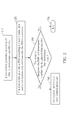
- FIG. 2 is a flowchart illustrating a method of error detection for wireless transmission according to the present invention.
- the flowchart in FIG. 2 includes the following steps:
- the transmitter and the receiver may be a user equipment or a network device.
- the present invention may perform error detection for wireless transmission between two user equipments, between two network devices, or between a user equipment and a network device.
- the transmitter is configured to generate the encrypted data by processing the specific data according to its operational mode.
- the transmitter may generate the encrypted data by segmenting a received SDU.
- the transmitter may generate the encrypted data by segmenting a received SDU, as well as additional information such as sequence number, length indicator, or padding (PAD).
- PAD sequence number, length indicator, or padding
- the transmitter may generate the encrypted data by segmenting a received SDU, as well as additional information such as sequence number, length indicator, padding or status PDU.
- the transmitter provides the PDU according to the encrypted data and the verification code.
- a frame check sequence FCS
- FCS may be generated as the verification code using cyclic redundancy check (CRC).
- CRC cyclic redundancy check
- FCS may include encrypted data content, a length indicator, or a padding which indicates how data is encrypted in different modes.
- FCS may be a multi-bit CRC code, based on which the data or header of the PDU may be verified. The detailed operation of CRC is well-known to those skilled in the art, and is not explained further in the present application.
- a transparent mode protocol data unit includes a data field, while an unacknowledged/acknowledged mode protocol data unit includes a data field and a header field.
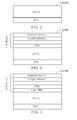
- FIGs. 3, 4 and 5 are diagrams illustrating the operation of the RLC layer according to the present invention.
- FIG. 3 illustrates a transparent mode protocol data unit TM_PDU.
- FIG. 4 illustrates an unacknowledged mode protocol data unit UM_PDU.
- FIG. 5 illustrates an acknowledged mode protocol data unit AM_PDU.
- the TM_PDU transmitted in step 220 includes a data field DATA and a frame check sequence field FCS.
- encrypted data after segmenting the SDU may be stored in the data field DATA, while the verification code associated with encryption information may be stored in the frame check sequence field FCS.
- the UM_PDU transmitted in step 220 includes a data field DATA, header fields UM_header and a frame check sequence field FCS.
- encrypted data after segmenting the SDU may be stored in the data field DATA; additional data, such as sequence number, length indicator, or padding, may be stored in a corresponding header field UM_header; the verification code associated with encryption information may be stored in the frame check sequence field FCS.
- the AM_PDU transmitted in step 220 includes a data field DATA, header fields AM_header and a frame check sequence field FCS.
- encrypted data after segmenting the SDU may be stored in the data field DATA; additional data, such as sequence number, length indicator, padding, or status PDU, may be stored in a corresponding header field UM_header; the verification code associated with encryption information may be stored in the frame check sequence field FCS.
- the receiver is configured to decipher the PDU and determine whether the deciphered data matches the verification code.
- the receiver may decipher the PDU according to MAC communication protocol.
- UM or AM the receiver may decipher the PDU according to RLC communication protocol;
- the receiver is then configured to execute step 240 for performing the error control procedure.
- the present invention may adopt various error control procedures well-known to those skilled in the art, such as feed-forward error correction (FEC), automatic repeat request (ARQ), or hybrid automatic repeat request (HARQ).
- FEC is a uni-directional error control procedure in which the receiver is configured to correct or discard erroneous data without informing the transmitter.
- ARQ is a bi-directional error control procedure in which the receiver is configured to request the transmitter for re-transmission after receiving erroneous data, thereby providing better reliability.
- HARQ is a combination of FEC and ARQ which may provide good transmission reliability without lowering system efficiency due to frequent data re-transmission.
- the present invention may be applied to WCDMA systems in which the RLC layer further adds a frame check sequence field for storing encryption information.
- the receiver may verify the integrity of the received data accordingly and perform a corresponding error control procedure after detecting transmission error, thereby improving communication quality.
Landscapes
- Engineering & Computer Science (AREA)
- Computer Security & Cryptography (AREA)
- Computer Networks & Wireless Communication (AREA)
- Signal Processing (AREA)
- Mobile Radio Communication Systems (AREA)
- Detection And Prevention Of Errors In Transmission (AREA)
Applications Claiming Priority (1)
| Application Number | Priority Date | Filing Date | Title |
|---|---|---|---|
| TW100126197A TWI450525B (zh) | 2011-07-25 | 2011-07-25 | 偵測無線傳輸錯誤之方法 |
Publications (1)
| Publication Number | Publication Date |
|---|---|
| EP2552047A1 true EP2552047A1 (fr) | 2013-01-30 |
Family
ID=44763910
Family Applications (1)
| Application Number | Title | Priority Date | Filing Date |
|---|---|---|---|
| EP11182698A Withdrawn EP2552047A1 (fr) | 2011-07-25 | 2011-09-26 | Procédé pour la détection d'erreurs pour transmission sans fil |
Country Status (3)
| Country | Link |
|---|---|
| US (1) | US8631313B2 (fr) |
| EP (1) | EP2552047A1 (fr) |
| TW (1) | TWI450525B (fr) |
Families Citing this family (4)
| Publication number | Priority date | Publication date | Assignee | Title |
|---|---|---|---|---|
| US9344901B2 (en) | 2013-04-16 | 2016-05-17 | Qualcomm Incorporated | Apparatus and methods of processing a protocol data unit |
| US10819473B2 (en) | 2018-08-01 | 2020-10-27 | Charter Communications Operating, Llc | Disabling, using a designated process, hybrid automatic repeat request (HARQ) acknowledgments for packets for which acknowledgements are supported at network or higher layer |
| TWI733375B (zh) * | 2020-03-17 | 2021-07-11 | 群聯電子股份有限公司 | 資料轉移方法與記憶體儲存裝置 |
| CN114465775B (zh) * | 2021-12-31 | 2023-10-20 | 华为技术有限公司 | 安全传输方法及装置 |
Citations (3)
| Publication number | Priority date | Publication date | Assignee | Title |
|---|---|---|---|---|
| US6832314B1 (en) * | 1999-12-15 | 2004-12-14 | Ericsson, Inc. | Methods and apparatus for selective encryption and decryption of point to multi-point messages |
| US20070242703A1 (en) * | 2006-04-12 | 2007-10-18 | Telefonaktiebolaget Lm Ericsson (Publ) | Binding/combining of plural telecommunications functions |
| US20100332933A1 (en) * | 2009-06-30 | 2010-12-30 | Nokia Corporation | Systems, methods, and apparatuses for ciphering error detection and recovery |
Family Cites Families (6)
| Publication number | Priority date | Publication date | Assignee | Title |
|---|---|---|---|---|
| WO2002082715A1 (fr) * | 2001-04-03 | 2002-10-17 | Mitsubishi Denki Kabushiki Kaisha | Dispositif de chiffrement |
| US7295578B1 (en) * | 2001-09-12 | 2007-11-13 | Lyle James D | Method and apparatus for synchronizing auxiliary data and video data transmitted over a TMDS-like link |
| US7558326B1 (en) * | 2001-09-12 | 2009-07-07 | Silicon Image, Inc. | Method and apparatus for sending auxiliary data on a TMDS-like link |
| US7088398B1 (en) * | 2001-12-24 | 2006-08-08 | Silicon Image, Inc. | Method and apparatus for regenerating a clock for auxiliary data transmitted over a serial link with video data |
| US7716662B2 (en) * | 2005-06-22 | 2010-05-11 | Comcast Cable Holdings, Llc | System and method for generating a set top box code download step sequence |
| US9369246B2 (en) * | 2005-12-30 | 2016-06-14 | Vtech Telecommunications Limited | System and method of enhancing WiFi real-time communications |
-
2011
- 2011-07-25 TW TW100126197A patent/TWI450525B/zh not_active IP Right Cessation
- 2011-09-06 US US13/225,575 patent/US8631313B2/en active Active
- 2011-09-26 EP EP11182698A patent/EP2552047A1/fr not_active Withdrawn
Patent Citations (3)
| Publication number | Priority date | Publication date | Assignee | Title |
|---|---|---|---|---|
| US6832314B1 (en) * | 1999-12-15 | 2004-12-14 | Ericsson, Inc. | Methods and apparatus for selective encryption and decryption of point to multi-point messages |
| US20070242703A1 (en) * | 2006-04-12 | 2007-10-18 | Telefonaktiebolaget Lm Ericsson (Publ) | Binding/combining of plural telecommunications functions |
| US20100332933A1 (en) * | 2009-06-30 | 2010-12-30 | Nokia Corporation | Systems, methods, and apparatuses for ciphering error detection and recovery |
Non-Patent Citations (2)
| Title |
|---|
| ERICSSON: "Ciphering Models", 3GPP DRAFT; S3-99061, 3RD GENERATION PARTNERSHIP PROJECT (3GPP), MOBILE COMPETENCE CENTRE ; 650, ROUTE DES LUCIOLES ; F-06921 SOPHIA-ANTIPOLIS CEDEX ; FRANCE, vol. SA WG3, no. Stockholm; 19990323, 22 March 1999 (1999-03-22), XP050435538 * |
| VODAFONE: "Proposal for radio interface ciphering architecture", 3GPP DRAFT; S3-99101, 3RD GENERATION PARTNERSHIP PROJECT (3GPP), MOBILE COMPETENCE CENTRE ; 650, ROUTE DES LUCIOLES ; F-06921 SOPHIA-ANTIPOLIS CEDEX ; FRANCE, vol. SA WG3, no. Bonn; 19990511, 17 May 1999 (1999-05-17), XP050435548 * |
Also Published As
| Publication number | Publication date |
|---|---|
| US20130031448A1 (en) | 2013-01-31 |
| TWI450525B (zh) | 2014-08-21 |
| US8631313B2 (en) | 2014-01-14 |
| TW201306513A (zh) | 2013-02-01 |
Similar Documents
| Publication | Publication Date | Title |
|---|---|---|
| US9312992B2 (en) | Method and apparatus for data security and automatic repeat request implementation in a wireless communication system | |
| US8228917B2 (en) | Method and apparatus for ciphering and re-ordering packets in a wireless communication system | |
| US20090319850A1 (en) | Local drop control for a transmit buffer in a repeat transmission protocol device | |
| US20080120728A1 (en) | Method and apparatus for performing integrity protection in a wireless communications system | |
| EP1916795A2 (fr) | Procédé et appareil pour manipuler les erreurs de protocole dans un système de communication sans fil | |
| US8631313B2 (en) | Method of error detection for wireless transmission | |
| EP1686718A2 (fr) | Procédé de détection et traitement d'erreurs résiduelles de code CRC | |
| EP1944938A1 (fr) | Procédé et appareil pour protecter l'intégrité d'un message concatené | |
| EP1936914A1 (fr) | Procédé et appareil pour récupérer les erreurs de protocole dans un système de communication sans fil | |
| US9585014B2 (en) | Fast recovery from ciphering key mismatch | |
| US20070297369A1 (en) | Method and apparatus for data framing in a wireless communications system | |
| CN102938679B (zh) | 检测无线传输差错的方法 | |
| AU2011239347B2 (en) | Method and apparatus for data security and automatic repeat request implementation in a wireless communication system | |
| JP5626317B2 (ja) | 無線通信装置および無線通信方法 | |
| KR20070121538A (ko) | 무선 통신 시스템에서 데이터 프레이밍을 위한 방법 및장치 | |
| HK1185737A (en) | An integrated circuit for implementing data security and automatic repeat request in a wireless communication system | |
| HK1187175A (en) | Wtru and method implemented by a wtru for implementing data security and automatic repeat request | |
| HK1125510B (en) | Method and apparatus for data security and automatic repeat request implementation in a wireless communication system |
Legal Events
| Date | Code | Title | Description |
|---|---|---|---|
| PUAI | Public reference made under article 153(3) epc to a published international application that has entered the european phase |
Free format text: ORIGINAL CODE: 0009012 |
|
| AK | Designated contracting states |
Kind code of ref document: A1 Designated state(s): AL AT BE BG CH CY CZ DE DK EE ES FI FR GB GR HR HU IE IS IT LI LT LU LV MC MK MT NL NO PL PT RO RS SE SI SK SM TR |
|
| AX | Request for extension of the european patent |
Extension state: BA ME |
|
| 17P | Request for examination filed |
Effective date: 20130725 |
|
| RBV | Designated contracting states (corrected) |
Designated state(s): AL AT BE BG CH CY CZ DE DK EE ES FI FR GB GR HR HU IE IS IT LI LT LU LV MC MK MT NL NO PL PT RO RS SE SI SK SM TR |
|
| STAA | Information on the status of an ep patent application or granted ep patent |
Free format text: STATUS: EXAMINATION IS IN PROGRESS |
|
| 17Q | First examination report despatched |
Effective date: 20171011 |
|
| STAA | Information on the status of an ep patent application or granted ep patent |
Free format text: STATUS: THE APPLICATION IS DEEMED TO BE WITHDRAWN |
|
| 18D | Application deemed to be withdrawn |
Effective date: 20180807 |