EP2552082B1 - Verfahren zur Beschleunigung von Favoritenwebseiten und System - Google Patents
Verfahren zur Beschleunigung von Favoritenwebseiten und System Download PDFInfo
- Publication number
- EP2552082B1 EP2552082B1 EP11175995.7A EP11175995A EP2552082B1 EP 2552082 B1 EP2552082 B1 EP 2552082B1 EP 11175995 A EP11175995 A EP 11175995A EP 2552082 B1 EP2552082 B1 EP 2552082B1
- Authority
- EP
- European Patent Office
- Prior art keywords
- cache
- web
- web pages
- web cache
- local
- Prior art date
- Legal status (The legal status is an assumption and is not a legal conclusion. Google has not performed a legal analysis and makes no representation as to the accuracy of the status listed.)
- Active
Links
Images


Classifications
-
- G—PHYSICS
- G06—COMPUTING OR CALCULATING; COUNTING
- G06F—ELECTRIC DIGITAL DATA PROCESSING
- G06F16/00—Information retrieval; Database structures therefor; File system structures therefor
- G06F16/90—Details of database functions independent of the retrieved data types
- G06F16/95—Retrieval from the web
- G06F16/957—Browsing optimisation, e.g. caching or content distillation
- G06F16/9574—Browsing optimisation, e.g. caching or content distillation of access to content, e.g. by caching
-
- H—ELECTRICITY
- H04—ELECTRIC COMMUNICATION TECHNIQUE
- H04L—TRANSMISSION OF DIGITAL INFORMATION, e.g. TELEGRAPHIC COMMUNICATION
- H04L61/00—Network arrangements, protocols or services for addressing or naming
- H04L61/58—Caching of addresses or names
-
- H—ELECTRICITY
- H04—ELECTRIC COMMUNICATION TECHNIQUE
- H04L—TRANSMISSION OF DIGITAL INFORMATION, e.g. TELEGRAPHIC COMMUNICATION
- H04L61/00—Network arrangements, protocols or services for addressing or naming
- H04L61/59—Network arrangements, protocols or services for addressing or naming using proxies for addressing
Definitions
- the present invention relates to an apparatus and a method for providing internet connectivity to users, in particular, to an apparatus and a method for providing accelerated access to favourite web site.
- the loading speed mainly depends on the following components: i) DNS resolution time: For every domain where resources need to be fetched to load a web site, the domain name has to be resolved to an IP address; ii) Server response time: Depending on the setup and server load, the web server takes a certain amount of time to serve a requested resource; iii) Network latency and bandwidth: Depending on the distance between the web server and the client, the number of hops, router load and bandwidth, data packets take a certain amount of time to travel between the client computer and the web server and back; iv) Number of resources that need to be loaded: Depending on the HTML page to be loaded, further resources, e.g.
- HTML page images, CSS, JavaScript need to be loaded for the HTML page to be rendered.
- Each loading operation is subject to the components mentioned above;
- Browser rendering speed Different browsers show a different behaviour when rendering web pages. E.g. currently, the web browser "Chrome 10" from Google shows a much faster rendering behaviour than the web browser "Internet Explorer 8" from Microsoft;
- General computer speed The slower the general speed of the computer, the longer it takes for a web browser to render a page;
- Structure of HTML page Depending on how an HTML page is structured, it can be rendered faster or slower. This depends on the internal structure and the number of further resources that are required by the HTML code.
- a technology often employed to increase loading speed are caching web proxy servers.
- a caching web proxy is a web server that is positioned nearer to the user than the server hosting the content. For using the cache, all resources transferred from the content servers to the user have to be routed through the web proxy.
- the web cache stores all resources marked as cacheable in the HTTP header. Whenever a resource is requested that is present in the cache and fulfils the freshness criteria, the user request is not forwarded to the content server but served from cache.
- the advantage concerning quality of experience is twofold: Firstly, network latency is decreased as the web proxy is nearer to the user than the original content server. Possibly, even the bandwidth is increased. Secondly, the web proxy generally has a shorter server response time than the content server. Therefore, the quality of experience is increased when using caching web proxy servers.
- proxy server To use a proxy server, the user needs to specify the server parameters, i.e. URL, port, protocol etc., in his system, e.g. the operating system or the web browser.
- the proxy server can be set up as a transparent proxy. In that case, all user traffic is automatically routed through the web proxy, the user does not need to set any client-side configuration.
- the content in a proxy cache should be refreshed from time to time.
- three mechanisms are used: freshness, validation and invalidation.
- freshness an expiration date and/or a maximum age can be included in the HTTP header. If a resource is expired, it needs to be validated.
- the proxy server can send a request to the content server using the "If-Modified-Since" directive. In that case, the content server only returns the whole response if it has been modified since the specified date. Otherwise, only a short response confirming the resource's freshness is returned (304 Not Modified).
- ETags can be used in conjunction with "If-None-Match" requests.
- the content server transmits a resource checksum in the ETag HTTP header.
- the web proxy sends an "If-None-Match" request including the checksum to the content server.
- the content server can then use the checksum to determine if the resource has been changed compared to the cached version of the web proxy. In case the resource has changed, the resource is transmitted to the web proxy. Otherwise, the proxy is informed that the resource has not changed, using a "304 Not Modified" message.
- the loading speed is not significantly improved, as the resource validity has to be verified with the content server.
- the only advantage is the case that the resource is still fresh and the content server has to return only a small http packet confirming the freshness, e.g. "304 Not Modified".
- US-A-2008-209120 describes a system and method to keep the resources in a web cache fresh.
- the method verifies independently of a specific user request if the resources in a web cache are still fresh. In case they are not fresh, the resources are validated. By using the system and method, it can be ensured that fresh resources are available in the cache whenever a user request arrives.
- WWWOFFLE World Wide Web Offline Explorer
- http://www.ge philosophical.demon.co.uk/wwwoffle/ can be used as a web proxy server. It offers various functions to enhance browsing. For this invention, two functions are of special interest.
- WWWOFFLE includes a web cache and allows the automatic recursive time-based pre-fetch of URLs. Thereby, the cached version of defined web sites can be refreshed automatically in defined intervals. The minimum interval is 1 hour; recursive fetch implies a significant communication volume with the content server.
- Craig Henderson presents the architecture of a system that allows web servers to notify a central site update internet server about site updates.
- Other services like web crawlers can subscribe to the site update service and receive a note whenever a resource they subscribed performed changes. Thereby, other services do not have to check content for changes on a regular basis, but can react only when they are notified about an actual change.
- CN-A-101860550 describes a method to accelerate streaming media by using a router to buffer resources.
- US-A-2010-111059 describes a system and method to leverage overlapping WLAN networks of routers connected to the Internet and providing a content cache.
- the content is moved between the caches directed by a central management component, using the local WLAN connections.
- WO-A-2010-081160 describes a bundle of techniques to optimize web surfing behaviour. It describes a method to make content prefetchable even though the content provider uses techniques to prevent caching, to allow user behaviour tracking by content providers even though a resource is served from cache, to optimise pre-fetching performance, and to integrate DNS proxy functions with HTTP proxy functions to increase the DNS lookup speed.
- US-A-2009-100228 describes a method to combine pre-fetching with web caching. The cache serves a pre-fetching request from cache only if the resource is fresh. Otherwise the cache verifies if the cached resource is still fresh. This method seems trivial, as this is the automatic behaviour when combining pre-fetching with a regular caching proxy server.
- WO-A-2008-101213 describes systems and methods to serve cached content even though it is not sure if the content is fresh, while verifying the freshness in the background.
- US-B-7783757 describes systems and methods to revalidate a cached resource while serving the cache resource to the client.
- An object of the present invention is to provide an apparatus, a system and a method to accelerate the access to certain web sites, in particular, to reduce the time between an initial web site request and the rendering of the website in the user's web browser for specified web sites, especially web sites that change frequently and/or contain user-specific content.
- the present invention provides an apparatus for providing internet connectivity to at least one client, wherein the apparatus comprises a modem for connecting the client with the Internet; a storage being configured to store at least one list of unified resource locations corresponding to a plurality of web pages; and a web cache comprises a cache of the plurality of web pages, wherein the web cache is adapted to automatically carry out an update of the cache when a time limit is reached.
- the web cache may be also called as web proxy or caching web proxy.
- the present invention provides a method for providing internet connectivity to at least one client, wherein the method comprising the steps of: a) connecting the client with the Internet by an apparatus, wherein the apparatus comprises a modem, a web cache and a storage; b) creating at least one list of unified resource locations corresponding to the plurality of web pages; and c) caching a plurality of web pages and automatically updating of the cache when a time limit is reached.
- the apparatus comprises an interface for receiving the list of unified resource locations, which is defined manually.
- the apparatus comprises means for automatically determining and/or updating the list of unified resource locations on the basis of access behaviour of the client.
- the apparatus comprises a routing unit for redirecting the internet connectivity to a plurality of clients.
- each list corresponds to one of the plurality of clients.
- the web cache of the apparatus is connected to an external web cache which acts as parent web cache for the web cache of the apparatus.
- the web cache is configured to store a plurality of content information, each content information including a cookie related to a respective one of the plurality of web pages and a unique identifier of the client requesting the respective one of the plurality of web pages.
- the time limit is defined to be 0.5 to 10 minutes, preferably 0.8 to 5 minutes, more preferably 1 to 2 minutes, and/or defined in a HTTP header of the plurality of web pages.
- the time limit is reached when a site update notification unit sends a signal to the web cache notifying that an update of at least one of the plurality web pages exists.
- the time limit is reached when the external web cache sends a signal to the web cache notifying that an update of at least one of the plurality web pages exists; wherein the external web cache is connected with the web cache and subscribed to a site update notification unit.
- the present invention also provides a system for providing internet connectivity to at least one client, wherein the system comprises the apparatus as above defined, and a central web cache connected to the web cache of the apparatus and being adapted to act as parent web cache for the web cache of the apparatus.
- the apparatus, the system and the method according to the present invention increases the loading speed of predefined websites for users in a home network.
- the apparatus comprises a modem that is capable to connect a number of client systems to the Internet.
- the apparatus may further comprise a router for redirecting the Internet connection to the number of clients.
- Certain URLs are configured for acceleration, i.e. accelerated URLs.
- the accelerated URLs can be identified automatically based on the user behaviour, i.e. the URLs that are most frequently accessed. For these URLs, a fresh version of all required resources is kept in a web cache on the apparatus, i.e. a local web cache.
- a recursion level can be set.
- the apparatus in particular the web cache, preferably directs HTTP requests related to the acceleration to a central caching web proxy server.
- the verification of the freshness of the resource on the local web cache may be either triggered by the expiration of a resource according to the HTTP header, based on a time interval or based on an update notification from a site update notification system.
- the site update notification system can inform the central caching web proxy about a resource update.
- the present invention keeps the web cache fresh, independently of any requests sent by the client, i.e. the cache may be updated before the client accesses the certain web site
- the advantage of the apparatus, the system and method for the user is that the accelerated pages are loaded much faster than non-accelerated pages. This is due to the connection to the router/modem being faster and having lower latency.
- the system and method minimises additional communication and server load induced by the system by leveraging a central caching web proxy and optionally a site update notification system.
- This present invention contributes a system and method to reduce the time between an initial web site request and the rendering of the website in the user's web browser for specified web sites, especially web sites that change frequently and/or contain user-specific content.
- Fig. 2 shows that the system comprises an apparatus including a modem.
- the end user uses the modem to connect his devices, e.g. PC, laptop, Smartphone, Tablet, to the Internet.
- the modem may be for example a DSL router/modem or cable router/modem.
- the system may further comprise a central caching web proxy server acting as parent web cache.
- the apparatus comprises a subsystem to establish a connection to the internet, e.g. over DSL or cable; a subsystem to connect local devices to the router, e.g. PC, Laptop, Smartphone, Tablet PC via LAN, WLAN, USB; a caching web proxy with attached storage, e.g. RAM, hard disk, flash drive; and a favourite sites accelerator, i.e. a subsystem to execute a computer-readable implementation of the method described below.
- the router/modem is connected to the Internet using state-of-the-art techniques; the local devices are connected to the router/modem using state-of-the-art techniques.
- the caching web proxy on the apparatus is configured as a regular web proxy, the operating systems or web browsers of the local devices are configured to use the apparatus as a web proxy server. If the caching web proxy is configured as a transparent proxy, this step is not necessary.
- the caching web proxy on the apparatus is configured to use the central caching web proxy as parent proxy.
- the parent proxy can be used only for HTTP requests concerning hosts of accelerated URLs, see below.
- the caching web proxy on the apparatus is configured as a private cache.
- resources that are requested using cookies can be cached.
- the "Cookie” header is stored in addition to the HTTP response.
- the HTTP response is cached even if it contains a "Set-Cookie” header and/or is marked as non-cacheable, e.g. according to the "Cache-Control” header, the "Expires” header or the "Pragma” header.
- the cached resources are delivered if a HTTP request using the same "Cookie” header is received. Further rules concerning cached content may also apply here.
- the accelerating apparatus is configured by specifying URLs for acceleration, e.g. on the apparatus configuration portal.
- a recursion level i.e. depth
- the requirement can optionally be indicated for each URL. In that case, the cookies have to be stored on the accelerating apparatus so that they can be used to retrieve fresh content for personalised pages from a content server.
- the caching web proxy on the apparatus can analyse the URL access pattern as observed from the users' requests.
- a defined number of most frequently accessed URLs can automatically be configured for acceleration, without any user interaction.
- the caching web proxy can store the cookies it sees in the user's HTTP requests for future usage. Newer cookies overwrite older cookies.
- the favourite sites accelerator can retrieve the new version without user interaction and continue to work. Using this method the site can be kept fresh for one user, i.e. the user which accessed the site most recently. In case there are different users using the same router/modem, this might be inconvenient and a privacy concern. Therefore, the below described method can be used.
- the cookie when setting up a site for acceleration, can be captured during a certain time interval.
- the interval starts when indicating that the cookies should be stored. It can end either based on a timeout, or based on a user input.
- the cookies for the relevant host will be captured as described above.
- the caching web proxy stores the cookies it sees for the host, newer cookies overwriting older cookies.
- the cookies can be stored together with a unique identifier of the client the cookies have been sent from, preferably MAC address or IP address. Both methods described above can be used in conjunction with this technique.
- client identification accelerated URLs requiring cookies are specified per client.
- the cached resources retrieved for these accelerated URLs are stored in a separate cache for each client. Whenever a client requests such a cached resource, it is served from the client's cache.
- the present invention concerns different techniques to keep content fresh as follows:
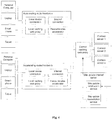
- Fig. 1 shows the process of updating cache of an URL. The process may be started under the following conditions:
- the above described process is a preferred embodiment, e.g. the element such as central caching web proxy is not mandatory to carry out the present invention, or the check of the freshness of the cache is also optionally, since the cache according to the present invention is at the most time fresh.
- the cookies that have been used for the request are stored in conjunction with the reply.
- the cookies included in the request are compared with the cookies stored in the cache. Only if the cookies match, the resource from the cache is returned. Otherwise, the request is not served from the cache, but forwarded to the central caching web proxy.
- the client requests for resources present in the local caching web proxy are handled in the regular way.
- the freshness verification of the cached resources can be omitted to allow serving stale content.
- the system can be integrated with a site update notification system.
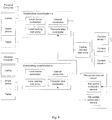
- a site update notification system is shown in Fig. 3 . Two types of implementation are possible.
- Fig. 4 shows that the central caching web proxy can subscribe to the notification system. Whenever the central caching web proxy receives an update notification for a resource that is present in the cache, the cached resource is updated. Therefore, the resource can always be considered as being fresh, HTTP header freshness specifications can be ignored if present. All client requests for the resource are served from the cache.
- the advantage of this setup is that validation requests from the central caching web proxy to the content server become unnecessary, the communication overhead and server load is reduced.
- Fig. 5 shows that the favourite sites accelerator can subscribe to the site update subscription service for the accelerated URLs.
- the method outlined in figure 1 is triggered whenever an update notification is received.
- the advantage of this setup is that validation requests from the local caching web proxies to the central caching web proxy are minimised, reducing communication overhead and server load.
- Prior art Present invention Web pages are to be fetched from content server or a web proxy server, communication being subject to bandwidth restrictions and latency introduced by the access and aggregation network. Fresh copies of selected web pages are kept in a cache on the router/modem. Client access to these resources is not subject to bandwidth restrictions and latency from the Internet connection. Pre-fetching and keeping a cache fresh imposes significant communication overhead and server load, often resulting in content providers blocking such requests. According to a preferred embodiment, only the cache of the central web proxy server are to be kept fresh with resources from the content servers.
- the distributed end user apparatus including routers/modems only communicate with the central cache and not directly with the content servers. Leveraging a site update notification system further reduces communication overhead and server load. Pages to keep a fresh version in cache are configured manually. Analysing browsing behaviour enables automatic identification and configuration of cached resources to be kept fresh.
Landscapes
- Engineering & Computer Science (AREA)
- Databases & Information Systems (AREA)
- Theoretical Computer Science (AREA)
- Computer Networks & Wireless Communication (AREA)
- Signal Processing (AREA)
- Data Mining & Analysis (AREA)
- Physics & Mathematics (AREA)
- General Engineering & Computer Science (AREA)
- General Physics & Mathematics (AREA)
- Information Transfer Between Computers (AREA)
Claims (13)
- Vorrichtung zum Bereitstellen einer Internetkonnektivität mit einer Vielzahl von Clients, mit:einem Modem zum Verbinden des Client mit dem Internet;einer Verkehrslenkungseinheit zum Umleiten der Internetkonnektivität zu einer Vielzahl von Clients:dadurch gekennzeichnet, dass die Vorrichtung ferner aufweist:e inen Speicher, der konfiguriert ist, eine Vielzahl von Listen von vereinheitlichten Ressourcenorten zu speichern, wobei jede der Listen einer Vielzahl von Webseiten entspricht und jede der Listen einem der Vielzahl der Clients entspricht; unde inen lokalen Webzwischenspeicher, der einen Zwischenspeicher der Vielzahl der Webseiten aufweist, wobei der Webzwischenspeicher eingerichtet ist, automatisch eine Aktualisierung des Zwischenspeichers auszuführen, wenn eine Zeitbegrenzung erreicht ist.
- Vorrichtung nach Anspruch 1, die eine Schnittstelle zum Empfangen der Liste der vereinheitlichten Ressourcenorte aufweist, die manuell definiert wird, oder
Mittel zum automatischen Bestimmen und/oder Aktualisieren der Liste der vereinheitlichten Ressourcenorte auf der Grundlage des Zugriffsverhaltens des Client aufweist. - Vorrichtung nach einem der vorhergehenden Ansprüche, wobei die Vorrichtung mit einem externen Webzwischenspeicher verbindbar ist.
- Vorrichtung nach einem der vorhergehenden Ansprüche, wobei der lokale Webzwischenspeicher konfiguriert ist, eine Vielzahl von Inhaltsinformationen zu speichern, wobei jede Inhaltsinformation einen Cookie, der eine jeweilige der Vielzahl der Webseiten betrifft, und eine eindeutige Kennung des Client aufweist, der die jeweilige der Vielzahl der Webseiten anfordert.
- Vorrichtung nach einem der Ansprüche 1 bis 4, wobei die Zeitbegrenzung zwischen 0,5 und 10 Minuten, vorzugsweise zwischen 0,8 und 5 Minuten, besonders bevorzugt zwischen 1 und 2 Minuten liegt; und/oder
wobei die Zeitbegrenzung in einem HTTP-Header der Vielzahl der Webseiten definiert ist. - Vorrichtung nach einem der Ansprüche 1 bis 4, wobei die Zeitbegrenzung erreicht ist, wenn eine Siteaktualisierungsmeldeeinheit ein Signal an den lokalen Webzwischenspeicher sendet, das meldet, dass eine Aktualisierung von mindestens einer der Vielzahl Webseiten vorhanden ist, oder
wobei die Zeitbegrenzung erreicht ist, wenn der externe Webzwischenspeicher ein Signal an den lokalen Webzwischenspeicher sendet, das meldet, dass eine Aktualisierung von mindestens einer der Vielzahl Webseiten vorhanden ist;
wobei der externe Webzwischenspeicher mit dem lokalen Webzwischenspeicher verbunden ist und eine Siteaktualisierungsmeldeeinheit abonniert hat. - System zum Bereitstellen einer Internetkonnektivität für mindestens einen Client, das eine Vorrichtung nach einem der Ansprüche 1 bis 6 und einen zentralen Webzwischenspeicher aufweist, der mit dem lokalen Webzwischenspeicher der Vorrichtung verbunden ist und eingerichtet ist, als ein Ursprungs-Webzwischenspeicher für den lokalen Webzwischenspeicher der Vorrichtung zu dienen.
- Verfahren zum Bereitstellen einer Internetkonnektivität mit einer Vielzahl von Clients, wobei das Verfahren die Schritte aufweist:a) Verbinden der Vielzahl der Clients mit dem Internet durch eine Vorrichtung, wobei die Vorrichtung ein Modem, einen lokalen Webzwischenspeicher und einen Speicher aufweist;b) Umleiten der Internetkonnektivität zur Vielzahl der Clients durch eine Verkehrslenkungseinheit der Vorrichtung;c) Erzeugen einer Vielzahl von Listen von vereinheitlichten Ressourcenorten, wobei jede der Listen einer Vielzahl von Webseiten entspricht und jede der Listen einem der Vielzahl der Clients entspricht;d) Zwischenspeichern einer Vielzahl von Webseiten in der Vorrichtung und automatisches Aktualisieren des Zwischenspeichers, wenn eine Zeitbegrenzung erreicht wird.
- Verfahren nach Anspruch 8, das ferner den Schritt aufweist: manuelles Definieren der Listen der vereinheitlichten Ressourcenorte, oder
das ferner den Schritt aufweist: automatisches Bestimmen und/oder Aktualisieren der Listen der vereinheitlichten Ressourcenorte auf der Grundlage des Zugriffsverhaltens des Client. - Verfahren nach Anspruchs 8 oder 9, das ferner den Schritt aufweist: Verbinden des lokalen Webzwischenspeichers der Vorrichtung mit einem externen Webzwischenspeicher.
- Verfahren nach einem der Ansprüche 8 bis 10, das ferner den Schritt aufweist: Konfigurieren des lokalen Webzwischenspeichers, um eine Vielzahl von Inhaltsinformationen zu speichern, wobei jede der Inhaltsinformationen einen Cookie, der eine jeweilige der Vielzahl der Webseiten betrifft, und eine eindeutige Kennung des Client aufweist, der die jeweilige der Vielzahl der Webseiten anfordert.
- Verfahren nach einem der Ansprüche 8 bis 11,
wobei die Zeitbegrenzung zwischen 0,5 und 10 Minuten, vorzugsweise zwischen 0,8 und 5 Minuten, besonders bevorzugt zwischen 1 und 2 Minuten liegt; und/oder wobei die Zeitbegrenzung in einem HTTP-Header der Vielzahl der Webseiten definiert ist. - Verfahren nach einem der Ansprüche 8 bis 11,
wobei die Zeitbegrenzung erreicht ist, wenn eine Siteaktualisierungsmeldeeinheit ein Signal an den lokalen Webzwischenspeicher sendet, das meldet, dass eine Aktualisierung von mindestens einer der Vielzahl Webseiten vorhanden ist; oder
wobei die Zeitbegrenzung erreicht ist, wenn der externe Webzwischenspeicher ein Signal an den lokalen Webzwischenspeicher sendet, das meldet, dass eine Aktualisierung von mindestens einer der Vielzahl Webseiten vorhanden ist;
wobei der externe Webzwischenspeicher mit dem lokalen Webzwischenspeicher verbunden ist und eine Siteaktualisierungsmeldeeinheit abonniert hat.
Priority Applications (1)
| Application Number | Priority Date | Filing Date | Title |
|---|---|---|---|
| EP11175995.7A EP2552082B1 (de) | 2011-07-29 | 2011-07-29 | Verfahren zur Beschleunigung von Favoritenwebseiten und System |
Applications Claiming Priority (1)
| Application Number | Priority Date | Filing Date | Title |
|---|---|---|---|
| EP11175995.7A EP2552082B1 (de) | 2011-07-29 | 2011-07-29 | Verfahren zur Beschleunigung von Favoritenwebseiten und System |
Publications (2)
| Publication Number | Publication Date |
|---|---|
| EP2552082A1 EP2552082A1 (de) | 2013-01-30 |
| EP2552082B1 true EP2552082B1 (de) | 2018-10-31 |
Family
ID=44651073
Family Applications (1)
| Application Number | Title | Priority Date | Filing Date |
|---|---|---|---|
| EP11175995.7A Active EP2552082B1 (de) | 2011-07-29 | 2011-07-29 | Verfahren zur Beschleunigung von Favoritenwebseiten und System |
Country Status (1)
| Country | Link |
|---|---|
| EP (1) | EP2552082B1 (de) |
Families Citing this family (2)
| Publication number | Priority date | Publication date | Assignee | Title |
|---|---|---|---|---|
| CN104239302B (zh) * | 2013-06-07 | 2017-10-03 | 腾讯科技(深圳)有限公司 | 页面内容获取方法、装置及应用设备与移动终端 |
| CN109347925B (zh) * | 2014-12-31 | 2021-07-09 | 华为技术有限公司 | 缓存方法、缓存边缘服务器、缓存核心服务器和缓存系统 |
Family Cites Families (11)
| Publication number | Priority date | Publication date | Assignee | Title |
|---|---|---|---|---|
| US6182122B1 (en) * | 1997-03-26 | 2001-01-30 | International Business Machines Corporation | Precaching data at an intermediate server based on historical data requests by users of the intermediate server |
| US7555561B2 (en) * | 2001-03-19 | 2009-06-30 | The Aerospace Corporation | Cooperative adaptive web caching routing and forwarding web content data broadcasting method |
| US20030225885A1 (en) * | 2002-05-31 | 2003-12-04 | Comverse, Ltd. | Caching for limited bandwidth networks |
| CN1221898C (zh) * | 2002-08-13 | 2005-10-05 | 国际商业机器公司 | 刷新网络代理高速缓存服务器对象的系统和方法 |
| US8065275B2 (en) | 2007-02-15 | 2011-11-22 | Google Inc. | Systems and methods for cache optimization |
| US20080209120A1 (en) | 2007-02-26 | 2008-08-28 | Microsoft Corporation | Accelerating cache performance by active cache validation |
| US7783757B2 (en) | 2007-03-12 | 2010-08-24 | Citrix Systems, Inc. | Systems and methods of revalidating cached objects in parallel with request for object |
| EP1978704A1 (de) | 2007-04-02 | 2008-10-08 | British Telecommunications Public Limited Company | Bereitstellung von Inhalten |
| US9460229B2 (en) | 2007-10-15 | 2016-10-04 | Viasat, Inc. | Methods and systems for implementing a cache model in a prefetching system |
| EP2386164A2 (de) | 2009-01-12 | 2011-11-16 | ViaSat Inc. | Web-optimierung |
| CN101860550B (zh) | 2010-06-25 | 2013-02-27 | 复旦大学 | 一种基于路由器缓存的流媒体系统加速方法 |
-
2011
- 2011-07-29 EP EP11175995.7A patent/EP2552082B1/de active Active
Non-Patent Citations (1)
| Title |
|---|
| None * |
Also Published As
| Publication number | Publication date |
|---|---|
| EP2552082A1 (de) | 2013-01-30 |
Similar Documents
| Publication | Publication Date | Title |
|---|---|---|
| US11792294B2 (en) | Method and apparatus for reducing loading time of web pages | |
| US10122677B2 (en) | Delegation of content delivery to a local service | |
| US10326853B2 (en) | Method and apparatus for reducing network resource transmission size using delta compression | |
| US6917960B1 (en) | Intelligent content precaching | |
| US8312074B2 (en) | Method for multipart encoding | |
| US8990357B2 (en) | Method and apparatus for reducing loading time of web pages | |
| CN107025234B (zh) | 一种信息推送方法及缓存服务器 | |
| EP2294515B1 (de) | Routing von anfragen anhand von datenverarbeitungskomponenten eines netzwerkes | |
| US8326956B2 (en) | System and method for handling persistence information in a network | |
| US20180048730A1 (en) | Method and Apparatus for Reducing Network Resource Transmission Size using Delta Compression | |
| US10735528B1 (en) | Geographic relocation of content source in a content delivery network | |
| US10554778B2 (en) | System and method for providing an adjunct device in a content distribution network | |
| CN107710171B (zh) | 加速的子资源加载 | |
| KR20120083903A (ko) | 더 빠르고 더 효율적인 데이터 통신을 제공하는 시스템 및 방법 | |
| WO2012119538A1 (zh) | 对dns解析请求进行解析的方法、系统、智能dns、计算机程序和存储介质 | |
| CN107682281B (zh) | 一种sdn交换机和sdn交换机的应用管理方法 | |
| EP2552082B1 (de) | Verfahren zur Beschleunigung von Favoritenwebseiten und System | |
| GB2540633A (en) | Methods, devices and computer programs enabling data to be pushed in a network environment comprising proxies | |
| KR100313847B1 (ko) | 북마크정보를이용한인터네트서비스장치및방법 | |
| WO2012014209A2 (en) | Internet communication system and method | |
| JP2008293281A (ja) | キャッシュ装置、サーバ、キャッシュシステム、キャッシュ方法、及びプログラム | |
| JP2005267435A (ja) | キャッシュ処理プログラムおよびキャッシュ処理装置 | |
| HK1213704B (en) | Method for obtaining web pages, system, network server, browser and gslb server |
Legal Events
| Date | Code | Title | Description |
|---|---|---|---|
| PUAI | Public reference made under article 153(3) epc to a published international application that has entered the european phase |
Free format text: ORIGINAL CODE: 0009012 |
|
| AK | Designated contracting states |
Kind code of ref document: A1 Designated state(s): AL AT BE BG CH CY CZ DE DK EE ES FI FR GB GR HR HU IE IS IT LI LT LU LV MC MK MT NL NO PL PT RO RS SE SI SK SM TR |
|
| AX | Request for extension of the european patent |
Extension state: BA ME |
|
| 17P | Request for examination filed |
Effective date: 20130704 |
|
| RBV | Designated contracting states (corrected) |
Designated state(s): AL AT BE BG CH CY CZ DE DK EE ES FI FR GB GR HR HU IE IS IT LI LT LU LV MC MK MT NL NO PL PT RO RS SE SI SK SM TR |
|
| GRAP | Despatch of communication of intention to grant a patent |
Free format text: ORIGINAL CODE: EPIDOSNIGR1 |
|
| STAA | Information on the status of an ep patent application or granted ep patent |
Free format text: STATUS: GRANT OF PATENT IS INTENDED |
|
| INTG | Intention to grant announced |
Effective date: 20180514 |
|
| RIN1 | Information on inventor provided before grant (corrected) |
Inventor name: OFFERMANN, PHILIPP |
|
| RAP1 | Party data changed (applicant data changed or rights of an application transferred) |
Owner name: DEUTSCHE TELEKOM AG |
|
| GRAS | Grant fee paid |
Free format text: ORIGINAL CODE: EPIDOSNIGR3 |
|
| GRAA | (expected) grant |
Free format text: ORIGINAL CODE: 0009210 |
|
| STAA | Information on the status of an ep patent application or granted ep patent |
Free format text: STATUS: THE PATENT HAS BEEN GRANTED |
|
| REG | Reference to a national code |
Ref country code: DE Ref legal event code: R082 Ref document number: 602011053368 Country of ref document: DE |
|
| AK | Designated contracting states |
Kind code of ref document: B1 Designated state(s): AL AT BE BG CH CY CZ DE DK EE ES FI FR GB GR HR HU IE IS IT LI LT LU LV MC MK MT NL NO PL PT RO RS SE SI SK SM TR |
|
| REG | Reference to a national code |
Ref country code: CH Ref legal event code: EP Ref country code: GB Ref legal event code: FG4D |
|
| REG | Reference to a national code |
Ref country code: AT Ref legal event code: REF Ref document number: 1060771 Country of ref document: AT Kind code of ref document: T Effective date: 20181115 |
|
| REG | Reference to a national code |
Ref country code: DE Ref legal event code: R096 Ref document number: 602011053368 Country of ref document: DE |
|
| REG | Reference to a national code |
Ref country code: IE Ref legal event code: FG4D |
|
| REG | Reference to a national code |
Ref country code: NL Ref legal event code: MP Effective date: 20181031 |
|
| REG | Reference to a national code |
Ref country code: LT Ref legal event code: MG4D |
|
| REG | Reference to a national code |
Ref country code: AT Ref legal event code: MK05 Ref document number: 1060771 Country of ref document: AT Kind code of ref document: T Effective date: 20181031 |
|
| PG25 | Lapsed in a contracting state [announced via postgrant information from national office to epo] |
Ref country code: FI Free format text: LAPSE BECAUSE OF FAILURE TO SUBMIT A TRANSLATION OF THE DESCRIPTION OR TO PAY THE FEE WITHIN THE PRESCRIBED TIME-LIMIT Effective date: 20181031 Ref country code: IS Free format text: LAPSE BECAUSE OF FAILURE TO SUBMIT A TRANSLATION OF THE DESCRIPTION OR TO PAY THE FEE WITHIN THE PRESCRIBED TIME-LIMIT Effective date: 20190228 Ref country code: AT Free format text: LAPSE BECAUSE OF FAILURE TO SUBMIT A TRANSLATION OF THE DESCRIPTION OR TO PAY THE FEE WITHIN THE PRESCRIBED TIME-LIMIT Effective date: 20181031 Ref country code: NO Free format text: LAPSE BECAUSE OF FAILURE TO SUBMIT A TRANSLATION OF THE DESCRIPTION OR TO PAY THE FEE WITHIN THE PRESCRIBED TIME-LIMIT Effective date: 20190131 Ref country code: LT Free format text: LAPSE BECAUSE OF FAILURE TO SUBMIT A TRANSLATION OF THE DESCRIPTION OR TO PAY THE FEE WITHIN THE PRESCRIBED TIME-LIMIT Effective date: 20181031 Ref country code: ES Free format text: LAPSE BECAUSE OF FAILURE TO SUBMIT A TRANSLATION OF THE DESCRIPTION OR TO PAY THE FEE WITHIN THE PRESCRIBED TIME-LIMIT Effective date: 20181031 Ref country code: BG Free format text: LAPSE BECAUSE OF FAILURE TO SUBMIT A TRANSLATION OF THE DESCRIPTION OR TO PAY THE FEE WITHIN THE PRESCRIBED TIME-LIMIT Effective date: 20190131 Ref country code: LV Free format text: LAPSE BECAUSE OF FAILURE TO SUBMIT A TRANSLATION OF THE DESCRIPTION OR TO PAY THE FEE WITHIN THE PRESCRIBED TIME-LIMIT Effective date: 20181031 Ref country code: PL Free format text: LAPSE BECAUSE OF FAILURE TO SUBMIT A TRANSLATION OF THE DESCRIPTION OR TO PAY THE FEE WITHIN THE PRESCRIBED TIME-LIMIT Effective date: 20181031 Ref country code: HR Free format text: LAPSE BECAUSE OF FAILURE TO SUBMIT A TRANSLATION OF THE DESCRIPTION OR TO PAY THE FEE WITHIN THE PRESCRIBED TIME-LIMIT Effective date: 20181031 |
|
| PG25 | Lapsed in a contracting state [announced via postgrant information from national office to epo] |
Ref country code: SE Free format text: LAPSE BECAUSE OF FAILURE TO SUBMIT A TRANSLATION OF THE DESCRIPTION OR TO PAY THE FEE WITHIN THE PRESCRIBED TIME-LIMIT Effective date: 20181031 Ref country code: AL Free format text: LAPSE BECAUSE OF FAILURE TO SUBMIT A TRANSLATION OF THE DESCRIPTION OR TO PAY THE FEE WITHIN THE PRESCRIBED TIME-LIMIT Effective date: 20181031 Ref country code: NL Free format text: LAPSE BECAUSE OF FAILURE TO SUBMIT A TRANSLATION OF THE DESCRIPTION OR TO PAY THE FEE WITHIN THE PRESCRIBED TIME-LIMIT Effective date: 20181031 Ref country code: GR Free format text: LAPSE BECAUSE OF FAILURE TO SUBMIT A TRANSLATION OF THE DESCRIPTION OR TO PAY THE FEE WITHIN THE PRESCRIBED TIME-LIMIT Effective date: 20190201 Ref country code: RS Free format text: LAPSE BECAUSE OF FAILURE TO SUBMIT A TRANSLATION OF THE DESCRIPTION OR TO PAY THE FEE WITHIN THE PRESCRIBED TIME-LIMIT Effective date: 20181031 Ref country code: PT Free format text: LAPSE BECAUSE OF FAILURE TO SUBMIT A TRANSLATION OF THE DESCRIPTION OR TO PAY THE FEE WITHIN THE PRESCRIBED TIME-LIMIT Effective date: 20190301 |
|
| PG25 | Lapsed in a contracting state [announced via postgrant information from national office to epo] |
Ref country code: CZ Free format text: LAPSE BECAUSE OF FAILURE TO SUBMIT A TRANSLATION OF THE DESCRIPTION OR TO PAY THE FEE WITHIN THE PRESCRIBED TIME-LIMIT Effective date: 20181031 Ref country code: DK Free format text: LAPSE BECAUSE OF FAILURE TO SUBMIT A TRANSLATION OF THE DESCRIPTION OR TO PAY THE FEE WITHIN THE PRESCRIBED TIME-LIMIT Effective date: 20181031 Ref country code: IT Free format text: LAPSE BECAUSE OF FAILURE TO SUBMIT A TRANSLATION OF THE DESCRIPTION OR TO PAY THE FEE WITHIN THE PRESCRIBED TIME-LIMIT Effective date: 20181031 |
|
| REG | Reference to a national code |
Ref country code: DE Ref legal event code: R097 Ref document number: 602011053368 Country of ref document: DE |
|
| PG25 | Lapsed in a contracting state [announced via postgrant information from national office to epo] |
Ref country code: EE Free format text: LAPSE BECAUSE OF FAILURE TO SUBMIT A TRANSLATION OF THE DESCRIPTION OR TO PAY THE FEE WITHIN THE PRESCRIBED TIME-LIMIT Effective date: 20181031 Ref country code: SM Free format text: LAPSE BECAUSE OF FAILURE TO SUBMIT A TRANSLATION OF THE DESCRIPTION OR TO PAY THE FEE WITHIN THE PRESCRIBED TIME-LIMIT Effective date: 20181031 Ref country code: RO Free format text: LAPSE BECAUSE OF FAILURE TO SUBMIT A TRANSLATION OF THE DESCRIPTION OR TO PAY THE FEE WITHIN THE PRESCRIBED TIME-LIMIT Effective date: 20181031 Ref country code: SK Free format text: LAPSE BECAUSE OF FAILURE TO SUBMIT A TRANSLATION OF THE DESCRIPTION OR TO PAY THE FEE WITHIN THE PRESCRIBED TIME-LIMIT Effective date: 20181031 |
|
| PLBE | No opposition filed within time limit |
Free format text: ORIGINAL CODE: 0009261 |
|
| STAA | Information on the status of an ep patent application or granted ep patent |
Free format text: STATUS: NO OPPOSITION FILED WITHIN TIME LIMIT |
|
| 26N | No opposition filed |
Effective date: 20190801 |
|
| PG25 | Lapsed in a contracting state [announced via postgrant information from national office to epo] |
Ref country code: SI Free format text: LAPSE BECAUSE OF FAILURE TO SUBMIT A TRANSLATION OF THE DESCRIPTION OR TO PAY THE FEE WITHIN THE PRESCRIBED TIME-LIMIT Effective date: 20181031 |
|
| PG25 | Lapsed in a contracting state [announced via postgrant information from national office to epo] |
Ref country code: MC Free format text: LAPSE BECAUSE OF FAILURE TO SUBMIT A TRANSLATION OF THE DESCRIPTION OR TO PAY THE FEE WITHIN THE PRESCRIBED TIME-LIMIT Effective date: 20181031 |
|
| REG | Reference to a national code |
Ref country code: CH Ref legal event code: PL |
|
| PG25 | Lapsed in a contracting state [announced via postgrant information from national office to epo] |
Ref country code: TR Free format text: LAPSE BECAUSE OF FAILURE TO SUBMIT A TRANSLATION OF THE DESCRIPTION OR TO PAY THE FEE WITHIN THE PRESCRIBED TIME-LIMIT Effective date: 20181031 |
|
| REG | Reference to a national code |
Ref country code: BE Ref legal event code: MM Effective date: 20190731 |
|
| PG25 | Lapsed in a contracting state [announced via postgrant information from national office to epo] |
Ref country code: BE Free format text: LAPSE BECAUSE OF NON-PAYMENT OF DUE FEES Effective date: 20190731 Ref country code: LU Free format text: LAPSE BECAUSE OF NON-PAYMENT OF DUE FEES Effective date: 20190729 Ref country code: CH Free format text: LAPSE BECAUSE OF NON-PAYMENT OF DUE FEES Effective date: 20190731 Ref country code: LI Free format text: LAPSE BECAUSE OF NON-PAYMENT OF DUE FEES Effective date: 20190731 |
|
| PG25 | Lapsed in a contracting state [announced via postgrant information from national office to epo] |
Ref country code: IE Free format text: LAPSE BECAUSE OF NON-PAYMENT OF DUE FEES Effective date: 20190729 |
|
| PG25 | Lapsed in a contracting state [announced via postgrant information from national office to epo] |
Ref country code: CY Free format text: LAPSE BECAUSE OF FAILURE TO SUBMIT A TRANSLATION OF THE DESCRIPTION OR TO PAY THE FEE WITHIN THE PRESCRIBED TIME-LIMIT Effective date: 20181031 |
|
| PG25 | Lapsed in a contracting state [announced via postgrant information from national office to epo] |
Ref country code: MT Free format text: LAPSE BECAUSE OF FAILURE TO SUBMIT A TRANSLATION OF THE DESCRIPTION OR TO PAY THE FEE WITHIN THE PRESCRIBED TIME-LIMIT Effective date: 20181031 Ref country code: HU Free format text: LAPSE BECAUSE OF FAILURE TO SUBMIT A TRANSLATION OF THE DESCRIPTION OR TO PAY THE FEE WITHIN THE PRESCRIBED TIME-LIMIT; INVALID AB INITIO Effective date: 20110729 |
|
| REG | Reference to a national code |
Ref country code: DE Ref legal event code: R079 Ref document number: 602011053368 Country of ref document: DE Free format text: PREVIOUS MAIN CLASS: H04L0029080000 Ipc: H04L0065000000 |
|
| PG25 | Lapsed in a contracting state [announced via postgrant information from national office to epo] |
Ref country code: MK Free format text: LAPSE BECAUSE OF FAILURE TO SUBMIT A TRANSLATION OF THE DESCRIPTION OR TO PAY THE FEE WITHIN THE PRESCRIBED TIME-LIMIT Effective date: 20181031 |
|
| PGFP | Annual fee paid to national office [announced via postgrant information from national office to epo] |
Ref country code: DE Payment date: 20250722 Year of fee payment: 15 |
|
| PGFP | Annual fee paid to national office [announced via postgrant information from national office to epo] |
Ref country code: GB Payment date: 20250724 Year of fee payment: 15 |
|
| PGFP | Annual fee paid to national office [announced via postgrant information from national office to epo] |
Ref country code: FR Payment date: 20250723 Year of fee payment: 15 |