EP2553052B1 - Verfahren zur verwendung von tallölpech - Google Patents
Verfahren zur verwendung von tallölpech Download PDFInfo
- Publication number
- EP2553052B1 EP2553052B1 EP11758883.0A EP11758883A EP2553052B1 EP 2553052 B1 EP2553052 B1 EP 2553052B1 EP 11758883 A EP11758883 A EP 11758883A EP 2553052 B1 EP2553052 B1 EP 2553052B1
- Authority
- EP
- European Patent Office
- Prior art keywords
- esters
- evaporation
- acids
- tall oil
- pitch
- Prior art date
- Legal status (The legal status is an assumption and is not a legal conclusion. Google has not performed a legal analysis and makes no representation as to the accuracy of the status listed.)
- Active
Links
Images
Classifications
-
- C—CHEMISTRY; METALLURGY
- C10—PETROLEUM, GAS OR COKE INDUSTRIES; TECHNICAL GASES CONTAINING CARBON MONOXIDE; FUELS; LUBRICANTS; PEAT
- C10G—CRACKING HYDROCARBON OILS; PRODUCTION OF LIQUID HYDROCARBON MIXTURES, e.g. BY DESTRUCTIVE HYDROGENATION, OLIGOMERISATION, POLYMERISATION; RECOVERY OF HYDROCARBON OILS FROM OIL-SHALE, OIL-SAND, OR GASES; REFINING MIXTURES MAINLY CONSISTING OF HYDROCARBONS; REFORMING OF NAPHTHA; MINERAL WAXES
- C10G3/00—Production of liquid hydrocarbon mixtures from oxygen-containing organic materials, e.g. fatty oils, fatty acids
- C10G3/50—Production of liquid hydrocarbon mixtures from oxygen-containing organic materials, e.g. fatty oils, fatty acids in the presence of hydrogen, hydrogen donors or hydrogen generating compounds
-
- C—CHEMISTRY; METALLURGY
- C10—PETROLEUM, GAS OR COKE INDUSTRIES; TECHNICAL GASES CONTAINING CARBON MONOXIDE; FUELS; LUBRICANTS; PEAT
- C10L—FUELS NOT OTHERWISE PROVIDED FOR; NATURAL GAS; SYNTHETIC NATURAL GAS OBTAINED BY PROCESSES NOT COVERED BY SUBCLASSES C10G OR C10K; LIQUIFIED PETROLEUM GAS; USE OF ADDITIVES TO FUELS OR FIRES; FIRE-LIGHTERS
- C10L1/00—Liquid carbonaceous fuels
- C10L1/02—Liquid carbonaceous fuels essentially based on components consisting of carbon, hydrogen, and oxygen only
- C10L1/026—Liquid carbonaceous fuels essentially based on components consisting of carbon, hydrogen, and oxygen only for compression ignition
-
- C—CHEMISTRY; METALLURGY
- C10—PETROLEUM, GAS OR COKE INDUSTRIES; TECHNICAL GASES CONTAINING CARBON MONOXIDE; FUELS; LUBRICANTS; PEAT
- C10L—FUELS NOT OTHERWISE PROVIDED FOR; NATURAL GAS; SYNTHETIC NATURAL GAS OBTAINED BY PROCESSES NOT COVERED BY SUBCLASSES C10G OR C10K; LIQUIFIED PETROLEUM GAS; USE OF ADDITIVES TO FUELS OR FIRES; FIRE-LIGHTERS
- C10L1/00—Liquid carbonaceous fuels
- C10L1/04—Liquid carbonaceous fuels essentially based on blends of hydrocarbons
- C10L1/08—Liquid carbonaceous fuels essentially based on blends of hydrocarbons for compression ignition
-
- C—CHEMISTRY; METALLURGY
- C11—ANIMAL OR VEGETABLE OILS, FATS, FATTY SUBSTANCES OR WAXES; FATTY ACIDS THEREFROM; DETERGENTS; CANDLES
- C11B—PRODUCING, e.g. BY PRESSING RAW MATERIALS OR BY EXTRACTION FROM WASTE MATERIALS, REFINING OR PRESERVING FATS, FATTY SUBSTANCES, e.g. LANOLIN, FATTY OILS OR WAXES; ESSENTIAL OILS; PERFUMES
- C11B13/00—Recovery of fats, fatty oils or fatty acids from waste materials
- C11B13/005—Recovery of fats, fatty oils or fatty acids from waste materials of residues of the fabrication of wood-cellulose (in particular tall-oil)
-
- C—CHEMISTRY; METALLURGY
- C11—ANIMAL OR VEGETABLE OILS, FATS, FATTY SUBSTANCES OR WAXES; FATTY ACIDS THEREFROM; DETERGENTS; CANDLES
- C11C—FATTY ACIDS FROM FATS, OILS OR WAXES; CANDLES; FATS, OILS OR FATTY ACIDS BY CHEMICAL MODIFICATION OF FATS, OILS, OR FATTY ACIDS OBTAINED THEREFROM
- C11C1/00—Preparation of fatty acids from fats, fatty oils, or waxes; Refining the fatty acids
- C11C1/02—Preparation of fatty acids from fats, fatty oils, or waxes; Refining the fatty acids from fats or fatty oils
- C11C1/04—Preparation of fatty acids from fats, fatty oils, or waxes; Refining the fatty acids from fats or fatty oils by hydrolysis
-
- C—CHEMISTRY; METALLURGY
- C11—ANIMAL OR VEGETABLE OILS, FATS, FATTY SUBSTANCES OR WAXES; FATTY ACIDS THEREFROM; DETERGENTS; CANDLES
- C11C—FATTY ACIDS FROM FATS, OILS OR WAXES; CANDLES; FATS, OILS OR FATTY ACIDS BY CHEMICAL MODIFICATION OF FATS, OILS, OR FATTY ACIDS OBTAINED THEREFROM
- C11C3/00—Fats, oils, or fatty acids by chemical modification of fats, oils, or fatty acids obtained therefrom
- C11C3/003—Fats, oils, or fatty acids by chemical modification of fats, oils, or fatty acids obtained therefrom by esterification of fatty acids with alcohols
-
- C—CHEMISTRY; METALLURGY
- C10—PETROLEUM, GAS OR COKE INDUSTRIES; TECHNICAL GASES CONTAINING CARBON MONOXIDE; FUELS; LUBRICANTS; PEAT
- C10G—CRACKING HYDROCARBON OILS; PRODUCTION OF LIQUID HYDROCARBON MIXTURES, e.g. BY DESTRUCTIVE HYDROGENATION, OLIGOMERISATION, POLYMERISATION; RECOVERY OF HYDROCARBON OILS FROM OIL-SHALE, OIL-SAND, OR GASES; REFINING MIXTURES MAINLY CONSISTING OF HYDROCARBONS; REFORMING OF NAPHTHA; MINERAL WAXES
- C10G2300/00—Aspects relating to hydrocarbon processing covered by groups C10G1/00 - C10G99/00
- C10G2300/10—Feedstock materials
- C10G2300/1011—Biomass
-
- C—CHEMISTRY; METALLURGY
- C10—PETROLEUM, GAS OR COKE INDUSTRIES; TECHNICAL GASES CONTAINING CARBON MONOXIDE; FUELS; LUBRICANTS; PEAT
- C10G—CRACKING HYDROCARBON OILS; PRODUCTION OF LIQUID HYDROCARBON MIXTURES, e.g. BY DESTRUCTIVE HYDROGENATION, OLIGOMERISATION, POLYMERISATION; RECOVERY OF HYDROCARBON OILS FROM OIL-SHALE, OIL-SAND, OR GASES; REFINING MIXTURES MAINLY CONSISTING OF HYDROCARBONS; REFORMING OF NAPHTHA; MINERAL WAXES
- C10G2300/00—Aspects relating to hydrocarbon processing covered by groups C10G1/00 - C10G99/00
- C10G2300/10—Feedstock materials
- C10G2300/1011—Biomass
- C10G2300/1014—Biomass of vegetal origin
-
- C—CHEMISTRY; METALLURGY
- C10—PETROLEUM, GAS OR COKE INDUSTRIES; TECHNICAL GASES CONTAINING CARBON MONOXIDE; FUELS; LUBRICANTS; PEAT
- C10G—CRACKING HYDROCARBON OILS; PRODUCTION OF LIQUID HYDROCARBON MIXTURES, e.g. BY DESTRUCTIVE HYDROGENATION, OLIGOMERISATION, POLYMERISATION; RECOVERY OF HYDROCARBON OILS FROM OIL-SHALE, OIL-SAND, OR GASES; REFINING MIXTURES MAINLY CONSISTING OF HYDROCARBONS; REFORMING OF NAPHTHA; MINERAL WAXES
- C10G2400/00—Products obtained by processes covered by groups C10G9/00 - C10G69/14
- C10G2400/04—Diesel oil
-
- Y—GENERAL TAGGING OF NEW TECHNOLOGICAL DEVELOPMENTS; GENERAL TAGGING OF CROSS-SECTIONAL TECHNOLOGIES SPANNING OVER SEVERAL SECTIONS OF THE IPC; TECHNICAL SUBJECTS COVERED BY FORMER USPC CROSS-REFERENCE ART COLLECTIONS [XRACs] AND DIGESTS
- Y02—TECHNOLOGIES OR APPLICATIONS FOR MITIGATION OR ADAPTATION AGAINST CLIMATE CHANGE
- Y02E—REDUCTION OF GREENHOUSE GAS [GHG] EMISSIONS, RELATED TO ENERGY GENERATION, TRANSMISSION OR DISTRIBUTION
- Y02E50/00—Technologies for the production of fuel of non-fossil origin
- Y02E50/10—Biofuels, e.g. bio-diesel
-
- Y—GENERAL TAGGING OF NEW TECHNOLOGICAL DEVELOPMENTS; GENERAL TAGGING OF CROSS-SECTIONAL TECHNOLOGIES SPANNING OVER SEVERAL SECTIONS OF THE IPC; TECHNICAL SUBJECTS COVERED BY FORMER USPC CROSS-REFERENCE ART COLLECTIONS [XRACs] AND DIGESTS
- Y02—TECHNOLOGIES OR APPLICATIONS FOR MITIGATION OR ADAPTATION AGAINST CLIMATE CHANGE
- Y02P—CLIMATE CHANGE MITIGATION TECHNOLOGIES IN THE PRODUCTION OR PROCESSING OF GOODS
- Y02P30/00—Technologies relating to oil refining and petrochemical industry
- Y02P30/20—Technologies relating to oil refining and petrochemical industry using bio-feedstock
-
- Y—GENERAL TAGGING OF NEW TECHNOLOGICAL DEVELOPMENTS; GENERAL TAGGING OF CROSS-SECTIONAL TECHNOLOGIES SPANNING OVER SEVERAL SECTIONS OF THE IPC; TECHNICAL SUBJECTS COVERED BY FORMER USPC CROSS-REFERENCE ART COLLECTIONS [XRACs] AND DIGESTS
- Y02—TECHNOLOGIES OR APPLICATIONS FOR MITIGATION OR ADAPTATION AGAINST CLIMATE CHANGE
- Y02W—CLIMATE CHANGE MITIGATION TECHNOLOGIES RELATED TO WASTEWATER TREATMENT OR WASTE MANAGEMENT
- Y02W30/00—Technologies for solid waste management
- Y02W30/50—Reuse, recycling or recovery technologies
- Y02W30/74—Recovery of fats, fatty oils, fatty acids or other fatty substances, e.g. lanolin or waxes
Definitions
- the present invention relates to a method of treating tall oil pitch, according to Claim 1.
- the composition which is treated comprises sterol esters of fatty acids and resin acids, sourced from tall oil, and possibly esters of other wood alcohols.
- Tall oil is a marginal organic renewable natural product which is obtained as a by-product in the cellulose industry. It is already well-known that tall oil comprises resin acids, fatty acids, sterols and other wood alcohols, and small amounts of inorganic compounds, such as Na 2 SO 4 which are residues resulting from pulp cooking. Furthermore, tall oil comprises metal cations, sourced from wood and fertilizers, which cations are derived for example from the following elements: Ca, Fe, Mg, P, Al, Zn, Mn, V, As and Si. Tall oil can comprise other inorganic compounds, too. Most commonly, these are in the form of resinates or/and salts of fatty acids. The percentages of them are usually 140-280 ppm.
- Tall oil pitch which is a residue resulting from refining by distillation, is generally burnt mixed with the fore-runs of tall oil refining.
- Tall oil pitch comprises approximately 13 % free resin acids, approximately 3 to 8 % free fatty acids, approximately only 1 % free sterols and approximately 12 % bound sterols, and approximately 60 % fatty acid esters and fatty acid esters of wood alcohols.
- the pitch comprises a small amount of lignin, the molecular weight of which is generally above 1000, and dimers, and oligomers of resin acids.
- Fuels which comprise metal residues are not suitable for automotive use; also, these residues become catalytic poisons during the process of hydrogenation which is carried out in the production of automotive fuels in order to stabilize the fuel and to prevent it from oxidizing, and to lower the pour point.
- a treatment according to the known method does not remove zinc, vanadium and arsenic completely. If the removals are carried out by applying each acid treatment separately, in which case the precipitation is almost complete, the process is expensive and complicated. Thus, when CTO is treated, according to the known solution, a large amount of material must be treated. This treatment does not remove lignin, but instead makes it even more soluble.
- WO Published Patent Application No. WO 2009/113935 discloses a process whereby tall oil pitch is treated and whereby high quality fatty acid alkyl esters useful as automotive fuel are obtained.
- US Patent No. 4,426,322 describes a treating of CTO by applying pressurised water, with which water the water-soluble salts, mainly Na 2 SO 4 are removed, preferably at a temperature of 130 °C, from the tall oil before the distillation treatments.
- this treatment does not remove the cations which are bound to the resin acids and the fatty acids, nor the fibres which are in suspension.
- sulphate soap is washed before acidification with a solution of concentrated Na 2 SO 4 in which case it is possible to remove approximately 50 % of the lignin salts, i.e. the lignanes.
- the present invention is based on the idea that the resin and fatty acids comprised in the pitch are first released from their esters. This can be achieved by for instance using water hydrolysis or transesterification or a combination thereof, in which case the transesterification is especially carried out by means of a low-molecular weight alcohol. After that, the fatty acids or lower alkyl esters of them, which are released from a high-molecular weight ester, are removed from the pitch by distillation or preferably evaporation. The steam is condensed and recovered.
- the evaporation is advantageously carried out by using a device in which the pitch is treated in such a way that it does not essentially boil on the evaporation surface, namely a short path evaporator, i.e. a device in which the surface to be heated and the cooling surface are close to each other, and in which the gas flow, which is separated from the evaporated liquid, is very slow because of large heating and condensing areas.
- a short path evaporator i.e. a device in which the surface to be heated and the cooling surface are close to each other, and in which the gas flow, which is separated from the evaporated liquid, is very slow because of large heating and condensing areas.
- the products which are prepared in the manner described above are hydrogenated, so that the double bonds of the alkyl esters of fatty acids are hydrogenated, i.e. satisfied, and the -COOH or -COOCH 3 groups of fatty acid are converted into carbon dioxide and methane or ethane.
- the alkyl esters of resin acids are subject to a similar phenomenon, the difference being that their ring structure at least partly opens up. When acting in this way, a biocomponent is generated which is suitable for use as an automotive fuel, for instance diesel fuel.
- metals which are present in the tall oil Zn, As, Fe, Si and Pb, and according to some experts also Na and Ca, are harmful catalyst poisons, because they clog the pores of the actual catalyst carrier, such as activated carbon and Al 2 O 3 .
- the first five metals in that list i.e. Zn, As, Fe, Si and Pb, are hydrogenation catalyst poisons, too.
- metals, together with, for instance, phosphorus, which are present in car fuels are exhaust gas-converter catalyst poisons, among which lead is the most harmful. In jet engine fuels, the maximum allowed amount of metals all together is 5 to 98 ppb (0.001 ppm), depending on written sources.
- Copper is the most harmful metallic impurity in a finished fuel. Already at percentages of 25 ⁇ g/l it causes oligomeration of molecules (gum resin).
- WO/2010/003504 describes a method of adsorbing and absorbing metals from diesel fuel. This solution relates to removal of Cu, Pb and Zn cations by using fatty acids (R 2 COOH) which are impregnated onto a carrier powder.
- fatty acids R 2 COOH
- the pure and metal-free fatty acids and resin acids or their alcohol esters, which can be generated with the help of the present invention, are in fact most desired when they are used as fuel for diesel engines. It is possible to hydrogenate the fatty acids together with the resin acids, to generate even gas turbine fuel.
- the present invention includes the following:
- an essential part means that at least approximately 50 % by mole, most suitably at least 70 % by mole, especially at least 80 % by mole of the sterol and wood alcohols of the fatty acids and resin acids which are contained in the pitch are released from their esters and converted into lower alkyl esters.
- lower alcohol means C 1-4 alcohol, preferably methanol or ethanol.
- the process starts with a water hydrolysis, which is preferably an acid hydrolysis.
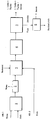
- reference number 1 represents the hydrolysis stage.
- Reference number (2) represents the drying stage.
- the hydrolysis is carried out at a temperature of approximately 250-360 °C and, correspondingly, at a pressure of 40-86 bar, and furthermore, the clarification at a temperature of approximately 95 °C. It is also possible to operate at a temperature of approximately 220-280 °C and, correspondingly, at a pressure of 25-65 bar.
- the water hydrolysis described above can be partial or only a water wash. It is important that in as many stages as possible as much of the metals, phosphorus and solids as possible are removed from the fatty acids, resin acids and/or their lower alkyl esters (methyl or ethyl esters), which are separated from the pitch. After any water treatment, the fatty acid mixture which is to be esterified must be carefully dried. If the mixture undergoes no esterification at all, but is distilled apart and hydrogenated after the release, either in the original place of distillation or somewhere else, the disposal of metals is equally important.
- water hydrolysis A special characteristic of the water hydrolysis is that the dissolved salts are removed along with the excess water, assuming that before evaporation of the water at least a large part of the water is decanted to free it from organic materials. It should be understood that here, water or water vapour hydrolysis means a pretreatment before a possible alcohol esterification.
- methanol or ethanol can be utilised in a water hydrolysis to help in breaking up the emulsions and to contribute to the transesterification ( J. Am. Chem. Soc., 2001, 123(41) pp. 10101-10102 ).
- the transesterification 3 is carried out using a lower alcohol, typically a C 1-4 alcohol, such as methanol or ethanol, after the reaction mixture has been dried.
- a lower alcohol typically a C 1-4 alcohol, such as methanol or ethanol
- transesterification which is carried out using the above-mentioned lower alcohol, such as methanol or ethanol, is used directly (this solution is labelled alternative "Alt. 2").
- an acidic catalyst is used, which facilitates separation of metals into the generated aqueous phase, which is removed by decantation or centrifugation, or by evaporation.
- the pressure and the temperature of the transesterification are chosen depending on how much alcohol is dissolved in the pitch and what the steam pressure of the mixture is. Generally, the pressure is chosen to ensure that alcohol cannot boil away at that chosen temperature.
- the temperature is generally within a range of 25-300 °C, for instance approximately 50-250 °C, and the pressure is normal atmospheric pressure or higher, for instance at maximum 150 bar (abs), most suitably at maximum 100 bar (abs), for instance approximately 2-90 bar (abs).
- the transesterification is most suitably carried out using methanol or ethanol, by employing an acidic catalyst, for instance sulphuric acid or an acidic ionic exchange resin.
- an acidic catalyst for instance sulphuric acid or an acidic ionic exchange resin.
- the fatty acids which are to be released from the esters are separated by distillation 6.
- the evaporator used is a "short path evaporator", which comprises a separate drop separator.
- the condensation surface and the evaporation surface are in the same space and approximately equal in size.
- the gases travel a short distance at a low speed. In this way, it is ensured that the metal cations do not migrate from the heating surface to the condensation surface.
- pure fatty acid esters are generated in this way, it is easy to carry out a possible hydrogenation treatment of them, because the catalysts are not poisoned by metals.
- the use of a short path evaporator is advantageous because, in that case, a minimum amount of metals, if any, move into the distillate or the evaporate. This is important because when the alkyl esters (typically methyl esters) of fatty acids and resin acids, which esters are thus released, are used for production of diesel fuel by hydrogenating, the hydrogenating catalysts are not contaminated. It is possible to feed these esters, together with petrochemical raw materials, directly to further processing at an oil refinery.
- alkyl esters typically methyl esters
- resin acids which esters are thus released
- the sterol compounds are evaporated 6 at an essentially lower pressure.
- Another possible procedure is that after the evaporation of the released acids, the remaining distillation residue of the pitch is dissolved into a lower alcohol, particularly in C 1 or C 2 alcohol, and the separated alcohol phase is evaporated and the sterols are recovered for further refining.
- the evaporated alkyl ester that is generated is condensed most suitably immediately after the evaporation. Typically, the condensation is carried out within approximately 1-60 minutes, especially within approximately 1-10 minutes following the evaporation.
- the procedure is that a product in which the fatty acids and resin acids are no longer bound to form high-molecular weight esters, are dried to free them from water (after decantation) and, after that, evaporated, preferably in two stages.
- a composition of fatty acid methyl ester and resin acid methyl ester is generated in the condensate of the evaporator in the first stage 5, and a sterol composition in the next stage 6.
- the remainder comprises neutral materials and oligomers which have a high boiling point.
- the remainder also includes metal resinates.
- the operation pressure is approximately 3 to 15 mbar (abs.) and the operation temperature 220 °C, and in the second stage - as described above - most suitably the operation temperature is approximately 225 °C and the operation pressure 0.01 to 3.5 mbar (abs).
- the alkyl ester fraction of fatty acid and resin acid is catalytically hydrogenated and isomerized, if needed, in order to increase the cetane index.
- hydrogenation it is possible to decarboxylate the acids and to satisfy the double bonds.
- residual pitch in the figure, which comprises dimeric resin acids, oligomers, lycopene and alcohols of wood, i.e. lutein and neoxanthine etc, and metal salts of resin acid, is either burnt or used as a raw material for glues.
- the bottom boilers used are either thin film evaporators or falling film evaporators, and they are operated at an essentially lower capacity, the surface boiling is so insignificant that hardly any unwanted metal compounds travel on to the distillate.
- the transmission of material from the heating surface to the condensing surface is almost exclusively confined to evaporation of molecules when a short path evaporator or one of the more ordinary evaporators is used, such as a thin film evaporator and a falling film evaporator, at a capacity which is much lower than the heat transfer capacity they were designed to handle.
Landscapes
- Chemical & Material Sciences (AREA)
- Oil, Petroleum & Natural Gas (AREA)
- Engineering & Computer Science (AREA)
- Chemical Kinetics & Catalysis (AREA)
- Organic Chemistry (AREA)
- Life Sciences & Earth Sciences (AREA)
- General Chemical & Material Sciences (AREA)
- Wood Science & Technology (AREA)
- Microbiology (AREA)
- Production Of Liquid Hydrocarbon Mixture For Refining Petroleum (AREA)
- Fats And Perfumes (AREA)
- Organic Low-Molecular-Weight Compounds And Preparation Thereof (AREA)
- Liquid Carbonaceous Fuels (AREA)
Claims (8)
- Ein Verfahren zur Herstellung von Treibstoff, insbesondere Automobiltreibstoff wie Dieseltreibstoff, durch Behandeln von Tallölpech, der Sterolalkohole und möglicherweise Holzgeist von Fettsäuren und Harzsäuren umfasst, wobei die Alkohole von Tallöl stammen,
dadurch gekennzeichnet, dass- mindestens ein Teil der Fettsäuren und Harzsäuren aus ihren Sterolestern und Holzgeistestern freigesetzt und in niedere Alkylester konvertiert werden, indem sie einer Transveresterungsreaktion mit niederen Alkoholen unterworfen werden,- die so erhaltenen Alkylester durch Verdampfung aus dem Pech entfernt und anschließend kondensiert werden, wobei das Verdampfen in einem Kurzwegverdampfer vollzogen wird und wobei Wasser und überschüssiger Alkohol aus der Transveresterung als erstes in einer getrennten Verdampfungseinheit entfernt werden, und- das erhaltene Kondensat anschließend hydriert wird. - Das Verfahren gemäß Anspruch 1, dadurch gekennzeichnet, dass die Fettsäuren und die Harzsäuren als erstes mindestens teilweise aus ihren obengenannten Sterolestern oder Holzgeistestern freigesetzt werden, wobei die Ester typischerweise ein hohes Molekulargewicht haben, unter Verwendung von Wasserhydrolyse.
- Ein Verfahren gemäß einem der vorangehenden Ansprüche, dadurch gekennze ichnet, dass, nachdem die Ester der Fettsäuren und Harzsäuren mittels Verdampfung entfernt worden sind, die Sterolverbindungen bei einem wesentlich niedrigeren Druck verdampft werden.
- Ein Verfahren gemäß den Ansprüchen 1 oder 2, dadurch gekennzeichnet, dass der Destillationsrückstand des Pechs, der nach der Verdampfung der freigesetzten Säuren verbleibt, in einem niederen Alkohol gelöst wird und die abgetrennte Alkoholphase verdampft wird und die Sterole zur weiteren Aufbereitung wiedergewonnen werden.
- Ein Verfahren gemäß einem der vorangehenden Ansprüche, dadurch gekennze ichnet, dass die Säuren und die Ester durch Hydrierung des Kondensats decarboxyliert werden und die Doppelbindungen gesättigt werden.
- Ein Verfahren gemäß einem der vorangehenden Ansprüche, dadurch gekennze ichnet, dass der Alkylester direkt nach der Verdampfung kondensiert wird, typischerweise innerhalb 1 bis 60 Minuten, insbesondere innerhalb 1 bis 10 Minuten.
- Ein Verfahren gemäß einem der vorangehenden Ansprüche, dadurch gekennze ichnet, dass mindestens 50 Mol-%, am geeignetsten mindestens 70 Mol-%, insbesondere mindestens 80 Mol-% der Sterolalkohole und Holzgeister der Fettsäuren und Harzsäuren, die in dem Tallölpech enthalten sind, aus ihren Estern freigesetzt und in niedere Alkylester konvertiert werde.
- Ein Verfahren gemäß einem der vorangehenden Ansprüche, dadurch gekennze ichnet, dass die niederen Alkylester aus C1-4 Alkohol, vorzugsweise Methanol oder Ethanol, gebildet werden.
Applications Claiming Priority (2)
| Application Number | Priority Date | Filing Date | Title |
|---|---|---|---|
| FI20105308A FI126337B (fi) | 2010-03-26 | 2010-03-26 | Menetelmä mäntyöljypien hyödyntämiseksi |
| PCT/FI2011/050256 WO2011117474A1 (en) | 2010-03-26 | 2011-03-28 | Method of utilizing tall oil pitch |
Publications (3)
| Publication Number | Publication Date |
|---|---|
| EP2553052A1 EP2553052A1 (de) | 2013-02-06 |
| EP2553052A4 EP2553052A4 (de) | 2014-02-26 |
| EP2553052B1 true EP2553052B1 (de) | 2016-09-28 |
Family
ID=42074413
Family Applications (1)
| Application Number | Title | Priority Date | Filing Date |
|---|---|---|---|
| EP11758883.0A Active EP2553052B1 (de) | 2010-03-26 | 2011-03-28 | Verfahren zur verwendung von tallölpech |
Country Status (8)
| Country | Link |
|---|---|
| US (1) | US9624442B2 (de) |
| EP (1) | EP2553052B1 (de) |
| BR (1) | BR112012024413B1 (de) |
| CL (1) | CL2012002680A1 (de) |
| FI (1) | FI126337B (de) |
| RU (1) | RU2556003C2 (de) |
| SE (1) | SE537513C2 (de) |
| WO (1) | WO2011117474A1 (de) |
Families Citing this family (15)
| Publication number | Priority date | Publication date | Assignee | Title |
|---|---|---|---|---|
| BR102012001584A2 (pt) * | 2012-01-24 | 2018-05-29 | Maria Aparecida Cirone Taboada - Me | Processo de produção de biodiesel de alto rendimento empregando triglicerídeos de alta acidez com geração de glicerina 90% isenta de sais |
| FI127206B2 (en) | 2012-04-18 | 2021-08-31 | Upm Kymmene Corp | Process for producing biofuel and biofuel components |
| FI124101B (en) | 2012-05-14 | 2014-03-14 | Hankkija Maatalous Oy | Modified tall oil fatty acid |
| FI126330B (en) * | 2013-04-02 | 2016-10-14 | Upm Kymmene Corp | Renewable hydrocarbon composition |
| FI126331B (en) | 2013-04-02 | 2016-10-14 | Upm Kymmene Corp | Renewable hydrocarbon composition |
| FI125589B2 (en) | 2013-04-08 | 2022-03-31 | Stora Enso Oyj | Processes for deoxidation of bio-based materials and production of bio-based terephthalic acid and olefinic monomers |
| FI124918B (fi) | 2013-05-14 | 2015-03-31 | Hankkija Maatalous Oy | Mäntyöljyrasvahappo |
| FI126029B (en) | 2013-10-17 | 2016-05-31 | Upm Kymmene Corp | Process for the preparation of hydrocarbons |
| FI125051B (fi) | 2013-10-24 | 2015-05-15 | Hankkija Oy | Mäntyöljyrasvahappo |
| DK3124021T3 (da) | 2013-11-13 | 2020-08-03 | Hankkija Oy | Fodersupplement omfattende harpikssyre |
| FI126958B (en) | 2015-05-25 | 2017-08-31 | Forchem Oyj | Production of sterols |
| WO2019103684A1 (en) * | 2017-11-21 | 2019-05-31 | Sunpine Ab | Method for thermal treatment of tall oil pitch (top) |
| FI128591B (en) | 2018-07-13 | 2020-08-31 | Neste Oyj | Fractionation of biomass-based material |
| FI131246B1 (en) * | 2023-12-22 | 2025-01-07 | Neste Oyj | Process for the production of rosin esters |
| SE2450711A1 (en) * | 2024-06-26 | 2025-12-27 | Stora Enso Oyj | Method for drying and for solvent recycling |
Citations (7)
| Publication number | Priority date | Publication date | Assignee | Title |
|---|---|---|---|---|
| US3238164A (en) | 1963-11-06 | 1966-03-01 | Hercules Powder Co Ltd | Tall oil pitch-c1-c18 monohydric alcohol compositions and use thereof in rubber |
| WO1999042471A1 (en) | 1998-02-20 | 1999-08-26 | B.C. Chemicals Ltd. | Method for the preparation of phytosterols from tall oil pitch |
| WO2003022865A1 (en) | 2001-09-07 | 2003-03-20 | Sterol Technologies Ltd. | Process for the isolation of sterols and/or wax alcohols from tall oil products |
| WO2009039000A2 (en) | 2007-09-20 | 2009-03-26 | Uop Llc | Production of diesel fuel from biorenewable feedstocks |
| US20090217573A1 (en) | 2005-10-26 | 2009-09-03 | Kiram Ab | Automotive fuels and fine chemicals from crude tall oil |
| WO2009113935A1 (en) | 2008-03-10 | 2009-09-17 | Sunpine Ab | Recovery of phytosterols from residual vegetable oil streams |
| US9079845B2 (en) | 2003-02-21 | 2015-07-14 | Cognis Ip Management Gmbh | Process for obtaining fatty acid alkyl esters, rosin acids and sterols from crude tall oil |
Family Cites Families (9)
| Publication number | Priority date | Publication date | Assignee | Title |
|---|---|---|---|---|
| US4524024A (en) * | 1983-02-10 | 1985-06-18 | The Badger Company, Inc. | Processes of recovering fatty acids and sterols from tall oil pitch |
| FI118007B (fi) | 2005-04-22 | 2007-05-31 | Forchem Oy | Menetelmä sterolien erottamiseksi mäntyöljypiestä |
| EP1795576B1 (de) * | 2005-12-12 | 2014-05-21 | Neste Oil Oyj | Prozess zur Herstellung von Kohlenwasserstoffen |
| US7998339B2 (en) * | 2005-12-12 | 2011-08-16 | Neste Oil Oyj | Process for producing a hydrocarbon component |
| US7540889B2 (en) | 2006-07-11 | 2009-06-02 | Bluekey Energy Inc. | Production of a refinery feedstock from soaps produced during a chemical pulping process |
| US20080163543A1 (en) * | 2007-01-05 | 2008-07-10 | Ramin Abhari | Process for producing bio-derived fuel with alkyl ester and iso-paraffin components |
| FI20070137A0 (fi) * | 2007-02-15 | 2007-02-15 | Raisio Benecol Oy | Menetelmä rasvahappojen, hartsihappojen ja sterolien eristämiseksi mäntyöljypiestä |
| WO2009011639A2 (en) * | 2007-07-19 | 2009-01-22 | Sunpine Ab | Diesel range fuels from carboxylic acids with plant origin |
| WO2009029344A1 (en) | 2007-08-27 | 2009-03-05 | Endicott Biofuels Ii, Llc | Production of ester-based fuels such as biodiesel from renewable starting materials |
-
2010
- 2010-03-26 FI FI20105308A patent/FI126337B/fi active IP Right Review Request
-
2011
- 2011-03-28 WO PCT/FI2011/050256 patent/WO2011117474A1/en not_active Ceased
- 2011-03-28 RU RU2012143376/04A patent/RU2556003C2/ru active
- 2011-03-28 BR BR112012024413-2A patent/BR112012024413B1/pt active IP Right Grant
- 2011-03-28 SE SE1200658A patent/SE537513C2/sv unknown
- 2011-03-28 EP EP11758883.0A patent/EP2553052B1/de active Active
- 2011-03-28 US US13/637,002 patent/US9624442B2/en active Active
-
2012
- 2012-09-26 CL CL2012002680A patent/CL2012002680A1/es unknown
Patent Citations (7)
| Publication number | Priority date | Publication date | Assignee | Title |
|---|---|---|---|---|
| US3238164A (en) | 1963-11-06 | 1966-03-01 | Hercules Powder Co Ltd | Tall oil pitch-c1-c18 monohydric alcohol compositions and use thereof in rubber |
| WO1999042471A1 (en) | 1998-02-20 | 1999-08-26 | B.C. Chemicals Ltd. | Method for the preparation of phytosterols from tall oil pitch |
| WO2003022865A1 (en) | 2001-09-07 | 2003-03-20 | Sterol Technologies Ltd. | Process for the isolation of sterols and/or wax alcohols from tall oil products |
| US9079845B2 (en) | 2003-02-21 | 2015-07-14 | Cognis Ip Management Gmbh | Process for obtaining fatty acid alkyl esters, rosin acids and sterols from crude tall oil |
| US20090217573A1 (en) | 2005-10-26 | 2009-09-03 | Kiram Ab | Automotive fuels and fine chemicals from crude tall oil |
| WO2009039000A2 (en) | 2007-09-20 | 2009-03-26 | Uop Llc | Production of diesel fuel from biorenewable feedstocks |
| WO2009113935A1 (en) | 2008-03-10 | 2009-09-17 | Sunpine Ab | Recovery of phytosterols from residual vegetable oil streams |
Non-Patent Citations (1)
| Title |
|---|
| "Composition of Tall Oil Pitch", JOURNAL OF THE AMERICAN OIL CHEMISTS SOCIETY, vol. 55, March 1978 (1978-03-01), pages 342 - 344, XP055025537 |
Also Published As
| Publication number | Publication date |
|---|---|
| BR112012024413B1 (pt) | 2019-01-22 |
| FI20105308A0 (fi) | 2010-03-26 |
| SE537513C2 (sv) | 2015-05-26 |
| BR112012024413A2 (pt) | 2017-03-01 |
| WO2011117474A1 (en) | 2011-09-29 |
| US9624442B2 (en) | 2017-04-18 |
| RU2556003C2 (ru) | 2015-07-10 |
| EP2553052A1 (de) | 2013-02-06 |
| EP2553052A4 (de) | 2014-02-26 |
| CL2012002680A1 (es) | 2013-06-07 |
| RU2012143376A (ru) | 2014-05-10 |
| FI20105308L (fi) | 2011-09-27 |
| FI126337B (fi) | 2016-10-14 |
| SE1200658A1 (sv) | 2012-10-24 |
| US20130041192A1 (en) | 2013-02-14 |
Similar Documents
| Publication | Publication Date | Title |
|---|---|---|
| EP2553052B1 (de) | Verfahren zur verwendung von tallölpech | |
| EP2268769B1 (de) | Umwandlung von rohtallöl in erneuerbaren rohstoff für diesel-brennstoffzusammensetzungen | |
| EP2643443B2 (de) | Verfahren zur reinigung von material biologischen ursprungs | |
| EP2935545B1 (de) | Bioraffination von rohtallöl | |
| FI124508B (fi) | Menetelmä ja laitteisto polttoainekomponenttien valmistamiseksi raakamäntyöljystä | |
| FI128826B (en) | Process for cleaning feeds containing fatty acids | |
| EP3666865B1 (de) | Verfahren zur reinigung von erneuerbarem rohstoff mit fettsäuren | |
| FI130495B (en) | Process for refining crude tall oil | |
| JP7271541B2 (ja) | トール油ピッチ(top)の熱処理方法 | |
| WO2013029663A1 (en) | Method for hydroisomerising renewable hydrocarbons |
Legal Events
| Date | Code | Title | Description |
|---|---|---|---|
| PUAI | Public reference made under article 153(3) epc to a published international application that has entered the european phase |
Free format text: ORIGINAL CODE: 0009012 |
|
| 17P | Request for examination filed |
Effective date: 20121004 |
|
| AK | Designated contracting states |
Kind code of ref document: A1 Designated state(s): AL AT BE BG CH CY CZ DE DK EE ES FI FR GB GR HR HU IE IS IT LI LT LU LV MC MK MT NL NO PL PT RO RS SE SI SK SM TR |
|
| DAX | Request for extension of the european patent (deleted) | ||
| A4 | Supplementary search report drawn up and despatched |
Effective date: 20140128 |
|
| RIC1 | Information provided on ipc code assigned before grant |
Ipc: C10G 3/00 20060101AFI20140122BHEP Ipc: C11B 13/00 20060101ALI20140122BHEP Ipc: C11C 1/08 20060101ALI20140122BHEP Ipc: C11C 3/04 20060101ALI20140122BHEP Ipc: C09J 9/00 20060101ALI20140122BHEP Ipc: C11C 1/04 20060101ALI20140122BHEP Ipc: C10L 1/02 20060101ALI20140122BHEP Ipc: C10L 1/08 20060101ALI20140122BHEP Ipc: C11C 3/00 20060101ALI20140122BHEP Ipc: C11C 3/12 20060101ALI20140122BHEP |
|
| 17Q | First examination report despatched |
Effective date: 20141124 |
|
| GRAP | Despatch of communication of intention to grant a patent |
Free format text: ORIGINAL CODE: EPIDOSNIGR1 |
|
| INTG | Intention to grant announced |
Effective date: 20160422 |
|
| GRAS | Grant fee paid |
Free format text: ORIGINAL CODE: EPIDOSNIGR3 |
|
| GRAA | (expected) grant |
Free format text: ORIGINAL CODE: 0009210 |
|
| AK | Designated contracting states |
Kind code of ref document: B1 Designated state(s): AL AT BE BG CH CY CZ DE DK EE ES FI FR GB GR HR HU IE IS IT LI LT LU LV MC MK MT NL NO PL PT RO RS SE SI SK SM TR |
|
| REG | Reference to a national code |
Ref country code: GB Ref legal event code: FG4D |
|
| REG | Reference to a national code |
Ref country code: CH Ref legal event code: EP |
|
| REG | Reference to a national code |
Ref country code: AT Ref legal event code: REF Ref document number: 832758 Country of ref document: AT Kind code of ref document: T Effective date: 20161015 |
|
| REG | Reference to a national code |
Ref country code: IE Ref legal event code: FG4D |
|
| REG | Reference to a national code |
Ref country code: DE Ref legal event code: R096 Ref document number: 602011030774 Country of ref document: DE |
|
| REG | Reference to a national code |
Ref country code: SE Ref legal event code: TRGR |
|
| REG | Reference to a national code |
Ref country code: LT Ref legal event code: MG4D |
|
| PG25 | Lapsed in a contracting state [announced via postgrant information from national office to epo] |
Ref country code: RS Free format text: LAPSE BECAUSE OF FAILURE TO SUBMIT A TRANSLATION OF THE DESCRIPTION OR TO PAY THE FEE WITHIN THE PRESCRIBED TIME-LIMIT Effective date: 20160928 Ref country code: HR Free format text: LAPSE BECAUSE OF FAILURE TO SUBMIT A TRANSLATION OF THE DESCRIPTION OR TO PAY THE FEE WITHIN THE PRESCRIBED TIME-LIMIT Effective date: 20160928 Ref country code: NO Free format text: LAPSE BECAUSE OF FAILURE TO SUBMIT A TRANSLATION OF THE DESCRIPTION OR TO PAY THE FEE WITHIN THE PRESCRIBED TIME-LIMIT Effective date: 20161228 Ref country code: LT Free format text: LAPSE BECAUSE OF FAILURE TO SUBMIT A TRANSLATION OF THE DESCRIPTION OR TO PAY THE FEE WITHIN THE PRESCRIBED TIME-LIMIT Effective date: 20160928 |
|
| REG | Reference to a national code |
Ref country code: NL Ref legal event code: MP Effective date: 20160928 |
|
| PG25 | Lapsed in a contracting state [announced via postgrant information from national office to epo] |
Ref country code: NL Free format text: LAPSE BECAUSE OF FAILURE TO SUBMIT A TRANSLATION OF THE DESCRIPTION OR TO PAY THE FEE WITHIN THE PRESCRIBED TIME-LIMIT Effective date: 20160928 Ref country code: LV Free format text: LAPSE BECAUSE OF FAILURE TO SUBMIT A TRANSLATION OF THE DESCRIPTION OR TO PAY THE FEE WITHIN THE PRESCRIBED TIME-LIMIT Effective date: 20160928 Ref country code: GR Free format text: LAPSE BECAUSE OF FAILURE TO SUBMIT A TRANSLATION OF THE DESCRIPTION OR TO PAY THE FEE WITHIN THE PRESCRIBED TIME-LIMIT Effective date: 20161229 |
|
| REG | Reference to a national code |
Ref country code: FR Ref legal event code: PLFP Year of fee payment: 7 |
|
| PG25 | Lapsed in a contracting state [announced via postgrant information from national office to epo] |
Ref country code: RO Free format text: LAPSE BECAUSE OF FAILURE TO SUBMIT A TRANSLATION OF THE DESCRIPTION OR TO PAY THE FEE WITHIN THE PRESCRIBED TIME-LIMIT Effective date: 20160928 Ref country code: EE Free format text: LAPSE BECAUSE OF FAILURE TO SUBMIT A TRANSLATION OF THE DESCRIPTION OR TO PAY THE FEE WITHIN THE PRESCRIBED TIME-LIMIT Effective date: 20160928 |
|
| PG25 | Lapsed in a contracting state [announced via postgrant information from national office to epo] |
Ref country code: IS Free format text: LAPSE BECAUSE OF FAILURE TO SUBMIT A TRANSLATION OF THE DESCRIPTION OR TO PAY THE FEE WITHIN THE PRESCRIBED TIME-LIMIT Effective date: 20170128 Ref country code: BE Free format text: LAPSE BECAUSE OF FAILURE TO SUBMIT A TRANSLATION OF THE DESCRIPTION OR TO PAY THE FEE WITHIN THE PRESCRIBED TIME-LIMIT Effective date: 20160928 Ref country code: ES Free format text: LAPSE BECAUSE OF FAILURE TO SUBMIT A TRANSLATION OF THE DESCRIPTION OR TO PAY THE FEE WITHIN THE PRESCRIBED TIME-LIMIT Effective date: 20160928 Ref country code: SM Free format text: LAPSE BECAUSE OF FAILURE TO SUBMIT A TRANSLATION OF THE DESCRIPTION OR TO PAY THE FEE WITHIN THE PRESCRIBED TIME-LIMIT Effective date: 20160928 Ref country code: CZ Free format text: LAPSE BECAUSE OF FAILURE TO SUBMIT A TRANSLATION OF THE DESCRIPTION OR TO PAY THE FEE WITHIN THE PRESCRIBED TIME-LIMIT Effective date: 20160928 Ref country code: PT Free format text: LAPSE BECAUSE OF FAILURE TO SUBMIT A TRANSLATION OF THE DESCRIPTION OR TO PAY THE FEE WITHIN THE PRESCRIBED TIME-LIMIT Effective date: 20170130 Ref country code: BG Free format text: LAPSE BECAUSE OF FAILURE TO SUBMIT A TRANSLATION OF THE DESCRIPTION OR TO PAY THE FEE WITHIN THE PRESCRIBED TIME-LIMIT Effective date: 20161228 Ref country code: SK Free format text: LAPSE BECAUSE OF FAILURE TO SUBMIT A TRANSLATION OF THE DESCRIPTION OR TO PAY THE FEE WITHIN THE PRESCRIBED TIME-LIMIT Effective date: 20160928 Ref country code: PL Free format text: LAPSE BECAUSE OF FAILURE TO SUBMIT A TRANSLATION OF THE DESCRIPTION OR TO PAY THE FEE WITHIN THE PRESCRIBED TIME-LIMIT Effective date: 20160928 |
|
| REG | Reference to a national code |
Ref country code: DE Ref legal event code: R026 Ref document number: 602011030774 Country of ref document: DE |
|
| PG25 | Lapsed in a contracting state [announced via postgrant information from national office to epo] |
Ref country code: IT Free format text: LAPSE BECAUSE OF FAILURE TO SUBMIT A TRANSLATION OF THE DESCRIPTION OR TO PAY THE FEE WITHIN THE PRESCRIBED TIME-LIMIT Effective date: 20160928 |
|
| PLBI | Opposition filed |
Free format text: ORIGINAL CODE: 0009260 |
|
| PLAX | Notice of opposition and request to file observation + time limit sent |
Free format text: ORIGINAL CODE: EPIDOSNOBS2 |
|
| PG25 | Lapsed in a contracting state [announced via postgrant information from national office to epo] |
Ref country code: DK Free format text: LAPSE BECAUSE OF FAILURE TO SUBMIT A TRANSLATION OF THE DESCRIPTION OR TO PAY THE FEE WITHIN THE PRESCRIBED TIME-LIMIT Effective date: 20160928 |
|
| 26 | Opposition filed |
Opponent name: SUNPINE AB Effective date: 20170627 |
|
| REG | Reference to a national code |
Ref country code: CH Ref legal event code: PL |
|
| PLBB | Reply of patent proprietor to notice(s) of opposition received |
Free format text: ORIGINAL CODE: EPIDOSNOBS3 |
|
| GBPC | Gb: european patent ceased through non-payment of renewal fee |
Effective date: 20170328 |
|
| PG25 | Lapsed in a contracting state [announced via postgrant information from national office to epo] |
Ref country code: MC Free format text: LAPSE BECAUSE OF FAILURE TO SUBMIT A TRANSLATION OF THE DESCRIPTION OR TO PAY THE FEE WITHIN THE PRESCRIBED TIME-LIMIT Effective date: 20160928 Ref country code: SI Free format text: LAPSE BECAUSE OF FAILURE TO SUBMIT A TRANSLATION OF THE DESCRIPTION OR TO PAY THE FEE WITHIN THE PRESCRIBED TIME-LIMIT Effective date: 20160928 |
|
| REG | Reference to a national code |
Ref country code: IE Ref legal event code: MM4A |
|
| PG25 | Lapsed in a contracting state [announced via postgrant information from national office to epo] |
Ref country code: LU Free format text: LAPSE BECAUSE OF NON-PAYMENT OF DUE FEES Effective date: 20170328 |
|
| PG25 | Lapsed in a contracting state [announced via postgrant information from national office to epo] |
Ref country code: GB Free format text: LAPSE BECAUSE OF NON-PAYMENT OF DUE FEES Effective date: 20170328 Ref country code: CH Free format text: LAPSE BECAUSE OF NON-PAYMENT OF DUE FEES Effective date: 20170331 Ref country code: LI Free format text: LAPSE BECAUSE OF NON-PAYMENT OF DUE FEES Effective date: 20170331 Ref country code: IE Free format text: LAPSE BECAUSE OF NON-PAYMENT OF DUE FEES Effective date: 20170328 |
|
| REG | Reference to a national code |
Ref country code: FR Ref legal event code: PLFP Year of fee payment: 8 |
|
| REG | Reference to a national code |
Ref country code: DE Ref legal event code: R100 Ref document number: 602011030774 Country of ref document: DE |
|
| PG25 | Lapsed in a contracting state [announced via postgrant information from national office to epo] |
Ref country code: MT Free format text: LAPSE BECAUSE OF NON-PAYMENT OF DUE FEES Effective date: 20170328 |
|
| PG25 | Lapsed in a contracting state [announced via postgrant information from national office to epo] |
Ref country code: AL Free format text: LAPSE BECAUSE OF FAILURE TO SUBMIT A TRANSLATION OF THE DESCRIPTION OR TO PAY THE FEE WITHIN THE PRESCRIBED TIME-LIMIT Effective date: 20160928 |
|
| RAP2 | Party data changed (patent owner data changed or rights of a patent transferred) |
Owner name: FORCHEM OYJ |
|
| PLCK | Communication despatched that opposition was rejected |
Free format text: ORIGINAL CODE: EPIDOSNREJ1 |
|
| STAA | Information on the status of an ep patent application or granted ep patent |
Free format text: STATUS: THE PATENT HAS BEEN GRANTED |
|
| PLBN | Opposition rejected |
Free format text: ORIGINAL CODE: 0009273 |
|
| STAA | Information on the status of an ep patent application or granted ep patent |
Free format text: STATUS: OPPOSITION REJECTED |
|
| REG | Reference to a national code |
Ref country code: AT Ref legal event code: UEP Ref document number: 832758 Country of ref document: AT Kind code of ref document: T Effective date: 20160928 |
|
| 27O | Opposition rejected |
Effective date: 20180925 |
|
| PG25 | Lapsed in a contracting state [announced via postgrant information from national office to epo] |
Ref country code: HU Free format text: LAPSE BECAUSE OF FAILURE TO SUBMIT A TRANSLATION OF THE DESCRIPTION OR TO PAY THE FEE WITHIN THE PRESCRIBED TIME-LIMIT; INVALID AB INITIO Effective date: 20110328 |
|
| PG25 | Lapsed in a contracting state [announced via postgrant information from national office to epo] |
Ref country code: CY Free format text: LAPSE BECAUSE OF NON-PAYMENT OF DUE FEES Effective date: 20160928 |
|
| PG25 | Lapsed in a contracting state [announced via postgrant information from national office to epo] |
Ref country code: MK Free format text: LAPSE BECAUSE OF FAILURE TO SUBMIT A TRANSLATION OF THE DESCRIPTION OR TO PAY THE FEE WITHIN THE PRESCRIBED TIME-LIMIT Effective date: 20160928 |
|
| PG25 | Lapsed in a contracting state [announced via postgrant information from national office to epo] |
Ref country code: TR Free format text: LAPSE BECAUSE OF FAILURE TO SUBMIT A TRANSLATION OF THE DESCRIPTION OR TO PAY THE FEE WITHIN THE PRESCRIBED TIME-LIMIT Effective date: 20160928 |
|
| PGFP | Annual fee paid to national office [announced via postgrant information from national office to epo] |
Ref country code: SE Payment date: 20260304 Year of fee payment: 16 |
|
| PGFP | Annual fee paid to national office [announced via postgrant information from national office to epo] |
Ref country code: DE Payment date: 20260310 Year of fee payment: 16 |
|
| PGFP | Annual fee paid to national office [announced via postgrant information from national office to epo] |
Ref country code: AT Payment date: 20260316 Year of fee payment: 16 |
|
| PGFP | Annual fee paid to national office [announced via postgrant information from national office to epo] |
Ref country code: FI Payment date: 20260318 Year of fee payment: 16 |
|
| PGFP | Annual fee paid to national office [announced via postgrant information from national office to epo] |
Ref country code: FR Payment date: 20260312 Year of fee payment: 16 |