EP2554504A1 - Verbindung von Vliesmaterialien - Google Patents
Verbindung von Vliesmaterialien Download PDFInfo
- Publication number
- EP2554504A1 EP2554504A1 EP12178386A EP12178386A EP2554504A1 EP 2554504 A1 EP2554504 A1 EP 2554504A1 EP 12178386 A EP12178386 A EP 12178386A EP 12178386 A EP12178386 A EP 12178386A EP 2554504 A1 EP2554504 A1 EP 2554504A1
- Authority
- EP
- European Patent Office
- Prior art keywords
- nonwoven
- combing
- pieces
- fiber
- bar
- Prior art date
- Legal status (The legal status is an assumption and is not a legal conclusion. Google has not performed a legal analysis and makes no representation as to the accuracy of the status listed.)
- Granted
Links
Images
Classifications
-
- B—PERFORMING OPERATIONS; TRANSPORTING
- B65—CONVEYING; PACKING; STORING; HANDLING THIN OR FILAMENTARY MATERIAL
- B65H—HANDLING THIN OR FILAMENTARY MATERIAL, e.g. SHEETS, WEBS, CABLES
- B65H21/00—Apparatus for splicing webs
-
- D—TEXTILES; PAPER
- D04—BRAIDING; LACE-MAKING; KNITTING; TRIMMINGS; NON-WOVEN FABRICS
- D04H—MAKING TEXTILE FABRICS, e.g. FROM FIBRES OR FILAMENTARY MATERIAL; FABRICS MADE BY SUCH PROCESSES OR APPARATUS, e.g. FELTS, NON-WOVEN FABRICS; COTTON-WOOL; WADDING ; NON-WOVEN FABRICS FROM STAPLE FIBRES, FILAMENTS OR YARNS, BONDED WITH AT LEAST ONE WEB-LIKE MATERIAL DURING THEIR CONSOLIDATION
- D04H1/00—Non-woven fabrics formed wholly or mainly of staple fibres or like relatively short fibres
- D04H1/40—Non-woven fabrics formed wholly or mainly of staple fibres or like relatively short fibres from fleeces or layers composed of fibres without existing or potential cohesive properties
- D04H1/44—Non-woven fabrics formed wholly or mainly of staple fibres or like relatively short fibres from fleeces or layers composed of fibres without existing or potential cohesive properties the fleeces or layers being consolidated by mechanical means, e.g. by rolling
- D04H1/46—Non-woven fabrics formed wholly or mainly of staple fibres or like relatively short fibres from fleeces or layers composed of fibres without existing or potential cohesive properties the fleeces or layers being consolidated by mechanical means, e.g. by rolling by needling or like operations to cause entanglement of fibres
- D04H1/48—Non-woven fabrics formed wholly or mainly of staple fibres or like relatively short fibres from fleeces or layers composed of fibres without existing or potential cohesive properties the fleeces or layers being consolidated by mechanical means, e.g. by rolling by needling or like operations to cause entanglement of fibres in combination with at least one other method of consolidation
-
- D—TEXTILES; PAPER
- D04—BRAIDING; LACE-MAKING; KNITTING; TRIMMINGS; NON-WOVEN FABRICS
- D04H—MAKING TEXTILE FABRICS, e.g. FROM FIBRES OR FILAMENTARY MATERIAL; FABRICS MADE BY SUCH PROCESSES OR APPARATUS, e.g. FELTS, NON-WOVEN FABRICS; COTTON-WOOL; WADDING ; NON-WOVEN FABRICS FROM STAPLE FIBRES, FILAMENTS OR YARNS, BONDED WITH AT LEAST ONE WEB-LIKE MATERIAL DURING THEIR CONSOLIDATION
- D04H1/00—Non-woven fabrics formed wholly or mainly of staple fibres or like relatively short fibres
- D04H1/40—Non-woven fabrics formed wholly or mainly of staple fibres or like relatively short fibres from fleeces or layers composed of fibres without existing or potential cohesive properties
- D04H1/44—Non-woven fabrics formed wholly or mainly of staple fibres or like relatively short fibres from fleeces or layers composed of fibres without existing or potential cohesive properties the fleeces or layers being consolidated by mechanical means, e.g. by rolling
- D04H1/46—Non-woven fabrics formed wholly or mainly of staple fibres or like relatively short fibres from fleeces or layers composed of fibres without existing or potential cohesive properties the fleeces or layers being consolidated by mechanical means, e.g. by rolling by needling or like operations to cause entanglement of fibres
- D04H1/48—Non-woven fabrics formed wholly or mainly of staple fibres or like relatively short fibres from fleeces or layers composed of fibres without existing or potential cohesive properties the fleeces or layers being consolidated by mechanical means, e.g. by rolling by needling or like operations to cause entanglement of fibres in combination with at least one other method of consolidation
- D04H1/49—Non-woven fabrics formed wholly or mainly of staple fibres or like relatively short fibres from fleeces or layers composed of fibres without existing or potential cohesive properties the fleeces or layers being consolidated by mechanical means, e.g. by rolling by needling or like operations to cause entanglement of fibres in combination with at least one other method of consolidation entanglement by fluid jet in combination with another consolidation means
-
- D—TEXTILES; PAPER
- D04—BRAIDING; LACE-MAKING; KNITTING; TRIMMINGS; NON-WOVEN FABRICS
- D04H—MAKING TEXTILE FABRICS, e.g. FROM FIBRES OR FILAMENTARY MATERIAL; FABRICS MADE BY SUCH PROCESSES OR APPARATUS, e.g. FELTS, NON-WOVEN FABRICS; COTTON-WOOL; WADDING ; NON-WOVEN FABRICS FROM STAPLE FIBRES, FILAMENTS OR YARNS, BONDED WITH AT LEAST ONE WEB-LIKE MATERIAL DURING THEIR CONSOLIDATION
- D04H3/00—Non-woven fabrics formed wholly or mainly of yarns or like filamentary material of substantial length
- D04H3/08—Non-woven fabrics formed wholly or mainly of yarns or like filamentary material of substantial length characterised by the method of strengthening or consolidating
- D04H3/10—Non-woven fabrics formed wholly or mainly of yarns or like filamentary material of substantial length characterised by the method of strengthening or consolidating with bonds between yarns or filaments made mechanically
- D04H3/11—Non-woven fabrics formed wholly or mainly of yarns or like filamentary material of substantial length characterised by the method of strengthening or consolidating with bonds between yarns or filaments made mechanically by fluid jet
-
- B—PERFORMING OPERATIONS; TRANSPORTING
- B29—WORKING OF PLASTICS; WORKING OF SUBSTANCES IN A PLASTIC STATE IN GENERAL
- B29C—SHAPING OR JOINING OF PLASTICS; SHAPING OF MATERIAL IN A PLASTIC STATE, NOT OTHERWISE PROVIDED FOR; AFTER-TREATMENT OF THE SHAPED PRODUCTS, e.g. REPAIRING
- B29C65/00—Joining or sealing of preformed parts, e.g. welding of plastics materials; Apparatus therefor
- B29C65/002—Joining methods not otherwise provided for
-
- B—PERFORMING OPERATIONS; TRANSPORTING
- B29—WORKING OF PLASTICS; WORKING OF SUBSTANCES IN A PLASTIC STATE IN GENERAL
- B29C—SHAPING OR JOINING OF PLASTICS; SHAPING OF MATERIAL IN A PLASTIC STATE, NOT OTHERWISE PROVIDED FOR; AFTER-TREATMENT OF THE SHAPED PRODUCTS, e.g. REPAIRING
- B29C66/00—General aspects of processes or apparatus for joining preformed parts
- B29C66/01—General aspects dealing with the joint area or with the area to be joined
- B29C66/05—Particular design of joint configurations
- B29C66/10—Particular design of joint configurations particular design of the joint cross-sections
- B29C66/11—Joint cross-sections comprising a single joint-segment, i.e. one of the parts to be joined comprising a single joint-segment in the joint cross-section
- B29C66/112—Single lapped joints
- B29C66/1122—Single lap to lap joints, i.e. overlap joints
-
- B—PERFORMING OPERATIONS; TRANSPORTING
- B29—WORKING OF PLASTICS; WORKING OF SUBSTANCES IN A PLASTIC STATE IN GENERAL
- B29C—SHAPING OR JOINING OF PLASTICS; SHAPING OF MATERIAL IN A PLASTIC STATE, NOT OTHERWISE PROVIDED FOR; AFTER-TREATMENT OF THE SHAPED PRODUCTS, e.g. REPAIRING
- B29C66/00—General aspects of processes or apparatus for joining preformed parts
- B29C66/01—General aspects dealing with the joint area or with the area to be joined
- B29C66/05—Particular design of joint configurations
- B29C66/303—Particular design of joint configurations the joint involving an anchoring effect
-
- B—PERFORMING OPERATIONS; TRANSPORTING
- B29—WORKING OF PLASTICS; WORKING OF SUBSTANCES IN A PLASTIC STATE IN GENERAL
- B29C—SHAPING OR JOINING OF PLASTICS; SHAPING OF MATERIAL IN A PLASTIC STATE, NOT OTHERWISE PROVIDED FOR; AFTER-TREATMENT OF THE SHAPED PRODUCTS, e.g. REPAIRING
- B29C66/00—General aspects of processes or apparatus for joining preformed parts
- B29C66/40—General aspects of joining substantially flat articles, e.g. plates, sheets or web-like materials; Making flat seams in tubular or hollow articles; Joining single elements to substantially flat surfaces
- B29C66/41—Joining substantially flat articles ; Making flat seams in tubular or hollow articles
- B29C66/43—Joining a relatively small portion of the surface of said articles
-
- B—PERFORMING OPERATIONS; TRANSPORTING
- B29—WORKING OF PLASTICS; WORKING OF SUBSTANCES IN A PLASTIC STATE IN GENERAL
- B29C—SHAPING OR JOINING OF PLASTICS; SHAPING OF MATERIAL IN A PLASTIC STATE, NOT OTHERWISE PROVIDED FOR; AFTER-TREATMENT OF THE SHAPED PRODUCTS, e.g. REPAIRING
- B29C66/00—General aspects of processes or apparatus for joining preformed parts
- B29C66/70—General aspects of processes or apparatus for joining preformed parts characterised by the composition, physical properties or the structure of the material of the parts to be joined; Joining with non-plastics material
- B29C66/71—General aspects of processes or apparatus for joining preformed parts characterised by the composition, physical properties or the structure of the material of the parts to be joined; Joining with non-plastics material characterised by the composition of the plastics material of the parts to be joined
-
- B—PERFORMING OPERATIONS; TRANSPORTING
- B29—WORKING OF PLASTICS; WORKING OF SUBSTANCES IN A PLASTIC STATE IN GENERAL
- B29C—SHAPING OR JOINING OF PLASTICS; SHAPING OF MATERIAL IN A PLASTIC STATE, NOT OTHERWISE PROVIDED FOR; AFTER-TREATMENT OF THE SHAPED PRODUCTS, e.g. REPAIRING
- B29C66/00—General aspects of processes or apparatus for joining preformed parts
- B29C66/70—General aspects of processes or apparatus for joining preformed parts characterised by the composition, physical properties or the structure of the material of the parts to be joined; Joining with non-plastics material
- B29C66/72—General aspects of processes or apparatus for joining preformed parts characterised by the composition, physical properties or the structure of the material of the parts to be joined; Joining with non-plastics material characterised by the structure of the material of the parts to be joined
- B29C66/729—Textile or other fibrous material made from plastics
- B29C66/7294—Non woven mats, e.g. felt
-
- B—PERFORMING OPERATIONS; TRANSPORTING
- B65—CONVEYING; PACKING; STORING; HANDLING THIN OR FILAMENTARY MATERIAL
- B65H—HANDLING THIN OR FILAMENTARY MATERIAL, e.g. SHEETS, WEBS, CABLES
- B65H2701/00—Handled material; Storage means
- B65H2701/10—Handled articles or webs
- B65H2701/17—Nature of material
- B65H2701/177—Fibrous or compressible material
Definitions
- Fig. 5 shows the arrangement of the web ends to be consolidated to each other. They are fixed in a frame for further processing. Above the material webs there is a movable nozzle bar head (7), which is alternately moved alternately right and left over the nonwoven webs in a defined sequence and these successively solidified together by the loose fiber ends are integrated over the material cross-section with gradually increasing nozzle pressure. On the opposite side of the product, a vacuum suction device removes excess water (9).
Landscapes
- Engineering & Computer Science (AREA)
- Mechanical Engineering (AREA)
- Textile Engineering (AREA)
- Nonwoven Fabrics (AREA)
- Treatment Of Fiber Materials (AREA)
- Absorbent Articles And Supports Therefor (AREA)
Abstract
Description
- Das technische Gebiet der Erfindung betrifft eine Technologie zum Verbinden von Vliesmaterialien.
- In der Regel werden für die Ausrüstung und/oder Weiterverarbeitung von Vliesmaterialien große Flächen (Lauflängen) benötigt, die anwendungsbedingt keine Verbindungsstellen aufweisen dürfen, deren Materialeigenschaften sich von denen in der Grundware unterscheiden. Große Warenlängen in einem Stück fehlerfrei zu produzieren ist u. U. schwierig. Prozessbedingt ergibt sich daraus die Notwendigkeit der Verbindung von Vliesrollen bzw. -stücken.
- Werden einzelne Vliesstücke mit Näh- bzw. Klebtechnologien verbunden, so entsteht an der Verbindungstelle ein Bereich, der im Vergleich zu den zu verbindenden Vliesstücken meist starke Änderungen in den Vlieseigenschaften (z. B. Flächenmasse, Dicke, Netzverhalten, Reißfestigkeit, Dehnungsverhalten, Eintrag von Fremdsubstrat u. ä.) aufweist.
- Der Stand der Technik auf dem Gebiet des Zusammenfügens von Vliesteilstücken ist dadurch gekennzeichnet, dass das auslaufende Textilbahnende mittels Klebestreifen an die folgende Teilbahn geklebt wird (
US 000003858819A US 000004157934A JP 000062167160A GB 000001006570A - Es besteht deshalb die Aufgabe, ein Verfahren zu entwickeln, das jeweils zwei oder mehrere Vliesteilstücke zu einer Gesamtheit miteinander verbindet, wobei die Ware auch in dem Verbindungsbereich die Mindestanforderungen an das Grundmaterial erfüllt und im Idealfall die Verbindungsstelle nicht mehr visuell vom Grundmaterial zu unterscheiden ist.
- Erfindungsgemäß wird dieses Problem dadurch gelöst, dass man folgenden zweistufigen Prozess realisiert:
- 1. Vorbereitungsprozedur für das Hydro-Splicing
Das Rollenmaterial wird kantengerade bzw. nach Erfordernis auch schräg zum Warenlauf, zum Beispiel unter einem Winkel von mindestens 20° und höchstens 160°, frei von Spannungsschwankungen mittels Wickler aufgerollt. Kurz vor Bahnende wird die äußere Lage auf der neu gewickelten Rolle durch eine Sperrrolle fixiert, so dass die Warenspannung auf der frisch gewickelten Rolle erhalten bleibt. Die freie Wickelachse wird mit einer weiteren Teilrolle bestückt und das Materialende der ersten Rolle sowie der Materialanfang der zweiten Rolle über die Abwickelposition hinaus aus der Maschine geführt. Hier werden beide Enden in geeigneter Weise miteinander verbunden. - 2. Hauptverfahren Hydro-Splicing und Nachbereitung
Für den eigentlichen Splice-Prozess sind beide Vliesenden seitenverkehrt in ihrem Flächenverbund quer zur Maschinenlaufrichtung auf den letzten ca. 10 mm vom Bahnende bis zur Einzelfaser auszukämmen (fachlich auch: aufzulösen) und auf den sich anschließenden ca. 10-50 mm anteilig aufzulösen (vgl.Fig. 3 ). Dieses Prozedur ist sehr sorgfältig (z. Z. noch manuell) und gleichmäßig auszuführen. Es sind allerdings auch maschinelle Einrichtungen, die eine größere Gleichmäßigkeit, Präzision und damit Reproduzierbarkeit erwarten lassen, denkbar. - Das Auskämmen bis auf die Einzelfaser erfolgt also in einem Endbereich des jeweiligen Vlieses, der sich beispielsweise mindestens über in dieser Reihenfolge zunehmend bevorzugt die letzten 10 mm, 12 mm, 14 mm, 16 mm des Vliesendes erstreckt; von dieser Untergrenze unabhängige Obergrenzen liegen in dieser Reihenfolge zunehmend bevorzugt etwa bei 50 mm, 45 mm, 40 mm, 35 mm, 30 mm, 25 mm. Besonders bevorzugt werden die letzten 20 mm bis auf die Einzelfaser ausgekämmt. Der sich daran anschließende Bereich, in dem anteilig ausgekämmt / aufgelöst wird, kann sich zum Beispiel über in dieser Reihenfolge zunehmend bevorzugt mindestens 10 mm, 15 mm, 20 mm, 25 mm, 30 mm, 35 mm erstrecken; von dieser Untergrenze unabhängige Obergrenzen liegen in dieser Reihenfolge zunehmend bevorzugt etwa bei 50 mm, 48 mm, 46 mm, 44 mm, 42 mm erstrecken. Besonders bevorzugt sind 40 mm.
- Danach werden beide zu kombinierenden Enden überlappend zueinander in einer Vorrichtung derart fixiert, dass die jeweils anteilig aufgelöste Vliesposition mit der bis auf die Einzelfasern aufgelösten Position des anderen Vliesendes in Deckung gebracht ist. Diese Vorrichtung wird in einen Rahmen eingespannt, so dass im Wesentlichen nur der zu verfestigende Materialstreifen offen liegt.
- Im nächsten Schritt wird die Verbindungsstelle im Rahmen mit den beiden ausgekämmten und in geeigneter Weise fixierten Vliesenden mittels Wasserstrahlverfahren behandelt, wobei des Wasser aus dem Material nach unten abgeführt wird. Dabei werden die Faserenden der Verbindungsstelle mittels einer oberhalb und/oder unterhalb beweglichen (fahrbaren) Wasserstrahldüsenleiste über den Materialquerschnitt verlegt und damit der Materialverbund verfestigt. Dieser Verfahrensschritt wird mit ggf. zu variierendem Düsendruck wechselseitig mehrfach durchgeführt.
- Danach wird die Materiallose rückwärts auf den Abwickler zurück gewickelt, die Sperrrolle gelöst und der Wickelvorgang regulär fortgesetzt.
- Die überlappend angeordneten und vorzugsweise erfindungsgemäß ausgekämmten Vliesenden können zusätzlich zu dem Verbinden mittels Wasserstrahl- bzw. Nadeltechnologie auch unter Ultraschalleinwirkung verbunden werden; dies soll auch unabhängig von den Merkmalen des Hauptanspruchs offenbart sein, also unabhängig von dem Verbinden mittels Wasserstrahl- bzw. Nadeltechnologie.
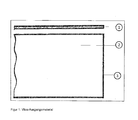
- Als Vorlage für den Splice-Prozess dienen mindestens zwei wasserstahlverfestigte bzw. vernadelte Vliesstoffbahnen (vgl.
Fig. 1 ). -
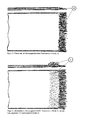
Fig. 2 zeigt ein für den Splice-Prozess vorbereitetes Warenmuster. Mittels Drahtbürstenrolle wurden hier stirnseitig Fasern ausgekämmt, so dass in diesem Randbereich lediglich vereinzelte Faserenden in Warenlaufrichtung herausragen (Stufe 1). - In Stufe 2 (vgl.
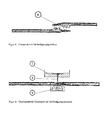
Fig. 3 ) wird der Faserverbund nur leicht bearbeitet und somit das Warenmasse in diesem Bereich durch Herausarbeiten einzelner Fasern nur geringfügig reduziert. - Zwei derart vorbereitete Vliesenden werden jeweils mit der bearbeiteten Seite aufeinander gelegt, dass jeweils Stufe 1 des einen Endes mit der Stufe 2 des gegenüberliegenden in Deckung gebracht wird (vgl.
Fig. 4 ). Die Flächenmasse der Stufen 1 und 2 kann in der Summe beispielsweise der Flächenmasse des Grundmaterials der beiden Vliesmaterialen sehr nahe kommen bzw. im Idealfall gleich dieser sein. -
Fig. 5 zeigt die Anordnung der zu verfestigenden Vliesenden zueinander. Sie werden in einem Rahmen zur weiteren Bearbeitung fixiert. Oberhalb der Materialbahnen befindet sich ein beweglicher Düsenleistenkopf (7), der in definierter Abfolge warenseitig abwechselnd rechts und links über die Vliesbahnen hinweg gefahren wird und diese sukzessive miteinander verfestigt, indem mit schrittweise steigendem Düsendruck die losen Faserenden über den Materialquerschnitt eingebunden werden. Auf der gegenüber liegenden Warenseite führt eine Vakuumabsaugvorrichtung das überschüssige Wasser ab (9). - Der Düsenleistenkopf (7) wird abwechselnd von rechts nach links und umgekehrt, auch abhängig von der vorliegenden Art und Flächenmasse des Vlieses, über die Vliesbahnen hinweg gefahren, zum Beispiel mindestens 1-, 5-, 10-mal und davon unabhängig etwa höchstens 40-, 35-, 30-mal. Der Wasserdruck, auch der schrittweise erhöhte Wasserdruck, kann etwa in dieser Reihenfolge zunehmend bevorzugt bei mindestens 10 bar, 20 bar, 30 bar, 40 bar, 50 bar liegen; von dieser Untergrenze unabhängige Obergrenzen liegen zum Beispiel bei in dieser Reihenfolge zunehmend bevorzugt 300 bar, 250 bar, 200 bar, 150 bar, 120 bar. Der Düsenleistenkopf (7) kann eine oder mehrere Düsenleisten umfassen; die Löcher in den Düsenleisten können in Reihe, parallel oder versetzt zueinander angeordnet sein.
-
- 1 Vliesmaterial im Querschnitt
- 2 Vlies-Grundmaterial (Draufsicht)
- 3 Schnittkante quer zur Warenlaufrichtung
- 4 ausgekämmte Vliesenden (Stufe 1)
- 5 teilaufgelöster Faserverbund (Stufe 2)
- 6 vorbereitete Vliesbahnenden zueinander in Deckung gebracht.
- 7 Wasserstrahldüse
- 8 Wasserstrahlen
- 9 Absaugeinheit (Vakuum)
Claims (12)
- Verfahren zum Verbinden von Vliesmaterialien, dadurch gekennzeichnet, dass durch Ausdünnen, insbesondere chemische Faserauslösung, oder Auskämmen der Vliesendbereiche an der Verbindungsstelle, Einspannen der überlappend angeordneten Vliese und anschließende Nadelverfestigung oder Strahlverfestigung mit Wasser oder alternativen Medien eine Verbindungsstelle der Vliesstücke realisiert wird, die annähernd gleiche Eigenschaften im Vergleich zum Grundmaterial aufweist.
- Verfahren nach Anspruch 1, dadurch gekennzeichnet, dass die Endbereiche der Vliesstücke ein- oder mehrstufig ausgekämmt werden und somit je nach Materialart bzw. Dicke verschieden breite Verbindungsstellen resultieren.
- Verfahren nach einem der vorstehenden Ansprüche, dadurch gekennzeichnet, dass das Auskämmen manuell erfolgt.
- Verfahren nach Anspruch 1 oder 2, dadurch gekennzeichnet, dass das Auskämmen maschinell erfolgt.
- Verfahren nach einem der vorstehenden Ansprüche, dadurch gekennzeichnet, dass die Vliesteilstücke aus Stapelfasern jeglicher Substrate, sowie Substratmischungen bestehen.
- Verfahren nach einem der vorstehenden Ansprüche, dadurch gekennzeichnet, dass die Vliesteilstücke organischer Natur, z. B. Kunstfasern, etwa Polyester, Polyacrylnitril, Aramide oder Naturfasern, etwa Viskose, Baumwolle, Flachs, oder anorganischer Natur, etwa auf Silikatbasis oder auf Basaltbasis oder Glasfaser, sind.
- Verfahren nach einem der vorstehenden Ansprüche, dadurch gekennzeichnet, dass unterschiedliche Wasserstrahldrücke realisiert werden können.
- Verfahren nach einem der vorstehenden Ansprüche, dadurch gekennzeichnet, dass Wasser zur Strahlverfestigung eingesetzt wird.
- Verfahren nach einem der vorstehenden Ansprüche, wobei ein Auskämmen bis auf die Einzelfaser in einem Endbereich des jeweiligen Vlieses erfolgt, der sich über mindestens 10 mm und höchstens 50 mm erstreckt.
- Verfahren nach einem der vorstehenden Ansprüche, wobei ein Auskämmen bis auf die Einzelfaser in einem Endbereich des jeweiligen Vlieses erfolgt und in einem daran anschließenden Bereich anteilig ausgekämmt wird, welcher daran anschließende Bereich sich über mindestens 10 mm und höchstens 50 mm erstreckt.
- Verfahren nach einem der vorstehenden Ansprüche, wobei ein Wasserstrahldruck mindestens 10 bar und höchstens 300 bar beträgt.
- Verfahren nach einem der vorstehenden Ansprüche, wobei die überlappend angeordneten Vliese durch eine Ultraschallbehandlung verbunden werden.
Priority Applications (1)
| Application Number | Priority Date | Filing Date | Title |
|---|---|---|---|
| PL12178386T PL2554504T3 (pl) | 2011-07-30 | 2012-07-27 | Połączenie materiałów z włókniny |
Applications Claiming Priority (1)
| Application Number | Priority Date | Filing Date | Title |
|---|---|---|---|
| DE202011103915U DE202011103915U1 (de) | 2011-07-30 | 2011-07-30 | Verbindung von Vliesmaterialien mittels Wasserstrahlverfestigung bzw. Nadeltechnologie |
Publications (2)
| Publication Number | Publication Date |
|---|---|
| EP2554504A1 true EP2554504A1 (de) | 2013-02-06 |
| EP2554504B1 EP2554504B1 (de) | 2014-11-26 |
Family
ID=45091614
Family Applications (1)
| Application Number | Title | Priority Date | Filing Date |
|---|---|---|---|
| EP12178386.4A Active EP2554504B1 (de) | 2011-07-30 | 2012-07-27 | Verbindung von Vliesmaterialien |
Country Status (6)
| Country | Link |
|---|---|
| US (1) | US9309080B2 (de) |
| EP (1) | EP2554504B1 (de) |
| DE (1) | DE202011103915U1 (de) |
| DK (1) | DK2554504T3 (de) |
| ES (1) | ES2526394T3 (de) |
| PL (1) | PL2554504T3 (de) |
Families Citing this family (7)
| Publication number | Priority date | Publication date | Assignee | Title |
|---|---|---|---|---|
| WO2014193150A1 (ko) * | 2013-05-29 | 2014-12-04 | 유한회사 마스터이미지쓰리디아시아 | 유동적 배리어 패턴을 구비한 입체영상 표시 장치 |
| DE102016107404A1 (de) | 2016-04-21 | 2017-10-26 | Jens Ristau | Textile Gesamtmaterialbahn sowie Verfahren und Vorrichtung zum Herstellen derselben |
| JP7750552B2 (ja) | 2020-10-30 | 2025-10-07 | ナイキ イノベイト シーブイ | 非対称面複合不織テキスタイル及びその製造方法 |
| DE102020129628A1 (de) * | 2020-11-10 | 2022-05-12 | Norafin Industries (Germany) Gmbh | Vorrichtung zum Verfestigen eines Fasergebildes |
| KR102851905B1 (ko) * | 2022-10-19 | 2025-08-29 | 주식회사 에코신소재 | 니들 펀칭을 통한 부직포 패널의 제조장치 |
| DE102023118677A1 (de) * | 2023-07-14 | 2025-01-16 | Norafin Technologies Gmbh | Verfahren zum Herstellen einer Struktur aus einem Faserverbundmaterial |
| CN117286634B (zh) * | 2023-09-26 | 2025-08-22 | 苏州九一高科无纺设备有限公司 | 一种水刺无纺布的生产牵引装置 |
Citations (7)
| Publication number | Priority date | Publication date | Assignee | Title |
|---|---|---|---|---|
| GB1006570A (en) | 1961-06-14 | 1965-10-06 | American Mach & Foundry | Automatic cigarette paper pressure slicer |
| US3858819A (en) | 1972-10-24 | 1975-01-07 | Butler Automatic Inc | Web supply apparatus |
| US4157934A (en) | 1977-07-18 | 1979-06-12 | Compensating Tension Controls, Inc. | Low tension lap slicer unit |
| JPS62167160A (ja) | 1986-01-17 | 1987-07-23 | Mitsubishi Heavy Ind Ltd | ロ−ル原紙供給装置 |
| DE202009007662U1 (de) * | 2009-05-27 | 2009-08-27 | Perick Management Gmbh | Textiles Trägermaterial |
| US20110133016A1 (en) * | 2009-12-09 | 2011-06-09 | Lewis Sanders | Apparatus and Method for Compressing and Winding Overlapped Fibrous Blankets |
| WO2011114254A1 (en) * | 2010-03-18 | 2011-09-22 | Fameccanica.Data S.P.A. | Process for splicing portions of a web material and corresponding device |
Family Cites Families (5)
| Publication number | Priority date | Publication date | Assignee | Title |
|---|---|---|---|---|
| US687260A (en) | 1900-09-27 | 1901-11-26 | Sarah Annette Parker | Counting device. |
| US3498874A (en) * | 1965-09-10 | 1970-03-03 | Du Pont | Apertured tanglelaced nonwoven textile fabric |
| JPH0578973A (ja) * | 1991-09-12 | 1993-03-30 | Sanemu Package Kk | 不織布接合方法 |
| DE10022405B4 (de) | 2000-05-09 | 2004-07-29 | Böttcher, Peter, Dr.-Ing. | Verfahren zur Herstellung eines Textilschlauches für die Ummantelung von Rohren |
| FI113674B (fi) * | 2002-12-18 | 2004-05-31 | Tamfelt Oyj Abp | Puristinhuopa |
-
2011
- 2011-07-30 DE DE202011103915U patent/DE202011103915U1/de not_active Expired - Lifetime
-
2012
- 2012-07-27 DK DK12178386.4T patent/DK2554504T3/da active
- 2012-07-27 EP EP12178386.4A patent/EP2554504B1/de active Active
- 2012-07-27 PL PL12178386T patent/PL2554504T3/pl unknown
- 2012-07-27 ES ES12178386.4T patent/ES2526394T3/es active Active
- 2012-07-30 US US13/561,375 patent/US9309080B2/en active Active
Patent Citations (7)
| Publication number | Priority date | Publication date | Assignee | Title |
|---|---|---|---|---|
| GB1006570A (en) | 1961-06-14 | 1965-10-06 | American Mach & Foundry | Automatic cigarette paper pressure slicer |
| US3858819A (en) | 1972-10-24 | 1975-01-07 | Butler Automatic Inc | Web supply apparatus |
| US4157934A (en) | 1977-07-18 | 1979-06-12 | Compensating Tension Controls, Inc. | Low tension lap slicer unit |
| JPS62167160A (ja) | 1986-01-17 | 1987-07-23 | Mitsubishi Heavy Ind Ltd | ロ−ル原紙供給装置 |
| DE202009007662U1 (de) * | 2009-05-27 | 2009-08-27 | Perick Management Gmbh | Textiles Trägermaterial |
| US20110133016A1 (en) * | 2009-12-09 | 2011-06-09 | Lewis Sanders | Apparatus and Method for Compressing and Winding Overlapped Fibrous Blankets |
| WO2011114254A1 (en) * | 2010-03-18 | 2011-09-22 | Fameccanica.Data S.P.A. | Process for splicing portions of a web material and corresponding device |
Also Published As
| Publication number | Publication date |
|---|---|
| PL2554504T3 (pl) | 2015-04-30 |
| DK2554504T3 (da) | 2015-02-09 |
| EP2554504B1 (de) | 2014-11-26 |
| US9309080B2 (en) | 2016-04-12 |
| ES2526394T3 (es) | 2015-01-12 |
| US20130025767A1 (en) | 2013-01-31 |
| DE202011103915U1 (de) | 2011-10-28 |
Similar Documents
| Publication | Publication Date | Title |
|---|---|---|
| EP2554504B1 (de) | Verbindung von Vliesmaterialien | |
| EP3974572B1 (de) | Verfahren zur herstellung eines vliesaggregates und vliesaggregat | |
| DE60030120T2 (de) | Verfahren zur herstellung eines vliesstoffes, anlage zur durchführung dieses verfahren, hergestellter vliesstoff | |
| EP2635417B1 (de) | Florschicht mit gekrümmt verlaufenden bündeln | |
| EP3118361B1 (de) | Anlage und verfahren zur herstellung eines mehrschichtigen vlieses aus mindestens einem unverfestigtem faserflor | |
| EP3322763B1 (de) | Vorrichtung zur herstellung eines klebebandes | |
| EP3283679B1 (de) | Anlage und verfahren zur verbindung bzw. verfestigung einer bahn von faserstoff mit einem vlies | |
| EP2504476B1 (de) | Verfahren zur kontinuierlichen herstellung von stapelfasergelegen aus endlich langen verstärkungsfasern mit gerichteter faserorientierung | |
| EP2102400B1 (de) | Verfahren zur kontinuierlichen herstellung einer multiaxialen gelegebahn | |
| EP2181217B1 (de) | Verfahren und vorrichtung zur kontinuierlichen herstellung einer multiaxialen gelegebahn | |
| AT511349A4 (de) | Faserhalbzeug, faser-verbundwerkstoff und verfahren zu deren herstellung | |
| EP3061855B1 (de) | Krempelanlage und verfahren zur verfestigung mindestens eines faserflors | |
| EP0072453B1 (de) | Verfahren und Vorrichtung zur Herstellung eines Geleges | |
| DE102011009227A1 (de) | Vorrichtung zum Herstellen eines Vlies-Gewebeverbundes | |
| EP2128335A1 (de) | Verfahren zur Herstellung eines Filzbandes | |
| DE102009031635A1 (de) | Vliesstoff sowie Verfahren und Vorrichtung zur Herstellung eines solchen Vliesstoffes | |
| EP3495543A1 (de) | Anlage und verfahren zur erzeugung eines spinnvlieses | |
| EP3235627B1 (de) | Verfahren und vorrichtung zum herstellen einer textilen gesamtmaterialbahn | |
| DE102016113721A1 (de) | Faserflor-basiertes bahnförmiges Textil mit unidirektional erhöhter Festigkeit | |
| EP0424421B1 (de) | Verfahren und vorrichtung zum zusammenführen von vliesen oder floren aus fasern, insbesondere textilfasern | |
| EP1270778A1 (de) | Verfahren und Einrichtung zur Herstellung von Stapelfasergarnen die synthetische Fasern enthalten | |
| WO2014170107A1 (de) | Verfahren und vorrichtung zur herstellung von unidirektionalen kohlenstofffasergelegen | |
| DE102023118677A1 (de) | Verfahren zum Herstellen einer Struktur aus einem Faserverbundmaterial | |
| WO2004088026A1 (de) | Verfahren und vorrichtung zur herstellung eines verbundvlieses | |
| DE102019131726A1 (de) | Verfahren und Anlage zur Herstellung eines mehrschichtigen Vlieses, sowie mehrschichtiges Vlies |
Legal Events
| Date | Code | Title | Description |
|---|---|---|---|
| PUAI | Public reference made under article 153(3) epc to a published international application that has entered the european phase |
Free format text: ORIGINAL CODE: 0009012 |
|
| AK | Designated contracting states |
Kind code of ref document: A1 Designated state(s): AL AT BE BG CH CY CZ DE DK EE ES FI FR GB GR HR HU IE IS IT LI LT LU LV MC MK MT NL NO PL PT RO RS SE SI SK SM TR |
|
| AX | Request for extension of the european patent |
Extension state: BA ME |
|
| 17P | Request for examination filed |
Effective date: 20130806 |
|
| RBV | Designated contracting states (corrected) |
Designated state(s): AL AT BE BG CH CY CZ DE DK EE ES FI FR GB GR HR HU IE IS IT LI LT LU LV MC MK MT NL NO PL PT RO RS SE SI SK SM TR |
|
| GRAP | Despatch of communication of intention to grant a patent |
Free format text: ORIGINAL CODE: EPIDOSNIGR1 |
|
| RIC1 | Information provided on ipc code assigned before grant |
Ipc: D04H 1/48 20120101ALI20140523BHEP Ipc: B65H 21/00 20060101AFI20140523BHEP Ipc: B29C 65/00 20060101ALI20140523BHEP Ipc: D04H 3/11 20120101ALI20140523BHEP Ipc: D04H 1/49 20120101ALI20140523BHEP |
|
| INTG | Intention to grant announced |
Effective date: 20140616 |
|
| GRAS | Grant fee paid |
Free format text: ORIGINAL CODE: EPIDOSNIGR3 |
|
| GRAA | (expected) grant |
Free format text: ORIGINAL CODE: 0009210 |
|
| AK | Designated contracting states |
Kind code of ref document: B1 Designated state(s): AL AT BE BG CH CY CZ DE DK EE ES FI FR GB GR HR HU IE IS IT LI LT LU LV MC MK MT NL NO PL PT RO RS SE SI SK SM TR |
|
| REG | Reference to a national code |
Ref country code: GB Ref legal event code: FG4D Free format text: NOT ENGLISH |
|
| REG | Reference to a national code |
Ref country code: CH Ref legal event code: EP |
|
| REG | Reference to a national code |
Ref country code: AT Ref legal event code: REF Ref document number: 698030 Country of ref document: AT Kind code of ref document: T Effective date: 20141215 |
|
| REG | Reference to a national code |
Ref country code: IE Ref legal event code: FG4D Free format text: LANGUAGE OF EP DOCUMENT: GERMAN |
|
| REG | Reference to a national code |
Ref country code: CH Ref legal event code: NV Representative=s name: BOVARD AG, CH |
|
| REG | Reference to a national code |
Ref country code: DE Ref legal event code: R096 Ref document number: 502012001670 Country of ref document: DE Effective date: 20150108 |
|
| REG | Reference to a national code |
Ref country code: ES Ref legal event code: FG2A Ref document number: 2526394 Country of ref document: ES Kind code of ref document: T3 Effective date: 20150112 |
|
| REG | Reference to a national code |
Ref country code: DK Ref legal event code: T3 Effective date: 20150203 |
|
| REG | Reference to a national code |
Ref country code: SE Ref legal event code: TRGR |
|
| REG | Reference to a national code |
Ref country code: NL Ref legal event code: T3 |
|
| REG | Reference to a national code |
Ref country code: SK Ref legal event code: T3 Ref document number: E 17833 Country of ref document: SK |
|
| REG | Reference to a national code |
Ref country code: LT Ref legal event code: MG4D |
|
| PG25 | Lapsed in a contracting state [announced via postgrant information from national office to epo] |
Ref country code: LT Free format text: LAPSE BECAUSE OF FAILURE TO SUBMIT A TRANSLATION OF THE DESCRIPTION OR TO PAY THE FEE WITHIN THE PRESCRIBED TIME-LIMIT Effective date: 20141126 Ref country code: PT Free format text: LAPSE BECAUSE OF FAILURE TO SUBMIT A TRANSLATION OF THE DESCRIPTION OR TO PAY THE FEE WITHIN THE PRESCRIBED TIME-LIMIT Effective date: 20150326 Ref country code: IS Free format text: LAPSE BECAUSE OF FAILURE TO SUBMIT A TRANSLATION OF THE DESCRIPTION OR TO PAY THE FEE WITHIN THE PRESCRIBED TIME-LIMIT Effective date: 20150326 |
|
| REG | Reference to a national code |
Ref country code: PL Ref legal event code: T3 |
|
| REG | Reference to a national code |
Ref country code: NO Ref legal event code: T2 Effective date: 20141126 |
|
| PG25 | Lapsed in a contracting state [announced via postgrant information from national office to epo] |
Ref country code: HR Free format text: LAPSE BECAUSE OF FAILURE TO SUBMIT A TRANSLATION OF THE DESCRIPTION OR TO PAY THE FEE WITHIN THE PRESCRIBED TIME-LIMIT Effective date: 20141126 Ref country code: GR Free format text: LAPSE BECAUSE OF FAILURE TO SUBMIT A TRANSLATION OF THE DESCRIPTION OR TO PAY THE FEE WITHIN THE PRESCRIBED TIME-LIMIT Effective date: 20150227 Ref country code: LV Free format text: LAPSE BECAUSE OF FAILURE TO SUBMIT A TRANSLATION OF THE DESCRIPTION OR TO PAY THE FEE WITHIN THE PRESCRIBED TIME-LIMIT Effective date: 20141126 Ref country code: RS Free format text: LAPSE BECAUSE OF FAILURE TO SUBMIT A TRANSLATION OF THE DESCRIPTION OR TO PAY THE FEE WITHIN THE PRESCRIBED TIME-LIMIT Effective date: 20141126 Ref country code: CY Free format text: LAPSE BECAUSE OF FAILURE TO SUBMIT A TRANSLATION OF THE DESCRIPTION OR TO PAY THE FEE WITHIN THE PRESCRIBED TIME-LIMIT Effective date: 20141126 |
|
| PG25 | Lapsed in a contracting state [announced via postgrant information from national office to epo] |
Ref country code: EE Free format text: LAPSE BECAUSE OF FAILURE TO SUBMIT A TRANSLATION OF THE DESCRIPTION OR TO PAY THE FEE WITHIN THE PRESCRIBED TIME-LIMIT Effective date: 20141126 Ref country code: RO Free format text: LAPSE BECAUSE OF FAILURE TO SUBMIT A TRANSLATION OF THE DESCRIPTION OR TO PAY THE FEE WITHIN THE PRESCRIBED TIME-LIMIT Effective date: 20141126 |
|
| REG | Reference to a national code |
Ref country code: DE Ref legal event code: R097 Ref document number: 502012001670 Country of ref document: DE |
|
| PLBE | No opposition filed within time limit |
Free format text: ORIGINAL CODE: 0009261 |
|
| STAA | Information on the status of an ep patent application or granted ep patent |
Free format text: STATUS: NO OPPOSITION FILED WITHIN TIME LIMIT |
|
| REG | Reference to a national code |
Ref country code: HU Ref legal event code: AG4A Ref document number: E024335 Country of ref document: HU |
|
| 26N | No opposition filed |
Effective date: 20150827 |
|
| PG25 | Lapsed in a contracting state [announced via postgrant information from national office to epo] |
Ref country code: MC Free format text: LAPSE BECAUSE OF FAILURE TO SUBMIT A TRANSLATION OF THE DESCRIPTION OR TO PAY THE FEE WITHIN THE PRESCRIBED TIME-LIMIT Effective date: 20141126 Ref country code: SI Free format text: LAPSE BECAUSE OF FAILURE TO SUBMIT A TRANSLATION OF THE DESCRIPTION OR TO PAY THE FEE WITHIN THE PRESCRIBED TIME-LIMIT Effective date: 20141126 |
|
| PG25 | Lapsed in a contracting state [announced via postgrant information from national office to epo] |
Ref country code: LU Free format text: LAPSE BECAUSE OF FAILURE TO SUBMIT A TRANSLATION OF THE DESCRIPTION OR TO PAY THE FEE WITHIN THE PRESCRIBED TIME-LIMIT Effective date: 20150727 |
|
| REG | Reference to a national code |
Ref country code: FR Ref legal event code: PLFP Year of fee payment: 5 |
|
| PG25 | Lapsed in a contracting state [announced via postgrant information from national office to epo] |
Ref country code: MT Free format text: LAPSE BECAUSE OF FAILURE TO SUBMIT A TRANSLATION OF THE DESCRIPTION OR TO PAY THE FEE WITHIN THE PRESCRIBED TIME-LIMIT Effective date: 20141126 |
|
| PG25 | Lapsed in a contracting state [announced via postgrant information from national office to epo] |
Ref country code: BG Free format text: LAPSE BECAUSE OF FAILURE TO SUBMIT A TRANSLATION OF THE DESCRIPTION OR TO PAY THE FEE WITHIN THE PRESCRIBED TIME-LIMIT Effective date: 20141126 Ref country code: SM Free format text: LAPSE BECAUSE OF FAILURE TO SUBMIT A TRANSLATION OF THE DESCRIPTION OR TO PAY THE FEE WITHIN THE PRESCRIBED TIME-LIMIT Effective date: 20141126 |
|
| REG | Reference to a national code |
Ref country code: FR Ref legal event code: PLFP Year of fee payment: 6 |
|
| PG25 | Lapsed in a contracting state [announced via postgrant information from national office to epo] |
Ref country code: MK Free format text: LAPSE BECAUSE OF FAILURE TO SUBMIT A TRANSLATION OF THE DESCRIPTION OR TO PAY THE FEE WITHIN THE PRESCRIBED TIME-LIMIT Effective date: 20141126 |
|
| REG | Reference to a national code |
Ref country code: FR Ref legal event code: PLFP Year of fee payment: 7 |
|
| PG25 | Lapsed in a contracting state [announced via postgrant information from national office to epo] |
Ref country code: AL Free format text: LAPSE BECAUSE OF FAILURE TO SUBMIT A TRANSLATION OF THE DESCRIPTION OR TO PAY THE FEE WITHIN THE PRESCRIBED TIME-LIMIT Effective date: 20141126 |
|
| P01 | Opt-out of the competence of the unified patent court (upc) registered |
Effective date: 20230512 |
|
| REG | Reference to a national code |
Ref country code: DE Ref legal event code: R082 Ref document number: 502012001670 Country of ref document: DE Representative=s name: SZYNKA SMORODIN PATENTANWAELTE PARTNERSCHAFT M, DE |
|
| PGFP | Annual fee paid to national office [announced via postgrant information from national office to epo] |
Ref country code: NL Payment date: 20250724 Year of fee payment: 14 |
|
| PGFP | Annual fee paid to national office [announced via postgrant information from national office to epo] |
Ref country code: HU Payment date: 20250822 Year of fee payment: 14 |
|
| PGFP | Annual fee paid to national office [announced via postgrant information from national office to epo] |
Ref country code: FI Payment date: 20250722 Year of fee payment: 14 Ref country code: ES Payment date: 20250819 Year of fee payment: 14 |
|
| PGFP | Annual fee paid to national office [announced via postgrant information from national office to epo] |
Ref country code: DK Payment date: 20250722 Year of fee payment: 14 Ref country code: DE Payment date: 20250722 Year of fee payment: 14 |
|
| PGFP | Annual fee paid to national office [announced via postgrant information from national office to epo] |
Ref country code: NO Payment date: 20250725 Year of fee payment: 14 |
|
| PGFP | Annual fee paid to national office [announced via postgrant information from national office to epo] |
Ref country code: PL Payment date: 20250717 Year of fee payment: 14 Ref country code: TR Payment date: 20250721 Year of fee payment: 14 Ref country code: IT Payment date: 20250728 Year of fee payment: 14 |
|
| PGFP | Annual fee paid to national office [announced via postgrant information from national office to epo] |
Ref country code: BE Payment date: 20250725 Year of fee payment: 14 Ref country code: GB Payment date: 20250722 Year of fee payment: 14 |
|
| PGFP | Annual fee paid to national office [announced via postgrant information from national office to epo] |
Ref country code: FR Payment date: 20250723 Year of fee payment: 14 Ref country code: AT Payment date: 20250724 Year of fee payment: 14 |
|
| PGFP | Annual fee paid to national office [announced via postgrant information from national office to epo] |
Ref country code: CH Payment date: 20250801 Year of fee payment: 14 Ref country code: SE Payment date: 20250725 Year of fee payment: 14 |
|
| PGFP | Annual fee paid to national office [announced via postgrant information from national office to epo] |
Ref country code: CZ Payment date: 20250717 Year of fee payment: 14 Ref country code: IE Payment date: 20250724 Year of fee payment: 14 |
|
| PGFP | Annual fee paid to national office [announced via postgrant information from national office to epo] |
Ref country code: SK Payment date: 20250723 Year of fee payment: 14 |
|
| REG | Reference to a national code |
Ref country code: CH Ref legal event code: U11 Free format text: ST27 STATUS EVENT CODE: U-0-0-U10-U11 (AS PROVIDED BY THE NATIONAL OFFICE) Effective date: 20260801 |