EP2557532A9 - Procédés et appareil pour metre à disposition le paiement des services - Google Patents
Procédés et appareil pour metre à disposition le paiement des services Download PDFInfo
- Publication number
- EP2557532A9 EP2557532A9 EP12179683.3A EP12179683A EP2557532A9 EP 2557532 A9 EP2557532 A9 EP 2557532A9 EP 12179683 A EP12179683 A EP 12179683A EP 2557532 A9 EP2557532 A9 EP 2557532A9
- Authority
- EP
- European Patent Office
- Prior art keywords
- token
- mobile device
- service
- secure element
- cryptographically signed
- Prior art date
- Legal status (The legal status is an assumption and is not a legal conclusion. Google has not performed a legal analysis and makes no representation as to the accuracy of the status listed.)
- Withdrawn
Links
Images



Classifications
-
- G—PHYSICS
- G06—COMPUTING OR CALCULATING; COUNTING
- G06Q—INFORMATION AND COMMUNICATION TECHNOLOGY [ICT] SPECIALLY ADAPTED FOR ADMINISTRATIVE, COMMERCIAL, FINANCIAL, MANAGERIAL OR SUPERVISORY PURPOSES; SYSTEMS OR METHODS SPECIALLY ADAPTED FOR ADMINISTRATIVE, COMMERCIAL, FINANCIAL, MANAGERIAL OR SUPERVISORY PURPOSES, NOT OTHERWISE PROVIDED FOR
- G06Q20/00—Payment architectures, schemes or protocols
- G06Q20/08—Payment architectures
- G06Q20/12—Payment architectures specially adapted for electronic shopping systems
-
- G—PHYSICS
- G06—COMPUTING OR CALCULATING; COUNTING
- G06Q—INFORMATION AND COMMUNICATION TECHNOLOGY [ICT] SPECIALLY ADAPTED FOR ADMINISTRATIVE, COMMERCIAL, FINANCIAL, MANAGERIAL OR SUPERVISORY PURPOSES; SYSTEMS OR METHODS SPECIALLY ADAPTED FOR ADMINISTRATIVE, COMMERCIAL, FINANCIAL, MANAGERIAL OR SUPERVISORY PURPOSES, NOT OTHERWISE PROVIDED FOR
- G06Q20/00—Payment architectures, schemes or protocols
- G06Q20/30—Payment architectures, schemes or protocols characterised by the use of specific devices or networks
- G06Q20/32—Payment architectures, schemes or protocols characterised by the use of specific devices or networks using wireless devices
- G06Q20/322—Aspects of commerce using mobile devices [M-devices]
-
- G—PHYSICS
- G06—COMPUTING OR CALCULATING; COUNTING
- G06Q—INFORMATION AND COMMUNICATION TECHNOLOGY [ICT] SPECIALLY ADAPTED FOR ADMINISTRATIVE, COMMERCIAL, FINANCIAL, MANAGERIAL OR SUPERVISORY PURPOSES; SYSTEMS OR METHODS SPECIALLY ADAPTED FOR ADMINISTRATIVE, COMMERCIAL, FINANCIAL, MANAGERIAL OR SUPERVISORY PURPOSES, NOT OTHERWISE PROVIDED FOR
- G06Q20/00—Payment architectures, schemes or protocols
- G06Q20/30—Payment architectures, schemes or protocols characterised by the use of specific devices or networks
- G06Q20/36—Payment architectures, schemes or protocols characterised by the use of specific devices or networks using electronic wallets or electronic money safes
- G06Q20/367—Payment architectures, schemes or protocols characterised by the use of specific devices or networks using electronic wallets or electronic money safes involving electronic purses or money safes
-
- G—PHYSICS
- G06—COMPUTING OR CALCULATING; COUNTING
- G06Q—INFORMATION AND COMMUNICATION TECHNOLOGY [ICT] SPECIALLY ADAPTED FOR ADMINISTRATIVE, COMMERCIAL, FINANCIAL, MANAGERIAL OR SUPERVISORY PURPOSES; SYSTEMS OR METHODS SPECIALLY ADAPTED FOR ADMINISTRATIVE, COMMERCIAL, FINANCIAL, MANAGERIAL OR SUPERVISORY PURPOSES, NOT OTHERWISE PROVIDED FOR
- G06Q20/00—Payment architectures, schemes or protocols
- G06Q20/38—Payment protocols; Details thereof
- G06Q20/382—Payment protocols; Details thereof insuring higher security of transaction
-
- G—PHYSICS
- G06—COMPUTING OR CALCULATING; COUNTING
- G06Q—INFORMATION AND COMMUNICATION TECHNOLOGY [ICT] SPECIALLY ADAPTED FOR ADMINISTRATIVE, COMMERCIAL, FINANCIAL, MANAGERIAL OR SUPERVISORY PURPOSES; SYSTEMS OR METHODS SPECIALLY ADAPTED FOR ADMINISTRATIVE, COMMERCIAL, FINANCIAL, MANAGERIAL OR SUPERVISORY PURPOSES, NOT OTHERWISE PROVIDED FOR
- G06Q20/00—Payment architectures, schemes or protocols
- G06Q20/38—Payment protocols; Details thereof
- G06Q20/382—Payment protocols; Details thereof insuring higher security of transaction
- G06Q20/3821—Electronic credentials
- G06Q20/38215—Use of certificates or encrypted proofs of transaction rights
-
- G—PHYSICS
- G06—COMPUTING OR CALCULATING; COUNTING
- G06Q—INFORMATION AND COMMUNICATION TECHNOLOGY [ICT] SPECIALLY ADAPTED FOR ADMINISTRATIVE, COMMERCIAL, FINANCIAL, MANAGERIAL OR SUPERVISORY PURPOSES; SYSTEMS OR METHODS SPECIALLY ADAPTED FOR ADMINISTRATIVE, COMMERCIAL, FINANCIAL, MANAGERIAL OR SUPERVISORY PURPOSES, NOT OTHERWISE PROVIDED FOR
- G06Q20/00—Payment architectures, schemes or protocols
- G06Q20/38—Payment protocols; Details thereof
- G06Q20/382—Payment protocols; Details thereof insuring higher security of transaction
- G06Q20/3825—Use of electronic signatures
-
- G—PHYSICS
- G06—COMPUTING OR CALCULATING; COUNTING
- G06Q—INFORMATION AND COMMUNICATION TECHNOLOGY [ICT] SPECIALLY ADAPTED FOR ADMINISTRATIVE, COMMERCIAL, FINANCIAL, MANAGERIAL OR SUPERVISORY PURPOSES; SYSTEMS OR METHODS SPECIALLY ADAPTED FOR ADMINISTRATIVE, COMMERCIAL, FINANCIAL, MANAGERIAL OR SUPERVISORY PURPOSES, NOT OTHERWISE PROVIDED FOR
- G06Q20/00—Payment architectures, schemes or protocols
- G06Q20/38—Payment protocols; Details thereof
- G06Q20/382—Payment protocols; Details thereof insuring higher security of transaction
- G06Q20/3827—Use of message hashing
Definitions
- the present disclosure relates generally to communications and, more particularly, to methods and apparatus to provision payment services.
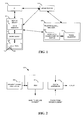
- FIG. 1 depicts an example system for provisioning payment services to a mobile device.
- FIG. 2 depicts additional detail of one implementation of the token generator of FIG. 1
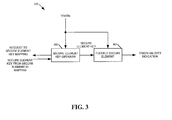
- FIG. 3 depicts additional detail of one implementation of the token validator of FIG. 1 .
- FIG. 4 depicts example communications and processing representative of a process to provision payment services in accordance with a first example.
- FIG. 5 depicts an example flow diagram representative of a process, which may be implemented using computer readable instructions on a mobile device, which may be used to generate a token.
- FIG. 6 depicts an example flow diagram representative of a process, which may be implemented using computer readable instructions on a server, which may be used to assess token validity.
- FIG. 7 depicts example communications and processing representative of a process to provision payment services in accordance with a second example.
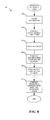
- FIG. 8 depicts an example flow diagram representative of a process, which may be implemented using computer readable instructions on a mobile device, which may be used to generate an alternate token.
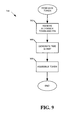
- FIG. 9 depicts an example flow diagram representable process, which may be implemented using computer readable instructions at a service provider to generate a token.
- FIG. 10 depicts example communications and processes representative of a process to provision payment services in accordance with a third example.
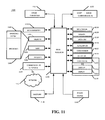
- FIG. 11 is a block diagram of a mobile device in accordance with the disclosure.
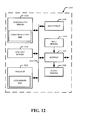
- FIG. 12 is a block diagram of a computer system which may be used to implement the service provider and/or the trusted service manager of FIG. 1 .
- Example methods, apparatus, and articles of manufacture disclosed herein may be used in connection with mobile devices, which may be any mobile communication device, mobile computing device, or any other element, entity, device, or service capable of communicating wirelessly.
- Mobile devices also referred to as terminals, wireless terminals, mobile stations, communication stations, user equipment (UE), or user devices, may include mobile smart phones (e.g., BlackBerry® smart phones), cellular telephones, wireless personal digital assistants (PDA), tablet/laptop/notebook/netbook computers with wireless adapters, etc.
- mobile smart phones e.g., BlackBerry® smart phones
- PDA wireless personal digital assistants
- tablet/laptop/notebook/netbook computers with wireless adapters etc.
- Example methods, apparatus, and articles of manufacture disclosed herein facilitate operations in a mobile device and/or associated servers.
- a method includes receiving an indication of a service to be provisioned to a mobile device; generating a token indicative of the service, wherein the token includes an cryptographically signed portion that was cryptographically signed by a secure element of the mobile device; sending the token to an entity for verification; and provisioning the service when the token is verified.
- the service may be a payment service.
- the token includes information used to construct the cryptographically signed portion and the information used to construct the cryptographically signed portion includes an identification of the service to be provisioned to the mobile device.
- the information used to construct the cryptographically signed portion may include a mobile device identifier or a timestamp.
- generating the token comprises constructing the cryptographically signed portion using a unique key assigned to the mobile device. The unique key may be assigned to the mobile device by a trusted service manager and the verification is performed by the trusted service manager.
- sending the token comprises sending the token from the mobile device directly to the service provider. While in other examples, sending the token comprises sending the token from the mobile device to the service provider via a personal computer.
- Receiving the indication may include obtaining a scan of a graphic, an image, etc. from a display screen, from media (e.g., printed media), etc.
- the image may include a two-dimensional barcode.
- receiving the indication includes near field communication.
- Some example methods include obtaining a token indicative of a service to be provisioned to a mobile device, the token including a cryptographically signed portion that was cryptographically signed by a secure element of the mobile device, obtaining a secure element key corresponding to the secure element of the mobile device, processing at least a portion of the token using the secure element key to verify validity of the token, and transmitting an indication that the service is to be provisioned to the mobile device.
- Some example methods further include assigning the secure element key to the mobile device and providing the secure element key to the secure element prior to obtaining the token.
- the method includes instructing the mobile device to execute one or more commands to provision the service to the mobile device.
- Some example methods include receiving a request to validate a token from a provider of the service.
- the service may be a payment service.
- processing the at least a portion of the token includes processing non-encrypted information in the token in combination with the secure element key to obtain a cryptographic signature. In some examples, processing the at least a portion of the token includes comparing the cryptographic signature to the cryptographically signed portion of the token. Transmitting the indication may include transmitting the indication to a provider of the service.
- a device includes a processor, a secure element, and a memory coupled to the processor and storing instructions.
- the example instructions when executed by the processor, cause the processor to generate a token indicative of a service to be provisioned to a mobile device, wherein the token includes a cryptographically signed portion that was cryptographically signed by the secure element, send the token to an entity for verification, and provision the service when the token is verified.
- the secure element is to store a secure element key and to construct the cryptographically signed portion using the secure element key.
- the secure element may receive the secure element key prior to generating the token.
- the device further includes a virtual wallet to store a plug-in corresponding to the service.
- the secure element may construct the cryptographically signed portion using an identification of the service to be provisioned to the mobile device, using a mobile device identifier, using a timestamp, etc.
- the token further includes an identification of the service to be provisioned to the mobile device, a mobile device identifier, and a timestamp.
- a user of a mobile device 102 desires to provision payment service from a service provider 104 (e.g., a bank or a credit card company) to the mobile device 102.
- the payment service may be associated with a credit card and the provisioning of the payment service to the mobile device 102 makes the credit card available in a virtual wallet on the mobile device 102.
- a trusted service manager 106 may be provided to facilitate security during the provisioning of the payment service.
- the mobile device 102 may contact the service provider 104 to express interest in provisioning a service such as a credit card or debit card to the mobile device 102, such that the mobile device 102 may be used to conduct cashless transactions using, for example, near field communication (NFC), or any other suitable technology.
- NFC near field communication
- the mobile device includes a token generator 110 and a secure element 112.
- the mobile device 102 further includes a virtual wallet 114 in which one or more plug-ins 116, 118 may be installed.
- the plug-ins 116, 118 may correspond to provisioned payment services, etc.
- the mobile device 102 may be implemented by a mobile telephone, a smart phone, a tablet computer, or any suitable device.
- the token generator 110, the secure element 112, and the virtual wallet 114 may be implemented using hardware, software, firmware, coding, or any other suitable logic to facilitate the functionality described herein.
- the mobile device 102 may include other functionality, such as wireless communication functionality, etc.
- the mobile device 102 is configured to communicate with the service provider 104 and the trusted service manager 106 using suitable networks (e.g., cellular networks, local area networks, etc.).
- the service provider 104 may be implemented using a server or any other suitable computing device.
- the service provider 104 may include a front end and a back end.
- the front end may provide a website interface to which a browser of the mobile device 102 or other devices/software may interface.
- the back end may provide communication functionality to facilitate communications with the trusted service manager 106.
- the trusted service manager 106 includes a token validator 120 and a mobile device secure element key mapping 122.
- the trusted service manager 106 may be implemented using a server or any other suitable computing device including hardware and capable of executing software.
- the token validator 120 and the mobile device secure element key mapping 122 may be implemented using hardware, software, firmware, coding, or any other suitable logic to facilitate the functionality described herein.
- the trusted service manager 106 may include other functionality, such as wireless communication functionality, etc.
- a personal computer 130 which may interface with the service provider 104 via the website interface and/or may interface to the mobile device 102. As described below, the personal computer 130 and the mobile device 102 may cooperate or interoperate to provision the payment service to the mobile device 102.
- the token generator 110 of the mobile device 102 interacts with a secure element 112 to generate a token that is used to ensure that the mobile device to which the payment service is being provisioned is the mobile device that requested such provisioning.
- the token created by the token generator 110 indicates to the trusted service manager 106 and the service provider 104 that the request was made from the mobile device 102.
- the token generator 110 may generate a token indicative of the service (e.g., the payment service from the service provider 104) and may include a portion that was cryptographically signed by the secure element 112.
- the token may be generated using a unique key (e.g., a secure element key associated with a secure element ID) that was previously loaded into the secure element 112 of the mobile device 102 by the trusted service manager 106. Accordingly, the trusted service manager 106 is able to verify that the token was generated using the secure element 112 of the mobile device 102 and, thus, that the mobile device 102 requested provision of the service.
- a unique key e.g., a secure element key associated with a secure element ID
- the token may be generated in several different ways: through the use of a browser on the mobile device 102, through the use of a web browser on PC 130 in combination with the mobile device 102, through the use of the code displayed on a web browser on the PC 130, and/or through the use of information entered on a web browser of the PC 130 and subsequently mailed to the user of the mobile device 102.
- the provisioning of the payment service may be done through a browser of mobile device 102.
- the token will be generated and posted to the service provider 104 by the mobile device 102.
- the mobile device 102 may interact with a website hosted by the service provider 104.
- the user of the mobile device 102 may visit a website hosted by the service provider 104 using the PC 130.
- the user would use the mobile device 102 to generate an authentication token and would specify the service to be provisioned to the mobile device 102.
- Authentication information such as a token and/or a personal identification number (PIN), would be displayed to the user on the mobile device 102. The user would then enter the authentication information into the website via the PC 130.
- PIN personal identification number
- the service provider 104 may then display a graphic including the information to the user on the PC 130, or may mail media including a graphic including the information to the user.
- the code may be a QR code, which includes one or more pieces of information (e.g., a secure element ID and the unique ID).
- the user of the mobile device 102 may then control the mobile device 102 to scan the graphic that is presented on the PC 130 to obtain information to continue with the provisioning process.
- the user may provide information to the service provider 104 via the PC 130 and a website hosted by the service provider 104 and the service provider 104 may then write the information into an NFC tag that is mailed to the user. Subsequently, the user may control the mobile device 102 to scan the NFC tag to continue with the provisioning process.
- the token validator 120 of the trusted service manager 106 directly or indirectly receives the token generated by the mobile device 102 and validates the token.
- the token validation may be carried out by the token validator 120 mapping the mobile device (e.g., the mobile device 102) to a secure element key stored in the mobile device secure element key mapping 122.
- the secure element key may then be used by the token validator 120 to process the token generated by the mobile device 102 and to assess the validity thereof.
- the possibility of allowing a first user to sign up a second user for payment provisioning when the second user did not request the provisioning is avoided. Additionally, some of the examples described herein avoided the possibility of having a payment service inadvertently provisioned to the incorrect device (e.g., an accidental error in the provisioning process). Thus, the methods, systems, and processes described herein facilitate enhanced security when provisioning payment services.
- the token generator 110 includes a request string generator 202, a hash function 204, and a token assembler 206.
- the request string generator 202 gathers information within the mobile device 102 that is used to generate the token.
- version indicates a version of the system making the request.
- the inclusion of the version field allows for future expansion of the system and ensures backward compatibility of legacy systems.
- the source field indicates that the request for provisioning of the payment service is being made using a mobile device (e.g., a handheld), but does not particularly identify the mobile device 102.
- a mobile device e.g., a handheld
- the source field may be changed to indicate that the source is the PC 130, or desktop.
- the PIN field is an identifier indicative of the mobile device making the request.
- the PIN provided in the request may identify the mobile device 102.
- the PIN may be an eight character reference that is assigned uniquely to each mobile device.
- the timestamp field indicates the time at which the mobile device 102 generated the token. While Universal coordinated Time (UTC) may be used to populate the timestamp field, other indications of time may be used.
- UTC Universal coordinated Time
- the service ID field indicates that the token generated by the mobile device 102 corresponds to a particular service that is to be provisioned to the mobile device 102.
- Each service that may be provisioned may have a unique service ID.
- a Visa card from Bank A may have a service ID of 86
- a Visa card from Bank B may have a service ID of 88
- a MasterCard from Bank A may have yet a different service ID of 97.
- the foregoing service ID fields are merely examples and service IDs of different lengths may be used and the service IDs may be assigned in a predetermined manner that is agreed upon by the service provider 104 and the other service providers.
- the request string is passed to the hash function 204, which may hash the request string in accordance with a cryptographic hash function.
- the hash function may be an SHA-512 hash function.
- the hashed request string developed by the hash function 204 passes to the secure element 112, which cryptographically signs the hashed request string and returns token'.
- the cryptographic signing function may be an HMAC-SHA512 function, which could use one or more cryptographic keys that were previously stored in the secure element and that is known by the Trusted Service Manager 106.
- the token assembler 206 receives the original request string from the request string generator 202, as well as token' from the secure element 112 and generates the token.
- the fields of the token that were described are not described again, except to note that PIN, timestamp, service ID, and token may all be represented using hexadecimal numbers in string format (e.g., 0x1234568).
- the token validator 120 can process the token to determine token validity by comparing the results of a token generation procedure involving information that is not cryptographically signed with the token that is cryptographically signed.
- the token validator 120 includes a secure element key obtainer 302 and a flexible secure element 304.
- the secure element key obtainer 302 receives the token and requests the secure element key associated with the mobile device that created the token. For example, the secure element key obtainer 302 may make a request to the mobile secure element key mapping 122 using the PIN provided as part of the token.
- the mobile secure element key mapping 122 returns the secure element key associated with the PIN.
- the secure element key is passed to the flexible secure element 304, which uses the secure element key along with information provided in the token in an attempt to duplicate the token'. If the duplicated token' matches the token' provided in the token, then a token validity indication is issued that the token is valid. Conversely, if the duplicated token' does not match the token', then the indication that the token is not valid is issued.
- the trusted service manager 106 may authenticate the validity of any token received to ensure that the token received was actually generated by a mobile device 102 seeking provision of payment services.
- an example process 400 includes communications and processing to provision payment services.
- the mobile device 102 receives a card selection from a user interacting with the mobile device 102 (block 402).
- the card selection may be made when a browser of the mobile device 102 interacts with the service provider 104, or a listing of available card selections may be previously provided to the mobile device 102.
- the mobile device 102 After the card selection is received (block 402), the mobile device 102 generates a token (block 404) and sends the token and any additional information to the service provider 104 (block 406).
- the service provider 104 requests token validation from the trusted service manager 106 (block 408).
- the trusted service manager 106 assesses token validity (block 410) and sends an indication of token validity to the service provider 104 (block 412). If the token is indicated to be valid, the service provider 104 may request the trusted service manager 106 to execute commands on the mobile device 102 (block 414).
- the trusted service manager 106 again assesses token validity (block 416) and, if the token is valid, executes commands on the mobile device 102 (block 418). As shown in FIG. 4 , the trusted service manager 106 may repeatedly assess token validity to ensure that all commands and requests being issued related to the mobile device 102 are actually intended to affect, or are made by, the mobile device 102. Accordingly, while assessment of token validity is shown in two instances in FIG. 4 , this is merely one example of how frequently token validity may be assessed. Alternatively, one validity assessment may be carried out and that assessment may be relied upon for the duration of the provisioning process.
- the mobile device 102 executes commands (block 420) and sends command results to the trusted service manager 106 (block 422).
- the trusted service manager 106 forwards the command results to the service provider 104 (block 424).
- the mobile device 102 may send command results to the service provider 104 without sending the command results to the trusted service manager 106.
- the service provider 104 evaluates the results (block 426) and, if the results are favorable, makes a request to the trusted service manager 106 to request a wallet plug-in (block 428).
- the trusted service manager 106 issues a command to install the wallet plug-in to the mobile device 102 (block 430) and the mobile device installs the plug-in (block 432).
- the service has been provisioned to the mobile device 102 via installation of the plug-in (block 432) and the mobile device 102 is now configured to conduct commercial transactions using the provisioned service.
- FIGS. 5 and 6 depict example flow diagrams representative of processes that may be implemented using, for example, computer-readable instructions stored on a computer-readable medium to provision payment services.
- the example processes of FIGS. 5 and 6 may be performed using one or more processors, controllers, and/or any other suitable processing devices.
- the example process of FIG. 5 may be implemented using coded instructions (e.g., computer readable instructions) stored on one or more tangible computer readable media such as flash memory, read-only memory (ROM), and/or random-access memory (RAM), such as may be found in the mobile device 102 of FIG. 1 .
- coded instructions e.g., computer readable instructions
- ROM read-only memory
- RAM random-access memory
- coded instructions e.g., computer readable instructions
- tangible computer readable media such as flash memory, read-only memory (ROM), and/or random-access memory (RAM), such as may be found in the trusted service manager 106 of FIG. 1 .
- tangible computer readable medium is expressly defined to include any type of computer readable storage and to exclude propagating signals. Additionally or alternatively, the example processes of FIGS. 5 and 6 may be implemented using coded instructions (e.g., computer-readable instructions or machine-accessible instructions) stored on one or more non-transitory computer readable media such as flash memory, read-only memory (ROM), random-access memory (RAM), cache, or any other storage media in which information is stored for any duration (e.g., for extended time periods, permanently, brief instances, for temporarily buffering, and/or for caching of the information).
- coded instructions e.g., computer-readable instructions or machine-accessible instructions
- non-transitory computer readable media such as flash memory, read-only memory (ROM), random-access memory (RAM), cache, or any other storage media in which information is stored for any duration (e.g., for extended time periods, permanently, brief instances, for temporarily buffering, and/or for caching of the information).
- non-transitory computer-readable medium and non-transitory machine-accessible medium are expressly defined to include any type of computer-readable medium or machine-accessible medium.
- FIGS. 5 and 6 may be implemented using any combination(s) of application specific integrated circuit(s) (ASIC(s)), programmable logic device(s) (PLD(s)), field programmable logic device(s) (FPLD(s)), discrete logic, hardware, firmware, etc. Also, some or all operations of the example processes of FIGS. 5 and 6 may be implemented manually or as any combination(s) of any of the foregoing techniques, for example, any combination of firmware, software, discrete logic and/or hardware. Further, although the example processes of FIGS. 5 and 6 are described with reference to the flow diagrams of FIGS. 5 and 6 , other methods of implementing the processes of FIGS. 5 and 6 may be employed.
- ASIC application specific integrated circuit
- PLD programmable logic device
- FPLD field programmable logic device
- any or all operations of the example processes of FIGS. 5 and 6 may be performed sequentially and/or in parallel by, for example, separate processing threads, processors, devices, discrete logic, circuits, etc.
- FIG. 5 shows additional detail of the token generation process 404 of FIG. 4 .
- the token generation process 404 may be carried out by the token generator 110 of FIG. 1 and FIG. 2 .
- the token generation process 404 obtains information (block 502) relevant to the token generation.
- the token generation process 404 may obtain a version number, an indication that the request is made from the mobile device, a device PIN, a timestamp, and a service ID.
- additional information may be obtained relevant to the generation of the token.
- the token generation process 404 then generates the string that will be hashed (block 504).
- the string may include the string described above in conjunction with FIG. 2 .
- the string is hashed (block 506) using, for example, an SHA-512 hash function.
- the hashed string is then passed to the secure element (block 508), which cryptographically signs the hashed string and returns a hash-based message authentication code (HMAC) (block 510).
- HMAC hash-based message authentication code
- the secure element constructs the HMAC by cryptographically signing the hashed string with a secure element key (e.g., a unique key) that was stored in the mobile device 102 by the trusted service manager 106 during manufacture of the mobile device 102.
- a secure element key e.g., a unique key
- the secure element key may be provided to and/or stored in the mobile device 102 at any time during or prior to the provisioning of payment services at the mobile device 102. As described below in conjunction with FIG. 6 , it is the knowledge of the secure element key, which is closely held information known to the trusted service manager 106, that allows the trusted service manager 106 to assess the validity of the token generated by the token generator 110.
- the token generation process 404 assembles the token by combining information received from the secure element as well as information previously obtained (e.g., the information obtained at block 502) (block 512).
- FIG. 6 shows additional detail of the token validity assessment process 410, 416 of FIG. 4 .
- the token validity assessment process 410, 416 may be carried out by the token validator 120 of the trusted service manager 106 of FIG. 1 and FIG. 3 .
- the token validity assessment process 410, 416 receives the token (block 602) and obtains a corresponding secure element key (block 604).
- the corresponding secure element key may be identified using one or more data structures within the trusted service manager 106, wherein such data structures link information in the token, such as device PIN, to a secure element ID.
- the process 410, 416 To assess validity of the token, the process 410, 416 generates a string from token information.
- the string may include the version, identification of the source as being the handheld, the PIN, timestamp, and service ID (block 606).
- the process 410, 416 hashes the string (block 608).
- the process 410, 416 processes the hashed string is secure element in accordance with the corresponding secure element key (block 610). That is, the process 410, 416 attempts to duplicate the token' contained in the received token.
- the generated token' is compared with the token' in the received token (block 612) When the generated token' substantially matches the received token', the process 410, 416 sends a validity indication to communicate the result of the validity assessment (block 614). When the generated token' does not substantially match the received token', the process 410, 416 sends an invalidity indication to communicate the result of the validity assessment (block 616).
- the process of FIG. 6 may be carried out at a server of a service provider, e.g., the service provider 104, or may be carried out at any other location and on any other device.
- a server of a service provider e.g., the service provider 104
- the PC 130 may also be utilized in the provisioning procedure.
- the PC 130 may make a request to the service provider 104 to receive a selected service (e.g., card) on the mobile device 102 (block 702).
- a selected service e.g., card
- the service provider 104 may provide instructions for presentation on the PC 130 (block 704).
- such instructions may include text or graphics informing the user of the PC 130 how to provision payment services to the mobile device 102 in particular, the instructions may inform the user to make a selection for a payment service on the mobile device 102 (block 706).
- the mobile device 102 may generate an alternate token (block 708).
- the alternate token may be generated as described below in conjunction with FIG. 8 .
- the mobile device 102 may then display the alternate token and PIN on the display screen of the mobile device 102 (block 710).
- the user may then key the alternate token and PIN into the webpage hosted by the service provider 104 (block 712) using the PC 130.
- the alternate token and the PIN are then transferred from the PC 130 to the service provider 104 (block 714).
- the service provider 104 may then generate a token from the alternate token and the PIN (block 716) and request token validation (block 718). After token validation is been requested, the mobile device 102, the service provider 104, and the trusted service manager 106 interact as described above in conjunction with FIG. 4 . Accordingly further detail regarding this processing that was previously described will not be provided here.
- FIGS. 8 and 9 depict example flow diagrams representative of processes that may be implemented using, for example, computer-readable instructions stored on a computer-readable medium.
- the example processes of FIGS. 8 and 9 may be performed using one or more processors, controllers, and/or any other suitable processing devices.
- the example process of FIG. 8 may be implemented using coded instructions (e.g., computer readable instructions) stored on one or more tangible computer readable media such as flash memory, read-only memory (ROM), and/or random-access memory (RAM), such as may be found in the mobile device 102 of FIG. 1 .
- coded instructions e.g., computer readable instructions
- tangible computer readable media such as flash memory, read-only memory (ROM), and/or random-access memory (RAM)
- RAM random-access memory
- coded instructions e.g., computer readable instructions
- tangible computer readable media such as flash memory, read-only memory (ROM), and/or random-access memory (RAM), such as may be found in the service provider 104 of FIG. 1 .
- tangible computer readable medium is expressly defined to include any type of computer readable storage and to exclude propagating signals. Additionally or alternatively, the example processes of FIGS. 8 and 9 may be implemented using coded instructions (e.g., computer-readable instructions or machine-accessible instructions) stored on one or more non-transitory computer readable media such as flash memory, read-only memory (ROM), random-access memory (RAM), cache, or any other storage media in which information is stored for any duration (e.g., for extended time periods, permanently, brief instances, for temporarily buffering, and/or for caching of the information).
- coded instructions e.g., computer-readable instructions or machine-accessible instructions
- non-transitory computer readable media such as flash memory, read-only memory (ROM), random-access memory (RAM), cache, or any other storage media in which information is stored for any duration (e.g., for extended time periods, permanently, brief instances, for temporarily buffering, and/or for caching of the information).
- non-transitory computer-readable medium and non-transitory machine-accessible medium are expressly defined to include any type of computer-readable medium or machine-accessible medium.
- FIGS. 8 and 9 may be implemented using any combination(s) of application specific integrated circuit(s) (ASIC(s)), programmable logic device(s) (PLD(s)), field programmable logic device(s) (FPLD(s)), discrete logic, hardware, firmware, etc. Also, some or all operations of the example processes of FIGS. 8 and 9 may be implemented manually or as any combination(s) of any of the foregoing techniques, for example, any combination of firmware, software, discrete logic and/or hardware. Further, although the example processes of FIGS. 8 and 9 are described with reference to the flow diagrams of FIGS. 8 and 9 , other methods of implementing the processes of FIGS. 8 and 9 may be employed.
- any or all operations of the example processes of FIGS. 8 and 9 may be performed sequentially and/or in parallel by, for example, separate processing threads, processors, devices, discrete logic, circuits, etc.
- the alternate token generation process 708 obtains information used to generate the alternate token (block 802).
- the information may include a version number; an indication that the source of the request is the desktop, or PC 130; the PIN of the mobile device 102; and the service ID indicating the payment service to be provisioned.
- the process 708 generates a string without timestamp (block 804) and hashes the string (block 806).
- the hashed string is passed to the secure element (block 808), which cryptographically signs the hashed string so that the process 708 receives the HMAC from the secure element (block 810).
- the results from the secure element are converted into a hexadecimal string, truncated to eight digits, and are appended with a check digit to construct the alternate token (block 812).
- the generate token process 716 may be carried out by the service provider to generate a token from the alternate token and the PIN provided from the PC 130.
- the process 716 receives the alternate token and the PIN (block 902) and generates a timestamp (block 904).
- the token is been assembled by the service provider 104 (block 906).
- one the trusted service manager 106 carries out token validation, the trusted service manager 106 attempts to duplicate the alternate token using information provided in the token and secure element key corresponding to the mobile device 102.
- the timestamp that was generated at the mobile device 102 is used as part of the cryptographic signature process.
- the cryptographic signature authenticates the time at which the mobile device 102 generated the token
- the trusted service manager 106 could potentially use the timestamp to disallow provisioning of the service, if the service provider 104 is requesting provisioning too long after the token creation.
- the timestamp is generated by the service provider 104. The addition of the timestamp by the service provider 104 allows the trusted service manager 106 to conduct testing regarding the timing of the request made by the service provider 104.
- an example process 1000 includes communications and processing to provision payment services.
- a user at the PC 130 may provide customer information to the website hosted by the service provider 104 (block 1002).
- the service provider 104 may store the customer information (block 1004) and assigned a unique identification to that customer information (block 1006).
- the service provider 104 may then embed the service ID and the unique ID into a graphic and provide the graphic to the PC 130, which will display the graphic to the user (block 1008).
- the graphic may be presented as a barcode, a two-dimensional code, a QR code, or any other suitable graphic.
- the service provider may print the graphics on media, such as paper, and may mail the printed media to the user of the mobile device 102.
- the service provider 104 may embed the service ID and the unique ID into an NFC device that is mailed to the user of the mobile device 102.
- the unique ID could be a cookie used for the current session during which the PC 130 provided information to the service provider 104.
- the mobile device scans the graphics (or the NFC device) (block 1010).
- the scanning may be carried out using barcode scanner or QR code scanner software and the camera of the mobile device 102, or using NFC reader technology within the mobile device 102.
- the mobile device 102 extracts the service ID from the graphic or NFC device and queries a card discovery service to obtain the service name corresponding to the service ID and a service POST uniform resource locator (URL) (1012). The mobile device 102 then prompts the user to confirm that the user wants to add the specified payment service to the virtual wallet 114 of the mobile device 102 (block 1014).
- a card discovery service to obtain the service name corresponding to the service ID and a service POST uniform resource locator (URL) (1012).
- URL uniform resource locator
- the mobile device 102 If the user desires to add the specified payment service to the virtual wallet 114 of the mobile device 102, the mobile device 102 generates a token, as described above, (block 1016) and posts information including, for example, service ID, unique ID, device PIN, and token to the POST URL (block 1018).
- the service provider 104 requests the trusted service manager 106 to validate the token (block 1020). After token validation is been requested, the mobile device 102, the service provider 104, and the trusted service manager 106 operate as described above in conjunction with FIG. 4 . Accordingly further detail regarding this processing that was previously described will not be provided here.
- the mobile device 1100 includes multiple components, such as a processor 1102 that controls the overall operation of the mobile device 1100. Communication functions, including data and voice communications, are performed through a communication subsystem 1104. Data received by the mobile device 1100 is decompressed and decrypted by a decoder 1106. The communication subsystem 1104 receives messages from and sends messages to a wireless network 1150.
- the wireless network 1150 may be any type of wireless network, including, but not limited to, data wireless networks, voice wireless networks, and networks that support both voice and data communications.
- a power source 1142 such as one or more rechargeable batteries or a port to an external power supply, powers the mobile device 1100.
- the processor 1102 interacts with other components, such as Random Access Memory (RAM) 1108, memory 1110, a display 1112 with a touch-sensitive overlay 1114 operably coupled to an electronic controller 1116 that together comprise a touch-sensitive display 1118, one or more actuators 1120, one or more force sensors 1122, an auxiliary input/output (I/O) subsystem 1124, a data port 1126, a speaker 1128, a microphone 1130, short-range communications 1132, and other device subsystems 1134.
- the processor 1102 and the memory 1110 may cooperate to implement the functionality described in conjunction with the controllers 124 and 134 of FIG. 1 .
- tangible and/or non-transitory, and/or machine readable instructions may be stored by the processor 1102 and/or the memory 1110 to implement the functionality shown in FIGS. 5 and 8 .
- Input via a graphical user interface is provided via the touch-sensitive overlay 1114.
- the processor 1102 interacts with the touch-sensitive overlay 1114 via the electronic controller 1116.
- Information such as text, characters, symbols, images, icons, and other items that may be displayed or rendered on a mobile device, is displayed on the touch-sensitive display 1118 via the processor 1102.
- the processor 1102 may interact with an accelerometer 1136 that may be utilized to detect direction of gravitational forces or gravity-induced reaction forces.
- the mobile device 1100 may utilize a Subscriber Identity Module or a Removable User Identity Module (SIM/RUIM) card 1138 for communication with a network, such as the wireless network 1150.
- SIM/RUIM Removable User Identity Module
- user identification information may be programmed into memory 1110.
- the mobile device 1100 includes an operating system 1146 and software programs, applications, or components 1148 that are executed by the processor 1102 and are typically stored in a persistent, updatable store such as the memory 1110. Additional applications or programs may be loaded onto the mobile device 1100 through the wireless network 1150, the auxiliary I/O subsystem 1124, the data port 1126, the short-range communications subsystem 1132, or any other suitable subsystem 1134.
- a received signal such as a text message, an e-mail message, or web page download is processed by the communication subsystem 1104 and input to the processor 1102.
- the processor 1102 processes the received signal for output to the display 1112 and/or to the auxiliary I/O subsystem 1124.
- a subscriber may generate data items, for example e-mail messages, which may be transmitted over the wireless network 1150 through the communication subsystem 1104.
- the speaker 1128 outputs audible information converted from electrical signals
- the microphone 1130 converts' audible information into electrical signals for processing.
- a capacitive touch-sensitive display includes a capacitive touch-sensitive overlay 1114.
- the overlay 1114 may be an assembly of multiple layers in a stack including, for example, a substrate, a ground shield layer, a barrier layer, one or more capacitive touch sensor layers separated by a substrate or other barrier, and a cover.
- the capacitive touch sensor layers may comprise any suitable material, such as indium tin oxide (ITO).
- the actuator(s) 1120 may be depressed or activated by applying sufficient force to the touch-sensitive display 1118 to overcome the actuation force of the actuator 1120.
- the actuator(s) 1120 may be actuated by pressing anywhere on the touch-sensitive display 1118.
- the actuator(s) 1120 may provide input to the processor 1102 when actuated. Actuation of the actuator(s) 1120 may result in provision of tactile feedback.
- the touch-sensitive display 1118 is depressible, pivotable, and/or movable. Such a force may actuate the actuator(s) 1120.
- the touch-sensitive display 1118 may, for example, float with respect to the housing of the mobile device, i.e., the touch-sensitive display 1118 may not be fastened to the housing.
- a mechanical dome switch actuator may be utilized.
- tactile feedback is provided when the dome collapses due to imparted force and when the dome returns to the rest position after release of the switch.
- the actuator 1120 may comprise one or more piezoelectric (piezo) devices that provide tactile feedback for the touch-sensitive display 1118.
- Optional force sensors 1122 may be disposed in conjunction with the touch-sensitive display 1118 to determine or react to forces applied to the touch-sensitive display 1118.
- the force sensor 1122 may be disposed in line with a piezo actuator 1120.
- the force sensors 1122 may be force-sensitive resistors, strain gauges, piezoelectric or piezoresistive devices, pressure sensors, quantum tunneling composites, force-sensitive switches, or other suitable devices.
- FIG. 12 is a block diagram of an example computer 1200 capable of implementing the apparatus and methods disclosed herein in conjunction with the service provider 104 and the trusted service manager 106.
- the computer 1200 can be, for example, a server, a personal computer, a personal digital assistant (PDA), an Internet appliance, a DVD player, a CD player, a digital video recorder, a personal video recorder, a set top box, or any other type of computing device.
- PDA personal digital assistant
- the system 1200 of the instant example includes a processor 1212 such as a general purpose programmable processor.
- the processor 1212 includes a local memory 1214, and executes coded instructions 1216 present in the local memory 1214 and/or in another memory device.
- the processor 1212 may execute, among other things, the machine readable instructions represented in FIGS. 6 and 9 .
- the processor 1212 may be any type of processing unit or other logic circuit.
- the processor 1212 is in communication with a main memory including a volatile memory 1218 and a non-volatile memory 1220 via a bus 1222.
- the volatile memory 1218 may be implemented by Static Random Access Memory (SRAM), Synchronous Dynamic Random Access Memory (SDRAM), Dynamic Random Access Memory (DRAM), RAMBUS Dynamic Random Access Memory (RDRAM) and/or any other type of random access memory device.
- the non-volatile memory 1220 may be implemented by flash memory and/or any other desired type of memory device. Access to the main memory 1218, 1220 is typically controlled by a memory controller (not shown) in a conventional manner.
- the computer 1200 also includes a conventional interface circuit 1224.
- the interface circuit 1224 may be implemented by any type of well-known interface standard, such as an Ethernet interface, a universal serial bus (USB), and/or a third generation input/output (3GIO) interface.
- One or more input devices 1226 are connected to the interface circuit 1224.
- the input device(s) 1226 permit a user to enter data and commands into the processor 1212.
- the input device(s) can be implemented by, for example, a keyboard, a mouse, a touchscreen, a track-pad, a trackball, an isopoint and/or a voice recognition system.
- One or more output devices 1228 are also connected to the interface circuit 1224.
- the output devices 1228 can be implemented, for example, by display devices (e.g., a liquid crystal display, a cathode ray tube display (CRT)), by a printer and/or by speakers.
- the interface circuit 1224 thus, typically includes a graphics driver card.
- the interface circuit 1224 also includes a communication device such as a modem or network interface card to facilitate exchange of data with external computers via a network (e.g., an Ethernet connection, a digital subscriber line (DSL), a telephone line, coaxial cable, a cellular telephone system, etc.).
- a network e.g., an Ethernet connection, a digital subscriber line (DSL), a telephone line, coaxial cable, a cellular telephone system, etc.
- the computer 1200 also includes one or more mass storage devices 1230 for storing software and data.
- mass storage devices 1230 include floppy disk drives, hard drive disks, compact disk drives and digital versatile disk (DVD) drives.
- the methods and or apparatus described herein may be embedded in a structure such as a processor and/or an ASIC (application specific integrated circuit).
- a structure such as a processor and/or an ASIC (application specific integrated circuit).
Landscapes
- Business, Economics & Management (AREA)
- Accounting & Taxation (AREA)
- Engineering & Computer Science (AREA)
- Physics & Mathematics (AREA)
- Finance (AREA)
- Strategic Management (AREA)
- General Business, Economics & Management (AREA)
- General Physics & Mathematics (AREA)
- Theoretical Computer Science (AREA)
- Computer Security & Cryptography (AREA)
- Computer Networks & Wireless Communication (AREA)
- Telephone Function (AREA)
- Mobile Radio Communication Systems (AREA)
Applications Claiming Priority (1)
| Application Number | Priority Date | Filing Date | Title |
|---|---|---|---|
| US201161521643P | 2011-08-09 | 2011-08-09 |
Publications (2)
| Publication Number | Publication Date |
|---|---|
| EP2557532A1 EP2557532A1 (fr) | 2013-02-13 |
| EP2557532A9 true EP2557532A9 (fr) | 2013-12-04 |
Family
ID=47076066
Family Applications (1)
| Application Number | Title | Priority Date | Filing Date |
|---|---|---|---|
| EP12179683A Withdrawn EP2557532A1 (fr) | 2011-08-09 | 2012-08-08 | Procédés et appareil pour metre à disposition le paiement des services |
Country Status (3)
| Country | Link |
|---|---|
| US (1) | US20130041830A1 (fr) |
| EP (1) | EP2557532A1 (fr) |
| CA (1) | CA2786063A1 (fr) |
Families Citing this family (39)
| Publication number | Priority date | Publication date | Assignee | Title |
|---|---|---|---|---|
| US9965756B2 (en) * | 2013-02-26 | 2018-05-08 | Digimarc Corporation | Methods and arrangements for smartphone payments |
| US8738540B2 (en) * | 2011-10-31 | 2014-05-27 | Ncr Corporation | Techniques for mobile transaction processing |
| WO2013126037A1 (fr) * | 2012-02-01 | 2013-08-29 | Hewlett-Packard Development Company, L.P. | Authentification mobile pour activer les fonctions d'un dispositif hôte |
| EP2626824A1 (fr) * | 2012-02-09 | 2013-08-14 | Deutsche Telekom AG | Gestion de portefeuilles virtuels préparés par un terminal mobile |
| US9818098B2 (en) * | 2012-03-20 | 2017-11-14 | First Data Corporation | Systems and methods for facilitating payments via a peer-to-peer protocol |
| US8898769B2 (en) | 2012-11-16 | 2014-11-25 | At&T Intellectual Property I, Lp | Methods for provisioning universal integrated circuit cards |
| US8959331B2 (en) | 2012-11-19 | 2015-02-17 | At&T Intellectual Property I, Lp | Systems for provisioning universal integrated circuit cards |
| US20150379508A1 (en) * | 2013-02-18 | 2015-12-31 | Touch Networks Australia Pty Ltd | Controlling usage of acquirer tokens stored within a merchant system |
| US9830588B2 (en) * | 2013-02-26 | 2017-11-28 | Digimarc Corporation | Methods and arrangements for smartphone payments |
| US20140279566A1 (en) * | 2013-03-15 | 2014-09-18 | Samsung Electronics Co., Ltd. | Secure mobile payment using media binding |
| US9984364B2 (en) * | 2013-03-15 | 2018-05-29 | George Baldwin Bumiller | Messaging protocol for secure communication |
| WO2014162296A1 (fr) * | 2013-04-04 | 2014-10-09 | Visa International Service Association | Procédé et système permettant de réaliser des transactions financières pré-autorisées |
| US20140337235A1 (en) | 2013-05-08 | 2014-11-13 | The Toronto-Dominion Bank | Person-to-person electronic payment processing |
| AU2014266860B2 (en) * | 2013-05-15 | 2017-07-13 | Visa International Service Association | Methods and systems for provisioning payment credentials |
| US10510073B2 (en) * | 2013-08-08 | 2019-12-17 | Visa International Service Association | Methods and systems for provisioning mobile devices with payment credentials |
| WO2015038551A1 (fr) | 2013-09-10 | 2015-03-19 | Visa International Service Association | Mise en service et personnalisation d'applications de paiement mobile sur un dispositif mobile |
| US9036820B2 (en) | 2013-09-11 | 2015-05-19 | At&T Intellectual Property I, Lp | System and methods for UICC-based secure communication |
| US9124573B2 (en) * | 2013-10-04 | 2015-09-01 | At&T Intellectual Property I, Lp | Apparatus and method for managing use of secure tokens |
| US9208300B2 (en) | 2013-10-23 | 2015-12-08 | At&T Intellectual Property I, Lp | Apparatus and method for secure authentication of a communication device |
| US9240994B2 (en) | 2013-10-28 | 2016-01-19 | At&T Intellectual Property I, Lp | Apparatus and method for securely managing the accessibility to content and applications |
| US9240989B2 (en) | 2013-11-01 | 2016-01-19 | At&T Intellectual Property I, Lp | Apparatus and method for secure over the air programming of a communication device |
| US9313660B2 (en) | 2013-11-01 | 2016-04-12 | At&T Intellectual Property I, Lp | Apparatus and method for secure provisioning of a communication device |
| US9413759B2 (en) | 2013-11-27 | 2016-08-09 | At&T Intellectual Property I, Lp | Apparatus and method for secure delivery of data from a communication device |
| US9311639B2 (en) | 2014-02-11 | 2016-04-12 | Digimarc Corporation | Methods, apparatus and arrangements for device to device communication |
| US9713006B2 (en) | 2014-05-01 | 2017-07-18 | At&T Intellectual Property I, Lp | Apparatus and method for managing security domains for a universal integrated circuit card |
| US10959093B2 (en) | 2014-05-08 | 2021-03-23 | Visa International Service Association | Method and system for provisioning access data to mobile device |
| US10070310B2 (en) * | 2014-05-08 | 2018-09-04 | Visa International Service Association | Method and system for provisioning access data to mobile device |
| CN105335847A (zh) | 2014-06-30 | 2016-02-17 | 阿里巴巴集团控股有限公司 | 一种电子账户的操作方法及装置 |
| US11475447B2 (en) * | 2015-03-06 | 2022-10-18 | Mastercard International Incorporated | Secure mobile remote payments |
| US10949841B2 (en) | 2015-05-07 | 2021-03-16 | Visa International Service Association | Provisioning of access credentials using device codes |
| CA2990166A1 (fr) * | 2015-06-19 | 2016-12-22 | Paul Y. Moreton | Systemes et procedes permettant de gerer des jetons electroniques destines a des interactions de dispositif |
| US10951421B2 (en) | 2016-11-28 | 2021-03-16 | Ssh Communications Security Oyj | Accessing hosts in a computer network |
| CN110914847B (zh) * | 2017-04-19 | 2023-10-03 | 摩根大通国家银行 | 用于使用代理pin实施交易的系统和方法 |
| EP3631771A4 (fr) * | 2017-05-31 | 2021-02-24 | Reza Jalili | Procédés et systèmes améliorés pour créer et commander l'utilisation de clés de transaction |
| US11769144B2 (en) | 2017-06-02 | 2023-09-26 | Apple Inc. | Provisioning credentials for an electronic transaction on an electronic device |
| US11544710B2 (en) * | 2017-06-02 | 2023-01-03 | Apple Inc. | Provisioning credentials on multiple electronic devices |
| US10839391B2 (en) | 2017-10-12 | 2020-11-17 | Samsung Electronics Co., Ltd. | Method and apparatus for secure offline payment |
| US11095638B2 (en) * | 2017-12-11 | 2021-08-17 | Ssh Communications Security Oyj | Access security in computer networks |
| CN113379418B (zh) * | 2021-06-21 | 2024-04-05 | 上海盛付通电子支付服务有限公司 | 基于安全插件的信息验证方法、设备、介质及程序产品 |
Family Cites Families (5)
| Publication number | Priority date | Publication date | Assignee | Title |
|---|---|---|---|---|
| US7107248B1 (en) * | 2000-09-11 | 2006-09-12 | Nokia Corporation | System and method of bootstrapping a temporary public-key infrastructure from a cellular telecommunication authentication and billing infrastructure |
| US20060269061A1 (en) * | 2001-01-11 | 2006-11-30 | Cardinalcommerce Corporation | Mobile device and method for dispensing authentication codes |
| US8700729B2 (en) * | 2005-01-21 | 2014-04-15 | Robin Dua | Method and apparatus for managing credentials through a wireless network |
| SE532406C2 (sv) * | 2008-05-05 | 2010-01-12 | Paysystem Sweden Ab | Elektroniska betalningar i ett mobilkommunikationssystem |
| US9038886B2 (en) * | 2009-05-15 | 2015-05-26 | Visa International Service Association | Verification of portable consumer devices |
-
2012
- 2012-08-08 US US13/569,904 patent/US20130041830A1/en not_active Abandoned
- 2012-08-08 CA CA2786063A patent/CA2786063A1/fr not_active Abandoned
- 2012-08-08 EP EP12179683A patent/EP2557532A1/fr not_active Withdrawn
Also Published As
| Publication number | Publication date |
|---|---|
| CA2786063A1 (fr) | 2013-02-09 |
| US20130041830A1 (en) | 2013-02-14 |
| EP2557532A1 (fr) | 2013-02-13 |
Similar Documents
| Publication | Publication Date | Title |
|---|---|---|
| EP2557532A9 (fr) | Procédés et appareil pour metre à disposition le paiement des services | |
| US11683187B2 (en) | User authentication with self-signed certificate and identity verification and migration | |
| US11134071B2 (en) | Data exchange during multi factor authentication | |
| US10387873B2 (en) | Systems, methods, and computer program products for integrating third party services with a mobile wallet | |
| KR101883156B1 (ko) | 인증 시스템 및 방법과 이를 수행하기 위한 사용자 단말, 인증 서버 및 서비스 서버 | |
| JP6355742B2 (ja) | 署名検証方法、装置、およびシステム | |
| US9509686B2 (en) | Secure element authentication | |
| US9419803B2 (en) | Flexible data authentication | |
| CN108959878B (zh) | 用户认证系统中采用的方法以及其中包括的信息处理装置 | |
| CN102291376B (zh) | 一种支持移动终端的电子交易实现方法和系统 | |
| CN109766677B (zh) | 管理系统及其控制方法 | |
| CN105763325A (zh) | 加密认证方法及装置 | |
| KR101797571B1 (ko) | 전자 서명 값의 생성이 가능한 클라이언트 단말 장치 및 상기 클라이언트 단말 장치의 전자 서명 값 생성 방법, 컴퓨터 판독 가능 기록 매체 및 저장매체에 저장된 컴퓨터 프로그램 | |
| KR101502944B1 (ko) | 휴대단말을 이용한 전자서명 시스템 | |
| CN109951565B (zh) | 供应链管理系统的数据传输方法、装置、介质和电子设备 | |
| EP3410332A1 (fr) | Système et procédé de transfert de données vers un dispositif d'authentification | |
| CN115221562A (zh) | 浏览器文件的签名方法、装置及计算机可读存储介质 | |
| KR20150049119A (ko) | Otp 생성수단 발급 방법 및 시스템 | |
| CN109671229B (zh) | 收款机及其安全验证的方法 | |
| CN121169386A (zh) | 身份凭证申请方法和装置 | |
| CN121169387A (zh) | 钱包身份验证方法和装置 | |
| CN116405254A (zh) | 登录方法、计算机设备和存储介质 | |
| KR20190020542A (ko) | 장치 내 브라우저의 스크립트 엔진과 외부 이동 단말기를 이용한 전자 서명 메시지 생성 | |
| KR20150088976A (ko) | 무선 통신 네트워크를 통한 카드 결제 서비스 시스템 및 그 방법과 카드 결제 서비스 기능을 갖춘 이동통신 단말기 |
Legal Events
| Date | Code | Title | Description |
|---|---|---|---|
| PUAI | Public reference made under article 153(3) epc to a published international application that has entered the european phase |
Free format text: ORIGINAL CODE: 0009012 |
|
| 17P | Request for examination filed |
Effective date: 20120808 |
|
| AK | Designated contracting states |
Kind code of ref document: A1 Designated state(s): AL AT BE BG CH CY CZ DE DK EE ES FI FR GB GR HR HU IE IS IT LI LT LU LV MC MK MT NL NO PL PT RO RS SE SI SK SM TR |
|
| AX | Request for extension of the european patent |
Extension state: BA ME |
|
| RAP1 | Party data changed (applicant data changed or rights of an application transferred) |
Owner name: BLACKBERRY LIMITED |
|
| RAP1 | Party data changed (applicant data changed or rights of an application transferred) |
Owner name: BLACKBERRY LIMITED |
|
| 17Q | First examination report despatched |
Effective date: 20160418 |
|
| GRAP | Despatch of communication of intention to grant a patent |
Free format text: ORIGINAL CODE: EPIDOSNIGR1 |
|
| INTG | Intention to grant announced |
Effective date: 20190425 |
|
| STAA | Information on the status of an ep patent application or granted ep patent |
Free format text: STATUS: THE APPLICATION IS DEEMED TO BE WITHDRAWN |
|
| 18D | Application deemed to be withdrawn |
Effective date: 20190906 |