EP2558564B1 - Aluminium-lithium-legierungen der serie 2xxx mit geringem stärkeunterschied - Google Patents
Aluminium-lithium-legierungen der serie 2xxx mit geringem stärkeunterschied Download PDFInfo
- Publication number
- EP2558564B1 EP2558564B1 EP11769383.8A EP11769383A EP2558564B1 EP 2558564 B1 EP2558564 B1 EP 2558564B1 EP 11769383 A EP11769383 A EP 11769383A EP 2558564 B1 EP2558564 B1 EP 2558564B1
- Authority
- EP
- European Patent Office
- Prior art keywords
- aluminum alloy
- alloy product
- amount
- alloy
- ksi
- Prior art date
- Legal status (The legal status is an assumption and is not a legal conclusion. Google has not performed a legal analysis and makes no representation as to the accuracy of the status listed.)
- Active
Links
Images


























Classifications
-
- C—CHEMISTRY; METALLURGY
- C22—METALLURGY; FERROUS OR NON-FERROUS ALLOYS; TREATMENT OF ALLOYS OR NON-FERROUS METALS
- C22F—CHANGING THE PHYSICAL STRUCTURE OF NON-FERROUS METALS AND NON-FERROUS ALLOYS
- C22F1/00—Changing the physical structure of non-ferrous metals or alloys by heat treatment or by hot or cold working
- C22F1/04—Changing the physical structure of non-ferrous metals or alloys by heat treatment or by hot or cold working of aluminium or alloys based thereon
- C22F1/057—Changing the physical structure of non-ferrous metals or alloys by heat treatment or by hot or cold working of aluminium or alloys based thereon of alloys with copper as the next major constituent
-
- B—PERFORMING OPERATIONS; TRANSPORTING
- B22—CASTING; POWDER METALLURGY
- B22D—CASTING OF METALS; CASTING OF OTHER SUBSTANCES BY THE SAME PROCESSES OR DEVICES
- B22D21/00—Casting non-ferrous metals or metallic compounds so far as their metallurgical properties are of importance for the casting procedure; Selection of compositions therefor
- B22D21/002—Castings of light metals
- B22D21/007—Castings of light metals with low melting point, e.g. Al 659 degrees C, Mg 650 degrees C
-
- C—CHEMISTRY; METALLURGY
- C22—METALLURGY; FERROUS OR NON-FERROUS ALLOYS; TREATMENT OF ALLOYS OR NON-FERROUS METALS
- C22C—ALLOYS
- C22C21/00—Alloys based on aluminium
- C22C21/12—Alloys based on aluminium with copper as the next major constituent
- C22C21/16—Alloys based on aluminium with copper as the next major constituent with magnesium
-
- C—CHEMISTRY; METALLURGY
- C22—METALLURGY; FERROUS OR NON-FERROUS ALLOYS; TREATMENT OF ALLOYS OR NON-FERROUS METALS
- C22C—ALLOYS
- C22C21/00—Alloys based on aluminium
- C22C21/12—Alloys based on aluminium with copper as the next major constituent
- C22C21/18—Alloys based on aluminium with copper as the next major constituent with zinc
Definitions
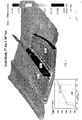
- Heat treatable aluminum alloys such as the 2xxx series aluminum alloys, may be solution heat treated and artificially aged to produce high strength tempers. Strength may be further increased by cold working the product between the solution heat treating and artificial aging steps. However, some wrought product forms may be unable to realize uniform cold work due to the shape of the product. This generally results in high strength differential across the final product. For example, as illustrated in FIG. 1 , a die-forged Al-Li product in the T8 temper may have regions 110 that receive little or no cold work, whereas regions 120 are cold worked. In turn, regions 110 may have a significantly lower strength (e.g., 68.9 MPa (10 ksi) lower) than regions 120.
- a significantly lower strength e.g., 68.9 MPa (10 ksi) lower
- the present disclosure relates to wrought 2xxx aluminum lithium alloy products that achieve a low strength differential across such products, and methods for producing such alloy products.
- the wrought 2xxx aluminum lithium alloy products disclosed herein achieve a low strength differential across the product when they contain the alloying elements described herein, as well as have a certain ratio of copper-to-magnesium.
- the new 2xxx alloys have a composition as defined in claim 1.
- Wrought products incorporating such alloys generally achieve a small strength differential across the product, such as a strength differential of not greater than 55.2 MPa (8 ksi) across the wrought aluminum alloy product.
- These wrought products are generally solution heat treated, cold worked, and artificially aged. Cold work is sometimes known as effective cold work strain (called "effective strain” herein for purposes of simplicity). Due to the cold working, a first portion of the wrought product may realize a first amount of cold work (e.g., a high amount of cold work) and a second portion of the wrought product may realize a second amount of cold work (e.g., a low amount of cold work or even no cold work). The first amount of cold work is generally at least 0.5% higher than the second amount of cold work.
- first portion 120 has a high amount of cold work, having an effective strain as high as about 0.15 (mm/mm) ((in./in)).
- second portion 110 generally have an effective strain as low as 0.0 (mm/mm) ((in./in.)), i.e., no cold work.
- Other product forms may realize other differentials in cold work amounts.
- the strength differential between these first portions and second portions is not greater than 55.2 MPa (8.0 ksi).
- the strength differential between the first and second portions is not greater than 51.7 MPa (7.5 ksi), or not greater than 48.3 MPa (7.0 ksi), or not greater than 44.8 MPa (6.5 ksi), or not greater than 41.4 MPa (6.0 ksi), or not greater than 37.9 MPa (5.5 ksi), or not greater than 34.5 MPa (5.0 ksi), or not greater than 31.0 MPa (4.5 ksi), or not greater than 27.6 MPa (4.0 ksi), or not greater than 24.1 MPa (3.5 ksi), or not greater than 20.7 MPa (3.0 ksi), or not greater than 17.2 MPa (2.5 ksi), or not greater than 13.8 MPa (2.0 ksi), or not greater than 10.3 MPa (1.5 ksi), or not greater than 6.9 MPa (1.0 ksi), or not greater than 3.45 MPa (0.5 ksi), or less. In some embodiments, the strength differential across
- the first portion may be associated with the portion of the wrought product having the highest amount of cold work.
- the second portion may be associated with the portion of the wrought product having the lowest amount of cold work or lowest effective strain (e.g., no strain).
- the strength differential across the entire wrought product may be not greater than 55.2 MPa (8 ksi), or less, such as any of the strength differential values noted above.
- the low strength differential between the first and second portions is generally achieved with short aging times, such as not greater than 64 hours of aging at a temperature of 154°C (310°F), or a substantially equivalent artificial aging temperature and duration.
- short aging times such as not greater than 64 hours of aging at a temperature of 154°C (310°F), or a substantially equivalent artificial aging temperature and duration.
- aging temperatures and/or times may be adjusted based on well known aging principles and/or formulas. Thus, those skilled in the art could increase the aging temperature but decrease the aging time, or vice-versa, or only slightly change only one of these parameters, and still achieve the same result as "not greater than 64 hours of aging at a temperature of 154°C (310°F)".
- the low strength differential is achieved with not greater than 60 hours of artificial aging at a temperature of 154°C (310°F), or a substantially equivalent artificial aging practice. In other embodiments, the low strength differential is achieved with not greater than 55 hours of artificial aging, or not greater than 50 hours of artificial aging, or not greater than 45 hours of artificial aging, or not greater than 40 hours of artificial aging, or not greater than 35 hours of artificial aging, or not greater than 30 hours of artificial aging, or not greater than 25 hours of artificial aging, or even less, at a temperature of 154°C (310°F), or an equivalent artificial aging practice.
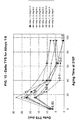
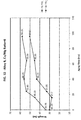
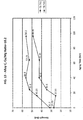
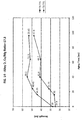
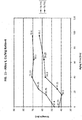
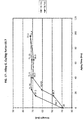
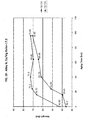
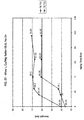
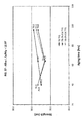
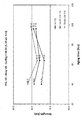
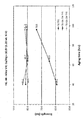
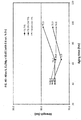
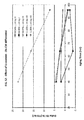
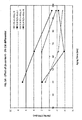
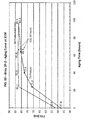
- FIGS. 58-62 illustrate various aging conditions for one new alloy to illustrate some of the aging conditions that fall within the scope of "not greater than 64 hours of aging at a temperature of 154°C (310°F), or an equivalent artificial aging temperature and duration.”
- the composition of this new alloy is provided in Example 5, below.
- FIG. 60 is an aging curve for this new alloy at 154°C (310°F).
- the new alloy realize a strength differential of about 15.86 MPa (2.3 ksi).
- the new alloy also realizes a strength differential of not greater than 55.2 MPa (8 ksi) around 32 hours of aging time.
- any aging times from about 32 hours to not greater than 64 hours at 154°C (310°F) are applicable.
- this alloy achieves about an 52.2 MPa (8 ksi) strength differential after about 345 hours of aging, and a strength differential of about 15.86 MPa (2.3 ksi) in a little less than about 500 hours of aging, as shown in FIG. 58 .
- this alloy achieves about an 55.2 MPa (8 ksi) strength differential after about 120 hours of aging, and would have likely achieved a strength differential of about 15.9 MPa (2.3 ksi) somewhere around 225-250 hours aging, as shown in FIG. 59 .
- this alloy achieves about an 55.2 MPa (8 ksi) strength differential after about 11 hours of aging, and a strength differential of about 15.86 MPa (2.3 ksi) around about 22 hours of aging, as shown in FIG. 61 .
- this alloy achieves about an 55.2 MPa (8 ksi) strength differential after about 3 hours of aging, and a strength differential of about 15.86 MPa (2.3 ksi) around about 8 hours of aging, as shown in FIG. 62 .
- Those skilled in the art will recognize that similar relationships between required aging times and aging temperatures exist for this alloy.
- a new alloy includes at least 3.0 wt. % Cu. In other embodiments, a new alloy includes at least 3.25 wt. % Cu, or at least 3.5 wt. % Cu, or at least 3.75 wt. % Cu. In one embodiment, a new alloy includes not greater than 4.9 wt. % Cu.
- a new alloy may include not greater than 4.8 wt. % Cu, or not greater than 4.7 wt. % Cu, or not greater than 4.6 wt. % Cu, or not greater than 4.5 wt. % Cu.
- a new alloy includes Cu in the range of from 3.0 wt. % to 4.7 wt. %. Other Cu ranges using the above-described limits may be used.
- Magnesium (Mg) is included in the new alloy in the range of from 0.2 wt. % to 0.8 wt. % Mg. As illustrated in the below examples, when magnesium goes below 0.2 wt. % or exceeds 0.8 wt. %, the alloy may not realize a small strength differential across the product and/or may have a low overall strength.
- a new alloy includes at least 0.25 wt. % Mg. In other embodiments, a new alloy may include at least 0.3 wt. % Mg, or at least 0.35 wt. % Mg. In one embodiment, a new alloy includes not greater than 0.70 wt. % Mg.
- a new alloy may include not greater than 0.60 wt. % Mg, or not greater than 0.55 wt. % Mg, or not greater than 0.5 wt. % Mg, or not greater than 0.45 wt. % Mg.
- a new alloy includes Mg in the range of from 0.20 wt. % to 0.50 wt. %. Other Mg ranges using the above-described limits may be used.
- the ratio of copper-to-magnesium may be related to alloy properties. For example, when the Cu/Mg ratio is less than 8.0 or is more than 17, the alloy may not realize a small strength differential across the product and/or may have a low overall strength. In one embodiment, the Cu/Mg ratio of the new alloy is at least 8.5, or at least 9.0. In one embodiment, the Cu/Mg ratio of the new alloy is not greater than 16. In other embodiments, the Cu/Mg ratio of the new alloy is not greater than 15, or not greater than 14.5, or not greater than 14.0, or is not greater than 13.5, or is not greater than 13.0, or is not greater than 12.5, or is not greater than 12.0.
- the Cu/Mg ratio in the range of from 8.0 to 15.0. In another embodiment, the Cu/Mg ratio in the range of from 8.5 to 14.5. In yet another embodiment, the Cu/Mg ratio is in the range of from 9.0 to 12.5. Other Cu/Mg ratio ranges using the above-described limits may be used.
- Lithium (Li) is included in the new alloy in the range of from 0.1 wt. % to 1.05. Lithium helps reduce the density of the product. However, as shown below, alloys that include more than 1.10 wt. % may not realize work insensitive properties.
- a new alloy includes not greater than 1.00 wt. % Li, or not greater than 0.95 wt. % Li, or not greater than 0.9 wt. % Li, or not greater than 0.85 wt. % Li. To achieve lower density, the new alloy generally includes at least 0.1 wt. % Li. In one embodiment, a new alloy includes at least 0.2 wt. % Li.
- a new alloy includes at least 0.3 wt. % Li, or at least 0.4 wt. % Li, or at least 0.5 wt. % Li, or at least 0.55 wt. % Li, or at least 0.60 wt. % Li, or at least 0.65 wt. % Li, or at least 0.7 wt. % Li, or at least 0.75 wt. % Li.
- a new alloy includes Li in the range of from 0.70 wt. % to 0.90 wt. %.
- a new alloy includes Li in the range of from 0.75 wt. % to 0.85 wt. %. Other Li ranges using the above-described limits may be used.
- Silver (Ag) is included in the new alloy, and the new alloys include at least 0.30 wt. % Ag. In one embodiment, a new alloy includes at least 0.35 wt. % Ag. In other embodiments, a new alloy may include at least 0.40 wt. % Ag, or at least 0.45 wt. % Ag. Ag may be included in the alloy up to its solubility limit. However, Ag may be expensive, and thus the new alloy generally includes not greater than 2.0 wt. % Ag. In one embodiment, a new alloy includes not more than 1.5 wt. % Ag. In other embodiments, a new alloy includes not greater than 1.0 wt. % Ag, or not greater than 0.8 wt.
- a new alloy includes Ag in the range of from 0.40 wt. % to 0.60 wt. %. In another embodiment, a new alloy includes Ag in the range of from 0.45 wt. % to 0.55 wt. %. Other Ag ranges using the above-described limits may be used.
- Zinc (Zn) is included in the new alloy, and the new alloys include at least 0.50 wt. % Zn. As illustrated in the below examples, when Zn goes below about 0.40 wt. %, the alloy may not realize a small strength differential across the product and/or may have a low overall strength.
- the alloys include at least 0.50 wt. % Zn to realize lower strength differential properties (e.g., ⁇ 34.5 MPa (5 ksi), ⁇ 20.7 MPa (3 ksi), or ⁇ 6.9 MPa (1 ksi), or less) in shorter aging times (e.g., ⁇ 50 hours of aging).
- a new alloy includes at least 0.55 wt. % Zn.
- a new alloy may include at least 0.6 wt. % Zn, or at least 0.65 wt. % Zn, or at least 0.7 wt. % Zn, or at least 0.75 wt. % Zn. Zn may be included in the alloy up to its solubility limit, however Zn is maintained below 1.5 wt. % to restrict its negative effect on density. In one embodiment, a new alloy includes not greater than 1.4 wt. % Zn. In other embodiments, a new alloy may include not greater than 1.3 wt. % Zn, or not greater than 1.2 wt. % Zn, or not greater than 1.1 wt.% Zn, or not greater than 1.0 wt.
- a new alloy includes Zn in the range of from 0.70 wt. % to 0.90 wt. %. In another embodiment, a new alloy includes Zn in the range of from 0.75 wt. % to 0.85 wt. %. Other Zn ranges using the above-described limits may be applied.
- a new alloy may optionally be included in the new alloy in an amount up to 1.0 wt. %.
- a new alloy includes at least 0.01 wt. % Mn.
- a new alloy includes at least 0.10 wt. % Mn, or at least 0.15 wt. % Mn, or at least 0.2 wt. % Mn, or at least 0.25 wt. % Mn.
- a new alloy includes not greater than 0.8 wt. % Mn.
- a new alloy includes not greater than 0.7 wt. % Mn, or not greater than 0.6 wt. % Mn, or not greater than 0.5 wt.
- a new alloy includes Mn in the range of from 0.20 wt. % to 0.40 wt. %. In another embodiment, a new alloy includes Mn in the range of from 0.25 wt. % to 0.35 wt. %. Other Mn ranges using the above-described limits may be used.
- the new alloys generally include the stated alloying ingredients, the balance being aluminum, optional incidental elements, and impurities.
- Incidental elements are grain structure control elements and casting aids, the casting aids being grain refiners and deoxidizers.
- grain structure control element means elements or compounds that are deliberate alloying additions with the goal of forming second phase particles, usually in the solid state, to control solid state grain structure changes during thermal processes, such as recovery and recrystallization.
- grain structure control elements are Zr, Sc, Cr, V, and Hf, but excludes Mn.
- manganese may be considered both an alloying ingredient and a grain structure control element -- the manganese retained in solid solution may enhance a mechanical property of the alloy (e.g., strength), while the manganese in particulate form (e.g., as Al 6 Mn, Al 12 Mn 3 Si 2 -- sometimes referred to as dispersoids) may assist with grain structure control.
- the manganese in particulate form e.g., as Al 6 Mn, Al 12 Mn 3 Si 2 -- sometimes referred to as dispersoids
- Mn is separately defined with its own composition limits in the present patent application, it is not within the definition of "grain structure control elements" for the purposes of the present patent application.
- the amount of grain structure control material utilized in an alloy is generally dependent on the type of material utilized for grain structure control and/or the alloy production process.
- the grain structure control element is Zr
- the alloy includes from 0.01 wt. % to 0.25 wt. % Zr.
- Zr is included in the alloy in the range of from 0.05 wt. %, or from 0.08 wt.%, to 0.12 wt. %, or to 0.15 wt. %, or to 0.18 wt. %, or to 0.20 wt. % Zr.
- Zr is included in the alloy and in the range of from 0.01 wt. % to 0.20 wt. % Zr.
- Zr is included in the alloy and in the range of from 0.05 wt. % to 0.15 wt. % Zr.
- Other Zr ranges using the above-described limits may be applied.
- Scandium (Sc), chromium (Cr), and/or hafnium (Hf) may be included in the alloy as a substitute (in whole or in part) for Zr, and thus may be included in the alloy in the same amounts as Zr.
- the grain structure control element is at least one of Sc and Hf.
- Sc and Hf may be expensive.
- the new alloys are free of Sc and Hf (i.e., include less than 0.02 wt. % each of Sc and Hf).
- Grain refiners are inoculants or nuclei to seed new grains during solidification of the alloy.
- An example of a grain refiner is a 9.525 mm (3/8 inch) rod comprising 96% aluminum, 3% titanium (Ti) and 1% boron (B), where virtually all boron is present as finely dispersed TiB 2 particles.
- the grain refining rod is fed in-line into the molten alloy flowing into the casting pit at a controlled rate.
- the amount of grain refiner included in the alloy is generally dependent on the type of material utilized for grain refining and the alloy production process.
- grain refiners examples include Ti combined with B (e.g., TiB 2 ) or carbon (TiC), although other grain refiners, such as Al-Ti master alloys may be utilized.
- B e.g., TiB 2
- TiC carbon
- grain refiners are added in an amount of ranging from 0.0003 wt. % to 0.005 wt. % to the alloy, depending on the desired as-cast grain size.
- Ti may be separately added to the alloy in an amount up to 0.03 wt. % to increase the effectiveness of grain refiner. When Ti is included in the alloy, it is present in an amount of from 0.01 wt. %, or from 0.03 wt. %, to 0.10 wt. %, or to 0.15 wt. %.
- the aluminum alloy includes a grain refiner, and the grain refiner is at least one of TiB 2 and TiC, where the wt. % of Ti in the alloy is from 0.01 wt. % to 0.1 wt. %.
- Deoxidizers include Ca, Sr, and Be.
- Ca calcium
- Sr calcium
- Be calcium
- Ca is included in the alloy in an amount of 0.001 - 0.03 wt% or 0.05 wt. %, such as 0.001-0.008 wt. % (or 10 to 80 ppm).
- Strontium (Sr) may be included in the alloy as a substitute for Ca (in whole or in part), and thus may be included in the alloy in the same amounts as Ca.
- beryllium (Be) additions have helped to reduce the tendency of ingot cracking, though for environmental, health and safety reasons, some embodiments of the alloy are substantially Be-free. When Be is included in the alloy, it is generally present in an amount of up to 20 ppm.
- impurities are those materials that may be present in the new alloy in minor amounts due to, for example, the inherent properties of aluminum and/or leaching from contact with manufacturing equipment, among others.
- Iron (Fe) and silicon (Si) are examples of impurities generally present in aluminum alloys.
- the Fe content of the new alloy should generally not exceed 0.25 wt. %. In some embodiments, the Fe content of the alloy is not greater than 0.15 wt. %, or not greater than 0.10 wt. %, or not greater than 0.08 wt. %, or not greater than 0.05 or 0.04 wt. %.
- the Si content of the new alloy should generally not exceed 0.25 wt. %, and is generally less than the Fe content.
- the Si content of the alloy is not greater than 0.12 wt. %, or not greater than 0.10 wt. %, or not greater than 0.06 wt. %, or not greater than 0.03 or 0.02 wt. %.
- the new alloy may be substantially free of impurities other than Fe and Si, meaning that the alloy contains no more than 0.25 wt. % of any other element, except the alloying elements, optional incidental elements, and Fe and Si impurities described above. Further, the total combined amount of these other elements in the alloy does not exceed 0.5 wt. %. The presence of other elements beyond these amounts may affect the basic and novel properties of the alloy, such as its strength, toughness, and/or cold work sensitivity, to name a few. In one embodiment, each one of these other elements, individually, does not exceed 0.10 wt. % in the alloy, and the total combined amount of these other elements does not exceed 0.35 wt. %, or 0.25 wt. % in the alloy.
- each one of these other elements does not exceed 0.05 wt. % in the alloy, and the total combined amount of these other elements does not exceed 0.15 wt. % in the alloy. In another embodiment, each one of these other elements, individually, does not exceed 0.03 wt. % in the alloy, and the total combined amount of these other elements does not exceed 0.1 wt. % in the alloy.
- a product achieves a typical longitudinal tensile yield strength (TYS - 0.2% offset) of at least about 414 MPa (60 ksi) when tested in accordance with ASTM E8 and B557.
- a product achieves a typical TYS at least 427.5 MPa (62 ksi), or at least 441.3 MPa (64 ksi), or at least 455.1 MPa (66 ksi), or at least 468.8 MPa (68 ksi), or at least 482,6 MPa (70 ksi), or at least 496.4 MPa (72 ksi), or at least 510.2 MPa (74 ksi), or at least 524.0 MPa (76 ksi), or at least 537.8 MPa (78 ksi), or at least 551.6 MPa (80 ksi), or at least 565.4 MPa (82 ksi), or more.
- the alloy products may also be corrosion resistant, tough, and/or have a high fatigue resistance, among other properties.
- a wrought product may achieve a K IC (plane strain) fracture toughness of at least 22 MPa ⁇ in (20 ksi ⁇ in). in the long-transverse (L-T) direction, when tested in accordance with ASTM E399.
- a wrought product may achieve a K IC fracture toughness of at least 23.1 MPa ⁇ in (21 ksi ⁇ in.), or at least 24.2 MPa ⁇ in (22 ksi ⁇ in.), or at least 25.3 MPa ⁇ in (23 ksi ⁇ in.), or at least 26.4 MPa ⁇ in (24 ksi ⁇ in.), or at least 27.5 MPa ⁇ in (25 ksi ⁇ in.), or at least 28.6 MPa ⁇ in (26 ksi ⁇ in.), or at least 29.7 MPa ⁇ in (27 ksi ⁇ in.), or at least 30.8 MPa ⁇ in (28 ksi ⁇ in.), or at least 31.9 MPa ⁇ in (29 ksi ⁇ in.), or at least 33 MPa ⁇ in (30 ksi ⁇ in.), or at least 34.1 MPa ⁇ in (31 ksi ⁇ in.), or at least 35.2 MPa ⁇ in (32 ksi ⁇ in.), or at least 36.3 MPa
- a wrought product may achieve a fracture toughness that is at least 3% higher in the T8 temper relative to a comparable product in the T6 temper. In other embodiments, a wrought product may achieve a fracture toughness that is at least 4% higher, or at least 6% higher, or at least 8% higher, or at least 10% higher, or at least 15% higher, or at least 20% higher, or at least 25% higher, or at least 30% higher, or at least 35% higher, or at least 40% higher, or more, in the T8 temper relative to a comparable product in the T6 temper.
- the new alloys may be used in all wrought product forms, but are especially applicable to wrought product forms that realize cold work differential across the product due to differing parts of the product being cold worked differing amounts, resulting in variable effective strain across the product.
- An example of a prior art product having variable effective strain is shown in FIG. 1 .
- Some wrought products that can realize variable cold work include, among others, forgings, stepped-extruded and stretch-formed type products.
- Forged products are generally die forged or hand forged products. Some forged products may have a first portion that receives a first amount of cold work, and a second portion that receives a second, different amount of cold work.
- 2xxx aluminum lithium forged products may realize high strength differential across the product strength due to the difference in cold work between the first and second portions of the product.
- such 2xxx aluminum lithium forged products may realize a small strength differential across the product (i.e., are work insensitive), as described above.
- Stepped-extruded products are those extruded products that have a change in profile along their length. These stepped-extruded products generally have a first portion having a first cross-sectional area that receives a first amount of cold work, and a second portion having a second cross-sectional portion that receives a second amount of cold work (e.g., no cold work).
- a second amount of cold work e.g., no cold work.
- previous 2xxx aluminum lithium stepped-extruded products may realize a high strength differential due to the difference in cold work between the first and second portions of the product.
- such 2xxx aluminum lithium stepped-extruded products may realize a small strength differential across the product, as described above.
- Stretch-formed products are products where a part (typically a sheet or extrusion) is pulled over a die to impart a permanent deformation.
- the die is designed such that a desired shape is achieved.
- Some stretch-formed products may have a first portion that receives a first amount of cold work, and a second portion that receives a second, different amount of cold work.
- 2xxx aluminum lithium stretch-formed products may realize a high strength differential due to the difference in cold work between the first and second portions of the product.
- such stretch-formed products may realize a small strength differential across the product (i.e., are work insensitive), as described above.
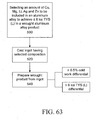
- the new alloy can be prepared into wrought form, and in the appropriate temper, by more or less conventional practices, some examples of which are illustrated in FIGS. 63-65 .
- a first step one selects an amount of Cu, Mg, Li, Ag and Zn to be included in a wrought aluminum alloy product having a variable amount of cold work to achieve no more than an 55.2 MPa (8 ksi) longitudinal strength differential across the wrought aluminum alloy product (500).
- the amounts of Cu, Mg, Li, Ag an Zn are selected from the ranges described above.
- the resulting 2xxx+Li wrought product will generally achieve no more than an 55.2 MPa (8 ksi) longitudinal strength differential across the wrought aluminum alloy product.
- a casting step is completed (520), where an ingot is cast having the selected composition, the balance being aluminum and impurities.
- a wrought aluminum alloy product is prepared (540).
- the wrought aluminum alloy product may realize at least 0.5% differential in cold work, but no more than an 55.2 MPa (8 ksi) longitudinal strength differential across the wrought product.
- the ingots are further processed by hot working the ingot into an intermediate alloy product (545), followed by optional pre-SHT cold work (550).
- the intermediate product are then solution heat treated (SHT) and quenched (555).
- SHT solution heat treated
- 555 quenched
- the intermediate product is post-SHT cold worked (560) into a substantially final form representative of the wrought aluminum alloy product.
- the entire product is artificially aged (565) (e.g., in a large furnace) such as at a temperature of 154°C (310°F) for no more than 64 hours, or substantially equivalent artificial aging practice.
- Artificial aging temperatures for Al-Li alloys may range from 66°C (150°F) to 177°C (350°F), or possibly higher, with the time being adjusted to achieve the work insensitive properties disclosed herein at the substantial equivalent of a temperature of 154°C (310°F) for no more than 64 hours.
- Artificial aging may occur in one or more steps, at one or more temperatures, and for one or more time periods.
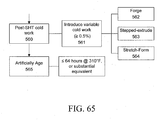
- this step may introduce a variable amount of cold work (561) into the product (e.g., at least 0.5%), as illustrated in FIG. 65 .
- the post-SHT cold working generally comprises stretching and/or compression, such as in the form of forging (562), stepped-extruding (563) and/or stretch-forming (564) operations.
- the post-SHT cold working could include rolling.
- a wrought product has a first portion having a first amount of cold work that is at least 1.0 % higher than a second portion having a second amount of cold work.
- the first amount of cold work is at least 2.0% higher, or at least 3.0% higher, or at least 4.0% higher, or at least 5.0% higher, or at least 6.0% higher, or at least 7.0% higher, or at least 8.0% higher, or at least 9.0% higher, or at least 10.0% higher, or more, than the second portion having the second amount of cold work.
- alloys described herein may find use in applications having generally uniform post-SHT cold work or no post-SHT cold work.
- examples of such products include forged wheels and landing gear components, as well as rolled products, such as sheet, plate and conventional extrusions.
- “Wrought aluminum alloy product” means an aluminum alloy product that is hot worked after casting, and includes rolled products, such as sheet and plate, forged products, extruded products, stepped-extruded products, and stretch-formed products, among others.
- Formged aluminum alloy product means a wrought aluminum alloy product that is either die forged or hand forged.
- Solution heat treating means exposure of an aluminum alloy to elevated temperature for the purpose of placing solute(s) into solid solution.
- Cold working means working the aluminum alloy product at temperatures that are not considered hot working temperatures, generally below 121°C (250°F).
- “Artificially aging” means exposure of an aluminum alloy to elevated temperature for the purpose of precipitating solute(s). Artificial aging may occur in one or a plurality of steps, which can include varying temperatures and/or exposure times.
- a strength differential of not greater than about XX MPa (ksi) across the wrought aluminum alloy product means that the longitudinal tensile yield strength of a representative first portion of the wrought aluminum alloy product is not more than about XX MPa (ksi) higher than the longitudinal tensile yield strength of a representative second portion of the wrought aluminum alloy product, where the difference in cold work between the first and second portions is at least 0.5%.
- Representative portions of the wrought aluminum alloy product exclude surfaces that are later removed (e.g., by machining) or surface recrystallization layers, among others, as known to those skilled in the art. Non-representative portions of the wrought aluminum alloy product are not included in the determination of the 55.2 MPa (8 ksi) strength differential.
- the longitudinal direction means the direction associated with the main grain flow direction developed during the hot working of the wrought aluminum alloy product.
- a wrought product generally has a main grain flow direction in the predominate direction of hot working.
- a rolled product generally has a main grain flow direction in the direction of rolling
- an extruded product generally has a main grain flow direction in the direction of extruding.
- % Ag about 0.01 - 0.03 wt. % Ti, about 0.11 - 0.14 wt. % Zr, 0 - 0.11 wt. % V, less than about 0.04 wt. % Si, and less than about 0.06 wt. % Fe, the balance being aluminum and impurities (e.g., ⁇ 0.05 wt. % of any other element, and ⁇ 0.15 wt. % total of all other elements).
- impurities e.g., ⁇ 0.05 wt. % of any other element, and ⁇ 0.15 wt. % total of all other elements.
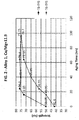
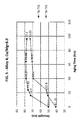
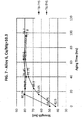
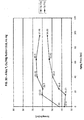
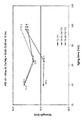
- the alloys are homogenized, reheated, hot rolled to 0.2" gauge, solution heat treated, and quenched. Each sheet is then cut in half, with one piece of each sheet remaining in the as-quenched condition, while the other half of each sheet is stretched (about 3%). All sheets are then artificially aged, after which the as-quenched sheets are in the T6 temper, and the stretched sheets are in the T8 temper. For all sheets and in both tempers, longitudinal blanks are produced. After at least 4 days of natural aging, the blanks are artificially aged at 154°C (310°F) for about 16, 24, 40, 64, and 96 hours. Tensile testing for each alloy in the T6 and T8 condition is conducted in accordance with ASTM B557. Aging curves for each alloy in the T6 and T8 condition are illustrated in FIGS. 2-9 . The difference between the strength in the T8 and T6 tempers is representative of the strength differential across a product.
- the T8 temper is a product that is solution heat-treated, cold worked, and then artificially aged, and applies to products that are cold worked to improve strength, or in which the effect of cold work in flattening or straightening is recognized in mechanical property limits.
- the T8 temper was a product that included about 3% cold work in the form of stretch.
- many variations of the T8 temper exist, and that the present application applies to all such variations of the T8 temper.
- the T6 temper is a product that is solution heat-treated and then artificially aged, and applies to products that are not cold worked after solution heat-treatment, or in which the effect of cold work in flattening or straightening may not be recognized in mechanical property limits.
- the T6 temper was a product that was not cold worked.
- alloy 6 achieves a small difference ( ⁇ 55.2 MPa (8 ksi)) in longitudinal tensile yield strength (TYS - 0.2% offset) in not greater than about 40 hours of aging. After 40 hours of aging, the difference in strength between the T8 and T6 tempers for alloy 6 is only about 18.6 MPa (2.7 ksi), which is much lower than the other alloys, as provided in Table 2, below. This may be due to the Cu/Mg ratio in combination with the amount of Zn in the alloy.
- Alloy 6 has a Cu/Mg ratio of about 10.3 and includes about 0.8 wt. % Zn.
- Alloy 8 which has about the same amount of Li and Zn as alloy 6 and has a Cu/Mg ratio of about 6, does not achieve a small strength differential even with 96 hours of aging.
- Alloy U is similar to Alloy 6 of Example 1. After casting, all alloys were processed similar to Example 1 to test the strength difference between the T6 and T8 tempers. Those results are illustrated in FIGS. 11-36 .
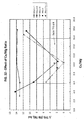
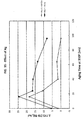
- alloys G, I, J and U achieve a small difference ( ⁇ 55.2 MPa (8 ksi)) in longitudinal tensile yield strength (TYS) in not greater than about 40 hours of aging, achieving a difference in strength between the T8 and T6 tempers of only about 11.72 MPa (1.7 ksi), 36.20 MPa (5.25), 0 MPa (ksi), and 13.11 MPa (1.9 ksi), respectively. All of these alloys have a Cu/Mg ratio of from 6.1 to 11. All of these alloys also contain at least 3.0 wt. % Cu, at least 0.3 wt. % Mg, 0.8 wt.
- alloys I, J and U both having a TYS of at least 551.6 MPa (80 ksi), and alloy G having a TYS of 496.4 MPa (72 ksi).
- Alloys that do not have a Cu/Mg ratio of at least 6.1 may not achieve a small strength differential. This is illustrated by Alloys A, B, E, F, and Q, particularly Alloy F, as well as FIGS. 11-12 , 15-16 , 27 and 32 .
- Alloy F contains similar amounts of alloying ingredients as Alloy G, except it contains about 0.54 wt. % Mg, giving it a Cu/Mg ratio of about 6.1. Alloy F does not achieve a small strength differential in not greater than about 40 hours of aging, but does achieve a small strength differential in not greater than about 64 hours of aging, having a strength differential of about 47.57 MPa (6.9 ksi).
- Alloys that have a Cu/Mg ratio of more than about 15 may not achieve a small strength differential and/or may not have high strength. This is illustrated by Alloys D, H, K, O, R, and S, particularly Alloys H and K, as well as FIGS. 14 , 18 , 21 , 25 , 28 , 29 and 32 .
- Alloy H contains similar amounts of alloying ingredients as alloy G, except it contains about 0.21 wt. % Mg, giving it a Cu/Mg ratio of about 17.2. Alloy H does not achieve a small strength differential between the T8 and T6 tempers in not greater than about 40 hours of artificial aging, having about a 69 MPa (10 ksi) strength differential.
- Alloy H does achieve a small strength differential (about 37.23 MPa (5.4 ksi)) in not greater than about 64 hours of aging, but has a lower strength than similar alloys that have a Cu/Mg ratio of not greater than about 15.
- Alloy K contains similar amounts of alloying ingredients as Alloy J, except it contains about 0.25 wt. % Mg, giving it a Cu/Mg ratio of about 16.9. Alloy K does not achieve a small strength differential between the T8 and T6 tempers in not greater than about 40 or 64 hours of artificial aging, having about a 82.8 MPa (12 ksi) and 8.5 strength differential, respectively.
- Alloy H does achieve a small strength differential (about 37.23 MPa (5.4 ksi)) in not greater than 64 hours of aging.
- alloys similar to Alloy H may be beneficial in some circumstances, despite their potentially lower overall strength.
- alloys having a Cu/Mg ratio as high as 16 or 17 may be useful.
- Alloys that do not contain sufficient amounts of Cu and/or Mg may not achieve good strength properties. This is illustrated by Alloys A-D, and F, particularly Alloys C and F, as well as FIGS. 11-14 , 16 and 32 .
- Alloy C which has a Cu/Mg ratio of about 10.22, but only contains about 2.35 wt. % Cu and 0.23 wt. % Mg, has low strength (less than about 393.0 MPa (57 ksi)).
- Alloy C also does not achieve a small strength differential between the T8 and T6 tempers in not greater than about 40 or 64 hours of artificial aging, having about a 96.5 MPa (14 ksi) and about a 75.8 MPa (11 ksi) strength differential, respectively.
- Alloy F has a similar Cu/Mg ratio as Alloy I, but contains less Cu and Mg. Alloy F takes longer to achieve a small strength differential and with lower strength relative to Alloy I.
- Alloys that do not contain a sufficient amount of Zn may not achieve good strength properties. This is illustrated by Alloys L-O, particularly Alloys L and M, as well as FIGS. 22-25 and 34 . Alloys L and M have similar alloying ingredients as Alloy G, but Alloy L has no Zn and Alloy M has 0.31 wt. % Zn. Alloy L does not does not achieve a small strength differential between the T8 and T6 tempers in not greater than about 40 hours of artificial aging, having about an 59.64 MPa (8.65 ksi) strength differential, but does realize a small strength differential in not greater than about 64 hours of aging, achieving about a 48.3 MPa (7 ksi) strength differential.
- alloy L has lower strength than similar alloys containing Zn.
- Alloy M containing about 0.3 wt. % Zn, achieves a small strength differential (about 4.48 MPa (0.65 ksi)) in not greater than about 64 hours of aging, and achieves about an 58.26 MPa (8.45 ksi) strength differential in not greater than about 40 hours of aging.
- This data indicates that smaller amounts of Zn (e.g., as low as 0.1 wt. %) may be used to achieve a small strength differential if longer aging periods are to be used.
- the new alloys should generally include at least 0.50 wt. % Zn to consistently achieve good strength differential properties, as shown in other examples, below.
- Alloys that do not contain a sufficient amount of Ag may not achieve good strength properties. This is illustrated by Alloy T and FIGS. 30 and 35 .
- Alloy T contains alloying ingredients similar to Alloy G, but has no Ag.
- Alloy T does not achieve a small strength differential between the T8 and T6 tempers in not greater than about 40 or 64 hours of artificial aging, having about a 103 MPa (15 ksi) and about a 93.42 MPa (13.55 ksi) strength differential, respectively.
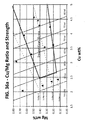
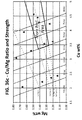
- FIGS. 36a-36c are prepared.
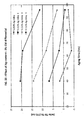
- copper levels of from 2.75 to 5 wt. % and magnesium levels of 0.2 to 0.8 wt. % are expected to produce wrought aluminum alloy products (e.g., forged stepped-extruded, or stretch-formed) that realize a small strength differential (e.g., ⁇ 55.2 MPa (8 ksi)) across such products, and with a typical longitudinal yield strength of at least 414 MPa (60 ksi), so long as the copper-to-magnesium ratio is in the range of from 6.1 to 17.
- FIGS. 36b and 36c provide preferred and more preferred Cu:Mg ratios and minimum strength levels, respectively.
- Such wrought products should include Li, Ag, Zn, and may optionally include Mn, as described above.
- Cu, Mg, Ag, Mn, and/or Zn, as well as the optional incidental elements, may be added to the alloy in an amount up to their solubility limit, so long as the strength differential properties described herein, or other desired properties, are not detrimentally affected.
- the amount of impurities should be restricted, as provided above.
- all of these alloys also contained about 0.2 - 0.3 wt. % Mn, about 0.5 wt. % Ag, about 0.8 wt. % Li, about 0.8 wt. % Zn, about 0.01 - 0.03 wt. % Ti, about 0.11 - 0.14 wt. % Zr, less than about 0.04 wt. % Si, and less than about 0.06 wt. % Fe, the balance being aluminum and impurities (e.g., ⁇ 0.05 wt. % of any other element, and ⁇ 0.15 wt. % total of all other element).
- impurities e.g., ⁇ 0.05 wt. % of any other element, and ⁇ 0.15 wt. % total of all other element.
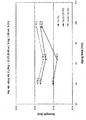
- Example 2 After casting, all alloys were processed similar to Example 1 to test the strength difference between the T6 and T8 tempers, except, unlike Example 1, the T8 products were produced with both 3% and 6% cold work for each alloy. The mechanical properties are tested, and results are illustrated in FIGS. 37-55 .
- the new alloys should include at least 0.30 wt.% Ag to facilitate good strength differential properties.
- Alloys I-II with 0.50 wt. % and 0.41 wt. % Ag are able to achieve a small (good) strength differential.
- Alloy IV with 0.12 wt. % Ag is not able to achieve a small strength differential.
- Alloy III with 0.31 wt. % Ag achieves a low strength differential after 64 hours of aging relative to the 3% CW product, but not relative to the 6% CW product.
- the alloys should include at least 0.30 wt. % Ag, and, in some cases, at least 0.35 wt. % Ag, or more, to achieve good strength differential properties.
- a range targeted around 0.5 wt. % Ag may be useful (e.g., 0.40 to 0.60 wt. % Ag).
- the new alloys should include no more than 1.10 wt. % Li to facilitate low strength differential properties.
- Alloys I and V-VI all contain less than 1.10 wt. % Li, and achieve low strength differential properties.
- Alloy VIII contains 1.20 wt. % Li, but does achieve low strength differential properties, and, in fact, achieves remarkably poor strength differential properties.
- Alloy V contains 0.54% Li, and achieves low strength differential properties.
- the new alloys should include at least 0.4 wt.% Zn, and preferably at least 0.50 wt. % Zn to facilitate low strength differential properties.
- Alloy XI having 0.39 wt. % Zn achieves low strength differential properties, but not nearly as good as Alloys I, IX, and X, which have 0.6 wt. %, 0.8 wt. % and 1.0 wt.% Zn.
- all of these alloys also contained about 0.2 - 0.3 wt. % Mn, about 0.01 - 0.03 wt. % Ti, about 0.11 - 0.14 wt. % Zr, less than about 0.04 wt. % Si, and less than about 0.06 wt. % Fe, the balance being aluminum and impurities (e.g., ⁇ 0.05 wt. % of any other element, and ⁇ 0.15 wt. % total of all other element).
- impurities e.g., ⁇ 0.05 wt. % of any other element, and ⁇ 0.15 wt. % total of all other element.
- Example 2 After casting, all alloys were processed similar to Example 1 to test the strength difference between the T6 and T8 tempers, except, unlike Example 1, the T8 products were produced with 1.5% cold work for each alloy, and by a two-step artificial aging practice, with the second step occurring at 160°C (320°F).
- the mechanical properties are tested, and results are illustrated in FIG. 56 .
- the data at 0 hours of aging is in the as quenched and stretched condition.
- the remaining data is all related to the second step of artificial aging at 160°C (320°F).
- the results for Alloy AA indicates that higher amounts of Zn may be required when the alloy include lithium near the upper limit of 1.10 wt. % Li. Even though Alloy AA was aged at a higher temperature than the previous examples, it took the alloy a longer equivalent period to reach an 55.2 MPa (8 ksi) strength differential.
- Alloy BB and CC show that Ag should be maintained above 0.3 wt. %, and preferably above 0.35 or 0.4 wt. %, to achieve good strength differential properties.
- All of these alloys also contained about 0.3 wt. % Mn, about 0.5 wt. % Ag, about 0.8 wt. % Li, about 0.8 wt. % Zn, about 0.03 wt. % Ti, about 0.12 wt. % Zr, less than about 0.04 wt. % Si, and less than about 0.06 wt. % Fe, the balance being aluminum and impurities (e.g., ⁇ 0.05 wt. % of any other element, and ⁇ 0.15 wt. % total of all other element).
- impurities e.g., ⁇ 0.05 wt. % of any other element, and ⁇ 0.15 wt. % total of all other element.
- the mechanical properties are tested in the T6 and T8 tempers, the T8 temper having about 6% cold work, the results of which are illustrated in FIGS. 57 and 60 .
- the forgings achieve low strength differential properties.
- Alloy DF-1 achieves a strength differential of less than 20.7 MPa (3 ksi) in only 40 hours of aging.
- Alloy DF-2 achieves a strength differential of less than 13.8 MPa (2 ksi) in only 40 hours of aging, with the T6 and T8 products achieving substantially equivalent strength sometime between 40 and 64 hours of aging.
- the results indicate that forgings having larger amounts of cold work differential could be produced and with low or negligible strength differential.
Landscapes
- Chemical & Material Sciences (AREA)
- Mechanical Engineering (AREA)
- Engineering & Computer Science (AREA)
- Materials Engineering (AREA)
- Thermal Sciences (AREA)
- Crystallography & Structural Chemistry (AREA)
- Physics & Mathematics (AREA)
- Metallurgy (AREA)
- Organic Chemistry (AREA)
- Retarders (AREA)
- Materials For Medical Uses (AREA)
- Forging (AREA)
- Cell Electrode Carriers And Collectors (AREA)
Claims (14)
- Aluminiumknetlegierungsprodukt bestehend aus:von 2,75 Gew.- % bis 5,0 Gew.- % Cu;von 0,2 Gew.- % bis 0,8 Gew.- % Mg;wobei das Verhältnis von Kupfer zu Magnesium (Cu/Mg) in der Aluminiumlegierung im Bereich von 8,0 bis 17 liegt;von 0,1 Gew.- % bis 1,05 Gew.- % Li;von 0,30 Gew.- % bis 2,0 Gew.- % Ag;von 0,50 Gew.- % bis 1,5 Gew.- % Zn;bis 1,0 Gew.- % Mn;optional von 0,01 Gew.-% bis 0,15 Gew.-% Ti, wobei Ti als Kornfeinungsmittel in Kombination mit B oder C in einer Menge vorhanden sein kann, die von 0,0003 Gew.-% bis 0,005 Gew.-% reicht;optionale Kornstruktur-Steuerelemente von 0,01 Gew.-% bis 0,25 Gew.-%, wobei die Kornstruktur-Steuerelemente eines oder mehrere Elemente der Gruppe von Zr, Sc, Cr, V und Hf beinhalten;
undoptionale Deoxidationsmittel aus der Gruppe von Ca, Sr und Be, wobei, wenn Ca enthalten ist, es in einer Menge von 0,001 bis 0,05 Gew.-% vorhanden sein kann, wobei Sr in einer Menge von 0,001 bis 0,05 Gew.-% als ein Ersatz ganz oder teilweise für Ca enthalten sein kann, und wobei Be in einer Menge von bis zu 20 ppm vorhanden sein kann;wobei der Rest Aluminium und Verunreinigungen sind. - Aluminiumknetlegierungsprodukt nach Anspruch 1, umfassend mindestens 0,35 Gew.- % Ag.
- Aluminiumknetlegierungsprodukt nach Anspruch 2, umfassend mindestens 0,70 Gew.- % Zn.
- Aluminiumknetlegierungsprodukt nach Anspruch 3, umfassend mindestens 0,40 Gew.- % Ag.
- Aluminiumknetlegierungsprodukt nach Anspruch 1, umfassend nicht mehr als 1,00 Gew.- % Li.
- Aluminiumknetlegierungsprodukt nach Anspruch 1, wobei das Aluminiumknetlegierungsprodukt durch einen Prozess hergestellt wird, der Folgendes umfasst:(a) Gießen eines Blocks mit der Zusammensetzung nach Anspruch 1;(b) Warmbearbeitung des Blocks in ein Legierungszwischenprodukt, optional gefolgt von Kaltbearbeitung vor dem Lösungsglühen;(c) nach dem Warmbearbeitungsschritt (b), Lösungsglühen (Solution Heating Treatment, SHT) und Abschrecken des Legierungszwischenprodukts;(d) nach dem Lösungsglühschritt (c), Kaltbearbeitung nach dem Lösungsglühen des Aluminiumlegierungszwischenprodukts in eine im Wesentlichen endgültige Form, die das Aluminiumknetlegierungsprodukt darstellt;
(I) wobei der Kaltbearbeitungsschritt nach dem Lösungsglühen (d) dazu führt, dass ein erster Abschnitt des Aluminiumknetlegierungsprodukts einen ersten Umfang der Kaltbearbeitung aufweist und ein zweiter Abschnitt des Aluminiumknetlegierungsprodukts einen zweiten Umfang der Kaltbearbeitung aufweist, wobei der Unterschied zwischen dem ersten Umfang der Kaltbearbeitung und dem zweiten Umfang der Kaltbearbeitung mindestens 0,5 % beträgt;(e) künstliche Alterung des Aluminiumknetlegierungsprodukts für nicht mehr als 64 Stunden bei einer Temperatur von 154,4 °C (310 °F) oder eine im Wesentlichen gleichwertige künstliche Alterungspraxis;wobei der erste Abschnitt und der zweite Abschnitt einen Stärkeunterschied von weniger als 55,2 MPa (8 ksi) realisieren. - Aluminiumknetlegierungsprodukt nach Anspruch 6, wobei der Unterschied zwischen dem ersten Umfang der Kaltbearbeitung und dem zweiten Umfang der Kaltbearbeitung mindestens 2,0 % beträgt.
- Aluminiumknetlegierungsprodukt nach Anspruch 7, wobei der Kaltbearbeitungsschritt nach dem Lösungsglühen (d) dazu führt, dass der zweite Abschnitt im Wesentlichen keine Kaltbearbeitung empfängt und der erste Abschnitt mindestens 2 % Kaltbearbeitung empfängt.
- Aluminiumknetlegierungsprodukt nach Anspruch 7, wobei der Stärkeunterschied zwischen dem ersten Abschnitt und dem zweiten Abschnitt nicht größer ist als 34,5 MPa (5 ksi).
- Aluminiumknetlegierungsprodukt nach Anspruch 7, wobei der Stärkeunterschied zwischen dem ersten Abschnitt und dem zweiten Abschnitt nicht größer ist als 20,7 MPa (3 ksi).
- Aluminiumknetlegierungsprodukt nach Anspruch 10, wobei der Unterschied zwischen dem ersten Umfang der Kaltbearbeitung und dem zweiten Umfang der Kaltbearbeitung mindestens 3,0 % beträgt.
- Aluminiumknetlegierungsprodukt nach Anspruch 6, wobei der Stärkeunterschied über die Gesamtheit des Knetprodukts nicht größer ist als 55,2 MPa (8 ksi).
- Verfahren, umfassend:(a) Auswählen einer Menge von Cu, Mg, Li, Ag und Zn, die in ein Aluminiumknetlegierungsprodukt einbezogen werden soll, das einen variablen Umfang von Kaltbearbeitung aufweist, um nicht mehr als 8 ksi Längsstärkeunterschied über das Aluminiumknetlegierungsprodukt zu erreichen, das den variablen Umfang der Kaltbearbeitung aufweist, wobei die Mengen von Cu, Mg, Li, Ag und Zn aus den folgenden Bereichen ausgewählt werden:von 2,75 Gew.- % bis 5,0 Gew.- % Cu;von 0,2 Gew.- % bis 0,8 Gew.- % Mg;
wobei das Verhältnis von Kupfer zu Magnesium (Cu/Mg) in der Aluminiumlegierung im Bereich von 8,0 bis 17 liegt;von 0,1 Gew.- % bis 1,05 Gew.- % Li,von 0,3 Gew.- % bis 2,0 Gew.- % Ag;von 0,50 Gew.- % bis 1,5 Gew.- % Zn;optional bis zu 1,0 Gew.- % Mn; und(b) Gießen eines Blocks mit der ausgewählten Zusammensetzung, wobei der Rest Aluminium ist, optional von 0,01 Gew.-% bis 0,15 Gew.-% Ti, wobei Ti als Kornfeinungsmittel in Kombination mit B oder C in einer Menge vorhanden sein kann, die von 0,0003 Gew.-% bis 0,005 Gew.-% reicht, optional von 0,01 bis 0,25 Gew.- % Kornstruktur-Steuerelemente, wobei die Kornstruktur-Steuerelemente eines oder mehrere Elemente der Gruppe von Zr, Sc, Cr, V und Hf von 0,01 Gew.-% bis 0,25 Gew.-% beinhalten, optional Deoxidationsmittel aus der Gruppe von Ca, Sr und Be, wobei, wenn Ca enthalten ist, es in einer Menge von 0,001 bis 0,05 Gew.-% vorhanden sein kann, wobei Sr in einer Menge von 0,001 bis 0,05 Gew.-% als ein Ersatz ganz oder teilweise für Ca enthalten sein kann, und wobei Be in einer Menge von bis zu 20 ppm vorhanden sein kann; und Unreinheiten; und(c) Vorbereiten des Aluminiumknetlegierungsprodukts aus dem Block, wobei, nach dem Vorbereiten, das Aluminiumknetlegierungsprodukt mindestens 0,5 % Unterschied bei der Kaltbearbeitung und nicht mehr als 8 ksi Längsstärkeunterschied über das gesamte Knetprodukt realisiertwobei der Vorbereitungsschritt Folgendes umfasst:(a) Warmbearbeitung des Blocks in ein Legierungszwischenprodukt, optional gefolgt von Kaltbearbeitung vor dem Lösungsglühen;(b) nach dem Warmbearbeitungsschritt (a), Lösungsglühen und Abschrecken des Legierungszwischenprodukts;(c) nach dem Lösungsglühschritt (b), Kaltbearbeitung nach dem Lösungsglühen des Aluminiumlegierungszwischenprodukts in eine im Wesentlichen endgültige Form, die das Aluminiumknetlegierungsprodukt darstellt, wobei die Kaltbearbeitung nach dem Lösungsglühen den variablen Umfang der Kaltbearbeitung einführt; und(d) künstliche Alterung des Aluminiumknetlegierungsprodukts;wobei das Aluminiumknetlegierungsprodukt mindestens 0,5 % Unterschied bei der Kaltbearbeitung und nicht mehr als 55,2 MPa (8 ksi) Längsstärkeunterschied über das gesamte Knetprodukt realisiert. - Verfahren nach Anspruch 13, wobei das Aluminiumknetlegierungsprodukt für nicht mehr als 64 Stunden bei einer Temperatur von 154,4 °C (310 °F) oder eine im Wesentlichen gleichwertige künstliche Alterungspraxis künstlich gealtert wird.
Priority Applications (1)
| Application Number | Priority Date | Filing Date | Title |
|---|---|---|---|
| EP18180757.9A EP3404123A1 (de) | 2010-04-12 | 2011-04-11 | Aluminium-lithium-legierungen der serie 2xxx mit geringem stärkeunterschied |
Applications Claiming Priority (2)
| Application Number | Priority Date | Filing Date | Title |
|---|---|---|---|
| US32322410P | 2010-04-12 | 2010-04-12 | |
| PCT/US2011/031975 WO2011130180A1 (en) | 2010-04-12 | 2011-04-11 | 2xxx series aluminum lithium alloys having low strength differential |
Related Child Applications (1)
| Application Number | Title | Priority Date | Filing Date |
|---|---|---|---|
| EP18180757.9A Division EP3404123A1 (de) | 2010-04-12 | 2011-04-11 | Aluminium-lithium-legierungen der serie 2xxx mit geringem stärkeunterschied |
Publications (3)
| Publication Number | Publication Date |
|---|---|
| EP2558564A1 EP2558564A1 (de) | 2013-02-20 |
| EP2558564A4 EP2558564A4 (de) | 2015-07-15 |
| EP2558564B1 true EP2558564B1 (de) | 2018-07-18 |
Family
ID=44760065
Family Applications (2)
| Application Number | Title | Priority Date | Filing Date |
|---|---|---|---|
| EP11769383.8A Active EP2558564B1 (de) | 2010-04-12 | 2011-04-11 | Aluminium-lithium-legierungen der serie 2xxx mit geringem stärkeunterschied |
| EP18180757.9A Withdrawn EP3404123A1 (de) | 2010-04-12 | 2011-04-11 | Aluminium-lithium-legierungen der serie 2xxx mit geringem stärkeunterschied |
Family Applications After (1)
| Application Number | Title | Priority Date | Filing Date |
|---|---|---|---|
| EP18180757.9A Withdrawn EP3404123A1 (de) | 2010-04-12 | 2011-04-11 | Aluminium-lithium-legierungen der serie 2xxx mit geringem stärkeunterschied |
Country Status (6)
| Country | Link |
|---|---|
| US (2) | US8845827B2 (de) |
| EP (2) | EP2558564B1 (de) |
| CN (1) | CN102834502A (de) |
| CA (1) | CA2793885C (de) |
| RU (1) | RU2598423C2 (de) |
| WO (1) | WO2011130180A1 (de) |
Families Citing this family (40)
| Publication number | Priority date | Publication date | Assignee | Title |
|---|---|---|---|---|
| US9458528B2 (en) | 2012-05-09 | 2016-10-04 | Alcoa Inc. | 2xxx series aluminum lithium alloys |
| US20140050936A1 (en) * | 2012-08-17 | 2014-02-20 | Alcoa Inc. | 2xxx series aluminum lithium alloys |
| CN102978490A (zh) * | 2012-12-08 | 2013-03-20 | 包头吉泰稀土铝业股份有限公司 | 一种高强、高导电率、耐热铝合金母线及其生产方法 |
| FR3004197B1 (fr) | 2013-04-03 | 2015-03-27 | Constellium France | Toles minces en alliage d'aluminium-cuivre-lithium pour la fabrication de fuselages d'avion. |
| FR3007423B1 (fr) | 2013-06-21 | 2015-06-05 | Constellium France | Element de structure extrados en alliage aluminium cuivre lithium |
| CN103993204B (zh) * | 2014-06-13 | 2016-05-11 | 苏州列治埃盟新材料技术转移有限公司 | 一种低各向异性的铝锂合金棒及其生产方法 |
| FR3026747B1 (fr) | 2014-10-03 | 2016-11-04 | Constellium France | Toles isotropes en alliage d'aluminium-cuivre-lithium pour la fabrication de fuselages d'avion |
| EP3072984B2 (de) | 2015-03-27 | 2020-05-06 | Otto Fuchs KG | Al-cu-mg-li-legierung sowie daraus hergestelltes legierungsprodukt |
| US12103045B2 (en) | 2015-07-16 | 2024-10-01 | Sortera Technologies, Inc. | Removing airbag modules from automotive scrap |
| US11964304B2 (en) | 2015-07-16 | 2024-04-23 | Sortera Technologies, Inc. | Sorting between metal alloys |
| US11969764B2 (en) | 2016-07-18 | 2024-04-30 | Sortera Technologies, Inc. | Sorting of plastics |
| US12194506B2 (en) * | 2015-07-16 | 2025-01-14 | Sortera Technologies, Inc. | Sorting of contaminants |
| US12109593B2 (en) * | 2015-07-16 | 2024-10-08 | Sortera Technologies, Inc. | Classification and sorting with single-board computers |
| US12290842B2 (en) | 2015-07-16 | 2025-05-06 | Sortera Technologies, Inc. | Sorting of dark colored and black plastics |
| US12208421B2 (en) * | 2015-07-16 | 2025-01-28 | Sortera Technologies, Inc. | Metal separation in a scrap yard |
| US12280403B2 (en) | 2015-07-16 | 2025-04-22 | Sortera Technologies, Inc. | Sorting based on chemical composition |
| US12551931B2 (en) | 2015-07-16 | 2026-02-17 | Sortera Technologies, Inc. | Classifying of materials with contaminants |
| US12017255B2 (en) | 2015-07-16 | 2024-06-25 | Sortera Technologies, Inc. | Sorting based on chemical composition |
| US10722922B2 (en) * | 2015-07-16 | 2020-07-28 | UHV Technologies, Inc. | Sorting cast and wrought aluminum |
| US12508628B2 (en) | 2015-07-16 | 2025-12-30 | Sortera Technologies, Inc. | Sorting between metal alloys |
| US12403505B2 (en) * | 2015-07-16 | 2025-09-02 | Sortera Technologies, Inc. | Sorting of aluminum alloys |
| US12246355B2 (en) * | 2015-07-16 | 2025-03-11 | Sortera Technologies, Inc. | Sorting of Zorba |
| US11278937B2 (en) | 2015-07-16 | 2022-03-22 | Sortera Alloys, Inc. | Multiple stage sorting |
| US10625304B2 (en) | 2017-04-26 | 2020-04-21 | UHV Technologies, Inc. | Recycling coins from scrap |
| FR3044682B1 (fr) * | 2015-12-04 | 2018-01-12 | Constellium Issoire | Alliage aluminium cuivre lithium a resistance mecanique et tenacite ameliorees |
| EP3577246A1 (de) | 2017-01-31 | 2019-12-11 | Universal Alloy Corporation | Aluminium-kupfer-lithium-legierungsextrusionen mit niedriger dichte |
| US20180251877A1 (en) * | 2017-03-01 | 2018-09-06 | GM Global Technology Operations LLC | High-strength aluminum stampings with tailored properties |
| FR3067044B1 (fr) * | 2017-06-06 | 2019-06-28 | Constellium Issoire | Alliage d'aluminium comprenant du lithium a proprietes en fatigue ameliorees |
| WO2019089736A1 (en) | 2017-10-31 | 2019-05-09 | Arconic Inc. | Improved aluminum alloys, and methods for producing the same |
| US20190169727A1 (en) * | 2017-12-04 | 2019-06-06 | Kaiser Aluminum Fabricated Products, Llc | Low Cost, Substantially Zr-Free Aluminum-Lithium Alloy for Thin Sheet Product with High Formability |
| FR3080861B1 (fr) * | 2018-05-02 | 2021-03-19 | Constellium Issoire | Procede de fabrication d'un alliage aluminium cuivre lithium a resistance en compression et tenacite ameliorees |
| FR3082210B1 (fr) | 2018-06-08 | 2020-06-05 | Constellium Issoire | Toles minces en alliage d’aluminium-cuivre-lithium pour la fabrication de fuselages d’avion |
| WO2020097169A1 (en) | 2018-11-07 | 2020-05-14 | Arconic Inc. | 2xxx aluminum lithium alloys |
| WO2020172046A1 (en) | 2019-02-20 | 2020-08-27 | Howmet Aerospace Inc. | Improved aluminum-magnesium-zinc aluminum alloys |
| WO2020206161A1 (en) * | 2019-04-05 | 2020-10-08 | Arconic Technologies Llc | Methods of cold forming aluminum lithium alloys |
| CN111235443A (zh) * | 2020-03-30 | 2020-06-05 | 天津忠旺铝业有限公司 | 一种低加工变形2系铝合金板材的制备方法 |
| CN114214548A (zh) * | 2021-12-17 | 2022-03-22 | 中南大学 | 一种高强高淬透性铝锂合金及其制备方法 |
| CN120153250A (zh) | 2022-10-21 | 2025-06-13 | 索特拉科技有限公司 | 用于材料分类的校正技术 |
| AT528005B1 (de) | 2024-05-15 | 2025-09-15 | Ebner Ind Ofenbau | Verfahren zum Herstellen eines metallischen Formteils |
| CN119328164B (zh) * | 2024-11-07 | 2025-10-17 | 吉林大学 | 一种用于压铸模芯形成的模具钢增材及其制造方法 |
Family Cites Families (30)
| Publication number | Priority date | Publication date | Assignee | Title |
|---|---|---|---|---|
| GB869444A (en) | 1958-01-13 | 1961-05-31 | Aluminum Co Of America | Aluminium base alloy |
| US5135713A (en) | 1984-03-29 | 1992-08-04 | Aluminum Company Of America | Aluminum-lithium alloys having high zinc |
| US5137686A (en) | 1988-01-28 | 1992-08-11 | Aluminum Company Of America | Aluminum-lithium alloys |
| WO1989001531A1 (en) | 1987-08-10 | 1989-02-23 | Martin Marietta Corporation | Ultra high strength weldable aluminum-lithium alloys |
| US5032359A (en) | 1987-08-10 | 1991-07-16 | Martin Marietta Corporation | Ultra high strength weldable aluminum-lithium alloys |
| US5108519A (en) | 1988-01-28 | 1992-04-28 | Aluminum Company Of America | Aluminum-lithium alloys suitable for forgings |
| US5066342A (en) | 1988-01-28 | 1991-11-19 | Aluminum Company Of America | Aluminum-lithium alloys and method of making the same |
| US4848647A (en) | 1988-03-24 | 1989-07-18 | Aluminum Company Of America | Aluminum base copper-lithium-magnesium welding alloy for welding aluminum lithium alloys |
| US5462712A (en) | 1988-08-18 | 1995-10-31 | Martin Marietta Corporation | High strength Al-Cu-Li-Zn-Mg alloys |
| US5455003A (en) | 1988-08-18 | 1995-10-03 | Martin Marietta Corporation | Al-Cu-Li alloys with improved cryogenic fracture toughness |
| US5512241A (en) | 1988-08-18 | 1996-04-30 | Martin Marietta Corporation | Al-Cu-Li weld filler alloy, process for the preparation thereof and process for welding therewith |
| US5259897A (en) | 1988-08-18 | 1993-11-09 | Martin Marietta Corporation | Ultrahigh strength Al-Cu-Li-Mg alloys |
| US5211910A (en) | 1990-01-26 | 1993-05-18 | Martin Marietta Corporation | Ultra high strength aluminum-base alloys |
| US5151136A (en) | 1990-12-27 | 1992-09-29 | Aluminum Company Of America | Low aspect ratio lithium-containing aluminum extrusions |
| US5234662A (en) | 1991-02-15 | 1993-08-10 | Reynolds Metals Company | Low density aluminum lithium alloy |
| US5389165A (en) | 1991-05-14 | 1995-02-14 | Reynolds Metals Company | Low density, high strength Al-Li alloy having high toughness at elevated temperatures |
| US5198045A (en) | 1991-05-14 | 1993-03-30 | Reynolds Metals Company | Low density high strength al-li alloy |
| US7438772B2 (en) | 1998-06-24 | 2008-10-21 | Alcoa Inc. | Aluminum-copper-magnesium alloys having ancillary additions of lithium |
| WO2004106570A1 (en) | 2003-05-28 | 2004-12-09 | Pechiney Rolled Products | New al-cu-li-mg-ag-mn-zr alloy for use as stractural members requiring high strength and high fracture toughness |
| RU2237098C1 (ru) | 2003-07-24 | 2004-09-27 | Федеральное государственное унитарное предприятие "Всероссийский научно-исследовательский институт авиационных материалов" | Сплав на основе алюминия и изделие, выполненное из него |
| US20060177284A1 (en) * | 2005-02-07 | 2006-08-10 | The Boeing Company | Method for preparing pre-coated aluminum and aluminum-alloy fasteners and components having high-shear strength and readily deformable regions |
| CN101189353A (zh) | 2005-06-06 | 2008-05-28 | 爱尔康何纳吕公司 | 用于飞机机身的高韧度的铝-铜-锂合金板材 |
| CN103266246B (zh) * | 2007-09-21 | 2016-09-21 | 阿勒里斯铝业科布伦茨有限公司 | 适于航空应用的Al-Cu-Li合金产品 |
| BRPI0820679A2 (pt) | 2007-12-04 | 2019-09-10 | Alcoa Inc | ligas alumínio-cobre-lítio melhoradas |
| FR2938553B1 (fr) | 2008-11-14 | 2010-12-31 | Alcan Rhenalu | Produits en alliage aluminium-cuivre-lithium |
| FR2947282B1 (fr) | 2009-06-25 | 2011-08-05 | Alcan Rhenalu | Alliage aluminium cuivre lithium a resistance mecanique et tenacite ameliorees |
| FR2960002B1 (fr) | 2010-05-12 | 2013-12-20 | Alcan Rhenalu | Alliage aluminium-cuivre-lithium pour element d'intrados. |
| CN101967588B (zh) | 2010-10-27 | 2012-08-29 | 中国航空工业集团公司北京航空材料研究院 | 一种耐损伤铝锂合金及其制备方法 |
| CN102021457B (zh) | 2010-10-27 | 2012-06-27 | 中国航空工业集团公司北京航空材料研究院 | 一种高强韧铝锂合金及其制备方法 |
| CN101967589B (zh) | 2010-10-27 | 2013-02-20 | 中国航空工业集团公司北京航空材料研究院 | 一种中强高韧铝锂合金及其制备方法 |
-
2011
- 2011-04-11 WO PCT/US2011/031975 patent/WO2011130180A1/en not_active Ceased
- 2011-04-11 CN CN2011800184423A patent/CN102834502A/zh active Pending
- 2011-04-11 EP EP11769383.8A patent/EP2558564B1/de active Active
- 2011-04-11 RU RU2012147823/02A patent/RU2598423C2/ru active
- 2011-04-11 CA CA2793885A patent/CA2793885C/en active Active
- 2011-04-11 US US13/084,451 patent/US8845827B2/en active Active
- 2011-04-11 EP EP18180757.9A patent/EP3404123A1/de not_active Withdrawn
-
2014
- 2014-09-15 US US14/486,209 patent/US10435774B2/en active Active
Non-Patent Citations (1)
| Title |
|---|
| None * |
Also Published As
| Publication number | Publication date |
|---|---|
| CN102834502A (zh) | 2012-12-19 |
| US8845827B2 (en) | 2014-09-30 |
| US10435774B2 (en) | 2019-10-08 |
| US20110247730A1 (en) | 2011-10-13 |
| US20150000799A1 (en) | 2015-01-01 |
| RU2012147823A (ru) | 2014-05-20 |
| WO2011130180A1 (en) | 2011-10-20 |
| EP2558564A1 (de) | 2013-02-20 |
| EP2558564A4 (de) | 2015-07-15 |
| CA2793885A1 (en) | 2011-10-20 |
| RU2598423C2 (ru) | 2016-09-27 |
| EP3404123A1 (de) | 2018-11-21 |
| CA2793885C (en) | 2016-03-15 |
Similar Documents
| Publication | Publication Date | Title |
|---|---|---|
| EP2558564B1 (de) | Aluminium-lithium-legierungen der serie 2xxx mit geringem stärkeunterschied | |
| EP0656956B2 (de) | Zähe aluminiumlegierung mit kupfer und magnesium | |
| US7229509B2 (en) | Al-Cu-Li-Mg-Ag-Mn-Zr alloy for use as structural members requiring high strength and high fracture toughness | |
| US9217622B2 (en) | 5XXX aluminum alloys and wrought aluminum alloy products made therefrom | |
| EP2038446B1 (de) | Verfahren zur Herstellung von Al-Legierungen der AA7000-Serie | |
| CA2700250C (en) | Al-cu-li alloy product suitable for aerospace application | |
| EP2049696B1 (de) | Wärmebehandlungsfähige aluminiumlegierung vom typ al-mg-zn mit hoher festigkeit | |
| EP2829623B1 (de) | Verbesserte Aluminium-Kupfer-Lithium-Legierungen | |
| EP2847361B1 (de) | Aluminium-lithium-legierungen der serie 2xxx | |
| CN112996935A (zh) | 7xxx系列铝合金产品 | |
| EP3521467B1 (de) | Kostengünstige, im wesentlichen ag-freie und zn-freie aluminium-lithium-plattenlegierung mit niedriger dichte für die luft- und raumfahrtanwendung | |
| CN109415780A (zh) | 6xxx系列铝合金锻造坯料及其制造方法 | |
| CA2880692A1 (en) | 2xxx series aluminum lithium alloys | |
| US20210262065A1 (en) | 2xxx aluminum alloys | |
| US12194529B2 (en) | 2XXX aluminum lithium alloys | |
| JPS602644A (ja) | アルミニウム合金 |
Legal Events
| Date | Code | Title | Description |
|---|---|---|---|
| PUAI | Public reference made under article 153(3) epc to a published international application that has entered the european phase |
Free format text: ORIGINAL CODE: 0009012 |
|
| 17P | Request for examination filed |
Effective date: 20121015 |
|
| AK | Designated contracting states |
Kind code of ref document: A1 Designated state(s): AL AT BE BG CH CY CZ DE DK EE ES FI FR GB GR HR HU IE IS IT LI LT LU LV MC MK MT NL NO PL PT RO RS SE SI SK SM TR |
|
| TPAC | Observations filed by third parties |
Free format text: ORIGINAL CODE: EPIDOSNTIPA |
|
| DAX | Request for extension of the european patent (deleted) | ||
| REG | Reference to a national code |
Ref country code: DE Ref legal event code: R079 Ref document number: 602011050180 Country of ref document: DE Free format text: PREVIOUS MAIN CLASS: C12M0001340000 Ipc: C22C0021160000 |
|
| RA4 | Supplementary search report drawn up and despatched (corrected) |
Effective date: 20150615 |
|
| RIC1 | Information provided on ipc code assigned before grant |
Ipc: C22C 21/16 20060101AFI20150609BHEP Ipc: C22C 21/18 20060101ALI20150609BHEP Ipc: C22F 1/057 20060101ALI20150609BHEP |
|
| 17Q | First examination report despatched |
Effective date: 20160407 |
|
| STAA | Information on the status of an ep patent application or granted ep patent |
Free format text: STATUS: EXAMINATION IS IN PROGRESS |
|
| RAP1 | Party data changed (applicant data changed or rights of an application transferred) |
Owner name: ARCONIC INC. |
|
| GRAP | Despatch of communication of intention to grant a patent |
Free format text: ORIGINAL CODE: EPIDOSNIGR1 |
|
| STAA | Information on the status of an ep patent application or granted ep patent |
Free format text: STATUS: GRANT OF PATENT IS INTENDED |
|
| INTG | Intention to grant announced |
Effective date: 20180201 |
|
| GRAS | Grant fee paid |
Free format text: ORIGINAL CODE: EPIDOSNIGR3 |
|
| GRAA | (expected) grant |
Free format text: ORIGINAL CODE: 0009210 |
|
| STAA | Information on the status of an ep patent application or granted ep patent |
Free format text: STATUS: THE PATENT HAS BEEN GRANTED |
|
| AK | Designated contracting states |
Kind code of ref document: B1 Designated state(s): AL AT BE BG CH CY CZ DE DK EE ES FI FR GB GR HR HU IE IS IT LI LT LU LV MC MK MT NL NO PL PT RO RS SE SI SK SM TR |
|
| REG | Reference to a national code |
Ref country code: GB Ref legal event code: FG4D |
|
| REG | Reference to a national code |
Ref country code: CH Ref legal event code: EP |
|
| REG | Reference to a national code |
Ref country code: IE Ref legal event code: FG4D |
|
| REG | Reference to a national code |
Ref country code: AT Ref legal event code: REF Ref document number: 1019438 Country of ref document: AT Kind code of ref document: T Effective date: 20180815 |
|
| REG | Reference to a national code |
Ref country code: DE Ref legal event code: R096 Ref document number: 602011050180 Country of ref document: DE |
|
| REG | Reference to a national code |
Ref country code: NL Ref legal event code: MP Effective date: 20180718 |
|
| REG | Reference to a national code |
Ref country code: LT Ref legal event code: MG4D |
|
| PG25 | Lapsed in a contracting state [announced via postgrant information from national office to epo] |
Ref country code: NL Free format text: LAPSE BECAUSE OF FAILURE TO SUBMIT A TRANSLATION OF THE DESCRIPTION OR TO PAY THE FEE WITHIN THE PRESCRIBED TIME-LIMIT Effective date: 20180718 |
|
| PG25 | Lapsed in a contracting state [announced via postgrant information from national office to epo] |
Ref country code: GR Free format text: LAPSE BECAUSE OF FAILURE TO SUBMIT A TRANSLATION OF THE DESCRIPTION OR TO PAY THE FEE WITHIN THE PRESCRIBED TIME-LIMIT Effective date: 20181019 Ref country code: NO Free format text: LAPSE BECAUSE OF FAILURE TO SUBMIT A TRANSLATION OF THE DESCRIPTION OR TO PAY THE FEE WITHIN THE PRESCRIBED TIME-LIMIT Effective date: 20181018 Ref country code: RS Free format text: LAPSE BECAUSE OF FAILURE TO SUBMIT A TRANSLATION OF THE DESCRIPTION OR TO PAY THE FEE WITHIN THE PRESCRIBED TIME-LIMIT Effective date: 20180718 Ref country code: FI Free format text: LAPSE BECAUSE OF FAILURE TO SUBMIT A TRANSLATION OF THE DESCRIPTION OR TO PAY THE FEE WITHIN THE PRESCRIBED TIME-LIMIT Effective date: 20180718 Ref country code: LT Free format text: LAPSE BECAUSE OF FAILURE TO SUBMIT A TRANSLATION OF THE DESCRIPTION OR TO PAY THE FEE WITHIN THE PRESCRIBED TIME-LIMIT Effective date: 20180718 Ref country code: IS Free format text: LAPSE BECAUSE OF FAILURE TO SUBMIT A TRANSLATION OF THE DESCRIPTION OR TO PAY THE FEE WITHIN THE PRESCRIBED TIME-LIMIT Effective date: 20181118 Ref country code: PL Free format text: LAPSE BECAUSE OF FAILURE TO SUBMIT A TRANSLATION OF THE DESCRIPTION OR TO PAY THE FEE WITHIN THE PRESCRIBED TIME-LIMIT Effective date: 20180718 Ref country code: SE Free format text: LAPSE BECAUSE OF FAILURE TO SUBMIT A TRANSLATION OF THE DESCRIPTION OR TO PAY THE FEE WITHIN THE PRESCRIBED TIME-LIMIT Effective date: 20180718 Ref country code: BG Free format text: LAPSE BECAUSE OF FAILURE TO SUBMIT A TRANSLATION OF THE DESCRIPTION OR TO PAY THE FEE WITHIN THE PRESCRIBED TIME-LIMIT Effective date: 20181018 |
|
| PG25 | Lapsed in a contracting state [announced via postgrant information from national office to epo] |
Ref country code: AL Free format text: LAPSE BECAUSE OF FAILURE TO SUBMIT A TRANSLATION OF THE DESCRIPTION OR TO PAY THE FEE WITHIN THE PRESCRIBED TIME-LIMIT Effective date: 20180718 Ref country code: LV Free format text: LAPSE BECAUSE OF FAILURE TO SUBMIT A TRANSLATION OF THE DESCRIPTION OR TO PAY THE FEE WITHIN THE PRESCRIBED TIME-LIMIT Effective date: 20180718 Ref country code: HR Free format text: LAPSE BECAUSE OF FAILURE TO SUBMIT A TRANSLATION OF THE DESCRIPTION OR TO PAY THE FEE WITHIN THE PRESCRIBED TIME-LIMIT Effective date: 20180718 |
|
| REG | Reference to a national code |
Ref country code: DE Ref legal event code: R097 Ref document number: 602011050180 Country of ref document: DE |
|
| PG25 | Lapsed in a contracting state [announced via postgrant information from national office to epo] |
Ref country code: ES Free format text: LAPSE BECAUSE OF FAILURE TO SUBMIT A TRANSLATION OF THE DESCRIPTION OR TO PAY THE FEE WITHIN THE PRESCRIBED TIME-LIMIT Effective date: 20180718 Ref country code: CZ Free format text: LAPSE BECAUSE OF FAILURE TO SUBMIT A TRANSLATION OF THE DESCRIPTION OR TO PAY THE FEE WITHIN THE PRESCRIBED TIME-LIMIT Effective date: 20180718 Ref country code: RO Free format text: LAPSE BECAUSE OF FAILURE TO SUBMIT A TRANSLATION OF THE DESCRIPTION OR TO PAY THE FEE WITHIN THE PRESCRIBED TIME-LIMIT Effective date: 20180718 Ref country code: EE Free format text: LAPSE BECAUSE OF FAILURE TO SUBMIT A TRANSLATION OF THE DESCRIPTION OR TO PAY THE FEE WITHIN THE PRESCRIBED TIME-LIMIT Effective date: 20180718 |
|
| PLBE | No opposition filed within time limit |
Free format text: ORIGINAL CODE: 0009261 |
|
| STAA | Information on the status of an ep patent application or granted ep patent |
Free format text: STATUS: NO OPPOSITION FILED WITHIN TIME LIMIT |
|
| PG25 | Lapsed in a contracting state [announced via postgrant information from national office to epo] |
Ref country code: SM Free format text: LAPSE BECAUSE OF FAILURE TO SUBMIT A TRANSLATION OF THE DESCRIPTION OR TO PAY THE FEE WITHIN THE PRESCRIBED TIME-LIMIT Effective date: 20180718 Ref country code: SK Free format text: LAPSE BECAUSE OF FAILURE TO SUBMIT A TRANSLATION OF THE DESCRIPTION OR TO PAY THE FEE WITHIN THE PRESCRIBED TIME-LIMIT Effective date: 20180718 Ref country code: DK Free format text: LAPSE BECAUSE OF FAILURE TO SUBMIT A TRANSLATION OF THE DESCRIPTION OR TO PAY THE FEE WITHIN THE PRESCRIBED TIME-LIMIT Effective date: 20180718 |
|
| 26N | No opposition filed |
Effective date: 20190423 |
|
| PG25 | Lapsed in a contracting state [announced via postgrant information from national office to epo] |
Ref country code: SI Free format text: LAPSE BECAUSE OF FAILURE TO SUBMIT A TRANSLATION OF THE DESCRIPTION OR TO PAY THE FEE WITHIN THE PRESCRIBED TIME-LIMIT Effective date: 20180718 |
|
| REG | Reference to a national code |
Ref country code: CH Ref legal event code: PL |
|
| REG | Reference to a national code |
Ref country code: BE Ref legal event code: MM Effective date: 20190430 |
|
| PG25 | Lapsed in a contracting state [announced via postgrant information from national office to epo] |
Ref country code: MC Free format text: LAPSE BECAUSE OF FAILURE TO SUBMIT A TRANSLATION OF THE DESCRIPTION OR TO PAY THE FEE WITHIN THE PRESCRIBED TIME-LIMIT Effective date: 20180718 Ref country code: LU Free format text: LAPSE BECAUSE OF NON-PAYMENT OF DUE FEES Effective date: 20190411 |
|
| PG25 | Lapsed in a contracting state [announced via postgrant information from national office to epo] |
Ref country code: LI Free format text: LAPSE BECAUSE OF NON-PAYMENT OF DUE FEES Effective date: 20190430 Ref country code: CH Free format text: LAPSE BECAUSE OF NON-PAYMENT OF DUE FEES Effective date: 20190430 |
|
| PG25 | Lapsed in a contracting state [announced via postgrant information from national office to epo] |
Ref country code: BE Free format text: LAPSE BECAUSE OF NON-PAYMENT OF DUE FEES Effective date: 20190430 |
|
| PG25 | Lapsed in a contracting state [announced via postgrant information from national office to epo] |
Ref country code: TR Free format text: LAPSE BECAUSE OF FAILURE TO SUBMIT A TRANSLATION OF THE DESCRIPTION OR TO PAY THE FEE WITHIN THE PRESCRIBED TIME-LIMIT Effective date: 20180718 |
|
| PG25 | Lapsed in a contracting state [announced via postgrant information from national office to epo] |
Ref country code: IE Free format text: LAPSE BECAUSE OF NON-PAYMENT OF DUE FEES Effective date: 20190411 |
|
| REG | Reference to a national code |
Ref country code: DE Ref legal event code: R082 Ref document number: 602011050180 Country of ref document: DE Representative=s name: LENZING GERBER STUTE PARTNERSCHAFTSGESELLSCHAF, DE Ref country code: DE Ref legal event code: R081 Ref document number: 602011050180 Country of ref document: DE Owner name: HOWMET AEROSPACE INC. (GESELLSCHAFT NACH DEN G, US Free format text: FORMER OWNER: ARCONIC INC., PITTSBURGH, PA., US |
|
| PG25 | Lapsed in a contracting state [announced via postgrant information from national office to epo] |
Ref country code: PT Free format text: LAPSE BECAUSE OF FAILURE TO SUBMIT A TRANSLATION OF THE DESCRIPTION OR TO PAY THE FEE WITHIN THE PRESCRIBED TIME-LIMIT Effective date: 20181118 |
|
| PG25 | Lapsed in a contracting state [announced via postgrant information from national office to epo] |
Ref country code: CY Free format text: LAPSE BECAUSE OF FAILURE TO SUBMIT A TRANSLATION OF THE DESCRIPTION OR TO PAY THE FEE WITHIN THE PRESCRIBED TIME-LIMIT Effective date: 20180718 |
|
| REG | Reference to a national code |
Ref country code: AT Ref legal event code: HC Ref document number: 1019438 Country of ref document: AT Kind code of ref document: T Owner name: HOWMET AEROSPACE INC., US Effective date: 20210511 |
|
| PG25 | Lapsed in a contracting state [announced via postgrant information from national office to epo] |
Ref country code: MT Free format text: LAPSE BECAUSE OF FAILURE TO SUBMIT A TRANSLATION OF THE DESCRIPTION OR TO PAY THE FEE WITHIN THE PRESCRIBED TIME-LIMIT Effective date: 20180718 Ref country code: HU Free format text: LAPSE BECAUSE OF FAILURE TO SUBMIT A TRANSLATION OF THE DESCRIPTION OR TO PAY THE FEE WITHIN THE PRESCRIBED TIME-LIMIT; INVALID AB INITIO Effective date: 20110411 |
|
| REG | Reference to a national code |
Ref country code: AT Ref legal event code: UEP Ref document number: 1019438 Country of ref document: AT Kind code of ref document: T Effective date: 20180718 |
|
| PGFP | Annual fee paid to national office [announced via postgrant information from national office to epo] |
Ref country code: IT Payment date: 20220323 Year of fee payment: 12 |
|
| PG25 | Lapsed in a contracting state [announced via postgrant information from national office to epo] |
Ref country code: MK Free format text: LAPSE BECAUSE OF FAILURE TO SUBMIT A TRANSLATION OF THE DESCRIPTION OR TO PAY THE FEE WITHIN THE PRESCRIBED TIME-LIMIT Effective date: 20180718 |
|
| REG | Reference to a national code |
Ref country code: GB Ref legal event code: 732E Free format text: REGISTERED BETWEEN 20220804 AND 20220810 |
|
| PG25 | Lapsed in a contracting state [announced via postgrant information from national office to epo] |
Ref country code: IT Free format text: LAPSE BECAUSE OF NON-PAYMENT OF DUE FEES Effective date: 20230411 |
|
| PGFP | Annual fee paid to national office [announced via postgrant information from national office to epo] |
Ref country code: DE Payment date: 20250319 Year of fee payment: 15 |
|
| PGFP | Annual fee paid to national office [announced via postgrant information from national office to epo] |
Ref country code: AT Payment date: 20250321 Year of fee payment: 15 |
|
| PGFP | Annual fee paid to national office [announced via postgrant information from national office to epo] |
Ref country code: GB Payment date: 20260319 Year of fee payment: 16 |
|
| PGFP | Annual fee paid to national office [announced via postgrant information from national office to epo] |
Ref country code: FR Payment date: 20260320 Year of fee payment: 16 |