EP2563049A1 - Steuerung des Benutzerendgeräts derart dass es den Träger selbsständig priorisieren kann für MBMS Dienste während einer Zellneuauswahl - Google Patents
Steuerung des Benutzerendgeräts derart dass es den Träger selbsständig priorisieren kann für MBMS Dienste während einer Zellneuauswahl Download PDFInfo
- Publication number
- EP2563049A1 EP2563049A1 EP11360041A EP11360041A EP2563049A1 EP 2563049 A1 EP2563049 A1 EP 2563049A1 EP 11360041 A EP11360041 A EP 11360041A EP 11360041 A EP11360041 A EP 11360041A EP 2563049 A1 EP2563049 A1 EP 2563049A1
- Authority
- EP
- European Patent Office
- Prior art keywords
- user equipment
- cell reselection
- carrier
- multimedia
- prioritisation
- Prior art date
- Legal status (The legal status is an assumption and is not a legal conclusion. Google has not performed a legal analysis and makes no representation as to the accuracy of the status listed.)
- Withdrawn
Links
- 238000012913 prioritisation Methods 0.000 title claims abstract description 95
- 238000000034 method Methods 0.000 claims abstract description 51
- 239000000969 carrier Substances 0.000 claims description 44
- 230000004044 response Effects 0.000 claims description 9
- 230000005540 biological transmission Effects 0.000 claims description 5
- 238000001514 detection method Methods 0.000 claims description 5
- 230000011664 signaling Effects 0.000 abstract description 25
- 238000004590 computer program Methods 0.000 abstract description 3
- 238000013459 approach Methods 0.000 description 8
- 238000004891 communication Methods 0.000 description 6
- 230000006870 function Effects 0.000 description 6
- 238000010586 diagram Methods 0.000 description 3
- 238000013500 data storage Methods 0.000 description 2
- 230000001419 dependent effect Effects 0.000 description 2
- 230000009977 dual effect Effects 0.000 description 2
- 238000005516 engineering process Methods 0.000 description 2
- 230000007246 mechanism Effects 0.000 description 2
- 230000015654 memory Effects 0.000 description 2
- 230000009286 beneficial effect Effects 0.000 description 1
- 230000015556 catabolic process Effects 0.000 description 1
- 230000008859 change Effects 0.000 description 1
- 238000006731 degradation reaction Methods 0.000 description 1
- 230000003993 interaction Effects 0.000 description 1
- 238000007726 management method Methods 0.000 description 1
- 230000008569 process Effects 0.000 description 1
- 230000007704 transition Effects 0.000 description 1
Images

Classifications
-
- H—ELECTRICITY
- H04—ELECTRIC COMMUNICATION TECHNIQUE
- H04W—WIRELESS COMMUNICATION NETWORKS
- H04W72/00—Local resource management
- H04W72/30—Resource management for broadcast services
-
- H—ELECTRICITY
- H04—ELECTRIC COMMUNICATION TECHNIQUE
- H04W—WIRELESS COMMUNICATION NETWORKS
- H04W36/00—Hand-off or reselection arrangements
- H04W36/0005—Control or signalling for completing the hand-off
- H04W36/0007—Control or signalling for completing the hand-off for multicast or broadcast services, e.g. MBMS
-
- H—ELECTRICITY
- H04—ELECTRIC COMMUNICATION TECHNIQUE
- H04W—WIRELESS COMMUNICATION NETWORKS
- H04W36/00—Hand-off or reselection arrangements
- H04W36/0005—Control or signalling for completing the hand-off
- H04W36/0055—Transmission or use of information for re-establishing the radio link
- H04W36/0072—Transmission or use of information for re-establishing the radio link of resource information of target access point
-
- H—ELECTRICITY
- H04—ELECTRIC COMMUNICATION TECHNIQUE
- H04W—WIRELESS COMMUNICATION NETWORKS
- H04W72/00—Local resource management
- H04W72/50—Allocation or scheduling criteria for wireless resources
- H04W72/56—Allocation or scheduling criteria for wireless resources based on priority criteria
- H04W72/563—Allocation or scheduling criteria for wireless resources based on priority criteria of the wireless resources
-
- H—ELECTRICITY
- H04—ELECTRIC COMMUNICATION TECHNIQUE
- H04W—WIRELESS COMMUNICATION NETWORKS
- H04W72/00—Local resource management
- H04W72/04—Wireless resource allocation
- H04W72/044—Wireless resource allocation based on the type of the allocated resource
- H04W72/0453—Resources in frequency domain, e.g. a carrier in FDMA
Definitions
- the present invention relates to a method in a network access node, a network access node, a method in user equipment, user equipment and computer program products.
- Wireless telecommunications systems are known.
- radio coverage is provided to user equipment, for example mobile telephones, by geographical areas known as cells.
- a base station is located in each cell to provide the radio coverage.
- User equipment in each cell receives information data from the base station and transmits information data to the base station.
- Information and data transmitted by the base station to the user equipment occurs on channels of radio carriers known as downlink carriers.
- Information and data transmitted by user equipment to the base station occurs on uplink data channels of radio carriers known as uplink carriers.
- Base stations may support cells by transmitting one or more carriers. Typically, cells supported by neighbouring base stations will be provided by carriers transmitted on different frequencies. User equipment is typically provided with carrier information in a priority list which indicates the priorities of carriers for use during any cell reselection procedures. In particular, user equipment is typically required to reselect the highest priority carrier available.
- Multi-media broadcast/multi-media services may be provided to user equipment.
- user equipment which are capable of receiving MBMS services may indicate those MBMS services which may be of interest to the user equipment. The user equipment will then attempt to receive the MBMS services of interest on carriers which are indicated as carrying the MBMS services of interest.
- the user equipment When user equipment is interested in receiving an MBMS service, the user equipment will typically prioritise the carrier carrying the MBMS service over the other carriers indicated in the priority list when performing a cell reselection.
- a method in a network access node of controlling user equipment carrier selection during cell reselection comprising: detecting that user equipment carrier control during cell reselection is required; and providing an indication to user equipment which indicates whether to utilise user equipment autonomous carrier prioritisation for Multimedia Broadcasts-Multimedia Services during cell reselection.
- the first aspect recognises that in 3GPP TS 36.304, user equipment cell reselection follows a cell reselection procedure which selects a cell carrier based on information provided relating to the priority of the neighbouring carriers.
- the priorities of different Enhanced Universal Terrestrial Radio Access Network (E-UTRAN) carriers or inter-Radio Access Technology (RAT) carriers can be provided to the radio resource connection (RRC) idle mode user equipment via system information blocks (SIB) or through radio resource control signalling. That receivable carrier which is indicated as having the highest priority is then selected by the user equipment during any cell reselection procedure.
- E-UTRAN Enhanced Universal Terrestrial Radio Access Network
- RAT Inter-Radio Access Technology
- the first aspect also recognises that the MBMS reception status is not considered in the above-mentioned cell reselection procedure.
- Service continuity enhancement of MBMS capable idle mode user equipment can be realised by considering the MBMS reception status in the cell reselection procedure. It will be appreciated that one approach to accommodate MBMS reception status in cell reselection would be to make the network aware of the MBMS reception status of the user equipment. This would require the user equipment to inform the network of its MBMS reception interest. User equipment MBMS reception interest is dynamic and would change over time. Hence, mechanisms to provide the MBMS reception interest to the network by idle mode user equipment would increase the signalling load and result in unnecessary complexity.
- Carrier prioritisation can be performed in the user equipment based on user equipment MBMS reception capability. However, this may mean that all user equipment with MBMS reception capability would consider the carrier carrying the MBMS service as the highest priority carrier for cell reselection, regardless of whether the user equipment is currently interested in an MBMS service or not. Considering cell load, having all MBMS capable user equipment camping on the MBMS carrier without considering their MBMS reception status would result in potentially unbalanced cell load.
- One approach to reduce this imbalance would be to allow user equipment to autonomously prioritise selection of the MBMS carrier over the other carriers in the priority list during cell reselection when the user equipment is interested or actually receiving an MBMS service.
- this approach would mean that the network loses control of the carrier priorities for cell reselection when such autonomous user equipment MBMS carrier selection is introduced.
- network control of carrier prioritisation helps load balancing among multiple carriers and multiple radio access technologies, moving away from this results in performance degradation.
- a method of controlling user equipment carrier selection during cell selection or reselection may comprise detecting that carrier control is required.
- the method may also comprise providing an indication to user equipment which indicates whether to utilise user equipment autonomous carrier prioritisation for multi-media broadcasts/multi-media services during cell reselection.
- the network is able to control whether user equipment utilises autonomous carrier prioritisation for MBMS services during cell reselection, or whether user equipment instead only uses the information within the priority list to select a carrier during cell reselection.
- Such an approach may utilise user equipment autonomous carrier or frequency prioritisation combined with network control signalling to control the carrier or frequency prioritisation by user equipment.
- a new signal may be introduced such that the network is able to control the user equipment autonomous carrier prioritisation procedure. This avoids a large signalling overhead, but at the same time provides for network control of the user equipment.
- the indication comprises an information element which indicates one of enabling and disabling user equipment autonomous carrier prioritisation for Multimedia Broadcasts-Multimedia Services during cell reselection. Accordingly, the new signalling may be used to stop or to resume the user equipment autonomous carrier prioritisation procedure. Hence, when it is desired to prevent user equipment selecting particular frequency carriers for MBMS services, the autonomous carrier prioritisation procedure may be stopped, whereas it may be started when such MBMS carriers are desired to be selected.
- the information element indicates one of enabling and disabling user equipment autonomous carrier prioritisation for Multimedia Broadcasts-Multimedia Services during cell reselection for each of a plurality of carriers. Accordingly, control of each carrier frequency utilised by MBMS services may be performed. For example, should three carrier frequencies be supporting MBMS services and it is desired to prevent user equipment from selecting any one or more of those on cell reselection, then the information element may indicate that autonomous carrier prioritisation for that carrier frequency is disabled. This would help to reduce the probability of user equipment selecting that carrier when performing cell reselection.
- the plurality of carriers comprise carriers of a serving cell and of neighbouring cells.
- the information element is provided to a specified user equipment to indicate to that user equipment one of enabling and disabling user equipment autonomous carrier prioritisation for Multimedia Broadcasts-Multimedia Services during cell reselection. Accordingly, the information element may be only provided to particular user equipment in order to control those particular user equipment when performing cell reselection. For example, some user equipment may subscribe to be provided with a high priority MBMS service and so, irrespective of the loading on the carriers, it may be indicated to those user equipment to always use autonomous carrier prioritisation for MBMS services.
- some user equipment may have a low priority subscription to MBMS services and an indication may be provided to those user equipment which disables autonomous carrier prioritisation for MBMS services during cell reselection, irrespective of the load on the MBMS carriers. This provides for a high degree of network control over user equipment cell reselection.
- the information element is provided in an Radio Resource Connection connection release message.
- the information element is provided in a dedicated Radio Resource Connection message.
- the information element is provided to user equipment within a cell to indicate to that user equipment one of enabling and disabling user equipment autonomous carrier prioritisation for Multimedia Broadcasts-Multimedia Services during cell reselection. Accordingly, all user equipment within a cell may be provided with an indication of whether to enable or disable autonomous carrier prioritisation for MBMS services during cell reselection. It will be appreciated that this may be provided for all carrier frequencies or only for specified carrier frequencies, as mentioned above.
- the information element is provided to at least one group of user equipment within a cell to indicate to each group of user equipment one of enabling and disabling user equipment autonomous carrier prioritisation for Multimedia Broadcasts-Multimedia Services during cell reselection.
- an indication can be provided to groups of user equipment to activate or deactivate autonomous carrier prioritisation of every user equipment within a particular group.
- the information element is provided in at least one system information block.
- system information block 3 provides the information element indicating one of enabling and disabling user equipment autonomous carrier prioritisation for Multimedia Broadcasts-Multimedia Services during cell reselection on a carrier of the serving cell and system information block 5 provides the information element indicating one of enabling and disabling user equipment autonomous carrier prioritisation for Multimedia Broadcasts-Multimedia Services during cell reselection on carriers of the neighbouring cells.
- the detecting comprises detecting an overload on at least one carrier and the providing the indication comprises indicating to the user equipment to deactivate user equipment autonomous carrier prioritisation for Multimedia Broadcasts-Multimedia Services on the at least one carrier during cell reselection.
- the detecting comprises detecting a high priority subscription Multimedia Broadcasts-Multimedia Services user equipment and the providing the indication comprises indicating to the a high priority subscription Multimedia Broadcasts-Multimedia Services user equipment to activate user equipment autonomous carrier prioritisation for Multimedia Broadcasts-Multimedia Services during cell reselection.
- the detecting comprises detecting a low priority subscription Multimedia Broadcasts-Multimedia Services user equipment and the providing the indication comprises indicating to the a low priority subscription Multimedia Broadcasts-Multimedia Services user equipment to deactivate user equipment autonomous carrier prioritisation for Multimedia Broadcasts-Multimedia Services during cell reselection.
- a network access node operable to control user equipment carrier selection during cell reselection, comprising: detection logic operable to detect that user equipment carrier control during cell reselection is required; and transmission logic operable to provide an indication to user equipment which indicates whether to utilise user equipment autonomous carrier prioritisation for Multimedia Broadcasts-Multimedia Services during cell reselection.
- the indication comprises an information element which indicates one of enabling and disabling user equipment autonomous carrier prioritisation for Multimedia Broadcasts-Multimedia Services during cell reselection.
- the information element indicates one of enabling and disabling user equipment autonomous carrier prioritisation for Multimedia Broadcasts-Multimedia Services during cell reselection for each of a plurality of carriers.
- the plurality of carriers comprise carriers of a serving cell and of neighbouring cells.
- the information element is provided to a specified user equipment to indicate to that user equipment one of enabling and disabling user equipment autonomous carrier prioritisation for Multimedia Broadcasts-Multimedia Services during cell reselection.
- the information element is provided in one of a Radio Resource Connection Connection Release message and a dedicated Radio Resource Connection message.
- the information element is provided to user equipment within a cell to indicate to that user equipment one of enabling and disabling user equipment autonomous carrier prioritisation for Multimedia Broadcasts-Multimedia Services during cell reselection.
- the information element is provided to at least one group of user equipment within a cell to indicate to each group of user equipment one of enabling and disabling user equipment autonomous carrier prioritisation for Multimedia Broadcasts-Multimedia Services during cell reselection.
- the information element is provided in at least one system information block.
- system information block 3 provides the information element indicating one of enabling and disabling user equipment autonomous carrier prioritisation for Multimedia Broadcasts-Multimedia Services during cell reselection on a carrier of the serving cell and system information block 5 provides the information element indicating one of enabling and disabling user equipment autonomous carrier prioritisation for Multimedia Broadcasts-Multimedia Services during cell reselection on carriers of the neighbouring cells.
- the detection logic is operable to detect an overload on at least one carrier and the transmission logic is operable to provide the indication the user equipment to deactivate user equipment autonomous carrier prioritisation for Multimedia Broadcasts-Multimedia Services on the at least one carrier during cell reselection.
- the detection logic is operable to detect a high priority subscription Multimedia Broadcasts-Multimedia Services user equipment and the transmission logic is operable to provide the indication to the high priority subscription Multimedia Broadcasts-Multimedia Services user equipment to activate user equipment autonomous carrier prioritisation for Multimedia Broadcasts-Multimedia Services during cell reselection.
- the detection logic is operable to detect a low priority subscription Multimedia Broadcasts-Multimedia Services user equipment and the transmission logic is operable to provide the indication to the low priority subscription Multimedia Broadcasts-Multimedia Services user equipment to deactivate user equipment autonomous carrier prioritisation for Multimedia Broadcasts-Multimedia Services during cell reselection.
- a method, in user equipment, of controlling carrier selection during cell reselection comprising: receiving an indication which indicates whether to utilise user equipment autonomous carrier prioritisation for Multimedia Broadcasts-Multimedia Services during cell reselection; and performing one of enabling and disabling user equipment autonomous carrier prioritisation for Multimedia Broadcasts-Multimedia Services during cell reselection in response to the indication.
- the information element indicates one of enabling and disabling user equipment autonomous carrier prioritisation for Multimedia Broadcasts-Multimedia Services during cell reselection for each of a plurality of carriers and the method comprises determining whether Multimedia Broadcasts-Multimedia Services of interest are associated with at least one of the plurality of carrier and, if so, the performing comprises one of enabling and disabling user equipment autonomous carrier prioritisation for Multimedia Broadcasts-Multimedia Services during cell reselection in response to the indication for the at least one of the plurality of carriers.
- the method comprises: receiving carrier priority information; and, in response to disabling user equipment autonomous carrier prioritisation for Multimedia Broadcasts-Multimedia Services during cell reselection, performing cell reselection by selecting a detectable carrier having a highest priority indicated by the carrier priority information.
- user equipment operable to control carrier selection during cell reselection, comprising: reception logic operable to receive an indication which indicates whether to utilise user equipment autonomous carrier prioritisation for Multimedia Broadcasts-Multimedia Services during cell reselection; and control logic operable to perform one of enabling and disabling user equipment autonomous carrier prioritisation for Multimedia Broadcasts-Multimedia Services during cell reselection in response to the indication.
- the information element indicates one of enabling and disabling user equipment autonomous carrier prioritisation for Multimedia Broadcasts-Multimedia Services during cell reselection for each of a plurality of carriers and the control logic is operable to determining whether Multimedia Broadcasts-Multimedia Services of interest are associated with at least one of the plurality of carriers and, if so, to perform one of enabling and disabling user equipment autonomous carrier prioritisation for Multimedia Broadcasts-Multimedia Services during cell reselection in response to the indication for the at least one of the plurality of carriers.
- the reception logic is operable to receive carrier priority information and the control logic is operable, in response to disabling user equipment autonomous carrier prioritisation for Multimedia Broadcasts-Multimedia Services during cell reselection, to perform cell reselection by selecting a detectable carrier having a highest priority indicated by the carrier priority information.
- a computer program product operable, when executed on a computer, to perform the method of the first or third aspect.
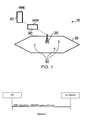
- FIG. 1 illustrates a wireless telecommunications system 10 according to one embodiment.
- User equipment 50 roam through the wireless telecommunications system.
- Base stations 20 are provided which support areas of radio coverage 30.
- a number of such base stations 20 are provided and are distributed geographically in order to provide a wide area of coverage to user equipment 50.
- communications may be established between the user equipment and the base station over associated radio links.
- Each base station typically supports a number of sectors within the geographical area of service 30.
- each base station 20 has multiple antennas and signals sent through the different antennas are electronically weighted to provide a sectorised approach.
- Figure 1 illustrates a small subset of the total number of user equipment and base stations that may be present in a typical communications system.
- the wireless communications system is managed by Mobility Management Entity (MME).
- MME Mobility Management Entity
- the MME 40 controls operation of the wireless communications system by communicating with a plurality of base stations via Serving Gateways (SGW) 60.
- SGW Serving Gateways
- the MME also communicates with user equipment 50 via each base station and thus effectively manages the wireless communications system.
- MME 40 maintains location information which provides information on the location of user equipment 50 within the wireless communication system 10.
- the MME is operable to signal to SGW 60 to route data traffic through the telecommunications network, from a core network to user equipment and vice versa.
- User equipment 50 typically transmits information and data to a base station 20 so that it can be re-routed within a wireless telecommunications network.
- User equipment may, for example, need to transmit data to the base station in order to relay text messages, voice information when a user is using the equipment to make a telephone call, or other data.
- a radio link is a dedicated connection between user equipment 50 and a cell of a base station. These dedicated radio links are formed when user equipment is in an "RRC-Connected" state. When user equipment is not transmitting information such as text messages or voice information to a base station it is in a so-called “RRC-idle” state. When user equipment has information to transmit to a base station it initiates a RRC connection setup procedure to and switches to a connected state within which to operate. When in an "RRC-Connected” state user equipment is able to use high speed uplink packet access radio resources to achieve a high uplink throughput.
- 3GPP TS 36.304 defines a user equipment cell reselection procedure which utilises information provided on the priority of neighbouring carriers.
- the priorities of different E-UTRAN carriers or inter-RAT carriers can be provided to idle user equipment via system information or via RRC connection control signalling as a priority list; for example, the system information transmitted within system information blocks or RRC connection control signalling may provide the relative priorities of, for example, five frequency carriers, F1, F2, F3, F4 and F5 in such a priority list.
- the priorities of these carrier frequencies may be set, for example, from F1 to F5, with F1 being the highest priority and F5 being the lowest priority.
- the user equipment When performing the cell reselection, the user equipment will try to attach first to the cell associated with carrier frequency F1 and, if that fails, will attempt to attach to the cell associated with F2, then F3, then F4 and then F5. Providing such a priority list to the user equipment enables the network to influence the distribution of user equipment among available frequency carriers.
- An enhancement to the basic cell reselection procedure indicated above is that for user equipment with MBMS capability, those user equipment which are interested in or actually receiving an MBMS service will reselect to a frequency carrier which provides that service in preference to the priorities of the frequency carriers mentioned in the priority list above. For example, if user equipment is interested in receiving an MBMS service, then details of the frequency carrier providing that MBMS service is provided to the user equipment. For example, it may be determined that the user equipment is interested in receiving an MBMS service and that MBMS service is provided on frequency carrier F4.
- the user equipment would select frequency carrier F4 during cell reselection in order that the user equipment camps on to frequency carrier F4 to maintain the MBMS service, even though the priority list indicates that the user equipment should instead camp on to frequency carrier F1.
- Such functionality will be referred to as the user equipment autonomous prioritisation procedure.
- allowing such autonomous prioritisation for MBMS services may result in too many user equipment camping on to any particular frequency carrier, which may affect load balancing since too many connection requests may attempt to be established over a single frequency carrier.
- New RRC signalling and/or a new information element is introduced such that the network can control the user equipment autonomous prioritisation procedure.
- This new messaging is used to stop or resume the use of the autonomous prioritisation procedure.
- the messaging overrides the user equipment autonomous prioritisation procedure, which avoids a large signalling overhead and at the same time provides for network control of the user equipment during cell reselection.
- user equipment may be capable of dual reception and, hence, the user equipment may be able to receive the MBMS service on a different frequency carrier whilst camped on to another frequency carrier for unicast.
- the network may not want to provide MBMS service continuity to this user. Hence, the network may not require the user equipment to prioritise the MBMS frequency in the cell reselection.
- a mechanism is provided for the network to control the user equipment autonomous prioritisation.
- the user equipment autonomous frequency prioritisation is always allowed, all the user equipment who wish to receive the MBMS service will prioritise the carrier carrying that MBMS service during cell reselection.
- this can unintentionally result in more user equipment camping on the MBMS carrier and, hence, idle mode balancing becomes impacted.
- the new signalling regime is intended to inform the user equipment whether user equipment autonomous prioritisation is enabled or disabled by the network.
- An example signalling flow is shown in Figure 2 .
- the signalling is designed to be user equipment specific.
- the signalling indicates to the user equipment whether user equipment autonomous prioritisation for MBMS is enabled or not.
- the new messaging in this example is identified as MBMSfrequencypriority.
- the dedicated frequency priority to be used for cell reselection is signalled in the RRC connection release message (this provides the frequency priority list mentioned above).
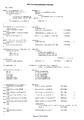
- An MBMSfrequencypriority information element may be included in the RRC connection release message, as shown in Figure 3 .
- the default value of the MBMSfrequencypriority may be set to enabled.
- the absence of the indication element may indicate the default value. If the MBMSfrequencypriority information element is enabled, then the user equipment will prioritise the MBMS frequency of the interested MBMS service during cell reselection. If the MBMSfrequencypriority information element is disabled, then the user equipment will not prioritise the MBMS frequency of the interested MBMS service during cell reselection and will instead follow the basic Release 8/9 cell reselection prioritisation procedure mentioned above. Hence, this approach activates and deactivates user equipment autonomous prioritisation for MBMS within specific user equipment.
- Example 2 user equipment specific signalling - multiple frequencies
- the MBMSfrequencypriority information element may indicate whether user equipment autonomous frequency prioritisation is enabled or disabled by the network for each carrier frequency.
- the MBMSfrequencypriority information element therefore may provide an indication for each neighbouring frequency. If the MBMSfrequencypriority information element is enabled, then the user equipment autonomous priority rule is applied for the corresponding frequency. That is to say, if the user equipment is interested in receiving an MBMS service and the MBMSfrequencypriority information element is enabled for that frequency, then the user equipment should apply the autonomous frequency priority rule.
- the MBMSfrequencypriority information element may indicate that user equipment autonomous frequency priority should be used on frequency carriers F1 and F3, but not used on frequency carrier F2.
- the MBMS service of interest to the user equipment can be applied to select either corresponding frequency carrier F1 or F3.
- the MBMS service of interest is on frequency carrier F2
- user equipment autonomous MBMS frequency prioritisation is disabled and instead the priority list is utilised during cell reselection. If the priority list is the same as that mentioned above, then this would mean that the user equipment would attempt initially to attach to frequency carrier F1.
- a separate RRC message may be used to signal the MBMSfrequencypriority information described.
- the MBMSfrequencypriority information element is included in the SIB of the current cell to indicate that user equipment autonomous frequency prioritisation is enabled or disabled within that cell. This indication is provided for (applied to) all the neighbouring frequencies.
- the user equipment applies the user equipment autonomous frequency prioritisation on the frequency carrier where the MBMS service of interest is provided.
- the MBMSfrequencypriority information element is disabled, then the user equipment will not apply the user equipment autonomous frequency prioritisation for MBMS rule and instead the priority list is utilised during cell reselection.
- SIB 5 could be used to indicate the frequency layer where the MBMS service is provided. Together with this frequency information, it is possible to indicate the MBMSfrequencypriority information element as well.
- Example 5 cell specific signalling - multiple frequencies
- This example is similar to example 2, but the MBMSfrequencypriority information element is cell broadcast using the system information blocks.
- the serving cell reselection priority is given in SIB 3.
- the new MBMSfrequencypriority information element may be added to SIB 3 to indicate the MBMSfrequencypriority information regarding the serving cell. This means that if the MBMSfrequencypriority information element is enabled, then user equipment autonomous MBMS frequency prioritisation is to be applied for the current frequency. If the user equipment is interested in receiving an MBMS service which is provided on the current frequency carrier, then the user equipment will prioritise the current frequency carrier for cell reselection.
- the user equipment will ignore the user equipment autonomous frequency prioritisation for MBMS rule for the current frequency (that is to say that if a user equipment is interested in receiving an MBMS service provided on the current frequency and the MBMS frequency priority is disabled, then the user equipment will not apply the user equipment autonomous frequency prioritisation rule for the current frequency and instead the priority list is utilised during cell reselection).
- the neighbouring cell reselection priority is given in SIB 5.
- the new MBMSfrequencypriority information element could be added to SIB 5 to indicate MBMSfrequencypriority information for the neighbouring cells.
- an MBMSfrequencypriority information element is included to indicate whether the user equipment autonomous frequency priority for the corresponding frequency is enabled or disabled.
- the MBMSfrequencypriority information element is cell broadcast using the system information blocks.
- the MBMSfrequencypriority information element controls (disables or enables) the user equipment autonomous frequency priority for a group of user equipment.
- the signalling is such that only a group of user equipment (such as release 9 user equipment) are instructed to turn off the user equipment MBMS autonomous frequency priority and instead the priority list is utilised during cell reselection, whereas another group of user equipment (such as release 10 or release 11 user equipment) are instructed not to turn off the user equipment MBMS autonomous frequency priority.
- Example 7 combined cell and user equipment specific signalling
- a combination of the cell specific MBMSfrequencypriority information elements and user equipment specific MBMSfrequencypriority information elements mentioned in the examples above are used together to control the user equipment use of the autonomous MBMS frequency prioritisation rule.
- the network may broadcast cell specific MBMSfrequencypriority information elements.
- the network informs specific user equipment of applicable MBMSfrequencypriority information elements using dedicated RRC signalling. If the user equipment receives user equipment specific MBMSfrequencypriority information elements via dedicated RRC signalling, then those values or rules will override the information provided in the cell broadcast, cell specific MBMS frequency priority information element.
- the MBMSfrequencypriority information element is included in the SIB of the current cell to indicate that user equipment autonomous frequency prioritisation is disabled within that cell, but the MBMSfrequencypriority information element of an RRC message indicates that the user equipment autonomous priority rule is applied for the frequency of the MBMS service of interest then the user equipment should apply the autonomous frequency priority rule. It will be appreciated that there are many other examples of such dual control.
- the default value of MBMS frequency priority could be enabled and the absence of the information element may indicate the default value. Conversely, the default value for MBMS frequency priority may be disabled and the absence of the information element may indicate the default value.
- program storage devices e.g., digital data storage media, which are machine or computer readable and encode machine-executable or computer-executable programs of instructions, wherein said instructions perform some or all of the steps of said above-described methods.
- the program storage devices may be, e.g., digital memories, magnetic storage media such as a magnetic disks and magnetic tapes, hard drives, or optically readable digital data storage media.
- the embodiments are also intended to cover computers programmed to perform said steps of the above-described methods.
- processors may be provided through the use of dedicated hardware as well as hardware capable of executing software in association with appropriate software.
- the functions may be provided by a single dedicated processor, by a single shared processor, or by a plurality of individual processors, some of which may be shared.
- processor or “controller” or “logic” should not be construed to refer exclusively to hardware capable of executing software, and may implicitly include, without limitation, digital signal processor (DSP) hardware, network processor, application specific integrated circuit (ASIC), field programmable gate array (FPGA), read only memory (ROM) for storing software, random access memory (RAM), and non volatile storage. Other hardware, conventional and/or custom, may also be included.
- DSP digital signal processor
- ASIC application specific integrated circuit
- FPGA field programmable gate array
- ROM read only memory
- RAM random access memory
- any switches shown in the Figures are conceptual only. Their function may be carried out through the operation of program logic, through dedicated logic, through the interaction of program control and dedicated logic, or even manually, the particular technique being selectable by the implementer as more specifically understood from the context.
- any block diagrams herein represent conceptual views of illustrative circuitry embodying the principles of the invention.
- any flow charts, flow diagrams, state transition diagrams, pseudo code, and the like represent various processes which may be substantially represented in computer readable medium and so executed by a computer or processor, whether or not such computer or processor is explicitly shown.
Landscapes
- Engineering & Computer Science (AREA)
- Computer Networks & Wireless Communication (AREA)
- Signal Processing (AREA)
- Mobile Radio Communication Systems (AREA)
Priority Applications (1)
| Application Number | Priority Date | Filing Date | Title |
|---|---|---|---|
| EP11360041A EP2563049A1 (de) | 2011-08-24 | 2011-08-24 | Steuerung des Benutzerendgeräts derart dass es den Träger selbsständig priorisieren kann für MBMS Dienste während einer Zellneuauswahl |
Applications Claiming Priority (1)
| Application Number | Priority Date | Filing Date | Title |
|---|---|---|---|
| EP11360041A EP2563049A1 (de) | 2011-08-24 | 2011-08-24 | Steuerung des Benutzerendgeräts derart dass es den Träger selbsständig priorisieren kann für MBMS Dienste während einer Zellneuauswahl |
Publications (1)
| Publication Number | Publication Date |
|---|---|
| EP2563049A1 true EP2563049A1 (de) | 2013-02-27 |
Family
ID=44677813
Family Applications (1)
| Application Number | Title | Priority Date | Filing Date |
|---|---|---|---|
| EP11360041A Withdrawn EP2563049A1 (de) | 2011-08-24 | 2011-08-24 | Steuerung des Benutzerendgeräts derart dass es den Träger selbsständig priorisieren kann für MBMS Dienste während einer Zellneuauswahl |
Country Status (1)
| Country | Link |
|---|---|
| EP (1) | EP2563049A1 (de) |
Cited By (1)
| Publication number | Priority date | Publication date | Assignee | Title |
|---|---|---|---|---|
| WO2016181040A1 (en) * | 2015-05-13 | 2016-11-17 | Nokia Solutions And Networks Oy | Cell reselection control mechanism in multi-connectivity communication mode |
-
2011
- 2011-08-24 EP EP11360041A patent/EP2563049A1/de not_active Withdrawn
Non-Patent Citations (3)
| Title |
|---|
| ERICSSON ET AL: "MBMS service continuity in idle mode", 3GPP DRAFT; R2-114480 MBMS SERVICE CONTINUITY FOR IDLE MODE, 3RD GENERATION PARTNERSHIP PROJECT (3GPP), MOBILE COMPETENCE CENTRE ; 650, ROUTE DES LUCIOLES ; F-06921 SOPHIA-ANTIPOLIS CEDEX ; FRANCE, vol. RAN WG2, no. Athens, Greece; 20110822, 16 August 2011 (2011-08-16), XP050540142 * |
| HUAWEI: "Summary of Email Discussion [74#34] - LTE: Rel-11 MBMS", 3GPP DRAFT; R2-114407 SUMMARY OF EMAIL DISCUSSION 74#34 LTE - REL11 MBMS, 3RD GENERATION PARTNERSHIP PROJECT (3GPP), MOBILE COMPETENCE CENTRE ; 650, ROUTE DES LUCIOLES ; F-06921 SOPHIA-ANTIPOLIS CEDEX ; FRANCE, vol. RAN WG2, no. Athens, Greece; 20110822, 16 August 2011 (2011-08-16), XP050540088 * |
| NOKIA SIEMENS NETWORKS ET AL: "Cell reselection rules for UEs active in MBMS", 3GPP DRAFT; R2-114449 CELL RESELECTION RULES FOR UES ACTIVE IN MBMS, 3RD GENERATION PARTNERSHIP PROJECT (3GPP), MOBILE COMPETENCE CENTRE ; 650, ROUTE DES LUCIOLES ; F-06921 SOPHIA-ANTIPOLIS CEDEX ; FRANCE, vol. RAN WG2, no. Athens, Greece; 20110822, 16 August 2011 (2011-08-16), XP050540114 * |
Cited By (2)
| Publication number | Priority date | Publication date | Assignee | Title |
|---|---|---|---|---|
| WO2016181040A1 (en) * | 2015-05-13 | 2016-11-17 | Nokia Solutions And Networks Oy | Cell reselection control mechanism in multi-connectivity communication mode |
| US10813019B2 (en) | 2015-05-13 | 2020-10-20 | Nokia Solutions And Networks Oy | Cell reselection control mechanism in multi-connectivity communication mode |
Similar Documents
| Publication | Publication Date | Title |
|---|---|---|
| EP2721877B1 (de) | Verfahren und vorrichtung zur durchführung einer zugriffsanforderung durch ein benutzergerät | |
| US8345630B2 (en) | Method of carrier reselection for providing selective traffic redirection | |
| EP2468068B1 (de) | Verfahren zur unterstützung einer mbms-dienstkontinuität sowie zählender und lokalisierter mbms-dienst | |
| JP5258569B2 (ja) | 基地局および移動局並びに移行先セル設定方法 | |
| US8374610B2 (en) | Systems and methods for independent setting of cell change network control mode and notification of cell change mode for uncontrolled cells | |
| US9955399B2 (en) | Method for reselecting MBMS-based cells in wireless communication systems, and apparatus for supporting same | |
| EP2702781B1 (de) | Verfahren und vorrichtungen zur aktivierung des empfangs eines spezifischen dienstes für endgeräte im ruhemodus | |
| US20140161020A1 (en) | Device and method for supporting continuity of mbms | |
| US9344941B2 (en) | Autonomous cell reselection by a user equipment | |
| KR20090045242A (ko) | 기지국, 이동국 그리고 셀 선택방법 | |
| WO2008024055A2 (en) | A method for load balancing of devices in idle mode | |
| KR101657861B1 (ko) | 부하 조절 | |
| WO2015069064A1 (ko) | 단말의 셀 재선택 방법 및 이를 이용하는 단말 | |
| CN107148785A (zh) | 在mbsfn服务边界区中提供服务连续性的方法和装置 | |
| WO2009001269A2 (en) | Apparatus, method and computer program product providing signaling between mobile terminal and network in presence of private cells/closed subscriber groups | |
| WO2008023611A1 (fr) | Station de base, station mobile, et procédé de réglage de cellule de destination | |
| WO2016018021A1 (ko) | 무선 통신 시스템에서 접근 제어 방법 및 이를 지원하는 장치 | |
| EP2563049A1 (de) | Steuerung des Benutzerendgeräts derart dass es den Träger selbsständig priorisieren kann für MBMS Dienste während einer Zellneuauswahl | |
| EP2941047A1 (de) | Verwendung eines individuellen Zellenoffsets zur Beeinflussung eines Benutzergeräts in Richtung einer Zelle und zur Bereitstellung von Zellenbereichserweiterung | |
| WO2024012863A1 (en) | Methods, communications devices, and infrastructure equipment | |
| KR20160142016A (ko) | 무선 통신 시스템에서 셀-재선택을 수행하는 방법 및 장치 | |
| HK1176784B (en) | Systems and methods for independent setting of cell change network control mode and notification of cell change mode for uncontrolled cells | |
| HK1176784A (en) | Systems and methods for independent setting of cell change network control mode and notification of cell change mode for uncontrolled cells |
Legal Events
| Date | Code | Title | Description |
|---|---|---|---|
| PUAI | Public reference made under article 153(3) epc to a published international application that has entered the european phase |
Free format text: ORIGINAL CODE: 0009012 |
|
| AK | Designated contracting states |
Kind code of ref document: A1 Designated state(s): AL AT BE BG CH CY CZ DE DK EE ES FI FR GB GR HR HU IE IS IT LI LT LU LV MC MK MT NL NO PL PT RO RS SE SI SK SM TR |
|
| AX | Request for extension of the european patent |
Extension state: BA ME |
|
| 111Z | Information provided on other rights and legal means of execution |
Free format text: AL AT BE BG CH CY CZ DE DK EE ES FI FR GB GR HR HU IE IS IT LI LT LU LV MC MK MT NL NO PL PT RO RS SE SI SK SM TR Effective date: 20130410 |
|
| STAA | Information on the status of an ep patent application or granted ep patent |
Free format text: STATUS: THE APPLICATION IS DEEMED TO BE WITHDRAWN |
|
| 18D | Application deemed to be withdrawn |
Effective date: 20130828 |