EP2565262A1 - Expression de protéine - Google Patents
Expression de protéine Download PDFInfo
- Publication number
- EP2565262A1 EP2565262A1 EP11179496A EP11179496A EP2565262A1 EP 2565262 A1 EP2565262 A1 EP 2565262A1 EP 11179496 A EP11179496 A EP 11179496A EP 11179496 A EP11179496 A EP 11179496A EP 2565262 A1 EP2565262 A1 EP 2565262A1
- Authority
- EP
- European Patent Office
- Prior art keywords
- promoter
- protein
- polypeptide
- cell
- pdi
- Prior art date
- Legal status (The legal status is an assumption and is not a legal conclusion. Google has not performed a legal analysis and makes no representation as to the accuracy of the status listed.)
- Withdrawn
Links
- 108090000623 proteins and genes Proteins 0.000 title claims abstract description 173
- 102000004169 proteins and genes Human genes 0.000 title claims abstract description 110
- 230000014509 gene expression Effects 0.000 title description 42
- 229920001184 polypeptide Polymers 0.000 claims abstract description 92
- 108090000765 processed proteins & peptides Proteins 0.000 claims abstract description 92
- 102000004196 processed proteins & peptides Human genes 0.000 claims abstract description 92
- 210000004027 cell Anatomy 0.000 claims abstract description 81
- 230000015572 biosynthetic process Effects 0.000 claims abstract description 37
- 230000008093 supporting effect Effects 0.000 claims abstract description 33
- 210000005253 yeast cell Anatomy 0.000 claims abstract description 29
- 230000035772 mutation Effects 0.000 claims abstract description 18
- 102000006010 Protein Disulfide-Isomerase Human genes 0.000 claims description 98
- 108020003519 protein disulfide isomerase Proteins 0.000 claims description 98
- 239000002773 nucleotide Substances 0.000 claims description 47
- 125000003729 nucleotide group Chemical group 0.000 claims description 47
- 102100036826 Aldehyde oxidase Human genes 0.000 claims description 42
- 101000928314 Homo sapiens Aldehyde oxidase Proteins 0.000 claims description 42
- 108010006519 Molecular Chaperones Proteins 0.000 claims description 22
- 230000001939 inductive effect Effects 0.000 claims description 19
- 238000000034 method Methods 0.000 claims description 19
- 108020004707 nucleic acids Proteins 0.000 claims description 17
- 102000039446 nucleic acids Human genes 0.000 claims description 17
- 150000007523 nucleic acids Chemical class 0.000 claims description 17
- 241000235058 Komagataella pastoris Species 0.000 claims description 12
- 102000007056 Recombinant Fusion Proteins Human genes 0.000 claims description 12
- 108010008281 Recombinant Fusion Proteins Proteins 0.000 claims description 12
- 238000004519 manufacturing process Methods 0.000 claims description 12
- 241000235648 Pichia Species 0.000 claims description 10
- 238000012217 deletion Methods 0.000 claims description 7
- 230000037430 deletion Effects 0.000 claims description 7
- 239000013598 vector Substances 0.000 claims description 6
- 241000320412 Ogataea angusta Species 0.000 claims description 3
- 102100021868 Calnexin Human genes 0.000 claims description 2
- 108010056891 Calnexin Proteins 0.000 claims description 2
- 101150094690 GAL1 gene Proteins 0.000 claims description 2
- 102100028501 Galanin peptides Human genes 0.000 claims description 2
- 101150069554 HIS4 gene Proteins 0.000 claims description 2
- 101100121078 Homo sapiens GAL gene Proteins 0.000 claims description 2
- 101000664600 Homo sapiens Tripartite motif-containing protein 3 Proteins 0.000 claims description 2
- 102100038798 Tripartite motif-containing protein 3 Human genes 0.000 claims description 2
- 241000222124 [Candida] boidinii Species 0.000 claims description 2
- 108091008324 binding proteins Proteins 0.000 claims description 2
- 240000004808 Saccharomyces cerevisiae Species 0.000 claims 4
- 102000023732 binding proteins Human genes 0.000 claims 1
- 235000018102 proteins Nutrition 0.000 description 86
- OKKJLVBELUTLKV-UHFFFAOYSA-N Methanol Chemical compound OC OKKJLVBELUTLKV-UHFFFAOYSA-N 0.000 description 81
- PEDCQBHIVMGVHV-UHFFFAOYSA-N Glycerine Chemical compound OCC(O)CO PEDCQBHIVMGVHV-UHFFFAOYSA-N 0.000 description 36
- 108090000901 Transferrin Proteins 0.000 description 24
- 102000004338 Transferrin Human genes 0.000 description 22
- 239000012581 transferrin Substances 0.000 description 22
- 101150070377 PDI gene Proteins 0.000 description 18
- 230000000694 effects Effects 0.000 description 18
- 230000009466 transformation Effects 0.000 description 17
- 108010076504 Protein Sorting Signals Proteins 0.000 description 16
- 238000013518 transcription Methods 0.000 description 16
- 230000035897 transcription Effects 0.000 description 16
- 108020004414 DNA Proteins 0.000 description 13
- 238000011144 upstream manufacturing Methods 0.000 description 13
- 102000008100 Human Serum Albumin Human genes 0.000 description 12
- 108091006905 Human Serum Albumin Proteins 0.000 description 12
- 241001149671 Hanseniaspora uvarum Species 0.000 description 11
- 230000001105 regulatory effect Effects 0.000 description 10
- 230000010354 integration Effects 0.000 description 9
- 108010046276 FLP recombinase Proteins 0.000 description 8
- 102000000588 Interleukin-2 Human genes 0.000 description 8
- 108010002350 Interleukin-2 Proteins 0.000 description 8
- 108010091086 Recombinases Proteins 0.000 description 8
- 239000003550 marker Substances 0.000 description 8
- 230000028327 secretion Effects 0.000 description 8
- 239000006228 supernatant Substances 0.000 description 8
- 230000003248 secreting effect Effects 0.000 description 7
- 102000005431 Molecular Chaperones Human genes 0.000 description 6
- 102000018120 Recombinases Human genes 0.000 description 6
- 108010084455 Zeocin Proteins 0.000 description 6
- 210000002472 endoplasmic reticulum Anatomy 0.000 description 6
- 239000012634 fragment Substances 0.000 description 6
- CWCMIVBLVUHDHK-ZSNHEYEWSA-N phleomycin D1 Chemical compound N([C@H](C(=O)N[C@H](C)[C@@H](O)[C@H](C)C(=O)N[C@@H]([C@H](O)C)C(=O)NCCC=1SC[C@@H](N=1)C=1SC=C(N=1)C(=O)NCCCCNC(N)=N)[C@@H](O[C@H]1[C@H]([C@@H](O)[C@H](O)[C@H](CO)O1)O[C@@H]1[C@H]([C@@H](OC(N)=O)[C@H](O)[C@@H](CO)O1)O)C=1N=CNC=1)C(=O)C1=NC([C@H](CC(N)=O)NC[C@H](N)C(N)=O)=NC(N)=C1C CWCMIVBLVUHDHK-ZSNHEYEWSA-N 0.000 description 6
- 238000003259 recombinant expression Methods 0.000 description 6
- 238000005251 capillar electrophoresis Methods 0.000 description 5
- 238000000855 fermentation Methods 0.000 description 5
- 230000004151 fermentation Effects 0.000 description 5
- 108020004999 messenger RNA Proteins 0.000 description 5
- 239000013612 plasmid Substances 0.000 description 5
- 230000008569 process Effects 0.000 description 5
- 239000000047 product Substances 0.000 description 5
- YBJHBAHKTGYVGT-ZKWXMUAHSA-N (+)-Biotin Chemical compound N1C(=O)N[C@@H]2[C@H](CCCCC(=O)O)SC[C@@H]21 YBJHBAHKTGYVGT-ZKWXMUAHSA-N 0.000 description 4
- 241000588724 Escherichia coli Species 0.000 description 4
- 108700039691 Genetic Promoter Regions Proteins 0.000 description 4
- WQZGKKKJIJFFOK-GASJEMHNSA-N Glucose Natural products OC[C@H]1OC(O)[C@H](O)[C@@H](O)[C@@H]1O WQZGKKKJIJFFOK-GASJEMHNSA-N 0.000 description 4
- 101710096444 Killer toxin Proteins 0.000 description 4
- 101100243108 Saccharomyces cerevisiae (strain ATCC 204508 / S288c) PDI1 gene Proteins 0.000 description 4
- 108091023040 Transcription factor Proteins 0.000 description 4
- 102000040945 Transcription factor Human genes 0.000 description 4
- 150000001413 amino acids Chemical group 0.000 description 4
- 238000012790 confirmation Methods 0.000 description 4
- 239000012228 culture supernatant Substances 0.000 description 4
- 230000002779 inactivation Effects 0.000 description 4
- 239000002609 medium Substances 0.000 description 4
- 229920001817 Agar Polymers 0.000 description 3
- 102000004190 Enzymes Human genes 0.000 description 3
- 108090000790 Enzymes Proteins 0.000 description 3
- 108091081024 Start codon Proteins 0.000 description 3
- 239000008272 agar Substances 0.000 description 3
- 235000001014 amino acid Nutrition 0.000 description 3
- 230000003115 biocidal effect Effects 0.000 description 3
- 230000002068 genetic effect Effects 0.000 description 3
- 239000008103 glucose Substances 0.000 description 3
- 239000001963 growth medium Substances 0.000 description 3
- 238000001727 in vivo Methods 0.000 description 3
- 230000006698 induction Effects 0.000 description 3
- 238000003780 insertion Methods 0.000 description 3
- 230000037431 insertion Effects 0.000 description 3
- 239000008223 sterile water Substances 0.000 description 3
- 230000002103 transcriptional effect Effects 0.000 description 3
- 230000014616 translation Effects 0.000 description 3
- XLYOFNOQVPJJNP-UHFFFAOYSA-N water Chemical compound O XLYOFNOQVPJJNP-UHFFFAOYSA-N 0.000 description 3
- QGZKDVFQNNGYKY-UHFFFAOYSA-N Ammonia Chemical compound N QGZKDVFQNNGYKY-UHFFFAOYSA-N 0.000 description 2
- IJGRMHOSHXDMSA-UHFFFAOYSA-N Atomic nitrogen Chemical compound N#N IJGRMHOSHXDMSA-UHFFFAOYSA-N 0.000 description 2
- 101150111679 ILV5 gene Proteins 0.000 description 2
- 101710089743 Mating factor alpha Proteins 0.000 description 2
- 230000004988 N-glycosylation Effects 0.000 description 2
- IXKSXJFAGXLQOQ-XISFHERQSA-N WHWLQLKPGQPMY Chemical compound C([C@@H](C(=O)N[C@@H](CC=1C2=CC=CC=C2NC=1)C(=O)N[C@@H](CC(C)C)C(=O)N[C@@H](CCC(N)=O)C(=O)N[C@@H](CC(C)C)C(=O)N1CCC[C@H]1C(=O)NCC(=O)N[C@@H](CCC(N)=O)C(=O)N[C@@H](CC(O)=O)C(=O)N1CCC[C@H]1C(=O)N[C@@H](CCSC)C(=O)N[C@@H](CC=1C=CC(O)=CC=1)C(O)=O)NC(=O)[C@@H](N)CC=1C2=CC=CC=C2NC=1)C1=CNC=N1 IXKSXJFAGXLQOQ-XISFHERQSA-N 0.000 description 2
- 230000003190 augmentative effect Effects 0.000 description 2
- 229960002685 biotin Drugs 0.000 description 2
- 235000020958 biotin Nutrition 0.000 description 2
- 239000011616 biotin Substances 0.000 description 2
- 230000004186 co-expression Effects 0.000 description 2
- 238000010276 construction Methods 0.000 description 2
- 230000003218 derepressive effect Effects 0.000 description 2
- 238000001962 electrophoresis Methods 0.000 description 2
- 238000004520 electroporation Methods 0.000 description 2
- 210000003527 eukaryotic cell Anatomy 0.000 description 2
- 230000001747 exhibiting effect Effects 0.000 description 2
- 238000002474 experimental method Methods 0.000 description 2
- 238000001556 precipitation Methods 0.000 description 2
- 238000002741 site-directed mutagenesis Methods 0.000 description 2
- 239000000126 substance Substances 0.000 description 2
- 238000013519 translation Methods 0.000 description 2
- 230000035899 viability Effects 0.000 description 2
- 108091032973 (ribonucleotides)n+m Proteins 0.000 description 1
- 241001237431 Anomala Species 0.000 description 1
- 241000228212 Aspergillus Species 0.000 description 1
- 241000894006 Bacteria Species 0.000 description 1
- 239000002028 Biomass Substances 0.000 description 1
- 101100490563 Caenorhabditis elegans adr-1 gene Proteins 0.000 description 1
- UXVMQQNJUSDDNG-UHFFFAOYSA-L Calcium chloride Chemical compound [Cl-].[Cl-].[Ca+2] UXVMQQNJUSDDNG-UHFFFAOYSA-L 0.000 description 1
- 102000014914 Carrier Proteins Human genes 0.000 description 1
- 108091026890 Coding region Proteins 0.000 description 1
- 108020004705 Codon Proteins 0.000 description 1
- 238000001712 DNA sequencing Methods 0.000 description 1
- 229920002307 Dextran Polymers 0.000 description 1
- 241000620209 Escherichia coli DH5[alpha] Species 0.000 description 1
- 108700039887 Essential Genes Proteins 0.000 description 1
- 241000206602 Eukaryota Species 0.000 description 1
- 101000766307 Gallus gallus Ovotransferrin Proteins 0.000 description 1
- 101150009243 HAP1 gene Proteins 0.000 description 1
- 108010027340 K1 killer toxin Proteins 0.000 description 1
- 241000235649 Kluyveromyces Species 0.000 description 1
- 241001138401 Kluyveromyces lactis Species 0.000 description 1
- 241001138402 Millerozyma acaciae Species 0.000 description 1
- 239000000020 Nitrocellulose Substances 0.000 description 1
- 238000010222 PCR analysis Methods 0.000 description 1
- 239000001888 Peptone Substances 0.000 description 1
- 108010080698 Peptones Proteins 0.000 description 1
- 101710203837 Replication-associated protein Proteins 0.000 description 1
- 241000235070 Saccharomyces Species 0.000 description 1
- 241000235346 Schizosaccharomyces Species 0.000 description 1
- 108700005078 Synthetic Genes Proteins 0.000 description 1
- 108010006785 Taq Polymerase Proteins 0.000 description 1
- 102000002070 Transferrins Human genes 0.000 description 1
- 108010015865 Transferrins Proteins 0.000 description 1
- 241000235013 Yarrowia Species 0.000 description 1
- 241000235015 Yarrowia lipolytica Species 0.000 description 1
- 101150067149 abaA gene Proteins 0.000 description 1
- 230000009471 action Effects 0.000 description 1
- 238000005273 aeration Methods 0.000 description 1
- 230000004931 aggregating effect Effects 0.000 description 1
- 238000013019 agitation Methods 0.000 description 1
- 229910021529 ammonia Inorganic materials 0.000 description 1
- 238000004458 analytical method Methods 0.000 description 1
- 238000013459 approach Methods 0.000 description 1
- QVGXLLKOCUKJST-UHFFFAOYSA-N atomic oxygen Chemical compound [O] QVGXLLKOCUKJST-UHFFFAOYSA-N 0.000 description 1
- 230000008901 benefit Effects 0.000 description 1
- WQZGKKKJIJFFOK-VFUOTHLCSA-N beta-D-glucose Chemical compound OC[C@H]1O[C@@H](O)[C@H](O)[C@@H](O)[C@@H]1O WQZGKKKJIJFFOK-VFUOTHLCSA-N 0.000 description 1
- 108010051210 beta-Fructofuranosidase Proteins 0.000 description 1
- 230000008827 biological function Effects 0.000 description 1
- 230000033228 biological regulation Effects 0.000 description 1
- 239000001110 calcium chloride Substances 0.000 description 1
- 229910001628 calcium chloride Inorganic materials 0.000 description 1
- 239000001506 calcium phosphate Substances 0.000 description 1
- 229910000389 calcium phosphate Inorganic materials 0.000 description 1
- 235000011010 calcium phosphates Nutrition 0.000 description 1
- 229940041514 candida albicans extract Drugs 0.000 description 1
- 230000001413 cellular effect Effects 0.000 description 1
- 238000005119 centrifugation Methods 0.000 description 1
- 239000013043 chemical agent Substances 0.000 description 1
- 238000006243 chemical reaction Methods 0.000 description 1
- 238000013377 clone selection method Methods 0.000 description 1
- 238000010367 cloning Methods 0.000 description 1
- 238000012364 cultivation method Methods 0.000 description 1
- 125000000151 cysteine group Chemical group N[C@@H](CS)C(=O)* 0.000 description 1
- 239000008121 dextrose Substances 0.000 description 1
- 238000000502 dialysis Methods 0.000 description 1
- 238000010790 dilution Methods 0.000 description 1
- 239000012895 dilution Substances 0.000 description 1
- 239000003623 enhancer Substances 0.000 description 1
- 239000013613 expression plasmid Substances 0.000 description 1
- 239000013604 expression vector Substances 0.000 description 1
- 239000000835 fiber Substances 0.000 description 1
- 102000035175 foldases Human genes 0.000 description 1
- 108091005749 foldases Proteins 0.000 description 1
- 230000006870 function Effects 0.000 description 1
- 210000002288 golgi apparatus Anatomy 0.000 description 1
- 101150026546 hsa gene Proteins 0.000 description 1
- 239000004615 ingredient Substances 0.000 description 1
- 230000000977 initiatory effect Effects 0.000 description 1
- 239000001573 invertase Substances 0.000 description 1
- 235000011073 invertase Nutrition 0.000 description 1
- 231100000518 lethal Toxicity 0.000 description 1
- 230000001665 lethal effect Effects 0.000 description 1
- 238000005259 measurement Methods 0.000 description 1
- 230000007246 mechanism Effects 0.000 description 1
- 230000001404 mediated effect Effects 0.000 description 1
- 239000012528 membrane Substances 0.000 description 1
- 230000002503 metabolic effect Effects 0.000 description 1
- 230000000813 microbial effect Effects 0.000 description 1
- 238000002703 mutagenesis Methods 0.000 description 1
- 231100000350 mutagenesis Toxicity 0.000 description 1
- 229920001220 nitrocellulos Polymers 0.000 description 1
- 229910052757 nitrogen Inorganic materials 0.000 description 1
- 238000010606 normalization Methods 0.000 description 1
- 235000015097 nutrients Nutrition 0.000 description 1
- 230000002018 overexpression Effects 0.000 description 1
- 238000007500 overflow downdraw method Methods 0.000 description 1
- 238000012261 overproduction Methods 0.000 description 1
- 239000001301 oxygen Substances 0.000 description 1
- 229910052760 oxygen Inorganic materials 0.000 description 1
- 230000037361 pathway Effects 0.000 description 1
- 235000019319 peptone Nutrition 0.000 description 1
- 230000008488 polyadenylation Effects 0.000 description 1
- 108091033319 polynucleotide Proteins 0.000 description 1
- 102000040430 polynucleotide Human genes 0.000 description 1
- 239000002157 polynucleotide Substances 0.000 description 1
- 230000004481 post-translational protein modification Effects 0.000 description 1
- 210000001938 protoplast Anatomy 0.000 description 1
- 239000011535 reaction buffer Substances 0.000 description 1
- 230000008707 rearrangement Effects 0.000 description 1
- 230000006798 recombination Effects 0.000 description 1
- 238000005215 recombination Methods 0.000 description 1
- 230000022532 regulation of transcription, DNA-dependent Effects 0.000 description 1
- 102000037983 regulatory factors Human genes 0.000 description 1
- 108091008025 regulatory factors Proteins 0.000 description 1
- 230000001718 repressive effect Effects 0.000 description 1
- 238000011160 research Methods 0.000 description 1
- 108091008146 restriction endonucleases Proteins 0.000 description 1
- 238000012216 screening Methods 0.000 description 1
- 239000006152 selective media Substances 0.000 description 1
- HBMJWWWQQXIZIP-UHFFFAOYSA-N silicon carbide Chemical compound [Si+]#[C-] HBMJWWWQQXIZIP-UHFFFAOYSA-N 0.000 description 1
- 229910010271 silicon carbide Inorganic materials 0.000 description 1
- 239000012064 sodium phosphate buffer Substances 0.000 description 1
- 239000013595 supernatant sample Substances 0.000 description 1
- 230000004083 survival effect Effects 0.000 description 1
- 238000012360 testing method Methods 0.000 description 1
- 238000000844 transformation Methods 0.000 description 1
- 230000005945 translocation Effects 0.000 description 1
- 230000032258 transport Effects 0.000 description 1
- QORWJWZARLRLPR-UHFFFAOYSA-H tricalcium bis(phosphate) Chemical compound [Ca+2].[Ca+2].[Ca+2].[O-]P([O-])([O-])=O.[O-]P([O-])([O-])=O QORWJWZARLRLPR-UHFFFAOYSA-H 0.000 description 1
- 230000001960 triggered effect Effects 0.000 description 1
- 238000012795 verification Methods 0.000 description 1
- 239000013603 viral vector Substances 0.000 description 1
- 239000012138 yeast extract Substances 0.000 description 1
- 239000007222 ypd medium Substances 0.000 description 1
Images



Classifications
-
- C—CHEMISTRY; METALLURGY
- C12—BIOCHEMISTRY; BEER; SPIRITS; WINE; VINEGAR; MICROBIOLOGY; ENZYMOLOGY; MUTATION OR GENETIC ENGINEERING
- C12P—FERMENTATION OR ENZYME-USING PROCESSES TO SYNTHESISE A DESIRED CHEMICAL COMPOUND OR COMPOSITION OR TO SEPARATE OPTICAL ISOMERS FROM A RACEMIC MIXTURE
- C12P21/00—Preparation of peptides or proteins
-
- C—CHEMISTRY; METALLURGY
- C07—ORGANIC CHEMISTRY
- C07K—PEPTIDES
- C07K14/00—Peptides having more than 20 amino acids; Gastrins; Somatostatins; Melanotropins; Derivatives thereof
- C07K14/435—Peptides having more than 20 amino acids; Gastrins; Somatostatins; Melanotropins; Derivatives thereof from animals; from humans
- C07K14/52—Cytokines; Lymphokines; Interferons
- C07K14/54—Interleukins [IL]
- C07K14/55—IL-2
-
- C—CHEMISTRY; METALLURGY
- C07—ORGANIC CHEMISTRY
- C07K—PEPTIDES
- C07K14/00—Peptides having more than 20 amino acids; Gastrins; Somatostatins; Melanotropins; Derivatives thereof
- C07K14/435—Peptides having more than 20 amino acids; Gastrins; Somatostatins; Melanotropins; Derivatives thereof from animals; from humans
- C07K14/76—Albumins
- C07K14/765—Serum albumin, e.g. HSA
-
- C—CHEMISTRY; METALLURGY
- C07—ORGANIC CHEMISTRY
- C07K—PEPTIDES
- C07K14/00—Peptides having more than 20 amino acids; Gastrins; Somatostatins; Melanotropins; Derivatives thereof
- C07K14/435—Peptides having more than 20 amino acids; Gastrins; Somatostatins; Melanotropins; Derivatives thereof from animals; from humans
- C07K14/79—Transferrins, e.g. lactoferrins, ovotransferrins
-
- C—CHEMISTRY; METALLURGY
- C12—BIOCHEMISTRY; BEER; SPIRITS; WINE; VINEGAR; MICROBIOLOGY; ENZYMOLOGY; MUTATION OR GENETIC ENGINEERING
- C12N—MICROORGANISMS OR ENZYMES; COMPOSITIONS THEREOF; PROPAGATING, PRESERVING, OR MAINTAINING MICROORGANISMS; MUTATION OR GENETIC ENGINEERING; CULTURE MEDIA
- C12N15/00—Mutation or genetic engineering; DNA or RNA concerning genetic engineering, vectors, e.g. plasmids, or their isolation, preparation or purification; Use of hosts therefor
- C12N15/09—Recombinant DNA-technology
- C12N15/63—Introduction of foreign genetic material using vectors; Vectors; Use of hosts therefor; Regulation of expression
- C12N15/79—Vectors or expression systems specially adapted for eukaryotic hosts
- C12N15/80—Vectors or expression systems specially adapted for eukaryotic hosts for fungi
- C12N15/81—Vectors or expression systems specially adapted for eukaryotic hosts for fungi for yeasts
- C12N15/815—Vectors or expression systems specially adapted for eukaryotic hosts for fungi for yeasts for yeasts other than Saccharomyces
-
- C—CHEMISTRY; METALLURGY
- C12—BIOCHEMISTRY; BEER; SPIRITS; WINE; VINEGAR; MICROBIOLOGY; ENZYMOLOGY; MUTATION OR GENETIC ENGINEERING
- C12N—MICROORGANISMS OR ENZYMES; COMPOSITIONS THEREOF; PROPAGATING, PRESERVING, OR MAINTAINING MICROORGANISMS; MUTATION OR GENETIC ENGINEERING; CULTURE MEDIA
- C12N9/00—Enzymes; Proenzymes; Compositions thereof; Processes for preparing, activating, inhibiting, separating or purifying enzymes
- C12N9/0004—Oxidoreductases (1.)
- C12N9/0006—Oxidoreductases (1.) acting on CH-OH groups as donors (1.1)
-
- C—CHEMISTRY; METALLURGY
- C12—BIOCHEMISTRY; BEER; SPIRITS; WINE; VINEGAR; MICROBIOLOGY; ENZYMOLOGY; MUTATION OR GENETIC ENGINEERING
- C12N—MICROORGANISMS OR ENZYMES; COMPOSITIONS THEREOF; PROPAGATING, PRESERVING, OR MAINTAINING MICROORGANISMS; MUTATION OR GENETIC ENGINEERING; CULTURE MEDIA
- C12N9/00—Enzymes; Proenzymes; Compositions thereof; Processes for preparing, activating, inhibiting, separating or purifying enzymes
- C12N9/90—Isomerases (5.)
-
- C—CHEMISTRY; METALLURGY
- C12—BIOCHEMISTRY; BEER; SPIRITS; WINE; VINEGAR; MICROBIOLOGY; ENZYMOLOGY; MUTATION OR GENETIC ENGINEERING
- C12P—FERMENTATION OR ENZYME-USING PROCESSES TO SYNTHESISE A DESIRED CHEMICAL COMPOUND OR COMPOSITION OR TO SEPARATE OPTICAL ISOMERS FROM A RACEMIC MIXTURE
- C12P21/00—Preparation of peptides or proteins
- C12P21/02—Preparation of peptides or proteins having a known sequence of two or more amino acids, e.g. glutathione
-
- C—CHEMISTRY; METALLURGY
- C12—BIOCHEMISTRY; BEER; SPIRITS; WINE; VINEGAR; MICROBIOLOGY; ENZYMOLOGY; MUTATION OR GENETIC ENGINEERING
- C12Y—ENZYMES
- C12Y101/00—Oxidoreductases acting on the CH-OH group of donors (1.1)
- C12Y101/03—Oxidoreductases acting on the CH-OH group of donors (1.1) with a oxygen as acceptor (1.1.3)
- C12Y101/03013—Alcohol oxidase (1.1.3.13)
-
- C—CHEMISTRY; METALLURGY
- C12—BIOCHEMISTRY; BEER; SPIRITS; WINE; VINEGAR; MICROBIOLOGY; ENZYMOLOGY; MUTATION OR GENETIC ENGINEERING
- C12Y—ENZYMES
- C12Y503/00—Intramolecular oxidoreductases (5.3)
- C12Y503/04—Intramolecular oxidoreductases (5.3) transposing S-S bonds (5.3.4)
- C12Y503/04001—Protein disulfide-isomerase (5.3.4.1), i.e. disufide bond-forming enzyme
Definitions
- the present invention relates to a genetically modified yeast cell able to overexpress at least one polypeptide or protein supporting the biosynthesis of polypeptides or proteins within said cell.
- Chaperones in particular protein disulfide isomerase (PDI), are well known enzymes occurring in particular in the endoplasmic reticulum of eukaryotes. Chaperones assist the folding or unfolding and the assembly or disassembly of macromolecular structures like proteins and polypeptides within cells. PDI, for instance, is able to catalyze the formation, breakage and rearrangement of disulfide bonds between cysteine residues within proteins and polypeptides. PDI plays a crucial role in protein expression since this enzyme is responsible for the correct folding of disulfide bridges containing proteins expressed in eukaryotic cells. Many prokaryotes, including E . coli, which are regularly used in recombinant protein expression lack PDI activity.
- E . coli which are regularly used in recombinant protein expression lack PDI activity.
- WO 93/25676 it is suggested to integrate recombinant expression cassettes comprising a gene encoding PDI into the genome of a host cell, in particular of the yeast cell.
- the integration of such expression cassettes into the genome of yeast cells, for instance, is not trivial.
- the expression cassette is integrated into the genome more than once and potentially at different sites. Therefore, it is not always possible to generate yeast cells having the same properties.
- the expression efficiency of a nucleic acid molecule integrated into the genome of a yeast cell highly depends on the integration site.
- target protein(s) can be negatively affected by over-expressing PDI from a recombinant expression cassette due to metabolic competition for transcription or translation ( Butz JA et al., Biotech Bioeng 84 (2003) :292-304 ) .
- a further and important disadvantage of using recombinant expression cassettes as proposed in WO 93/25676 is that it is required to co-transform the yeast cell with at least two nucleic acid constructs, one harbouring the gene encoding PDI and another one comprising at least one gene encoding the at least one protein of interest to be expressed within the host cell ( Gupta CS et al., J Mol Endocrin 22(1999):273-283 ).
- Co-transformation requires the provision of at least two different selection markers at once which in practice leads often to problems with false positive clones in the course of the clone selection.
- a serial transformation strategy could be needed, with separated transformations of e.g.
- One object of the present invention is to provide means and methods which allow to synthesize a polypeptide or protein of interest in a much higher yield compared to methods known in the art.
- the present invention relates to a genetically modified yeast cell comprising at least one recombinant promoter operably linked to at least one gene encoding a polypeptide or protein supporting the biosynthesis of polypeptides or proteins within said cell, said at least one gene being located at the native genomic locus of the genetically unmodified wild-type yeast cell, wherein the naturally occurring promoter of the at least one gene encoding the biosynthesis supporting polypeptide or protein is inactivated by at least one mutation within said naturally occurring promoter.
- cells comprising a recombinant promoter operably linked to at least one gene naturally occurring in the genome of the host cell and encoding a polypeptide or protein supporting the biosynthesis of recombinant polypeptides or proteins within said cell are not able to produce a recombinant protein or polypeptide of interest or at least to a lower extent than comparable host cells if the naturally occurring promoter is still active (at a maximum of 10%, preferably at a maximum of 5%, more preferably at a maximum of 2%, even more preferably at a maximum of at least 1%, of its native activity determined by measuring the transcribed and/or translated gene product) or at least present in full length upstream of the newly introduced promoter.
- the naturally occurring promoter is inactivated by mutating said promoter.
- Such an inactivation leads in the most preferred embodiment of the present invention to no measurable transcription and/or translation of the gene naturally linked thereto.
- the term "inactivated” includes also a residual promoter activity of a maximum of 10%, preferably at a maximum of 5%, more preferably at a maximum of 2%, even more preferably at a maximum of at least 1%, of its native activity.
- the promoter activity can be simply determined by measuring the transcribed gene and/or translated gene product by using methods known in the art.
- the yeast cell may comprise one or more recombinant promoters operably linked to one or more naturally occurring genes encoding a polypeptide or protein supporting the biosynthesis of polypeptides or proteins within said cell.
- One and the same promoter can be operably linked to more than one (i.e. different) naturally occurring genes encoding a polypeptide or protein supporting the biosynthesis of polypeptides or proteins within the cell.
- On the other side it is also possible to provide a cell which comprises one or more naturally occurring genes encoding a polypeptide or protein supporting the biosynthesis of polypeptides or proteins to which more than one copy of one and the same promoter is operably linked thereto.
- a yeast cell of the present invention may comprise e.g.
- one promoter operably linked to one gene encoding a polypeptide or protein supporting the biosynthesis of polypeptides or proteins and another promoter to another gene encoding a polypeptide or protein supporting the biosynthesis of polypeptides or proteins.
- another promoter to another gene encoding a polypeptide or protein supporting the biosynthesis of polypeptides or proteins.
- operably linking one specific promoter to more than one gene encoding a polypeptide or protein supporting the biosynthesis of polypeptides or proteins.
- a "gene encoding a polypeptide or protein supporting the biosynthesis of polypeptides or proteins” is a gene that encodes a polypeptide or protein which actively supports the recombinant and/or native expression of polypeptides and proteins within a cell. If said polypeptide or protein is not expressed or expressed in a lower extend compared to a reference cell (e.g. wild-type cell) the native and/or recombinant protein or polypeptide is either not expressed or secreted at all or to a much lower extent compared to a cell in which these expression or secretion supporting polypeptides or proteins are present within the cell in normal levels.
- a reference cell e.g. wild-type cell
- recombinant promoter refers to a promoter which is not naturally occurring in the genome in the upstream region of the gene encoding a polypeptide or protein supporting the biosynthesis of recombinant polypeptides or proteins within a host cell in order to control the transcription of said gene.
- the recombinant promoter can be a promoter derived from the same or another yeast cell or a heterologous promoter being derived from any other source provided that the recombinant promoter is functional (i.e. is able to control the transcription of the gene operably linked thereto) in the host cell.
- promoter includes also fragments of a wild-type promoter, provided that said fragments are able to control the transcription rate of a gene to which said promoter fragment is operably linked.
- genomic locus a naturally occurring genomic sequence is intended.
- operably linked refers to any configuration in which the transcriptional and any translational regulatory elements are covalently attached to the encoding sequence in such disposition(s), relative to the coding sequence, that in and by action of the host cell, the regulatory elements can direct the expression of the encoding sequence.
- the at least one gene encoding a polypeptide or protein supporting the biosynthesis of (native and/or recombinant) polypeptides or proteins within said cell is a chaperone.
- chaperones refers to polypeptides and proteins that assist the folding or unfolding and the assembly or disassembly of other macromolecular proteinaceous structures, but do not occur in these structures when the structures are performing their normal biological functions having completed the processes of folding and/or assembly.
- One major function of chaperones is to prevent both newly synthesized polypeptide chains and assembled subunits from aggregating into nonfunctional structures.
- "Chaperones” according to the present invention include also “protein foldases” such as protein disulfide isomerase.
- the chaperones of the present invention are preferably present in appropriate cellular compartments (e.g. endoplasmic reticulum (ER) and/or Golgi-apparatus and/or vesicles along the secretory pathway for secreted recombinant proteins).
- the inactivation of the wild type chaperone promoter as well as other promoters of at least one gene encoding a polypeptide or protein supporting the biosynthesis of polypeptides or proteins does not negatively affect the viability of the genetically modified yeast cell. If the inactivation of said promoter is lethal or reduces significantly the viability of the host cell, the chaperone promoter should of course not be modified in the way described herein.
- Chromalone promoter is inactivated means that the in vivo activity of the wild type chaperone promoter is reduced to a maximum of 10%, preferably to a maximum of 5%, more preferably to a maximum of 2%, of the promoter activity of the wild type host cell. Methods to determine the promoter activity are well known in the art and may involve the use of specific marker proteins or polypeptides. However, it is particularly preferred that the wild-type chaperone promoter in the genetically modified cell of the present invention is completely inactivated, so that no promoter activity can be determined within the cell.
- the chaperone is selected from the group consisting of protein disulfide isomerase, binding protein Kar2/BiP, calnexin and HAC1.
- the recombinant promoter is an inducible genetically modified or unmodified yeast promoter.
- an inducible promoter In order to control the expression rate of the at least one gene encoding a polypeptide or protein supporting the biosynthesis of polypeptides or proteins, preferably protein disulfide isomerase, within the yeast cell it is advantageous to use an inducible promoter. It is of course possible to use any kind of promoter provided that the promoter is able to control the transcription of a gene operably linked thereto in a yeast cell. However, it is particularly preferred to use a promoter which is derived from a yeast cell.
- the promoter used in the present invention may be an unmodified wild-type promoter which is directly derived from a respective source.
- promoters which comprise at least one mutation.
- Such promoters have the advantage that the introduction of mutations within the promoter allows to modify the in vivo transcriptional regulation activity resulting in a promoter having lower or higher activity compared to the respective wild-type promoter at specific points of cultivation.
- Genetically modified promoter refers therefore to a promoter that has been modified by any suitable conventional or molecular biology method well known in the art, by DNA techniques, such as by site directed mutagenesis, deletion or insertion, or by conventional mutagenesis using chemical agents or irradiation, followed by screening or selecting for cells modified in the transcriptional mechanism (see e.g. WO 2006/089329 ).
- promoters which act constitutively in the host cell.
- constitutive expression of a chaperone using a recombinant promoter leads also to an increased formation of a protein or polypeptide of interest.
- Constitutive promoters for yeast cells are well known in the art.
- the yeast promoter to be operably linked to the at least one gene encoding a polypeptide or protein supporting the biosynthesis of polypeptides or proteins within said cell is selected from the group consisting of AOX1 promoter, GAL1 promoter, PGK promoter, FDH promoter, FLD promoter, ADH promoter and HIS4 promoter.
- Mutations within a promoter, in particular of an inducible promoter, may result in a genetically modified promoter exhibiting altered properties compared to the wild-type promoter.
- Specific mutations may lead to a promoter showing under inducing conditions higher activity (i.e. the transcription rate of the gene operably linked thereto is increased) than unmodified promoters.
- Particularly preferred parts of the AOX1 promoter to be genetically modified are shown in Inan M et al. (Biotechnol Bioeng 2006; 93: 771-778 ) and in particular in WO 2006/089329 (incorporated herein by reference).
- Preferred variants of the wild type AOX1 promoter (SEQ ID No. 1) to be used in the present invention comprise at least one mutation (e.g. deletion, insertion, nucleotide exchange) within the sites and nucleotide ranges selected from the group consisting of:
- Seq ID No. 1 AOX1 promoter of Pichia pastoris
- the yeast promoter is preferably an AOX1 promoter comprising at least one mutation within nucleotides 170 to 235 or 694 to 723 or 694 to 723 and 737 to 738 of SEQ ID No. 1.
- An AOX1 promoter comprising at least one mutation within nucleotides 170 to 235 of SEQ ID No. 1 shows a much higher expression rate under methanol inducing conditions compared to the wild-type AOX1 promoter.
- An AOX1 promoter comprising at least one mutation within nucleotides 694 to 723 or 694 to 723 and 737 to 738 of SEQ ID No. 1 shows a much higher expression rate under derepression conditions compared to the wildtype AOX1 promoter (see e.g. WO 2006/089329 ).
- the yeast cell is selected from the following group consisting of Pichia species, Hansenula species such as Hansenula polymorpha, Saccharomyces species, Schizosaccharomyces species, Yarrowia species such as Yarrowia lipolytica, Kluyveromyces species and Aspergillus species.
- the yeast cell is a methylotrophic yeast cell, preferably selected from the group consisting of a yeast of the genus of Pichia, preferably Pichia pastoris, Candida boidinii and Hansenula polymorpha.
- the at least one mutation of the naturally occurring chaperone promoter of the at least one gene encoding the biosynthesis supporting polypeptide or protein is preferably a deletion.
- the inactivation of the naturally occurring promoter within the host cell can occur in various ways. For instance, it would be possible to introduce point mutations within said promoter. Suitable mutations can easily be identified by introducing potential mutations within said promoter and then test in vivo the activity of the promoter.
- the most efficient way to inactivate a promoter within the host cell is a deletion of at least a part of the promoter. Therefore it is particularly preferred to delete at least in part the promoter naturally occurring in the host cell. The deletion may occur in any part of the promoter, whereby it is particularly preferred to delete those parts which are found next to the start codon of the gene encoding the biosynthesis supporting polypeptide or protein (i.e. 5' region of said gene).
- At least the first 50 preferably at least the first 100, more preferably at least the first 200, even more preferably at least the first 500, consecutive nucleotides in the upstream region of the start codon of the gene encoding the biosynthesis supporting polypeptide or protein (i.e. 5' end of said gene).
- said cell comprises further a nucleic acid molecule encoding a protein or polypeptide of interest operably linked to a promoter, preferably an inducible promoter.
- the promoter operably linked to the gene encoding the biosynthesis supporting polypeptide or protein can be the same as the promoter operably linked to a nucleic acid molecule encoding a protein or polypeptide of interest.
- the at least one gene encoding the biosynthesis supporting polypeptide or protein and the gene encoding a protein or polypeptide of interest are controlled by different promoters.
- the term "different promoters" means that the activities of the promoters are not identical but differ from each other. Therefore it would be possible to use modified and non-modified promoters derived from the same wild-type promoter exhibiting altered effects when the cell comprising said promoters is cultivated.
- nucleic acid molecule encoding a protein or polypeptide of interest is part of a vector or integrated into the genome.
- the nucleic acid molecule encoding the protein or polypeptide of interest can be part of a vector or integrated into genome by using respective means and methods which are well known to the person skilled in the art.
- the means and methods to be used depend also on the host cell and have to be selected accordingly (see e.g. " Pichia Protocols", Cregg JM, Humana Press; 2nd edition (March 8, 2007 ).
- the nucleic acid molecule of the present invention may also comprise signal sequences which allow the secretion of the protein or polypeptide of interest into the supernatant of the culture medium in which the cells are cultivated.
- signal sequence refers to a segment which directs the secretion of the biologically active molecule.
- the signal sequence used in the present invention may be a polynucleotide which encodes an amino acid sequence initiating transport of a protein across the membrane of the endoplasmic reticulum (ER).
- the non-limiting examples of the signal sequence are MF ⁇ (mating factor ⁇ signal sequence), K1 killer toxin signal, invertase secretion signal peptide, killer toxin of Kluyveromyces lactis signal sequence, killer toxin of Pichia acaciae signal sequence, killer toxin of Hanseniaspora uvarum signal sequence, and killer toxin of Pichia ( Hansenula ) anomala signal sequence.
- the preferred signal sequence of the subject invention is MF ⁇ (mating factor ⁇ signal sequence).
- MF ⁇ signal peptide is introduced.
- MF ⁇ is the pre-pro region from ⁇ -factor, and encodes a protein having 165 amino acids, pre-pro- ⁇ -factor, which comprises a signal sequence of 19 amino acids (the pre region) and a pro region, followed by four tandem repeats of the mature 13 amino acid ⁇ -factor sequence.
- the signal sequence comprises or consists of the following amino acid sequence (SEQ ID No. 11):
- the nucleic acid encoding said signal sequence has an identity of at least 95%, preferably of at least 98%, even more preferably of 100%, to the following nucleotide sequence (SEQ ID No. 12):
- vector is understood to mean any nucleic acid molecule including a nucleotide sequence competent to be incorporated into a host cell and integrated into the host cell genome, or to replicate autonomously as an episomal DNA.
- vectors include linear nucleic acids, plasmids, phagemids, cosmids, RNA vectors, viral vectors and the like.
- Suitable expression vector may comprise a expression regulatory factors such as a promoter, start codon, stop codon, polyadenylation signal, enhancer and selection markers.
- the transformation of the nucleic acid molecules of the present invention into the yeast cell may be conducted by known methods in the art, which may be selected suitably depending on host cells. These methods include, but are not limited to, electroporation, protoplast fusion method, calcium phosphate precipitation and calcium chloride precipitation, agitation with silicon carbide fiber, and PEG-, dextran sulfate- and lipofectamine-mediated transformation.
- Another aspect of the present invention relates to the use of cells according to the present invention for producing a recombinant protein or polypeptide of interest.
- Another aspect of the present invention relates to a method for producing at least one recombinant protein or polypeptide in a host cell of the present invention, wherein said host cell comprises at least one gene encoding the at least one recombinant protein or polypeptide, wherein the expression of at least one gene encoding a polypeptide or protein supporting the biosynthesis of recombinant or native polypeptides or proteins or chaperone naturally occurring in said host cell is increased compared to a wild-type host cell.
- Yet another aspect of the present invention relates to a method for producing a recombinant or native protein or polypeptide comprising the step of cultivating a cell according to the present invention.
- the genetically modified yeast cell according to the present invention is particularly suited to express such proteins and polypeptides because it allows to control expression rate of at least one gene encoding a polypeptide or protein supporting the biosynthesis of recombinant polypeptides or proteins, preferably chaperone, more preferably PDI, as well as proteins and polypeptides of interest in a much more efficient way.
- a polypeptide or protein supporting the biosynthesis of recombinant polypeptides or proteins preferably chaperone, more preferably PDI
- the method of the present invention can also comprise a step of isolating the protein or polypeptide of interest from the supernatant of the culture medium if the protein or polypeptide is secreted from the cell.
- the cells of the present invention can be cultivated with any known cultivation method such as batch culture, continuous culture and fed-batch culture. Culture conditions suitable for selected yeast strains may be easily adjusted by those skilled in the art. Typically, a medium used should contain all nutrients essential for the growth and survival of cells.
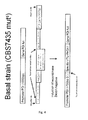
- the transformed DNA construct used in the following specific examples consists of the first 700-1000 bp of the homologous promoter and a strongly regulated, specifically mutated AOX1 promoter driving the expression of Flp recombinase, followed by a transcription terminator and a resistance marker cassette, further followed by a differently regulated, specifically mutated AOX1 promoter and the first 500-1000 bp of the homologous gene.
- the recombinase recognition sites are placed after the first 100-300 bp of the homologous promoter (based on the assumption that the native PDI promoter may consist of approximately 1000 bp), and directly upstream of the second specific AOX1 promoter (and downstream of the restriction marker cassette).
- colonies are subjected to methanol containing media in order to induce transcription of the recombinase gene regulated by the strong inducible promoter upstream.
- Flp recombinase acts on the Flp recombinase recognition sites and thereby excises most of the homologous promoter, the strong inducible AOX1 promoter variant as well as the whole resistance marker cassette, leaving behind residual fractions of the homologous promoter and the differently regulated, specifically mutated AOX1 promoter driving the homologous gene of interest.
- E. coli DH5 ⁇ (NEB, USA) was used for all E . coli cloning experiments.
- Pichia pastoris strain CBS7435 with muts phenotype was used as host for all yeast experiments (see e.g. Cregg and Madden in Stewart, Russell, Klein and Hiebsch (Eds) Biological Research on Industrial Yeast, vol II (1987), CRC Press, pp 1-18 ).
- P. pastoris was transformed using the standard electroporation protocol according to the "Pichia Expression Kit” (Invitrogen). Plasmid DNA (1-10 ⁇ g) was linearized using a restriction enzyme, e.g. BglII or SacI (both purchased from NEB, USA) for addition of the expression plasmid into the genome of P . pastoris and desalted via dialysis using nitrocellulose filters (0.0025 ⁇ m, Millipore, USA) against sterile water for 60 min at room temperature.
- a restriction enzyme e.g. BglII or SacI
- Yeast cultures were either grown in YPD medium (1% w/v yeast extract, 2% w/v peptone and 2% w/v glucose), minimal dextrose (MD) medium (1.34% Yeast Nitrogen Base YNB, 4 x 10⁻⁵% biotin and 1% glucose), minimal methanol (MM) medium (1.34% YNB, 4 x 10⁻⁵% biotin and 0.5% methanol), buffered MD (BMD) medium (containing 200 mM sodium phosphate buffer pH 6.0) or buffered MM media with doubled (BMM2 containing 1% methanol) or ten-fold (BMM10 containing 5% methanol) concentration of methanol compared to MM, according to ( Weis et al, FEMS YR 2004 ). Media for plates were solidified by addition of agar to 1.5% w/v.
- MD minimal dextrose
- MM minimal methanol
- BMM10 buffered MM media with doubled
- Pichia pastoris fermentations were carried out similar to the protocols described in Cino, J. High Yield Protein Production from Pichia pastoris Yeast: A Protocol for Benchtop Fermentation, New Brunswick Scientific, Edison, NJ.
- a methanol feed was started aiming at keeping the methanol concentration (off-line methanol analysis) around 1% by adjusting the feed rate.
- glycerol was fed for the whole process time at the same rate as in the classical glycerol fed-batch period of a methanol-induced fermentation.
- the pH-value was set at 5.5 and controlled by ammonia.
- Dissolved oxygen was kept above 30%, primarily controlled by stirrer speed, and backed up by aeration rate.
- the temperature was set to 20-28°C.
- Cell dry weights were determined as described in Whittaker, M.M. and Whittaker, J.M. (2000) Protein, Expr. Purif. 20, 105-111 .
- Example 1 Construction of promoter co-integration cassette of a specifically mutated AOX1 promoter between the native Protein Disulfide Isomerase (PDI) promoter and the PDI gene
- the transformed DNA construct consists of the first 500 bp (from 3' end) of the homologous PDI promoter (based on the assumption that the native PDI promoter may consist of approximately 1000 bp), and a specifically regulated, mutated AOX1 promoter ( WO 2006/089329 ; derived from SEQ ID No. 1) driving the expression of Flp recombinase, followed by CYC1 transcription terminator and a Zeocin resistance cassette (functional in E. coli by EM72 promoter, and in P . pastoris by ILV5 promoter and AOD transcription terminator), further followed by the first 500 bp of the homologous PDI gene.
- a specifically regulated, mutated AOX1 promoter WO 2006/089329 ; derived from SEQ ID No. 1
- CYC1 transcription terminator followed by CYC1 transcription terminator and a Zeocin resistance cassette (functional in E. coli by EM72 promoter, and in P . pastoris
- the recombinase recognition sites are placed after the specific AOX1 promoter, and directly upstream of the homologous PDI gene ( Fig. 1 ). This DNA fragment was ordered as synthetically generated DNA with DNA2.0 (Menlo Park, USA).
- Example 2 Transformation of promoter integration construct into CBS7435 muts, confirmation of genomic constellation, propagation on methanol media and cassette excision and confirmation
- Clones were transferred to minimal methanol agar plates for 5 days (until large single colonies are formed), in total 3 consecutive times. Thereafter, excision of the DNA region between the FRT sites (most part of the homologous promoter region, strong inducible AOX1 promoter and Flp recombinase, resistance marker cassette) was checked by counter-restreaking on YPhyD plates containing selection marker (Zeocin): positive clones, i.e. those where excision took place, were not able to grow on these plates. Colony PCR proved the occurrence of homologous PDI promoter upstream of specifically mutated AOX1 promoter, directly followed by the remaining FRT site and the (intact) PDI gene ( Fig. 2 , SEQ ID No. 2).
- SEQ ID No. 2 sequence obtained for genomic PDI locus
- Bold native PDI promoter region (1000 bp upstream of native PDI gene in unmodified strain)
- Example 3 Secretory production of transferrin in strain with elevated levels of homologous PDI under methanol-inducing conditions in microscale
- transferrin SEQ ID No. 3
- transferrin-non-glycosylated SEQ ID No. 4
- non-glycosylated transferrin generated by double-site-directed mutagenesis to mutate both N-glycosylation motifs
- Example 4 Construction of promoter replacement cassette of native Protein Disulfide Isomerase (PDI) promoter by specifically mutated AOX1 promoter
- the transformed DNA construct consists of the first 1000 bp of the homologous PDI promoter (based on the assumption that the native PDI promoter may consist of approximately 1000 bp), and a specifically regulated, mutated AOX1 promoter ( WO 2006/089329 ) driving the expression of Flp recombinase, followed by CYC1 transcription terminator and a Zeocin resistance cassette (functional in E. coli by EM72 promoter, and in P . pastoris by ILV5 promoter and AOD transcription terminator), further followed by a differently regulated, specifically mutated AOX1 promoter ( WO 2006/089329 ) and the first 500 bp of the homologous PDI gene.
- a specifically regulated, mutated AOX1 promoter WO 2006/089329
- driving the expression of Flp recombinase followed by CYC1 transcription terminator and a Zeocin resistance cassette (functional in E. coli by EM72 promoter,
- the recombinase recognition sites are placed after the first 300 bp of the homologous promoter, and directly upstream of the second specific AOX1 promoter ( Fig. 3 ).
- This DNA fragment was ordered as synthetically generated DNA with DNA2.0 (Menlo Park, USA).
- Example 5 Transformation of construct into CBS7435 muts, confirmation of genomic constellation, propagation on methanol media and cassette excision and confirmation
- Clones were transferred to minimal methanol agar plates for 5 days (until large single colonies are formed), in total 3 consecutive times. Thereafter, excision of the DNA region between the FRT sites (most part of the homologous promoter region, strong inducible AOX1 promoter and Flp recombinase, resistance marker cassette) was checked by counter-restreaking on YPhyD plates containing selection marker (Zeocin): positive clones, i.e. those where excision took place, were not able to grow on these plates. Colony PCR proved the occurrence of upstream part of homologous promoter only, and adjacent specific AOX1 promoter and homologous PDI gene ( Fig. 4 , SEQ ID No. 5).
- SEQ ID No. 5 sequence obtained for genomic PDI locus
- Bold truncated native PDI promoter region (starting with base at former position 1000 bp upstream of native PDI gene), 333 bp left
- Example 6 Secretory production of transferrin in strain with elevated levels of homologous PDI under methanol-inducing conditions in microscale
- transferrin as well as transferrin-non-glycosylated (see Example 3) were integrated into the genome of the untreated host CBS7435 muts under the control of a specifically mutated AOX1 promoter ( WO 2006/089329 ) and the corresponding strain with potentially elevated levels of homologous PDI as described above. Occurrence of genetic information for both transferrins was proven by colony PCR (forward primer binding to PAOX1, reverse primer binding to both transferrin genes within the first 80 bp).
- Example 7 Secretory production of transferrin and transferrin-non-glycosylated in strain with elevated levels of homologous PDI under methanol-inducing conditions in bioreactor culti-Trations
- CBS7435 muts PDI platform strains with integrated transferrin and transferrin-non-glycosylated expression cassettes and proven secretion rates were cultivated under controlled conditions in 1L bioreactors. After a total process time of 109 hours (90 hours of methanol induction), the fermentation supernatant was assayed by microfluidic capillary electrophoresis. After a dilution series and comparison to internal and external standards, high concentrations of both proteins were detectable (Table 2).
- Table 2 Estimated titers of target protein in bioreactor culture supernatants for transferrin and transferrin-non-glycosylated produced by strain CBS7435 muts PDI platform.
- Example 8 Measurement of transcript levels of homologous PDI in basic strain CBS7435 muts and strain with potentially elevated levels of homologous PDI
- Transcript levels were analyzed from fermentation samples in batch phase (glycerol present in large amounts), glycerol fed-batch phase (glycerol present in derepressive amounts) and several time-points during the methanol induction phase (production phase for recombinant protein(s)) (PlexPress, Helsinki, Finland). Equal biomass amounts of CBS7435 muts and CBS7435 muts PDI platform without integrated recombinant expression cassette. Normalization was further done by comparison to expression levels of housekeeping genes in order to relate to metabolically active cells.
- mRNA levels of native PDI1 gene was elevated in CBS7435 muts strain (due to repressive effects of glycerol on the specific AOX1 promoter regulating the expression of PDI1 gene in CBS7435 muts PDI platform strains), upon derepressive conditions (glycerol fed-batch) and during all steps of methanol induction (production phase for recombinant protein(s)) mRNA levels of native PDI1 gene were increased by 60-fold in CBS7435 muts PDI platform strain as opposed to CBS7435 muts.
- Example 9 Secretory production of interleukin-2 and Human Serum Albumin (HSA) in strain with elevated levels of homologous PDI under methanol-inducing conditions in microscale and under bioreactor conditions.
- HSA Human Serum Albumin
- the expression cassette for interleukin-2 (SEQ ID No. 6) or HSA (SEQ ID No. 7) was transformed into the genome of the untreated host CBS7435 muts under the control of a specifically mutated AOX1 promoter ( WO 2006/089329 ) and the corresponding strain with elevated levels of homologous PDI as described above. Occurrence of genetic information for both genes was proven by colony PCR (forward primer binding to PAOX1, reverse primer binding to interleukin-2 or HSA gene within the first 80 bp).
- both genes were (separately) transformed into both strains, CBS7435 muts and CBS7435 muts PDI platform.
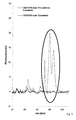
- supernatants were analyzed by microfluidic capillary electrophoresis. While in CBS7435 muts no target protein was detectable, CBS7435 muts PDI platform obviously produced enough native PDI (by transcriptional over-regulation of the introduced AOX1 promoter variant) to efficiently secrete both proteins ( figures 5 and 6 ).
- Bioreactor cultivation under controlled methanol-inducing conditions confirmed the presence of both highly disulfide-bonded target proteins in high concentrations.
- CBS7435 muts PDI platform strain For target proteins that are also produced in high levels by CBS7435 muts strain, i.e. without an increase of native PDI or overproduction of heterologous PDI, as e.g. Human Serum Albumin (HSA), CBS7435 muts PDI platform strain provides a means of augmenting production levels as well. While with CBS7435 muts 8g/L of HSA were produced in the culture supernatant, CBS7435 muts PDI platform secreted 14g/L of HSA under identical conditions concerning promoter usage, integrated copy number of expression cassette and culture conditions.
- HSA Human Serum Albumin
- Interleukin-2 was expressed to 4-fold higher yield from CBS7435 muts PDI platform strain as compared to CBS7435 muts strain under controlled conditions in a bioreactor.
Landscapes
- Chemical & Material Sciences (AREA)
- Life Sciences & Earth Sciences (AREA)
- Health & Medical Sciences (AREA)
- Organic Chemistry (AREA)
- Zoology (AREA)
- Genetics & Genomics (AREA)
- Engineering & Computer Science (AREA)
- Wood Science & Technology (AREA)
- Bioinformatics & Cheminformatics (AREA)
- Biochemistry (AREA)
- General Health & Medical Sciences (AREA)
- General Engineering & Computer Science (AREA)
- Molecular Biology (AREA)
- Biotechnology (AREA)
- Microbiology (AREA)
- Medicinal Chemistry (AREA)
- Proteomics, Peptides & Aminoacids (AREA)
- Biomedical Technology (AREA)
- Biophysics (AREA)
- Toxicology (AREA)
- Gastroenterology & Hepatology (AREA)
- Chemical Kinetics & Catalysis (AREA)
- General Chemical & Material Sciences (AREA)
- Mycology (AREA)
- Physics & Mathematics (AREA)
- Plant Pathology (AREA)
- Micro-Organisms Or Cultivation Processes Thereof (AREA)
- Preparation Of Compounds By Using Micro-Organisms (AREA)
Priority Applications (14)
| Application Number | Priority Date | Filing Date | Title |
|---|---|---|---|
| EP11179496A EP2565262A1 (fr) | 2011-08-31 | 2011-08-31 | Expression de protéine |
| CA2847061A CA2847061C (fr) | 2011-08-31 | 2012-08-31 | Expression de proteines |
| US14/241,505 US9206454B2 (en) | 2011-08-31 | 2012-08-31 | Protein expression |
| BR112014004830-4A BR112014004830B1 (pt) | 2011-08-31 | 2012-08-31 | Célula de levedura geneticamente modificada, seu uso e método para produzir uma proteína ou polipeptídio recombinante de interesse |
| JP2014527671A JP6085605B2 (ja) | 2011-08-31 | 2012-08-31 | タンパク質発現 |
| AU2012300885A AU2012300885B2 (en) | 2011-08-31 | 2012-08-31 | Protein expression |
| PCT/EP2012/066949 WO2013030329A1 (fr) | 2011-08-31 | 2012-08-31 | Expression de protéines |
| EP12751541.9A EP2681308B1 (fr) | 2011-08-31 | 2012-08-31 | Expression de protéines |
| CN201280053604.1A CN103906833B (zh) | 2011-08-31 | 2012-08-31 | 蛋白质表达 |
| NZ621527A NZ621527A (en) | 2011-08-31 | 2012-08-31 | A genetically modified yeast cell and method of production of recombinant protein or polypeptide thereof |
| KR1020147008224A KR101971914B1 (ko) | 2011-08-31 | 2012-08-31 | 단백질 발현 |
| SA112330816A SA112330816B1 (ar) | 2011-08-31 | 2012-09-01 | التعبير الوراثي عن البروتين |
| TNP2014000069A TN2014000069A1 (en) | 2011-08-31 | 2014-02-18 | Protein expression |
| MA36827A MA35440B1 (fr) | 2011-08-31 | 2014-03-13 | Expression de proteines |
Applications Claiming Priority (1)
| Application Number | Priority Date | Filing Date | Title |
|---|---|---|---|
| EP11179496A EP2565262A1 (fr) | 2011-08-31 | 2011-08-31 | Expression de protéine |
Publications (1)
| Publication Number | Publication Date |
|---|---|
| EP2565262A1 true EP2565262A1 (fr) | 2013-03-06 |
Family
ID=46755023
Family Applications (2)
| Application Number | Title | Priority Date | Filing Date |
|---|---|---|---|
| EP11179496A Withdrawn EP2565262A1 (fr) | 2011-08-31 | 2011-08-31 | Expression de protéine |
| EP12751541.9A Active EP2681308B1 (fr) | 2011-08-31 | 2012-08-31 | Expression de protéines |
Family Applications After (1)
| Application Number | Title | Priority Date | Filing Date |
|---|---|---|---|
| EP12751541.9A Active EP2681308B1 (fr) | 2011-08-31 | 2012-08-31 | Expression de protéines |
Country Status (13)
| Country | Link |
|---|---|
| US (1) | US9206454B2 (fr) |
| EP (2) | EP2565262A1 (fr) |
| JP (1) | JP6085605B2 (fr) |
| KR (1) | KR101971914B1 (fr) |
| CN (1) | CN103906833B (fr) |
| AU (1) | AU2012300885B2 (fr) |
| BR (1) | BR112014004830B1 (fr) |
| CA (1) | CA2847061C (fr) |
| MA (1) | MA35440B1 (fr) |
| NZ (1) | NZ621527A (fr) |
| SA (1) | SA112330816B1 (fr) |
| TN (1) | TN2014000069A1 (fr) |
| WO (1) | WO2013030329A1 (fr) |
Families Citing this family (24)
| Publication number | Priority date | Publication date | Assignee | Title |
|---|---|---|---|---|
| PT2900263T (pt) | 2012-09-26 | 2019-07-29 | Univ Wuerzburg J Maximilians | Anticorpos monoclonais contra o factor de crescimento e diferenciaçao 15 (gdf-15) |
| EP3865580A1 (fr) | 2013-03-15 | 2021-08-18 | The Board of Trustees of the Leland Stanford Junior University | Alcaloïdes de benzylisoquinoline (bia) produisant des microbes et leurs procédés de fabrication et d'utilisation |
| WO2015066642A1 (fr) | 2013-11-04 | 2015-05-07 | The Board Of Trustees Of The Leland Stanford Junior University | Microbes produisant des précurseurs d'un alcaloïde, la benzylisoquinoline, et leurs procédés de production et d'utilisation |
| EP3122775B1 (fr) | 2014-03-26 | 2019-11-13 | Julius-Maximilians-Universität Würzburg | Anticorps monoclonaux au facteur de croissance et de différenciation 15 (gdf-15), et utilisations de ces derniers pour traiter la cachéxie du cancer et le cancer |
| EP3217807A4 (fr) | 2014-11-11 | 2018-09-12 | Clara Foods Co. | Procédés et compositions pour la production de protéines de blanc d'oeuf |
| GB2547371A (en) * | 2014-11-17 | 2017-08-16 | Univ Leland Stanford Junior | Noscapinoid-producing microbes and methods of making and using the same |
| CN107614688B (zh) | 2015-05-04 | 2023-02-28 | 小利兰·斯坦福大学托管委员会 | 产生苄基异喹啉生物碱(bia)前体的微生物及其制备和使用方法 |
| ES2945359T3 (es) | 2015-05-08 | 2023-06-30 | Univ Leland Stanford Junior | Métodos para producir epimerasas y alcaloides de bencilisoquinolina |
| CN107614516A (zh) | 2015-05-11 | 2018-01-19 | 非凡食品有限公司 | 用于基因工程改造甲基营养型酵母的表达构建体和方法 |
| JP6858181B2 (ja) | 2015-10-02 | 2021-04-14 | ユリウス−マクシミリアン−ウニヴェルシテート・ヴュルツブルク | 免疫チェックポイントブロッカーを用いる治療の臨床アウトカムを予測するための診断マーカーとしてのgdf−15 |
| CN105112468B (zh) * | 2015-10-14 | 2019-01-08 | 厦门大学 | 一种多酶耦联体系制备手性胺的方法 |
| CN112831501A (zh) * | 2016-05-04 | 2021-05-25 | 深圳普罗吉医药科技有限公司 | 高效表达重组人血清白蛋白工程菌的构建 |
| WO2018165594A1 (fr) | 2017-03-10 | 2018-09-13 | Bolt Threads, Inc. | Compositions et procédés de production de rendements sécrétés élevés de protéines recombinées |
| GB2579940B (en) | 2017-08-03 | 2022-11-30 | Antheia Inc | Engineered benzylisoquinoline alkaloid epimerases and methods of producing benzylisoquinoline alkaloids |
| WO2020185626A1 (fr) | 2019-03-08 | 2020-09-17 | The Board Of Trustees Of The Leland Stanford Junior University | Cellules hôtes non végétales produisant des alcaloïdes tropaniques (at) et procédés de production et d'utilisation associés |
| WO2020215017A1 (fr) * | 2019-04-17 | 2020-10-22 | Impossible Foods Inc. | Substances et procédés pour la production de protéines |
| CN114641565B (zh) * | 2019-07-05 | 2024-10-22 | 比西有限公司 | 重组血红素硫醇盐加氧酶 |
| US12096784B2 (en) | 2019-07-11 | 2024-09-24 | Clara Foods Co. | Protein compositions and consumable products thereof |
| SI3997118T1 (sl) | 2019-07-11 | 2025-06-30 | Clara Foods Co. | Sestavek napitka, ki obsega rekombinantni ovomukoidni protein |
| US10927360B1 (en) | 2019-08-07 | 2021-02-23 | Clara Foods Co. | Compositions comprising digestive enzymes |
| GB202010630D0 (en) * | 2020-07-10 | 2020-08-26 | Imp College Innovations Ltd | Methods |
| IL302646A (en) | 2020-11-10 | 2023-07-01 | Catalym Gmbh | Anti-GDF15 antibody and dosage regimen for cancer treatment |
| EP4582443A1 (fr) * | 2022-09-02 | 2025-07-09 | Tonghua Anrate Biopharmaceutical Co., Ltd. | Procédé permettant d'améliorer le niveau d'expression d'albumine humaine recombinante, cellule et protéine |
| CN117903294B (zh) * | 2024-03-19 | 2024-06-14 | 北京国科星联科技有限公司 | 一种发酵生产乳铁蛋白的马克斯克鲁维酵母及其构建方法与应用 |
Citations (4)
| Publication number | Priority date | Publication date | Assignee | Title |
|---|---|---|---|---|
| WO1993025676A1 (fr) | 1992-06-12 | 1993-12-23 | Merck & Co., Inc. | PROCEDE D'AUGMENTATION DE LA PRODUCTION DE PROTEINES RECOMBINANTES LIEES AU BISULFURE A L'AIDE DE $i(SACCHAROMYCES CEREVISIAE) |
| WO1994008012A1 (fr) | 1992-10-02 | 1994-04-14 | Research Corporation Technologies, Inc. | Procedes d'augmentation de la secretion de proteines surexprimees |
| WO2006089329A2 (fr) | 2005-02-23 | 2006-08-31 | Technische Universität Graz | Promoteurs mutants d'aox 1 |
| WO2009105357A1 (fr) * | 2008-02-20 | 2009-08-27 | Glycofi, Inc. | Vecteurs et souches de levure pour la production de protéines |
Family Cites Families (2)
| Publication number | Priority date | Publication date | Assignee | Title |
|---|---|---|---|---|
| GB0329681D0 (en) * | 2003-12-23 | 2004-01-28 | Delta Biotechnology Ltd | Gene expression technique |
| WO2005113768A1 (fr) * | 2004-05-21 | 2005-12-01 | Takara Bio Inc. | Processus de production de polypeptide |
-
2011
- 2011-08-31 EP EP11179496A patent/EP2565262A1/fr not_active Withdrawn
-
2012
- 2012-08-31 CN CN201280053604.1A patent/CN103906833B/zh active Active
- 2012-08-31 BR BR112014004830-4A patent/BR112014004830B1/pt active IP Right Grant
- 2012-08-31 US US14/241,505 patent/US9206454B2/en active Active
- 2012-08-31 NZ NZ621527A patent/NZ621527A/en not_active IP Right Cessation
- 2012-08-31 JP JP2014527671A patent/JP6085605B2/ja active Active
- 2012-08-31 WO PCT/EP2012/066949 patent/WO2013030329A1/fr not_active Ceased
- 2012-08-31 EP EP12751541.9A patent/EP2681308B1/fr active Active
- 2012-08-31 CA CA2847061A patent/CA2847061C/fr active Active
- 2012-08-31 AU AU2012300885A patent/AU2012300885B2/en active Active
- 2012-08-31 KR KR1020147008224A patent/KR101971914B1/ko active Active
- 2012-09-01 SA SA112330816A patent/SA112330816B1/ar unknown
-
2014
- 2014-02-18 TN TNP2014000069A patent/TN2014000069A1/en unknown
- 2014-03-13 MA MA36827A patent/MA35440B1/fr unknown
Patent Citations (4)
| Publication number | Priority date | Publication date | Assignee | Title |
|---|---|---|---|---|
| WO1993025676A1 (fr) | 1992-06-12 | 1993-12-23 | Merck & Co., Inc. | PROCEDE D'AUGMENTATION DE LA PRODUCTION DE PROTEINES RECOMBINANTES LIEES AU BISULFURE A L'AIDE DE $i(SACCHAROMYCES CEREVISIAE) |
| WO1994008012A1 (fr) | 1992-10-02 | 1994-04-14 | Research Corporation Technologies, Inc. | Procedes d'augmentation de la secretion de proteines surexprimees |
| WO2006089329A2 (fr) | 2005-02-23 | 2006-08-31 | Technische Universität Graz | Promoteurs mutants d'aox 1 |
| WO2009105357A1 (fr) * | 2008-02-20 | 2009-08-27 | Glycofi, Inc. | Vecteurs et souches de levure pour la production de protéines |
Non-Patent Citations (15)
| Title |
|---|
| "Biological Research on Industrial Yeast", vol. II, 1987, CRC PRESS, pages: 1 - 18 |
| AUSUBEL, F.M. ET AL.: "Current Protocols in Molecular Biology", 2003, JOHN WILEY & SONS |
| BUTZ JA ET AL., BIOTECH BIOENG, vol. 84, 2003, pages 292 - 304 |
| CREGG JM: "Pichia Protocols", 8 August 2007, HUMANA PRESS |
| FINNIS CJA ET AL., MICROBIAL CELL FACTORIES, vol. 9, 2010, pages 87 |
| GUPTA CS ET AL., J MOL ENDOCRIN, vol. 22, 1999, pages 273 - 283 |
| INAN M ET AL., BIOTECHNOL BIOENG, vol. 93, 2006, pages 771 - 778 |
| LONGTINE MARK S ET AL: "Additional modules for versatile and economical PCR-based gene deletion and modification in Saccharomyces cerevisiae", YEAST, vol. 14, no. 10, July 1998 (1998-07-01), pages 953 - 961, XP002668011, ISSN: 0749-503X * |
| MARTIN SCHRÃDER: "Engineering eukaryotic protein factories", BIOTECHNOLOGY LETTERS, vol. 30, no. 2, 21 September 2007 (2007-09-21), pages 187 - 196, XP019569973, ISSN: 1573-6776 * |
| PAYNE MS ET AL., GENE, vol. 194, 1997, pages 179 - 182 |
| ROBINSON A S ET AL: "PROTEIN DISULFIDE ISOMERASE OVEREXPRESSION INCREASES SECRETION OF FOREIGN PROTEINS IN SACCHAROMYCES CEREVISIAE", BIO/TECHNOLOGY, vol. 12, 1 April 1994 (1994-04-01), pages 381 - 384, XP002070977, ISSN: 0733-222X, DOI: 10.1038/NBT0494-381 * |
| SCHULTZ L D ET AL: "Using molecular genetics to improve the production of recombinant proteins by the yeast Saccharomyces cerevisiae", NEW YORK ACADEMY OF SCIENCES, vol. 721, 2 May 1994 (1994-05-02), pages 148 - 157, XP002084265, ISSN: 0077-8923, DOI: 10.1111/J.1749-6632.1994.TB47387.X * |
| SMITH JASON D ET AL: "Protein disulfide isomerase, but not binding protein, overexpression enhances secretion of a non-disulfide-bonded protein in yeast", BIOTECHNOLOGY AND BIOENGINEERING, vol. 85, no. 3, 5 February 2004 (2004-02-05), pages 340 - 350, XP002528285, ISSN: 0006-3592, DOI: 10.1002/BIT.10853 * |
| SUBRAMANIAN SHOBA ET AL: "Pbn1p: An essential endoplasmic reticulum membrane protein required for protein processing in the endoplasmic reticulum of budding yeast", PROCEEDINGS OF THE NATIONAL ACADEMY OF SCIENCES OF THE UNITED STATES OF AMERICA, vol. 103, no. 4, January 2006 (2006-01-01), pages 939 - 944, XP002668010, ISSN: 0027-8424 * |
| WHITTAKER, M.M., WHITTAKER, J.M., PROTEIN, EXPR. PURIF., vol. 20, 2000, pages 105 - 111 |
Also Published As
| Publication number | Publication date |
|---|---|
| CN103906833B (zh) | 2016-06-15 |
| AU2012300885B2 (en) | 2017-05-25 |
| KR20140060552A (ko) | 2014-05-20 |
| BR112014004830A2 (pt) | 2017-04-04 |
| CA2847061A1 (fr) | 2013-03-07 |
| KR101971914B1 (ko) | 2019-04-24 |
| AU2012300885A1 (en) | 2014-04-03 |
| JP6085605B2 (ja) | 2017-02-22 |
| TN2014000069A1 (en) | 2015-07-01 |
| CN103906833A (zh) | 2014-07-02 |
| BR112014004830B1 (pt) | 2022-03-22 |
| SA112330816B1 (ar) | 2015-07-23 |
| US9206454B2 (en) | 2015-12-08 |
| US20140212923A1 (en) | 2014-07-31 |
| EP2681308A1 (fr) | 2014-01-08 |
| CA2847061C (fr) | 2022-11-01 |
| JP2014525255A (ja) | 2014-09-29 |
| WO2013030329A1 (fr) | 2013-03-07 |
| MA35440B1 (fr) | 2014-09-01 |
| EP2681308B1 (fr) | 2015-03-04 |
| NZ621527A (en) | 2015-10-30 |
Similar Documents
| Publication | Publication Date | Title |
|---|---|---|
| EP2681308B1 (fr) | Expression de protéines | |
| KR102789173B1 (ko) | 메틸영양성 효모를 유전적으로 조작하는 발현 구축물 및 방법 | |
| KR101298157B1 (ko) | 2-미크론 패밀리 플라스미드 및 이의 용도 | |
| KR101262682B1 (ko) | 유전자 발현 기술 | |
| KR20180037237A (ko) | 프로모터 변이체 | |
| JP5662363B2 (ja) | 難発現性タンパク質の分泌のためのタンパク質融合因子(tfp)を明らかにする方法、タンパク質融合因子(tfp)ライブラリーを製造する方法、及び難発現性タンパク質の組み換え的生産方法 | |
| JP7756787B2 (ja) | タンパク質合成および分泌のための方法および組成物 | |
| JP2002512529A (ja) | 改良されたタンパク質発現菌株 | |
| EP0952158B1 (fr) | Levure p. pastoris methylotrophique modifiee de secretion de l'hormone de croissance humaine | |
| CN107778365B (zh) | 一种多点整合的重组蛋白表达方法 | |
| WO2025133162A1 (fr) | Expression de protéines recombinantes | |
| US8703444B2 (en) | Pichia pastoris deficient in endogenous secreted protease | |
| KR100798894B1 (ko) | 재조합단백질 생산용 단백질융합인자 | |
| HK1194762A (en) | Protein expression | |
| CN121736922A (zh) | 高效表达分泌豆血红蛋白的马克斯克鲁维酵母工程菌株及其应用 | |
| KR102809772B1 (ko) | 인공 동질효소가 도입된 효모 균주 및 이를 이용한 글루타치온의 생산 방법 | |
| US20030022280A1 (en) | Compositions and methods for producing high yields of heterologous polypeptides in a pichia cell | |
| KR20070101190A (ko) | 재조합단백질 생산용 단백질융합인자 | |
| JP5686974B2 (ja) | 新規ターミネーターおよびその利用 | |
| CN117777276A (zh) | 一种促进马克斯克鲁维酵母分泌表达人乳铁蛋白的方法 | |
| WO2001066693A1 (fr) | Compositions et procedes permettant de produire des polypeptides heterologues haut rendement dans une cellule de pichia | |
| CN117867007A (zh) | 一种合成人源乳铁蛋白的马克斯克鲁维酵母的构建方法与应用 |
Legal Events
| Date | Code | Title | Description |
|---|---|---|---|
| PUAI | Public reference made under article 153(3) epc to a published international application that has entered the european phase |
Free format text: ORIGINAL CODE: 0009012 |
|
| AK | Designated contracting states |
Kind code of ref document: A1 Designated state(s): AL AT BE BG CH CY CZ DE DK EE ES FI FR GB GR HR HU IE IS IT LI LT LU LV MC MK MT NL NO PL PT RO RS SE SI SK SM TR |
|
| AX | Request for extension of the european patent |
Extension state: BA ME |
|
| STAA | Information on the status of an ep patent application or granted ep patent |
Free format text: STATUS: THE APPLICATION IS DEEMED TO BE WITHDRAWN |
|
| 18D | Application deemed to be withdrawn |
Effective date: 20130907 |