EP2565281B1 - Farbstoffmischungen für qPCR und High Resolution Melting - Google Patents
Farbstoffmischungen für qPCR und High Resolution Melting Download PDFInfo
- Publication number
- EP2565281B1 EP2565281B1 EP12182195.3A EP12182195A EP2565281B1 EP 2565281 B1 EP2565281 B1 EP 2565281B1 EP 12182195 A EP12182195 A EP 12182195A EP 2565281 B1 EP2565281 B1 EP 2565281B1
- Authority
- EP
- European Patent Office
- Prior art keywords
- dsdna
- dye
- dyes
- melting
- nucleic acid
- Prior art date
- Legal status (The legal status is an assumption and is not a legal conclusion. Google has not performed a legal analysis and makes no representation as to the accuracy of the status listed.)
- Not-in-force
Links
- 238000002844 melting Methods 0.000 title claims description 84
- 230000008018 melting Effects 0.000 title claims description 83
- 239000000203 mixture Substances 0.000 title description 147
- 238000011529 RT qPCR Methods 0.000 title description 3
- 239000000975 dye Substances 0.000 claims description 389
- 108020004414 DNA Proteins 0.000 claims description 233
- 102000053602 DNA Human genes 0.000 claims description 167
- 238000003753 real-time PCR Methods 0.000 claims description 81
- 230000027455 binding Effects 0.000 claims description 80
- 102000039446 nucleic acids Human genes 0.000 claims description 66
- 108020004707 nucleic acids Proteins 0.000 claims description 66
- 150000007523 nucleic acids Chemical class 0.000 claims description 66
- 238000000034 method Methods 0.000 claims description 49
- 230000005284 excitation Effects 0.000 claims description 35
- 238000003556 assay Methods 0.000 claims description 32
- 238000003752 polymerase chain reaction Methods 0.000 claims description 32
- 230000002441 reversible effect Effects 0.000 claims description 10
- 238000000295 emission spectrum Methods 0.000 claims description 9
- 238000000695 excitation spectrum Methods 0.000 claims description 9
- 239000011541 reaction mixture Substances 0.000 claims description 9
- 229920002477 rna polymer Polymers 0.000 claims description 9
- 238000010438 heat treatment Methods 0.000 claims description 8
- 108090000623 proteins and genes Proteins 0.000 claims description 8
- -1 HTT Proteins 0.000 claims description 6
- 238000005259 measurement Methods 0.000 claims description 6
- 108010079245 Cystic Fibrosis Transmembrane Conductance Regulator Proteins 0.000 claims description 4
- 102100033703 Mitofusin-2 Human genes 0.000 claims description 4
- 102100026263 Sphingomyelin phosphodiesterase Human genes 0.000 claims description 4
- 108700020463 BRCA1 Proteins 0.000 claims description 3
- 102000036365 BRCA1 Human genes 0.000 claims description 3
- 101150072950 BRCA1 gene Proteins 0.000 claims description 3
- 101001018717 Homo sapiens Mitofusin-2 Proteins 0.000 claims description 3
- 101001125026 Homo sapiens Nucleotide-binding oligomerization domain-containing protein 2 Proteins 0.000 claims description 3
- 102100029441 Nucleotide-binding oligomerization domain-containing protein 2 Human genes 0.000 claims description 3
- 108091034117 Oligonucleotide Proteins 0.000 claims description 3
- 108700020462 BRCA2 Proteins 0.000 claims description 2
- 102000052609 BRCA2 Human genes 0.000 claims description 2
- 101150008921 Brca2 gene Proteins 0.000 claims description 2
- 101000785978 Homo sapiens Sphingomyelin phosphodiesterase Proteins 0.000 claims description 2
- 102000008371 intracellularly ATP-gated chloride channel activity proteins Human genes 0.000 claims 1
- 239000000523 sample Substances 0.000 description 35
- 125000000217 alkyl group Chemical group 0.000 description 32
- 238000004458 analytical method Methods 0.000 description 31
- 230000035772 mutation Effects 0.000 description 25
- 239000000470 constituent Substances 0.000 description 24
- 125000003118 aryl group Chemical group 0.000 description 22
- 230000003321 amplification Effects 0.000 description 20
- 238000006243 chemical reaction Methods 0.000 description 20
- 238000003199 nucleic acid amplification method Methods 0.000 description 20
- 125000005842 heteroatom Chemical group 0.000 description 18
- 108091093088 Amplicon Proteins 0.000 description 15
- 229910052760 oxygen Inorganic materials 0.000 description 15
- 229910052717 sulfur Inorganic materials 0.000 description 15
- 150000001875 compounds Chemical class 0.000 description 14
- 229910052736 halogen Inorganic materials 0.000 description 13
- 150000002367 halogens Chemical class 0.000 description 13
- 239000000980 acid dye Substances 0.000 description 12
- 229920006395 saturated elastomer Polymers 0.000 description 12
- 230000004568 DNA-binding Effects 0.000 description 10
- 125000003342 alkenyl group Chemical group 0.000 description 10
- 230000005764 inhibitory process Effects 0.000 description 10
- 102000016928 DNA-directed DNA polymerase Human genes 0.000 description 8
- 108010014303 DNA-directed DNA polymerase Proteins 0.000 description 8
- 108020004682 Single-Stranded DNA Proteins 0.000 description 8
- 238000005516 engineering process Methods 0.000 description 8
- 238000012360 testing method Methods 0.000 description 8
- 125000004169 (C1-C6) alkyl group Chemical group 0.000 description 7
- 125000000304 alkynyl group Chemical group 0.000 description 7
- 239000012472 biological sample Substances 0.000 description 7
- 125000004435 hydrogen atom Chemical group [H]* 0.000 description 7
- 230000002401 inhibitory effect Effects 0.000 description 7
- 239000004215 Carbon black (E152) Substances 0.000 description 6
- 108091006146 Channels Proteins 0.000 description 6
- 125000003545 alkoxy group Chemical group 0.000 description 6
- 229910052799 carbon Inorganic materials 0.000 description 6
- 239000003086 colorant Substances 0.000 description 6
- 238000001514 detection method Methods 0.000 description 6
- ZMMJGEGLRURXTF-UHFFFAOYSA-N ethidium bromide Chemical compound [Br-].C12=CC(N)=CC=C2C2=CC=C(N)C=C2[N+](CC)=C1C1=CC=CC=C1 ZMMJGEGLRURXTF-UHFFFAOYSA-N 0.000 description 6
- 229960005542 ethidium bromide Drugs 0.000 description 6
- 239000007850 fluorescent dye Substances 0.000 description 6
- 108020004445 glyceraldehyde-3-phosphate dehydrogenase Proteins 0.000 description 6
- 102000006602 glyceraldehyde-3-phosphate dehydrogenase Human genes 0.000 description 6
- 229930195733 hydrocarbon Natural products 0.000 description 6
- 150000002430 hydrocarbons Chemical class 0.000 description 6
- 229910052739 hydrogen Inorganic materials 0.000 description 6
- 239000001257 hydrogen Substances 0.000 description 6
- 238000002156 mixing Methods 0.000 description 6
- 230000002195 synergetic effect Effects 0.000 description 6
- OKTJSMMVPCPJKN-UHFFFAOYSA-N Carbon Chemical compound [C] OKTJSMMVPCPJKN-UHFFFAOYSA-N 0.000 description 5
- 230000007423 decrease Effects 0.000 description 5
- 238000003205 genotyping method Methods 0.000 description 5
- 125000001072 heteroaryl group Chemical group 0.000 description 5
- 239000000155 melt Substances 0.000 description 5
- 229910052757 nitrogen Inorganic materials 0.000 description 5
- 125000001997 phenyl group Chemical group [H]C1=C([H])C([H])=C(*)C([H])=C1[H] 0.000 description 5
- 238000009738 saturating Methods 0.000 description 5
- ACOJCCLIDPZYJC-UHFFFAOYSA-M thiazole orange Chemical compound CC1=CC=C(S([O-])(=O)=O)C=C1.C1=CC=C2C(C=C3N(C4=CC=CC=C4S3)C)=CC=[N+](C)C2=C1 ACOJCCLIDPZYJC-UHFFFAOYSA-M 0.000 description 5
- 108700028369 Alleles Proteins 0.000 description 4
- IJGRMHOSHXDMSA-UHFFFAOYSA-N Atomic nitrogen Chemical compound N#N IJGRMHOSHXDMSA-UHFFFAOYSA-N 0.000 description 4
- 0 C*(C=CC(C)(C)C(*)=C1c(c(*)c(*)c(N(*)*)c2*)c2OC(*)=C1*)C(*1)=[N+](*)c2c1c(*)c(*)c(*)c2* Chemical compound C*(C=CC(C)(C)C(*)=C1c(c(*)c(*)c(N(*)*)c2*)c2OC(*)=C1*)C(*1)=[N+](*)c2c1c(*)c(*)c(*)c2* 0.000 description 4
- 125000004103 aminoalkyl group Chemical group 0.000 description 4
- 125000000753 cycloalkyl group Chemical group 0.000 description 4
- 239000010432 diamond Substances 0.000 description 4
- 230000000694 effects Effects 0.000 description 4
- 102000054765 polymorphisms of proteins Human genes 0.000 description 4
- 230000002829 reductive effect Effects 0.000 description 4
- 230000035945 sensitivity Effects 0.000 description 4
- 238000012163 sequencing technique Methods 0.000 description 4
- 102000012605 Cystic Fibrosis Transmembrane Conductance Regulator Human genes 0.000 description 3
- 238000001712 DNA sequencing Methods 0.000 description 3
- KCXVZYZYPLLWCC-UHFFFAOYSA-N EDTA Chemical compound OC(=O)CN(CC(O)=O)CCN(CC(O)=O)CC(O)=O KCXVZYZYPLLWCC-UHFFFAOYSA-N 0.000 description 3
- 101150102357 OR10J5 gene Proteins 0.000 description 3
- 238000012408 PCR amplification Methods 0.000 description 3
- FZWLAAWBMGSTSO-UHFFFAOYSA-N Thiazole Chemical compound C1=CSC=N1 FZWLAAWBMGSTSO-UHFFFAOYSA-N 0.000 description 3
- 239000007983 Tris buffer Substances 0.000 description 3
- 230000000996 additive effect Effects 0.000 description 3
- 150000001450 anions Chemical class 0.000 description 3
- 125000004181 carboxyalkyl group Chemical group 0.000 description 3
- 239000003153 chemical reaction reagent Substances 0.000 description 3
- 238000010790 dilution Methods 0.000 description 3
- 239000012895 dilution Substances 0.000 description 3
- 238000001506 fluorescence spectroscopy Methods 0.000 description 3
- 125000000623 heterocyclic group Chemical group 0.000 description 3
- 239000000833 heterodimer Substances 0.000 description 3
- 238000009830 intercalation Methods 0.000 description 3
- 239000002773 nucleotide Substances 0.000 description 3
- 125000005010 perfluoroalkyl group Chemical group 0.000 description 3
- 238000011002 quantification Methods 0.000 description 3
- 238000010839 reverse transcription Methods 0.000 description 3
- 229910052711 selenium Inorganic materials 0.000 description 3
- 239000011669 selenium Chemical group 0.000 description 3
- 125000001424 substituent group Chemical group 0.000 description 3
- LENZDBCJOHFCAS-UHFFFAOYSA-N tris Chemical compound OCC(N)(CO)CO LENZDBCJOHFCAS-UHFFFAOYSA-N 0.000 description 3
- QGKMIGUHVLGJBR-UHFFFAOYSA-M (4z)-1-(3-methylbutyl)-4-[[1-(3-methylbutyl)quinolin-1-ium-4-yl]methylidene]quinoline;iodide Chemical compound [I-].C12=CC=CC=C2N(CCC(C)C)C=CC1=CC1=CC=[N+](CCC(C)C)C2=CC=CC=C12 QGKMIGUHVLGJBR-UHFFFAOYSA-M 0.000 description 2
- 244000144725 Amygdalus communis Species 0.000 description 2
- 235000011437 Amygdalus communis Nutrition 0.000 description 2
- 244000226021 Anacardium occidentale Species 0.000 description 2
- 244000105624 Arachis hypogaea Species 0.000 description 2
- 235000010777 Arachis hypogaea Nutrition 0.000 description 2
- 206010006187 Breast cancer Diseases 0.000 description 2
- 208000026310 Breast neoplasm Diseases 0.000 description 2
- 240000007582 Corylus avellana Species 0.000 description 2
- 235000007466 Corylus avellana Nutrition 0.000 description 2
- RTZKZFJDLAIYFH-UHFFFAOYSA-N Diethyl ether Chemical compound CCOCC RTZKZFJDLAIYFH-UHFFFAOYSA-N 0.000 description 2
- 240000007049 Juglans regia Species 0.000 description 2
- 235000009496 Juglans regia Nutrition 0.000 description 2
- TWRXJAOTZQYOKJ-UHFFFAOYSA-L Magnesium chloride Chemical compound [Mg+2].[Cl-].[Cl-] TWRXJAOTZQYOKJ-UHFFFAOYSA-L 0.000 description 2
- 108091028043 Nucleic acid sequence Proteins 0.000 description 2
- 244000000231 Sesamum indicum Species 0.000 description 2
- 235000003434 Sesamum indicum Nutrition 0.000 description 2
- ULHRKLSNHXXJLO-UHFFFAOYSA-L Yo-Pro-1 Chemical compound [I-].[I-].C1=CC=C2C(C=C3N(C4=CC=CC=C4O3)C)=CC=[N+](CCC[N+](C)(C)C)C2=C1 ULHRKLSNHXXJLO-UHFFFAOYSA-L 0.000 description 2
- GRRMZXFOOGQMFA-UHFFFAOYSA-J YoYo-1 Chemical compound [I-].[I-].[I-].[I-].C12=CC=CC=C2C(C=C2N(C3=CC=CC=C3O2)C)=CC=[N+]1CCC[N+](C)(C)CCC[N+](C)(C)CCC[N+](C1=CC=CC=C11)=CC=C1C=C1N(C)C2=CC=CC=C2O1 GRRMZXFOOGQMFA-UHFFFAOYSA-J 0.000 description 2
- 125000002723 alicyclic group Chemical group 0.000 description 2
- 125000001931 aliphatic group Chemical group 0.000 description 2
- 125000005129 aryl carbonyl group Chemical group 0.000 description 2
- 239000003795 chemical substances by application Substances 0.000 description 2
- 230000000295 complement effect Effects 0.000 description 2
- 238000013211 curve analysis Methods 0.000 description 2
- 125000004122 cyclic group Chemical group 0.000 description 2
- 230000003247 decreasing effect Effects 0.000 description 2
- 238000013461 design Methods 0.000 description 2
- 125000004663 dialkyl amino group Chemical group 0.000 description 2
- 239000000539 dimer Substances 0.000 description 2
- 238000010494 dissociation reaction Methods 0.000 description 2
- 230000005593 dissociations Effects 0.000 description 2
- 230000004077 genetic alteration Effects 0.000 description 2
- 125000002887 hydroxy group Chemical group [H]O* 0.000 description 2
- 230000006872 improvement Effects 0.000 description 2
- 239000000463 material Substances 0.000 description 2
- 238000011880 melting curve analysis Methods 0.000 description 2
- 108020004999 messenger RNA Proteins 0.000 description 2
- 125000000956 methoxy group Chemical group [H]C([H])([H])O* 0.000 description 2
- 239000003068 molecular probe Substances 0.000 description 2
- 238000012544 monitoring process Methods 0.000 description 2
- 125000002950 monocyclic group Chemical group 0.000 description 2
- 238000010606 normalization Methods 0.000 description 2
- 125000003729 nucleotide group Chemical group 0.000 description 2
- XSXHWVKGUXMUQE-UHFFFAOYSA-N osmium dioxide Inorganic materials O=[Os]=O XSXHWVKGUXMUQE-UHFFFAOYSA-N 0.000 description 2
- 125000001453 quaternary ammonium group Chemical group 0.000 description 2
- 230000000630 rising effect Effects 0.000 description 2
- 241000894007 species Species 0.000 description 2
- 238000010186 staining Methods 0.000 description 2
- 125000005207 tetraalkylammonium group Chemical group 0.000 description 2
- 125000006273 (C1-C3) alkyl group Chemical group 0.000 description 1
- 125000006552 (C3-C8) cycloalkyl group Chemical group 0.000 description 1
- 235000017060 Arachis glabrata Nutrition 0.000 description 1
- 235000018262 Arachis monticola Nutrition 0.000 description 1
- 108091007743 BRCA1/2 Proteins 0.000 description 1
- TYBKADJAOBUHAD-UHFFFAOYSA-J BoBo-1 Chemical compound [I-].[I-].[I-].[I-].S1C2=CC=CC=C2[N+](C)=C1C=C1C=CN(CCC[N+](C)(C)CCC[N+](C)(C)CCCN2C=CC(=CC3=[N+](C4=CC=CC=C4S3)C)C=C2)C=C1 TYBKADJAOBUHAD-UHFFFAOYSA-J 0.000 description 1
- UIZZRDIAIPYKJZ-UHFFFAOYSA-J BoBo-3 Chemical compound [I-].[I-].[I-].[I-].S1C2=CC=CC=C2[N+](C)=C1C=CC=C1C=CN(CCC[N+](C)(C)CCC[N+](C)(C)CCCN2C=CC(=CC=CC3=[N+](C4=CC=CC=C4S3)C)C=C2)C=C1 UIZZRDIAIPYKJZ-UHFFFAOYSA-J 0.000 description 1
- JIUJLQFLZUYIMB-UHFFFAOYSA-N CCN(CC)c1cc2[o+]c(CC3(C)Sc(cccc4)c4N3C)cc(N(C)CCC[N+](C)(C)C)c2cc1 Chemical compound CCN(CC)c1cc2[o+]c(CC3(C)Sc(cccc4)c4N3C)cc(N(C)CCC[N+](C)(C)C)c2cc1 JIUJLQFLZUYIMB-UHFFFAOYSA-N 0.000 description 1
- 208000010693 Charcot-Marie-Tooth Disease Diseases 0.000 description 1
- 208000035473 Communicable disease Diseases 0.000 description 1
- 108020004635 Complementary DNA Proteins 0.000 description 1
- 235000001543 Corylus americana Nutrition 0.000 description 1
- 208000011231 Crohn disease Diseases 0.000 description 1
- 230000004544 DNA amplification Effects 0.000 description 1
- 230000007067 DNA methylation Effects 0.000 description 1
- 238000013382 DNA quantification Methods 0.000 description 1
- 108700039887 Essential Genes Proteins 0.000 description 1
- 206010064571 Gene mutation Diseases 0.000 description 1
- 108091027305 Heteroduplex Proteins 0.000 description 1
- 101150043003 Htt gene Proteins 0.000 description 1
- 208000023105 Huntington disease Diseases 0.000 description 1
- FGBAVQUHSKYMTC-UHFFFAOYSA-M LDS 751 dye Chemical compound [O-]Cl(=O)(=O)=O.C1=CC2=CC(N(C)C)=CC=C2[N+](CC)=C1C=CC=CC1=CC=C(N(C)C)C=C1 FGBAVQUHSKYMTC-UHFFFAOYSA-M 0.000 description 1
- 108050004120 Mitofusin-2 Proteins 0.000 description 1
- 206010028980 Neoplasm Diseases 0.000 description 1
- 208000014060 Niemann-Pick disease Diseases 0.000 description 1
- 101150083031 Nod2 gene Proteins 0.000 description 1
- 108020005187 Oligonucleotide Probes Proteins 0.000 description 1
- 241000334993 Parma Species 0.000 description 1
- QBKMWMZYHZILHF-UHFFFAOYSA-L Po-Pro-1 Chemical compound [I-].[I-].O1C2=CC=CC=C2[N+](C)=C1C=C1C=CN(CCC[N+](C)(C)C)C=C1 QBKMWMZYHZILHF-UHFFFAOYSA-L 0.000 description 1
- CZQJZBNARVNSLQ-UHFFFAOYSA-L Po-Pro-3 Chemical compound [I-].[I-].O1C2=CC=CC=C2[N+](C)=C1C=CC=C1C=CN(CCC[N+](C)(C)C)C=C1 CZQJZBNARVNSLQ-UHFFFAOYSA-L 0.000 description 1
- BOLJGYHEBJNGBV-UHFFFAOYSA-J PoPo-1 Chemical compound [I-].[I-].[I-].[I-].O1C2=CC=CC=C2[N+](C)=C1C=C1C=CN(CCC[N+](C)(C)CCC[N+](C)(C)CCCN2C=CC(=CC3=[N+](C4=CC=CC=C4O3)C)C=C2)C=C1 BOLJGYHEBJNGBV-UHFFFAOYSA-J 0.000 description 1
- GYPIAQJSRPTNTI-UHFFFAOYSA-J PoPo-3 Chemical compound [I-].[I-].[I-].[I-].O1C2=CC=CC=C2[N+](C)=C1C=CC=C1C=CN(CCC[N+](C)(C)CCC[N+](C)(C)CCCN2C=CC(=CC=CC3=[N+](C4=CC=CC=C4O3)C)C=C2)C=C1 GYPIAQJSRPTNTI-UHFFFAOYSA-J 0.000 description 1
- 229920001213 Polysorbate 20 Polymers 0.000 description 1
- CGNLCCVKSWNSDG-UHFFFAOYSA-N SYBR Green I Chemical compound CN(C)CCCN(CCC)C1=CC(C=C2N(C3=CC=CC=C3S2)C)=C2C=CC=CC2=[N+]1C1=CC=CC=C1 CGNLCCVKSWNSDG-UHFFFAOYSA-N 0.000 description 1
- BUGBHKTXTAQXES-UHFFFAOYSA-N Selenium Chemical group [Se] BUGBHKTXTAQXES-UHFFFAOYSA-N 0.000 description 1
- 101150118355 Smpd1 gene Proteins 0.000 description 1
- 101710201924 Sphingomyelin phosphodiesterase 1 Proteins 0.000 description 1
- 101710095280 Sphingomyelinase C 1 Proteins 0.000 description 1
- NINIDFKCEFEMDL-UHFFFAOYSA-N Sulfur Chemical group [S] NINIDFKCEFEMDL-UHFFFAOYSA-N 0.000 description 1
- DPXHITFUCHFTKR-UHFFFAOYSA-L To-Pro-1 Chemical compound [I-].[I-].S1C2=CC=CC=C2[N+](C)=C1C=C1C2=CC=CC=C2N(CCC[N+](C)(C)C)C=C1 DPXHITFUCHFTKR-UHFFFAOYSA-L 0.000 description 1
- QHNORJFCVHUPNH-UHFFFAOYSA-L To-Pro-3 Chemical compound [I-].[I-].S1C2=CC=CC=C2[N+](C)=C1C=CC=C1C2=CC=CC=C2N(CCC[N+](C)(C)C)C=C1 QHNORJFCVHUPNH-UHFFFAOYSA-L 0.000 description 1
- MZZINWWGSYUHGU-UHFFFAOYSA-J ToTo-1 Chemical compound [I-].[I-].[I-].[I-].C12=CC=CC=C2C(C=C2N(C3=CC=CC=C3S2)C)=CC=[N+]1CCC[N+](C)(C)CCC[N+](C)(C)CCC[N+](C1=CC=CC=C11)=CC=C1C=C1N(C)C2=CC=CC=C2S1 MZZINWWGSYUHGU-UHFFFAOYSA-J 0.000 description 1
- ZVUUXEGAYWQURQ-UHFFFAOYSA-L Yo-Pro-3 Chemical compound [I-].[I-].O1C2=CC=CC=C2[N+](C)=C1C=CC=C1C2=CC=CC=C2N(CCC[N+](C)(C)C)C=C1 ZVUUXEGAYWQURQ-UHFFFAOYSA-L 0.000 description 1
- JSBNEYNPYQFYNM-UHFFFAOYSA-J YoYo-3 Chemical compound [I-].[I-].[I-].[I-].C12=CC=CC=C2C(C=CC=C2N(C3=CC=CC=C3O2)C)=CC=[N+]1CCC(=[N+](C)C)CCCC(=[N+](C)C)CC[N+](C1=CC=CC=C11)=CC=C1C=CC=C1N(C)C2=CC=CC=C2O1 JSBNEYNPYQFYNM-UHFFFAOYSA-J 0.000 description 1
- AFCIMSXHQSIHQW-UHFFFAOYSA-N [O].[P] Chemical compound [O].[P] AFCIMSXHQSIHQW-UHFFFAOYSA-N 0.000 description 1
- 230000005856 abnormality Effects 0.000 description 1
- 238000002835 absorbance Methods 0.000 description 1
- 239000000999 acridine dye Substances 0.000 description 1
- 230000002730 additional effect Effects 0.000 description 1
- 239000000654 additive Substances 0.000 description 1
- 125000004183 alkoxy alkyl group Chemical group 0.000 description 1
- 125000003282 alkyl amino group Chemical group 0.000 description 1
- 125000004414 alkyl thio group Chemical group 0.000 description 1
- 230000002009 allergenic effect Effects 0.000 description 1
- 235000020224 almond Nutrition 0.000 description 1
- 150000001412 amines Chemical class 0.000 description 1
- XKMRRTOUMJRJIA-UHFFFAOYSA-N ammonia nh3 Chemical compound N.N XKMRRTOUMJRJIA-UHFFFAOYSA-N 0.000 description 1
- 125000003710 aryl alkyl group Chemical group 0.000 description 1
- 125000004429 atom Chemical group 0.000 description 1
- QVGXLLKOCUKJST-UHFFFAOYSA-N atomic oxygen Chemical group [O] QVGXLLKOCUKJST-UHFFFAOYSA-N 0.000 description 1
- 125000001164 benzothiazolyl group Chemical group S1C(=NC2=C1C=CC=C2)* 0.000 description 1
- 125000004541 benzoxazolyl group Chemical group O1C(=NC2=C1C=CC=C2)* 0.000 description 1
- 230000008275 binding mechanism Effects 0.000 description 1
- 230000015572 biosynthetic process Effects 0.000 description 1
- 238000009529 body temperature measurement Methods 0.000 description 1
- 239000000872 buffer Substances 0.000 description 1
- 238000010804 cDNA synthesis Methods 0.000 description 1
- 238000004364 calculation method Methods 0.000 description 1
- 201000011510 cancer Diseases 0.000 description 1
- 239000011203 carbon fibre reinforced carbon Substances 0.000 description 1
- 235000020226 cashew nut Nutrition 0.000 description 1
- 230000003197 catalytic effect Effects 0.000 description 1
- 230000024245 cell differentiation Effects 0.000 description 1
- 230000008859 change Effects 0.000 description 1
- 238000012512 characterization method Methods 0.000 description 1
- 239000002299 complementary DNA Substances 0.000 description 1
- 230000002596 correlated effect Effects 0.000 description 1
- 230000001351 cycling effect Effects 0.000 description 1
- 125000005366 cycloalkylthio group Chemical group 0.000 description 1
- 125000000596 cyclohexenyl group Chemical group C1(=CCCCC1)* 0.000 description 1
- 125000000113 cyclohexyl group Chemical group [H]C1([H])C([H])([H])C([H])([H])C([H])(*)C([H])([H])C1([H])[H] 0.000 description 1
- 230000001419 dependent effect Effects 0.000 description 1
- 125000004985 dialkyl amino alkyl group Chemical group 0.000 description 1
- 239000003085 diluting agent Substances 0.000 description 1
- IPZJQDSFZGZEOY-UHFFFAOYSA-N dimethylmethylene Chemical compound C[C]C IPZJQDSFZGZEOY-UHFFFAOYSA-N 0.000 description 1
- 201000010099 disease Diseases 0.000 description 1
- 208000037265 diseases, disorders, signs and symptoms Diseases 0.000 description 1
- 230000001973 epigenetic effect Effects 0.000 description 1
- 150000002148 esters Chemical class 0.000 description 1
- 230000001747 exhibiting effect Effects 0.000 description 1
- 239000012634 fragment Substances 0.000 description 1
- 125000002541 furyl group Chemical group 0.000 description 1
- 238000001502 gel electrophoresis Methods 0.000 description 1
- 230000002068 genetic effect Effects 0.000 description 1
- 102000054766 genetic haplotypes Human genes 0.000 description 1
- PCHJSUWPFVWCPO-UHFFFAOYSA-N gold Chemical compound [Au] PCHJSUWPFVWCPO-UHFFFAOYSA-N 0.000 description 1
- 239000010931 gold Substances 0.000 description 1
- 229910052737 gold Inorganic materials 0.000 description 1
- 125000004404 heteroalkyl group Chemical group 0.000 description 1
- 125000000592 heterocycloalkyl group Chemical group 0.000 description 1
- 125000002768 hydroxyalkyl group Chemical group 0.000 description 1
- RKJUIXBNRJVNHR-UHFFFAOYSA-N indolenine Natural products C1=CC=C2CC=NC2=C1 RKJUIXBNRJVNHR-UHFFFAOYSA-N 0.000 description 1
- 231100000053 low toxicity Toxicity 0.000 description 1
- 229910001629 magnesium chloride Inorganic materials 0.000 description 1
- 238000013507 mapping Methods 0.000 description 1
- 239000000178 monomer Substances 0.000 description 1
- 125000001624 naphthyl group Chemical group 0.000 description 1
- 230000007935 neutral effect Effects 0.000 description 1
- 108091027963 non-coding RNA Proteins 0.000 description 1
- 102000042567 non-coding RNA Human genes 0.000 description 1
- 239000002751 oligonucleotide probe Substances 0.000 description 1
- 125000002971 oxazolyl group Chemical group 0.000 description 1
- 239000001301 oxygen Substances 0.000 description 1
- 235000020232 peanut Nutrition 0.000 description 1
- 229910052698 phosphorus Inorganic materials 0.000 description 1
- 239000013612 plasmid Substances 0.000 description 1
- 125000003367 polycyclic group Chemical group 0.000 description 1
- 235000010486 polyoxyethylene sorbitan monolaurate Nutrition 0.000 description 1
- 239000000256 polyoxyethylene sorbitan monolaurate Substances 0.000 description 1
- 230000008569 process Effects 0.000 description 1
- 125000004076 pyridyl group Chemical group 0.000 description 1
- 125000000714 pyrimidinyl group Chemical group 0.000 description 1
- 238000011897 real-time detection Methods 0.000 description 1
- 238000011160 research Methods 0.000 description 1
- 238000012216 screening Methods 0.000 description 1
- 230000000392 somatic effect Effects 0.000 description 1
- 238000001228 spectrum Methods 0.000 description 1
- 125000005017 substituted alkenyl group Chemical group 0.000 description 1
- 125000005415 substituted alkoxy group Chemical group 0.000 description 1
- 125000000547 substituted alkyl group Chemical group 0.000 description 1
- 125000004426 substituted alkynyl group Chemical group 0.000 description 1
- 125000003107 substituted aryl group Chemical group 0.000 description 1
- 239000011593 sulfur Chemical group 0.000 description 1
- 238000003786 synthesis reaction Methods 0.000 description 1
- 229910052714 tellurium Inorganic materials 0.000 description 1
- PORWMNRCUJJQNO-UHFFFAOYSA-N tellurium atom Chemical group [Te] PORWMNRCUJJQNO-UHFFFAOYSA-N 0.000 description 1
- 125000001544 thienyl group Chemical group 0.000 description 1
- 125000004001 thioalkyl group Chemical group 0.000 description 1
- 150000003568 thioethers Chemical class 0.000 description 1
- 150000003573 thiols Chemical class 0.000 description 1
- 238000013518 transcription Methods 0.000 description 1
- 230000035897 transcription Effects 0.000 description 1
- 230000007704 transition Effects 0.000 description 1
- 125000002023 trifluoromethyl group Chemical group FC(F)(F)* 0.000 description 1
- XJCQPMRCZSJDPA-UHFFFAOYSA-L trimethyl-[3-[4-[(e)-(3-methyl-1,3-benzothiazol-2-ylidene)methyl]pyridin-1-ium-1-yl]propyl]azanium;diiodide Chemical compound [I-].[I-].S1C2=CC=CC=C2N(C)\C1=C\C1=CC=[N+](CCC[N+](C)(C)C)C=C1 XJCQPMRCZSJDPA-UHFFFAOYSA-L 0.000 description 1
- 238000010200 validation analysis Methods 0.000 description 1
- 230000000007 visual effect Effects 0.000 description 1
- 235000020234 walnut Nutrition 0.000 description 1
- XLYOFNOQVPJJNP-UHFFFAOYSA-N water Substances O XLYOFNOQVPJJNP-UHFFFAOYSA-N 0.000 description 1
Images











Classifications
-
- C—CHEMISTRY; METALLURGY
- C12—BIOCHEMISTRY; BEER; SPIRITS; WINE; VINEGAR; MICROBIOLOGY; ENZYMOLOGY; MUTATION OR GENETIC ENGINEERING
- C12Q—MEASURING OR TESTING PROCESSES INVOLVING ENZYMES, NUCLEIC ACIDS OR MICROORGANISMS; COMPOSITIONS OR TEST PAPERS THEREFOR; PROCESSES OF PREPARING SUCH COMPOSITIONS; CONDITION-RESPONSIVE CONTROL IN MICROBIOLOGICAL OR ENZYMOLOGICAL PROCESSES
- C12Q1/00—Measuring or testing processes involving enzymes, nucleic acids or microorganisms; Compositions therefor; Processes of preparing such compositions
- C12Q1/68—Measuring or testing processes involving enzymes, nucleic acids or microorganisms; Compositions therefor; Processes of preparing such compositions involving nucleic acids
- C12Q1/6844—Nucleic acid amplification reactions
- C12Q1/6851—Quantitative amplification
-
- C—CHEMISTRY; METALLURGY
- C12—BIOCHEMISTRY; BEER; SPIRITS; WINE; VINEGAR; MICROBIOLOGY; ENZYMOLOGY; MUTATION OR GENETIC ENGINEERING
- C12Q—MEASURING OR TESTING PROCESSES INVOLVING ENZYMES, NUCLEIC ACIDS OR MICROORGANISMS; COMPOSITIONS OR TEST PAPERS THEREFOR; PROCESSES OF PREPARING SUCH COMPOSITIONS; CONDITION-RESPONSIVE CONTROL IN MICROBIOLOGICAL OR ENZYMOLOGICAL PROCESSES
- C12Q1/00—Measuring or testing processes involving enzymes, nucleic acids or microorganisms; Compositions therefor; Processes of preparing such compositions
- C12Q1/68—Measuring or testing processes involving enzymes, nucleic acids or microorganisms; Compositions therefor; Processes of preparing such compositions involving nucleic acids
- C12Q1/6844—Nucleic acid amplification reactions
- C12Q1/686—Polymerase chain reaction [PCR]
-
- Y—GENERAL TAGGING OF NEW TECHNOLOGICAL DEVELOPMENTS; GENERAL TAGGING OF CROSS-SECTIONAL TECHNOLOGIES SPANNING OVER SEVERAL SECTIONS OF THE IPC; TECHNICAL SUBJECTS COVERED BY FORMER USPC CROSS-REFERENCE ART COLLECTIONS [XRACs] AND DIGESTS
- Y10—TECHNICAL SUBJECTS COVERED BY FORMER USPC
- Y10T—TECHNICAL SUBJECTS COVERED BY FORMER US CLASSIFICATION
- Y10T436/00—Chemistry: analytical and immunological testing
- Y10T436/14—Heterocyclic carbon compound [i.e., O, S, N, Se, Te, as only ring hetero atom]
- Y10T436/142222—Hetero-O [e.g., ascorbic acid, etc.]
- Y10T436/143333—Saccharide [e.g., DNA, etc.]
Definitions
- At least two biological dyes termed a dye blend, that bound preferentially and non-specifically to double stranded DNA (dsDNA), exhibited higher fluorescence and lower inhibition of DNA polymerase than that exhibited by each dye alone, even when each dye alone was used at a higher concentration than the concentration of that dye in the dye blend.
- the dye blend increased the maximum fluorescence signal at the PCR endpoint, decreased the quantification cycle (Cq), and did so without compromising polymerase catalytic activity. That is, the dye blend enhanced PCR signal detection, improved PCR detection threshold, and reduced PCR inhibition. By overcoming single dye inhibition of DNA polymerase, the dye blend saturated dsDNA to a higher percentage, which is important for HRM analysis.
- the dyes bound non-specifically to DNA in that they did not require a specific DNA sequence to bind to.
- the dyes bound preferentially to dsDNA over single stranded DNA (ssDNA).
- the dye blends were evaluated at various concentrations and under various conditions to determine performance in a quantitative polymerase chain reaction assay (qPCR, also referred to as real-time PCR (rt-PCR) or real-time quantitative PCR (rt-qPCR), and a high resolution melt (HRM) analysis, also referred to as a saturation binding profile.
- qPCR quantitative polymerase chain reaction assay
- rt-PCR real-time PCR
- rt-qPCR real-time quantitative PCR
- HRM high resolution melt
- the dye blend in addition to utility in qPCR and/or HRM assays, was applicable in other assays using fluorescent DNA binding dyes, including but not limited to gel electrophoresis, DNA quantification, cell staining, etc.
- CN101724295A (UNIV CHINA AGRICULTURAL) describes LE Green mixed dye and applications thereof in double-stranded nucleic acid detection.
- the nucleic acid dye is prepared by comprising LC Green, Eva Green and proper diluent.
- the double-stranded nucleic acid template (genome DNA, plasmid DNA and the like) and a fluorescent dye LE Green Mix with proper concentration are mixed, and fluorescent detection instruments, such as a Modulus spectrophotometer, a fluorescent microplate reader, a real-time quantitive PCR instrument and the like, are used for quantitively detecting the fluorescence intensity generated after the dye and the purified double-stranded nucleic acid.
- EP2226395A1 (UNIV PARMA[IT]) describes a method and a kit allowing to detect the presence, in analysed samples, of material obtained from two or more allergenic species comprised in the group: almond (Prunus dulcis), hazelnut (Corylus avellana), cashew (Anacardium occidentalis), peanut ( Arachis hypogea), walnut (Juglans regia), and sesame (Sesamum indicum).
- qPCR quantitative polymerase chain reaction
- dsDNA double-stranded deoxyribonucleic acid
- kits comprising the components of the polymerase chain reaction assay and/or the high resolution melting assay as claimed in any of claims 1 to 11 and instructions for performing each of high resolution melting (HRM) and quantitative polymerase chain reaction (PCR) using the components of the kit as claimed in claim 12 or claim 13.
- HRM high resolution melting
- PCR quantitative polymerase chain reaction
- a polymerase chain reaction assay and/or a high resolution melting assay containing a fluorescent complex resulting from non-specific, non-covalent binding of a test nucleic acid to at least two and up to ten double stranded DNA binding dyes, the test nucleic acid being at least one of a control nucleic acid for quantitative PCR (qPCR), a nucleic acid amplified by qPCR, or a double-stranded DNA (dsDNA), where the dsDNA binding dyes have substantially similar excitation and emission spectra such that each of the at least two dsDNA binding dyes can be excited, and its resulting emissions detected, simultaneously, and where the combination of the dyes exhibits ⁇ 50% saturation of the test nucleic acid.
- qPCR quantitative PCR
- dsDNA binding dyes have substantially similar excitation and emission spectra such that each of the at least two dsDNA binding dyes can be excited, and its resulting emissions detected, simultaneously, and where the combination of the dyes exhibits ⁇
- the excitation and emission spectra may be substantially similar when a single instrument configuration can excite and measure emission from the dyes in a single measurement.
- the single instrument configuration comprises a filter set selecting a range of excitation and emission wavelengths.
- the excitation is 488 nm ⁇ 10 nm and the emission is 525 nm ⁇ 10 nm.
- the excitation is 488 nm ⁇ 2 nm and the emission is 525 nm ⁇ 20 nm.
- the excitation is 488 nm ⁇ 40 nm and the emission is 525 nm ⁇ 40 nm.
- the assay uses two dyes.
- the dyes may be ethidium bromide, SYBR® Green, LCGREEN®, SYTO® 9, EVAGREEN®, RESOLIGHT®, Chromofy, BOXTO, monomethine dyes, and/or Canon Life Science dyes.
- Also described herein is a method for quantitating and/or detecting a target nucleic acid in a biological sample.
- This method comprises performing a quantitative polymerase chain reaction (qPCR) on a target nucleic acid to generate an amplified target nucleic acid in the presence of at least two and up to 10 dsDNA binding dyes, exposing the biological sample containing the amplified target nucleic acid to light at a wavelength absorbed by each compound; and detecting a fluorescent emission intensity from the compounds where the intensity is proportional to the quantity of the amplified target nucleic acid in the sample.
- qPCR quantitative polymerase chain reaction
- Also described herein is a method for quantitating and/or detecting a target nucleic acid in a biological sample.
- This method comprises performing a quantitative polymerase chain reaction (qPCR) on a target nucleic acid to generate an amplified target nucleic acid in the presence of at least two and up to ten dsDNA binding dyes, exposing the biological sample containing the amplified target nucleic acid to light at a wavelength absorbed by each compound; and detecting a fluorescent emission intensity from the compounds where the intensity is proportional to the quantity of the amplified target nucleic acid in the sample, and where the at least two dsDNA binding dyes have substantially similar excitation and emission spectra such that the at least two dsDNA binding dyes can be excited, and their resulting emissions detected, simultaneously, where the dyes result in ⁇ 50% saturation of the test nucleic acid.
- qPCR quantitative polymerase chain reaction
- the excitation and emission properties of the dyes may be substantially similar when a single instrument configuration is able to excite and measure emission from the at least two dsDNA binding dyes in a single measurement.
- the single instrument configuration comprises a filter set which selects a range of excitation and emission wavelengths.
- the excitation is 488 nm ⁇ 10 nm and the emission is 525 nm + 10nm.
- the excitation is 488 nm ⁇ 2 nm and the emission is 525 nm ⁇ 20 nm.
- the excitation is 488 nm ⁇ 40 nm and the emission is 525 nm ⁇ 40 nm.
- the method uses two dyes.
- the dyes may be ethidium bromide; SYBR® Green, LCGREEN®, SYTO® 9, EVAGREEN®, RESOLIGHT®, Chromofy, BOXTO, monomethine dyes, and/or Canon Life Science dyes.
- the target nucleic acid is a ribonucleic acid (RNA), and the method reverse transcribes the RNA into DNA prior to performing qPCR.
- RNA ribonucleic acid
- a method of analyzing a target double-stranded deoxyribonucleic acid comprises heating the dsDNA target to a melting temperature in the presence of at least two and up to ten dsDNA binding dyes, plotting the melting temperatures against fluorescence emitted from the dyes to generate a melting curve, and identifying a genotype of the target dsDNA from the melting curve by melting temperature, melting curve slope, and/or melting curve shape.
- the melting curve of the target dsDNA is compared with a melting curve of a reference dsDNA to determine a genotype of the target dsDNA.
- the excitation and emission properties of the dyes may be substantially similar when a single instrument configuration is able to excite and measure emission from the at least two dsDNA binding dyes in a single measurement.
- the single instrument configuration comprises a filter set which selects a range of excitation and emission wavelengths.
- the excitation is 488 nm ⁇ 10 nm and the emission is 525 nm ⁇ 10 nm.
- the excitation is 488 nm ⁇ 2 nm and the emission is 525 nm ⁇ 20 nm.
- the excitation is 488 nm ⁇ 40 nm and the emission is 525 nm ⁇ 40 nm.
- the method uses two dyes.
- the dyes may be ethidium bromide; SYBR® Green, LCGREEN®, SYTO® 9, EVAGREEN®, RESOLIGHT®, Chromofy, BOXTO, monomethine dyes, and/or Canon Life Science dyes.
- Also described herein is a method of detecting mutations in a target nucleic acid by performing a quantitative polymerase chain reaction (qPCR) in the presence of at least two and up to ten double-stranded DNA binding dyes to generate an amplicon, heating the amplicon to generate a melting curve, and analyzing melting temperature, melting curve slope, and/or melting curve shape to detect a mutation in a target sample.
- qPCR quantitative polymerase chain reaction
- Also described herein is a method of analyzing a target nucleic acid by (a) first performing quantitative polymerase chain reaction (qPCR) on a target nucleic acid in a biological sample in the presence of a reaction mixture comprising at least two and up to ten dsDNA binding dyes resulting in an amplified target nucleic acid, (b) exposing the sample containing the amplified target nucleic acid to light at a wavelength absorbed by each of the dyes, and (c) detecting a fluorescent emission intensity from the dyes where the intensity is proportional to the quantity of the amplified target nucleic acid in the sample; and (d) subsequently determining a genotype of the target nucleic acid in the sample by heating the amplified target to generate a melting curve, and analyzing the melting curve to determine the genotype of the target nucleic acid in the absence of additional components to the reaction mixture.
- qPCR quantitative polymerase chain reaction
- Also described herein is a method for nucleic acid analysis by combining a target nucleic acid and at least two and up to ten double stranded DNA binding dyes and an unlabeled probe configured to hybridize to a portion of the target nucleic acid to result in a mixture, incubating the mixture under conditions to hybridize the unlabeled probe to the target nucleic acid to form a probe/target duplex, measuring fluorescence from the dyes as the mixture is heated, generating a melting curve for the probe/target duplex, and analyzing the shape of the melting curve including generating a derivative curve and analyzing the shape and location of one or more melting peaks on the derivative melting curve.
- the target nucleic acid contains at least one point mutation and the method detects the point mutation.
- kits comprising at least two and up to ten double stranded DNA binding dyes.
- the kit contains instructions for performing each of high resolution melting of a target nucleic and quantitative polymerase chain reaction using components of the kit.
- the kit may contain a reference nucleic acid encoding a CFTR, BRCA1, BRCA2, MFN2, HTT, SMPD1, or NOD2 gene. Both qPCR and HRM may be performed using the kit.
- dsDNA double stranded DNA
- qPCR quantitative polymerase chain reaction
- the method comprises providing the dyes to a dsDNA at a concentration that provides at least 90% maximal fluorescent signal, where the concentration of the dyes does not substantially inhibit qPCR of the dsDNA, and where the blend of dsDNA-binding fluorescent dyes is selected from at least two and up to ten of ethidium bromide; SYBR® Green, LCGREEN®, SYTO® 9, EVAGREEN®, RESOLIGHT®, Chromofy, BOXTO, monomethine dyes, and Canon Life Science dyes.
- test nucleic acid is at least one of a control nucleic acid for quantitative PCR (qPCR), a nucleic acid amplified by qPCR, or a double-stranded DNA (dsDNA), and where the dyes have substantially similar excitation and emission spectra such that each dye is excited, and its resulting emission detected, simultaneously, and where the dyes provide ⁇ 50% saturation of the test nucleic acid.
- qPCR quantitative PCR
- dsDNA double-stranded DNA
- the method comprises performing a quantitative polymerase chain reaction (qPCR) on a target nucleic acid to generate an amplified target nucleic acid in the presence of at least two and up to ten double stranded DNA binding dyes, exposing the biological sample containing the amplified target nucleic acid to light at a wavelength absorbed by dyes; and detecting a fluorescent emission intensity from the dyes where the intensity is proportional to the quantity of the amplified target nucleic acid in the sample, and where the at dyes have substantially similar excitation and emission spectra such that the dyes are excited, and their resulting emissions detected, simultaneously, where the dyes provide ⁇ 50% saturation of the test nucleic acid.
- qPCR quantitative polymerase chain reaction
- dsDNA binding dyes When using dsDNA binding dyes to quantitate DNA, higher concentrations of dsDNA generally result in higher fluorescence.
- the amplicons that result from qPCR can be analyzed by melt curve analysis, e.g., a standard melt curve or HRM assay, to distinguish their sizes or characteristics, e.g., polymorphisms. While qPCR monitors fluorescence increase, HRM assays monitor fluorescence decrease as the dsDNA separates and the compound is no longer bound.
- dye concentrations are used that are less than saturating, HRM assay results are equivocal; this is because the dye released upon melting tends to simply move to regions of the DNA that remain dsDNA. Dye relocation obscures potential sequence differences in the dsDNA templates.
- saturating concentrations of dyes are used in both qPCR and HRM assays to increase fluorescence signal and saturate dsDNA, resulting in a more sensitive assay that detected fewer/
- Cq is the cycle at which fluorescence crosses a certain value during DNA amplification.
- a lower Cq indicates a greater quantity of DNA at the start of amplification.
- the higher fluorescence signal resulting from increased dye concentration in the amplification reaction permits DNA quantitation at a lower Cq value, e.g., the assay becomes more sensitive.
- An increased concentration of dsDNA binding dye in qPCR provides benefits, but also inhibits the DNA polymerase enzyme in the reaction mixture in a concentration-dependent manner. Increasing a dye concentration beyond an optimal value quickly inhibits DNA polymerase, resulting in reduced product synthesis and, in turn, reduced yield, lower qPCR endpoint, and increased Cq, i.e., reduced assay sensitivity and efficiency.
- the inventive dye blends provided increased assay sensitivity and increased efficiency to both qPCR and HRM assays.
- Combinations of at least two structurally similar dyes, and combinations of at least two structurally distinct dyes were evaluated to determine if blending or mixing dyes having differing binding mechanisms, characteristics, modes led to enhanced performance in either qPCR and/or high resolution melting (HRM) assays.
- the dyes in the blends can have similar, complimentary, or different properties and structures.
- the dye blends have substantially similar excitation and emission spectra. Excitation and emission spectra are substantially similar when the dyes can be excited and detected at the same time by an instrument; a single instrument configuration can excite and measure emission from the at least two dsDNA binding dyes in a single measurement.
- a single instrument configuration has a filter set that selects a range of excitation and emission wavelengths.
- the channel/filter set is a SYBR Green channel/filter set.
- the channel/filter set provides excitation at 488 nm ⁇ 40 nm and emission at 525 nm ⁇ 40 nm.
- the channel/filter set provides excitation at 488 nm ⁇ 20 nm and emission at 525 nm ⁇ 20 nm.
- the channel/filter set provides excitation at 488 nm ⁇ 10 nm and emission at 525 nm ⁇ 10 nm.
- any blend of from two dyes and up to ten dyes, where each dye in the blend has an absorbance maximum close to 488 nm and emission maximum close to 525 nm are used.
- two dyes are used in the dye blend.
- more than two dyes are used in the dye blend.
- three dyes are used in the dye blend.
- four dyes are used in the dye blend.
- five dyes are used in the dye blend.
- six dyes are used in the dye blend.
- seven dyes are used in the dye blend.
- eight dyes are used in the dye blend.
- nine dyes are used in the dye blend.
- ten dyes are used in the dye blend.
- Quantitative PCR applications include research (quantitative gene transcription, DNA changes over time responsive to various environments or agents, progression of cell differentiation) and clinical diagnostics (e.g., DNA present in infectious diseases, cancer, genetic abnormalities).
- Quantitative-PCR amplifies a target DNA or a copy DNA derived from RNA by reverse transcription, to simultaneously detect it and quantify it in real time, i.e., as amplification occurs rather than when amplification is complete.
- the quantity is reported as an absolute number, or as the number of copies, or as a relative amount when normalized to either the amount of DNA at the outset of the PCR (DNA input), or the amount of DNA produced from housekeeping genes.
- Use of qPCR in combination with reverse transcription (RT) permits quantification of ribonucleic acid, both coding RNA (messenger RNA (mRNA)), and non-coding RNAs.
- Products of qPCR are typically detected by one of two methods: (1) measuring non-specific fluorescence from dyes that intercalate with any dsDNA; or (2) measuring specific fluorescence from probes that bind to specific DNA sequences and that are labeled with a fluorescent dye (reporter) that is detectable only when the probe is hybridized with its complementary DNA target.
- a fluorescent dye reporter
- the dye binds non-specifically to, and/or intercalates with, dsDNA causing the dye to fluoresce.
- the fluorescence increases and is determined at each amplification cycle, and the fluorescence increase is used to determine the DNA concentration in comparison to a standard dilution series of known dsDNA, or to a relative concentration in comparison to another target, such as a stably expressed reference gene.
- the reagents are prepared as with standard PCR, and adding a fluorescent dye.
- the PCR analyzer includes a fluorescence detector.
- an oligonucleotide probe is added to the qPCR reaction mixture.
- the oligonucleotide sequence of the probe is substantially complementary to a region of the target DNA, and the probe contains a dye whose fluorescence is detected or enhanced only if the probe is hybridized to the target DNA.
- the quantity of target DNA is increased during amplification cycles, the quantity of probe that can hybridize to the target sequence is increased and hence fluorescence is increased.
- the increase in fluorescence is used to determine the DNA concentration in the sample by comparing it to a standard dilution series of a known DNA, or to a relative concentration in comparison to another target, such as a stably expressed reference gene.
- the reagents are prepared as with standard PCR, and adding a fluorescently-labeled probe.
- the PCR analyzer includes a fluorescence detector.
- probes labeled with an indirectly excitable fluorophore can be used in conjunction with a fluorescent dye that intercalates into dsDNA and when the probe hybridizes to a target strand in the reaction mixture and the dsDNA binding dye is excited, the fluorophore of the probe emits ( U.S. Patent No. 7,632,642 ).
- Another example is the use of a probe oligonucleotide labeled with dsDNA binding dye ( U.S. Published Patent Application No. 2008/0220415 A1 )
- relative DNA concentrations during the exponential PCR phase are determined by plotting fluorescence versus PCR cycle number on a logarithmic scale; the exponentially-increasing DNA quantity results in a straight line.
- the threshold for detecting fluorescence above background is determined.
- the cycle at which the sample fluorescence exceeds this threshold is termed the quantitation cycle threshold, Cq.
- High resolution melt (HRM) analysis detects genetic aberrations in dsDNA. It characterizes dsDNA based on thermal dissociation behavior to determine and identify differences in sequence, length, GC content, and/or strand complementarity. HRM analysis exceeds traditional DNA dissociation analysis, also termed DNA melting curve analysis, in the quality and quantity of the resulting information. HRM analysis detects genetic aberrations such as mutations, including single base changes (single nucleotide polymorphisms or SNPs), polymorphisms, epigenetic differences, etc.
- HRM is more cost effective than DNA sequencing, is applicable to large scale rapid and accurate genotyping, and is a relatively simple technique.
- HRM analysis is performed after amplifying a DNA region of interest (e.g., one containing a mutation) after qPCR.
- This amplified region, amplicon is heated from about 50°C to about 95°C and, at a point during this heating process, the amplicon melting temperature is reached and the two strands of DNA separate ("melt" apart).
- the melting temperature, T m is the temperature at which one-half of the DNA strands are double-stranded and one-half are single-stranded. T m depends on both the DNA length and its specific nucleotide sequence composition.
- the precise temperature, determined to a fraction of a degree, at which melting occurs is monitored using a fluorescent dye that binds and/or intercalates specifically to only dsDNA; dye bound to dsDNA exhibits intense fluorescence, while dye in the presence of single stranded DNA (ssDNA) or "melted" DNA exhibits minimal fluorescence.
- ssDNA single stranded DNA
- HRM analysis the sample exhibits high fluorescence due to numerous amplicons. Upon heating, the fluorescence in the sample decreases due to DNA melting and dye un-binding.
- a fluorometer measures emitted fluorescence, which is plotted against temperature to generate a melting curve.
- the temperature at which dsDNA separates depends upon its base sequence. For example, two samples with the same amplicon yield identical melting curves because each amplicon has the identical sequence. However, if an amplicon contains a sequence with a mutation, the temperature at which the dsDNA separates ("melts") differs, yielding a different melting curve from the sample containing a non-mutated amplicon.
- HRM analysis is performed on genomic DNA to determine if a mutation is present.
- Genomic DNA contains two alleles, leading to three mutation outcomes: (1) neither allele contains a mutation (wild type), (2) one allele contains a mutation (heterozygote), (3) both alleles contain a mutation (homozygote).
- HRM analysis of genomic DNA under each mutation outcome yields a different melting curve.
- a mutation in a gene associated with, e.g., breast cancer can be screened for and the patient can be assessed as having a wild type, homozygous, or heterozygous genotype.
- Examples of genetic mutations correlated with a disease, and detectable with HRM analysis include but are not limited to mutations in cystic fibrosis transmembrane conductance regulator (CFTR), BRCA1/2 (breast cancer), mitofusin-2 (MFN2; Charcot-Marie-Tooth disease), Huntingtin (HTT; Huntington's disease), sphingomyelin phosphodiesterase 1 (SMPD1; Niemann-Pick disease), NOD2 (nucleotide-binding oligomerization domain containing 2; Crohn's disease), etc.
- CFTR cystic fibrosis transmembrane conductance regulator
- BRCA1/2 breast cancer
- MN2 mitofusin-2
- FTN2 Huntingtin
- HTT Huntingtin
- SMPD1 sphingomyelin phosphodiesterase 1
- NOD2 nucleotide-binding oligomerization domain containing 2; Crohn's disease
- a first temperature is required to separate the strands, but where the dsDNA has mis-matches, and thus has less than 100% base pair affinity, a second temperature is required to separate the strands.
- the second temperature may be less than or greater than the first temperature, depending upon the specific DNA composition, e.g., a G ⁇ A mutation could lower the overall T m .
- a method to detect mutations in a target nucleic acid performs qPCR in the presence of at least a dye blend to generate an amplicon, then heating the amplicon to generate a melting curve, and then analyzing the melting temperature T m , melting curve slope, and/or melting curve shape to detect a mutation in a target sample.
- Analysis software plots the relative fluorescence unit (RFU) data collected during generation of the melting curve as a function to of temperature. Melting curves can be normalized adjusting pre-melt and post-melt regions with sliders. For better visual identification the adjusted region of the melting curve can be generated to a difference curve. Difference curve analysis shows the difference in fluorescence between a well and the fluorescence of a reference curve. The reference curve is generated from the average fluorescence of all the curves within a selected reference group.
- HRM melting curves can discriminate between samples based on curve shape and/or curve shift.
- Curve shape analysis utilizes detailed shapes in the curve itself.
- Curve shift analysis utilizes thermal offset, or shift, of a curve from other curves.
- Raw data may be normalized before being used in HRM curves; typical plots are fluorescence units (ordinate) versus temperature (abscissa), similar to PCR amplification plots substituting temperature (abscissa) for cycle number (abscissa).
- fluorescence is normalized to a 0% to 100% scale.
- the temperature (abscissa) is also normalized to compensate for well-to-well temperature measurement variations among samples.
- differences in melting curve shape are analyzed by subtracting each curve from a reference curve, which results in automatic clustering the samples into groups with similar melting curves e.g., samples with heterozygote gene mutations versus samples with homozygote mutations.
- a melt curve plot typically shows the transition from dsDNA high fluorescence initial, pre-melt, phase, through the sharp fluorescence decrease of the melt phase where dsDNA is separated forming ssDNA, to base fluorescence at the final, post-melt, phase where only ssDNA is present. Fluorescence decreases as DNA intercalating dye is released from dsDNA as it separates into ssDNA. The midpoint of the melt phase, at which the rate of change in fluorescence is greatest, defines the melting temperature T m of the specific DNA fragment being analyzed.
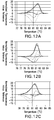
- FIGS. 12A , B, C Intercalating dyes that saturate dsDNA result in homogeneous staining of homo-or heteroduplex DNA.
- FIGS. 12A , B, C show SNP B genotype (dark dashed line), SNP A genotype (dark dotted line), SNP AB genotype (gray solid line) (1X LC Green).
- FIG. 12B shows SNP B genotype (dark dashed line), SNP A genotype (dark dotted line), SNP AB genotype (gray solid line) (20 ⁇ M V11-02190).
- FIG. 12A show SNP B genotype (dark dashed line), SNP A genotype (dark dotted line), SNP AB genotype (gray solid line) (1X LC Green).
- FIG. 12B shows SNP B genotype (dark dashed line), SNP A genotype (dark dotted line), SNP AB genotype (gray solid line) (20 ⁇ M V11-02
- SNP B genotype (dark dashed line), SNP A genotype (dark dotted line), SNP AB genotype (gray solid line) (0.25X LC Green and 20 ⁇ M V11-02190).
- HRM analysis dyes which are suitable for the described dye blends include SYTO® 9 (Invitrogen Corp., Carlsbad CA), LCGREEN® (Idaho Technologies, Salt Lake City UT), EVAGREEN® (Biotium Inc, Hayward CA), PO-PROTM-1, BO-PROTM-1, SYTO® 43, SYTO® 44, SYTO® 45, SYTOX® Blue, POPOTM-1, POPOTM-3, BOBOTM-1, BOBOTM-3, LO-PROTM-1, JO-PROTM-1, YO-PRO®-1, TO-PRO®-1, SYTO® 11, SYTO® 13, SYTO® 15, SYTO® 16, SYTO® 20, SYTO® 23, TOTOTM-3, YOYO®-3
- Dyes suitable for HRM analysis have minimal inhibition and low toxicity in an amplification reaction and can thus be used at higher concentrations for greater dsDNA saturation.
- a dye that saturates dsDNA results in higher resolution fluorescence signals, because there is less dynamic dye redistribution to non-denatured regions of the DNA during melting. The result is greater melt sensitivity and higher resolution melt profiles.
- the dsDNA binding dyes of the blend are selected from at least one of the following classes of dsDNA binding dyes: ethidium bromide, SYBR® Green (Life Technologies, U.S. Patent Nos. 5,436,134 , 5,658,751 ; PCT/US94/04127 published as WO 94/24213 ), LCGREEN® (Idaho Technology, U.S. Patent Nos. 7,456,281 , 7,387,887 ), SYTO 9 (Molecular Probes), EVAGREEN® (Biotium U.S. Patent No.
- the dsDNA binding dyes of the blend are selected from the compounds in Deligeorgivez et al. Intercalating Cyanine Dyes for Nucleic Acid Detection, Recent Patents on Material Science, 2009, 2, 1-26 .
- At least one of the dsDNA binding dyes of the blend is a compound having the formula
- At least one of the dsDNA binding dyes of the blend is selected from the following compounds and
- At least one of the dsDNA binding dyes of the blend is a compound having the formula wherein BRIDGE is a substantially aliphatic, substantially neutral linker comprising from about 8 to about 150 non-hydrogen atoms;
- Q 1 is a dye constituent selected from a fluorescent nucleic acid dye constituent, a non-fluorescent nucleic acid dye constituent, a fluorescent non-nucleic acid dye constituent, and a non-fluorescent non-nucleic acid dye constituent;
- Q 2 is a dye constituent selected from a fluorescent nucleic acid dye constituent, a non-fluorescent nucleic acid dye constituent, a fluorescent non-nucleic acid dye constituent, and a non-fluorescent non-nucleic acid dye constituent;
- at least one dye constituent of the Q 1 dye constituent and the Q 2 dye constituent is a reporter dye constituent;
- at least one dye constituent of the Q 1 dye constituent and the Q 2 dye constituent is a fluorescent nucleic acid dye constituent or a non-fluorescent nucle
- At least one of the dsDNA binding dyes of the blend is a compound of the formula
- At least one of the dsDNA binding dyes of the blend is a compound having the formula characterized in that either all of A1, A2, A3 and A4 are H or one of A1, A2, A3 and A4 is a substituent which is a halogenyl, and the others are H;
- B is selected from a group consisting of S, O, N-R, and C-(R) 2 wherein R is C 1 -C 6 -Alkyl;
- D is either an unsubstituted or a substituted C 1 -C 6 -alkyl;
- X is either H or a methoxy-group;
- L is either CH 3 or phenyl; and M is either phenyl or
- At least one of the dsDNA binding dyes of the blend is a compound having the formula wherein A is wherein X is O or S; R 1 , R 2 , R 3 , R 4 , R 5 , R 6 and R 7 are independently hydrogen, halogen, thiol, optionally substituted alkyl, optionally substituted alkoxy, optionally substituted alkenyl, optionally substituted polyalkenyl, optionally substituted alkynyl, optionally substituted polyalkynyl, optionally substituted thioalkyl, optionally substituted aminoalkyl, optionally substituted aryl, optionally substituted heteroaryl and optionally substituted arylalkyl; R 1 and/or R 2 carry one or more positive charges such that the sum of the positive charge(s) on R 1 and R 2 is 1, 2 or 3; and R 3 , and/or R 4 , and/or R 5 , and/or R 6 and/or R 7 carry one or more positive charges such that the
- R 2 is an alkyl group having 1-6 carbons;
- X is O, S, Se or NR 15 , where R 15 is H or an alkyl group having 1-6 carbons; or
- ⁇ - is a biologically compatible counterion;
- Q has the formula Q1 or Q2
- Dye saturation is a consideration when selecting dye blends, because a dye with a high percent saturation performs better in HRM analysis.
- Dye saturation is defined as the fluorescence at a certain dye concentration, typically the concentration usable for qPCR and typically 1X, as a percentage of the maximum fluorescence obtained when dsDNA is titrated with an increasing dye concentration.
- concentration typically the concentration usable for qPCR and typically 1X
- the fluorescence increases until all the dye-binding sites on the dsDNA are occupied. At this point, the fluorescence plateaus or decreases because the dsDNA is saturated with dye.
- Individual dyes are primarily designed for either qPCR or HRM; using a dye blend provides optimal properties for both qPCR and HRM.
- the disclosed dye blends have properties that each dye alone does not provide.
- a blend of dsDNA binding dyes provided improved properties compared with the individual dyes alone, e.g., higher fluorescence and the same or lower Cq compared to each dye alone.
- dye blends were used at a concentration of the individual dyes that was generally lower than would be used if the dyes were used alone. Using a relatively lower dye concentrations is generally less inhibitory to other processes, e.g., PCR.
- the dyes in the dye blends provided an enhanced effect on dsDNA saturation, where saturation is increased using dye concentrations that were not inhibitory to qPCR.
- a dye blend may contain two dyes, each at a concentration that, if used alone, would provide about 60% DNA saturation, but the dye blend provided about 90% or greater DNA saturation.
- the dye blends showed a synergistic effect by improving performance beyond the performance of each dye alone. This synergistic effect may reflect different binding modes on the dsDNA by the different dyes forming the dye blend.
- the improved characteristics of the described dsDNA binding dye blends may increase the design space for dye concentration in a mix for HRM and qPCR.
- Using the blend of dsDNA binding dyes permits fluorescence maxima to be achieved at a lower concentration of each dye than using each individual dye alone, and at a concentration that is less inhibitory to DNA polymerase enzymes.
- the dye blends improved the fluorescence characteristics of qPCR and HRM, and also overcame the problems of qPCR inhibition associated with saturating concentrations of dsDNA binding dyes.
- a dye blend of two dyes blends was as follows: structurally similar dyes V11-02190 and V11-03001, and structurally distinct dyes V11-02190 and Eva Green. Although the manufacturer does not provide the exact structure of Eva Green@, it is thought to be two homo-monomers linked by a bridge.
- the performance of the dye blend in qPCR was compared in triplicate qPCR reactions across a series of 10-fold dilutions of human genomic DNA (hgDNA; Roche, Cat#. 1691112) from 50 ng - 50 pg per reaction using a glyceraldehyde phosphate dehydrogenase (GAPDH) 94 assay GAPDH 94 F 5' ACAGTCAGCCGCATCTTCTT 3' (SEQ ID. NO: 1); GAPDH 94 R 5' ACGACCAAATCCGTTGACTC 3' (SEQ ID. NO: 2); final concentration each primer 400 nM).
- GAPDH 94 F 5' ACAGTCAGCCGCATCTTCTT 3' SEQ ID. NO: 1
- GAPDH 94 R 5' ACGACCAAATCCGTTGACTC 3' SEQ ID. NO: 2
- final concentration each primer 400 nM final concentration each primer 400 nM.
- PCR reactions 15 ⁇ l, comprised 10 mM Tris pH 8.2; 500 mM KCI; 0.01 mM EDTA ; 3 mM MgCl2; 200pM of each dNTP (Thermo Fisher Scientific); 0.01% Tween 20; 0.005 U/pl Thermo-start DNA polymerase (Thermo Fisher Scientific). Molecular grade reagents were from Sigma unless otherwise stated.
- a blend of two structurally similar dyes and two structurally dissimilar dyes were selected as representative dyes.
- the two structurally similar dyes were V11-02190 and V11-03001, as disclosed in PCT/US08/78277 .
- the two structurally dissimilar dyes were V11-02190 and Eva Green®.
- Each dye in the respective dye blend was included in the reaction mixtures at the concentrations described.
- Each dye was added alone at each of the different concentrations as control reactions. All of the described dyes are non-specific dsDNA binding dyes.
- Single dyes were included as controls at 0.5X to 2X optimum concentration of each dye, which was 8 ⁇ M V11-02190, 1 ⁇ M V11-03001, 1 X Eva Green.
- Reactions were cycled on a Roche LC480 thermal cycler using a 384 well block with the following conditions: 95°C for 15 minutes, followed by 50 cycles of 95°C for 15 seconds, 60°C for 20 seconds, 72°C for 20 seconds during which fluorescence data was acquired, following which a melting curve was acquired at 65°C-95°C.
- Fluorescence data were generated by exciting the dye(s), whether a single dye or a dye blend, at a single excitation wavelength and measuring emission at a single emission wavelength.
- a single excitation or emission wavelength may comprise a narrow range of excitation and/or emission wavelengths, such as a range of about 1 nm to about 20 nm.
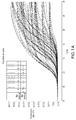
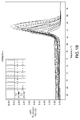
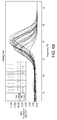
- V11-02190 and V11-03001 were compared with each dye separately, at various concentrations, in generating either an amplification curve or a melting peak, using the above-described method and as shown in FIGS. 1A , 1B .
- the colors and traces indicate the presence and concentration of each dye in the sample according to the following table, the colors serving as a key to the traces in FIGS. 1A-1B .
- T m peaks as shown in FIG. 1B , from 50 pg human genomic DNA (hgDNA) reactions showed excellent specificity at all dye concentrations. This can be seen by improved end-point fluorescent signals and lower calculated Cq values, indicative of better PCR amplification efficiency.
- FIGS. 2A , 2B compare results from a blend of V11-02190 (8 ⁇ M) and V11-03001 (1 ⁇ M) with either V11-02190 alone at 4 ⁇ M, 8 ⁇ M, and 16 ⁇ M ( FIG. 2A ), or with V11-03001 alone at 0.5 ⁇ M, 1 ⁇ M, and 2 ⁇ M ( FIG. 2B ).
- FIGS. 2C and 2D compare results from a blend of V11-02190 (8 ⁇ M) and V11-03001 (2 ⁇ M) with either V11-02190 alone at 4 ⁇ m, 8 ⁇ m, and 16 ⁇ m ( FIG.
- the amplification curves comparing V11-02190/V11-03001 blends with single dyes were analyzed to determine mean Cq using the fit points/threshold/Cq call method (which are user-defined on the Roche Lightcycler 480 software) as shown in FIG. 3A , and endpoint fluorescence based on mean relative maximum fluorescence units (RFU) as shown in FIG. 3B .
- a dye with a low Cq is useful in qPCR.
- a dye with a high RFU is useful in HRM analysis.
- a dye blend with a low Cq and high RFU is useful for both qPCR and HRM analysis.
- the indicated concentration of V11-03001 was combined with either 4 ⁇ M V11-02190 (blue bars), 8 ⁇ M V11-02190 (orange bars), or 16 ⁇ M V11-02190 (green bars), and compared with V11-02190 alone (V11-2190 controls) or V11-03001 alone (V11-3001 controls) at either 0.5 ⁇ m (light bar), 1 ⁇ M (medium bar), or 2 ⁇ M (dark bar).
- dye blends that produced the combined highest RFU and lowest Cq results were 8 ⁇ M V11-02190 and 2 ⁇ M V11-0301; and 8 ⁇ M V11-02190 and 1 ⁇ M V11-03001.
- V11-02190 and V11-03001 dye blend showed that blending dyes increased endpoint fluorescence compared with individual dyes alone. For example, even using an increased concentration (16 ⁇ M) of dye V11-02190 alone, there was a lower endpoint fluorescence when compared to a dye blend containing 8 ⁇ M V11-02190 and 2 ⁇ M VI 1-03001. Dye blends also improved Cq compared to Cq with individual dyes alone. For example, a dye blend of V11-02190 and V11-03001 showed lower Cq than an equivalent concentration of V11-02190 alone and lower or approximately equivalent concentration of V11-03001 alone. The dye blends provided a compromise and provided properties that neither dye alone could provide.
- the dye blends In addition to dye blends exhibiting improved properties compared to single dyes, the dye blends also exhibited minimal PCR inhibition, as demonstrated by the lack of increase in Cq value, and only at the highest concentrations of each dye in the blend.
- dye V11-02190 at a concentration of 16 ⁇ M exhibited significant PCR inhibition
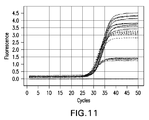
- V11-03001 at a concentration of 2 ⁇ M exhibited significant PCR inhibition, shown in FIG. 12 , and in FIG. 11 that shows 1XLC Green (dark solid line); 0.25X LC Green and 20 ⁇ M V11-02190 (dark dashed line); 20uM V11-02190 (dark dotted line).
- Tm peaks as shown in FIG. 4B , from 50 pg hgDNA reactions showed excellent specificity at all dye concentrations. This can be seen by improved end-point fluorescent signals and lower calculated Cq values, indicative of better PCR amplification efficiency.
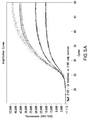
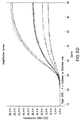
- FIGS. 5A , 5B compare results from a blend of V11-02190 (8 ⁇ m) and Eva Green@ (2X) ( FIG. 5A ), or a blend of V11-02190 (16 ⁇ m) and Eva Green® (1X) ( FIG. 5B ), with V11-02190 alone at either 4 ⁇ m, 8 ⁇ m, or 16 ⁇ m.
- FIGS. 5C , 5D compare results from a blend of V11-02190 (8 ⁇ m) and Eva Green® (2X) ( FIG. 5C ), or a blend of V11-02190 (16 ⁇ m) and Eva Green® (1X) ( FIG. 5D ), with Eva Green® alone at either 0.5X, 1X, or 2X. As shown in FIGS.
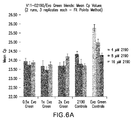
- the amplification curves comparing a blend of V11-02190 and Eva Green@ with single dyes alone were analyzed to determine mean Cq, using the fit points/threshold/C q call method, as shown in FIG. 6A , and endpoint fluorescence based on mean maximum relative fluorescence units (RFU), as shown in FIG. 6B .
- the indicated concentration of Eva Green® was combined with either 4 ⁇ m V11-02190 (blue bars), 8 ⁇ m V11-02190 (orange bars), or 16 ⁇ m V11-02190 (green bars), and compared with V11-02190 alone (V11-02190 controls) or Eva Green® alone (Eva Green controls) at either 0.5X (light bar), 1X (medium bar), or 2X (dark bar).
- dye blends that produced the combined highest RFU and lowest Cq results were 8 ⁇ M V11-02190 and 2X Eva Green@; 16 ⁇ M V11-02190 and 0.5X Eva Green®; and 16 ⁇ M V11-02190 and 1X Eva Green®.
- the results showed that blending dyes increased endpoint fluorescence compared with individual dyes alone, and improved Cq compared with individual dyes alone (V11-02190 control, Eva Green® control), see FIGS. 11 , 12 .
- Dye saturation of selected dye blends from qPCR was compared to the individual dyes alone as an indication of potential performance in HRM analysis. Higher dye saturation provides less dye redistribution to non-denatured regions of the DNA during melting and thus results in higher melt sensitivity.
- triplicate 25 ⁇ L samples were evaluated that contained 10 mM Tris pH 8.2; 500 mM KCI; 0.01 mM EDTA; and 10ng/ ⁇ l human genomic DNA (Roche cat#. 1691112). Each dye blend was added at the following concentrations: 20X, 10X, 5X, 2.5X, IX, 0.5X, 0.25X, 0.I X, and 0.01X; 1X is the concentration previously tested in qPCR.
- Fluorescence measurements were determined on BMG FluoSTAR Galaxy, using 485 nm excitation and 520 nm emission filters blanked using 10 mM Tris pH 8.2; 500 mM KCI; 0.01 mM EDTA buffer. Fluorescence values of control reactions (no dsDNA added) were subtracted from reactions containing dsDNA to produce fluorescence values normalized to remove any background fluorescence from unbound dye.
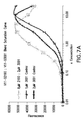
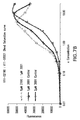
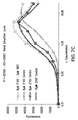
- FIGS. 7A-7D shows saturation curves for dye blends of V11-02190 and V11-03001, compared to each dye alone, at various concentrations.
- FIG. 7A compares a dye blend of 8 ⁇ M V11-02190 and 2 ⁇ M V11-03001 (green squares), with V11-03001 alone at a concentration of either 1 ⁇ M (blue triangles) or 2 ⁇ M (purple cross).
- FIG. 7B compares a dye blend of 8 ⁇ M V11-02190 and 1 ⁇ M V11-03001 (blue diamonds), with V11-03001 at a concentration of either 1 ⁇ M (blue triangles) or 2 ⁇ M (purple cross).
- FIG. 7A compares a dye blend of 8 ⁇ M V11-02190 and 2 ⁇ M V11-03001 (green squares), with V11-03001 alone at a concentration of either 1 ⁇ M (blue triangles) or 2 ⁇ M (purple cross).
- FIG. 7C compares a dye blend of 8 ⁇ M V11-02190 and 2 ⁇ m V11-03001 (green squares), with V11-02190 at a concentration of 4 ⁇ M (light pink double-cross), 8 ⁇ M (red circles), or 16 ⁇ M (red cross).
- FIG. 7D compares a dye blend of 8 ⁇ M V11-02190 and 1 ⁇ M V11-03001 (blue diamonds), with V11-02190 at 4 ⁇ M (light pink double-cross), 8 ⁇ M (red circles), or 16 ⁇ M (red cross).
- Dye blend 8 ⁇ M V11-02190 and 2 ⁇ M V11-03001 showed increased dye saturation, compared with V11-03001 controls, and a smaller increase compared with V11-02190 controls. Selected results from FIGS. 7A-7D were expressed in FIG. 8 as percent saturation at 1X.
- Dye blend 8 ⁇ M V11-02190 and 2 ⁇ M V11-03001 showed increased saturation compared with V11-03001 controls and a smaller increase compared with V11-02190 controls.
- Dye blend 8 ⁇ M V11-02190 and 2 ⁇ M V11-03001 provided the highest saturation at 1X, about 73%. Improvements in dye saturation were modest and did not appear to be additive, indicating that dyes in the dye blends likely had similar modes of binding to dsDNA and competed for dsDNA binding sites.
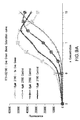
- FIGS. 9A-9D show saturation curves for dye blends V11-02190 and Eva Green@, compared to each dye alone, at various concentrations.
- FIG. 9A compares a dye blend of 16 ⁇ M V11-02190 and 1X Eva Green® (green squares), with V11-02190 alone at a concentration of 4 ⁇ M (light pink double cross), 8 ⁇ M (red circles), and 16 ⁇ M (red cross).
- FIG. 9B compares a dye blend of 8 ⁇ M V11-02190 and 2X Eva Green@ (blue cross), with V11-02190 at a concentration of 4 ⁇ M (light pink double cross), 8 ⁇ M (red circles), and 16 ⁇ M (red cross).
- FIG. 9A compares a dye blend of 16 ⁇ M V11-02190 and 1X Eva Green® (green squares), with V11-02190 alone at a concentration of 4 ⁇ M (light pink double cross), 8 ⁇ M (red circles), and 16 ⁇ M (red cross).
- FIG. 9C compares a dye blend of 16 ⁇ m V11-02190 and 1X Eva Green® (green squares), with Eva Green® at a concentration of 0.5X (green diamonds), 1X (green cross), and 2X (green triangles).
- FIG. 9D compares a dye blend of 8 ⁇ M V11-02190 and 2X Eva Green® (blue cross), with Eva Green® at a concentration of 0.5X (green diamonds), 1X (green cross), and 2X (green triangles).
- a dye blend of V11-02190 and a commercially available dye LC Green® (Idaho Technology) were evaluated at various concentrations, and the blend was compared with each dyes alone at various concentrations, in HRM analysis, with qRCR data of V11-02190 shown in FIG. 11 , HRM data in FIG. 12C ; 1 XLC Green qPCR data shown in FIG. 11 and HRM data in FIG. 12A .
- the performance of the dye blend in HRM was compared in qPCR reactions using a primer set that detects a 210 bp region GGATGGAAGA GATGACAAGG ACATAGGAGA TAAATATCAG GCCTATGGGC ACAAAAATCA CAAATGAACT TACACCATAA TTTATTATCT CATTGATAGT GGTATCAATG CAAGAAAGTT TCATGACTGG GTAAATGTCA CAAAAGAAGT GGTCTACCAC TGTGCCACAG AACGGCAAAT TGAACATGGC TGTCACATGG AGAACTGCCA (SEQ ID. NO: 3) the OR10J5 gene, with a forward primer sequence of 5' GGATGGAAGAGATGACAAGGACATAGG 3' (SEQ ID.
- PCR reactions were carried out using Dynamo Flash qPCR master mix (Thermo Scientific) on the Eco Real-Time PCR system (Illumina), with the following cycling protocol: 95°C for 7 minutes, followed by 50 cycles of 95°C for 10 seconds and 60°C for 15 seconds. For HRM analysis, ramp from 60°C to 95°C, rising by 0.1 °C each step.
- LC Green, V11-02190 alone and a combination of LC Green and V11-02190 green dark dashed line
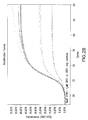
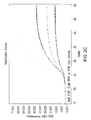
- FIG. 11 The effect of LC Green, V11-02190 alone and a combination of LC Green and V11-02190 (green dark dashed line) as the DNA-binding dye for real-time fluorescence monitoring, on PCR performance are shown in FIG. 11 .
- Amplification plots of 1x LC Green alone pink dark solid line
- 20 ⁇ m V11-02190 alone yellow dark dashed line
- a combination of 0.25x LC Green and 20 ⁇ m V11-02190 green dark dashed line
- 1x indicates use at concentration from the manufacturer.
- Each template was amplified in triplicate under three human genomic DNA samples, each known to contain one of each of three SNP genotypes. In total, nine amplification plots representing each dye and dye blend. The delta R value (y-axis) and cycle number (x-axis) are shown.
- FIGS. 12A-12C shows HRM analysis of the rs4656837 SNP (G/A) of OR10J5 gene. These data were obtained from Normalization Data and Difference Graphs, placing the pre-melting and post-melting parallel bars. Genomic DNA containing SNP A (blue dark dotted line), SNP B (green dark dashed line), and SNP AB (red or gray solid line) in a reaction mixture containing 1x LC green alone ( FIG. 12A ), 20 ⁇ m V11-02190 alone ( FIG. 12B ), and combination of 0.25x LC Green and 20 ⁇ m V11-02190 ( FIG. 12C ). The three genotypes were clearly distinguished.
- FIGS.12A-12C show difference graphs of the normalization data.
- FIG. 13 shows a DNA sequencing result of SNP rs4656837.
- the sequencing was performed by using reverse primer of the PCR amplicon.
- the name SNP A indicates the SNP rs4656837 harbors A/A homozygote by reverse sequencing.
- the name SNP B indicates the SNP rs4656837 harbors G/G homozygote by reverse sequencing.
- the name SNP AB indicates the SNP rs4656837 harbors A/B heterozygote by reverse sequencing.
- a dye blend of EVAGREEN® and LCGREEN® (Idaho Technology) was evaluated at various concentrations. Each dye was added alone at each of the different concentrations as control reactions. Single dyes were included as controls at 0.25X to 0.75X and 0.5X to 2X optimum concentrations of each dye of EVAGREEN® and LCGREEN®, respectively. Reactions were cycled on Corbett Rotor Gene 6000 thermal cycler using a 72 well block with the following conditions: 95°C for 10 minutes, followed by 40 cycles of 95°C for 10 seconds, 60°C for 15 seconds during which fluorescence data was acquired, following which a melting curve was acquired at 70°C-85°C, rising by 0.1 °C each step.
- the performance of the dye blend in HRM was compared in qPCR reactions using primer set that detects a 108 bp region (ACTGGGTAAA TGTCACAAAA GAAGTGGTCT ACCACTGTGC CACAGAACGG CAAATTGAAC ATGGCTGTCA CATGGAGAAC TGCCATAGTC AGACCAATGC CAAAGGAC (SEQ ID. NO: 8) of the OR10J5 gene, with a forward primer sequence of 5' GTC CTT TGG CAT TGG TCT GAC TA 3' (SEQ ID. NO: 9); and reverse primer sequence of 5' ACT GGG TAA ATG TCA CAA AAG AAG TG 3' (SEQ ID. NO: 10); the final concentration of each primer was 500 nM.
- FIG. 14 shows high resolution melting (HRM) difference curves using dsDNA binding dyes separately and in combiantion.
- FIG. 14A shows HRM using a blend of EVAGREEN® (0.5X) and LCGREEN® (0.5X) (Eva Green: LC Green (0.5 : 0.5)).
- FIG. 14B shows HRM using LCGREEN® alone at 1X (14B) ((Eva Green: LC Green (0 : 1)). The results showed that using dye blend increased eficiency of HRM performance; the differences between the Tm of different genotypes were larger than when using LCGREEN® dye alone at recommended 1X concentration.
- FIGS. 14A-B shows high resolution melting (HRM) data using double stranded DNA (dsDNA) binding dyes separately and in combination.
- the dye blend that produced the combined highest RFU were 0.5X EVAGREEN® and 0.5X LCGREEN®.
- the disclosed dye blends have properties that each dye alone does not provide.
- dye blend V11-03001 and V11-02190 improved the fluorescence signal and, although to a lesser extent, improved Cq without increasing the concentration of either dye alone to a concentration that would be inhibitory, thus providing an improved dye composition for qPCR.
- Dye blend V11-03001 and V11-02190 provided a small improvement in dye saturation, thus providing an improved dye composition for HRM assays.
- dye blend V11-02190 and EVAGREEN® improved the fluorescence signal compared with either dye alone, and improved Cq compared with EVAGREEN® alone.
- Dye blend V11-02190 and EVAGREEN® greatly improved dye saturation, thus providing an improved dye composition for HRM assays. Without being held to a single theory, it is believed that this effect may indicate that dyes having different structures in a dye blend have different modes of binding to dsDNA, and that the higher saturation results from an additive effect.
- the dye blends had higher fluorescence, and the same or lower Cq compared to each dye alone.
- the dye blends resulted in an additive effect on dsDNA saturation, which was achieved at dye concentrations that were not inhibitory to qPCR.
- the dye blends showed an additional effect beyond simply increasing the concentration of the individual dyes which, due to higher concentrations of either dye alone, exceeded the optimal concentration and inhibited DNA polymerase.
- the dye blends showed a synergistic effect by improving performance beyond the performance of each dye alone. This synergistic effect may reflect different binding modes on the dsDNA, as this effect was demonstrated to a greater extent when two structurally dissimilar dyes were in the dye blend, e.g., V11-02190 and EvaGreen.
- dye blend V11-02190 and LCGREEN® improved the fluorescence signal and improved Cq compared to each dye alone. It provided an improved dye composition for HRM assay. This indicated that two structurally different dyes in a dye blend have different modes of binding to dsDNA, as the result of a dye blend shows a synergistic effect.
- dye blend EVAGREEN® and LCGREEN® improved the dye saturation percentage, thus providing an improved dye composition for HRM assays.
- the dye blends showed a synergistic effect by improving performance beyond the HRM performance of each dye alone.
- the improved characteristics of the described dsDNA binding dye blends may increase the design space for dye concentration in a mix for HRM and qPCR.
- Using the blend of dsDNA binding dyes permits fluorescence maxima to be achieved at a lower concentration of each dye than using each individual dye alone, and at a concentration that is less inhibitory to DNA polymerase enzymes.
- the dye blends improved the fluorescence characteristics of qPCR and HRM, and also overcame the problems of qPCR inhibition associated with saturating concentrations of dsDNA binding dyes.
Landscapes
- Chemical & Material Sciences (AREA)
- Organic Chemistry (AREA)
- Life Sciences & Earth Sciences (AREA)
- Zoology (AREA)
- Wood Science & Technology (AREA)
- Proteomics, Peptides & Aminoacids (AREA)
- Health & Medical Sciences (AREA)
- Engineering & Computer Science (AREA)
- Chemical Kinetics & Catalysis (AREA)
- Biophysics (AREA)
- Biochemistry (AREA)
- Microbiology (AREA)
- Molecular Biology (AREA)
- Biotechnology (AREA)
- Analytical Chemistry (AREA)
- Physics & Mathematics (AREA)
- Immunology (AREA)
- Bioinformatics & Cheminformatics (AREA)
- General Engineering & Computer Science (AREA)
- General Health & Medical Sciences (AREA)
- Genetics & Genomics (AREA)
- Measuring Or Testing Involving Enzymes Or Micro-Organisms (AREA)
- Investigating, Analyzing Materials By Fluorescence Or Luminescence (AREA)
Claims (13)
- Verfahren zur quantitativen Polymerase-Kettenreaktion (qPCR), wobei das Verfahren umfasst:Vereinigen einer Nucleinsäure mit einer Polymerase-Kettenreaktionsmischung zur Erzeugung einer Probe, wobei die Polymerase-Kettenreaktionsmischung eine thermostabile Polymerase, mindestens ein Primer-Oligonucleotid und einen ersten und einen zweiten doppelsträngige DNA (dsDNA)-bindenden Farbstoff umfasst, wobei der erste dsDNA-bindende Farbstoff V11-02190 ist und der zweite dsDNA-bindende Farbstoff ausgewählt ist aus V11-03001 EVA Green® oder LC Green®,Ausführen der Polymerase-Kettenreaktion auf der Probe zum Amplifizieren der Nucleinsäure, um eine amplifizierte dsDNA zu ergeben, wobei die Polymerase-Kettenreaktion das Unterwerfen der Probe einer Mehrzahl von Temperaturzyklen umfasst, wobei jeder Zyklus ferner das Exponieren der Probe an Licht bei einer Wellenlänge umfasst, die von jedem der beiden dsDNA-bindenden Farbstoffe absorbiert wird, und Detektieren der Intensität der Fluoreszenzemission von den dsDNA-bindenden Farbstoffen, wobei die Intensität proportional der Menge der amplifizierten Nucleinsäure in der Probe ist, wobei die dsDNA-bindenden Farbstoffe im Wesentlichen die gleichen Anregungsund Emissionsspektren haben, so dass jeder der zwei dsDNA-bindenden Farbstoffe simultan angeregt und deren Emissionen detektiert werden können.
- Verfahren nach Anspruch 1, ferner umfassend, die amplifizierte dsDNA einem hochauflösenden Schmelz-Assay zu unterziehen, wobei das hochauflösende Schmelz-Assay umfasst:Erhitzen der amplifizierten dsDNA bis zu einer Schmelztemperatur in Gegenwart der ersten und zweiten dsDNA-bindenden Farbstoffe, Auftragen der Schmelztemperaturen in Abhängigkeit von der Fluoreszenz, die von den dsDNA-bindenden Farbstoffen emittiert wird, um eine Schmelzkurve zu erzeugen, und identifizieren eines Genotyps der amplifizierten dsDNA aus der Schmelzkurve anhand der Schmelztemperatur, der Steigung der Schmelzkurve und/oder der Form der Schmelzkurve.
- Verfahren nach Anspruch 1 oder 2, wobei die Anregungs- oder Emissionsspektren weitgehend ähnlich sind, so dass eine einzige Instrumentenkonfiguration die Emission von den Farbstoffen in einer einzigen Messung anregen und messen kann.
- Verfahren nach Anspruch 3, wobei die einzige Instrumentenkonfiguration einen Filtersatz umfasst, der einen Bereich von Anregungs- und Emissionswellenlängen auswählt.
- Verfahren nach Anspruch 1 bis 4, wobei die Anregung 488 nm ± 10 nm und die Emission 525 nm ± 10 nm betragen.
- Verfahren nach Anspruch 1 bis 4, wobei die Anregung 488 nm ± 20 nm und die Emission 525 nm ± 20 nm betragen.
- Verfahren nach Anspruch 1 bis 4, wobei die Anregung 488 nm ± 40 nm und die Emission 525 nm ± 40 nm betragen.
- Verfahren nach einem der Ansprüche 1 bis 7, ferner umfassend die Schritte:Exponieren des Polymerase-Kettenreaktionsassays an Licht bei einer Wellenlänge, die von jedem dsDNA-bindenden Farbstoff absorbiert wird; undDetektieren der Intensität einer Fluoreszenzemission von den dsDNA-bindenden Farbstoffen, wobei die Intensität proportional der Menge der amplifizierten Ziel-Nucleinsäure in dem Polymerase-Kettenreaktionsassay ist;wobei die Ziel-Nucleinsäure in einem Polymerase-Kettenreaktionsassay quantifiziert und/oder detektiert wird.
- Verfahren nach Anspruch 8, wobei die Ziel-Nucleinsäure eine Ribonucleinsäure (RNA) ist und das Verfahren ferner das reverse Transkribieren der RNA in die DNA vor der Ausführung der qPCR umfasst.
- Verfahren zum Analysieren einer doppelsträngigen Desoxyribonucleinsäure (dsDNA) in einem hochauflösenden Schmelz-Assay, wobei das Verfahren umfasst:Vereinigen der dsDNA mit einem ersten und einem zweiten doppelsträngige DNA (dsDNA)-bindenden Farbstoff, wobei der erste dsDNA-bindende Farbstoff V11-02190 ist und der zweite dsDNA-bindende Farbstoff ausgewählt ist aus V11-03001 EVA Green® oder LC Green®, um eine Probe zu erzeugen,schrittweises Erhitzen der Probe, während die Probe an Licht bei einer Wellenlänge exponiert wird, die von jedem der dsDNA-bindenden Farbstoffe absorbiert wird, und Detektieren der Intensität einer Fluoreszenzemission von den dsDNA-bindenden Farbstoffen, um Schmelztemperaturen der dsDNA zu erzeugen,Auftragen der Schmelztemperaturen in Abhängigkeit von der Fluoreszenz, die von den Farbstoffen emittiert wird, um eine Schmelzkurve zu erzeugen, undAnalysieren der dsDNA aus der Schmelzkurve anhand mindestens einer der Schmelztemperaturen, der Steigung der Schmelzkurve oder der Form der Schmelzkurve.
- Verfahren nach Anspruch 10, wobei die Schmelzkurve der Ziel-dsDNA mit der Schmelzkurve einer Referenz-dsDNA verglichen wird, um einen Genotyp der Ziel-dsDNA zu bestimmen.
- Kit, umfassend eine thermostabile Polymerase und einen ersten und einen zweiten doppelsträngige DNA (dsDNA)-bindenden Farbstoff, wobei der erste dsDNA-bindende Farbstoff V11-02190 ist und der zweite dsDNA-bindende Farbstoff ausgewählt ist aus Vll-0300l EVA Green® oder LC Green®, und Anweisungen zur Ausführung jeder des hochauflösenden Schmelzens (HRM) und der Polymerase-Kettenreaktion (PCR) unter Verwendung der Komponenten des Kits.
- Kit nach Anspruch 12, ferner umfassend eine Referenz-Nucleinsäure, die ein Gen codiert, das ausgewählt ist aus der Gruppe, bestehend aus CFTR, BRCA1, BRCA2, MFN2, SMPD1 und NOD2.
Applications Claiming Priority (1)
| Application Number | Priority Date | Filing Date | Title |
|---|---|---|---|
| US201161528315P | 2011-08-29 | 2011-08-29 |
Publications (2)
| Publication Number | Publication Date |
|---|---|
| EP2565281A1 EP2565281A1 (de) | 2013-03-06 |
| EP2565281B1 true EP2565281B1 (de) | 2016-07-20 |
Family
ID=46796383
Family Applications (1)
| Application Number | Title | Priority Date | Filing Date |
|---|---|---|---|
| EP12182195.3A Not-in-force EP2565281B1 (de) | 2011-08-29 | 2012-08-29 | Farbstoffmischungen für qPCR und High Resolution Melting |
Country Status (2)
| Country | Link |
|---|---|
| US (1) | US20130052650A1 (de) |
| EP (1) | EP2565281B1 (de) |
Families Citing this family (9)
| Publication number | Priority date | Publication date | Assignee | Title |
|---|---|---|---|---|
| EP2981620A1 (de) * | 2013-04-05 | 2016-02-10 | Qiagen GmbH | Verfahren zur durchführung einer schmelzkurvenanalyse |
| EP2989209A1 (de) * | 2013-04-23 | 2016-03-02 | Thermo Fisher Scientific OY | Schmelzkurvenanalyse |
| BR112015029785B1 (pt) | 2013-05-31 | 2023-04-25 | The United States Of America, As Represented By The Secretary Department Of Health And Human Services | Método para detectar especificamente a presença ou ausência da mutação k70e na transcriptase reversa de hiv - 1 e mistura de oligonucleotídeos para a detecção seletiva da mutação 70e na transcriptase reversa de hiv-1 |
| CA2968985A1 (en) * | 2014-12-15 | 2016-06-23 | Luminex Corporation | Detailed assay protocol specification |
| WO2017158431A1 (en) | 2016-03-17 | 2017-09-21 | Delta Instruments B.V. | Detection of cells in a liquid sample |
| JP7173867B2 (ja) | 2016-04-22 | 2022-11-16 | ベクトン・ディキンソン・アンド・カンパニー | 多重高分子色素デバイス及びその使用方法 |
| CN110337331B (zh) | 2017-02-08 | 2022-04-26 | 贝克顿·迪金森公司 | 干染料试剂装置以及制造和使用所述干染料试剂装置的方法 |
| US11992844B2 (en) * | 2018-11-13 | 2024-05-28 | Becton, Dickinson And Company | Dried reagent strainers and methods for making and using the same |
| US12551149B2 (en) | 2021-07-08 | 2026-02-17 | University Of Maryland, College Park | Sample-to-answer diagnostic system for the detection of circulating histones in whole blood |
Family Cites Families (16)
| Publication number | Priority date | Publication date | Assignee | Title |
|---|---|---|---|---|
| US5658751A (en) | 1993-04-13 | 1997-08-19 | Molecular Probes, Inc. | Substituted unsymmetrical cyanine dyes with selected permeability |
| US5534416A (en) | 1993-04-13 | 1996-07-09 | Molecular Probes, Inc. | Fluorescent viability assay using cyclic-substituted unsymmetrical cyanine dyes |
| US5436134A (en) | 1993-04-13 | 1995-07-25 | Molecular Probes, Inc. | Cyclic-substituted unsymmetrical cyanine dyes |
| GB0025913D0 (en) * | 2000-10-23 | 2000-12-06 | Guldberg Per | Materials and methods relating to nucleic acid amplification and profiling |
| CA2501144C (en) * | 2002-10-23 | 2015-10-06 | University Of Utah Research Foundation | Amplicon melting analysis with saturation dyes |
| KR100906749B1 (ko) | 2004-03-25 | 2009-07-09 | (주)바이오니아 | 인터컬레이팅 형광염료가 표지된 프로브를 이용한 핵산 증폭 측정 방법 |
| US7387887B2 (en) | 2004-04-20 | 2008-06-17 | University Of Utah Research Foundation | Nucleic acid melting analysis with saturation dyes |
| RU2460804C2 (ru) | 2004-10-18 | 2012-09-10 | Брандейс Юнивесити | Способ гомогенной детекции по меньшей мере одного продукта одноцепочечной амплификации |
| US7776567B2 (en) | 2005-03-17 | 2010-08-17 | Biotium, Inc. | Dimeric and trimeric nucleic acid dyes, and associated systems and methods |
| US7456281B2 (en) | 2005-04-20 | 2008-11-25 | Idaho Technology, Inc. | Nucleic acid melting analysis with saturation dyes |
| EP2201009B1 (de) * | 2007-10-02 | 2016-10-26 | Thermo Fisher Scientific Inc. | Monomethin-farbstoffe |
| WO2010071602A1 (en) * | 2008-12-19 | 2010-06-24 | Agency For Science, Technology And Research | Pcr-based method of synthesizing a nucleic acid molecule |
| US7943320B2 (en) | 2008-12-30 | 2011-05-17 | Canon U.S. Life Sciences, Inc. | Unsymmetrical cyanine dyes for high resolution nucleic acid melting analysis |
| IT1394096B1 (it) * | 2009-02-27 | 2012-05-25 | Univ Parma | Metodo per la rivelazione di allergeni. |
| CN101724295B (zh) * | 2009-12-03 | 2013-03-13 | 中国农业大学 | LE Green混合染料及其应用 |
| US9006417B2 (en) | 2010-06-30 | 2015-04-14 | Protiva Biotherapeutics, Inc. | Non-liposomal systems for nucleic acid delivery |
-
2012
- 2012-08-28 US US13/596,295 patent/US20130052650A1/en not_active Abandoned
- 2012-08-29 EP EP12182195.3A patent/EP2565281B1/de not_active Not-in-force
Also Published As
| Publication number | Publication date |
|---|---|
| EP2565281A1 (de) | 2013-03-06 |
| US20130052650A1 (en) | 2013-02-28 |
Similar Documents
| Publication | Publication Date | Title |
|---|---|---|
| EP2565281B1 (de) | Farbstoffmischungen für qPCR und High Resolution Melting | |
| KR101347951B1 (ko) | 핵산 증폭을 위한 프라이머, 프로브 및 방법 | |
| Ørum | PCR clamping | |
| KR20040024556A (ko) | 검출 시스템 | |
| EP2201009B1 (de) | Monomethin-farbstoffe | |
| Seifi et al. | Overview of real-time PCR principles | |
| CN118272502A (zh) | 一种检测并分辨低频突变类型的方法 | |
| Frayling et al. | PCR-based methods for mutation detection | |
| Ahmad | BOXTO as a real-time thermal cycling reporter dye | |
| US20260043076A1 (en) | Detection of molecular analytes based on tailored probe competition | |
| EP4097230A1 (de) | Verfahren zur quantifizierung einer nukleinsäurebibliothek | |
| HK1106251B (en) | Methods for nucleic acid amplification | |
| Frayling et al. | PCR-based Methods for Mutation Detection (including Real-Time PCR) | |
| Wabuyele et al. | Detection of low abundant mutations in DNA using single-molecule FRET and ligase detection reactions |
Legal Events
| Date | Code | Title | Description |
|---|---|---|---|
| PUAI | Public reference made under article 153(3) epc to a published international application that has entered the european phase |
Free format text: ORIGINAL CODE: 0009012 |
|
| AK | Designated contracting states |
Kind code of ref document: A1 Designated state(s): AL AT BE BG CH CY CZ DE DK EE ES FI FR GB GR HR HU IE IS IT LI LT LU LV MC MK MT NL NO PL PT RO RS SE SI SK SM TR |
|
| AX | Request for extension of the european patent |
Extension state: BA ME |
|
| 17P | Request for examination filed |
Effective date: 20130704 |
|
| RBV | Designated contracting states (corrected) |
Designated state(s): AL AT BE BG CH CY CZ DE DK EE ES FI FR GB GR HR HU IE IS IT LI LT LU LV MC MK MT NL NO PL PT RO RS SE SI SK SM TR |
|
| 17Q | First examination report despatched |
Effective date: 20140124 |
|
| GRAP | Despatch of communication of intention to grant a patent |
Free format text: ORIGINAL CODE: EPIDOSNIGR1 |
|
| INTG | Intention to grant announced |
Effective date: 20150909 |
|
| GRAS | Grant fee paid |
Free format text: ORIGINAL CODE: EPIDOSNIGR3 |
|
| INTG | Intention to grant announced |
Effective date: 20160303 |
|
| GRAA | (expected) grant |
Free format text: ORIGINAL CODE: 0009210 |
|
| AK | Designated contracting states |
Kind code of ref document: B1 Designated state(s): AL AT BE BG CH CY CZ DE DK EE ES FI FR GB GR HR HU IE IS IT LI LT LU LV MC MK MT NL NO PL PT RO RS SE SI SK SM TR |
|
| REG | Reference to a national code |
Ref country code: GB Ref legal event code: FG4D |
|
| REG | Reference to a national code |
Ref country code: CH Ref legal event code: EP Ref country code: FR Ref legal event code: PLFP Year of fee payment: 5 |
|
| REG | Reference to a national code |
Ref country code: IE Ref legal event code: FG4D |
|
| REG | Reference to a national code |
Ref country code: AT Ref legal event code: REF Ref document number: 814162 Country of ref document: AT Kind code of ref document: T Effective date: 20160815 |
|
| REG | Reference to a national code |
Ref country code: DE Ref legal event code: R096 Ref document number: 602012020636 Country of ref document: DE |
|
| PGFP | Annual fee paid to national office [announced via postgrant information from national office to epo] |
Ref country code: GB Payment date: 20160824 Year of fee payment: 5 Ref country code: DE Payment date: 20160823 Year of fee payment: 5 |
|
| REG | Reference to a national code |
Ref country code: LT Ref legal event code: MG4D |
|
| REG | Reference to a national code |
Ref country code: NL Ref legal event code: MP Effective date: 20160720 |
|
| PGFP | Annual fee paid to national office [announced via postgrant information from national office to epo] |
Ref country code: FR Payment date: 20160729 Year of fee payment: 5 |
|
| REG | Reference to a national code |
Ref country code: AT Ref legal event code: MK05 Ref document number: 814162 Country of ref document: AT Kind code of ref document: T Effective date: 20160720 |
|
| PG25 | Lapsed in a contracting state [announced via postgrant information from national office to epo] |
Ref country code: BE Free format text: LAPSE BECAUSE OF NON-PAYMENT OF DUE FEES Effective date: 20160831 |
|
| PG25 | Lapsed in a contracting state [announced via postgrant information from national office to epo] |
Ref country code: IT Free format text: LAPSE BECAUSE OF FAILURE TO SUBMIT A TRANSLATION OF THE DESCRIPTION OR TO PAY THE FEE WITHIN THE PRESCRIBED TIME-LIMIT Effective date: 20160720 Ref country code: NO Free format text: LAPSE BECAUSE OF FAILURE TO SUBMIT A TRANSLATION OF THE DESCRIPTION OR TO PAY THE FEE WITHIN THE PRESCRIBED TIME-LIMIT Effective date: 20161020 Ref country code: LT Free format text: LAPSE BECAUSE OF FAILURE TO SUBMIT A TRANSLATION OF THE DESCRIPTION OR TO PAY THE FEE WITHIN THE PRESCRIBED TIME-LIMIT Effective date: 20160720 Ref country code: NL Free format text: LAPSE BECAUSE OF FAILURE TO SUBMIT A TRANSLATION OF THE DESCRIPTION OR TO PAY THE FEE WITHIN THE PRESCRIBED TIME-LIMIT Effective date: 20160720 Ref country code: FI Free format text: LAPSE BECAUSE OF FAILURE TO SUBMIT A TRANSLATION OF THE DESCRIPTION OR TO PAY THE FEE WITHIN THE PRESCRIBED TIME-LIMIT Effective date: 20160720 Ref country code: HR Free format text: LAPSE BECAUSE OF FAILURE TO SUBMIT A TRANSLATION OF THE DESCRIPTION OR TO PAY THE FEE WITHIN THE PRESCRIBED TIME-LIMIT Effective date: 20160720 Ref country code: IS Free format text: LAPSE BECAUSE OF FAILURE TO SUBMIT A TRANSLATION OF THE DESCRIPTION OR TO PAY THE FEE WITHIN THE PRESCRIBED TIME-LIMIT Effective date: 20161120 Ref country code: RS Free format text: LAPSE BECAUSE OF FAILURE TO SUBMIT A TRANSLATION OF THE DESCRIPTION OR TO PAY THE FEE WITHIN THE PRESCRIBED TIME-LIMIT Effective date: 20160720 |
|
| PG25 | Lapsed in a contracting state [announced via postgrant information from national office to epo] |
Ref country code: ES Free format text: LAPSE BECAUSE OF FAILURE TO SUBMIT A TRANSLATION OF THE DESCRIPTION OR TO PAY THE FEE WITHIN THE PRESCRIBED TIME-LIMIT Effective date: 20160720 Ref country code: SE Free format text: LAPSE BECAUSE OF FAILURE TO SUBMIT A TRANSLATION OF THE DESCRIPTION OR TO PAY THE FEE WITHIN THE PRESCRIBED TIME-LIMIT Effective date: 20160720 Ref country code: LV Free format text: LAPSE BECAUSE OF FAILURE TO SUBMIT A TRANSLATION OF THE DESCRIPTION OR TO PAY THE FEE WITHIN THE PRESCRIBED TIME-LIMIT Effective date: 20160720 Ref country code: BE Free format text: LAPSE BECAUSE OF FAILURE TO SUBMIT A TRANSLATION OF THE DESCRIPTION OR TO PAY THE FEE WITHIN THE PRESCRIBED TIME-LIMIT Effective date: 20160720 Ref country code: PT Free format text: LAPSE BECAUSE OF FAILURE TO SUBMIT A TRANSLATION OF THE DESCRIPTION OR TO PAY THE FEE WITHIN THE PRESCRIBED TIME-LIMIT Effective date: 20161121 Ref country code: GR Free format text: LAPSE BECAUSE OF FAILURE TO SUBMIT A TRANSLATION OF THE DESCRIPTION OR TO PAY THE FEE WITHIN THE PRESCRIBED TIME-LIMIT Effective date: 20161021 Ref country code: AT Free format text: LAPSE BECAUSE OF FAILURE TO SUBMIT A TRANSLATION OF THE DESCRIPTION OR TO PAY THE FEE WITHIN THE PRESCRIBED TIME-LIMIT Effective date: 20160720 Ref country code: PL Free format text: LAPSE BECAUSE OF FAILURE TO SUBMIT A TRANSLATION OF THE DESCRIPTION OR TO PAY THE FEE WITHIN THE PRESCRIBED TIME-LIMIT Effective date: 20160720 |
|
| REG | Reference to a national code |
Ref country code: CH Ref legal event code: PL |
|
| REG | Reference to a national code |
Ref country code: DE Ref legal event code: R097 Ref document number: 602012020636 Country of ref document: DE |
|
| PG25 | Lapsed in a contracting state [announced via postgrant information from national office to epo] |
Ref country code: EE Free format text: LAPSE BECAUSE OF FAILURE TO SUBMIT A TRANSLATION OF THE DESCRIPTION OR TO PAY THE FEE WITHIN THE PRESCRIBED TIME-LIMIT Effective date: 20160720 Ref country code: RO Free format text: LAPSE BECAUSE OF FAILURE TO SUBMIT A TRANSLATION OF THE DESCRIPTION OR TO PAY THE FEE WITHIN THE PRESCRIBED TIME-LIMIT Effective date: 20160720 Ref country code: MC Free format text: LAPSE BECAUSE OF FAILURE TO SUBMIT A TRANSLATION OF THE DESCRIPTION OR TO PAY THE FEE WITHIN THE PRESCRIBED TIME-LIMIT Effective date: 20160720 Ref country code: CH Free format text: LAPSE BECAUSE OF NON-PAYMENT OF DUE FEES Effective date: 20160831 Ref country code: LI Free format text: LAPSE BECAUSE OF NON-PAYMENT OF DUE FEES Effective date: 20160831 |
|
| PLBE | No opposition filed within time limit |
Free format text: ORIGINAL CODE: 0009261 |
|
| STAA | Information on the status of an ep patent application or granted ep patent |
Free format text: STATUS: NO OPPOSITION FILED WITHIN TIME LIMIT |
|
| PG25 | Lapsed in a contracting state [announced via postgrant information from national office to epo] |
Ref country code: CZ Free format text: LAPSE BECAUSE OF FAILURE TO SUBMIT A TRANSLATION OF THE DESCRIPTION OR TO PAY THE FEE WITHIN THE PRESCRIBED TIME-LIMIT Effective date: 20160720 Ref country code: BG Free format text: LAPSE BECAUSE OF FAILURE TO SUBMIT A TRANSLATION OF THE DESCRIPTION OR TO PAY THE FEE WITHIN THE PRESCRIBED TIME-LIMIT Effective date: 20161020 Ref country code: SM Free format text: LAPSE BECAUSE OF FAILURE TO SUBMIT A TRANSLATION OF THE DESCRIPTION OR TO PAY THE FEE WITHIN THE PRESCRIBED TIME-LIMIT Effective date: 20160720 Ref country code: DK Free format text: LAPSE BECAUSE OF FAILURE TO SUBMIT A TRANSLATION OF THE DESCRIPTION OR TO PAY THE FEE WITHIN THE PRESCRIBED TIME-LIMIT Effective date: 20160720 Ref country code: SK Free format text: LAPSE BECAUSE OF FAILURE TO SUBMIT A TRANSLATION OF THE DESCRIPTION OR TO PAY THE FEE WITHIN THE PRESCRIBED TIME-LIMIT Effective date: 20160720 |
|
| REG | Reference to a national code |
Ref country code: IE Ref legal event code: MM4A |
|
| 26N | No opposition filed |
Effective date: 20170421 |
|
| PG25 | Lapsed in a contracting state [announced via postgrant information from national office to epo] |
Ref country code: IE Free format text: LAPSE BECAUSE OF NON-PAYMENT OF DUE FEES Effective date: 20160829 |
|
| PG25 | Lapsed in a contracting state [announced via postgrant information from national office to epo] |
Ref country code: SI Free format text: LAPSE BECAUSE OF FAILURE TO SUBMIT A TRANSLATION OF THE DESCRIPTION OR TO PAY THE FEE WITHIN THE PRESCRIBED TIME-LIMIT Effective date: 20160720 Ref country code: LU Free format text: LAPSE BECAUSE OF NON-PAYMENT OF DUE FEES Effective date: 20160829 |
|
| REG | Reference to a national code |
Ref country code: DE Ref legal event code: R119 Ref document number: 602012020636 Country of ref document: DE |
|
| GBPC | Gb: european patent ceased through non-payment of renewal fee |
Effective date: 20170829 |
|
| REG | Reference to a national code |
Ref country code: FR Ref legal event code: ST Effective date: 20180430 |
|
| PG25 | Lapsed in a contracting state [announced via postgrant information from national office to epo] |
Ref country code: HU Free format text: LAPSE BECAUSE OF FAILURE TO SUBMIT A TRANSLATION OF THE DESCRIPTION OR TO PAY THE FEE WITHIN THE PRESCRIBED TIME-LIMIT; INVALID AB INITIO Effective date: 20120829 Ref country code: CY Free format text: LAPSE BECAUSE OF FAILURE TO SUBMIT A TRANSLATION OF THE DESCRIPTION OR TO PAY THE FEE WITHIN THE PRESCRIBED TIME-LIMIT Effective date: 20160720 |
|
| PG25 | Lapsed in a contracting state [announced via postgrant information from national office to epo] |
Ref country code: MT Free format text: LAPSE BECAUSE OF NON-PAYMENT OF DUE FEES Effective date: 20160831 Ref country code: MK Free format text: LAPSE BECAUSE OF FAILURE TO SUBMIT A TRANSLATION OF THE DESCRIPTION OR TO PAY THE FEE WITHIN THE PRESCRIBED TIME-LIMIT Effective date: 20160720 Ref country code: TR Free format text: LAPSE BECAUSE OF FAILURE TO SUBMIT A TRANSLATION OF THE DESCRIPTION OR TO PAY THE FEE WITHIN THE PRESCRIBED TIME-LIMIT Effective date: 20160720 |
|
| PG25 | Lapsed in a contracting state [announced via postgrant information from national office to epo] |
Ref country code: DE Free format text: LAPSE BECAUSE OF NON-PAYMENT OF DUE FEES Effective date: 20180301 Ref country code: GB Free format text: LAPSE BECAUSE OF NON-PAYMENT OF DUE FEES Effective date: 20170829 |
|
| PG25 | Lapsed in a contracting state [announced via postgrant information from national office to epo] |
Ref country code: FR Free format text: LAPSE BECAUSE OF NON-PAYMENT OF DUE FEES Effective date: 20170831 |
|
| PG25 | Lapsed in a contracting state [announced via postgrant information from national office to epo] |
Ref country code: AL Free format text: LAPSE BECAUSE OF FAILURE TO SUBMIT A TRANSLATION OF THE DESCRIPTION OR TO PAY THE FEE WITHIN THE PRESCRIBED TIME-LIMIT Effective date: 20160720 |