EP2566073B1 - Verfahren und vorrichtung zur messung eines trägers in deaktivierungszustand - Google Patents
Verfahren und vorrichtung zur messung eines trägers in deaktivierungszustand Download PDFInfo
- Publication number
- EP2566073B1 EP2566073B1 EP11774428.4A EP11774428A EP2566073B1 EP 2566073 B1 EP2566073 B1 EP 2566073B1 EP 11774428 A EP11774428 A EP 11774428A EP 2566073 B1 EP2566073 B1 EP 2566073B1
- Authority
- EP
- European Patent Office
- Prior art keywords
- carrier
- deactivated state
- channel
- measure
- configuration information
- Prior art date
- Legal status (The legal status is an assumption and is not a legal conclusion. Google has not performed a legal analysis and makes no representation as to the accuracy of the status listed.)
- Active
Links
Images




Classifications
-
- H—ELECTRICITY
- H04—ELECTRIC COMMUNICATION TECHNIQUE
- H04W—WIRELESS COMMUNICATION NETWORKS
- H04W52/00—Power management, e.g. Transmission Power Control [TPC] or power classes
- H04W52/02—Power saving arrangements
- H04W52/0209—Power saving arrangements in terminal devices
- H04W52/0225—Power saving arrangements in terminal devices using monitoring of external events, e.g. the presence of a signal
-
- H—ELECTRICITY
- H04—ELECTRIC COMMUNICATION TECHNIQUE
- H04B—TRANSMISSION
- H04B17/00—Monitoring; Testing
-
- H—ELECTRICITY
- H04—ELECTRIC COMMUNICATION TECHNIQUE
- H04B—TRANSMISSION
- H04B17/00—Monitoring; Testing
- H04B17/30—Monitoring; Testing of propagation channels
- H04B17/309—Measuring or estimating channel quality parameters
- H04B17/318—Received signal strength
- H04B17/327—Received signal code power [RSCP]
-
- H—ELECTRICITY
- H04—ELECTRIC COMMUNICATION TECHNIQUE
- H04B—TRANSMISSION
- H04B17/00—Monitoring; Testing
- H04B17/30—Monitoring; Testing of propagation channels
- H04B17/391—Modelling the propagation channel
-
- H—ELECTRICITY
- H04—ELECTRIC COMMUNICATION TECHNIQUE
- H04W—WIRELESS COMMUNICATION NETWORKS
- H04W24/00—Supervisory, monitoring or testing arrangements
- H04W24/02—Arrangements for optimising operational condition
-
- H—ELECTRICITY
- H04—ELECTRIC COMMUNICATION TECHNIQUE
- H04W—WIRELESS COMMUNICATION NETWORKS
- H04W52/00—Power management, e.g. Transmission Power Control [TPC] or power classes
- H04W52/02—Power saving arrangements
- H04W52/0209—Power saving arrangements in terminal devices
- H04W52/0212—Power saving arrangements in terminal devices managed by the network, e.g. network or access point is leader and terminal is follower
- H04W52/0222—Power saving arrangements in terminal devices managed by the network, e.g. network or access point is leader and terminal is follower in packet switched networks
-
- H—ELECTRICITY
- H04—ELECTRIC COMMUNICATION TECHNIQUE
- H04W—WIRELESS COMMUNICATION NETWORKS
- H04W52/00—Power management, e.g. Transmission Power Control [TPC] or power classes
- H04W52/02—Power saving arrangements
- H04W52/0209—Power saving arrangements in terminal devices
- H04W52/0225—Power saving arrangements in terminal devices using monitoring of external events, e.g. the presence of a signal
- H04W52/0229—Power saving arrangements in terminal devices using monitoring of external events, e.g. the presence of a signal where the received signal is a wanted signal
-
- H—ELECTRICITY
- H04—ELECTRIC COMMUNICATION TECHNIQUE
- H04W—WIRELESS COMMUNICATION NETWORKS
- H04W52/00—Power management, e.g. Transmission Power Control [TPC] or power classes
- H04W52/04—Transmission power control [TPC]
- H04W52/18—TPC being performed according to specific parameters
- H04W52/28—TPC being performed according to specific parameters using user profile, e.g. mobile speed, priority or network state, e.g. standby, idle or non-transmission
- H04W52/287—TPC being performed according to specific parameters using user profile, e.g. mobile speed, priority or network state, e.g. standby, idle or non-transmission when the channel is in stand-by
-
- H—ELECTRICITY
- H04—ELECTRIC COMMUNICATION TECHNIQUE
- H04W—WIRELESS COMMUNICATION NETWORKS
- H04W72/00—Local resource management
- H04W72/04—Wireless resource allocation
- H04W72/044—Wireless resource allocation based on the type of the allocated resource
- H04W72/0453—Resources in frequency domain, e.g. a carrier in FDMA
-
- H—ELECTRICITY
- H04—ELECTRIC COMMUNICATION TECHNIQUE
- H04W—WIRELESS COMMUNICATION NETWORKS
- H04W52/00—Power management, e.g. Transmission Power Control [TPC] or power classes
- H04W52/02—Power saving arrangements
- H04W52/0209—Power saving arrangements in terminal devices
- H04W52/0212—Power saving arrangements in terminal devices managed by the network, e.g. network or access point is leader and terminal is follower
- H04W52/0219—Power saving arrangements in terminal devices managed by the network, e.g. network or access point is leader and terminal is follower where the power saving management affects multiple terminals
-
- H—ELECTRICITY
- H04—ELECTRIC COMMUNICATION TECHNIQUE
- H04W—WIRELESS COMMUNICATION NETWORKS
- H04W52/00—Power management, e.g. Transmission Power Control [TPC] or power classes
- H04W52/02—Power saving arrangements
- H04W52/0209—Power saving arrangements in terminal devices
- H04W52/0261—Power saving arrangements in terminal devices managing power supply demand, e.g. depending on battery level
- H04W52/0274—Power saving arrangements in terminal devices managing power supply demand, e.g. depending on battery level by switching on or off the equipment or parts thereof
- H04W52/028—Power saving arrangements in terminal devices managing power supply demand, e.g. depending on battery level by switching on or off the equipment or parts thereof switching on or off only a part of the equipment circuit blocks
-
- Y—GENERAL TAGGING OF NEW TECHNOLOGICAL DEVELOPMENTS; GENERAL TAGGING OF CROSS-SECTIONAL TECHNOLOGIES SPANNING OVER SEVERAL SECTIONS OF THE IPC; TECHNICAL SUBJECTS COVERED BY FORMER USPC CROSS-REFERENCE ART COLLECTIONS [XRACs] AND DIGESTS
- Y02—TECHNOLOGIES OR APPLICATIONS FOR MITIGATION OR ADAPTATION AGAINST CLIMATE CHANGE
- Y02D—CLIMATE CHANGE MITIGATION TECHNOLOGIES IN INFORMATION AND COMMUNICATION TECHNOLOGIES [ICT], I.E. INFORMATION AND COMMUNICATION TECHNOLOGIES AIMING AT THE REDUCTION OF THEIR OWN ENERGY USE
- Y02D30/00—Reducing energy consumption in communication networks
- Y02D30/70—Reducing energy consumption in communication networks in wireless communication networks
Definitions
- the present invention relates to the field of wireless communication technology, and more specifically, to a method and apparatus for measuring a carrier in deactivated state.
- Patent document WO 2011/041662 A1 describes techniques for performing inter-frequency and/or inter-radio access technology (RAT) measurements.
- RAT inter-radio access technology
- a method for measuring a carrier in deactivated state which is capable of improving system performance is provided in an embodiment of this invention.
- a method in a UE for measuring a carrier in deactivated state in accordance with claim 1 is provided.
- an apparatus for measuring a carrier in deactivated state in accordance with claim 9 is provided.
- a base station in accordance with claim 14 is provided.
- a user terminal UE receives a configuration mode that does not take effect immediately; if a deactivation control signaling for a carrier is received by the UE or if a carrier timer of the UE expires, the carrier is switched from activated state to deactivated state, and the UE measures the carrier in deactivated state; or if an activation control signaling for a carrier in deactivated state that is being measured is received by the UE, then the UE terminates measurement of the carrier in deactivated state.
- the UE can reduce terminal battery power consumption and improve system performance.
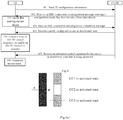
- Fig.1 is a schematic diagram of a flow of a method for measuring a carrier in deactivated state according to an embodiment of this invention, comprising the following steps:
- a user terminal UE receives a configuration mode that does not take effect immediately; if a deactivation control signaling for a carrier is received by the UE or if a carrier timer of the UE expires, then the carrier is switched from activated state to deactivated state, and the UE measures the carrier in deactivated state; or if an activation control signaling for a carrier in deactivated state that is being measured is received by the UE, then the UE terminates measurement of the carrier in deactivated state.
- the UE can reduce its terminal battery power consumption and improve system performance.
- Fig.2 is a schematic diagram of a flow of an embodiment of method for measuring a carrier in deactivated state of this invention, in which a carrier is measured when it is in deactivated state, comprising the following steps:
- the UE can confirm to switch the carrier to deactivated state from activated state by timeout of an internal carrier timer.
- the control signaling can be Medium Access Control (Medium Access Control, MAC) signaling or a physical layer control signaling.
- Medium Access Control Medium Access Control, MAC
- MAC Medium Access Control
- the UE initiates a gap again to perform deactivated carrier measurement only when a deactivation control signaling for the carrier in activated state is once again received by the UE from the BS.
- UE receives a configuration mode that does not take effect immediately, switches a carrier to deactivated state from activated state, initiates a gap to measure the carrier in deactivated state; if an activation control signaling for the carrier in deactivated state that is being measured is received by the UE, then the UE terminates measurement of the carrier in deactivated state.
- Fig.3 is a schematic diagram of a flow of a method for measuring a carrier in deactivated state according to another embodiment of this invention, which is similar to the embodiment shown in Fig.2 , except that the UE receives a newly configured carrier, which is a carrier newly configured by a BS for the UE.
- the newly configured carrier can be a carrier in deactivated state or initial state, and then the UE initiates a gap to measure the carrier in deactivated state.
- Fig.4 is a schematic diagram of a flow of a method for measuring a carrier in deactivated state according to another embodiment of this invention, in which if a carrier of the UE is in deactivated state, then the UE can measure the carrier in deactivated state through initiating a gap, shifting RF central frequency, or enabling an idle RF channel.
- the embodiment comprises the following steps:
- the UE When the base station configures a new carrier for the UE, the UE sends RF capability in the band of the carrier only when there are at least two RF channels in the band.
- the UE sends its RF capability information in the same band to the base station, comprising:
- the RF capability information in the same band can only comprise number of RFs supported in the band.
- the RF capability information in the band can further comprise receiving bandwidth supported in the band, the receiving bandwidth is a bandwidth in which the UE can receive data and/or measure bandwidth simultaneously when all RF channels are enabled, the receiving bandwidth and/or measurement bandwidth can be a maximum bandwidth.
- the control signaling may be Medium Access Control (Medium Access Control, MAC) signaling or a physical layer control signaling.
- MAC Medium Access Control
- the UE measuring the carrier in deactivated state through initiating a Gap, shifting the RF central frequency, or enabling an idle RF channel can be pre-configured.
- the pre-configuration can be made by the base station based on the RF capability information reported by the UE, and then the BS can notify configuration information to the UE.
- the pre-configuration can comprise:
- An RF channel can cover multiple bands.
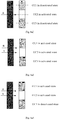
- the UE shifts a RF central frequency, that is, converts RF channel corresponding to activated carriers to a broader bandwidth of the deactivated carriers such that the bandwidth can ensure data reception of activated carriers and measurement of deactivated carriers to be performed simultaneously.
- carriers CC1, CC2, CC3 are carriers in activated state, wherein the UE received a deactivation control signaling for CC1 and CC3.
- A is the RF central frequency.
- the terminal can directly measure CC1 and CC3 without initiating a Gap.
- carriers CC1, CC2, CC3 are carriers in activated state, wherein the UE received a deactivation control signaling for CC3.
- A is the RF central frequency.
- the UE shifts the RF central frequency to B, initiates a gap to measure CC3; or shifts the central frequency back to A to measure CC3.
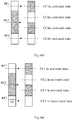
- carriers CC1, CC2, CC3, CC4 are carriers in activated state, wherein the UE received a deactivation control signaling for CC4.
- RF3 is enabled to measure CC4; or as shown in Fig.4a7 , a Gap is initiated on RF1 to measure CC4.
- step 406 if the UE has initiated a Gap to measure the carrier in deactivated state, then the Gap has to be closed at first to terminate the measurement of the carrier in deactivated state; if the UE has shifted a central frequency to measure the carrier in deactivated state, then measurement of the carrier in deactivated state can be terminated directly; if the UE has enabled an idle RF channel to measure the carrier in deactivated state, then the UE must disable the idle RF channel and then terminate the measurement of the carrier in deactivated state.
- the UE also can send a configuration mode that does not take effect immediately and RF capability information in carrier bands to the BS via a RRC connection reconfiguration completion message, so that the BS can be aware of timings at which the UE initiates and closes a gap based on the RF capability information and the configuration mode that does not take effect immediately of the UE, so that data and/or signaling transmission to the UE can be avoided when a gap is initiated by the UE, as a result, UE data and/or signaling loss can be prevented.
- the UE receives a configuration mode that does not take effect immediately; when a deactivation control signaling for a carrier is received by the UE or when a carrier timer of the UE expires, the UE initiates a gap or shifts a central frequency or enable an idle RF channel to measure a carrier in deactivated state; if an activation control signaling for a carrier in deactivated state that is being measured is received by the UE, the UE terminates measurement of the carrier in deactivated state, so that through deactivated carrier measurement control, the UE can reduce terminal battery power consumption and improve system performance.
- Fig.5 is a schematic diagram of a flow of a method for measuring a carrier in deactivated state according to another embodiment of this invention, wherein UE selects a RF channel corresponding to one or more activated carriers to initiate a gap, or shifts RF central frequency, or selects an idle RF channel corresponding to one or more deactivated carriers to measure the carriers in deactivated state, comprising the following steps:
- the RF capability in the band may further comprise receiving bandwidth supported in the band, the receiving bandwidth is a bandwidth in which the UE can receive data and/or measure bandwidth simultaneously when all RF channels are enabled.
- the receiving bandwidth and/or measurement bandwidth may be a maximum bandwidth.
- the RF capability information in the same band can only comprise the number of RF channels supported in the band.
- the RF capability in the band may further comprise receiving bandwidth supported in the band, that is, the receiving bandwidth is a bandwidth in which the UE can receive data and/or measure bandwidth simultaneously when all RF channels are enabled.
- the receiving bandwidth and/or measurement bandwidth may be a maximum bandwidth.
- the carrier is switched from activated state to deactivated state.
- the control signaling can be Medium Access Control (Medium Access Control, MAC) signaling or a physical layer control signaling.
- Medium Access Control Medium Access Control, MAC
- MAC Medium Access Control
- the UE receives a deactivation control signaling for carriers, switches those carriers from activated state to deactivated state, and selects a RF channel corresponding to the one or more activated carriers to measure the carriers in deactivated state by measuring according to the RF capability of the UE, wherein during one measurement period, a non-repeated measurement is performed on at least one carrier in deactivated state on a RF channel corresponding to at least one carrier in activated state.
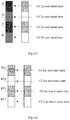
- the measurement of deactivated carriers by the UE can be pre-configured by the BS and the UE. For example, as shown in Fig.5a1 , if carriers CC2, CC2, CC3, CC4 are carriers in activated state, when a deactivation control signaling for CC3 and CC4 is received by the UE, if the UE is going to measure CC3 and CC4, as shown in Fig.5a2 , the UE can initiate a gap on RF1 corresponding to CC1 to measure CC3 and CC4; as shown in Fig.5a3 , the UE also can initiate a gap on RF2 corresponding to CC2 to measure CC3 and CC4; as shown in Fig.5a4 , the UE also can initiate a gap on RF1 to measure CC3 and initiate a gap on RF2 to measure CC4.
- a gap can be initiated on RF2 to measure CC1; as shown in Fig.5a7 , the central frequency of RF1 can be shifted from A to B to measure CC1; as shown in Fig.5a8 , a gap can also be initiated on RF1 to measure CC1.
- the gap has to be closed at first, and then the measurement of the carrier in deactivated state can be terminated; if the UE has shifted a central frequency to measure the carrier in deactivated state, the measurement of the carrier in deactivated state can be terminated directly; if the UE has enabled an idle RF channel to measure the carrier in deactivated state, the UE must disable the idle RF channel and then terminate the measurement of the carrier in deactivated state.
- the UE receives a configuration mode that does not take effect immediately; when a deactivation control signaling for a carrier is received by the UE or when a carrier timer of the UE expires, the UE selects an RF channel corresponding to one or more carriers in activated state to initiate a gap, or shifts an RF central frequency, or selects an idle RF channel corresponding to one or more carriers in activated state, to measure one or more deactivated carriers as selected measuring objects.
- the UE When an activation control signaling for a carrier in deactivated state that is being measured is received by the UE, the UE terminates the measurement of the carrier in deactivated state, so that through controllable deactivated carrier measurement, the UE can reduce terminal battery power consumption and improve system performance.
- Fig.6 is a schematic diagram of a flow of a method for measuring a carrier in deactivated state according to another embodiment of this invention, in which according to configuration information of carriers of a UE, the UE selects measurement configuration information corresponding to the configuration information from a set of measurement configuration information to measure carriers in deactivated state, comprising the following steps.
- the UE sends to BS RF capability in a band of a configured carrier only if there are at least two RF channels in the band.
- the UE sends its RF capability in the same band to the base station, comprising:
- the RF capability in the band may further comprise receiving bandwidth supported in the band, the receiving bandwidth is a bandwidth in which the UE can receive data and/or measure bandwidth simultaneously when all RF channels are enabled; the receiving bandwidth and/or measurement bandwidth can be a maximum bandwidth.
- the RF capability information in the same band can only comprise the number of RF channels supported in the band.
- the RF capability in the band may further comprise receiving bandwidth supported in the band, the receiving bandwidth is a bandwidth in which the UE can receive data and/or measure bandwidth simultaneously when all RF channels are enabled; the receiving bandwidth and/or measurement bandwidth can be a maximum bandwidth.
- the UE For different frequency bands, the UE must use several RF channels. However, for multiple frequencies in the same band, for example, the 3.5G frequency band, a total 5 carriers are supported in 100M; if the UE has a main carrier and auxiliary carriers in one band, the UE may have multiple RF channels, and a deactivated auxiliary carrier can be measured without a gap.
- measurement configuration information set 1 comprises: Table 1 No. Deactivated CC Activated CC Measurement Configuration Information 1 CC1 CC2, CC3, CC4 Initiate a gap on RF3 2 CC2 CC1, CC3, CC4 Initiate a gap on RF2 3 CC3 CC1, CC2, CC4 Initiate a gap on RF2 4 CC4 CC1, CC2, CC3 Initiate a gap on RF1 5 CC1, CC2 CC3, CC4 Initiate a gap on RF3 to measure CC1, initiate a gap on RF2 to measure CC2 6 CC1, CC3 CC2, CC4 Initiate a gap on RF3 to measure CC1, initiate a gap on RF2 to measure CC3 7 CC1, CC4 CC2, CC3 enable RF1 to measure CC1, CC4 8 CC2, CC3 CC1, CC4 enable RF3 to measure
- carriers CC1 and CC4 correspond to RF1 and RF3, respectively, CC2 and CC3 share RF2, for example, when CC2 is a carrier in deactivated state, and CC1, CC3, CC4 are carriers in activated state, Table 2 is measurement configuration information set 2, the UE can select No.2 configuration information from the measurement configuration information set 2 according to configuration information of current configured activated or deactivated carriers, that is, to measure CC2 through shifting central frequency of RF2.
- the measurement configuration information set 2 comprises: Table 2 No. Deactivated CC Activated CC Measurement configuration information 1 CC1 CC2, CC3, CC4 Initiate a gap on RF3 2 CC2 CC1, CC3, CC4 Shift the central frequency of RF2 3 CC3 CC1, CC2, CC4 Shift the central frequency of RF2 4 CC4 CC1, CC2, CC3 Initiate a gap on RF1 5 CC1, CC2 CC3, CC4 Initiate a gap on RF3 to measure CC1; Shift the central frequency of RF2 to measure CC2 6 CC1, CC3 CC2, CC4 Initiate a gap on RF3 to measure CC1; Shift central frequency of RF2 to measure CC3 7 CC1, CC4 CC2, CC3 Enable RF1 to measure CC1, CC4 8 CC2, CC3 CC1, CC4 Enable RF
- the control signaling can be Medium Access Control (Medium Access Control, MAC) signaling or a physical layer control signaling.
- Medium Access Control Medium Access Control, MAC
- MAC Medium Access Control
- step 605 if the UE has initiated a gap to measure the carrier in deactivated state, the gap has to be closed at first, and then the measurement of the carrier in deactivated state can be terminated; if the UE has shifted a central frequency to measure the carrier in deactivated state, the measurement of the carrier in deactivated state can be terminated directly; if the UE has initiated an idle RF channel to measure the carrier in deactivated state, the UE needs to close the idle RF channel and then terminate the measurement of the carrier in deactivated state.
- Fig.7 is a schematic diagram of a flow of a method for measuring a carrier in deactivated state according to another embodiment of this invention, comprising:
- a BS sends a configuration mode that does not take effect immediately to a UE, to cause the UE to receive a deactivation control signaling for a carrier or a timeout notification of a carrier timer of the UE, switch the carrier from activated state to deactivated state, and measure the carrier in deactivated state; or to cause the UE to terminate measurement of the carrier in deactivated state if an activation control signaling for a carrier in deactivated state that is being measured is received by the UE.
- the UE can reduce terminal battery power consumption and improve system performance.
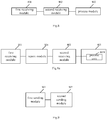
- Fig.8 is a schematic structure diagram of an apparatus for measuring a carrier in deactivated state according to an embodiment of this invention, comprising:
- the process module is used to, according to the RF capability, select an RF channel corresponding to one or more carriers in activated state to measure the carriers in deactivated state by measuring manner.
- the process module further comprises a process unit 8031 for performing non-repeated measurement on at least one carrier in deactivated state on an RF channel corresponding to at least one carrier in activated state during one measurement period.
- the apparatus further comprises:
- a user terminal UE receives a configuration mode that does not take effect immediately, if a deactivation control signaling for a carrier or a timeout notification of a carrier timer of the UE is received by the UE, the carrier is switched from activated state to deactivated state, and the UE measures the carrier in deactivated state; or if an activation control signaling for a carrier in deactivated state that is being measured is received by the UE, the UE terminates measurement of the carrier in deactivated state .
- the UE can reduce terminal battery power consumption and improve system performance.
- Fig.9 is a schematic structure diagram of a base station of this invention, comprising:
- the BS sends a configuration mode that does not take effect immediately to a user terminal UE; the BS sends a deactivation control signaling for a carrier to the UE, to cause the UE to switch the carrier from activated state to deactivated state when receiving the deactivation control signaling for the carrier, and measure the carrier in deactivated state; or the BS sends an activation control signaling for a carrier in deactivated state that is being measured to the UE, to cause the UE to switch the carrier from activated state to deactivated state when receiving the deactivation control signaling for the carrier, and measure the carrier in deactivated state.
- the UE can reduce terminal battery power consumption and improve system performance.
- the apparatus of the embodiment of this invention is used to perform steps of methods of above embodiments.
- Embodiments of this invention have been described with three or four carriers as an example. However, embodiments of this invention are not limited to the carrier number specified in above embodiments.
- the invention can be implemented in a manner of software and an essential general-purpose hardware platform. Of course, it can be implemented by hardware, but the former is preferred in most cases.
- the technical solutions of the invention or a part thereof contributing to the prior art can essentially be embodied in the form of a software product, which can be stored in a storage medium, which includes several instructions to cause a computer device (which may be a personal computer, a server, a network device, etc.) to perform the methods according to the respective embodiments of the invention.
Landscapes
- Engineering & Computer Science (AREA)
- Computer Networks & Wireless Communication (AREA)
- Signal Processing (AREA)
- Physics & Mathematics (AREA)
- Electromagnetism (AREA)
- Quality & Reliability (AREA)
- Mobile Radio Communication Systems (AREA)
- Circuits Of Receivers In General (AREA)
Claims (16)
- Verfahren in einem UE zum Messen eines Trägers im deaktivierten Zustand, dadurch gekennzeichnet, dass es die folgenden Schritte umfasst:Empfangen (602) einer Konfigurationsnachricht, die eine Trägerkonfigurationsinformation und einen Satz von Messkonfigurationsinformationen zum Messen von Trägern im deaktivierten Zustand umfasst;Speichern (603) der Konfigurationsnachricht;wenn eine Deaktivierungssteuersignalisierung für einen Träger empfangen wird (604) oder wenn ein Träger-Timer des UE abläuft, Umschalten (605) des Trägers von einem aktivierten Zustand zu einem deaktivierten Zustand und Messen des Trägers unter Verwendung der Messkonfigurationsinformationen, die aus dem Satz von Messkonfigurationsinformationen gemäß der tatsächlichen Trägerkonfiguration ausgewählt werden; undwenn eine Aktivierungssteuersignalisierung für einen deaktivierten Träger, der gemessen wird, empfangen wird (606), Beenden (607) der Messung.
- Verfahren nach Anspruch 1, wobei das Empfangen einer Konfigurationsnachricht Folgendes umfasst:Empfangen (201) einer Funkressourcensteuerungs-Verbindungsrekonfigurationsnachricht bzw. RRC-Verbindungsrekonfigurationsnachricht, wobei die Trägerkonfigurationsinformation in der RRC-Verbindungsrekonfigurationsnachricht geführt wird; oderEmpfangen (301) einer neu konfigurierten Trägernachricht, wobei die Trägerkonfigurationsinformation in der neu konfigurierten Trägernachricht geführt wird.
- Verfahren nach Anspruch 1 oder Anspruch 2, wobei das Messen des Trägers Folgendes umfasst:Initiieren (205) einer Lücke zum Messen des Trägers.
- Verfahren nach Anspruch 1 oder Anspruch 2, wobei das Messen des Trägers Folgendes umfasst:falls jeder Träger einem HF-Kanal entspricht, Initiieren (406) einer Lücke auf einem freigegebenen HF-Kanal zum Messen des Trägers im deaktivierten Zustand in der Lücke; oderfalls jeder Träger einem HF-Kanal entspricht, Freigeben (406) eines HF-Kanals, der dem Träger im deaktivierten Zustand entspricht, zum Messen des Trägers im deaktivierten Zustand auf dem entsprechenden HF-Kanal; oderfalls sich mindestens zwei Träger einen HF-Kanal teilen, Verschieben (406) einer Mittenfrequenz des HF-Kanals zu einer Mittenfrequenz einer Empfangsbandbreite der mindestens zwei Träger, die durch den gemeinsamen HF-Kanal abgedeckt ist, und Messen des Trägers im deaktivierten Zustand auf dem HF-Kanal; oderfalls sich mindestens zwei Träger einen HF-Kanal teilen, Initiieren (406) einer Lücke auf dem gemeinsamen HF-Kanal, der freigegeben worden ist, zum Messen des Trägers im deaktivierten Zustand in der Lücke.
- Verfahren nach Anspruch 1 oder Anspruch 2, wobei das Messen des Trägers Folgendes umfasst:gemäß der HF-Fähigkeit des UE, Auswählen (506) eines HF-Kanals, der einem oder mehreren Trägern im aktivierten Zustand entspricht, Freigeben (506) des HF-Kanals oder Initiieren (506) einer Lücke auf dem HF-Kanal zum Messen des Trägers im deaktivierten Zustand.
- Verfahren nach Anspruch 1, wobei das Verfahren ferner Folgendes umfasst:Melden von HF-Fähigkeitsinformationen des UE,wobei die HF-Fähigkeitsinformationen des UE eine Anzahl von HF-Kanälen, die durch das UE unterstützt werden, und eine Empfangsbandbreite, die durch jeden HF-Kanal unterstützt wird, umfassen; oderfalls die Empfangsbandbreite der HF-Kanäle des UE die gleiche ist, die HF-Fähigkeitsinformationen des UE nur die Anzahl von HF-Kanälen, die durch das UE unterstützt werden, umfassen; oderdie HF-Fähigkeitsinformationen des UE eine Empfangsbandbreite, die durch das UE unterstützt wird, umfassen, die Empfangsbandbreite eine Bandbreite, die durch das UE unterstützt wird, zum Datenempfangen und/oder -messen beinhaltet, wenn alle HF-Kanäle, die durch das UE unterstützt werden, freigegeben sind.
- Verfahren in einer Basisstation zum Messen eines Trägers im deaktivierten Zustand, dadurch gekennzeichnet, dass es die folgenden Schritte umfasst:Senden (701) einer Konfigurationsnachricht, die eine Trägerkonfigurationsinformation und einen Satz von Messkonfigurationsinformationen umfasst, zu einem UE zum Messen von Trägern im deaktivierten Zustand;Senden (702) einer Deaktivierungssteuersignalisierung für einen Träger zum UE zum Umschalten des Trägers von einem aktvierten Zustand zu einem deaktivierten Zustand und zum Messen des Trägers unter Verwendung der Messkonfigurationsinformationen, die aus dem Satz von Messkonfigurationsinformationen gemäß der tatsächlichen Trägerkonfiguration ausgewählt werden; undSenden (703) einer Aktivierungssteuersignalisierung für einen deaktivierten Träger, der gemessen wird, zum UE zum Beenden der Messung.
- Verfahren nach Anspruch 7, wobei das Senden einer Konfigurationsnachricht Folgendes umfasst:Senden einer Funkressourcensteuerungs-Verbindungsrekonfigurationsnachricht bzw. RRC-Verbindungsrekonfigurationsnachricht durch die Basisstation, wobei die Trägerkonfigurationsinformation in der RRC-Verbindungsrekonfigurationsnachricht geführt wird; oderSenden einer neu konfigurierten Trägernachricht durch die Basisstation, wobei die Trägerkonfigurationsinformation in der neu konfigurierten Trägernachricht geführt wird.
- Vorrichtung zum Messen eines Trägers im deaktivierten Zustand, dadurch gekennzeichnet, dass sie Folgendes umfasst:ein erstes Empfangsmodul (801), das dazu konfiguriert ist, eine Konfigurationsnachricht, die eine Trägerkonfigurationsinformation und einen Satz von Messkonfigurationsinformationen umfasst, zum Messen von Trägern im deaktivierten Zustand zu empfangen;ein Modul, das dazu konfiguriert ist, die Konfigurationsnachricht zu speichern;ein zweites Empfangsmodul (802), das dazu konfiguriert ist, eine Deaktivierungssteuersignalisierung für einen Träger oder eine Timeout-Benachrichtigung eines Träger-Timers zu empfangen oder eine Aktivierungssteuersignalisierung für einen deaktivierten Träger, der gemessen wird, zu empfangen; undein Verarbeitungsmodul (803), das dazu konfiguriert ist, wenn die Deaktivierungssteuersignalisierung oder die Timeout-Benachrichtigung durch das zweite Empfangsmodul empfangen wird, den Träger von einem aktivierten Zustand zu einem deaktivierten Zustand umzuschalten und den Träger mit den Messkonfigurationsinformationen, die aus dem Satz von Messkonfigurationsinformationen gemäß der tatsächlichen Trägerkonfiguration ausgewählt werden, zu messen und, wenn die Aktivierungssteuersignalisierung für einen deaktivierten Träger durch das zweite Empfangsmodul empfangen wird, die Messung zu beenden.
- Vorrichtung nach Anspruch 9, wobei das Verarbeitungsmodul (803) spezifisch zu Folgendem konfiguriert ist:Initiieren einer Lücke zum Messen des Trägers oder,falls jeder Träger einem HF-Kanal entspricht, Initiieren einer Lücke auf einem freigegebenen HF-Kanal durch das UE zum Messen des Trägers im deaktivierten Zustand in der Lücke oder,falls jeder Träger einem HF-Kanal entspricht, Freigeben eines HF-Kanals, der dem Träger im deaktivierten Zustand entspricht, durch das UE zum Messen des Trägers im deaktivierten Zustand auf dem entsprechenden HF-Kanal oder,falls sich mindestens zwei Träger einen HF-Kanal teilen, Verschieben einer Mittenfrequenz des HF-Kanals durch das UE zu einer Mittenfrequenz der Empfangsbandbreite der mindestens zwei Träger, die durch den gemeinsamen HF-Kanal abgedeckt ist, und Messen des Trägers im deaktivierten Zustand auf dem HF-Kanal oder,falls sich mindestens zwei Träger einen HF-Kanal teilen, Initiieren einer Lücke auf dem gemeinsamen HF-Kanal, die durch das UE freigegeben worden ist, zum Messen des Trägers im deaktivierten Zustand in der Lücke.
- Vorrichtung nach Anspruch 9, wobei das Verarbeitungsmodul (803) spezifisch zu Folgendem konfiguriert ist:gemäß der HF-Fähigkeit des UE, Auswählen eines HF-Kanals, der einem oder mehreren Trägern im aktivierten Zustand entspricht, Freigeben des HF-Kanals oder Initiieren einer Lücke auf dem HF-Kanal zum Messen des Trägers im deaktivierten Zustand.
- Vorrichtung nach Anspruch 9, wobei die Vorrichtung ferner Folgendes umfasst:ein Meldemodul (804), das dazu konfiguriert ist, HF-Fähigkeitsinformationen zu melden, wobei die HF-Fähigkeitsinformationen eine Anzahl von HF-Kanälen, die durch das UE unterstützt werden, und eine Empfangsbandbreite, die durch jeden HF-Kanal unterstützt wird, umfassen; oder, falls mehrere HF-Kanäle des UE in der Lage sind, die gleiche Empfangsbandbreite zu unterstützen, die HF-Fähigkeitsinformationen des UE nur die Anzahl von HF-Kanälen, die durch das UE unterstützt werden, umfassen; oder die HF-Fähigkeitsinformationen des UE eine Empfangsbandbreite, die durch das UE unterstützt, wird, umfassen, was eine Bandbreite, die durch das UE unterstützt wird, zum Datenempfangen und/oder -messen beinhaltet, wenn alle HF-Kanäle, die durch das UE unterstützt werden, freigegeben sind.
- Vorrichtung nach Anspruch 12, wobei
das erste Empfangsmodul (801) spezifisch dazu konfiguriert ist, eine Konfigurationsnachricht, die den Konfigurationsmodus, der nicht sofort wirksam wird, führt, und einen Satz von Messkonfigurationsinformationen zu empfangen; das Verarbeitungsmodul (803) spezifisch dazu konfiguriert ist, wenn eine Deaktivierungssteuersignalisierung für einen Träger oder eine Timeout-Benachrichtigung eines Träger-Timers durch das zweite Empfangsmodul empfangen wird, den Träger vom aktivierten Zustand zum deaktivierten Zustand umzuschalten, eine Deaktivierungssteuersignalisierung für mindestens einen Träger zu empfangen, den mindestens einen Träger vom aktivierten Zustand zum deaktivierten Zustand umzuschalten, die Messkonfigurationsinformationen, die den Konfigurationsinformationen aus dem Satz von Messkonfigurationsinformationen entsprechen, gemäß den Konfigurationsinformationen zum Messen des Trägers im deaktivierten Zustand auszuwählen. - Basisstation, dadurch gekennzeichnet, dass sie Folgendes umfasst:ein erstes Sendemodul (901), das dazu konfiguriert ist, eine Konfigurationsnachricht, die eine Trägerkonfigurationsinformation und einen Satz von Messkonfigurationsinformationen umfasst, zu einem UE zum Messen von Trägern im deaktivierten Zustand zu senden; undein zweites Sendemodul (902), das dazu konfiguriert ist, eine Deaktivierungssteuersignalisierung für einen Träger zum UE zum Umschalten eines Trägers von einem aktivierten Zustand zu einem deaktivierten Zustand zu senden und den Träger unter Verwendung der Messkonfigurationsinformationen, die aus dem Satz von Messkonfigurationsinformationen gemäß der tatsächlichen Trägerkonfiguration ausgewählt werden, zu messen; und dazu konfiguriert ist, eine Aktivierungssteuersignalisierung für einen deaktivierten Träger, der gemessen wird, zum Beenden der Messung zu senden.
- Basisstation nach Anspruch 14, wobei das erste Sendemodul (901) spezifisch zu Folgendem konfiguriert ist:Senden einer Funkressourcensteuerungs-Verbindungsrekonfigurationsnachricht bzw. RRC-Verbindungsrekonfigurationsnachricht, wobei die Trägerkonfigurationsinformation in der RRC-Verbindungsrekonfigurationsnachricht geführt wird; oderSenden einer neu konfigurierten Trägernachricht, wobei die Trägerkonfigurationsinformation in der neu konfigurierten Trägernachricht geführt wird.
- Computerprogrammprodukt, dadurch gekennzeichnet, dass es Computerprogrammcode umfasst, der, wenn er durch eine Computereinheit ausgeführt wird, bewirkt, dass die Computereinheit die Schritte eines Benutzerendgeräts gemäß einem der Ansprüche 1 bis 6 durchführt.
Applications Claiming Priority (2)
| Application Number | Priority Date | Filing Date | Title |
|---|---|---|---|
| CN201010169441.6A CN102237936B (zh) | 2010-04-30 | 2010-04-30 | 一种去激活状态载波的测量方法、装置 |
| PCT/CN2011/073593 WO2011134437A1 (zh) | 2010-04-30 | 2011-05-03 | 一种去激活状态载波的测量方法、装置 |
Publications (3)
| Publication Number | Publication Date |
|---|---|
| EP2566073A1 EP2566073A1 (de) | 2013-03-06 |
| EP2566073A4 EP2566073A4 (de) | 2013-06-19 |
| EP2566073B1 true EP2566073B1 (de) | 2017-09-13 |
Family
ID=44860892
Family Applications (1)
| Application Number | Title | Priority Date | Filing Date |
|---|---|---|---|
| EP11774428.4A Active EP2566073B1 (de) | 2010-04-30 | 2011-05-03 | Verfahren und vorrichtung zur messung eines trägers in deaktivierungszustand |
Country Status (5)
| Country | Link |
|---|---|
| US (2) | US9031595B2 (de) |
| EP (1) | EP2566073B1 (de) |
| KR (1) | KR101482051B1 (de) |
| CN (1) | CN102237936B (de) |
| WO (1) | WO2011134437A1 (de) |
Families Citing this family (20)
| Publication number | Priority date | Publication date | Assignee | Title |
|---|---|---|---|---|
| CN102237936B (zh) * | 2010-04-30 | 2015-01-21 | 华为技术有限公司 | 一种去激活状态载波的测量方法、装置 |
| WO2012044246A1 (en) * | 2010-09-30 | 2012-04-05 | Telefonaktiebolaget L M Ericsson (Publ) | Methods and nodes for handling measurements |
| WO2014047914A1 (en) * | 2012-09-28 | 2014-04-03 | Broadcom Corporation | Method and apparatus for managing secondary cell measurement |
| WO2015062011A1 (zh) * | 2013-10-31 | 2015-05-07 | 华为技术有限公司 | 一种测量配置方法、识别和测量方法、宏基站及ue |
| CN106465344A (zh) | 2014-05-02 | 2017-02-22 | 诺基亚通信公司 | 经由多个接入点的通信 |
| US9806871B2 (en) * | 2015-05-17 | 2017-10-31 | Imagination Technologies | Selective sub-carrier processing |
| CN105611553A (zh) * | 2015-08-26 | 2016-05-25 | 宇龙计算机通信科技(深圳)有限公司 | 载波数量的控制方法、载波数量的控制装置、终端和基站 |
| US9848384B2 (en) | 2016-02-11 | 2017-12-19 | Imagination Technologies | Receiver deactivation based on dynamic measurements |
| CN110012512B (zh) | 2018-01-04 | 2020-07-28 | 维沃移动通信有限公司 | 一种状态处理方法及相关设备 |
| CN110312267B (zh) * | 2018-03-27 | 2023-03-21 | 维沃移动通信有限公司 | 用于切换带宽部分的方法和设备 |
| CN110505638B (zh) * | 2018-05-16 | 2021-06-04 | 维沃移动通信有限公司 | 测量控制方法、终端和网络侧设备 |
| CN110896555B (zh) * | 2018-09-13 | 2023-06-02 | 华为技术有限公司 | 一种消息处理方法和装置 |
| CN111107613B (zh) * | 2018-10-26 | 2022-01-28 | 维沃移动通信有限公司 | 一种非连接态测量方法及终端 |
| CN112702750B (zh) * | 2019-10-23 | 2022-11-22 | 维沃移动通信有限公司 | 测量处理方法、指示信息发送方法、终端和网络设备 |
| CN117082555A (zh) | 2020-04-20 | 2023-11-17 | 华为技术有限公司 | 一种测量配置方法及装置 |
| CN112205053B (zh) * | 2020-07-14 | 2024-01-02 | 北京小米移动软件有限公司 | 激活资源切换方法及装置、通信设备及存储介质 |
| CN113972922B (zh) * | 2020-07-24 | 2024-07-26 | 中国移动通信有限公司研究院 | 空地通信的干扰抑制方法及装置 |
| CN115226217B (zh) * | 2021-04-21 | 2025-10-03 | 中国移动通信有限公司研究院 | 一种辅载波配置处理方法、装置及设备 |
| US11985597B2 (en) * | 2021-08-05 | 2024-05-14 | Qualcomm Incorporated | Techniques for aperiodic discontinuous reception mode communications |
| US12041000B2 (en) | 2021-08-05 | 2024-07-16 | Qualcomm Incorporated | Techniques for communicating data channel transmissions |
Family Cites Families (13)
| Publication number | Priority date | Publication date | Assignee | Title |
|---|---|---|---|---|
| US6208858B1 (en) * | 1998-07-21 | 2001-03-27 | Qualcomm Incorporated | System and method for reducing call dropping rates in a multi-beam communication system |
| US6979992B2 (en) * | 2001-05-16 | 2005-12-27 | Duke Energy Corporation | Portable radiated emissions measurement system |
| US7269414B2 (en) * | 2002-05-28 | 2007-09-11 | Motorola, Inc. | Dynamic mobile station configuration in wireless communications systems and methods therefor |
| EP1615458A1 (de) * | 2003-04-14 | 2006-01-11 | NEC Corporation | Mobilkommunikationssystem, funkbasisstation mit steuereinrichtung in dem mobilkommunikationssystem und steuerverfahren dafür |
| CN100518340C (zh) * | 2004-07-23 | 2009-07-22 | 华为技术有限公司 | 一种高速分组数据业务网络实现快速寻呼的方法 |
| EP1807951B1 (de) * | 2004-10-29 | 2019-04-10 | Avago Technologies International Sales Pte. Limited | Hierarchische mehrkanalkommunikation auf flussebene |
| CN100466600C (zh) * | 2005-03-08 | 2009-03-04 | 华为技术有限公司 | 下一代网络中实现接入配置模式资源预留的方法 |
| US7580713B2 (en) * | 2005-05-12 | 2009-08-25 | Motorola, Inc. | Apparatus and method for establishing an active set of carriers for a receiver |
| CN101841823B (zh) * | 2009-03-16 | 2012-06-27 | 电信科学技术研究院 | 多载波系统中非连续监听控制信道的方法及装置 |
| KR101644150B1 (ko) * | 2009-07-12 | 2016-07-29 | 엘지전자 주식회사 | 슬립모드 동작 갱신 방법 및 장치 |
| KR20110025015A (ko) * | 2009-09-01 | 2011-03-09 | 엘지전자 주식회사 | 멀티 캐리어 시스템의 슬립모드 동작 방법 및 장치 |
| US8526888B2 (en) * | 2009-10-01 | 2013-09-03 | Interdigital Patent Holdings, Inc. | Method and apparatus for performing inter-frequency and/or inter-radio access technology measurements |
| CN102237936B (zh) * | 2010-04-30 | 2015-01-21 | 华为技术有限公司 | 一种去激活状态载波的测量方法、装置 |
-
2010
- 2010-04-30 CN CN201010169441.6A patent/CN102237936B/zh active Active
-
2011
- 2011-05-03 EP EP11774428.4A patent/EP2566073B1/de active Active
- 2011-05-03 WO PCT/CN2011/073593 patent/WO2011134437A1/zh not_active Ceased
- 2011-05-03 KR KR1020127026387A patent/KR101482051B1/ko active Active
-
2012
- 2012-10-30 US US13/664,174 patent/US9031595B2/en active Active
-
2015
- 2015-04-24 US US14/695,889 patent/US10009843B2/en active Active
Non-Patent Citations (1)
| Title |
|---|
| None * |
Also Published As
| Publication number | Publication date |
|---|---|
| CN102237936A (zh) | 2011-11-09 |
| US20150230178A1 (en) | 2015-08-13 |
| US20130053082A1 (en) | 2013-02-28 |
| US9031595B2 (en) | 2015-05-12 |
| WO2011134437A1 (zh) | 2011-11-03 |
| EP2566073A4 (de) | 2013-06-19 |
| EP2566073A1 (de) | 2013-03-06 |
| CN102237936B (zh) | 2015-01-21 |
| US10009843B2 (en) | 2018-06-26 |
| KR20120140666A (ko) | 2012-12-31 |
| KR101482051B1 (ko) | 2015-01-26 |
Similar Documents
| Publication | Publication Date | Title |
|---|---|---|
| EP2566073B1 (de) | Verfahren und vorrichtung zur messung eines trägers in deaktivierungszustand | |
| US20240267774A1 (en) | Apparatus and method for measurement in wireless communication system | |
| US9854464B2 (en) | Method of avoiding IDC interference in a wireless communication system and apparatus for same | |
| CN103155647B (zh) | 在无线通信系统中调整用于避免idc干扰的小区重新选择优先级的方法及其设备 | |
| US9426839B2 (en) | Method for simultaneously receiving LTE and 1X in SRLTE device | |
| CN107567716B (zh) | 多sim多活动多rat装置和方法 | |
| EP2684408B1 (de) | Opportunistische trägeraggregation für dynamische strömungsschaltung zwischen funkzugriffstechnologien | |
| CN103168487B (zh) | 在无线通信系统中测量以消除idc干扰的方法及其设备 | |
| US20220210863A1 (en) | Cell state management method and apparatus, terminal device, and network device | |
| WO2021104039A1 (zh) | 一种测量配置方法及装置 | |
| US12238596B2 (en) | Measurement configuration method and apparatus | |
| JP2021508203A (ja) | 低電力高速スマートスキャニングのための通信装置および通信方法 | |
| CN105075343A (zh) | 用于在异构通信环境中选择网络和分发业务的方法和装置 | |
| WO2022057520A1 (zh) | 一种配置载波的方法和装置 | |
| CN111937428A (zh) | 用于无线通信系统中的测量的装置和方法 | |
| WO2013177768A1 (zh) | 多流传输的配置方法、基站、无线网络控制器和用户设备 | |
| CN101795461B (zh) | 一种载波监听方法、终端设备、基站及移动性管理实体 | |
| WO2023000334A1 (zh) | Pdcch监听方法、装置、设备及存储介质 | |
| US12513549B2 (en) | Measurement configuration method and apparatus | |
| CN101541036B (zh) | 增强长期演进系统终端的工作方法和系统 | |
| JP2023516252A (ja) | 測定方法、装置及び端末デバイス |
Legal Events
| Date | Code | Title | Description |
|---|---|---|---|
| PUAI | Public reference made under article 153(3) epc to a published international application that has entered the european phase |
Free format text: ORIGINAL CODE: 0009012 |
|
| 17P | Request for examination filed |
Effective date: 20120920 |
|
| AK | Designated contracting states |
Kind code of ref document: A1 Designated state(s): AL AT BE BG CH CY CZ DE DK EE ES FI FR GB GR HR HU IE IS IT LI LT LU LV MC MK MT NL NO PL PT RO RS SE SI SK SM TR |
|
| A4 | Supplementary search report drawn up and despatched |
Effective date: 20130517 |
|
| RIC1 | Information provided on ipc code assigned before grant |
Ipc: H04W 52/02 20090101ALI20130513BHEP Ipc: H04W 24/10 20090101ALI20130513BHEP Ipc: H04W 52/28 20090101ALI20130513BHEP Ipc: H04B 17/00 20060101AFI20130513BHEP |
|
| DAX | Request for extension of the european patent (deleted) | ||
| RIC1 | Information provided on ipc code assigned before grant |
Ipc: H04W 72/04 20090101ALI20160114BHEP Ipc: H04W 24/10 20090101ALI20160114BHEP Ipc: H04B 17/391 20150101ALI20160114BHEP Ipc: H04W 52/28 20090101ALI20160114BHEP Ipc: H04B 17/327 20150101ALI20160114BHEP Ipc: H04W 24/02 20090101ALI20160114BHEP Ipc: H04W 52/02 20090101ALI20160114BHEP Ipc: H04B 17/00 20150101AFI20160114BHEP |
|
| 17Q | First examination report despatched |
Effective date: 20160217 |
|
| RAP1 | Party data changed (applicant data changed or rights of an application transferred) |
Owner name: HUAWEI TECHNOLOGIES CO., LTD. |
|
| GRAP | Despatch of communication of intention to grant a patent |
Free format text: ORIGINAL CODE: EPIDOSNIGR1 |
|
| INTG | Intention to grant announced |
Effective date: 20170314 |
|
| GRAS | Grant fee paid |
Free format text: ORIGINAL CODE: EPIDOSNIGR3 |
|
| GRAJ | Information related to disapproval of communication of intention to grant by the applicant or resumption of examination proceedings by the epo deleted |
Free format text: ORIGINAL CODE: EPIDOSDIGR1 |
|
| GRAL | Information related to payment of fee for publishing/printing deleted |
Free format text: ORIGINAL CODE: EPIDOSDIGR3 |
|
| GRAR | Information related to intention to grant a patent recorded |
Free format text: ORIGINAL CODE: EPIDOSNIGR71 |
|
| GRAA | (expected) grant |
Free format text: ORIGINAL CODE: 0009210 |
|
| INTC | Intention to grant announced (deleted) | ||
| AK | Designated contracting states |
Kind code of ref document: B1 Designated state(s): AL AT BE BG CH CY CZ DE DK EE ES FI FR GB GR HR HU IE IS IT LI LT LU LV MC MK MT NL NO PL PT RO RS SE SI SK SM TR |
|
| INTG | Intention to grant announced |
Effective date: 20170808 |
|
| REG | Reference to a national code |
Ref country code: GB Ref legal event code: FG4D |
|
| REG | Reference to a national code |
Ref country code: CH Ref legal event code: EP |
|
| REG | Reference to a national code |
Ref country code: IE Ref legal event code: FG4D |
|
| REG | Reference to a national code |
Ref country code: AT Ref legal event code: REF Ref document number: 929119 Country of ref document: AT Kind code of ref document: T Effective date: 20171015 |
|
| REG | Reference to a national code |
Ref country code: DE Ref legal event code: R096 Ref document number: 602011041577 Country of ref document: DE |
|
| REG | Reference to a national code |
Ref country code: NL Ref legal event code: FP |
|
| REG | Reference to a national code |
Ref country code: LT Ref legal event code: MG4D |
|
| PG25 | Lapsed in a contracting state [announced via postgrant information from national office to epo] |
Ref country code: LT Free format text: LAPSE BECAUSE OF FAILURE TO SUBMIT A TRANSLATION OF THE DESCRIPTION OR TO PAY THE FEE WITHIN THE PRESCRIBED TIME-LIMIT Effective date: 20170913 Ref country code: NO Free format text: LAPSE BECAUSE OF FAILURE TO SUBMIT A TRANSLATION OF THE DESCRIPTION OR TO PAY THE FEE WITHIN THE PRESCRIBED TIME-LIMIT Effective date: 20171213 Ref country code: FI Free format text: LAPSE BECAUSE OF FAILURE TO SUBMIT A TRANSLATION OF THE DESCRIPTION OR TO PAY THE FEE WITHIN THE PRESCRIBED TIME-LIMIT Effective date: 20170913 Ref country code: HR Free format text: LAPSE BECAUSE OF FAILURE TO SUBMIT A TRANSLATION OF THE DESCRIPTION OR TO PAY THE FEE WITHIN THE PRESCRIBED TIME-LIMIT Effective date: 20170913 Ref country code: SE Free format text: LAPSE BECAUSE OF FAILURE TO SUBMIT A TRANSLATION OF THE DESCRIPTION OR TO PAY THE FEE WITHIN THE PRESCRIBED TIME-LIMIT Effective date: 20170913 |
|
| REG | Reference to a national code |
Ref country code: AT Ref legal event code: MK05 Ref document number: 929119 Country of ref document: AT Kind code of ref document: T Effective date: 20170913 |
|
| PG25 | Lapsed in a contracting state [announced via postgrant information from national office to epo] |
Ref country code: GR Free format text: LAPSE BECAUSE OF FAILURE TO SUBMIT A TRANSLATION OF THE DESCRIPTION OR TO PAY THE FEE WITHIN THE PRESCRIBED TIME-LIMIT Effective date: 20171214 Ref country code: BG Free format text: LAPSE BECAUSE OF FAILURE TO SUBMIT A TRANSLATION OF THE DESCRIPTION OR TO PAY THE FEE WITHIN THE PRESCRIBED TIME-LIMIT Effective date: 20171213 Ref country code: RS Free format text: LAPSE BECAUSE OF FAILURE TO SUBMIT A TRANSLATION OF THE DESCRIPTION OR TO PAY THE FEE WITHIN THE PRESCRIBED TIME-LIMIT Effective date: 20170913 Ref country code: LV Free format text: LAPSE BECAUSE OF FAILURE TO SUBMIT A TRANSLATION OF THE DESCRIPTION OR TO PAY THE FEE WITHIN THE PRESCRIBED TIME-LIMIT Effective date: 20170913 Ref country code: ES Free format text: LAPSE BECAUSE OF FAILURE TO SUBMIT A TRANSLATION OF THE DESCRIPTION OR TO PAY THE FEE WITHIN THE PRESCRIBED TIME-LIMIT Effective date: 20170913 |
|
| PG25 | Lapsed in a contracting state [announced via postgrant information from national office to epo] |
Ref country code: PL Free format text: LAPSE BECAUSE OF FAILURE TO SUBMIT A TRANSLATION OF THE DESCRIPTION OR TO PAY THE FEE WITHIN THE PRESCRIBED TIME-LIMIT Effective date: 20170913 Ref country code: RO Free format text: LAPSE BECAUSE OF FAILURE TO SUBMIT A TRANSLATION OF THE DESCRIPTION OR TO PAY THE FEE WITHIN THE PRESCRIBED TIME-LIMIT Effective date: 20170913 Ref country code: CZ Free format text: LAPSE BECAUSE OF FAILURE TO SUBMIT A TRANSLATION OF THE DESCRIPTION OR TO PAY THE FEE WITHIN THE PRESCRIBED TIME-LIMIT Effective date: 20170913 |
|
| PG25 | Lapsed in a contracting state [announced via postgrant information from national office to epo] |
Ref country code: IT Free format text: LAPSE BECAUSE OF FAILURE TO SUBMIT A TRANSLATION OF THE DESCRIPTION OR TO PAY THE FEE WITHIN THE PRESCRIBED TIME-LIMIT Effective date: 20170913 Ref country code: SK Free format text: LAPSE BECAUSE OF FAILURE TO SUBMIT A TRANSLATION OF THE DESCRIPTION OR TO PAY THE FEE WITHIN THE PRESCRIBED TIME-LIMIT Effective date: 20170913 Ref country code: AT Free format text: LAPSE BECAUSE OF FAILURE TO SUBMIT A TRANSLATION OF THE DESCRIPTION OR TO PAY THE FEE WITHIN THE PRESCRIBED TIME-LIMIT Effective date: 20170913 Ref country code: EE Free format text: LAPSE BECAUSE OF FAILURE TO SUBMIT A TRANSLATION OF THE DESCRIPTION OR TO PAY THE FEE WITHIN THE PRESCRIBED TIME-LIMIT Effective date: 20170913 Ref country code: IS Free format text: LAPSE BECAUSE OF FAILURE TO SUBMIT A TRANSLATION OF THE DESCRIPTION OR TO PAY THE FEE WITHIN THE PRESCRIBED TIME-LIMIT Effective date: 20180113 Ref country code: SM Free format text: LAPSE BECAUSE OF FAILURE TO SUBMIT A TRANSLATION OF THE DESCRIPTION OR TO PAY THE FEE WITHIN THE PRESCRIBED TIME-LIMIT Effective date: 20170913 |
|
| REG | Reference to a national code |
Ref country code: DE Ref legal event code: R097 Ref document number: 602011041577 Country of ref document: DE |
|
| PLBE | No opposition filed within time limit |
Free format text: ORIGINAL CODE: 0009261 |
|
| STAA | Information on the status of an ep patent application or granted ep patent |
Free format text: STATUS: NO OPPOSITION FILED WITHIN TIME LIMIT |
|
| PG25 | Lapsed in a contracting state [announced via postgrant information from national office to epo] |
Ref country code: DK Free format text: LAPSE BECAUSE OF FAILURE TO SUBMIT A TRANSLATION OF THE DESCRIPTION OR TO PAY THE FEE WITHIN THE PRESCRIBED TIME-LIMIT Effective date: 20170913 |
|
| 26N | No opposition filed |
Effective date: 20180614 |
|
| PG25 | Lapsed in a contracting state [announced via postgrant information from national office to epo] |
Ref country code: SI Free format text: LAPSE BECAUSE OF FAILURE TO SUBMIT A TRANSLATION OF THE DESCRIPTION OR TO PAY THE FEE WITHIN THE PRESCRIBED TIME-LIMIT Effective date: 20170913 |
|
| REG | Reference to a national code |
Ref country code: CH Ref legal event code: PL |
|
| REG | Reference to a national code |
Ref country code: BE Ref legal event code: MM Effective date: 20180531 |
|
| PG25 | Lapsed in a contracting state [announced via postgrant information from national office to epo] |
Ref country code: MC Free format text: LAPSE BECAUSE OF FAILURE TO SUBMIT A TRANSLATION OF THE DESCRIPTION OR TO PAY THE FEE WITHIN THE PRESCRIBED TIME-LIMIT Effective date: 20170913 |
|
| REG | Reference to a national code |
Ref country code: IE Ref legal event code: MM4A |
|
| PG25 | Lapsed in a contracting state [announced via postgrant information from national office to epo] |
Ref country code: CH Free format text: LAPSE BECAUSE OF NON-PAYMENT OF DUE FEES Effective date: 20180531 Ref country code: LI Free format text: LAPSE BECAUSE OF NON-PAYMENT OF DUE FEES Effective date: 20180531 |
|
| PG25 | Lapsed in a contracting state [announced via postgrant information from national office to epo] |
Ref country code: LU Free format text: LAPSE BECAUSE OF NON-PAYMENT OF DUE FEES Effective date: 20180503 |
|
| PG25 | Lapsed in a contracting state [announced via postgrant information from national office to epo] |
Ref country code: IE Free format text: LAPSE BECAUSE OF NON-PAYMENT OF DUE FEES Effective date: 20180503 Ref country code: FR Free format text: LAPSE BECAUSE OF NON-PAYMENT OF DUE FEES Effective date: 20180531 |
|
| PG25 | Lapsed in a contracting state [announced via postgrant information from national office to epo] |
Ref country code: BE Free format text: LAPSE BECAUSE OF NON-PAYMENT OF DUE FEES Effective date: 20180531 |
|
| PG25 | Lapsed in a contracting state [announced via postgrant information from national office to epo] |
Ref country code: MT Free format text: LAPSE BECAUSE OF NON-PAYMENT OF DUE FEES Effective date: 20180503 |
|
| PG25 | Lapsed in a contracting state [announced via postgrant information from national office to epo] |
Ref country code: TR Free format text: LAPSE BECAUSE OF FAILURE TO SUBMIT A TRANSLATION OF THE DESCRIPTION OR TO PAY THE FEE WITHIN THE PRESCRIBED TIME-LIMIT Effective date: 20170913 |
|
| PG25 | Lapsed in a contracting state [announced via postgrant information from national office to epo] |
Ref country code: HU Free format text: LAPSE BECAUSE OF FAILURE TO SUBMIT A TRANSLATION OF THE DESCRIPTION OR TO PAY THE FEE WITHIN THE PRESCRIBED TIME-LIMIT; INVALID AB INITIO Effective date: 20110503 Ref country code: PT Free format text: LAPSE BECAUSE OF FAILURE TO SUBMIT A TRANSLATION OF THE DESCRIPTION OR TO PAY THE FEE WITHIN THE PRESCRIBED TIME-LIMIT Effective date: 20170913 |
|
| PG25 | Lapsed in a contracting state [announced via postgrant information from national office to epo] |
Ref country code: CY Free format text: LAPSE BECAUSE OF FAILURE TO SUBMIT A TRANSLATION OF THE DESCRIPTION OR TO PAY THE FEE WITHIN THE PRESCRIBED TIME-LIMIT Effective date: 20170913 Ref country code: MK Free format text: LAPSE BECAUSE OF NON-PAYMENT OF DUE FEES Effective date: 20170913 |
|
| PG25 | Lapsed in a contracting state [announced via postgrant information from national office to epo] |
Ref country code: AL Free format text: LAPSE BECAUSE OF FAILURE TO SUBMIT A TRANSLATION OF THE DESCRIPTION OR TO PAY THE FEE WITHIN THE PRESCRIBED TIME-LIMIT Effective date: 20170913 |
|
| PGFP | Annual fee paid to national office [announced via postgrant information from national office to epo] |
Ref country code: NL Payment date: 20250409 Year of fee payment: 15 |
|
| PGFP | Annual fee paid to national office [announced via postgrant information from national office to epo] |
Ref country code: DE Payment date: 20250402 Year of fee payment: 15 |
|
| PGFP | Annual fee paid to national office [announced via postgrant information from national office to epo] |
Ref country code: GB Payment date: 20250401 Year of fee payment: 15 |