EP2568013A1 - Bilden von Kohlenstoff-Kohlenstoff-Verbundstoff-Vorformen unter Verwendung der geschmolzenen Spitze und Kohlenstofffaserfilamenten - Google Patents
Bilden von Kohlenstoff-Kohlenstoff-Verbundstoff-Vorformen unter Verwendung der geschmolzenen Spitze und Kohlenstofffaserfilamenten Download PDFInfo
- Publication number
- EP2568013A1 EP2568013A1 EP12182494A EP12182494A EP2568013A1 EP 2568013 A1 EP2568013 A1 EP 2568013A1 EP 12182494 A EP12182494 A EP 12182494A EP 12182494 A EP12182494 A EP 12182494A EP 2568013 A1 EP2568013 A1 EP 2568013A1
- Authority
- EP
- European Patent Office
- Prior art keywords
- carbon fiber
- carbon
- fiber filaments
- molten pitch
- pitch
- Prior art date
- Legal status (The legal status is an assumption and is not a legal conclusion. Google has not performed a legal analysis and makes no representation as to the accuracy of the status listed.)
- Granted
Links
- 229920000049 Carbon (fiber) Polymers 0.000 title claims abstract description 162
- 239000004917 carbon fiber Substances 0.000 title claims abstract description 162
- VNWKTOKETHGBQD-UHFFFAOYSA-N methane Chemical compound C VNWKTOKETHGBQD-UHFFFAOYSA-N 0.000 title claims abstract description 153
- CREMABGTGYGIQB-UHFFFAOYSA-N carbon carbon Chemical compound C.C CREMABGTGYGIQB-UHFFFAOYSA-N 0.000 title claims description 70
- 239000011203 carbon fibre reinforced carbon Substances 0.000 title claims description 70
- 239000002131 composite material Substances 0.000 title claims description 69
- 238000002156 mixing Methods 0.000 claims abstract description 48
- 238000000034 method Methods 0.000 claims abstract description 45
- 239000008240 homogeneous mixture Substances 0.000 claims abstract description 25
- 230000001862 defibrillatory effect Effects 0.000 claims abstract description 7
- 238000002844 melting Methods 0.000 claims abstract description 6
- 230000008018 melting Effects 0.000 claims abstract description 6
- 238000001816 cooling Methods 0.000 claims description 6
- 238000000151 deposition Methods 0.000 claims description 6
- VYPSYNLAJGMNEJ-UHFFFAOYSA-N Silicium dioxide Chemical compound O=[Si]=O VYPSYNLAJGMNEJ-UHFFFAOYSA-N 0.000 claims description 5
- 238000001746 injection moulding Methods 0.000 claims description 5
- 239000007800 oxidant agent Substances 0.000 claims description 5
- 239000010936 titanium Substances 0.000 claims description 4
- RTAQQCXQSZGOHL-UHFFFAOYSA-N Titanium Chemical compound [Ti] RTAQQCXQSZGOHL-UHFFFAOYSA-N 0.000 claims description 3
- 229910052719 titanium Inorganic materials 0.000 claims description 3
- 229910019142 PO4 Inorganic materials 0.000 claims 2
- NBIIXXVUZAFLBC-UHFFFAOYSA-K phosphate Chemical compound [O-]P([O-])([O-])=O NBIIXXVUZAFLBC-UHFFFAOYSA-K 0.000 claims 2
- 239000010452 phosphate Substances 0.000 claims 2
- 239000000377 silicon dioxide Substances 0.000 claims 2
- 239000011295 pitch Substances 0.000 description 89
- 239000000203 mixture Substances 0.000 description 38
- 239000000654 additive Substances 0.000 description 21
- 230000000996 additive effect Effects 0.000 description 19
- OKTJSMMVPCPJKN-UHFFFAOYSA-N Carbon Chemical compound [C] OKTJSMMVPCPJKN-UHFFFAOYSA-N 0.000 description 12
- 229910052799 carbon Inorganic materials 0.000 description 11
- 239000002783 friction material Substances 0.000 description 9
- 239000002243 precursor Substances 0.000 description 9
- 238000000280 densification Methods 0.000 description 8
- 239000000463 material Substances 0.000 description 7
- 229920005989 resin Polymers 0.000 description 7
- 239000011347 resin Substances 0.000 description 7
- 238000005229 chemical vapour deposition Methods 0.000 description 6
- 239000007789 gas Substances 0.000 description 5
- IJGRMHOSHXDMSA-UHFFFAOYSA-N Atomic nitrogen Chemical compound N#N IJGRMHOSHXDMSA-UHFFFAOYSA-N 0.000 description 4
- 238000010586 diagram Methods 0.000 description 4
- 239000003575 carbonaceous material Substances 0.000 description 3
- 238000004519 manufacturing process Methods 0.000 description 3
- 229920002239 polyacrylonitrile Polymers 0.000 description 3
- 239000011148 porous material Substances 0.000 description 3
- 239000011318 synthetic pitch Substances 0.000 description 3
- ATUOYWHBWRKTHZ-UHFFFAOYSA-N Propane Chemical compound CCC ATUOYWHBWRKTHZ-UHFFFAOYSA-N 0.000 description 2
- 229920000297 Rayon Polymers 0.000 description 2
- 239000003963 antioxidant agent Substances 0.000 description 2
- 230000015572 biosynthetic process Effects 0.000 description 2
- 125000004432 carbon atom Chemical group C* 0.000 description 2
- 238000010000 carbonizing Methods 0.000 description 2
- 230000007547 defect Effects 0.000 description 2
- 239000004744 fabric Substances 0.000 description 2
- 238000010438 heat treatment Methods 0.000 description 2
- 239000011261 inert gas Substances 0.000 description 2
- 230000008595 infiltration Effects 0.000 description 2
- 238000001764 infiltration Methods 0.000 description 2
- 239000011159 matrix material Substances 0.000 description 2
- 239000003607 modifier Substances 0.000 description 2
- 229910052757 nitrogen Inorganic materials 0.000 description 2
- 238000009715 pressure infiltration Methods 0.000 description 2
- 239000002964 rayon Substances 0.000 description 2
- 239000007858 starting material Substances 0.000 description 2
- 238000001721 transfer moulding Methods 0.000 description 2
- OTMSDBZUPAUEDD-UHFFFAOYSA-N Ethane Chemical compound CC OTMSDBZUPAUEDD-UHFFFAOYSA-N 0.000 description 1
- HSFWRNGVRCDJHI-UHFFFAOYSA-N alpha-acetylene Natural products C#C HSFWRNGVRCDJHI-UHFFFAOYSA-N 0.000 description 1
- QVGXLLKOCUKJST-UHFFFAOYSA-N atomic oxygen Chemical compound [O] QVGXLLKOCUKJST-UHFFFAOYSA-N 0.000 description 1
- 239000001273 butane Substances 0.000 description 1
- 238000003763 carbonization Methods 0.000 description 1
- 239000011294 coal tar pitch Substances 0.000 description 1
- 230000006835 compression Effects 0.000 description 1
- 238000007906 compression Methods 0.000 description 1
- 230000005494 condensation Effects 0.000 description 1
- 238000006482 condensation reaction Methods 0.000 description 1
- 239000000470 constituent Substances 0.000 description 1
- 238000006356 dehydrogenation reaction Methods 0.000 description 1
- 238000009826 distribution Methods 0.000 description 1
- 125000002534 ethynyl group Chemical group [H]C#C* 0.000 description 1
- 239000001257 hydrogen Substances 0.000 description 1
- 229910052739 hydrogen Inorganic materials 0.000 description 1
- 125000004435 hydrogen atom Chemical class [H]* 0.000 description 1
- 239000007788 liquid Substances 0.000 description 1
- 239000011302 mesophase pitch Substances 0.000 description 1
- IJDNQMDRQITEOD-UHFFFAOYSA-N n-butane Chemical compound CCCC IJDNQMDRQITEOD-UHFFFAOYSA-N 0.000 description 1
- OFBQJSOFQDEBGM-UHFFFAOYSA-N n-pentane Natural products CCCCC OFBQJSOFQDEBGM-UHFFFAOYSA-N 0.000 description 1
- 239000003345 natural gas Substances 0.000 description 1
- 230000003647 oxidation Effects 0.000 description 1
- 238000007254 oxidation reaction Methods 0.000 description 1
- 239000001301 oxygen Substances 0.000 description 1
- 229910052760 oxygen Inorganic materials 0.000 description 1
- 150000002978 peroxides Chemical class 0.000 description 1
- 239000011301 petroleum pitch Substances 0.000 description 1
- 238000006116 polymerization reaction Methods 0.000 description 1
- 239000001294 propane Substances 0.000 description 1
- QQONPFPTGQHPMA-UHFFFAOYSA-N propylene Natural products CC=C QQONPFPTGQHPMA-UHFFFAOYSA-N 0.000 description 1
- 125000004805 propylene group Chemical group [H]C([H])([H])C([H])([*:1])C([H])([H])[*:2] 0.000 description 1
- 238000009745 resin transfer moulding Methods 0.000 description 1
- 238000005070 sampling Methods 0.000 description 1
- 238000000926 separation method Methods 0.000 description 1
- 239000007787 solid Substances 0.000 description 1
- 239000000126 substance Substances 0.000 description 1
- 239000004634 thermosetting polymer Substances 0.000 description 1
Images

Classifications
-
- C—CHEMISTRY; METALLURGY
- C08—ORGANIC MACROMOLECULAR COMPOUNDS; THEIR PREPARATION OR CHEMICAL WORKING-UP; COMPOSITIONS BASED THEREON
- C08J—WORKING-UP; GENERAL PROCESSES OF COMPOUNDING; AFTER-TREATMENT NOT COVERED BY SUBCLASSES C08B, C08C, C08F, C08G or C08H
- C08J5/00—Manufacture of articles or shaped materials containing macromolecular substances
- C08J5/04—Reinforcing macromolecular compounds with loose or coherent fibrous material
- C08J5/0405—Reinforcing macromolecular compounds with loose or coherent fibrous material with inorganic fibres
- C08J5/042—Reinforcing macromolecular compounds with loose or coherent fibrous material with inorganic fibres with carbon fibres
-
- C—CHEMISTRY; METALLURGY
- C04—CEMENTS; CONCRETE; ARTIFICIAL STONE; CERAMICS; REFRACTORIES
- C04B—LIME, MAGNESIA; SLAG; CEMENTS; COMPOSITIONS THEREOF, e.g. MORTARS, CONCRETE OR LIKE BUILDING MATERIALS; ARTIFICIAL STONE; CERAMICS; REFRACTORIES; TREATMENT OF NATURAL STONE
- C04B35/00—Shaped ceramic products characterised by their composition; Ceramics compositions; Processing powders of inorganic compounds preparatory to the manufacturing of ceramic products
- C04B35/71—Ceramic products containing macroscopic reinforcing agents
- C04B35/78—Ceramic products containing macroscopic reinforcing agents containing non-metallic materials
- C04B35/80—Fibres, filaments, whiskers, platelets, or the like
- C04B35/83—Carbon fibres in a carbon matrix
-
- C—CHEMISTRY; METALLURGY
- C08—ORGANIC MACROMOLECULAR COMPOUNDS; THEIR PREPARATION OR CHEMICAL WORKING-UP; COMPOSITIONS BASED THEREON
- C08L—COMPOSITIONS OF MACROMOLECULAR COMPOUNDS
- C08L95/00—Compositions of bituminous materials, e.g. asphalt, tar, pitch
-
- C—CHEMISTRY; METALLURGY
- C04—CEMENTS; CONCRETE; ARTIFICIAL STONE; CERAMICS; REFRACTORIES
- C04B—LIME, MAGNESIA; SLAG; CEMENTS; COMPOSITIONS THEREOF, e.g. MORTARS, CONCRETE OR LIKE BUILDING MATERIALS; ARTIFICIAL STONE; CERAMICS; REFRACTORIES; TREATMENT OF NATURAL STONE
- C04B2235/00—Aspects relating to ceramic starting mixtures or sintered ceramic products
- C04B2235/02—Composition of constituents of the starting material or of secondary phases of the final product
- C04B2235/30—Constituents and secondary phases not being of a fibrous nature
- C04B2235/48—Organic compounds becoming part of a ceramic after heat treatment, e.g. carbonising phenol resins
-
- C—CHEMISTRY; METALLURGY
- C04—CEMENTS; CONCRETE; ARTIFICIAL STONE; CERAMICS; REFRACTORIES
- C04B—LIME, MAGNESIA; SLAG; CEMENTS; COMPOSITIONS THEREOF, e.g. MORTARS, CONCRETE OR LIKE BUILDING MATERIALS; ARTIFICIAL STONE; CERAMICS; REFRACTORIES; TREATMENT OF NATURAL STONE
- C04B2235/00—Aspects relating to ceramic starting mixtures or sintered ceramic products
- C04B2235/60—Aspects relating to the preparation, properties or mechanical treatment of green bodies or pre-forms
- C04B2235/614—Gas infiltration of green bodies or pre-forms
-
- C—CHEMISTRY; METALLURGY
- C04—CEMENTS; CONCRETE; ARTIFICIAL STONE; CERAMICS; REFRACTORIES
- C04B—LIME, MAGNESIA; SLAG; CEMENTS; COMPOSITIONS THEREOF, e.g. MORTARS, CONCRETE OR LIKE BUILDING MATERIALS; ARTIFICIAL STONE; CERAMICS; REFRACTORIES; TREATMENT OF NATURAL STONE
- C04B2235/00—Aspects relating to ceramic starting mixtures or sintered ceramic products
- C04B2235/60—Aspects relating to the preparation, properties or mechanical treatment of green bodies or pre-forms
- C04B2235/616—Liquid infiltration of green bodies or pre-forms
-
- C—CHEMISTRY; METALLURGY
- C08—ORGANIC MACROMOLECULAR COMPOUNDS; THEIR PREPARATION OR CHEMICAL WORKING-UP; COMPOSITIONS BASED THEREON
- C08J—WORKING-UP; GENERAL PROCESSES OF COMPOUNDING; AFTER-TREATMENT NOT COVERED BY SUBCLASSES C08B, C08C, C08F, C08G or C08H
- C08J2395/00—Bituminous materials, e.g. asphalt, tar or pitch
-
- Y—GENERAL TAGGING OF NEW TECHNOLOGICAL DEVELOPMENTS; GENERAL TAGGING OF CROSS-SECTIONAL TECHNOLOGIES SPANNING OVER SEVERAL SECTIONS OF THE IPC; TECHNICAL SUBJECTS COVERED BY FORMER USPC CROSS-REFERENCE ART COLLECTIONS [XRACs] AND DIGESTS
- Y10—TECHNICAL SUBJECTS COVERED BY FORMER USPC
- Y10T—TECHNICAL SUBJECTS COVERED BY FORMER US CLASSIFICATION
- Y10T428/00—Stock material or miscellaneous articles
- Y10T428/29—Coated or structually defined flake, particle, cell, strand, strand portion, rod, filament, macroscopic fiber or mass thereof
- Y10T428/2913—Rod, strand, filament or fiber
- Y10T428/2918—Rod, strand, filament or fiber including free carbon or carbide or therewith [not as steel]
-
- Y—GENERAL TAGGING OF NEW TECHNOLOGICAL DEVELOPMENTS; GENERAL TAGGING OF CROSS-SECTIONAL TECHNOLOGIES SPANNING OVER SEVERAL SECTIONS OF THE IPC; TECHNICAL SUBJECTS COVERED BY FORMER USPC CROSS-REFERENCE ART COLLECTIONS [XRACs] AND DIGESTS
- Y10—TECHNICAL SUBJECTS COVERED BY FORMER USPC
- Y10T—TECHNICAL SUBJECTS COVERED BY FORMER US CLASSIFICATION
- Y10T428/00—Stock material or miscellaneous articles
- Y10T428/30—Self-sustaining carbon mass or layer with impregnant or other layer
Definitions
- the disclosure relates to carbon-carbon composite preforms.
- Carbon fiber-reinforced carbon materials also referred to as carbon-carbon (C-C) composite materials
- C-C composite materials are composite materials that generally include carbon fibers reinforced in a matrix of carbon material.
- the C-C composite materials can be used in many high temperature applications.
- the aerospace industry employs C-C composite materials for manufacturing different aircraft structural components.
- Example applications include rocket nozzles, nose cones, and friction materials for commercial and military aircraft, such as brake friction materials.
- the disclosure is directed to forming carbon-carbon composite preforms via a method that includes mixing a plurality of carbon fiber filaments in molten pitch.
- mixing the plurality of carbon fiber filaments in the molten pitch causes a substantially homogeneous mixture of carbon fiber filaments and molten pitch to form, in which the plurality of carbon fiber filaments are oriented substantially randomly within the molten pitch.
- mixing the plurality of carbon fiber filaments in the molten pitch is performed in a mixer that mixes the mixture without substantially changing an average length of the plurality of carbon fiber filaments (compared to prior to the mixing).
- the disclosure is directed to a method that includes defibrillating at least one carbon fiber to form a plurality of carbon fiber filaments, melting pitch to form molten pitch, and mixing the plurality of carbon fiber filaments and the molten pitch to form a substantially homogeneous mixture of carbon fiber filaments.
- the disclosure is directed to a method that includes mixing a plurality of carbon fiber filaments having a length between about 6.35 millimeters and about 50.8 millimeters in molten pitch to form a substantially homogeneous mixture of carbon fiber filaments within the molten pitch. According to this aspect of the disclosure, mixing the plurality of carbon fiber filaments does not substantially change an average length of the plurality of carbon fiber filaments.
- the disclosure is directed to a system that includes a mold and a substantially homogeneous mixture disposed in the mold.
- the substantially homogeneous mixture includes molten pitch and a plurality of substantially fully defibrillated carbon fiber filaments.
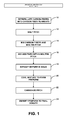
- FIG. 1 is a flow diagram illustrating an example method of forming a carbon-carbon composite preform in accordance with aspects of this disclosure.
- FIG. 2 is a conceptual diagram of a mixture of molten pitch and a plurality of carbon fiber filaments disposed in a mold.
- the disclosure is directed to methods for forming a carbon-carbon composite preform.
- a carbonized preform is formed by needling together a plurality of sections of carbon fiber precursor material, such as polyacrylonitrile (PAN) or rayon, and carbonizing the carbon fiber precursor material to form a carbonized preform.
- the carbonized preform then is subjected to a plurality of densification steps to form a friction material.
- the carbonized preform may be densified with liquid pitch using vacuum pressure infiltration (VPI) and/or resin transfer molding (RTM) and/or may be densified with carbonaceous material using chemical vapor deposition (CVD)/chemical vapor infiltration (CVI).
- VPI vacuum pressure infiltration
- RTM resin transfer molding
- CVD chemical vapor deposition
- CVI chemical vapor infiltration
- the methods generally include mixing a plurality of carbon fiber filaments with molten pitch.
- substantially none e.g., none or less than about 10%, such as between about 5% and about 10 % of the plurality of carbon fiber filaments are present in the mixture in a bundle of filaments (i.e., the carbon fiber filaments are substantially fully defibrillated).
- the mixing of the plurality of carbon fiber filaments may result in the plurality of carbon fiber filaments being oriented substantially randomly within the molten pitch.
- the mixture of carbon fiber filaments and molten pitch may be deposited in a mold and cooled to form a carbon-carbon composite preform, which includes the molten pitch and plurality of carbon fiber filaments.
- the carbon-carbon composite preform may be further processed, such as further densified, to form a final carbon-carbon composite material.
- a carbon-carbon composite preform formed using the techniques described herein may provide advantages over a carbonized preform, e.g., in the context of forming a carbon-carbon composite part. For example, forming, in a single process, a carbon-carbon composite preform that includes a plurality of carbon fiber filaments mixed in pitch may eliminate a need to needle the carbon fiber precursor material and to carbonize the carbon fiber precursor material after forming a preform from a carbon fiber precursor material.
- the methods described herein also may reduce a number of subsequent densification steps required to achieve a given final density, e.g., compared to a process in which a preform is formed by needling together carbon fiber-precursor fabrics, carbonizing the carbon fiber-precursor fabric to form a carbonized preform, and then densifying the carbonized preform using pitch infiltration and/or CVD/CVI.
- a carbon-carbon composite preform formed using the techniques described herein also may be better able to withstand forces (e.g., shear forces) exerted on the carbon-carbon composite preform during subsequent processing compared to a carbonized preform.
- the forces may be applied to the carbon-carbon composite preform, for example, during densification, and may include relative high pressures or a relatively low vacuum.
- examples of the techniques of this disclosure may allow mixing of a plurality of carbon fiber filaments in molten pitch without substantially affecting an average size of the plurality of carbon fiber filaments, e.g., without breaking substantially any of the plurality of carbon fiber filaments during the mixing process.
- the techniques described herein provide a technique for forming a robust preform that can be used to manufacture a carbon-carbon composite part.
- FIG. 1 is a block diagram illustrating an example method of forming a carbon-carbon composite preform in accordance with aspects of the disclosure.
- the method includes defibrillating at least one carbon fiber to form a plurality of carbon fiber filaments (10).
- the carbon fiber filaments may be formed from one or more different precursor materials, for example, PAN, rayon, or pitch.
- the carbon fiber filaments may have different densities depending on which precursor material was used to form the carbon fiber filaments. In some examples, the density of the carbon fiber filaments may range between about 1.76 grams per cubic centimeter (g/cm 3 ) to about 1.9 g/cm 3 .
- the plurality of carbon fiber filaments are provided, e.g., from a carbon fiber manufacturer, in a fibrillated state.
- the plurality of carbon fiber filaments may be provided in the form of a yarn or tow including a plurality of carbon fiber filaments.
- a tow of carbon fibers may include 1,000, 2,000, 3,000, 4,000 or more individual carbon fiber filaments per strand of tow.
- Defibrillation of the carbon fiber filaments may include separation of the yarn or tow into individual carbon fiber filaments or, in some cases, into bundles that have fewer carbon fiber filaments compared to the state prior to the defibrillation. Defibrillation may help improve the homogeneity (e.g., homogeneous distribution) of the carbon fiber filaments in the molten pitch.
- substantially all or all of the carbon fiber filaments may be present as single filaments. Stated another way, substantially none or less than 5% of the carbon fiber filaments may be present in a bundle of multiple filaments weaved together.
- the carbon fibers may be defibrillated into a plurality of carbon fiber filaments in a mixer, such as a relatively low shear continuous mixer.
- a mixer such as a relatively low shear continuous mixer.
- Other relatively low shear paddle mixers e.g., batch mixers or continuous mixers
- banbury-type mixers may also be used to defibrillate the carbon fibers into a plurality of carbon fiber filaments.
- defibrillating the carbon fibers into a plurality of carbon fiber filaments (10) may not break substantially any (e.g., none or nearly none) of the carbon fiber filaments.
- an average length of the plurality of carbon fiber filaments may be substantially the same (e.g., the same or nearly the same, such as greater than about 80% of the original length or greater than about 90% of the original length) when the carbon fiber filaments are present in a tow and after defibrillation of the carbon fibers into individual carbon fiber filaments.
- the average length of the carbon fiber filaments may be between about 6.35 millimeters (mm, about 1 ⁇ 4 inch) and about 50.8 mm (about 2 inches) both before and after defibrillation.
- this may aid predicting of the properties of the final carbon-carbon composite friction material based on the properties of the starting materials, including the carbon fiber filaments.
- defibrillating the carbon fibers into a plurality of carbon fiber filaments (10) may break some of the carbon fiber filaments.
- breaking the carbon fiber filaments may result in carbon fiber filaments with a range of lengths. The range of lengths may result in smaller carbon fiber filaments being disposed between larger carbon fiber filaments in the mixture and/or the carbon-carbon composite preform, which may result in the carbon-carbon composite preform possessing increased strength compared to a carbon-carbon composite preform that includes carbon fiber filaments of a substantially single length.
- defibrillating the carbon fibers into a plurality of carbon fiber filaments (10) may break up to about 40% of the carbon fiber filaments, such as between about 30% and about 40% of the carbon fiber filaments.
- the method also includes melting pitch to form molten pitch (12).
- the pitch may include, for example, at least one of isotropic pitch or mesophase pitch.
- the pitch may be at least one of petroleum pitch, coal tar pitch, or synthetic pitch.
- the pitch may have a density between about 1.27 grams per cubic centimeter (g/cm 3 ) and about 1.33 g/cm 3 .
- the pitch may be melted (12) within the mixer in which the molten pitch and plurality of carbon fiber filaments will be mixed (14).
- the pitch may be melted in a different apparatus and then, when in the molten state, be transferred to the mixer using any suitable technique.
- melting pitch to form molten pitch (12) may include heating the pitch to a temperature above a softening temperature of the pitch, which may be between about 110°C and about 350°C for some pitches.
- the mixer in which the plurality of carbon fiber filaments and molten pitch are mixed may be a relatively low shear continuous mixer.
- Other relatively low shear paddle mixers e.g., batch mixers or continuous mixers
- banbury-type mixers may also be used to defibrillate the carbon fibers into a plurality of carbon fiber filaments.
- Mixing the plurality of carbon fiber filaments in molten pitch (14) using a relatively low shear mixer may, in some examples, allow mixing of the filaments and molten pitch without breaking substantially any of the carbon fiber filaments.
- an average length of the plurality of carbon fiber filaments may be substantially the same (e.g., the same or nearly the same, such as greater than about 80% of the original length or greater than about 90% of the original length prior to the mixing with the pitch) before being mixed in molten pitch and after the mixing step (14) is complete.
- the average length of the carbon fiber filaments before mixing may be between about 6.35 millimeters (mm, about 1 ⁇ 4 inch) and about 50.8 mm (about 2 inches).
- the average length of the carbon fiber filaments after mixing may be between about 6.35 mm (about 1 ⁇ 4 inch) and about 50.8 mm (about 2 inches).
- mixing the plurality of carbon fiber filaments in molten pitch (14) may break some of the carbon fiber filaments.
- breaking the carbon fiber filaments may result in carbon fiber filaments with a range of lengths. The range of lengths may result in smaller carbon fiber filaments being disposed between larger carbon fiber filaments in the mixture and/or the carbon-carbon composite preform, which may result in the carbon-carbon composite preform possessing increased strength compared to a carbon-carbon composite preform that includes carbon fiber filaments of a substantially single length.
- mixing the plurality of carbon fiber filaments in molten pitch (14) may break up to about 40% of the carbon fibers filaments, such as between about 30% and about 40% of the carbon fiber filaments.
- the plurality of carbon fiber filaments may be mixed into the molten pitch to a volume fraction of between about 15 volume percent (vol. % (volume of carbon fiber filaments compared to total volume of the mixture)) and about 30 vol. %.
- the plurality of carbon fiber filaments may constitute between about 20 vol. % and about 25 vol. % of the mixture, or about 25 vol. % of the mixture.
- Mixing the plurality of carbon fiber filaments and molten pitch (14) may continue until the mixture of carbon fiber filaments and molten pitch is substantially homogeneous, e.g., until the carbon fiber filaments are substantially homogeneously distributed throughout the molten pitch. Whether the mixture is substantially homogeneously may be determined experimentally. For example, homogeneity of the mixture may be determined by sampling a portion of the mixture or the carbon-carbon composite preform and analyzing a section of the mixture or the carbon-carbon composite preform whether the carbon fiber filaments are distributed substantially evenly within the pitch. In some examples, the substantially homogeneous mixture of carbon fiber filaments and molten pitch may have a density between about 1.3 g/cm 3 and about 1.4 g/cm 3 . Additionally or alternatively, the plurality of carbon fiber filaments may be substantially randomly oriented within the molten pitch when the mixing is complete.
- the method shown in FIG. 1 includes mixing at least one additive in the molten pitch (16).
- the at least one additive may modify one or more properties of the molten pitch, the plurality of carbon fiber filaments, and/or the carbon-carbon composite preform formed from the mixture of the molten pitch and the plurality of carbon fiber filaments.
- the at least one additive includes a friction modifier, such as titanium (Ti) or silica (SiO 2 ).
- the at least one additive additionally or alternatively includes an oxidizer, such as a peroxide.
- An oxidizer may stabilize synthetic pitch, and may reduce or eliminate the need for a subsequent oxidation step to stabilize a carbon-carbon composite preform formed with synthetic pitch.
- the at least one additive may be mixed into the molten pitch to a concentration of less than about 10 weight percent (wt. %), such as between about 1 wt. % and about 10 wt. % (based on the total mixture, including the molten pitch, at least one additive, and plurality of carbon fiber filaments).
- the friction modifier may be mixed into the molten pitch to a concentration of less than about 10 wt. %, such as between about 1 wt. % and about 10 wt. %.
- the oxidizer may be mixed into the molten pitch to a concentration of less than about 10 wt. %, such as between about 1 wt. % and about 10 wt. %.
- the at least one additive may be mixed into the molten pitch (16) in the same step as the plurality of carbon fiber filaments (14), e.g., the at least one additive may be deposited in the molten pitch substantially simultaneously with the plurality of carbon fiber filaments.
- the at least one additive may be mixed into the molten pitch (16) using the same mixing apparatus as the apparatus used for mixing the plurality of carbon fiber filaments in the molten pitch (16), but the at least one additive may be deposited in the molten pitch before and/or after the plurality of carbon fiber filaments are deposited in the molten pitch.
- the at least one additive may be mixed into the molten pitch (16) in a different apparatus than the apparatus used for mixing the plurality of carbon fiber filaments into the molten pitch (14). Additionally, in examples in which more than one additive is mixed into the molten pitch, the additives may be mixed into the molten pitch at substantially the same time or at different times, and/or may be mixed into the molten pitch using the same or different apparatuses.
- the at least one additive may be mixed in the molten pitch (16) until it is mixed substantially homogenously in the molten pitch. In some of these examples, mixing the at least one additive substantially homogeneously in the molten pitch may result in the properties provided by the at least one additive being attributed to the whole mixture. In other examples, the at least one additive may not be homogeneously mixed in the molten pitch. In some of these examples, mixing the at least one additive non-uniformly throughout the molten pitch may result in the properties provided by the at least one additive not being attributed to the whole mixture. In some cases, this may be desirable. For example, in some cases, it may be desirable for an anti-oxidant additive to be present on a friction surface of a brake disc, but may desirable for an anti-oxidant additive to be present within an interior of the brake disc.
- FIG. 2 is a conceptual diagram that illustrates one example of a mixture 32 deposited in a mold 26.
- mold 26 defines an annulus between an outer wall 28 and an inner wall 30.
- Mixture 32 is disposed in the annulus between outer wall 28 and inner wall 30.
- mold 26 may define other shapes, such as squares, rectangles, ellipses, or other, more complex shapes.
- Mold 26 may be configured in a shape that is close to a desired shape of the carbon-carbon composite friction material. In this way, mold 26 may produce a carbon-carbon composite preform with a near-net shape.
- the mixture may be transferred to or deposited in an accumulator prior to being placed in mold 26.
- the mixture may be held within the accumulator until a predetermined amount of the mixture has accumulated, after which, the mixture may be transferred to or deposited in mold 26.
- the mixture may be transferred to or deposited in mold 26 using a process that results in substantially random orientation of the plurality of carbon fiber filaments within the mixture when the mixture is in mold 26.
- An example of a process than may result in substantially random orientation of the plurality of carbon fiber filaments may include depositing the mixture directly from the mixer to the compression mold without use of a pressure ram or nozzle.
- the mixture may be transferred to mold 26 using an injection molding process.
- injection molding the mixture may orient at least some of the plurality of carbon fiber filaments in a direction of the flow of the mixture into mold 26. This may be advantageous in some examples in order to control the properties of the carbon-carbon composite preform (and potentially the carbon-carbon composite friction material) based on the orientation of the plurality of carbon fiber filaments.
- a nozzle used for the injection molding can be oriented such that the direction the mixture is transferred into the mold helps orient the carbon fiber filaments in a z-axis direction (e.g., in a direction of the thickness of a carbon-carbon composite brake disc).
- the mixture may be cooled to form the carbon-carbon composite preform (20).
- the cooling rate may be selected to not result in formation of significant defects (e.g., defects that negatively affect the structural integrity of the carbon-carbon composite preform) in the carbon-carbon composite preform as a result of cooling the preform.
- the cooling process may result in formation of some cracks or porosity in the carbon-carbon composite preform. This may be desirable in some examples, as it may facilitate densification of the carbon-carbon composite preform in subsequent processing.
- the carbon-carbon composite preform includes the plurality of carbon fiber filaments, pitch, and any additives that were added to the mixture.
- the carbon-carbon composite preform may be near-net shape (e.g., close to a final shape of the carbon-carbon friction material) upon cooling and removal from mold 26.
- the carbon-carbon composite preform can be further processed in some examples, e.g., in order to form a carbon-carbon composite brake disc for use in the aerospace industry.
- the method shown in FIG. 1 may optionally include heating the carbon-carbon composite preform to carbonize the pitch (22).
- the carbon-carbon composite preform may be heated to a temperature between about 600 °C and about 1200 °C to carbonize the pitch.
- the carbon-carbon composite preform may be heated in a retort under inert or reducing conditions to remove the non-carbon constituents (hydrogen, nitrogen, oxygen, etc.) from the preforms.
- carbonization can be carried out either in a furnace, a hot isostatic press, an autoclave, or in a uniaxial hot press.
- the retort may be purged gently with nitrogen for approximately 1 hour, then it is heated to about 900 °C (e.g., at or around 900 °C) in about 10 to about 20 hours, and then to about 1050 °C (e.g., at or around 1050 °C) in about 1 hour to about 2 hours.
- the retort may be held at 1050 °C for about 3 to about 6 hours, then allowed to cool overnight.
- the carbon-carbon composite preform may be subjected to at least one densification step (24).
- the at least one densification step may be performed using one or more of, for example, vacuum pressure infiltration ("VPI"), resin transfer molding (“RTM”), and/or CVD/CVI.
- VPI vacuum pressure infiltration
- RTM resin transfer molding
- CVD/CVI CVD/CVI
- the carbon-carbon composite preform may be subjected to a sufficient number of densification steps to result in a final density between about 1.5 g/cm 3 and about 1.85 g/cm 3 .
- the carbon-carbon composite preform is heated under inert conditions to well above the melting point of the impregnating pitch. Then, gas in the pores of the carbon-carbon composite preform is removed by evacuating the preform. Finally, molten pitch is allowed to infiltrate the pores of the preform, as the overall pressure is returned to one atmosphere or above.
- a volume of resin or pitch is melted in one vessel while the porous carbon-carbon composite preform is contained in a second vessel under vacuum. The molten resin or pitch is transferred from vessel one into the porous preforms contained in the second vessel using a combination of vacuum and pressure.
- the VPI process typically employs resin and pitches which possess low to medium viscosity. Such pitches may provide lower carbon yields than mesophase pitches.
- the carbon-carbon composite preform is placed into a mold matching the desired part geometry.
- a relatively low viscosity thermoset resin is injected at low temperature (50 °C to 150 °C) using pressure or induced under vacuum, into the porous carbon-carbon composite preform contained within a mold. The resin is cured within the mold before being removed from the mold.
- US 6,537,470 B1 (Wood et al. ) describes a more flexible RTM process that can make use of high viscosity resin or pitch. The entire disclosure of US 6,537,470 B1 is incorporated herein by reference.
- the carbon-carbon composite preform is heated in a retort under the cover of inert gas, such as at a pressure below 100 torr.
- inert gas such as at a pressure below 100 torr.
- the inert gas is replaced with a carbon-bearing gas such as natural gas, methane, ethane, propane, butane, propylene, or acetylene, or a combination of at least two of these gases.
Landscapes
- Chemical & Material Sciences (AREA)
- Engineering & Computer Science (AREA)
- Chemical Kinetics & Catalysis (AREA)
- Organic Chemistry (AREA)
- Materials Engineering (AREA)
- Polymers & Plastics (AREA)
- Health & Medical Sciences (AREA)
- Medicinal Chemistry (AREA)
- Structural Engineering (AREA)
- Manufacturing & Machinery (AREA)
- Ceramic Engineering (AREA)
- Civil Engineering (AREA)
- Inorganic Chemistry (AREA)
- Composite Materials (AREA)
- Ceramic Products (AREA)
- Carbon And Carbon Compounds (AREA)
Applications Claiming Priority (1)
| Application Number | Priority Date | Filing Date | Title |
|---|---|---|---|
| US13/226,260 US8444893B2 (en) | 2011-09-06 | 2011-09-06 | Forming carbon-carbon composite preforms using molten pitch and carbon fiber filaments |
Publications (2)
| Publication Number | Publication Date |
|---|---|
| EP2568013A1 true EP2568013A1 (de) | 2013-03-13 |
| EP2568013B1 EP2568013B1 (de) | 2014-04-02 |
Family
ID=46832233
Family Applications (1)
| Application Number | Title | Priority Date | Filing Date |
|---|---|---|---|
| EP12182494.0A Not-in-force EP2568013B1 (de) | 2011-09-06 | 2012-08-30 | Bilden von Kohlenstoff-Kohlenstoff-Verbundstoff-Vorformen unter Verwendung der geschmolzenen Spitze und Kohlenstofffaserfilamenten |
Country Status (3)
| Country | Link |
|---|---|
| US (1) | US8444893B2 (de) |
| EP (1) | EP2568013B1 (de) |
| CN (1) | CN102976782B (de) |
Cited By (1)
| Publication number | Priority date | Publication date | Assignee | Title |
|---|---|---|---|---|
| WO2025078318A1 (en) * | 2023-10-11 | 2025-04-17 | Solvay Specialty Polymers Usa, Llc | High char yield thermoplastic polymers blends and corresponding articles and applications |
Families Citing this family (4)
| Publication number | Priority date | Publication date | Assignee | Title |
|---|---|---|---|---|
| US8597772B2 (en) * | 2011-09-20 | 2013-12-03 | Honeywell International Inc. | Corrugated carbon fiber preform |
| US10017426B2 (en) * | 2016-04-01 | 2018-07-10 | Honeywell International Inc. | High density carbon-carbon friction materials |
| CN106565272B (zh) * | 2016-11-04 | 2020-01-17 | 中南林业科技大学 | 一种碳化硅陶瓷泡沫的制备方法 |
| CN108129158B (zh) * | 2017-12-28 | 2020-07-07 | 湖南省鑫源新材料股份有限公司 | 一种炭-炭薄壁多孔件及其制备方法 |
Citations (6)
| Publication number | Priority date | Publication date | Assignee | Title |
|---|---|---|---|---|
| US5202293A (en) * | 1989-01-17 | 1993-04-13 | Toyota Jidosha Kabushiki Kaisha | Carbon fiber reinforced carbon |
| EP0603765A1 (de) * | 1992-12-19 | 1994-06-29 | Maruzen Petrochemical Co., Ltd. | Verfahren zur Herstellung von Vormaterial für Kohlenstoff-Verbundmaterial |
| US5382392A (en) * | 1993-02-05 | 1995-01-17 | Alliedsignal Inc. | Process for fabrication of carbon fiber-reinforced carbon composite material |
| US5578255A (en) * | 1989-10-26 | 1996-11-26 | Mitsubishi Chemical Corporation | Method of making carbon fiber reinforced carbon composites |
| US6537470B1 (en) | 2000-09-01 | 2003-03-25 | Honeywell International Inc. | Rapid densification of porous bodies (preforms) with high viscosity resins or pitches using a resin transfer molding process |
| US20060046059A1 (en) | 2004-08-26 | 2006-03-02 | Arico Alan A | Chemical vapor deposition apparatus and method |
Family Cites Families (8)
| Publication number | Priority date | Publication date | Assignee | Title |
|---|---|---|---|---|
| US5871844A (en) * | 1997-04-02 | 1999-02-16 | Fiberite, Inc. | Carbon--carbon parts having filamentized composite fiber substrates and methods of producing the same |
| ATE267350T1 (de) | 2000-02-09 | 2004-06-15 | Freni Brembo Spa | Geformtes verbundmaterial für bremsen und verfahren zu seiner herstellung |
| US6521152B1 (en) | 2000-03-16 | 2003-02-18 | Honeywell International Inc. | Method for forming fiber reinforced composite parts |
| DE10346499A1 (de) | 2003-10-02 | 2005-04-28 | Sgl Carbon Ag | Reibpaarung für Feststellbremsen in Kraftfahrzeugen |
| US20050184413A1 (en) * | 2004-02-20 | 2005-08-25 | Forest Mark L.L. | Versatile mold flow capability in the infiltration of porous carbon preforms with pitch/thermoplastic/thermoset resins |
| CN1796334A (zh) * | 2004-12-27 | 2006-07-05 | 陈瑾惠 | 碳/碳复合材料及其制造方法 |
| US20070132126A1 (en) | 2005-12-14 | 2007-06-14 | Shao Richard L | Method for debundling and dispersing carbon fiber filaments uniformly throughout carbon composite compacts before densification |
| US20070262200A1 (en) * | 2006-05-15 | 2007-11-15 | Honeywell International Inc. | Extra long life carbon-carbon friction material |
-
2011
- 2011-09-06 US US13/226,260 patent/US8444893B2/en not_active Expired - Fee Related
-
2012
- 2012-08-30 EP EP12182494.0A patent/EP2568013B1/de not_active Not-in-force
- 2012-09-05 CN CN201210392829.1A patent/CN102976782B/zh active Active
Patent Citations (6)
| Publication number | Priority date | Publication date | Assignee | Title |
|---|---|---|---|---|
| US5202293A (en) * | 1989-01-17 | 1993-04-13 | Toyota Jidosha Kabushiki Kaisha | Carbon fiber reinforced carbon |
| US5578255A (en) * | 1989-10-26 | 1996-11-26 | Mitsubishi Chemical Corporation | Method of making carbon fiber reinforced carbon composites |
| EP0603765A1 (de) * | 1992-12-19 | 1994-06-29 | Maruzen Petrochemical Co., Ltd. | Verfahren zur Herstellung von Vormaterial für Kohlenstoff-Verbundmaterial |
| US5382392A (en) * | 1993-02-05 | 1995-01-17 | Alliedsignal Inc. | Process for fabrication of carbon fiber-reinforced carbon composite material |
| US6537470B1 (en) | 2000-09-01 | 2003-03-25 | Honeywell International Inc. | Rapid densification of porous bodies (preforms) with high viscosity resins or pitches using a resin transfer molding process |
| US20060046059A1 (en) | 2004-08-26 | 2006-03-02 | Arico Alan A | Chemical vapor deposition apparatus and method |
Cited By (1)
| Publication number | Priority date | Publication date | Assignee | Title |
|---|---|---|---|---|
| WO2025078318A1 (en) * | 2023-10-11 | 2025-04-17 | Solvay Specialty Polymers Usa, Llc | High char yield thermoplastic polymers blends and corresponding articles and applications |
Also Published As
| Publication number | Publication date |
|---|---|
| EP2568013B1 (de) | 2014-04-02 |
| US8444893B2 (en) | 2013-05-21 |
| CN102976782B (zh) | 2018-07-13 |
| US20130056895A1 (en) | 2013-03-07 |
| CN102976782A (zh) | 2013-03-20 |
Similar Documents
| Publication | Publication Date | Title |
|---|---|---|
| US8951453B2 (en) | Corrugated carbon fiber preform | |
| US6309703B1 (en) | Carbon and ceramic matrix composites fabricated by a rapid low-cost process incorporating in-situ polymerization of wetting monomers | |
| EP0946455B1 (de) | Aus verdichtetem kohlenstoffschaum hergesteller kohlenstoff kohlenstoffverbunderkstoff | |
| JP3696942B2 (ja) | 繊維強化された炭素及び黒鉛物品 | |
| US20060177663A1 (en) | Carbon-carbon composite article manufactured with needled fibers | |
| US9353816B2 (en) | Low cost, high density aircraft friction materials utilizing low fiber volume nonwoven preforms with pitch densification | |
| EP2993016B1 (de) | Opferfasern zur erzeugung von kanälen in einem verbundwerkstoff | |
| US7927523B2 (en) | Densification of C-C composites with pitches followed by CVI/CVD | |
| EP2128479B1 (de) | Kohlenstoff-Kohlenstoff-Verbundstoffe mit verbesserten Eigenschaften sowie Reib- und Verschleißleistung | |
| US20100209659A1 (en) | Carbon-carbon composite | |
| US8454867B2 (en) | CVI followed by coal tar pitch densification by VPI | |
| CN111099911A (zh) | 一种碳纤维增强碳-碳化硅-碳化锆复合材料及其制备方法 | |
| US20060261504A1 (en) | Carbon-carbon composite preform made with carbon fiber and pitch binder | |
| EP2568013B1 (de) | Bilden von Kohlenstoff-Kohlenstoff-Verbundstoff-Vorformen unter Verwendung der geschmolzenen Spitze und Kohlenstofffaserfilamenten | |
| US20060279012A1 (en) | Carbon fiber preform densification by pitch infiltration followed by resin transfer molding | |
| WO2015183369A2 (en) | Process for fabricating carbon-carbon composites | |
| EP2322818A1 (de) | Erhöhte Bereichsgewichtsegmente mit Spitzenverdichtung zur Herstellung von Flugzeugreibmaterialien mit niedrigeren Kosten und höherer Dichte | |
| CN117776759A (zh) | 一种碳陶复合材料的制备方法 | |
| EP3225871B1 (de) | Hochdichte kohlenstoff-kohlenstoffreibungsmaterialien | |
| WO2006101799A2 (en) | Carbon fiber containing ceramic particles | |
| JP3151580B2 (ja) | 炭素材料の製造法 | |
| CN116835988A (zh) | 一种C/C-SiC-(ZrxHf1−x)C复合材料及其制备方法 | |
| CN117510211B (zh) | 一种碳化硅纤维增强碳陶复合材料及其制备方法 | |
| JP2002145675A (ja) | 炭素繊維強化炭素材の製造方法 |
Legal Events
| Date | Code | Title | Description |
|---|---|---|---|
| PUAI | Public reference made under article 153(3) epc to a published international application that has entered the european phase |
Free format text: ORIGINAL CODE: 0009012 |
|
| 17P | Request for examination filed |
Effective date: 20120830 |
|
| AK | Designated contracting states |
Kind code of ref document: A1 Designated state(s): AL AT BE BG CH CY CZ DE DK EE ES FI FR GB GR HR HU IE IS IT LI LT LU LV MC MK MT NL NO PL PT RO RS SE SI SK SM TR |
|
| AX | Request for extension of the european patent |
Extension state: BA ME |
|
| GRAP | Despatch of communication of intention to grant a patent |
Free format text: ORIGINAL CODE: EPIDOSNIGR1 |
|
| GRAJ | Information related to disapproval of communication of intention to grant by the applicant or resumption of examination proceedings by the epo deleted |
Free format text: ORIGINAL CODE: EPIDOSDIGR1 |
|
| GRAP | Despatch of communication of intention to grant a patent |
Free format text: ORIGINAL CODE: EPIDOSNIGR1 |
|
| INTG | Intention to grant announced |
Effective date: 20131106 |
|
| INTG | Intention to grant announced |
Effective date: 20131120 |
|
| GRAS | Grant fee paid |
Free format text: ORIGINAL CODE: EPIDOSNIGR3 |
|
| GRAA | (expected) grant |
Free format text: ORIGINAL CODE: 0009210 |
|
| AK | Designated contracting states |
Kind code of ref document: B1 Designated state(s): AL AT BE BG CH CY CZ DE DK EE ES FI FR GB GR HR HU IE IS IT LI LT LU LV MC MK MT NL NO PL PT RO RS SE SI SK SM TR |
|
| REG | Reference to a national code |
Ref country code: GB Ref legal event code: FG4D |
|
| REG | Reference to a national code |
Ref country code: AT Ref legal event code: REF Ref document number: 660122 Country of ref document: AT Kind code of ref document: T Effective date: 20140415 Ref country code: CH Ref legal event code: EP |
|
| REG | Reference to a national code |
Ref country code: IE Ref legal event code: FG4D |
|
| REG | Reference to a national code |
Ref country code: DE Ref legal event code: R096 Ref document number: 602012001283 Country of ref document: DE Effective date: 20140515 |
|
| REG | Reference to a national code |
Ref country code: AT Ref legal event code: MK05 Ref document number: 660122 Country of ref document: AT Kind code of ref document: T Effective date: 20140402 |
|
| REG | Reference to a national code |
Ref country code: NL Ref legal event code: VDEP Effective date: 20140402 |
|
| REG | Reference to a national code |
Ref country code: LT Ref legal event code: MG4D |
|
| PG25 | Lapsed in a contracting state [announced via postgrant information from national office to epo] |
Ref country code: IS Free format text: LAPSE BECAUSE OF FAILURE TO SUBMIT A TRANSLATION OF THE DESCRIPTION OR TO PAY THE FEE WITHIN THE PRESCRIBED TIME-LIMIT Effective date: 20140802 Ref country code: GR Free format text: LAPSE BECAUSE OF FAILURE TO SUBMIT A TRANSLATION OF THE DESCRIPTION OR TO PAY THE FEE WITHIN THE PRESCRIBED TIME-LIMIT Effective date: 20140703 Ref country code: NL Free format text: LAPSE BECAUSE OF FAILURE TO SUBMIT A TRANSLATION OF THE DESCRIPTION OR TO PAY THE FEE WITHIN THE PRESCRIBED TIME-LIMIT Effective date: 20140402 Ref country code: CZ Free format text: LAPSE BECAUSE OF FAILURE TO SUBMIT A TRANSLATION OF THE DESCRIPTION OR TO PAY THE FEE WITHIN THE PRESCRIBED TIME-LIMIT Effective date: 20140402 Ref country code: FI Free format text: LAPSE BECAUSE OF FAILURE TO SUBMIT A TRANSLATION OF THE DESCRIPTION OR TO PAY THE FEE WITHIN THE PRESCRIBED TIME-LIMIT Effective date: 20140402 Ref country code: LT Free format text: LAPSE BECAUSE OF FAILURE TO SUBMIT A TRANSLATION OF THE DESCRIPTION OR TO PAY THE FEE WITHIN THE PRESCRIBED TIME-LIMIT Effective date: 20140402 Ref country code: CY Free format text: LAPSE BECAUSE OF FAILURE TO SUBMIT A TRANSLATION OF THE DESCRIPTION OR TO PAY THE FEE WITHIN THE PRESCRIBED TIME-LIMIT Effective date: 20140402 Ref country code: NO Free format text: LAPSE BECAUSE OF FAILURE TO SUBMIT A TRANSLATION OF THE DESCRIPTION OR TO PAY THE FEE WITHIN THE PRESCRIBED TIME-LIMIT Effective date: 20140702 Ref country code: BG Free format text: LAPSE BECAUSE OF FAILURE TO SUBMIT A TRANSLATION OF THE DESCRIPTION OR TO PAY THE FEE WITHIN THE PRESCRIBED TIME-LIMIT Effective date: 20140702 |
|
| PG25 | Lapsed in a contracting state [announced via postgrant information from national office to epo] |
Ref country code: AT Free format text: LAPSE BECAUSE OF FAILURE TO SUBMIT A TRANSLATION OF THE DESCRIPTION OR TO PAY THE FEE WITHIN THE PRESCRIBED TIME-LIMIT Effective date: 20140402 Ref country code: ES Free format text: LAPSE BECAUSE OF FAILURE TO SUBMIT A TRANSLATION OF THE DESCRIPTION OR TO PAY THE FEE WITHIN THE PRESCRIBED TIME-LIMIT Effective date: 20140402 Ref country code: LV Free format text: LAPSE BECAUSE OF FAILURE TO SUBMIT A TRANSLATION OF THE DESCRIPTION OR TO PAY THE FEE WITHIN THE PRESCRIBED TIME-LIMIT Effective date: 20140402 Ref country code: PL Free format text: LAPSE BECAUSE OF FAILURE TO SUBMIT A TRANSLATION OF THE DESCRIPTION OR TO PAY THE FEE WITHIN THE PRESCRIBED TIME-LIMIT Effective date: 20140402 Ref country code: RS Free format text: LAPSE BECAUSE OF FAILURE TO SUBMIT A TRANSLATION OF THE DESCRIPTION OR TO PAY THE FEE WITHIN THE PRESCRIBED TIME-LIMIT Effective date: 20140402 Ref country code: HR Free format text: LAPSE BECAUSE OF FAILURE TO SUBMIT A TRANSLATION OF THE DESCRIPTION OR TO PAY THE FEE WITHIN THE PRESCRIBED TIME-LIMIT Effective date: 20140402 Ref country code: SE Free format text: LAPSE BECAUSE OF FAILURE TO SUBMIT A TRANSLATION OF THE DESCRIPTION OR TO PAY THE FEE WITHIN THE PRESCRIBED TIME-LIMIT Effective date: 20140402 |
|
| PG25 | Lapsed in a contracting state [announced via postgrant information from national office to epo] |
Ref country code: PT Free format text: LAPSE BECAUSE OF FAILURE TO SUBMIT A TRANSLATION OF THE DESCRIPTION OR TO PAY THE FEE WITHIN THE PRESCRIBED TIME-LIMIT Effective date: 20140804 |
|
| REG | Reference to a national code |
Ref country code: DE Ref legal event code: R097 Ref document number: 602012001283 Country of ref document: DE |
|
| PG25 | Lapsed in a contracting state [announced via postgrant information from national office to epo] |
Ref country code: BE Free format text: LAPSE BECAUSE OF FAILURE TO SUBMIT A TRANSLATION OF THE DESCRIPTION OR TO PAY THE FEE WITHIN THE PRESCRIBED TIME-LIMIT Effective date: 20140402 Ref country code: RO Free format text: LAPSE BECAUSE OF FAILURE TO SUBMIT A TRANSLATION OF THE DESCRIPTION OR TO PAY THE FEE WITHIN THE PRESCRIBED TIME-LIMIT Effective date: 20140402 Ref country code: DK Free format text: LAPSE BECAUSE OF FAILURE TO SUBMIT A TRANSLATION OF THE DESCRIPTION OR TO PAY THE FEE WITHIN THE PRESCRIBED TIME-LIMIT Effective date: 20140402 Ref country code: SK Free format text: LAPSE BECAUSE OF FAILURE TO SUBMIT A TRANSLATION OF THE DESCRIPTION OR TO PAY THE FEE WITHIN THE PRESCRIBED TIME-LIMIT Effective date: 20140402 Ref country code: EE Free format text: LAPSE BECAUSE OF FAILURE TO SUBMIT A TRANSLATION OF THE DESCRIPTION OR TO PAY THE FEE WITHIN THE PRESCRIBED TIME-LIMIT Effective date: 20140402 |
|
| PLBE | No opposition filed within time limit |
Free format text: ORIGINAL CODE: 0009261 |
|
| STAA | Information on the status of an ep patent application or granted ep patent |
Free format text: STATUS: NO OPPOSITION FILED WITHIN TIME LIMIT |
|
| 26N | No opposition filed |
Effective date: 20150106 |
|
| PG25 | Lapsed in a contracting state [announced via postgrant information from national office to epo] |
Ref country code: IT Free format text: LAPSE BECAUSE OF FAILURE TO SUBMIT A TRANSLATION OF THE DESCRIPTION OR TO PAY THE FEE WITHIN THE PRESCRIBED TIME-LIMIT Effective date: 20140402 Ref country code: LU Free format text: LAPSE BECAUSE OF FAILURE TO SUBMIT A TRANSLATION OF THE DESCRIPTION OR TO PAY THE FEE WITHIN THE PRESCRIBED TIME-LIMIT Effective date: 20140830 Ref country code: MC Free format text: LAPSE BECAUSE OF FAILURE TO SUBMIT A TRANSLATION OF THE DESCRIPTION OR TO PAY THE FEE WITHIN THE PRESCRIBED TIME-LIMIT Effective date: 20140402 |
|
| REG | Reference to a national code |
Ref country code: DE Ref legal event code: R097 Ref document number: 602012001283 Country of ref document: DE Effective date: 20150106 |
|
| PG25 | Lapsed in a contracting state [announced via postgrant information from national office to epo] |
Ref country code: RS Free format text: LAPSE BECAUSE OF FAILURE TO SUBMIT A TRANSLATION OF THE DESCRIPTION OR TO PAY THE FEE WITHIN THE PRESCRIBED TIME-LIMIT Effective date: 20141119 |
|
| REG | Reference to a national code |
Ref country code: IE Ref legal event code: MM4A |
|
| PG25 | Lapsed in a contracting state [announced via postgrant information from national office to epo] |
Ref country code: SI Free format text: LAPSE BECAUSE OF FAILURE TO SUBMIT A TRANSLATION OF THE DESCRIPTION OR TO PAY THE FEE WITHIN THE PRESCRIBED TIME-LIMIT Effective date: 20140402 |
|
| PG25 | Lapsed in a contracting state [announced via postgrant information from national office to epo] |
Ref country code: IE Free format text: LAPSE BECAUSE OF NON-PAYMENT OF DUE FEES Effective date: 20140830 |
|
| REG | Reference to a national code |
Ref country code: CH Ref legal event code: PL |
|
| PG25 | Lapsed in a contracting state [announced via postgrant information from national office to epo] |
Ref country code: LI Free format text: LAPSE BECAUSE OF NON-PAYMENT OF DUE FEES Effective date: 20150831 Ref country code: CH Free format text: LAPSE BECAUSE OF NON-PAYMENT OF DUE FEES Effective date: 20150831 |
|
| PG25 | Lapsed in a contracting state [announced via postgrant information from national office to epo] |
Ref country code: SM Free format text: LAPSE BECAUSE OF FAILURE TO SUBMIT A TRANSLATION OF THE DESCRIPTION OR TO PAY THE FEE WITHIN THE PRESCRIBED TIME-LIMIT Effective date: 20140402 |
|
| PG25 | Lapsed in a contracting state [announced via postgrant information from national office to epo] |
Ref country code: MT Free format text: LAPSE BECAUSE OF FAILURE TO SUBMIT A TRANSLATION OF THE DESCRIPTION OR TO PAY THE FEE WITHIN THE PRESCRIBED TIME-LIMIT Effective date: 20140402 |
|
| REG | Reference to a national code |
Ref country code: FR Ref legal event code: PLFP Year of fee payment: 5 |
|
| PG25 | Lapsed in a contracting state [announced via postgrant information from national office to epo] |
Ref country code: TR Free format text: LAPSE BECAUSE OF FAILURE TO SUBMIT A TRANSLATION OF THE DESCRIPTION OR TO PAY THE FEE WITHIN THE PRESCRIBED TIME-LIMIT Effective date: 20140402 Ref country code: HU Free format text: LAPSE BECAUSE OF FAILURE TO SUBMIT A TRANSLATION OF THE DESCRIPTION OR TO PAY THE FEE WITHIN THE PRESCRIBED TIME-LIMIT; INVALID AB INITIO Effective date: 20120830 |
|
| PGFP | Annual fee paid to national office [announced via postgrant information from national office to epo] |
Ref country code: GB Payment date: 20160725 Year of fee payment: 5 Ref country code: DE Payment date: 20160831 Year of fee payment: 5 |
|
| PGFP | Annual fee paid to national office [announced via postgrant information from national office to epo] |
Ref country code: FR Payment date: 20160719 Year of fee payment: 5 |
|
| REG | Reference to a national code |
Ref country code: DE Ref legal event code: R119 Ref document number: 602012001283 Country of ref document: DE |
|
| GBPC | Gb: european patent ceased through non-payment of renewal fee |
Effective date: 20170830 |
|
| REG | Reference to a national code |
Ref country code: FR Ref legal event code: ST Effective date: 20180430 |
|
| PG25 | Lapsed in a contracting state [announced via postgrant information from national office to epo] |
Ref country code: MK Free format text: LAPSE BECAUSE OF FAILURE TO SUBMIT A TRANSLATION OF THE DESCRIPTION OR TO PAY THE FEE WITHIN THE PRESCRIBED TIME-LIMIT Effective date: 20140402 |
|
| PG25 | Lapsed in a contracting state [announced via postgrant information from national office to epo] |
Ref country code: DE Free format text: LAPSE BECAUSE OF NON-PAYMENT OF DUE FEES Effective date: 20180301 Ref country code: GB Free format text: LAPSE BECAUSE OF NON-PAYMENT OF DUE FEES Effective date: 20170830 |
|
| PG25 | Lapsed in a contracting state [announced via postgrant information from national office to epo] |
Ref country code: FR Free format text: LAPSE BECAUSE OF NON-PAYMENT OF DUE FEES Effective date: 20170831 |
|
| PG25 | Lapsed in a contracting state [announced via postgrant information from national office to epo] |
Ref country code: AL Free format text: LAPSE BECAUSE OF FAILURE TO SUBMIT A TRANSLATION OF THE DESCRIPTION OR TO PAY THE FEE WITHIN THE PRESCRIBED TIME-LIMIT Effective date: 20140402 |
|
| P01 | Opt-out of the competence of the unified patent court (upc) registered |
Effective date: 20230525 |