EP2568068A1 - Strickverfahren für eine Flachstrickmaschine und Dateneditiervorrichtung für Strickdaten - Google Patents
Strickverfahren für eine Flachstrickmaschine und Dateneditiervorrichtung für Strickdaten Download PDFInfo
- Publication number
- EP2568068A1 EP2568068A1 EP12006257A EP12006257A EP2568068A1 EP 2568068 A1 EP2568068 A1 EP 2568068A1 EP 12006257 A EP12006257 A EP 12006257A EP 12006257 A EP12006257 A EP 12006257A EP 2568068 A1 EP2568068 A1 EP 2568068A1
- Authority
- EP
- European Patent Office
- Prior art keywords
- knitting
- width
- cam system
- carriage
- cam
- Prior art date
- Legal status (The legal status is an assumption and is not a legal conclusion. Google has not performed a legal analysis and makes no representation as to the accuracy of the status listed.)
- Granted
Links
Images



Classifications
-
- D—TEXTILES; PAPER
- D04—BRAIDING; LACE-MAKING; KNITTING; TRIMMINGS; NON-WOVEN FABRICS
- D04B—KNITTING
- D04B7/00—Flat-bed knitting machines with independently-movable needles
- D04B7/24—Flat-bed knitting machines with independently-movable needles for producing patterned fabrics
-
- D—TEXTILES; PAPER
- D04—BRAIDING; LACE-MAKING; KNITTING; TRIMMINGS; NON-WOVEN FABRICS
- D04B—KNITTING
- D04B35/00—Details of, or auxiliary devices incorporated in, knitting machines, not otherwise provided for
-
- D—TEXTILES; PAPER
- D04—BRAIDING; LACE-MAKING; KNITTING; TRIMMINGS; NON-WOVEN FABRICS
- D04B—KNITTING
- D04B15/00—Details of, or auxiliary devices incorporated in, weft knitting machines, restricted to machines of this kind
- D04B15/32—Cam systems or assemblies for operating knitting instruments
- D04B15/36—Cam systems or assemblies for operating knitting instruments for flat-bed knitting machines
-
- D—TEXTILES; PAPER
- D04—BRAIDING; LACE-MAKING; KNITTING; TRIMMINGS; NON-WOVEN FABRICS
- D04B—KNITTING
- D04B15/00—Details of, or auxiliary devices incorporated in, weft knitting machines, restricted to machines of this kind
- D04B15/66—Devices for determining or controlling patterns ; Program-control arrangements
-
- D—TEXTILES; PAPER
- D04—BRAIDING; LACE-MAKING; KNITTING; TRIMMINGS; NON-WOVEN FABRICS
- D04B—KNITTING
- D04B15/00—Details of, or auxiliary devices incorporated in, weft knitting machines, restricted to machines of this kind
- D04B15/94—Driving-gear not otherwise provided for
- D04B15/96—Driving-gear not otherwise provided for in flat-bed knitting machines
Definitions
- the present invention relates to knitting by a flat knitting machine, and particularly relates to improvement in the knitting efficiency.
- a carriage In a flat knitting machine, for example, a carriage is caused to travel back and forth on a pair of front and rear needle beds, and cam systems included in the carnage are used to operate needles on the needle beds.
- cam systems for example, a plurality of (e.g., two or three) cam systems are often provided for each of the front needle bed and the rear needle bed.
- the front and the rear needle beds are provided with the same number of cam systems, the number of cam systems is often indicated as the number thereof for one needle bed.
- a carriage provided with two cam systems for each of the front and the rear needle beds is referred to as a 2-cam (system) carriage.
- the needles are arranged on the needle beds, a yarn is fed from a carrier to the needles, needles are selected by needle selection portions of the cam systems, and operations such as knit, tuck, and transfer are performed by operating the needles with knitting cams of the cam systems.
- One travel of the carriage is referred to as one course, and one row of stitches in the travelling direction of the carriage is also referred to as one course.
- one course refers to carriage course or stitch course is determined from context.
- a carriage is provided with a plurality of cam systems, for example, in order to make it possible to knit stitches for a plurality of courses in one carriage course, or to knit a stitch using one cam system while performing transfer using another cam system.
- a flat knitting machine knitting for one course is performed by a single cam system.
- a carriage provided with a plurality of cam systems uses a single cam system to perform all transfer operations throughout that course.
- Such an approach is common knowledge in knitting using a flat knitting machine.
- Patent Literature 1 discloses a technique for shortening the stroke necessary for preliminary needle selection.
- FIG. 10 shows the example disclosed in Patent Literature 1. It is assumed that knitting is performed from left to right in the drawing, S2 refers to a preceding cam system that performs an operation such as knitting, and S1 refers to a following cam system that is in a resting state in this example. Whether a cam system is a preceding one or a following one is determined according to the travelling direction of the carriage in the course, and the resting state refers to a state in which the knitting cam is not in operation.
- W refers to a knitting width, which is a width of a zone from a knitting needle that is operated first to a knitting needle that is operated last in the travelling direction of the carriage.
- L refers to a carriage stroke.
- the cam systems S1 and S2 each include a knitting cam 2 and needle selection portions 4. One pair of needle selection portions 4 are arranged on the front and rear sides of the knitting cam 2. When selecting needles, preliminary needle selection is performed to divide needles into needles for miss and needles for performing operations such as knit, tuck, and transfer, and main needle selection is then performed to divide needles into needles for performing knit or transfer and needles for performing tuck.
- the preliminary needle selection is performed by a needle selection portion 4b of the preceding cam system S2 at the end of a course, and, after the carriage returns, the main needle selection is performed by the needle selection portion 4b again, and knitting is performed by the knitting cam of the cam system S2. If the preliminary needle selection at the end of the course is performed by a needle selection portion 4a of the cam system S1, the stroke becomes longer as defined by the broken line at the upper right in FIG. 10 . On the other hand, if the preliminary needle selection and the main needle selection for starting the next course are both performed by the needle selection portion 4b of the cam system S2, the stroke is shortened.
- Patent Literature 1 WO2008/078415
- the present invention is directed to a knitting method using a flat knitting machine including a needle bed, a carriage, a carrier, and a controller, in which the carriage is provided with at least two cam systems in a longitudinal direction of the needle bed, and the cam systems perform knitting using a yarn from the carrier, characterized by the steps of:
- the present invention is directed to a knitting data editing apparatus for a flat knitting machine including a needle bed, a carriage, a carrier, and a controller, in which the carriage is provided with at least two cam systems in a longitudinal direction of the needle bed, and the cam systems perform knitting using a yarn from the carrier, characterized by including:
- the knitting width of the first portion may include a zone in which the following cam system operates a needle on the needle bed and a zone in which no cam system operates a needle on the needle bed.
- the knitting width of the last portion may include a zone in which the preceding cam system operates a needle on the needle bed and a zone in which no cam system operates a needle on the needle bed. That is to say, the knitting width of the first portion refers to the sum of the width of a zone in which the following cam system operates a needle and the width of a zone that is continued from that zone and in which no cam system operates a needle.
- the knitting width of the last portion refers to the sum of the width of a zone in which the preceding cam system operates a needle and the width of a zone that is continued from that zone and in which no cam system operates a needle. Furthermore, when operating a needle on the needle bed for a knitting width of a portion between the first portion and the last portion, the preceding cam system and/or the following cam system operates the needle.
- the course is a course for performing stitch transfer. Knitting is performed without causing a yarn to be fed from the carrier, that is, without forming a stitch, in the case where transfer is performed by knitting a cable pattern, narrowing stitches, increasing stitches, sliding stitches, or the like.
- FIG. 5 shows knitting courses for a cable pattern, wherein the carriage performs stitch formation for three courses, and performs transfer for three courses. If the stroke of a course for performing transfer is shortened by the width of one cam system, the knitting time is shortened by, for example, several percent. Furthermore, the carriage travels without using the carrier also in an operation that shakes off stitches from needles as well as the transfer operation.
- the carriage stroke is shortened.
- the comparison between FIGS. 1 and 10 shows that the stroke of a carnage provided with two cam systems is shortened by the width of one cam system.
- the stroke of a carriage provided with three cam systems is shortened by the width of two cam systems. The reason for this is that the first portion of the course is knitted by the following cam system S 1 or the like and the last portion of the course is knitted by the preceding cam system S2 or the like.
- the knitting is preferably started by a cam system that travels last and ended by a cam system that travels first, but, for example, the knitting may be started by the cam system that travels last and ended by a cam system that travels therebetween. Note that the cam system that travels therebetween may not be used.
- the knitting data editing apparatus is included, for example, in the flat knitting machine or the knit design apparatus. If the editing apparatus is included in the flat knitting machine, the flat knitting machine is caused to edit existing knitting data so as to implement the present invention. Furthermore, if the editing apparatus is included in the knit design apparatus, when designing a knitted fabric and creating knitting data, the knitting data is edited so as to implement the present invention.
- the description regarding the knitting method is applicable as it is to the knitting data editing apparatus, and the description regarding the knitting data editing apparatus is applicable as it is to the knitting method.
- a portion between the first portion and the last portion may be knitted by either one of the preceding cam system and the following cam system, and may be knitted by both of the preceding cam system and the following cam system.
- the width of one cam system refers to a length from a point where one cam system starts a knitting operation including needle selection on one needle to a point where the cam system ends the knitting operation.
- the knitting width of a course is the width of one cam system or shorter, it is efficient to knit the entire knitting width by the following cam system.
- the case where the knitting width is the width of one cam system or shorter does not occur so often, and, therefore, for example, the knitting may be started by the following cam system and ended by the preceding cam system.
- FIG. 6 shows an example in which the present invention and a conventional example have an equal stroke, wherein the knitting width W is equal to the width of one cam system.
- the knitting width is shorter than the width of one cam system, it is meaningless to implement the present invention, and, in the case where the knitting width is equal to the width of one cam system, the stroke does not change regardless of the implementation of the present invention.
- the case where the knitting width is shorter than the width of one cam system does not occur so often, and, therefore, the knitting may be performed as in the present invention regardless of the knitting width.
- the stroke of the carriage does not change regardless of the application of the embodiment.
- a condition that the first portion in the knitting width may be knitted only by the following cam system may be added as a condition for applying the embodiment.
- FIGS. 1 to 9 show an embodiment, wherein an arrow indicates a travelling direction of the carriage, ON indicates that a cam system performs knitting, and OFF indicates that a cam system is in a resting state.
- FIG. 1 shows the allocation of cam systems S1 and S2 in knitting only with transfer
- FIG. 2 shows ON/OFF states of the cam systems S1 and S2 at that time.
- a first portion in the knitting width W is knitted by the following cam system S1
- a last portion is knitted by the preceding cam system S2.
- a portion therebetween may be knitted by either one or both of the cam systems S1 and S2.
- the knitting width of the first portion and the knitting width of the last portion are each set so as to be equal to the width of one cam system.
- the solid lines in FIG. 2 indicate an example in which the cam system S2 is preferentially used, and the broken lines indicate an example in which the cam system S1 is preferentially used. In either case, there is a period in which both the cam systems S1 and S2 are used. Furthermore, if the knitting width W is long as in FIGS. 1 and 2 , the carriage stroke L and the knitting width W are substantially equal to each other. This stroke is shorter than that in FIG. 10 by the width of one cam system in the longitudinal direction of the needle beds. This aspect is particularly advantageous in knitting where transfer is performed many times, but this embodiment can be applied not only to transfer but also to stitch shake-off.
- FIG. 3 shows the allocation of three cam systems, namely cam systems S1, S2, and S3 for a course only with transfer, in a carriage provided with the cam systems S1, S2, and S3.
- FIG. 4 shows examples of the allocation of the cam systems S1, S2, and S3 for the course in FIG. 3 , wherein the solid lines indicate an example in which the cam system S2 is preferentially used, and the broken lines indicate an example in which the cam system S1 is preferentially used.
- the stroke L is shorter than the knitting width W, a first portion in the knitting width is knitted using the cam system S1, and a last portion in the knitting width is knitted using the cam system S3.
- a middle portion in the knitting width is knitted using at least one of the cam systems S1, S2, and S3, and may be knitted using two or three cam systems among the cam systems S1, S2, and S3.
- a portion between the middle portion and the first portion in the knitting width is knitted using at least one of the cam systems S1 and S2, and a portion between the middle portion and the last portion in the knitting width is knitted using at least one of the cam systems S2 and S3.
- FIG. 5 shows an example of knitting courses for a cable pattern, wherein the cable pattern is knitted by repeating courses C1 to C6.
- the carriage is provided with two cam systems.
- the courses C1 to C3 two rows of stitches are knitted in each course, that is, six rows are knitted in total.
- stitches are transferred, and the rear needle bed is racked to the left before the course C5. Then, half the stitches that have been transferred are transferred back to the front needle bed. Then, the rear needle bed is racked to the right before the course C6, and the remaining half of the stitches that have been transferred are transferred back to the front needle bed.
- the stroke becomes longer.
- the last portion in the knitting width is allocated to the preceding cam system only for a width shorter than the width of one cam system, the following cam system knits an allocated portion and makes the stroke longer to the left than in a conventional example.
- the first portion in the knitting width may be knitted by either the preceding or following cam system. In this case, the stroke does not change regardless of the application of the embodiment, and the stroke is shortened when only the following cam system is allowed to knit the first portion in the knitting width.
- the knitting is started by the following cam system, and the knitting is ended by the preceding cam system.
- the entire course C5 is knitted by the following cam system
- the entire course C6 is knitted by the preceding cam system. Accordingly, in this embodiment, the stroke is shortened by the width of one cam system in the courses C5 and C6. If the total strokes for six courses of the carriage are shortened by a width twice the width of the cam system, the knitting time is shortened by several percent.
- FIG. 6 shows the lower limit of the knitting width by which the stroke is shortened according to the embodiment, wherein 1) shows the stroke according to the embodiment, and 2) shows the stroke according to the conventional example.
- the sum of the knitting width of the first portion knitted by the following cam system S1 and the knitting width of the last portion knitted by the preceding cam system S2 is equal to the width of one cam system.
- the embodiment and the conventional example have an equal stroke.
- the sum of the knitting width of the first portion and the knitting width of the last portion is equal to the knitting width W.
- the allocation of the cam systems changes depending on the initial position of the carriage with respect to the knitting width.
- the carriage stroke L 1 is 2W, which is a width twice the width of the cam system.
- the carriage stroke in this case is 2W. Accordingly, if the knitting width W is equal to the width of one cam system, the embodiment and the conventional example have an equal carriage stroke.
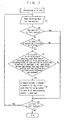
- FIG 7 shows a process relating to shortening of the stroke, which is performed by a knit design apparatus 10 in FIG. 8 or a flat knitting machine 30 in FIG. 9 .
- knitting data is read for one course.
- Step 2 it is determined whether or not to use a carrier in that course. If that course is a course that does not use a carrier, such as a course for performing transfer or shake-off, it is checked whether or not there is a cam system not allocated to the knitting (Step 3).
- Step 4 it is determined whether or not division of the knitting width is possible such that the sum of the knitting width of the first portion and the knitting width of the last portion in the travelling direction of the carriage is at least the width of one cam system, and such that the first portion and the last portion are knitted using different cam systems. If the division is not possible, all transfer operations in one course are performed by a single cam system as in a conventional example. If the division is possible, in Step 5, the cam systems are allocated such that the knitting is started by the following cam system and the knitting is ended by the preceding cam system according to the embodiment.
- a portion between the first portion and the last portion in the knitting is knitted by either one or both of the preceding cam system and the following cam system, and, if there is no next course (Step 6), the process is ended. Accordingly, the stroke is shortened. Note that, if the course is started from a position where the knitting may be started also by the preceding cam system, this embodiment may be or may not be applied.
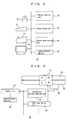
- FIG. 8 shows a knit design apparatus according to the embodiment, wherein 12 denotes a mouse but may denote another pointing device, 14 denotes a keyboard, 16 denotes, for example, a color printer, and 18 denotes, for example, a color monitor.
- 20 denotes a design assist unit that edits a knitted fabric design input by a user from the mouse 12, the keyboard 14, an input/output device 26, or the like and that provides an environment for facilitating the design operation.
- 22 denotes a data converter that converts the knitted fabric design into knitting data
- 24 denotes a stroke shortening unit that changes the knitting data for a course in which shortening of the stroke is possible, by performing the process in FIG. 7 .
- the stroke shortening unit 24 includes course identifying means for identifying a course in which a yarn is not fed from the carrier to a needle on the needle beds and the knitting width is longer than the width of one cam system, by analyzing the knitting data, and allocating means for automatically allocating the cam systems such that, if the sum of the knitting width of the first portion and the knitting width of the last portion in the travelling direction of the carriage is at least the width of one cam system when the knitting width of the identified course is divided into at least two portions that are to be knitted using different cam systems, the first portion is knitted by a following cam system in the travelling direction of the carriage and the last portion is knitted by a preceding cam system in the travelling direction of the carriage.
- the printer 16 denotes an input/output device that is used to input the knitted fabric design and output the knitting data.
- the printer 16 may be omitted.
- the course in which a yarn is not fed from the carrier to a needle on the needle beds may be divided in advance by the user using a design apparatus or the like into at least two portions that are to be knitted using different cam systems.
- the stroke shortening unit 24 may be provided with setting means for dividing that course into at least two portions that are to be knitted using different cam systems, and setting the knitting width of the first portion and the knitting width of the last portion such that the sum of the knitting width of the first portion and the knitting width of the last portion in the travelling direction of the carriage is at least the width of one cam system.
- 30 denotes a flat knitting machine according to the embodiment that includes, for example, a front needle bed 32 and a rear needle bed 34, but may include four needle beds configured by upper and lower needle beds on the front and rear sides.
- 36 denotes a carriage that includes, for example, two cam systems S1 and S2 on the front needle bed 32 and two cam systems S1' and S2' on the rear needle bed 34, and that is caused to travel in the longitudinal direction of the needle beds 32 and 34 by a motor 38.
- 40 denotes a controller that controls the flat knitting machine 30, receives the knitting data from the input/output device 42, and performs the process in FIG. 7 using an interpreter 44, thereby changing the knitting data for a course in which shortening of the stroke is possible.
- the controller 40 controls conveyance of a carrier (not shown) and cancellation of the conveyance, the length of a yarn that is to be used, a mechanism for lowering the knitted fabric, the racking operation of the needle beds 32 and 34, and the like.
Landscapes
- Engineering & Computer Science (AREA)
- Textile Engineering (AREA)
- Knitting Machines (AREA)
- Knitting Of Fabric (AREA)
Applications Claiming Priority (1)
| Application Number | Priority Date | Filing Date | Title |
|---|---|---|---|
| JP2011197451A JP5828723B2 (ja) | 2011-09-09 | 2011-09-09 | 横編機による編成方法及び編成データの編集装置 |
Publications (2)
| Publication Number | Publication Date |
|---|---|
| EP2568068A1 true EP2568068A1 (de) | 2013-03-13 |
| EP2568068B1 EP2568068B1 (de) | 2015-06-03 |
Family
ID=46851782
Family Applications (1)
| Application Number | Title | Priority Date | Filing Date |
|---|---|---|---|
| EP12006257.5A Active EP2568068B1 (de) | 2011-09-09 | 2012-09-04 | Strickverfahren für eine Flachstrickmaschine und Dateneditiervorrichtung für Strickdaten |
Country Status (4)
| Country | Link |
|---|---|
| EP (1) | EP2568068B1 (de) |
| JP (1) | JP5828723B2 (de) |
| KR (1) | KR101387960B1 (de) |
| CN (1) | CN102995259B (de) |
Families Citing this family (5)
| Publication number | Priority date | Publication date | Assignee | Title |
|---|---|---|---|---|
| JP2015028226A (ja) | 2013-07-30 | 2015-02-12 | 株式会社島精機製作所 | 編地の編成方法 |
| CN105624909B (zh) * | 2015-12-31 | 2018-05-04 | 福建睿能科技股份有限公司 | 横机的机头运动控制方法及系统 |
| JP7460477B2 (ja) * | 2020-08-05 | 2024-04-02 | 株式会社島精機製作所 | 糸管理システム |
| JP7655675B2 (ja) | 2021-06-08 | 2025-04-02 | 株式会社島精機製作所 | 編地の編成方法、ニットデザインシステム、及び記憶媒体 |
| JP7573491B2 (ja) * | 2021-06-11 | 2024-10-25 | 株式会社島精機製作所 | ニットウェアの編成方法、及び横編機のカムシステムへの編成データの割当装置 |
Citations (3)
| Publication number | Priority date | Publication date | Assignee | Title |
|---|---|---|---|---|
| US4774819A (en) * | 1987-01-24 | 1988-10-04 | H. Stoll Gmbh & Co. | Flat knitting machine with data processing apparatus |
| US6308538B1 (en) * | 1999-07-22 | 2001-10-30 | Berkshire Corporation | Method and apparatus for manufacturing individual wipers having finished edges |
| WO2008078415A1 (ja) | 2006-12-26 | 2008-07-03 | Shima Seiki Mfg., Ltd. | 選針方法および横編機 |
Family Cites Families (8)
| Publication number | Priority date | Publication date | Assignee | Title |
|---|---|---|---|---|
| WO1981000869A1 (fr) * | 1979-09-28 | 1981-04-02 | Shima Idea Center Co Ltd | Procede et dispositif de selection d'une aiguille pour un metier a maille cueillie |
| DE3532943A1 (de) * | 1985-09-14 | 1987-03-26 | Stoll & Co H | Flachstrickmaschine |
| DE4140282A1 (de) * | 1991-12-06 | 1993-06-09 | H. Stoll Gmbh & Co, 7410 Reutlingen, De | Verfahren zum formstricken von intarsien-jacquardware |
| US5628209A (en) * | 1994-09-01 | 1997-05-13 | Shima Seiki Manufacturing Ltd. | Method of forming a knot on a flat knitting machine |
| RU2144582C1 (ru) * | 1999-05-28 | 2000-01-20 | Ульяновский государственный технический университет | Способ получения крупнорельефного эффекта перекрестным переплетением на двухфонтурных плосковязальных машинах |
| JP4965960B2 (ja) * | 2006-10-11 | 2012-07-04 | 株式会社島精機製作所 | タンデム編成方法および横編機 |
| JP5079298B2 (ja) * | 2006-10-11 | 2012-11-21 | 株式会社島精機製作所 | 横編機 |
| KR101356979B1 (ko) * | 2006-12-25 | 2014-01-29 | 가부시키가이샤 시마세이키 세이사쿠쇼 | 통 모양 편성포의 편성방법 및 횡편기 |
-
2011
- 2011-09-09 JP JP2011197451A patent/JP5828723B2/ja active Active
-
2012
- 2012-08-14 KR KR1020120088710A patent/KR101387960B1/ko active Active
- 2012-09-04 EP EP12006257.5A patent/EP2568068B1/de active Active
- 2012-09-07 CN CN201210330572.7A patent/CN102995259B/zh active Active
Patent Citations (3)
| Publication number | Priority date | Publication date | Assignee | Title |
|---|---|---|---|---|
| US4774819A (en) * | 1987-01-24 | 1988-10-04 | H. Stoll Gmbh & Co. | Flat knitting machine with data processing apparatus |
| US6308538B1 (en) * | 1999-07-22 | 2001-10-30 | Berkshire Corporation | Method and apparatus for manufacturing individual wipers having finished edges |
| WO2008078415A1 (ja) | 2006-12-26 | 2008-07-03 | Shima Seiki Mfg., Ltd. | 選針方法および横編機 |
Also Published As
| Publication number | Publication date |
|---|---|
| JP2013057149A (ja) | 2013-03-28 |
| KR101387960B1 (ko) | 2014-04-22 |
| EP2568068B1 (de) | 2015-06-03 |
| KR20130028652A (ko) | 2013-03-19 |
| JP5828723B2 (ja) | 2015-12-09 |
| CN102995259B (zh) | 2014-08-20 |
| CN102995259A (zh) | 2013-03-27 |
Similar Documents
| Publication | Publication Date | Title |
|---|---|---|
| EP2568068B1 (de) | Strickverfahren für eine Flachstrickmaschine und Dateneditiervorrichtung für Strickdaten | |
| EP2634299B1 (de) | Strickverfahren für Maschenware mit Rand | |
| EP2390393A1 (de) | Vorbeugendes verfahren gegen das aufriefeln von strick- oder wirkware und fäden | |
| EP1403409B1 (de) | Strickverfahren für intarsienware und entsprechendes strickprogramm erzeugende vorrichtung | |
| EP2581478B1 (de) | Strickverfahren für Maschenware | |
| KR20140080414A (ko) | 편사의 풀림방지방법 | |
| KR101129238B1 (ko) | 인타샤 패턴의 편성방법과 편성포, 니트 디자인 장치및 편성 프로그램 | |
| EP1990451A1 (de) | Verfahren zur bildung von erhöhungen und maschenware mit erhöhungen auf der innenseite am ende der produktionsbreite der maschenware | |
| EP2942428B1 (de) | Verfahren zum split-stricken | |
| EP2975165A1 (de) | Verfahren zum stricken eines zopfmusters, designsystem für strickware und speichermedium | |
| EP2327818B1 (de) | Strickverfahren für Maschenware und Maschenware | |
| EP2154280B1 (de) | Gewebe mit garnveredelungsabschnitt, behandlungsverfahren dafür sowie designvorrichtung | |
| EP2581479B1 (de) | Verbindungsverfahren für Maschenware und Maschenware | |
| JP5905347B2 (ja) | 編地の編成方法 | |
| EP2292819B1 (de) | Entwurfsvorrichtung und entwurfsverfahren für maschenware unter verwendung von intarsia-jacquard | |
| EP2636778B1 (de) | Verfahren zur Vermeidung des Auftrennens von Strickgarn | |
| EP2610381B1 (de) | Verfahren und Vorrichtung zur Erzeugung von Strickdaten für eine Flachstrickmaschine | |
| JP2005060857A5 (de) | ||
| JP6274908B2 (ja) | 編地の伏目方法 | |
| JP2007277738A (ja) | 編地の編成方法、およびデザイン装置 | |
| EP4101963B1 (de) | Verfahren zum stricken von strickwaren und zuordnungsvorrichtung zum zuordnen von strickdaten zu stricksystemen einer flachstrickmaschine | |
| KR101569014B1 (ko) | 편성포의 편성방법 | |
| JP2013036135A (ja) | 編地の編成方法、および編地 | |
| EP2281933A1 (de) | Verfahren zur herstellung von strick- und kulierwirkware mit überlappten maschen sowie strick- und kulierwirkware | |
| JP2006265794A (ja) | 横編機によるタックコースを含む編地の編成方法とそのプログラム、及びデザイン装置 |
Legal Events
| Date | Code | Title | Description |
|---|---|---|---|
| PUAI | Public reference made under article 153(3) epc to a published international application that has entered the european phase |
Free format text: ORIGINAL CODE: 0009012 |
|
| AK | Designated contracting states |
Kind code of ref document: A1 Designated state(s): AL AT BE BG CH CY CZ DE DK EE ES FI FR GB GR HR HU IE IS IT LI LT LU LV MC MK MT NL NO PL PT RO RS SE SI SK SM TR |
|
| AX | Request for extension of the european patent |
Extension state: BA ME |
|
| 17P | Request for examination filed |
Effective date: 20130411 |
|
| GRAP | Despatch of communication of intention to grant a patent |
Free format text: ORIGINAL CODE: EPIDOSNIGR1 |
|
| RIC1 | Information provided on ipc code assigned before grant |
Ipc: D04B 15/96 20060101ALI20141127BHEP Ipc: D04B 15/66 20060101ALI20141127BHEP Ipc: D04B 7/24 20060101AFI20141127BHEP |
|
| INTG | Intention to grant announced |
Effective date: 20141212 |
|
| GRAS | Grant fee paid |
Free format text: ORIGINAL CODE: EPIDOSNIGR3 |
|
| GRAA | (expected) grant |
Free format text: ORIGINAL CODE: 0009210 |
|
| AK | Designated contracting states |
Kind code of ref document: B1 Designated state(s): AL AT BE BG CH CY CZ DE DK EE ES FI FR GB GR HR HU IE IS IT LI LT LU LV MC MK MT NL NO PL PT RO RS SE SI SK SM TR |
|
| REG | Reference to a national code |
Ref country code: GB Ref legal event code: FG4D |
|
| REG | Reference to a national code |
Ref country code: CH Ref legal event code: EP |
|
| REG | Reference to a national code |
Ref country code: AT Ref legal event code: REF Ref document number: 730000 Country of ref document: AT Kind code of ref document: T Effective date: 20150715 Ref country code: IE Ref legal event code: FG4D |
|
| REG | Reference to a national code |
Ref country code: DE Ref legal event code: R096 Ref document number: 602012007656 Country of ref document: DE |
|
| REG | Reference to a national code |
Ref country code: AT Ref legal event code: MK05 Ref document number: 730000 Country of ref document: AT Kind code of ref document: T Effective date: 20150603 |
|
| PG25 | Lapsed in a contracting state [announced via postgrant information from national office to epo] |
Ref country code: FI Free format text: LAPSE BECAUSE OF FAILURE TO SUBMIT A TRANSLATION OF THE DESCRIPTION OR TO PAY THE FEE WITHIN THE PRESCRIBED TIME-LIMIT Effective date: 20150603 Ref country code: HR Free format text: LAPSE BECAUSE OF FAILURE TO SUBMIT A TRANSLATION OF THE DESCRIPTION OR TO PAY THE FEE WITHIN THE PRESCRIBED TIME-LIMIT Effective date: 20150603 Ref country code: ES Free format text: LAPSE BECAUSE OF FAILURE TO SUBMIT A TRANSLATION OF THE DESCRIPTION OR TO PAY THE FEE WITHIN THE PRESCRIBED TIME-LIMIT Effective date: 20150603 Ref country code: NO Free format text: LAPSE BECAUSE OF FAILURE TO SUBMIT A TRANSLATION OF THE DESCRIPTION OR TO PAY THE FEE WITHIN THE PRESCRIBED TIME-LIMIT Effective date: 20150903 Ref country code: LT Free format text: LAPSE BECAUSE OF FAILURE TO SUBMIT A TRANSLATION OF THE DESCRIPTION OR TO PAY THE FEE WITHIN THE PRESCRIBED TIME-LIMIT Effective date: 20150603 |
|
| REG | Reference to a national code |
Ref country code: NL Ref legal event code: MP Effective date: 20150603 |
|
| REG | Reference to a national code |
Ref country code: LT Ref legal event code: MG4D |
|
| PG25 | Lapsed in a contracting state [announced via postgrant information from national office to epo] |
Ref country code: RS Free format text: LAPSE BECAUSE OF FAILURE TO SUBMIT A TRANSLATION OF THE DESCRIPTION OR TO PAY THE FEE WITHIN THE PRESCRIBED TIME-LIMIT Effective date: 20150603 Ref country code: BG Free format text: LAPSE BECAUSE OF FAILURE TO SUBMIT A TRANSLATION OF THE DESCRIPTION OR TO PAY THE FEE WITHIN THE PRESCRIBED TIME-LIMIT Effective date: 20150903 Ref country code: AT Free format text: LAPSE BECAUSE OF FAILURE TO SUBMIT A TRANSLATION OF THE DESCRIPTION OR TO PAY THE FEE WITHIN THE PRESCRIBED TIME-LIMIT Effective date: 20150603 Ref country code: LV Free format text: LAPSE BECAUSE OF FAILURE TO SUBMIT A TRANSLATION OF THE DESCRIPTION OR TO PAY THE FEE WITHIN THE PRESCRIBED TIME-LIMIT Effective date: 20150603 Ref country code: GR Free format text: LAPSE BECAUSE OF FAILURE TO SUBMIT A TRANSLATION OF THE DESCRIPTION OR TO PAY THE FEE WITHIN THE PRESCRIBED TIME-LIMIT Effective date: 20150904 |
|
| PG25 | Lapsed in a contracting state [announced via postgrant information from national office to epo] |
Ref country code: EE Free format text: LAPSE BECAUSE OF FAILURE TO SUBMIT A TRANSLATION OF THE DESCRIPTION OR TO PAY THE FEE WITHIN THE PRESCRIBED TIME-LIMIT Effective date: 20150603 |
|
| PG25 | Lapsed in a contracting state [announced via postgrant information from national office to epo] |
Ref country code: CZ Free format text: LAPSE BECAUSE OF FAILURE TO SUBMIT A TRANSLATION OF THE DESCRIPTION OR TO PAY THE FEE WITHIN THE PRESCRIBED TIME-LIMIT Effective date: 20150603 Ref country code: SK Free format text: LAPSE BECAUSE OF FAILURE TO SUBMIT A TRANSLATION OF THE DESCRIPTION OR TO PAY THE FEE WITHIN THE PRESCRIBED TIME-LIMIT Effective date: 20150603 Ref country code: PT Free format text: LAPSE BECAUSE OF FAILURE TO SUBMIT A TRANSLATION OF THE DESCRIPTION OR TO PAY THE FEE WITHIN THE PRESCRIBED TIME-LIMIT Effective date: 20151006 Ref country code: IS Free format text: LAPSE BECAUSE OF FAILURE TO SUBMIT A TRANSLATION OF THE DESCRIPTION OR TO PAY THE FEE WITHIN THE PRESCRIBED TIME-LIMIT Effective date: 20151003 Ref country code: PL Free format text: LAPSE BECAUSE OF FAILURE TO SUBMIT A TRANSLATION OF THE DESCRIPTION OR TO PAY THE FEE WITHIN THE PRESCRIBED TIME-LIMIT Effective date: 20150603 Ref country code: RO Free format text: LAPSE BECAUSE OF NON-PAYMENT OF DUE FEES Effective date: 20150603 |
|
| REG | Reference to a national code |
Ref country code: DE Ref legal event code: R097 Ref document number: 602012007656 Country of ref document: DE |
|
| PLBE | No opposition filed within time limit |
Free format text: ORIGINAL CODE: 0009261 |
|
| STAA | Information on the status of an ep patent application or granted ep patent |
Free format text: STATUS: NO OPPOSITION FILED WITHIN TIME LIMIT |
|
| PG25 | Lapsed in a contracting state [announced via postgrant information from national office to epo] |
Ref country code: DK Free format text: LAPSE BECAUSE OF FAILURE TO SUBMIT A TRANSLATION OF THE DESCRIPTION OR TO PAY THE FEE WITHIN THE PRESCRIBED TIME-LIMIT Effective date: 20150603 Ref country code: LU Free format text: LAPSE BECAUSE OF FAILURE TO SUBMIT A TRANSLATION OF THE DESCRIPTION OR TO PAY THE FEE WITHIN THE PRESCRIBED TIME-LIMIT Effective date: 20150904 Ref country code: MC Free format text: LAPSE BECAUSE OF FAILURE TO SUBMIT A TRANSLATION OF THE DESCRIPTION OR TO PAY THE FEE WITHIN THE PRESCRIBED TIME-LIMIT Effective date: 20150603 |
|
| REG | Reference to a national code |
Ref country code: CH Ref legal event code: PL |
|
| 26N | No opposition filed |
Effective date: 20160304 |
|
| PG25 | Lapsed in a contracting state [announced via postgrant information from national office to epo] |
Ref country code: SI Free format text: LAPSE BECAUSE OF FAILURE TO SUBMIT A TRANSLATION OF THE DESCRIPTION OR TO PAY THE FEE WITHIN THE PRESCRIBED TIME-LIMIT Effective date: 20150603 |
|
| REG | Reference to a national code |
Ref country code: IE Ref legal event code: MM4A |
|
| REG | Reference to a national code |
Ref country code: FR Ref legal event code: ST Effective date: 20160531 |
|
| PG25 | Lapsed in a contracting state [announced via postgrant information from national office to epo] |
Ref country code: LI Free format text: LAPSE BECAUSE OF NON-PAYMENT OF DUE FEES Effective date: 20150930 Ref country code: IE Free format text: LAPSE BECAUSE OF NON-PAYMENT OF DUE FEES Effective date: 20150904 Ref country code: CH Free format text: LAPSE BECAUSE OF NON-PAYMENT OF DUE FEES Effective date: 20150930 |
|
| PG25 | Lapsed in a contracting state [announced via postgrant information from national office to epo] |
Ref country code: FR Free format text: LAPSE BECAUSE OF NON-PAYMENT OF DUE FEES Effective date: 20150930 |
|
| PG25 | Lapsed in a contracting state [announced via postgrant information from national office to epo] |
Ref country code: BE Free format text: LAPSE BECAUSE OF FAILURE TO SUBMIT A TRANSLATION OF THE DESCRIPTION OR TO PAY THE FEE WITHIN THE PRESCRIBED TIME-LIMIT Effective date: 20150603 |
|
| PG25 | Lapsed in a contracting state [announced via postgrant information from national office to epo] |
Ref country code: MT Free format text: LAPSE BECAUSE OF FAILURE TO SUBMIT A TRANSLATION OF THE DESCRIPTION OR TO PAY THE FEE WITHIN THE PRESCRIBED TIME-LIMIT Effective date: 20150603 |
|
| GBPC | Gb: european patent ceased through non-payment of renewal fee |
Effective date: 20160904 |
|
| PG25 | Lapsed in a contracting state [announced via postgrant information from national office to epo] |
Ref country code: SM Free format text: LAPSE BECAUSE OF FAILURE TO SUBMIT A TRANSLATION OF THE DESCRIPTION OR TO PAY THE FEE WITHIN THE PRESCRIBED TIME-LIMIT Effective date: 20150603 Ref country code: HU Free format text: LAPSE BECAUSE OF FAILURE TO SUBMIT A TRANSLATION OF THE DESCRIPTION OR TO PAY THE FEE WITHIN THE PRESCRIBED TIME-LIMIT; INVALID AB INITIO Effective date: 20120904 |
|
| PG25 | Lapsed in a contracting state [announced via postgrant information from national office to epo] |
Ref country code: SE Free format text: LAPSE BECAUSE OF FAILURE TO SUBMIT A TRANSLATION OF THE DESCRIPTION OR TO PAY THE FEE WITHIN THE PRESCRIBED TIME-LIMIT Effective date: 20150603 Ref country code: NL Free format text: LAPSE BECAUSE OF FAILURE TO SUBMIT A TRANSLATION OF THE DESCRIPTION OR TO PAY THE FEE WITHIN THE PRESCRIBED TIME-LIMIT Effective date: 20150603 Ref country code: CY Free format text: LAPSE BECAUSE OF FAILURE TO SUBMIT A TRANSLATION OF THE DESCRIPTION OR TO PAY THE FEE WITHIN THE PRESCRIBED TIME-LIMIT Effective date: 20150603 |
|
| PG25 | Lapsed in a contracting state [announced via postgrant information from national office to epo] |
Ref country code: GB Free format text: LAPSE BECAUSE OF NON-PAYMENT OF DUE FEES Effective date: 20160904 |
|
| PG25 | Lapsed in a contracting state [announced via postgrant information from national office to epo] |
Ref country code: TR Free format text: LAPSE BECAUSE OF FAILURE TO SUBMIT A TRANSLATION OF THE DESCRIPTION OR TO PAY THE FEE WITHIN THE PRESCRIBED TIME-LIMIT Effective date: 20150603 |
|
| PG25 | Lapsed in a contracting state [announced via postgrant information from national office to epo] |
Ref country code: MK Free format text: LAPSE BECAUSE OF FAILURE TO SUBMIT A TRANSLATION OF THE DESCRIPTION OR TO PAY THE FEE WITHIN THE PRESCRIBED TIME-LIMIT Effective date: 20150603 |
|
| PG25 | Lapsed in a contracting state [announced via postgrant information from national office to epo] |
Ref country code: AL Free format text: LAPSE BECAUSE OF FAILURE TO SUBMIT A TRANSLATION OF THE DESCRIPTION OR TO PAY THE FEE WITHIN THE PRESCRIBED TIME-LIMIT Effective date: 20150603 |
|
| PGFP | Annual fee paid to national office [announced via postgrant information from national office to epo] |
Ref country code: DE Payment date: 20250702 Year of fee payment: 14 |
|
| PGFP | Annual fee paid to national office [announced via postgrant information from national office to epo] |
Ref country code: IT Payment date: 20250825 Year of fee payment: 14 |