EP2568976B1 - Congénères de phosphonate de zanamivir ayant une activité antigrippale et détermination de la sensibilité à l'oseltamivir d'influenzavirus - Google Patents
Congénères de phosphonate de zanamivir ayant une activité antigrippale et détermination de la sensibilité à l'oseltamivir d'influenzavirus Download PDFInfo
- Publication number
- EP2568976B1 EP2568976B1 EP11731548.1A EP11731548A EP2568976B1 EP 2568976 B1 EP2568976 B1 EP 2568976B1 EP 11731548 A EP11731548 A EP 11731548A EP 2568976 B1 EP2568976 B1 EP 2568976B1
- Authority
- EP
- European Patent Office
- Prior art keywords
- influenza
- cation
- compound
- neuraminidase
- intermediate compound
- Prior art date
- Legal status (The legal status is an assumption and is not a legal conclusion. Google has not performed a legal analysis and makes no representation as to the accuracy of the status listed.)
- Active
Links
- 0 CCOP(C(C1)O[C@@](C)([C@@](*COC(C)=O)OC(C)=O)[C@@](*)[C@@]1OC(C)=O)(OCC)=O Chemical compound CCOP(C(C1)O[C@@](C)([C@@](*COC(C)=O)OC(C)=O)[C@@](*)[C@@]1OC(C)=O)(OCC)=O 0.000 description 7
- QUZMVXYWXBAARM-RWQQGDIJSA-N CCOP(C1=C[C@H]2OC(C)=N[C@H]2[C@](C)([C@@H](CCOC(C)=O)OC(C)=O)O1)(OCC)=O Chemical compound CCOP(C1=C[C@H]2OC(C)=N[C@H]2[C@](C)([C@@H](CCOC(C)=O)OC(C)=O)O1)(OCC)=O QUZMVXYWXBAARM-RWQQGDIJSA-N 0.000 description 1
Images





Classifications
-
- G—PHYSICS
- G01—MEASURING; TESTING
- G01N—INVESTIGATING OR ANALYSING MATERIALS BY DETERMINING THEIR CHEMICAL OR PHYSICAL PROPERTIES
- G01N33/00—Investigating or analysing materials by specific methods not covered by groups G01N1/00 - G01N31/00
- G01N33/48—Biological material, e.g. blood, urine; Haemocytometers
- G01N33/50—Chemical analysis of biological material, e.g. blood, urine; Testing involving biospecific ligand binding methods; Immunological testing
- G01N33/53—Immunoassay; Biospecific binding assay; Materials therefor
- G01N33/569—Immunoassay; Biospecific binding assay; Materials therefor for microorganisms, e.g. protozoa, bacteria, viruses
- G01N33/56983—Viruses
-
- A—HUMAN NECESSITIES
- A61—MEDICAL OR VETERINARY SCIENCE; HYGIENE
- A61K—PREPARATIONS FOR MEDICAL, DENTAL OR TOILETRY PURPOSES
- A61K31/00—Medicinal preparations containing organic active ingredients
- A61K31/66—Phosphorus compounds
- A61K31/665—Phosphorus compounds having oxygen as a ring hetero atom, e.g. fosfomycin
-
- A—HUMAN NECESSITIES
- A61—MEDICAL OR VETERINARY SCIENCE; HYGIENE
- A61K—PREPARATIONS FOR MEDICAL, DENTAL OR TOILETRY PURPOSES
- A61K31/00—Medicinal preparations containing organic active ingredients
- A61K31/66—Phosphorus compounds
- A61K31/683—Diesters of a phosphorus acid with two hydroxy compounds, e.g. phosphatidylinositols
-
- A—HUMAN NECESSITIES
- A61—MEDICAL OR VETERINARY SCIENCE; HYGIENE
- A61P—SPECIFIC THERAPEUTIC ACTIVITY OF CHEMICAL COMPOUNDS OR MEDICINAL PREPARATIONS
- A61P31/00—Antiinfectives, i.e. antibiotics, antiseptics, chemotherapeutics
- A61P31/12—Antivirals
- A61P31/14—Antivirals for RNA viruses
- A61P31/16—Antivirals for RNA viruses for influenza or rhinoviruses
-
- A—HUMAN NECESSITIES
- A61—MEDICAL OR VETERINARY SCIENCE; HYGIENE
- A61P—SPECIFIC THERAPEUTIC ACTIVITY OF CHEMICAL COMPOUNDS OR MEDICINAL PREPARATIONS
- A61P43/00—Drugs for specific purposes, not provided for in groups A61P1/00-A61P41/00
-
- C—CHEMISTRY; METALLURGY
- C07—ORGANIC CHEMISTRY
- C07F—ACYCLIC, CARBOCYCLIC OR HETEROCYCLIC COMPOUNDS CONTAINING ELEMENTS OTHER THAN CARBON, HYDROGEN, HALOGEN, OXYGEN, NITROGEN, SULFUR, SELENIUM OR TELLURIUM
- C07F9/00—Compounds containing elements of Groups 5 or 15 of the Periodic Table
- C07F9/02—Phosphorus compounds
- C07F9/547—Heterocyclic compounds, e.g. containing phosphorus as a ring hetero atom
- C07F9/655—Heterocyclic compounds, e.g. containing phosphorus as a ring hetero atom having oxygen atoms, with or without sulfur, selenium, or tellurium atoms, as the only ring hetero atoms
- C07F9/6552—Heterocyclic compounds, e.g. containing phosphorus as a ring hetero atom having oxygen atoms, with or without sulfur, selenium, or tellurium atoms, as the only ring hetero atoms the oxygen atom being part of a six-membered ring
-
- G—PHYSICS
- G01—MEASURING; TESTING
- G01N—INVESTIGATING OR ANALYSING MATERIALS BY DETERMINING THEIR CHEMICAL OR PHYSICAL PROPERTIES
- G01N33/00—Investigating or analysing materials by specific methods not covered by groups G01N1/00 - G01N31/00
- G01N33/48—Biological material, e.g. blood, urine; Haemocytometers
- G01N33/50—Chemical analysis of biological material, e.g. blood, urine; Testing involving biospecific ligand binding methods; Immunological testing
- G01N33/5005—Chemical analysis of biological material, e.g. blood, urine; Testing involving biospecific ligand binding methods; Immunological testing involving human or animal cells
- G01N33/5008—Chemical analysis of biological material, e.g. blood, urine; Testing involving biospecific ligand binding methods; Immunological testing involving human or animal cells for testing or evaluating the effect of chemical or biological compounds, e.g. drugs, cosmetics
-
- A—HUMAN NECESSITIES
- A61—MEDICAL OR VETERINARY SCIENCE; HYGIENE
- A61K—PREPARATIONS FOR MEDICAL, DENTAL OR TOILETRY PURPOSES
- A61K2121/00—Preparations for use in therapy
-
- G—PHYSICS
- G01—MEASURING; TESTING
- G01N—INVESTIGATING OR ANALYSING MATERIALS BY DETERMINING THEIR CHEMICAL OR PHYSICAL PROPERTIES
- G01N2333/00—Assays involving biological materials from specific organisms or of a specific nature
- G01N2333/005—Assays involving biological materials from specific organisms or of a specific nature from viruses
- G01N2333/08—RNA viruses
- G01N2333/11—Orthomyxoviridae, e.g. influenza virus
Definitions
- the invention relates to novel compounds that are effective against influenza virus.
- the invention relates to novel phosphonate compounds that inhibit influenza virus neuraminidase from wild-type and oseltamivir-resistant strains of H1N1, H5N1 and H3N2 influenza viruses.
- Influenza A virus consists of 9 structural proteins and codes additionally for two nonstructural NS 1 proteins with regulatory functions. The segmented nature of the viral genome allows the mechanism of genetic reassortment (exchange of genome segments) to take place during mixed infection of a cell with different viral strains.
- the influenza A virus is classified into various subtypes depending on the different hemagglutinin (HA) and neuraminidase (NA) viral proteins displayed on their surface.
- Influenza A virus subtypes are identified by two viral surface glycoproteins, hemagglutinin (HA or H) and neuraminidase (NA or N). Each influenza virus subtype is identified by its combination of H and N proteins. There are 16 known HA subtypes and 9 known NA subtypes.
- Influenza virus is a negative-sense segmented RNA virus that can infect many animal species including human.
- the replication of influenza genome by the viral coded RNA dependent RNA polymerase is an error prone process generating progenies with varied genetic sequences at all times.
- Viable viruses with genetic alterations are designated "antigenic drift” mutants.
- the segmented nature of the viral genome and the possibility to infect different animal species could produce "antigenic shift" mutants ( P. K. Cheng et al., Emerg. Infect. Dis. 15, 966 (2009 )). Under desirable conditions, dominant variants may become prominent pathogens for human or animals.
- the multi-step selection processes leading to mutant evolution are not completely understood ( L. Cohen-Daniel et al., J. Clin. Virol.
- Oseltamivir and zanamivir are viral sialidase (neuraminidase) inhibitors that prevent the release and dispersal of progeny virions within the mucosal secretions and thereby reduce viral infectivity.
- Neuraminidase (NA) a glycoprotein expressed on the influenza virus surface, is essential for virus replication and infectivity by breaking the linkage between the progeny virus from the surface sialo-receptor of host cells. Thus, inhibition of NA by the structure-based strategy has been applied in discovery of anti-influenza drugs.
- Zanamivir (Relenza TM ) ( von Itzstein, M. et al. Nature 1993, 363, 418. Dunn, C.J. ; Goa, K.L. Dugs 1999, 58, 761 .) is a popular drug for the treatment of influenza. Tamiflu is a prodrug that is readily hydrolyzed by hepatic esterases to give the corresponding oseltamivir carboxylic acid as the active inhibitor to interact with three arginine residues (Arg118, Arg292 and Arg371) in the active site of viral neuraminidase (NA). ( von Itzstein, M. et al. Nature 1993, 363, 418 . Lew, W. et al.
- Both oseltamivir and zanamivir inhibit influenza virus NA that is essential for virus propagation by cleaving the linkage between the progeny virus from the surface sialo-receptor of host cells.
- the NA inhibitors are designed to have (oxa)cyclohexene scaffolds to mimic the oxonium transition-state in the enzymatic cleavage of sialic acid ( N -acetylneuraminic acid), the outmost saccharide on the cell surface glycoprotein for binding with the active site of viral NA.
- zanamivir is less susceptible to the newly evolved resistant viruses than oseltamivir phosphate.
- the inhibition potency of zanamivir to the NA mutant e.g. the clinically relevant H274Y mutant
- Influenza A(H1N1) viruses bear a oseltamivir resistance conferring amino acid change of histidine to tyrosine at position 274 (H274Y) of the neuraminidase (NA) protein.
- the 2008 surge of the oseltamivir resistant H274Y mutants in seasonal H1N1 was puzzling because the increases of these mutations are not correlated to oseltamivir usage in many of the H274Y prevalent areas ( J. Mossong et al., Antiviral Res. 84, 91 (2009 ); M. Jonges et al, Antiviral Res.
- H274Y oseltamivir resistant pandemic H1N1 A. Gulland, Br. Med. J. 339, b4975 (2009 )
- H5N1 mutants Q. M. Le et al, Nature 437, 1108 (2005 )
- zanamivir Many derivatives of zanamivir have been prepared by modification at the glyceryl moiety scaffolds to mimic the oxonium transition-state in the enzymatic cleavage of sialic acid.
- the phosphonate group is generally used as a bioisostere of carboxylate in drug design.
- a phosphonate ion will exhibit stronger electrostatic interactions with the guanidinium ion.
- the zanamivir phosphonate congener is expected to have more potent against the neuraminidases of H1N1 and H5N1 viruses, even the H274Y mutant.
- the enhanced affinity may be attributable to the strong electrostatic interactions of the phosphonate group with the three arginine residues (Arg118, Arg292 and Arg371) in physiological conditions.
- Solution-phase neuraminidase inhibition assays normally use the fluorogenic substrate, 2'-(4-methylumbelliferyl)-.alpha.-D-acetyl-neuraminic acid, which is cleaved by neuraminidase to yield a fluorescent product that can be quantified using a fluorometer ( Potier et al, Anal. Biochem. 94:287-296 (1979 )), however, this assay method is not amenable to a high-throughput format. In addition, due to the fast emergence of resistant viral strains (see McKimm-Breschkin, J. L. Antiviral Res. 2000, 47, 1-17 ), there remains a need to find new influenza neuraminidase inhibitors.
- WO 2009/029888 describes the synthesis of oseltamivir containing phosphonate congeners with anti-influenza activity.
- Vasella et al. Helvetica Chimica Acta, 74(2), 1991 discloses a synthetic scheme for the production of phosphonated neuraminidase inhibitors of Vibrio cholera sialidase.
- Novel phosphonate compounds are described.
- the compounds have activity as neuraminidase inhibitors against wild-type and oseltamivir-resistant strains of H1N1, H5N1 and H3N2 influenza viruses.
- the oseltamivir-resistant influenza strain comprises a H274Y mutation in neuraminidase.
- the present disclosure also provides an enantioselective synthetic route to the novel phosphonate compounds via sialic acid.
- a composition comprising a therapeutically effective amount of formula (I) and a pharmaceutically acceptable excipient, wherein the composition is designed to be administered to an organism to inhibit the activity of influenza virus neuraminidase.
- composition comprising a therapeutically effective amount of at least one of: or at least one of: or at least one of:
- the process further comprises treating intermediate compound (7) with bromotrimethylsilane, with sodium methoxide and then hydrogenating in sequence, to form compound ( 1a ) :
- the process further comprises treating intermediate compound (7) with sodium ethoxide and then hydrogenating to form compound ( 1c ):
- the process further comprises hydrogenating intermediate compound ( 7 ), and then reacting with 1,3-bis(tert-butoxycarbonyl)-2-methylthiopseudourea and Et3N to form intermediate compound ( 8 ):
- the process further comprises treating intermediate compound (8) with bromotrimethylsilane, and then with sodium methoxide to form compound (lb):
- the process further comprises the step of treating intermediate compound (8) with sodium ethoxide and then trifluoroacetic acid to form compound ( 1d ):
- the invention relates to any product according to formula (I) produced by a process disclosed herein.
- a composition for use in a method for treating influenza infection, comprising providing a therapeutically effective amount of the composition according to formula (I) to a subject in need thereof.
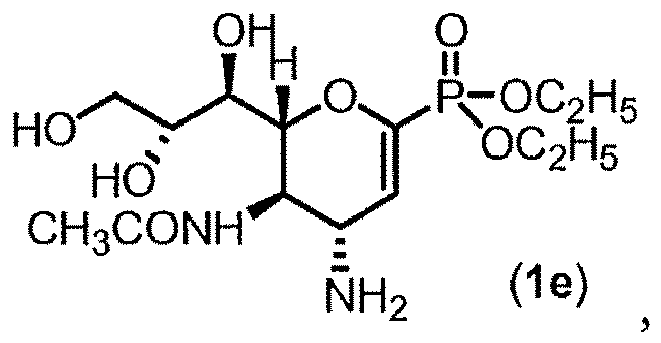
- the compound according to formula (I) is at least one of:
- Another implementation of the invention provides a method of inhibiting the activity of a neuraminidase comprising contacting said neuraminidase with of any one of compounds ( I ).
- the neuraminidase is an influenza neuraminidase and the activity is inhibited in vivo.
- the activity is inhibited in vitro.
- the cell culture is a Vero cell culture.
- the influenza virus containing sample is a cell infected with influenza virus.
- the influenza virus containing sample is immobilized on a solid substrate.
- the solid substrate may be selected from the group consisting of a microwell, microtiter plates, silicon chips, glass slides, beads, microparticles, films, chromatography paper, membranes, bottles, dishes, slides, blotting material, filters, fibers, woven fibers, shaped polymers, particles, dip-sticks, test tubes, chips, microchips, Langmuir Blodgett film, glass, germanium, silicon, (poly)tetrafluoroethylene, polystyrene, gallium arsenide, gallium phosphide, silicon oxide, silicon nitride, and combinations thereof.
- the influenza virus or virus particle is immobilized on the solid substrate via the binding of a carbohydrate receptor to the hemagglutinin component of influenza virus.
- the immobilization of the influenza virus or virus particle to the solid substrate does not alter the binding of the binding molecule or oseltamivir carboxylate to neuraminidase component of the influenza virus or particle thereof.
- the recognition unit (R) is selected from zanamivir, or tamiphosphor guanidine monoester, or phosphazanamivir or its monoester, and salts, esters and derivatives thereof.
- the recognition unit (R) is coupled to a sensing unit (S) that is detectable.
- the recognition unit (R) is coupled to the sensing unit via a linker (L), such that the binding molecule has the structure R-L-S.
- the linker (L) reduces the effect of the binding of the recognition unit to the influenza virus to the detection of the sensing unit (S).
- the linker (L) may be selected from an aliphatic chain, a triazole, a water-soluble linker, and an ethylene glycol linker.
- the sensing unit is directly or indirectly detectable. In some embodiments, the sensing unit is coupled to the detectable moiety by a streptavidin-biotin interaction.
- the sensing unit is a detectable moiety selected from a fluorescent label, a gold label, an enzyme label, a radioactive label, a quantum dot label, and a protein label.
- the detectable moiety is detected by a signal selected from a luminescent, colorimetric, fluorimetric, or radioactive signal.
- the fluorescent label is selected from the group consisting of fluorescein, BODIPY, Alexa Fluor, Cy3, Cy5, Oregon Green, tetramethylrhodamine, Rhodamine Red, Texas Red, pyridyloxazole, benzoxadiazole derivatives, NBD halides, iodoacetamides, SBD; Lucifer Yellow, iodoacetamide; stilbene, coumarin, naphthalene, aziridine, dapoxyl, pyrene,
- Oseltamivir is an oral prodrug that is converted by endogenous esterases to oseltamivir carboxylate (OC). Zanamivir works by binding to the active site of the neuraminidase protein, rendering the influenza virus unable to escape its host cell and infect others. (Cyranoski D (September 2005) Nat. Medicine 11 (9): 909). It is also an inhibitor of influenza virus replication in vitro and in vivo. Bioavailability of zanamivir is 2% and it is usually administered by inhalation.
- NAIs neuraminidase inhibitors
- the NA inhibitors are designed to have (oxa)cyclohexene scaffolds to mimic the oxonium transition-state in the enzymatic cleavage of sialic acid, ( Russell et al., Nature 2006,443:45 ).
- the active carboxylate, oseltamivir is exposed to interact with three arginine residues (Arg118, Arg292 and Arg371) in the active site of NA. ( Id. ).
- the present disclosure provides a novel synthetic route to novel phosphonate congers of zanamivir.
- D-Sialic acid was utilized as a chiral precursor for the synthesis of novel active neuraminidase inhibitors.
- Novel phosphonate congers exhibit better anti-flu activities than zanamivir and oseltamivir by inhibiting the neuraminidases of the wild-type and H274Y mutant of H1N1 and H5N1 viruses.
- the invention provides a novel synthetic method to enantioselective synthesis of various zanamivir phosphonate congeners and the derivatives with reasonably high yields.
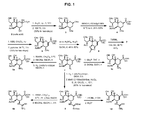
- the synthetic route is shown in Figure 1 . Reagents and steps described in Figure 1 are as follows:
- Step 1 Sialic acid (2) was treated with acetic anhydride in pyridine to afford the peracetylation intermediate, which was heated at 100 °C to induce decarboxylation, giving compound 3. ( Horn, E. J., et al Carbohydr. Res. 2008, 343, 936 ).
- Step 2 Compound 3 was treated with trimethylsilyl diethyl phosphate as the appropriate nucleophile to afford the phosphonate compound 4 as a mixture of ⁇ and ⁇ anomers (2:3), which could be separated by chromatography and characterized by NMR spectral analyses.
- Step 3 Phosphonates 4 (as an anomeric mixture) was irradiated with N-bromosuccinimide (NBS) in CH 2 Cl 2 solution to undergo a radical type bromination, which was treated in situ with pyridine to afford a ⁇ -elimination product 5, a phosphonate derivative of Neu5Ac2en (DANA).
- NBS N-bromosuccinimide
- DANA a phosphonate derivative of Neu5Ac2en
- Step 4 In a media of acetic anhydride, acetic acid and concentrated H 2 SO 4 , compound 5 was converted into the oxazoline 6.
- Step 5 The regio- and stereoselective ring-opening reaction of oxazoline 6 with azidotrimethylsilane was carried out to afford an azido compound 7 as the pivotal intermediate leading to compounds 1a, 1b, 1c and 1d.
- Step 6 Compound 7 was converted to phosphonic acid 1a by a sequence of three reactions: removal of both ethyl groups from phosphonate 7 with bromotrimethylsilane, deacetylation using sodium methoxide in methanol, and selective reduction of the azido group to amine by hydrogenation in the presence of Lindlar catalyst.
- Step 7 To introduce a guanidino substituent, the azido group in compound 7 was first reduced to give amine, which reacted with 1,3-bis(tert-butoxycarbonyl)-2-methylthiopseudourea in the presence of mercury chloride and triethylamine to afford guanidine compound 8.
- Step 8 Both ethyl groups in phosphonate 8 were removed by bromotrimethylsilane, and the concurrent removal of tert-butoxycarbonyl (Boc) groups was realized by workup with methanol due to the in situ generated HBr.
- the zanamivir phosphonate (1b) was obtained by deacetylation.
- phosphonate diester 7 was converted to a monoester with sodium ethoxide, followed by removal of Boc groups with trifluoroacetic acid, to give compound 1d.
- compositions of this invention optionally comprise salts of the compounds herein, especially pharmaceutically acceptable non-toxic salts containing, for example, Na + , Li + , K + , Ca ++ and Mg ++ .
- Such salts may include those derived by combination of appropriate cations such as alkali and alkaline earth metal ions or ammonium and quaternary amino ions with an acid anion moiety.
- Metal salts are prepared by reacting the metal hydroxide with a compound of this invention.
- metal salts which are prepared in this way are salts containing Na + , Li + , K + .
- compositions herein comprise compounds of the invention in their un-ionized, as well as zwitterionic form, and combinations with stoichiometric amounts of water as in hydrates.
- Another aspect of the invention relates to methods of inhibiting the activity of neuraminidase comprising the step of treating a sample suspected of containing neuraminidase with a compound of the invention.
- the compounds of this invention are formulated with conventional carriers and excipients, which will be selected in accord with ordinary practice.
- Tablets will contain excipients, glidants, fillers, binders and the like.
- Aqueous formulations are prepared in sterile form, and when intended for delivery by other than oral administration generally will be isotonic. All formulations will optionally contain excipients such as those set forth in the " Handbook of Pharmaceutical Excipients" (1986 ). Excipients include ascorbic acid and other antioxidants, chelating agents such as EDTA, carbohydrates such as dextrin, hydroxyalkylcellulose, hydroxyalkylmethylcellulose, stearic acid and the like.
- the pH of the formulations ranges from pH 3 to pH 11, but is ordinarily pH 7 to pH 10.
- One or more compounds of the invention are administered by any route appropriate to the condition to be treated. Suitable routes include oral, rectal, nasal, topical (including buccal and sublingual), vaginal and parenteral (including subcutaneous, intramuscular, intravenous, intradermal, intrathecal and epidural), and the like. It will be appreciated that the preferred route may vary with for example the condition of the recipient.
- the formulations, both for veterinary and for human use, of the invention comprise at least one active ingredient, as above defined, together with one or more acceptable carriers therefore and optionally other therapeutic ingredients.
- the carrier(s) must be "acceptable” in the sense of being compatible with the other ingredients of the formulation and physiologically innocuous to the recipient thereof.
- the formulations include those suitable for the foregoing administration routes.
- the formulations may conveniently be presented in unit dosage form and may be prepared by any of the methods well known in the art of pharmacy. Techniques and formulations generally are found in Remington's Pharmaceutical Sciences (Mack Publishing Co., Easton, Pa .). Such methods include the step of bringing into association the active ingredient with the carrier which constitutes one or more accessory ingredients.
- the formulations are prepared by uniformly and. intimately bringing into association the active ingredient with liquid carriers or finely divided solid carriers or both, and then, if necessary, shaping the product.
- Formulations of the invention suitable for oral administration are prepared as discrete units such as capsules, cachets or tablets each containing a predetermined amount of the active ingredient; as a powder or granules; as solution or a suspension in an aqueous liquid or a nonaqueous liquid; or as an oil-in-water liquid emulsion or a water-in-oil liquid emulsion.
- the active ingredient may also be presented as a bolus, electuary or paste.
- a tablet is made by compression or molding, optionally with one or more accessory ingredients.
- Compressed tablets may be prepared by compressing in a suitable machine the active ingredient in a free-flowing form such as a powder or granules, optionally mixed with a binder, lubricant, inert diluent, preservative, surface active or dispersing agent.
- Molded tablets may be made by molding in a suitable machine a mixture of the powdered active ingredient moistened with an inert liquid diluent.
- the tablets may optionally be coated or scored and optionally are formulated so as to provide slow or controlled release of the active ingredient.
- the formulations are preferably applied as a topical ointment or cream containing the active ingredient(s) in an amount of, for example, 0.075 to 20% w/w (including active ingredient(s) in a range between 0.1% and 20% in increments of 0.1% w/w such as 0.6% w/w, 0.7% w/w, etc.), preferably 0.2 to 15% w/w and most preferably 0.5 to 10% w/w.
- the active ingredients may be employed with either a paraffinic or a water-miscible ointment base.
- the active ingredients may be formulated in a cream with an oil-in-water cream base.
- the aqueous phase of the cream base may include, for example, at least 30% w/w of a polyhydric alcohol, i.e. an alcohol having two or more hydroxyl groups such as propylene glycol, butane 1,3-diol, mannitol, sorbitol, glycerol and polyethylene glycol (including PEG 400) and mixtures thereof.
- the topical formulations may desirably include a compound which enhances absorption or penetration of the active ingredient through the skin or other affected areas.
- An example of such a dermal penetration enhancer includes dimethyl sulphoxide.
- the oily phase of the emulsions of this invention may be constituted from known ingredients in a known manner. While the phase may comprise merely an emulsifier (otherwise known as an emulgent), it desirably comprises a mixture of at least one emulsifier with a fat or an oil or with both a fat and an oil. Preferably, a hydrophilic emulsifier is included together with a lipophilic emulsifier which acts as a stabilizer. It is also preferred to include both an oil and a fat.
- the emulsifier(s) with or without stabilizer(s) make up the so-called emulsifying wax
- the wax together with the oil and fat make up the so-called emulsifying ointment base which forms the oily dispersed phase of the cream formulations.
- Emulgents and emulsion stabilizers suitable for use in the formulation of the invention include Tween TM 60, Span TM 80, cetostearyl alcohol, benzyl alcohol, myristyl alcohol, glyceryl mono-stearate and sodium lauryl sulfate.
- the choice of suitable oils or fats for the formulation is based on achieving the desired cosmetic properties.
- the cream should preferably be a non-greasy, non-staining and washable product with suitable consistency to avoid leakage from tubes or other containers.
- Straight or branched chain, mono- or dibasic alkyl esters such as di-isoadipate, isocetyl stearate, propylene glycol diester of coconut fatty acids, isopropyl myristate, decyl oleate, isopropyl palmitate, butyl stearate, 2-ethylhexyl palmitate or a blend of branched chain esters known as Crodamol CAP may be used, the last three being preferred esters. These may be used alone or in combination depending on the properties required. Alternatively, high melting point lipids such as white soft paraffin and/or liquid paraffin or other mineral oils are used.
- Formulations suitable for topical administration to the eye also include eye drops wherein the active ingredient is dissolved or suspended in a suitable carrier, especially an aqueous solvent for the active ingredient.
- the active ingredient is preferably present in such formulations in a concentration of 0.5 to 20%, advantageously 0.5 to 10% particularly 1.5% w/w.
- Formulations suitable for topical administration in the mouth include lozenges comprising the active ingredient in a flavored basis, usually sucrose and acacia or tragacanth; pastilles comprising the active ingredient in an inert basis such as gelatin and glycerin, or sucrose and acacia; and mouthwashes comprising the active ingredient in a suitable liquid carrier.
- Formulations for rectal administration may be presented as a suppository with a suitable base comprising for example cocoa butter or a salicylate.
- Formulations suitable for intrapulmonary or nasal administration have a particle size for example in the range of 0.1 to 500 microns (including particle sizes in a range between 0.1 and 500 microns in increments microns such as 0.5, 1, 30 microns, 35 microns, etc.), which is administered by rapid inhalation through the nasal passage or by inhalation through the mouth so as to reach the alveolar sacs.
- Suitable formulations include aqueous or oily solutions of the active ingredient.
- Formulations suitable for aerosol or dry powder administration may be prepared according to conventional methods and may be delivered with other therapeutic agents such as compounds heretofore used in the treatment or prophylaxis of influenza A or B infections.
- Formulations suitable for vaginal administration may be presented as pessaries, tampons, creams, gels, pastes, foams or spray formulations containing in addition to the active ingredient such carriers as are known in the art to be appropriate.
- Formulations suitable for parenteral administration include aqueous and non-aqueous sterile injection solutions which may contain anti-oxidants, buffers, bacteriostats and solutes which render the formulation isotonic with the blood of the intended recipient; and aqueous and non-aqueous sterile suspensions which may include suspending agents and thickening agents.
- the formulations are presented in unit-dose or multi-dose containers, for example sealed ampoules and vials, and may be stored in a freeze-dried (lyophilized) condition requiring only the addition of the sterile liquid carrier, for example water for injection, immediately prior to use.
- sterile liquid carrier for example water for injection
- Extemporaneous injection solutions and suspensions are prepared from sterile powders, granules and tablets of the kind previously described.
- Preferred unit dosage formulations are those containing a daily dose or unit daily sub-dose, as herein above recited, or an appropriate fraction thereof, of the active ingredient.
- formulations of this invention may include other agents conventional in the art having regard to the type of formulation in question, for example those suitable for oral administration may include flavoring agents.
- the invention further provides veterinary compositions comprising at least one active ingredient as above defined together with a veterinary carrier therefor.
- Veterinary carriers are materials useful for the purpose of administering the composition and may be solid, liquid or gaseous materials which are otherwise inert or acceptable in the veterinary art and are compatible with the active ingredient. These veterinary compositions may be administered orally, parenterally or by any other desired route.
- Compounds of the invention are used to provide controlled release pharmaceutical formulations containing as active ingredient one or more compounds of the invention ("controlled release formulations") in which the release of the active ingredient are controlled and regulated to allow less frequency dosing or to improve the pharmacokinetic or toxicity profile of a given active ingredient.
- Effective dose of active ingredient depends at least on the nature of the condition being treated, toxicity, whether the compound is being used prophylactic ally (lower doses) or against an active influenza infection, the method of delivery, and the pharmaceutical formulation, and will be determined by the clinician using conventional dose escalation studies. It can be expected to be from 0.0001 to 100 mg/kg body weight per day. Typically, from 0.01 to 10 mg/kg body weight per day. More typically, from 0.01 to 5 mg/kg body weight per day. More typically, from 0.05 to 0.5 mg/kg body weight per day. For example, for inhalation the daily candidate dose for an adult human of approximately 70 kg body weight will range from 1 mg to 1000 mg, preferably between 5 mg and 500 mg, and may take the form of single or multiple doses.
- active ingredients of the invention are also used in combination with other active ingredients. Such combinations are selected based on the condition to be treated, cross-reactivities of ingredients and pharmaco-properties of the combination.
- antivirals such as amantidine, rimantadine and ribavirin
- mucolytics such as amantidine, rimantadine and ribavirin
- expectorants such as pirin, pirin, pirin, pirin, or analgesics.
- antibiotics, antipyretics, and analgesics are administered together with the compounds of this invention.
- Another implementation of the invention includes in vivo metabolic products of the compounds described herein, to the extent such products are novel and unobvious over the prior art. Such products may result for example from the oxidation, reduction, hydrolysis, amidation, esterification and the like of the administered compound, primarily due to enzymatic processes. Accordingly, the invention includes novel and unobvious compounds produced by a process comprising contacting a compound of this invention with a mammal for a period of time sufficient to yield a metabolic product thereof. Such products typically are identified by preparing a radiolabeled (e.g. 14 C or 3 H) compound of the invention, administering it parenterally in a detectable dose (e.g.
- a radiolabeled e.g. 14 C or 3 H
- metabolite structures are determined in conventional fashion, e.g. by MS or NMR analysis. In general, analysis of metabolites is done in the same way as conventional drug metabolism studies well-known to those skilled in the art.
- the conversion products so long as they are not otherwise found in vivo, are useful in diagnostic assays for therapeutic dosing of the compounds of the invention even if they possess no neuraminidase inhibitory activity of their own.
- both the polar phosphonate and guanidinium groups may be optionally further functionalized by techniques known in the art to enhance pharmacokinetic and/or pharmacodynamic properties.
- acyloxymethyl- and aryl phosphonate esters may be utilized to enhance oral bioavailability ( Krise and Stella, Adv. Drug Deliv. Rev. 1996, 19, 287 ).
- samples suspected of containing neuraminidase include natural or man-made materials such as living organisms; tissue or cell cultures; biological samples such as biological material samples (blood, serum, urine, cerebrospinal fluid, tears, sputum, saliva, tissue samples, and the like); laboratory samples; food, water, or air samples; bioproduct samples such as extracts of cells, particularly recombinant cells synthesizing a desired glycoprotein; and the like.
- biological material samples blood, serum, urine, cerebrospinal fluid, tears, sputum, saliva, tissue samples, and the like
- laboratory samples food, water, or air samples
- bioproduct samples such as extracts of cells, particularly recombinant cells synthesizing a desired glycoprotein; and the like.
- samples can be contained in any medium including water and organic solvent/water mixtures. Samples include living organisms such as humans, and man-made materials such as cell cultures.
- the treating step of the invention comprises adding the composition of the invention to the sample or it comprises adding a precursor of the composition to the sample.
- the addition step comprises any method of administration as described above.
- the activity of neuraminidase after application of the composition can be observed by any method including direct and indirect methods of detecting neuraminidase activity. Quantitative, qualitative, and semiquantitative methods of determining neuraminidase activity are all contemplated. Typically one of the screening methods described above are applied, however, any other method such as observation of the physiological properties of a living organism are also applicable.
- Organisms that contain neuraminidase include bacteria (Vibrio cholerae, Clostridium perfringens, Streptococcus pneumoniae, and Arthrobacter sialophilus) and viruses (especially orthomyxoviruses or paramyxoviruses such as influenza virus A (e.g. H1N1, H5N1), and B, parainfluenza virus, mumps virus, Newcastle disease virus, fowl plague virus, and sendai virus). Inhibition of neuraminidase activity obtained from or found within any of these organisms is within the objects of this invention.
- the virology of influenza viruses is described in " Fundamental Virology" (Raven Press, New York, 1986), Chapter 24 .
- the compounds of this invention are useful in the prophylaxis of influenza infections or treatment of existing influenza infections in animals such as ducks and other birds, rodents, swine, or in humans.
- compositions of the invention are screened for inhibitory activity against neuraminidase by any of the conventional techniques for evaluating enzyme activity.
- typically compositions are first screened for inhibition of neuraminidase in vitro and compositions showing inhibitory activity are then screened for activity in vivo.
- Compositions having in vitro K i (inhibitory constants) of less than 5 ⁇ 10 -6 M, typically less than 1 ⁇ 10 -7 M and preferably less than 5 ⁇ 10 -8 M are preferred for in vivo use.
- Table 1 shows neuraminidase inhibition, anti-influenza, and cytotoxicity activities of zanamivir phosphonate derivatives Ia and Ib in comparison with zanamivir and oseltamivir acid.
- the phosphonate derivatives Ia and Ib showed greater potencies than zanamivir against various wild-type and mutant influenza viruses. Table 1.
- Human 293T cells were used for cytotoxicity measurements for compounds.
- a fluorescent substrate, 2'-(4-methylumbelliferyl)- ⁇ -D- N -acetylneuraminic acid (MUNANA) was used to determine the IC 50 values that are compound concentrations causing 50% inhibition of different influenza neuraminidase enzymes.
- MUNANA 2'-(4-methylumbelliferyl)- ⁇ -D- N -acetylneuraminic acid
- Inhibition constants were determined by kinetic studies using MUNANA as the substrate.
- the anti-influenza activities against different influenza strains were measured as EC 50 values that are the compound concentrations for 50% protection of the cytopathic effects due to the infection by different influenza strains.
- the neuraminidase inhibitory assays were measured against the neuraminidase of several influenza strains using the influenza associated neuraminidase as the enzyme sources.
- a fluorescence substrate MUNANA (2'-(4-methylumbelliferyl)- ⁇ -D- N -acetylneuraminic acid) was used to measure the neuraminidase activities for all viral enzymes.
- Table 1 shows the IC 50 values that measure the compound concentrations for 50% inhibition of neuraminidase activities and assess the relative neuraminidase inhibitory potencies of these compounds.
- IC 50 values for both 1a and 1b against all five neuraminidases are all noticeably more potent than zanamivir and similar to those for oseltamivir acid. These two phosphonate compounds are significantly more active in inhibiting the oseltamivir-resistant neuraminidase mutant of WSN 274Y that has a tyrosine residue replacing the parental histidine at the 274 position of the neuraminidase.
- the anti-influenza activities of these compounds were measured against five influenza strains for abilities to protect the influenza infection mediated cytopathic effects.
- the anti-influenza activities were determined as EC 50 values that are the concentrations for 50% protection of the infection mediated cytopathic effects.
- Table 1 shows that 1a and 1b have greater anti-influenza activities against the H1N1 influenza viruses, such as the WSN and the 2009 pandemic H1N1 strains.
- the anti-influenza activities of 1a and 1b are particularly noticeable against the oseltamivir-resistant WSN (H1N1) virus.
- H1N1 influenza viruses carrying the oseltamivir-resistant neuraminidase mutation at the 274 position have been the prevailing H1N1 isolates in clinic ( Moscona, A. N. Engl. J. Med. 2005, 353, 2633 ).
- the superior anti-influenza activities of 1a and 1b for this mutant neuraminidase may impact the option for treating this prevailing influenza strain.
- 1a and 1b are also comparable to zanamivir as anti-influenza agents against the RG14 (H5N1) and the Udorn (H3N2) influenza strains.
- Bioassay measurements showed that both 1a and 1b are potent anti-neuraminidase and anti-influenza compounds. They are generally more potent than zanamivir and are very active against the oseltamivir-resistant H1N1 influenza viruses. In addition to be potent anti-influenza agents, they are nontoxic to the human 293T cells at the highest testing concentrations (Table 1).
- phosphonate 1a is a potent NA inhibitor and anti-flu agent against A/WSN/1933 (H1N1) virus with IC 50 and EC 50 values of 0.65 and 1.3 nM, respectively.
- phosphonate 1a is a potent NA inhibitor and anti-flu agent against the H274Y mutant of A/WSN/1933 (H1N1) virus with IC 50 and EC 50 values of 0.5 and 27 nM, respectively. These IC 50 and EC 50 values of the zanamivir phosphonate are particularly impressive for Tamiflu-resistant H1N1 virus.
- phosphonate 1a is also a potent NA inhibitor and anti-flu agent against A/California/7/2009 (pandemic H1N1), A/Vietnam/1194/2004 RG14 (H5N1), and A/Udorn/307/1972 (H3N2) viruses.
- phosphonate 1b is a potent NA inhibitor and anti-flu agent against A/WSN/1933 (H1N1) virus with IC 50 and EC 50 values of 1.2 and 2.4 nM, respectively.
- phosphonate 1b is a potent NA inhibitor and anti-flu agent against the H274Y mutant of A/WSN/1933 (H1N1) virus with IC 50 and EC 50 values of 0.25 and 26 nM, respectively.
- the high potency of 1b against Tamiflu-resistant H1N1 virus is very significant.
- phosphonate 1b is also a potent NA inhibitor and anti-flu agent against A/California/7/2009 (pandemic H1N1), A/Vietnam/ 1 194/2004 RG14 (H5N1), and A/Udorn/307/1972 (H3N2) viruses.
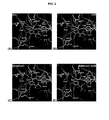
- molecular modeling of the neuraminidase-phosphonate complex indicates a pertinent binding mode of the phosphonate with three arginine residues in the active site.
- the molecular docking experiments ( Figure 2 ) using the known N1 crystal structure (PDB code: 2HU4) reveal that the phosphonate inhibitor 1b binds strongly with the triarginine residues of NA, in addition to other interactions exerted by the C 7 -C 9 glycelyl, C 4 -acetamido and C 5 -guanidino groups in the binding pocket similar to the neuraminidase-zanamivir complex.
- molecular modeling of phosphonate inhibitor 1a showed the strong interactions with the three arginine residues of neuraminidase, in addition to other interactions exerted by the C 7 -C 9 glyceryl, C 4 -acetamido and C 5 -amino groups in the binding pocket ( Figure 2 ).
- RABC Resistance Assessment by Binding Competition
- Zanamivir and OC bind to the same active site of influenza neuraminidase (NA).
- NA influenza neuraminidase
- oseltamivir-resistance H5N1 virus neuraminidase can still retain susceptibility to zanamivir.
- Collins PJ, et al. (2008). Nature 453 (7199): 1258- 1261 An induced fit of the neuraminidase that involves the reorientation of the Glu276 residue toward Arg224 creating a larger hydrophobic pocket is needed to accommodate the side chain of OC ( M. Z. Wang, C. Y. Tai, D. B. Mendel, Antimicrob. Agents Chernother. 46, 3809 (2002 ); P. J.
- the N1 group neuraminidases can evolve to resistant forms with mutations such as H274Y that prevent the formation of the hydrophobic pocket resulting in several hundred fold increase in the oseltamivir K i values.
- the zanamivir K i for the H274Y neuraminidase is unchanged ( P. J. Collins et al, Nature 453, 1258 (2008 )). This binding difference may be explored to develop a novel diagnosis for OC susceptibility of viral isolates.
- the recognition unit (R) is coupled to a sensor unit (S).
- the recognition unit (R) is coupled to a linker (L) which is in turn coupled to a sensing unit (S).
- the R-L-S molecule is used to distinguish Tamiflu-resistant from Tamiflu-sensitive influenza viruses.
- oseltamivir carboxylate Being a potent neuraminidase inhibitor, oseltamivir carboxylate (OC; Tamiflu®) is an effective competitor for non-OC molecules (R) that bind to NA molecules in influenza viruses.
- OC is a poor competitor for the binding of the OC-resistant mutants (e.g., H274Y) that still binds non-OC recognition units (R) equally as well as wild type NA.
- the recognition unit (R) is typically selected from a known NA binding moiety such a zanamivir, tamiphosphor guanidine monoester, or zanamivir phosphonate 1a or its derivatives 1b , 1c and 1d.
- R is selected from oseltamivir-containing phosphonate compounds that have activity as neuraminidase inhibitors against wild-type and H274Y mutant of H1N1 and H5N1 viruses as disclosed in US patent 7,888,337B2 .
- Binding to NA is detected by the signal from the sensing moiety (i.e. detectable moiety) can be observed.
- Such homogenous fluorescent and calorimetric sensing moieties are known to those skilled in the art. See, for example: Wang Q. M. et al, "A continuous calorimetric assay for rhinovirus-14 3C protease using peptide p-nitroanilides as substrates" Anal. Biochem. Vol. 252, pp. 238-45 (1997 ), and Basak S. et al. "In vitro elucidation of substrate specificity and bioassay of proprotein convertase 4 using intramolecularly quenched fluorogenic peptides" Biochem. J. Vol. 380, pp. 505-14 (2004 ).
- the sensor unit is linked directly or indirectly (via avidin/streptavidin-biotin, antibody-antigen, or other methods known in the art) to a detectable moiety selected from the group consisting of a fluorescent label, a gold label and an enzyme label.
- a detectable moiety selected from the group consisting of a fluorescent label, a gold label and an enzyme label.
- the various kinds of sensors are not particularly limited and can be appropriately selected according to the purpose. Examples thereof include radioactive labels, quantum dot labels, protein labels, and the like
- the sensing unit forms a detectable binding complex with a conjugated binding partner, forming a binding pair, wherein said binding partner is conjugated to a reagent.
- the binding pair may be based on any of: the binding pair is any one selected from the group consisting of streptavidin:biotin; avidin:biotin; folic acid:folate binding protein; sialic acid, carbohydrates, or glycoproteins:lectins; oligo- or poly-dA:oligo- or poly-dT; oligo- or poly-dC:oligo- or poly-dG; phenylboronic acid:salicylhydroxamic acid; aldehyde and ketone moieties:hydrazides:sulfhydryl moiety:maleimides; amino moieties:N-hydroxysuccinimide esters; and heavy metals:thiols; the Fc portion of IgG: Protein A/Protein G/Protein A/G; digoxigenin:anti
- the label comprises a fluorophore.
- the fluorophore is selected from the group consisting of fluorescein, rhodamine, coumarin, resorufin, xanthene, cyanine, pyrene, phthalocyanine, phycobiliprotein, Alexa, Cy3, Cy5, squarene dye, and combinations resulting in energy transfer dyes.
- the Alexa fluorescent dye may be selected from the group consisting of Alexa Fluor 647, Alexa Fluor 546 and Alexa Fluor 532.
- the fluorophore is selected from the group consisting of: BODIPY maleimides, iodoacetamides and methyl bromides; Alexa Fluor maleimides; fluorescein 5- and 6- isomer maleimides and methyl bromides; Oregon Green isothiocyanates and maleimides; tetramethylrhodamine 5- and 6-isomer iodoacetamides and maleimides; Rhodamine Red maleimides; Texas Red bromoacetamides and maleimides; pyridyloxazole maleimides; NBD halides and iodoacetamides, SBD; Lucifer Yellow iodoacetamide; stilbene iodoacetamides and maleimides; coumarin maleimides and iodoacetamides, i.e.
- MDCC MDCC, IDCC, and others; naphthalene, acrylodan, badan, IAANS, MIANS, IAEDANS, and Dansyl; aziridine; dapoxyl, dapoxyl (2- bromoacetamidly)sulfonamide; pyrene maleimides and iodoacetyl; and monobromo- and monochlorobimanes.
- the method or means for detecting the signal from the sensor unit (S) is not particularly limited and can be appropriately selected according to the purpose. For example, when the signal is emission, quenching, etc., it is detected by a photodetector, camera, etc.
- the combination of the light-emitting portion and the quenching portion is not particularly limited and can be appropriately selected according to the purpose.
- those known as the technique of fluorescence resonance energy transfer (FRET), etc. can be suitably adopted.
- the light-emitting portion is not particularly limited as long as it can generate emission, and can be appropriately selected according to the purpose.
- Examples thereof include those containing a fluorescent substance, chemiluminescent substance, electrochemiluminescent substance, etc. or those formed of these substances. These may be used alone or two or more may be used in combination.
- the fluorescent substance is more preferable in that visibility thereof is excellent and detection is easy.
- the fluorescent substance is not particularly limited and can be appropriately selected according to the purpose.
- Examples thereof include anthracene, fluorescein, fluorescein isothiocyanate (FITC), rhodamines such as tetramethyl rhodamine and sulforhodamine, dansyl chloride, Texas Red, AL 350, indocarbocyanine (CY), and the like.
- FITC fluorescein isothiocyanate
- rhodamines such as tetramethyl rhodamine and sulforhodamine, dansyl chloride, Texas Red, AL 350, indocarbocyanine (CY), and the like.
- the quenching portion is not particularly limited if it can quench the emission of the light-emitting portion when the quenching portion is located adjacent to the light-emitting portion, and the quenching portion can be appropriately selected according to the type, etc. of the light-emitting portion. Examples thereof include those containing a quenching substance, or those formed of the quenching substance.
- the quenching substance is not particularly limited and can be appropriately selected according to the purpose.
- examples of the quenching substance include substances capable of absorbing the energy released when the fluorescent substance emits light, and the like. Suitable examples include substances allowing fluorescence resonance energy transfer (FRET) between the light-emitting substance. Specific examples include tetramethylrhodamine isothiocyanate (TRITC), dimethylaminobenzenesulfonyl (DABSYL), gold nanoparticles, Black Hole Quencher, and the like.
- the recognition unit is conjugated to a sensor which is in turn coupled to a light-emitting portion and a quenching portion.
- the quenching portion can quench emission of the light-emitting portion before the recognition unit binds to the target NA, i.e., when the quenching portion is present adjacent to the light-emitting portion.
- the quenching portion dissociates from the target nucleic acid. As a result, the quenching portion exists away from the light-emitting portion, resulting in the loss of the action of the quenching portion and allowing the light-emitting portion to generate emission.
- the linker unit (L) is not particularly limited and can be appropriately selected as long as it does not impair the effect of the invention.
- a water-soluble linker such as ethylene glycol linker can be used.
- the length of the water-soluble linker can be determined to an appropriate length.
- either the influenza virus sample to be tested or the R-L-S complex is immobilized on a solid surface as an array.
- the solid surface may be selected from the group consisting of Langmuir Blodgett film, glass, germanium, silicon, (poly)tetrafluoroethylene, polystyrene, gallium arsenide, gallium phosphide, silicon oxide, silicon nitride, and combinations thereof.
- the solid surface may be any one selected from the group consisting of a microwell or microtiter plates or dishes, silicon chips, glass slides, beads, microparticles, films or membranes, bottles, dishes, slides, blotting material, filters, fibers, woven fibers, shaped polymers, particles, dip-sticks, test tubes, chips, and microchips.
- influenza virus and/or virus particles are bound to a support containing at least one type of carbohydrate receptor selected from the group consisting of natural or synthetic oligosaccharide, which is conjugated to, or situated in composition with glycoproteins like glycophorin, ⁇ 1-acid glycoprotein, ⁇ 2-macroglobulin, ovomucoid, and combinations thereof which carbohydrate receptor binds to the hemagglutinin component of the viruses and/or virus particles.
- influenza viruses and/or virus particles comprising all known Avian Influenza (AI) sub-types that are normally sensitive to Tamiflu® can detected.
- the method is suitable to detect influenza viruses and/or virus particles comprising a highly pathogenic variant that is resistant to Tamiflu®.
- the method can be performed in particular with a support which is a chromatographic paper or membrane.
- a support which is a chromatographic paper or membrane.
- Such materials are well-known to the skilled person. It is possible to covalently attach or physically adsorb the carbohydrate receptor to the support. ( US Pub. Pat App. Ser. No. 20100009339 ).
- the method can be used with suspected influenza virus containing samples selected from the group consisting of mucus, saliva, respiratory secretion, throat wash, nasal wash, spinal fluid, sputum, urine, semen, sweat, feces, plasma, blood, broncheoalveolar fluid, vaginal fluid, tear fluid and tissue biopsy. Similar techniques are also applicable for use with virus samples from cell culture, e.g., influenza samples grown in cells such as Vero cells, etc. The method is suitable for practicing on intact influenza virus-infected cells or cell-free samples of influenza virus.
- the influenza virus can be of mammalian (human, equine, swine, etc.) or avian origin.
- Kits which comprise the neuraminidase binding molecules of the present invention are also envisaged.
- the different kit components may be packaged in separate containers and admixed immediately before use. Such packaging of the components separately may permit long- term storage without losing the active components' functions. Embodiments in which two or more of components are found in the same container are also contemplated.
- kits of the present invention may, if desired, be presented in a pack which may contain one or more units of the kit of the present invention.
- the pack may be accompanied by instructions for using the kit.
- the pack may also be accommodated by a notice associated with the container in a form prescribed by a governmental agency regulating the manufacture, use or sale of laboratory supplements, which notice is reflective of approval by the agency of the form of the compositions.
- the method described herein relates to detection of Tamiflu-resistant influenza virus strains by determining the binding ability of specific binding molecules having the structure recognition unit (R)-optional linker (L)-sensing unit (S).
- binding molecule examples are:
- the linker containing a triazole group is formed by click chemistry (1,3-dipolar cycloaddition of alkyne and azide). Fluorescence labeled streptavidin is used to detect the biotin unit.
- Fluorescein has an absorption maximum at 494 nm and emission maximum of 521 nm (in water). Fluorescein isothiocyanate (FITC) is used to connect with the linker. Alternatively, other fluorescent entities such as Alexa dyes and quantum dots, can be used.
- FITC Fluorescein isothiocyanate
- Tamiphosphor guanidine binds both Tamiflu-sensitive and Tamiflu-resistant strains (H274Y) of influenza viruses.
- the Tamiphosphor guanidine monoester can be in the salt form, such as the ammonium salt.
- PhosphaZanamivir can be in the salt form, such as the ammonium salt.
- PhosphaZanamivir can be in the salt form, such as the ammonium salt.
- the present disclosure for the first time reveals that NA-binding abilities of molecules of the structure R-L-S can be used to detect Tamiflu-resistant versions of influenza virus.
- OC susceptibility could be determined.
- the OC binding competition assay confirmed the dramatic increase of OC resistant H1N1 isolates from 2008 and the appearance of OC resistant pandemic 2009 H1N1 in Taiwan.
- the Resistance Assessment by Binding Competition (RABC) assay was used to develop a prototype "point-of-care" test for OC susceptibility assessment.
- the RABC-assay principle could be generally applicable to high throughput survey and quick diagnosis for drug susceptibility of pathogens.
- ZB biotin conjugated zanamivir
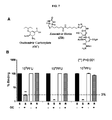
- Fig. 1A Examples
- ZB was made by conjugation of a biotin through a linker to zanamivir at the 7-OH position that can be derivatized without much reduction in neuraminidase inhibition ( D. M. Andrews et al., Eur. J. Med. Chem. 34, 563 (1999 ); T. Honda et al., Bioorg. Med. Chem. Lett. 12, 1925 (2002 ); W. H. Wen et al., J. Med. Chem. 52, 4903 (2009 )).
- IC 50 value of ZB against neuraminidase was found to be 7.7 nM, higher than that of zanamivir (2.1 nM).
- ZB binding to influenza neuraminidase was demonstrated using neuraminidase transfected cells ( Fig. 4 ), influenza infected cells (see Examples), and immobilized influenza viruses ( Fig. 1B ). Being a potent neuraminidase inhibitor, oseltamivir carboxylate (OC) could be an effective competitor for ZB binding to influenza viruses.
- OC oseltamivir carboxylate
- OC was also expected to be a poor competitor for the binding of the OC-resistant H274Y mutant that ZB binds equally well.
- Fig. 1B shows that significant OC inhibition (p ⁇ 0.001) on ZB binding was shown in the measurements of 274H influenza virus with titers in the range of 10 3 -10 5 PFU. A residual ZB binding about 3% was noticed in OC competition of higher titer 274H viral samples. In contrast, significant inhibition of ZB binding by competing OC was not observed in the OC resistant 274Y WSN virus at the same titers.
- Taiwan seasonal H1N1 clinical isolates collected in the years 2005-2009 were queried by the RABC assay for OC susceptibilities.
- the viral samples were immobilized in anti-H1N1 coated microplate wells and tested for binding using either 30 nM ZB or 30 nM ZB plus 150 nM OC in duplicate assays. The 5% residual ZB binding was used as the cut-off for OC susceptibility determination.
- the RABC assay results suggested that all tested seasonal H1N1 isolates collected before 2008 ( Fig. 8A ) or early in 2008 ( Fig. 8B ) were OC susceptible. Not until mid 2008, OC-resistant H1N1 was isolated in Taiwan ( Fig. 8B ).
- Table 2 lists all Taiwan clinical H1N1 isolates used in this study for determination of their OC susceptibility status by the RABC assays. Sixty viral isolates were randomly selected to determine their sequences at amino acid 274 (AA 274 ; N2 nomenclature) of the viral neuraminidase. In addition, a few samples were tested using the quick assay on membrane for OC susceptibility determinations. No discrepancies were found in all assay results, indicating that the RABC is reliable for OC susceptibility determinations.
- the OC susceptibility of each influenza isolate determined by the RABC assay is designated as R (resistant) or S (susceptible) according to the results of Fig. 8 .
- R resistant
- S susceptible
- Several isolates were randomly picked for confirmation by analysis of AA 274 and (or) quick test on a membrane (the numbers in parentheses corresponding to the sample number used in Fig.8B ).
- Fig. 9A shows that the staining of the OC susceptible H1N1 (WSN) by ZB was blocked by OC competition while the staining of the OC resistant 274Y WSN was resistant to the same competition.
- WSN OC susceptible H1N1
- Fig. 9B and 9C The sensitive ZB binding was also demonstrated on H1N1, H3N2, H5N1, and flu B influenza viruses that were directly immobilized on a membrane.
- the prototype RABC based staining assay is quick and requires no instruments for detections. It could be used as a "point-of-care" assay in a doctor's office for timely decision on treatment options for the seasonal H1N1 or pandemic H1N1 infections. In addition, the test could be used to differentiate influenza virus versus other respiratory infections as most other respiratory infective pathogens do not have neuraminidases.
- the RABC assay is a simple and robust method and has been demonstrated on different influenza viruses and infected cells using a variety of assay platforms.
- the assay principle could be applicable to other pathogen targets for drug susceptibility assessments.
- the splitting patterns are reported as s (singlet), d (doublet), t (triplet), q (quartet), m (multiplet), br (broad) and dd (double of doublets).
- IR spectra were recorded on a Thermo Nicolet 380 FT-IR spectrometer. Optical rotations were recorded on a Perkin-Elmer Model 341 polarimeter. High resolution ESI mass spectra were recorded on a Bruker Daltonics spectrometer.
- EXAMPLE 1 3-Acetamido-4,6-diacetoxy-2-(1,2,3-triacetoxy)propyl-3,4,5,6-tetrahydro-2H-pyran (3).
- EXAMPLE 2 Diethyl (5-acetamido-4-acetoxy-6-(1,2,3-triacetoxy)propyl-3,4,5,6-tetrahydro-2 H -pyran-2-yl) phosphonate (4).
- Example 6 Diethyl ⁇ 5-acetamido-4-( N 2 , N 3 -bis( tert -butoxycarbonyl))guanidino -6-(1,2,3-triacetoxy)propyl-4,5,6-trihydropyran-2-yl ⁇ phosphonate (8).
- EXAMPLE 7 (5-Acetamido-4-amino-6-(1,2,3-hydroxy)propyl-4,5,6-trihydropyran-2-yl) phosphonic acid (1a).
- EXAMPLE 8 (5-Acetamido-4-guanidino-6-(1,2,3-hydroxy)propyl-4,5,6-trihydropyran-2-yl) phosphonic acid (1b).
- the amine product (110 mg, 0.22 mmol) was dissolved in EtOH (2 mL), and a solution of NaOEt (490 ⁇ L, 2.68 M in EtOH) was added dropwise. The mixture was stirred for 2 days and monitored by TLC. After neutralized by Dowex 50W resin, the filtrate was concentrated under reduced pressure, and subjected to silica gel column chromatography ( n -PrOH/H 2 O, 7:3). The appropriate fractions were collected and concentrated under reduced pressure. The residue was treated with 1 M HCl (2 mL), and then concentrated in vacuo to give phosphonate monoester 1c (50 mg, 60% yield).
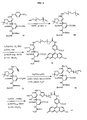
- FIG. 3 shows the synthesis of zanamivir-biotin conjugate 9 .
- the azide-annexed biotin derivative 11 was prepared by condensation of biotin ( 10 ) with 5-azido-1-pentylamine in the presence of triethylamine and benzotriazol-1-yl-oxytripyrrolidinophosphonium hexafluorophosphate (PyBOP).
- PyBOP benzotriazol-1-yl-oxytripyrrolidinophosphonium hexafluorophosphate
- zanamivir p -nitrophenyl carbonate 12 prepared from sialic acid according to the known procedure, (M. Chandler et al ., J. Chem .
- REFERENCE EXAMPLE 17 Synthesis of tamiphosphor-biotin conjugate.
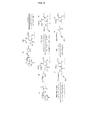
- FIG. 5 shows the synthesis of tamiphosphor-biotin conjugate 24 .
- the iodide compound 18 was prepared according to the previously reported procedure. [ Shie, J.-J., et al. Angew. Chem. Int. Ed. 2008, 47, 5788 .] Di[4-(trimethylsilyl)but-3-yn-1-yl]Dialkyl phosphite 17 was prepared by the substitution reaction of PCl 3 with two equivalents of 4-(trimethylsilyl)but-3-yn-1-ol. Phosphonylation of 18 with phosphite 19 was achieved by the catalysis of Pd(PPh 3 ) 4 to afford the phosphonate 20 in 64% yield.
- the amine intermediate was treated with N , N '-di-Boc- N '-trifluoromethanesulfonyl-guanidine, followed by removal of trimethylsilyl group with KF, to give compound 21 .
- the coupling reaction of 20 with biotin-OSu (23) culminated in the desired tamiphosphor-biotin conjugate 24 after removal of the protecting Boc groups.
- EXAMPLE 23 Cells, viruses, and biological reagents.
- Both the MDCK and the 293T cells and two influenza viruses: A/Aichi/2/68 (H3N2) and B/Lee/40 were obtained from ATCC (Manassas, VA, USA), respectively.
- Influenza viruses A/WSN/1933 (H1N1), A/Udorn/307/1972 (H3N2), A/PR/8/1934 (H1N1), A/Taiwan/3446/2002 (H3N2), influenza B/ Taiwan/7064/2004 isolates were from Dr.
- Shin-Ru Shih's lab (Chang Gung University, Taiwan), and A/Vietnam/1194/2004 RG14 (H5N1), A/California/7/2009 (H1N1), A/Brisbane/10/2007 (H1N1) and A/Brisbane/10/2007 (H3N2) were from Dr. Jia-Tsrong Jan's lab (Genomics Research Center, Academia Sinica, Taiwan).
- the oseltamivir resistant WSN mutant was selected by 6 passages in MDCK cells with gradually increased OC (oseltamivir carboxylate) concentrations.
- This mutant influenza grows well in the presence of 1 ⁇ M OC and carries a single H274Y mutation at its NA gene confirmed by sequence analysis.
- Other Taiwan clinical H1N1 isolates were obtained from the influenza collection center of Center for Disease Control (Taipei, Taiwan) and are described in Table 1.
- Seven S-OIV isolates were also obtained from Center for Disease Control (Taipei, Taiwan) and were coded as #1 (A/Taiwan/T1941/2009), #2 (A/Taiwan/T1338/2009), #3 (A/Taiwan/T1339/2009), #4 (A/Taiwan/6662/2009), #5 (A/Taiwan/6663/2009), #6 (A/Taiwan/7717/2009), and #7 (A/Taiwan/7855/2009).
- the antibodies for influenza NP and the fluorescein-labeled secondary antibody were purchased from Chemicon Inc. (Billerica, MA, USA) and Sigma (St. Louis, MO, USA), respectively.
- Anti-WSN rabbit antibody was prepared in the lab using inactivated WSN influenza as the antigen.
- the anti-HA antibody (Abcam, Cambridge, MA, USA) was purchased from Interlab Ltd. (Taipei, Taiwan).
- REFERENCE EXAMPLE 24 Development of the OC susceptibility assay using neuraminidase expressing cells.
- neuraminidase inhibitory activities of zanamivir and ZB were compared and it was found that ZB is still a very potent inhibitor for neuraminidase with an IC 50 of 7 nM although it is slightly less active then zanamivir with an IC 50 of 2 nM.
- Functional neuraminidase expressed on the cell surface could be useful as a model system for ZB binding and OC competition for OC susceptibility assessments.
- the cDNA for the neuraminidase of A/Hanoi/30408/2005 (H5N1) was cloned in an expression plasmid and used to transfect 293T cells for the expression of the wild type (274H) neuraminidase.
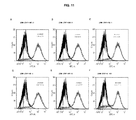
- the expressed neuraminidase was found to be located mainly on the cell surface allowing the binding and labeling using ZB ( Fig. 10 ).
- the neuraminidase cDNA was mutagenized for the expression of the OC resistant 274Y mutant enzyme. Both the wild type and the mutagenized cDNA were used to generate stable 293T cell lines for the expression of the 274H and 274Y neuraminidases, respectively. Mixtures of these two cells at different ratios were incubated with ZB or ZB plus excess OC and then decorated with APC conjugated streptavidin to determine the population of cells that bind ZB by flow cytometry analyses.
- Fig. 11 shows that ZB bound 274H and 274Y expressing cells to similar extents.
- REFERENCE EXAMPLE 25 Determination of OC susceptibility using influenza virus infected cells.
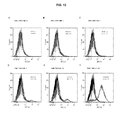
- Fig. 13A shows OC competition of ZB binding to influenza virus infected MDCK cells.
- OC susceptibility of infecting viruses could be inferred from the competition binding with OC at 0.5-10 fold concentrations of the labeling ZB.
- clear distinction of OC susceptible and OC resistant WSN variants was observed by treating infected cells using labeling ZB at 30 nM and competing OC at 150 nM ( Fig. 13B ).
- MDCK cells were infected with either wild type (274H) or OC resistant (274Y) WSN viruses. At 16-20 hr post-infection, the infected cells were treated either with 30 nM ZB or with 30 nM ZB plus 150 nM OC. The resulting cells were decorated with streptavidin-FITC, washed and observed using a fluorescence microscope. For flow cytometry studies, the ZB labeled cells were further labeled using anti-NP antibody, trypsinized, and then treated with PE-conjugated streptavidin plus DyLight-649 labeled anti-rabbit second antibody, both were purchased from Jackson ImmunoResearch Laboratories (West Grove, PA, USA).
- the cells were analyzed by FACSCanto of BD Biosciences (San Jose, CA, USA). For analysis of more samples, a high throughput method was developed using black 96-well clear bottom microplates to culture infected cells. At 16-20 hr post-infection, cells were labeled with 30 nM ZB or 30 nM ZB plus 150 nM OC, washed, and treated with PE-streptavidin. The plates were then scanned with the Isocyte TM laser scanning platform of Molecular Device (Mountain View, CA, USA) at 488 nm.
- REFERENCE EXAMPLE 26 Estimation of OC resistant contents using immobilized influenza samples.
- the RABC assay is applicable for OC susceptibility determinations using immobilized viruses in micro-wells.
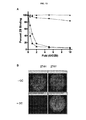
- the RABC assay using immobilized viruses could also be used to estimate the contents of OC resistant mutants in a mixed population consisting of both OC susceptible and resistant viruses.
- Viral samples at different ratios of 274H and 274Y WSN viruses in total viral contents at 10 3 , 10 4 , and 10 5 PFU per well were immobilized to measure OC resistant ZB binding as an estimation of OC resistant contents.
- Fig. 14 shows that the estimated OC resistant contents matched well with the experimental 274Y viral contents that are greater than 10%. For mixed populations containing less than 10% resistant viruses, over-estimation of the resistant contents was observed probably due to the background binding that are higher in assays using high titer viral samples.
- High binding 96-well microplates 655061 from Greiner Bio-One (Frickenhausen, Germany) were coated overnight with anti-HA antibody (Abcam) at 150 ng per well and then blotted using PBS with 3% BSA.
- Influenza samples were treated with 30 nM ZB or 30 nM ZB plus 150 nM OC for 30 min and added to antibody coated wells. After incubation for 30 min, the microwells were washed with 3% BSA in PBS, added with alkaline phosphatase conjugated streptavidin for 30min, washed again with BSA in PBS and then added with the luminescence substrate Emerald-II TM according to the instruction of the manufacturer (Invitrogen, Carlsbad, CA, USA).
- the RLU Relative Luminescence Unit
- Perkin Elmer Wi-Fi Protected Cell
- Percent relative resistance was calculated as the percent RLU determined for ZB binding measured in the presence of OC divided by total RLU for ZB binding measured in the absence of OC competition.
- REFERENCE EXAMPLE 27 Determination of influenza neuraminidase sequences.
- REFERENCE EXAMPLE 28 Rapid detection of OC susceptibility of influenza viruses on membrane.
- PVDF membrane mounted on Bio-Dot SF of Bio-Rad Inc. (Bio-Rad, CA, USA) was wetted with methanol and added with 1 ⁇ g anti-HA antibody (Abcam) per slot by suction.
- Influenza viral samples that were previously treated for 1 hr with either 30 nM ZB or 30 nM ZB plus 150 nM OC were introduced to neighboring slots by suction.
- the membranes were blotted using PBS with 3% BSA and then incubated with alkaline phosphatase conjugated streptavidin from KPL (Gaithersburg, MD, USA) according to the manufacturer's instruction.
- REFERENCE EXAMPLE 29 Preparation of 293T cells stably expressing recombinant wild type (274H) and OC resistant (274Y) neuraminidases.
- H5N1 The cDNA sequence of the neuraminidase gene deduced from influenza A/Hanoi/30408/2005 (H5N1) (GeneBank: AB239126.1) was used to prepare a synthetic version of this gene by Geneart (Regensburg, Germany) and cloned into the BamH1 and Xho1 restriction sites of pCDNA3.1 of Invitrogen (Carlsbad, CA, USA) as pCDNA3.1-NA.
- the A gene was modified using QuickChange® XL Site-Directed Mutagenesis Kit from Agilent Technology (La Jolla, CA, USA) to produce OC resistant NA mutant of H274Y using a pair of primers: 5'- gCTggACgCTCCCAACTACCACTACgAggAgTg-3' and 5'-gTAgTTgggAgCgTCCAgCTCCACggAC-3. Both the wild type (274H) and the OC resistant mutant (274Y) NA genes were validated by sequence analyses. These NA genes were used for transient NA expressions for wild type and OC resistant neuraminidases.
- pRetro-IRES-GFP vector of Clontech (Mountain View, CA, USA) as pRetro-NA(274H)- IRES-GFP and pRetro-NA(274Y)-IRES-GFP, respectively.
- Recombinant retroviruses made using these two plasmids and pGagPol, and pVSVG were used to transduce 293T cells.
- Stable cell lines were selected by fluorescence-activated cell sorter for populations expressing GFP over 95% and validated for the synthesis of OC susceptible or resistant neuraminidases.
Landscapes
- Health & Medical Sciences (AREA)
- Life Sciences & Earth Sciences (AREA)
- Chemical & Material Sciences (AREA)
- Engineering & Computer Science (AREA)
- Immunology (AREA)
- General Health & Medical Sciences (AREA)
- Medicinal Chemistry (AREA)
- Molecular Biology (AREA)
- Virology (AREA)
- Biomedical Technology (AREA)
- Urology & Nephrology (AREA)
- Hematology (AREA)
- Pharmacology & Pharmacy (AREA)
- Animal Behavior & Ethology (AREA)
- Public Health (AREA)
- Veterinary Medicine (AREA)
- Biochemistry (AREA)
- Epidemiology (AREA)
- General Physics & Mathematics (AREA)
- Analytical Chemistry (AREA)
- Physics & Mathematics (AREA)
- Pathology (AREA)
- Food Science & Technology (AREA)
- Microbiology (AREA)
- Cell Biology (AREA)
- Biotechnology (AREA)
- Tropical Medicine & Parasitology (AREA)
- Organic Chemistry (AREA)
- General Chemical & Material Sciences (AREA)
- Chemical Kinetics & Catalysis (AREA)
- Nuclear Medicine, Radiotherapy & Molecular Imaging (AREA)
- Bioinformatics & Cheminformatics (AREA)
- Toxicology (AREA)
- Pulmonology (AREA)
- Communicable Diseases (AREA)
- Oncology (AREA)
- Pharmaceuticals Containing Other Organic And Inorganic Compounds (AREA)
- Investigating, Analyzing Materials By Fluorescence Or Luminescence (AREA)
- Measuring Or Testing Involving Enzymes Or Micro-Organisms (AREA)
- Medicines That Contain Protein Lipid Enzymes And Other Medicines (AREA)
Claims (14)
- Composition visant à inhiber la neuramidinase du virus de la grippe, ladite composition comprenant :une quantité thérapeutiquement efficace d'un composé de formule (I) :

dans laquelle R et R5 sont indépendamment choisis parmi H, un C1-C10 alkyle, aryle, aralkyle et X, dans laquelle X est un contre-ion cationique choisi dans le groupe constitué de cation d'ammonium, de méthylammonium, de diméthylammonium, de triméthylammonium, de tétraméthylammonium, d'éthanol-ammonium, de dicyclohexylammonium, de guanidinium, d'éthylènediammonium, d'un cation lithium, d'un cation sodium, d'un cation potassium, d'un cation césium, d'un cation béryllium, d'un cation magnésium, d'un cation calcium, et d'un cation de zinc,
dans laquelle B est un NHR6, NH3 +Y-, R6N(C=NH)NH2 ou R6N (C=NH2 +) NH2Y-, dans laquelle R6 représente un hydrogène, un C1-C10 alkyle, aryle ou aralkyle, dans laquelle Y- est un contre-ion anionique choisi dans le groupe constitué de chlorure, bromure, iodure, acétate, trifluoroacétate, phosphate, diphosphate, nitrate, sulfate, benzène-sulfonate, benzoate, salicylate, hydroxy-naphtoate, fumarate, maléate, lactate, malate, succinate, tartrate, citrate, glutamate, gluconate et stéarate,
dans laquelle R1 est un CH3 ou CF3 ;
dans laquelle R2 est un H, un C1-C10 alkyle ou un O=C-NHR7, dans laquelle R7 représente un coupleur annexé à une portion fonctionnelle telle que la biotine, le fluorophore et des agents anti-inflammatoires, et
dans laquelle R3 et R4 sont indépendamment un hydrogène, un C1-C10 alkyle ou un O=C-R8, où R8 représente un C1-C10 alkyle, aryle ou aralkyle ; et
un excipient pharmaceutiquement acceptable. - Composition selon la revendication 1, dans laquelle le composé est choisi dans le groupe constitué de :



- Composition selon la revendication 1, dans laquelle la composition lie les souches de virus de la grippe H1N1, N5N1 et H3N2, éventuellement dans laquelle la neuramidinase du virus de la grippe est de type sauvage ou un mutant de H274Y.
- Procédé de fabrication d'un composé de formule (I),

le procédé comprenant les étapes consistant à :(a) acétyler un acide sialique précurseur chiral (2) pour préparer un composé intermédiaire (3) : (b) traiter le composé intermédiaire (3) avec du diéthyl-triméthylsilyl-phosphite pour former un composé intermédiaire (4) :
 (c) traiter l'intermédiaire (4) avec du N-bromosuccinimide sous rayonnement lumineux pour donner un composé bromo-substitué, qui forme l'intermédiaire (5) dans la pyridine :
 (d) traiter le composé intermédiaire (5) avec du trifluorosulfonate de triméthylsylile pour former un composé intermédiaire (6) :
 (e) traiter le composé intermédiaire (6) avec du triméthylsilyl-azide pour former le composé intermédiaire (7) :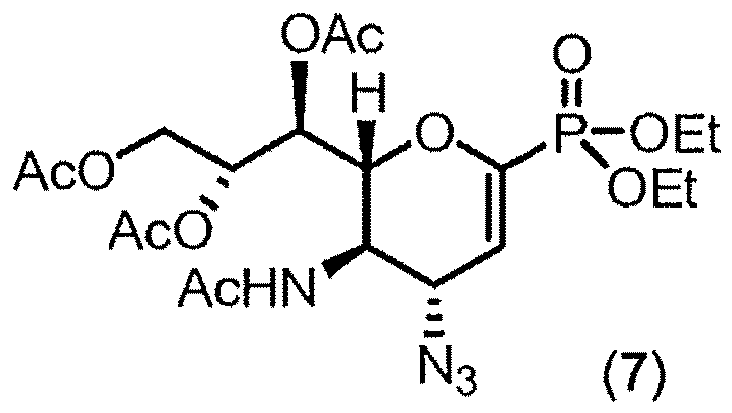
- Procédé selon la revendication 4, comprenant en outre l'étape consistant à :(f) hydrogéner le composé intermédiaire (7), puis le faire réagir avec de la 1,3-bis(tert-butoxycarbonyl)-2-méthylthiopseudourée et de l'Et3N pour former un composé intermédiaire (8) :

- Procédé selon la revendication 4, comprenant en outre l'étape consistant à :(g) traiter le composé intermédiaire (7) avec du bromotriméthylsilane, avec du méthoxyde de sodium puis l'hydrogéner en séquence pour former le composé (1a) :
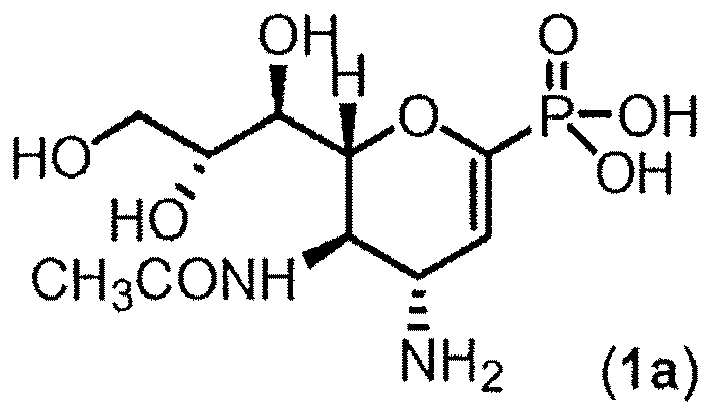
- Procédé selon la revendication 4, comprenant en outre l'étape consistant à :(i) traiter le composé intermédiaire (7) avec de l'éthoxyde de sodium puis l'hydrogéner pour former le composé (1c) :

- Procédé selon la revendication 5, comprenant en outre l'étape consistant à :(h) traiter le composé intermédiaire (8) avec du bromotriméthylsilane, puis avec du méthoxyde de sodium pour former le composé (1b) :
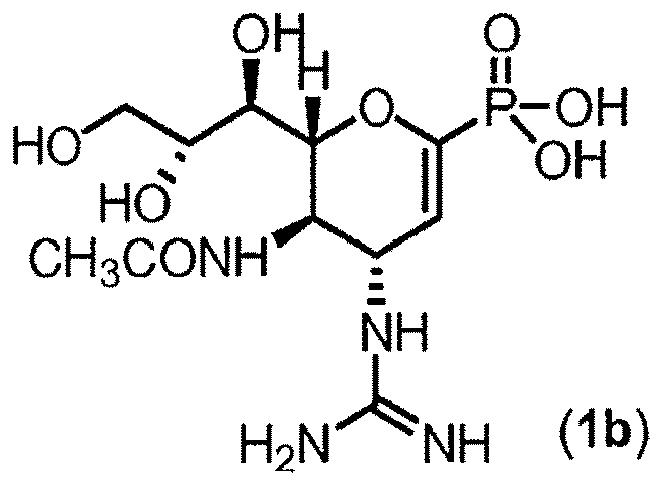
- Procédé selon la revendication 5, comprenant en outre l'étape consistant à :(j) traiter le composé intermédiaire (8) avec de l'éthoxyde de sodium, puis avec de l'acide trifluoroacétique pour former le composé (1d) :
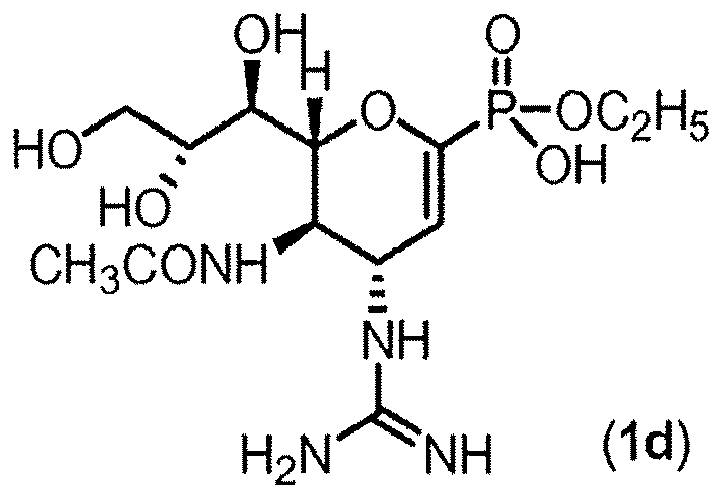
- Produit fabriqué par un procédé selon l'une quelconque des revendications 4 à 9.
- Composition selon la revendication 1, pour son utilisation dans un procédé visant à traiter l'infection grippale, le procédé comprenant :l'administration d'une quantité thérapeutiquement efficace de la composition à un sujet en ayant besoin.
- Composition selon la revendication 1, pour son utilisation selon la revendication 11, dans laquelle le composé est choisi dans le groupe constitué de :

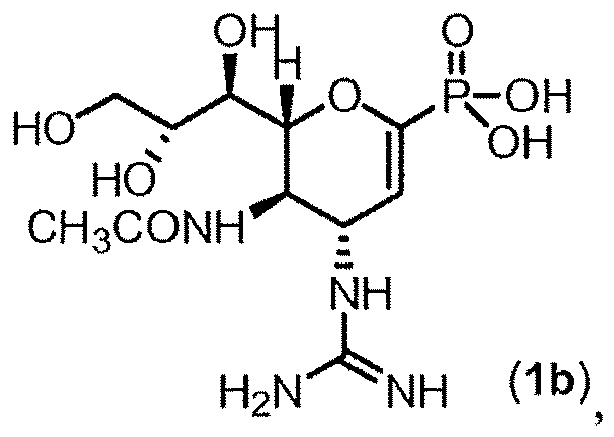


- Composition selon la revendication 1, pour son utilisation selon la revendication 11, dans laquelle le sujet est un être humain ou un mammifère non-humain.
- Composition selon la revendication 1, pour son utilisation selon la revendication 11, dans laquelle il est suspecté que le sujet soit infecté par un virus de la grippe comprenant un type sauvage ou un mutant de neuramidinase H274Y, éventuellement dans laquelle la souche du virus de la grippe est choisie parmi H1N1, H5N1 et H3N2.
Priority Applications (2)
| Application Number | Priority Date | Filing Date | Title |
|---|---|---|---|
| DK15181446.4T DK2975409T3 (en) | 2010-05-10 | 2011-05-10 | Zanamivir phosphonate congeners with anti-influenza activity and determination of oseltamivir sensitivity in influenza viruses |
| EP15181446.4A EP2975409B1 (fr) | 2010-05-10 | 2011-05-10 | Congénères d'oseltamivir ayant une activité anti-grippale et de détermination de la susceptibilité d'oseltamivir des virus de la grippe |
Applications Claiming Priority (2)
| Application Number | Priority Date | Filing Date | Title |
|---|---|---|---|
| US33313710P | 2010-05-10 | 2010-05-10 | |
| PCT/US2011/035982 WO2011143262A2 (fr) | 2010-05-10 | 2011-05-10 | Congénères de phosphonate de zanamivir ayant une activité antigrippale et détermination de la sensibilité à l'oseltamivir d'influenzavirus |
Related Child Applications (2)
| Application Number | Title | Priority Date | Filing Date |
|---|---|---|---|
| EP15181446.4A Division EP2975409B1 (fr) | 2010-05-10 | 2011-05-10 | Congénères d'oseltamivir ayant une activité anti-grippale et de détermination de la susceptibilité d'oseltamivir des virus de la grippe |
| EP15181446.4A Division-Into EP2975409B1 (fr) | 2010-05-10 | 2011-05-10 | Congénères d'oseltamivir ayant une activité anti-grippale et de détermination de la susceptibilité d'oseltamivir des virus de la grippe |
Publications (2)
| Publication Number | Publication Date |
|---|---|
| EP2568976A2 EP2568976A2 (fr) | 2013-03-20 |
| EP2568976B1 true EP2568976B1 (fr) | 2015-09-30 |
Family
ID=44583353
Family Applications (2)
| Application Number | Title | Priority Date | Filing Date |
|---|---|---|---|
| EP11731548.1A Active EP2568976B1 (fr) | 2010-05-10 | 2011-05-10 | Congénères de phosphonate de zanamivir ayant une activité antigrippale et détermination de la sensibilité à l'oseltamivir d'influenzavirus |
| EP15181446.4A Active EP2975409B1 (fr) | 2010-05-10 | 2011-05-10 | Congénères d'oseltamivir ayant une activité anti-grippale et de détermination de la susceptibilité d'oseltamivir des virus de la grippe |
Family Applications After (1)
| Application Number | Title | Priority Date | Filing Date |
|---|---|---|---|
| EP15181446.4A Active EP2975409B1 (fr) | 2010-05-10 | 2011-05-10 | Congénères d'oseltamivir ayant une activité anti-grippale et de détermination de la susceptibilité d'oseltamivir des virus de la grippe |
Country Status (9)
| Country | Link |
|---|---|
| US (2) | US9403855B2 (fr) |
| EP (2) | EP2568976B1 (fr) |
| JP (1) | JP5947289B2 (fr) |
| KR (2) | KR101745386B1 (fr) |
| CN (2) | CN104777301B (fr) |
| AU (1) | AU2011250970B2 (fr) |
| CA (1) | CA2835489C (fr) |
| DK (2) | DK2975409T3 (fr) |
| WO (1) | WO2011143262A2 (fr) |
Families Citing this family (44)
| Publication number | Priority date | Publication date | Assignee | Title |
|---|---|---|---|---|
| US7960139B2 (en) | 2007-03-23 | 2011-06-14 | Academia Sinica | Alkynyl sugar analogs for the labeling and visualization of glycoconjugates in cells |
| JP5986745B2 (ja) | 2008-07-15 | 2016-09-06 | アカデミア シニカAcademia Sinica | Ptfe様のアルミニウム・コート・ガラススライド上のグリカンアレイおよび関連する方法 |
| US10087236B2 (en) | 2009-12-02 | 2018-10-02 | Academia Sinica | Methods for modifying human antibodies by glycan engineering |
| US11377485B2 (en) | 2009-12-02 | 2022-07-05 | Academia Sinica | Methods for modifying human antibodies by glycan engineering |
| WO2011130332A1 (fr) | 2010-04-12 | 2011-10-20 | Academia Sinica | Puces au glycane pour la recherche par criblage haut débit de virus |
| US10130714B2 (en) | 2012-04-14 | 2018-11-20 | Academia Sinica | Enhanced anti-influenza agents conjugated with anti-inflammatory activity |
| US9277205B2 (en) | 2012-05-14 | 2016-03-01 | Intuitive Surgical Operations, Inc. | Single-chip sensor multi-function imaging |
| WO2014031498A1 (fr) | 2012-08-18 | 2014-02-27 | Academia Sinica | Sondes perméables aux cellules pour l'identification et l'imagerie de sialidases |
| WO2014143864A2 (fr) * | 2013-03-15 | 2014-09-18 | University Of Cincinnati | Procédés de détection du virus de la grippe |
| US10086054B2 (en) | 2013-06-26 | 2018-10-02 | Academia Sinica | RM2 antigens and use thereof |
| WO2014210564A1 (fr) | 2013-06-27 | 2014-12-31 | Academia Sinica | Conjugués de glycane et leur utilisation |
| JP6486368B2 (ja) | 2013-09-06 | 2019-03-20 | アカデミア シニカAcademia Sinica | 改変されたグリコシル基を含む糖脂質を用いたヒトiNKT細胞の活性化 |
| JP6453050B2 (ja) * | 2013-11-15 | 2019-01-16 | 国立大学法人富山大学 | 2−デオキシ−2,3−ジデヒドロシアル酸誘導体およびその製造法 |
| US10150818B2 (en) | 2014-01-16 | 2018-12-11 | Academia Sinica | Compositions and methods for treatment and detection of cancers |
| TW201620939A (zh) | 2014-01-16 | 2016-06-16 | 中央研究院 | 治療及檢測癌症之組合物及方法 |
| EP3129767B1 (fr) | 2014-03-27 | 2021-09-01 | Academia Sinica | Composés de marquage réactifs et leurs utilisations |
| CN105017193B (zh) * | 2014-04-22 | 2018-11-09 | 江苏先声药业有限公司 | 一种扎那米韦杂质的制备方法 |
| AU2015267045B2 (en) | 2014-05-27 | 2021-02-25 | Academia Sinica | Anti-HER2 glycoantibodies and uses thereof |
| US10118969B2 (en) | 2014-05-27 | 2018-11-06 | Academia Sinica | Compositions and methods relating to universal glycoforms for enhanced antibody efficacy |
| KR20170003720A (ko) | 2014-05-27 | 2017-01-09 | 아카데미아 시니카 | 항-cd20 글리코항체 및 이의 용도 |
| DK3149045T3 (da) | 2014-05-27 | 2023-03-06 | Academia Sinica | Sammensætninger og fremgangsmåder vedrørende universelle glycoformer til forbedret antistofeffekt |
| JP7063538B2 (ja) | 2014-05-28 | 2022-05-09 | アカデミア シニカ | 抗TNFα糖操作抗体群およびその使用 |
| CZ305660B6 (cs) * | 2014-06-27 | 2016-01-27 | Univerzita Karlova V Praze | Analogy oxytocinu |
| EP3191500A4 (fr) | 2014-09-08 | 2018-04-11 | Academia Sinica | Activation des cellules inkt humaines par des glycolipides |
| US9975965B2 (en) | 2015-01-16 | 2018-05-22 | Academia Sinica | Compositions and methods for treatment and detection of cancers |
| US10495645B2 (en) | 2015-01-16 | 2019-12-03 | Academia Sinica | Cancer markers and methods of use thereof |
| US10342858B2 (en) | 2015-01-24 | 2019-07-09 | Academia Sinica | Glycan conjugates and methods of use thereof |
| KR101575747B1 (ko) * | 2015-04-06 | 2015-12-21 | 한국생명공학연구원 | 항바이러스제-감수성/저항성 바이러스 검출 시스템 |
| KR101788454B1 (ko) | 2015-07-03 | 2017-10-19 | 한국생명공학연구원 | 항바이러스제-저항성 바이러스 검출 시스템 |
| WO2017007204A1 (fr) * | 2015-07-03 | 2017-01-12 | 한국생명공학연구원 | Système de détection de virus résistant à un agent antiviral |
| WO2017011686A1 (fr) * | 2015-07-14 | 2017-01-19 | University Of Iowa Research Foundation | Promédicaments fluorescents |
| PL227790B1 (pl) | 2015-08-13 | 2018-01-31 | Slaski Univ Medyczny W Katowicach | Fosfoniany acetylenowych pochodnych betuliny o działaniu przeciwnowotworowym, sposób ich wytwarzania i zastosowanie. |
| AU2017231749A1 (en) | 2016-03-08 | 2018-09-20 | Academia Sinica | Methods for modular synthesis of N-glycans and arrays thereof |
| AU2017316663B2 (en) | 2016-08-22 | 2024-02-22 | CHO Pharma Inc. | Antibodies, binding fragments, and methods of use |
| CN107827830B (zh) * | 2017-11-13 | 2021-08-06 | 山东省农业科学院家禽研究所 | 一种奥司他韦衍生物及其制备方法与应用 |
| PL237998B1 (pl) | 2018-05-28 | 2021-06-28 | Narodowy Inst Lekow | Fosfonowe pochodne kwasu 3-karboksyacylobetulinowego, sposób ich otrzymywania oraz ich zastosowanie |
| EP3826681A4 (fr) * | 2018-07-26 | 2022-08-17 | Purdue Research Foundation | Conjugués médicamenteux ciblant un ligand, de type petite molécule, permettant une chimiothérapie et une immunothérapie contre la grippe |
| WO2020051498A1 (fr) * | 2018-09-06 | 2020-03-12 | Cidara Therapeutics, Inc. | Compositions et procédés pour le traitement d'infections virales |
| TWI861205B (zh) | 2019-09-06 | 2024-11-11 | 美商席達拉醫療有限公司 | 用於治療病毒感染之組合物及方法 |
| CN111233962B (zh) * | 2020-03-12 | 2021-06-04 | 中国科学院微生物研究所 | 一种流感病毒神经氨酸酶抑制剂及其制备方法与应用 |
| CN111533754B (zh) * | 2020-04-20 | 2021-05-11 | 上海应用技术大学 | 一种苯并香豆素查尔酮类神经氨酸酶抑制剂及其制备方法和应用 |
| EP4337663A4 (fr) * | 2021-05-14 | 2026-04-15 | Purdue Research Foundation | Attaches de cellules immunitaires bispécifiques à base de petites molécules et leur utilisation dans le traitement d'une infection par un virus enveloppé |
| WO2025091442A1 (fr) * | 2023-11-03 | 2025-05-08 | 北京凯因科技股份有限公司 | Inhibiteur de neuraminidase et son utilisation dans le virus de la grippe |
| CN120040321B (zh) * | 2025-01-13 | 2026-01-13 | 南方科技大学 | 基于疏水标签技术的神经氨酸酶抑制剂及其制备方法、衍生物、药物组合物和应用 |
Family Cites Families (121)
| Publication number | Priority date | Publication date | Assignee | Title |
|---|---|---|---|---|
| US3773919A (en) | 1969-10-23 | 1973-11-20 | Du Pont | Polylactide-drug mixtures |
| USRE30985E (en) | 1978-01-01 | 1982-06-29 | Serum-free cell culture media | |
| US4419446A (en) | 1980-12-31 | 1983-12-06 | The United States Of America As Represented By The Department Of Health And Human Services | Recombinant DNA process utilizing a papilloma virus DNA as a vector |
| US4601978A (en) | 1982-11-24 | 1986-07-22 | The Regents Of The University Of California | Mammalian metallothionein promoter system |
| US4560655A (en) | 1982-12-16 | 1985-12-24 | Immunex Corporation | Serum-free cell culture medium and process for making same |
| US4657866A (en) | 1982-12-21 | 1987-04-14 | Sudhir Kumar | Serum-free, synthetic, completely chemically defined tissue culture media |
| US4816567A (en) | 1983-04-08 | 1989-03-28 | Genentech, Inc. | Recombinant immunoglobin preparations |
| US4767704A (en) | 1983-10-07 | 1988-08-30 | Columbia University In The City Of New York | Protein-free culture medium |
| GB8516415D0 (en) | 1985-06-28 | 1985-07-31 | Celltech Ltd | Culture of animal cells |
| US4676980A (en) | 1985-09-23 | 1987-06-30 | The United States Of America As Represented By The Secretary Of The Department Of Health And Human Services | Target specific cross-linked heteroantibodies |
| US4927762A (en) | 1986-04-01 | 1990-05-22 | Cell Enterprises, Inc. | Cell culture medium with antioxidant |
| US5567610A (en) | 1986-09-04 | 1996-10-22 | Bioinvent International Ab | Method of producing human monoclonal antibodies and kit therefor |
| IL85035A0 (en) | 1987-01-08 | 1988-06-30 | Int Genetic Eng | Polynucleotide molecule,a chimeric antibody with specificity for human b cell surface antigen,a process for the preparation and methods utilizing the same |
| US4975278A (en) | 1988-02-26 | 1990-12-04 | Bristol-Myers Company | Antibody-enzyme conjugates in combination with prodrugs for the delivery of cytotoxic agents to tumor cells |
| US5004697A (en) | 1987-08-17 | 1991-04-02 | Univ. Of Ca | Cationized antibodies for delivery through the blood-brain barrier |
| DE68925971T2 (de) | 1988-09-23 | 1996-09-05 | Cetus Oncology Corp | Zellenzuchtmedium für erhöhtes zellenwachstum, zur erhöhung der langlebigkeit und expression der produkte |
| GB8823869D0 (en) | 1988-10-12 | 1988-11-16 | Medical Res Council | Production of antibodies |
| US5175384A (en) | 1988-12-05 | 1992-12-29 | Genpharm International | Transgenic mice depleted in mature t-cells and methods for making transgenic mice |
| DE3920358A1 (de) | 1989-06-22 | 1991-01-17 | Behringwerke Ag | Bispezifische und oligospezifische, mono- und oligovalente antikoerperkonstrukte, ihre herstellung und verwendung |
| EP0479909B1 (fr) | 1989-06-29 | 1996-10-30 | Medarex, Inc. | Reactifs bispecifiques pour le traitement du sida |
| US5238843A (en) | 1989-10-27 | 1993-08-24 | Genencor International, Inc. | Method for cleaning a surface on which is bound a glycoside-containing substance |
| ES2284161T3 (es) | 1990-01-12 | 2007-11-01 | Amgen Fremont Inc. | Generacion de anticuerpos xenogenicos. |
| US5112596A (en) | 1990-04-23 | 1992-05-12 | Alkermes, Inc. | Method for increasing blood-brain barrier permeability by administering a bradykinin agonist of blood-brain barrier permeability |
| US5268164A (en) | 1990-04-23 | 1993-12-07 | Alkermes, Inc. | Increasing blood-brain barrier permeability with permeabilizer peptides |
| CZ288492B6 (en) * | 1990-04-24 | 2001-06-13 | Biota Scient Management | Derivatives of alpha-D-neuraminic acid, process of their preparation, their use and pharmaceutical preparations based thereon |
| US5229275A (en) | 1990-04-26 | 1993-07-20 | Akzo N.V. | In-vitro method for producing antigen-specific human monoclonal antibodies |
| US5427908A (en) | 1990-05-01 | 1995-06-27 | Affymax Technologies N.V. | Recombinant library screening methods |
| ATE204902T1 (de) | 1990-06-29 | 2001-09-15 | Large Scale Biology Corp | Melaninproduktion durch transformierte mikroorganismen |
| US5661016A (en) | 1990-08-29 | 1997-08-26 | Genpharm International Inc. | Transgenic non-human animals capable of producing heterologous antibodies of various isotypes |
| US5545806A (en) | 1990-08-29 | 1996-08-13 | Genpharm International, Inc. | Ransgenic non-human animals for producing heterologous antibodies |
| US5625126A (en) | 1990-08-29 | 1997-04-29 | Genpharm International, Inc. | Transgenic non-human animals for producing heterologous antibodies |
| AU8507191A (en) | 1990-08-29 | 1992-03-30 | Genpharm International, Inc. | Transgenic non-human animals capable of producing heterologous antibodies |
| US5633425A (en) | 1990-08-29 | 1997-05-27 | Genpharm International, Inc. | Transgenic non-human animals capable of producing heterologous antibodies |
| US5122469A (en) | 1990-10-03 | 1992-06-16 | Genentech, Inc. | Method for culturing Chinese hamster ovary cells to improve production of recombinant proteins |
| WO1992006691A1 (fr) | 1990-10-19 | 1992-04-30 | Biota Scientific Management Pty. Ltd. | Composes anti-viraux qui lient le site actif de la neuraminidase de la grippe et presentent une activite in vivo contre l'orthomixovirus et le paramyxovirus |
| US5264365A (en) | 1990-11-09 | 1993-11-23 | Board Of Regents, The University Of Texas System | Protease-deficient bacterial strains for production of proteolytically sensitive polypeptides |
| US5508192A (en) | 1990-11-09 | 1996-04-16 | Board Of Regents, The University Of Texas System | Bacterial host strains for producing proteolytically sensitive polypeptides |
| US5571894A (en) | 1991-02-05 | 1996-11-05 | Ciba-Geigy Corporation | Recombinant antibodies specific for a growth factor receptor |
| EP0586515B1 (fr) | 1991-04-30 | 1997-09-17 | Eukarion, Inc. | Anticorps cationises contre des proteines intracellulaires |
| ATE255131T1 (de) | 1991-06-14 | 2003-12-15 | Genentech Inc | Humanisierter heregulin antikörper |
| GB9114948D0 (en) | 1991-07-11 | 1991-08-28 | Pfizer Ltd | Process for preparing sertraline intermediates |
| CA2116774C (fr) | 1991-09-19 | 2003-11-11 | Paul J. Carter | Expression dans e. coli de fragments d'anticorps ayant au moins une cysteine presente sous forme de thiol libre. utilisation pour la production d'anticorps f(ab') bifonctionnels |
| EP0605522B1 (fr) | 1991-09-23 | 1999-06-23 | Medical Research Council | Méthodes de production d'anticorps humanisés |
| US5565332A (en) | 1991-09-23 | 1996-10-15 | Medical Research Council | Production of chimeric antibodies - a combinatorial approach |
| FI941572L (fi) | 1991-10-07 | 1994-05-27 | Oncologix Inc | Anti-erbB-2-monoklonaalisten vasta-aineiden yhdistelmä ja käyttömenetelmä |
| WO1993008829A1 (fr) | 1991-11-04 | 1993-05-13 | The Regents Of The University Of California | Compositions induisant la destruction de cellules infectees par l'hiv |
| US5667988A (en) | 1992-01-27 | 1997-09-16 | The Scripps Research Institute | Methods for producing antibody libraries using universal or randomized immunoglobulin light chains |
| WO1993016185A2 (fr) | 1992-02-06 | 1993-08-19 | Creative Biomolecules, Inc. | Proteine de liaison biosynthetique pour marqueur de cancer |
| US5733743A (en) | 1992-03-24 | 1998-03-31 | Cambridge Antibody Technology Limited | Methods for producing members of specific binding pairs |
| AU687010B2 (en) | 1992-07-17 | 1998-02-19 | Dana-Farber Cancer Institute | Method of intracellular binding of target molecules |
| EP0652775B1 (fr) | 1992-07-27 | 2000-04-19 | THE GOVERNMENT OF THE UNITED STATES OF AMERICA as represented by the SECRETARY OF THE DEPARTMENT OF HEALTH AND HUMAN SERVICES | Ciblage de liposomes sur la barriere hemato-encephalique |
| EP0656064B1 (fr) | 1992-08-17 | 1997-03-05 | Genentech, Inc. | Immunoadhesines bispecifiques |
| US5736137A (en) | 1992-11-13 | 1998-04-07 | Idec Pharmaceuticals Corporation | Therapeutic application of chimeric and radiolabeled antibodies to human B lymphocyte restricted differentiation antigen for treatment of B cell lymphoma |
| AU3272695A (en) | 1994-08-12 | 1996-03-07 | Immunomedics Inc. | Immunoconjugates and humanized antibodies specific for b-cell lymphoma and leukemia cells |
| CA2207869A1 (fr) | 1994-12-02 | 1996-06-06 | Chiron Corporation | Methode permettant d'induire une reponse immunitaire avec un anticorps bispecifique |
| US5840523A (en) | 1995-03-01 | 1998-11-24 | Genetech, Inc. | Methods and compositions for secretion of heterologous polypeptides |
| US5641870A (en) | 1995-04-20 | 1997-06-24 | Genentech, Inc. | Low pH hydrophobic interaction chromatography for antibody purification |
| US5869046A (en) | 1995-04-14 | 1999-02-09 | Genentech, Inc. | Altered polypeptides with increased half-life |
| EP0822830B1 (fr) | 1995-04-27 | 2008-04-02 | Amgen Fremont Inc. | Anticorps anti-IL-8 dérivés de xenosouris immunisées |
| WO1996034096A1 (fr) | 1995-04-28 | 1996-10-31 | Abgenix, Inc. | Anticorps humains derives de xeno-souris immunisees |
| US5837234A (en) | 1995-06-07 | 1998-11-17 | Cytotherapeutics, Inc. | Bioartificial organ containing cells encapsulated in a permselective polyether suflfone membrane |
| US6265150B1 (en) | 1995-06-07 | 2001-07-24 | Becton Dickinson & Company | Phage antibodies |
| DE19544393A1 (de) | 1995-11-15 | 1997-05-22 | Hoechst Schering Agrevo Gmbh | Synergistische herbizide Mischungen |
| IL125662A0 (en) * | 1996-03-01 | 1999-04-11 | Biota Scient Management | Method of detecting influenza virus and compounds for use therein |
| AU2660397A (en) | 1996-04-05 | 1997-10-29 | Board Of Regents, The University Of Texas System | Methods for producing soluble, biologically-active disulfide bond-containing eukaryotic proteins in bacterial cells |
| US5922845A (en) | 1996-07-11 | 1999-07-13 | Medarex, Inc. | Therapeutic multispecific compounds comprised of anti-Fcα receptor antibodies |
| ATE549918T1 (de) | 1996-12-03 | 2012-04-15 | Amgen Fremont Inc | Menschliche antikörper, die ausdrücklich menschliches tnf alpha binden |
| TW555562B (en) | 1996-12-27 | 2003-10-01 | Kirin Brewery | Method for activation of human antigen-presenting cells, activated human antigen-presenting cells and use thereof |
| US6083715A (en) | 1997-06-09 | 2000-07-04 | Board Of Regents, The University Of Texas System | Methods for producing heterologous disulfide bond-containing polypeptides in bacterial cells |
| AU3657899A (en) | 1998-04-20 | 1999-11-08 | James E. Bailey | Glycosylation engineering of antibodies for improving antibody-dependent cellular cytotoxicity |
| BRPI9910332B8 (pt) | 1998-05-06 | 2021-05-25 | Genentech Inc | método para purificação de um polipeptídio a partir de uma composição |
| US6528286B1 (en) | 1998-05-29 | 2003-03-04 | Genentech, Inc. | Mammalian cell culture process for producing glycoproteins |
| FR2783523B1 (fr) | 1998-09-21 | 2006-01-20 | Goemar Lab Sa | Fuco-oligosaccharides, enzyme pour leur preparation a partir des fucanes, bacterie productrice de l'enzyme et applications des fuco-oligosaccharides a la protection des plantes |
| US7090973B1 (en) | 1999-04-09 | 2006-08-15 | Oscient Pharmaceuticals Corporation | Nucleic acid sequences relating to Bacteroides fragilis for diagnostics and therapeutics |
| US6824780B1 (en) | 1999-10-29 | 2004-11-30 | Genentech, Inc. | Anti-tumor antibody compositions and methods of use |
| US6514221B2 (en) | 2000-07-27 | 2003-02-04 | Brigham And Women's Hospital, Inc. | Blood-brain barrier opening |
| WO2002017930A2 (fr) | 2000-08-30 | 2002-03-07 | The Board Of Trustees Of The Leland Stanford Junior University | Agents bloquants des glucocorticoides pour augmenter la permeabilite de la barriere hemato-encephalique |
| US7034036B2 (en) | 2000-10-30 | 2006-04-25 | Pain Therapeutics, Inc. | Inhibitors of ABC drug transporters at the blood-brain barrier |
| US20030083299A1 (en) | 2000-11-04 | 2003-05-01 | Ferguson Ian A. | Non-invasive delivery of polypeptides through the blood-brain barrier |
| US7754208B2 (en) | 2001-01-17 | 2010-07-13 | Trubion Pharmaceuticals, Inc. | Binding domain-immunoglobulin fusion proteins |
| US20030104402A1 (en) | 2001-01-23 | 2003-06-05 | University Of Rochester | Methods of producing or identifying intrabodies in eukaryotic cells |
| DE10121982B4 (de) | 2001-05-05 | 2008-01-24 | Lts Lohmann Therapie-Systeme Ag | Nanopartikel aus Protein mit gekoppeltem Apolipoprotein E zur Überwindung der Blut-Hirn-Schranke und Verfahren zu ihrer Herstellung |
| AU2002322720B2 (en) | 2001-07-25 | 2008-11-13 | Raptor Pharmaceutical Inc. | Compositions and methods for modulating blood-brain barrier transport |
| NZ581474A (en) | 2001-08-03 | 2011-04-29 | Glycart Biotechnology Ag | Antibody glycosylation variants having increased antibody-dependent cellular cytotoxicity |
| RU2004127458A (ru) | 2002-02-14 | 2005-10-27 | Иммуномедикс, Инк. (Us) | Анти-cd20 антитела, их гибридные белки и способы их использования |
| US20030162695A1 (en) | 2002-02-27 | 2003-08-28 | Schatzberg Alan F. | Glucocorticoid blocking agents for increasing blood-brain barrier permeability |
| US7317091B2 (en) | 2002-03-01 | 2008-01-08 | Xencor, Inc. | Optimized Fc variants |
| WO2003077945A1 (fr) | 2002-03-14 | 2003-09-25 | Medical Research Council | Anticorps intracellulaires |
| EP1391213A1 (fr) | 2002-08-21 | 2004-02-25 | Boehringer Ingelheim International GmbH | Compositions et méthodes pour le traitement du cancer en utilisant un conjugué d'un anticorps contre le CD44 avec un maytansinoide et des agents chimiothérapeutiques |
| KR20110017020A (ko) | 2002-10-17 | 2011-02-18 | 젠맵 에이/에스 | Cd20에 대한 인간 모노클로날 항체 |
| AU2003302676A1 (en) | 2002-12-03 | 2004-06-23 | Blanchette Rockefeller Neurosciences Institute | Artificial low-density lipoprotein carriers for transport of substances across the blood-brain barrier |
| EP1944320A1 (fr) | 2002-12-16 | 2008-07-16 | Genentech, Inc. | Variantes de l'immunoglobuline et leurs utilisations |
| AR044388A1 (es) | 2003-05-20 | 2005-09-07 | Applied Molecular Evolution | Moleculas de union a cd20 |
| EP1663239A4 (fr) | 2003-09-10 | 2008-07-23 | Cedars Sinai Medical Center | Administration assistee par les canaux potassiques d'agents a travers la barriere hemato-encephalique |
| PT1692182E (pt) | 2003-11-05 | 2010-05-13 | Roche Glycart Ag | Anticorpos de cd20 com uma afinidade de ligação acrescida ao receptor fc e uma função efectora acrescida |
| WO2005103081A2 (fr) | 2004-04-20 | 2005-11-03 | Genmab A/S | Anticorps monoclonaux humains diriges contre cd20 |
| HRP20141111T1 (hr) | 2004-07-22 | 2015-01-02 | Genentech, Inc. | Sastav her2-protutijela |
| US7923013B2 (en) | 2004-12-28 | 2011-04-12 | The Rockefeller University | Glycolipids and analogues thereof as antigens for NKT cells |
| RU2415871C2 (ru) | 2005-03-31 | 2011-04-10 | Байомедикс Инк. | Моноклональное анти-cd20-антитело |
| KR20080039844A (ko) | 2005-05-24 | 2008-05-07 | 아베스타 겐그레인 테크놀로지스 피브이티 리미티드 | B―세포 림프종 치료를 위한 cd20에 대한 모노클로날항체의 제조 방법 |
| KR20080031001A (ko) | 2005-06-02 | 2008-04-07 | 아스트라제네카 아베 | Cd20에 대한 항체 및 그의 용도 |
| JP2007036104A (ja) | 2005-07-29 | 2007-02-08 | Nec Electronics Corp | 半導体装置およびその製造方法 |
| KR20090031362A (ko) | 2006-05-18 | 2009-03-25 | 페터리내르메디찌니쉐 우니버지태트 빈 | 인플루엔자 바이러스의 검출 방법 |
| EP2035034A4 (fr) | 2006-06-09 | 2009-11-18 | Univ Maryland | Therapie utilisant des anticorps modifies par glycosylation |
| WO2008099874A1 (fr) * | 2007-02-16 | 2008-08-21 | Toyama Chemical Co., Ltd. | Composition pharmaceutique comportant un dérivé de pyrazine et procédé d'utilisation d'un dérivé de pyrazine en combinaison |
| JP5286251B2 (ja) * | 2007-03-07 | 2013-09-11 | 第一三共株式会社 | インフルエンザ治療剤 |
| WO2009002988A1 (fr) | 2007-06-25 | 2008-12-31 | Wang Tom Y | Récipient à médicaments pourvu d'une lentille de fresnel |
| KR101535691B1 (ko) | 2007-08-31 | 2015-07-09 | 아카데미아 시니카 | 항인플루엔자 활성을 갖는 포스포네이트 동종체를 함유하는 오셀타미비르의 합성 |
| US8647626B2 (en) | 2007-10-02 | 2014-02-11 | Avaxia Biologics, Incorporated | Compositions comprising TNF-specific antibodies for oral delivery |
| EP2799450A1 (fr) | 2007-12-31 | 2014-11-05 | Bayer Intellectual Property GmbH | Anticorps anti-TNFalpha |
| WO2011005756A1 (fr) | 2009-07-06 | 2011-01-13 | Puretech Ventures, Llc | Administration d'agents ciblés contre des niches de microbiote |
| CA2768494A1 (fr) | 2009-07-22 | 2011-01-27 | Enzon Pharmaceuticals, Inc. | Procedes de traitement d'un cancer her2 positif avec un antagoniste du recepteur her2 en association avec des conjugues polymeres a multiples bras de la 7-ethyl-10-hydroxycamptothecine |
| US10087236B2 (en) | 2009-12-02 | 2018-10-02 | Academia Sinica | Methods for modifying human antibodies by glycan engineering |
| BR112013017382B1 (pt) | 2011-01-05 | 2021-03-16 | National Taiwan University | método de preparação de um composto de fórmula (5) |
| US10851174B2 (en) | 2011-03-03 | 2020-12-01 | University Of Maryland, Baltimore | Core fucosylated glycopeptides and glycoproteins: chemoenzymatic synthesis and uses thereof |
| JP2014517846A (ja) | 2011-05-25 | 2014-07-24 | メルク・シャープ・アンド・ドーム・コーポレーション | 改善された特性を有するFc含有ポリペプチドの製造方法 |
| EP3418300B1 (fr) | 2011-07-18 | 2020-10-28 | Institute for Research in Biomedicine | Anticorps neutralisant le virus de la grippe a et leurs utilisations |
| EP2812442B9 (fr) | 2012-02-10 | 2023-02-15 | University of Maryland, Baltimore | Glyco-ingénierie chimio-enzymatique d'anticorps et de leurs fragments fc |
| US20150158943A1 (en) | 2012-06-01 | 2015-06-11 | Momenta Pharmaceuticals, Inc. | Methods related to adalimumab |
| WO2014070957A1 (fr) | 2012-10-30 | 2014-05-08 | Esperance Pharmaceuticals, Inc. | Conjugués anticorps/médicament et leurs procédés d'utilisation |
| TWI599370B (zh) | 2013-07-26 | 2017-09-21 | 中央研究院 | 靈芝多醣誘發之抗體介導抗腫瘤活性 |
-
2011
- 2011-05-10 EP EP11731548.1A patent/EP2568976B1/fr active Active
- 2011-05-10 DK DK15181446.4T patent/DK2975409T3/en active
- 2011-05-10 KR KR1020127032244A patent/KR101745386B1/ko not_active Expired - Fee Related
- 2011-05-10 CA CA2835489A patent/CA2835489C/fr active Active
- 2011-05-10 KR KR1020177014263A patent/KR101915647B1/ko active Active
- 2011-05-10 US US13/697,794 patent/US9403855B2/en active Active
- 2011-05-10 JP JP2013510261A patent/JP5947289B2/ja not_active Expired - Fee Related
- 2011-05-10 WO PCT/US2011/035982 patent/WO2011143262A2/fr not_active Ceased
- 2011-05-10 DK DK11731548.1T patent/DK2568976T3/en active
- 2011-05-10 CN CN201510157505.3A patent/CN104777301B/zh not_active Expired - Fee Related
- 2011-05-10 CN CN201180034218.3A patent/CN103068378B/zh not_active Expired - Fee Related
- 2011-05-10 EP EP15181446.4A patent/EP2975409B1/fr active Active
- 2011-05-10 AU AU2011250970A patent/AU2011250970B2/en not_active Ceased
-
2016
- 2016-07-14 US US15/210,565 patent/US9874562B2/en active Active
Also Published As
| Publication number | Publication date |
|---|---|
| CN103068378A (zh) | 2013-04-24 |
| CN103068378B (zh) | 2016-07-06 |
| CN104777301B (zh) | 2018-04-20 |
| JP5947289B2 (ja) | 2016-07-06 |
| WO2011143262A3 (fr) | 2012-03-01 |
| CN104777301A (zh) | 2015-07-15 |
| CA2835489C (fr) | 2018-03-06 |
| KR20130085950A (ko) | 2013-07-30 |
| EP2975409B1 (fr) | 2018-10-31 |
| US20130225532A1 (en) | 2013-08-29 |
| EP2975409A1 (fr) | 2016-01-20 |
| KR20170061192A (ko) | 2017-06-02 |
| AU2011250970B2 (en) | 2016-12-15 |
| DK2568976T3 (en) | 2016-01-11 |
| AU2011250970A1 (en) | 2013-01-10 |
| JP2013528160A (ja) | 2013-07-08 |
| DK2975409T3 (en) | 2018-12-17 |
| US9403855B2 (en) | 2016-08-02 |
| US20170102387A1 (en) | 2017-04-13 |
| WO2011143262A2 (fr) | 2011-11-17 |
| US9874562B2 (en) | 2018-01-23 |
| EP2568976A2 (fr) | 2013-03-20 |
| KR101745386B1 (ko) | 2017-06-09 |
| KR101915647B1 (ko) | 2018-11-06 |
| CA2835489A1 (fr) | 2011-11-17 |
Similar Documents
| Publication | Publication Date | Title |
|---|---|---|
| EP2975409B1 (fr) | Congénères d'oseltamivir ayant une activité anti-grippale et de détermination de la susceptibilité d'oseltamivir des virus de la grippe | |
| EP2190439B1 (fr) | Dérivés phosphonate de l'oseltemivir ayant une activité anti-grippale et leur synthèse | |
| Kim et al. | Influenza neuraminidase inhibitors possessing a novel hydrophobic interaction in the enzyme active site: design, synthesis, and structural analysis of carbocyclic sialic acid analogues with potent anti-influenza activity | |
| JP2024503755A (ja) | ウイルス感染症治療用ヌクレオシド系化合物及びその用途 | |
| JP4422895B2 (ja) | ノイラミニダーゼインヒビターとしてのシクロヘキセンカルボキシレート | |
| US10251904B2 (en) | Methods for treating arenaviridae and coronaviridae virus infections | |
| PT759917E (pt) | Novos inibidores selectivos de neuraminidases virais ou bacterianas | |
| CA2188835C (fr) | Nouveaux inhibiteurs selectifs de neuraminidases virales ou bacteriennes | |
| Liao et al. | Glycosylated 18β-glycyrrhetinic acid derivatives as promising inhibitors of the SARS-CoV-2 main protease | |
| Bailey | Synthesis and SAR Studies of Coronavirus Main Protease Inhibitors | |
| Thomson et al. | The development of carbohydrate-based influenza virus sialidase inhibitors | |
| Stanley et al. | Synthesis and inhibitory activity of sialic acid derivatives targeted at viral sialate-O-acetylesterases | |
| CN117599063A (zh) | 一种核苷类化合物在制备用于痘病毒相关产品中的用途 | |
| US8883846B2 (en) | Synthesis of bicyclic compounds and method for their use as therapeutic agents | |
| von Itzstein et al. | Anti-Influenza Drugs: The Development |
Legal Events
| Date | Code | Title | Description |
|---|---|---|---|
| PUAI | Public reference made under article 153(3) epc to a published international application that has entered the european phase |
Free format text: ORIGINAL CODE: 0009012 |
|
| 17P | Request for examination filed |
Effective date: 20121210 |
|
| AK | Designated contracting states |
Kind code of ref document: A2 Designated state(s): AL AT BE BG CH CY CZ DE DK EE ES FI FR GB GR HR HU IE IS IT LI LT LU LV MC MK MT NL NO PL PT RO RS SE SI SK SM TR |
|
| RIN1 | Information on inventor provided before grant (corrected) |
Inventor name: FANG, JIM-MIN Inventor name: SHIE, JIUN-JIE Inventor name: CHENG, YIH-SHYUN Inventor name: WONG, CHI-HUEY |
|
| DAX | Request for extension of the european patent (deleted) | ||
| 17Q | First examination report despatched |
Effective date: 20140103 |
|
| GRAP | Despatch of communication of intention to grant a patent |
Free format text: ORIGINAL CODE: EPIDOSNIGR1 |
|
| INTG | Intention to grant announced |
Effective date: 20150409 |
|
| GRAS | Grant fee paid |
Free format text: ORIGINAL CODE: EPIDOSNIGR3 |
|
| GRAA | (expected) grant |
Free format text: ORIGINAL CODE: 0009210 |
|
| AK | Designated contracting states |
Kind code of ref document: B1 Designated state(s): AL AT BE BG CH CY CZ DE DK EE ES FI FR GB GR HR HU IE IS IT LI LT LU LV MC MK MT NL NO PL PT RO RS SE SI SK SM TR |
|
| REG | Reference to a national code |
Ref country code: CH Ref legal event code: EP Ref country code: GB Ref legal event code: FG4D |
|
| REG | Reference to a national code |
Ref country code: AT Ref legal event code: REF Ref document number: 751972 Country of ref document: AT Kind code of ref document: T Effective date: 20151015 |
|
| REG | Reference to a national code |
Ref country code: IE Ref legal event code: FG4D |
|
| REG | Reference to a national code |
Ref country code: DE Ref legal event code: R096 Ref document number: 602011020163 Country of ref document: DE |
|
| REG | Reference to a national code |
Ref country code: DK Ref legal event code: T3 Effective date: 20160110 |
|
| REG | Reference to a national code |
Ref country code: CH Ref legal event code: NV Representative=s name: R.A. EGLI AND CO, PATENTANWAELTE, CH |
|
| PG25 | Lapsed in a contracting state [announced via postgrant information from national office to epo] |
Ref country code: GR Free format text: LAPSE BECAUSE OF FAILURE TO SUBMIT A TRANSLATION OF THE DESCRIPTION OR TO PAY THE FEE WITHIN THE PRESCRIBED TIME-LIMIT Effective date: 20151231 Ref country code: LT Free format text: LAPSE BECAUSE OF FAILURE TO SUBMIT A TRANSLATION OF THE DESCRIPTION OR TO PAY THE FEE WITHIN THE PRESCRIBED TIME-LIMIT Effective date: 20150930 Ref country code: NO Free format text: LAPSE BECAUSE OF FAILURE TO SUBMIT A TRANSLATION OF THE DESCRIPTION OR TO PAY THE FEE WITHIN THE PRESCRIBED TIME-LIMIT Effective date: 20151230 Ref country code: FI Free format text: LAPSE BECAUSE OF FAILURE TO SUBMIT A TRANSLATION OF THE DESCRIPTION OR TO PAY THE FEE WITHIN THE PRESCRIBED TIME-LIMIT Effective date: 20150930 Ref country code: LV Free format text: LAPSE BECAUSE OF FAILURE TO SUBMIT A TRANSLATION OF THE DESCRIPTION OR TO PAY THE FEE WITHIN THE PRESCRIBED TIME-LIMIT Effective date: 20150930 |
|
| REG | Reference to a national code |
Ref country code: NL Ref legal event code: MP Effective date: 20150930 |
|
| REG | Reference to a national code |
Ref country code: LT Ref legal event code: MG4D |
|
| REG | Reference to a national code |
Ref country code: AT Ref legal event code: MK05 Ref document number: 751972 Country of ref document: AT Kind code of ref document: T Effective date: 20150930 |
|
| PG25 | Lapsed in a contracting state [announced via postgrant information from national office to epo] |
Ref country code: RS Free format text: LAPSE BECAUSE OF FAILURE TO SUBMIT A TRANSLATION OF THE DESCRIPTION OR TO PAY THE FEE WITHIN THE PRESCRIBED TIME-LIMIT Effective date: 20150930 Ref country code: HR Free format text: LAPSE BECAUSE OF FAILURE TO SUBMIT A TRANSLATION OF THE DESCRIPTION OR TO PAY THE FEE WITHIN THE PRESCRIBED TIME-LIMIT Effective date: 20150930 Ref country code: SE Free format text: LAPSE BECAUSE OF FAILURE TO SUBMIT A TRANSLATION OF THE DESCRIPTION OR TO PAY THE FEE WITHIN THE PRESCRIBED TIME-LIMIT Effective date: 20150930 |
|
| PG25 | Lapsed in a contracting state [announced via postgrant information from national office to epo] |
Ref country code: EE Free format text: LAPSE BECAUSE OF FAILURE TO SUBMIT A TRANSLATION OF THE DESCRIPTION OR TO PAY THE FEE WITHIN THE PRESCRIBED TIME-LIMIT Effective date: 20150930 Ref country code: CZ Free format text: LAPSE BECAUSE OF FAILURE TO SUBMIT A TRANSLATION OF THE DESCRIPTION OR TO PAY THE FEE WITHIN THE PRESCRIBED TIME-LIMIT Effective date: 20150930 Ref country code: IT Free format text: LAPSE BECAUSE OF FAILURE TO SUBMIT A TRANSLATION OF THE DESCRIPTION OR TO PAY THE FEE WITHIN THE PRESCRIBED TIME-LIMIT Effective date: 20150930 Ref country code: ES Free format text: LAPSE BECAUSE OF FAILURE TO SUBMIT A TRANSLATION OF THE DESCRIPTION OR TO PAY THE FEE WITHIN THE PRESCRIBED TIME-LIMIT Effective date: 20150930 Ref country code: SK Free format text: LAPSE BECAUSE OF FAILURE TO SUBMIT A TRANSLATION OF THE DESCRIPTION OR TO PAY THE FEE WITHIN THE PRESCRIBED TIME-LIMIT Effective date: 20150930 Ref country code: IS Free format text: LAPSE BECAUSE OF FAILURE TO SUBMIT A TRANSLATION OF THE DESCRIPTION OR TO PAY THE FEE WITHIN THE PRESCRIBED TIME-LIMIT Effective date: 20160130 Ref country code: NL Free format text: LAPSE BECAUSE OF FAILURE TO SUBMIT A TRANSLATION OF THE DESCRIPTION OR TO PAY THE FEE WITHIN THE PRESCRIBED TIME-LIMIT Effective date: 20150930 |
|
| REG | Reference to a national code |
Ref country code: FR Ref legal event code: PLFP Year of fee payment: 6 |
|
| PG25 | Lapsed in a contracting state [announced via postgrant information from national office to epo] |
Ref country code: PL Free format text: LAPSE BECAUSE OF FAILURE TO SUBMIT A TRANSLATION OF THE DESCRIPTION OR TO PAY THE FEE WITHIN THE PRESCRIBED TIME-LIMIT Effective date: 20150930 Ref country code: PT Free format text: LAPSE BECAUSE OF FAILURE TO SUBMIT A TRANSLATION OF THE DESCRIPTION OR TO PAY THE FEE WITHIN THE PRESCRIBED TIME-LIMIT Effective date: 20160201 Ref country code: RO Free format text: LAPSE BECAUSE OF FAILURE TO SUBMIT A TRANSLATION OF THE DESCRIPTION OR TO PAY THE FEE WITHIN THE PRESCRIBED TIME-LIMIT Effective date: 20150930 Ref country code: AT Free format text: LAPSE BECAUSE OF FAILURE TO SUBMIT A TRANSLATION OF THE DESCRIPTION OR TO PAY THE FEE WITHIN THE PRESCRIBED TIME-LIMIT Effective date: 20150930 |
|
| REG | Reference to a national code |
Ref country code: DE Ref legal event code: R097 Ref document number: 602011020163 Country of ref document: DE |
|
| PLBE | No opposition filed within time limit |
Free format text: ORIGINAL CODE: 0009261 |
|
| STAA | Information on the status of an ep patent application or granted ep patent |
Free format text: STATUS: NO OPPOSITION FILED WITHIN TIME LIMIT |
|
| PG25 | Lapsed in a contracting state [announced via postgrant information from national office to epo] |
Ref country code: BE Free format text: LAPSE BECAUSE OF NON-PAYMENT OF DUE FEES Effective date: 20160531 |
|
| 26N | No opposition filed |
Effective date: 20160701 |
|
| PG25 | Lapsed in a contracting state [announced via postgrant information from national office to epo] |
Ref country code: SI Free format text: LAPSE BECAUSE OF FAILURE TO SUBMIT A TRANSLATION OF THE DESCRIPTION OR TO PAY THE FEE WITHIN THE PRESCRIBED TIME-LIMIT Effective date: 20150930 |
|
| PG25 | Lapsed in a contracting state [announced via postgrant information from national office to epo] |
Ref country code: LU Free format text: LAPSE BECAUSE OF FAILURE TO SUBMIT A TRANSLATION OF THE DESCRIPTION OR TO PAY THE FEE WITHIN THE PRESCRIBED TIME-LIMIT Effective date: 20160510 Ref country code: BE Free format text: LAPSE BECAUSE OF FAILURE TO SUBMIT A TRANSLATION OF THE DESCRIPTION OR TO PAY THE FEE WITHIN THE PRESCRIBED TIME-LIMIT Effective date: 20150930 |
|
| REG | Reference to a national code |
Ref country code: IE Ref legal event code: MM4A |
|
| REG | Reference to a national code |
Ref country code: FR Ref legal event code: PLFP Year of fee payment: 7 |
|
| PG25 | Lapsed in a contracting state [announced via postgrant information from national office to epo] |
Ref country code: IE Free format text: LAPSE BECAUSE OF NON-PAYMENT OF DUE FEES Effective date: 20160510 |
|
| REG | Reference to a national code |
Ref country code: FR Ref legal event code: PLFP Year of fee payment: 8 |
|
| PG25 | Lapsed in a contracting state [announced via postgrant information from national office to epo] |
Ref country code: SM Free format text: LAPSE BECAUSE OF FAILURE TO SUBMIT A TRANSLATION OF THE DESCRIPTION OR TO PAY THE FEE WITHIN THE PRESCRIBED TIME-LIMIT Effective date: 20150930 Ref country code: CY Free format text: LAPSE BECAUSE OF FAILURE TO SUBMIT A TRANSLATION OF THE DESCRIPTION OR TO PAY THE FEE WITHIN THE PRESCRIBED TIME-LIMIT Effective date: 20150930 Ref country code: HU Free format text: LAPSE BECAUSE OF FAILURE TO SUBMIT A TRANSLATION OF THE DESCRIPTION OR TO PAY THE FEE WITHIN THE PRESCRIBED TIME-LIMIT; INVALID AB INITIO Effective date: 20110510 |
|
| PG25 | Lapsed in a contracting state [announced via postgrant information from national office to epo] |
Ref country code: MC Free format text: LAPSE BECAUSE OF FAILURE TO SUBMIT A TRANSLATION OF THE DESCRIPTION OR TO PAY THE FEE WITHIN THE PRESCRIBED TIME-LIMIT Effective date: 20150930 Ref country code: MT Free format text: LAPSE BECAUSE OF NON-PAYMENT OF DUE FEES Effective date: 20160531 Ref country code: MK Free format text: LAPSE BECAUSE OF FAILURE TO SUBMIT A TRANSLATION OF THE DESCRIPTION OR TO PAY THE FEE WITHIN THE PRESCRIBED TIME-LIMIT Effective date: 20150930 Ref country code: TR Free format text: LAPSE BECAUSE OF FAILURE TO SUBMIT A TRANSLATION OF THE DESCRIPTION OR TO PAY THE FEE WITHIN THE PRESCRIBED TIME-LIMIT Effective date: 20150930 |
|
| PG25 | Lapsed in a contracting state [announced via postgrant information from national office to epo] |
Ref country code: BG Free format text: LAPSE BECAUSE OF FAILURE TO SUBMIT A TRANSLATION OF THE DESCRIPTION OR TO PAY THE FEE WITHIN THE PRESCRIBED TIME-LIMIT Effective date: 20150930 |
|
| PG25 | Lapsed in a contracting state [announced via postgrant information from national office to epo] |
Ref country code: AL Free format text: LAPSE BECAUSE OF FAILURE TO SUBMIT A TRANSLATION OF THE DESCRIPTION OR TO PAY THE FEE WITHIN THE PRESCRIBED TIME-LIMIT Effective date: 20150930 |
|
| PGFP | Annual fee paid to national office [announced via postgrant information from national office to epo] |
Ref country code: GB Payment date: 20240527 Year of fee payment: 14 |
|
| PGFP | Annual fee paid to national office [announced via postgrant information from national office to epo] |
Ref country code: DE Payment date: 20240530 Year of fee payment: 14 |
|
| PGFP | Annual fee paid to national office [announced via postgrant information from national office to epo] |
Ref country code: DK Payment date: 20240527 Year of fee payment: 14 |
|
| PGFP | Annual fee paid to national office [announced via postgrant information from national office to epo] |
Ref country code: CH Payment date: 20240602 Year of fee payment: 14 |
|
| PGFP | Annual fee paid to national office [announced via postgrant information from national office to epo] |
Ref country code: FR Payment date: 20240527 Year of fee payment: 14 |
|
| REG | Reference to a national code |
Ref country code: DE Ref legal event code: R119 Ref document number: 602011020163 Country of ref document: DE |
|
| REG | Reference to a national code |
Ref country code: DK Ref legal event code: EBP Effective date: 20250531 |
|
| REG | Reference to a national code |
Ref country code: CH Ref legal event code: H13 Free format text: ST27 STATUS EVENT CODE: U-0-0-H10-H13 (AS PROVIDED BY THE NATIONAL OFFICE) Effective date: 20251223 |
|
| PG25 | Lapsed in a contracting state [announced via postgrant information from national office to epo] |
Ref country code: CH Free format text: LAPSE BECAUSE OF NON-PAYMENT OF DUE FEES Effective date: 20250531 |
|
| GBPC | Gb: european patent ceased through non-payment of renewal fee |
Effective date: 20250510 |
|
| PG25 | Lapsed in a contracting state [announced via postgrant information from national office to epo] |
Ref country code: GB Free format text: LAPSE BECAUSE OF NON-PAYMENT OF DUE FEES Effective date: 20250510 |
|
| PG25 | Lapsed in a contracting state [announced via postgrant information from national office to epo] |
Ref country code: DK Free format text: LAPSE BECAUSE OF NON-PAYMENT OF DUE FEES Effective date: 20250531 Ref country code: DE Free format text: LAPSE BECAUSE OF NON-PAYMENT OF DUE FEES Effective date: 20251202 |
|
| PG25 | Lapsed in a contracting state [announced via postgrant information from national office to epo] |
Ref country code: FR Free format text: LAPSE BECAUSE OF NON-PAYMENT OF DUE FEES Effective date: 20250531 |