EP2569112B1 - Procédé de réalisation d'une pièce à partir d'une tôle d'acier au ferromanganèse - Google Patents
Procédé de réalisation d'une pièce à partir d'une tôle d'acier au ferromanganèse Download PDFInfo
- Publication number
- EP2569112B1 EP2569112B1 EP11720423.0A EP11720423A EP2569112B1 EP 2569112 B1 EP2569112 B1 EP 2569112B1 EP 11720423 A EP11720423 A EP 11720423A EP 2569112 B1 EP2569112 B1 EP 2569112B1
- Authority
- EP
- European Patent Office
- Prior art keywords
- sheet metal
- metal workpiece
- workpiece
- temperature
- calibration
- Prior art date
- Legal status (The legal status is an assumption and is not a legal conclusion. Google has not performed a legal analysis and makes no representation as to the accuracy of the status listed.)
- Active
Links
Images
Classifications
-
- B—PERFORMING OPERATIONS; TRANSPORTING
- B21—MECHANICAL METAL-WORKING WITHOUT ESSENTIALLY REMOVING MATERIAL; PUNCHING METAL
- B21D—WORKING OR PROCESSING OF SHEET METAL OR METAL TUBES, RODS OR PROFILES WITHOUT ESSENTIALLY REMOVING MATERIAL; PUNCHING METAL
- B21D22/00—Shaping without cutting, by stamping, spinning, or deep-drawing
- B21D22/20—Deep-drawing
- B21D22/208—Deep-drawing by heating the blank or deep-drawing associated with heat treatment
-
- B—PERFORMING OPERATIONS; TRANSPORTING
- B21—MECHANICAL METAL-WORKING WITHOUT ESSENTIALLY REMOVING MATERIAL; PUNCHING METAL
- B21D—WORKING OR PROCESSING OF SHEET METAL OR METAL TUBES, RODS OR PROFILES WITHOUT ESSENTIALLY REMOVING MATERIAL; PUNCHING METAL
- B21D22/00—Shaping without cutting, by stamping, spinning, or deep-drawing
- B21D22/02—Stamping using rigid devices or tools
-
- B—PERFORMING OPERATIONS; TRANSPORTING
- B21—MECHANICAL METAL-WORKING WITHOUT ESSENTIALLY REMOVING MATERIAL; PUNCHING METAL
- B21D—WORKING OR PROCESSING OF SHEET METAL OR METAL TUBES, RODS OR PROFILES WITHOUT ESSENTIALLY REMOVING MATERIAL; PUNCHING METAL
- B21D31/00—Other methods for working sheet metal, metal tubes, metal profiles
-
- C—CHEMISTRY; METALLURGY
- C21—METALLURGY OF IRON
- C21D—MODIFYING THE PHYSICAL STRUCTURE OF FERROUS METALS; GENERAL DEVICES FOR HEAT TREATMENT OF FERROUS OR NON-FERROUS METALS OR ALLOYS; MAKING METAL MALLEABLE, e.g. BY DECARBURISATION OR TEMPERING
- C21D1/00—General methods or devices for heat treatment, e.g. annealing, hardening, quenching or tempering
- C21D1/26—Methods of annealing
- C21D1/30—Stress-relieving
-
- C—CHEMISTRY; METALLURGY
- C21—METALLURGY OF IRON
- C21D—MODIFYING THE PHYSICAL STRUCTURE OF FERROUS METALS; GENERAL DEVICES FOR HEAT TREATMENT OF FERROUS OR NON-FERROUS METALS OR ALLOYS; MAKING METAL MALLEABLE, e.g. BY DECARBURISATION OR TEMPERING
- C21D1/00—General methods or devices for heat treatment, e.g. annealing, hardening, quenching or tempering
- C21D1/62—Quenching devices
- C21D1/673—Quenching devices for die quenching
-
- C—CHEMISTRY; METALLURGY
- C21—METALLURGY OF IRON
- C21D—MODIFYING THE PHYSICAL STRUCTURE OF FERROUS METALS; GENERAL DEVICES FOR HEAT TREATMENT OF FERROUS OR NON-FERROUS METALS OR ALLOYS; MAKING METAL MALLEABLE, e.g. BY DECARBURISATION OR TEMPERING
- C21D6/00—Heat treatment of ferrous alloys
- C21D6/005—Heat treatment of ferrous alloys containing Mn
-
- C—CHEMISTRY; METALLURGY
- C21—METALLURGY OF IRON
- C21D—MODIFYING THE PHYSICAL STRUCTURE OF FERROUS METALS; GENERAL DEVICES FOR HEAT TREATMENT OF FERROUS OR NON-FERROUS METALS OR ALLOYS; MAKING METAL MALLEABLE, e.g. BY DECARBURISATION OR TEMPERING
- C21D8/00—Modifying the physical properties of ferrous metals or ferrous alloys by deformation combined with, or followed by, heat treatment
- C21D8/02—Modifying the physical properties of ferrous metals or ferrous alloys by deformation combined with, or followed by, heat treatment during manufacturing of plates or strips
-
- C—CHEMISTRY; METALLURGY
- C21—METALLURGY OF IRON
- C21D—MODIFYING THE PHYSICAL STRUCTURE OF FERROUS METALS; GENERAL DEVICES FOR HEAT TREATMENT OF FERROUS OR NON-FERROUS METALS OR ALLOYS; MAKING METAL MALLEABLE, e.g. BY DECARBURISATION OR TEMPERING
- C21D9/00—Heat treatment, e.g. annealing, hardening, quenching or tempering, adapted for particular articles; Furnaces therefor
- C21D9/0068—Heat treatment, e.g. annealing, hardening, quenching or tempering, adapted for particular articles; Furnaces therefor for particular articles not mentioned below
Definitions
- the invention relates to a method for producing a component from an iron-manganese steel sheet.
- Iron-manganese steels are lightweight steels that can have high strength and high ductility at the same time. This makes iron-manganese steels a material with great potential in vehicle construction. A high material strength allows a reduction in body weight, which can reduce fuel consumption. High extensibility and stability of the steels is important both for the production of the body parts by deep-drawing processes and for their crash behavior. For example, structure and / or security parts such as e.g. Door impact beams, A- and B-pillars, bumpers or longitudinal and transverse beams can realize complex component geometries and at the same time achieve the weight targets and safety requirements.
- structure and / or security parts such as e.g. Door impact beams, A- and B-pillars, bumpers or longitudinal and transverse beams can realize complex component geometries and at the same time achieve the weight targets and safety requirements.
- Hot forming offers a well-known alternative to the cold forming process.
- Conventional hot forming processes are carried out at high temperatures of about 900 ° C or above. Hot working reduces both springback of the formed component and strain hardening in formed areas. Thus, with the hot forming technique complex deep drawn parts can be produced without appreciable spring-back in one go.
- a disadvantage of hot forming are the high process temperatures and the material-dependent reduction in the strength of the component caused by the hot working after the cooling process.
- hot forming is often combined with hardening technology. This is based on the known possibility of strengthening of steel materials by martensite formation.
- an austenitic structure is produced by heating the component to the so-called hardening temperature above Ac3, which is then completely converted into martensite by rapid cooling.
- Condition for the complete martensite transformation is that a critical cooling rate is exceeded.
- it requires cooled pressing tools that allow a sufficiently rapid cooling of the workpiece by contact of the hot workpiece surface with the cold tool surface.
- a method of manufacturing a ferro-manganese steel sheet member comprising the steps of cold working a sheet metal workpiece in a mold and heating the formed sheet metal workpiece to a temperature between 500 ° C and 700 ° C.
- One object of the invention is to be seen to provide a method with which the production of formed parts made of iron-manganese steel sheet with good mechanical properties is made possible cost.
- the method should be the Manufacture of formed sheet metal workpieces with complex component geometry and favorable material properties even in formed component areas.
- a method of manufacturing a ferro-manganese steel sheet member in which a sheet metal workpiece is cold-formed in a molding die, the formed sheet metal workpiece is heated to a temperature between 500 ° C and 700 ° C, and the heated sheet metal workpiece calibrated in a calibration tool.
- elevated temperatures can be achieved that a cold work hardening occurred in the cold forming is degraded again in the formed areas.
- homogenization of the mechanical properties over the entire component can thereby be achieved.
- the austenitizing temperature Ac3 is not exceeded, i. that during heating no transformation of the workpiece structure into a fully austenitic structure occurs.
- the degree of degradation of strain hardening in the reformed part regions can be controlled by the choice of temperature. At high temperatures, the strength of the formed Even under the strength in areas not or less heavily deformed areas can be lowered ranges. In order to avoid excessive degradation of work hardening, a temperature between 600 ° C and 680 ° C may be advantageous.
- the formed sheet metal workpiece can be heated in an oven and inserted after heating in the calibration. It is also conceivable that the heating of the sheet metal workpiece takes place directly in the calibration tool. In both cases, the initial temperature during calibration can also be in the specified range between 500 ° C and 700 ° C. During calibration, then a cooling of the formed sheet metal workpiece takes place in a held or fixed state.
- the residence time of the sheet metal workpiece in the oven can be chosen so that a homogeneous heating of the sheet metal workpiece is ensured, it should be noted that with increasing thickness of the sheet metal workpiece is typically to be estimated an extension of the time for the warm-up.
- the critical minimum cooling rate known from press-hardening does not have to be adhered to, ie. the cooling rate in the calibration tool may be determined according to other considerations (for example, cycle times, operating costs, tooling costs, etc.).
- the heating temperature of the formed Blechwerk GmbH can be adjusted so that the work hardening in formed portions of the (formed) sheet metal workpiece by the calibration by at least 70%, in particular at least 80%, degraded.
- the heating temperature of the sheet metal workpiece can be adjusted so that the calibrated sheet metal workpiece over its entire geometry has a maximum variation in tensile strength of 20%, in particular 10%. In other words, a substantial homogenization of the mechanical component properties in terms of tensile strength is achievable.
- the component may be, for example, a body component for vehicle construction.
- the body component may have a complex component geometry. It may be a structural and / or safety part, which may have to meet special safety requirements in the event of a load (crash).
- the component may be an A or B pillar, a side impact protector in doors, a sill, a frame part, a bumper, a cross member for floor and roof or act on a front or rear side member.
- the component consists of an iron-manganese (FeMn) steel.
- FeMn components are known in the automotive industry and may have a manganese content of about 12 to 35 wt%.
- TWIP, TRIP / TWIP and TRIPLEX steels as well as mixed forms of these steels can be used.
- TWining (TWining Induced Plasticity) steels are austenitic steels. They are characterized by a high manganese content (for example over 25%) and relatively high alloying additions of aluminum and silicon. In cold plastic deformation, intensive twin formation takes place, which solidifies the steel. TWIP steels have a high elongation at break. They are therefore particularly suitable for the production of structural or safety parts in accident-relevant areas of the body.
- TRIP / TWIP steels are combinations of TWIP and TRIP steels (TRANSformation Induced Plasticity).
- TRIP steels essentially consist of several phases of iron-carbon alloys, namely ferrite, bainite and carbon-rich residual austenite.
- the TRIP effect is based on the deformation-induced transformation of residual austenite into the high-strength martensitic phase (a-martensite).
- a-martensite high-strength martensitic phase
- TRIP / TWIP steels a double TRIP effect occurs because the austenitic structure is first converted into hexagonal and then cubic body-centered martensite. Due to the two martensitic transformations TRIP / TWIP steels have a double expansion reserve.
- TRIPLEX steels consist of a multi-phase structure of ⁇ -ferrite and ⁇ -austenite mixed crystals with a martensitic s-phase and / or K-phase. They have good formability.
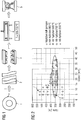
- Fig. 1 shows a schematic embodiment of an embodiment of a method according to the invention, wherein also optional method steps are shown.
- Starting point of the procedure is a coil 1 made of strip steel, as it is produced for example in a steel mill and delivered to a customer (eg vehicle manufacturers or suppliers).
- the FeMn strip steel may be, for example, a cold-rolled and annealed steel. However, it is also possible to use a hot-rolled steel.
- the manufacturing process of the FeMn steel strip in the steel mill should be designed to ensure good cold workability of the steel.
- the steel strip will then be e.g. cut at the vehicle manufacturer or supplier in FeMn boards 2.
- the cutting takes place in a cutting station.
- One or more boards 2 are then placed in a cold forming tool 3 and cold formed.
- the temperatures in the cold forming tool can be in the usual range, for example at about 70 ° C to 80 ° C. Furnaces are not used to realize these temperatures.
- the residence time of the workpiece in the cold forming tool 3 is typically without significant influence on the workpiece properties.
- the cold forming tool 3 can be realized in the form of a deep-drawing press.
- a trimming of the workpiece can be carried out simultaneously in the cold forming tool 3.
- This bleed can be the final trim of the part.
- any necessary punching or the creation of a hole pattern in the cold forming tool 3 can be made. That is, after the cold forming step, a component having a completely finished component shape may already exist with respect to material removing processes.
- material removing processes are performed in a cutting line (not shown) located outside and behind the cold forming tool 3 (which is in the so-called press line).
- the final component may already be present after trimming or hole pattern generation with respect to material-removing processes.
- the cold formed and optionally trimmed workpiece is then fed to a furnace 4 and heated there to a temperature between 500 ° C and 700 ° C.
- T 500 ° C - 700 ° C.
- the residence time in the oven may be 10 minutes, with 5 minutes being used for achieving the homogeneous temperature distribution and the remaining 5 minutes for holding the component at this homogeneous temperature.
- a radiation furnace can be used or it can be provided furnaces that supply the workpiece in another way energy.
- convective heating, inductive heating or infrared heating, as well as combinations of said mechanisms may be used.
- the heated to the target temperature between 500 ° C and 700 ° C, formed workpiece is then removed from the oven 4, placed in a calibration tool 5 and fixed there in the desired shape and cooled.
- the temperature of the workpiece at the beginning of the calibration process may also be lower than the temperature of the workpiece during removal from the furnace, it may in particular be between 400 ° C and 700 ° C.
- the calibration tool 5 may be, for example act a sizing press. Calibration ensures the dimensional accuracy of the workpiece.
- the surface geometry of the pressing surfaces of the tool corresponds to the final shape of the workpiece or is close to the final shape, since the calibration in the calibration tool significantly reduces the springback.
- the cooling of the workpiece takes place in the calibration tool 5 when the workpiece is fixed, ie when the workpiece surfaces abut the tool surfaces.
- the heat dissipation takes place via the tool.
- the cooling rate may be, for example, about 30 ° C / s, but should not be critical because unlike the press hardening no critical cooling rate must be exceeded.
- the cooling rate may be less than 50 ° C / s, which can be achieved without major tooling effort and in many cases sufficiently short cycle times possible. Higher cooling rates, for example in the range of 50 ° C / s to 150 ° C / s, are also possible.
- the calibration tool 5 may have a cooling device (eg water cooling).
- coated FeMn steels can be used for the process.
- the sheet metal workpiece can be coated with an organic and / or inorganic or metallic coating, in particular an alloy based on zinc or aluminum.
- the coating can be done before cold forming or at another time, eg after calibration.
- a cathodic corrosion protection is effected for example by a galvanizing.
- the coating may be carried out electrolytically or by a hot dip process prior to the cold forming step 3 (e.g., already at the steelmaker on coil 1) or even after the cold forming step 3 and before heating in the furnace 4.
- the heat treatment before or during calibration forms a mixed crystal layer between the FeMn steel and the Zn coating in the case of a Zn coating, which ensures good adhesion of the Zn layer to the component. It is also possible to coat the coating (e.g., galvanizing) only on the finished component, i. after calibration in the calibration tool 5 make.
- Fig. 2 refers to further embodiments of the basis Fig. 1 exemplified method and illustrates the reduction of work hardening as a function of the workpiece temperature achieved during heating.
- the Vickers hardness Hv is shown as a function of the distance from the place of transformation.
- a circuit board 2 which was cut from a cold-rolled, annealed FeMn steel strip.
- the board 2 had a tensile strength R m ⁇ 1100 MPa, which corresponded to the tensile strength of the strip steel.
- the residence time in the oven 4 was 10 minutes, so that a complete and homogeneous heating of the wells was guaranteed.
- the hot wells were fixed in a calibration tool 5 in the final shape and cooled there.
- the cooling rate in this example was about 30 ° C / s.
- the risk of delayed cracking due to hydrogen embrittlement is increased, as this occurs especially where a high work hardening gradient is observed during cold working.
- the hot calibration according to the invention leads to the reduction of strain hardening in the wells.
- T 500 ° C
- T 600 ° C
- Fig. 2 It can be seen that by the choice of a suitable temperature T for the hot calibration, the strain hardening in the region of a component close to the forming area can be selectively influenced and, if desired, reduced to a certain value.
- homogeneous mechanical properties in terms of tensile strength can be achieved with a variation of less than 20%, or even 10%, in terms of reshaped and unformed portions of the component. It is also possible to reduce the strain hardening, for example by 70% or 80%.
- Fig. 2 illustrates that the heat treatment and the hot calibration only affect and degrade the increased strength values caused by work hardening, while the mechanical properties hardly change in the remaining sections of the work piece which are not subjected to forming. In other words, it can be achieved that a component with complex component geometry has homogeneous mechanical properties over its entire extension or that it attains specifically increased or reduced strength at transformation sites in comparison to non-deformed sections.
Landscapes
- Chemical & Material Sciences (AREA)
- Engineering & Computer Science (AREA)
- Mechanical Engineering (AREA)
- Thermal Sciences (AREA)
- Physics & Mathematics (AREA)
- Materials Engineering (AREA)
- Crystallography & Structural Chemistry (AREA)
- Metallurgy (AREA)
- Organic Chemistry (AREA)
- Health & Medical Sciences (AREA)
- Child & Adolescent Psychology (AREA)
- Heat Treatment Of Articles (AREA)
- Shaping Metal By Deep-Drawing, Or The Like (AREA)
Claims (10)
- Procédé de fabrication d'une pièce en une tôle d'acier au ferromanganèse, comportant les étapes consistant à :façonner à froid une pièce à usiner en tôle (2) dans un outil de moulage (3) ;chauffer la pièce à usiner en tôle façonnée à une température comprise entre 500 °C et 700 °C ; etcalibrer la pièce à usiner en tôle façonnée chauffée, par fixation de la pièce à usiner en tôle façonnée dans un outil de calibrage (5) dans la forme finale et refroidir avec retenue la pièce à usiner façonnée chauffée à une géométrie fixée de pièce à usiner, à une température initiale pour le calibrage de l'ordre compris entre 500 °C et 700 °C.
- Procédé selon la revendication 1, la température étant comprise entre 600 °C et 680 °C.
- Procédé selon la revendication 1 ou 2, comportant l'étape consistant à :chauffer la pièce à usiner en tôle façonnée dans un four (4) ; etinsérer la pièce à usiner en tôle chauffée dans l'outil de calibrage (5).
- Procédé selon la revendication 3, lors duquel on sélectionne la durée de séjour de la pièce à usiner en tôle dans le four (4), de sorte à assurer un échauffement à cœur sensiblement homogène de la pièce à usiner en tôle.
- Procédé selon l'une quelconque des revendications précédentes, la tôle d'acier au ferromanganèse étant un acier TWIP, un acier TRIP/TWIP ou un acier TRIPLEX.
- Procédé selon l'une quelconque des revendications précédentes, la teneur en manganèse de la tôle d'acier au ferromanganèse étant comprise entre 12 et 35 % en poids.
- Procédé selon l'une quelconque des revendications précédentes, lors duquel on règle la température de telle sorte qu'un écrouissage dans des parties façonnées de la pièce à usiner en tôle façonnée soit réduit d'au moins 70 %, notamment de 80 % par le calibrage.
- Procédé selon l'une quelconque des revendications précédentes, lors duquel on règle la température de telle sorte que la pièce à usiner en tôle calibrée fasse preuve sur l'ensemble de sa géométrie d'une plage de fluctuation maximale de la résistance à la traction de 20 %, notamment de 10 %.
- Procédé selon l'une quelconque des revendications précédentes, comportant l'étape consistant à :
revêtir la pièce à usiner en tôle d'un revêtement organique et/ou inorganique ou métallique, notamment d'un alliage sur base de zinc ou d'aluminium, avant le façonnage à froid. - Procédé selon l'une quelconque des revendications précédentes, comportant l'étape consistant à :
revêtir la pièce à usiner en tôle d'un revêtement organique et/ou inorganique ou métallique, notamment d'un alliage sur base de zinc ou d'aluminium, après le calibrage.
Applications Claiming Priority (2)
| Application Number | Priority Date | Filing Date | Title |
|---|---|---|---|
| DE201010020373 DE102010020373A1 (de) | 2010-05-12 | 2010-05-12 | Verfahren zur Herstellung eines Bauteils aus einem Eisen-Mangan-Stahlblech |
| PCT/EP2011/057280 WO2011141367A1 (fr) | 2010-05-12 | 2011-05-06 | Procédé de réalisation d'une pièce à partir d'une tôle d'acier au ferromanganèse |
Publications (2)
| Publication Number | Publication Date |
|---|---|
| EP2569112A1 EP2569112A1 (fr) | 2013-03-20 |
| EP2569112B1 true EP2569112B1 (fr) | 2019-10-23 |
Family
ID=44276268
Family Applications (1)
| Application Number | Title | Priority Date | Filing Date |
|---|---|---|---|
| EP11720423.0A Active EP2569112B1 (fr) | 2010-05-12 | 2011-05-06 | Procédé de réalisation d'une pièce à partir d'une tôle d'acier au ferromanganèse |
Country Status (7)
| Country | Link |
|---|---|
| US (1) | US9138797B2 (fr) |
| EP (1) | EP2569112B1 (fr) |
| KR (1) | KR101567132B1 (fr) |
| CN (1) | CN103003002B (fr) |
| DE (1) | DE102010020373A1 (fr) |
| ES (1) | ES2764790T3 (fr) |
| WO (1) | WO2011141367A1 (fr) |
Families Citing this family (21)
| Publication number | Priority date | Publication date | Assignee | Title |
|---|---|---|---|---|
| DE102011108162B4 (de) | 2011-07-20 | 2013-02-21 | Salzgitter Flachstahl Gmbh | Verfahren zur Herstellung eines Bauteils durch Warmumformen eines Vorproduktes aus Stahl |
| DE102012104734A1 (de) * | 2012-05-31 | 2013-12-05 | Outokumpu Nirosta Gmbh | Verfahren und Vorrichtung zur Herstellung von umgeformten Blechteilen bei Tieftemperatur |
| DE102012111959A1 (de) | 2012-12-07 | 2014-06-12 | Benteler Automobiltechnik Gmbh | Verfahren zur Herstellung eines Kraftfahrzeugbauteils sowie Kraftfahrzeugbauteil |
| US20150352621A1 (en) * | 2013-01-11 | 2015-12-10 | Futaba Industrial Co., Ltd. | Heating device for hot stamping |
| DE102013003516A1 (de) | 2013-03-04 | 2014-09-04 | Outokumpu Nirosta Gmbh | Verfahren zur Herstellung eines ultrahochfesten Werkstoffs mit hoher Dehnung |
| KR101573579B1 (ko) | 2013-10-24 | 2015-12-01 | 현대자동차주식회사 | 핫 클램핑 공법 및 그 장치 |
| WO2016006232A1 (fr) * | 2014-07-10 | 2016-01-14 | Jfeスチール株式会社 | Corps moulé à la presse à chaud ainsi que procédé de fabrication de celui-ci, et tôle d'acier plaquée pour corps moulé à la presse à chaud |
| DE102014110564B4 (de) * | 2014-07-25 | 2016-12-22 | Thyssenkrupp Ag | Verfahren zum Herstellen eines Profils und eine Fertigungsanlage zur Herstellung eines Profils |
| EP3173504A1 (fr) * | 2015-11-09 | 2017-05-31 | Outokumpu Oyj | Procédé de fabrication d'un composant d'acier austenitique et utilisation dudit composant |
| JP6705249B2 (ja) * | 2016-03-29 | 2020-06-03 | 日本製鉄株式会社 | テーラードブランク材からなるプレス成形品の製造方法 |
| KR101720501B1 (ko) * | 2016-05-09 | 2017-03-28 | 주식회사 엠에스 오토텍 | 핫스탬핑 공정용 고주파 가열 방법 |
| DE102016114484A1 (de) * | 2016-08-04 | 2018-02-08 | Allgaier Werke Gmbh | Verfahren zum indirekten Warmumformen eines Formbauteils, Formwerkzeug zum Durchführen des Verfahrens und Formbauteil |
| RU2631069C1 (ru) * | 2016-10-27 | 2017-09-18 | Федеральное государственное автономное образовательное учреждение высшего образования "Белгородский государственный национальный исследовательский университет" (НИУ "БелГУ") | Способ получения листов из высокомарганцевой стали |
| DE102016121902A1 (de) * | 2016-11-15 | 2018-05-17 | Salzgitter Flachstahl Gmbh | Verfahren zur Herstellung von Fahrwerksteilen aus mikrolegiertem Stahl mit verbesserter Kaltumformbarkeit |
| DE102018102974A1 (de) * | 2018-02-09 | 2019-08-14 | Salzgitter Flachstahl Gmbh | Verfahren zur Herstellung eines Bauteils durch Warmumformen eines Vorproduktes aus manganhaltigem Stahl und ein warmumgeformtes Stahlbauteil |
| WO2020096271A1 (fr) * | 2018-11-08 | 2020-05-14 | Renault-Samsung Motors Co., Ltd. | Structure de combinaison de feuilles métalliques pour automobile à l'aide d'acier trip et son procédé de fabrication |
| IT201800010394A1 (it) * | 2018-11-16 | 2020-05-16 | Mas Mecc S R L | Impianto per lo stampaggio di pezzi di lamiera |
| DE102020124189A1 (de) | 2020-09-16 | 2022-03-17 | Mogema BV | Verfahren zum Herstellen und Design komplexer dreidimensionaler magnetischer Abschirmelemente, Abschirmelemente und deren Verwendung |
| JP7255632B2 (ja) * | 2021-05-06 | 2023-04-11 | Jfeスチール株式会社 | プレス成形方法及びプレス成形品の形状評価方法 |
| CN117858771A (zh) * | 2021-08-24 | 2024-04-09 | 麦格纳国际公司 | 用于制造车辆部件的工艺 |
| CN119053445A (zh) * | 2023-03-28 | 2024-11-29 | 奥钢联金属成型有限公司 | 生产硬化钢部件的方法 |
Family Cites Families (15)
| Publication number | Priority date | Publication date | Assignee | Title |
|---|---|---|---|---|
| WO2000074441A1 (fr) * | 1999-06-01 | 2000-12-07 | Mehmet Terziakin | Procede de chauffage instantane avec application de courant electrique a la piece dans une operation de formage de metaux a resistance elevee |
| JP4558877B2 (ja) * | 2000-01-17 | 2010-10-06 | 株式会社アマダ | 曲げ加工方法及びその装置 |
| FR2807447B1 (fr) * | 2000-04-07 | 2002-10-11 | Usinor | Procede de realisation d'une piece a tres hautes caracteristiques mecaniques, mise en forme par emboutissage, a partir d'une bande de tole d'acier laminee et notamment laminee a chaud et revetue |
| DE10120063C2 (de) * | 2001-04-24 | 2003-03-27 | Benteler Automobiltechnik Gmbh | Verfahren zur Herstellung von metallischen Profilbauteilen für Kraftfahrzeuge |
| DE10149221C1 (de) * | 2001-10-05 | 2002-08-08 | Benteler Automobiltechnik Gmbh | Verfahren zur Herstellung eines gehärteten Blechprofils |
| WO2004033126A1 (fr) * | 2002-09-13 | 2004-04-22 | Daimlerchrysler Ag | Piece trempee a la presse et procede de production correspondant |
| DE10314115A1 (de) * | 2003-03-28 | 2004-10-14 | Audi Ag | Verfahren zur Umformung einer Platine aus einem Vergütungsstahl und Vorrichtung zur Durchführung des Verfahrens |
| DE102004038626B3 (de) * | 2004-08-09 | 2006-02-02 | Voestalpine Motion Gmbh | Verfahren zum Herstellen von gehärteten Bauteilen aus Stahlblech |
| CN100361762C (zh) * | 2005-07-29 | 2008-01-16 | 中国科学院金属研究所 | 一种镁合金手机外壳的温热成形方法 |
| DE102008020757A1 (de) * | 2007-04-30 | 2008-11-06 | Volkswagen Ag | Verfahren zur Umformung von Blechwerkstücken aus Eisen-Mangan-Stahl |
| KR100907225B1 (ko) * | 2007-05-23 | 2009-07-10 | 주식회사화신 | 열간성형장치 및 열간성형 제조방법 |
| US8181498B2 (en) * | 2008-06-06 | 2012-05-22 | Edag, Inc. | Method and apparatus for shaping a rim of a three-dimensionally arched sheet metal |
| DE102008050315A1 (de) * | 2008-10-02 | 2009-05-20 | Daimler Ag | Umformen von Martensit-haltigen Stahlblechen |
| KR100902857B1 (ko) * | 2008-10-16 | 2009-06-16 | 현대하이스코 주식회사 | 형상이 복잡한 성형품 제조를 위한 초고강도 강철성형체 제조방법 |
| CN101412065B (zh) * | 2008-12-02 | 2010-06-30 | 华映光电股份有限公司 | 一种镁合金外壳加工工艺 |
-
2010
- 2010-05-12 DE DE201010020373 patent/DE102010020373A1/de not_active Withdrawn
-
2011
- 2011-05-06 ES ES11720423T patent/ES2764790T3/es active Active
- 2011-05-06 CN CN201180028966.0A patent/CN103003002B/zh not_active Expired - Fee Related
- 2011-05-06 KR KR1020127032350A patent/KR101567132B1/ko not_active Expired - Fee Related
- 2011-05-06 EP EP11720423.0A patent/EP2569112B1/fr active Active
- 2011-05-06 WO PCT/EP2011/057280 patent/WO2011141367A1/fr not_active Ceased
-
2012
- 2012-11-12 US US13/674,243 patent/US9138797B2/en not_active Expired - Fee Related
Non-Patent Citations (1)
| Title |
|---|
| None * |
Also Published As
| Publication number | Publication date |
|---|---|
| DE102010020373A1 (de) | 2011-11-17 |
| US20130125607A1 (en) | 2013-05-23 |
| ES2764790T3 (es) | 2020-06-04 |
| EP2569112A1 (fr) | 2013-03-20 |
| KR20130036250A (ko) | 2013-04-11 |
| CN103003002B (zh) | 2016-03-30 |
| WO2011141367A1 (fr) | 2011-11-17 |
| US9138797B2 (en) | 2015-09-22 |
| CN103003002A (zh) | 2013-03-27 |
| KR101567132B1 (ko) | 2015-11-06 |
Similar Documents
| Publication | Publication Date | Title |
|---|---|---|
| DE102010020373A1 (de) | Verfahren zur Herstellung eines Bauteils aus einem Eisen-Mangan-Stahlblech | |
| EP2441850B2 (fr) | Colonne de véhicule automobile et procédé de fabrication d'une colonne de véhicule automobile déformée à chaud et durcie à la presse | |
| EP3211103B1 (fr) | Procédé de fabrication d'un élément de véhicule automobile comprenant au moins deux zones de fixation différentes l'une de l'autre | |
| EP2155917B1 (fr) | Procédé de production d'un composant profilé durci localement | |
| DE102010004081C5 (de) | Verfahren zum Warmformen und Härten einer Platine | |
| EP2655673B1 (fr) | Procédé de fabrication de composants durcis | |
| DE102013010946B3 (de) | Verfahren und Anlage zum Herstellen eines pressgehärteten Stahlblechbauteils | |
| EP3045551B1 (fr) | Procédé de traitement thermique partiel d'un composant de véhicule automobile déformé à chaud et trempé sous presse | |
| EP2125263B1 (fr) | Procédé et dispositif de formage à température régulée d'un matériau en acier laminé à chaud | |
| DE102017108835B4 (de) | Verfahren zur verstärkung von bereichen eines hochfesten stahls | |
| DE102011053939B4 (de) | Verfahren zum Erzeugen gehärteter Bauteile | |
| DE102013009232A1 (de) | Verfahren zur Herstellung eines Bauteils durch Warmumformen eines Vorproduktes aus Stahl | |
| EP2609224B1 (fr) | Elément profilé et procédé de fabrication d'un élément profilé | |
| EP2374910A1 (fr) | Acier, produit plat en acier, composant en acier et procédé de fabrication d'un composant en acier | |
| EP1939308A1 (fr) | Procédé de fabrication d'un composant par trempe de compression thermique et composant haute résistance présentant une amélioration de l'allongement de rupture | |
| DE102018101735A1 (de) | Zweistufige warmumformung von stahl | |
| DE102013003516A1 (de) | Verfahren zur Herstellung eines ultrahochfesten Werkstoffs mit hoher Dehnung | |
| DE102009053368A1 (de) | Verfahren und Fertigungsanlage zum Herstellen eines Blechformteils mit einer Korrosionsschutzbeschichtung | |
| EP3365469B1 (fr) | Procédé de fabrication d'un élément structural en acier pour un véhicule | |
| WO2019122362A1 (fr) | Procédé destiné à produire des composants métalliques à propriétés de composants adaptées | |
| DE102008022401B4 (de) | Verfahren zum Herstellen eines Stahlformteils mit einem überwiegend bainitischen Gefüge | |
| DE102013104299B4 (de) | Wirkmedienbasierte Tieftemperaturumformung | |
| DE102021131713A1 (de) | Verfahren zur verbesserung der zähigkeit von presshärtendem stahl | |
| DE102008055514A1 (de) | Verfahren zur Herstellung eines Bauteils mit verbesserten Bruchdehnungseigenschaften | |
| DE102019130381A9 (de) | Kraftfahrzeugbauteil mit gesteigerter Festigkeit |
Legal Events
| Date | Code | Title | Description |
|---|---|---|---|
| PUAI | Public reference made under article 153(3) epc to a published international application that has entered the european phase |
Free format text: ORIGINAL CODE: 0009012 |
|
| 17P | Request for examination filed |
Effective date: 20121127 |
|
| AK | Designated contracting states |
Kind code of ref document: A1 Designated state(s): AL AT BE BG CH CY CZ DE DK EE ES FI FR GB GR HR HU IE IS IT LI LT LU LV MC MK MT NL NO PL PT RO RS SE SI SK SM TR |
|
| DAX | Request for extension of the european patent (deleted) | ||
| STAA | Information on the status of an ep patent application or granted ep patent |
Free format text: STATUS: EXAMINATION IS IN PROGRESS |
|
| 17Q | First examination report despatched |
Effective date: 20171102 |
|
| GRAP | Despatch of communication of intention to grant a patent |
Free format text: ORIGINAL CODE: EPIDOSNIGR1 |
|
| STAA | Information on the status of an ep patent application or granted ep patent |
Free format text: STATUS: GRANT OF PATENT IS INTENDED |
|
| INTG | Intention to grant announced |
Effective date: 20190612 |
|
| GRAS | Grant fee paid |
Free format text: ORIGINAL CODE: EPIDOSNIGR3 |
|
| GRAA | (expected) grant |
Free format text: ORIGINAL CODE: 0009210 |
|
| STAA | Information on the status of an ep patent application or granted ep patent |
Free format text: STATUS: THE PATENT HAS BEEN GRANTED |
|
| AK | Designated contracting states |
Kind code of ref document: B1 Designated state(s): AL AT BE BG CH CY CZ DE DK EE ES FI FR GB GR HR HU IE IS IT LI LT LU LV MC MK MT NL NO PL PT RO RS SE SI SK SM TR |
|
| REG | Reference to a national code |
Ref country code: GB Ref legal event code: FG4D Free format text: NOT ENGLISH |
|
| REG | Reference to a national code |
Ref country code: CH Ref legal event code: EP |
|
| REG | Reference to a national code |
Ref country code: IE Ref legal event code: FG4D Free format text: LANGUAGE OF EP DOCUMENT: GERMAN |
|
| REG | Reference to a national code |
Ref country code: DE Ref legal event code: R096 Ref document number: 502011016190 Country of ref document: DE |
|
| REG | Reference to a national code |
Ref country code: AT Ref legal event code: REF Ref document number: 1193111 Country of ref document: AT Kind code of ref document: T Effective date: 20191115 |
|
| REG | Reference to a national code |
Ref country code: SE Ref legal event code: TRGR |
|
| REG | Reference to a national code |
Ref country code: NL Ref legal event code: MP Effective date: 20191023 |
|
| REG | Reference to a national code |
Ref country code: LT Ref legal event code: MG4D |
|
| PG25 | Lapsed in a contracting state [announced via postgrant information from national office to epo] |
Ref country code: NO Free format text: LAPSE BECAUSE OF FAILURE TO SUBMIT A TRANSLATION OF THE DESCRIPTION OR TO PAY THE FEE WITHIN THE PRESCRIBED TIME-LIMIT Effective date: 20200123 Ref country code: GR Free format text: LAPSE BECAUSE OF FAILURE TO SUBMIT A TRANSLATION OF THE DESCRIPTION OR TO PAY THE FEE WITHIN THE PRESCRIBED TIME-LIMIT Effective date: 20200124 Ref country code: PL Free format text: LAPSE BECAUSE OF FAILURE TO SUBMIT A TRANSLATION OF THE DESCRIPTION OR TO PAY THE FEE WITHIN THE PRESCRIBED TIME-LIMIT Effective date: 20191023 Ref country code: LT Free format text: LAPSE BECAUSE OF FAILURE TO SUBMIT A TRANSLATION OF THE DESCRIPTION OR TO PAY THE FEE WITHIN THE PRESCRIBED TIME-LIMIT Effective date: 20191023 Ref country code: NL Free format text: LAPSE BECAUSE OF FAILURE TO SUBMIT A TRANSLATION OF THE DESCRIPTION OR TO PAY THE FEE WITHIN THE PRESCRIBED TIME-LIMIT Effective date: 20191023 Ref country code: LV Free format text: LAPSE BECAUSE OF FAILURE TO SUBMIT A TRANSLATION OF THE DESCRIPTION OR TO PAY THE FEE WITHIN THE PRESCRIBED TIME-LIMIT Effective date: 20191023 Ref country code: FI Free format text: LAPSE BECAUSE OF FAILURE TO SUBMIT A TRANSLATION OF THE DESCRIPTION OR TO PAY THE FEE WITHIN THE PRESCRIBED TIME-LIMIT Effective date: 20191023 Ref country code: BG Free format text: LAPSE BECAUSE OF FAILURE TO SUBMIT A TRANSLATION OF THE DESCRIPTION OR TO PAY THE FEE WITHIN THE PRESCRIBED TIME-LIMIT Effective date: 20200123 Ref country code: PT Free format text: LAPSE BECAUSE OF FAILURE TO SUBMIT A TRANSLATION OF THE DESCRIPTION OR TO PAY THE FEE WITHIN THE PRESCRIBED TIME-LIMIT Effective date: 20200224 |
|
| PG25 | Lapsed in a contracting state [announced via postgrant information from national office to epo] |
Ref country code: IS Free format text: LAPSE BECAUSE OF FAILURE TO SUBMIT A TRANSLATION OF THE DESCRIPTION OR TO PAY THE FEE WITHIN THE PRESCRIBED TIME-LIMIT Effective date: 20200224 Ref country code: RS Free format text: LAPSE BECAUSE OF FAILURE TO SUBMIT A TRANSLATION OF THE DESCRIPTION OR TO PAY THE FEE WITHIN THE PRESCRIBED TIME-LIMIT Effective date: 20191023 Ref country code: HR Free format text: LAPSE BECAUSE OF FAILURE TO SUBMIT A TRANSLATION OF THE DESCRIPTION OR TO PAY THE FEE WITHIN THE PRESCRIBED TIME-LIMIT Effective date: 20191023 |
|
| REG | Reference to a national code |
Ref country code: ES Ref legal event code: FG2A Ref document number: 2764790 Country of ref document: ES Kind code of ref document: T3 Effective date: 20200604 |
|
| PG25 | Lapsed in a contracting state [announced via postgrant information from national office to epo] |
Ref country code: AL Free format text: LAPSE BECAUSE OF FAILURE TO SUBMIT A TRANSLATION OF THE DESCRIPTION OR TO PAY THE FEE WITHIN THE PRESCRIBED TIME-LIMIT Effective date: 20191023 |
|
| REG | Reference to a national code |
Ref country code: DE Ref legal event code: R097 Ref document number: 502011016190 Country of ref document: DE |
|
| PG2D | Information on lapse in contracting state deleted |
Ref country code: IS |
|
| PG25 | Lapsed in a contracting state [announced via postgrant information from national office to epo] |
Ref country code: EE Free format text: LAPSE BECAUSE OF FAILURE TO SUBMIT A TRANSLATION OF THE DESCRIPTION OR TO PAY THE FEE WITHIN THE PRESCRIBED TIME-LIMIT Effective date: 20191023 Ref country code: DK Free format text: LAPSE BECAUSE OF FAILURE TO SUBMIT A TRANSLATION OF THE DESCRIPTION OR TO PAY THE FEE WITHIN THE PRESCRIBED TIME-LIMIT Effective date: 20191023 Ref country code: RO Free format text: LAPSE BECAUSE OF FAILURE TO SUBMIT A TRANSLATION OF THE DESCRIPTION OR TO PAY THE FEE WITHIN THE PRESCRIBED TIME-LIMIT Effective date: 20191023 Ref country code: CZ Free format text: LAPSE BECAUSE OF FAILURE TO SUBMIT A TRANSLATION OF THE DESCRIPTION OR TO PAY THE FEE WITHIN THE PRESCRIBED TIME-LIMIT Effective date: 20191023 Ref country code: IS Free format text: LAPSE BECAUSE OF FAILURE TO SUBMIT A TRANSLATION OF THE DESCRIPTION OR TO PAY THE FEE WITHIN THE PRESCRIBED TIME-LIMIT Effective date: 20200223 |
|
| PGFP | Annual fee paid to national office [announced via postgrant information from national office to epo] |
Ref country code: DE Payment date: 20200528 Year of fee payment: 10 Ref country code: FR Payment date: 20200525 Year of fee payment: 10 Ref country code: ES Payment date: 20200601 Year of fee payment: 10 |
|
| PLBE | No opposition filed within time limit |
Free format text: ORIGINAL CODE: 0009261 |
|
| STAA | Information on the status of an ep patent application or granted ep patent |
Free format text: STATUS: NO OPPOSITION FILED WITHIN TIME LIMIT |
|
| PG25 | Lapsed in a contracting state [announced via postgrant information from national office to epo] |
Ref country code: SM Free format text: LAPSE BECAUSE OF FAILURE TO SUBMIT A TRANSLATION OF THE DESCRIPTION OR TO PAY THE FEE WITHIN THE PRESCRIBED TIME-LIMIT Effective date: 20191023 Ref country code: SK Free format text: LAPSE BECAUSE OF FAILURE TO SUBMIT A TRANSLATION OF THE DESCRIPTION OR TO PAY THE FEE WITHIN THE PRESCRIBED TIME-LIMIT Effective date: 20191023 |
|
| PGFP | Annual fee paid to national office [announced via postgrant information from national office to epo] |
Ref country code: SE Payment date: 20200601 Year of fee payment: 10 Ref country code: IT Payment date: 20200522 Year of fee payment: 10 Ref country code: GB Payment date: 20200527 Year of fee payment: 10 |
|
| 26N | No opposition filed |
Effective date: 20200724 |
|
| PG25 | Lapsed in a contracting state [announced via postgrant information from national office to epo] |
Ref country code: SI Free format text: LAPSE BECAUSE OF FAILURE TO SUBMIT A TRANSLATION OF THE DESCRIPTION OR TO PAY THE FEE WITHIN THE PRESCRIBED TIME-LIMIT Effective date: 20191023 |
|
| PG25 | Lapsed in a contracting state [announced via postgrant information from national office to epo] |
Ref country code: CH Free format text: LAPSE BECAUSE OF NON-PAYMENT OF DUE FEES Effective date: 20200531 Ref country code: MC Free format text: LAPSE BECAUSE OF FAILURE TO SUBMIT A TRANSLATION OF THE DESCRIPTION OR TO PAY THE FEE WITHIN THE PRESCRIBED TIME-LIMIT Effective date: 20191023 Ref country code: LI Free format text: LAPSE BECAUSE OF NON-PAYMENT OF DUE FEES Effective date: 20200531 |
|
| REG | Reference to a national code |
Ref country code: BE Ref legal event code: MM Effective date: 20200531 |
|
| PG25 | Lapsed in a contracting state [announced via postgrant information from national office to epo] |
Ref country code: LU Free format text: LAPSE BECAUSE OF NON-PAYMENT OF DUE FEES Effective date: 20200506 |
|
| PG25 | Lapsed in a contracting state [announced via postgrant information from national office to epo] |
Ref country code: IE Free format text: LAPSE BECAUSE OF NON-PAYMENT OF DUE FEES Effective date: 20200506 |
|
| PG25 | Lapsed in a contracting state [announced via postgrant information from national office to epo] |
Ref country code: BE Free format text: LAPSE BECAUSE OF NON-PAYMENT OF DUE FEES Effective date: 20200531 |
|
| REG | Reference to a national code |
Ref country code: AT Ref legal event code: MM01 Ref document number: 1193111 Country of ref document: AT Kind code of ref document: T Effective date: 20200506 |
|
| PG25 | Lapsed in a contracting state [announced via postgrant information from national office to epo] |
Ref country code: AT Free format text: LAPSE BECAUSE OF NON-PAYMENT OF DUE FEES Effective date: 20200506 |
|
| REG | Reference to a national code |
Ref country code: DE Ref legal event code: R119 Ref document number: 502011016190 Country of ref document: DE |
|
| REG | Reference to a national code |
Ref country code: SE Ref legal event code: EUG |
|
| GBPC | Gb: european patent ceased through non-payment of renewal fee |
Effective date: 20210506 |
|
| PG25 | Lapsed in a contracting state [announced via postgrant information from national office to epo] |
Ref country code: SE Free format text: LAPSE BECAUSE OF NON-PAYMENT OF DUE FEES Effective date: 20210507 |
|
| PG25 | Lapsed in a contracting state [announced via postgrant information from national office to epo] |
Ref country code: GB Free format text: LAPSE BECAUSE OF NON-PAYMENT OF DUE FEES Effective date: 20210506 Ref country code: DE Free format text: LAPSE BECAUSE OF NON-PAYMENT OF DUE FEES Effective date: 20211201 |
|
| PG25 | Lapsed in a contracting state [announced via postgrant information from national office to epo] |
Ref country code: TR Free format text: LAPSE BECAUSE OF FAILURE TO SUBMIT A TRANSLATION OF THE DESCRIPTION OR TO PAY THE FEE WITHIN THE PRESCRIBED TIME-LIMIT Effective date: 20191023 Ref country code: MT Free format text: LAPSE BECAUSE OF FAILURE TO SUBMIT A TRANSLATION OF THE DESCRIPTION OR TO PAY THE FEE WITHIN THE PRESCRIBED TIME-LIMIT Effective date: 20191023 Ref country code: FR Free format text: LAPSE BECAUSE OF NON-PAYMENT OF DUE FEES Effective date: 20210531 Ref country code: CY Free format text: LAPSE BECAUSE OF FAILURE TO SUBMIT A TRANSLATION OF THE DESCRIPTION OR TO PAY THE FEE WITHIN THE PRESCRIBED TIME-LIMIT Effective date: 20191023 |
|
| PG25 | Lapsed in a contracting state [announced via postgrant information from national office to epo] |
Ref country code: MK Free format text: LAPSE BECAUSE OF FAILURE TO SUBMIT A TRANSLATION OF THE DESCRIPTION OR TO PAY THE FEE WITHIN THE PRESCRIBED TIME-LIMIT Effective date: 20191023 |
|
| REG | Reference to a national code |
Ref country code: ES Ref legal event code: FD2A Effective date: 20220801 |
|
| PG25 | Lapsed in a contracting state [announced via postgrant information from national office to epo] |
Ref country code: ES Free format text: LAPSE BECAUSE OF NON-PAYMENT OF DUE FEES Effective date: 20210507 |
|
| PG25 | Lapsed in a contracting state [announced via postgrant information from national office to epo] |
Ref country code: IT Free format text: LAPSE BECAUSE OF NON-PAYMENT OF DUE FEES Effective date: 20200506 |
|
| PG25 | Lapsed in a contracting state [announced via postgrant information from national office to epo] |
Ref country code: IT Free format text: LAPSE BECAUSE OF NON-PAYMENT OF DUE FEES Effective date: 20210506 |