EP2569366B1 - Polypropylengemische zur vliesherstellung - Google Patents
Polypropylengemische zur vliesherstellung Download PDFInfo
- Publication number
- EP2569366B1 EP2569366B1 EP11781033.3A EP11781033A EP2569366B1 EP 2569366 B1 EP2569366 B1 EP 2569366B1 EP 11781033 A EP11781033 A EP 11781033A EP 2569366 B1 EP2569366 B1 EP 2569366B1
- Authority
- EP
- European Patent Office
- Prior art keywords
- ethylene
- polypropylene
- weight
- homopolymer
- propylene
- Prior art date
- Legal status (The legal status is an assumption and is not a legal conclusion. Google has not performed a legal analysis and makes no representation as to the accuracy of the status listed.)
- Active
Links
Images




Classifications
-
- D—TEXTILES; PAPER
- D01—NATURAL OR MAN-MADE THREADS OR FIBRES; SPINNING
- D01F—CHEMICAL FEATURES IN THE MANUFACTURE OF ARTIFICIAL FILAMENTS, THREADS, FIBRES, BRISTLES OR RIBBONS; APPARATUS SPECIALLY ADAPTED FOR THE MANUFACTURE OF CARBON FILAMENTS
- D01F6/00—Monocomponent artificial filaments or the like of synthetic polymers; Manufacture thereof
- D01F6/44—Monocomponent artificial filaments or the like of synthetic polymers; Manufacture thereof from mixtures of polymers obtained by reactions only involving carbon-to-carbon unsaturated bonds as major constituent with other polymers or low-molecular-weight compounds
- D01F6/46—Monocomponent artificial filaments or the like of synthetic polymers; Manufacture thereof from mixtures of polymers obtained by reactions only involving carbon-to-carbon unsaturated bonds as major constituent with other polymers or low-molecular-weight compounds of polyolefins
-
- C—CHEMISTRY; METALLURGY
- C08—ORGANIC MACROMOLECULAR COMPOUNDS; THEIR PREPARATION OR CHEMICAL WORKING-UP; COMPOSITIONS BASED THEREON
- C08L—COMPOSITIONS OF MACROMOLECULAR COMPOUNDS
- C08L23/00—Compositions of homopolymers or copolymers of unsaturated aliphatic hydrocarbons having only one carbon-to-carbon double bond; Compositions of derivatives of such polymers
- C08L23/02—Compositions of homopolymers or copolymers of unsaturated aliphatic hydrocarbons having only one carbon-to-carbon double bond; Compositions of derivatives of such polymers not modified by chemical after-treatment
- C08L23/10—Homopolymers or copolymers of propene
- C08L23/12—Polypropene
-
- D—TEXTILES; PAPER
- D04—BRAIDING; LACE-MAKING; KNITTING; TRIMMINGS; NON-WOVEN FABRICS
- D04H—MAKING TEXTILE FABRICS, e.g. FROM FIBRES OR FILAMENTARY MATERIAL; FABRICS MADE BY SUCH PROCESSES OR APPARATUS, e.g. FELTS, NON-WOVEN FABRICS; COTTON-WOOL; WADDING ; NON-WOVEN FABRICS FROM STAPLE FIBRES, FILAMENTS OR YARNS, BONDED WITH AT LEAST ONE WEB-LIKE MATERIAL DURING THEIR CONSOLIDATION
- D04H1/00—Non-woven fabrics formed wholly or mainly of staple fibres or like relatively short fibres
- D04H1/40—Non-woven fabrics formed wholly or mainly of staple fibres or like relatively short fibres from fleeces or layers composed of fibres without existing or potential cohesive properties
- D04H1/42—Non-woven fabrics formed wholly or mainly of staple fibres or like relatively short fibres from fleeces or layers composed of fibres without existing or potential cohesive properties characterised by the use of certain kinds of fibres insofar as this use has no preponderant influence on the consolidation of the fleece
- D04H1/4282—Addition polymers
- D04H1/4291—Olefin series
-
- C—CHEMISTRY; METALLURGY
- C08—ORGANIC MACROMOLECULAR COMPOUNDS; THEIR PREPARATION OR CHEMICAL WORKING-UP; COMPOSITIONS BASED THEREON
- C08L—COMPOSITIONS OF MACROMOLECULAR COMPOUNDS
- C08L2203/00—Applications
- C08L2203/12—Applications used for fibers
-
- C—CHEMISTRY; METALLURGY
- C08—ORGANIC MACROMOLECULAR COMPOUNDS; THEIR PREPARATION OR CHEMICAL WORKING-UP; COMPOSITIONS BASED THEREON
- C08L—COMPOSITIONS OF MACROMOLECULAR COMPOUNDS
- C08L2205/00—Polymer mixtures characterised by other features
- C08L2205/14—Polymer mixtures characterised by other features containing polymeric additives characterised by shape
- C08L2205/16—Fibres; Fibrils
-
- C—CHEMISTRY; METALLURGY
- C08—ORGANIC MACROMOLECULAR COMPOUNDS; THEIR PREPARATION OR CHEMICAL WORKING-UP; COMPOSITIONS BASED THEREON
- C08L—COMPOSITIONS OF MACROMOLECULAR COMPOUNDS
- C08L23/00—Compositions of homopolymers or copolymers of unsaturated aliphatic hydrocarbons having only one carbon-to-carbon double bond; Compositions of derivatives of such polymers
- C08L23/02—Compositions of homopolymers or copolymers of unsaturated aliphatic hydrocarbons having only one carbon-to-carbon double bond; Compositions of derivatives of such polymers not modified by chemical after-treatment
- C08L23/04—Homopolymers or copolymers of ethene
- C08L23/08—Copolymers of ethene
- C08L23/0807—Copolymers of ethene with unsaturated hydrocarbons only containing four or more carbon atoms
- C08L23/0815—Copolymers of ethene with unsaturated hydrocarbons only containing four or more carbon atoms with aliphatic 1-olefins containing one carbon-to-carbon double bond
-
- C—CHEMISTRY; METALLURGY
- C08—ORGANIC MACROMOLECULAR COMPOUNDS; THEIR PREPARATION OR CHEMICAL WORKING-UP; COMPOSITIONS BASED THEREON
- C08L—COMPOSITIONS OF MACROMOLECULAR COMPOUNDS
- C08L23/00—Compositions of homopolymers or copolymers of unsaturated aliphatic hydrocarbons having only one carbon-to-carbon double bond; Compositions of derivatives of such polymers
- C08L23/02—Compositions of homopolymers or copolymers of unsaturated aliphatic hydrocarbons having only one carbon-to-carbon double bond; Compositions of derivatives of such polymers not modified by chemical after-treatment
- C08L23/10—Homopolymers or copolymers of propene
- C08L23/14—Copolymers of propene
Definitions
- the present invention is drawn generally to the field of non-woven fabrics comprising polypropylene blends.
- non-woven fabrics such as spunbond and meltblown fabrics
- molten polymer is extruded through a many holed die, or spinneret.
- the fibers are drawn by an air current and then collected in a random array to form a web of fibers.
- the web thus formed is then bonded by heating it to soften the polymer fibers and then passing the web through smooth or engraved calendar rollers to bond the fibers. Bonding improves the strength of the non-woven fabric over non-bonded materials.
- the bonding process governs the speed at which a producer can run a line producing non-woven fabrics.
- the time that the web requires between the nips in the calendaring process is controlled by the properties of the polymer in the fibers that make up the web, as well as the temperature and pressure of the calendar rolls.
- Typical constructions of this type combine one or more webs of spunbond fabric with a web of meltblown fabric.
- Such constructions are termed spunbond-meltblown (S-M) and spunbond-meltblown-spunbond (S-M-S) fabrics.
- S-M spunbond-meltblown
- S-M-S spunbond-meltblown-spunbond
- a PP having a high level of solubles can improve process performance in non-woven fabrics, providing lower bonding temperatures and a wider bonding window.
- it is a burden to PP manufacturers to produce high solubles because large amounts of unwanted wide-spec materials are generated to reach targeted high solubles.
- the solubles are responsible for smoke generation during fiber spinning.
- BOPP biaxially oriented polypropylene film
- BOPP materials such as relatively larger amounts of xylene solubles, and relatively low isotacticity. It is known that for a given PP, the lower the isotacticity, the lower the melting temperature of the PP and the better its processability to BOPP film. However, these same properties in the PP result in poorer properties of the resulting film. Therefore, there exists a processability-property trade-off in BOPP materials.
- m-iPP metallocene isotactic PP
- the melting temperature of m-iPP is also affected by the degree of regio-mis-insertion in addition to isotacticity.
- an iPP of much lower melting temperature than conventional ZN-iPP can be produced with a metallocene catalyst.
- BOPP film a much narrower temperature window for drawing is available due to the narrow tacticity and molecular weight distribution.
- BOPP film manufacturers have long sought a material that provides a stiffer oriented film while maintaining acceptable stretchability.
- High crystalline PP materials impart the desired stiffness to the finished articles, however, these materials are generally not suitable for processing into BOPP films. This poor operability of high crystalline materials is reported in U.S. Patent 5,691,043 .
- Blends according to the invention demonstrated good processability in BOPP films and imparted desired characteristics to the finished film in terms of stiffness.
- WO 2005/113674 A1 discloses polypropylene blends for non-woven fabrics comprising a propylene homopolymer, an ethylene/propylene random copolymer and having a total ethylene content of 1 percent by weight or less and a decalin solubles content of 6 percent or less.
- WO 2010/039715 A1 discloses a resin composition comprising a polypropylene homopolymer having less than 3% by weight xylene solubles and a crystallinity of at least 55%, and an ethylene/propylene random copolymer containing greater than 7.2wt.% to 16 wt.% ethylene.
- WO 2004/029341 A1 and WO 2004/029342 A1 disclose propylene polymer compositions for fibers, comprising a crystalline propylene random copolymer and an ethylene/propylene random copolymer, wherein the composition has a xylene solubles content of less than 10 % by weight and a content of ethylene.
- EP 0 598 224 A1 discloses a non-woven textile material from blends of propylene polymer material and olefin polymer compositions.
- EP 1 359 171 A1 discloses a non-woven fabric comprising a propylene polymer which comprises an ethylene comonomer in an amount of 0.05 to 5 wt.-% and having a xylene solubles content of 3.0 wt.-% or less.
- the present invention provides a non-woven fabric comprising at least one layer of fibers comprising a reactor blended polypropylene copolymer.
- the polypropylene copolymer blend comprises 82% to 88% by weight of a polypropylene homopolymer, that has less than 3% by weight xylene solubles and a crystallinity of at least 55%.
- the copolymer further comprises 12% to 18% by weight of an ethylene/propylene copolymer, said ethylene/propylene copolymer containing from 0.5% to 4.0% ethylene by weight, preferably from 2% to 4% by weight.
- the present invention also provides a non-woven fabric produced from the polypropylene copolymer blend described in the invention.
- the non-woven fabric according to the current invention may be either a spunbond or meltblown fabric.
- a multilayer construction is provided comprising at least one layer of spunbond fabric and at least one layer of meltblown fabric. At least one of the layers comprises the reactor blended copolymer described in the current invention. Preferably, at least the spunbond layer comprises the reactor blended copolymer described in the current invention.
- the resin compositions used in the current invention are blends of highly crystalline, non-BOPP grade polypropylene homopolymers and ethylene/propylene random copolymers.
- the blends used in the current invention may be produced either by melt blending separate powders or by producing the blend in situ in an in reactor process. In either case, the blends used in the current invention display processing characteristics that are comparable to or better than standard BOPP or non-woven grade polypropylene homopolymers.
- Non-woven fabrics made with the blends used in the current invention display a bonding window in calendaring that is comparable to standard non-woven grade polypropylenes.
- non-woven fabrics according to the current invention also display a better balance of properties, such as tensile strength, in the machine direction (MD) and transverse direction (TD). Further, non-woven fabrics according to the current invention display a higher coefficient of friction ("COF") than fabrics made with standard non-woven grade polypropylenes. In general, the COF is used as a measure of softness for a fabric. Additionally, films made with resins used in the current invention display improved qualities in terms of haze, gloss and stiffness over films produced using standard BOPP grade polypropylene homopolymers.
- COF coefficient of friction
- the resin compositions used in the current invention are useful in the production of non-woven fabric constructions comprising multiple layers of non-woven fabrics.
- the polypropylene blends are useful in multilayer fabrics such as spunbond-meltblown (S-M), and spunbond-meltblown-spunbond (S-M-S) constructions.
- Suitable melt flow rates for spunbond fiber processing range from about 8 dg/min to about 55 dg/min as determined using ASTM method D-1238.
- Polypropylene blends used in the current invention having a suitable melt flow rate for spunbond fiber processing can be obtained by using known methods, such as by regulating melt flow rate using hydrogen, to produce a reactor material of the proper melt flow.
- a low melt flow rate blend used in the current invention may be produced and then adjusted using controlled rheology techniques to produce a final material having a melt flow rate suitable for spunbond processing.
- controlled rheology materials may be pelletized for shipment to processors, or the controlled rheology treatment may be completed by a processor directly prior to fiber production. It will be recognized by those of ordinary skill in the art that the present invention is not limited to a particular melt flow range or means of achieving a particular melt flow rate.
- the resin compositions used in the current invention comprise from 82% to 88% of a low solubles polypropylene homopolymer and from 12% to 18% of an ethylene/propylene random copolymer.
- Polypropylene homopolymers that are suitable to be used in the compositions used in the current invention have a crystalline content of at least 55%, as determined by annealed Differential Scanning Calorimetry (ADSC) and a xylene solubles content less than 3%, preferably less than about 2%.
- ADSC Differential Scanning Calorimetry
- Xylene solubles (XS) and insolubles (XIS) were determined by ASTM method D-5492.
- Examples include, but are not limited to: D022D, F020HC and F050HC from Sunoco, 3576X, PPH4025, 3365 and 3281 from TotalFina, 5A28 from Dow, 6219, 1012, HB3252 and 9433x from BPAmoco, Adstiff HA722J from Basell, PP1042 from ExxonMobil, Marlex HGX-030 and HGX-040 from Phillips Sumika.
- the ethylene/propylene RCPs that are suitable for use in the resin compositions according to the current invention contain from 0.5% to 4% of ethylene, preferably 2.5% ethylene. Ethylene content is determined using 13 C NMR.
- ethylene/propylene copolymers include, but are not limited to: TR3020F, TR3005, TR3020SF from Sunoco, DD20 and 6D65L from Dow, 8573, 6232, 6253, 7450HC, 723IX, 8453 and Z9450 from TotalFina, 8249, KB4105, 8244, KB5180 and KB4285 from BPAmoco, PP9852E1 from ExxonMobil, Marlex RGX-020 from Phillips Sumika, and SR256M and SR257M from Basell.
- the resin compositions used in the current invention are produced in situ in a multi reactor process.
- the polypropylene homopolymer may be produced in the first two reactors, the first stage.
- the ethylene/propylene RCP may then be produced in the third and fourth reactors, the second stage, as the homopolymer continues to polymerize.
- the polypropylene homopolymer is made in the first reactor and the ethylene/propylene RCP may be made in the second reactor as the homopolymer continues to polymerize. In this way, the ethylene/propylene RCP may be distributed more uniformly in the blend.
- the in-reactor process provides better dispersion of the random copolymer in the homopolymer versus a melt blending process.
- the in-reactor blending process also allows for more efficient usage of reactor capacity since both stages of a two-stage reactor train are utilized, as opposed to just the first stage, which is standard practice in making a pure homopolymer. This also provides higher production rates of the polymer blend.
- an in-reactor blend be produced having a melt flow rate suitable for spunbond or meltblown processing without the need for vis-breaking.
- Techniques for controlling melt flow rate during polymerization are known to those having skill in the art.
- vis-breaking of a low melt flow reactor blend is within the scope of the present invention.
- the non-woven fabrics according to the current invention may also include a number of additives, including but not limited to: nucleators, anti-oxidants, acid neutralizers, slip agents, antiblock, antifogging agents and pigments.
- additives including but not limited to: nucleators, anti-oxidants, acid neutralizers, slip agents, antiblock, antifogging agents and pigments.
- melt flow rate (MFR) and the contents of xylene soluble were determined by the method prescribed in ASTM 1238 and 5492, respectively.
- the molecular weights were determined by high temperature size exclusion chromatography (HSEC) at 140°C.
- HSEC high temperature size exclusion chromatography
- DSC Different Scanning Calorimetry thermograms were recorded, where polymer was melted at 230°C for 5 minutes and cooled to 0°C at a rate of 10°C/min while the recrystallization exotherm was recorded. Then, the sample was heated to 190°C at a rate of 10°C/min in order to record the melting endotherms. The heat of recrystallization was used to estimate the overall crystallinity (% Xc) of ICP.
- the extruder was equipped with a flat die for vertical extrusion.
- the polymer melt extruded through the die was quenched onto a chill roll into the sheet.
- the temperature of the chill roll was kept at 110°F (43.3°C).
- the density of the extruded sheets was measured in a Techne Density column containing 558 ml H 2 0 and 322 ml isopropanol mixture in the heavy flask and 327 ml H 2 0 and 553 ml isopropanol in the light flask.
- polypropylene was extruded onto a cast roll to produce either 0.254 or 0.508 mm thick sheet.
- Samples (5.08 cm x 5.08 cm) were cut out of the sheet stock and stretched with a T.M. Long stretcher (T.M. Long Corporation, Somerville, NJ). This equipment allows simultaneous and/or consecutive biaxial orientation at an elevated temperature. Samples were stretched with the T.M. Long at a given stretching temperature and a fixed strain rate of 50.8 mm/sec after 25 sec. pre-heating. The tensile biaxial stress-strain curve is simultaneously generated during orientation. The sheets were stretched to 0.6-0.7 mil film by simultaneous stretching at 6.2 x 6.2 draw ratio. The film properties were determined by the method prescribed in ASTM 882.
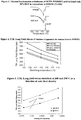
- Table 4 gives the density of the cast sheet, T.M. Long yield stress and film properties while Figures 1 and 2 show the dependence of T.M. Long yield stress on the stretching temperature and the cast sheet density, respectively.
- the density of the cast sheet also decreases with increasing amounts of RCP.
- the T.M. Long yield stress decreases with increasing stretching temperature and/or with decreasing the density of the cast sheet as shown in Figures 1 and 2 .
- FF020D that has 4.9 % xylene solubles exhibits about 100 psi lower T.M. Long yield stress than D022 that has 2.9 % xylene solubles irrespective of the stretching temperature.
- TR3020 that has 2.5 % ethylene and 5.5 % xylene solubles has significantly lower T.M. Long yield stress than FF020D. It can be attributed to the lower melting temperature and overall crystallinity of the random copolymer along with larger amounts of xylene solubles than the homopolymer. These results indicate that the crystalline state at the stretching temperature dictates the T.M. Long yield stress.
- a second set of compositions was prepared using a high crystallinity polypropylene homopolymer, F050HC, available from Sunoco.
- Compounds prepared in this study 2100944 A B C D F050HC % 100 85 70 TR3005 % 15 30 FF029A (31J026) 100
- the melt flow rate (MFR) and the contents of xylene soluble were determined by the method prescribed in ASTM 1238 and 5492, respectively.
- the molecular weights were determined by high temperature size exclusion chromatography (HSEC) at 140°C.
- the melting temperature and recrystallization temperature for each composition was determined using annealed differential scanning calorimetry (ADSC).
- ADSC annealed differential scanning calorimetry
- the polymers were melted at 230°C for 5 minutes and cooled to 0°C at a rate of 10°C/min while recording recrystallization exotherm. Then, the sample was heated to 190°C at a rate of 10°C/min to record the melting endotherms.
- the heat of recrystallization was used to estimate the overall crystallinity (% Xc) of ICP.
- the materials were also evaluated by thermal fractionation.
- the polymer melt was cooled to 170°C at a rate of 20°C/min, followed by isothermal crystallization process during which the sample was held for 4 hours.
- the isothermal crystallization process continued to decrease to 130°C at 10°C decrement.
- the temperature of the sample was then decreased to 0°C, and the sample was analyzed as it was heated to 200°C at a rate of 10°C/min. to record the melting endotherm. It has been discovered that how well a material stretches on a tenter frame depends on the shape of endotherm recorded from the thermal fractionation.
- the thermal behavior of the compositions produced were evaluated via the thermal fractionation method as shown in Figure 3 . As can be seen, the blend with 30% of RCP has a trace similar to that of the standard BOPP grade material.
- Table 8. Zone 1 2 3 4 Die 1 Die 2 Melt Temp. Temp. (°C) 204 246 260 260 260 263
- the temperature of the chill roll was kept at 110°F (43.3°C).
- the density of the extruded sheets was measured in a Techne Density column containing 558 ml H 2 O and 322 ml isopropanol mixture in a heavy flask and 327 ml H 2 O and 553 ml isopropanol in a light flask.
- the 22-23 mil sheets were stretched to 0.6-0.7 mil film by simultaneous stretching at 6.2 x 6.2 draw ratio with T.M. Long after 25 sec. pre-heating at a given stretching temperature. The yield stress was measured while stretching the cast sheet.
- the film tensile properties were determined by the method prescribed in ASTM 882.
- Strips (1" x 8") from T.M. Long film were used to determine the tensile properties.
- ASTM recommends 10" grip separation and 1 in/min crosshead speed for the measurement of tensile modulus
- 4" grip separation was employed due to the size of the T.M. Long film. Accordingly, the crosshead speed was adjusted to 0.4 in/min. For all other tensile properties, the crosshead speed was 2 in/min. At least 5 specimens were tested.
- Optical properties such as transparency, haze and clarity of the film were evaluated by the method prescribed in ASTM 1003 (Haze and % transmittance) and ASTM 1746 (clarity).
- Gloss was measured at the 3 different angles, 20, 45 and 60 degree by using the method described in ASTM 2457, where 60-deg. is recommended for intermediate gloss films, 20-deg. for high gloss films and 45-deg. for intermediate and low gloss films.
- Shrinkage was measured using ASTM D-2732.
- a rectangular cutout (3.9"x 3.9") from the T.M. Long film was placed in a "Free Shrink" holder such that the cutout is free from contact with the edge of the holder.
- the holder was immersed in an oil bath for at least 10 seconds at a given temperature in order for the material to come to thermal equilibrium and undergo maximum shrinkage.
- the holder was removed from the oil bath and quickly immersed in oil at room temperature. After at least 5 seconds, the sample was removed from the oil.
- % shrinkage L o ⁇ L f / L o ⁇ 100 where L 0 is the initial length and L f length after shrinking.
- Table 9 gives the density of the cast sheet, the T.M. Long yield stress and film properties while Figures 4 and 5 show the dependence of the T.M. Long yield stress on the stretching temperature and the cast sheet density, respectively.
- Table 9 Density of sheet stock and T.M. Long yield stress A B C D Resin Composition F050HC 15% TR3005 30% TR3005 FF029A Density (Cast Sheet) 0.9043 0.9034 0.9026 0.9029 T.M. Long yield stress @ 138°C 779 a 644 549 519 @ 143°C 594 496 418 390 @ 149°C 445 365 281 253 a the film tore during stretching after yield.
- the density of the cast sheet decreases with increasing amounts of RCP as does the T.M. Long yield stress as shown in Figures 4 and 5 . While the T.M. Long film of FF050HC tore after yielding when stretched at 138°C, the blend containing 15% random copolymer did not tear when stretched. It is noted that although the blend that contains 30% random copolymer has a slightly lower density than FF029A, its T.M. Long yield stress is higher as shown in Figure 5 . Since the T.M. Long yield stress depends on the density, i.e., crystallinity, of the cast sheet at the stretching temperature, it appears that the blend containing 30% random copolymer should have a higher density at the stretching temperature than FF029A does.
- the properties of film produced at 3 different temperatures with a T.M. Long stretcher are given in Table 10 and depicted in Figures 6-11 .
- the results in Table 10 may be summarized as follows.
- the T.M. Long films produced from the blends exhibit higher tensile properties than those produced from FF029A.
- Haze and % transmittance of the film produced from the blends at 138°C and/or 143°C are comparable to those produced from FF029A.
- the film produced from FF029A is much hazier than those from the blends.
- the 45-degree gloss varies depending upon the stretching temperature.
- the shrinkage of the film from the blends is slightly less than that from FF029A.
- Polypropylene homopolymer was continuously produced at 70°C in a first stage polymerization using two loop reactors by using a catalyst system (catalyst, co-catalyst and external donor) that provides relatively high isotacticity, followed by production of 10-20 wt % random copolymer containing 2.5 wt ethylene in a second stage gas phase reactor.
- the propylene monomer was fed the loop reactors at a rate of 80 kg/h while maintaining 700 ppm H 2 and the density of 560 g/1.
- the homopolymer was continuously transferred to the second stage gas phase reactor where the random copolymer was produced.
- both ethylene and propylene at 0.03 mol % gas phase ratio (C2/C2+C3) and 0.015 mole % H 2 were fed to the gas phase reactor.
- the characteristics of the in situ polymer blend produced in the continuous reactor are given in Table in comparison to a HCPP.
- Table 11 indicates that the HCPP/RCP blend produced in-situ contains 12 wt % random copolymer and less than 2 wt % XS.
- Spunbond fabrics were produced using an in-reactor blend of a highly crystalline propylene homopolymer and a random copolymer (HCPP/RCP), a mini-random copolymer (mini), a random copolymer (RCP), and a standard spunbond grade propylene homopolymer (CP).
- a melt flow rate of 35 dg/min for spunbond processing was obtained by visbreaking a reactor produced highly crystalline propylene homopolymer and random copolymer having a starting melt flow rate of about 3 dg/min.
- the comparison mini-random and random copolymers were also visbroken to a melt flow rate of about 35 dg/min.
- Table 12 The properties of the materials used in this example are set forth in Table 12 below.
- Spunbond fabrics were produced on a Reifenhauser Reicofil II slot draw line using a 2734-hole die.
- the suction and cooling fans were adjusted to modify the draw force.
- the deniers of the fabrics were measured using an optical microscope.
- the fabrics were produced at a series of calendar temperatures for each polymer used.
- the tensile strength of the fabrics produced was measured in both the machine direction (MD) and transverse direction (TD) using ASTM method D-5035, "strip force" tensile break strength.
- Tensile strength in the machine and transverse directions was used as a measure of the bonding window for each polypropylene, which is defined as the range of calendar temperature over which a fabric exhibits a tensile strength at least 90% as high as its maximum measured tensile strength.
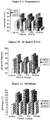
- Figures 12(a) and 12(b) depict the tensile strength of the spunbond fabrics produced in the machine direction and transverse direction respectively.
- the curves in Figures 12(a) and 12(b) illustrate the approximated width of the 90% bonding window for each fabric tested.
- Figure 13(a), 13(b) and 13(c) Additional properties tested for the fabrics produced are depicted in Figures 13(a), 13(b) and 13(c).
- Figure 13(a) illustrates the trapezoid tear strength of fabrics produced as measured by comparison of the MD and TD tensile strength. As can be seen from the figure, the blend according to the current invention provides greater balance between the MD and TD tensile strength.
- Figure 13(b) illustrates the flexural rigidity of fabrics produced in the example. Again, the data indicate the fabrics produced with blends according to the invention display a better balance of rigidity in the machine and transverse directions.
- Figure 13(c) depicts the coefficient of friction (COF) for the fabrics produced. Coefficient of friction is used as a measure of the softness of a fabric. The data in Figure 13(c) indicate that fabrics produced from blends according to the invention display a softness equivalent to fabrics produced from a 2.7 % ethylene content random copolymer, while having superior tensile properties.
- a second set of samples of spunbond fabric were produced from an in-reactor blend of highly crystalline propylene homopolymer and random copolymer according to the invention (HR), and a standard spunbond grade polypropylene (CP).
- the properties of the polymers are shown in Table 13.
- Table 13 Materials used for Spunbond Processing Std. Spunbond Grade HCPP/RCP Blend (visbroken) %Xc 61.8 57.4 T m (°C) 163.3 161.4 T C (°C) 113.4 112.5 %XS 1.81 2.99 % mmmm - XIS 96.14 92.28 %C 2 0 0.7
- the examples demonstrate that the blends according to the current invention perform as well as standard grade polypropylenes in non-woven fabric manufacturing, and provide fabrics having improved balance of properties in the MD and TD directions, and better softness.
Landscapes
- Chemical & Material Sciences (AREA)
- Chemical Kinetics & Catalysis (AREA)
- Textile Engineering (AREA)
- Medicinal Chemistry (AREA)
- Polymers & Plastics (AREA)
- Organic Chemistry (AREA)
- Health & Medical Sciences (AREA)
- Engineering & Computer Science (AREA)
- General Chemical & Material Sciences (AREA)
- Compositions Of Macromolecular Compounds (AREA)
- Manufacture Of Macromolecular Shaped Articles (AREA)
- Laminated Bodies (AREA)
- Artificial Filaments (AREA)
- Nonwoven Fabrics (AREA)
Claims (14)
- Vliesstoff, umfassend mindestens eine Faserschicht, die ein im Reaktor gemischtes Polypropylen-Copolymer umfasst, wobei das Polypropylen-Copolymer 82 bis 88 Gew.-% eines Polypropylen-Homopolymers, wobei das Polypropylen-Homopolymer weniger als 3 Gew.-% xylollösliche Stoffe und eine Kristallinität von mindestens 55 % aufweist; und 12 bis 18 Gew.-% eines Ethylen/Propylen-Copolymers umfasst, wobei das Ethylen/Propylen-Copolymer 0,5 bis 4 Gew.-% Ethylen enthält.
- Vliesstoff nach Anspruch 1, wobei das Polypropylen-Copolymer 82 bis 85 Gew.-% des Propylen-Homopolymers und 15 bis 18 Gew.-% des Ethylen/Propylen-Copolymers umfasst.
- Vliesstoff nach Anspruch 2, wobei das statistische Ethylen/Propylen-Copolymer einen Ethylengehalt von 2 bis 4 Gew.-% aufweist.
- Vliesstoff nach einem der vorstehenden Ansprüche, wobei das Polypropylen-Homopolymer weniger als etwa 2 Gew.-% xylollösliche Stoffe enthält.
- Vliesstoff nach Anspruch 1, wobei die mindestens eine Faserschicht eine Spinnverbindungsschicht ist.
- Vliesstoff nach Anspruch 1, wobei die mindestens eine Faserschicht eine schmelzgeblasene Schicht ist.
- Spinnvliesstoff, umfassend ein reaktorgemischtes Polypropylen-Copolymer, wobei das Polypropylen-Copolymer 82 bis 88 Gew.-% eines Polypropylen-Homopolymers, wobei das Polypropylen-Homopolymer weniger als 3 Gew.-% xylollösliche Stoffe und eine Kristallinität von mindestens 55 % aufweist; und 12 bis 18 Gew.-% eines Ethylen/Propylen-Copolymers umfasst, wobei das Ethylen/Propylen-Copolymer 0,5 bis 4 Gew.-% Ethylen enthält.
- Spinnvliesstoff nach Anspruch 7, wobei das Polypropylen-Copolymer 82 bis 85 Gew.-% des Propylen-Homopolymers und 15 bis 18 Gew.-% des Ethylen/Propylen-Copolymers umfasst.
- Spinnvliesstoff nach Anspruch 8, wobei das statistische Ethylen/Propylen-Copolymer einen Ethylengehalt von 2 bis 4 Gew.-% aufweist.
- Spinnvliesstoff nach einem der Ansprüche 7 bis 9, wobei das Polypropylen-Homopolymer weniger als etwa 2 Gew.-% xylollösliche Stoffe enthält.
- Schmelzgeblasenes Gewebe, umfassend ein reaktorgemischtes Polypropylen-Copolymer, wobei das Polypropylen-Copolymer 82 bis 88 Gew.-% eines Polypropylen-Homopolymers, wobei das Polypropylen-Homopolymer weniger als 3 Gew.-% xylollösliche Stoffe und eine Kristallinität von mindestens 55 % aufweist; und 12 bis 18 Gew.-% eines Ethylen/Propylen-Copolymers umfasst, wobei das Ethylen/Propylen-Copolymer 0,5 bis 4 Gew.-% Ethylen enthält.
- Schmelzgeblasenes Gewebe nach Anspruch 11, wobei das Polypropylen-Copolymer 82 bis 85 Gew.-% des Propylen-Homopolymers und 15 bis 18 Gew.-% des Ethylen/Propylen-Copolymers umfasst.
- Schmelzgeblasenes Gewebe nach Anspruch 12, wobei das statistische Ethylen/Propylen-Copolymer einen Ethylengehalt von 2 bis 4 Gew.-% aufweist.
- Schmelzgeblasenes Gewebe nach einem der Ansprüche 11 bis 13, wobei das genannte Polypropylen-Homopolymer weniger als etwa 2 Gew.-% xylollösliche Stoffe enthält.
Applications Claiming Priority (2)
| Application Number | Priority Date | Filing Date | Title |
|---|---|---|---|
| US12/776,881 US8466235B2 (en) | 2002-08-27 | 2010-05-10 | Polypropylene blends for non-woven production |
| PCT/US2011/034893 WO2011143001A1 (en) | 2010-05-10 | 2011-05-03 | Polypropylene blends for non-woven production |
Publications (3)
| Publication Number | Publication Date |
|---|---|
| EP2569366A1 EP2569366A1 (de) | 2013-03-20 |
| EP2569366A4 EP2569366A4 (de) | 2014-05-28 |
| EP2569366B1 true EP2569366B1 (de) | 2020-04-01 |
Family
ID=44914648
Family Applications (1)
| Application Number | Title | Priority Date | Filing Date |
|---|---|---|---|
| EP11781033.3A Active EP2569366B1 (de) | 2010-05-10 | 2011-05-03 | Polypropylengemische zur vliesherstellung |
Country Status (9)
| Country | Link |
|---|---|
| US (1) | US8466235B2 (de) |
| EP (1) | EP2569366B1 (de) |
| AR (1) | AR081378A1 (de) |
| BR (1) | BR112012028757B8 (de) |
| CL (1) | CL2012003161A1 (de) |
| CO (1) | CO6680735A2 (de) |
| EC (1) | ECSP12012333A (de) |
| PE (1) | PE20131183A1 (de) |
| WO (1) | WO2011143001A1 (de) |
Families Citing this family (4)
| Publication number | Priority date | Publication date | Assignee | Title |
|---|---|---|---|---|
| US9309397B2 (en) * | 2007-10-05 | 2016-04-12 | Rohm And Haas Company | Processing aids and polymer formulations containing the same and method for producing the same |
| CZ2012757A3 (cs) * | 2012-11-06 | 2014-06-11 | Pegas Nonwovens S.R.O. | Netkaná textilie se zlepšeným omakem a mechanickými vlastnostmi |
| US10520860B2 (en) * | 2016-07-14 | 2019-12-31 | Hp Indigo B.V. | Electrical blanket conditioning |
| US11364711B2 (en) | 2018-12-21 | 2022-06-21 | The Clorox Company | Multi-layer substrates comprising sandwich layers and polyethylene |
Family Cites Families (19)
| Publication number | Priority date | Publication date | Assignee | Title |
|---|---|---|---|---|
| US5346756A (en) * | 1992-10-30 | 1994-09-13 | Himont Incorporated | Nonwoven textile material from blends of propylene polymer material and olefin polymer compositions |
| US5691043A (en) * | 1994-07-15 | 1997-11-25 | Mobil Oil Corporation | Uniaxially shrinkable biaxially oriented polypropylene film and its method of preparation |
| US5942451A (en) * | 1996-05-03 | 1999-08-24 | Bp Amoco Corporation | Antiskid fabric |
| US7919561B2 (en) * | 1996-09-04 | 2011-04-05 | Exxonmobil Chemical Patents Inc. | Process of producing thermoplastic polymer blends |
| JP3579758B2 (ja) | 1996-12-17 | 2004-10-20 | チッソ株式会社 | ポリプロピレン系二軸延伸フィルム |
| US6207093B1 (en) | 1998-04-24 | 2001-03-27 | Fina Technology, Inc. | Compositions for improved orientation processing |
| US6225411B1 (en) * | 1999-04-19 | 2001-05-01 | Montell Technology Company Bv | Soft propylene polymer blend with high melt strength |
| US6476135B1 (en) * | 2000-06-07 | 2002-11-05 | Basell Poliolefine Italia S.P.A. | Polyolefin composition containing low viscosity propylene homopolymer, fiber and extensible non-woven fabric prepared therefrom |
| JP3921951B2 (ja) * | 2001-02-27 | 2007-05-30 | 住友化学株式会社 | ポリプロピレン樹脂組成物およびその製造方法 |
| EP1359171B1 (de) | 2001-06-27 | 2005-10-26 | Borealis Technology Oy | Propylenpolymerharz mit verbesserten Eigenschaften |
| US8003725B2 (en) * | 2002-08-12 | 2011-08-23 | Exxonmobil Chemical Patents Inc. | Plasticized hetero-phase polyolefin blends |
| US6733898B2 (en) * | 2002-08-27 | 2004-05-11 | Sunoco Inc. | Resin compositions for producing biaxially oriented polypropylene films |
| US7714070B2 (en) * | 2002-08-27 | 2010-05-11 | Sunoco Chemicals, Inc. | In-reactor produced polypropylene blends |
| CA2499702A1 (en) * | 2002-09-25 | 2004-04-08 | Basell Poliolefine Italia S.P.A. | Polypropylene fibres suitable for spunbonded non-woven fabrics |
| JP2006500486A (ja) * | 2002-09-25 | 2006-01-05 | バセル ポリオレフィン イタリア エス.アール.エス. | 熱接着不織布用に適するポリプロピレン繊維 |
| US7655582B2 (en) * | 2004-05-12 | 2010-02-02 | Sunoco Chemicals, Inc. | Polypropylene blends for non-woven fabrics |
| JP4782800B2 (ja) * | 2004-12-17 | 2011-09-28 | エクソンモービル・ケミカル・パテンツ・インク | 均一ポリマー・ブレンドおよび該ブレンドからの製品 |
| ATE451421T1 (de) * | 2005-12-22 | 2009-12-15 | Borealis Tech Oy | Polypropylenzusammensetzung enthaltend ein propylenhomopolymer |
| WO2010039715A1 (en) * | 2008-10-01 | 2010-04-08 | Sunoco Chemicals, Inc. | Random copolymer with enhanced ethylene content |
-
2010
- 2010-05-10 US US12/776,881 patent/US8466235B2/en not_active Expired - Fee Related
-
2011
- 2011-05-03 PE PE2012002145A patent/PE20131183A1/es not_active Application Discontinuation
- 2011-05-03 EP EP11781033.3A patent/EP2569366B1/de active Active
- 2011-05-03 BR BR112012028757A patent/BR112012028757B8/pt active IP Right Grant
- 2011-05-03 WO PCT/US2011/034893 patent/WO2011143001A1/en not_active Ceased
- 2011-05-09 AR ARP110101596A patent/AR081378A1/es active IP Right Grant
-
2012
- 2012-11-09 CL CL2012003161A patent/CL2012003161A1/es unknown
- 2012-12-03 CO CO12218850A patent/CO6680735A2/es unknown
- 2012-12-10 EC ECSP12012333 patent/ECSP12012333A/es unknown
Non-Patent Citations (1)
| Title |
|---|
| None * |
Also Published As
| Publication number | Publication date |
|---|---|
| PE20131183A1 (es) | 2013-10-05 |
| ECSP12012333A (es) | 2012-12-28 |
| BR112012028757B8 (pt) | 2020-06-16 |
| EP2569366A4 (de) | 2014-05-28 |
| AR081378A1 (es) | 2012-08-29 |
| US20110021708A1 (en) | 2011-01-27 |
| EP2569366A1 (de) | 2013-03-20 |
| US8466235B2 (en) | 2013-06-18 |
| CL2012003161A1 (es) | 2013-06-07 |
| BR112012028757B1 (pt) | 2020-05-26 |
| CO6680735A2 (es) | 2013-05-31 |
| WO2011143001A1 (en) | 2011-11-17 |
Similar Documents
| Publication | Publication Date | Title |
|---|---|---|
| US6733898B2 (en) | Resin compositions for producing biaxially oriented polypropylene films | |
| EP1831304B1 (de) | Homogenes polymerblend und artikel daraus | |
| US10040930B2 (en) | Polymer composition with high XS, high Tm suitable for BOPP processing | |
| CN101111555B (zh) | 均匀的聚合物共混物以及由其得到的制品 | |
| KR100823775B1 (ko) | 폴리올레핀 블렌드로부터 제조된 탄성 부직포 및 이의 제조방법 | |
| EP1358252B1 (de) | Biorientierte polypropylenfolien | |
| US11420430B2 (en) | Polypropylene-based laminated film | |
| JP6040322B2 (ja) | 改善されたboppフィルム特性及び易加工性を有する溶融分布の広い高アイソタクチックpp樹脂 | |
| CA2663594A1 (en) | Resin composition for production of high tenacity slit film, monofilaments and fibers | |
| US20070167576A1 (en) | Resin compositions for producing biaxially oriented polypropylene films | |
| US8466235B2 (en) | Polypropylene blends for non-woven production | |
| CA2600256C (en) | In-reactor produced polypropylene blends | |
| JP6589486B2 (ja) | コンデンサー用フィルム用ポリプロピレン樹脂組成物 | |
| EP2159253A1 (de) | Metallocenkatalysierter Polypropylene-Guss oder Blasfolie mit verbesserten folienbildenden Eigenschaften | |
| CN115803186B (zh) | 柔软柔性的聚烯烃组合物 | |
| CA2563984C (en) | Polypropylene blends for non-woven fabrics | |
| RU2812136C1 (ru) | Полиропилен, пригодный для получения бопп-пленок, композиция его содержащая, способ его получения, пленка, его содержащая | |
| Kimy | Polypropylene materials for biaxially oriented film | |
| RU2803125C1 (ru) | Полимер для получения бопп-пленки с высокой скоростью переработки |
Legal Events
| Date | Code | Title | Description |
|---|---|---|---|
| PUAI | Public reference made under article 153(3) epc to a published international application that has entered the european phase |
Free format text: ORIGINAL CODE: 0009012 |
|
| 17P | Request for examination filed |
Effective date: 20121203 |
|
| AK | Designated contracting states |
Kind code of ref document: A1 Designated state(s): AL AT BE BG CH CY CZ DE DK EE ES FI FR GB GR HR HU IE IS IT LI LT LU LV MC MK MT NL NO PL PT RO RS SE SI SK SM TR |
|
| DAX | Request for extension of the european patent (deleted) | ||
| A4 | Supplementary search report drawn up and despatched |
Effective date: 20140429 |
|
| RIC1 | Information provided on ipc code assigned before grant |
Ipc: C08L 23/08 20060101ALI20140423BHEP Ipc: D04H 1/4291 20120101ALI20140423BHEP Ipc: C08L 23/14 20060101ALI20140423BHEP Ipc: D01F 6/46 20060101AFI20140423BHEP Ipc: C08L 23/10 20060101ALI20140423BHEP Ipc: C08L 23/12 20060101ALI20140423BHEP |
|
| STAA | Information on the status of an ep patent application or granted ep patent |
Free format text: STATUS: EXAMINATION IS IN PROGRESS |
|
| 17Q | First examination report despatched |
Effective date: 20190220 |
|
| GRAP | Despatch of communication of intention to grant a patent |
Free format text: ORIGINAL CODE: EPIDOSNIGR1 |
|
| STAA | Information on the status of an ep patent application or granted ep patent |
Free format text: STATUS: GRANT OF PATENT IS INTENDED |
|
| INTG | Intention to grant announced |
Effective date: 20191010 |
|
| GRAS | Grant fee paid |
Free format text: ORIGINAL CODE: EPIDOSNIGR3 |
|
| GRAA | (expected) grant |
Free format text: ORIGINAL CODE: 0009210 |
|
| STAA | Information on the status of an ep patent application or granted ep patent |
Free format text: STATUS: THE PATENT HAS BEEN GRANTED |
|
| AK | Designated contracting states |
Kind code of ref document: B1 Designated state(s): AL AT BE BG CH CY CZ DE DK EE ES FI FR GB GR HR HU IE IS IT LI LT LU LV MC MK MT NL NO PL PT RO RS SE SI SK SM TR |
|
| REG | Reference to a national code |
Ref country code: GB Ref legal event code: FG4D |
|
| REG | Reference to a national code |
Ref country code: CH Ref legal event code: EP Ref country code: AT Ref legal event code: REF Ref document number: 1251438 Country of ref document: AT Kind code of ref document: T Effective date: 20200415 |
|
| REG | Reference to a national code |
Ref country code: DE Ref legal event code: R096 Ref document number: 602011066012 Country of ref document: DE |
|
| REG | Reference to a national code |
Ref country code: IE Ref legal event code: FG4D |
|
| PG25 | Lapsed in a contracting state [announced via postgrant information from national office to epo] |
Ref country code: BG Free format text: LAPSE BECAUSE OF FAILURE TO SUBMIT A TRANSLATION OF THE DESCRIPTION OR TO PAY THE FEE WITHIN THE PRESCRIBED TIME-LIMIT Effective date: 20200701 |
|
| REG | Reference to a national code |
Ref country code: NL Ref legal event code: MP Effective date: 20200401 |
|
| REG | Reference to a national code |
Ref country code: LT Ref legal event code: MG4D |
|
| PG25 | Lapsed in a contracting state [announced via postgrant information from national office to epo] |
Ref country code: SE Free format text: LAPSE BECAUSE OF FAILURE TO SUBMIT A TRANSLATION OF THE DESCRIPTION OR TO PAY THE FEE WITHIN THE PRESCRIBED TIME-LIMIT Effective date: 20200401 Ref country code: NL Free format text: LAPSE BECAUSE OF FAILURE TO SUBMIT A TRANSLATION OF THE DESCRIPTION OR TO PAY THE FEE WITHIN THE PRESCRIBED TIME-LIMIT Effective date: 20200401 Ref country code: PT Free format text: LAPSE BECAUSE OF FAILURE TO SUBMIT A TRANSLATION OF THE DESCRIPTION OR TO PAY THE FEE WITHIN THE PRESCRIBED TIME-LIMIT Effective date: 20200817 Ref country code: LT Free format text: LAPSE BECAUSE OF FAILURE TO SUBMIT A TRANSLATION OF THE DESCRIPTION OR TO PAY THE FEE WITHIN THE PRESCRIBED TIME-LIMIT Effective date: 20200401 Ref country code: IS Free format text: LAPSE BECAUSE OF FAILURE TO SUBMIT A TRANSLATION OF THE DESCRIPTION OR TO PAY THE FEE WITHIN THE PRESCRIBED TIME-LIMIT Effective date: 20200801 Ref country code: CZ Free format text: LAPSE BECAUSE OF FAILURE TO SUBMIT A TRANSLATION OF THE DESCRIPTION OR TO PAY THE FEE WITHIN THE PRESCRIBED TIME-LIMIT Effective date: 20200401 Ref country code: GR Free format text: LAPSE BECAUSE OF FAILURE TO SUBMIT A TRANSLATION OF THE DESCRIPTION OR TO PAY THE FEE WITHIN THE PRESCRIBED TIME-LIMIT Effective date: 20200702 Ref country code: NO Free format text: LAPSE BECAUSE OF FAILURE TO SUBMIT A TRANSLATION OF THE DESCRIPTION OR TO PAY THE FEE WITHIN THE PRESCRIBED TIME-LIMIT Effective date: 20200701 Ref country code: FI Free format text: LAPSE BECAUSE OF FAILURE TO SUBMIT A TRANSLATION OF THE DESCRIPTION OR TO PAY THE FEE WITHIN THE PRESCRIBED TIME-LIMIT Effective date: 20200401 |
|
| REG | Reference to a national code |
Ref country code: AT Ref legal event code: MK05 Ref document number: 1251438 Country of ref document: AT Kind code of ref document: T Effective date: 20200401 |
|
| PG25 | Lapsed in a contracting state [announced via postgrant information from national office to epo] |
Ref country code: LV Free format text: LAPSE BECAUSE OF FAILURE TO SUBMIT A TRANSLATION OF THE DESCRIPTION OR TO PAY THE FEE WITHIN THE PRESCRIBED TIME-LIMIT Effective date: 20200401 Ref country code: HR Free format text: LAPSE BECAUSE OF FAILURE TO SUBMIT A TRANSLATION OF THE DESCRIPTION OR TO PAY THE FEE WITHIN THE PRESCRIBED TIME-LIMIT Effective date: 20200401 Ref country code: RS Free format text: LAPSE BECAUSE OF FAILURE TO SUBMIT A TRANSLATION OF THE DESCRIPTION OR TO PAY THE FEE WITHIN THE PRESCRIBED TIME-LIMIT Effective date: 20200401 |
|
| PG25 | Lapsed in a contracting state [announced via postgrant information from national office to epo] |
Ref country code: AL Free format text: LAPSE BECAUSE OF FAILURE TO SUBMIT A TRANSLATION OF THE DESCRIPTION OR TO PAY THE FEE WITHIN THE PRESCRIBED TIME-LIMIT Effective date: 20200401 |
|
| REG | Reference to a national code |
Ref country code: DE Ref legal event code: R097 Ref document number: 602011066012 Country of ref document: DE |
|
| PG25 | Lapsed in a contracting state [announced via postgrant information from national office to epo] |
Ref country code: RO Free format text: LAPSE BECAUSE OF FAILURE TO SUBMIT A TRANSLATION OF THE DESCRIPTION OR TO PAY THE FEE WITHIN THE PRESCRIBED TIME-LIMIT Effective date: 20200401 Ref country code: ES Free format text: LAPSE BECAUSE OF FAILURE TO SUBMIT A TRANSLATION OF THE DESCRIPTION OR TO PAY THE FEE WITHIN THE PRESCRIBED TIME-LIMIT Effective date: 20200401 Ref country code: DK Free format text: LAPSE BECAUSE OF FAILURE TO SUBMIT A TRANSLATION OF THE DESCRIPTION OR TO PAY THE FEE WITHIN THE PRESCRIBED TIME-LIMIT Effective date: 20200401 Ref country code: AT Free format text: LAPSE BECAUSE OF FAILURE TO SUBMIT A TRANSLATION OF THE DESCRIPTION OR TO PAY THE FEE WITHIN THE PRESCRIBED TIME-LIMIT Effective date: 20200401 Ref country code: MC Free format text: LAPSE BECAUSE OF FAILURE TO SUBMIT A TRANSLATION OF THE DESCRIPTION OR TO PAY THE FEE WITHIN THE PRESCRIBED TIME-LIMIT Effective date: 20200401 Ref country code: SM Free format text: LAPSE BECAUSE OF FAILURE TO SUBMIT A TRANSLATION OF THE DESCRIPTION OR TO PAY THE FEE WITHIN THE PRESCRIBED TIME-LIMIT Effective date: 20200401 Ref country code: CH Free format text: LAPSE BECAUSE OF NON-PAYMENT OF DUE FEES Effective date: 20200531 Ref country code: EE Free format text: LAPSE BECAUSE OF FAILURE TO SUBMIT A TRANSLATION OF THE DESCRIPTION OR TO PAY THE FEE WITHIN THE PRESCRIBED TIME-LIMIT Effective date: 20200401 Ref country code: LI Free format text: LAPSE BECAUSE OF NON-PAYMENT OF DUE FEES Effective date: 20200531 |
|
| PLBE | No opposition filed within time limit |
Free format text: ORIGINAL CODE: 0009261 |
|
| STAA | Information on the status of an ep patent application or granted ep patent |
Free format text: STATUS: NO OPPOSITION FILED WITHIN TIME LIMIT |
|
| PG25 | Lapsed in a contracting state [announced via postgrant information from national office to epo] |
Ref country code: SK Free format text: LAPSE BECAUSE OF FAILURE TO SUBMIT A TRANSLATION OF THE DESCRIPTION OR TO PAY THE FEE WITHIN THE PRESCRIBED TIME-LIMIT Effective date: 20200401 Ref country code: PL Free format text: LAPSE BECAUSE OF FAILURE TO SUBMIT A TRANSLATION OF THE DESCRIPTION OR TO PAY THE FEE WITHIN THE PRESCRIBED TIME-LIMIT Effective date: 20200401 |
|
| 26N | No opposition filed |
Effective date: 20210112 |
|
| REG | Reference to a national code |
Ref country code: BE Ref legal event code: MM Effective date: 20200531 |
|
| PG25 | Lapsed in a contracting state [announced via postgrant information from national office to epo] |
Ref country code: LU Free format text: LAPSE BECAUSE OF NON-PAYMENT OF DUE FEES Effective date: 20200503 |
|
| PG25 | Lapsed in a contracting state [announced via postgrant information from national office to epo] |
Ref country code: IE Free format text: LAPSE BECAUSE OF NON-PAYMENT OF DUE FEES Effective date: 20200503 |
|
| PG25 | Lapsed in a contracting state [announced via postgrant information from national office to epo] |
Ref country code: BE Free format text: LAPSE BECAUSE OF NON-PAYMENT OF DUE FEES Effective date: 20200531 Ref country code: SI Free format text: LAPSE BECAUSE OF FAILURE TO SUBMIT A TRANSLATION OF THE DESCRIPTION OR TO PAY THE FEE WITHIN THE PRESCRIBED TIME-LIMIT Effective date: 20200401 |
|
| PG25 | Lapsed in a contracting state [announced via postgrant information from national office to epo] |
Ref country code: TR Free format text: LAPSE BECAUSE OF FAILURE TO SUBMIT A TRANSLATION OF THE DESCRIPTION OR TO PAY THE FEE WITHIN THE PRESCRIBED TIME-LIMIT Effective date: 20200401 Ref country code: MT Free format text: LAPSE BECAUSE OF FAILURE TO SUBMIT A TRANSLATION OF THE DESCRIPTION OR TO PAY THE FEE WITHIN THE PRESCRIBED TIME-LIMIT Effective date: 20200401 Ref country code: CY Free format text: LAPSE BECAUSE OF FAILURE TO SUBMIT A TRANSLATION OF THE DESCRIPTION OR TO PAY THE FEE WITHIN THE PRESCRIBED TIME-LIMIT Effective date: 20200401 |
|
| PG25 | Lapsed in a contracting state [announced via postgrant information from national office to epo] |
Ref country code: MK Free format text: LAPSE BECAUSE OF FAILURE TO SUBMIT A TRANSLATION OF THE DESCRIPTION OR TO PAY THE FEE WITHIN THE PRESCRIBED TIME-LIMIT Effective date: 20200401 |
|
| REG | Reference to a national code |
Ref country code: FR Ref legal event code: PLFP Year of fee payment: 13 |
|
| P01 | Opt-out of the competence of the unified patent court (upc) registered |
Effective date: 20230514 |
|
| P02 | Opt-out of the competence of the unified patent court (upc) changed |
Effective date: 20230522 |
|
| PGFP | Annual fee paid to national office [announced via postgrant information from national office to epo] |
Ref country code: GB Payment date: 20260424 Year of fee payment: 16 |
|
| PGFP | Annual fee paid to national office [announced via postgrant information from national office to epo] |
Ref country code: IT Payment date: 20260428 Year of fee payment: 16 |
|
| PGFP | Annual fee paid to national office [announced via postgrant information from national office to epo] |
Ref country code: DE Payment date: 20260422 Year of fee payment: 16 |
|
| PGFP | Annual fee paid to national office [announced via postgrant information from national office to epo] |
Ref country code: FR Payment date: 20260421 Year of fee payment: 16 |