EP2569997B1 - Procédé et système d'allocation de créneaux temporels dans un environnement à utilisateurs multiples réutilisant un même créneau temporel (muros) - Google Patents
Procédé et système d'allocation de créneaux temporels dans un environnement à utilisateurs multiples réutilisant un même créneau temporel (muros) Download PDFInfo
- Publication number
- EP2569997B1 EP2569997B1 EP11780830.3A EP11780830A EP2569997B1 EP 2569997 B1 EP2569997 B1 EP 2569997B1 EP 11780830 A EP11780830 A EP 11780830A EP 2569997 B1 EP2569997 B1 EP 2569997B1
- Authority
- EP
- European Patent Office
- Prior art keywords
- uplink
- timeslot
- downlink
- mobile station
- channel
- Prior art date
- Legal status (The legal status is an assumption and is not a legal conclusion. Google has not performed a legal analysis and makes no representation as to the accuracy of the status listed.)
- Not-in-force
Links
Images
Classifications
-
- H—ELECTRICITY
- H04—ELECTRIC COMMUNICATION TECHNIQUE
- H04W—WIRELESS COMMUNICATION NETWORKS
- H04W72/00—Local resource management
- H04W72/04—Wireless resource allocation
- H04W72/044—Wireless resource allocation based on the type of the allocated resource
- H04W72/0446—Resources in time domain, e.g. slots or frames
-
- H—ELECTRICITY
- H04—ELECTRIC COMMUNICATION TECHNIQUE
- H04L—TRANSMISSION OF DIGITAL INFORMATION, e.g. TELEGRAPHIC COMMUNICATION
- H04L5/00—Arrangements affording multiple use of the transmission path
- H04L5/003—Arrangements for allocating sub-channels of the transmission path
- H04L5/0037—Inter-user or inter-terminal allocation
-
- H—ELECTRICITY
- H04—ELECTRIC COMMUNICATION TECHNIQUE
- H04W—WIRELESS COMMUNICATION NETWORKS
- H04W24/00—Supervisory, monitoring or testing arrangements
- H04W24/10—Scheduling measurement reports ; Arrangements for measurement reports
-
- H—ELECTRICITY
- H04—ELECTRIC COMMUNICATION TECHNIQUE
- H04W—WIRELESS COMMUNICATION NETWORKS
- H04W72/00—Local resource management
- H04W72/50—Allocation or scheduling criteria for wireless resources
- H04W72/54—Allocation or scheduling criteria for wireless resources based on quality criteria
- H04W72/541—Allocation or scheduling criteria for wireless resources based on quality criteria using the level of interference
Definitions
- the present invention relates to the field of wireless communication, and more particularly relates to allocating timeslots in a multiple users reusing single time slot (MUROS) environment.
- MUROS single time slot
- MUROS technology allows pairing of two or more communication devices (e.g., up to four) to use one single timeslot to transmit or receive voice signals in the GSM, GPRS, EDGE wireless systems.
- MUROS technology enhances a cell capacity through pairing two or more communication devices onto a single timeslot.
- MUROS can at least double voice capacity of the wireless network without requiring additional transmit and receive radio resources (TRX).
- the communication devices in the cell should be paired onto a single timeslot in such a way that link quality of any one of the paired communication devices does not see a drastic degradation. For example, if upon pairing, the link quality sees a sudden degradation, then calls associated with the paired communication devices may get dropped.
- the link quality of the communication devices that are paired mainly depends on bit error rate (BER) and signal to noise (SNR) characteristics of the communication devices.
- MUROS capable mobile terminals typically see different interference profiles in uplink and downlink.
- WO 2010/036020 discloses a method and system for managing communication in a Multiple User Reusing One time Slot (MUROS) based communication network, selecting a first and a second communication devices from a plurality of communication devices in the communication network, determining a Timing Advance (TA) associated with both devices, identifying their types, and pairing them in a first time slot for establishing communication with the plurality of communication devices.
- MUROS Multiple User Reusing One time Slot
- TA Timing Advance
- EP 2 157 752 A2 provides methods of training sequence selection involving optimization in terms of SNR degradation, and it also provides transmitters and receivers encoded with such sequences.
- WO 2012/030399 A1 discloses means and instructions for signaling training sequence set information to a remote station to improve DARP by allowing multiple users on one time slot (MUROS).
- MUROS time slot
- US 2010/067440 A1 discloses a method and apparatus to improve the quality of control signaling based on signaling messages controlling speech or data transmission over an air interface between at least two Multiple User Reusing One Slot/Voice Services Over Adaptive Multiuser Channels (MUROS/VAMOS) capable wireless transmit/receive units (WTRUs).
- MUROS/VAMOS Multiple User Reusing One Slot/Voice Services Over Adaptive Multiuser Channels
- WO 2009/076274 A2 discloses a method to facilitate MUROS operation in wireless communications systems, wherein multiple mobile terminals which are allocated the same timeslot use the same pulse format.
- the uplink and downlink pairing scenarios are required to be considered separately as the mobile terminals see different interference profiles.
- a method of a base station for allocating timeslots in an uplink channel and a downlink channel in a multiple users reusing one timeslot (MUROS) environment comprising:
- An apparatus comprising:
- the present invention provides a method and system for allocating timeslots in a multiple users reusing one timeslot (MUROS) environment.
- MUROS multiple timeslot
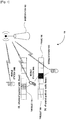
- FIG. 1 is a block diagram illustrating a MUROS environment 100 implementing independent pairing of uplink and downlink channels, according to one embodiment.
- the MUROS environment 100 includes a base station 102, and mobile stations 104A-N connected to the base station 102.
- the base station 102 sends dummy data in the timeslot to the mobile station 104A over a downlink channel.
- the mobile station 104A upon receiving the dummy data, monitors the timeslots available in the frame 106 and generates measurement report data.
- the mobile station 104A sends the dummy data and measurement report data to the base station 102 on the timeslot over an uplink channel.
- the base station 102 evaluates downlink pairing criteria and uplink pairing criteria based on the measurement report data and the dummy data.
- the base station 102 associates a timeslot 108 with the mobile station 104A and the mobile station 104C for downlink data transmission based on downlink pairing criteria. Similarly, the base station 102 associates a timeslot 110 with the mobile station 104A and the mobile station 104B for uplink data transmission based on the uplink pairing criteria.
- the above process is described in greater detail in Figure 2 .
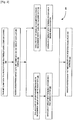
- FIG. 2 is a process flowchart illustrating an exemplary method of allocating timeslots in uplink and downlink in the MUROS environment 100, according to one embodiment.
- a dummy data is transmitted to a mobile station (e.g., the mobile station 104A) on a timeslot of a frame over a downlink channel.
- the mobile station 104A monitors one or more timeslots of the frame 106 and generates a measurement report including measurement report data based on monitoring of the timeslots.
- the measurement report data and the dummy data is received from the mobile station 104A over an uplink channel.
- a set of uplink parameters associated with pairing the uplink channel is evaluated based on the measurement report data and the dummy data.
- Exemplary uplink parameters may include timing advance, signal-to-noise ratio (SNR), FER, BLER, rank of wireless channel matrix and condition number.
- SNR signal-to-noise ratio
- FER bit rate
- BLER rank of wireless channel matrix and condition number.
- a timeslot 110 in the frame 106 is associated with the mobile station 104A and the mobile station 104B for uplink data transmission over the uplink channel.
- the timeslot may be the same or different timeslot on which the dummy data is received in the uplink.
- a set of downlink parameters associated with pairing the downlink channel is evaluated based on the measurement report data and the dummy data.
- exemplary downlink parameters may include timing advance, signal-to-noise ratio (SNR), FER, and BLER.
- SNR signal-to-noise ratio
- FER FER
- BLER BLER
- the timeslot in the uplink and the downlink can be the same or different and is selected based on ability of the base station 102 and the mobile station 104A to successfully decode uplink data and downlink data. More importantly, the base station 102 determines a timeslot to be allocated for uplink data transmission on the uplink channel based on its ability to decode the dummy data received from the mobile station 104A along with the measurement report data.
- SCPIR Sub Channel Power Imbalance Ratio
- paired mobile stations antennas along with the multiple antennas present at the base station 102 form a spatial multiplexing Multiple Input Multiple Output (MIMO) system.
- MIMO Multiple Input Multiple Output
- yi indicates received symbol at the receiving antenna i at the base station 102
- h ij indicates wireless channel between the i th receiving antenna at the base station102
- x j indicates the transmitted symbol from the j th user.
- the performance of such a system depends on the capability of separating and decoding the individual user's streams. This depends on 'Rank' and 'Condition number' of a complex matrix formed by wireless channels ([ h ij]) between the set of transmitting and receiving antennas along with the SNRs seen.
- the performance at the base station 102 may improve if users are paired such that the condition number is close to 1 or does not deviate too much from 1. This parameter largely depends on the proximity of the users and the angular separation between the transmitting signals. As the governing parameters which affect the performance are different in downlink and uplink, the uplink and the downlink parameters separately evaluated at the base station 102.
- the timeslots allocated for the uplink data transmission and the downlink data transmission are indicated to the mobile station 104A such that the mobile station 104A sends and receives the uplink and downlink data on the allocated timeslots 108 and 110. Also, associated frequency hopping sequence for uplink and downlink separately is indicated to the mobile station 104A.
- the timeslots may be indicated through an enhanced resource allocation message, a channel configuration message, and a handover command message. Exemplary assignment command message indicating allocation of the timeslot is shown below.
- exemplary channel description information element is illustrated below table 2 and 3.
- n is the timeslot number indicated by TN. The description is valid only if all the indicated timeslot numbers are in the range 0 to 7. 1 0 X X X TCH/F + FACCH/F and SACCH/M at the time slot indicated by TN, and additional bidirectional TCH/Fs and SACCH/Ms at other timeslots according to the following: X X X: 0 0 0 no additional timeslots 0 0 1 at timeslot n-1 0 1 0 at timeslot n+1, n-1 0 1 1 at timeslot n+1, n-1 and n-2 1 0 0 at timeslot n+1, n-1, n-2, and n-3 1 0 1 at timeslot n+1, n-1, n-2, n-3 and n-4 1 1 0 at timeslot n+1, n-1, n-2, n-3, n-4 and n-5 1 1 1 at timeslot n+1, n-1, n-1,
- TN Timeslot number
- the TN field is coded as the binary representation of the timeslot number as defined in 3GPP TS 3GPP TS 45.010. Range: 0 to 7.
- TSC Training Sequence Code (octet 3)
- the TSC field is coded as the binary representation of the Training Sequence code as defined in 3GPP TS 45.002 Unless stated otherwise by coding of 'Channel type and TDMA offset' IE, TSC Set 1 shall be used. Range: 0 to 7.
- H Hopping channel (octet 3) Bit 5 0 Single RF channel 1 RF hopping channel
- the channel selector field consists of the absolute RF channel number Octet 3 Bits 4 3 0 0 Spare ARFCN, (octet 3, bits 2 and 1, and octet 4, bits 8 to 1)
- the channel selector field consists of the mobile allocation index offset, MAIO, and the hopping sequence number, HSN.
- MAIO (octet 3 bit 4 to 1 high part and octet 4 bit 8 to 7 low part)
- the MAIO field is coded as the binary representation of the mobile allocation index offset as defined in 3GPP TS 45.002. Range: 0 to 63.
- HSN (octet 4 bit 6 to 1)
- the HSN field is coded as the binary representation of the hopping sequence number as defined in 3GPP TS 45.002 Range 0 to 63.
- the base station can assign the same timeslot in the downlink as well as in the uplink for the new mobile station based on the combined evaluation of downlink and uplink parameters so that it can be paired with the best possible incumbent mobile station.
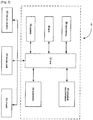
- FIG. 3 is a block diagram of the base station 102 showing various components for implementing embodiments of the present subject matter.
- the base station 102 includes a processor 302, memory 304, a read only memory (ROM) 306, a transceiver 308, a bus 310, a communication interface 312, a display 314, an input device 316, and a cursor control 318.
- ROM read only memory
- the base station 102 includes a processor 302, memory 304, a read only memory (ROM) 306, a transceiver 308, a bus 310, a communication interface 312, a display 314, an input device 316, and a cursor control 318.
- ROM read only memory
- the processor 302 means any type of computational circuit, such as, but not limited to, a microprocessor, a microcontroller, a complex instruction set computing microprocessor, a reduced instruction set computing microprocessor, a very long instruction word microprocessor, an explicitly parallel instruction computing microprocessor, a graphics processor, a digital signal processor, or any other type of processing circuit.
- the processor 302 may also include embedded controllers, such as generic or programmable logic devices or arrays, application specific integrated circuits, single-chip computers, smart cards, and the like.
- the memory 304 and the ROM 306 may be volatile memory and non-volatile memory.
- the memory 304 includes instructions temporarily stored therein to
- Memory elements may include any suitable memory device(s) for storing data and machine-readable instructions, such as read only memory, random access memory, erasable programmable read only memory, electrically erasable programmable read only memory, hard drive, removable media drive for handling memory cards, Memory SticksTM, and the like.
- Embodiments of the present subject matter may be implemented in conjunction with modules, including functions, procedures, data structures, and application programs, for performing tasks, or defining abstract data types or low-level hardware contexts.
- Machine-readable instructions stored on any of the above-mentioned storage media may be executable by the processor 302.
- a computer program may include machine-readable instructions capable of allocating timeslots to a mobile station in uplink channel and downlink channel separately, according to the teachings and herein described embodiments of the present subject matter.
- the program may be included on a storage medium and loaded from the storage medium to a hard drive in the non-volatile memory.
- the machine-readable instructions may cause the base station 102 to encode according to the various embodiments of the present subject matter.
- the bus 310 acts as interconnect between various components of the base station 102.
- the components such as the transceiver 308, the communication interfaces 312, the display 314, the input device 316, and the cursor control 318 are well known to the person skilled in the art and hence the explanation is thereof omitted.
- the various devices, modules, selectors, estimators, and the like described herein may be enabled and operated using hardware circuitry, for example, complementary metal oxide semiconductor based logic circuitry, firmware, software and/or any combination of hardware, firmware, and/or software embodied in a machine readable medium.
- the various electrical structure and methods may be embodied using transistors, logic gates, and electrical circuits, such as application specific integrated circuit.
Landscapes
- Engineering & Computer Science (AREA)
- Signal Processing (AREA)
- Computer Networks & Wireless Communication (AREA)
- Quality & Reliability (AREA)
- Mobile Radio Communication Systems (AREA)
Claims (14)
- Procédé d'une station de base pour l'allocation de créneaux temporels dans un canal de liaison montante et un canal de liaison descendante dans un environnement à utilisateurs multiples réutilisant un même créneau temporel, MUROS, (100), comprenant :la réception de données de mesure d'une première station mobile via le canal de liaison montante ;la détermination d'un ensemble de paramètres définissant la qualité de liaison montante et de liaison descendante associés à l'appariement de la première station mobile respectivement en liaison montante de canal et en liaison descendante de canal sur la base de données de mesure (206, 210) ; etl'association d'un premier créneau temporel dans une trame entre la première station mobile et un deuxième ensemble de stations mobiles pour la transmission de données en liaison montante en utilisant l'ensemble de paramètres déterminés ; etl'association d'un deuxième créneau temporel, lequel est différent du premier créneau temporel, dans la trame entre la première station mobile et un troisième ensemble de stations mobiles pour la transmission de données en liaison descendante sur la base de l'ensemble de paramètres déterminés (208, 212).
- Procédé selon la revendication 1, dans lequel l'ensemble de paramètres comprend un ensemble de paramètres de liaison descendante et un ensemble de paramètres de liaison montante.
- Procédé selon la revendication 2, dans lequel l'ensemble de paramètres de liaison descendante comprend l'avance de temps, le rapport signal/bruit, SNR, le taux d'erreur de trame, FER, et le taux d'erreur de bloc, BLER.
- Procédé selon la revendication 2, dans lequel l'ensemble de paramètres de liaison montante comprend l'avance de temps, le rapport signal/bruit, SNR, FER, BLER, le rang de matrice de canal sans fil et le nombre de conditionnement.
- Procédé selon la revendication 1, comprenant en outre : l'indication d'une association du créneau temporel pour la transmission en liaison montante et du deuxième créneau temporel pour la transmission en liaison descendante à la première station mobile (214) .
- Procédé selon la revendication 1, comprenant en outre : l'indication d'une séquence de sauts de fréquence associée respectivement à la transmission de données en liaison montante et la transmission de données en liaison descendante.
- Procédé selon la revendication 1, dans lequel la réception des données de rapport de mesure de la première station mobile comprend :l'envoi de données factices (104A) à la première station mobile dans un créneau temporel de la trame via un canal de liaison descendante ; etla réception des données de rapport de mesure et des données factices de la première station mobile dans le créneau temporel de la trame via le canal de liaison montante (204).
- Appareil d'une station de base pour l'allocation de créneaux temporels dans un canal de liaison montante et un canal de liaison descendante dans un environnement à utilisateurs multiples réutilisant un même créneau temporel, MUROS, comprenant :un processeur (302) ; etune mémoire (304) couplée au processeur et configurée pour temporairement stocker des instructions lesquelles, lorsque exécutées par le processeur, font en sorte que le processeur mette en oeuvre un procédé comprenant :la réception de données de rapport de mesure d'une première station mobile via le canal de liaison montante ;la détermination d'un ensemble de paramètres définissant la qualité de liaison montante et de liaison descendante associés à l'appariement de la première station mobile respectivement en liaison montante de canal et en liaison descendante de canal sur la base des données de mesure (206, 210) ; etl'association d'un premier créneau temporel dans une trame entre la première station mobile et un deuxième ensemble de stations mobiles pour la transmission de données en liaison montante en utilisant l'ensemble de paramètres déterminés ; etl'association d'un deuxième créneau temporel, lequel est différent du premier créneau temporel, dans la trame entre la première station mobile et un troisième ensemble de stations mobiles pour la transmission de données en liaison descendante sur la base de l'ensemble de paramètres déterminés (208, 212).
- Appareil selon la revendication 8, dans lequel l'ensemble de paramètres comprend un ensemble de paramètres de liaison descendante et un ensemble de paramètres de liaison montante.
- Appareil selon la revendication 9, dans lequel l'ensemble de paramètres de liaison descendante comprend l'avance de temps, le rapport signal/bruit, SNR, le taux d'erreur de trame, FER, et le taux d'erreur de bloc, BLER.
- Appareil selon la revendication 9, dans lequel l'ensemble de paramètres de liaison montante comprend l'avance de temps, le rapport signal/bruit, SNR, le taux d'erreur de trame, FER, le taux d'erreur de bloc, BLER, le rang de matrice de canal sans fil et le nombre de conditionnement.
- Appareil selon la revendication 8, dans lequel le procédé comprend en outre : l'indication d'une association du créneau temporel pour la transmission en liaison montante et du deuxième créneau temporel pour la transmission en liaison descendante à la première station mobile (214).
- Appareil selon la revendication 8, dans lequel le procédé comprend en outre : l'indication d'une séquence de sauts de fréquence associée respectivement à la transmission de données en liaison montante et la transmission de données en liaison descendante.
- Appareil selon la revendication 8,
dans lequel la réception des données de rapport de mesure de la première station mobile comprend :l'envoi de données factices à la première station mobile (104A) dans un créneau temporel de la trame via un canal de liaison descendante (202) ; etla réception des données de rapport de mesure et des données factices de la première station mobile dans le créneau temporel de la trame via le canal de liaison montante (204).
Applications Claiming Priority (2)
| Application Number | Priority Date | Filing Date | Title |
|---|---|---|---|
| IN1336CH2010 | 2010-05-12 | ||
| PCT/KR2011/003526 WO2011142613A2 (fr) | 2010-05-12 | 2011-05-12 | Procédé et système d'allocation de créneaux temporels dans un environnement à utilisateurs multiples réutilisant un même créneau temporel (muros) |
Publications (3)
| Publication Number | Publication Date |
|---|---|
| EP2569997A2 EP2569997A2 (fr) | 2013-03-20 |
| EP2569997A4 EP2569997A4 (fr) | 2013-12-04 |
| EP2569997B1 true EP2569997B1 (fr) | 2019-04-10 |
Family
ID=44914843
Family Applications (1)
| Application Number | Title | Priority Date | Filing Date |
|---|---|---|---|
| EP11780830.3A Not-in-force EP2569997B1 (fr) | 2010-05-12 | 2011-05-12 | Procédé et système d'allocation de créneaux temporels dans un environnement à utilisateurs multiples réutilisant un même créneau temporel (muros) |
Country Status (4)
| Country | Link |
|---|---|
| US (1) | US9391748B2 (fr) |
| EP (1) | EP2569997B1 (fr) |
| KR (1) | KR101833563B1 (fr) |
| WO (1) | WO2011142613A2 (fr) |
Families Citing this family (2)
| Publication number | Priority date | Publication date | Assignee | Title |
|---|---|---|---|---|
| CN106954179B (zh) * | 2017-04-21 | 2020-05-05 | 迈锐数据(北京)有限公司 | 一种时隙复用通信方法、时隙分配方法和无线接入设备 |
| WO2019232262A1 (fr) * | 2018-05-30 | 2019-12-05 | Arris Enterprises Llc | Équilibrage de charge entre des bandes et des points d'accès dans un réseau sans fil |
Citations (1)
| Publication number | Priority date | Publication date | Assignee | Title |
|---|---|---|---|---|
| WO2009076274A2 (fr) * | 2007-12-06 | 2009-06-18 | Interdigital Patent Holdings, Inc. | Procédé et appareil de signalisation dans un fonctionnement à utilisateurs multiples et unique intervalle de temps dans une communication sans fil |
Family Cites Families (10)
| Publication number | Priority date | Publication date | Assignee | Title |
|---|---|---|---|---|
| US6810236B2 (en) | 2001-05-14 | 2004-10-26 | Interdigital Technology Corporation | Dynamic channel quality measurement procedure for adaptive modulation and coding techniques |
| JP3629017B2 (ja) * | 2002-08-20 | 2005-03-16 | 松下電器産業株式会社 | アウターループ送信電力制御方法および無線通信装置 |
| BRPI0816696B1 (pt) * | 2007-09-12 | 2020-08-04 | Qualcomm Incorporated | Dispositivos e métodos para comunicação sem fio com capacidade aumentada |
| ATE555554T1 (de) * | 2008-03-31 | 2012-05-15 | Ericsson Telefon Ab L M | Zeitschlitzspringen zur übertragung von anrufdaten |
| WO2010019556A1 (fr) * | 2008-08-12 | 2010-02-18 | Interdigital Patent Holdings, Inc. | Procédé et appareil d'attribution de canal de commande dans un réseau geran à l'aide du concept de sous-canaux orthogonaux |
| ES2381694T3 (es) * | 2008-08-18 | 2012-05-30 | Research In Motion Limited | Sistemas y métodos para selección, transmisión y recepción de secuencias de formación |
| EP2342879B1 (fr) | 2008-08-20 | 2013-04-10 | QUALCOMM Incorporated | Modulation muros utilisant des combinaisons linéaires en bande de base avec mise en forme d'impulsions gaussienne linéaire pour deux utilisateurs sur un seul intervalle de temps utilisé par des stations distantes non-darp et darp |
| MX2011002704A (es) * | 2008-09-12 | 2011-04-21 | Qualcomm Inc | Un metodo y aparato para señalizacion a un dispositivo movil que establece codigos de secuencia de entrenamiento para uso en un enlace de comunicacion. |
| US9832815B2 (en) * | 2008-09-25 | 2017-11-28 | Samsung Electronics Co., Ltd. | Method and system for managing communication in wireless communication network |
| US8416740B2 (en) * | 2009-08-25 | 2013-04-09 | Marvell World Trade Ltd. | Grouping of users onto traffic channels in multiple-users-per-channel transmission schemes |
-
2011
- 2011-05-12 EP EP11780830.3A patent/EP2569997B1/fr not_active Not-in-force
- 2011-05-12 US US13/697,476 patent/US9391748B2/en not_active Expired - Fee Related
- 2011-05-12 WO PCT/KR2011/003526 patent/WO2011142613A2/fr not_active Ceased
- 2011-05-12 KR KR1020127032505A patent/KR101833563B1/ko not_active Expired - Fee Related
Patent Citations (1)
| Publication number | Priority date | Publication date | Assignee | Title |
|---|---|---|---|---|
| WO2009076274A2 (fr) * | 2007-12-06 | 2009-06-18 | Interdigital Patent Holdings, Inc. | Procédé et appareil de signalisation dans un fonctionnement à utilisateurs multiples et unique intervalle de temps dans une communication sans fil |
Also Published As
| Publication number | Publication date |
|---|---|
| US9391748B2 (en) | 2016-07-12 |
| EP2569997A2 (fr) | 2013-03-20 |
| EP2569997A4 (fr) | 2013-12-04 |
| US20130058249A1 (en) | 2013-03-07 |
| WO2011142613A3 (fr) | 2012-03-01 |
| KR20130064085A (ko) | 2013-06-17 |
| KR101833563B1 (ko) | 2018-02-28 |
| WO2011142613A2 (fr) | 2011-11-17 |
Similar Documents
| Publication | Publication Date | Title |
|---|---|---|
| CA3062720C (fr) | Rétroaction d’information d’état de canal pour des signaux de commande en liaison montante flexibles | |
| CN114614961B (zh) | 报告信道状态信息的方法和装置 | |
| CN108401303B (zh) | 终端、网络设备和通信方法 | |
| EP3238361B1 (fr) | Émission d'informations de commande en liaison montante en agrégation de porteuses avec un grand nombre de cellules | |
| EP3127385B1 (fr) | Signalisation de paramètre de brouillage pour une annulation et une suppression efficaces de brouillage | |
| EP2702819B1 (fr) | Appareil et procédé d'attribution de ressources pour des canaux de données et de commande dans un système de communication sans fil | |
| CN108738149B (zh) | 处理共同搜寻空间的装置及方法 | |
| EP2958388B1 (fr) | Procédé et dispositif pour planifier une ressource de bande de fréquence | |
| CN114567420B (zh) | 用户设备和接收方法 | |
| US11476906B2 (en) | Base station, terminal, and communication method | |
| CN102780662B (zh) | 移动通信系统中的单天线干扰消除 | |
| WO2018091072A1 (fr) | Création de rapport d'indicateur de qualité de canal (cqi) configurable, pour des réseaux sans fil | |
| WO2020034870A1 (fr) | Détection de faux positifs dans un canal de commande de liaison descendante nb-iot, sur la base d'un débit de code efficace et planifié | |
| EP2143226B1 (fr) | Communications par canal de commande dans un réseau de communications cellulaires | |
| CN108347294B (zh) | 一种数据检测方法及终端 | |
| CN114503715A (zh) | 通信方法及设备 | |
| EP2569997B1 (fr) | Procédé et système d'allocation de créneaux temporels dans un environnement à utilisateurs multiples réutilisant un même créneau temporel (muros) | |
| KR20100092373A (ko) | Muros 시스템에서의 절대 전력 레벨의 추정 방법 및 장치 | |
| AU2012372946B2 (en) | Blind decoding | |
| EP4668956A1 (fr) | Procédé et appareil de détermination de taille de bloc de transport, dispositif et support de stockage | |
| WO2011082827A1 (fr) | Appareil et procédé pour émettre/recevoir des informations d'état de canaux dans un système de communication |
Legal Events
| Date | Code | Title | Description |
|---|---|---|---|
| PUAI | Public reference made under article 153(3) epc to a published international application that has entered the european phase |
Free format text: ORIGINAL CODE: 0009012 |
|
| 17P | Request for examination filed |
Effective date: 20121210 |
|
| AK | Designated contracting states |
Kind code of ref document: A2 Designated state(s): AL AT BE BG CH CY CZ DE DK EE ES FI FR GB GR HR HU IE IS IT LI LT LU LV MC MK MT NL NO PL PT RO RS SE SI SK SM TR |
|
| DAX | Request for extension of the european patent (deleted) | ||
| A4 | Supplementary search report drawn up and despatched |
Effective date: 20131104 |
|
| RIC1 | Information provided on ipc code assigned before grant |
Ipc: H04W 24/10 20090101ALI20131028BHEP Ipc: H04W 72/04 20090101AFI20131028BHEP Ipc: H04W 72/08 20090101ALI20131028BHEP Ipc: H04L 5/00 20060101ALI20131028BHEP |
|
| STAA | Information on the status of an ep patent application or granted ep patent |
Free format text: STATUS: EXAMINATION IS IN PROGRESS |
|
| 17Q | First examination report despatched |
Effective date: 20170306 |
|
| GRAP | Despatch of communication of intention to grant a patent |
Free format text: ORIGINAL CODE: EPIDOSNIGR1 |
|
| STAA | Information on the status of an ep patent application or granted ep patent |
Free format text: STATUS: GRANT OF PATENT IS INTENDED |
|
| RIC1 | Information provided on ipc code assigned before grant |
Ipc: H04W 72/08 20090101ALN20181011BHEP Ipc: H04L 5/00 20060101ALI20181011BHEP Ipc: H04W 24/10 20090101ALN20181011BHEP Ipc: H04W 72/04 20090101AFI20181011BHEP |
|
| INTG | Intention to grant announced |
Effective date: 20181102 |
|
| GRAS | Grant fee paid |
Free format text: ORIGINAL CODE: EPIDOSNIGR3 |
|
| GRAA | (expected) grant |
Free format text: ORIGINAL CODE: 0009210 |
|
| STAA | Information on the status of an ep patent application or granted ep patent |
Free format text: STATUS: THE PATENT HAS BEEN GRANTED |
|
| AK | Designated contracting states |
Kind code of ref document: B1 Designated state(s): AL AT BE BG CH CY CZ DE DK EE ES FI FR GB GR HR HU IE IS IT LI LT LU LV MC MK MT NL NO PL PT RO RS SE SI SK SM TR |
|
| REG | Reference to a national code |
Ref country code: GB Ref legal event code: FG4D |
|
| REG | Reference to a national code |
Ref country code: CH Ref legal event code: EP Ref country code: AT Ref legal event code: REF Ref document number: 1120455 Country of ref document: AT Kind code of ref document: T Effective date: 20190415 |
|
| REG | Reference to a national code |
Ref country code: DE Ref legal event code: R096 Ref document number: 602011057982 Country of ref document: DE |
|
| REG | Reference to a national code |
Ref country code: IE Ref legal event code: FG4D |
|
| REG | Reference to a national code |
Ref country code: NL Ref legal event code: MP Effective date: 20190410 |
|
| REG | Reference to a national code |
Ref country code: LT Ref legal event code: MG4D |
|
| REG | Reference to a national code |
Ref country code: AT Ref legal event code: MK05 Ref document number: 1120455 Country of ref document: AT Kind code of ref document: T Effective date: 20190410 |
|
| PG25 | Lapsed in a contracting state [announced via postgrant information from national office to epo] |
Ref country code: NL Free format text: LAPSE BECAUSE OF FAILURE TO SUBMIT A TRANSLATION OF THE DESCRIPTION OR TO PAY THE FEE WITHIN THE PRESCRIBED TIME-LIMIT Effective date: 20190410 |
|
| PG25 | Lapsed in a contracting state [announced via postgrant information from national office to epo] |
Ref country code: ES Free format text: LAPSE BECAUSE OF FAILURE TO SUBMIT A TRANSLATION OF THE DESCRIPTION OR TO PAY THE FEE WITHIN THE PRESCRIBED TIME-LIMIT Effective date: 20190410 Ref country code: AL Free format text: LAPSE BECAUSE OF FAILURE TO SUBMIT A TRANSLATION OF THE DESCRIPTION OR TO PAY THE FEE WITHIN THE PRESCRIBED TIME-LIMIT Effective date: 20190410 Ref country code: SE Free format text: LAPSE BECAUSE OF FAILURE TO SUBMIT A TRANSLATION OF THE DESCRIPTION OR TO PAY THE FEE WITHIN THE PRESCRIBED TIME-LIMIT Effective date: 20190410 Ref country code: HR Free format text: LAPSE BECAUSE OF FAILURE TO SUBMIT A TRANSLATION OF THE DESCRIPTION OR TO PAY THE FEE WITHIN THE PRESCRIBED TIME-LIMIT Effective date: 20190410 Ref country code: NO Free format text: LAPSE BECAUSE OF FAILURE TO SUBMIT A TRANSLATION OF THE DESCRIPTION OR TO PAY THE FEE WITHIN THE PRESCRIBED TIME-LIMIT Effective date: 20190710 Ref country code: PT Free format text: LAPSE BECAUSE OF FAILURE TO SUBMIT A TRANSLATION OF THE DESCRIPTION OR TO PAY THE FEE WITHIN THE PRESCRIBED TIME-LIMIT Effective date: 20190910 Ref country code: LT Free format text: LAPSE BECAUSE OF FAILURE TO SUBMIT A TRANSLATION OF THE DESCRIPTION OR TO PAY THE FEE WITHIN THE PRESCRIBED TIME-LIMIT Effective date: 20190410 Ref country code: FI Free format text: LAPSE BECAUSE OF FAILURE TO SUBMIT A TRANSLATION OF THE DESCRIPTION OR TO PAY THE FEE WITHIN THE PRESCRIBED TIME-LIMIT Effective date: 20190410 |
|
| PG25 | Lapsed in a contracting state [announced via postgrant information from national office to epo] |
Ref country code: PL Free format text: LAPSE BECAUSE OF FAILURE TO SUBMIT A TRANSLATION OF THE DESCRIPTION OR TO PAY THE FEE WITHIN THE PRESCRIBED TIME-LIMIT Effective date: 20190410 Ref country code: RS Free format text: LAPSE BECAUSE OF FAILURE TO SUBMIT A TRANSLATION OF THE DESCRIPTION OR TO PAY THE FEE WITHIN THE PRESCRIBED TIME-LIMIT Effective date: 20190410 Ref country code: LV Free format text: LAPSE BECAUSE OF FAILURE TO SUBMIT A TRANSLATION OF THE DESCRIPTION OR TO PAY THE FEE WITHIN THE PRESCRIBED TIME-LIMIT Effective date: 20190410 Ref country code: GR Free format text: LAPSE BECAUSE OF FAILURE TO SUBMIT A TRANSLATION OF THE DESCRIPTION OR TO PAY THE FEE WITHIN THE PRESCRIBED TIME-LIMIT Effective date: 20190711 Ref country code: BG Free format text: LAPSE BECAUSE OF FAILURE TO SUBMIT A TRANSLATION OF THE DESCRIPTION OR TO PAY THE FEE WITHIN THE PRESCRIBED TIME-LIMIT Effective date: 20190710 |
|
| REG | Reference to a national code |
Ref country code: CH Ref legal event code: PL |
|
| PG25 | Lapsed in a contracting state [announced via postgrant information from national office to epo] |
Ref country code: IS Free format text: LAPSE BECAUSE OF FAILURE TO SUBMIT A TRANSLATION OF THE DESCRIPTION OR TO PAY THE FEE WITHIN THE PRESCRIBED TIME-LIMIT Effective date: 20190810 Ref country code: AT Free format text: LAPSE BECAUSE OF FAILURE TO SUBMIT A TRANSLATION OF THE DESCRIPTION OR TO PAY THE FEE WITHIN THE PRESCRIBED TIME-LIMIT Effective date: 20190410 |
|
| REG | Reference to a national code |
Ref country code: DE Ref legal event code: R097 Ref document number: 602011057982 Country of ref document: DE |
|
| PG25 | Lapsed in a contracting state [announced via postgrant information from national office to epo] |
Ref country code: DK Free format text: LAPSE BECAUSE OF FAILURE TO SUBMIT A TRANSLATION OF THE DESCRIPTION OR TO PAY THE FEE WITHIN THE PRESCRIBED TIME-LIMIT Effective date: 20190410 Ref country code: CH Free format text: LAPSE BECAUSE OF NON-PAYMENT OF DUE FEES Effective date: 20190531 Ref country code: MC Free format text: LAPSE BECAUSE OF FAILURE TO SUBMIT A TRANSLATION OF THE DESCRIPTION OR TO PAY THE FEE WITHIN THE PRESCRIBED TIME-LIMIT Effective date: 20190410 Ref country code: SK Free format text: LAPSE BECAUSE OF FAILURE TO SUBMIT A TRANSLATION OF THE DESCRIPTION OR TO PAY THE FEE WITHIN THE PRESCRIBED TIME-LIMIT Effective date: 20190410 Ref country code: LI Free format text: LAPSE BECAUSE OF NON-PAYMENT OF DUE FEES Effective date: 20190531 Ref country code: EE Free format text: LAPSE BECAUSE OF FAILURE TO SUBMIT A TRANSLATION OF THE DESCRIPTION OR TO PAY THE FEE WITHIN THE PRESCRIBED TIME-LIMIT Effective date: 20190410 Ref country code: CZ Free format text: LAPSE BECAUSE OF FAILURE TO SUBMIT A TRANSLATION OF THE DESCRIPTION OR TO PAY THE FEE WITHIN THE PRESCRIBED TIME-LIMIT Effective date: 20190410 Ref country code: RO Free format text: LAPSE BECAUSE OF FAILURE TO SUBMIT A TRANSLATION OF THE DESCRIPTION OR TO PAY THE FEE WITHIN THE PRESCRIBED TIME-LIMIT Effective date: 20190410 |
|
| REG | Reference to a national code |
Ref country code: BE Ref legal event code: MM Effective date: 20190531 |
|
| PLBE | No opposition filed within time limit |
Free format text: ORIGINAL CODE: 0009261 |
|
| STAA | Information on the status of an ep patent application or granted ep patent |
Free format text: STATUS: NO OPPOSITION FILED WITHIN TIME LIMIT |
|
| PG25 | Lapsed in a contracting state [announced via postgrant information from national office to epo] |
Ref country code: LU Free format text: LAPSE BECAUSE OF NON-PAYMENT OF DUE FEES Effective date: 20190512 Ref country code: SM Free format text: LAPSE BECAUSE OF FAILURE TO SUBMIT A TRANSLATION OF THE DESCRIPTION OR TO PAY THE FEE WITHIN THE PRESCRIBED TIME-LIMIT Effective date: 20190410 Ref country code: IT Free format text: LAPSE BECAUSE OF FAILURE TO SUBMIT A TRANSLATION OF THE DESCRIPTION OR TO PAY THE FEE WITHIN THE PRESCRIBED TIME-LIMIT Effective date: 20190410 |
|
| 26N | No opposition filed |
Effective date: 20200113 |
|
| GBPC | Gb: european patent ceased through non-payment of renewal fee |
Effective date: 20190710 |
|
| PG25 | Lapsed in a contracting state [announced via postgrant information from national office to epo] |
Ref country code: TR Free format text: LAPSE BECAUSE OF FAILURE TO SUBMIT A TRANSLATION OF THE DESCRIPTION OR TO PAY THE FEE WITHIN THE PRESCRIBED TIME-LIMIT Effective date: 20190410 |
|
| PG25 | Lapsed in a contracting state [announced via postgrant information from national office to epo] |
Ref country code: GB Free format text: LAPSE BECAUSE OF NON-PAYMENT OF DUE FEES Effective date: 20190710 Ref country code: IE Free format text: LAPSE BECAUSE OF NON-PAYMENT OF DUE FEES Effective date: 20190512 |
|
| PG25 | Lapsed in a contracting state [announced via postgrant information from national office to epo] |
Ref country code: BE Free format text: LAPSE BECAUSE OF NON-PAYMENT OF DUE FEES Effective date: 20190531 Ref country code: SI Free format text: LAPSE BECAUSE OF FAILURE TO SUBMIT A TRANSLATION OF THE DESCRIPTION OR TO PAY THE FEE WITHIN THE PRESCRIBED TIME-LIMIT Effective date: 20190410 |
|
| PG25 | Lapsed in a contracting state [announced via postgrant information from national office to epo] |
Ref country code: FR Free format text: LAPSE BECAUSE OF NON-PAYMENT OF DUE FEES Effective date: 20190610 |
|
| PGFP | Annual fee paid to national office [announced via postgrant information from national office to epo] |
Ref country code: DE Payment date: 20200421 Year of fee payment: 10 |
|
| PG25 | Lapsed in a contracting state [announced via postgrant information from national office to epo] |
Ref country code: CY Free format text: LAPSE BECAUSE OF FAILURE TO SUBMIT A TRANSLATION OF THE DESCRIPTION OR TO PAY THE FEE WITHIN THE PRESCRIBED TIME-LIMIT Effective date: 20190410 |
|
| PG25 | Lapsed in a contracting state [announced via postgrant information from national office to epo] |
Ref country code: MT Free format text: LAPSE BECAUSE OF FAILURE TO SUBMIT A TRANSLATION OF THE DESCRIPTION OR TO PAY THE FEE WITHIN THE PRESCRIBED TIME-LIMIT Effective date: 20190410 Ref country code: HU Free format text: LAPSE BECAUSE OF FAILURE TO SUBMIT A TRANSLATION OF THE DESCRIPTION OR TO PAY THE FEE WITHIN THE PRESCRIBED TIME-LIMIT; INVALID AB INITIO Effective date: 20110512 |
|
| REG | Reference to a national code |
Ref country code: DE Ref legal event code: R119 Ref document number: 602011057982 Country of ref document: DE |
|
| PG25 | Lapsed in a contracting state [announced via postgrant information from national office to epo] |
Ref country code: DE Free format text: LAPSE BECAUSE OF NON-PAYMENT OF DUE FEES Effective date: 20211201 |
|
| PG25 | Lapsed in a contracting state [announced via postgrant information from national office to epo] |
Ref country code: MK Free format text: LAPSE BECAUSE OF FAILURE TO SUBMIT A TRANSLATION OF THE DESCRIPTION OR TO PAY THE FEE WITHIN THE PRESCRIBED TIME-LIMIT Effective date: 20190410 |