EP2570075A2 - Unité de commande d'ouverture numérique (na), sonde optique variable comprenant l'unité de commande na et procédé de balayage de profondeur à l'aide de l'unité de commande na - Google Patents
Unité de commande d'ouverture numérique (na), sonde optique variable comprenant l'unité de commande na et procédé de balayage de profondeur à l'aide de l'unité de commande na Download PDFInfo
- Publication number
- EP2570075A2 EP2570075A2 EP20120184541 EP12184541A EP2570075A2 EP 2570075 A2 EP2570075 A2 EP 2570075A2 EP 20120184541 EP20120184541 EP 20120184541 EP 12184541 A EP12184541 A EP 12184541A EP 2570075 A2 EP2570075 A2 EP 2570075A2
- Authority
- EP
- European Patent Office
- Prior art keywords
- light
- fluid
- aperture
- unit
- substrate
- Prior art date
- Legal status (The legal status is an assumption and is not a legal conclusion. Google has not performed a legal analysis and makes no representation as to the accuracy of the status listed.)
- Granted
Links
Images






Classifications
-
- A—HUMAN NECESSITIES
- A61—MEDICAL OR VETERINARY SCIENCE; HYGIENE
- A61B—DIAGNOSIS; SURGERY; IDENTIFICATION
- A61B5/00—Measuring for diagnostic purposes; Identification of persons
- A61B5/0059—Measuring for diagnostic purposes; Identification of persons using light, e.g. diagnosis by transillumination, diascopy, fluorescence
- A61B5/0062—Arrangements for scanning
- A61B5/0066—Optical coherence imaging
-
- A—HUMAN NECESSITIES
- A61—MEDICAL OR VETERINARY SCIENCE; HYGIENE
- A61B—DIAGNOSIS; SURGERY; IDENTIFICATION
- A61B5/00—Measuring for diagnostic purposes; Identification of persons
- A61B5/06—Devices, other than using radiation, for detecting or locating foreign bodies ; Determining position of diagnostic devices within or on the body of the patient
-
- G—PHYSICS
- G01—MEASURING; TESTING
- G01B—MEASURING LENGTH, THICKNESS OR SIMILAR LINEAR DIMENSIONS; MEASURING ANGLES; MEASURING AREAS; MEASURING IRREGULARITIES OF SURFACES OR CONTOURS
- G01B11/00—Measuring arrangements characterised by the use of optical techniques
- G01B11/22—Measuring arrangements characterised by the use of optical techniques for measuring depth
-
- G—PHYSICS
- G01—MEASURING; TESTING
- G01B—MEASURING LENGTH, THICKNESS OR SIMILAR LINEAR DIMENSIONS; MEASURING ANGLES; MEASURING AREAS; MEASURING IRREGULARITIES OF SURFACES OR CONTOURS
- G01B9/00—Measuring instruments characterised by the use of optical techniques
- G01B9/02—Interferometers
-
- G—PHYSICS
- G01—MEASURING; TESTING
- G01B—MEASURING LENGTH, THICKNESS OR SIMILAR LINEAR DIMENSIONS; MEASURING ANGLES; MEASURING AREAS; MEASURING IRREGULARITIES OF SURFACES OR CONTOURS
- G01B9/00—Measuring instruments characterised by the use of optical techniques
- G01B9/02—Interferometers
- G01B9/02055—Reduction or prevention of errors; Testing; Calibration
- G01B9/02062—Active error reduction, i.e. varying with time
- G01B9/02063—Active error reduction, i.e. varying with time by particular alignment of focus position, e.g. dynamic focussing in optical coherence tomography
-
- G—PHYSICS
- G01—MEASURING; TESTING
- G01B—MEASURING LENGTH, THICKNESS OR SIMILAR LINEAR DIMENSIONS; MEASURING ANGLES; MEASURING AREAS; MEASURING IRREGULARITIES OF SURFACES OR CONTOURS
- G01B9/00—Measuring instruments characterised by the use of optical techniques
- G01B9/02—Interferometers
- G01B9/0209—Low-coherence interferometers
- G01B9/02091—Tomographic interferometers, e.g. based on optical coherence
-
- G—PHYSICS
- G01—MEASURING; TESTING
- G01N—INVESTIGATING OR ANALYSING MATERIALS BY DETERMINING THEIR CHEMICAL OR PHYSICAL PROPERTIES
- G01N29/00—Investigating or analysing materials by the use of ultrasonic, sonic or infrasonic waves; Visualisation of the interior of objects by transmitting ultrasonic or sonic waves through the object
- G01N29/22—Details, e.g. general constructional or apparatus details
- G01N29/24—Probes
-
- G—PHYSICS
- G02—OPTICS
- G02B—OPTICAL ELEMENTS, SYSTEMS OR APPARATUS
- G02B21/00—Microscopes
- G02B21/0004—Microscopes specially adapted for specific applications
- G02B21/002—Scanning microscopes
- G02B21/0024—Confocal scanning microscopes (CSOMs) or confocal "macroscopes"; Accessories which are not restricted to use with CSOMs, e.g. sample holders
- G02B21/0052—Optical details of the image generation
- G02B21/006—Optical details of the image generation focusing arrangements; selection of the plane to be imaged
-
- G—PHYSICS
- G02—OPTICS
- G02B—OPTICAL ELEMENTS, SYSTEMS OR APPARATUS
- G02B26/00—Optical devices or arrangements for the control of light using movable or deformable optical elements
- G02B26/004—Optical devices or arrangements for the control of light using movable or deformable optical elements based on a displacement or a deformation of a fluid
- G02B26/005—Optical devices or arrangements for the control of light using movable or deformable optical elements based on a displacement or a deformation of a fluid based on electrowetting
-
- G—PHYSICS
- G02—OPTICS
- G02B—OPTICAL ELEMENTS, SYSTEMS OR APPARATUS
- G02B26/00—Optical devices or arrangements for the control of light using movable or deformable optical elements
- G02B26/08—Optical devices or arrangements for the control of light using movable or deformable optical elements for controlling the direction of light
- G02B26/10—Scanning systems
- G02B26/101—Scanning systems with both horizontal and vertical deflecting means, e.g. raster or XY scanners
-
- G—PHYSICS
- G02—OPTICS
- G02B—OPTICAL ELEMENTS, SYSTEMS OR APPARATUS
- G02B3/00—Simple or compound lenses
- G02B3/12—Fluid-filled or evacuated lenses
- G02B3/14—Fluid-filled or evacuated lenses of variable focal length
-
- G—PHYSICS
- G02—OPTICS
- G02B—OPTICAL ELEMENTS, SYSTEMS OR APPARATUS
- G02B5/00—Optical elements other than lenses
- G02B5/005—Diaphragms
-
- A—HUMAN NECESSITIES
- A61—MEDICAL OR VETERINARY SCIENCE; HYGIENE
- A61B—DIAGNOSIS; SURGERY; IDENTIFICATION
- A61B5/00—Measuring for diagnostic purposes; Identification of persons
- A61B5/44—Detecting, measuring or recording for evaluating the integumentary system, e.g. skin, hair or nails
- A61B5/441—Skin evaluation, e.g. for skin disorder diagnosis
- A61B5/444—Evaluating skin marks, e.g. mole, nevi, tumour, scar
Definitions
- Exemplary embodiments described herein relate to numerical aperture (NA) controlling units that control numerical aperture (NA), variable optical probes which include the NA controlling units, and depth scanning methods which use the NA controlling units.
- NA numerical aperture
- NA numerical aperture
- variable optical probes which include the NA controlling units
- depth scanning methods which use the NA controlling units.
- OCT optical coherence tomography
- OCT researchers have recently conducted research based on an ultimate goal of performing cancer diagnosis inside tissue in real-time without performing a biopsy by combining characteristics of OCT and high-resolution surface tomography, for example, by using confocal microscopy.
- microscopes are generally employed in conjunction with an optical system having a relatively high numerical aperture (NA) so as to realize a relatively high resolution in a horizontal direction
- an OCT device is generally employed in conjunction with an optical system having a relatively low NA which corresponds to a relatively uniform spot size in a depth direction, i.e., a relatively large depth of focus (DOF), so as to obtain depth information.
- NA numerical aperture
- DOF relatively large depth of focus
- NA controlling units that control numerical apertures (NAs) by performing focus adjustment and NA control selectively or simultaneously, variable optical probes which include the NA controlling units, and depth scanning methods which are performed by using the NA controlling units.
- a numerical aperture (NA) controlling unit includes: an aperture adjustment unit which adjusts an aperture through which light propagates; and a focus control unit that has an adjustable focal length and that is disposed in a predetermined position with respect to the aperture adjustment unit, which focus control unit focuses light which propagates through the aperture.
- NA numerical aperture
- the aperture adjustment unit may include a mechanical diaphragm having an aperture size which is mechanically adjustable.
- the aperture adjustment unit may include a liquid diaphragm having an aperture size which is adjustable by using hydraulics.
- the aperture adjustment unit may include a liquid diaphragm having an aperture size which is adjustable by using a microelectrofluidic method.
- the aperture adjustment unit may include: a chamber that forms a space in which a fluid flows; a first fluid and a second fluid that are accommodated in the chamber, wherein the first fluid is immiscible with the second fluid, and wherein one of the first fluid and the second fluid is formed of a material having a light-transmitting property and an other one of the first fluid and the second fluid is formed of a material having at least one of a light-blocking property and a light-absorbing property; and an electrode portion that is disposed inside the chamber and in which at least one electrode to which at least one voltage is applied so as to form an electric field in the chamber is arranged, wherein the aperture through which light propagates is adjustable based on a change of a position of an interface between the first fluid and the second fluid, which change of position is caused by the electric field.
- One of the first fluid and the second fluid may include one of a liquid metal and a polar liquid, and an other one of the first fluid and the second fluid may include one of a gas and a non-polar liquid.
- a region of the chamber may include: a first channel; and a second channel that is disposed above the first channel and that is connected to the first channel, wherein a range of the aperture is defined by a change of a position of a first interface between the first fluid and the second fluid in the first channel and a change of a position of a second interface between the first fluid and the second fluid in the second channel.
- the first channel may be formed by a first substrate on which the electrode portion is disposed, a second substrate that is spaced apart from the first substrate and that has a first through hole formed in a central portion of the second substrate and a second through hole formed in a peripheral portion of the second substrate, and a first spacer that is disposed to form an internal space between the first substrate and the second substrate.
- the second channel may be formed by the second substrate, a third substrate that is spaced apart from the second substrate, and a second spacer that is disposed to form an internal space between the second substrate and the third substrate.
- the focus control unit may include a liquid crystal lens having a focal length which is adjustable by applying an electric field gradient to liquid crystals included in the liquid crystal lens to induce a refractive index gradient.
- the focus control unit may include a liquid lens having a focal length which is adjustable by flowing a fluid on a fluid surface which acts as a lens surface such that a shape of the lens surface is correspondingly adjustable.
- the flowing of the fluid may be caused by electrowetting.
- the focus control unit may include: a first fluid that has a light-transmitting property and a polar property; a second fluid that has a light-transmitting property and that is immiscible with the first fluid; a chamber having an internal space in which the first fluid and the second fluid are accommodated; a first surface which acts as a first boundary between the first fluid and the second fluid and which forms a lens surface; a second surface which acts as a second boundary between the first fluid and the second fluid and which induces a change in a curvature of the lens surface; a first intermediate plate that is disposed in the chamber and that has a first through hole which defines a diameter of a lens corresponding to the lens surface and a second through hole which forms a path traversed by the second fluid; and an electrode portion that forms an electric field which causes a variation of a position of the second surface.
- the first fluid may include a polar liquid
- the second fluid may include one of a gas and a non-polar liquid.
- a depth scanning method for irradiating light by scanning a sample in a depth direction includes using the NA controlling unit to vary a focal length and an aperture size simultaneously such that a predetermined numerical aperture is maintained.
- a variable optical probe includes: a light transmission unit; a collimator that collimates light which propagates via the light transmission unit into parallel light; the NA controlling unit described above, which focuses light on a sample to be inspected; and a scanner that varies a path of light which propagates via the light transmission unit such that a predetermined region of the sample is scanned by light that passes through the NA controlling unit.
- the light transmission unit may include an optical fiber.
- the scanner may include an actuator that is disposed on one end of the optical fiber and that induces a deformation of the optical fiber to vary the path of the light which propagates via the optical fiber, or a micro-electromechanical systems (MEMS) scanner that varies the path of the light which propagates via the optical fiber by driving a mirror surface.
- MEMS micro-electromechanical systems
- an image diagnosis system includes: a light source unit; the variable optical probe described above, which scans light emitted from the light source unit on tissue to be inspected; and a detector that detects an image of the tissue by using light reflected from the tissue.
- a method for detecting an image by using the image diagnosis system described above includes: controlling the NA controlling unit by using a predetermined numerical aperture (NA) value such that light is focused on a tissue surface at a first depth; scanning a predetermined region of the tissue surface at the first depth and detecting a first image; controlling the focus control unit such that the focal length of the focus control unit is increased and light is focused on the tissue surface at a second depth, and using the aperture adjustment unit to control a size of the aperture such that the predetermined NA value is maintained; and scanning a predetermined region of the tissue surface at the second depth and detecting a second image.
- NA numerical aperture
- an image diagnosis system includes: a light source unit that emits light; an aperture adjustment unit which adjusts an aperture through which light emitted from the light source unit propagates; a focus control unit that has an adjustable focal length and that is disposed in a predetermined position with respect to the aperture adjustment unit, which focus control unit focuses light which propagates through the aperture on a sample; and a detector that detects an image of the sample by using light reflected from the sample, wherein a numerical aperture (NA) is controlled by controlling the aperture adjustment unit and the focus control unit, and the image of the sample is detected while a constant distance between the sample and the focus control unit is maintained.
- NA numerical aperture
- the aperture adjustment unit may include at least one of a mechanical diaphragm having an aperture size which is mechanically adjustable, a liquid diaphragm having an aperture size which is adjustable by using hydraulics, and a liquid diaphragm having an aperture size which is adjustable by using a microelectrofluidic method.
- the focus control unit may include a liquid lens having a focal length which is adjustable by flowing a fluid on a fluid surface which acts as a lens surface such that a shape of the lens surface is correspondingly adjustable.
- the flowing of the fluid may be caused by one of electrowetting and pressurization.
- the focus control unit may include a liquid crystal lens having a focal length which is adjustable by applying an electric field gradient to liquid crystals included in the focus control unit to induce a refractive index gradient.
- the image diagnosis system may further include a scanner that scans light emitted from the light source unit in a predetermined horizontal region of the sample.
- an image diagnosis method includes: emitting light from a light source unit; using a device which focuses light on a predetermined position of a sample by controlling a numerical aperture relating to the device; and detecting light reflected from the sample.
- the image diagnosis method may further include redirecting a path of the light emitted from the light source unit toward the sample and redirecting a path of the light reflected from the sample.
- the image diagnosis method may further include modulating the light emitted from the light source unit into a predetermined interference light.
- the modulating of the light emitted from the light source unit into the predetermined interference light may include redirecting some of the light emitted from the light source unit toward a reference mirror and forming the interference light by using light reflected from the reference mirror.
- the image diagnosis method may further include generating an image signal by performing signal processing on a signal detected by the detector.
- FIGS. 1A and 1B illustrate a schematic structure of a numerical aperture (NA) controlling unit 1000 having different NA values, according to an exemplary embodiment.
- NA numerical aperture
- the NA controlling unit 1000 includes an aperture adjustment unit VA in which an aperture through which light propagates is adjustable, and a focus control unit VF that focuses light which propagates through the aperture and that has an adjustable focal length.
- the aperture adjustment unit VA adjusts the aperture through which light propagates, thereby adjusting a diameter of an incident beam propagating therethrough. For example, when the aperture is adjusted to D1, as illustrated in FIG. 1A , a diameter of a parallel light beam that passes through the aperture adjustment unit VA is D1, and when the aperture is adjusted to D2, as illustrated in FIG. 1B , a diameter of a parallel light beam that passes through the aperture adjustment unit VA is D2.
- the aperture adjustment unit VA may include, for example, a mechanical diaphragm having an aperture size which is mechanically adjustable, or a liquid diaphragm having an aperture size which is adjustable by using hydraulics, such as a pump or the like. Further, a liquid diaphragm having an aperture size which is adjustable by using a micro-electrical fluid method may be used as the aperture adjustment unit VA. A detailed structure of a liquid diaphragm will be described below.
- the focus control unit VF is disposed in a predetermined position with respect to the aperture adjustment unit VA and focuses light that passes through the aperture.
- the focus control unit VF includes a lens surface upon which variations can be implemented to adjust the focal length of the focus control unit VF. For example, as illustrated in FIG. 1A , a curvature of the lens surface may be adjusted such that the focus control unit VF has a focal length f1, or as illustrated in FIG. 1B , the curvature of the lens surface may be further reduced such that the focus control unit VF has a longer focal length f2.
- the focus control unit VF may include a liquid crystal lens having a focal length which is adjustable by applying an electric field gradient to induce a refractive index gradient.
- the focus control unit VF may include a liquid lens having a focal length which is adjustable by flowing a fluid on a fluid surface which acts as a lens surface such that a shape of the lens surface is correspondingly adjustable.
- the liquid lens may include, for example, a pressure type liquid lens or an electrowetting liquid lens, depending on how a fluid is flowed, and a detailed structure of the liquid lens will be described below.
- the NA controlling unit 1000 is formed such that both the aperture and the focal length, or selectively, the aperture or the focal length, may be adjusted so that a light beam having a horizontal resolution and a depth of focus (DOF) that are appropriate for inspecting an object on which the light beam is to be irradiated may be generated.
- a light beam having a horizontal resolution and a depth of focus (DOF) that are appropriate for inspecting an object on which the light beam is to be irradiated may be generated.
- DOF depth of focus
- FIG. 2 is a conceptual view which illustrates a relationship between a horizontal resolution and a depth of focus (DOF) based on an NA that is defined by a focusing optical member FE.
- DOE depth of focus
- ⁇ x 4 ⁇ ⁇ ⁇ ⁇ f D
- ⁇ x relates to a horizontal resolution
- NA is proportional to D/f, and therefore, when a relatively high horizontal resolution is necessary, ⁇ x is relatively small and thus an optical system having a relatively large NA is to be provided.
- a DOF refers to a range in which a beam spot size is relatively uniform along a depth direction, and when depth image information, such as, for example, a tomography image of human tissue, is obtained, an optical system having a relatively large DOF, i.e., having a relatively small NA, is to be provided.
- a horizontal resolution and a DOF have a trade-off relationship, and accordingly, an optical system having an NA that is appropriate for an inspection purpose is to be implemented.
- the NA controlling unit 1000 may control its NA by including the aperture adjustment unit VA and the focus control unit VF.
- the NA controlling unit 1000 may be implemented as an optical system that is suitable for an inspection purpose.
- FIG. 3 illustrates an aperture adjustment unit 101 that may be used in the NA controlling unit 1000 illustrated in FIGS. 1A and 1B , according to an exemplary embodiment.
- the aperture adjustment unit 101 may be formed such that a fluid flows as a result of electrowetting, and a size of an aperture A through which light propagates is adjusted, based on the flow of the fluid.
- the aperture adjustment unit 101 includes a chamber that forms a space in which fluids flow, a first fluid F1 and a second fluid F2 that are accommodated in the chamber, that are immiscible with each other, and of which one is formed of a material having a light-transmitting property and the other is formed of a material having at least one of a light-blocking property and a light-absorbing property, and an electrode portion that is disposed inside the chamber and in which at least one electrode to which at least one voltage is applied so as to form an electric field in the chamber is arranged.
- the aperture A through which light propagates is adjustable based on a change of a position of an interface between the first fluid F1 and the second fluid F2, which change of position is caused by the electric field.
- a region of the chamber includes a first channel C1 and a second channel C2 that is disposed above the first channel C1 and that is connected to the first channel C1.
- a range of the aperture A is defined by the change of the position of a first interface between the first fluid F1 and the second fluid F2 in the first channel C1 and a change of a position of a second interface between the first fluid F1 and the second fluid F2 in the second channel C2.
- the first channel C1 may be formed by a first substrate 110, a second substrate 150 that is spaced apart from the first substrate 110 and that has a first through hole TH1 formed in a central portion of the second substrate 150 and a second through hole TH2 formed in a peripheral portion of the second substrate 150, and a first spacer 130 that is disposed to form an internal space between the first substrate 110 and the second substrate 150.
- the second channel C2 may be formed by the second substrate 150, a third substrate 190 that is spaced apart from the second substrate 150, and a second spacer 170 that is disposed to form an internal space between the second substrate 150 and the third substrate 190.
- One of the first fluid F1 and the second fluid F2 may include one of a liquid metal and a polar liquid, and the other one of the first fluid F1 and the second fluid F2 may include one of a gas and a non-polar liquid.
- the electrode portion includes a first electrode portion 120 that is formed on the first substrate 110 and includes one or more electrodes E coated with an insulating material I, and a second electrode portion 180 that is formed on the third substrate 190 and includes one or more electrodes E coated with the insulating material I.
- the first electrode portion 120 may include a plurality of electrodes E so as to digitally control the size of the aperture A.
- a ground electrode portion R may be maintained in contact with a polar fluid, for example, the polar first fluid F1, at one or more positions in the chamber, and may be disposed on the first substrate 110, as illustrated in FIG. 3 , but is not limited to the position illustrated in FIG. 3 .
- a polar fluid for example, the polar first fluid F1
- the electrode portion including the first electrode portion 120 and the second electrode portion 180, may be formed, for example, of a transparent conductive material, for example, a metal oxide, such as indium tin oxide (ITO), indium zinc oxide (IZO), or the like; a metallic nanoparticle diffusion thin layer formed of gold (Au), silver (Ag), or the like; a carbon nanostructure, such as carbon nanotube (CNT), graphene, or the like; or a conductive polymer, such as poly(3,4-ethylenedioxythiophene (PEDOT), polypyrrole (PPy), poly(3-hexylthiophene)(P3HT), or the like.
- a transparent conductive material for example, a metal oxide, such as indium tin oxide (ITO), indium zinc oxide (IZO), or the like; a metallic nanoparticle diffusion thin layer formed of gold (Au), silver (Ag), or the like; a carbon nanostructure, such as carbon nanotube (CNT), graphene, or the
- the ground electrode portion R may not have a light-transmitting property, depending on an arrangement of the ground electrode portion R, and may be formed, for example, as a metallic thin layer formed of gold (Au), silver (Ag), aluminum (Al), chrome (Cr), titanium (Ti), or the like.
- An electrowetting phenomenon occurs when a contact angle of electrolyte droplets deposited on an electrode coated with an insulator is varied due to a voltage applied to the electrolyte droplets.
- a contact angle of electrolyte droplets is varied based on each interfacial tension at a three-phase contact line (TCL) at which a fluid, a droplet, and an insulator contact one another.
- TCL three-phase contact line
- the first electrode portion 120 When an appropriate voltage is applied to one electrode E of the first electrode portion 120, an electromechanical force acts on the TCL at the activated driving electrode E, i.e., on a tangential line at which the first fluid F1, the second fluid F2, and the insulating material I contact one another, such that the first fluid F1 is moved to a central portion of the chamber via the first channel C1, and the size of the aperture A may be reduced.
- the second electrode portion 180 when an appropriate voltage is applied to the second electrode portion 180, the first fluid F1 is moved to a central portion of the chamber via the second channel C2, the TCL of the first channel C1 is shifted toward corners of the channel C1, and the size of the aperture A may be expanded.
- the first electrode portion 120 includes a plurality of electrodes E, the size of the aperture A may be adjusted digitally as the electrodes E are activated and driven.
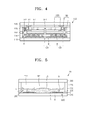
- FIG. 4 illustrates an aperture adjustment unit 102 that may be used in the NA controlling unit 1000 illustrated in FIGS. 1A and 1B , according to another exemplary embodiment.
- the aperture adjustment unit 102 illustrated in FIG. 4 is different from the aperture adjustment unit 101 illustrated in FIG. 3 in that the aperture adjustment unit 102 of FIG. 4 further includes a third electrode portion 320 and a fourth electrode portion 380 that are respectively disposed on each opposite side of the second substrate 150 and that each include one or more electrodes E coated with the insulating material I.
- the third electrode portion 320, together with the first electrode portion 120, is used to increase a driving force generated at the first channel C1
- the fourth electrode portion 380, together with the second electrode portion 180 is used to increase a driving force generated at the second channel C2.
- the number of electrodes E included in each of the third electrode portion 320 and the fourth electrode portion 380 is not limited to the number of electrodes illustrated in FIG. 4 .
- third electrode portion 320 and the fourth electrode portion 380 are respectively disposed on each opposite side of the second substrate 150, this is just exemplary, and either or both of the third electrode portion 320 or the fourth electrode portion 380 may be disposed on only one side of the second substrate 150.
- FIG. 5 illustrates a focus control unit 201 that may be used in the NA controlling unit 1000 illustrated in FIGS. 1A and 1B , according to an exemplary embodiment.
- the focus control unit 201 may include a liquid lens having a focal length which is adjustable by flowing a fluid on a fluid surface which acts as a lens surface such that a shape of the lens surface is correspondingly adjustable.
- the focus control unit 201 of FIG. 5 has a structure in which a fluid flow is caused by electrowetting.
- a first fluid TF1 that has a light-transmitting property and that is polar and a second fluid TF2 that has a light-transmitting property and that is immiscible (i.e., does not mix) with the first fluid TF1 are accommodated in a chamber.
- a boundary surface between the first fluid TF1 and the second fluid TF2 includes a first surface LS that forms the lens surface and a second surface IS that induces a change in a curvature of the lens surface.
- an electrode portion that forms an electric field which causes a variation of a position of the second surface IS is disposed in the chamber.
- a first intermediate plate 250 is disposed in the chamber.
- the first intermediate plate 250 has a first through hole TH1 that defines a diameter of a lens corresponding to the lens surface and a second through hole TH2 that forms a path traversed by the second fluid TF2.
- a lower substrate 210 and an upper substrate 290 may be respectively disposed with respect to lower and upper portions of the first intermediate plate 250, and a spacer portion may be disposed between the lower substrate 210 and the first intermediate plate 250 and between the first intermediate plate 250 and the upper substrate 290 so as to form an internal space between the lower substrate 210 and the upper substrate 290.
- the spacer portion includes a first spacer 230 that is disposed between the lower substrate 210 and the first intermediate plate 250 and a second spacer 270 that is disposed between the first intermediate plate 250 and the upper substrate 290.
- the lower substrate 210, the first intermediate plate 250, and the upper substrate 290 may be formed of at least one material having a light-transmitting property.
- the first fluid TF1 and the second fluid TF2 may include, for example, light-transmitting fluids having different refractive indices.
- the first fluid TF1 may include a polar liquid
- the second fluid TF2 may include one of a gas and a non-polar liquid.
- the electrode portion includes a first electrode portion 220 that is formed on a top surface of the lower substrate 210 and includes an electrode E having a surface which is coated with an insulating material I, and a second electrode portion 280 that is formed on a bottom surface of the first intermediate plate 250 and includes an electrode E having a surface which is coated with the insulating material I, as illustrated in FIG. 5 .
- a first electrode portion 220 that is formed on a top surface of the lower substrate 210 and includes an electrode E having a surface which is coated with an insulating material I
- a second electrode portion 280 that is formed on a bottom surface of the first intermediate plate 250 and includes an electrode E having a surface which is coated with the insulating material I, as illustrated in FIG. 5 .
- only one of the first electrode portion 220 and the second electrode portion 280 may be provided.
- the focus control unit 201 may further include a ground electrode R that is disposed to contact the first fluid TF1.
- the ground electrode R is disposed on the first substrate 210, but may be disposed in any position where the ground electrode R may contact the first fluid TF1 when a voltage is not applied to the ground electrode R.
- the ground electrode R may be selectively disposed, and when the ground electrode R is disposed, a voltage which drives the focus control unit 201 may be reduced.
- the electrode portion including the first electrode portion 220 and the second electrode portion 280, may be formed, for example, of a transparent conductive material, such as, for example, a metal oxide, such as indium tin oxide (ITO), indium zinc oxide (IZO), or the like; a metallic nanoparticle diffusion thin layer formed of gold (Au), silver (Ag), or the like; a carbon nanostructure, such as carbon nanotube (CNT), graphene, or the like; or a conductive polymer, such as poly(3,4-ethylenedioxythiophene (PEDOT), polypyrrole (PPy), poly(3-hexylthiophene)(P3HT), or the like.
- a transparent conductive material such as, for example, a metal oxide, such as indium tin oxide (ITO), indium zinc oxide (IZO), or the like
- a carbon nanostructure such as carbon nanotube (C
- the ground electrode R may be formed of the transparent conductive material described above, but when the ground electrode R is not required to have a light-transmitting property, based on its arrangement, the ground electrode R may be formed as a metallic thin layer formed of gold (Au), silver (Ag), aluminum (Al), chrome (Cr), titanium (Ti), or the like.
- each of the first electrode portion 220 and the second electrode portion 280 includes one electrode E, and the position of the second surface IS is varied by adjusting a magnitude of a voltage applied to the electrodes E.
- the second surface IS is shifted toward a central portion of the focus control unit 201 between the electrodes E, and the first surface LS may become more convex.
- the second surface IS is shifted toward the respective opposite two sides of the electrodes E, and thus the curvature of the first surface LS may be reduced.
- the first surface LS may become concave.
- FIG. 6 illustrates a focus control unit 202 that may be used in the NA controlling unit 1000 illustrated in FIGS. 1A and 1B , according to another exemplary embodiment.
- the focus control unit 202 illustrated in FIG. 6 is different from the focus control unit 201 illustrated in FIG. 5 in that each of a first electrode portion 222 and a second electrode portion 282 includes a plurality of electrodes E coated with an insulating material I.
- each of a first electrode portion 222 and a second electrode portion 282 includes a plurality of electrodes E coated with an insulating material I.
- an electromechanical force acts on the TCL of the selected electrode E, i.e., on a tangential line in which a second surface IS that acts as a boundary surface between the first fluid F1 and the second fluid F2 and the insulating material I contact one another, and thus a position of the second surface IS is established and the curvature of the first surface LS is defined.
- the position of the second surface IS is shifted toward a central portion between the electrodes E and the curvature of the first surface LS may be increased.
- the position of the second surface IS is shifted toward the respective opposite two sides of the electrodes E, and the curvature of the second surface LS may be decreased or have a concave shape.
- first electrode portion 222 the second electrode portion 282, and a ground electrode R are disposed, only one of the first electrode portion 222 or the second electrode portion 282 may be disposed, and the ground electrode R may not be provided.
- FIG. 7 illustrates a focus control unit 203 that may be used in the NA controlling unit 1000 illustrated in FIGS. 1A and 1B , according to another exemplary embodiment.
- the focus control unit 203 illustrated in FIG. 7 has a structure in which a fluid flows in a pressurized manner so as to vary a curvature of a lens surface.
- the focus control unit 203 includes a transparent fluid TF3 that is disposed in an internal space 380 of a chamber.
- the internal space 380 of the chamber is formed by a substrate 310 and a frame 330 that is formed on the substrate 310.
- the internal space 380 of the chamber includes a fluid chamber 382, a fluid path 384, and a lens chamber 386.
- a membrane 350 is disposed on the frame 330, and an actuator 370 is disposed on a portion of the membrane 350 that corresponds to an upper portion of the fluid chamber 382.
- a portion of the membrane 350 that corresponds to an upper portion of the lens chamber 386 acts as a lens surface 350a.
- the membrane 350 may be formed of a transparent material with elasticity, such as, for example, a silicon elastomer.
- a transparent material with elasticity such as, for example, a silicon elastomer.
- PDMS polydimethylsiloxane
- the actuator 370 is disposed to apply pressure to the transparent fluid TF3.
- a variety of types of actuators may be used as the actuator 370.
- a general polymer actuator having a relatively small thickness and relatively low power consumption that is formed of an electro active polymer (EAP) may be used as the actuator 370.
- a relaxor ferroelectric polymer actuator that is formed of a copolymer, such as P(VDF-TrFE_CFE) or P(VDF-TrFE-CTFE) may be used as the actuator 370.
- the actuator 370 applies pressure to the transparent fluid TF3 based on electrostrictive strain caused by a voltage applied to the actuator 370.
- the transparent fluid TF3 may include a silicon oil, for example.
- a focus control unit that may be used in the NA controlling unit 1000 illustrated in FIG. 1 may have other structures than the structures illustrated in FIGS. 5 , 6, and 7 .
- the focus control unit may include a liquid crystal lens having a focal length which is adjustable by applying an electric field gradient to liquid crystals included in the liquid crystal lens to induce a refractive index gradient.
- FIGS. 8A, 8B , and 8C illustrate a depth scanning method which is performed by using the NA controlling unit 1000 illustrated in FIGS. 1A and 1B , whereby the same horizontal resolution is maintained in different depth positions in a sample S, according to an exemplary embodiment.
- the focal length of the focus control unit VF is adjusted such that light may be focused on a predetermined depth position in the sample S, and the aperture of the aperture adjustment unit VA is adjusted such that an NA value that is suitable for an inspection purpose may be obtained based on the focal length.
- the focal length of the focus control unit VF is adjusted such that light may be focused on another predetermined depth position in the sample S, and the aperture of the aperture adjustment unit VA is adjusted such that the NA value may be maintained.
- the aperture of the aperture adjustment unit VA is increased when the focal length is increased.
- the focal length of the focus control unit VF is adjusted such that light may be focused on another predetermined depth position in the sample S, and the aperture of the aperture adjustment unit VA is adjusted such that the NA value may be maintained.
- a predetermined beam spot size ⁇ x is maintained, unlike a case in which a beam spot size ⁇ x' is increased based on a desired depth, i.e., a case in which a horizontal resolution is lowered, such that a predetermined horizontal resolution may be maintained in a predetermined range of a DOF.
- OCT optical coherence tomography
- FIG. 9 illustrates a schematic structure of a variable optical probe 2000 according to an exemplary embodiment.
- the variable optical probe 2000 includes a light transmission unit 2100, a collimator 2300 that collimates light which propagates via the light transmission unit 2100 into parallel light, an NA controlling unit 1000 that controls an NA by focusing light on a sample to be inspected, and a scanner 2200 that varies a path of light which propagates via the light transmission unit 2100 in order for light that passes through the NA controlling unit 1000 to scan a predetermined region of the sample S .
- the light transmission unit 2100 may include an optical fiber
- the scanner 2200 may include an actuator that is disposed on one end of the optical fiber and that induces a deformation of the optical fiber to vary the path of the light.
- the actuator may include, for example, a piezo-actuator, or an actuator that functions according to any of various methods and includes any of various materials that are used in driving a shape of cantilever, such as a cantilever formed of PZT, a shape memory alloy, or the like.
- the collimator 2300 may include at least one lens.
- the NA controlling unit 1000 includes an aperture adjustment unit VA and a focus control unit VF, and the aperture adjustment unit VA may include any of the aperture adjustment units illustrated in FIGS. 3 and 4 and the focus control unit VF may include any of the focus control units illustrated in FIGS. 5 , 6, and 7 .
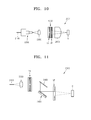
- FIG. 10 illustrates a schematic structure of a variable optical probe 2001 according to another exemplary embodiment.
- the variable optical probe 2001 includes, in addition to the elements included in the variable optical probe 2000 of FIG. 9 , a lens unit 2800 that performs aberration correction on light that passes through the NA controlling unit 1000.
- the lens unit 2800 may include at least one lens.
- FIG. 11 illustrates a schematic structure of a variable optical probe 2002 according to another exemplary embodiment.
- the variable optical probe 2002 illustrated in FIG. 11 includes, in addition to the elements included in the variable optical probe 2000 of FIG. 9 , a micro-electromechanical systems (MEMS) scanner 2600 that varies a path of light by driving a mirror surface.
- the MEMS scanner 2600 may be disposed between the aperture adjustment unit VA and the focus control unit VF.
- a light path conversion member 2400 may be further disposed between the aperture adjustment unit VA and the MEMS scanner 2600 so as to vary a path of light which propagates through the aperture adjustment unit VA and thereby causes the light to be incident on the MEMS scanner 2600.
- FIG. 12 illustrates a schematic structure of a variable optical probe 2003 according to another exemplary embodiment.
- variable optical probe 2003 includes, in addition to the elements included in the variable optical probe 2002 of FIG. 11 , a lens unit 2800 that performs aberration correction on light that passes through the aperture adjustment unit VA and the focus control unit VF.
- the lens unit 2800 may include at least one lens.
- FIG. 13A is a block diagram of a schematic structure of an image diagnosis system 3000 according to an exemplary embodiment.
- the image diagnosis system 3000 includes a light source unit, a variable optical probe that scans light emitted from the light source unit on a sample S to be inspected, such as, for example, a sample of human tissue, and a detector that detects an image of the sample S by using the light reflected from the sample S.
- variable optical probe may be any of the variable optical probes 2000, 2001, 2002, and 2003 illustrated in FIGS. 9 through 12 and may adjust an aperture, a focal length, and an NA based on an inspection objective.
- the detector may include an image sensor that senses the image of the sample S, such as, for example, a charge-coupled device (CCD).
- CCD charge-coupled device
- the image diagnosis system 3000 may further include a beam splitter that redirects a path of light that is emitted from the light source unit toward the sample S and redirects a path of light that is reflected from the sample S, and an image signal processor that generates an image signal by performing signal processing on a signal detected by the detector and displays the image signal.
- a beam splitter that redirects a path of light that is emitted from the light source unit toward the sample S and redirects a path of light that is reflected from the sample S
- an image signal processor that generates an image signal by performing signal processing on a signal detected by the detector and displays the image signal.
- FIG. 13B is a block diagram of a schematic structure of an image diagnosis system 3001 according to another exemplary embodiment.
- the image diagnosis system 3001 includes a light source unit, an optical interferometer that modulates light emitted from the light source unit into a predetermined interference light, a variable optical probe that scans the light on a sample S to be inspected, such as, for example, a sample of human tissue, a detector that detects an image of the sample S by using the light reflected from the sample S, and an image signal processor that generates an image signal by processing a signal detected by the detector so that an image of the sample S may be displayed.
- a light source unit an optical interferometer that modulates light emitted from the light source unit into a predetermined interference light
- a variable optical probe that scans the light on a sample S to be inspected, such as, for example, a sample of human tissue
- a detector that detects an image of the sample S by using the light reflected from the sample S
- an image signal processor that generates an image signal by processing a signal detected by the detector so that an image of the sample S may be displayed.
- the optical interferometer includes a reference mirror and a beam splitter. Some of the light that is emitted from the light source unit is redirected by the beam splitter toward the reference mirror and then is reflected by the reference mirror. In particular, interference light that is generated by interaction of the reference mirror and the beam splitter is incident on the variable optical probe. This type of the interference light is generally used when the image diagnosis system 3001 operates in an OCT mode. In addition, the light reflected from the sample S is redirected by the beam splitter toward the detector.
- variable optical probe may be any of the variable optical probes 2000, 2001, 2002, and 2003 illustrated in FIGS. 9 through 12 and may adjust an aperture, a focal length, and an NA based on an inspection objective.
- FIG. 14 illustrates a design window which describes various operating modes of the image diagnosis systems 3000 and 3001 illustrated in FIGS. 13A and 13B , according to an exemplary embodiment.
- An OCT mode by which images of layers of internal tissue may be captured must be performed by using a relatively long focal length, i.e., a relatively small NA.
- OCM OCT-confocal microscopy
- An optical system having a relatively high NA is to be provided, thereby enabling en-face images to be captured.
- An operating mode may be properly selected by considering these criteria, so as to obtain a focal length or a beam diameter that is suitable for a specific objective of an inspection.
- the image diagnosis systems 3000 and 3001 illustrated in FIGS. 13A and 13B may be used in a mode in which a predetermined horizontal resolution may be maintained and depth scanning may be performed.
- a resolution of an OCT signal decreases in conjunction with a corresponding increase in a desired depth, because a horizontal resolution is lowered as light is scanned in a depth direction by adjusting a focal length.
- the image diagnosis systems illustrated in FIGS. 13A and 13B may employ an NA controlling unit that adjusts the focal length and an aperture independently, when light is scanned in the depth direction by increasing the focal length, a predetermined NA value may be maintained by adjusting the aperture in the image diagnosis systems 3000 and 3001.
- the image diagnosis systems 3000 and 3001 may operate to perform depth scanning in a direction of an arrow indicated by DS while maintaining a predetermined NA value.
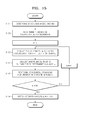
- FIG. 15 is a flowchart illustrating a method for detecting an image using the image diagnosis systems 3000 and 3001 illustrated in FIGS. 13A and 13B , according to an exemplary embodiment.
- a diagnosis mode and an NA that is suitable for the diagnosis mode are determined in operation S101, and a number N of steps for depth scanning is determined in operation S102.
- a focal length of an NA controlling unit is adjusted using the determined NA so that light may be focused on a tissue surface at a first depth in operation S103, and a size of an aperture is adjusted such that the predetermined NA and the focal length are obtained in operation S104.
- a predetermined region of the tissue surface at the first depth is scanned in a horizontal direction, and an image is detected, and the detected image is stored in operation S105.
- a focus control unit is controlled such that the focal length of the NA controlling unit is increased and light is focused on the tissue surface at a second depth in operation S103.
- the aperture size of the aperture adjustment unit is adjusted such that the predetermined NA value may be maintained at the increased focal length in operation S104.
- a predetermined region of the tissue surface at the second depth is scanned in the horizontal direction, and an image is detected, and the detected image is stored in operation S105.
- an NA controlling unit may realize a necessary horizontal resolution and may obtain an NA that is suitable for a DOF by using aperture adjustment and/or focus adjustment.
- depth scanning may be performed by simultaneously performing aperture adjustment and focus adjustment while maintaining a necessary NA value, and the desired depth image of the sample may be captured while maintaining a constant distance between the sample and the focus control unit.
- a variable optical probe which includes the NA controlling unit may be used in an image diagnosis system in which a relatively high horizontal resolution and a relatively high DOF are to be provided.
Landscapes
- Physics & Mathematics (AREA)
- General Physics & Mathematics (AREA)
- Health & Medical Sciences (AREA)
- Optics & Photonics (AREA)
- Life Sciences & Earth Sciences (AREA)
- General Health & Medical Sciences (AREA)
- Nuclear Medicine, Radiotherapy & Molecular Imaging (AREA)
- Radiology & Medical Imaging (AREA)
- Engineering & Computer Science (AREA)
- Pathology (AREA)
- Chemical & Material Sciences (AREA)
- Molecular Biology (AREA)
- Surgery (AREA)
- Animal Behavior & Ethology (AREA)
- Biomedical Technology (AREA)
- Public Health (AREA)
- Veterinary Medicine (AREA)
- Medical Informatics (AREA)
- Heart & Thoracic Surgery (AREA)
- Biophysics (AREA)
- Analytical Chemistry (AREA)
- Human Computer Interaction (AREA)
- Biochemistry (AREA)
- Immunology (AREA)
- Mechanical Light Control Or Optical Switches (AREA)
- Investigating Or Analysing Materials By Optical Means (AREA)
- Microscoopes, Condenser (AREA)
- Lens Barrels (AREA)
- Mechanical Optical Scanning Systems (AREA)
- Diaphragms For Cameras (AREA)
Applications Claiming Priority (1)
| Application Number | Priority Date | Filing Date | Title |
|---|---|---|---|
| KR1020110093647A KR101849974B1 (ko) | 2011-09-16 | 2011-09-16 | 개구수 제어 유닛, 이를 채용한 가변형 광 프로브 및 깊이 스캐닝 방법 |
Publications (3)
| Publication Number | Publication Date |
|---|---|
| EP2570075A2 true EP2570075A2 (fr) | 2013-03-20 |
| EP2570075A3 EP2570075A3 (fr) | 2014-04-30 |
| EP2570075B1 EP2570075B1 (fr) | 2015-09-09 |
Family
ID=47221112
Family Applications (1)
| Application Number | Title | Priority Date | Filing Date |
|---|---|---|---|
| EP12184541.6A Not-in-force EP2570075B1 (fr) | 2011-09-16 | 2012-09-14 | Unité de commande d'ouverture numérique (na), sonde optique variable comprenant l'unité de commande na et procédé de balayage de profondeur à l'aide de l'unité de commande na |
Country Status (5)
| Country | Link |
|---|---|
| US (1) | US9629552B2 (fr) |
| EP (1) | EP2570075B1 (fr) |
| JP (1) | JP5969858B2 (fr) |
| KR (1) | KR101849974B1 (fr) |
| CN (1) | CN102998790B (fr) |
Cited By (2)
| Publication number | Priority date | Publication date | Assignee | Title |
|---|---|---|---|---|
| WO2018202502A1 (fr) * | 2017-05-04 | 2018-11-08 | Leica Microsystems Cms Gmbh | Système optique pour microscope confocal, microscope confocal et procédé pour faire fonctionner un microscope confocal |
| CN111432103A (zh) * | 2020-04-03 | 2020-07-17 | 深圳传音控股股份有限公司 | 移动终端及移动终端的控制方法、计算机存储介质 |
Families Citing this family (33)
| Publication number | Priority date | Publication date | Assignee | Title |
|---|---|---|---|---|
| KR101942976B1 (ko) | 2012-09-28 | 2019-01-28 | 삼성전자주식회사 | 광학 줌 프로브 |
| US9857361B2 (en) | 2013-03-15 | 2018-01-02 | Iris International, Inc. | Flowcell, sheath fluid, and autofocus systems and methods for particle analysis in urine samples |
| US9316635B2 (en) | 2013-03-15 | 2016-04-19 | Iris International, Inc. | Sheath fluid systems and methods for particle analysis in blood samples |
| KR102095617B1 (ko) | 2013-03-15 | 2020-03-31 | 아이리스 인터내셔널 인크. | 혈액 샘플에서의 입자 분석을 위한 오토포커스 시스템 및 방법 |
| US10262462B2 (en) | 2014-04-18 | 2019-04-16 | Magic Leap, Inc. | Systems and methods for augmented and virtual reality |
| KR20150035320A (ko) | 2013-09-27 | 2015-04-06 | 삼성전자주식회사 | 가변 초점 렌즈, 이를 채용한 광 스캐닝 프로브 및 광스캐닝 프로브를 구비한 의료 기기 |
| DE102014104027B4 (de) * | 2014-03-24 | 2020-10-29 | Sick Ag | Optoelektronische Vorrichtung und Verfahren zur Erfassung von Objektinformationen |
| KR20150113538A (ko) | 2014-03-31 | 2015-10-08 | 삼성전기주식회사 | 마이크로 조리개 및 카메라 모듈 |
| JP6500551B2 (ja) | 2015-03-27 | 2019-04-17 | セイコーエプソン株式会社 | 電気光学装置、電気光学装置の製造方法、電気光学ユニット、および電子機器 |
| KR101685575B1 (ko) * | 2015-03-30 | 2016-12-13 | 주식회사 오즈텍 | 초점 가변형 oct 샘플단 및 이를 이용한 망막 촬영용 oct 시스템 |
| CN105671123B (zh) * | 2016-01-19 | 2018-11-20 | 西南交通大学 | 一种液体中细菌的计数方法 |
| CN115919266A (zh) | 2016-03-08 | 2023-04-07 | 恩斯派克特拉健康公司 | 皮肤疾病的非侵入式检测 |
| JP6742783B2 (ja) * | 2016-04-01 | 2020-08-19 | 株式会社ミツトヨ | 撮像システム及び撮像方法 |
| CN106343958A (zh) * | 2016-10-08 | 2017-01-25 | 清华大学 | 一种可连续变焦的内窥光学相干层析探头 |
| WO2018076153A1 (fr) * | 2016-10-25 | 2018-05-03 | 博立多媒体控股有限公司 | Lentille à gaz |
| KR20180084435A (ko) | 2017-01-17 | 2018-07-25 | 엘지이노텍 주식회사 | 액체렌즈 및 이를 포함하는 카메라 모듈 및 광학기기 |
| KR102394310B1 (ko) * | 2017-03-10 | 2022-05-04 | (주)제노레이 | 스캐너 |
| EP3614915A4 (fr) | 2017-04-28 | 2021-01-20 | Enspectra Health, Inc. | Systèmes et méthodes d'imagerie et de mesure de sarcomes |
| DE102017122413A1 (de) * | 2017-09-27 | 2019-03-28 | Abberior Instruments Gmbh | Vorrichtung für das selektive Formen von Phasenfronten eines Lichtstrahls und deren Verwendung |
| CN109031650B (zh) * | 2018-08-09 | 2020-09-01 | 江苏师范大学 | 一种具有自动控制易操作的光路转换器 |
| CN113473900B (zh) | 2018-11-13 | 2024-09-24 | 恩斯派克特拉健康公司 | 用于生成深度剖面的方法和系统 |
| CN109406639A (zh) * | 2018-11-23 | 2019-03-01 | 航天科工防御技术研究试验中心 | 一种点聚焦式线性阵列相控阵检测装置 |
| US12055841B2 (en) | 2018-12-28 | 2024-08-06 | Lg Innotek Co., Ltd. | Camera device |
| US11808707B2 (en) * | 2019-04-22 | 2023-11-07 | Thermo Electron Scientific Instruments Llc | Raman module for a microscope |
| CN110058333B (zh) * | 2019-05-07 | 2020-05-08 | 北京航空航天大学 | 一种基于高光焦度液体透镜的大视角全息显示系统 |
| GB201907106D0 (en) * | 2019-05-20 | 2019-07-03 | Gardasoft Vision Ltd | A lens system |
| CN110221459A (zh) * | 2019-05-24 | 2019-09-10 | 广州永士达医疗科技有限责任公司 | 可调焦距oct探头及oct探测设备 |
| CN110727102B (zh) * | 2019-10-21 | 2022-03-22 | Oppo广东移动通信有限公司 | 镜头模组、成像装置及终端 |
| KR102258893B1 (ko) * | 2019-11-28 | 2021-05-31 | 재단법인대구경북과학기술원 | 내시현미경의 수직 분해능 최적화 장치, 최적화 광학 시스템 및 최적화 방법 |
| US11112541B2 (en) * | 2019-12-20 | 2021-09-07 | Mitutoyo Corporation | Tunable acoustic gradient lens system with reflective configuration and increased power |
| US12239417B2 (en) * | 2021-07-28 | 2025-03-04 | Seno Medical Instruments, Inc. | Optoacoustic probe |
| DE102022115020B3 (de) | 2022-06-15 | 2023-09-14 | Michael ROMANOWSKI | Tiefenscanmesssystem, Tiefenscanmessvorrichtung, Kalibriereinheit und Verfahren zur Kalibrierung einer Tiefenscanmessvorrichtung |
| TWI826163B (zh) * | 2022-12-05 | 2023-12-11 | 宏碁股份有限公司 | 屏下相機及光圈元件 |
Family Cites Families (32)
| Publication number | Priority date | Publication date | Assignee | Title |
|---|---|---|---|---|
| JPH07119893B2 (ja) * | 1986-09-22 | 1995-12-20 | オリンパス光学工業株式会社 | 内視鏡光学系 |
| US4988172A (en) * | 1988-01-30 | 1991-01-29 | Olympus Optical Co., Ltd. | Optical system for endoscopes |
| US5071229A (en) * | 1988-08-08 | 1991-12-10 | Olympus Optical Co., Ltd. | Imaging apparatus having electrooptic devices which comprise a variable focal length lens |
| JP3092951B2 (ja) * | 1990-06-18 | 2000-09-25 | オリンパス光学工業株式会社 | 内視鏡用絞り装置 |
| US7072086B2 (en) | 2001-10-19 | 2006-07-04 | Batchko Robert G | Digital focus lens system |
| JP2002169110A (ja) * | 2000-11-30 | 2002-06-14 | Canon Inc | 光学素子、光学装置および撮影装置 |
| AU2003201481A1 (en) | 2002-02-14 | 2003-09-04 | Koninklijke Philips Electronics N.V. | Variable focus lens |
| US7283247B2 (en) | 2002-09-25 | 2007-10-16 | Olympus Corporation | Optical probe system |
| US6891682B2 (en) * | 2003-03-03 | 2005-05-10 | Lucent Technologies Inc. | Lenses with tunable liquid optical elements |
| WO2004099845A1 (fr) * | 2003-05-06 | 2004-11-18 | Koninklijke Philips Electronics N.V. | Module d'electromouillage |
| JP2006091049A (ja) * | 2004-09-21 | 2006-04-06 | Matsushita Electric Ind Co Ltd | 光量調整装置 |
| WO2006100624A2 (fr) | 2005-03-24 | 2006-09-28 | Koninklijke Philips Electronics N.V. | Dispositif de balayage optique |
| KR100686018B1 (ko) * | 2005-06-13 | 2007-02-26 | 엘지전자 주식회사 | 광학기기 |
| FR2887305B1 (fr) * | 2005-06-17 | 2011-05-27 | Commissariat Energie Atomique | Dispositif de pompage par electromouillage et application aux mesures d'activite electrique |
| JP2007057843A (ja) * | 2005-08-24 | 2007-03-08 | Sony Corp | 光学素子 |
| EP1940286A1 (fr) * | 2005-09-29 | 2008-07-09 | General Hospital Corporation | Procede et appareil destines a un procede pour visualiser et analyser un ou plusieurs echantillons biologiques avec des resolutions augmentant progressivement |
| EP1870741A1 (fr) * | 2006-06-21 | 2007-12-26 | Varioptic | Lentille liquide à focale variable |
| US7256943B1 (en) | 2006-08-24 | 2007-08-14 | Teledyne Licensing, Llc | Variable focus liquid-filled lens using polyphenyl ethers |
| US8096943B2 (en) * | 2006-12-04 | 2012-01-17 | University Of Washington Through Its Center For Commercialization | Flexible endoscope tip bending mechanism using optical fiber as compression member |
| CN101686827B (zh) | 2007-01-19 | 2014-08-13 | 桑尼布鲁克健康科学中心 | 具有组合的超声和光学成像装置的成像探头 |
| JP2008289850A (ja) | 2007-04-23 | 2008-12-04 | Fujifilm Corp | 光プローブおよび光断層画像化装置 |
| US7566173B2 (en) | 2007-07-09 | 2009-07-28 | Alcon, Inc. | Multi-spot ophthalmic laser probe |
| EP2191227A4 (fr) * | 2007-08-10 | 2017-04-19 | Board of Regents, The University of Texas System | Systèmes et sonde de tomographie de cohérence optique (oct) à imagerie avant |
| KR101426550B1 (ko) | 2007-08-27 | 2014-08-06 | 고려대학교 산학협력단 | 자궁경부 진단용 편광감도-광간섭 영상시스템 |
| US20090147373A1 (en) | 2007-10-19 | 2009-06-11 | University Of Central Florida Research Foundation, Inc. | Dynamic Focus Optical Probes |
| EP2070468A1 (fr) | 2007-12-14 | 2009-06-17 | Koninklijke Philips Electronics N.V. | Sonde d'images optiques |
| JP5139840B2 (ja) * | 2008-02-27 | 2013-02-06 | 京セラ株式会社 | 撮像装置、画像生成方法、および電子機器 |
| JP4544331B2 (ja) | 2008-04-04 | 2010-09-15 | ソニー株式会社 | コンバージョンレンズ装置、及び撮像装置 |
| JP4626697B2 (ja) | 2008-09-26 | 2011-02-09 | ソニー株式会社 | 光学素子、撮像装置及び駆動方法 |
| JP2010107908A (ja) * | 2008-10-31 | 2010-05-13 | Sony Corp | エレクトロウェッティング装置、可変焦点レンズ、光ピックアップ装置、光記録再生装置、液滴操作装置、光学素子、ズームレンズ、撮像装置、光変調装置、表示装置、ストロボ装置及びエレクトロウェッティング装置の駆動方法 |
| JP2010142422A (ja) * | 2008-12-18 | 2010-07-01 | Fujifilm Corp | 光プローブ及び光観察装置 |
| JP5430413B2 (ja) * | 2010-01-07 | 2014-02-26 | 富士フイルム株式会社 | 可変焦点レンズ及びその駆動方法 |
-
2011
- 2011-09-16 KR KR1020110093647A patent/KR101849974B1/ko active Active
-
2012
- 2012-05-10 CN CN201210142509.0A patent/CN102998790B/zh active Active
- 2012-08-21 JP JP2012182713A patent/JP5969858B2/ja not_active Expired - Fee Related
- 2012-09-13 US US13/615,048 patent/US9629552B2/en active Active
- 2012-09-14 EP EP12184541.6A patent/EP2570075B1/fr not_active Not-in-force
Non-Patent Citations (1)
| Title |
|---|
| None |
Cited By (2)
| Publication number | Priority date | Publication date | Assignee | Title |
|---|---|---|---|---|
| WO2018202502A1 (fr) * | 2017-05-04 | 2018-11-08 | Leica Microsystems Cms Gmbh | Système optique pour microscope confocal, microscope confocal et procédé pour faire fonctionner un microscope confocal |
| CN111432103A (zh) * | 2020-04-03 | 2020-07-17 | 深圳传音控股股份有限公司 | 移动终端及移动终端的控制方法、计算机存储介质 |
Also Published As
| Publication number | Publication date |
|---|---|
| KR101849974B1 (ko) | 2018-04-19 |
| JP5969858B2 (ja) | 2016-08-17 |
| CN102998790B (zh) | 2017-04-12 |
| CN102998790A (zh) | 2013-03-27 |
| JP2013064995A (ja) | 2013-04-11 |
| EP2570075B1 (fr) | 2015-09-09 |
| KR20130030104A (ko) | 2013-03-26 |
| EP2570075A3 (fr) | 2014-04-30 |
| US20130070249A1 (en) | 2013-03-21 |
| US9629552B2 (en) | 2017-04-25 |
Similar Documents
| Publication | Publication Date | Title |
|---|---|---|
| EP2570075B1 (fr) | Unité de commande d'ouverture numérique (na), sonde optique variable comprenant l'unité de commande na et procédé de balayage de profondeur à l'aide de l'unité de commande na | |
| US9411155B2 (en) | Optical zoom probe | |
| JP5069105B2 (ja) | マルチモードの光画像化方法及びその光ファイバスキャナ | |
| US11768182B2 (en) | Photoacoustic and optical microscopy combiner and method of generating a photoacoustic image of a sample | |
| Wang et al. | Low-voltage polymer-based scanning cantilever for in vivo optical coherence tomography | |
| US9880381B2 (en) | Varifocal lens, optical scanning probe including the varifocal lens, and medical apparatus including the optical scanning probe | |
| US20140194750A1 (en) | Optical zoom probe | |
| EP2612593A1 (fr) | Sonde optique et appareil de tomographie par cohérence optique comprenant celle-ci | |
| US20080030682A1 (en) | Focussing and Astigmatism Compensation Device for a Fundus Camera | |
| Meinert et al. | Varifocal MOEMS fiber scanner for confocal endomicroscopy | |
| KR102026741B1 (ko) | 광학 줌 프로브 | |
| US20170322193A1 (en) | Micro-cavity-based force sensor | |
| KR101919012B1 (ko) | 광 프로브 및 이를 포함하는 광 간섭 단층 촬영 장치 | |
| DE102013203454A1 (de) | Aufnahmevorrichtung und Aufnahmeverfahren | |
| Seo et al. | Photoacoustic endoscopic probe based on lens scanning using a laterally tunable electrowetting liquid lens | |
| US9706928B2 (en) | Dynamic optical head and imaging device using flexible nano film optical structure | |
| US20150126857A1 (en) | Optical probe and medical imaging apparatus including the same | |
| JP2002301018A (ja) | 光走査プローブ装置 | |
| JP2001083391A (ja) | 顕微鏡のフォーカス装置 | |
| JP4694139B2 (ja) | 顕微鏡 | |
| O'byrne et al. | Adaptive optics in confocal microscopy | |
| KR101669214B1 (ko) | 바이모르프 액츄에이터를 채용한 렌즈 스캐닝 장치 | |
| Li | Micro-System Based Multimodality Biomedical Imaging and Sensing System | |
| Murali et al. | Dynamic focusing imaging probe for optical coherence microscopy | |
| Lukes et al. | MEMS mirror for flexible z-axis control in a commercial confocal microscope |
Legal Events
| Date | Code | Title | Description |
|---|---|---|---|
| PUAI | Public reference made under article 153(3) epc to a published international application that has entered the european phase |
Free format text: ORIGINAL CODE: 0009012 |
|
| AK | Designated contracting states |
Kind code of ref document: A2 Designated state(s): AL AT BE BG CH CY CZ DE DK EE ES FI FR GB GR HR HU IE IS IT LI LT LU LV MC MK MT NL NO PL PT RO RS SE SI SK SM TR |
|
| AX | Request for extension of the european patent |
Extension state: BA ME |
|
| RIC1 | Information provided on ipc code assigned before grant |
Ipc: A61B 5/00 20060101AFI20131212BHEP Ipc: G02B 26/02 20060101ALI20131212BHEP Ipc: G02B 26/00 20060101ALI20131212BHEP Ipc: G02B 21/00 20060101ALI20131212BHEP Ipc: G02B 3/14 20060101ALI20131212BHEP Ipc: G02B 26/10 20060101ALI20131212BHEP Ipc: G02B 5/00 20060101ALI20131212BHEP Ipc: G01B 9/02 20060101ALI20131212BHEP Ipc: G01B 11/22 20060101ALI20131212BHEP |
|
| PUAL | Search report despatched |
Free format text: ORIGINAL CODE: 0009013 |
|
| AK | Designated contracting states |
Kind code of ref document: A3 Designated state(s): AL AT BE BG CH CY CZ DE DK EE ES FI FR GB GR HR HU IE IS IT LI LT LU LV MC MK MT NL NO PL PT RO RS SE SI SK SM TR |
|
| AX | Request for extension of the european patent |
Extension state: BA ME |
|
| RIC1 | Information provided on ipc code assigned before grant |
Ipc: G02B 26/02 20060101ALI20140321BHEP Ipc: G02B 26/10 20060101ALI20140321BHEP Ipc: G01B 9/02 20060101ALI20140321BHEP Ipc: A61B 5/00 20060101AFI20140321BHEP Ipc: G02B 21/00 20060101ALI20140321BHEP Ipc: G02B 3/14 20060101ALI20140321BHEP Ipc: G02B 26/00 20060101ALI20140321BHEP Ipc: G02B 5/00 20060101ALI20140321BHEP Ipc: G01B 11/22 20060101ALI20140321BHEP |
|
| 17P | Request for examination filed |
Effective date: 20141030 |
|
| RBV | Designated contracting states (corrected) |
Designated state(s): AL AT BE BG CH CY CZ DE DK EE ES FI FR GB GR HR HU IE IS IT LI LT LU LV MC MK MT NL NO PL PT RO RS SE SI SK SM TR |
|
| GRAP | Despatch of communication of intention to grant a patent |
Free format text: ORIGINAL CODE: EPIDOSNIGR1 |
|
| INTG | Intention to grant announced |
Effective date: 20150319 |
|
| GRAS | Grant fee paid |
Free format text: ORIGINAL CODE: EPIDOSNIGR3 |
|
| GRAA | (expected) grant |
Free format text: ORIGINAL CODE: 0009210 |
|
| AK | Designated contracting states |
Kind code of ref document: B1 Designated state(s): AL AT BE BG CH CY CZ DE DK EE ES FI FR GB GR HR HU IE IS IT LI LT LU LV MC MK MT NL NO PL PT RO RS SE SI SK SM TR |
|
| REG | Reference to a national code |
Ref country code: GB Ref legal event code: FG4D |
|
| REG | Reference to a national code |
Ref country code: AT Ref legal event code: REF Ref document number: 747422 Country of ref document: AT Kind code of ref document: T Effective date: 20150915 Ref country code: CH Ref legal event code: EP |
|
| REG | Reference to a national code |
Ref country code: FR Ref legal event code: PLFP Year of fee payment: 4 |
|
| REG | Reference to a national code |
Ref country code: IE Ref legal event code: FG4D |
|
| REG | Reference to a national code |
Ref country code: DE Ref legal event code: R096 Ref document number: 602012010269 Country of ref document: DE |
|
| REG | Reference to a national code |
Ref country code: NL Ref legal event code: MP Effective date: 20150909 |
|
| PG25 | Lapsed in a contracting state [announced via postgrant information from national office to epo] |
Ref country code: FI Free format text: LAPSE BECAUSE OF FAILURE TO SUBMIT A TRANSLATION OF THE DESCRIPTION OR TO PAY THE FEE WITHIN THE PRESCRIBED TIME-LIMIT Effective date: 20150909 Ref country code: GR Free format text: LAPSE BECAUSE OF FAILURE TO SUBMIT A TRANSLATION OF THE DESCRIPTION OR TO PAY THE FEE WITHIN THE PRESCRIBED TIME-LIMIT Effective date: 20151210 Ref country code: NO Free format text: LAPSE BECAUSE OF FAILURE TO SUBMIT A TRANSLATION OF THE DESCRIPTION OR TO PAY THE FEE WITHIN THE PRESCRIBED TIME-LIMIT Effective date: 20151209 Ref country code: LV Free format text: LAPSE BECAUSE OF FAILURE TO SUBMIT A TRANSLATION OF THE DESCRIPTION OR TO PAY THE FEE WITHIN THE PRESCRIBED TIME-LIMIT Effective date: 20150909 Ref country code: LT Free format text: LAPSE BECAUSE OF FAILURE TO SUBMIT A TRANSLATION OF THE DESCRIPTION OR TO PAY THE FEE WITHIN THE PRESCRIBED TIME-LIMIT Effective date: 20150909 |
|
| REG | Reference to a national code |
Ref country code: LT Ref legal event code: MG4D |
|
| REG | Reference to a national code |
Ref country code: AT Ref legal event code: MK05 Ref document number: 747422 Country of ref document: AT Kind code of ref document: T Effective date: 20150909 |
|
| PG25 | Lapsed in a contracting state [announced via postgrant information from national office to epo] |
Ref country code: SE Free format text: LAPSE BECAUSE OF FAILURE TO SUBMIT A TRANSLATION OF THE DESCRIPTION OR TO PAY THE FEE WITHIN THE PRESCRIBED TIME-LIMIT Effective date: 20150909 Ref country code: HR Free format text: LAPSE BECAUSE OF FAILURE TO SUBMIT A TRANSLATION OF THE DESCRIPTION OR TO PAY THE FEE WITHIN THE PRESCRIBED TIME-LIMIT Effective date: 20150909 Ref country code: ES Free format text: LAPSE BECAUSE OF FAILURE TO SUBMIT A TRANSLATION OF THE DESCRIPTION OR TO PAY THE FEE WITHIN THE PRESCRIBED TIME-LIMIT Effective date: 20150909 Ref country code: RS Free format text: LAPSE BECAUSE OF FAILURE TO SUBMIT A TRANSLATION OF THE DESCRIPTION OR TO PAY THE FEE WITHIN THE PRESCRIBED TIME-LIMIT Effective date: 20150909 |
|
| PG25 | Lapsed in a contracting state [announced via postgrant information from national office to epo] |
Ref country code: NL Free format text: LAPSE BECAUSE OF FAILURE TO SUBMIT A TRANSLATION OF THE DESCRIPTION OR TO PAY THE FEE WITHIN THE PRESCRIBED TIME-LIMIT Effective date: 20150909 |
|
| PG25 | Lapsed in a contracting state [announced via postgrant information from national office to epo] |
Ref country code: IT Free format text: LAPSE BECAUSE OF FAILURE TO SUBMIT A TRANSLATION OF THE DESCRIPTION OR TO PAY THE FEE WITHIN THE PRESCRIBED TIME-LIMIT Effective date: 20150909 Ref country code: IS Free format text: LAPSE BECAUSE OF FAILURE TO SUBMIT A TRANSLATION OF THE DESCRIPTION OR TO PAY THE FEE WITHIN THE PRESCRIBED TIME-LIMIT Effective date: 20160109 Ref country code: CZ Free format text: LAPSE BECAUSE OF FAILURE TO SUBMIT A TRANSLATION OF THE DESCRIPTION OR TO PAY THE FEE WITHIN THE PRESCRIBED TIME-LIMIT Effective date: 20150909 Ref country code: SK Free format text: LAPSE BECAUSE OF FAILURE TO SUBMIT A TRANSLATION OF THE DESCRIPTION OR TO PAY THE FEE WITHIN THE PRESCRIBED TIME-LIMIT Effective date: 20150909 Ref country code: EE Free format text: LAPSE BECAUSE OF FAILURE TO SUBMIT A TRANSLATION OF THE DESCRIPTION OR TO PAY THE FEE WITHIN THE PRESCRIBED TIME-LIMIT Effective date: 20150909 |
|
| REG | Reference to a national code |
Ref country code: CH Ref legal event code: PL |
|
| PG25 | Lapsed in a contracting state [announced via postgrant information from national office to epo] |
Ref country code: AT Free format text: LAPSE BECAUSE OF FAILURE TO SUBMIT A TRANSLATION OF THE DESCRIPTION OR TO PAY THE FEE WITHIN THE PRESCRIBED TIME-LIMIT Effective date: 20150909 Ref country code: PL Free format text: LAPSE BECAUSE OF FAILURE TO SUBMIT A TRANSLATION OF THE DESCRIPTION OR TO PAY THE FEE WITHIN THE PRESCRIBED TIME-LIMIT Effective date: 20150909 Ref country code: RO Free format text: LAPSE BECAUSE OF FAILURE TO SUBMIT A TRANSLATION OF THE DESCRIPTION OR TO PAY THE FEE WITHIN THE PRESCRIBED TIME-LIMIT Effective date: 20150909 Ref country code: PT Free format text: LAPSE BECAUSE OF FAILURE TO SUBMIT A TRANSLATION OF THE DESCRIPTION OR TO PAY THE FEE WITHIN THE PRESCRIBED TIME-LIMIT Effective date: 20160111 |
|
| REG | Reference to a national code |
Ref country code: DE Ref legal event code: R097 Ref document number: 602012010269 Country of ref document: DE |
|
| REG | Reference to a national code |
Ref country code: IE Ref legal event code: MM4A |
|
| PG25 | Lapsed in a contracting state [announced via postgrant information from national office to epo] |
Ref country code: MC Free format text: LAPSE BECAUSE OF FAILURE TO SUBMIT A TRANSLATION OF THE DESCRIPTION OR TO PAY THE FEE WITHIN THE PRESCRIBED TIME-LIMIT Effective date: 20150909 |
|
| PLBE | No opposition filed within time limit |
Free format text: ORIGINAL CODE: 0009261 |
|
| STAA | Information on the status of an ep patent application or granted ep patent |
Free format text: STATUS: NO OPPOSITION FILED WITHIN TIME LIMIT |
|
| PG25 | Lapsed in a contracting state [announced via postgrant information from national office to epo] |
Ref country code: IE Free format text: LAPSE BECAUSE OF NON-PAYMENT OF DUE FEES Effective date: 20150914 Ref country code: LI Free format text: LAPSE BECAUSE OF NON-PAYMENT OF DUE FEES Effective date: 20150930 Ref country code: CH Free format text: LAPSE BECAUSE OF NON-PAYMENT OF DUE FEES Effective date: 20150930 |
|
| 26N | No opposition filed |
Effective date: 20160610 |
|
| REG | Reference to a national code |
Ref country code: FR Ref legal event code: PLFP Year of fee payment: 5 |
|
| PG25 | Lapsed in a contracting state [announced via postgrant information from national office to epo] |
Ref country code: DK Free format text: LAPSE BECAUSE OF FAILURE TO SUBMIT A TRANSLATION OF THE DESCRIPTION OR TO PAY THE FEE WITHIN THE PRESCRIBED TIME-LIMIT Effective date: 20150909 Ref country code: SI Free format text: LAPSE BECAUSE OF FAILURE TO SUBMIT A TRANSLATION OF THE DESCRIPTION OR TO PAY THE FEE WITHIN THE PRESCRIBED TIME-LIMIT Effective date: 20150909 |
|
| PG25 | Lapsed in a contracting state [announced via postgrant information from national office to epo] |
Ref country code: BE Free format text: LAPSE BECAUSE OF FAILURE TO SUBMIT A TRANSLATION OF THE DESCRIPTION OR TO PAY THE FEE WITHIN THE PRESCRIBED TIME-LIMIT Effective date: 20150909 |
|
| PG25 | Lapsed in a contracting state [announced via postgrant information from national office to epo] |
Ref country code: MT Free format text: LAPSE BECAUSE OF FAILURE TO SUBMIT A TRANSLATION OF THE DESCRIPTION OR TO PAY THE FEE WITHIN THE PRESCRIBED TIME-LIMIT Effective date: 20150909 |
|
| PG25 | Lapsed in a contracting state [announced via postgrant information from national office to epo] |
Ref country code: SM Free format text: LAPSE BECAUSE OF FAILURE TO SUBMIT A TRANSLATION OF THE DESCRIPTION OR TO PAY THE FEE WITHIN THE PRESCRIBED TIME-LIMIT Effective date: 20150909 Ref country code: HU Free format text: LAPSE BECAUSE OF FAILURE TO SUBMIT A TRANSLATION OF THE DESCRIPTION OR TO PAY THE FEE WITHIN THE PRESCRIBED TIME-LIMIT; INVALID AB INITIO Effective date: 20120914 Ref country code: BG Free format text: LAPSE BECAUSE OF FAILURE TO SUBMIT A TRANSLATION OF THE DESCRIPTION OR TO PAY THE FEE WITHIN THE PRESCRIBED TIME-LIMIT Effective date: 20150909 |
|
| PG25 | Lapsed in a contracting state [announced via postgrant information from national office to epo] |
Ref country code: CY Free format text: LAPSE BECAUSE OF FAILURE TO SUBMIT A TRANSLATION OF THE DESCRIPTION OR TO PAY THE FEE WITHIN THE PRESCRIBED TIME-LIMIT Effective date: 20150909 |
|
| REG | Reference to a national code |
Ref country code: FR Ref legal event code: PLFP Year of fee payment: 6 |
|
| PG25 | Lapsed in a contracting state [announced via postgrant information from national office to epo] |
Ref country code: TR Free format text: LAPSE BECAUSE OF FAILURE TO SUBMIT A TRANSLATION OF THE DESCRIPTION OR TO PAY THE FEE WITHIN THE PRESCRIBED TIME-LIMIT Effective date: 20150909 |
|
| PG25 | Lapsed in a contracting state [announced via postgrant information from national office to epo] |
Ref country code: LU Free format text: LAPSE BECAUSE OF NON-PAYMENT OF DUE FEES Effective date: 20150914 |
|
| PG25 | Lapsed in a contracting state [announced via postgrant information from national office to epo] |
Ref country code: MK Free format text: LAPSE BECAUSE OF FAILURE TO SUBMIT A TRANSLATION OF THE DESCRIPTION OR TO PAY THE FEE WITHIN THE PRESCRIBED TIME-LIMIT Effective date: 20150909 |
|
| REG | Reference to a national code |
Ref country code: FR Ref legal event code: PLFP Year of fee payment: 7 |
|
| PG25 | Lapsed in a contracting state [announced via postgrant information from national office to epo] |
Ref country code: AL Free format text: LAPSE BECAUSE OF FAILURE TO SUBMIT A TRANSLATION OF THE DESCRIPTION OR TO PAY THE FEE WITHIN THE PRESCRIBED TIME-LIMIT Effective date: 20150909 |
|
| P01 | Opt-out of the competence of the unified patent court (upc) registered |
Effective date: 20230520 |
|
| PGFP | Annual fee paid to national office [announced via postgrant information from national office to epo] |
Ref country code: GB Payment date: 20230817 Year of fee payment: 12 |
|
| PGFP | Annual fee paid to national office [announced via postgrant information from national office to epo] |
Ref country code: FR Payment date: 20230821 Year of fee payment: 12 Ref country code: DE Payment date: 20230816 Year of fee payment: 12 |
|
| REG | Reference to a national code |
Ref country code: DE Ref legal event code: R119 Ref document number: 602012010269 Country of ref document: DE |
|
| GBPC | Gb: european patent ceased through non-payment of renewal fee |
Effective date: 20240914 |
|
| PG25 | Lapsed in a contracting state [announced via postgrant information from national office to epo] |
Ref country code: DE Free format text: LAPSE BECAUSE OF NON-PAYMENT OF DUE FEES Effective date: 20250401 |
|
| PG25 | Lapsed in a contracting state [announced via postgrant information from national office to epo] |
Ref country code: GB Free format text: LAPSE BECAUSE OF NON-PAYMENT OF DUE FEES Effective date: 20240914 |
|
| PG25 | Lapsed in a contracting state [announced via postgrant information from national office to epo] |
Ref country code: FR Free format text: LAPSE BECAUSE OF NON-PAYMENT OF DUE FEES Effective date: 20240930 |