EP2571011A2 - Ein Element der Lichtwerbung mit Leuchtdioden (LEDS), das eine Neonlichtreklame imitiert - Google Patents
Ein Element der Lichtwerbung mit Leuchtdioden (LEDS), das eine Neonlichtreklame imitiert Download PDFInfo
- Publication number
- EP2571011A2 EP2571011A2 EP12183737A EP12183737A EP2571011A2 EP 2571011 A2 EP2571011 A2 EP 2571011A2 EP 12183737 A EP12183737 A EP 12183737A EP 12183737 A EP12183737 A EP 12183737A EP 2571011 A2 EP2571011 A2 EP 2571011A2
- Authority
- EP
- European Patent Office
- Prior art keywords
- groove
- strip
- leds
- element according
- advertising
- Prior art date
- Legal status (The legal status is an assumption and is not a legal conclusion. Google has not performed a legal analysis and makes no representation as to the accuracy of the status listed.)
- Granted
Links
Images



Classifications
-
- G—PHYSICS
- G09—EDUCATION; CRYPTOGRAPHY; DISPLAY; ADVERTISING; SEALS
- G09F—DISPLAYING; ADVERTISING; SIGNS; LABELS OR NAME-PLATES; SEALS
- G09F13/00—Illuminated signs; Luminous advertising
- G09F13/18—Edge-illuminated signs
-
- G—PHYSICS
- G09—EDUCATION; CRYPTOGRAPHY; DISPLAY; ADVERTISING; SEALS
- G09F—DISPLAYING; ADVERTISING; SIGNS; LABELS OR NAME-PLATES; SEALS
- G09F13/00—Illuminated signs; Luminous advertising
- G09F13/20—Illuminated signs; Luminous advertising with luminescent surfaces or parts
- G09F13/22—Illuminated signs; Luminous advertising with luminescent surfaces or parts electroluminescent
-
- G—PHYSICS
- G09—EDUCATION; CRYPTOGRAPHY; DISPLAY; ADVERTISING; SEALS
- G09F—DISPLAYING; ADVERTISING; SIGNS; LABELS OR NAME-PLATES; SEALS
- G09F13/00—Illuminated signs; Luminous advertising
- G09F13/18—Edge-illuminated signs
- G09F2013/1886—Special effects
- G09F2013/189—Three dimensional effects
- G09F2013/1895—Imitating a neon tube
-
- G—PHYSICS
- G09—EDUCATION; CRYPTOGRAPHY; DISPLAY; ADVERTISING; SEALS
- G09F—DISPLAYING; ADVERTISING; SIGNS; LABELS OR NAME-PLATES; SEALS
- G09F13/00—Illuminated signs; Luminous advertising
- G09F13/20—Illuminated signs; Luminous advertising with luminescent surfaces or parts
- G09F13/22—Illuminated signs; Luminous advertising with luminescent surfaces or parts electroluminescent
- G09F2013/222—Illuminated signs; Luminous advertising with luminescent surfaces or parts electroluminescent with LEDs
Definitions
- LEDs light-emitting diodes
- the subject of the invention is an element of light advertising with light-emitting diodes (LEDs), which mimics a neon light advertising.
- LEDs light-emitting diodes
- the tube is made of polyethylene (PE) or polypropylene (PP) in the natural milk color or colored in whole or surface-colored and has a longitudinal groove with borders
- the holder is formed of a transparent material and coated with a colored outer layer, and has in cross section a nearly rectangular shape with the grooves on the side walls.
- the tube is fixed in the holder by inserting the borders in the grooves of the holder.
- the LEDs have a chamfer on the luminous side and with these chamfer surfaces are fixed with the adhesive on the upper wall of the holder so that the luminous side points in the direction of the holder.
- a C-shaped cover is placed, which surrounds the lower wall and the side walls in the projecting beyond the outline of the spreader tube part.
- the inner surface of the mantle cover is a light-reflecting surface.
- the cover has attached feet for attaching the element to the whole construction of the advertisement.
- the layer of epoxy resin covers the LEDs inserted in the groove as well as the electrical leads in the area in which the LEDs are connected to them.
- the scattering tube is designed as a two-layer tube, wherein the outer layer may have an additive of a dye.
- On the epoxy resin layer a color-matched finish layer of colored silicone or gelcoat is applied. The frontal openings of the scattering tube are closed with the lids.
- the whole consisting of a flexible tube and the inserted therein elastic strip element, as a whole also flexible and can be arbitrarily spatially bent and designed on request.
- the element attached to the building structure in this form is the essence of the designed advertisement.
- plastically deformable metal rod In the groove formed in the bar is a plastically deformable metal bar.
- An element of advertising with the inserted into the groove, plastically deformable metal rod can be arbitrarily designed spatially and retains the given shape in this shape. It can e.g. a flat letter with straight or curved edges, or any graphical, spatially designed element with non-linear or curved edges.
- An advertising element formed in such a form may either only be superimposed on the general construction of the advertisement or may be attached to it only in one place, without running the risk of losing the previously given shape.
- the entire strip is made of metal or metal alloy and is basically intended for the simple elements of advertising or for the composite of many simple elements advertising structures.
- the advertising elements with this strip can also, to a small extent, be bent, and retain the given shape after the plastic deformation.
- the strip has the cut-out projections running along the lateral, upper surfaces and the prefabricated cuts on the lateral groove surfaces.
- the incising projections cut into the prefabricated incisions.
- the edges of the groove grip the strip edges, whereby a good seal and a flexible closure of the groove is ensured in the tube of the advertising element.
- the metal strip has on the upper surface a T-slot running along, in which the heads of the fastening screws, which fasten the entire advertising element to the building structure, can be located.
- the ledge has a trapezoidal groove along the lower, inner surface into which the base with the LED's mounted thereon or the entire LED strips can be inserted.
- the projections on which the LEDs or LED strips are mounted are arranged. This allows the correct positioning of the LEDs with respect to the groove walls and thereby also with respect to the tube walls.
- the front pipe openings are closed with the lids to protect against the ingress of moisture and dirt.
- the lid has an integral and vertically mounted male part with the cross section corresponding to the cross section of the upper part of the groove in the tube. In order to close the end face tube surface, pressing the male part of the lid into the groove in the tube after the previous application of a known sealant on the surfaces in contact is necessary.
- the element according to the invention is easy to manufacture in all variants and has a simplified construction.
- the assembly takes place by inserting the appropriate strip and then by the spatial design.
- the LEDs or LED strips are inserted in the groove or in the strip before or even after insertion into the groove. If the element is bent in space, it is easier to insert the LEDs or the LED strips into the groove before inserting the strip.
- the light coming from the LEDs or from the LED strips and emitted through the outer tube surface of the advertising element in which the LEDs are inserted in a U-groove is uniform and without brightened spots, thanks to the penetration of the light rays first through the wall the U-shaped groove and secondly through the tube wall is achieved, wherein the light rays are bent and scattered within the plastic of the formed as an element tube with U-groove.
- the inserted strip is made of plastic as well as metal and has the projections which spring into the recesses in the groove and comes in linear with the groove surfaces in four places, which are shown in cross section in Touch, which is essential for reducing the force that must be used to push the strip into the groove.
- the advertising element can be attached to the construction of the advertisement by means of screws whose heads are inserted into the T-slot in the metal strip.
- Alternative attachment options of the advertising element are e.g. It is also possible to equip the advertising element with the, not shown in the drawing, pipe straps, which then attached to the construction of the advertising become.
- the spatial design of the advertising which is based in the plastic deformation of the inserted into the pipe plastic strip with the metal rod inserted, is very simple and can be done without the use of special tools for achieving the desired spatial form.
- the design of the advertising element with a resilient plastic strip can also be done by the attachment of the advertising element in the above-mentioned fasteners, which are arranged so that a desired shape is achieved.
- a tube 1 with the average of 40 mm with the strip 4 made of plastic, which has a along-running and in cross-section the circular shape having groove 8 with a gap-shaped recess 9 is used.
- the LED strips 3 are mounted on the projections 14.
- An advertising element with such configured bar 4 finds application in the design of the straight or arcuate sections in which the shape of the whole element is achieved indirectly as a result of the attachment in corresponding locations of the tube 1 fixing elements to the general construction of advertising.
- the cross-section of the advertising element shown in this and the other embodiments is asymmetric. For this reason, all the elements and shapes that occur on one side of the groove 2 or the strip 4 are symmetrical with the elements occurring on the other side of this symmetry axis. In the description and in the drawing, the symmetrical elements are only marked once, but it is understood that the elements occurring on one side also occur on the other side of the symmetry axis.
- the strip 4 comes with the lateral, upper surfaces with the upper lateral surfaces 5 of the groove 2 in contact.
- a plastically deformable metal rod 10 is inserted into the groove 8 in the plastic strip 4.
- the composite advertising element is spatially shaped by plastically deforming the inserted into the groove 8 rod 10.
- the deformed rod 10 maintains the given shape of the element of the advertisement.
- Such a designed advertising element is attached to the construction of the advertising.
- the bar 4 is made of metal or metal alloy.
- An element of advertising with such a strip of metal or metal alloy is basically intended for the straight elements, but it can, to a small extent, plastically deformed and left after deformation in this form.
- the metal strip 4 used here has on the lateral, upper surfaces along the running, incising projections 11. In contrast, located on the lateral surfaces of the groove 2, the prefabricated incisions 16. While the bar 4 in the Groove 2 is inserted, the deeper cutting of the projections 11 takes place in the incisions 16.
- In the bar 4, on the upper surface there is a T-slot 12 extending along, into which the screw heads of the fastening screws 19 are inserted.
- the bar 4 on the lower surface there is also a along trapezoidal groove 13, in which the LED strips can be inserted.
- the LED strips 3 are arranged in a closed by the bar 4, inner space of the groove 2.
- These strip sets can with their base in the trapezoidal groove 13, as in the Fig. 1 shown, pushed or on the projections 14 on the lateral walls of the groove 2, as in the Fig. 2 shown, pushed or loose in the groove, as in the Fig. 3 shown, are inserted.
- the edges 15 of the groove 2 engage the edges of the bar 4.
- the front-side openings of the tube 1 in a composite element are closed with the lids 17 with an integrated plug-in part 18 with the cross section corresponding to the cross section of the upper part of the groove 2 in the tube 1.
- the attachment of the lid 17 is effected by inserting the plug-in part 18 into the groove 2 after the previous application of a sealant on the end face of the tube 1 and the lid 17th
Landscapes
- Physics & Mathematics (AREA)
- General Physics & Mathematics (AREA)
- Engineering & Computer Science (AREA)
- Theoretical Computer Science (AREA)
- Illuminated Signs And Luminous Advertising (AREA)
Abstract
Description
- Ein Element der Lichtwerbung mit Leuchtdioden (LEDs), das eine Neon-Lichtreklame imitiert.
- Der Gegenstand der Erfindung ist ein Element der Lichtwerbung mit Leuchtdioden (LEDs), das eine Neon-Lichtreklame imitiert.
- Aus der Patentschrift
EP 1873741 ist bereits ein eine Neon-Lichtreklame imitierendes, aus einem Kunststoffrohr, das die Lichtstrahlen zerstreut, einem Halter und LEDs, bestehendes Element bekannt. Das Rohr ist aus Polyethylen (PE) oder Polypropylen (PP) in der natürlichen Milchfarbe oder gefärbt im Ganzen oder oberflächengefärbt ausgestaltet und hat eine Längsnut mit Umrandungen, der Halter ist aus einem transparenten Stoff ausgebildet und mit einer farbigen Außenschicht beschichtet, und hat im Querschnitt eine beinahe rechteckige Form mit den Nuten auf den seitlichen Wänden. Das Rohr ist im Halter durch Einschieben der Umrandungen in die Nuten des Halters befestigt. Die LEDs haben eine Fase an der leuchtenden Seite und mit diesen Fasenflächen sind mit dem Kleber an der oberen Wand des Halters so befestigt, dass die leuchtende Seite in die Richtung des Halters zeigt. Auf den Halter ist eine C-förmige Blendabdeckung aufgesetzt, die die untere Wand und die Seitenwände in dem über den Umriss des Streurohrs herausragenden Teil umhüllt. Die innere Fläche der Blendabdeckung ist eine lichtreflektierende Fläche. Die Blendabdeckung hat angebrachte Füße für die Befestigung des Elements an der ganzen Konstruktion der Werbung. - Aus der Patentschrift laut Patentanmeldung
PL 382766 - Aus der Patentschrift laut Patentanmeldung
WO2008/10738 - Der Gegenstand der Erfindung ist ein Element der Lichtwerbung mit Leuchtdioden (LEDs), das eine Neon-Lichtreklame imitiert, mit:
- einem aus Kunststoff gefertigten, mindestens einschichtigen, flexiblen oder steifen, farblosen oder mit Zusatz von Farbstoff oder in der natürlichen Milchfarbe gefärbten Rohr, das im Querschnitt die Form einer beliebigen geometrischen Figur, am besten die Kreisform aufweist und bei dem die Wand im Umfangsbereich in Form des Buchstaben U mit der zur Rohrmitte ausgerichteten Auswölbung, die eine Nut entlang des ganzen Elements bildet, ausgeformt ist,
- einer Mehrzahl farblich zueinander angepassten LEDs oder mindestens einem flexiblen LED-Streifensatz, wobei die LEDs oder die LED-Streifen in einen durch die Leiste geschlossenen, inneren Raum der Nut eingesetzt und mit Hilfe von elektrischen Leitungen oder aufgedruckten, elektrisch leitenden Leiterbahnen mit einer Versorgungsquelle, die sich außerhalb des Elements befindet, verbunden sind,
- einer in die Nut eingeschobenen oder eingedrückten Leiste, die die Nut verschließt, wobei die Seitenflächen der Leiste in einem Bereich an ihren oberen Flächen mit den oberen, seitlichen Flächen der Nut in Berührung kommen, und in einem anderen Bereich mit den in die Aussparungen in der Nut eingreifenden Auswölbungen angeformt sind, und darüber hinaus
- ist die Leiste aus einem Kunststoff oder aus Metall bzw. aus einer plastisch verformbaren Metalllegierung hergestellt,
- dadurch gekennzeichnet, dass die aus Kunststoff hergestellte Leiste eine Längsnut mit dem vorteilhaft kreisförmigen Querschnitt und mit einer spaltförmigen Aussparung von oben aufweist.
- So ausgestaltete Kunststoffleiste mit einer Nut mit spaltförmiger Aussparung ist durch hohe Flexibilität in der Richtung der seitlichen Kräfte gekennzeichnet, wodurch, erstens - ist sie leicht von der Seite in die Nut einzuschieben oder einzudrücken und, zweitens - ihre seitlichen Flächen gut an die seitlichen Flächen der Nut anliegen und sie dadurch verschließen. Dieses Effekt wird dadurch erzielt, dass in dem Zustand nach der Herstellung der Leiste diese Flächen einen größeren Abstand voneinander als die Entfernung der seitlichen Flächen in der Rohmut haben. Um die Leiste einzuschieben, ist Zusammendrücken der seitlichen Flächen der Leiste, die infolge der Entspannung an die seitlichen Flächen der Rohmut angedrückt werden, notwendig. Eine gute Anlage der seitlichen Flächen der Leiste an den seitlichen Flächen der Nut ist in Hinsicht auf den Schutz vor dem Eindringen der für die ordnungsgemäße Funktionsweise der Leuchtdioden schädlichen Feuchtigkeit von Vorteil.
- Darüber hinaus ist das ganze, aus einem flexiblen Rohr und der darin eingeschobenen elastischen Leiste bestehende Element, als Ganzes auch flexibel und kann beliebig räumlich gebogen und auf Wunsch gestaltet werden. Das in dieser Gestalt an der Gebäudestruktur befestigte Element ist das Wesen der konzipierten Werbung.
- In der in der Leiste ausgeformten Nut befindet sich eine plastisch verformbare Metallstange. Ein Element der Werbung mit der in die Nut eingeschobenen, plastisch verformbaren Metallstange kann beliebig räumlich gestaltet werden und behält in dieser Gestalt die gegebene Form. Es kann z.B. ein flacher Buchstabe mit geraden oder gebogenen Kanten oder ein beliebiges, grafisches, räumlich gestaltetes Element mit den nicht linearen oder gebogenen Kanten sein. Ein in solcher Form ausgeformtes Werbungselement kann entweder auf die allgemeine Konstruktion der Werbung nur aufgelegt sein oder kann an sie nur in einer Stelle befestigt werden, ohne dabei die Gefahr der Verlust der vorher gegebenen Gestalt zu laufen.
- In einer modifizierten Variante ist die ganze Leiste aus Metall oder aus Metalllegierung gefertigt und ist grundsätzlich für die einfachen Elemente der Werbung oder für die aus vielen einfachen Elementen zusammengesetzten Werbungsstrukturen bestimmt. Die Werbungselemente mit dieser Leiste können auch, in geringem Ausmaß, gebogen werden, und behalten nach der plastischen Verformung die gegebene Gestalt.
- Vorzugsweise besitzt die Leiste die an den seitlichen, oberen Flächen entlang verlaufenden, einschneidenden Vorsprünge und an den seitlichen Nutflächen die vorgefertigten Einschnitte. Beim Einschieben der Leiste in die Rohrnut schneiden sich die einschneidenden Vorsprünge in die vorgefertigten Einschnitte ein.
- Nach dem die Leiste eingeschoben wurde, greifen die Umrandungen der Nut die Leistenränder um, wodurch eine gute Abdichtung als auch ein flexibler Verschluss der Nut in dem Rohr des Werbungselements gewährleistet wird.
- Die Metallleiste hat auf der oberen Fläche eine entlang verlaufende T-Nut, in der sich die Köpfe der Befestigungsschrauben, die das ganze Werbungselement an die Gebäudestruktur befestigen, befinden können.
- Die Leiste hat auf der unteren, inneren Fläche eine entlang verlaufende, trapezförmige Nut, in die die Basis mit den darauf angeordneten LEDs oder die ganzen LED-Streifen eingeschoben werden können.
- In der Rohrnut, auf ihren seitlichen Wänden, unter der Leiste, sind die Vorsprünge, auf den die LEDs oder LED-Streifen befestigt werden, angeordnet. Dies ermöglicht die richtige Positionierung der LEDs gegenüber den Nutwänden und dadurch auch gegenüber den Rohrwänden.
- Die stirnseitigen Rohröffnungen sind mit den Deckeln zum Schutz gegen Eindringen von Feuchtigkeit und Schmutz verschlossen. Der Deckel hat einen integrierten und senkrecht angebrachten Steckteil mit dem Querschnitt, der dem Querschnitt des oberen Teils der Nut im Rohr entspricht. Um die stirnseitige Rohrfläche zu verschließen, ist Eindrücken des Steckteils des Deckels in die Nut im Rohr nach dem vorherigen Auftragen einer bekannten Dichtmasse auf die in Berührung kommenden Flächen notwendig.
- Das Element gemäß der Erfindung ist in allen Ausführungsvarianten leicht herzustellen und hat eine vereinfachte Bauweise. Die Montage erfolgt durch Einschieben der entsprechenden Leiste und danach durch die räumliche Gestaltung. Die LEDs oder die LED-Streifen werden in die Nut oder in die Leiste vor oder auch nach dem Einschieben in die Nut eingesetzt. Wenn das Element räumlich gebogen wird, ist es leichter, die LEDs oder die LED-Streifen vor dem Einschieben der Leiste in die Nut einzusetzen. Natürlich ist es in diesem Fall möglich, solche LEDs oder LED-Streifen anzuwenden, die eine Verformung in allen Richtungen ermöglichen, ohne dabei die Gefahr der Unterbrechung der Integrität des LED-Streifens und des Bruchs der Leitung oder der elektrisch leitenden Leiterbahn zu laufen.
- Das von den LEDs oder von den LED-Streifen kommende und durch die äußere Rohrfläche des Werbungselements, in dem die LEDs in einer U-Nut eingesetzt sind, ausgestrahlte Licht ist gleichmäßig und ohne aufgehellten Stellen, was dank der Durchdringung der Lichtstrahlen erstens durch die Wand der U-förmigen Nut und zweitens durch die Rohrwand erreicht wird, wobei die Lichtstrahlen innerhalb des Kunststoffes des als ein Element ausgeformten Rohres mit U-Nut gebogen und zerstreut werden.
- Die eingesetzte Leiste wird aus Kunststoff wie auch aus Metall hergestellt und hat die Vorsprünge, die in die Vertiefungen in der Nut einspringen und kommt linear mit den Nutflächen in vier Stellen, die im Querschnitt dargestellt werden, in Berührung, was eine wesentliche Bedeutung für die Reduktion der Kraft, die eingesetzt werden muss, um die Leiste in die Nut einzuschieben, hat.
- Das Werbungselement kann an die Konstruktion der Werbung mit Hilfe von Schrauben, deren Köpfe in die T-Nut in der Metallleiste eingeschoben sind, befestigt werden. Alternative Befestigungsmöglichkeiten des Werbungselements stellen z.B. die hier nicht dargestellten Stützen, die an der Konstruktion der Werbung angebracht werden und zur Befestigung des Werbungsrohres dienen, dar. Es ist auch möglich, das Werbungselement mit den, in der Zeichnung nicht dargestellten, Rohrbänder auszustatten, die danach an die Konstruktion der Werbung befestigt werden.
- Die räumliche Gestaltung der Werbung, die in der plastischen Verformung der in das Rohr eingeschobenen Kunststoffleiste mit der eingesetzten Metallstange beruht, ist sehr einfach und kann ohne Anwendung von Spezialwerkzeug für die Erreichung der angestrebten, räumlichen Form erfolgen.
- Die Gestaltung des Werbungselements mit einer elastischen Kunststoffleiste kann auch durch die Befestigung des Werbungselements in den oben genannten Befestigungselementen, die so angeordnet sind, dass eine erwünschte Form erreicht wird, erfolgen.
- Der Gegenstand der Erfindung wurde in der Zeichnung dargestellt, wobei es zeigen:
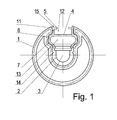
- Fig. 1
- den Querschnitt durch das Werbungselement mit der Metallleiste und mit den in die trapezförmige Nut in der Leiste eingesetzten Leuchtdioden,
- Fig. 2
- den Querschnitt durch das Werbungselement mit der Kunststoffleiste und mit den in die trapezförmige Nut in der Leiste eingesetzten Leuchtdioden,
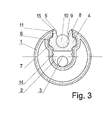
- Fig. 3
- den Querschnitt durch das Werbungselement mit der Kunststoffleiste, in der sich eine Metallstange befindet und mit den in den Innenraum der Nut eingeschobenen Leuchtdioden,
- Fig. 4
- in der Vergrößerung den Randbereich der U-Nut mit den vorgefertigten Einschnitten,
- Fig. 5
- ein Ende des Werbungselements in Seitenansicht,
- Fig. 6
- den Deckel, der die Stirnseite des Rohrs verschließt,
- Fig. 7
- den Querschnitt durch das Werbungselement mit der Metallleiste und mit einer sichtbaren Befestigungsschraube mit dem in die T-Nut in der Leiste eingeschobenen Schraubenkopf.
- Ein Element der Lichtwerbung mit Leuchtdioden (LEDs), das eine Neon-Lichtreklame imitiert, besteht in jedem der nachfolgenden Beispiele aus:
- einem aus Kunststoff gefertigten, ein- oder mehrschichtigen, flexiblen oder steifen, farblosen oder mit Zusatz von Farbstoff oder in der natürlichen Milchfarbe gefärbten Rohr 1, das im Querschnitt die Kreisform aufweist und bei dem die Wand im Umfangsbereich in Form des Buchstaben U mit der zur Rohrmitte ausgerichteten Auswölbung, die eine Nut entlang des ganzen Elements bildet, ausgeformt ist,
- einer Mehrzahl farblich zueinander angepassten LEDs oder mindestens einem flexiblen LED-Streifensatz 3, wobei die LEDs oder die LED-Streifen 3 in einen durch die Leiste 4 geschlossenen, inneren Raum der Nut 2 eingesetzt und mit Hilfe von elektrischen Leitungen oder aufgedruckten, elektrisch leitenden Leiterbahnen mit einer Versorgungsquelle, die sich außerhalb des Elements befindet, verbunden sind,
- einer Leiste 4, die in die Nut 2 eingeschoben oder eingedrückt ist und die Nut 2 dadurch verschließt, wobei die seitlichen Flächen der Nut 2 und der Leiste 4 mit Vertiefungen 6 in der Nut 2 und Auswölbungen 7 in der Leiste 4 derart ausgestaltet sind, dass sich jede Auswölbung 7 im Bereich der entsprechenden Vertiefung 6 befindet.
- In der Basisausfiihrung, das in der
Fig. 2 dargestellt wurde, wird ein Rohr 1 mit dem Durchschnitt von 40 mm mit der Leiste 4 aus Kunststoff, die eine entlang verlaufende und im Querschnitt die Kreisform aufweisende Nut 8 mit einer spaltförmigen Aussparung 9 hat, eingesetzt. Die LED-Streifen 3 sind auf den Vorsprüngen 14 befestigt. Ein Werbungselement mit derart ausgestalteten Leiste 4 findet bei der Gestaltung der geraden oder bogenförmigen Abschnitte die Anwendung, bei welchen die Form des ganzen Elements indirekt infolge der Befestigung in entsprechenden Stellen der das Rohr 1 befestigenden Elemente an der allgemeinen Konstruktion der Werbung erreicht wird. - Der Querschnitt des Werbungselements, der in diesem und in den weiteren Ausführungsbeispielen dargestellt ist, ist aschssymmetrisch. Aus diesem Grund sind alle Elemente und Formen, die auf einer Seite der Nut 2 oder der Leiste 4 vorkommen, mit den auf der anderen Seite dieser Symmetrieachse vorkommenden Elementen symmetrisch. In der Beschreibung und in der Zeichnung sind die symmetrischen Elemente nur einmalig gekennzeichnet, aber es versteht sich, dass die auf einer Seite vorkommenden Elemente auch auf der anderen Seite der Symmetrieachse vorkommen. Die Leiste 4 kommt mit den seitlichen, oberen Flächen mit den oberen seitlichen Flächen 5 der Nut 2 in Berührung.
- In einer modifizierten Ausführung, die in der
Fig. 3 dargestellt ist, ist in die Nut 8 in der Kunststoffleiste 4 eine plastisch verformbare Metallstange 10 eingeschoben. Das zusammengesetzte Werbungselement wird räumlich gestaltet, indem man die in die Nut 8 eingeschobene Stange 10 plastisch verformt. Die verformte Stange 10 behält die gegebene Form des Elements der Werbung bei. Ein derart ausgestaltetes Werbungselement wird an die Konstruktion der Werbung befestigt. - In einer anderen, in der
Fig. 1 dargestellten Ausführung, ist die Leiste 4 aus Metal oder aus Metalllegierung gefertigt. Ein Element der Werbung mit einer solchen Leiste aus Metall oder aus Metalllegierung ist grundsätzlich für die geraden Elemente bestimmt, es kann aber, in geringem Maße, plastisch verformt und nach der Verformung in dieser Form gelassen werden. Die hier eingesetzte Metallleiste 4 hat auf den seitlichen, oberen Flächen die entlang verlaufenden, einschneidenden Vorsprünge 11. Demgegenüber befinden sich auf den seitlichen Flächen der Nut 2 die vorgefertigten Einschnitte 16. Während die Leiste 4 in die Nut 2 eingeschoben wird, erfolgt das tiefere Einschneiden der Vorsprünge 11 in die Einschnitte 16. In der Leiste 4, auf der oberen Fläche, befindet sich eine entlang verlaufende T-Nut 12, in die die Schraubenköpfe der Befestigungsschrauben 19 eingesetzt werden. In der Leiste 4, auf der unteren Fläche, befindet sich auch eine entlang verlaufende, trapezförmige Nut 13, in die die LED-Streifen eingeschoben werden können. - Die LED-Streifen 3 sind in einem durch die Leiste 4 verschlossenen, inneren Raum der Nut 2 angeordnet. Diese Streifensätze können mit ihrer Basis in die trapezförmige Nut 13, wie in der
Fig. 1 dargestellt, eingeschoben oder auf die Vorsprünge 14 auf den seitlichen Wänden der Nut 2, wie in derFig. 2 dargestellt, aufgeschoben oder auch locker in die Nut, wie in derFig. 3 dargestellt, eingelegt werden. - Die Ränder 15 der Nut 2 greifen die Ränder der Leiste 4 um. Die stirnseitigen Öffnungen des Rohrs 1 in einem zusammengesetzten Element sind mit den Deckeln 17 mit einem integrierten Steckteil 18 mit dem Querschnitt, der dem Querschnitt des oberen Teils der Nut 2 im Rohr 1 entspricht, verschlossen. Die Befestigung des Deckels 17 erfolgt durch Einschieben des Steckteils 18 in die Nut 2 nach dem vorherigen Auftragen einer Dichtmasse auf die Stirnseite des Rohres 1 und des Deckels 17.
Claims (10)
- Ein Element der Lichtwerbung mit Leuchtdioden (LEDs), das eine Neon-Lichtreklame imitiert, mit:einem aus Kunststoff gefertigten, mindestens einschichtigen, flexiblen oder steifen, farblosen oder mit Zusatz von Farbstoff oder in der natürlichen Milchfarbe gefärbten Rohr (1), das im Querschnitt die Form einer beliebigen geometrischen Figur, am besten die Kreisform aufweist und bei dem die Wand im Umfangsbereich in Form des Buchstaben U mit der zur Rohrmitte (1) ausgerichteten Auswölbung, die eine Nut (2) entlang des ganzen Elements bildet, ausgeformt ist,einer Mehrzahl farblich zueinander angepassten LEDs oder mindestens einem flexiblen LED-Streifensatz (3), wobei die LEDs (3) oder die LED-Streifen in einen durch die Leiste (4) geschlossenen, inneren Raum der Nut (2) eingesetzt und mit Hilfe von elektrischen Leitungen oder aufgedruckten, elektrisch leitenden Leiterbahnen mit einer Versorgungsquelle, die sich außerhalb des Elements befindet, verbunden sind,einer in die Nut (2) eingeschobenen oder eingedrückten Leiste (4), die die Nut (2) verschließt, wobei die Seitenflächen der Leiste (4) in einem Bereich an ihren oberen Flächen mit den oberen, seitlichen Flächen (5) der Nut (2) in Berührung kommen, und in einem anderen Bereich mit den in die Aussparungen (6) in der Nut (2) eingreifenden Auswölbungen (7) angeformt sind, und darüber hinausist die Leiste (4) aus einem Kunststoff oder aus Metall bzw. aus einer plastischverformbaren Metalllegierung hergestellt,
dadurch gekennzeichnet, dass die aus Kunststoff hergestellte Leiste (4) eine Längsnut (8) mit dem vorteilhaft kreisförmigen Querschnitt und mit einer spaltförmigen Aussparung (9) von oben aufweist. - Ein Element nach Anspruch 1, dadurch gekennzeichnet, dass in die Nut (8) in der Leiste (4) eine plastisch verformbare Metallstange (10) eingesetzt ist.
- Ein Element nach Anspruch 1, der eine aus Metall oder aus einer plastisch verformbaren Metalllegierung hergestellte Leiste (4) aufweist, dadurch gekennzeichnet, dass die Leiste (4) auf den seitlichen, oberen Flächen die entlang verlaufenden, einschneidenden Vorsprünge 11 hat.
- Ein Element nach Anspruch 3, dadurch gekennzeichnet, dass die Leiste (4) auf der oberen Fläche die entlang verlaufende T-Nut (12) hat.
- Ein Element nach Anspruch 3 oder 4, dadurch gekennzeichnet, dass die Leiste (4) auf der unteren, inneren Fläche die entlang verlaufende, trapezförmige Nut (13) hat.
- Ein Element nach jedem der vorherigen Ansprüche, dadurch gekennzeichnet, dass in der Nut (2) auf den Seitenwänden, unter der Leiste (4) die Vorsprünge (14) angeordnet sind.
- Ein Element nach jedem der vorherigen Ansprüche, dadurch gekennzeichnet, dass die Ränder (15) der Nut (2) die Ränder der Leiste (4) umgreifen.
- Ein Element nach Anspruch 3 bis 7, gekennzeichnet dadurch, dass sich oben, auf den seitlichen Flächen der Nut (2) vorgefertigte Einschnitte (16) befinden.
- Ein Element nach jedem der vorherigen Ansprüche, gekennzeichnet dadurch, dass die stirnseitigen Öffnungen des Rohrs (1) mit den Deckeln (17) verschlossen sind.
- Ein Element nach jedem der vorherigen Ansprüche, dadurch gekennzeichnet, dass der Deckel (17) einen integrierten und senkrecht angeordneten Steckteil (18) mit dem Querschnitt, der dem Querschnitt des oberen Teils der Nut (2) im Rohr (1) entspricht, hat.
Priority Applications (1)
| Application Number | Priority Date | Filing Date | Title |
|---|---|---|---|
| PL12183737T PL2571011T3 (pl) | 2011-09-15 | 2012-09-10 | Element reklamy świetlnej z diodami świecącymi LED imitujący świecący neon |
Applications Claiming Priority (1)
| Application Number | Priority Date | Filing Date | Title |
|---|---|---|---|
| PL396349A PL221910B1 (pl) | 2011-09-15 | 2011-09-15 | Element reklamy świetlnej z diodami świecącymi LED imitujący świecący neon |
Publications (3)
| Publication Number | Publication Date |
|---|---|
| EP2571011A2 true EP2571011A2 (de) | 2013-03-20 |
| EP2571011A3 EP2571011A3 (de) | 2013-11-20 |
| EP2571011B1 EP2571011B1 (de) | 2014-11-12 |
Family
ID=46924273
Family Applications (1)
| Application Number | Title | Priority Date | Filing Date |
|---|---|---|---|
| EP12183737.1A Active EP2571011B1 (de) | 2011-09-15 | 2012-09-10 | Ein Element der Lichtwerbung mit Leuchtdioden (LEDS), das eine Neonlichtreklame imitiert |
Country Status (3)
| Country | Link |
|---|---|
| EP (1) | EP2571011B1 (de) |
| ES (1) | ES2528274T3 (de) |
| PL (2) | PL221910B1 (de) |
Families Citing this family (1)
| Publication number | Priority date | Publication date | Assignee | Title |
|---|---|---|---|---|
| PL242722B1 (pl) * | 2019-03-18 | 2023-04-11 | Koper Michal Studio Reklamy Euromet | Rura dwuwarstwowa z kanałem montażowym oraz sposób łączenia rury wewnętrznej z kanałem montażowym z rurą zewnętrzną |
Citations (3)
| Publication number | Priority date | Publication date | Assignee | Title |
|---|---|---|---|---|
| EP1873741A1 (de) | 2006-06-26 | 2008-01-02 | Michal Koper | Beleuchtungselement für eine Werbung |
| WO2008010738A2 (en) | 2007-01-24 | 2008-01-24 | Uros Babic | Patent foramen ovale occluder with suture based anchor |
| PL382766A1 (pl) | 2007-06-27 | 2009-01-05 | Koper Michał Euromet Studio Reklamy | Element reklamy świetlnej z diodami świecącymi LED imitujący świecący neon oraz sposób wytwarzania elementu reklamy świetlnej |
Family Cites Families (1)
| Publication number | Priority date | Publication date | Assignee | Title |
|---|---|---|---|---|
| JP2008218141A (ja) * | 2007-03-02 | 2008-09-18 | Mori Noriko | Ledランプ |
-
2011
- 2011-09-15 PL PL396349A patent/PL221910B1/pl unknown
-
2012
- 2012-09-10 PL PL12183737T patent/PL2571011T3/pl unknown
- 2012-09-10 EP EP12183737.1A patent/EP2571011B1/de active Active
- 2012-09-10 ES ES12183737.1T patent/ES2528274T3/es active Active
Patent Citations (3)
| Publication number | Priority date | Publication date | Assignee | Title |
|---|---|---|---|---|
| EP1873741A1 (de) | 2006-06-26 | 2008-01-02 | Michal Koper | Beleuchtungselement für eine Werbung |
| WO2008010738A2 (en) | 2007-01-24 | 2008-01-24 | Uros Babic | Patent foramen ovale occluder with suture based anchor |
| PL382766A1 (pl) | 2007-06-27 | 2009-01-05 | Koper Michał Euromet Studio Reklamy | Element reklamy świetlnej z diodami świecącymi LED imitujący świecący neon oraz sposób wytwarzania elementu reklamy świetlnej |
Also Published As
| Publication number | Publication date |
|---|---|
| PL2571011T3 (pl) | 2015-04-30 |
| ES2528274T3 (es) | 2015-02-06 |
| PL221910B1 (pl) | 2016-06-30 |
| PL396349A1 (pl) | 2013-03-18 |
| EP2571011B1 (de) | 2014-11-12 |
| EP2571011A3 (de) | 2013-11-20 |
Similar Documents
| Publication | Publication Date | Title |
|---|---|---|
| DE112006004179B4 (de) | Beleuchtungsvorrichtung | |
| EP2825816B1 (de) | Raumbeleuchtungsprofilanordnung | |
| EP2421714B1 (de) | Dekorativer verbundkörper | |
| AT12903U1 (de) | Fassadenleuchte mit leuchtdioden | |
| DE202012101239U1 (de) | Abdeckung für ein Leuchtengehäuse | |
| EP2648178B1 (de) | Anordnung zur Lichtabgabe mit flächigem Lichtleitelement | |
| DE202006017445U1 (de) | Lichtmodul, insbesondere für einen hinterleuchtbaren Schriftzug in einer Frontblende | |
| EP2571011B1 (de) | Ein Element der Lichtwerbung mit Leuchtdioden (LEDS), das eine Neonlichtreklame imitiert | |
| DE10311492B3 (de) | Leuchtschiene mit Leuchtdioden | |
| DE102012021163A1 (de) | Lichtaustrittskörper | |
| EP0878591B1 (de) | Vorrichtung zur Befestigung eines Holzelements | |
| DE102021113300A1 (de) | Lichtleiter für lampen, lampe für automobile und montageverfahren des lichtleiters | |
| DE102018103796A1 (de) | Befestigungselement für LED-Streifen in Nuten | |
| DE102014104448B4 (de) | Leuchte mit einem Lichtleiter zur Erzeugung von entblendetem, teilflächigen Licht | |
| DE102008033743B4 (de) | Leuchtwand | |
| EP2000055B1 (de) | Sitzgelegenheit | |
| EP1555923A1 (de) | Duschabtrennung mit beleuchtung | |
| DE202014010760U1 (de) | Kraftfahrzeug-Emblem mit Beleuchtung | |
| EP2484961B1 (de) | Abdeckung für ein Leuchtengehäuse | |
| EP3376102A1 (de) | Beleuchtetes konstruktionselement und verfahren zu dessen herstellung | |
| DE202011106731U1 (de) | Paneel-Vorrichtung für einen Schrank | |
| EP3133341A1 (de) | Leuchtvorrichtung | |
| DE20312326U1 (de) | Rosetten- oder schildförmiges Beschlagteil mit integrierter Beleuchtungseinrichtung | |
| EP3816505B1 (de) | Lichtleitvorrichtung und set | |
| DE102006003513A1 (de) | Wand- oder Deckenelement |
Legal Events
| Date | Code | Title | Description |
|---|---|---|---|
| PUAI | Public reference made under article 153(3) epc to a published international application that has entered the european phase |
Free format text: ORIGINAL CODE: 0009012 |
|
| AK | Designated contracting states |
Kind code of ref document: A2 Designated state(s): AL AT BE BG CH CY CZ DE DK EE ES FI FR GB GR HR HU IE IS IT LI LT LU LV MC MK MT NL NO PL PT RO RS SE SI SK SM TR |
|
| AX | Request for extension of the european patent |
Extension state: BA ME |
|
| PUAL | Search report despatched |
Free format text: ORIGINAL CODE: 0009013 |
|
| AK | Designated contracting states |
Kind code of ref document: A3 Designated state(s): AL AT BE BG CH CY CZ DE DK EE ES FI FR GB GR HR HU IE IS IT LI LT LU LV MC MK MT NL NO PL PT RO RS SE SI SK SM TR |
|
| AX | Request for extension of the european patent |
Extension state: BA ME |
|
| RIC1 | Information provided on ipc code assigned before grant |
Ipc: G09F 13/18 20060101AFI20131017BHEP Ipc: G09F 13/22 20060101ALI20131017BHEP |
|
| 17P | Request for examination filed |
Effective date: 20140331 |
|
| RBV | Designated contracting states (corrected) |
Designated state(s): AL AT BE BG CH CY CZ DE DK EE ES FI FR GB GR HR HU IE IS IT LI LT LU LV MC MK MT NL NO PL PT RO RS SE SI SK SM TR |
|
| GRAP | Despatch of communication of intention to grant a patent |
Free format text: ORIGINAL CODE: EPIDOSNIGR1 |
|
| INTG | Intention to grant announced |
Effective date: 20140602 |
|
| GRAS | Grant fee paid |
Free format text: ORIGINAL CODE: EPIDOSNIGR3 |
|
| GRAA | (expected) grant |
Free format text: ORIGINAL CODE: 0009210 |
|
| AK | Designated contracting states |
Kind code of ref document: B1 Designated state(s): AL AT BE BG CH CY CZ DE DK EE ES FI FR GB GR HR HU IE IS IT LI LT LU LV MC MK MT NL NO PL PT RO RS SE SI SK SM TR |
|
| REG | Reference to a national code |
Ref country code: GB Ref legal event code: FG4D Free format text: NOT ENGLISH |
|
| REG | Reference to a national code |
Ref country code: CH Ref legal event code: EP |
|
| REG | Reference to a national code |
Ref country code: AT Ref legal event code: REF Ref document number: 696166 Country of ref document: AT Kind code of ref document: T Effective date: 20141115 |
|
| REG | Reference to a national code |
Ref country code: IE Ref legal event code: FG4D Free format text: LANGUAGE OF EP DOCUMENT: GERMAN |
|
| REG | Reference to a national code |
Ref country code: DE Ref legal event code: R096 Ref document number: 502012001573 Country of ref document: DE Effective date: 20141224 |
|
| REG | Reference to a national code |
Ref country code: NL Ref legal event code: T3 |
|
| REG | Reference to a national code |
Ref country code: ES Ref legal event code: FG2A Ref document number: 2528274 Country of ref document: ES Kind code of ref document: T3 Effective date: 20150206 |
|
| PG25 | Lapsed in a contracting state [announced via postgrant information from national office to epo] |
Ref country code: NO Free format text: LAPSE BECAUSE OF FAILURE TO SUBMIT A TRANSLATION OF THE DESCRIPTION OR TO PAY THE FEE WITHIN THE PRESCRIBED TIME-LIMIT Effective date: 20150212 Ref country code: LT Free format text: LAPSE BECAUSE OF FAILURE TO SUBMIT A TRANSLATION OF THE DESCRIPTION OR TO PAY THE FEE WITHIN THE PRESCRIBED TIME-LIMIT Effective date: 20141112 Ref country code: FI Free format text: LAPSE BECAUSE OF FAILURE TO SUBMIT A TRANSLATION OF THE DESCRIPTION OR TO PAY THE FEE WITHIN THE PRESCRIBED TIME-LIMIT Effective date: 20141112 Ref country code: PT Free format text: LAPSE BECAUSE OF FAILURE TO SUBMIT A TRANSLATION OF THE DESCRIPTION OR TO PAY THE FEE WITHIN THE PRESCRIBED TIME-LIMIT Effective date: 20150312 Ref country code: IS Free format text: LAPSE BECAUSE OF FAILURE TO SUBMIT A TRANSLATION OF THE DESCRIPTION OR TO PAY THE FEE WITHIN THE PRESCRIBED TIME-LIMIT Effective date: 20150312 |
|
| REG | Reference to a national code |
Ref country code: PL Ref legal event code: T3 |
|
| PG25 | Lapsed in a contracting state [announced via postgrant information from national office to epo] |
Ref country code: HR Free format text: LAPSE BECAUSE OF FAILURE TO SUBMIT A TRANSLATION OF THE DESCRIPTION OR TO PAY THE FEE WITHIN THE PRESCRIBED TIME-LIMIT Effective date: 20141112 Ref country code: SE Free format text: LAPSE BECAUSE OF FAILURE TO SUBMIT A TRANSLATION OF THE DESCRIPTION OR TO PAY THE FEE WITHIN THE PRESCRIBED TIME-LIMIT Effective date: 20141112 Ref country code: RS Free format text: LAPSE BECAUSE OF FAILURE TO SUBMIT A TRANSLATION OF THE DESCRIPTION OR TO PAY THE FEE WITHIN THE PRESCRIBED TIME-LIMIT Effective date: 20141112 Ref country code: GR Free format text: LAPSE BECAUSE OF FAILURE TO SUBMIT A TRANSLATION OF THE DESCRIPTION OR TO PAY THE FEE WITHIN THE PRESCRIBED TIME-LIMIT Effective date: 20150213 Ref country code: CY Free format text: LAPSE BECAUSE OF FAILURE TO SUBMIT A TRANSLATION OF THE DESCRIPTION OR TO PAY THE FEE WITHIN THE PRESCRIBED TIME-LIMIT Effective date: 20141112 Ref country code: LV Free format text: LAPSE BECAUSE OF FAILURE TO SUBMIT A TRANSLATION OF THE DESCRIPTION OR TO PAY THE FEE WITHIN THE PRESCRIBED TIME-LIMIT Effective date: 20141112 |
|
| PG25 | Lapsed in a contracting state [announced via postgrant information from national office to epo] |
Ref country code: CZ Free format text: LAPSE BECAUSE OF FAILURE TO SUBMIT A TRANSLATION OF THE DESCRIPTION OR TO PAY THE FEE WITHIN THE PRESCRIBED TIME-LIMIT Effective date: 20141112 Ref country code: RO Free format text: LAPSE BECAUSE OF FAILURE TO SUBMIT A TRANSLATION OF THE DESCRIPTION OR TO PAY THE FEE WITHIN THE PRESCRIBED TIME-LIMIT Effective date: 20141112 Ref country code: DK Free format text: LAPSE BECAUSE OF FAILURE TO SUBMIT A TRANSLATION OF THE DESCRIPTION OR TO PAY THE FEE WITHIN THE PRESCRIBED TIME-LIMIT Effective date: 20141112 Ref country code: EE Free format text: LAPSE BECAUSE OF FAILURE TO SUBMIT A TRANSLATION OF THE DESCRIPTION OR TO PAY THE FEE WITHIN THE PRESCRIBED TIME-LIMIT Effective date: 20141112 Ref country code: SK Free format text: LAPSE BECAUSE OF FAILURE TO SUBMIT A TRANSLATION OF THE DESCRIPTION OR TO PAY THE FEE WITHIN THE PRESCRIBED TIME-LIMIT Effective date: 20141112 |
|
| REG | Reference to a national code |
Ref country code: DE Ref legal event code: R097 Ref document number: 502012001573 Country of ref document: DE |
|
| REG | Reference to a national code |
Ref country code: FR Ref legal event code: PLFP Year of fee payment: 4 |
|
| PLBE | No opposition filed within time limit |
Free format text: ORIGINAL CODE: 0009261 |
|
| STAA | Information on the status of an ep patent application or granted ep patent |
Free format text: STATUS: NO OPPOSITION FILED WITHIN TIME LIMIT |
|
| 26N | No opposition filed |
Effective date: 20150813 |
|
| PG25 | Lapsed in a contracting state [announced via postgrant information from national office to epo] |
Ref country code: SI Free format text: LAPSE BECAUSE OF FAILURE TO SUBMIT A TRANSLATION OF THE DESCRIPTION OR TO PAY THE FEE WITHIN THE PRESCRIBED TIME-LIMIT Effective date: 20141112 |
|
| PG25 | Lapsed in a contracting state [announced via postgrant information from national office to epo] |
Ref country code: MC Free format text: LAPSE BECAUSE OF FAILURE TO SUBMIT A TRANSLATION OF THE DESCRIPTION OR TO PAY THE FEE WITHIN THE PRESCRIBED TIME-LIMIT Effective date: 20141112 |
|
| REG | Reference to a national code |
Ref country code: IE Ref legal event code: MM4A |
|
| PG25 | Lapsed in a contracting state [announced via postgrant information from national office to epo] |
Ref country code: IE Free format text: LAPSE BECAUSE OF NON-PAYMENT OF DUE FEES Effective date: 20150910 |
|
| REG | Reference to a national code |
Ref country code: FR Ref legal event code: PLFP Year of fee payment: 5 |
|
| PG25 | Lapsed in a contracting state [announced via postgrant information from national office to epo] |
Ref country code: MT Free format text: LAPSE BECAUSE OF FAILURE TO SUBMIT A TRANSLATION OF THE DESCRIPTION OR TO PAY THE FEE WITHIN THE PRESCRIBED TIME-LIMIT Effective date: 20141112 |
|
| PG25 | Lapsed in a contracting state [announced via postgrant information from national office to epo] |
Ref country code: BG Free format text: LAPSE BECAUSE OF FAILURE TO SUBMIT A TRANSLATION OF THE DESCRIPTION OR TO PAY THE FEE WITHIN THE PRESCRIBED TIME-LIMIT Effective date: 20141112 Ref country code: HU Free format text: LAPSE BECAUSE OF FAILURE TO SUBMIT A TRANSLATION OF THE DESCRIPTION OR TO PAY THE FEE WITHIN THE PRESCRIBED TIME-LIMIT; INVALID AB INITIO Effective date: 20120910 Ref country code: SM Free format text: LAPSE BECAUSE OF FAILURE TO SUBMIT A TRANSLATION OF THE DESCRIPTION OR TO PAY THE FEE WITHIN THE PRESCRIBED TIME-LIMIT Effective date: 20141112 |
|
| REG | Reference to a national code |
Ref country code: FR Ref legal event code: PLFP Year of fee payment: 6 |
|
| PG25 | Lapsed in a contracting state [announced via postgrant information from national office to epo] |
Ref country code: TR Free format text: LAPSE BECAUSE OF FAILURE TO SUBMIT A TRANSLATION OF THE DESCRIPTION OR TO PAY THE FEE WITHIN THE PRESCRIBED TIME-LIMIT Effective date: 20141112 |
|
| PG25 | Lapsed in a contracting state [announced via postgrant information from national office to epo] |
Ref country code: MK Free format text: LAPSE BECAUSE OF FAILURE TO SUBMIT A TRANSLATION OF THE DESCRIPTION OR TO PAY THE FEE WITHIN THE PRESCRIBED TIME-LIMIT Effective date: 20141112 |
|
| REG | Reference to a national code |
Ref country code: FR Ref legal event code: PLFP Year of fee payment: 7 |
|
| PG25 | Lapsed in a contracting state [announced via postgrant information from national office to epo] |
Ref country code: AL Free format text: LAPSE BECAUSE OF FAILURE TO SUBMIT A TRANSLATION OF THE DESCRIPTION OR TO PAY THE FEE WITHIN THE PRESCRIBED TIME-LIMIT Effective date: 20141112 |
|
| PGFP | Annual fee paid to national office [announced via postgrant information from national office to epo] |
Ref country code: NL Payment date: 20200819 Year of fee payment: 9 |
|
| PGFP | Annual fee paid to national office [announced via postgrant information from national office to epo] |
Ref country code: AT Payment date: 20200819 Year of fee payment: 9 |
|
| REG | Reference to a national code |
Ref country code: NL Ref legal event code: MM Effective date: 20211001 |
|
| REG | Reference to a national code |
Ref country code: AT Ref legal event code: MM01 Ref document number: 696166 Country of ref document: AT Kind code of ref document: T Effective date: 20210910 |
|
| PG25 | Lapsed in a contracting state [announced via postgrant information from national office to epo] |
Ref country code: NL Free format text: LAPSE BECAUSE OF NON-PAYMENT OF DUE FEES Effective date: 20211001 |
|
| PG25 | Lapsed in a contracting state [announced via postgrant information from national office to epo] |
Ref country code: AT Free format text: LAPSE BECAUSE OF NON-PAYMENT OF DUE FEES Effective date: 20210910 |
|
| PGFP | Annual fee paid to national office [announced via postgrant information from national office to epo] |
Ref country code: LU Payment date: 20220816 Year of fee payment: 11 Ref country code: GB Payment date: 20220819 Year of fee payment: 11 Ref country code: DE Payment date: 20220808 Year of fee payment: 11 |
|
| PGFP | Annual fee paid to national office [announced via postgrant information from national office to epo] |
Ref country code: BE Payment date: 20220816 Year of fee payment: 11 |
|
| PGFP | Annual fee paid to national office [announced via postgrant information from national office to epo] |
Ref country code: CH Payment date: 20221001 Year of fee payment: 11 |
|
| PGFP | Annual fee paid to national office [announced via postgrant information from national office to epo] |
Ref country code: IT Payment date: 20230831 Year of fee payment: 12 |
|
| REG | Reference to a national code |
Ref country code: DE Ref legal event code: R119 Ref document number: 502012001573 Country of ref document: DE |
|
| REG | Reference to a national code |
Ref country code: CH Ref legal event code: PL |
|
| PG25 | Lapsed in a contracting state [announced via postgrant information from national office to epo] |
Ref country code: LU Free format text: LAPSE BECAUSE OF NON-PAYMENT OF DUE FEES Effective date: 20230910 |
|
| REG | Reference to a national code |
Ref country code: BE Ref legal event code: MM Effective date: 20230930 |
|
| GBPC | Gb: european patent ceased through non-payment of renewal fee |
Effective date: 20230910 |
|
| PG25 | Lapsed in a contracting state [announced via postgrant information from national office to epo] |
Ref country code: LU Free format text: LAPSE BECAUSE OF NON-PAYMENT OF DUE FEES Effective date: 20230910 |
|
| PG25 | Lapsed in a contracting state [announced via postgrant information from national office to epo] |
Ref country code: GB Free format text: LAPSE BECAUSE OF NON-PAYMENT OF DUE FEES Effective date: 20230910 |
|
| PG25 | Lapsed in a contracting state [announced via postgrant information from national office to epo] |
Ref country code: CH Free format text: LAPSE BECAUSE OF NON-PAYMENT OF DUE FEES Effective date: 20230930 |
|
| PG25 | Lapsed in a contracting state [announced via postgrant information from national office to epo] |
Ref country code: GB Free format text: LAPSE BECAUSE OF NON-PAYMENT OF DUE FEES Effective date: 20230910 Ref country code: DE Free format text: LAPSE BECAUSE OF NON-PAYMENT OF DUE FEES Effective date: 20240403 Ref country code: CH Free format text: LAPSE BECAUSE OF NON-PAYMENT OF DUE FEES Effective date: 20230930 |
|
| PG25 | Lapsed in a contracting state [announced via postgrant information from national office to epo] |
Ref country code: BE Free format text: LAPSE BECAUSE OF NON-PAYMENT OF DUE FEES Effective date: 20230930 |
|
| PGFP | Annual fee paid to national office [announced via postgrant information from national office to epo] |
Ref country code: FR Payment date: 20240807 Year of fee payment: 13 |
|
| PGFP | Annual fee paid to national office [announced via postgrant information from national office to epo] |
Ref country code: PL Payment date: 20240805 Year of fee payment: 13 |
|
| PGFP | Annual fee paid to national office [announced via postgrant information from national office to epo] |
Ref country code: ES Payment date: 20241003 Year of fee payment: 13 |
|
| PG25 | Lapsed in a contracting state [announced via postgrant information from national office to epo] |
Ref country code: IT Free format text: LAPSE BECAUSE OF NON-PAYMENT OF DUE FEES Effective date: 20240910 |