EP2571180A2 - Verfahren zur auswahl einer master-vorrichtung in einem koexistenzsystem - Google Patents
Verfahren zur auswahl einer master-vorrichtung in einem koexistenzsystem Download PDFInfo
- Publication number
- EP2571180A2 EP2571180A2 EP11780765A EP11780765A EP2571180A2 EP 2571180 A2 EP2571180 A2 EP 2571180A2 EP 11780765 A EP11780765 A EP 11780765A EP 11780765 A EP11780765 A EP 11780765A EP 2571180 A2 EP2571180 A2 EP 2571180A2
- Authority
- EP
- European Patent Office
- Prior art keywords
- coexistence
- master
- network
- cms
- selecting
- Prior art date
- Legal status (The legal status is an assumption and is not a legal conclusion. Google has not performed a legal analysis and makes no representation as to the accuracy of the status listed.)
- Withdrawn
Links
- 238000000034 method Methods 0.000 title claims abstract description 56
- 238000001228 spectrum Methods 0.000 description 24
- 238000010586 diagram Methods 0.000 description 12
- 238000007726 management method Methods 0.000 description 9
- 230000006870 function Effects 0.000 description 8
- 238000004891 communication Methods 0.000 description 7
- 230000008569 process Effects 0.000 description 6
- 238000013468 resource allocation Methods 0.000 description 6
- 230000001413 cellular effect Effects 0.000 description 4
- 238000005516 engineering process Methods 0.000 description 4
- 230000004048 modification Effects 0.000 description 4
- 238000012986 modification Methods 0.000 description 4
- 230000033228 biological regulation Effects 0.000 description 3
- 230000004044 response Effects 0.000 description 3
- 238000005259 measurement Methods 0.000 description 2
- 238000010295 mobile communication Methods 0.000 description 2
- 238000012545 processing Methods 0.000 description 2
- 101000986989 Naja kaouthia Acidic phospholipase A2 CM-II Proteins 0.000 description 1
- 238000007792 addition Methods 0.000 description 1
- 230000004931 aggregating effect Effects 0.000 description 1
- 230000001149 cognitive effect Effects 0.000 description 1
- 238000013500 data storage Methods 0.000 description 1
- 230000000694 effects Effects 0.000 description 1
- 230000002452 interceptive effect Effects 0.000 description 1
- 230000001737 promoting effect Effects 0.000 description 1
- 238000006467 substitution reaction Methods 0.000 description 1
- 230000001629 suppression Effects 0.000 description 1
- 230000036448 vitalisation Effects 0.000 description 1
Images




Classifications
-
- H—ELECTRICITY
- H04—ELECTRIC COMMUNICATION TECHNIQUE
- H04W—WIRELESS COMMUNICATION NETWORKS
- H04W8/00—Network data management
- H04W8/005—Discovery of network devices, e.g. terminals
-
- H—ELECTRICITY
- H04—ELECTRIC COMMUNICATION TECHNIQUE
- H04W—WIRELESS COMMUNICATION NETWORKS
- H04W16/00—Network planning, e.g. coverage or traffic planning tools; Network deployment, e.g. resource partitioning or cells structures
- H04W16/14—Spectrum sharing arrangements between different networks
-
- H—ELECTRICITY
- H04—ELECTRIC COMMUNICATION TECHNIQUE
- H04L—TRANSMISSION OF DIGITAL INFORMATION, e.g. TELEGRAPHIC COMMUNICATION
- H04L41/00—Arrangements for maintenance, administration or management of data switching networks, e.g. of packet switching networks
- H04L41/12—Discovery or management of network topologies
-
- H—ELECTRICITY
- H04—ELECTRIC COMMUNICATION TECHNIQUE
- H04W—WIRELESS COMMUNICATION NETWORKS
- H04W88/00—Devices specially adapted for wireless communication networks, e.g. terminals, base stations or access point devices
- H04W88/02—Terminal devices
- H04W88/06—Terminal devices adapted for operation in multiple networks or having at least two operational modes, e.g. multi-mode terminals
-
- H—ELECTRICITY
- H04—ELECTRIC COMMUNICATION TECHNIQUE
- H04W—WIRELESS COMMUNICATION NETWORKS
- H04W28/00—Network traffic management; Network resource management
- H04W28/02—Traffic management, e.g. flow control or congestion control
- H04W28/04—Error control
-
- H—ELECTRICITY
- H04—ELECTRIC COMMUNICATION TECHNIQUE
- H04W—WIRELESS COMMUNICATION NETWORKS
- H04W84/00—Network topologies
- H04W84/18—Self-organising networks, e.g. ad-hoc networks or sensor networks
- H04W84/20—Leader-follower arrangements
Definitions
- the present invention relates to a coexistence scheme, and particularly, to a method and device for selecting and using a master device in a coexistence scheme.
- Types of spectrum sharing schemes may be classified according to sharing "methods" and sharing "subject and object.”
- sharing methods are interference avoidance schemes, and coexistence and cooperation models are considered.
- types of spectrum sharing schemes can be divided into sharing among equals in which the subject and object have equal rights and primary-secondary sharing in which a primary user and a secondary user share spectrum.
- Resource allocation and interference avoidance are possible through cooperation among all users.
- Resource allocation and interference avoidance may be carried out centrally by a base station or individually by respective users.
- Mobile communications systems based on CDMA or TDMA fall under the former, while ad-hoc systems fall under the latter.
- each user carries out interference avoidance without resource allocation using common protocols.
- the currently commercialized technologies based on coexistence may include wireless LAN and cordless phones, and overlay and underlay techniques can also be included herein.
- the coexistence model passively involves resource allocation and interference control as compared to the cooperation model in terms of technology. Therefore, coexistence is likely to cause interference.
- an object of the present invention is to provide a method and device that performs communications while preventing interference from occurring in a coexistence scheme.
- a method of selecting a master device for coexistence comprises identifying devices to be used in at least one network capable of coexisting without cooperation; selecting a master device among the identified devices; and controlling, by the master device, other network and device.
- the network includes a heterogeneous network or a homogeneous network.
- a decision to select the master device is performed based on a centralized topology, a distributed topology, or an autonomous topology.
- the distributed topology includes a same level architecture or a hierarchal architecture.
- the controlling includes: turning on or off other network and device; or enabling or disabling other network and device.
- an apparatus for selecting a master device for coexistence comprises a sensing unit configured to identify devices to be used in at least one network capable of coexisting without cooperation; and a controller configured to select a master device among the identified devices; and control other network and device.
- the devices being used can perform communications while reducing interference that may occur therebetween.
- FIG. 1 is a block diagram illustrating a coexistence system according to an exemplary embodiment according to the present disclosure
- FIG. 2 is a conceptual view illustrating a method of selecting a master CM (coexistence manager) in a coexistence system having a centralized topology according to an exemplary embodiment according to the present disclosure
- FIG. 3A and 3B are conceptual views illustrating a method of selecting a master CM (coexistence manager) in a coexistence system having a distributed topology according to an exemplary embodiment according to the present disclosure
- FIGS. 4A and 4B are conceptual views showing the differences in operation between the centralized topology and the distributed topology in the coexistence system according to the exemplary embodiment according to the present disclosure
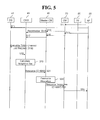
- FIG. 5 is a signal flow diagram showing how resources are allocated by a master CM (coexistence manager) in the coexistence system having the centralized topology according to an exemplary embodiment according to the present disclosure
- FIG. 6 is a signal flow diagram showing how resources are allocated by a master CM (coexistence manager) in the coexistence system having the distributed topology according to an exemplary embodiment according to the present disclosure
- FIG. 7 is a signal flow diagram a method of selecting a master CM (coexistence manager) in a coexistence system having a centralized topology according to an exemplary embodiment according to the present disclosure
- FIG. 8 is a signal flow diagram illustrating a method of selecting a master CM (coexistence manager) in a coexistence system having a distributed topology according to an exemplary embodiment according to the present disclosure
- FIGS. 9A and 9B are exemplary views showing that various architectures can be supported between different types of CMs (coexistence managers) through enable/disable in the coexistence system according to the exemplary embodiment according to the present disclosure;
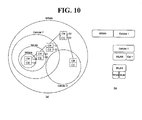
- FIGS. 10A and 10B are exemplary views illustrating an example in which a hierarchical architecture is created through enable/disable between different types of CMs (coexistence managers) in the coexistence system according to the exemplary embodiment according to the present disclosure;
- first and a second are used to describe various components of the present invention, the components are not limited to these terms. These terms are used only to differentiate one component from another one. For example, a component referred to as a first component in an embodiment can be referred to as a second component in another embodiment. In a similar manner, a second component can be referred to as a first component. As used herein, the term and/or includes any and all combinations of one or more of the associated listed items.
- FIG. 1 is a block diagram illustrating a coexistence system according to an exemplary embodiment according to the present disclosure.
- a coexistence system that is, the 802.19 system architecture has three logical entities and six logical interfaces.
- the three logical entities are defined as a coexistence manager (CM) 20, a coexistence enabler (CE) 30, and a coexistence database (CD) or a coexistence discovery and information server (CDIS) 10 by their functional roles.
- the six logical interfaces are defined as an interface A, an interface B1, an interface B2, an interface B3, an interface C, and an interface D by interfaces with other 802.19.1 logical entities.
- the 802.19 system interacts with external elements including a TV Whites Space (TVWS) database 200, a television band device (TVBD) network or device 100, and an operator management entity (OME) 300.
- TVWS TV Whites Space
- TVBD television band device
- OME operator management entity
- TV white space refers to spectrum that is unused by broadcasters from VHF and UHF bandwidths for TV broadcasting.
- TV white space refers to unlicensed spectrum that can be used by anyone who satisfies the requirements of the government's radio regulations.
- TV white space spatially means spectrum setaside due to concerns over frequency interference between broadcasters and spectrum that is unused locally or an area that broadcast waves cannot reach, and temporally means broadcast spectrum that is unused at the dawn when broadcasters do not transmit broadcast.
- TV white space devices should not disrupt reception by interfering with TV viewers, who are clients of broadcasters, and affect wireless microphone devices that use part of this spectrum and perform communications at low power. To meet these requirements, TV white space devices need the following techniques.
- TV white space devices may require spectrum sensing techniques of identifying TV channels in use to protect broadcast channels, a database including location-based TV channel information and access protocol techniques, coexistence techniques between different types of devices using TVWS band, intelligent autonomous wireless access element techniques for variable wireless channels, and subscriber authentication for wireless channel protection, and security techniques for user protection.
- spectrum sensing techniques of identifying TV channels in use to protect broadcast channels a database including location-based TV channel information and access protocol techniques, coexistence techniques between different types of devices using TVWS band, intelligent autonomous wireless access element techniques for variable wireless channels, and subscriber authentication for wireless channel protection, and security techniques for user protection.
- coexistence techniques between the same or different types of devices (or equipment) will be described in detail.
- the CE 30 may request and acquire information required for coexistence from the TVBD (TeleVision Band Device) network or device 100, translate reconfiguration requests/commands and control information received from the CM 20 into TVBD-specific reconfiguration requests/commands, and send them to the TVBD network or device 100.
- a TVBD refers to a terminal that allows the use of TV white space according to the Federal Communication Commission (FCC).
- the CM 20 has functions such as searching other CMs in order to solve coexistence problems between TVBD networks, coexistence decision making including generating and providing coexistence requests/commands and control information corresponding to the CE 30, and supporting exchange of information required for coexistence between CMs (which may include hierarchical or peer-to-peer decision making when it comes to arranging the CMs).
- the CM 20 may also have functions such as sharing information between a plurality of CMs to select a master CM, generating coexistence white space map in order to efficiently share frequency resources between other networks and systems each of which has a distributed topology, and adjusting networks when performing management related to TVWS coexistence.
- the CM 20 may be embedded in a device such as an access point (AP) or mounted outside the device.
- AP access point
- a fixed device like an AP (Access Point) may have the functions of the CM 20, and select and manage a master CM that represents a group of specific systems, providers or spatially separated devices.
- the master CM may be designated by the CD (or CDIS) 10 to achieve spatial reuse between spatially separated users. Interference map between CMs necessary for resource allocation may be acquired by geo-location or by additionally using and processing neighbor information received from CMs. In the case of the same type of networks, a master CM may be selected through communications therebetween. In the case of different types of networks, a master CM may be negotiated via the CD (or CDIS) 10.
- the CM 20 may have a hierarchical CM architecture according to coverage or specific classification criteria. With reference to white space map acquired from the CD (or CDIS) 10, a CM of the uppermost layer selects resources in consideration of its lower layer, and a lower-layer CM selects the rest of resources in consideration of its lower layer, which may be repeated.
- a small network compares its own WM (White space Map) with WM (White space Map) of a different type of neighbor network through the CM 20, and selects and uses channels first that the neighbor network cannot use. This may be controlled by the CDIS 11, the CDB 12 or the CD 10, or carried out in reverse order from a small network.
- the CD (Coexistence Database) 10 may be shown as a CDIS or a CDB according to functions.
- the CD (or CDIS) 10 may have functions such as generating coexistence white space map having a centralized topology to efficiently share frequency resources between other networks and systems, controlling a plurality of operators when performing management related to TVWS coexistence, and selecting a master CM to reduce communication overhead between CMs and solve coexistence problems.
- the CD 10 may perform functions such as calculating coexistence contour to discover neighboring networks/systems, redirecting resources (C-MAP) according to the TVBD in order to solve coexistence problems, promoting the opening of the interfaces between CMs to support discovery of the CMs, and collecting, aggregating, and providing information to promote coexistence.
- C-MAP redirecting resources
- the CD 10 may omnipotently distribute resources in terms of resource allocation, present priority rules between CMs and control resource selection of the CMs as an intermediary, or serve as an information sharing medium between the CMs and external or different types of networks as a CM DB (DataBase).
- CM DB DataBase
- the interfaces may be divided into three groups: the interface B1, the interface B2, and the interface B3, which are interfaces between 802.19.1 entities; the interface A, which is an interface between the 802.19.1 entity and the TVBD network/device; and the interface C and the interface D, which are interfaces between the 802.19.1 entity and the TVWS database or the OME.
- Other interfaces in each group are divided according to their using methods, types of information being exchanged, and underlying protocols.
- the interface A is an interface between the CE 30 and the TVBD network or device 100.
- the TVBD network or device 100 may provide information required for coexistence, configuration/information requests for coexistence, configuration/measurement/information responses for coexistence, and other information as needed.
- Configuration requests/commands and control information corresponding to the coexistence requests/commands and the control information received from the CM
- requests/commands related to control of measurements performed by the TVBD network or device 100 information indicating available resources, and other information as needed may be provided from the CE 30 to the TVBD network or device 100.
- the interface B1 is an interface between the CE 30 and the CM 20.
- Information required for coexistence (information obtained from the TVBD network or device 100) and other information as needed may be provided from the CE 30 to the CM 20.
- Coexistence requests/commands and control information and other information as needed may be provided from the CM 20 to the CE 30.
- the interface B2 is an interface between the CM 20 and the CD (or CDIS) 10.
- Information required for coexistence map, information required for neighbor set, information required for register/unenrolled, information required for discovery (obtained by the CM currently being used), information required for coexistence (obtained by the CM currently being used), and other information as needed may be provided from the CM 20 to the CD (or CDIS) 10.
- Information notified for coexistence map, information notified for neighbor set, information notified for a master CM, information for discovery (obtained by other CMs), information required for coexistence (obtained by other CMs), and other information may be provided from the CD (or CDIS) 10 to the CM 20.
- the interface B3 is an interface between the CM 20 and the CM 21.
- Information and messages for discovery and coexistence may be provided from the CM 20 to the CM 21.
- information notified for register/ unresgister from a CM to the master CM or a CM of a device to a CM of a server
- information notified for coexistence from a CM to a master CM or from a CM of a device to a CM of a server
- other information may be provided from the CM 20 to the CM 21.
- the interface C is an interface between the TVBD device 100 and the TVWS database 200. Information notified for available channels may be provided from the TVWS DB 200 to the TVBD device 100.
- the interface D is an interface between the CM 20 and the OME (Operator Management Entity) 300.
- Network operation information related to information for example, spectrum policy/limitations concerning operation of networks
- other information as needed may be provided from the OME 300 to the CM 20.
- the coexistence system as shown in FIG. 1 may have various topologies: centralized, distributed, and autonomous topologies.
- coexistence systems that have centralized and distributed topologies will be described in detail.
- FIG. 2 is a conceptual view illustrating a method of selecting a master CM (coexistence manager) in a coexistence system having a centralized topology according to an exemplary embodiment according to the present disclosure.
- the CDIS 11 chiefly performs data storage and data processing, and the CM 20 serves as a decision maker.
- the CM (or master CM) 20 may control all the networks or other terminals.
- one of the TVBDs (TV Band Devices) interfacing with networks may become the CM (or master CM) 20.
- FIGS. 3A and 3B are conceptual views illustrating a method of selecting a master CM (coexistence manager) in a coexistence system having a distributed topology according to an exemplary embodiment according to the present disclosure.
- the CDIS 11 or the CDB 12 promotes the opening of the interfaces between the CMs, and the CM 20 exchanges information required for coexistence.
- the CM 20 may carry out hierarchical or peer-to-peer decision making.
- the coexistence system may determine a master CM by decision making through negotiation between the CMs through the interface (or interface B3) as shown in FIG. 3A or may make a decision or determine a master CM as the CM 20 requests the CDIS 11 or the CDB 12 to arbitrate through the interface (or interface B2) as shown in FIG. 3B .
- FIGS. 4A and 4B are conceptual views to show differences in operation between the centralized topology and the distributed topology in the coexistence system according to the exemplary embodiment according to the present disclosure.
- a representative (master or super) CM 40 may allocate individual channels to other CMs (or CEs).
- CWM Coexistence White space Map
- CWM Coexistence White space Map
- CMs for example, CM 1 and CM 2 may be classified and given priority according to predetermined criteria or policy.
- the CM 20 may report/send priority information about available channels to the CDB (Coexistence Database)/CDIS or other CMs.
- CWM Coexistence White space Map
- CWM Coexistence White space Map
- the 802.19.1 system needs to be able to analyze acquired information, implement coexistence decisions, and support various topology models.
- information may include bandwidth of each TVWS network or device, available channel list that is can be known from the TVWS network/device, power limitation with respect to each TVWS channel, regulations, system parameters, or pre-analyzed neighbor information.
- FIGS. 5 and 6 are signal flow diagrams illustrating a method of allocating resources by a master CM (coexistence manager) or a master device in the coexistence systems having the centralized topology and the distributed topology as shown in FIGS. 2 to 4 .
- FIG. 5 is a signal flow diagram illustrating how a master CM (coexistence manager) allocates resources in the coexistence system having the centralized topology according to the exemplary embodiment according to the present disclosure.
- an AP 50 requests resources in operations S15 to S17
- the CDIS 11 acquires available channel list from the TVBD 100 and informs the master CM 40 of the available channel list in operations S8 to S11
- the master CM 40 allocates resources to the CM 20 in operations S12 to S14.
- the CM 20 is registered to the master CM 40 in operation S14, and the master CM 40 is registered to the CDIS 11 in operation S15.
- the AP 50 requests resources through a resource request Resource(C-MAP) REQ from the CM 20 in operation S15
- the CM 20 requests neighbor list and information about C-MAP from the master CM 40 in operation S16
- the master CM 40 requests the neighbor list and the information about the C-MAP from the CDIS 11 in operation S17.
- the CDIS 11 requests available TVWS channel list request (REQ) from the TVBD in operation S18 and receives a response to the request in operation S19, and calculates neighbor or neighbor set and C-MAP of the CM 20 in operation S20.
- the CDIS 11 informs the master CM 40 of the results obtained in operation S20, that is, the neighbor list and/or C-MAP of the CM 20 in operation S21.
- the master CM 40 allocates resources (C-MAP) to the CM 20 in operations S22 to S23, and the CM 20 informs the AP 50 of the C-MAP in operation S24.
- FIG. 6 is a signal flow diagram illustrating how a master CM (coexistence manager) allocates resources in the coexistence system having the distributed topology according to the exemplary embodiment according to the present disclosure.
- the AP 50 requests resources in operations S 35 to S37
- the CDIS 11 obtains available channel list from the TVBD 100 and indicates the CM 20 of the available channel list in operations S37 to S40
- the CM 20 negotiates with other CMs (for example, the CM 21 and a CM 22) for resources in operations S41 and S42.
- the CM 20 is registered to the CDIS 11 in operation S34.
- the AP 50 requests resources from the CM 20 through a resource request Resource request (REQ) in operation S35, the CM 20 requests neighbor list information and C-MAP from the CDIS 11 in operation S36.
- REQ resource request Resource request
- the CDIS 11 requests available TVWS channel list request (REQ) from the TVBD 100 in operation S37 and receives a response to the request in operation S38, and calculates neighbor set and C-MAP of the CM 20 in operation S39.
- the CDIS 11 informs the CM 20 of the results obtained in operation S39, that is, the neighbor list and the C-MAP of CMs in operation S40, and the CM 20 negotiates with other CMs (for example, the CM 21 and the CM 22) for resources in operation S41 and S42 and reallocates resources (C-MAP) to the AP 50 in operation S43 and S44.
- CMs for example, the CM 21 and the CM 22
- FIGS. 7 and 8 are signal flow diagrams illustrating a method of selecting a master CM (or master device) in the coexistence systems having the centralized topology and the distributed topology described in connection with FIGS. 2 to 4 .
- FIG. 7 is a signal flow diagram a method of selecting a master CM (coexistence manager) in the coexistence system having the centralized topology according to the exemplary embodiment according to the present disclosure.
- the CDIS 11 receives TV channel lists from the TVBD 100 in operation S55, the CDIS 11 calculates neighbor and C-MAP of the CMs and selects the master CM 40 of the CMs in operation S56 and S57, and the CDIS 11 informs the other CMs (for example, the CM 20 and the CM 22) of this in operation S58 to S60.
- the CM 20 is registered to the CDIS 11 in operation S54.
- the CDIS 11 obtains available TV channel lists from the TVBD 100 in operation S55.
- the TVBD 100 updates available TV channel lists at regular intervals.
- the CDIS 11 calculates neighbor or neighbor set and C-MAP of the CMs (for example, the CM 20 and the CM 22) in operation S56, selects the master CM 40 in operation S57, and informs the respective CMs of this in operations S58 to S60.
- the finally selected master CM 40 becomes a master of the AP in operation S61.
- FIG. 8 is a signal flow diagram illustrating a method of selecting a master CM (coexistence manager) in the coexistence system having the distributed topology according to the exemplary embodiment according to the present disclosure.
- the CDIS 11 receives channel lists from the TVBD 100 in operation S75, the CDIS 11 calculates neighbor and C-MAP of the CMs and informs the respective CMs of the neighbor and the C-MAP in operation S76 to S79, and the respective CMs negotiate with each other in order to select the master CM 40 or the master device in operations S80 to S82.
- the CM 20 is registered to the CDIS 11 in operation S74.
- the CDIS 11 obtains information about available TV channel lists from the TVBD 100 in operation S75.
- the TVBD 100 updates available TV channel lists at regular intervals.
- the CDIS 11 calculates neighbor or neighbor set and C-MAP of the CMs in operation S76, and informs the respective CMs of neighbor lists of the CMs in operations S77 to S79.
- the respective CMs negotiate with each other for resources and select the master CM in operations S80 TO S82, and the selected master CM 40 becomes a master of the AP in operation S83.
- the selected master CM 40 informs the respective CMs of this in operations S84 and S85.
- FIGS. 9 and 10 show that a master CM or a master device (BS, eNodeB, or MS) is selected in the same type of systems or networks that can coexist without cooperation, and networks or devices (or CM/CE of devices), instead of the master CM or the master device, are controlled, turned ON/OFF or disabled, thereby adaptively supporting various types of architectures.
- BS eNodeB
- MS master device
- FIGS. 9A and 9B are exemplary views showing that various types of architectures can be adaptively supported through enable/disable between different types of CMs (coexistence managers) in the coexistence system according to the exemplary embodiment according to the present disclosure.
- CMs in different types of systems requiring cooperation may be embodied to adaptively support various types of architectures through ON/OFF, active/inactive, or enable/ disable between the CMs.
- CMs in different kinds of systems for example, system A, system B, and system C
- a tree structure can be formed though enable/disable between the CMs such that the CM 20 that is enabled serves as a controller of the CM 21 and the CM 22 that are disabled as shown in FIG. 9B .
- FIGS. 10A and 10B are exemplary views illustrating an example in which a hierarchical architecture is created through enable/disable between different types of CMs (coexistence managers) in the coexistence system according to the exemplary embodiment according to the present disclosure.
- CMs coexistence managers
- FIG. 10A a master CM is selected by ON/ OFF, active/inactive, or enable/disable between CMs, thereby creating vertical relations.
- each CM can implement decision making with respect to networks in its horizontal layer and lower layer.
- a cellular system may determine a resource region of a WLAN, which is its lower layer, and its own resource region, while he WLAN may determine its own resource region and a resource region of a WPAN, which is its lower layer, with respect to resources allocated from the cellular system.
- a terminal according to the present invention may also be referred to as a device and includes any kind of terminal that can implement the exemplary embodiments of FIGS. 2 to 8 .
- a terminal according to the present invention that is, a device has a comprehensive meaning covering mobile communications terminals (for example, user devices (UE), mobile phones, cellular phones, DMB phones, DVB-H phones, PDA phones, and PTT phones) that can be practiced without departing from the spirit of the present invention, digital TVs, GPS navigations, portable game devices, MP3s and other home appliances.
- a terminal according to the present invention has a comprehensive meaning covering a CM and a CE.
- a terminal according to the present invention include software that implements the exemplary embodiments of FIGS. 2 to 10 or a module having the software mounted therein.
- This module is one component of a terminal or a server and may be called a processor or a controller.
- a terminal and a server according to the present invention include hardware and software components necessary to implement the above-described technical features of the present invention.
- the method according to the present invention as set forth above may be implemented in software, hardware, or some combination thereof.
- the method according to the present invention may be stored in the storage unit of the terminal or server (for example, an internal memory of a mobile terminal, a flash memory, a hard disk, or the like), and be carried out by the processor of the terminal or the server.
- the above-described method of selecting a master device in the coexistence system is not limited to the configuration and method according to the above-described exemplary embodiments, but the entirety or part of the exemplary embodiments may be selectively combined to make various modifications.
Landscapes
- Engineering & Computer Science (AREA)
- Computer Networks & Wireless Communication (AREA)
- Signal Processing (AREA)
- Databases & Information Systems (AREA)
- Mobile Radio Communication Systems (AREA)
Applications Claiming Priority (5)
| Application Number | Priority Date | Filing Date | Title |
|---|---|---|---|
| US33327210P | 2010-05-11 | 2010-05-11 | |
| US36269610P | 2010-07-09 | 2010-07-09 | |
| US38019610P | 2010-09-03 | 2010-09-03 | |
| US40864010P | 2010-10-31 | 2010-10-31 | |
| PCT/KR2011/003264 WO2011142548A2 (ko) | 2010-05-11 | 2011-05-02 | 상호공존 방식에서 대표 기기 선출 방법 |
Publications (2)
| Publication Number | Publication Date |
|---|---|
| EP2571180A2 true EP2571180A2 (de) | 2013-03-20 |
| EP2571180A4 EP2571180A4 (de) | 2016-07-20 |
Family
ID=44914793
Family Applications (1)
| Application Number | Title | Priority Date | Filing Date |
|---|---|---|---|
| EP11780765.1A Withdrawn EP2571180A4 (de) | 2010-05-11 | 2011-05-02 | Verfahren zur auswahl einer master-vorrichtung in einem koexistenzsystem |
Country Status (6)
| Country | Link |
|---|---|
| US (1) | US8868671B2 (de) |
| EP (1) | EP2571180A4 (de) |
| JP (1) | JP5735637B2 (de) |
| KR (1) | KR20130086121A (de) |
| CN (1) | CN102884733B (de) |
| WO (1) | WO2011142548A2 (de) |
Cited By (1)
| Publication number | Priority date | Publication date | Assignee | Title |
|---|---|---|---|---|
| CN103686701A (zh) * | 2013-12-31 | 2014-03-26 | 遵义天义利威机电有限责任公司 | 在认知型无线电网络中提高用户安全性的方法 |
Families Citing this family (12)
| Publication number | Priority date | Publication date | Assignee | Title |
|---|---|---|---|---|
| EP2592858A2 (de) * | 2010-07-09 | 2013-05-15 | LG Electronics Inc. | Verfahren zur auswahl repräsentativer vorrichtungen in einem koexistenz-schema |
| US8385286B2 (en) * | 2010-09-03 | 2013-02-26 | Nokia Corporation | Resource sharing between secondary networks |
| JP5581976B2 (ja) * | 2010-10-29 | 2014-09-03 | 独立行政法人情報通信研究機構 | 無線通信ネットワーク間の共存システム |
| US8983483B2 (en) * | 2011-01-13 | 2015-03-17 | Lg Electronics Inc. | Management device for serving network or device and resource management method thereof |
| US9345030B2 (en) * | 2011-08-11 | 2016-05-17 | Panasonic Intellectual Property Management Co., Ltd. | White space sharing based on priority of competing applications |
| GB2505230B (en) * | 2012-08-23 | 2019-10-16 | Metaswitch Networks Ltd | Leader node appointment |
| US10212605B2 (en) | 2013-07-11 | 2019-02-19 | Nokia Solutions And Networks Oy | Sharing operating frequency amongst wireless networks |
| KR102343961B1 (ko) | 2015-01-16 | 2021-12-24 | 주식회사 케이티 | 무선자원관리방법 및 이를 이용하는 액세스 포인트 |
| WO2016137143A1 (ko) * | 2015-02-24 | 2016-09-01 | 서강대학교 산학협력단 | 글로벌 적응을 지원하는 it 생태계의 동적 제어 장치 및 방법 |
| CN113747418B (zh) | 2015-08-05 | 2024-05-14 | IPCom两合公司 | Sfn节点间消息发送 |
| US10200410B2 (en) * | 2016-09-30 | 2019-02-05 | Intel Corporation | Networked peer device round-robin security controller |
| US20180097845A1 (en) * | 2016-10-05 | 2018-04-05 | Rapid Focus Security, Llc | Self-Managed Intelligent Network Devices that Protect and Monitor a Distributed Network |
Family Cites Families (8)
| Publication number | Priority date | Publication date | Assignee | Title |
|---|---|---|---|---|
| KR100538922B1 (ko) * | 2003-04-01 | 2005-12-27 | 삼성전자주식회사 | 블루투스 고속 서브넷에서의 슈퍼바이저핸드오버 방법 |
| JP3972907B2 (ja) * | 2004-01-20 | 2007-09-05 | ソニー株式会社 | 双方向通信システム、モニタ装置 |
| US20060190549A1 (en) * | 2004-07-23 | 2006-08-24 | Kouichi Teramae | Multi-media information device network system |
| US20080288659A1 (en) * | 2006-11-09 | 2008-11-20 | Microsoft Corporation | Maintaining consistency within a federation infrastructure |
| KR100653266B1 (ko) * | 2004-11-26 | 2006-12-01 | 삼성에스디에스 주식회사 | 홈네트워크 디바이스의 제어장치 및 사용자 인터페이스생성 방법 |
| KR100772412B1 (ko) | 2006-07-18 | 2007-11-01 | 삼성전자주식회사 | 홈 컨트롤 네트워크 제어 장치 및 방법 |
| US8533340B2 (en) * | 2007-04-11 | 2013-09-10 | At&T Intellectual Property I, L.P. | IP multimedia subsystem virtual call/session control functions |
| US8887189B2 (en) * | 2007-09-28 | 2014-11-11 | Verizon Patent And Licensing Inc. | Methods and systems for providing synchronized display of content |
-
2011
- 2011-05-02 KR KR1020127025609A patent/KR20130086121A/ko not_active Withdrawn
- 2011-05-02 EP EP11780765.1A patent/EP2571180A4/de not_active Withdrawn
- 2011-05-02 WO PCT/KR2011/003264 patent/WO2011142548A2/ko not_active Ceased
- 2011-05-02 US US13/512,003 patent/US8868671B2/en not_active Expired - Fee Related
- 2011-05-02 CN CN201180022870.3A patent/CN102884733B/zh not_active Expired - Fee Related
- 2011-05-02 JP JP2013510016A patent/JP5735637B2/ja not_active Expired - Fee Related
Cited By (2)
| Publication number | Priority date | Publication date | Assignee | Title |
|---|---|---|---|---|
| CN103686701A (zh) * | 2013-12-31 | 2014-03-26 | 遵义天义利威机电有限责任公司 | 在认知型无线电网络中提高用户安全性的方法 |
| CN103686701B (zh) * | 2013-12-31 | 2017-04-05 | 遵义天义利威机电有限责任公司 | 在认知型无线电网络中提高用户安全性的方法 |
Also Published As
| Publication number | Publication date |
|---|---|
| KR20130086121A (ko) | 2013-07-31 |
| JP5735637B2 (ja) | 2015-06-17 |
| EP2571180A4 (de) | 2016-07-20 |
| WO2011142548A3 (ko) | 2012-03-01 |
| US20130117402A1 (en) | 2013-05-09 |
| JP2013533657A (ja) | 2013-08-22 |
| CN102884733B (zh) | 2016-07-06 |
| WO2011142548A2 (ko) | 2011-11-17 |
| US8868671B2 (en) | 2014-10-21 |
| CN102884733A (zh) | 2013-01-16 |
Similar Documents
| Publication | Publication Date | Title |
|---|---|---|
| US8868671B2 (en) | Method for selecting a master device in a coexistence system | |
| JP5654691B2 (ja) | 共存システムにおけるリソース取得方法及びそれを利用した装置 | |
| CN102685752B (zh) | 用于控制无线网络间共存的方法,装置和计算机程序 | |
| US9301149B2 (en) | Method for providing information such that different types of access points can coexist | |
| JP6132774B2 (ja) | ネットワーク又はデバイスをサービスする管理装置及びそのリソース管理方法 | |
| CN103053189B (zh) | 在共存方案中的代表性设备选择方法 | |
| JP5965024B2 (ja) | ネットワークもしくはデバイスをサービスする管理機器のサービス切替方法 | |
| US9681306B2 (en) | Method for selecting master CM in coexistence network | |
| US9380550B2 (en) | Method for checking availability or state of peer entity | |
| KR20130085414A (ko) | 공존 프로토콜 메시지를 구성하는 방법 | |
| CN104025637B (zh) | 用于在共存网络中选择主控cm的方法 | |
| US9161235B2 (en) | Frequency band determination method in coexistence scheme | |
| KR101853017B1 (ko) | 통신 시스템에서 자원 관리 시스템 및 방법 | |
| JP5988515B2 (ja) | 無線通信システム及び無線通信方法 |
Legal Events
| Date | Code | Title | Description |
|---|---|---|---|
| PUAI | Public reference made under article 153(3) epc to a published international application that has entered the european phase |
Free format text: ORIGINAL CODE: 0009012 |
|
| 17P | Request for examination filed |
Effective date: 20121205 |
|
| AK | Designated contracting states |
Kind code of ref document: A2 Designated state(s): AL AT BE BG CH CY CZ DE DK EE ES FI FR GB GR HR HU IE IS IT LI LT LU LV MC MK MT NL NO PL PT RO RS SE SI SK SM TR |
|
| DAX | Request for extension of the european patent (deleted) | ||
| A4 | Supplementary search report drawn up and despatched |
Effective date: 20160622 |
|
| RIC1 | Information provided on ipc code assigned before grant |
Ipc: H04W 84/20 20090101ALN20160616BHEP Ipc: H04W 16/14 20090101AFI20160616BHEP |
|
| STAA | Information on the status of an ep patent application or granted ep patent |
Free format text: STATUS: REQUEST FOR EXAMINATION WAS MADE |
|
| STAA | Information on the status of an ep patent application or granted ep patent |
Free format text: STATUS: THE APPLICATION IS DEEMED TO BE WITHDRAWN |
|
| 18D | Application deemed to be withdrawn |
Effective date: 20161201 |