EP2571279A2 - Appareil de commande à distance, appareil de réception de diffusion et procédé de commande de celui-ci - Google Patents
Appareil de commande à distance, appareil de réception de diffusion et procédé de commande de celui-ci Download PDFInfo
- Publication number
- EP2571279A2 EP2571279A2 EP20120162621 EP12162621A EP2571279A2 EP 2571279 A2 EP2571279 A2 EP 2571279A2 EP 20120162621 EP20120162621 EP 20120162621 EP 12162621 A EP12162621 A EP 12162621A EP 2571279 A2 EP2571279 A2 EP 2571279A2
- Authority
- EP
- European Patent Office
- Prior art keywords
- instruction
- macro
- broadcast receiving
- receiving apparatus
- status
- Prior art date
- Legal status (The legal status is an assumption and is not a legal conclusion. Google has not performed a legal analysis and makes no representation as to the accuracy of the status listed.)
- Granted
Links
Images





Classifications
-
- H—ELECTRICITY
- H04—ELECTRIC COMMUNICATION TECHNIQUE
- H04Q—SELECTING
- H04Q9/00—Arrangements in telecontrol or telemetry systems for selectively calling a substation from a main station, in which substation desired apparatus is selected for applying a control signal thereto or for obtaining measured values therefrom
-
- H—ELECTRICITY
- H04—ELECTRIC COMMUNICATION TECHNIQUE
- H04N—PICTORIAL COMMUNICATION, e.g. TELEVISION
- H04N21/00—Selective content distribution, e.g. interactive television or video on demand [VOD]
- H04N21/40—Client devices specifically adapted for the reception of or interaction with content, e.g. set-top-box [STB]; Operations thereof
- H04N21/41—Structure of client; Structure of client peripherals
- H04N21/422—Input-only peripherals, i.e. input devices connected to specially adapted client devices, e.g. global positioning system [GPS]
- H04N21/42204—User interfaces specially adapted for controlling a client device through a remote control device; Remote control devices therefor
-
- H—ELECTRICITY
- H04—ELECTRIC COMMUNICATION TECHNIQUE
- H04N—PICTORIAL COMMUNICATION, e.g. TELEVISION
- H04N21/00—Selective content distribution, e.g. interactive television or video on demand [VOD]
- H04N21/40—Client devices specifically adapted for the reception of or interaction with content, e.g. set-top-box [STB]; Operations thereof
-
- H—ELECTRICITY
- H04—ELECTRIC COMMUNICATION TECHNIQUE
- H04N—PICTORIAL COMMUNICATION, e.g. TELEVISION
- H04N21/00—Selective content distribution, e.g. interactive television or video on demand [VOD]
- H04N21/40—Client devices specifically adapted for the reception of or interaction with content, e.g. set-top-box [STB]; Operations thereof
- H04N21/41—Structure of client; Structure of client peripherals
- H04N21/422—Input-only peripherals, i.e. input devices connected to specially adapted client devices, e.g. global positioning system [GPS]
- H04N21/42204—User interfaces specially adapted for controlling a client device through a remote control device; Remote control devices therefor
- H04N21/42206—User interfaces specially adapted for controlling a client device through a remote control device; Remote control devices therefor characterized by hardware details
- H04N21/4221—Dedicated function buttons, e.g. for the control of an EPG, subtitles, aspect ratio, picture-in-picture or teletext
-
- H—ELECTRICITY
- H04—ELECTRIC COMMUNICATION TECHNIQUE
- H04N—PICTORIAL COMMUNICATION, e.g. TELEVISION
- H04N21/00—Selective content distribution, e.g. interactive television or video on demand [VOD]
- H04N21/40—Client devices specifically adapted for the reception of or interaction with content, e.g. set-top-box [STB]; Operations thereof
- H04N21/41—Structure of client; Structure of client peripherals
- H04N21/422—Input-only peripherals, i.e. input devices connected to specially adapted client devices, e.g. global positioning system [GPS]
- H04N21/42204—User interfaces specially adapted for controlling a client device through a remote control device; Remote control devices therefor
- H04N21/42226—Reprogrammable remote control devices
-
- H—ELECTRICITY
- H04—ELECTRIC COMMUNICATION TECHNIQUE
- H04N—PICTORIAL COMMUNICATION, e.g. TELEVISION
- H04N21/00—Selective content distribution, e.g. interactive television or video on demand [VOD]
- H04N21/40—Client devices specifically adapted for the reception of or interaction with content, e.g. set-top-box [STB]; Operations thereof
- H04N21/41—Structure of client; Structure of client peripherals
- H04N21/422—Input-only peripherals, i.e. input devices connected to specially adapted client devices, e.g. global positioning system [GPS]
- H04N21/4227—Providing Remote input by a user located remotely from the client device, e.g. at work
Definitions
- the present invention relates to remote controlling, broadcast receiving and controlling the same, and more particularly, to a remote controller apparatus, a broadcast receiving apparatus, and a control method for setting macro functionality on the remote controller apparatus to control the broadcast receiving apparatus.
- a remote controller with a macro functionality set thereon can sequentially transmit pre-stored instructions to the broadcast receiving apparatus, thus enabling users to control certain operations of the broadcast receiving apparatus with ease.
- the macro functionality is set on the remote controller generally as follows.
- a user sequentially inputs a macro registration start key and inputs remote controller keys intended as the macro instructions, and the remote controller stores infrared (IR) codes and time interval information relating to the remote controller keys inputted by the user.
- IR infrared
- the conventional macro functionality registration requires the user to input registration start key, which can be troublesome. Further, if the user inadvertently skips pressing the registration start key, the macro functionality is not set.
- the macro functionality is executed simply based on the remote controller keys previously inputted by the user without considering the current status of the broadcast receiving apparatus, the broadcast receiving apparatus is sometimes controlled in a different way than the user intended.
- a technical objective is to provide a remote controlling apparatus, a broadcast receiving apparatus, and a method for controlling the same, which generate macro instructions upon receipt of a macro functionality set command, in accordance with control instructions received thus far.
- a technical objective is to provide a remote controlling apparatus, a broadcast receiving apparatus and a method for controlling the same, which receive status information relating to the broadcast receiving apparatus, and generate macro instructions to control the broadcast receiving apparatus in accordance with the status information.
- a remote controller apparatus for controlling a broadcast receiving apparatus may include a user interface unit which sequentially receives at least one control instruction relating to controlling the broadcast receiving apparatus, a control unit which generates a macro instruction in response to receiving an instruction relating to setting macro functionality via the user interface unit, based on the at least one control instruction received prior to a time at which the instruction relating to setting the macro functionality is received, and a storage unit which stores the macro instruction.
- the remote controller apparatus may additionally include an interface unit which transmits the at least one control instruction received via the user interface unit to the broadcast receiving apparatus, and which receives status information relating to the broadcast receiving apparatus based on the at least one control instruction, and the control unit may cause the status information to be stored by the storage unit, and if the instruction relating to macro functionality is received, the control unit may generate a macro instruction relating to controlling the broadcast receiving apparatus based on the status information, and cause the generated macro instruction to be stored by the storage unit.
- the status information may include at least one of: channel status, volume status, input source status, sound mode status, screen aspect ratio status and screen brightness status of the broadcast receiving apparatus.
- the control unit may use recently-received status information to update prestored status information, and cause the updated status information to be stored by the storage unit.
- control unit may control the user interface unit to cause the stored macro instruction that satisfies a preset condition included in the instructions relating to searching the macro instructions to be displayed.
- control unit may generate a macro instruction relating to controlling the broadcast receiving apparatus based on a status that corresponds to the status information, and automatically generate a macro title for the generated macro instruction based on a preset condition.
- the control unit may generate a macro title corresponding to the status information based on Electronic Program Guide (EPG) information relating to the broadcast receiving apparatus.
- EPG Electronic Program Guide
- the macro instruction may include at least one of: an instruction relating to tuning a channel and an instruction relating to adjusting a volume, and the control unit may transmit one of control instructions included in the macro instruction to the broadcast receiving apparatus and, if the broadcast receiving apparatus performs an operation based on the transmitted control instruction, transmit a next control instruction included in the macro instruction to the broadcast receiving apparatus.
- the status information may include encoded information.
- the storage unit may include a temporary storage area for temporarily storing the status information received via the interface unit, and an automatic storage area for providing redundant storage of the status information stored at the temporary storage area, and, if an instruction relating to setting macro functionality is not received within a preset standby time after reception of the status information, the control unit causes the status information stored at the temporary storage area to be stored at the automatic storage area and initializes the temporary storage area.
- control unit may controls the user interface unit to display a recommend screen to recommend that the repeating status information be set to macro functionality.
- the control unit may generate the macro instruction by combining the received control instruction for a preset amount of time before the time at which the instruction to set macro functionality is generated.
- the storage unit may include a temporary storage area for temporarily storing the control instruction received via the user interface unit and an automatic storage area for providing redundant storage of the control instruction stored at the temporary storage area, and if the instruction relating to setting macro functionality is received within a preset standby time after elapse of the preset amount of time, the control unit may combine the control instruction received for the preset amount of time to thereby generate the macro instruction, and if the instruction relating to setting macro functionality is not received within the preset standby time after elapse of the preset amount of time, the control unit may cause the control instruction stored at the temporary storage area to be stored at the automatic storage area, and initialize the temporary storage area.
- control unit may control the user interface unit to display a recommend screen to recommend that the repeating control instruction pattern be set as the macro functionality.
- a broadcast receiving apparatus which may include an interface unit which receives a control instruction from a remote controller apparatus and which transmits status information of the broadcast receiving apparatus to the remote controller apparatus, and a control unit which controls a status of the broadcast receiving apparatus based on the control instruction, wherein if a macro instruction is received from the remote controller apparatus, the control unit changes the status of the broadcast receiving apparatus based on a plurality of control instructions included in the macro instruction.
- the status information may include at least one of: channel status, volume status, input source status, sound mode status, screen aspect ratio status and screen brightness status of the broadcast receiving apparatus.
- a control method for controlling a broadcast receiving apparatus by using a remote controller apparatus may include sequentially receiving at least one control instruction relating to controlling the broadcast receiving apparatus, generating a macro instruction in response to receiving an instruction relating to setting macro functionality, based on the at least one control instruction received prior to a time at which the instruction relating to setting the macro functionality is received, and storing the macro instruction.
- the control method may additionally include transmitting the at least one control instruction to the broadcast receiving apparatus, and receiving status information relating to the broadcast receiving apparatus based on the at least one control instruction, wherein the generating the macro instruction may include storing the status information, and if the instruction to set macro functionality is received, generating a macro instruction relating to controlling the broadcast receiving apparatus based on the status information.
- the status information may include at least one of: channel status, volume status, input source status, sound mode status, screen aspect ratio status and screen brightness status of the broadcast receiving apparatus.
- the control method may additionally include using recently-received status information to update prestored status information, and storing the updated status information.
- control method may additionally include displaying the stored macro instruction that satisfies a preset condition included in the instruction relating to searching the stored macro instructions.
- the generating the macro instruction may include, if the instruction relating to setting macro functionality is received, generating a macro instruction relating to controlling the broadcast receiving apparatus based on a status that corresponds to the status information, and automatically generating a macro title for the generated macro instruction according to a preset condition.
- the generating the macro instruction may include generating a macro title corresponding to the status information based on Electronic Program Guide (EPG) information relating to the broadcast receiving apparatus.
- EPG Electronic Program Guide
- the macro instruction may include at least one of: an instruction relating to tuning a channel and an instruction relating to adjusting a volume, and the control method may further include transmitting one of control instructions included in the macro instruction to the broadcast receiving apparatus, and, if the broadcast receiving apparatus performs an operation based on the control instruction, transmitting a next control instruction included in the macro instruction to the broadcast receiving apparatus.
- the status information may include encoded information.
- the storage unit may include a temporary storage area for temporarily storing the status information received via the interface unit, and an automatic storage area for providing redundant storage of the status information stored at the temporary storage area, and the control method may additionally include, if an instruction relating to setting macro functionality is not received within a preset standby time after reception of the status information, causing the status information stored at the temporary storage area to be stored at the automatic storage area and initializing the temporary storage area.
- the control method may additionally include, if there is status information stored at to the automatic storage area that repeats at least a predetermined number of times, displaying a recommend screen to recommend that the repeating status information be set to macro functionality.
- the generating the macro instruction may include generating the macro instruction by combining the control instruction that is received for a preset amount of time before the time at which the instruction to set macro functionality is received.
- the remote controller apparatus may include a storage unit which comprises a temporary storage area for temporarily storing the control instruction received via the user interface unit and an automatic storage area for providing redundant storage of the control instruction stored at the temporary storage area
- the generating the macro instruction may include, if the instruction relating to setting macro functionality is received within a preset standby time after elapse of the preset amount of time, combining the control instruction received for the preset amount of time to thereby generate the macro instruction, and if the instruction to set macro functionality is not received within the preset standby time after elapse of the preset amount of time, causing the control instruction stored at the temporary storage area to be stored at the automatic storage area, and initializing the temporary storage area.
- the control method may additionally include, if there is a repeating control instruction pattern stored at the automatic storage area, displaying a recommend screen to recommend that the repeating control instruction pattern be set as the macro functionality.
- a control method for controlling a broadcast receiving apparatus may include receiving a control instruction from a remote controller apparatus and transmitting status information relating to the broadcast receiving apparatus to the remote controller apparatus, and if a macro instruction is received from the remote controller apparatus, changing a status of the broadcast receiving apparatus based on a plurality of control instructions included in the macro instruction.
- the status information may include at least one of: channel status, volume status, input source status, sound mode status, screen aspect ratio status and screen brightness status of the broadcast receiving apparatus.
- a user sets macro functionality once a control instruction is received without having to separately input macro registration start, users can set macro functionality with improved convenience. Further, because macro functionality is set based on the status information of the broadcast receiving apparatus, malfunction of the broadcast receiving apparatus is prevented.
- FIG. 1 illustrates a system which describes a setting of macro functionality according to an exemplary embodiment.
- the system includes a remote controller apparatus 100 and a broadcast receiving apparatus 200.
- the broadcast receiving apparatus 200 sends out status information thereof to the remote controller apparatus 100, based on a control instruction received from the remote controller apparatus 100.
- the status information herein may include at least one of: channel status information, volume status information, input source status information, sound mode status information, screen aspect ratio status information, and screen brightness status information relating to the broadcast receiving apparatus 200.
- channel status, volume status, sound mode status, screen aspect ratio status and screen brightness status may respectively refer to channel information, volume information, sound mode information (e.g., mono or stereo), screen aspect ratio information (e.g., 16:9 or 4:3), and brightness information.
- sound mode information e.g., mono or stereo
- screen aspect ratio information e.g., 16:9 or 4:3
- the "input source status" herein may refer to information about a source from which the broadcast receiving apparatus receives at least one of video signal and audio signal.
- the input source may include S-Video, component, composite, D-Sub, DVI, or High Definition Multimedia Interface (HDMI) provided at the broadcast receiving apparatus.
- HDMI High Definition Multimedia Interface
- the broadcast receiving apparatus 200 may change the status thereof based on a plurality of control instructions included in the macro instruction, if the macro instruction is received from the remote controller apparatus.
- the "macro instruction” herein may include at least one of instructions generated based on the status information transmitted from the broadcast receiving apparatus, which may include, among other things, channel change, volume adjustment, input source change, sound mode change, screen aspect ratio change, and screen brightness change.
- the macro instruction may control the broadcast receiving apparatus based on the channel, volume, input source, sound mode, screen aspect ratio and/or screen brightness received from the broadcast receiving apparatus.
- the broadcast receiving apparatus 200 which is used to perform the above-described functions may include a digital television (TV), or the like. However, this is only one of many examples, and any device, such as a personal computer (PC), laptop computer, or portable media player (PMP) may also be implemented as the broadcast receiving apparatus 200, provided that the device receives a broadcast signal from outside, displays the same, and operates according to the user's instruction received from the remote controller apparatus 100.
- TV digital television
- PMP portable media player
- the remote controller apparatus 100 may transmit at least one control instruction relating to controlling the broadcast receiving apparatus 200 to the broadcast receiving apparatus 200 and receive status information relating to the broadcast receiving apparatus in response.
- the remote controller apparatus 100 may generate a macro instruction based on control instructions received until the time at which the instruction relating to setting macro functionality is received.
- the remote controller apparatus 100 may generate a macro instruction by combining control instructions received for a preset amount of time in advance of the time at which the user inputs the instruction relating to setting macro functionality.
- the remote controller apparatus 100 may generate a macro instruction relating to controlling the broadcast receiving apparatus 200 based on the status information received from the broadcast receiving apparatus 200.
- the remote controller apparatus 100 may control at least one of channel, volume, input source, sound mode, screen aspect ratio and screen brightness by transmitting control instructions included in the macro instruction to the broadcast receiving apparatus 200.
- the remote controller apparatus 100 may set macro functionality without requiring user's separate initial instruction, and the macro functionality which is set may be optimized to the broadcast receiving apparatus 200.
- the remote controller apparatus may generate a macro by combining control instructions received for a preset amount of time before the time at which instruction relating to setting macro functionality is received, and based on the status of the broadcast receiving apparatus.
- FIG. 2A is a block diagram which illustrates a construction of a remote controller apparatus according to an exemplary embodiment.
- the remote controller apparatus 100 may include a user interface unit 110, a control unit 120, and a storage unit 130.
- the user interface unit 110 may sequentially receive at least one control instruction relating to controlling the broadcast receiving apparatus.
- the user interface unit 110 may include a plurality of function keys with which the user may set or select various functions supported by the broadcast receiving apparatus.
- the user interface unit 110 may be implemented, for example, in a form such as a keypad which is capable of enabling both input and output, or in a combined form such as a keypad combined with a display. More particularly, the user interface unit 110 may display a user interface (UI) window to help the user to set macro functionality via a touchpad or a display, and a search macro.
- UI user interface
- the storage unit 130 operates to store one or more macro instructions.
- the storage unit 130 may include a temporary storage area for temporarily storing a control instruction received via the user interface unit 110, and an automatic storage area for providing redundant storage of the control instruction stored at the temporary storage area.
- the storage unit 130 may be implemented as, for example, one or more of a volatile memory, a non-volatile memory such as a Flash memory, an Electrically Erasable and Programmable ROM (EEPROM), and a Hard Disk Drive (HDD).
- a volatile memory such as a Flash memory
- EEPROM Electrically Erasable and Programmable ROM
- HDD Hard Disk Drive
- the control unit 120 may control the respective components of the remote controller apparatus 100, and the control unit 120 may also control the overall operation of the remote controller apparatus 100.
- control unit 120 may generate a macro instruction based on the one or more control instructions received thus far (i.e., received until the time at which an instruction relating to setting macro functionality is received).
- control unit 120 may generate a macro instruction by combining the one or more control instructions received for a preset amount of time before the time at which the instruction relating to setting macro functionality is received. Accordingly, among the control instructions received via the user interface unit 110, it is possible to generate a macro instruction based on the control instructions that are received within a predetermined amount of time before the instruction relating to setting the macro functionality is received.
- control unit 120 may cause the generated macro instruction to be stored by the storage unit 130, or initialize the temporary storage area by deleting the control instructions stored at the temporary storage area.
- control unit 120 causes the received sequence of control instructions to be stored at the temporary storage area of the storage unit 130.
- control unit 120 may cause the storage unit 130 to store the sequence of control instructions such as, for example, "channel down”, “volume up”, “channel up”, “channel up” which is received within a preset amount of time before the receipt of the instruction relating to setting macro functionality. Then, the control unit 120 may delete the control instructions such as "channel down”, “volume up”, “channel up”, “channel up” from the storage unit 130, thereby initializing the temporary storage area.
- the "standby time” and “time unit” that includes a control instruction relating to generating a macro instruction may be set by the user.
- control unit may generate a macro instruction by combining the one or more control instructions which is received within a preset amount of time from the receipt of the last control instruction, rather than combining the at least one control instruction that is received before the receipt of an instruction relating to setting macro functionality.
- a macro instruction may be generated based on the control instructions received before the receipt of "channel up” for a preset amount of time (e.g., "volume up", “channel up”, “channel up”).
- control unit 120 may cause the at least one control instruction stored at the temporary storage area to be stored at the automatic storage area and initialize the temporary storage area.
- control unit 120 may cause the control instruction sequence "channel down”, “volume up”, “channel up”, “channel up” presently stored at the temporary storage area to be stored at the automatic storage area, and then delete the control instructions stored at the temporary storage area to thereby initialize the temporary storage area.
- control unit 120 may control the user interface unit 110 to display a recommend screen to recommend setting the repeating control instruction pattern as a macro functionality.
- a sequence of control instructions such as “channel down”, “volume up”, “number button 1 (to set channel)”, “number button 1 (to set channel)”, “volume down”, “channel up”, “number button 1 (to set channel)”, “number button 1 (to set channel)” may be stored at the automatic storage area.
- control unit 120 may display a user interface window on the user interface unit 110 to recommend setting "number button 1 (to set channel)", “number button 1 (to set channel)” as a macro functionality.
- the "preset number of times" may be set by the user.
- a user interface window used for providing a recommendation relating to macro functionality is displayed on the user interface unit 110 of the remote controller apparatus 100, for illustrative example.
- the remote controller apparatus 100 may send out a control instruction to the broadcast receiving apparatus 200 relating to displaying the user interface window in order to provide a recommendation relating to macro functionality through a display unit of the broadcast receiving apparatus 200.
- FIG. 2B is a block diagram which illustrates a detailed construction of a remote controller apparatus according to an exemplary embodiment.
- the remote controller apparatus 100 may include a user interface unit 110, a control unit 120, a storage unit 130, and an interface unit 140.
- a user interface unit 110 may include a user interface unit 110, a control unit 120, a storage unit 130, and an interface unit 140.
- the like elements with the same reference numerals as those of FIG. 2A will not be described in detail for the sake of brevity.
- the interface unit 140 may transfer at least one control instruction received via the user interface unit 110 to the broadcast receiving apparatus 200, and receive status information relating to the broadcast receiving apparatus 200 based on at least one control instruction.
- the "status information" may include at least one of: channel status, volume status, input source status, sound mode status, screen aspect ratio status, and screen brightness status of the broadcast receiving apparatus 200.
- the status information may be encoded at the broadcast receiving apparatus 200 before being transmitted to the interface unit 140.
- the interface unit 140 with the functions described above may include an infrared (IR) transmitting unit (not illustrated) to transmit one of IR codes related to the broadcast receiving apparatus 200, i.e., to transmit at least one IR code that corresponds to the user's control instruction to the broadcast receiving apparatus 200, and an IR receiving unit (not illustrated) to receive status information transmitted from the broadcast receiving apparatus 200.
- IR infrared
- the interface unit 140 may transmit at least one control instruction by bi-directional wireless communication with the broadcast receiving apparatus 200, and receive status information relating to the broadcast receiving apparatus 200 based on the at least one control instruction.
- a type of the "bi-directional wireless communication” may include, for example, BlueTooth (BT) communication, Radio Frequency (RF) communication, Wireless Fidelity (WI-FI) communication, High Definition Multimedia Interface - Consumer Electronics Control (HDMI-CEC) communication, or Wireless HDMI-CEC communication.
- the control unit 120 may cause the status information to be stored by the storage unit 130, and upon receipt of an instruction relating to setting macro functionality, generate a macro instruction to control the broadcast receiving apparatus 200 based on the status information and then cause the generated macro instruction to be stored by the storage unit 130.
- channel status information indicating a channel status of the broadcast receiving apparatus 200 as "channel 11" may be received at the interface unit 140 and stored at the storage unit 130.
- the control unit 120 may map an IR code to change the channel of the broadcast receiving apparatus 200 to "channel 11" to a corresponding macro functionality.
- control unit 120 may use an IR code corresponding to number button 1 to set channel and an IR code corresponding to number button 1 to set channel, to thereby generate a macro instruction and cause the generated macro instruction to be stored by the storage unit 130, so that the channel of the broadcast receiving apparatus 200 changes to "channel 11" when the user subsequently executes the set macro functionality.
- control unit 120 may update prestored status information based on the recently-received status information, and then cause the updated status information to be stored by the storage unit 130.
- control unit 120 may control so that the most recently received status information overwrites the previously-received status information, and only the most recently received status information is stored by the storage unit 130.
- the channel status information may overwrite the preceding channel status information so that only the most recently received channel status information is always stored by the storage unit 130, and the volume status information may overwrite the preceding volume status information so that only the most recently received volume status information is always stored by the storage unit 130. Accordingly, channel status information and volume status information may be managed separately.
- the input source status information, sound mode status information, screen aspect ratio status information and screen brightness status information may also overwrite the preceding corresponding information, respectively. Accordingly, only the most recently received input source status information, sound mode status information, screen aspect ratio status information and screen brightness status information may be stored by the storage unit 130 respectively.
- control unit 120 may control the user interface unit 110 to display a macro instruction corresponding to a preset condition, if a search instruction relating to the macro instructions stored by the storage unit 130 is received.
- the user interface unit 110 may display a user interface window which enables a user to set day or time information at which the macro instruction is displayed, and the control unit 120 may control so that the corresponding macro instruction is displayed through the user interface unit 110 at a specific day or time, based on the day or time information received via the user interface window.
- control unit 120 may control so that the corresponding macro instruction is displayed on the user interface unit 110 only when the macro search instruction is received at a day and time that corresponds to "every Wednesday” and "19:00 ⁇ 20:00".
- control unit 120 may control the setting of macro functionality so that the time information at which the macro functionality is set is stored by the storage unit 130 in conjunction with the macro instruction.
- control unit 120 may display the specific macro instruction at specific day or time based on the time information stored by the storage unit 130.
- control unit 120 may cause the storage unit 130 to store the time information relating to "Monday” and "19:50” in conjunction with the respective IR codes corresponding to changing the channel and the volume of the broadcast receiving apparatus 200 to "channel 11" and "volume 16".
- control unit 120 may control so that, if a macro search instruction is received at a day and time that correspond to "every Monday” and "19:00 ⁇ 20:00", a macro instruction corresponding to "channel 11" and "volume 16" is displayed on the user interface unit 110.
- control unit 120 may generate a macro instruction relating to controlling the broadcast receiving apparatus 200 by setting a status based on the status information, and automatically generate a macro title relating to the generated macro instruction based on a preset reference.
- the control unit 120 may generate the macro title corresponding to the status information based on the Electronic Program Guide (EPG) information relating to the broadcast receiving apparatus 200. Accordingly, the interface unit 140 may receive the status information in conjunction with the EPG information from the broadcast receiving apparatus, and may also receive the EPG information from an external server (not illustrated).
- EPG Electronic Program Guide
- the control unit 120 may generate the macro title corresponding to the channel status information relating to the broadcast receiving apparatus 200 based on the title of the program included in the EPG information.
- control unit 120 may generate a macro instruction relating to changing the channel of the broadcast receiving apparatus 120 to "channel 11" based on the instruction relating to setting macro functionality. If the title of the program currently being broadcast on "channel 11" is "Star Wars", the control unit 120 may automatically generate “Star Wars” as the macro title based on the macro instruction relating to changing the channel to "channel 11".
- control unit 120 may transmit the next control instruction included in the macro instruction.
- the macro instruction may include, for example, a channel tune instruction, and/or a volume adjustment instruction.
- a channel tune instruction if an instruction relating to tuning a channel is transmitted to the broadcast receiving apparatus 200 via the interface unit 140, as a response, the channel status information is received from the broadcast receiving apparatus 200. If the channel status information is received via the interface unit 140, the control unit 120 may then transmit the instruction relating to adjusting a volume to the broadcast receiving apparatus 200. Accordingly, it is possible to sequentially transmit the control instructions included in the macro instruction to the broadcast receiving apparatus 200.
- the channel tune instruction is first transmitted in the example described above for purpose of illustration. However, other examples are also possible. For example, a volume adjustment instruction may be sent first, and a channel tune instruction may be transmitted upon receiving volume status information from the broadcast receiving apparatus 200.
- channel tune instruction and the volume adjustment instruction are included in the macro instruction as an illustrative example.
- an instruction relating to changing an input source an instruction relating to changing a sound mode, an instruction relating to changing a screen aspect ratio, and an instruction relating to changing a screen brightness, among other types of instructions, may also be included in the macro instruction.
- the macro instruction includes an instruction relating to changing an input source to "HDMI port” and an instruction relating to changing the screen aspect ratio to "wide (16:9)".
- the instruction relating to changing an input source is transmitted to the broadcast receiving apparatus 200 via the interface unit 140, and as a response, the input source status information is received from the broadcast receiving apparatus 200. If the input source status information is received via the interface unit 140, the control unit 120 may transmit the instruction relating to changing the screen aspect ratio to the broadcast receiving apparatus 200.
- the storage unit 130 may include a temporary storage area for temporarily storing status information received via the interface unit 140 and an automatic storage area for providing redundant storage of the status information stored at the temporary storage area.
- control unit 120 may cause the status information stored at the temporary storage area to be stored at the automatic storage area and initialize the temporary storage area.
- control unit 120 may control the user interface unit 110 to display a recommendation screen to recommend the repeating status information as a macro functionality.
- control unit 120 may display the user interface window on the user interface unit 110 to recommend “channel 11" and "volume 16" as macro functionality.
- the "preset number of times" may be set by the user.
- a user interface window used for providing a recommendation relating to macro functionality is displayed on the user interface unit 110 of the remote controller apparatus 100 as an illustrative example.
- the remote controller apparatus 100 may send out a control instruction to the broadcast receiving apparatus 200 to display the user interface window in order to provide a recommendation relating to a macro functionality via a display unit of the broadcast receiving apparatus 200.
- the macro instruction is generated to control the broadcast receiving apparatus 200 based on "channel 11" and "volume 16" as an illustrative example. However, other examples are also possible. Accordingly, one example includes setting a first macro instruction relating to controlling the broadcast receiving apparatus 200 based on "channel 11” and a second macro instruction relating to controlling the broadcast receiving apparatus 200 based on "volume 16" respectively.
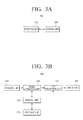
- FIG. 3A is a block diagram which illustrates a construction of a broadcast receiving apparatus according to an exemplary embodiment.
- the broadcast receiving apparatus 200 may include an interface unit 210 and a control unit 220.
- the interface unit 210 may receive a control instruction from the remote controller apparatus 100 and send out the status information relating to the broadcast receiving apparatus 200 to the remote controller apparatus 100.
- the "status information" may include one or more of: channel status information, volume status information, input source status information, sound mode status information, screen aspect ratio status information, and screen brightness status information relating to the broadcast receiving apparatus 200.
- the interface unit 210 with the functions described above may include an IR receiving unit (not illustrated) to receive an IR code corresponding to the control instruction transmitted from the remote controller apparatus 100, and an IR transmitting unit (not illustrated) to transmit status information to the remote controller apparatus 100.
- the interface unit 210 may transmit at least one control instruction by bi-directional wireless communication with the remote controller apparatus 100, and receive status information relating to the broadcast receiving apparatus 200 based on the at least one control instruction.
- the type of "bi-directional wireless communication” may include, for example, BlueTooth (BT) communication, Radio Frequency (RF) communication, Wireless Fidelity (WI-FI) communication, High Definition Multimedia Interface (HDMI-CEC) communication, or Wireless HDMI-CEC communication.
- the control unit 220 may control the respective components of the broadcast receiving apparatus 200, and the control unit 220 may also control the overall operation of the broadcast receiving apparatus 200.
- the control unit 220 may particularly control the status of the broadcast receiving apparatus based on the at least one control instruction.
- the control unit 220 may control so that the operations such as channel change, volume adjustment, input source change, sound mode change, screen aspect ratio change, and screen brightness change are performed.
- control unit 220 may change the status of the broadcast receiving apparatus 200 based on a plurality of control instructions included in the macro instruction.
- the macro instruction may include at least one of: an instruction relating to changing a channel, an instruction relating to adjusting a volume, an instruction relating to changing an input source, an instruction relating to changing a sound mode, an instruction relating to changing a screen aspect ratio, and an instruction relating to changing a screen brightness.
- control unit 220 may control the operations of the broadcast receiving apparatus including channel change, volume adjustment, input source change, sound mode change, screen aspect ratio change, or screen brightness change.
- control unit 220 may encode the status information before transmitting the same to the remote controller apparatus 100.
- control unit 220 may encode the status information using the encoded key pre-defined with the remote controller apparatus 100 before sending the same to the remote controller apparatus 100.
- encoding such as Rivest Shamir Adleman (RSA) encoding may be implemented.
- the broadcast receiving apparatus 200 receives a password "ABCD" from the remote controller apparatus 100, in order to log in to a specific website using the internet.
- the control unit 220 As the user receives "ABCD" as a password from the remote controller apparatus 100 and sends the same to the broadcast receiving apparatus 200, the control unit 220 generates an encoded value (e.g., RFCV) based on the received password "ABCD". Then, the control unit 220 controls the interface unit 210 to transfer the encoded value "RFCV" to the remote controller apparatus 100 as the status information relating to the broadcast receiving apparatus 200.
- an encoded value e.g., RFCV
- the remote controller apparatus 100 may store the encoded value "RFCV” or decrypt the encoded value using the same encoded key as that used by the broadcast receiving apparatus and store "ABCD". Then, as an instruction relating to setting macro functionality is received from the user, the remote controller apparatus 100 may map the IR code corresponding to "ABCD" to the corresponding macro functionality and cause the same to be stored by the storage unit.
- the macro title may be set as "password RFCV input” or "password input”. Accordingly, an information leak to a third party is prevented, because even when the third party executes an instruction relating to searching a macro via the remote controller apparatus 100, only "password RFCV input” or "password input” appears on the user interface window.
- FIG. 3B is a block diagram which illustrates a detailed construction of a broadcast receiving apparatus according to an exemplary embodiment.
- the broadcast receiving apparatus 200 may include an interface unit 210, a control unit 220, a receiving unit 230, a signal separating unit 240, an audio/video (A/V) processing unit 250, and a display unit 260.
- an interface unit 210 may include an interface unit 210, a control unit 220, a receiving unit 230, a signal separating unit 240, an audio/video (A/V) processing unit 250, and a display unit 260.
- A/V audio/video
- the receiving unit 230 receives a broadcast from a broadcasting station or satellite by wired or wireless communication.
- the receiving unit 230 may be implemented as at least one tuner.
- the receiving unit 230 may include a plurality of tuners in order to concurrently receive broadcast signals from a plurality of channels.
- the signal separating unit 240 separates the broadcast signal into a video signal, an audio signal, and a broadcast information signal. The signal separating unit 240 then transmits the video and audio signals to the A/V processing unit 250, and transmits the broadcast information signal to the interface unit 210 and the control unit 220.
- the A/V processing unit 250 performs signal processing with respect to the audio and video signals received from the signal separating unit 240, such as, for example, video decoding, video scaling, and/or audio decoding. Further, the A/V processing unit 250 outputs the video signal to the display unit 260 and outputs the audio signal to the audio output unit (not illustrated).
- the display unit 260 displays the video signal received from the A/V processing unit 250 on the display, or outputs the video signal to an external apparatus (e.g., an external display) connected via an external output terminal.
- an external apparatus e.g., an external display
- the audio output unit (not illustrated) outputs audio included in the audio signal received from the A/V processing unit 250 through a speaker, or outputs the audio signal to an external apparatus (e.g., an external speaker) connected via external output terminal.
- an external apparatus e.g., an external speaker
- the broadcast receiving apparatus 200 may additionally include a connecting unit (not illustrated) to connect the broadcast receiving apparatus 200 to a communication network such as, for example, the Internet, or to an external server, or a graphical user interface (GUI) generating unit (not illustrated) to generate a GUI to be displayed on the screen, and then to add the generated GUI to the video signal outputted from the A/V processing unit 250.
- a connecting unit (not illustrated) to connect the broadcast receiving apparatus 200 to a communication network such as, for example, the Internet, or to an external server
- GUI graphical user interface
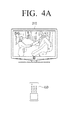
- FIGS. 4A to 4D are views illustrating examples of receiving status information from a broadcast receiving apparatus according to an exemplary embodiment.
- the broadcast receiving apparatus 320 transmits the status information, i.e., current channel status as "channel 10", to the remote controller apparatus 400, and the remote controller apparatus 400 stores the corresponding channel status information.
- the broadcast receiving apparatus 330 transmits the status information, i.e., current channel status as "channel 11", to the remote controller apparatus 400, and the remote controller apparatus 400 stores the corresponding channel status information.
- the remote controller apparatus 400 may update the pre-stored channel information with the recently received channel information and store the result.
- the remote controller apparatus 400 may overwrite "channel 10", the previously-stored channel status information relating to the broadcast receiving apparatus, with "channel 11" and store the result.
- the broadcast receiving apparatus 330 transmits the status information, i.e., current volume status as "volume 16", to the remote controller apparatus 400, and the remote controller apparatus 400 stores the corresponding volume status information.
- the remote controller apparatus 400 stores the current channel and volume status information of the broadcast receiving apparatus as "channel 11" and "volume 16".
- FIGS. 5A to 5G are views illustrating a method for setting macro functionality based on the status information stored in advance, according to an exemplary embodiment.
- a specific button e.g., set macro key 410 provided on the remote controller apparatus 400 is activated, a user interface window 430, including a message relating to confirming a setting of a macro, appears on the user interface unit of the remote controller apparatus 400.
- the user interface window 440 relating to setting a macro title appears on the user interface unit.
- the macro title may include, for example, prestored status information (e.g., 1. CH.11, Vol. 16), or a program title (e.g., 2. weekend show).
- the user may directly input a macro title via the user interface window 450 (referring also to FIG. 5C ) by selecting "3. User set" displayed on the user interface window 440.
- the user may set the macro title by selecting one of "1. CH 11, Vol 16", “2. Weekend Show”, “3. User set”.
- the user interface window 460 relating to setting a macro activation time may appear.
- the "macro activation time” may indicate a specific day or time at which the stored macro instruction is displayed.
- the user may set the macro activation time by selecting one of "1. Always", or "2. User set” on the user interface window 460.
- "1. Always” may indicate that the macro instruction is activated upon receipt of the control instruction relating to powering on the broadcast receiving apparatus.
- the user interface window 470 relating to setting the macro activation time may appear. Referring to FIG. 5E , the user may set the specific day and time to activate the macro instruction at "every Saturday” and "18:00 ⁇ 19:00". However, the above is provided only as an illustrative example, and the macro activation time may be set at any one of various time scales.
- the user interface window 480 relating to inquiring as to whether a setting of the macro is completed or not. If the user selects "Yes", setting of the macro functionality is completed.
- the user may activate a predetermined button (e.g., search macro key 420) provided on the remote controller apparatus 400 to confirm a prestored macro instruction relating to the remote controller apparatus 400.
- a predetermined button e.g., search macro key 420
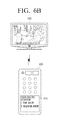
- FIGS. 6A and 6B are views which illustrate a method for controlling a broadcast receiving apparatus by using stored macro instructions, according to an exemplary embodiment.
- predetermined button e.g., macro search key
- prestored macro instructions i.e., "1. CH9, Vol 20", "2. Weekend Show” are displayed on the user interface window 610.
- the remote controller apparatus may transmit a control instruction to control the channel and volume status of the broadcast receiving apparatus 510 to "CH 9, Vol 20". Accordingly, referring to FIG. 6A , the channel of the broadcast receiving apparatus 510 changes to "Ch 9" and the volume changes to "vol 20".
- control instruction relating to controlling the channel and volume status of the broadcast receiving apparatus received from the remote controller apparatus will be described below with reference to FIG. 6B .
- an IR code corresponding to number button 9 to set channel may be transmitted.
- the remote controller apparatus transmits either a "volume up” or a "volume down” instruction to the broadcast receiving apparatus 520.
- the remote controller apparatus 610 receives the volume status information relating to the broadcast receiving apparatus 520.
- the remote controller apparatus 610 sequentially sends out a "volume up” instruction three times, to thus change the volume status of the broadcast receiving apparatus to "Vol 20".
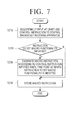
- FIG. 7 is a flowchart which illustrates a method for remote controlling a broadcast receiving apparatus according to an exemplary embodiment.
- a control method used by a remote controller apparatus for controlling a broadcast receiving apparatus will be described below with reference to FIG. 7 .
- At operation S710 at least one control instruction relating to controlling the broadcast receiving apparatus is inputted and received in sequence.
- an inquiry is made in order to confirm whether the instruction relating to setting the macro functionality has been inputted or not.
- a macro instruction is generated based on the control instructions which have been received until the receipt of the instruction relating to setting the macro functionality.
- the macro instruction generated at operation S730 is stored.
- the broadcast receiving apparatus It is possible to transmit at least one control instruction to the broadcast receiving apparatus and receive the status information of the broadcast receiving apparatus based on at least one control instruction. Accordingly, at operation S730, relating to generating a macro instruction, the status information is stored, and upon receipt of an instruction relating to setting macro functionality, a macro instruction may be generated to control the broadcast receiving apparatus based on the stored status information.
- the "status information” may include at least one of: channel status and volume status of the broadcast receiving apparatus.
- operation S730 relating to generating the macro instruction, if an instruction relating to setting macro functionality is received, it is possible to generate a macro instruction relating to controlling the broadcast receiving apparatus based on the status information, and then to automatically generate the macro title for the generated macro instruction based on preset conditions.
- the macro instruction herein may include at least one of: a channel tune instruction and a volume adjustment instruction. If one of the control instructions included in the macro instruction is transmitted to the broadcast receiving apparatus and the broadcast receiving apparatus performs the operation based on the received control instruction, the next control instructions included in the macro instruction can also be transmitted.
- the status information described herein may include encoded information.
- the remote controller apparatus may include a storage unit having a temporary storage area for temporarily storing the received status information, and an automatic storage area for providing redundant storage of the stored status information. Accordingly, the remote controller apparatus may automatically cause the stored status information being stored at the temporary storage area to be stored at the automatic storage area and initialize the temporary storage area, if an instruction relating to setting macro functionality is not received during a preset standby time after the reception of the status information.
- a recommend screen may appear to recommend that the repeating status information be set as the macro functionality.
- operation S730 relating to generating a macro instruction it is possible to combine control instructions that are received within a preset amount of time until the time at which the instruction relating to setting macro functionality is received, to thereby generate the macro instruction.
- the remote controller apparatus may include a storage unit which includes a temporary storage area for temporarily storing the received at least one control instruction, and an automatic storage area for providing redundant storage of the stored at least one control instruction being stored at the temporary storage area. Accordingly, at operation S730 relating to generating a macro instruction, if an instruction relating to setting macro functionality is received within a preset standby time after elapse of the preset amount of time, the one or more control instructions that are received within the preset amount of time may be combined to thereby generate the macro instruction, and, if an instruction relating to setting macro functionality is not received within a preset standby time after elapse of the preset amount of time, the at least one control instruction stored at the temporary storage area may be stored at the automatic storage area and the temporary storage area may be initialized.
- a recommend screen may appear to recommend that the repeating control instruction pattern be set as macro functionality.
- FIG. 8 is a flowchart which illustrates a control method used by a broadcast receiving apparatus according to an exemplary embodiment.
- a control instruction is received from the remote controller apparatus, and status information relating to the broadcast receiving apparatus which is controlled based on the control instruction is transmitted to the remote controller apparatus.
- the status of the broadcast receiving apparatus may change based on a plurality of control instructions included in the macro instruction.
- the status information herein may include at least one of: channel status information and volume status information relating to the broadcast receiving apparatus.
- a program to execute a control method for controlling the remote controller apparatus and the broadcast receiving apparatus may be recorded on a storage medium, i.e., on computer-readable recording medium.
- the computer-readable recording medium may include any or all kinds of recording devices that store data to be read out by a computer system. Examples of the computer-readable recording medium include: read-only memory (ROM), random access memory (RAM), compact disk - read-only memory (CD-ROM), magnetic tape, floppy disk, optical data storage device, or the like, and the computer-readable recording medium may be distributed over a computer system connected via network to store and execute codes to be read out by the computer in a distributive manner.
Landscapes
- Engineering & Computer Science (AREA)
- Multimedia (AREA)
- Signal Processing (AREA)
- Human Computer Interaction (AREA)
- Computer Networks & Wireless Communication (AREA)
- Details Of Television Systems (AREA)
- Selective Calling Equipment (AREA)
- Circuits Of Receivers In General (AREA)
Applications Claiming Priority (1)
| Application Number | Priority Date | Filing Date | Title |
|---|---|---|---|
| KR1020110093067A KR101799442B1 (ko) | 2011-09-15 | 2011-09-15 | 원격 제어 장치, 방송 수신 장치 및 그 제어 방법 |
Publications (3)
| Publication Number | Publication Date |
|---|---|
| EP2571279A2 true EP2571279A2 (fr) | 2013-03-20 |
| EP2571279A3 EP2571279A3 (fr) | 2013-04-10 |
| EP2571279B1 EP2571279B1 (fr) | 2017-09-06 |
Family
ID=46331016
Family Applications (1)
| Application Number | Title | Priority Date | Filing Date |
|---|---|---|---|
| EP12162621.2A Not-in-force EP2571279B1 (fr) | 2011-09-15 | 2012-03-30 | Appareil de commande à distance, appareil de réception de diffusion et procédé de commande de celui-ci |
Country Status (5)
| Country | Link |
|---|---|
| US (1) | US9124917B2 (fr) |
| EP (1) | EP2571279B1 (fr) |
| KR (1) | KR101799442B1 (fr) |
| CN (1) | CN103000021B (fr) |
| ES (1) | ES2650594T3 (fr) |
Families Citing this family (11)
| Publication number | Priority date | Publication date | Assignee | Title |
|---|---|---|---|---|
| US9952576B2 (en) * | 2012-10-16 | 2018-04-24 | Sonos, Inc. | Methods and apparatus to learn and share remote commands |
| US9258508B2 (en) * | 2013-03-15 | 2016-02-09 | Time Warner Cable Enterprises Llc | IR pairing for RF4CE remote controls |
| CN104157115A (zh) * | 2013-12-26 | 2014-11-19 | 浙江工商大学 | 基于云服务的网络型万能遥控装置及方法 |
| US9952571B2 (en) | 2014-03-24 | 2018-04-24 | Xiaomi Inc. | Method and terminal device for controlling smart home appliance |
| CN103905871B (zh) * | 2014-03-24 | 2016-08-17 | 小米科技有限责任公司 | 智能家电控制方法、装置及终端 |
| US20150325109A1 (en) * | 2014-05-09 | 2015-11-12 | Looq System Inc. | Quick Remote Control Method and Device |
| KR102269473B1 (ko) | 2014-10-24 | 2021-06-28 | 삼성전자주식회사 | 제어 장치, 그의 제어 방법 및 통합 제어 시스템 |
| KR102609545B1 (ko) * | 2016-08-16 | 2023-12-05 | 삼성전자주식회사 | 파워 제어 장치, 시스템 및 방법 |
| KR102507161B1 (ko) * | 2016-09-27 | 2023-03-07 | 삼성전자주식회사 | 주변 기기의 컨텐츠를 디스플레이하는 디스플레이 장치 및 제어 방법 |
| US11350153B2 (en) * | 2020-04-03 | 2022-05-31 | Charter Communications Operating, Llc | Remote control with automated audio and video selection control |
| KR20240086279A (ko) * | 2022-12-09 | 2024-06-18 | 삼성전자주식회사 | 리모트 컨트롤 신호로 주변 기기를 제어하기 위한 전자 장치 및 그 제어 방법 |
Family Cites Families (19)
| Publication number | Priority date | Publication date | Assignee | Title |
|---|---|---|---|---|
| US4757459A (en) | 1986-05-29 | 1988-07-12 | Cincinnati Milacron Inc. | Apparatus and method for programming a computer operated robot arm using macro instructions |
| DE4013960A1 (de) | 1989-05-01 | 1990-11-08 | Honda Motor Co Ltd | Verfahren und vorrichtung zum generieren eines steuerprogramms |
| DE69838439T2 (de) * | 1997-06-25 | 2008-06-12 | Samsung Electronics Co., Ltd., Suwon | Verfahren und Vorrichtung zur Überwachung von Geräten in einem Hausnetzwerk |
| US6690392B1 (en) * | 1999-07-15 | 2004-02-10 | Gateway, Inc. | Method system software and signal for automatic generation of macro commands |
| TW456112B (en) * | 1999-12-10 | 2001-09-21 | Sun Wave Technology Corp | Multi-function remote control with touch screen display |
| CA2329693A1 (fr) * | 2000-12-28 | 2002-06-28 | Bruce C. Lundeen | Telecommande reconfigurable avec macrofonctions preprogrammees et methode |
| US7602413B2 (en) * | 2002-10-18 | 2009-10-13 | Sony Corporation | Information processing system and method, information processing apparatus, image-capturing device and method, recording medium, and program |
| US9131272B2 (en) * | 2003-11-04 | 2015-09-08 | Universal Electronics Inc. | System and method for saving and recalling state data for media and home appliances |
| US7363028B2 (en) * | 2003-11-04 | 2008-04-22 | Universal Electronics, Inc. | System and method for controlling device location determination |
| KR101000923B1 (ko) | 2004-01-08 | 2010-12-13 | 삼성전자주식회사 | 원격 제어기의 매크로 설정 장치 및 방법 |
| JP3832664B2 (ja) | 2004-06-28 | 2006-10-11 | シャープ株式会社 | 遠隔操作装置、操作装置、遠隔操作装置の遠隔操作方法、操作プログラム、及び記録媒体 |
| KR100647915B1 (ko) * | 2004-08-31 | 2006-11-23 | 주식회사 오성전자 | 원격제어장치 |
| CN1971653A (zh) * | 2005-11-25 | 2007-05-30 | 乐金电子(沈阳)有限公司 | 具备宏功能的遥控器及使用该遥控器的电视机 |
| KR100647914B1 (ko) | 2006-07-27 | 2006-11-23 | 주식회사 오성전자 | 원격제어장치 |
| US8863189B2 (en) | 2008-02-19 | 2014-10-14 | AT&T Intellectual Properties I, LP | System for configuring soft keys in a media communication system |
| KR101611540B1 (ko) * | 2008-05-27 | 2016-04-12 | 삼성전자주식회사 | 제어 디바이스 및 그 제어 방법 |
| JP2010068259A (ja) | 2008-09-11 | 2010-03-25 | Sharp Corp | 電気機器 |
| CN101465986A (zh) * | 2008-12-12 | 2009-06-24 | 康佳集团股份有限公司 | 带双向遥控功能的电视系统及其遥控器 |
| EP2230653B1 (fr) | 2009-03-17 | 2013-01-23 | Onkyo Corporation | Télécommande |
-
2011
- 2011-09-15 KR KR1020110093067A patent/KR101799442B1/ko not_active Expired - Fee Related
-
2012
- 2012-03-30 ES ES12162621.2T patent/ES2650594T3/es active Active
- 2012-03-30 EP EP12162621.2A patent/EP2571279B1/fr not_active Not-in-force
- 2012-09-13 US US13/615,011 patent/US9124917B2/en not_active Expired - Fee Related
- 2012-09-17 CN CN201210345447.3A patent/CN103000021B/zh not_active Expired - Fee Related
Non-Patent Citations (1)
| Title |
|---|
| None |
Also Published As
| Publication number | Publication date |
|---|---|
| US20130070154A1 (en) | 2013-03-21 |
| EP2571279A3 (fr) | 2013-04-10 |
| EP2571279B1 (fr) | 2017-09-06 |
| US9124917B2 (en) | 2015-09-01 |
| KR20130029662A (ko) | 2013-03-25 |
| CN103000021A (zh) | 2013-03-27 |
| ES2650594T3 (es) | 2018-01-19 |
| KR101799442B1 (ko) | 2017-11-21 |
| CN103000021B (zh) | 2017-10-13 |
Similar Documents
| Publication | Publication Date | Title |
|---|---|---|
| EP2571279B1 (fr) | Appareil de commande à distance, appareil de réception de diffusion et procédé de commande de celui-ci | |
| US9402098B2 (en) | Fast channel change | |
| US12506921B2 (en) | Video display apparatus and terminal apparatus | |
| CN103491433A (zh) | 用于显示的装置和方法 | |
| US20180206001A1 (en) | Electronic apparatus and control method thereof | |
| CN102868472B (zh) | 适于控制外部设备中广播的无线终端 | |
| US8522296B2 (en) | Broadcast receiving apparatus and method for configuring the same according to configuration setting values received from outside | |
| KR102531909B1 (ko) | 디스플레이장치 및 그 제어방법 | |
| US20100214479A1 (en) | Broadcasting receiving apparatus | |
| EP3082342A1 (fr) | Système de traitement d'images, appareil d'affichage d'images, appareil de transmission d'images, procédé de commande d'appareil d'affichage d'images et procédé de commande d'un appareil de transmission d'images | |
| JP2009164741A (ja) | テレビシステム及び遠隔操作機 | |
| US7934246B2 (en) | Broadcast receiver | |
| US8887198B2 (en) | Display device and method for searching channel | |
| US20090070818A1 (en) | Broadcast receiving apparatus and method capable of setting favorite programs | |
| JP2007049539A (ja) | テレビジョン受像機 | |
| JP2007096948A (ja) | 放送信号受信装置 | |
| KR20090074857A (ko) | 상업용 영상표시기기의 제어 장치 및 방법 | |
| EP2966872A1 (fr) | Système de réception de diffusion numérique et procédé pour commander un second dispositif à l'aide de la télécommande d'un décodeur tv | |
| JP6571216B2 (ja) | 携帯情報端末 | |
| JP5066876B2 (ja) | 自動通知システム | |
| CN100372358C (zh) | 使用无线频道的无线通信系统及其无线通信方法 | |
| JP2005117335A (ja) | 放送受信装置及び放送受信方法 | |
| KR100705332B1 (ko) | 방송 프로그램 추천 방법 및 이를 수행하는 텔레비젼수상기 | |
| KR20220005370A (ko) | 스마트 tv에서 나만의 채널을 구현하는 방법 | |
| KR20100084386A (ko) | Dtv 및 dtv에서 사용자별 작동환경 설정방법 |
Legal Events
| Date | Code | Title | Description |
|---|---|---|---|
| PUAL | Search report despatched |
Free format text: ORIGINAL CODE: 0009013 |
|
| PUAI | Public reference made under article 153(3) epc to a published international application that has entered the european phase |
Free format text: ORIGINAL CODE: 0009012 |
|
| AK | Designated contracting states |
Kind code of ref document: A2 Designated state(s): AL AT BE BG CH CY CZ DE DK EE ES FI FR GB GR HR HU IE IS IT LI LT LU LV MC MK MT NL NO PL PT RO RS SE SI SK SM TR |
|
| AX | Request for extension of the european patent |
Extension state: BA ME |
|
| AK | Designated contracting states |
Kind code of ref document: A3 Designated state(s): AL AT BE BG CH CY CZ DE DK EE ES FI FR GB GR HR HU IE IS IT LI LT LU LV MC MK MT NL NO PL PT RO RS SE SI SK SM TR |
|
| AX | Request for extension of the european patent |
Extension state: BA ME |
|
| RIC1 | Information provided on ipc code assigned before grant |
Ipc: H04N 21/422 20110101AFI20130301BHEP |
|
| 17P | Request for examination filed |
Effective date: 20131010 |
|
| RBV | Designated contracting states (corrected) |
Designated state(s): AL AT BE BG CH CY CZ DE DK EE ES FI FR GB GR HR HU IE IS IT LI LT LU LV MC MK MT NL NO PL PT RO RS SE SI SK SM TR |
|
| GRAP | Despatch of communication of intention to grant a patent |
Free format text: ORIGINAL CODE: EPIDOSNIGR1 |
|
| INTG | Intention to grant announced |
Effective date: 20170324 |
|
| GRAS | Grant fee paid |
Free format text: ORIGINAL CODE: EPIDOSNIGR3 |
|
| GRAA | (expected) grant |
Free format text: ORIGINAL CODE: 0009210 |
|
| AK | Designated contracting states |
Kind code of ref document: B1 Designated state(s): AL AT BE BG CH CY CZ DE DK EE ES FI FR GB GR HR HU IE IS IT LI LT LU LV MC MK MT NL NO PL PT RO RS SE SI SK SM TR |
|
| REG | Reference to a national code |
Ref country code: GB Ref legal event code: FG4D |
|
| REG | Reference to a national code |
Ref country code: CH Ref legal event code: EP Ref country code: AT Ref legal event code: REF Ref document number: 927075 Country of ref document: AT Kind code of ref document: T Effective date: 20170915 |
|
| REG | Reference to a national code |
Ref country code: IE Ref legal event code: FG4D |
|
| REG | Reference to a national code |
Ref country code: DE Ref legal event code: R096 Ref document number: 602012036838 Country of ref document: DE |
|
| REG | Reference to a national code |
Ref country code: NL Ref legal event code: FP |
|
| REG | Reference to a national code |
Ref country code: ES Ref legal event code: FG2A Ref document number: 2650594 Country of ref document: ES Kind code of ref document: T3 Effective date: 20180119 |
|
| REG | Reference to a national code |
Ref country code: LT Ref legal event code: MG4D |
|
| PG25 | Lapsed in a contracting state [announced via postgrant information from national office to epo] |
Ref country code: LT Free format text: LAPSE BECAUSE OF FAILURE TO SUBMIT A TRANSLATION OF THE DESCRIPTION OR TO PAY THE FEE WITHIN THE PRESCRIBED TIME-LIMIT Effective date: 20170906 Ref country code: SE Free format text: LAPSE BECAUSE OF FAILURE TO SUBMIT A TRANSLATION OF THE DESCRIPTION OR TO PAY THE FEE WITHIN THE PRESCRIBED TIME-LIMIT Effective date: 20170906 Ref country code: NO Free format text: LAPSE BECAUSE OF FAILURE TO SUBMIT A TRANSLATION OF THE DESCRIPTION OR TO PAY THE FEE WITHIN THE PRESCRIBED TIME-LIMIT Effective date: 20171206 Ref country code: HR Free format text: LAPSE BECAUSE OF FAILURE TO SUBMIT A TRANSLATION OF THE DESCRIPTION OR TO PAY THE FEE WITHIN THE PRESCRIBED TIME-LIMIT Effective date: 20170906 Ref country code: FI Free format text: LAPSE BECAUSE OF FAILURE TO SUBMIT A TRANSLATION OF THE DESCRIPTION OR TO PAY THE FEE WITHIN THE PRESCRIBED TIME-LIMIT Effective date: 20170906 |
|
| REG | Reference to a national code |
Ref country code: AT Ref legal event code: MK05 Ref document number: 927075 Country of ref document: AT Kind code of ref document: T Effective date: 20170906 |
|
| PG25 | Lapsed in a contracting state [announced via postgrant information from national office to epo] |
Ref country code: BG Free format text: LAPSE BECAUSE OF FAILURE TO SUBMIT A TRANSLATION OF THE DESCRIPTION OR TO PAY THE FEE WITHIN THE PRESCRIBED TIME-LIMIT Effective date: 20171206 Ref country code: LV Free format text: LAPSE BECAUSE OF FAILURE TO SUBMIT A TRANSLATION OF THE DESCRIPTION OR TO PAY THE FEE WITHIN THE PRESCRIBED TIME-LIMIT Effective date: 20170906 Ref country code: RS Free format text: LAPSE BECAUSE OF FAILURE TO SUBMIT A TRANSLATION OF THE DESCRIPTION OR TO PAY THE FEE WITHIN THE PRESCRIBED TIME-LIMIT Effective date: 20170906 Ref country code: GR Free format text: LAPSE BECAUSE OF FAILURE TO SUBMIT A TRANSLATION OF THE DESCRIPTION OR TO PAY THE FEE WITHIN THE PRESCRIBED TIME-LIMIT Effective date: 20171207 |
|
| PG25 | Lapsed in a contracting state [announced via postgrant information from national office to epo] |
Ref country code: CZ Free format text: LAPSE BECAUSE OF FAILURE TO SUBMIT A TRANSLATION OF THE DESCRIPTION OR TO PAY THE FEE WITHIN THE PRESCRIBED TIME-LIMIT Effective date: 20170906 Ref country code: RO Free format text: LAPSE BECAUSE OF FAILURE TO SUBMIT A TRANSLATION OF THE DESCRIPTION OR TO PAY THE FEE WITHIN THE PRESCRIBED TIME-LIMIT Effective date: 20170906 Ref country code: PL Free format text: LAPSE BECAUSE OF FAILURE TO SUBMIT A TRANSLATION OF THE DESCRIPTION OR TO PAY THE FEE WITHIN THE PRESCRIBED TIME-LIMIT Effective date: 20170906 |
|
| PG25 | Lapsed in a contracting state [announced via postgrant information from national office to epo] |
Ref country code: AT Free format text: LAPSE BECAUSE OF FAILURE TO SUBMIT A TRANSLATION OF THE DESCRIPTION OR TO PAY THE FEE WITHIN THE PRESCRIBED TIME-LIMIT Effective date: 20170906 Ref country code: SK Free format text: LAPSE BECAUSE OF FAILURE TO SUBMIT A TRANSLATION OF THE DESCRIPTION OR TO PAY THE FEE WITHIN THE PRESCRIBED TIME-LIMIT Effective date: 20170906 Ref country code: IS Free format text: LAPSE BECAUSE OF FAILURE TO SUBMIT A TRANSLATION OF THE DESCRIPTION OR TO PAY THE FEE WITHIN THE PRESCRIBED TIME-LIMIT Effective date: 20180106 Ref country code: EE Free format text: LAPSE BECAUSE OF FAILURE TO SUBMIT A TRANSLATION OF THE DESCRIPTION OR TO PAY THE FEE WITHIN THE PRESCRIBED TIME-LIMIT Effective date: 20170906 Ref country code: IT Free format text: LAPSE BECAUSE OF FAILURE TO SUBMIT A TRANSLATION OF THE DESCRIPTION OR TO PAY THE FEE WITHIN THE PRESCRIBED TIME-LIMIT Effective date: 20170906 Ref country code: SM Free format text: LAPSE BECAUSE OF FAILURE TO SUBMIT A TRANSLATION OF THE DESCRIPTION OR TO PAY THE FEE WITHIN THE PRESCRIBED TIME-LIMIT Effective date: 20170906 |
|
| REG | Reference to a national code |
Ref country code: DE Ref legal event code: R097 Ref document number: 602012036838 Country of ref document: DE |
|
| PLBE | No opposition filed within time limit |
Free format text: ORIGINAL CODE: 0009261 |
|
| STAA | Information on the status of an ep patent application or granted ep patent |
Free format text: STATUS: NO OPPOSITION FILED WITHIN TIME LIMIT |
|
| PG25 | Lapsed in a contracting state [announced via postgrant information from national office to epo] |
Ref country code: DK Free format text: LAPSE BECAUSE OF FAILURE TO SUBMIT A TRANSLATION OF THE DESCRIPTION OR TO PAY THE FEE WITHIN THE PRESCRIBED TIME-LIMIT Effective date: 20170906 |
|
| 26N | No opposition filed |
Effective date: 20180607 |
|
| PG25 | Lapsed in a contracting state [announced via postgrant information from national office to epo] |
Ref country code: SI Free format text: LAPSE BECAUSE OF FAILURE TO SUBMIT A TRANSLATION OF THE DESCRIPTION OR TO PAY THE FEE WITHIN THE PRESCRIBED TIME-LIMIT Effective date: 20170906 |
|
| REG | Reference to a national code |
Ref country code: DE Ref legal event code: R119 Ref document number: 602012036838 Country of ref document: DE |
|
| REG | Reference to a national code |
Ref country code: CH Ref legal event code: PL |
|
| GBPC | Gb: european patent ceased through non-payment of renewal fee |
Effective date: 20180330 |
|
| PG25 | Lapsed in a contracting state [announced via postgrant information from national office to epo] |
Ref country code: MC Free format text: LAPSE BECAUSE OF FAILURE TO SUBMIT A TRANSLATION OF THE DESCRIPTION OR TO PAY THE FEE WITHIN THE PRESCRIBED TIME-LIMIT Effective date: 20170906 |
|
| REG | Reference to a national code |
Ref country code: BE Ref legal event code: MM Effective date: 20180331 |
|
| REG | Reference to a national code |
Ref country code: IE Ref legal event code: MM4A |
|
| PG25 | Lapsed in a contracting state [announced via postgrant information from national office to epo] |
Ref country code: LU Free format text: LAPSE BECAUSE OF NON-PAYMENT OF DUE FEES Effective date: 20180330 |
|
| PG25 | Lapsed in a contracting state [announced via postgrant information from national office to epo] |
Ref country code: IE Free format text: LAPSE BECAUSE OF NON-PAYMENT OF DUE FEES Effective date: 20180330 Ref country code: DE Free format text: LAPSE BECAUSE OF NON-PAYMENT OF DUE FEES Effective date: 20181002 |
|
| PG25 | Lapsed in a contracting state [announced via postgrant information from national office to epo] |
Ref country code: GB Free format text: LAPSE BECAUSE OF NON-PAYMENT OF DUE FEES Effective date: 20180330 Ref country code: LI Free format text: LAPSE BECAUSE OF NON-PAYMENT OF DUE FEES Effective date: 20180331 Ref country code: CH Free format text: LAPSE BECAUSE OF NON-PAYMENT OF DUE FEES Effective date: 20180331 Ref country code: BE Free format text: LAPSE BECAUSE OF NON-PAYMENT OF DUE FEES Effective date: 20180331 |
|
| PG25 | Lapsed in a contracting state [announced via postgrant information from national office to epo] |
Ref country code: FR Free format text: LAPSE BECAUSE OF NON-PAYMENT OF DUE FEES Effective date: 20180331 |
|
| PG25 | Lapsed in a contracting state [announced via postgrant information from national office to epo] |
Ref country code: MT Free format text: LAPSE BECAUSE OF NON-PAYMENT OF DUE FEES Effective date: 20180330 |
|
| PG25 | Lapsed in a contracting state [announced via postgrant information from national office to epo] |
Ref country code: TR Free format text: LAPSE BECAUSE OF FAILURE TO SUBMIT A TRANSLATION OF THE DESCRIPTION OR TO PAY THE FEE WITHIN THE PRESCRIBED TIME-LIMIT Effective date: 20170906 |
|
| PG25 | Lapsed in a contracting state [announced via postgrant information from national office to epo] |
Ref country code: PT Free format text: LAPSE BECAUSE OF FAILURE TO SUBMIT A TRANSLATION OF THE DESCRIPTION OR TO PAY THE FEE WITHIN THE PRESCRIBED TIME-LIMIT Effective date: 20170906 Ref country code: HU Free format text: LAPSE BECAUSE OF FAILURE TO SUBMIT A TRANSLATION OF THE DESCRIPTION OR TO PAY THE FEE WITHIN THE PRESCRIBED TIME-LIMIT; INVALID AB INITIO Effective date: 20120330 |
|
| PG25 | Lapsed in a contracting state [announced via postgrant information from national office to epo] |
Ref country code: MK Free format text: LAPSE BECAUSE OF NON-PAYMENT OF DUE FEES Effective date: 20170906 Ref country code: CY Free format text: LAPSE BECAUSE OF FAILURE TO SUBMIT A TRANSLATION OF THE DESCRIPTION OR TO PAY THE FEE WITHIN THE PRESCRIBED TIME-LIMIT Effective date: 20170906 |
|
| PG25 | Lapsed in a contracting state [announced via postgrant information from national office to epo] |
Ref country code: AL Free format text: LAPSE BECAUSE OF FAILURE TO SUBMIT A TRANSLATION OF THE DESCRIPTION OR TO PAY THE FEE WITHIN THE PRESCRIBED TIME-LIMIT Effective date: 20170906 |
|
| PGFP | Annual fee paid to national office [announced via postgrant information from national office to epo] |
Ref country code: NL Payment date: 20210209 Year of fee payment: 10 |
|
| PGFP | Annual fee paid to national office [announced via postgrant information from national office to epo] |
Ref country code: ES Payment date: 20210413 Year of fee payment: 10 |
|
| REG | Reference to a national code |
Ref country code: NL Ref legal event code: MM Effective date: 20220401 |
|
| PG25 | Lapsed in a contracting state [announced via postgrant information from national office to epo] |
Ref country code: NL Free format text: LAPSE BECAUSE OF NON-PAYMENT OF DUE FEES Effective date: 20220401 |
|
| REG | Reference to a national code |
Ref country code: ES Ref legal event code: FD2A Effective date: 20230602 |
|
| PG25 | Lapsed in a contracting state [announced via postgrant information from national office to epo] |
Ref country code: ES Free format text: LAPSE BECAUSE OF NON-PAYMENT OF DUE FEES Effective date: 20220331 |