EP2571876B1 - Substituierte siebenteilige heterozyklische verbindungen als dipeptidyl-peptidase-iv-hemmer zur behandlung von diabetes - Google Patents
Substituierte siebenteilige heterozyklische verbindungen als dipeptidyl-peptidase-iv-hemmer zur behandlung von diabetes Download PDFInfo
- Publication number
- EP2571876B1 EP2571876B1 EP11784011.6A EP11784011A EP2571876B1 EP 2571876 B1 EP2571876 B1 EP 2571876B1 EP 11784011 A EP11784011 A EP 11784011A EP 2571876 B1 EP2571876 B1 EP 2571876B1
- Authority
- EP
- European Patent Office
- Prior art keywords
- alkyl
- compounds
- mmol
- dpp
- optionally substituted
- Prior art date
- Legal status (The legal status is an assumption and is not a legal conclusion. Google has not performed a legal analysis and makes no representation as to the accuracy of the status listed.)
- Not-in-force
Links
- 0 CC(CC*[C@@]1[Al])C[C@@]1N Chemical compound CC(CC*[C@@]1[Al])C[C@@]1N 0.000 description 12
- YOXZHTBIDQFWFU-UHFFFAOYSA-N CC1(CC1)S([n]1nc(CNC2)c2c1C)(=O)=O Chemical compound CC1(CC1)S([n]1nc(CNC2)c2c1C)(=O)=O YOXZHTBIDQFWFU-UHFFFAOYSA-N 0.000 description 1
- DAORSQAQWNKLHQ-UHFFFAOYSA-N CN(C1)Cc2c1cnc(C(F)(F)F)n2 Chemical compound CN(C1)Cc2c1cnc(C(F)(F)F)n2 DAORSQAQWNKLHQ-UHFFFAOYSA-N 0.000 description 1
- PDTMGCHVHVHPJV-QANKJYHBSA-N CS([n]1nc(CN(C2)[C@@H](CCS[C@@H]3c4cc(F)ccc4F)C[C@@H]3N)c2c1)(=O)=O Chemical compound CS([n]1nc(CN(C2)[C@@H](CCS[C@@H]3c4cc(F)ccc4F)C[C@@H]3N)c2c1)(=O)=O PDTMGCHVHVHPJV-QANKJYHBSA-N 0.000 description 1
- AOQDJUCJYGWFNA-UHFFFAOYSA-N Cc(c(C(O)=O)c1)ccc1Oc([nH]c1c2)nc1cc(-c(c(F)c1)cc3c1[n](CCO)cc3)c2Cl Chemical compound Cc(c(C(O)=O)c1)ccc1Oc([nH]c1c2)nc1cc(-c(c(F)c1)cc3c1[n](CCO)cc3)c2Cl AOQDJUCJYGWFNA-UHFFFAOYSA-N 0.000 description 1
- QVBNDDABUNXYCW-UHFFFAOYSA-N Cc(ccc(Oc([nH]c1c2)nc1cc(-c1ccc(C3CC3)cc1)c2Cl)c1)c1C(O)=O Chemical compound Cc(ccc(Oc([nH]c1c2)nc1cc(-c1ccc(C3CC3)cc1)c2Cl)c1)c1C(O)=O QVBNDDABUNXYCW-UHFFFAOYSA-N 0.000 description 1
- ISLTYXWUMSJKOO-XZWHSSHBSA-N O=C(CCO[C@@H]1c(cc(cc2)F)c2F)C[C@@H]1NC(c1ccccc1)(c1ccccc1)c1ccccc1 Chemical compound O=C(CCO[C@@H]1c(cc(cc2)F)c2F)C[C@@H]1NC(c1ccccc1)(c1ccccc1)c1ccccc1 ISLTYXWUMSJKOO-XZWHSSHBSA-N 0.000 description 1
Classifications
-
- C—CHEMISTRY; METALLURGY
- C07—ORGANIC CHEMISTRY
- C07D—HETEROCYCLIC COMPOUNDS
- C07D487/00—Heterocyclic compounds containing nitrogen atoms as the only ring hetero atoms in the condensed system, not provided for by groups C07D451/00 - C07D477/00
- C07D487/02—Heterocyclic compounds containing nitrogen atoms as the only ring hetero atoms in the condensed system, not provided for by groups C07D451/00 - C07D477/00 in which the condensed system contains two hetero rings
- C07D487/04—Ortho-condensed systems
-
- A—HUMAN NECESSITIES
- A61—MEDICAL OR VETERINARY SCIENCE; HYGIENE
- A61K—PREPARATIONS FOR MEDICAL, DENTAL OR TOILETRY PURPOSES
- A61K31/00—Medicinal preparations containing organic active ingredients
- A61K31/33—Heterocyclic compounds
- A61K31/395—Heterocyclic compounds having nitrogen as a ring hetero atom, e.g. guanethidine or rifamycins
- A61K31/41—Heterocyclic compounds having nitrogen as a ring hetero atom, e.g. guanethidine or rifamycins having five-membered rings with two or more ring hetero atoms, at least one of which being nitrogen, e.g. tetrazole
- A61K31/415—1,2-Diazoles
- A61K31/4162—1,2-Diazoles condensed with heterocyclic ring systems
-
- A—HUMAN NECESSITIES
- A61—MEDICAL OR VETERINARY SCIENCE; HYGIENE
- A61K—PREPARATIONS FOR MEDICAL, DENTAL OR TOILETRY PURPOSES
- A61K31/00—Medicinal preparations containing organic active ingredients
- A61K31/33—Heterocyclic compounds
- A61K31/395—Heterocyclic compounds having nitrogen as a ring hetero atom, e.g. guanethidine or rifamycins
- A61K31/435—Heterocyclic compounds having nitrogen as a ring hetero atom, e.g. guanethidine or rifamycins having six-membered rings with one nitrogen as the only ring hetero atom
- A61K31/4353—Heterocyclic compounds having nitrogen as a ring hetero atom, e.g. guanethidine or rifamycins having six-membered rings with one nitrogen as the only ring hetero atom ortho- or peri-condensed with heterocyclic ring systems
- A61K31/437—Heterocyclic compounds having nitrogen as a ring hetero atom, e.g. guanethidine or rifamycins having six-membered rings with one nitrogen as the only ring hetero atom ortho- or peri-condensed with heterocyclic ring systems the heterocyclic ring system containing a five-membered ring having nitrogen as a ring hetero atom, e.g. indolizine, beta-carboline
-
- A—HUMAN NECESSITIES
- A61—MEDICAL OR VETERINARY SCIENCE; HYGIENE
- A61K—PREPARATIONS FOR MEDICAL, DENTAL OR TOILETRY PURPOSES
- A61K31/00—Medicinal preparations containing organic active ingredients
- A61K31/33—Heterocyclic compounds
- A61K31/395—Heterocyclic compounds having nitrogen as a ring hetero atom, e.g. guanethidine or rifamycins
- A61K31/435—Heterocyclic compounds having nitrogen as a ring hetero atom, e.g. guanethidine or rifamycins having six-membered rings with one nitrogen as the only ring hetero atom
- A61K31/44—Non condensed pyridines; Hydrogenated derivatives thereof
- A61K31/4427—Non condensed pyridines; Hydrogenated derivatives thereof containing further heterocyclic ring systems
- A61K31/4439—Non condensed pyridines; Hydrogenated derivatives thereof containing further heterocyclic ring systems containing a five-membered ring with nitrogen as a ring hetero atom, e.g. omeprazole
-
- A—HUMAN NECESSITIES
- A61—MEDICAL OR VETERINARY SCIENCE; HYGIENE
- A61K—PREPARATIONS FOR MEDICAL, DENTAL OR TOILETRY PURPOSES
- A61K31/00—Medicinal preparations containing organic active ingredients
- A61K31/33—Heterocyclic compounds
- A61K31/395—Heterocyclic compounds having nitrogen as a ring hetero atom, e.g. guanethidine or rifamycins
- A61K31/495—Heterocyclic compounds having nitrogen as a ring hetero atom, e.g. guanethidine or rifamycins having six-membered rings with two or more nitrogen atoms as the only ring heteroatoms, e.g. piperazine or tetrazines
- A61K31/505—Pyrimidines; Hydrogenated pyrimidines, e.g. trimethoprim
- A61K31/506—Pyrimidines; Hydrogenated pyrimidines, e.g. trimethoprim not condensed and containing further heterocyclic rings
-
- A—HUMAN NECESSITIES
- A61—MEDICAL OR VETERINARY SCIENCE; HYGIENE
- A61K—PREPARATIONS FOR MEDICAL, DENTAL OR TOILETRY PURPOSES
- A61K31/00—Medicinal preparations containing organic active ingredients
- A61K31/33—Heterocyclic compounds
- A61K31/395—Heterocyclic compounds having nitrogen as a ring hetero atom, e.g. guanethidine or rifamycins
- A61K31/495—Heterocyclic compounds having nitrogen as a ring hetero atom, e.g. guanethidine or rifamycins having six-membered rings with two or more nitrogen atoms as the only ring heteroatoms, e.g. piperazine or tetrazines
- A61K31/505—Pyrimidines; Hydrogenated pyrimidines, e.g. trimethoprim
- A61K31/519—Pyrimidines; Hydrogenated pyrimidines, e.g. trimethoprim ortho- or peri-condensed with heterocyclic rings
-
- A—HUMAN NECESSITIES
- A61—MEDICAL OR VETERINARY SCIENCE; HYGIENE
- A61K—PREPARATIONS FOR MEDICAL, DENTAL OR TOILETRY PURPOSES
- A61K45/00—Medicinal preparations containing active ingredients not provided for in groups A61K31/00 - A61K41/00
- A61K45/06—Mixtures of active ingredients without chemical characterisation, e.g. antiphlogistics and cardiaca
-
- C—CHEMISTRY; METALLURGY
- C07—ORGANIC CHEMISTRY
- C07D—HETEROCYCLIC COMPOUNDS
- C07D471/00—Heterocyclic compounds containing nitrogen atoms as the only ring hetero atoms in the condensed system, at least one ring being a six-membered ring with one nitrogen atom, not provided for by groups C07D451/00 - C07D463/00
- C07D471/02—Heterocyclic compounds containing nitrogen atoms as the only ring hetero atoms in the condensed system, at least one ring being a six-membered ring with one nitrogen atom, not provided for by groups C07D451/00 - C07D463/00 in which the condensed system contains two hetero rings
- C07D471/04—Ortho-condensed systems
Definitions
- the present invention relates to novel amino-substituted seven-membered heterocyclic compounds which are inhibitors of the dipeptidyl peptidase-IV enzyme ("DPP-4 inhibitors") and which are useful in the treatment of diseases in which the dipeptidyl peptidase-IV enzyme is involved, such as diabetes and particularly Type 2 diabetes.
- DPP-4 inhibitors dipeptidyl peptidase-IV enzyme
- the invention is also directed to pharmaceutical compositions comprising these compounds and the use of these compounds and compositions in the treatment of such diseases in which the dipeptidyl peptidase-IV enzyme is involved.
- Diabetes refers to a disease process derived from multiple causative factors and characterized by elevated levels of plasma glucose or hyperglycemia in the fasting state or after administration of glucose during an oral glucose tolerance test. Persistent or uncontrolled hyperglycemia is associated with increased and premature morbidity and mortality. Often abnormal glucose homeostasis is associated both directly and indirectly with alterations of the lipid, lipoprotein and apolipoprotein metabolism and other metabolic and hemodynamic disease. Therefore patients with Type 2 diabetes mellitus are at especially increased risk of macrovascular and microvascular complications, including coronary heart disease, stroke, peripheral vascular disease, hypertension, nephropathy, neuropathy, and retinopathy. Therefore, therapeutical control of glucose homeostasis, lipid metabolism and hypertension are critically important in the clinical management and treatment of diabetes mellitus.
- Type 1 diabetes or insulin-dependent diabetes mellitus (IDDM)
- IDDM insulin-dependent diabetes mellitus
- NIDDM noninsulin dependent diabetes mellitus
- Insulin resistance is not primarily due to a diminished number of insulin receptors but to a post-insulin receptor binding defect that is not yet understood. This resistance to insulin responsiveness results in insufficient insulin activation of glucose uptake, oxidation and storage in muscle and inadequate insulin repression of lipolysis in adipose tissue and of glucose production and secretion in the liver.
- Type 2 diabetes which have not changed substantially in many years, have recognized limitations. While physical exercise and reductions in dietary intake of calories will dramatically improve the diabetic condition, compliance with this treatment is very poor because of well-entrenched sedentary lifestyles and excess food consumption, especially of foods containing high amounts of saturated fat.
- sulfonylureas e.g. tolbutamide and glipizide
- meglitinide which stimulate the pancreatic ⁇ cells to secrete more insulin, and/or by injection of insulin when sulfonylureas or meglitinide become ineffective, can result in insulin concentrations high enough to stimulate the very insulin-resistant tissues.
- sulfonylureas or meglitinide sulfonylureas or meglitinide
- the biguanides increase insulin sensitivity resulting in some correction of hyperglycemia.
- the two biguanides, phenformin and metformin can induce lactic acidosis and nausea/diarrhea.
- Metformin has fewer side effects than phenformin and is often prescribed for the treatment of Type 2 diabetes.
- the glitazones constitute an additional class of compounds with potential for ameliorating many symptoms of Type 2 diabetes. These agents substantially increase insulin sensitivity in muscle, liver and adipose tissue in several animal models of Type 2 diabetes resulting in partial or complete correction of the elevated plasma levels of glucose without occurrence of hypoglycemia.
- the glitazones that are currently marketed are agonists of the peroxisome proliferator activated receptor (PPAR), primarily the PPAR-gamma subtype.
- PPAR-gamma agonism is generally believed to be responsible for the improved insulin sensititization that is observed with the glitazones.
- Newer PPAR agonists that are being tested for treatment of Type 2 diabetes are agonists of the alpha, gamma or delta subtype, or a combination of these, and in many cases are chemically different from the glitazones (i.e., they are not thiazolidinediones in structure). Serious side effects (e.g. liver toxicity) have occurred with some of the glitazones, such as troglitazone.
- alpha-glucosidase inhibitors e.g. acarbose
- GLP-1 mimetics e.g., exenatide and liraglutide
- glucagon receptor antagonists e.g., glucokinase activators, and GPR-119 agonists.
- DPP-4 dipeptidyl peptidase-IV
- WO 97/40832 WO 98/19998
- U.S. Patent No. 5,939,560 U.S. Patent No. 6,303,661
- U.S. Patent No. 6,699,871 U.S. Patent No. 6,166,063
- Additional patent publications that disclose DPP-4 inhibitors useful for the treatment of diabetes are the following: WO 2006/009886 (26 January 2006 ); WO 2006/039325 (13 April 2006 ); WO 2006/058064 (1 June 2006 ); WO 2006/127530 (30 November 2006 ); WO 2007/024993 (1 March 2007 ); WO 2007/070434 (21 June 2007 ); WO 2007/087231 (2 August 2007 ); WO 07/097931 (30 August 2007 ); WO 07/126745 (8 November 2007 ); WO 07/136603 (29 November 2007 ); WO 08/060488 (22 May 2008 ) and WO 2010/056708 (20 May 2010 )
- DPP-4 inhibitors in the treatment of Type 2 diabetes is based on the fact that DPP-4 in vivo readily inactivates glucagon like peptide-1 (GLP-1) and gastric inhibitory peptide (GIP).
- GLP-1 and GIP are incretins and are produced when food is consumed. The incretins stimulate production of insulin. Inhibition of DPP-4 leads to decreased inactivation of the incretins, and this in turn results in increased effectiveness of the incretins in stimulating production of insulin by the pancreas. DPP-4 inhibition therefore results in an increased level of serum insulin.
- DPP-4 inhibition is not expected to increase the level of insulin at inappropriate times, such as between meals, which can lead to excessively low blood sugar (hypoglycemia). Inhibition of DPP-4 is therefore expected to increase insulin without increasing the risk of hypoglycemia, which is a dangerous side effect associated with the use of insulin secretagogues.
- DPP-4 inhibitors also have other therapeutic utilities, as discussed herein. New compounds are needed so that improved DPP-4 inhibitors can be found for the treatment of diabetes and potentially other diseases and conditions. In particular, there is a need for DPP-4 inhibitors that are selective over other members of the family of serine peptidases that includes quiescent cell proline dipeptidase (QPP), DPP8, and DPP9 [see G. Lankas, et al., "Dipeptidyl Peptidase-IV Inhibition for the Treatment of Type 2 Diabetes: Potential Importance of Selectivity Over Dipeptidyl Peptidases 8 and 9," Diabetes, 54: 2988-2994 (2005 ); N.S. Kang, et al., "Docking-based 3D-QSAR study for selectivity of DPP4, DPP8, and DPP9 inhibitors," Bioorg. Med. Chem. Lett., 17: 3716-3721 (2007 )].
- QPP quiescent cell proline dipeptidase
- DPP8
- DPP-4 inhibitors for the treatment of Type 2 diabetes is discussed by (i) D.J. Drucker, Exp. Opin. Invest. Drugs, 12: 87-100 (2003 ); (ii) K. Augustyns, et al., Exp. Opin. Ther. Patents, 13: 499-510 (2003 ); (iii) J.J. Holst, Exp. Opin. Emerg. Drugs, 9: 155-166 (2004 ); (iv) H.-U. Demuth, et al., Biochim. Biophys. Acta, 1751: 33-44 (2005 ); (v) R. Mentlein, Exp. Opin. Invest.
- DPP-4 inhibitors either already approved or under clinical investigation for the treatment of Type 2 diabetes include sitagliptin, vildagliptin, saxagliptin, alogliptin, carmegliptin, melogliptin, and dutogliptin.
- the present invention is directed to novel amino-substituted seven-membered heterocyclic compounds which are inhibitors of the dipeptidyl peptidase-IV enzyme ("DPP-4 inhibitors") and which are useful in the treatment of diseases in which the dipeptidyl peptidase-IV enzyme is involved, such as diabetes and particularly Type 2 diabetes.
- DPP-4 inhibitors dipeptidyl peptidase-IV enzyme
- the invention is also directed to pharmaceutical compositions comprising these compounds and the use of these compounds and compositions in the treatment of such diseases in which the dipeptidyl peptidase-IV enzyme is involved.
- the present invention relates to novel amino-substituted seven-membered heterocyclic compounds that are useful as inhibitors of dipeptidyl peptidase-IV.
- Compounds of the present invention are described by structural formula I: and pharmaceutically acceptable salts thereof; wherein
- Ar is optionally substituted with one to three substituents independently selected from the group consisting of fluorine, chlorine, bromine, methyl, trifluoromethyl, and trifluoromethoxy.
- Ar is 2,5-difluorophenyl or 2,4,5-trifluorophenyl.
- V is selected from the group consisting of: wherein R 2 and R 8 are as defined above.
- Nonlimiting examples of compounds of the present invention that are useful as dipeptidyl peptidase-IV inhibitors are the following structures having the indicated absolute stereochemical configurations at the three stereogenic carbon atoms with their DPP-4 inhibition constants:
- Example IC 50 DPP-4 Inhibition 2.3 nM 2.2 nM 3.0 nM 8.5 nM 2.6 nM 5.8 nM 0.5 nM 4.0 nM 4.1 nM 14.3 nM 21.1 nM 5.9 nM 8.1 nM 12.6 nM
- Alkyl as well as other groups having the prefix “alk”, such as alkoxy and alkanoyl, means carbon chains which may be linear or branched, and combinations thereof, unless the carbon chain is defined otherwise.
- alkyl groups include methyl, ethyl, propyl, isopropyl, butyl, sec - and tert -butyl, pentyl, hexyl, heptyl, octyl, nonyl, and the like.
- alkyl also includes cycloalkyl groups, and combinations of linear or branched alkyl chains combined with cycloalkyl structures.
- C 1-6 is intended.
- Cycloalkyl is a subset of alkyl and means a saturated carbocyclic ring having a specified number of carbon atoms. Examples of cycloalkyl include cyclopropyl, cyclobutyl, cyclopentyl, cyclohexyl, cycloheptyl, cyclooctyl, and the like. A cycloalkyl group generally is monocyclic unless stated otherwise. Cycloalkyl groups are saturated unless otherwise defined.
- alkoxy refers to straight or branched chain alkoxides of the number of carbon atoms specified (e.g., C 1-10 alkoxy), or any number within this range [i.e., methoxy (MeO-), ethoxy, isopropoxy, etc.].
- alkylthio refers to straight or branched chain alkylsulfides of the number of carbon atoms specified (e.g., C 1-10 alkylthio), or any number within this range [i.e., methylthio (MeS-), ethylthio, isopropylthio, etc.].
- alkylamino refers to straight or branched alkylamines of the number of carbon atoms specified (e.g., C 1-6 alkylamino), or any number within this range [i.e., methylamino, ethylamino, isopropylamino, t-butylamino, etc.].
- alkylsulfonyl refers to straight or branched chain alkylsulfones of the number of carbon atoms specified (e.g., C 1-6 alkylsulfonyl), or any number within this range [i.e., methylsulfonyl (MeSO 2 -), ethylsulfonyl, isopropylsulfonyl, etc.].
- alkyloxycarbonyl refers to straight or branched chain esters of a carboxylic acid derivative of the present invention of the number of carbon atoms specified (e.g., C 1-6 alkyloxycarbonyl), or any number within this range [i.e., methyloxycarbonyl (MeOCO-), ethyloxycarbonyl, or butyloxycarbonyl].
- Aryl means a mono- or polycyclic aromatic ring system containing carbon ring atoms.
- the preferred aryls are monocyclic or bicyclic 6-10 membered aromatic ring systems. Phenyl and naphthyl are preferred aryls. Naphthyl can be either 1-naphthyl or 2-naphthyl. The most preferred aryl is phenyl.
- heterocyclyl refers to saturated or unsaturated non-aromatic rings or ring systems containing at least one heteroatom selected from O, S and N, further including the oxidized forms of sulfur, namely SO and SO 2
- heterocycles include tetrahydrofuran (THF), dihydrofuran, 1,4-dioxane, morpholine, 1,4-dithiane, piperazine, piperidine, 1,3-dioxolane, imidazolidine, imidazoline, pyrroline, pyrrolidine, tetrahydropyran, dihydropyran, oxathiolane, dithiolane, 1,3-dioxane, 1,3-dithiane, oxathiane, thiomorpholine, pyrrolidinone, oxazolidin-2-one, imidazolidine-2-one, pyridone, and the like.
- Heteroaryl means an aromatic or partially aromatic heterocycle that contains at least one ring heteroatom selected from O, S and N. Heteroaryls also include heteroaryls fused to other kinds of rings, such as aryls, cycloalkyls and heterocycles that are not aromatic.
- heteroaryl groups include pyrrolyl, isoxazolyl, isothiazolyl, pyrazolyl, pyridinyl, 2-oxo-(1 H )-pyridinyl (2-hydroxy-pyridinyl), oxazolyl, 1,2,4-oxadiazolyl, 1,3,4-oxadiazolyl, thiadiazolyl, thiazolyl, imidazolyl, triazolyl, tetrazolyl, furyl, triazinyl, thienyl, pyrimidinyl, pyrazinyl, benzisoxazolyl, benzoxazolyl, benzothiazolyl, benzothiadiazolyl, dihydrobenzofuranyl, indolinyl, pyridazinyl, indazolyl, isoindolyl, dihydrobenzothienyl, indolizinyl, cinnolinyl, phthalaziny
- Halogen refers to fluorine, chlorine, bromine and iodine. Chlorine and fluorine are generally preferred. Fluorine is most preferred when the halogens are substituted on an alkyl or alkoxy group (e.g. CF 3 O and CF 3 CH 2 O).
- the compounds of the present invention contain one or more asymmetric centers and can thus occur as racemates, racemic mixtures, single enantiomers, diastereomeric mixtures, and individual diastereomers.
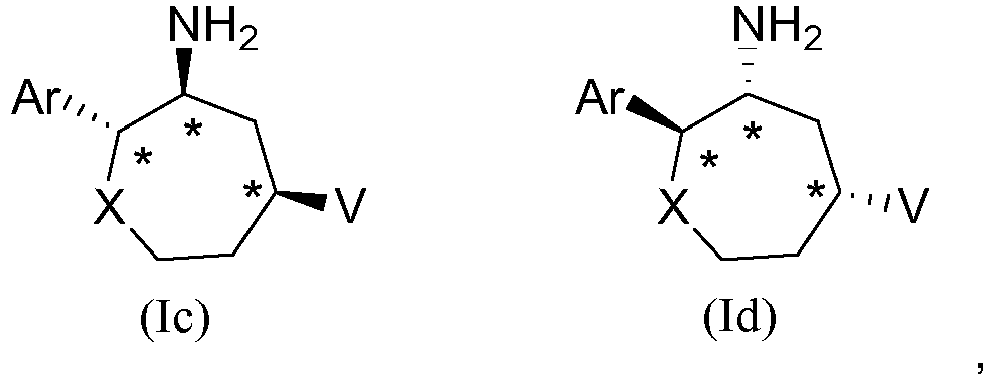
- the compounds of the present invention have an asymmetric center at the stereogenic carbon atoms marked with an * in formulae Ia, Ib, Ic, and Id. Additional asymmetric centers may be present depending upon the nature of the various substituents on the molecule. Each such asymmetric center will independently produce two optical isomers and it is intended that all of the possible optical isomers and diastereomers in mixtures and as pure or partially purified compounds are included within the ambit of this invention. The present invention is meant to comprehend all such isomeric forms of these compounds.
- Some of the compounds described herein may exist as tautomers, which have different points of attachment of hydrogen accompanied by one or more double bond shifts.
- a ketone and its enol form are keto-enol tautomers.
- the individual tautomers as well as mixtures thereof are encompassed with compounds of the present invention.
- An example of tautomers which are intended to be encompassed within the compounds of the present invention is illustrated below:
- Formula I shows the structure of the class of compounds without preferred stereochemistry.
- Formulae Ia and Ib show the preferred stereochemistry at the stereogenic carbon atoms to which are attached the NH 2 and Ar groups on the seven-membered heterocyclic ring.
- Formulae Ic and Id show the preferred stereochemistry at the stereogenic carbon atoms to which are attached the NH 2 , Ar, and V groups on the seven-membered heterocyclic ring.
- racemic mixtures of the compounds may be separated so that the individual enantiomers are isolated.
- the separation can be carried out by methods well known in the art, such as the coupling of a racemic mixture of compounds to an enantiomerically pure compound to form a diastereomeric mixture, followed by separation of the individual diastereomers by standard methods, such as fractional crystallization or chromatography.
- the coupling reaction is often the formation of salts using an enantiomerically pure acid or base.
- the diasteromeric derivatives may then be converted to the pure enantiomers by cleavage of the added chiral residue.
- the racemic mixture of the compounds can also be separated directly by chromatographic methods utilizing chiral stationary phases, which methods are well known in the art.
- any enantiomer of a compound may be obtained by stereoselective synthesis using optically pure starting materials or reagents of known configuration by methods well known in the art.
- the atoms may exhibit their natural isotopic abundances, or one or more of the atoms may be artificially enriched in a particular isotope having the same atomic number, but an atomic mass or mass number different from the atomic mass or mass number predominantly found in nature.
- the present invention is meant to include all suitable isotopic variations of the compounds of generic Formula I.
- different isotopic forms of hydrogen (H) include protium ( 1 H) and deuterium ( 2 H).
- Protium is the predominant hydrogen isotope found in nature. Enriching for deuterium may afford certain therapeutic advantages, such as increasing in vivo half-life or reducing dosage requirements, or may provide a compound useful as a standard for characterization of biological samples.
- Isotopically-enriched compounds within generic Formula I can be prepared without undue experimentation by conventional techniques well known to those skilled in the art or by processes analogous to those described in the Schemes and Examples herein using appropriate isotopically-enriched reagents and/or intermediates.
- references to the compounds of structural formula I are meant to also include the pharmaceutically acceptable salts, and also salts that are not pharmaceutically acceptable when they are used as precursors to the free compounds or their pharmaceutically acceptable salts or in other synthetic manipulations.
- the compounds of the present invention may be administered in the form of a pharmaceutically acceptable salt.
- pharmaceutically acceptable salt refers to salts prepared from pharmaceutically acceptable non-toxic bases or acids including inorganic or organic bases and inorganic or organic acids. Salts of basic compounds encompassed within the term “pharmaceutically acceptable salt” refer to non-toxic salts of the compounds of this invention which are generally prepared by reacting the free base with a suitable organic or inorganic acid.
- Representative salts of basic compounds of the present invention include, but are not limited to, acetate, benzenesulfonate, benzoate, bicarbonate, bisulfate, bitartrate, borate, bromide, camsylate, carbonate, clavulanate, citrate, edetate, edisylate, estolate, esylate, fumarate, gluceptate, gluconate, glutamate, hexylresorcinate, hydrabamine, hydrobromide, hydrochloride, hydroxynaphthoate, iodide, isothionate, lactate, lactobionate, laurate, malate, maleate, mandelate, mesylate, methylbromide, methylsulfate, mucate, napsylate, nitrate, N-methylglucamine ammonium salt, oleate, oxalate, pamoate (embonate), palmitate, pantoth
- suitable pharmaceutically acceptable salts thereof include, but are not limited to, salts derived from inorganic bases including aluminum, ammonium, calcium, copper, ferric, ferrous, lithium, magnesium, manganic, mangamous, potassium, sodium, zinc, and the like. Particularly preferred are the ammonium, calcium, magnesium, potassium, and sodium salts.
- Salts derived from pharmaceutically acceptable organic non-toxic bases include salts of primary, secondary, and tertiary amines, cyclic amines, and basic ion-exchange resins, such as arginine, betaine, caffeine, choline, N,N-dibenzylethylenediamine, diethylamine, 2-diethylaminoethanol, 2-dimethylaminoethanol, ethanolamine, ethylenediamine, N-ethylmorpholine, N-ethylpiperidine, glucamine, glucosamine, histidine, hydrabamine, isopropylamine, lysine, methylglucamine, morpholine, piperazine, piperidine, polyamine resins, procaine, purines, theobromine, triethylamine, trimethylamine, tripropylamine, tromethamine, and the like.
- basic ion-exchange resins such as arginine, betaine, caffeine, cho
- esters of carboxylic acid derivatives such as methyl, ethyl, or pivaloyloxymethyl
- acyl derivatives of alcohols such as O -acetyl, O -pivaloyl, O -benzoyl, and O -aminoacyl
- esters and acyl groups known in the art for modifying the solubility or hydrolysis characteristics for use as sustained-release or prodrug formulations.
- the subject compounds are useful in a method of inhibiting the dipeptidyl peptidase-IV enzyme in a patient such as a mammal in need of such inhibition comprising the administration of an effective amount of the compound.
- the present invention is directed to the use of the compounds disclosed herein as inhibitors of dipeptidyl peptidase-IV enzyme activity.
- mammals including, but not limited to, cows, sheep, goats, horses, dogs, cats, guinea pigs, rats or other bovine, ovine, equine, canine, feline, rodent or murine species can be treated.
- the method can also be practiced in other species, such as avian species (e.g., chickens).
- the present invention is further directed to a compound of structural formula I for use in inhibiting dipeptidyl peptidase-IV enzyme activity in humans and animals. More particularly, the present invention is directed to a compound of structural formula I for use in treating a condition selected from the group consisting of hyperglycemia, Type 2 diabetes, obesity, and a lipid disorder in a mammal, wherein the lipid disorder is selected from the group consisting of dyslipidemia, hyperlipidemia, hypertriglyceridemia, hypercholesterolemia, low HDL, and high LDL.
- the subject treated in the present uses is generally a mammal, preferably a human being, male or female, in whom inhibition of dipeptidyl peptidase-IV enzyme activity is desired.
- therapeutically effective amount means the amount of the subject compound that will elicit the biological or medical response of a tissue, system, animal or human that is being sought by the researcher, veterinarian, medical doctor or other clinician.
- composition as used herein is intended to encompass a product comprising the specified ingredients in the specified amounts, as well as any product which results, directly or indirectly, from combination of the specified ingredients in the specified amounts.
- Such term in relation to pharmaceutical composition is intended to encompass a product comprising the active ingredient(s), and the inert ingredient(s) that make up the carrier, as well as any product which results, directly or indirectly, from combination, complexation or aggregation of any two or more of the ingredients, or from dissociation of one or more of the ingredients, or from other types of reactions or interactions of one or more of the ingredients.
- the pharmaceutical compositions of the present invention encompass any composition made by admixing a compound of the present invention and a pharmaceutically acceptable carrier.
- pharmaceutically acceptable it is meant the carrier, diluent or excipient must be compatible with the other ingredients of the formulation and not deleterious to the recipient thereof.
- administering should be understood to mean providing a compound of the invention or a prodrug of a compound of the invention to the individual in need of treatment.
- a typical reaction contains approximately 50 pM enzyme, 50 ⁇ M Gly-Pro-AMC, and buffer (100 mM HEPES, pH 7.5, 0.1 mg/ml BSA) in a total reaction volume of 100 ⁇ L.
- Liberation of AMC is monitored continuously in a 96-well plate fluorometer using an excitation wavelength of 360 nm and an emission wavelength of 460 nm. Under these conditions, approximately 0.8 ⁇ M AMC is produced in 30 minutes at 25 degrees C.
- the enzyme used in these studies was soluble (transmembrane domain and cytoplasmic extension excluded) human protein produced in a baculovirus expression system (Bac-To-Bac, Gibco BRL).
- the kinetic constants for hydrolysis of Gly-Pro-AMC and GLP-1 were found to be in accord with literature values for the native enzyme.
- solutions of inhibitor in DMSO were added to reactions containing enzyme and substrate (final DMSO concentration is 1%). All experiments were conducted at room temperature using the standard reaction conditions described above.
- dissociation constants (K i ) reaction rates were fit by non-linear regression to the Michaelis-Menton equation for competitive inhibition. The errors in reproducing the dissociation constants are typically less than two-fold.
- Dipeptidyl peptidase-IV enzyme is a cell surface protein that has been implicated in a wide range of biological functions. It has a broad tissue distribution (intestine, kidney, liver, pancreas, placenta, thymus, spleen, epithelial cells, vascular endothelium, lymphoid and myeloid cells, serum), and distinct tissue and cell-type expression levels. DPP-4 is identical to the T cell activation marker CD26, and it can cleave a number of immunoregulatory, endocrine, and neurological peptides in vitro . This has suggested a potential role for this peptidase in a variety of disease processes in humans or other species.
- the subject compounds are useful in a method for the prevention or treatment of the following diseases, disorders and conditions.
- the following diseases, disorders and conditions are related to Type 2 diabetes, and therefore may be treated, controlled or in some cases prevented, by treatment with the compounds of this invention: (1) hyperglycemia, (2) low glucose tolerance, (3) insulin resistance, (4) obesity, (5) lipid disorders, (6) dyslipidemia, (7) hyperlipidemia, (8) hypertriglyceridemia, (9) hypercholesterolemia, (10) low HDL levels, (11) high LDL levels, (12) atherosclerosis and its sequelae, (13) vascular restenosis, (14) irritable bowel syndrome, (15) inflammatory bowel disease, including Crohn's disease and ulcerative colitis, (16) other inflammatory conditions, (17) pancreatitis, (18) abdominal obesity, (19) neurodegenerative disease, (20) retinopathy, (21) nephropathy, (22) neuropathy, (23) Syndrome X, (24) ovarian hyperandrogenism (polycystic ovarian syndrome), and other disorders where insulin resistance is a component.
- Syndrome X also known as Metabolic Syndrome
- DPP-4 inhibitors have been shown to be efficacious immunosuppressants in animal models of transplantation and arthritis.
- Prodipine Pro-Pro-diphenyl-phosphonate
- DPP-4 inhibitors have been tested in collagen and alkyldiamine-induced arthritis in rats and showed a statistically significant attenuation of hind paw swelling in this model [ Int. J. Immunopharmacology, 19:15-24 (1997 ) and Immunopharmacology, 40: 21-26 (1998 )].
- DPP-4 is upregulated in a number of autoimmune diseases including rheumatoid arthritis, multiple sclerosis, Graves' disease, and Hashimoto's thyroiditis ( Immunology Today, 20: 367-375 (1999 )).
- the compounds of the present invention have utility in treating or preventing one or more of the following conditions or diseases: (1) hyperglycemia, (2) low glucose tolerance, (3) insulin resistance, (4) obesity, (5) lipid disorders, (6) dyslipidemia, (7) hyperlipidemia, (8) hypertriglyceridemia, (9) hypercholesterolemia, (10) low HDL levels, (11) high LDL levels, (12) atherosclerosis and its sequelae, (13) vascular restenosis, (14) irritable bowel syndrome, (15) inflammatory bowel disease, including Crohn's disease and ulcerative colitis, (16) other inflammatory conditions, (17) pancreatitis, (18) abdominal obesity, (19) neurodegenerative disease, (20) retinopathy, (21) nephropathy, (22) neuropathy, (23) Syndrome X, (24) ovarian hyperandrogenism (polycystic ovarian syndrome), (25) Type 2 diabetes, (26) growth hormone deficiency, (27) neutropenia, (28) neuronal disorders, (29) tumor metastasis,
- the compounds of the present invention may be used in combination with one or more other drugs in the treatment, prevention, suppression or amelioration of diseases or conditions for which compounds of Formula I or the other drugs may have utility, where the combination of the drugs together are safer or more effective than either drug alone.
- Such other drug(s) may be administered, by a route and in an amount commonly used therefor, contemporaneously or sequentially with a compound of Formula I.
- a pharmaceutical composition in unit dosage form containing such other drugs and the compound of Formula I is preferred, particularly in combination with a pharmaceutically acceptable carrier.
- the combination therapy may also include therapies in which the compound of Formula I and one or more other drugs are administered on different overlapping schedules.
- compositions of the present invention include those that contain one or more other active ingredients, in addition to a compound of Formula I.
- compositions of the present invention include those that also contain one or more other active ingredients, in addition to a compound of the present invention.
- the weight ratio of the compound of the present invention to the second active ingredient may be varied and will depend upon the effective dose of each ingredient. Generally, an effective dose of each will be used. Thus, for example, when a compound of the present invention is combined with another agent, the weight ratio of the compound of the present invention to the other agent will generally range from about 1000:1 to about 1:1000, preferably about 200:1 to about 1:200. Combinations of a compound of the present invention and other active ingredients will generally also be within the aforementioned range, but in each case, an effective dose of each active ingredient should be used.
- the compound of the present invention and other active agents may be administered separately or in conjunction.
- the administration of one element may be prior to, concurrent to, or subsequent to the administration of other agent(s).
- Examples of other active ingredients that may be administered in combination with a compound of Formula I, and either administered separately or in the same pharmaceutical composition include, but are not limited to:
- Antiobesity compounds that can be combined with compounds of Formula I include topiramate; zonisamide; naltrexone; phentermine; bupropion; the combination of bupropion and naltrexone; the combination of bupropion and zonisamide; the combination of topiramate and phentermine; fenfluramine; dexfenfluramine; sibutramine; lipase inhibitors, such as orlistat and cetilistat; melanocortin receptor agonists, in particular, melanocortin-4 receptor agonists; CCK-1 agonists; melanin-concentrating hormone (MCH) receptor antagonists; neuropeptide Y 1 or Y 5 antagonists (such as MK-0557); CB1 receptor inverse agonists and antagonists (such as rimonabant and taranabant); ⁇ 3 adrenergic receptor agonists; ghrelin antagonists; bombesin receptor agonists (such as bombesin receptor sub
- Glucokinase activators that can be used in combination with the compounds of Formula I include, but are not limited to:
- Inhibitors of 11 ⁇ -hydroxysteroid dehydrogenase type 1 that can be used in combination with the compounds of Formula I include, but are not limited to:
- AMP-activated Protein Kinase (AMPK) activators that can be used in combination with the compounds of Formula I include, but are not limited to: and and pharmaceutically acceptable salts thereof.
- Inhibitors of acetyl-CoA carboxylase-1 and 2 that can be used in combination with the compounds of Formula I include, but are not limited to:
- compositions containing the active ingredient may be in a form suitable for oral use, for example, as tablets, troches, lozenges, aqueous or oily suspensions, dispersible powders or granules, emulsions, hard or soft capsules, or syrups or elixirs.
- Compositions intended for oral use may be prepared according to any method known to the art for the manufacture of pharmaceutical compositions and such compositions may contain one or more agents selected from the group consisting of sweetening agents, flavoring agents, coloring agents and preserving agents in order to provide pharmaceutically elegant and palatable preparations. Tablets contain the active ingredient in admixture with non-toxic pharmaceutically acceptable excipients which are suitable for the manufacture of tablets.
- excipients may be for example, inert diluents, such as calcium carbonate, sodium carbonate, lactose, calcium phosphate or sodium phosphate; granulating and disintegrating agents, for example, corn starch, or alginic acid; binding agents, for example starch, gelatin or acacia, and lubricating agents, for example magnesium stearate, stearic acid or talc.
- the tablets may be uncoated or they may be coated by known techniques to delay disintegration and absorption in the gastrointestinal tract and thereby provide a sustained action over a longer period.
- a time delay material such as glyceryl monostearate or glyceryl distearate may be employed. They may also be coated by the techniques described in the U.S. Patents 4,256,108 ; 4,166,452 ; and 4,265,874 to form osmotic therapeutic tablets for control release.
- creams, ointments, jellies, solutions or suspensions, etc., containing the compounds of the present invention are employed.
- topical application shall include mouthwashes and gargles.
- the compounds of the present invention of structural formula (I) can be prepared from intermediates such as those of formulae II and III, using standard reductive amination conditions followed by deprotection to afford compounds of formula (I) wherein Ar and V are as defined above, X is O for oxepanes, X is S for thiepanes, and P is a suitable nitrogen protecting group, such as tert-butoxycarbonyl (Boc), trityl (Tr or CPh 3 ), benzyloxycarbonyl (Cbz), or 9-fluorenylmethoxycarbonyl (Fmoc).
- Ar and V are as defined above
- X is O for oxepanes
- X is S for thiepanes
- P is a suitable nitrogen protecting group, such as tert-butoxycarbonyl (Boc), trityl (Tr or CPh 3 ), benzyloxycarbonyl (Cbz), or 9-
- Scheme 2 illustrates a route to compounds of formulae Ig and Ih via intermediate IIc. These compounds may be prepared by a variety of methods familiar to those skilled in the arts.
- An appropriately substituted tetrahydrothiopyranone 3 can be treated with boron trifluoride diethyl etherate and TMSdiazomethane to affect a ring expansion.
- Protiodesilylation with PPTS in methanol provides ketone IIc .
- Reductive amination of the ketone with a variety of amines of formula III gives a mixture of diastereomeric amines at C-5 (as indicated by asterisk*).
- Deprotection using standard methods described in T.W. Greene and P.G.M. Wuts, "Protective Groups in Organic Synthesis," 4th Ed., John Wiley & Sons, Inc., 2007 and subsequent chromatographic separation provides the pure diastereomers Ig and Ih.
- the free amine bases corresponding to the isolated salts can be generated by neutralization with a suitable base, such as aqueous sodium hydrogencarbonate, sodium carbonate, sodium hydroxide, and potassium hydroxide, and extraction of the liberated amine free base into an organic solvent followed by evaporation.
- a suitable base such as aqueous sodium hydrogencarbonate, sodium carbonate, sodium hydroxide, and potassium hydroxide
- the amine free base isolated in this manner can be further converted into another pharmaceutically acceptable salt by dissolution in an organic solvent followed by addition of the appropriate acid and subsequent evaporation, precipitation, or crystallization. All temperatures are degrees Celsius unless otherwise noted.
- Mass spectra (MS) were measured by electron-spray ion-mass spectroscopy.
- Proton NMR (H-NMR) spectra were measured at 500 MHz, and chemical shifts are provided as parts-per-million (ppm).
- the resulting oil was dissolved in a mixture of DCM (50 mL) and methanol (50 mL) and pyridinium p -toluenesulfonate (460 mg, 1.83 mmol) was added. The reaction was stirred 18 h at rt, then diluted with DCM and sat. aq. NaHCO 3 , washed with sat. aq. NaHCO 3 and brine, then dried over Na 2 SO 4 , filtered and concentrated. The resulting oil was purified by column chromatography (100 g column, 8% to 70% EtOAc:Hex ramp) to provide the title compound as a white solid.
- Step A S -(3,3-Diethoxy-2-hydroxypropyl)ethanethiolate
- Triethylamine (1.98 mL, 14.2 mmol) was added and the solution was stirred for 10 min and then removed from the dry ice/acetone bath and warmed to room temperature. Methylene chloride (50 mL) and water (30 mL) were added and the organic phase was dried with sodium sulfate, filtered and evaporated to an oil. The residue was placed onto preparative tlc plates, developed with 1:2 EtOAc/ hexanes and eluted with EtOAc to give the title compound as a solid.
- Step A tert -Butyl (3 Z )-3-[(dimethylamino)methylene]-4-oxopyrrolidine-1-carboxylate
- Step B tert -Butyl 2-(2-amino-2-oxoethyl)-2,6-dihydropyrrolo[3,4-c]pyrazole-5(4 H )-carboxylate
- Step C 2-(5,6-Dihydropyrrolo[3,4-c]pyrazol-2(4 H )-yl)acetamide
- Step A of Intermediate 7 To a stirred solution of tert -butyl 2,6-dihydropyrrolo[3,4-c]pyrazole-5(4H)-carboxylate (Step A of Intermediate 7) (35 g, 167 mmol) in DMF (500 mL) at 0 °C under N 2 was added sodium hexamethyldisilazide in THF (351 mL, 351 mmol) and the mixture was stirred at 0 °C for 30 min. Isobutylene oxide (74.3 mL, 836 mmol) was then slowly added. The solution was stirred at 0°C for 0.5 h and then stirred at room temperature for 1 h.
- the solution was heated to 80°C for 100 min in a microwave oven, cooled to room temperature and evalegend under vacuum.
- the residue was purified by column chromatography on silica gel, eluting with a gradient of 0% to 6% CH 2 Cl 2 /MeOH (containing 10% NH 4 OH) to give a mixture of two regioisomers.
- the mixture of two regioisomers A and B was resolved by chromatography on a ChiralPak AD-H column eluting with 4-40% MeOH/CO 2 to give isomer A as the faster eluting isomer and isomer B as the slower eluting isomer.
- Step A tert -Butyl 2- ⁇ [2-(trimethylsilyl)ethoxy]methyl ⁇ -2,6-dihydropyrrolo[3,4- c ]pyrazole-5(4 H )-carboxylate
- Step B 5- tert -Butyl-3-ethyl[2-(trimethyl)ethoxy]methyl ⁇ -2,6-dihydropyrrolo[3,4- c ]pyrazole-3,5(4 H )-dicarboxylate
- Step C 5-( tert -Butoxycarbonyl)-2-[2-(trimethylsilyl)ethoxy]methyl-2,4,5,6-tetrahydopyrrolo[3,4- c ]pyrazole-3-carboxylic acid
- Step D tert -Butyl 3-carbamoyl-2- ⁇ [2-(trimethyl)ethoxy]methyl ⁇ -2,6-dihydropyrrolo[3,4- c ]pyrazole-5(4 H )-carboxylate
- Step A tert -Butyl 2-(cyclopentylsulfonyl)-2,6-dihydropyrrolo[3,4- c ]pyrazole-5(4 H )-carboxylate
- Step B 2-[(1-Methylcyclopropyl)sulfonyl]-2,4,5,6-tetrahydropyrrolo[3,4- c ]pyrazole hydrochloride salt
- Step A tert -Butyl (3Z)-3-[(dimethylamino)methylene]-4-oxopyrrolidine-1-carboxylate
- tert -Butyl 3-oxopyrrolidine-1-carboxylate (40 g, 216 mmol) was treated with N , N- dimethylformamide dimethyl acetal (267 g, 2241 mmol) and heated at 105 °C for 40 min. The solution was cooled and evaporated under reduced pressure and the resulting orange solid was treated with hexane (200 mL) and cooled in the refrigerator for 64 h. The resulting brownish-yellow solid obtained as such was collected by filtration, dried and used in the next step without further purification. LC/MS: 241.1 (M + 1).
- Step B tert -Butyl 2,6-dihydropyrrolo[3,4- c ]pyrazole-5(4 H )-carboxylate
- Step C tert -Buty12-(methylsulfonyl)]-2,6-dihydropyrrolo[3,4- c ]pyrazole-5(4 H )-carboxylate
- Step D 2-(Methylsulfonyl)-2,4,5,6-tetrahydropyrrolo[3,4- c ]pyrazole benzenesulfonic acid salt
- the reaction was heated to 50 °C for 1 h, then cooled to rt for 18 h and concentrated to approximately 1 mL.
- the resulting solution was purified by preparative thin layer chromatography (4 x 1000 micron PTLC plates using 10% methanol (containing 2N NH 3 ) in DCM as a developing solvent). The major band was removed, eluted with 1:1 methanol/DCM and evaporated. Examination of the oil by 1 H NMR showed an approximately 4:1 mixture of diastereomeric amines at C-5.
- Example 2 was prepared in a similar manner as Example 1, except that (6 S ,7 R )-7-(2,4,5-trifluorophenyl)-6-(tritylamino)oxepan-4-one (Intermediate 4) was substituted for Intermediate 5 and 2-[(1-methylcyclopropyl)sulfonyl]-2,4,5,6-tetrahydropyrrolo[3,4-c]pyrazole (Intermediate 17) was substituted for 2-(methylsulfonyl)-2,4,5,6-tetrahydropyrrolo[3,4- c ]pyrazole in the reductive amination.
- the mixture of diastereomers from Step B was dissolved in 4 M HCl in dioxane and stirred 1 h at rt.
- the reaction mixture was concentrated and the residue was purified by preparative thin layer chromatography (2 x 250 micron PTLC plates using 20% MeOH (containing 2 N NH 3 ) in ethyl acetate as a developing solvent).
- the appropriate band was removed and eluted with 1:1 methanol/DCM.
- the solvent was evaporated and residue was repurified by PTLC (2 x 250 micron PTLC plates using 20% MeOH (containing 2 N NH 3 ) in DCM as a developing solvent).
- the appropriate band was removed, eluted with 1:1 methanol/DCM, and evaporated to give the title compound.
- reaction was stirred for 10 min at 0 °C, then sodium cyanoborohydride (462 ⁇ L, 0.46 mmol, 1M in THF) was added and the reaction was heated to 50 °C for 3 h.
- the reaction mixture was concentrated to approximately 0.5 mL and purified by preparative thin layer chromatography (2 x 1000 micron PTLC plates using 10% MeOH (containing 2 N NH 3 ) in DCM as a developing solvent). The major band was removed, eluted with 1:1 methanol/DCM and evaporated. Examination of the oil by 1 H NMR showed an approximately 4:1 mixture of diastereomeric amines at C-5.
- the mixture of diastereomers from Step A was dissolved in a mixture of TFA (2 mL) and DCM (3 mL) and stirred for 1 h at rt.
- the solvents were evaporated and the residue was purified by preparative thin layer chromatography (4 x 500 micron PTLC plates using 10% MeOH (containing 2 N NH 3 ) in ethyl acetate as a developing solvent). The less polar band was removed and eluted with 1:1 methanol/DCM.
- the solvent was evaporated and the residue was freeze-dried from a mixture of acetonitrile and 1% TFA in water to give the title compound as a white solid.
- Example R 1 X V MS M+1 5 H O 335.2 6 F O 431.0 7 H O 413.1 8 H O 413.1 9 H O 411.2 10 H O 480.1 11 H O 481.0 12 H O 378.1 13 H O 407.1 14 H O 439.0 15 F O 457.0 16 H O 452.97 17 H O 467.0 18 H O 387.1 19 H O 415.0 20 F O 433.0 21 H O 417.1 22 H O 349.1 23 H O 361.1 24 H S 386.1
- a 100 mg potency tablet is composed of 100 mg of any one of the Examples, 268 mg microcrystalline cellulose, 20 mg of croscarmellose sodium, and 4 mg of magnesium stearate.
- the active, microcrystalline cellulose, and croscarmellose are blended first.
- the mixture is then lubricated by magnesium stearate and pressed into tablets.
- Effective dosages other than the particular dosages as set forth herein above may be applicable as a consequence of variations in responsiveness of the mammal being treated for any of the indications with the compounds of the invention indicated above.
- the specific pharmacological responses observed may vary according to and depending upon the particular active compounds selected or whether there are present pharmaceutical carriers, as well as the type of formulation and mode of administration employed, and such expected variations or differences in the results are contemplated in accordance with the objects and practices of the present invention.
Landscapes
- Health & Medical Sciences (AREA)
- Chemical & Material Sciences (AREA)
- Organic Chemistry (AREA)
- Life Sciences & Earth Sciences (AREA)
- Pharmacology & Pharmacy (AREA)
- Epidemiology (AREA)
- Medicinal Chemistry (AREA)
- Animal Behavior & Ethology (AREA)
- General Health & Medical Sciences (AREA)
- Public Health (AREA)
- Veterinary Medicine (AREA)
- Pharmaceuticals Containing Other Organic And Inorganic Compounds (AREA)
- Micro-Organisms Or Cultivation Processes Thereof (AREA)
Claims (9)
- Eine Verbindung der Strukturformel I:
 X O oder S ist,V ausgewählt ist aus der Gruppe bestehend aus:
 Ar Phenyl ist, das gegebenenfalls mit ein bis fünf R1-Substituenten substituiert ist, jedes R1 unabhängig ausgewählt ist aus der Gruppe bestehend ausHalogen,Cyano,Hydroxy,C1-6-Alkyl, gegebenenfalls substituiert mit ein bis fünf Fluor, undC1-6-Alkoxy, gegebenenfalls substituiert mit ein bis fünf Fluor,R2 ausgewählt ist aus der Gruppe bestehend aus:Wasserstoff,Cyano,CONH2,C1-3-Alkyl, wobei Alkyl gegebenenfalls substituiert ist mit ein bis fünf Fluor, undC3-5-Cycloalkyl, wobei Cycloalkyl gegebenenfalls substituiert ist mit ein bis drei Substituenten, unabhängig ausgewählt aus Halogen, Hydroxy und C1-4-Alkyl, wobei Alkyl gegebenenfalls substituiert ist mit ein bis fünf Fluor, undR8 ausgewählt ist aus der Gruppe bestehend aus:-Phenyl,-Heteroaryl,-C3-6-Cycloalkyl,-CH2SO2C1-3-Alkyl,wobei jeder Alkylrest gegebenenfalls substituiert ist mit ein bis fünf Substituenten, unabhängig ausgewählt aus Fluor und Hydroxy, und wobei Phenyl, Heteroaryl und jeder Cycloalkylrest gegebenenfalls substituiert sind mit ein bis fünf Substituenten, unabhängig ausgewählt aus Halogen, Hydroxy, C1-6-Alkyl und C1-6-Alkoxy, wobei Alkyl und Alkoxy gegebenenfalls substituiert sind mit ein bis fünf Fluor,-SO2C3-6-Cycloalkyl und-C1-5-Alkyl,wobei jeder Alkylrest substituiert ist mit ein bis fünf Substituenten, unabhängig ausgewählt aus Fluor und Hydroxyl, und jeder Cycloalkylrest substituiert ist mit ein bis fünf Substituenten, unabhängig ausgewählt aus Halogen, Hydroxy, C1-6-Alkyl und C1-6-Alkoxy, wobei Alkyl und Alkoxy gegebenenfalls substituiert sind mit ein bis fünf Fluor.
 - Die Verbindung nach Anspruch 1, wobei Ar gegebenenfalls substituiert ist mit ein bis drei Substituenten, unabhängig ausgewählt aus der Gruppe bestehend aus Fluor, Chlor, Brom, Methyl, Trifluormethyl und Trifluormethoxy.
- Die Verbindung nach Anspruch 2, wobei Ar 2,5-Difluorphenyl oder 2,4,5-Trifluorphenyl ist.
- Die Verbindung nach Anspruch 1 der Strukturformel la oder Ib mit der angegebenen stereochemischen Konfiguration an den zwei stereogenen Kohlenstoffatomen, die mit einem * gekennzeichnet sind:

- Die Verbindung nach Anspruch 4 der Strukturformeln Ic und Id mit der angegebenen stereochemischen Konfiguration an den drei stereogenen Kohlenstoffatomen, die mit einem * gekennzeichnet sind:
- Eine pharmazeutische Zusammensetzung, die eine Verbindung nach Anspruch 1 und einen pharmazeutisch annehmbaren Träger umfasst.
- Die pharmazeutische Zusammensetzung nach Anspruch 6, die zusätzlich ein zweites Mittel umfasst, ausgewählt aus der Gruppe bestehend aus Metformin, Pioglitazon, Rosiglitazon, einem Sulfonylharnstoff und einem HMG-CoA-Reduktase-Inhibitor.
- Eine Verbindung nach Anspruch 1 zur Verwendung in der Therapie.
- Eine Verbindung nach Anspruch 1 zur Verwendung bei der Behandlung eines Zustandes, ausgewählt aus der Gruppe bestehend aus Insulinresistenz, Hyperglykämie und Typ-2-Diabetes.
Applications Claiming Priority (2)
| Application Number | Priority Date | Filing Date | Title |
|---|---|---|---|
| US34694310P | 2010-05-21 | 2010-05-21 | |
| PCT/US2011/036589 WO2011146358A1 (en) | 2010-05-21 | 2011-05-16 | Substituted seven-membered heterocyclic compounds as dipeptidyl peptidase-iv inhibitors for the treatment of diabetes |
Publications (3)
| Publication Number | Publication Date |
|---|---|
| EP2571876A1 EP2571876A1 (de) | 2013-03-27 |
| EP2571876A4 EP2571876A4 (de) | 2013-12-25 |
| EP2571876B1 true EP2571876B1 (de) | 2016-09-07 |
Family
ID=44991999
Family Applications (1)
| Application Number | Title | Priority Date | Filing Date |
|---|---|---|---|
| EP11784011.6A Not-in-force EP2571876B1 (de) | 2010-05-21 | 2011-05-16 | Substituierte siebenteilige heterozyklische verbindungen als dipeptidyl-peptidase-iv-hemmer zur behandlung von diabetes |
Country Status (4)
| Country | Link |
|---|---|
| US (1) | US8980929B2 (de) |
| EP (1) | EP2571876B1 (de) |
| BR (1) | BR112012029389A2 (de) |
| WO (1) | WO2011146358A1 (de) |
Cited By (3)
| Publication number | Priority date | Publication date | Assignee | Title |
|---|---|---|---|---|
| US11618751B1 (en) | 2022-03-25 | 2023-04-04 | Ventus Therapeutics U.S., Inc. | Pyrido-[3,4-d]pyridazine amine derivatives useful as NLRP3 derivatives |
| US12281112B2 (en) | 2021-04-07 | 2025-04-22 | Ventus Therapeutics U.S., Inc. | Compounds for inhibiting NLRP3 and uses thereof |
| US12312351B2 (en) | 2022-10-31 | 2025-05-27 | Ventus Therapeutics U.S., Inc. | Pyrido-[3,4-d]pyridazine amine derivatives useful as NLRP3 inhibitors |
Families Citing this family (29)
| Publication number | Priority date | Publication date | Assignee | Title |
|---|---|---|---|---|
| SG187103A1 (en) | 2010-07-16 | 2013-02-28 | Abbvie Inc | Phosphine ligands for catalytic reactions |
| CA2805748A1 (en) | 2010-07-16 | 2012-01-19 | Shashank Shekhar | Process for preparing n-(6-(3-tert-butyl-5-(2,4-dioxo-3,4-dihydropyrimidin-1-(2h)-yl)-2-methoxyphenyl)naphthalen-2-yl)methanesulfonamide |
| US8975443B2 (en) | 2010-07-16 | 2015-03-10 | Abbvie Inc. | Phosphine ligands for catalytic reactions |
| US9255074B2 (en) | 2010-07-16 | 2016-02-09 | Abbvie Inc. | Process for preparing antiviral compounds |
| WO2012078448A1 (en) | 2010-12-06 | 2012-06-14 | Schering Corporation | Tricyclic heterocycles useful as dipeptidyl peptidase-iv inhibitors |
| TWI574965B (zh) | 2011-06-29 | 2017-03-21 | 默沙東藥廠 | 二肽基肽酶-iv抑制劑之新穎結晶型 |
| EP2729468A4 (de) | 2011-07-05 | 2015-03-18 | Merck Sharp & Dohme | Tricyclische heterozyklen als dipeptidylpeptidase-iv-hemmer |
| WO2013122920A1 (en) | 2012-02-17 | 2013-08-22 | Merck Sharp & Dohme Corp. | Dipeptidyl peptidase-iv inhibitors for the treatment or prevention of diabetes |
| US9156848B2 (en) | 2012-07-23 | 2015-10-13 | Merck Sharp & Dohme Corp. | Treating diabetes with dipeptidyl peptidase-IV inhibitors |
| EP2874622A4 (de) | 2012-07-23 | 2015-12-30 | Merck Sharp & Dohme | Behandlung von diabetes mit dipeptidylpeptidase-iv-hemmern |
| TWI500613B (zh) | 2012-10-17 | 2015-09-21 | Cadila Healthcare Ltd | 新穎之雜環化合物 |
| AU2015210833B2 (en) | 2014-02-03 | 2019-01-03 | Vitae Pharmaceuticals, Llc | Dihydropyrrolopyridine inhibitors of ROR-gamma |
| JP6574474B2 (ja) | 2014-07-21 | 2019-09-11 | メルク・シャープ・アンド・ドーム・コーポレーションMerck Sharp & Dohme Corp. | キラルジペプチジルペプチダーゼ−iv阻害剤の製造方法 |
| JP6564029B2 (ja) | 2014-10-14 | 2019-08-21 | ヴァイティー ファーマシューティカルズ,エルエルシー | Ror−ガンマのジヒドロピロロピリジン阻害剤 |
| US9845308B2 (en) | 2014-11-05 | 2017-12-19 | Vitae Pharmaceuticals, Inc. | Isoindoline inhibitors of ROR-gamma |
| US9663515B2 (en) | 2014-11-05 | 2017-05-30 | Vitae Pharmaceuticals, Inc. | Dihydropyrrolopyridine inhibitors of ROR-gamma |
| DK3331876T3 (da) | 2015-08-05 | 2021-01-11 | Vitae Pharmaceuticals Llc | Modulators of ror-gamma |
| MA53943A (fr) | 2015-11-20 | 2021-08-25 | Vitae Pharmaceuticals Llc | Modulateurs de ror-gamma |
| TWI757266B (zh) | 2016-01-29 | 2022-03-11 | 美商維它藥物有限責任公司 | ROR-γ調節劑 |
| US9481674B1 (en) | 2016-06-10 | 2016-11-01 | Vitae Pharmaceuticals, Inc. | Dihydropyrrolopyridine inhibitors of ROR-gamma |
| CN106674227B (zh) * | 2016-12-06 | 2019-03-19 | 上海博志研新药物技术有限公司 | 一种奥格列汀及其中间体的制备方法 |
| LT3483164T (lt) | 2017-03-20 | 2020-05-11 | Forma Therapeutics, Inc. | Pirolpirolo kompozicijos kaip piruvato kinazės (pkr) aktyvatoriai |
| CN115650976A (zh) | 2017-07-24 | 2023-01-31 | 生命医药有限责任公司 | RORγ的抑制剂 |
| WO2019018975A1 (en) | 2017-07-24 | 2019-01-31 | Vitae Pharmaceuticals, Inc. | INHIBITORS OF ROR GAMMA |
| EP3852791B1 (de) | 2018-09-19 | 2024-07-03 | Novo Nordisk Health Care AG | Aktivierung von pyruvatkinase r |
| EP3853206B1 (de) | 2018-09-19 | 2024-04-10 | Novo Nordisk Health Care AG | Behandlung von sichelzellanämie mit einer pyruvatkinase-r-aktivierenden verbindung |
| US12398139B2 (en) | 2019-03-05 | 2025-08-26 | Centre For Addiction And Mental Health | Modulators of AMPA receptor signaling |
| HRP20251148T1 (hr) | 2019-09-19 | 2025-11-21 | Novo Nordisk Health Care Ag | Pripravci koji aktiviraju piruvat-kinazu r (pkr) |
| US12128035B2 (en) | 2021-03-19 | 2024-10-29 | Novo Nordisk Health Care Ag | Activating pyruvate kinase R |
Family Cites Families (82)
| Publication number | Priority date | Publication date | Assignee | Title |
|---|---|---|---|---|
| US4166452A (en) | 1976-05-03 | 1979-09-04 | Generales Constantine D J Jr | Apparatus for testing human responses to stimuli |
| US4256108A (en) | 1977-04-07 | 1981-03-17 | Alza Corporation | Microporous-semipermeable laminated osmotic system |
| US4265874A (en) | 1980-04-25 | 1981-05-05 | Alza Corporation | Method of delivering drug with aid of effervescent activity generated in environment of use |
| US5545618A (en) | 1990-01-24 | 1996-08-13 | Buckley; Douglas I. | GLP-1 analogs useful for diabetes treatment |
| IL111785A0 (en) | 1993-12-03 | 1995-01-24 | Ferring Bv | Dp-iv inhibitors and pharmaceutical compositions containing them |
| DE122010000020I1 (de) | 1996-04-25 | 2010-07-08 | Prosidion Ltd | Verfahren zur Senkung des Blutglukosespiegels in Säugern |
| US5658311A (en) | 1996-07-05 | 1997-08-19 | Schneider (Usa) Inc. | High pressure expander bundle for large diameter stent deployment |
| AR008789A1 (es) | 1996-07-31 | 2000-02-23 | Bayer Corp | Piridinas y bifenilos substituidos |
| UA65549C2 (uk) | 1996-11-05 | 2004-04-15 | Елі Ліллі Енд Компані | Спосіб регулювання ожиріння шляхом периферійного введення аналогів та похідних glp-1 (варіанти) та фармацевтична композиція |
| TW492957B (en) | 1996-11-07 | 2002-07-01 | Novartis Ag | N-substituted 2-cyanopyrrolidnes |
| US6284748B1 (en) | 1997-03-07 | 2001-09-04 | Metabasis Therapeutics, Inc. | Purine inhibitors of fructose 1,6-bisphosphatase |
| DE69819311T2 (de) | 1997-03-07 | 2004-07-29 | Metabasis Therapeutics Inc., San Diego | Neue benzimidazol inhibitoren der fructose-1,6-bisphosphatase |
| US6054587A (en) | 1997-03-07 | 2000-04-25 | Metabasis Therapeutics, Inc. | Indole and azaindole inhibitors of fructose-1,6-bisphosphatase |
| BR9810378A (pt) | 1997-07-01 | 2000-08-29 | Novo Nordisk As | Composto,uso do mesmo, composição farmacêutica, e, processos de tratar a diabete do tipo i ou do tipo ii, de tratar a hiperglicemia, e de diminuir a glicose do sangue em um mamìfero |
| US6613942B1 (en) | 1997-07-01 | 2003-09-02 | Novo Nordisk A/S | Glucagon antagonists/inverse agonists |
| IL139247A0 (en) | 1998-05-04 | 2001-11-25 | Point Therapeutics Inc | Hematopoietic stimulation |
| KR100818845B1 (ko) | 1998-09-09 | 2008-04-01 | 메타베이시스 테라퓨틱스, 인크. | 신규한 프럭토스 1,6-비스포스파타제의 헤테로방향족 억제제 |
| CO5150173A1 (es) | 1998-12-10 | 2002-04-29 | Novartis Ag | Compuestos n-(glicilo sustituido)-2-cianopirrolidinas inhibidores de peptidasa de dipeptidilo-iv (dpp-iv) los cuales son efectivos en el tratamiento de condiciones mediadas por la inhibicion de dpp-iv |
| GB9906715D0 (en) | 1999-03-23 | 1999-05-19 | Ferring Bv | Compositions for promoting growth |
| DE60023492T2 (de) | 1999-05-17 | 2006-07-20 | Novo Nordisk A/S | Glucagon antagonisten/inverse agonisten |
| AU7705601A (en) | 2000-07-25 | 2002-02-05 | Merck & Co Inc | N-substituted indoles useful in the treatment of diabetes |
| CA2424475A1 (en) | 2000-10-27 | 2002-05-02 | Probiodrug Ag | Method for the treatment of neurological and neuropsychological disorders |
| EP1357908A4 (de) | 2001-01-30 | 2009-07-15 | Merck & Co Inc | "acylsulfamide zur behandlung von fettleibigkeit, diabetes und lipidstörungen" |
| EP1385508B1 (de) | 2001-03-27 | 2008-05-21 | Merck & Co., Inc. | Dipeptidylpeptidase-hemmer für die behandlung oder prävention von diabetes |
| ES2257555T3 (es) | 2001-06-20 | 2006-08-01 | MERCK & CO., INC. | Inhibidores de dipeptidilpeptidasa para el tratamiento de la diabetes. |
| CA2450579A1 (en) | 2001-06-20 | 2003-01-03 | Merck & Co., Inc. | Dipeptidyl peptidase inhibitors for the treatment of diabetes |
| UA74912C2 (en) | 2001-07-06 | 2006-02-15 | Merck & Co Inc | Beta-aminotetrahydroimidazo-(1,2-a)-pyrazines and tetratriazolo-(4,3-a)-pyrazines as inhibitors of dipeptylpeptidase for the treatment or prevention of diabetes |
| GB0121709D0 (en) | 2001-09-07 | 2001-10-31 | Imp College Innovations Ltd | Food inhibition agent |
| CA2478389A1 (en) | 2002-03-25 | 2003-10-09 | Merck & Co., Inc. | Beta-amino heterocyclic dipeptidyl peptidase inhibitors for the treatment or prevention of diabetes |
| AR040241A1 (es) | 2002-06-10 | 2005-03-23 | Merck & Co Inc | Inhibidores de la 11-beta-hidroxiesteroide deshidrogrenasa 1 para el tratamiento de la diabetes obesidad y dislipidemia |
| US7208498B2 (en) | 2002-07-15 | 2007-04-24 | Merck & Co., Inc. | Piperidino pyrimidine dipeptidyl peptidase inhibitors for the treatment of diabetes |
| CN100457730C (zh) | 2002-08-29 | 2009-02-04 | 默克公司 | 具有抗糖尿病活性的吲哚化合物 |
| EP1546142A4 (de) | 2002-08-29 | 2007-10-17 | Merck & Co Inc | Indole mit antidiabetischer wirkung |
| ATE370141T1 (de) | 2002-10-07 | 2007-09-15 | Merck & Co Inc | Antidiabetische heterocyclische beta- aminoverbindungen als inhibitoren von dipeptidylpeptidase |
| CA2502269C (en) | 2002-10-18 | 2009-12-22 | Merck & Co., Inc. | Beta-amino heterocyclic dipeptidyl peptidase inhibitors for the treatment or prevention of diabetes |
| CA2504735C (en) | 2002-11-07 | 2009-06-23 | Merck & Co., Inc. | Phenylalanine derivatives as dipeptidyl peptidase inhibitors for the treatment or prevention of diabetes |
| US7192922B2 (en) | 2002-11-19 | 2007-03-20 | Allegheny-Singer Research Institute | Method of treating left ventricular dysfunction |
| WO2004050022A2 (en) | 2002-12-04 | 2004-06-17 | Merck & Co., Inc. | Phenylalanine derivatives as dipeptidyl peptidase inhibitors for the treatment or prevention of diabetes |
| CA2508947A1 (en) | 2002-12-20 | 2004-07-15 | Merck & Co., Inc. | 3-amino-4-phenylbutanoic acid derivatives as dipeptidyl peptidase inhibitors for the treatment or prevention of diabetes |
| JO2397B1 (en) | 2002-12-20 | 2007-06-17 | ميرك شارب اند دوم كوربوريشن | Terazol derivatives as beta-hydroxy steroid dihydrogenase-1 inhibitors |
| EP1589969A4 (de) | 2003-01-17 | 2008-08-13 | Merck & Co Inc | 3-amino-4-phenylbutansäurederivateals dipeptidylpeptidase-hemmer zur behandlung oder vorbeugung von diabetes |
| AU2004207444B2 (en) | 2003-01-17 | 2008-07-31 | Merck & Co., Inc. | N-cyclohexylaminocarbonyl benzenesulfonamide derivatives |
| CA2513684A1 (en) | 2003-01-31 | 2004-08-19 | Merck & Co., Inc. | 3-amino-4-phenylbutanoic acid derivatives as dipeptidyl peptidase inhibitors for the treatment or prevention of diabetes |
| US7560455B2 (en) | 2003-05-14 | 2009-07-14 | Merck & Co., Inc. | 3-Amino-4-phenylbutanoic acid derivatives as dipeptidyl peptidase inhibitors for the treatment or prevention of diabetes |
| CN1798556A (zh) | 2003-06-06 | 2006-07-05 | 麦克公司 | 作为治疗或者预防糖尿病的二肽基肽酶抑制剂的稠合吲哚 |
| CN1809544A (zh) | 2003-06-17 | 2006-07-26 | 麦克公司 | 作为二肽基肽酶抑制剂用于治疗或预防糖尿病的环己基甘氨酸衍生物 |
| US7259160B2 (en) | 2003-07-31 | 2007-08-21 | Merck & Co., Inc. | Hexahydrodiazepinones as dipeptidyl peptidase-IV inhibitors for the treatment or prevention of diabetes |
| AU2004286857A1 (en) | 2003-11-04 | 2005-05-19 | Merck & Co., Inc. | Fused phenylalanine derivatives as dipeptidyl peptidase-IV inhibitors for the treatment or prevention of diabetes |
| WO2005108382A1 (en) | 2004-05-04 | 2005-11-17 | Merck & Co., Inc. | 1,2,4-oxadiazole derivatives as dipeptidyl peptidase-iv inhibitors for the treatment or prevention of diabetes |
| WO2005116029A1 (en) | 2004-05-18 | 2005-12-08 | Merck & Co., Inc. | Cyclohexylalanine derivatives as dipeptidyl peptidase-iv inhibitors for the treatment or prevention of diabetes |
| EP1756740A1 (de) | 2004-06-03 | 2007-02-28 | Pfizer Products Inc. | Kristallstruktur von dipeptidyl-peptidase-iv (dpp-iv) und verwendungen dafür |
| US7482336B2 (en) | 2004-06-21 | 2009-01-27 | Merck & Co., Inc. | Aminocyclohexanes as dipeptidyl peptidase-IV inhibitors for the treatment or prevention of diabetes |
| EP1784188B1 (de) | 2004-08-23 | 2010-07-14 | Merck Sharp & Dohme Corp. | Kondensierte triazolderivate als dipeptidylpeptidase-iv-hemmer zur behandlung bzw. prävention von diabetes |
| JP4797021B2 (ja) | 2004-10-01 | 2011-10-19 | メルク・シャープ・エンド・ドーム・コーポレイション | 糖尿病の治療または予防用のジペプチジルペプチダ−ゼ−iv阻害剤としてのアミノピペリジン |
| AU2005309606B2 (en) | 2004-11-29 | 2011-01-06 | Merck Sharp & Dohme Corp. | Fused aminopiperidines as dipeptidyl peptidase-IV inhibitors for the treatment or prevention of diabetes |
| WO2006065826A2 (en) | 2004-12-15 | 2006-06-22 | Merck & Co., Inc. | Process to chiral beta amino acid derivatives by asymmetric hydrogenation |
| CN101107251A (zh) | 2005-01-19 | 2008-01-16 | 默克公司 | 用于治疗或预防糖尿病的作为二肽基肽酶-ⅳ抑制剂的双环嘧啶类 |
| US20090124601A1 (en) | 2005-03-29 | 2009-05-14 | Song Zhiguo J | Tartaric Acid Salts of a Dipeptidyl Peptidase-IV Inhibitor |
| EP1879582A4 (de) | 2005-05-02 | 2009-05-13 | Merck & Co Inc | Kombination eines dipeptidylpeptidase-iv-hemmers und eines cannabinoid-cb1-rezeptorantagonisten zur behandlung von diabetes und adipositas |
| ATE540950T1 (de) | 2005-05-25 | 2012-01-15 | Merck Sharp & Dohme | Aminocyclohexane als dipeptidylpeptidase-iv- hemmer zur behandlung bzw. prävention von diabetes |
| ATE553124T1 (de) | 2005-06-13 | 2012-04-15 | Imp Innovations Ltd | Oxyntomodulinanaloga und ihre wirkungen auf das fressverhalten |
| US20090221592A1 (en) | 2005-07-25 | 2009-09-03 | Ellison Martha E | Dodecylsulfate Salt Of A Dipeptidyl Peptidase-Iv Inhibitor |
| JP5075125B2 (ja) | 2005-08-26 | 2012-11-14 | メルク・シャープ・エンド・ドーム・コーポレイション | 糖尿病の治療又は予防用ジペプチジルペプチダーゼiv阻害剤としての縮合アミノピペリジン |
| CA2631737C (en) | 2005-12-14 | 2013-03-26 | Merck & Co., Inc. | Fused aminopiperidines as dipeptidyl peptidase-4 inhibitors for the treatment or prevention of diabetes |
| CA2633167A1 (en) | 2005-12-16 | 2007-07-12 | Merck & Co., Inc. | Pharmaceutical compositions of combinations of dipeptidyl peptidase-4 inhibitors with metformin |
| AU2007208405B2 (en) | 2006-01-25 | 2011-05-26 | Merck Sharp & Dohme Corp. | Aminocyclohexanes as dipeptidyl peptidase-IV inhibitors for the treatment or prevention of diabetes |
| CA2640924C (en) | 2006-02-15 | 2013-10-08 | Merck & Co., Inc. | Aminotetrahydropyrans as dipeptidyl peptidase-iv inhibitors for the treatment or prevention of diabetes |
| CA2638800A1 (en) | 2006-02-22 | 2007-09-07 | Merck & Co., Inc. | Oxyntomodulin derivatives |
| MX2008012055A (es) | 2006-03-20 | 2008-10-02 | Merck & Co Inc | Agonistas del receptor de neuromedina u y usos de los mismos. |
| TW200806669A (en) | 2006-03-28 | 2008-02-01 | Merck & Co Inc | Aminotetrahydropyrans as dipeptidyl peptidase-IV inhibitors for the treatment or prevention of diabetes |
| US7812027B2 (en) | 2006-05-16 | 2010-10-12 | Merck Sharp & Dohme Corp. | Substitued [1,2,4]triazolo[1,5-a]pyrazines as dipeptidyl peptidase-IV inhibitors for the treatment or prevention of diabetes |
| WO2008011446A2 (en) | 2006-07-18 | 2008-01-24 | Centocor, Inc. | Human glp-1 mimetibodies, compositions, methods and uses |
| US7855206B2 (en) | 2006-11-14 | 2010-12-21 | Merck Sharp & Dohme Corp. | Tricyclic heteroaromatic compounds as dipeptidyl peptidase-IV inhibitors for the treatment or prevention of diabetes |
| CA2677932A1 (en) | 2007-02-15 | 2008-08-21 | Indiana University Research And Technology Corporation | Glucagon/glp-1 receptor co-agonists |
| CA2691010A1 (en) | 2007-06-28 | 2008-12-31 | Merck Frosst Canada Ltd. | Substituted fused pyrimidines as antagonists of gpr105 activity |
| EP2178537A4 (de) | 2007-07-19 | 2011-08-17 | Merck Sharp & Dohme | Beta-carbolin-derivate als antidiabetische verbindungen |
| US8653059B2 (en) * | 2007-08-21 | 2014-02-18 | Merck Sharp & Dohme Corp. | Heterocyclic compounds as dipeptidyl peptidase-IV inhibitors for the treatment or prevention of diabetes |
| US20110301079A1 (en) | 2007-09-21 | 2011-12-08 | Instituto Di Ricerche Di Biologia Molecolare P. Angeletti S.P.A. | Neuromedin u receptor agonists and uses thereof |
| EA201001404A1 (ru) * | 2008-03-01 | 2011-04-29 | Мерк Патент Гмбх | Амиды 5-оксо-2,3,4,5-тетрагидробензо[b]оксепин-4-карбоновой кислоты и амиды 2,3-дигидробензо[b]оксепин-4-карбоновой кислоты для лечения и предотвращения диабета 1 и 2 типа |
| JO2870B1 (en) | 2008-11-13 | 2015-03-15 | ميرك شارب اند دوهم كورب | Amino Tetra Hydro Pirans as Inhibitors of Peptide Dipeptide IV for the Treatment or Prevention of Diabetes |
| BR112012004335A8 (pt) | 2009-09-02 | 2016-06-21 | Merck Sharp & Dohme | Composto, composição farmacêutica, e, uso do composto. |
| EP2480082A4 (de) | 2009-09-25 | 2014-01-15 | Merck Sharp & Dohme | Substituierte aminopiperidine als dipeptidylpeptidase-iv-hemmer zur behandlung von diabetes |
-
2011
- 2011-05-16 US US13/643,121 patent/US8980929B2/en active Active
- 2011-05-16 WO PCT/US2011/036589 patent/WO2011146358A1/en not_active Ceased
- 2011-05-16 EP EP11784011.6A patent/EP2571876B1/de not_active Not-in-force
- 2011-05-20 BR BR112012029389A patent/BR112012029389A2/pt not_active Application Discontinuation
Cited By (9)
| Publication number | Priority date | Publication date | Assignee | Title |
|---|---|---|---|---|
| US12281112B2 (en) | 2021-04-07 | 2025-04-22 | Ventus Therapeutics U.S., Inc. | Compounds for inhibiting NLRP3 and uses thereof |
| US12312350B2 (en) | 2021-04-07 | 2025-05-27 | Ventus Therapeutics U.S., Inc. | Compounds for inhibiting NLRP3 and uses thereof |
| US12441728B2 (en) | 2021-04-07 | 2025-10-14 | Ventus Therapeutics U.S., Inc. | Pyridazine compounds for inhibiting NLRP3 |
| US11618751B1 (en) | 2022-03-25 | 2023-04-04 | Ventus Therapeutics U.S., Inc. | Pyrido-[3,4-d]pyridazine amine derivatives useful as NLRP3 derivatives |
| US12168657B2 (en) | 2022-03-25 | 2024-12-17 | Ventus Therapeutics U.S., Inc. | Pyrido-[3,4-d]pyridazine amine derivatives useful as NLRP3 derivatives |
| US12195460B2 (en) | 2022-03-25 | 2025-01-14 | Ventus Therapeutics U.S., Inc. | Pyrido-[3,4-d]pyridazine amine derivatives useful as NLRP3 inhibitors |
| US12312351B2 (en) | 2022-10-31 | 2025-05-27 | Ventus Therapeutics U.S., Inc. | Pyrido-[3,4-d]pyridazine amine derivatives useful as NLRP3 inhibitors |
| US12331048B2 (en) | 2022-10-31 | 2025-06-17 | Ventus Therapeutics U.S., Inc. | Pyrido-[3,4-d]pyridazine amine derivatives useful as NLRP3 inhibitors |
| US12398136B2 (en) | 2022-10-31 | 2025-08-26 | Ventus Therapeutics U.S., Inc. | Pyrido-[3,4-d]pyridazine amine derivatives useful as NLRP3 inhibitors |
Also Published As
| Publication number | Publication date |
|---|---|
| WO2011146358A1 (en) | 2011-11-24 |
| BR112012029389A2 (pt) | 2015-09-22 |
| US8980929B2 (en) | 2015-03-17 |
| EP2571876A1 (de) | 2013-03-27 |
| EP2571876A4 (de) | 2013-12-25 |
| US20130203786A1 (en) | 2013-08-08 |
Similar Documents
| Publication | Publication Date | Title |
|---|---|---|
| EP2571876B1 (de) | Substituierte siebenteilige heterozyklische verbindungen als dipeptidyl-peptidase-iv-hemmer zur behandlung von diabetes | |
| EP2676960B1 (de) | Kombinationspräparate enthaltend Aminocyclohexane als Dipeptidylpeptidase-IV-Hemmer zur Behandlung bzw. Prävention von Diabetes | |
| EP2538783B1 (de) | Substituierte aminotetrahydrothiopyrane als dipeptidylpeptidase-iv-hemmer zur behandlung von diabetes | |
| EP2473047B1 (de) | Aminotetrahydropyrane als dipeptidylpeptidase-iv-inhibitoren zur behandlung oder prävention von diabetes | |
| US8716482B2 (en) | Substituted aminopiperidines as dipeptidyl peptidase-IV inhibitors for the treatment of diabetes | |
| US20150011590A1 (en) | Dipeptidyl peptidase-iv inhibitors for the treatment or prevention of diabetes | |
| HK1187343A (en) | Combination drugs comprising aminotetrahydropyrans as dipeptidyl peptidase-iv inhibitors for the treatment or prevention of diabetes | |
| HK1154849B (en) | Aminotetrahydropyrans as dipeptidyl peptidase-iv inhibitors for the treatment or prevention of diabetes | |
| HK1187342A (en) | Combination drugs comprising aminotetrahydropyrans as dipeptidyl peptidase-iv inhibitors for the treatment or prevention of diabetes | |
| HK1187344A (en) | Combination drugs comprising aminotetrahydropyrans as dipeptidyl peptidase-iv inhibitors for the treatment or prevention of diabetes |
Legal Events
| Date | Code | Title | Description |
|---|---|---|---|
| PUAI | Public reference made under article 153(3) epc to a published international application that has entered the european phase |
Free format text: ORIGINAL CODE: 0009012 |
|
| 17P | Request for examination filed |
Effective date: 20121221 |
|
| AK | Designated contracting states |
Kind code of ref document: A1 Designated state(s): AL AT BE BG CH CY CZ DE DK EE ES FI FR GB GR HR HU IE IS IT LI LT LU LV MC MK MT NL NO PL PT RO RS SE SI SK SM TR |
|
| DAX | Request for extension of the european patent (deleted) | ||
| A4 | Supplementary search report drawn up and despatched |
Effective date: 20131121 |
|
| RIC1 | Information provided on ipc code assigned before grant |
Ipc: C07D 471/00 20060101AFI20131115BHEP Ipc: C07D 487/04 20060101ALI20131115BHEP |
|
| 17Q | First examination report despatched |
Effective date: 20140721 |
|
| GRAP | Despatch of communication of intention to grant a patent |
Free format text: ORIGINAL CODE: EPIDOSNIGR1 |
|
| INTG | Intention to grant announced |
Effective date: 20160405 |
|
| GRAS | Grant fee paid |
Free format text: ORIGINAL CODE: EPIDOSNIGR3 |
|
| GRAA | (expected) grant |
Free format text: ORIGINAL CODE: 0009210 |
|
| AK | Designated contracting states |
Kind code of ref document: B1 Designated state(s): AL AT BE BG CH CY CZ DE DK EE ES FI FR GB GR HR HU IE IS IT LI LT LU LV MC MK MT NL NO PL PT RO RS SE SI SK SM TR |
|
| REG | Reference to a national code |
Ref country code: GB Ref legal event code: FG4D |
|
| REG | Reference to a national code |
Ref country code: CH Ref legal event code: EP |
|
| REG | Reference to a national code |
Ref country code: IE Ref legal event code: FG4D |
|
| REG | Reference to a national code |
Ref country code: AT Ref legal event code: REF Ref document number: 826729 Country of ref document: AT Kind code of ref document: T Effective date: 20161015 |
|
| REG | Reference to a national code |
Ref country code: DE Ref legal event code: R096 Ref document number: 602011030191 Country of ref document: DE |
|
| REG | Reference to a national code |
Ref country code: LT Ref legal event code: MG4D |
|
| REG | Reference to a national code |
Ref country code: NL Ref legal event code: MP Effective date: 20160907 |
|
| PG25 | Lapsed in a contracting state [announced via postgrant information from national office to epo] |
Ref country code: FI Free format text: LAPSE BECAUSE OF FAILURE TO SUBMIT A TRANSLATION OF THE DESCRIPTION OR TO PAY THE FEE WITHIN THE PRESCRIBED TIME-LIMIT Effective date: 20160907 Ref country code: NO Free format text: LAPSE BECAUSE OF FAILURE TO SUBMIT A TRANSLATION OF THE DESCRIPTION OR TO PAY THE FEE WITHIN THE PRESCRIBED TIME-LIMIT Effective date: 20161207 Ref country code: RS Free format text: LAPSE BECAUSE OF FAILURE TO SUBMIT A TRANSLATION OF THE DESCRIPTION OR TO PAY THE FEE WITHIN THE PRESCRIBED TIME-LIMIT Effective date: 20160907 Ref country code: HR Free format text: LAPSE BECAUSE OF FAILURE TO SUBMIT A TRANSLATION OF THE DESCRIPTION OR TO PAY THE FEE WITHIN THE PRESCRIBED TIME-LIMIT Effective date: 20160907 Ref country code: LT Free format text: LAPSE BECAUSE OF FAILURE TO SUBMIT A TRANSLATION OF THE DESCRIPTION OR TO PAY THE FEE WITHIN THE PRESCRIBED TIME-LIMIT Effective date: 20160907 |
|
| REG | Reference to a national code |
Ref country code: AT Ref legal event code: MK05 Ref document number: 826729 Country of ref document: AT Kind code of ref document: T Effective date: 20160907 |
|
| PG25 | Lapsed in a contracting state [announced via postgrant information from national office to epo] |
Ref country code: GR Free format text: LAPSE BECAUSE OF FAILURE TO SUBMIT A TRANSLATION OF THE DESCRIPTION OR TO PAY THE FEE WITHIN THE PRESCRIBED TIME-LIMIT Effective date: 20161208 Ref country code: NL Free format text: LAPSE BECAUSE OF FAILURE TO SUBMIT A TRANSLATION OF THE DESCRIPTION OR TO PAY THE FEE WITHIN THE PRESCRIBED TIME-LIMIT Effective date: 20160907 Ref country code: ES Free format text: LAPSE BECAUSE OF FAILURE TO SUBMIT A TRANSLATION OF THE DESCRIPTION OR TO PAY THE FEE WITHIN THE PRESCRIBED TIME-LIMIT Effective date: 20160907 Ref country code: SE Free format text: LAPSE BECAUSE OF FAILURE TO SUBMIT A TRANSLATION OF THE DESCRIPTION OR TO PAY THE FEE WITHIN THE PRESCRIBED TIME-LIMIT Effective date: 20160907 Ref country code: LV Free format text: LAPSE BECAUSE OF FAILURE TO SUBMIT A TRANSLATION OF THE DESCRIPTION OR TO PAY THE FEE WITHIN THE PRESCRIBED TIME-LIMIT Effective date: 20160907 |
|
| PG25 | Lapsed in a contracting state [announced via postgrant information from national office to epo] |
Ref country code: EE Free format text: LAPSE BECAUSE OF FAILURE TO SUBMIT A TRANSLATION OF THE DESCRIPTION OR TO PAY THE FEE WITHIN THE PRESCRIBED TIME-LIMIT Effective date: 20160907 Ref country code: RO Free format text: LAPSE BECAUSE OF FAILURE TO SUBMIT A TRANSLATION OF THE DESCRIPTION OR TO PAY THE FEE WITHIN THE PRESCRIBED TIME-LIMIT Effective date: 20160907 |
|
| PG25 | Lapsed in a contracting state [announced via postgrant information from national office to epo] |
Ref country code: SM Free format text: LAPSE BECAUSE OF FAILURE TO SUBMIT A TRANSLATION OF THE DESCRIPTION OR TO PAY THE FEE WITHIN THE PRESCRIBED TIME-LIMIT Effective date: 20160907 Ref country code: PT Free format text: LAPSE BECAUSE OF FAILURE TO SUBMIT A TRANSLATION OF THE DESCRIPTION OR TO PAY THE FEE WITHIN THE PRESCRIBED TIME-LIMIT Effective date: 20170109 Ref country code: PL Free format text: LAPSE BECAUSE OF FAILURE TO SUBMIT A TRANSLATION OF THE DESCRIPTION OR TO PAY THE FEE WITHIN THE PRESCRIBED TIME-LIMIT Effective date: 20160907 Ref country code: SK Free format text: LAPSE BECAUSE OF FAILURE TO SUBMIT A TRANSLATION OF THE DESCRIPTION OR TO PAY THE FEE WITHIN THE PRESCRIBED TIME-LIMIT Effective date: 20160907 Ref country code: BG Free format text: LAPSE BECAUSE OF FAILURE TO SUBMIT A TRANSLATION OF THE DESCRIPTION OR TO PAY THE FEE WITHIN THE PRESCRIBED TIME-LIMIT Effective date: 20161207 Ref country code: AT Free format text: LAPSE BECAUSE OF FAILURE TO SUBMIT A TRANSLATION OF THE DESCRIPTION OR TO PAY THE FEE WITHIN THE PRESCRIBED TIME-LIMIT Effective date: 20160907 Ref country code: BE Free format text: LAPSE BECAUSE OF FAILURE TO SUBMIT A TRANSLATION OF THE DESCRIPTION OR TO PAY THE FEE WITHIN THE PRESCRIBED TIME-LIMIT Effective date: 20160907 Ref country code: IS Free format text: LAPSE BECAUSE OF FAILURE TO SUBMIT A TRANSLATION OF THE DESCRIPTION OR TO PAY THE FEE WITHIN THE PRESCRIBED TIME-LIMIT Effective date: 20170107 Ref country code: CZ Free format text: LAPSE BECAUSE OF FAILURE TO SUBMIT A TRANSLATION OF THE DESCRIPTION OR TO PAY THE FEE WITHIN THE PRESCRIBED TIME-LIMIT Effective date: 20160907 |
|
| REG | Reference to a national code |
Ref country code: DE Ref legal event code: R097 Ref document number: 602011030191 Country of ref document: DE |
|
| PG25 | Lapsed in a contracting state [announced via postgrant information from national office to epo] |
Ref country code: IT Free format text: LAPSE BECAUSE OF FAILURE TO SUBMIT A TRANSLATION OF THE DESCRIPTION OR TO PAY THE FEE WITHIN THE PRESCRIBED TIME-LIMIT Effective date: 20160907 |
|
| PLBE | No opposition filed within time limit |
Free format text: ORIGINAL CODE: 0009261 |
|
| STAA | Information on the status of an ep patent application or granted ep patent |
Free format text: STATUS: NO OPPOSITION FILED WITHIN TIME LIMIT |
|
| PG25 | Lapsed in a contracting state [announced via postgrant information from national office to epo] |
Ref country code: DK Free format text: LAPSE BECAUSE OF FAILURE TO SUBMIT A TRANSLATION OF THE DESCRIPTION OR TO PAY THE FEE WITHIN THE PRESCRIBED TIME-LIMIT Effective date: 20160907 |
|
| 26N | No opposition filed |
Effective date: 20170608 |
|
| PG25 | Lapsed in a contracting state [announced via postgrant information from national office to epo] |
Ref country code: SI Free format text: LAPSE BECAUSE OF FAILURE TO SUBMIT A TRANSLATION OF THE DESCRIPTION OR TO PAY THE FEE WITHIN THE PRESCRIBED TIME-LIMIT Effective date: 20160907 Ref country code: LU Free format text: LAPSE BECAUSE OF NON-PAYMENT OF DUE FEES Effective date: 20170531 |
|
| REG | Reference to a national code |
Ref country code: DE Ref legal event code: R119 Ref document number: 602011030191 Country of ref document: DE |
|
| REG | Reference to a national code |
Ref country code: CH Ref legal event code: PL |
|
| GBPC | Gb: european patent ceased through non-payment of renewal fee |
Effective date: 20170516 |
|
| PG25 | Lapsed in a contracting state [announced via postgrant information from national office to epo] |
Ref country code: MC Free format text: LAPSE BECAUSE OF FAILURE TO SUBMIT A TRANSLATION OF THE DESCRIPTION OR TO PAY THE FEE WITHIN THE PRESCRIBED TIME-LIMIT Effective date: 20160907 |
|
| REG | Reference to a national code |
Ref country code: IE Ref legal event code: MM4A |
|
| PG25 | Lapsed in a contracting state [announced via postgrant information from national office to epo] |
Ref country code: LI Free format text: LAPSE BECAUSE OF NON-PAYMENT OF DUE FEES Effective date: 20170531 Ref country code: CH Free format text: LAPSE BECAUSE OF NON-PAYMENT OF DUE FEES Effective date: 20170531 |
|
| REG | Reference to a national code |
Ref country code: FR Ref legal event code: ST Effective date: 20180131 |
|
| PG25 | Lapsed in a contracting state [announced via postgrant information from national office to epo] |
Ref country code: LU Free format text: LAPSE BECAUSE OF NON-PAYMENT OF DUE FEES Effective date: 20170516 |
|
| PG25 | Lapsed in a contracting state [announced via postgrant information from national office to epo] |
Ref country code: GB Free format text: LAPSE BECAUSE OF NON-PAYMENT OF DUE FEES Effective date: 20170516 Ref country code: IE Free format text: LAPSE BECAUSE OF NON-PAYMENT OF DUE FEES Effective date: 20170516 Ref country code: DE Free format text: LAPSE BECAUSE OF NON-PAYMENT OF DUE FEES Effective date: 20171201 |
|
| PG25 | Lapsed in a contracting state [announced via postgrant information from national office to epo] |
Ref country code: FR Free format text: LAPSE BECAUSE OF NON-PAYMENT OF DUE FEES Effective date: 20170531 |
|
| PG25 | Lapsed in a contracting state [announced via postgrant information from national office to epo] |
Ref country code: MT Free format text: LAPSE BECAUSE OF NON-PAYMENT OF DUE FEES Effective date: 20170516 |
|
| PG25 | Lapsed in a contracting state [announced via postgrant information from national office to epo] |
Ref country code: AL Free format text: LAPSE BECAUSE OF FAILURE TO SUBMIT A TRANSLATION OF THE DESCRIPTION OR TO PAY THE FEE WITHIN THE PRESCRIBED TIME-LIMIT Effective date: 20160907 |
|
| PG25 | Lapsed in a contracting state [announced via postgrant information from national office to epo] |
Ref country code: HU Free format text: LAPSE BECAUSE OF FAILURE TO SUBMIT A TRANSLATION OF THE DESCRIPTION OR TO PAY THE FEE WITHIN THE PRESCRIBED TIME-LIMIT; INVALID AB INITIO Effective date: 20110516 |
|
| PG25 | Lapsed in a contracting state [announced via postgrant information from national office to epo] |
Ref country code: CY Free format text: LAPSE BECAUSE OF NON-PAYMENT OF DUE FEES Effective date: 20160907 |
|
| PG25 | Lapsed in a contracting state [announced via postgrant information from national office to epo] |
Ref country code: MK Free format text: LAPSE BECAUSE OF FAILURE TO SUBMIT A TRANSLATION OF THE DESCRIPTION OR TO PAY THE FEE WITHIN THE PRESCRIBED TIME-LIMIT Effective date: 20160907 |
|
| PG25 | Lapsed in a contracting state [announced via postgrant information from national office to epo] |
Ref country code: TR Free format text: LAPSE BECAUSE OF FAILURE TO SUBMIT A TRANSLATION OF THE DESCRIPTION OR TO PAY THE FEE WITHIN THE PRESCRIBED TIME-LIMIT Effective date: 20160907 |