EP2572006B1 - Procédé d'extraction et de récupération de vanadium - Google Patents
Procédé d'extraction et de récupération de vanadium Download PDFInfo
- Publication number
- EP2572006B1 EP2572006B1 EP11782755.0A EP11782755A EP2572006B1 EP 2572006 B1 EP2572006 B1 EP 2572006B1 EP 11782755 A EP11782755 A EP 11782755A EP 2572006 B1 EP2572006 B1 EP 2572006B1
- Authority
- EP
- European Patent Office
- Prior art keywords
- vanadium
- iron
- stripping
- acid
- extraction
- Prior art date
- Legal status (The legal status is an assumption and is not a legal conclusion. Google has not performed a legal analysis and makes no representation as to the accuracy of the status listed.)
- Active
Links
Images





Classifications
-
- C—CHEMISTRY; METALLURGY
- C22—METALLURGY; FERROUS OR NON-FERROUS ALLOYS; TREATMENT OF ALLOYS OR NON-FERROUS METALS
- C22B—PRODUCTION AND REFINING OF METALS; PRETREATMENT OF RAW MATERIALS
- C22B3/00—Extraction of metal compounds from ores or concentrates by wet processes
- C22B3/20—Treatment or purification of solutions, e.g. obtained by leaching
- C22B3/26—Treatment or purification of solutions, e.g. obtained by leaching by liquid-liquid extraction using organic compounds
- C22B3/38—Treatment or purification of solutions, e.g. obtained by leaching by liquid-liquid extraction using organic compounds containing phosphorus
- C22B3/382—Phosphine chalcogenides, e.g. compounds of the formula R3P=X with X = O, S, Se or Te
-
- C—CHEMISTRY; METALLURGY
- C22—METALLURGY; FERROUS OR NON-FERROUS ALLOYS; TREATMENT OF ALLOYS OR NON-FERROUS METALS
- C22B—PRODUCTION AND REFINING OF METALS; PRETREATMENT OF RAW MATERIALS
- C22B34/00—Obtaining refractory metals
- C22B34/20—Obtaining niobium, tantalum or vanadium
- C22B34/22—Obtaining vanadium
-
- C—CHEMISTRY; METALLURGY
- C22—METALLURGY; FERROUS OR NON-FERROUS ALLOYS; TREATMENT OF ALLOYS OR NON-FERROUS METALS
- C22B—PRODUCTION AND REFINING OF METALS; PRETREATMENT OF RAW MATERIALS
- C22B3/00—Extraction of metal compounds from ores or concentrates by wet processes
- C22B3/04—Extraction of metal compounds from ores or concentrates by wet processes by leaching
- C22B3/06—Extraction of metal compounds from ores or concentrates by wet processes by leaching in inorganic acid solutions, e.g. with acids generated in situ; in inorganic salt solutions other than ammonium salt solutions
- C22B3/10—Hydrochloric acid, other halogenated acids or salts thereof
-
- C—CHEMISTRY; METALLURGY
- C22—METALLURGY; FERROUS OR NON-FERROUS ALLOYS; TREATMENT OF ALLOYS OR NON-FERROUS METALS
- C22B—PRODUCTION AND REFINING OF METALS; PRETREATMENT OF RAW MATERIALS
- C22B3/00—Extraction of metal compounds from ores or concentrates by wet processes
- C22B3/20—Treatment or purification of solutions, e.g. obtained by leaching
- C22B3/26—Treatment or purification of solutions, e.g. obtained by leaching by liquid-liquid extraction using organic compounds
-
- C—CHEMISTRY; METALLURGY
- C22—METALLURGY; FERROUS OR NON-FERROUS ALLOYS; TREATMENT OF ALLOYS OR NON-FERROUS METALS
- C22B—PRODUCTION AND REFINING OF METALS; PRETREATMENT OF RAW MATERIALS
- C22B3/00—Extraction of metal compounds from ores or concentrates by wet processes
- C22B3/20—Treatment or purification of solutions, e.g. obtained by leaching
- C22B3/26—Treatment or purification of solutions, e.g. obtained by leaching by liquid-liquid extraction using organic compounds
- C22B3/38—Treatment or purification of solutions, e.g. obtained by leaching by liquid-liquid extraction using organic compounds containing phosphorus
- C22B3/384—Pentavalent phosphorus oxyacids, esters thereof
- C22B3/3842—Phosphinic acid, e.g. H2P(O)(OH)
-
- Y—GENERAL TAGGING OF NEW TECHNOLOGICAL DEVELOPMENTS; GENERAL TAGGING OF CROSS-SECTIONAL TECHNOLOGIES SPANNING OVER SEVERAL SECTIONS OF THE IPC; TECHNICAL SUBJECTS COVERED BY FORMER USPC CROSS-REFERENCE ART COLLECTIONS [XRACs] AND DIGESTS
- Y02—TECHNOLOGIES OR APPLICATIONS FOR MITIGATION OR ADAPTATION AGAINST CLIMATE CHANGE
- Y02P—CLIMATE CHANGE MITIGATION TECHNOLOGIES IN THE PRODUCTION OR PROCESSING OF GOODS
- Y02P10/00—Technologies related to metal processing
- Y02P10/20—Recycling
Definitions
- the present invention relates to a method for the extraction and recovery of vanadium. More particularly, the method of the present invention utilises a hydrometallurgical route for the extraction of vanadium from its ores.
- vanadium is extracted and recovered from its ores through a pyrometallurgical process that involves a salt roasting step followed by water leaching.
- Environmental concerns are becoming of increasing importance to those wishing to establish new mineral processing operations and those processes that require roasting more often than not emit products that have an overwhelmingly negative environmental impact.
- Solvent extraction requires that the solution pH be adjusted prior to the solvent extraction step. This often results in the co-precipitation of iron and vanadium.
- Remya et al ( Remya et al., Solvent Extraction and Ion Exchange, Vol. 21., No. 4. pp. 573-589, 2003 ) conducted a study for solvent extraction of vanadium using Cyanex 923.
- Cyanex 923 there is no disclosure of a full process from leaching to purification step by solvent extraction and stripping and the recovery of vanadium by precipitation.
- multiple stripping agents are required which may involve extra processing cost in a full scale operation.
- the method of the present invention has as one object thereof to overcome substantially the abovementioned problems of the prior art, or to at least provide a useful alternative thereto.
- the ore contains titanium in addition to vanadium and iron.
- the acid leaching of step (i) is preferably conducted using hydrochloric acid (HCI).
- HCI hydrochloric acid
- the concentration of HCI is within the range of about 20% to 32% (w/w).
- the acid leaching is conducted in the range of about 25°C to 80°C under atmospheric pressure.
- the residence time of the acid leaching is preferably between about 30 to 360 minutes.
- the solids content during acid leaching is preferably about 20% w/w.
- the organic extractant of step (iii) contains a phosphine oxide.
- the phosphine oxide is Cyanex 923TM.
- the extractant comprises about 40% v/v Cyanex 923TM and 60% v/v organic solvent.
- the aqueous to organic ratio during the solvent extraction step (iii) is between about 1:1 to 1:20. More preferably, the aqueous to organic ratio during the solvent extraction step (iii) is about 1:5.
- the stripping step (iv) is conducted in a counter-current manner whereby vanadium is stripped from the loaded organic extractant prior to the stripping of iron from that solution.
- the acid used in the strip of step (iv) is hydrochloric acid.
- the hydrochloric acid is preferably in a concentration of between about 2 to 4 M when stripping vanadium.
- the hydrochloric acid is preferably in a concentration of about 0.01 M when stripping iron.
- the purity of the vanadium solution produced is preferably between about 76% to 95%.
- the purity of the iron solution produced is preferably about 99%.
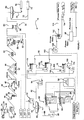
- FIG. 1 there is shown a method 10 for the extraction and recovery of vanadium from its ores in accordance with the present invention.
- the method 10 comprises a leach step 12, solvent extraction step 14, vanadium stripping step 16 and iron stripping step 18.
- a crushing circuit 20 Prior to the leach step 12 there are provided both a crushing circuit 20 and a beneficiation circuit 22.
- the purpose of the crushing and beneficiation circuits 20 and 22 are to produce a crushed ore with a size that is amenable for hydrometallurgical processing.
- a run-of-mine (ROM) material 24 is delivered by front end loader 26 and dumped onto a 600 mm aperture static grizzly 28 mounted over a ROM bin 30. Oversize material is scalped on the grizzly 28. Scalped ROM ore is discharged from the bin 30 using a variable speed apron feeder 32 and directed to a jaw crusher 34.
- ROM run-of-mine
- the jaw crusher 34 reduces the top-size of the incoming material to about -250 mm.
- the crushed ore is discharged onto a crusher discharge conveyor 36, which extends underneath the apron feeder 32 to collect any spillages therefrom.
- crushed ore is then conveyed into a cone crusher 38 equipped with a feed bin 40 and vibrating feeder 42.
- the crushed ore from the cone crusher 38 is then transported to a stockpile 44, with a capacity of 24 hours, by way of a feed bin 46, vibrating feeder 48 and a screen 50.
- Crushed ore is drawn from the stockpile 44 by a stockpile discharge conveyor 52 and transported to two high pressure grinding rolls (HPGR) 54 and 56, arranged in series.
- HPGR high pressure grinding rolls
- HPGR HPGR
- the final stage of HPGR 56 is operated in closed circuit with a screen 58 cutting at 1 mm.
- the oversize from the screen 58 is returned to a feed bin 60 for further grinding to improve the liberation of the valuable minerals.
- the screen undersize material is transferred into a feed hopper 62 for a subsequent counter current rougher magnetic separator 64, being a part of the beneficiation circuit 22.
- Process water is added and the slurry is pumped to the rougher magnetic separator 64.
- the crushed ore is beneficiated using counter current magnetic separator before the concentrate is pumped to the leaching step 12.
- an additional grinding step may be utilised to produce a product that is about minus 150 ⁇ m, depending upon the level of titanium preferred in the residue of the leaching step 12. The smaller the ore is when passed to the leaching step 12 the higher the relative level of titanium in the leach residue.
- Tails 66 from the rougher magnetic separator 64 are pumped to a tailings thickener 68 where process water is recovered for reuse.
- the slurry is thickened to 60% solids by weight.
- Thickener overflow 70 gravitates to a process water tank 72 while underflow 74 is pumped to tailings 76.
- the magnetic concentrate is pumped to the leaching circuit for the extraction of vanadium and iron.
- the purpose of the leach step 12 is to extract the valuable metal species of vanadium and iron into solution.
- the leaching step 12 is conducted in rubber lined, epoxy coated, agitated steel tanks arranged in series. The slurry is cascaded through the acid leach train. Hydrochloric acid is added to a first tank to adjust the pulp density to 20% solid by weight.
- the acid leaching is conducted at a temperature of between about 25°C to 85°C, for example 80°C, under atmospheric pressure or above, and for a residence time of between about 30 to 360 minutes.
- the initial HCI concentration is maintained at between about 20% to 32% w/w, for example at 20% w/w.
- the leach temperature is able to be controlled at about 80 to 85°C through insulation and capping of the leach tanks.
- the leaching reactions are represented by the equation below: Fe 3 O 4 + 8HCl ⁇ 2FeCl 3 + FeCl 2 + 4H 2 O V 2 O 5 + 6HCl ⁇ 2VOCl 3 + 3H 2 O
- a slurry 78 from the leach step 12 is pumped to a leach thickener 80 in which the slurry is thickened to 50% solids by weight.
- An overflow solution 82 is gravitated to an agitated metal extraction feed tank 84.
- An underflow solution 86 is pumped to a feed tank 88 and in turn to two horizontal belt filters 90 arranged in parallel.
- the leach residue is washed in a counter current manner using fresh water.
- Mother liquor and wash filtrate from the filters 90 are pumped to a wash water tank 92 before it is transferred to the metal extraction feed tank 84 and the solvent extraction step 14.
- the leach residue cake from the filters 90 is stockpiled 94 and is used as an ilmenite concentrate.
- This purpose of the solvent extraction step 14, the vanadium stripping step 16 and iron stripping step 18 are to extract the valuable metal units from the leach solution in a sequential manner using the appropriate extractant and stripping agents.
- the pregnant solution is fed to the solvent extraction step 14 in which it mixed with an organic extractant, for example a phosphine oxide.
- an organic extractant for example a phosphine oxide.
- the extractant is provided in the form of a mix of 40% v/v Cyanex 923TM in 60% v/v kerosene.
- the extraction is conducted at an organic to aqueous (O:A) ratio of between about 1:1 to 20:1, for example 5:1.
- O:A organic to aqueous
- vanadium and iron are co-extracted onto the organic phase. It should be noted that about 61% of the iron is loaded onto the organic.
- a barren effluent 96 which carries the remaining iron solution, is transferred to an acid regeneration plant 98.
- a metals loaded organic 100 is then transferred into a stripping plant, in which the vanadium and iron are selectively separated.
- the stripping is conducted in a sequential manner involving selective stripping of vanadium followed by iron.
- Stripping is conducted in a counter-current fashion within each step 16 and 18.
- the vanadium is stripped from the metal loaded organic using HCl of between about 2.5M to 5M, for example 4M HCl. This produces a vanadium enriched solution 102 having a purity of about 81%.
- the vanadium enriched solution is then pumped to a recovery step, for example a vanadium precipitation circuit 104 for the production of vanadium pentoxide (V 2 O 5 ).
- Metal loaded organic 106 from the vanadium stripping step 16 is then contacted with HCI of between about 0.01M to 0.05M, for example 0.01M HCI, in the iron stripping step 18.
- HCI HCI of between about 0.01M to 0.05M, for example 0.01M HCI
- An iron enriched solution 108 at a purity of about 99% is recovered.
- the iron enriched solution 108 is pumped to the acid regeneration plant 98, while regenerated organic extractant 110 is recycled 110 back to the metal extraction step 14 for reuse.
- Ammonium chloride is used as the precipitating agent in the vanadium precipitation circuit 104.
- Vanadium is precipitated as ammonium metavanadate: NH 4 Cl + VOCl 3 + 4NaOH ⁇ NH 4 VO 3 + 4NaCl + 2H 2 O
- the ammonium metavanadate is calcined using a rotary kiln 114 operating at about 500-550°C, to dry the product, removing the water of crystallisation and to convert the filter cake to vanadium pentoxide (V 2 O 5 ).
- the dry vanadium pentoxide is then packaged for transportation.
- Filtrate 116 from the filter step 112 is pumped into the process water tank for reuse.
- the barren effluent 96 from the solvent extraction step 14 together with the iron enriched solution 108 from the iron stripping step 18 is pumped into the acid regeneration plant 98.
- the acid regeneration process utilises pyrohydrolysis and is understood to proceed according to the following reactions: 4FeCl 2 + 4H 2 O + O 2 ⁇ 8HCl + 2Fe 2 O 3 2FeCl 3 + 3H 2 O ⁇ 6HCl + Fe 2 O 3
- Regenerated acid at a strength of 20% w/w is collected and pumped back to the hydrochloric acid feed tank, while the iron oxide can be sold as a valuable product.
- a metallurgical test work programme was based on an ore from the Mount Peake project in the Northern Territory of Australia, the project having an Inferred Resource of 140 Mt @ 0.30 % V 2 O 5 , 5.9% TiO 2 and 29% iron.
- a vanadium rich concentrate (P 80 150 ⁇ m, 75 ⁇ m and 45 ⁇ m) from a cleaner magnetic separation process was subjected to acid leaching to examine the impact of grind size, solids content and acid concentration.
- the composition of the vanadium rich concentrate is as depicted in Table 1: Table 1 Grind Size (mm) Concentrate Grade (%) Fe V 2 O 5 TiO 2 SiO 2 Al 2 O 3 P S 150 51.7 1.10 15.8 5.30 3.0 0.013 0.03 75 55.3 1.19 16.5 2.07 2.5 0.004 0.03 45 55.4 1.18 16.3 2.12 2.4 0.005 0.03 Head Assay 34.5 0.54 9.2 22.9 5.0 0.08 0.03
- the leaching in these tests was conducted at ambient or room temperature (about 25°C) using hydrochloric acid as the lixiviant.
- the lixivant was set at 20 wt.% HCl and 10 wt.% HCl.
- the vanadium rich concentrate was amenable to acid leaching yielding a vanadium extraction greater than 90%.
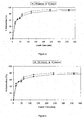
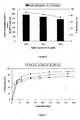
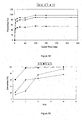
- Co-extraction of iron and titanium was also recorded at 77-81% and 16-19%, respectively. Reducing the grind size from P 80 150 ⁇ m to 45 ⁇ m only affected the leach kinetics mildly, as can be seen with reference to Figures 2, 3 and 4 .
- the leaching of the P 80 150 ⁇ m concentrate consumed comparatively less acid in comparison to leaching of the P 80 45 ⁇ m concentrate, see Figure 5 .
- a P 80 of 150 ⁇ m it involves a reduction, not only in the reagent costs but also the grinding cost. It is understood that the grinding cost increases exponentially with the decrease in the grind sizes. Subsequent tests were conducted using P 80 150 ⁇ m concentrate.
- the poor extraction efficiencies are understood to be attributable to the relatively low acid strength in the solution, resulting in the leach proceeding very slowly. It is envisaged that heating the solution to 80°C may promote the dissolution of iron and vanadium, increasing thereby the leach kinetics. Heating of the solution to 80°C is understood to have improved vanadium extraction. A vanadium extraction at 97.5% has been successfully achieved using 20 wt.% HCl at 80°C.
- a high dissolution of iron is required to achieve a high extraction of vanadium. This is understood to be due to the locking of vanadium with titanomagnetite. The acid is consumed to attack the iron, unlocking the vanadium to promote its dissolution.
- the leach kinetics increased with increasing leach time and reached equilibrium after 120 min. At 120 min about 97% of the vanadium was extracted. There was also 89% of iron and 55% of titanium being co-extracted. No apparent change in the extraction efficiency for iron, titanium and vanadium was observed after 120 min. However, the acid consumption increased from 596 kg HCl/tonne feed ore to 772 kg HCl/tonne feed ore. The loss in acid is attributed to evaporation and/or being consumed to leach the remaining gangue minerals.
- the amount of acid consumed by the -1 mm concentrate was comparable to that of P 80 45 ⁇ m and 150 ⁇ m concentrates. It is expected that the -1 mm concentrate may consume higher amount of acid since it contained a higher level of gangue minerals than that in the P 80 45 ⁇ m and 150 ⁇ m concentrates.
- the acid consumption is understood to be governed by the leaching of iron.
- Cyanex 923TM gave the best extraction of vanadium.
- the Cyanex. 923TM extracted a cumulative 75% vanadium.
- the Cyanex 272TM and TBP/DEHPA only extracted a cumulative 39% and 48% vanadium, respectively.
- TBP/DEHPA also produced a cumulative extraction of 99% iron.
- Cyanex 272TM only extracted a cumulative 94% iron. Since the vanadium is co-extracted with iron, it indicated that a selective stripping would be needed to separate the vanadium from iron.
- Cyanex 923TM was chosen because it was demonstrated to be capable of extracting vanadium without the need for the pre-removal of iron.
- the solvent extraction test programme was conducted using 20% v/v Cyanex 923TM in 80% v/v kerosene at A:O ratios of 1:1, 1:5, 1:10, 1:20. As shown in Figure 15 , the best performance was observed at an A:O ratio of 1:20. This is expected because an increase in the A:O ratio would increase the number of sites available for iron, titanium and vanadium to be loaded onto the organic.
- Titanium was loaded more readily onto Cyanex 923TM in comparison to iron and vanadium. Complete extraction of titanium was achieved at an A:O ratio of 1:20. It is important to note that vanadium can be effectively loaded onto the organic even in the presence of significant amount of iron in solution. At an A:O ratio of 1:20, about 90% of the vanadium was also loaded onto the organic with 61% of the iron being co-extracted.
- This option not only uses a single extractant but also eliminates the need for extra oxidant addition for the re-oxidation of Fe(II) to Fe(III).
- a stripping test was also conducted on the Cyanex 923TM which has been loaded with 55% iron, 97% titanium and 70% vanadium.
- the stripping of vanadium was performed using a HCl solution at 4M HCl, 2.5M HCl and 2M HCl. It aimed to evaluate if the purity of the vanadium solution can be improved with increasing the acidity of the stripping solution.
- the loaded organic was mixed with 0.01M HCl for the recovery of the iron.
- the purity of the vanadium solution can be tuned by manipulating the acidity of the stripping solution.
- Cyanex 923TM was used the extractant. As described immediately above, this extractant has been previously found to extract iron, vanadium and titanium effectively. The extraction was carried out using 40 vol.% Cyanex 923TM in 60 vol.% kerosene at an O:A ratio of 1:1, 5:1, 8.5:1, 9:1, 10:1, and 12.5:1.
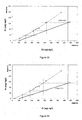
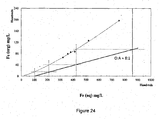
- McCabe Thiele diagrams were constructed to determine the number of stages required for the extraction of vanadium, iron and titanium. These are illustrated in Figures 19 to 24 . At an O:A of 5:1, it was determined that titanium can be extracted efficiently in a single stage of contact. Complete extraction of vanadium was achieved after two stages of contact. For iron, it required 6 stages of contact to achieve an extraction of 88%.
Landscapes
- Chemical & Material Sciences (AREA)
- Engineering & Computer Science (AREA)
- Mechanical Engineering (AREA)
- Manufacturing & Machinery (AREA)
- Materials Engineering (AREA)
- Metallurgy (AREA)
- Organic Chemistry (AREA)
- Geochemistry & Mineralogy (AREA)
- Geology (AREA)
- General Life Sciences & Earth Sciences (AREA)
- Environmental & Geological Engineering (AREA)
- Life Sciences & Earth Sciences (AREA)
- Inorganic Chemistry (AREA)
- Manufacture And Refinement Of Metals (AREA)
- Extraction Or Liquid Replacement (AREA)
Claims (14)
- Procédé d'extraction et de récupération de vanadium à partir de ses minerais, le procédé étant caractérisé par les étapes de :(i) lixiviation acide d'un minerai contenant du vanadium, du titane et du fer pour extraire du vanadium et du fer en solution ;(ii) passage du produit de l'étape de lixiviation (i) par une étape de séparation de solide/liquide ;(iii) passage du produit liquide de l'étape de séparation (ii) par une étape d'extraction par solvant dans laquelle du vanadium et du fer sont extraits dans un agent d'extraction organique à partir de ce produit liquide ;(iv) passage de l'agent d'extraction organique chargé produit dans l'étape (iii) par une étape de retrait dans laquelle un acide est utilisé pour retirer sélectivement et séquentiellement le vanadium et le fer de l'agent d'extraction organique ; et(v) passage de la solution de retrait contenant du vanadium de l'étape (iv) par une étape de récupération,dans lequel un gâteau de résidu de lixiviation produit dans l'étape (ii) est utilisé sous forme de concentré d'ilménite.
- Procédé selon la revendication 1, dans lequel la lixiviation acide de l'étape (i) est accomplie :a. en utilisant de l'acide chlorhydrique ; oub. en utilisant de l'acide chlorhydrique à une concentration dans la plage d'environ 20 % à 32 % p/p.
- Procédé selon l'une quelconque des revendications précédentes, dans lequel la lixiviation acide est accomplie dans la plage d'environ 25 °C à 80 °C sous pression atmosphérique.
- Procédé selon l'une quelconque des revendications précédentes, dans lequel le temps de séjour de la lixiviation acide est compris entre environ 30 et 360 minutes.
- Procédé selon l'une quelconque des revendications précédentes, dans lequel la teneur en solides pendant la lixiviation acide est d'environ 20 % p/p.
- Procédé selon l'une quelconque des revendications précédentes, dans lequel l'agent d'extraction organique de l'étape (iii) contient un oxyde de phosphine.
- Procédé selon la revendication 6, dans lequel l'oxyde de phosphine est Cyanex 923™.
- Procédé selon la revendication 6 ou 7, dans lequel l'agent d'extraction comprend environ 40 % v/v de Cyanex 923™ et 60 % v/v de solvant organique.
- Procédé selon l'une quelconque des revendications précédentes, dans lequel le rapport aqueux sur organique pendant l'étape d'extraction par solvant (iii) est :a. entre environ 1:1 à 1:20 ; oub. d'environ 1:5.
- Procédé selon l'une quelconque des revendications précédentes, dans lequel l'étape de retrait (iv) est accomplie à contrecourant moyennant quoi le vanadium est retiré de l'agent d'extraction organique chargé avant le retrait du fer de cette solution.
- Procédé selon l'une quelconque des revendications précédentes, dans lequel l'acide utilisé dans le retrait de l'étape (iv) est l'acide chlorhydrique.
- Procédé selon la revendication 11, dans lequel l'acide chlorhydrique est fourni à une concentration entre environ 2 et 4 M lors du retrait du vanadium.
- Procédé selon la revendication 11 ou 12, dans lequel l'acide chlorhydrique est fourni à une concentration d'environ 0,01 M lors du retrait du fer.
- Procédé selon l'une quelconque des revendications précédentes, dans lequela. la pureté de la solution de vanadium produite dans l'étape de récupération (v) est entre environ 76 % et 95 % ; et/oub. la pureté de la solution de fer produite dans l'étape de récupération (v) est d'environ 99 %.
Priority Applications (1)
| Application Number | Priority Date | Filing Date | Title |
|---|---|---|---|
| EP19184672.4A EP3587600B1 (fr) | 2010-05-19 | 2011-05-05 | Procédé d'extraction et de récupération de vanadium |
Applications Claiming Priority (2)
| Application Number | Priority Date | Filing Date | Title |
|---|---|---|---|
| AU2010902191A AU2010902191A0 (en) | 2010-05-19 | Method for the Extraction and Recovery of Vanadium | |
| PCT/AU2011/000519 WO2011143689A1 (fr) | 2010-05-19 | 2011-05-05 | Procédé d'extraction et de récupération de vanadium |
Related Child Applications (2)
| Application Number | Title | Priority Date | Filing Date |
|---|---|---|---|
| EP19184672.4A Division-Into EP3587600B1 (fr) | 2010-05-19 | 2011-05-05 | Procédé d'extraction et de récupération de vanadium |
| EP19184672.4A Division EP3587600B1 (fr) | 2010-05-19 | 2011-05-05 | Procédé d'extraction et de récupération de vanadium |
Publications (3)
| Publication Number | Publication Date |
|---|---|
| EP2572006A1 EP2572006A1 (fr) | 2013-03-27 |
| EP2572006A4 EP2572006A4 (fr) | 2014-05-21 |
| EP2572006B1 true EP2572006B1 (fr) | 2019-08-14 |
Family
ID=44991071
Family Applications (2)
| Application Number | Title | Priority Date | Filing Date |
|---|---|---|---|
| EP19184672.4A Active EP3587600B1 (fr) | 2010-05-19 | 2011-05-05 | Procédé d'extraction et de récupération de vanadium |
| EP11782755.0A Active EP2572006B1 (fr) | 2010-05-19 | 2011-05-05 | Procédé d'extraction et de récupération de vanadium |
Family Applications Before (1)
| Application Number | Title | Priority Date | Filing Date |
|---|---|---|---|
| EP19184672.4A Active EP3587600B1 (fr) | 2010-05-19 | 2011-05-05 | Procédé d'extraction et de récupération de vanadium |
Country Status (10)
| Country | Link |
|---|---|
| US (1) | US9702025B2 (fr) |
| EP (2) | EP3587600B1 (fr) |
| CN (2) | CN103025899A (fr) |
| AU (2) | AU2011256118B2 (fr) |
| CA (2) | CA2797296C (fr) |
| DK (1) | DK2572006T3 (fr) |
| FI (1) | FI3587600T3 (fr) |
| RU (1) | RU2561554C2 (fr) |
| SG (1) | SG185558A1 (fr) |
| WO (1) | WO2011143689A1 (fr) |
Families Citing this family (24)
| Publication number | Priority date | Publication date | Assignee | Title |
|---|---|---|---|---|
| AU2013334500C1 (en) | 2012-10-26 | 2019-03-07 | Vale S.A. | Iron ore concentration process with grinding circuit, dry desliming and dry or mixed (dry and wet) concentration |
| CN103276207B (zh) * | 2013-05-17 | 2015-02-18 | 中国科学院过程工程研究所 | 一种湿法处理钒钛磁铁精矿制备钛液的方法 |
| CN103276211B (zh) * | 2013-05-17 | 2015-02-18 | 中国科学院过程工程研究所 | 一种从钒钛磁铁精矿中提取铁和钒的方法 |
| NZ712526A (en) * | 2013-05-17 | 2017-03-31 | Inst Process Eng Cas | Method for processing vanadium-titanium magnetite finished ores by using wet process |
| CN103276227B (zh) * | 2013-05-17 | 2014-12-24 | 中国科学院过程工程研究所 | 一种从钒钛磁铁精矿中提取钒的方法 |
| WO2015094008A1 (fr) | 2013-12-19 | 2015-06-25 | Tenir Project Management Limited | Procédé de traitement de matériaux de minerai de titanomagnétite |
| CN103789560B (zh) * | 2014-01-23 | 2015-02-25 | 中南大学 | 一种从石煤酸浸液中提钒的方法 |
| CN104018011B (zh) * | 2014-06-23 | 2015-05-27 | 攀钢集团攀枝花钢铁研究院有限公司 | 五氧化二钒的生产方法 |
| CN104451202B (zh) * | 2014-11-21 | 2017-04-12 | 长沙矿冶研究院有限责任公司 | 一种石煤钒矿的二段熟化提钒方法 |
| CN104451201B (zh) * | 2014-11-21 | 2017-04-12 | 长沙矿冶研究院有限责任公司 | 一种石煤钒矿的两级熟化提钒方法 |
| CN104532017A (zh) * | 2014-12-22 | 2015-04-22 | 武汉科技大学 | 一种含钒石煤浸出萃取钒的方法 |
| AU2018225820B2 (en) | 2017-02-24 | 2023-08-10 | VanadiumCorp Resource Inc. | Metallurgical and chemical processes for recovering vanadium and iron values from vanadiferous titanomagnetite and vanadiferous feedstocks |
| CA3055422C (fr) * | 2017-04-05 | 2024-06-25 | Tng Limited | Procede de preparation d'une matiere premiere de lixiviation |
| CH713944B1 (it) | 2017-07-11 | 2019-06-28 | Tenir Project Man Limited | Metodo per trattare materiali minerali di titanomagnetite. |
| EP3877560A4 (fr) * | 2018-11-07 | 2022-10-12 | TNG Limited | Préparation de dioxyde de titane |
| WO2020237312A1 (fr) * | 2019-05-28 | 2020-12-03 | Avanti Materials Ltd | Récupération de produits à base de titane à partir de minerais de titanomagnétite |
| DE102019007087B3 (de) | 2019-10-11 | 2020-06-10 | Bernd Kunze | Verfahren, um Vanadium aus Sekundärrohstoffen zu entfernen |
| DE102020101221A1 (de) | 2020-01-20 | 2021-07-22 | Technische Universität Bergakademie Freiberg | Verfahren zur Rückgewinnung von Schwermetalloxiden aus schwermetallhaltigen Quellen |
| WO2022006664A1 (fr) * | 2020-07-10 | 2022-01-13 | Fancamp Exploration Ltd. | Traitement de minerais et de minéraux titanifères |
| CN112080651B (zh) * | 2020-09-23 | 2022-07-19 | 攀钢集团研究院有限公司 | 高钙低钠铵复合焙烧提钒的方法 |
| CN113604685B (zh) * | 2021-08-04 | 2022-11-22 | 中国恩菲工程技术有限公司 | 从含钒溶液制备钒氧化物的方法 |
| WO2023111697A1 (fr) * | 2021-12-17 | 2023-06-22 | Eestech Inc | Procédé et système d'enrichissement |
| US11548106B1 (en) * | 2022-07-15 | 2023-01-10 | Pgm Recovery Systems, Inc. | Automated system that mechanically extracts spark plug tips containing valuable metals |
| CN115947370B (zh) * | 2022-12-13 | 2024-06-14 | 攀钢集团攀枝花钢铁研究院有限公司 | 一种利用含钒精制尾渣制备精三氯氧钒的方法 |
Family Cites Families (17)
| Publication number | Priority date | Publication date | Assignee | Title |
|---|---|---|---|---|
| US2197241A (en) * | 1938-06-20 | 1940-04-16 | Frank A Garbutt | Method of treating vanadium ores |
| US3151933A (en) * | 1956-09-19 | 1964-10-06 | Kerr Mc Gee Oil Ind Inc | Solvent extraction process for the recovery of vanadium from solutions |
| US3193376A (en) * | 1961-12-04 | 1965-07-06 | Wah Chang Corp | Beneficiation of ilmenite |
| US4039614A (en) * | 1972-07-17 | 1977-08-02 | Slotvinsky Sidak Nikolai Petro | Method of preparing vanadium pentoxide from metallurgical slags containing vanadium |
| US3853982A (en) | 1973-11-07 | 1974-12-10 | Bethlehem Steel Corp | Method for recovering vanadium-values from vanadium-bearing iron ores and iron ore concentrates |
| US4150092A (en) * | 1977-03-28 | 1979-04-17 | Engelhard Minerals & Chemicals Corporation | Process for recovering vanadium values from acidic chloride solutions |
| US4172878A (en) * | 1978-07-21 | 1979-10-30 | Uop Inc. | Recovery of titanium metal values |
| GB2045733B (en) * | 1979-04-04 | 1983-04-20 | Engelhard Min & Chem | Process for recovering vanadium values from acidic chloride solutions |
| US4321236A (en) * | 1981-02-05 | 1982-03-23 | Kerr-Mcgee Chemical Corporation | Process for beneficiating titaniferous materials |
| DE3402357A1 (de) * | 1984-01-25 | 1985-08-01 | GfE Gesellschaft für Elektrometallurgie mbH, 4000 Düsseldorf | Verfahren zur herstellung von vanadiumverbindungen aus vanadiumhaltigen rueckstaenden |
| US5188736A (en) * | 1991-08-27 | 1993-02-23 | Institute Of Nuclear Energy Research | Process for the separation and recovery of extractant from spent solvent |
| GB2294255A (en) * | 1994-10-17 | 1996-04-24 | Magmint Ltd | Vanadium recovery process |
| AUPN564495A0 (en) * | 1995-09-27 | 1995-10-19 | Commonwealth Scientific And Industrial Research Organisation | Recovery of vanadium |
| AR007955A1 (es) * | 1996-07-24 | 1999-11-24 | Holderbank Financ Glarus | Procedimiento para separar titanio y/o vanadio de hierro bruto |
| CN101289705B (zh) * | 2007-04-20 | 2010-07-14 | 北京化工大学 | 一种从钒铁矿炼铁废渣中提取钒的方法 |
| RU2358029C1 (ru) * | 2008-04-07 | 2009-06-10 | Московская государственная академия тонкой химической технологии им. М.В. Ломоносова | Способ извлечения ванадия |
| RU2370551C1 (ru) * | 2008-06-17 | 2009-10-20 | Открытое акционерное общество "Чусовской металлургический завод" | Способ переработки отвального шлама |
-
2011
- 2011-05-05 SG SG2012083622A patent/SG185558A1/en unknown
- 2011-05-05 CA CA2797296A patent/CA2797296C/fr active Active
- 2011-05-05 DK DK11782755T patent/DK2572006T3/da active
- 2011-05-05 CN CN2011800245535A patent/CN103025899A/zh active Pending
- 2011-05-05 WO PCT/AU2011/000519 patent/WO2011143689A1/fr not_active Ceased
- 2011-05-05 US US13/698,452 patent/US9702025B2/en not_active Expired - Fee Related
- 2011-05-05 CA CA3025458A patent/CA3025458C/fr active Active
- 2011-05-05 RU RU2012145197/02A patent/RU2561554C2/ru active
- 2011-05-05 CN CN201610353351.XA patent/CN106048220A/zh active Pending
- 2011-05-05 EP EP19184672.4A patent/EP3587600B1/fr active Active
- 2011-05-05 FI FIEP19184672.4T patent/FI3587600T3/fi active
- 2011-05-05 AU AU2011256118A patent/AU2011256118B2/en not_active Ceased
- 2011-05-05 EP EP11782755.0A patent/EP2572006B1/fr active Active
-
2016
- 2016-07-07 AU AU2016204728A patent/AU2016204728B2/en not_active Ceased
Non-Patent Citations (1)
| Title |
|---|
| None * |
Also Published As
| Publication number | Publication date |
|---|---|
| AU2016204728B2 (en) | 2017-11-23 |
| CN103025899A (zh) | 2013-04-03 |
| RU2561554C2 (ru) | 2015-08-27 |
| FI3587600T3 (fi) | 2023-12-13 |
| CA3025458A1 (fr) | 2011-11-24 |
| EP2572006A1 (fr) | 2013-03-27 |
| WO2011143689A1 (fr) | 2011-11-24 |
| CA3025458C (fr) | 2020-10-27 |
| CN106048220A (zh) | 2016-10-26 |
| EP3587600A1 (fr) | 2020-01-01 |
| SG185558A1 (en) | 2012-12-28 |
| DK2572006T3 (da) | 2019-11-04 |
| RU2012145197A (ru) | 2014-06-27 |
| US9702025B2 (en) | 2017-07-11 |
| US20130125708A1 (en) | 2013-05-23 |
| CA2797296A1 (fr) | 2011-11-24 |
| CA2797296C (fr) | 2019-01-15 |
| EP2572006A4 (fr) | 2014-05-21 |
| AU2011256118A1 (en) | 2012-11-15 |
| AU2016204728A1 (en) | 2016-07-28 |
| AU2011256118B2 (en) | 2016-04-07 |
| EP3587600B1 (fr) | 2023-10-18 |
Similar Documents
| Publication | Publication Date | Title |
|---|---|---|
| EP3587600B1 (fr) | Procédé d'extraction et de récupération de vanadium | |
| US20120204680A1 (en) | System and Method for Recovery of Nickel Values From Nickel-Containing Ores | |
| CN106868307B (zh) | 一种硫酸烧渣除砷富集金银的综合利用工艺 | |
| KR20140010015A (ko) | 광석 또는 선광물로부터 적어도 하나의 원소 니오븀 또는 탄탈륨 및 적어도 하나의 다른 원소 우라늄 또는 희토류의 용해 및 회수 | |
| US11142809B2 (en) | Systems and processes for recovering scandium values from laterite ores | |
| WO2021119728A1 (fr) | Récupération de vanadium à partir de matériaux de scories | |
| US6409979B1 (en) | Selective precipitation of nickel and cobalt | |
| US20200048737A1 (en) | Continuous solvent extraction process for generation of high grade rare earth oxides from leachates generated from coal sources | |
| JP2018150588A (ja) | レアメタル回収方法 | |
| WO2013095827A1 (fr) | Système et procédé comprenant une extraction par solution à multiples circuits pour la récupération de métaux précieux à partir de matériaux à teneur en métaux | |
| CN108239701A (zh) | 一种综合回收高泥碳酸盐型氧化铅锌矿中铅锌的方法 | |
| CN1657423A (zh) | 一种从低品位碳酸锰及氧化锰矿回收硫酸锰的方法 | |
| AU2009279362B2 (en) | Treating iron ore | |
| US4268307A (en) | Method of extraction of metals from low grade ores | |
| AU2010200745B2 (en) | A method for arsenic removal and phosphorous removal out of iron-containing material | |
| CN107971126B (zh) | 一种从高砷铋硫精矿中铋砷分离的方法 | |
| CN104975192A (zh) | 从含钪物料中提取钪的方法 | |
| CN101812603A (zh) | 一种提高富集铟渣中铟品位的方法 | |
| Lakshmanan et al. | Chemical Processing: Hydrometallurgy | |
| AU2004243344B2 (en) | A process for treating dust | |
| Voncken | Mineral processing and extractive metallurgy of the rare earths | |
| WO2004106560A1 (fr) | Procede de traitement de la poussiere | |
| KR20090067676A (ko) | 망간 단괴로부터의 유가금속 침출방법 | |
| 韓百歳 | Development of Copper Recovery Processes from Low-Grade-Copper Resources by Flotation and High-Pressure Oxidative Leaching |
Legal Events
| Date | Code | Title | Description |
|---|---|---|---|
| PUAI | Public reference made under article 153(3) epc to a published international application that has entered the european phase |
Free format text: ORIGINAL CODE: 0009012 |
|
| 17P | Request for examination filed |
Effective date: 20121023 |
|
| AK | Designated contracting states |
Kind code of ref document: A1 Designated state(s): AL AT BE BG CH CY CZ DE DK EE ES FI FR GB GR HR HU IE IS IT LI LT LU LV MC MK MT NL NO PL PT RO RS SE SI SK SM TR |
|
| DAX | Request for extension of the european patent (deleted) | ||
| A4 | Supplementary search report drawn up and despatched |
Effective date: 20140422 |
|
| RIC1 | Information provided on ipc code assigned before grant |
Ipc: C22B 3/10 20060101AFI20140414BHEP Ipc: C22B 34/22 20060101ALI20140414BHEP |
|
| RAP1 | Party data changed (applicant data changed or rights of an application transferred) |
Owner name: TNG LIMITED |
|
| 17Q | First examination report despatched |
Effective date: 20160909 |
|
| STAA | Information on the status of an ep patent application or granted ep patent |
Free format text: STATUS: EXAMINATION IS IN PROGRESS |
|
| GRAP | Despatch of communication of intention to grant a patent |
Free format text: ORIGINAL CODE: EPIDOSNIGR1 |
|
| STAA | Information on the status of an ep patent application or granted ep patent |
Free format text: STATUS: GRANT OF PATENT IS INTENDED |
|
| INTG | Intention to grant announced |
Effective date: 20190222 |
|
| GRAS | Grant fee paid |
Free format text: ORIGINAL CODE: EPIDOSNIGR3 |
|
| GRAA | (expected) grant |
Free format text: ORIGINAL CODE: 0009210 |
|
| STAA | Information on the status of an ep patent application or granted ep patent |
Free format text: STATUS: THE PATENT HAS BEEN GRANTED |
|
| AK | Designated contracting states |
Kind code of ref document: B1 Designated state(s): AL AT BE BG CH CY CZ DE DK EE ES FI FR GB GR HR HU IE IS IT LI LT LU LV MC MK MT NL NO PL PT RO RS SE SI SK SM TR |
|
| REG | Reference to a national code |
Ref country code: GB Ref legal event code: FG4D |
|
| REG | Reference to a national code |
Ref country code: CH Ref legal event code: EP Ref country code: AT Ref legal event code: REF Ref document number: 1167099 Country of ref document: AT Kind code of ref document: T Effective date: 20190815 |
|
| RAP2 | Party data changed (patent owner data changed or rights of a patent transferred) |
Owner name: TNG LIMITED |
|
| REG | Reference to a national code |
Ref country code: DE Ref legal event code: R096 Ref document number: 602011061289 Country of ref document: DE |
|
| REG | Reference to a national code |
Ref country code: IE Ref legal event code: FG4D |
|
| REG | Reference to a national code |
Ref country code: DK Ref legal event code: T3 Effective date: 20191029 |
|
| REG | Reference to a national code |
Ref country code: SE Ref legal event code: TRGR |
|
| REG | Reference to a national code |
Ref country code: NL Ref legal event code: MP Effective date: 20190814 |
|
| REG | Reference to a national code |
Ref country code: LT Ref legal event code: MG4D |
|
| REG | Reference to a national code |
Ref country code: NO Ref legal event code: T2 Effective date: 20190814 |
|
| PG25 | Lapsed in a contracting state [announced via postgrant information from national office to epo] |
Ref country code: LT Free format text: LAPSE BECAUSE OF FAILURE TO SUBMIT A TRANSLATION OF THE DESCRIPTION OR TO PAY THE FEE WITHIN THE PRESCRIBED TIME-LIMIT Effective date: 20190814 Ref country code: BG Free format text: LAPSE BECAUSE OF FAILURE TO SUBMIT A TRANSLATION OF THE DESCRIPTION OR TO PAY THE FEE WITHIN THE PRESCRIBED TIME-LIMIT Effective date: 20191114 Ref country code: NL Free format text: LAPSE BECAUSE OF FAILURE TO SUBMIT A TRANSLATION OF THE DESCRIPTION OR TO PAY THE FEE WITHIN THE PRESCRIBED TIME-LIMIT Effective date: 20190814 Ref country code: PT Free format text: LAPSE BECAUSE OF FAILURE TO SUBMIT A TRANSLATION OF THE DESCRIPTION OR TO PAY THE FEE WITHIN THE PRESCRIBED TIME-LIMIT Effective date: 20191216 Ref country code: HR Free format text: LAPSE BECAUSE OF FAILURE TO SUBMIT A TRANSLATION OF THE DESCRIPTION OR TO PAY THE FEE WITHIN THE PRESCRIBED TIME-LIMIT Effective date: 20190814 |
|
| REG | Reference to a national code |
Ref country code: AT Ref legal event code: MK05 Ref document number: 1167099 Country of ref document: AT Kind code of ref document: T Effective date: 20190814 |
|
| PG25 | Lapsed in a contracting state [announced via postgrant information from national office to epo] |
Ref country code: IS Free format text: LAPSE BECAUSE OF FAILURE TO SUBMIT A TRANSLATION OF THE DESCRIPTION OR TO PAY THE FEE WITHIN THE PRESCRIBED TIME-LIMIT Effective date: 20191214 Ref country code: RS Free format text: LAPSE BECAUSE OF FAILURE TO SUBMIT A TRANSLATION OF THE DESCRIPTION OR TO PAY THE FEE WITHIN THE PRESCRIBED TIME-LIMIT Effective date: 20190814 Ref country code: LV Free format text: LAPSE BECAUSE OF FAILURE TO SUBMIT A TRANSLATION OF THE DESCRIPTION OR TO PAY THE FEE WITHIN THE PRESCRIBED TIME-LIMIT Effective date: 20190814 Ref country code: ES Free format text: LAPSE BECAUSE OF FAILURE TO SUBMIT A TRANSLATION OF THE DESCRIPTION OR TO PAY THE FEE WITHIN THE PRESCRIBED TIME-LIMIT Effective date: 20190814 Ref country code: AL Free format text: LAPSE BECAUSE OF FAILURE TO SUBMIT A TRANSLATION OF THE DESCRIPTION OR TO PAY THE FEE WITHIN THE PRESCRIBED TIME-LIMIT Effective date: 20190814 Ref country code: GR Free format text: LAPSE BECAUSE OF FAILURE TO SUBMIT A TRANSLATION OF THE DESCRIPTION OR TO PAY THE FEE WITHIN THE PRESCRIBED TIME-LIMIT Effective date: 20191115 |
|
| PG25 | Lapsed in a contracting state [announced via postgrant information from national office to epo] |
Ref country code: TR Free format text: LAPSE BECAUSE OF FAILURE TO SUBMIT A TRANSLATION OF THE DESCRIPTION OR TO PAY THE FEE WITHIN THE PRESCRIBED TIME-LIMIT Effective date: 20190814 |
|
| PG25 | Lapsed in a contracting state [announced via postgrant information from national office to epo] |
Ref country code: AT Free format text: LAPSE BECAUSE OF FAILURE TO SUBMIT A TRANSLATION OF THE DESCRIPTION OR TO PAY THE FEE WITHIN THE PRESCRIBED TIME-LIMIT Effective date: 20190814 Ref country code: PL Free format text: LAPSE BECAUSE OF FAILURE TO SUBMIT A TRANSLATION OF THE DESCRIPTION OR TO PAY THE FEE WITHIN THE PRESCRIBED TIME-LIMIT Effective date: 20190814 Ref country code: EE Free format text: LAPSE BECAUSE OF FAILURE TO SUBMIT A TRANSLATION OF THE DESCRIPTION OR TO PAY THE FEE WITHIN THE PRESCRIBED TIME-LIMIT Effective date: 20190814 Ref country code: IT Free format text: LAPSE BECAUSE OF FAILURE TO SUBMIT A TRANSLATION OF THE DESCRIPTION OR TO PAY THE FEE WITHIN THE PRESCRIBED TIME-LIMIT Effective date: 20190814 Ref country code: RO Free format text: LAPSE BECAUSE OF FAILURE TO SUBMIT A TRANSLATION OF THE DESCRIPTION OR TO PAY THE FEE WITHIN THE PRESCRIBED TIME-LIMIT Effective date: 20190814 |
|
| PG25 | Lapsed in a contracting state [announced via postgrant information from national office to epo] |
Ref country code: SM Free format text: LAPSE BECAUSE OF FAILURE TO SUBMIT A TRANSLATION OF THE DESCRIPTION OR TO PAY THE FEE WITHIN THE PRESCRIBED TIME-LIMIT Effective date: 20190814 Ref country code: SK Free format text: LAPSE BECAUSE OF FAILURE TO SUBMIT A TRANSLATION OF THE DESCRIPTION OR TO PAY THE FEE WITHIN THE PRESCRIBED TIME-LIMIT Effective date: 20190814 Ref country code: IS Free format text: LAPSE BECAUSE OF FAILURE TO SUBMIT A TRANSLATION OF THE DESCRIPTION OR TO PAY THE FEE WITHIN THE PRESCRIBED TIME-LIMIT Effective date: 20200224 Ref country code: CZ Free format text: LAPSE BECAUSE OF FAILURE TO SUBMIT A TRANSLATION OF THE DESCRIPTION OR TO PAY THE FEE WITHIN THE PRESCRIBED TIME-LIMIT Effective date: 20190814 |
|
| REG | Reference to a national code |
Ref country code: DE Ref legal event code: R097 Ref document number: 602011061289 Country of ref document: DE |
|
| PLBE | No opposition filed within time limit |
Free format text: ORIGINAL CODE: 0009261 |
|
| STAA | Information on the status of an ep patent application or granted ep patent |
Free format text: STATUS: NO OPPOSITION FILED WITHIN TIME LIMIT |
|
| PG2D | Information on lapse in contracting state deleted |
Ref country code: IS |
|
| 26N | No opposition filed |
Effective date: 20200603 |
|
| PG25 | Lapsed in a contracting state [announced via postgrant information from national office to epo] |
Ref country code: SI Free format text: LAPSE BECAUSE OF FAILURE TO SUBMIT A TRANSLATION OF THE DESCRIPTION OR TO PAY THE FEE WITHIN THE PRESCRIBED TIME-LIMIT Effective date: 20190814 |
|
| PG25 | Lapsed in a contracting state [announced via postgrant information from national office to epo] |
Ref country code: CH Free format text: LAPSE BECAUSE OF NON-PAYMENT OF DUE FEES Effective date: 20200531 Ref country code: LI Free format text: LAPSE BECAUSE OF NON-PAYMENT OF DUE FEES Effective date: 20200531 Ref country code: MC Free format text: LAPSE BECAUSE OF FAILURE TO SUBMIT A TRANSLATION OF THE DESCRIPTION OR TO PAY THE FEE WITHIN THE PRESCRIBED TIME-LIMIT Effective date: 20190814 |
|
| REG | Reference to a national code |
Ref country code: BE Ref legal event code: MM Effective date: 20200531 |
|
| PG25 | Lapsed in a contracting state [announced via postgrant information from national office to epo] |
Ref country code: LU Free format text: LAPSE BECAUSE OF NON-PAYMENT OF DUE FEES Effective date: 20200505 |
|
| PG25 | Lapsed in a contracting state [announced via postgrant information from national office to epo] |
Ref country code: IE Free format text: LAPSE BECAUSE OF NON-PAYMENT OF DUE FEES Effective date: 20200505 Ref country code: FR Free format text: LAPSE BECAUSE OF NON-PAYMENT OF DUE FEES Effective date: 20200531 |
|
| PG25 | Lapsed in a contracting state [announced via postgrant information from national office to epo] |
Ref country code: BE Free format text: LAPSE BECAUSE OF NON-PAYMENT OF DUE FEES Effective date: 20200531 |
|
| PGFP | Annual fee paid to national office [announced via postgrant information from national office to epo] |
Ref country code: DE Payment date: 20210520 Year of fee payment: 11 |
|
| PGFP | Annual fee paid to national office [announced via postgrant information from national office to epo] |
Ref country code: DK Payment date: 20210521 Year of fee payment: 11 Ref country code: GB Payment date: 20210525 Year of fee payment: 11 |
|
| PG25 | Lapsed in a contracting state [announced via postgrant information from national office to epo] |
Ref country code: MT Free format text: LAPSE BECAUSE OF FAILURE TO SUBMIT A TRANSLATION OF THE DESCRIPTION OR TO PAY THE FEE WITHIN THE PRESCRIBED TIME-LIMIT Effective date: 20190814 Ref country code: CY Free format text: LAPSE BECAUSE OF FAILURE TO SUBMIT A TRANSLATION OF THE DESCRIPTION OR TO PAY THE FEE WITHIN THE PRESCRIBED TIME-LIMIT Effective date: 20190814 |
|
| PG25 | Lapsed in a contracting state [announced via postgrant information from national office to epo] |
Ref country code: MK Free format text: LAPSE BECAUSE OF FAILURE TO SUBMIT A TRANSLATION OF THE DESCRIPTION OR TO PAY THE FEE WITHIN THE PRESCRIBED TIME-LIMIT Effective date: 20190814 |
|
| REG | Reference to a national code |
Ref country code: DE Ref legal event code: R119 Ref document number: 602011061289 Country of ref document: DE |
|
| REG | Reference to a national code |
Ref country code: DK Ref legal event code: EBP Effective date: 20220531 |
|
| GBPC | Gb: european patent ceased through non-payment of renewal fee |
Effective date: 20220505 |
|
| REG | Reference to a national code |
Ref country code: NO Ref legal event code: CHAD Owner name: TIVAN LIMITED, AU |
|
| PG25 | Lapsed in a contracting state [announced via postgrant information from national office to epo] |
Ref country code: DK Free format text: LAPSE BECAUSE OF NON-PAYMENT OF DUE FEES Effective date: 20220531 |
|
| PG25 | Lapsed in a contracting state [announced via postgrant information from national office to epo] |
Ref country code: GB Free format text: LAPSE BECAUSE OF NON-PAYMENT OF DUE FEES Effective date: 20220505 Ref country code: DE Free format text: LAPSE BECAUSE OF NON-PAYMENT OF DUE FEES Effective date: 20221201 |
|
| P01 | Opt-out of the competence of the unified patent court (upc) registered |
Effective date: 20230526 |
|
| PGFP | Annual fee paid to national office [announced via postgrant information from national office to epo] |
Ref country code: NO Payment date: 20230523 Year of fee payment: 13 |
|
| PGFP | Annual fee paid to national office [announced via postgrant information from national office to epo] |
Ref country code: SE Payment date: 20230519 Year of fee payment: 13 Ref country code: FI Payment date: 20230523 Year of fee payment: 13 |
|
| REG | Reference to a national code |
Ref country code: SE Ref legal event code: EUG |
|
| PG25 | Lapsed in a contracting state [announced via postgrant information from national office to epo] |
Ref country code: NO Free format text: LAPSE BECAUSE OF NON-PAYMENT OF DUE FEES Effective date: 20240531 |
|
| PG25 | Lapsed in a contracting state [announced via postgrant information from national office to epo] |
Ref country code: FI Free format text: LAPSE BECAUSE OF NON-PAYMENT OF DUE FEES Effective date: 20240505 |
|
| PG25 | Lapsed in a contracting state [announced via postgrant information from national office to epo] |
Ref country code: NO Free format text: LAPSE BECAUSE OF NON-PAYMENT OF DUE FEES Effective date: 20240531 Ref country code: FI Free format text: LAPSE BECAUSE OF NON-PAYMENT OF DUE FEES Effective date: 20240505 |
|
| PG25 | Lapsed in a contracting state [announced via postgrant information from national office to epo] |
Ref country code: SE Free format text: LAPSE BECAUSE OF NON-PAYMENT OF DUE FEES Effective date: 20240506 |