EP2573743B1 - Adaptation dynamique des seuils de déclenchement permettant de gérer lorsque des messages de données sont transmis - Google Patents
Adaptation dynamique des seuils de déclenchement permettant de gérer lorsque des messages de données sont transmis Download PDFInfo
- Publication number
- EP2573743B1 EP2573743B1 EP12185111.7A EP12185111A EP2573743B1 EP 2573743 B1 EP2573743 B1 EP 2573743B1 EP 12185111 A EP12185111 A EP 12185111A EP 2573743 B1 EP2573743 B1 EP 2573743B1
- Authority
- EP
- European Patent Office
- Prior art keywords
- aircraft
- flight
- value
- trigger threshold
- message
- Prior art date
- Legal status (The legal status is an assumption and is not a legal conclusion. Google has not performed a legal analysis and makes no representation as to the accuracy of the status listed.)
- Active
Links
Images
Classifications
-
- G—PHYSICS
- G08—SIGNALLING
- G08G—TRAFFIC CONTROL SYSTEMS
- G08G5/00—Traffic control systems for aircraft
- G08G5/20—Arrangements for acquiring, generating, sharing or displaying traffic information
- G08G5/26—Transmission of traffic-related information between aircraft and ground stations
-
- G—PHYSICS
- G08—SIGNALLING
- G08G—TRAFFIC CONTROL SYSTEMS
- G08G5/00—Traffic control systems for aircraft
- G08G5/20—Arrangements for acquiring, generating, sharing or displaying traffic information
- G08G5/21—Arrangements for acquiring, generating, sharing or displaying traffic information located onboard the aircraft
-
- G—PHYSICS
- G08—SIGNALLING
- G08G—TRAFFIC CONTROL SYSTEMS
- G08G5/00—Traffic control systems for aircraft
- G08G5/50—Navigation or guidance aids
- G08G5/53—Navigation or guidance aids for cruising
-
- G—PHYSICS
- G08—SIGNALLING
- G08G—TRAFFIC CONTROL SYSTEMS
- G08G5/00—Traffic control systems for aircraft
- G08G5/50—Navigation or guidance aids
- G08G5/55—Navigation or guidance aids for a single aircraft
Definitions
- the disclosure hereinafter generally relates to methods for automated transmitting of data messages from an aircraft.
- the disclosure relates to methods for automatically transmitting data messages in response to a parameter attaining a value equal to or in excess of a trigger threshold.
- ACARS-equipped aircraft have an avionics computer called an ACARS Management Unit (MU), which is directly interfaced to a Control Display Unit (CDU) in the cockpit.
- CDU Control Display Unit
- FMS flight management system
- Each airline has its own unique ACARS application operating on its aircraft.
- the content and format of messages sent by an ACARS MU differs for each airline.
- An ACARS message typically comprises a header containing an aircraft identifier, a payload containing aircraft calculated and measured data and a cyclic redundancy check.
- the message is constructed in a user message format specified by the recipient of the message and in accordance with a dynamically settable user configuration stored in a subscriber database.
- This user configuration specifies which functions or processes are running in parallel, and also defines connections to receive and transmit the data.
- the user configuration also specifies the behavior of the application.
- the user message format generally pertains to the order and type of data and usually does not encompass the behavior of the application.
- ACARS is a system for transmission of data messages between aircraft and ground stations via radio (VHF or HF) or satellite.
- ACARS messages are transmitted to and from aircraft before, during and after flights.
- the aircraft sends in-flight reports on position, altitude, speed, outside temperature, wind, fuel, engine performance, etc over ACARS.
- the system automatically selects the communication means based on available links and avionics selection policies, which may take into consideration factors such as cost, performance and availability.
- VHF air-to-ground data links
- HF air-to-ground data links
- satellite air-to-ground data links
- An adaptive solution is needed that can reset or set the value of the trigger threshold variable to reduce, limit, schedule or increase aircraft communication based on the current aircraft environment and the current airline costs.
- Systems and methods are disclosed for remotely setting a value of a trigger threshold variable onboard an aircraft based on the dynamic conditions of a particular flight.
- a flight typically commences with a default value of the trigger threshold variable.
- the system disclosed herein first determines the current value (which may be different than the default value if there has been no power interruption) and then sets a new value (or resets the default value) based on current business considerations, phase of flight, user preferences or operation of that particular flight.
- the trigger threshold variable value can be set or reset many times as a flight progresses through multiple airspaces and communication networks, which will affect the cost scheme for that flight.
- the system is sufficiently dynamic to respond to manual and automated requests.
- the methodology disclosed hereinafter provides a service that enables an airline to reduce, limit, schedule or increase aircraft communications during a particular flight based on the current aircraft state, environment and the current airline costs, thereby reducing the costs associated with unwanted or unnecessary aircraft communications.
- the disclosed methodology also enables aircraft communications to be refined to an area of interest or event where greater communication is desired, e.g., during descent or climb.
- the method comprises the following steps: (a) obtaining data representing flight information and a current or predicted flight plan or flight trajectory of the aircraft; (b) obtaining electronic data representing business considerations; (c) computing a plurality of values of the trigger threshold variable as a function of at least the flight information and flight plan or flight trajectory data and the business considerations data; and (d) constructing a trigger threshold data message containing the plurality of computed values of the trigger threshold variable.
- An aircraft is flying with a basic definition of one or more reports to transmit when respective triggers are met is disclosed.
- the "report" can be anything specified by the user and can vary from trigger to trigger.
- the transmitted message may contain any specified parameter or sequence of parameters, such as position, flight progress, flight plan, times, fuels, etc.
- the triggers are not initialized or their magnitudes are set to such high values that the triggers become pointless.
- a ground station sends a message up to the aircraft, which message sets one or more trigger thresholds. Thereafter, when the thresholds are met or exceeded, the aircraft will transmit respective report messages.
- a trigger threshold can be selected and associated with any parametric variable that is calculated or measured onboard the aircraft.
- a set value of a wind magnitude difference variable is used as a trigger for transmitting a report in accordance with a report configuration file associated with this trigger.
- the flight management computer (FMC) onboard the aircraft computes the magnitude of the difference vector between the entered wind vector at that waypoint and the actual wind vector at that waypoint as measured by sensors onboard the aircraft. If the magnitude of the wind difference vector at a waypoint equals or exceeds a corresponding trigger threshold variable value previously transmitted in a data message, a report is generated and transmitted as defined per the associated report configuration file.
- a set value of an ETA (Estimated Time of Arrival) change variable is used as a trigger for transmitting a report in accordance with a report configuration file associated with this trigger.
- the FMC will transmit a report as defined per the associated report configuration file.
- a set value of a Waypoint ETA variable is used as a trigger for transmitting a report in accordance with a report configuration file associated with this trigger.
- a waypoint ETA minus FMC system time becomes equal to or less than a corresponding trigger threshold variable value, the FMC will transmit a report as defined per the associated report configuration file. It is possible to define multiple different reports, each triggered by a different value of the Waypoint ETA variable.
- a set value of a time to go to a point or altitude variable is used as a trigger for transmitting a report in accordance with a report configuration file associated with this trigger. For example, when a time to go (or simply referred to as a time) to a location variable is set to 60 minutes, then a report message is triggered when the time to the specified location becomes less than 60 minutes. Or, in accordance with another example, when a time to go to reach a predetermined altitude (e.g., 35,000 ft) variable is set to 5 minutes, then a report message is triggered when the time to reach the predetermined altitude becomes less than 5 minutes.
- a predetermined altitude e.g., 35,000 ft
- a system for providing updated ETA change variable values to an aircraft will now be described with reference to FIGS. 1 and 2 .
- the same system can be programmed to remotely set the values of one or more other trigger threshold variables, such as the wind magnitude difference variable and the Waypoint ETA variable briefly described above.
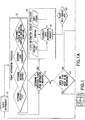
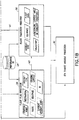
- FIG. 1 which consists of two parts respectively labeled FIG. 1A and FIG. 1B , shows components of a system in accordance with one exemplary embodiment.
- the system comprises a flight information processor 12 which receives and processes flight information 10.
- the flight information 10 is also sent to an ETA change variable processor 30, seen in FIG. 1B and to be described in detail later with reference to FIG. 2 .
- Flight information 10 can be transmitted in any one of a number of ways and may comprise a multiplicity of flight data items. In particular, it may comprise a flight plan, a flight trajectory, aircraft state data or any combination thereof.
- the flight information processor 12 processes the flight information, creating a flight record (hereinafter referred to as a "flight object") which is tagged to the specific aircraft.
- the flight object is a generic container comprising a multiplicity of fields populated with flight information, such as elements of flight plans, flight routes, flight trajectories, aircraft position, aircraft altitude, aircraft speed, etc.
- the flight information processor 12 determines the aircraft type, the aircraft equipage, the user configuration for the airline that operates the aircraft, and the current and/or forecast atmospheric conditions.
- the user configuration specifies which functions or processes are running in parallel, and also defines connections to receive and transmit the data from the processors or databases shown in FIG. 1 .
- the user configuration also specifies the behavior of the application.
- Logical step 14 From the received flight information data and perhaps even previously received data, a determination is made (logical step 14 in FIG. 1A ) whether additional flight plan information is required. Based on this decision, a flag is set for other processors to act on their functions. Logical step 14 may be performed by the flight information processor 12.
- a flight information request processor 16 carries out the basic function of constructing the request message (step 18 in FIG. 1A ) to send to the aircraft or end user and concludes by initiating the transmission of a flight information request message 20 addressed to the aircraft or end user.
- the format and encoding of the flight information request message 20 is dependent on the aircraft type, its equipage and the message format specified by the user.
- the user message format generally pertains to the order and type of data and usually does not encompass the behavior of the application. In some situations it is advantageous to break the actual transmission out into a separate transmission so the message may be validated and security protocol added.
- the message may be transmitted in one burst.
- the message is also being sent to an aircraft, at the same time that the message is being sent to the operations center, the message needs to be separated into multiple message parts for transmission.
- Logical step 22 may be performed by a flight plan processor 26 (seen in FIG. 1B ). If the flight plan information needs to be processed, the flight plan processor 26 begins to execute a program for computing a flight path based on the aircraft identifier, aircraft type, starting point, destination, route, equipage, cruising level, current aircraft state and data from performance database 24, which stores specific performance data for the particular aircraft type and, in rare instances, for the particular airframe.
- the specific data stored in performance database 24 varies for different aircraft types and may include specific performance parameters such as drag coefficients, thrust ratings, lift coefficients, fuel burn coefficients and so forth.
- a message M1 is sent to a flight trajectory predictor 28 (which is also a processor) informing the latter that the flight plan is available in the flight object for processing.
- the flight plan processor 26 will compute a flight path (e.g., a list of waypoints, cruise altitude, speed schedule), store that flight path in fields of the flight object (where it is available for use by the flight trajectory predictor 28) and send a message M2 to the flight trajectory predictor 28 informing the latter that the flight path is available for processing.
- the flight trajectory predictor 28 can then retrieve that flight path information from the flight object (and optionally, also retrieve performance data from database 24) for use in calculating an updated predicted flight trajectory based at least in part on the flight path, the original flight trajectory, the aircraft type and how it is equipped, and current and/or forecast atmospheric (i.e., environmental) conditions.
- the flight plan processor 26 will still compute the flight path, store it in the flight object (where it is available for use by an ETA change variable processor 30) and send a message to the ETA change variable processor 30 informing the latter that the flight path is available in the flight object for processing.
- the flight plan processor 26 uses various inputs such as the starting point, destination, aircraft type and aircraft identifier.
- the flight plan processor 26 also receives the route, equipage, cruising level(s) and current aircraft state. All of these are fields in the flight object.
- the flight trajectory predictor 28 receives or retrieves either a flight path or a flight trajectory. Its basic function is to compute a flight trajectory prediction based on the given flight information, store that updated predicted flight trajectory in the flight object, and then send a message to the ETA change variable processor 30 indicating that the updated predicted flight trajectory is available for processing.
- the flight object can receive a flight trajectory or flight plan from any source internal or external. The preferred method is for flight information to be processed through the flight information processor 12 but if the incoming data meets the predefined user configuration and user format, it can be directly fed into the flight object, where it is available for use by the flight trajectory predictor 28 and the ETA change variable processor 30.
- the flight object can be sent to the ETA change variable processor 30 or a flag can be set which indicates to the ETA change variable processor 30 that the flight object is available for retrieval.
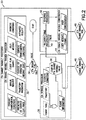
- FIG. 2 shows one exemplary embodiment of components of an ETA change variable processor in accordance with the embodiment depicted in FIG. 1 .
- the ETA change variable processor 30 comprises an ETA change variable trigger processor 32, an ETA variable processor 36, a validation processor 40, a schedule processor 42 and an ETA change variable message constructor 44.
- the ETA change variable processor 30 at a minimum includes the functionality of the ETA variable processor and the functionality of the ETA change variable message constructor, which functionalities could be combined in one processor.
- the ETA change variable processor 30 determines the current value of the ETA change variable stored onboard the aircraft and under certain conditions, computes a new value based on the flight information 10 and business considerations.
- the outputs 46 and 48 of the ETA change variable processor 30 are dependent upon its configuration.
- the ETA change variable processor 30 could output a proposed ETA change variable value 46 prior to message construction and validation. In this mode the proposed ETA change variable value could be for display and logging purposes.
- the ETA change variable processor 30 may also produce the actual ETA change variable message 48 for transmission if configured to perform the message construction tasking.
- the ETA change variable trigger processor 32 receives or retrieves flight information, a flight plan, a flight trajectory, a flight trajectory prediction, and predicted or current flight phase or aircraft state from the flight object.
- the ETA change variable trigger processor 32 also accesses databases containing data representing current and forecast environmental conditions and communications costs as a function of aircraft position, time of day, etc. It can also receive user messages and manual or automated requests for an updated ETA change variable.
- the ETA change variable trigger processor 32 Before computing a new value for the ETA change variable, the ETA change variable trigger processor 32 first tries to determine the current value stored in the aircraft's FMC. There are a number of methods that can be utilized to determine the current value. Alternatively, there are a number of different situations in which the ETA change variable trigger processor 32 can deduce the current value and then verify it.
- an aircraft loads a default value.
- the default value is known and stored locally.
- the default value can be verified by the first message received from the aircraft. If the first message received from the aircraft does not match the expected type of message, then an alternative method can be used to determine the default value. For example, some other user could have changed the default value. In this situation, the ETA change variable trigger processor 32 must first recognize that this condition exists and then needs to determine that value. This can be done in a number of ways. (1) A message can be sent requesting the current value (not preferred because it may increase communication cost). (2) The current value can be derived from data in previously transmitted reports. (3) The ETA change variable trigger processor 32 can obtain the data value from internal or external users. The method chosen varies per aircraft type and airline configuration.
- the ETA change variable processor 30 does not bother to determine the current value and overrides it by transmitting a new value. Whenever an ETA change variable value is transmitted to an aircraft or any user, that value is stored locally as the current value, so in most instances there should be little difficulty in determining what the current value of the ETA change variable is onboard a particular aircraft or in use by a user.
- ETA change variable trigger processor 32 determines whether a new value for the ETA change variable should be calculated and sets an ETA trigger flag 34 to True if a new value should be calculated. If not, the flag is set to false.
- the ETA trigger flag 34 will be set to True in response to one or more conditions being satisfied.
- the flag will be set to True in response to one or a combination of the following conditions: a change in costing structure, current aircraft flight phase, a maneuver, reaching a predetermined location or predetermined altitude, and receipt of a manually requested or transmitted message from the aircraft.
- the ETA variable processor 36 In response to the ETA trigger flag being set to True, the ETA variable processor 36 is triggered to begin its processes and output its solution. Based on flight information, business conditions and either the flight path or flight trajectory, the ETA variable processor 36 computes a proposed ETA change variable value (step 38 in FIG. 2 ) representing the minimum change in estimated time of arrival which will trigger the transmission of a data message in a form dictated by an associated report configuration file. The ETA variable processor 36 will not be triggered if the ETA trigger flag was set to False in step 34.
- the ETA variable processor 36 begins the process of determining the current value of the ETA change variable and computing a proposed value based on flight information, business conditions and either the flight path or flight trajectory.
- the proposed ETA change variable value 46 is then output for display and logging.
- a validation processor 40 and a schedule processor 42 both receive the proposed ETA change variable value.
- the validation processor 40 determines the validity of the proposed ETA change variable value.
- An example of an invalid value may be a value which is out of bounds, the same value as the current value previously determined, or imposed transmission limitations. If the proposed ETA change variable value is valid, the validation processor sends a True signal (or sets a True flag) to the schedule processor 42. If the proposed ETA change variable value is not valid, the validation processor sends a False signal (or sets a False flag) to an ETA change variable message constructor 44. In response to a determination that the proposed value is not valid, the message constructor does not construct a message.
- the schedule processor 42 determines when and where a message containing the new value should be transmitted.
- the message may be sent immediately, upon the occurrence of a condition or based on a schedule.
- the schedule processor is important in instances where the message needs to be transmitted to an aircraft, but may be less important if the message is going to an operations center on the ground or another user.
- the current aircraft state or conditions may prohibit the reception of a message; in this case, the message would be scheduled for a later more opportune time or at a specific location.
- the purpose of the ETA change variable message constructor 44 is to construct a message specific to the end user based on a desired message format for transmission.
- the ETA change variable message constructor 44 can formulate the message based on a single end user or multiple end users. For example, if the new value for the ETA change variable was invalid, the message would be constructed for output only for display and logging.
- the ETA change variable message constructor 44 receives the new value from schedule processor 42 and, at the opportune time as dictated by the scheduler processor, creates the actual message to be transmitted.
- the message is constructed in a message format specified by the message user in accordance with a dynamically settable user configuration stored in a user preferences database. Alternatively, if the user configuration is absent or unavailable, the system dynamically determines how to format the message based on the origin of the request, the type of information, the aircraft type, the airline operating the aircraft or other information. In either case, the message constructor 44 sends the constructed message to a transmitter (not shown) that will transmit the message to the proper user. For example, the resulting ETA change variable message 48 can be transmitted to either the appropriate aircraft or ground system in the correct format. The ETA change variable message 48 will also be persisted (i.e., stored) in order to be used in future ETA change variable calculations for that particular aircraft.
- an ETA change variable message addressed to an aircraft is sent from an airline's computer system to a datalink service provider's main computer system.
- the datalink service provider then transmits the message over its ground network to a remote ground station that broadcasts the message to the aircraft.
- the MU onboard the aircraft then validates the aircraft identifier and either processes the message or forwards it to the FMS for processing.
- the system disclosed above provides automation to dynamically set the ETA change variable or any other trigger threshold value onboard an aircraft. This system provides the opportunity to dynamically set a trigger threshold variable based on business considerations, user preference, and either the flight path or flight trajectory, where previously it was a static value.
- Example 1 The aircraft is at a gate in Seattle and is flying to Honolulu. While the aircraft is in the vicinity of Seattle, it will use a VHF communication mode. However, while en route to Hawaii, the aircraft will switch into a Satellite or HF communication mode. According to the rules of this particular airline, the communication messaging, particularly progress reports, must be reduced due to the increased costs associated with satellite or HF communications. To reduce communications, the system disclosed above increases the value of the ETA change variable. Later, as the aircraft approaches Hawaii, it is once again in the VHF communication mode and normal reporting is requested, the value of the ETA change variable would be changed back to its original value or might be reduced to a value greater than the original value.
- Example 2 In this example, the airline is not concerned with which communication medium is being used, but is most concerned with the proper messaging around phases of flight or maneuvering.
- the aircraft leaves Seattle and the ETA change variable is left at its default value (e.g., greater than 2 minutes).
- this particular airline has requested an increase in communication frequency because the airport in Honolulu frequently has delays.
- the value of the ETA change variable is reduced, for example, to 2 minutes and the aircraft messaging increases. After landing in Hawaii, the aircraft turns around and is now en route to Seattle. The system would reset the value back to the climb or en route value.
- processor system encompasses a single processor or multiple processors. Also, the method claims set forth hereinafter should not be construed to require that all steps of the method be performed in alphabetical order or in the order in which they are recited.
- a method for remotely setting a plurality of values for a trigger threshold variable used by a processor unit onboard an aircraft to determine when data messages should be transmitted from the aircraft comprising:
- steps (a) through (d) are performed in response to one of or a combination of the following: a change in costing structure, current aircraft flight phase, a maneuver, reaching a predetermined location or predetermined altitude, receipt of a manually or automatically requested message, or a transmitted message from the aircraft.
- the trigger threshold variable value is a number representing a specified difference between an estimated time of arrival of the aircraft and a current time that will trigger the transmission of a data message from the aircraft.
- the trigger threshold variable value is a number representing a specified time for the aircraft to go to a predetermined point or altitude that will trigger the transmission of a data message from the aircraft.
- operation (c) comprises computing a flight path as a function of at least said flight plan data.
Landscapes
- Engineering & Computer Science (AREA)
- Aviation & Aerospace Engineering (AREA)
- Physics & Mathematics (AREA)
- General Physics & Mathematics (AREA)
- Traffic Control Systems (AREA)
- Mobile Radio Communication Systems (AREA)
Claims (15)
- Procédé pour fixer à distance une valeur pour une variable seuil de déclenchement utilisée par un ordinateur de gestion de vol à bord d'un avion pour déterminer si et quand un message de données doit être transmis depuis l'avion, comprenant de :obtenir, au niveau du système d'exploitation, des coûts de communication associés à la transmission de message de données depuis l'avion ;calculer, au niveau du système d'exploitation, une valeur de la variable seuil de déclenchement comme une fonction d'au moins des données des informations de vol et du plan de vol ou de la trajectoire de vol et des coûts de communication ;déterminer, au niveau du système d'exploitation, la validité de la valeur calculée de la variable seuil de déclenchement ;si la valeur calculée est valide, déterminer quand et où un message contenant la valeur calculée soit être transmis ; etconstruire, au niveau du système d'exploitation, un message de données de seuil de déclenchement de ladite valeur calculée de la variable seuil de déclenchement, le message étant arrangé pour fixer la variable seuil de déclenchement,la variable seuil de déclenchement étant fixée dynamiquement dans l'ordinateur de gestion de vol en conformité avec le message de données de seuil de déclenchement lorsqu'un vol de l'avion traverse plusieurs espaces aériens et réseaux de communication.
- Procédé selon la revendication 1, dans lequel les opérations sont effectuées en réponse à un ou une combinaison des éléments suivants : un changement de structure de coûts, une phase actuelle de vol de l'avion, une manoeuvre, l'arrivée à un emplacement prédéterminé ou à une altitude prédéterminée, et la réception d'un message demandé manuellement ou transmis depuis l'utilisateur.
- Procédé selon la revendication 1, dans lequel la valeur de la variable seuil de déclenchement est un nombre représentant un changement spécifié de l'heure estimée d'arrivée de l'avion qui déclenchera la transmission d'un message de données depuis l'avion.
- Procédé selon la revendication 1, dans lequel la valeur de la variable seuil de déclenchement est un nombre représentant un temps spécifié pour l'avion pour atteindre un point ou une altitude prédéterminé qui déclenchera la transmission d'un message de données depuis l'avion.
- Procédé selon la revendication 1, dans lequel la valeur de la variable seuil de déclenchement est un nombre représentant une différence spécifiée de vitesse du vent qui déclenchera la transmission d'un message de données depuis l'avion.
- Procédé selon la revendication 1, dans lequel la valeur de la variable seuil de déclenchement est un nombre représentant une différence spécifiée entre une heure estimée d'arrivée de l'avion et une heure actuelle qui déclenchera la transmission d'un message de données depuis l'avion.
- Procédé selon la revendication 1, comprenant en outre de déterminer une valeur actuelle de la variable seuil de déclenchement enregistrée dans l'ordinateur embarqué avant d'effectuer l'opération (c).
- Procédé selon la revendication 1, dans lequel l'opération (c) comprend de calculer une trajectoire de vol ou des données de trajectoire de vol comme une fonction d'au moins lesdites données de plan de vol.
- Procédé selon la revendication 1, comprenant en outre de déterminer la validité de la valeur calculée de la variable seuil de déclenchement.
- Procédé selon la revendication 9, comprenant en outre de planifier la transmission de message pour un moment ultérieur.
- Système pour fixer à distance une valeur pour une variable seuil de déclenchement utilisée par un ordinateur de gestion de vol à bord d'un avion pour déterminer si et quand un message de données doit être transmis depuis l'avion, comprenant un ordinateur de gestion de vol et un système d'exploitation, programmés pour effectuer les opérations suivantes :obtenir des données représentant des informations de vol et un plan de vol ou une trajectoire de vol de l'avion ;obtenir des coûts de communication associés à la transmission de message de données depuis l'avion ;calculer une valeur de la variable seuil de déclenchement comme une fonction d'au moins des données des informations de vol et du plan de vol ou de la trajectoire de vol et des coûts de communication ;déterminer, au niveau du système d'exploitation, la validité de la valeur calculée de la variable seuil de déclenchement ;si la valeur calculée est valide, déterminer quand et où un message contenant la valeur calculée soit être transmis ; etconstruire, au niveau du système d'exploitation, un message de données de seuil de déclenchement de ladite valeur calculée de la variable seuil de déclenchement, le message étant arrangé pour fixer la variable seuil de déclenchement,la variable seuil de déclenchement étant fixée dynamiquement dans l'ordinateur de gestion de vol en conformité avec le message de données de seuil de déclenchement lorsqu'un vol de l'avion traverse plusieurs espaces aériens et réseaux de communication.
- Système selon la revendication 11, dans lequel les opérations sont effectuées en réponse à un ou une combinaison des éléments suivants : un changement de structure de coûts, une phase actuelle de vol de l'avion, une manoeuvre, l'arrivée à un emplacement prédéterminé ou à une altitude prédéterminée, et la réception d'un message demandé manuellement ou transmis depuis l'utilisateur.
- Système selon la revendication 11, dans lequel la valeur de la variable seuil de déclenchement est un nombre représentant un événement parmi les suivants : un changement spécifié de l'heure estimée d'arrivée de l'avion qui déclenchera la transmission d'un message de données depuis l'avion ; une différence spécifiée de vitesse du vent qui déclenchera la transmission d'un message de données depuis l'avion ; une différence spécifiée entre une heure estimée d'arrivée de l'avion et une heure actuelle qui déclenchera la transmission d'un message de données depuis l'avion ; et un temps spécifié pour l'avion pour atteindre un point ou une altitude prédéterminé qui déclenchera la transmission d'un message de données depuis l'avion.
- Système selon la revendication 11, comprenant en outre de déterminer une valeur actuelle de la variable seuil de déclenchement enregistrée dans l'ordinateur embarqué avant de calculer une valeur de la variable seuil de déclenchement.
- Système selon la revendication 11, dans lequel le calcul d'une valeur de la variable seuil de déclenchement comprend de calculer une trajectoire de vol comme une fonction d'au moins lesdites données de plan de vol.
Applications Claiming Priority (1)
| Application Number | Priority Date | Filing Date | Title |
|---|---|---|---|
| US13/237,358 US8639401B2 (en) | 2011-09-20 | 2011-09-20 | Dynamic adaptation of trigger thresholds to manage when data messages are transmitted |
Publications (3)
| Publication Number | Publication Date |
|---|---|
| EP2573743A2 EP2573743A2 (fr) | 2013-03-27 |
| EP2573743A3 EP2573743A3 (fr) | 2013-12-25 |
| EP2573743B1 true EP2573743B1 (fr) | 2019-08-28 |
Family
ID=47221121
Family Applications (1)
| Application Number | Title | Priority Date | Filing Date |
|---|---|---|---|
| EP12185111.7A Active EP2573743B1 (fr) | 2011-09-20 | 2012-09-19 | Adaptation dynamique des seuils de déclenchement permettant de gérer lorsque des messages de données sont transmis |
Country Status (2)
| Country | Link |
|---|---|
| US (1) | US8639401B2 (fr) |
| EP (1) | EP2573743B1 (fr) |
Families Citing this family (29)
| Publication number | Priority date | Publication date | Assignee | Title |
|---|---|---|---|---|
| EP3239961B1 (fr) * | 2009-10-22 | 2021-03-17 | Pilatus Flugzeugwerke Ag | Système de communication d'aéronef |
| US8838331B2 (en) * | 2012-09-21 | 2014-09-16 | Caterpillar Inc. | Payload material density calculation and machine using same |
| US9406236B1 (en) * | 2013-06-06 | 2016-08-02 | The Boeing Company | Multi-user disparate system communications manager |
| ES2668896T3 (es) * | 2013-12-31 | 2018-05-23 | The Boeing Company | Sistema y método para definir y predecir trayectorias de aeronave |
| US9354621B2 (en) | 2014-06-16 | 2016-05-31 | General Electric Company | Systems and methods for control of an adaptive-cycle engine with power-thermal management system |
| US20150378424A1 (en) * | 2014-06-27 | 2015-12-31 | Telefonaktiebolaget L M Ericsson (Publ) | Memory Management Based on Bandwidth Utilization |
| US9881504B2 (en) | 2014-07-17 | 2018-01-30 | Honeywell International Inc. | System and method of integrating data link messages with a flight plan |
| EP2996103B1 (fr) | 2014-09-15 | 2022-11-09 | Airbus Operations GmbH | Procédé et système pour déclencher une mesure d'alerte |
| EP2996102B1 (fr) | 2014-09-15 | 2018-04-04 | Airbus Operations GmbH | Procédé et système pour déclencher une mésure d'urgence |
| US10330493B2 (en) | 2014-12-03 | 2019-06-25 | Honeywell International Inc. | Systems and methods for displaying position sensitive datalink messages on avionics displays |
| US9536435B1 (en) | 2015-07-13 | 2017-01-03 | Double Black Aviation Technology L.L.C. | System and method for optimizing an aircraft trajectory |
| US10318451B2 (en) | 2016-06-30 | 2019-06-11 | Ge Aviation Systems Llc | Management of data transfers |
| US10712377B2 (en) | 2016-06-30 | 2020-07-14 | Ge Aviation Systems Llc | Antenna diagnostics for wireless communication unit for communicating engine data |
| US10529150B2 (en) | 2016-06-30 | 2020-01-07 | Aviation Systems LLC | Remote data loading for configuring wireless communication unit for communicating engine data |
| US10467016B2 (en) | 2016-06-30 | 2019-11-05 | General Electric Company | Managing an image boot |
| US10764747B2 (en) | 2016-06-30 | 2020-09-01 | Ge Aviation Systems Llc | Key management for wireless communication system for communicating engine data |
| US10444748B2 (en) | 2016-06-30 | 2019-10-15 | Ge Aviation Systems Llc | In-situ measurement logging by wireless communication unit for communicating engine data |
| US10819601B2 (en) | 2016-06-30 | 2020-10-27 | Ge Aviation Systems Llc | Wireless control unit server for conducting connectivity test |
| US10470114B2 (en) | 2016-06-30 | 2019-11-05 | General Electric Company | Wireless network selection |
| US10200110B2 (en) | 2016-06-30 | 2019-02-05 | Ge Aviation Systems Llc | Aviation protocol conversion |
| US10681132B2 (en) | 2016-06-30 | 2020-06-09 | Ge Aviation Systems Llc | Protocol for communicating engine data to wireless communication unit |
| US10467509B2 (en) | 2017-02-14 | 2019-11-05 | Microsoft Technology Licensing, Llc | Computationally-efficient human-identifying smart assistant computer |
| US10147326B2 (en) * | 2017-02-27 | 2018-12-04 | Honeywell International Inc. | Systems and methods of gathering and distributing critical weather event information |
| EP3610346A1 (fr) * | 2017-04-14 | 2020-02-19 | Telefonaktiebolaget LM Ericsson (Publ) | Planification d'itinéraire de vol optimal de véhicule aérien sans pilote basée sur des exigences de qualité de service pour des données, la télémesure, et des exigences d'instruction et de commande dans des réseaux 3gpp |
| ES3057527T3 (en) * | 2021-08-19 | 2026-03-03 | Merlin Labs Inc | Advanced flight processing system and/or method |
| US11454990B1 (en) * | 2021-12-27 | 2022-09-27 | Beta Air, Llc | Systems and methods for scaling lag based on flight phase of an electric aircraft |
| CN118891914A (zh) * | 2022-04-01 | 2024-11-01 | 联想(北京)有限公司 | 用于空中用户装备信令优化的方法及设备 |
| US12573309B2 (en) | 2022-10-11 | 2026-03-10 | Merlin Labs, Inc. | System and/or method for pilot attention monitoring |
| US12522372B2 (en) * | 2023-09-13 | 2026-01-13 | The Boeing Company | Systems and methods for increasing fuel efficiency for an aircraft |
Family Cites Families (21)
| Publication number | Priority date | Publication date | Assignee | Title |
|---|---|---|---|---|
| US6501392B2 (en) | 1998-02-09 | 2002-12-31 | Honeywell International Inc. | Aircraft weather information system |
| US8131407B1 (en) * | 2000-05-26 | 2012-03-06 | Aerotech Research (Usa), Inc. | Transmission, receipt, combination, sorting, reporting, and presentation of vehicle specific environmental conditions and hazards information utilizing a ground station |
| US6828921B2 (en) * | 2001-12-05 | 2004-12-07 | The Boeing Company | Data link clearance monitoring and pilot alert sub-system (compass) |
| US7099752B1 (en) * | 2003-10-27 | 2006-08-29 | Leslie Jae Lenell | Safelander |
| FR2861871B1 (fr) | 2003-11-04 | 2006-02-03 | Thales Sa | Procede de suivi du deroulement du plan de vol d'un aeronef cooperatif |
| US7177731B2 (en) * | 2004-03-10 | 2007-02-13 | The Boeing Company | Systems and methods for handling aircraft information received from an off-board source |
| FR2870516B1 (fr) | 2004-05-18 | 2006-07-28 | Airbus France Sas | Procede et dispositif pour fournir une trajectoire de vol a un aeronef |
| FR2894705B1 (fr) | 2005-12-13 | 2010-11-19 | Thales Sa | Systeme de gestion de vol d'un aeronef |
| US8121140B2 (en) * | 2007-02-28 | 2012-02-21 | Honeywell International Inc. | Cost containment of mobile datalink communications |
| US8437893B2 (en) | 2007-03-16 | 2013-05-07 | The Boeing Company | Determining current meteorological conditions specific to an aircraft |
| US7877197B2 (en) | 2007-05-15 | 2011-01-25 | The Boeing Company | Systems and methods for real-time conflict-checked, operationally preferred flight trajectory revision recommendations |
| US7729263B2 (en) | 2007-08-08 | 2010-06-01 | Honeywell International Inc. | Aircraft data link network routing |
| US20090083368A1 (en) * | 2007-09-21 | 2009-03-26 | Stayton Gregory T | Hosted ads-b system |
| US9257047B2 (en) | 2007-12-12 | 2016-02-09 | The Boeing Company | Computation of new aircraft trajectory using time factor |
| US7945355B2 (en) | 2008-01-25 | 2011-05-17 | Avtech Sweden Ab | Flight control method using wind data from airplane trajectory |
| FR2935211B1 (fr) | 2008-08-19 | 2010-09-17 | Airbus France | Procede et dispositif d'aide a la preparation et a la gestion de missions dans un aeronef |
| US9159240B2 (en) | 2009-03-17 | 2015-10-13 | The Boeing Company | Methods and systems for tailored allocation of arrivals |
| US8165790B2 (en) | 2009-08-26 | 2012-04-24 | The Boeing Company | Dynamic weather selection |
| US8416099B2 (en) | 2009-08-26 | 2013-04-09 | The Boeing Company | Dynamic environmental information transmission |
| US8922396B2 (en) * | 2009-11-25 | 2014-12-30 | The Boeing Company | Automatic reminder function |
| US20120072990A1 (en) * | 2010-09-22 | 2012-03-22 | The Boeing Company | Cost function for data transmission |
-
2011
- 2011-09-20 US US13/237,358 patent/US8639401B2/en active Active
-
2012
- 2012-09-19 EP EP12185111.7A patent/EP2573743B1/fr active Active
Non-Patent Citations (1)
| Title |
|---|
| None * |
Also Published As
| Publication number | Publication date |
|---|---|
| US8639401B2 (en) | 2014-01-28 |
| US20130073120A1 (en) | 2013-03-21 |
| EP2573743A3 (fr) | 2013-12-25 |
| EP2573743A2 (fr) | 2013-03-27 |
Similar Documents
| Publication | Publication Date | Title |
|---|---|---|
| EP2573743B1 (fr) | Adaptation dynamique des seuils de déclenchement permettant de gérer lorsque des messages de données sont transmis | |
| US10013236B2 (en) | Real-time adaptive speed scheduler | |
| US11716334B2 (en) | Transport communication management | |
| EP2290841B1 (fr) | Transmission dynamique d'informations environnementales | |
| US9098997B2 (en) | Flight trajectory prediction with application of environmental conditions | |
| US10102753B2 (en) | Systems and methods for processing flight information | |
| US9530320B2 (en) | Flight object communications system | |
| US9472106B2 (en) | Automated flight object procedure selection system | |
| EP2980775B1 (fr) | Données de surveillance du trafic aérien à distance sur la base de composition de surveillance radio de liaison de données | |
| US9443434B2 (en) | Flight path discontinuities | |
| EP2541529B1 (fr) | Sélection de données météorologiques le long d'une trajectoire d'avion | |
| US8045977B2 (en) | Method for maintaining datalink network throughput by delaying lower priority messages | |
| US8744747B1 (en) | Environmental waypoint insertion | |
| US8630790B1 (en) | Systems and methods for amalgamating flight information | |
| US20160093217A1 (en) | Automatic real-time flight plan updates | |
| US20160093222A1 (en) | Aircraft performance predictions | |
| Sampigethaya et al. | Cyber-physical integration in future aviation information systems | |
| US10425505B2 (en) | System and method for sending and receiving air traffic network messages using different protocols | |
| EP2023508A2 (fr) | Démarrage de biellette de directrice contrôlé par CMU ACARS | |
| CN111754652B (zh) | 仿真交通工具通信中心数据请求以从交通工具上的系统或子系统获取数据 | |
| US10755490B2 (en) | Data broker engine for managing data exchanges between on-board and off-board systems | |
| KR20040041693A (ko) | 전술 네트워크 라우팅 애플리케이션용 스마트브릿지 |
Legal Events
| Date | Code | Title | Description |
|---|---|---|---|
| PUAI | Public reference made under article 153(3) epc to a published international application that has entered the european phase |
Free format text: ORIGINAL CODE: 0009012 |
|
| 17P | Request for examination filed |
Effective date: 20120919 |
|
| AK | Designated contracting states |
Kind code of ref document: A2 Designated state(s): AL AT BE BG CH CY CZ DE DK EE ES FI FR GB GR HR HU IE IS IT LI LT LU LV MC MK MT NL NO PL PT RO RS SE SI SK SM TR |
|
| AX | Request for extension of the european patent |
Extension state: BA ME |
|
| PUAL | Search report despatched |
Free format text: ORIGINAL CODE: 0009013 |
|
| AK | Designated contracting states |
Kind code of ref document: A3 Designated state(s): AL AT BE BG CH CY CZ DE DK EE ES FI FR GB GR HR HU IE IS IT LI LT LU LV MC MK MT NL NO PL PT RO RS SE SI SK SM TR |
|
| AX | Request for extension of the european patent |
Extension state: BA ME |
|
| RIC1 | Information provided on ipc code assigned before grant |
Ipc: G08G 5/00 20060101AFI20131118BHEP |
|
| STAA | Information on the status of an ep patent application or granted ep patent |
Free format text: STATUS: EXAMINATION IS IN PROGRESS |
|
| 17Q | First examination report despatched |
Effective date: 20180518 |
|
| GRAP | Despatch of communication of intention to grant a patent |
Free format text: ORIGINAL CODE: EPIDOSNIGR1 |
|
| STAA | Information on the status of an ep patent application or granted ep patent |
Free format text: STATUS: GRANT OF PATENT IS INTENDED |
|
| INTG | Intention to grant announced |
Effective date: 20181022 |
|
| GRAJ | Information related to disapproval of communication of intention to grant by the applicant or resumption of examination proceedings by the epo deleted |
Free format text: ORIGINAL CODE: EPIDOSDIGR1 |
|
| STAA | Information on the status of an ep patent application or granted ep patent |
Free format text: STATUS: EXAMINATION IS IN PROGRESS |
|
| GRAP | Despatch of communication of intention to grant a patent |
Free format text: ORIGINAL CODE: EPIDOSNIGR1 |
|
| STAA | Information on the status of an ep patent application or granted ep patent |
Free format text: STATUS: GRANT OF PATENT IS INTENDED |
|
| INTC | Intention to grant announced (deleted) | ||
| INTG | Intention to grant announced |
Effective date: 20190319 |
|
| GRAS | Grant fee paid |
Free format text: ORIGINAL CODE: EPIDOSNIGR3 |
|
| GRAA | (expected) grant |
Free format text: ORIGINAL CODE: 0009210 |
|
| STAA | Information on the status of an ep patent application or granted ep patent |
Free format text: STATUS: THE PATENT HAS BEEN GRANTED |
|
| AK | Designated contracting states |
Kind code of ref document: B1 Designated state(s): AL AT BE BG CH CY CZ DE DK EE ES FI FR GB GR HR HU IE IS IT LI LT LU LV MC MK MT NL NO PL PT RO RS SE SI SK SM TR |
|
| REG | Reference to a national code |
Ref country code: GB Ref legal event code: FG4D |
|
| REG | Reference to a national code |
Ref country code: CH Ref legal event code: EP |
|
| REG | Reference to a national code |
Ref country code: AT Ref legal event code: REF Ref document number: 1173356 Country of ref document: AT Kind code of ref document: T Effective date: 20190915 |
|
| REG | Reference to a national code |
Ref country code: IE Ref legal event code: FG4D |
|
| REG | Reference to a national code |
Ref country code: DE Ref legal event code: R096 Ref document number: 602012063325 Country of ref document: DE |
|
| REG | Reference to a national code |
Ref country code: NL Ref legal event code: MP Effective date: 20190828 |
|
| REG | Reference to a national code |
Ref country code: LT Ref legal event code: MG4D |
|
| PG25 | Lapsed in a contracting state [announced via postgrant information from national office to epo] |
Ref country code: SE Free format text: LAPSE BECAUSE OF FAILURE TO SUBMIT A TRANSLATION OF THE DESCRIPTION OR TO PAY THE FEE WITHIN THE PRESCRIBED TIME-LIMIT Effective date: 20190828 Ref country code: HR Free format text: LAPSE BECAUSE OF FAILURE TO SUBMIT A TRANSLATION OF THE DESCRIPTION OR TO PAY THE FEE WITHIN THE PRESCRIBED TIME-LIMIT Effective date: 20190828 Ref country code: PT Free format text: LAPSE BECAUSE OF FAILURE TO SUBMIT A TRANSLATION OF THE DESCRIPTION OR TO PAY THE FEE WITHIN THE PRESCRIBED TIME-LIMIT Effective date: 20191230 Ref country code: FI Free format text: LAPSE BECAUSE OF FAILURE TO SUBMIT A TRANSLATION OF THE DESCRIPTION OR TO PAY THE FEE WITHIN THE PRESCRIBED TIME-LIMIT Effective date: 20190828 Ref country code: LT Free format text: LAPSE BECAUSE OF FAILURE TO SUBMIT A TRANSLATION OF THE DESCRIPTION OR TO PAY THE FEE WITHIN THE PRESCRIBED TIME-LIMIT Effective date: 20190828 Ref country code: NL Free format text: LAPSE BECAUSE OF FAILURE TO SUBMIT A TRANSLATION OF THE DESCRIPTION OR TO PAY THE FEE WITHIN THE PRESCRIBED TIME-LIMIT Effective date: 20190828 Ref country code: BG Free format text: LAPSE BECAUSE OF FAILURE TO SUBMIT A TRANSLATION OF THE DESCRIPTION OR TO PAY THE FEE WITHIN THE PRESCRIBED TIME-LIMIT Effective date: 20191128 Ref country code: NO Free format text: LAPSE BECAUSE OF FAILURE TO SUBMIT A TRANSLATION OF THE DESCRIPTION OR TO PAY THE FEE WITHIN THE PRESCRIBED TIME-LIMIT Effective date: 20191128 |
|
| PG25 | Lapsed in a contracting state [announced via postgrant information from national office to epo] |
Ref country code: AL Free format text: LAPSE BECAUSE OF FAILURE TO SUBMIT A TRANSLATION OF THE DESCRIPTION OR TO PAY THE FEE WITHIN THE PRESCRIBED TIME-LIMIT Effective date: 20190828 Ref country code: ES Free format text: LAPSE BECAUSE OF FAILURE TO SUBMIT A TRANSLATION OF THE DESCRIPTION OR TO PAY THE FEE WITHIN THE PRESCRIBED TIME-LIMIT Effective date: 20190828 Ref country code: IS Free format text: LAPSE BECAUSE OF FAILURE TO SUBMIT A TRANSLATION OF THE DESCRIPTION OR TO PAY THE FEE WITHIN THE PRESCRIBED TIME-LIMIT Effective date: 20191228 Ref country code: LV Free format text: LAPSE BECAUSE OF FAILURE TO SUBMIT A TRANSLATION OF THE DESCRIPTION OR TO PAY THE FEE WITHIN THE PRESCRIBED TIME-LIMIT Effective date: 20190828 Ref country code: RS Free format text: LAPSE BECAUSE OF FAILURE TO SUBMIT A TRANSLATION OF THE DESCRIPTION OR TO PAY THE FEE WITHIN THE PRESCRIBED TIME-LIMIT Effective date: 20190828 Ref country code: GR Free format text: LAPSE BECAUSE OF FAILURE TO SUBMIT A TRANSLATION OF THE DESCRIPTION OR TO PAY THE FEE WITHIN THE PRESCRIBED TIME-LIMIT Effective date: 20191129 |
|
| REG | Reference to a national code |
Ref country code: AT Ref legal event code: MK05 Ref document number: 1173356 Country of ref document: AT Kind code of ref document: T Effective date: 20190828 |
|
| PG25 | Lapsed in a contracting state [announced via postgrant information from national office to epo] |
Ref country code: TR Free format text: LAPSE BECAUSE OF FAILURE TO SUBMIT A TRANSLATION OF THE DESCRIPTION OR TO PAY THE FEE WITHIN THE PRESCRIBED TIME-LIMIT Effective date: 20190828 |
|
| PG25 | Lapsed in a contracting state [announced via postgrant information from national office to epo] |
Ref country code: IT Free format text: LAPSE BECAUSE OF FAILURE TO SUBMIT A TRANSLATION OF THE DESCRIPTION OR TO PAY THE FEE WITHIN THE PRESCRIBED TIME-LIMIT Effective date: 20190828 Ref country code: RO Free format text: LAPSE BECAUSE OF FAILURE TO SUBMIT A TRANSLATION OF THE DESCRIPTION OR TO PAY THE FEE WITHIN THE PRESCRIBED TIME-LIMIT Effective date: 20190828 Ref country code: DK Free format text: LAPSE BECAUSE OF FAILURE TO SUBMIT A TRANSLATION OF THE DESCRIPTION OR TO PAY THE FEE WITHIN THE PRESCRIBED TIME-LIMIT Effective date: 20190828 Ref country code: AT Free format text: LAPSE BECAUSE OF FAILURE TO SUBMIT A TRANSLATION OF THE DESCRIPTION OR TO PAY THE FEE WITHIN THE PRESCRIBED TIME-LIMIT Effective date: 20190828 Ref country code: EE Free format text: LAPSE BECAUSE OF FAILURE TO SUBMIT A TRANSLATION OF THE DESCRIPTION OR TO PAY THE FEE WITHIN THE PRESCRIBED TIME-LIMIT Effective date: 20190828 Ref country code: PL Free format text: LAPSE BECAUSE OF FAILURE TO SUBMIT A TRANSLATION OF THE DESCRIPTION OR TO PAY THE FEE WITHIN THE PRESCRIBED TIME-LIMIT Effective date: 20190828 |
|
| PG25 | Lapsed in a contracting state [announced via postgrant information from national office to epo] |
Ref country code: MC Free format text: LAPSE BECAUSE OF FAILURE TO SUBMIT A TRANSLATION OF THE DESCRIPTION OR TO PAY THE FEE WITHIN THE PRESCRIBED TIME-LIMIT Effective date: 20190828 Ref country code: IS Free format text: LAPSE BECAUSE OF FAILURE TO SUBMIT A TRANSLATION OF THE DESCRIPTION OR TO PAY THE FEE WITHIN THE PRESCRIBED TIME-LIMIT Effective date: 20200224 Ref country code: SK Free format text: LAPSE BECAUSE OF FAILURE TO SUBMIT A TRANSLATION OF THE DESCRIPTION OR TO PAY THE FEE WITHIN THE PRESCRIBED TIME-LIMIT Effective date: 20190828 Ref country code: SM Free format text: LAPSE BECAUSE OF FAILURE TO SUBMIT A TRANSLATION OF THE DESCRIPTION OR TO PAY THE FEE WITHIN THE PRESCRIBED TIME-LIMIT Effective date: 20190828 Ref country code: CZ Free format text: LAPSE BECAUSE OF FAILURE TO SUBMIT A TRANSLATION OF THE DESCRIPTION OR TO PAY THE FEE WITHIN THE PRESCRIBED TIME-LIMIT Effective date: 20190828 |
|
| REG | Reference to a national code |
Ref country code: CH Ref legal event code: PL |
|
| REG | Reference to a national code |
Ref country code: DE Ref legal event code: R097 Ref document number: 602012063325 Country of ref document: DE |
|
| PLBE | No opposition filed within time limit |
Free format text: ORIGINAL CODE: 0009261 |
|
| STAA | Information on the status of an ep patent application or granted ep patent |
Free format text: STATUS: NO OPPOSITION FILED WITHIN TIME LIMIT |
|
| PG2D | Information on lapse in contracting state deleted |
Ref country code: IS |
|
| PG25 | Lapsed in a contracting state [announced via postgrant information from national office to epo] |
Ref country code: IE Free format text: LAPSE BECAUSE OF NON-PAYMENT OF DUE FEES Effective date: 20190919 Ref country code: LU Free format text: LAPSE BECAUSE OF NON-PAYMENT OF DUE FEES Effective date: 20190919 Ref country code: CH Free format text: LAPSE BECAUSE OF NON-PAYMENT OF DUE FEES Effective date: 20190930 Ref country code: LI Free format text: LAPSE BECAUSE OF NON-PAYMENT OF DUE FEES Effective date: 20190930 |
|
| 26N | No opposition filed |
Effective date: 20200603 |
|
| REG | Reference to a national code |
Ref country code: BE Ref legal event code: MM Effective date: 20190930 |
|
| PG25 | Lapsed in a contracting state [announced via postgrant information from national office to epo] |
Ref country code: BE Free format text: LAPSE BECAUSE OF NON-PAYMENT OF DUE FEES Effective date: 20190930 Ref country code: SI Free format text: LAPSE BECAUSE OF FAILURE TO SUBMIT A TRANSLATION OF THE DESCRIPTION OR TO PAY THE FEE WITHIN THE PRESCRIBED TIME-LIMIT Effective date: 20190828 |
|
| PG25 | Lapsed in a contracting state [announced via postgrant information from national office to epo] |
Ref country code: CY Free format text: LAPSE BECAUSE OF FAILURE TO SUBMIT A TRANSLATION OF THE DESCRIPTION OR TO PAY THE FEE WITHIN THE PRESCRIBED TIME-LIMIT Effective date: 20190828 |
|
| PG25 | Lapsed in a contracting state [announced via postgrant information from national office to epo] |
Ref country code: HU Free format text: LAPSE BECAUSE OF FAILURE TO SUBMIT A TRANSLATION OF THE DESCRIPTION OR TO PAY THE FEE WITHIN THE PRESCRIBED TIME-LIMIT; INVALID AB INITIO Effective date: 20120919 Ref country code: MT Free format text: LAPSE BECAUSE OF FAILURE TO SUBMIT A TRANSLATION OF THE DESCRIPTION OR TO PAY THE FEE WITHIN THE PRESCRIBED TIME-LIMIT Effective date: 20190828 |
|
| PG25 | Lapsed in a contracting state [announced via postgrant information from national office to epo] |
Ref country code: MK Free format text: LAPSE BECAUSE OF FAILURE TO SUBMIT A TRANSLATION OF THE DESCRIPTION OR TO PAY THE FEE WITHIN THE PRESCRIBED TIME-LIMIT Effective date: 20190828 |
|
| P01 | Opt-out of the competence of the unified patent court (upc) registered |
Effective date: 20230516 |
|
| PGFP | Annual fee paid to national office [announced via postgrant information from national office to epo] |
Ref country code: DE Payment date: 20250929 Year of fee payment: 14 |
|
| PGFP | Annual fee paid to national office [announced via postgrant information from national office to epo] |
Ref country code: GB Payment date: 20250929 Year of fee payment: 14 |
|
| PGFP | Annual fee paid to national office [announced via postgrant information from national office to epo] |
Ref country code: FR Payment date: 20250925 Year of fee payment: 14 |