EP2574065B1 - Bildverarbeitungsvorrichtung, bildaufnahmevorrichtung und bildverarbeitungsverfahren - Google Patents
Bildverarbeitungsvorrichtung, bildaufnahmevorrichtung und bildverarbeitungsverfahren Download PDFInfo
- Publication number
- EP2574065B1 EP2574065B1 EP11856794.0A EP11856794A EP2574065B1 EP 2574065 B1 EP2574065 B1 EP 2574065B1 EP 11856794 A EP11856794 A EP 11856794A EP 2574065 B1 EP2574065 B1 EP 2574065B1
- Authority
- EP
- European Patent Office
- Prior art keywords
- parallax amount
- image
- zoom value
- image processing
- zoom
- Prior art date
- Legal status (The legal status is an assumption and is not a legal conclusion. Google has not performed a legal analysis and makes no representation as to the accuracy of the status listed.)
- Not-in-force
Links
Images







Classifications
-
- H—ELECTRICITY
- H04—ELECTRIC COMMUNICATION TECHNIQUE
- H04N—PICTORIAL COMMUNICATION, e.g. TELEVISION
- H04N13/00—Stereoscopic video systems; Multi-view video systems; Details thereof
- H04N13/20—Image signal generators
- H04N13/204—Image signal generators using stereoscopic image cameras
- H04N13/246—Calibration of cameras
-
- H—ELECTRICITY
- H04—ELECTRIC COMMUNICATION TECHNIQUE
- H04N—PICTORIAL COMMUNICATION, e.g. TELEVISION
- H04N13/00—Stereoscopic video systems; Multi-view video systems; Details thereof
- H04N13/10—Processing, recording or transmission of stereoscopic or multi-view image signals
- H04N13/106—Processing image signals
- H04N13/128—Adjusting depth or disparity
-
- H—ELECTRICITY
- H04—ELECTRIC COMMUNICATION TECHNIQUE
- H04N—PICTORIAL COMMUNICATION, e.g. TELEVISION
- H04N13/00—Stereoscopic video systems; Multi-view video systems; Details thereof
- H04N13/10—Processing, recording or transmission of stereoscopic or multi-view image signals
- H04N13/106—Processing image signals
- H04N13/139—Format conversion, e.g. of frame-rate or size
-
- H—ELECTRICITY
- H04—ELECTRIC COMMUNICATION TECHNIQUE
- H04N—PICTORIAL COMMUNICATION, e.g. TELEVISION
- H04N13/00—Stereoscopic video systems; Multi-view video systems; Details thereof
- H04N13/20—Image signal generators
- H04N13/204—Image signal generators using stereoscopic image cameras
- H04N13/239—Image signal generators using stereoscopic image cameras using two two-dimensional [2D] image sensors having a relative position equal to or related to the interocular distance
-
- H—ELECTRICITY
- H04—ELECTRIC COMMUNICATION TECHNIQUE
- H04N—PICTORIAL COMMUNICATION, e.g. TELEVISION
- H04N13/00—Stereoscopic video systems; Multi-view video systems; Details thereof
- H04N2013/0074—Stereoscopic image analysis
- H04N2013/0081—Depth or disparity estimation from stereoscopic image signals
Definitions
- the present invention relates to an image processing apparatus, an imaging apparatus, a reproduction apparatus, and an image processing method that change a magnification of a multi-viewpoint image composed of a plurality of viewpoint images, and in particular to an image processing apparatus, an imaging apparatus, a reproduction apparatus, and an image processing method that facilitate stereopsis followability when zoom is changed, so that the viewer's feeling of fatigue can be reduced.
- stereoscopic imaging for example, photographing is performed with a focused main object set at the respective centers of viewpoint images (a left eye image and a right eye image), and with convergence so set as to minimize a parallax amount of the main object.
- PTLs 1 and 2 disclose controlling the cutout area or the horizontal shift amount of respective viewpoint images (a right eye image and a left eye image).
- a multi-viewpoint image actually includes many object images different in distance
- Another image processing apparatus of interest is disclosed in WO 2010/151044 .
- the present invention has been made in view of these circumstances, and an object of the present invention is to provide an image processing apparatus, an imaging apparatus, a reproduction apparatus, and an image processing method that facilitate stereopsis followability when zoom is changed, thereby reducing viewer's feeling of fatigue.
- an image processing apparatus includes: image acquiring means configured to acquire a multi-viewpoint image composed of a plurality of viewpoint images; zoom value acquiring means configured to acquire a zoom value of the multi-viewpoint image acquired by the image acquiring means; parallax amount calculating means configured to calculate a parallax amount of each pixel between the plurality of viewpoint images constituting the acquired multi-viewpoint image; parallax amount correcting means configured to correct the parallax amount of each pixel of at least a portion of the acquired multi-viewpoint image by image processing, based on the zoom value acquired by the zoom value acquiring means and the parallax amount of each pixel calculated by the parallax amount calculating means, the parallax amount correcting means configured to correct the parallax amount of the each pixel and configured to reconstruct the multi-viewpoint image in such a manner that a difference in parallax amount corresponding to an object distance is kept unchanged even if the acquired zoom value is changed.
- the parallax amount of each pixel of the multi-viewpoint image is corrected based on the zoom value acquired by the zoom value acquiring means and the parallax amount of each pixel calculated by the parallax amount calculating means, and the multi-viewpoint image is reconstructed by image processing in such a manner that a difference in parallax amount corresponding to an object distance (a space between stereoscopic images) is kept unchanged even if the acquired zoom value is changed. Therefore, a feeling of distance given to a viewer during zooming (a space between stereoscopic images visible in a depthwise direction) is not changed. That is, not only is it possible to prevent parallax excess and parallax divergence, but it is also possible to facilitate stereopsis followability when zoom is changed, thereby reducing viewer's feeling of fatigue.
- the parallax amount represents a shifted amount of the same object of a plurality of viewpoint images constituting a multi-viewpoint image.
- the parallax amount is represented, for example, by the number of pixels of a pickup image or a display image, the ratio of the shifted amount to the lateral size of an image, or the like.
- the parallax amount correcting means corrects the parallax amount of the each pixel in such a manner that a parallax amount of each object is kept unchanged even if the acquired zoom value is changed. According to this aspect, since the position of a stereoscopic image visible in a depthwise direction during zooming (depthwise position) is not displaced, a viewer can view only a change in the stereoscopic size of an object. That is, unnaturalness in zooming can be further reduced, and therefore viewer's feeling of fatigue can be further reduced.
- the parallax amount correcting means equalizes parallax amounts at a zoom start point and at a zoom termination point.
- the parallax amount correcting means corrects the parallax amount of the each pixel in such a manner that stereoscopic images of respective objects become nearer to a viewer as the acquired zoom value changes from a wide-angle side toward a telephoto side. That is, when the zoom value is changed from the wide-angle side toward the telephoto side, without changing a depthwise space of a plurality of stereoscopic images different in object distance, the parallax amount of each pixel is corrected in such a manner that the stereoscopic images of respective objects get nearer to a viewer. Therefore, zooming can be enhanced without making a viewer feel fatigued.
- the parallax amount correcting means performs correction in such a manner that the parallax amount changes nonlinearly from a wide-angle side toward a telephoto side. That is, by showing movement of stereoscopic images of respective objects at an accelerated rate, zooming can be enhanced.
- the parallax amount correcting means corrects the parallax amount of the each pixel in such a manner that the difference in parallax amount between objects different in object distance is kept constant between the nearest distance and the farthest distance with respect to the change in zoom value between a nearest distance and a farthest distance.
- the parallax amount correcting means corrects the parallax amount of the each pixel in such a manner that the difference in parallax amount corresponding to an object distance is kept unchanged, even if the acquired zoom value is changed, during a changing period of magnification for which the acquired zoom value is changing, and the parallax amount correcting means changes the difference in parallax amount corresponding to an object distance after a magnification change termination at which the acquired zoom value stops changing.
- the parallax amount correcting means corrects the parallax amount of the each pixel, after the magnification change termination, in such a manner that the difference in parallax amount corresponding to the object distance increases toward a telephoto side.
- the parallax amount correcting means changes the difference in parallax amount corresponding to the object distance in a stepwise fashion after the magnification change termination.
- the parallax amount correcting means changes the difference in parallax amount corresponding to the object distance, after the magnification change termination, over substantially the same length of time as a magnification change.
- the image processing apparatus further includes storing means configured to store a correction table indicating a correspondence relationship between an uncorrected parallax amount, a zoom value, and a corrected parallax amount, and the parallax amount correcting means reconstructs the multi-viewpoint image with use of the corrected parallax amount acquired from the correction table based on the acquired zoom value and the calculated parallax amount of each pixel.
- the storing means stores a plurality of correction tables having different correction amounts of the parallax amount corresponding to variations of the zoom value, and the parallax amount correcting means selects any one of the plurality of correction tables to reconstruct the multi-viewpoint image.
- the image processing apparatus further includes instruction inputting means configured to accept a selection instruction by which any one is selected from a plurality of modes corresponding to the plurality of correction tables, respectively, and, in the image processing apparatus, the parallax amount correcting means selects the correction table corresponding to the mode selected by the instruction inputting means.
- the image processing apparatus further includes storing means configured to store a correction table indicating a corresponding relationship between an uncorrected parallax amount, a zoom value, and a corrected parallax amount, the storing means configured to store a first correction table in which the difference in parallax amount corresponding to the object distance is kept unchanged even if the zoom value is changed, and a second correction table in which the difference in parallax amount corresponding to the object distance is changed corresponding to variations of then zoom value, and, in the image processing apparatus, the parallax amount correcting means selects the first correction table during the changing period of magnification and selects the second correction table after the magnification change termination, and reconstructs the multi-viewpoint image with use of the corrected parallax amount acquired from the selected correction table based on the acquired zoom value and the calculated parallax amount of each pixel.
- the parallax amount correcting means selects the first correction table during the changing period of magnification and selects the second correction table after the magnification change termination,
- the image processing apparatus further includes calculating means configured to calculate a corrected parallax amount of each pixel based on the acquired zoom value and the calculated parallax amount of each pixel.
- the image processing apparatus further includes recording means configured to record a multi-viewpoint image whose parallax amount has not been corrected yet by the parallax amount correcting means or a multi-viewpoint image whose parallax amount has been corrected by the parallax amount correcting means.
- the image acquiring means acquires the multi-viewpoint image whose parallax amount has not been corrected yet from the recording means, and the parallax amount correcting means corrects a parallax amount of each pixel of the multi-viewpoint image acquired from the recording means.
- the image processing apparatus further includes setting information inputting means configured to accept an input of setting information for determining a value used in the parallax amount correction; and parallax amount correction value calculating means configured to calculate a correction value of the parallax amount of the each pixel based on the setting information inputted by the setting information inputting means.
- the setting information includes a display size of the multi-viewpoint image.
- the setting information includes distance information on at least either one of a nearest object and a farthest object.
- the image processing apparatus further includes parallax amount correction value calculating means configured to calculate a correction value of the parallax amount of each pixel, with the zoom value set to at least one of a telephoto end and a wide-angle end, based on a parallax amount of a focused pixel.
- the image processing apparatus includes: electronic zoom means configured to change the magnification of the acquired multi-viewpoint image by electronic zoom; outputting means capable of outputting the acquired multi-viewpoint image; and controlling means configured to change, when the zoom value is changed, the magnification of the multi-viewpoint image immediately before or immediately after the zoom value is changed, according to the zoom value, by the electronic zoom means, configured to perform parallax amount correction according to the zoom value by the parallax amount correcting means, and configured to output a stereoscopic still image to the outputting means, while the controlling means outputs a stereoscopic moving image of the multi-viewpoint image acquired by the image acquiring means to the outputting means when the zoom value is not changed.
- the controlling means makes the length of time of displaying the stereoscopic still image changed in magnification longer than the period of a change in zoom value.
- the controlling means causes the outputting means to output the stereoscopic still image which is changed in magnification in a stepwise fashion by changing the zoom value in a stepwise fashion.
- the controlling means switches the stereoscopic still images in a fade-in or fade-out manner.
- an imaging apparatus is an imaging apparatus including the image processing apparatus described above, where the image acquiring means includes an imaging lens, and an imaging device configured to image an object image formed by the imaging lens.
- the imaging lens includes a zoom lens
- the zoom value acquiring means acquires a zoom value of the zoom lens as a zoom value of the multi-viewpoint image.
- a reproduction apparatus includes the image processing apparatus described above; and reproducing means configured to reproduce the reconstructed multi-viewpoint image in a stereoscopically viewable fashion.
- an image processing method is an image processing method using image acquiring means configured to acquire a multi-viewpoint image composed of a plurality of viewpoint images, and zoom value acquiring means configured to acquire a zoom value of the multi-viewpoint image acquired by the image acquiring means, and the method includes: a parallax amount calculating step of calculating a parallax amount of each pixel between the plurality of viewpoint images constituting the acquired multi-viewpoint image; and a parallax amount correcting step of correcting a parallax amount of each pixel of at least a portion of the acquired multi-viewpoint image by image processing, based on the acquired zoom value and the calculated parallax amount of each pixel, and correcting the parallax amount of each pixel and reconstructing the multi-viewpoint image in such a manner that a difference in parallax amount corresponding to an object distance is kept unchanged even if the acquired zoom value is changed.
- stereopsis followability when zoom is changed is facilitated so that viewer's feeling of fatigue can be reduced.
- Fig. 1 is a block diagram illustrating a configuration example of an imaging apparatus according to the present invention.
- An imaging apparatus 10 includes imaging lenses 11L, 11R, image sensors 12L, 12R, a signal processing unit 13, an image memory 15, an operating unit 16, an electronic zoom processing unit 17, a parallax amount calculating unit 18, a parallax amount correction value acquiring unit 19, a parallax amount correcting unit 20, a monitor 21, a recording medium interface 22, a recording medium 23, an external output device 24, a control unit 25, a power supply unit 26, a battery 27, and a setting information storage unit 28.
- the imaging lenses 11L, 11R include optical systems forming images on acceptance surfaces of the image sensors 12L, 12R, respectively.
- the imaging lenses 11L, 11R of this example each include a focus lens, a zoom lens, and a diaphragm device.
- the image sensors 12L, 12R pick up object images formed by the imaging lenses 11L, 11R, respectively.
- the image sensors 12L, 12R are each composed of an imaging device, such as a CCD (charge coupled device) image sensor, or a CMOS (complementary metal oxide semiconductor) image sensor.
- CCD charge coupled device
- CMOS complementary metal oxide semiconductor
- the signal processing unit 13 performs various signal processing, such as AE (auto exposure) processing, or AF (auto focus adjustment) processing, on a multi-viewpoint image (a left eye image and a right eye image) outputted from the image sensors 12L, 12R.
- AE auto exposure
- AF auto focus adjustment
- the imaging lenses 11L, 11R, the image sensors 12L, 12R, and the signal processing unit 13 constitute an imaging unit 14 (image acquiring means) for acquiring a multi-viewpoint image composed of a plurality of viewpoint images.
- the image memory 15 is a memory (for example, a RAM (random access memory)) for temporarily storing, frame by frame, a multi-viewpoint image outputted from the signal processing unit 13.
- a RAM random access memory
- the operating unit 16 is an input device (for example, a key switch) for accepting user input operation.
- the operating unit 16 constitutes zoom value acquiring means for acquiring a zoom value of the multi-viewpoint image acquired by the imaging unit 14.
- the electronic zoom processing unit 17 uses electronic zoom (image processing), thereby changing the magnification of a multi-viewpoint image (a left eye image and a right eye image) acquired by the imaging unit 14, based on the zoom value acquired by the operating unit 16.
- the imaging apparatus 10 of this example includes two variable magnification means: optical zoom based upon the imaging lenses 11L, 11R, and electronic zoom based upon an electronic zoom processing unit 17. Therefore, zoom values relating to the imaging lenses 11L, 11R are acquired in the case of optical zoom, while a zoom value relating to the electronically zooming is acquired in the case of electronic zoom. Both of the zooms may be used in combination. In addition, any zoom value acquiring method may be used.
- the parallax amount calculating unit 18 calculates a parallax amount of each pixel between the plurality of viewpoint images (a left eye image and a right eye image) constituting the acquired multi-viewpoint image.
- the parallax amount represents a shifted amount of the same object between the plurality of viewpoint images constituting the multi-viewpoint image.
- the parallax amount is represented as, for example, the number of pixels of a pickup image or a display image, the ratio of the shift amount to the lateral size of an image, or the like.
- the parallax amount correction value acquiring unit 19 acquires a value (parallax amount correction value) used to correct the parallax amount of each pixel in the plurality of viewpoint images.
- the parallax amount correction value may be data of a table (correction table) indicating correspondence relationship between an uncorrected parallax amount, a zoom value, and a corrected parallax amount.
- the parallax amount correction value acquiring unit 19 is composed of, for example, a non-volatile storage device that stores the correction table.
- the parallax amount correcting unit 20 reconstructs the multi-viewpoint image by using image processing to correct the parallax amount of each pixel acquired by the imaging unit 14, based on the zoom value acquired by the operating unit 16 and the parallax amount of each pixel calculated by the parallax amount calculating unit 18.
- the difference in parallax amount corresponding to an object distance is a difference in parallax amount with respect to a plurality of object stereoscopic images different in object distance, and corresponds to a depthwise space between the plurality of stereoscopic images different in object distance (a space between stereoscopic images).
- the present invention is not limited to a case where all pixels of a multi-viewpoint image are corrected, and may be applied to a case where each pixel of a portion of a multi-viewpoint image is corrected.
- the parallax amount correcting unit 20 acquires a corrected parallax amount from the correction table, based on the zoom value acquired by the operating unit 16 and the parallax amount of each pixel calculated by the parallax amount calculating unit 18, and reconstructs the multi-viewpoint image using the acquired corrected parallax amount.
- the corrected parallax amount of each pixel may be acquired by calculation, and in this case the parallax amount correction value acquiring unit 19 calculates the corrected parallax amount of each pixel, based on the zoom value acquired by the operating unit 16 and the parallax amount of each pixel calculated by the parallax amount calculating unit 18.
- the monitor (displaying means) 21, the recording medium interface 22, and the external output device 24 output a multi-viewpoint image.
- the monitor 21 is a display device that reproduces and displays a multi-viewpoint image in a stereoscopically viewable fashion.
- the recording medium interface 22 is an example of the external output device 24, and records a multi-viewpoint image on the recording medium 23, such as a memory card.
- Recording a multi-viewpoint image includes recording the multi-viewpoint image before the parallax amount is corrected by the parallax amount correcting unit 20 and recording the multi-viewpoint image after the parallax amount is corrected by the parallax amount correcting unit 20.
- the external output device 24 is composed of, for example, a communication device that outputs (transmits) a multi-viewpoint image through communication.
- the control unit 25 controls each part of the imaging apparatus 10. While the zoom value acquired by the operating unit 16 continues to change (during a changing period of magnification), the control unit 25 of this example causes the electronic zoom processing unit 17 to change the magnification of one frame of the multi-viewpoint image immediately before (or immediately after) the zoom value changes, causes the parallax amount correcting unit 20 to correct the parallax amount according to the zoom value, and causes the monitor 21 (or the external output device 24) to output the multi-viewpoint image with the changed magnification and the corrected parallax amount as a still image (stereoscopic still image).
- control unit 25 of this example causes the monitor 21 (or the external output device 24) to output the multi-viewpoint image as a moving image (stereoscopic moving image).
- control unit 25 of this example performs control so as to make the length of time of displaying the stereoscopic still image whose magnification has been changed longer than the changing period of the zoom value.
- control unit 25 causes outputting means, such as the monitor 21, to output a stereoscopic still image whose magnification has been changed in a stepwise fashion by changing the zoom value in a stepwise fashion.
- control unit 25 performs switching of a plurality of still images with changed magnifications in a fade-in and fade-out manner.
- the power supply unit 26 supplies power from the battery 27 to each part of the imaging apparatus 10.
- the setting information storage unit 28 stores various pieces of setting information.
- Fig. 2 is a flowchart illustrating an example of a flow of image processing performed in real time when a moving image is photographed. This processing is executed according to a program by the control unit 25.
- a multi-viewpoint images (a left eye image and a right eye image) is acquired by the imaging unit 14 with a period of one frame and stored in the image memory 15 (step S4), and a zoom value corresponding to the multi-viewpoint image is acquired by the operating unit 16 (step S6).
- the zoom value arbitrarily changes between a wide-angle end (nearest object distance) and a telephoto end (farthest object distance). Thereafter, the processing is performed frame by frame.
- the parallax amount calculating unit 18 detects a corresponding point between the left eye image and the right eye image by stereo matching, thereby calculating a parallax amount Px for each pixel (step S14).
- the parallax amount correction value acquiring unit 19 acquires a parallax amount correction value (for example, a corrected parallax amount) of each pixel from table data (a correction table) stored in a storage device in the parallax amount correction value acquiring unit 19, based on the zoom value acquired by the operating unit 16 and the parallax amount of each pixel calculated by the parallax amount calculating unit 18 (step S16).
- a parallax amount correction value for example, a corrected parallax amount
- the parallax amount correcting unit 20 performs image processing to reconstruct the multi-viewpoint image (a left eye image and a right eye image) based on the parallax amount correction value (step S18). That is, the parallax amount of each pixel of the multi-viewpoint image is corrected based on the acquired zoom value and the calculated parallax amount of each pixel. In such a manner that this correction of the parallax amount does not cause a difference in parallax amount corresponding to an object distance (a space between stereoscopic images visible in a depthwise direction) to change even if the zoom value changes, the multi-viewpoint image is reconstructed by correcting the parallax amount of each pixel of the multi-viewpoint by image processing.
- the parallax amount of each pixel is corrected by the parallax amount correcting unit 20 such that the difference in parallax amount between the nearest object distance and the farthest object distance (for example, an infinite distance) is kept constant for a change in zoom value.
- the recording medium interface 22 records the reconstructed multi-viewpoint image on the recording medium 23 (step S20).
- the multi-viewpoint image may be outputted by the monitor 21 and the external output device 24.
- step S24 it is determined whether imaging is completed or continued (step S24), and if imaging is continued, the processing returns to step S4.
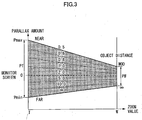
- Fig. 3 illustrates a correspondence relationship between the zoom value and the parallax amount in the multi-viewpoint image (a left eye image and a right eye image) before the parallax amount is corrected.
- the horizontal axis indicates the zoom value, and the vertical axis indicates the uncorrected parallax amount. That is, a change in uncorrected parallax amount with respect to a change in zoom value (parallax amount distribution) is represented.
- a plus or minus sign is attached to the parallax amount.
- a larger absolute value illustrates a nearer position of a stereoscopic image (visual image) of an object visible in the depthwise direction.
- a larger absolute value illustrates a farther position of a stereoscopic image (visual image) of an object visible in the depthwise direction.
- a signed parallax amount illustrates a position of a stereoscopic image of an object in a depthwise direction (depthwise position).
- a stereoscopic image of an object becomes nearer to a viewer as a signed parallax amount increases, while a stereoscopic image of an object becomes farther away from a viewer as a signed parallax amount decreases.
- a parallax above the center of the vertical axis indicates that an object is in nearer distance than the convergence point, while a parallax below the center of the vertical axis indicates that an object is in a farther distance than the convergence point.
- the condition on which the parallax becomes largest is a zoom T end at an object distance of 0.5 m, and the parallax amount on that condition is represented as Pmax.
- a stereoscopic image is burst maximally from a screen of a monitor, and it is highly possible that the parallax becomes so excessively large that binocular fusion is difficult.
- the condition on which the parallax becomes smallest is a zoom W end at an infinite distance, and the parallax amount on that condition is represented as Pmin.
- a stereoscopic image is set back maximally from a screen of a monitor, and it is highly possible that a shifted amount of a stereoscopic image on the screen of a monitor exceeds a human interpupillary distance (divergence). Therefore, it is necessary to set an upper limit and a lower limit to the parallax amount by parallax amount correction.
- an object located at an object distance of 2 m has a zero parallax irrespective of a change in zoom value, and therefore the parallax amount does not change.
- An object located at an object distance of more (father) than 2 m has a smaller signed parallax amount (has a larger absolute value) as the zoom value is changed from the W side to the T side. That is, when zooming is performed, such stereoscopic image displacement occurs that the stereoscopic image of the object becomes farther away while increasing in size, which causes a feeling of visual strangeness, and increases eye fatigue of a viewer viewing the stereoscopic image.
- An object located at an object distance of less (nearer) than 2 m has a larger signed parallax amount (also has a larger absolute value) as the zoom value is changed from the W side to the T side. That is, when zooming is performed, such stereoscopic image displacement occurs that the stereoscopic image of the object becomes nearer.
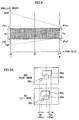
- Fig. 4 is an explanatory diagram for explaining parallax amount correction of a first embodiment, indicating a correspondence relationship between the zoom value and the corrected parallax amount.
- the maximum parallax amount is corrected from Pmax before correction to Ptn
- the minimum parallax amount is corrected from Pmin to Pwf
- the parallax amount of each pixel with respect to each zoom value is so corrected as to be between Ptn and Pwf.
- the upper and lower lines (Ptn-Pwn, Ptf-Pwf) is set within a maximum width that is a difference between a limit excess parallax and a limit divergent parallax.
- a difference Pd between the parallax amount of the nearest object distance and the parallax amount of the farthest object distance is set to be the same at the W end and the T end.
- Ptn Pwn
- Ptf Pwf.
- the parallax amount correcting unit 20 corrects the parallax amount of each pixel to reconstruct a multi-viewpoint image such that the parallax amount in each object is not changed (that is, the position of a stereoscopic image visible in the depthwise direction is constant) even if the acquired zoom value changes.
- the parallax amount correcting unit 20 makes the parallax amounts at the zoom starting point and the zoom end point equal.
- Figs. 5A to 5C illustrate examples of multi-viewpoint images (left eye images 90L, right eye images 90R) at a W (wide-angle) end, a middle zoom position, and a T (telephoto) end, respectively, after the parallax amount correction of the first embodiment illustrated in Fig. 4 is performed.
- a reference sign 96a denotes a stereoscopic image of a distant object
- a reference sign 96b denotes a stereoscopic image of a middle-distance object
- a reference sign 96c denotes a stereoscopic image of a near object.
- Reference signs Pwa, Pma, and Pta denote parallax amounts of the stereoscopic image of the distant object
- reference signs Pwc, Pmc, and Ptc denote parallax amounts of the stereoscopic image of the near object.
- the stereoscopic image of the middle-distance object is a main object (for example, focused object), and the parallax amount thereof is set at zero irrespective of a change in zoom value.
- the parallax amount correcting unit 20 can perform parallax amount correction such that where a position visible in a depthwise direction (a depthwise position) of the stereoscopic image of the object positioned between the farthest object distance and the nearest object distance at a photographing time is kept constant while the zoom value changes, as illustrated in Figs. 5A to 5C .
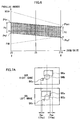
- Fig. 6 is an explanatory diagram for explaining parallax amount correction of a second embodiment, indicating a correspondence relationship between the zoom value and the corrected parallax amount.
- the second embodiment is the same as the first embodiment in that the maximum parallax amount is corrected from Pmax to Ptn, the minimum parallax amount is corrected from Pmin to Pwf, and the parallax amount of each pixel is so corrected as to be between Ptn and Pwf.
- a maximum relative parallax amount Pd is the same at the W end and the T end. In this example, Ptn > Pwn, and Ptf > Pwf.
- the parallax amount correcting unit 20 corrects the parallax amount of each pixel such that stereoscopic images of respective objects become nearer to a viewer as the acquired zoom value changes from the wide-angle side toward the telephoto side (that is, the signed parallax amounts of stereoscopic images of respective objects increase).
- Figs 7A to 7C illustrate examples of multi-viewpoint images (left eye images 90L, right eye images 90R) at a W (wide-angle) end, a middle zoom position, and a T (telephoto) end, respectively, after the parallax amount correction of the second embodiment illustrated in Fig. 6 is performed.
- a reference sign 96a denotes a stereoscopic image of a distant object
- a reference sign 96b denotes a stereoscopic image of a middle-distance object
- a reference sign 96c denotes a stereoscopic image of a near object.
- Reference signs Pwa, Pma, and Pta denote parallax amounts of the stereoscopic image of the distant object
- reference signs Pwc, Pmc, and Ptc denote parallax amounts of the stereoscopic image of the near object.
- the stereoscopic image of the middle-distance object is a main object (for example, focused object), and the parallax amount thereof is set at zero irrespective of a change in zoom value.
- the parallax amount is a signed parallax amount, and corresponds to a position that is visible to a viewer in a depthwise direction of a stereoscopic image of an object (depthwise position).
- the difference in parallax amount corresponds to a depthwise space of a plurality of stereoscopic images visible to a viewer.
- the parallax amount correcting unit 20 can perform parallax amount correction such that a difference in parallax amount between the farthest object distance and the nearest object distance (a maximum value of the space between stereoscopic images) is kept constant at a photographing time while the zoom value changes, as illustrated in Figs. 7A to 7C .
- Fig. 8 is an explanatory diagram for explaining parallax amount correction of a third embodiment, indicating a correspondence relationship between the zoom value and the corrected parallax amount.
- the third embodiment is the same as the first embodiment in that the maximum parallax amount is corrected from Pmax to Ptn, the minimum parallax amount is corrected from Pmin to Pwf, and the parallax amount of each pixel is so corrected as to be between Ptn and Pwf.
- a maximum relative parallax amount Pd is the same at the W end and the T end.
- the lines Ptf-Pwf, Ptn-Pwn are nonlinear, and the amount of change in parallax amount with respect to the amount of change in zoom value increases toward the T end. That is, a depthwise displacement of a stereoscopic image of an object increases toward the T end.
- the parallax amount correcting unit 20 performs correction so as to change the parallax amount nonlinearly from the wide-angle end toward the telephoto end of the zoom value. That is, as the zoom value is changed from the wide-angle side toward the telephoto side, the signed parallax amount becomes larger nonlinearly, and a stereoscopic image of an object appears to get nearer to an observer at an accelerated rate. This enhances zooming:
- Fig. 9 is an explanatory diagram for explaining parallax amount correction of a fourth embodiment, indicating a correspondence relationship between the zoom value and the corrected parallax amount.
- the third embodiment is the same as the first embodiment in that the maximum parallax amount is corrected from Pmax to Ptn, the minimum parallax amount is corrected from Pmin to Pwf, and the parallax amount of each pixel is so corrected as to be between Ptn and Pwf, for a changing period of magnification when the zoom value is changing.
- a maximum relative parallax amount Pd is the same at the W end and the T end.
- the parallax amount correcting unit 20 corrects the parallax amount of each pixel such that a difference in parallax amount corresponding to an object distance (a space between stereoscopic images) is not changed even if the acquired zoom value changes for a changing period of magnification when the acquired zoom value continues to change (during zooming) (so as not to change parallax amounts of respective objects). Then, after termination of the change in magnification (zooming), that is, the acquired zoom value does not change, the difference in parallax amount corresponding to an object distance (a space between stereoscopic images) is changed according to the zoom value after termination of the change in magnification.
- the parallax amount correcting unit 20 of this example corrects the parallax amount of each pixel such that a depthwise space between stereoscopic images different in object distance increases toward the telephoto side after termination of zooming.
- the parallax amount correcting unit 20 of this example changes the difference in parallax amount corresponding to an object distance (a space between stereoscopic images) in a stepwise fashion after termination of the change in magnification, and changes the difference in parallax amount corresponding to an object distance (a space between stereoscopic images) over substantially the same length of time as the length of zoom operation time after termination of zooming.
- the maximum relative parallax amount Pd is maintained for a changing period of magnification when the zoom value changes from Za to Zb.
- the maximum relative parallax amount Pd is changed in a stepwise fashion to Pa after completion of the change in magnification.
- the maximum relative parallax amount is changed from Pd to Pa in a stepwise fashion over substantially the same length of time as the time elapsing from Za to Zb for the change in magnification (a changing period of magnification). That is, a difference in relative parallax amount between different objects is changed in a stepwise fashion after termination of the change in magnification.
- a difference in parallax amount between different objects is so set as to decrease toward the wide-angle side and increase toward the telephoto side.
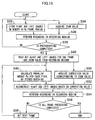
- Fig. 10 is a flowchart illustrating a flow of one example of image processing that is performed in real time during video recording to perform further correction after zooming. This processing is executed by the control unit 25 according to a program. It should be noted that steps identical with those illustrated in Fig. 2 are denoted by identical reference signs, and only different points are described herein.
- the parallax amount of each pixel is corrected such that the depths of stereoscopic images of respective objects not change if the zoom value changes, and during an unchanging period of magnification, the parallax amount of each pixel is corrected such that a difference between depthwise positions of stereoscopic images of objects different in object distance (parallax amount) increases toward the telephoto side.
- control unit 25 causes a lens driving unit (not illustrated) to drive the zoom lenses of the imaging lenses 11L, 11R.
- Fig. 10 omits to illustrate this control.
- Steps S4, S6, S14, S18, S20, and S24 in Fig. 10 perform the same processing as those in Fig. 2 .
- step S6 after acquisition of a zoom value (step S6), it is determined whether or not the zoom value continues to change (step S62). The control proceeds to step S64 during a changing period of magnification and proceeds to step S66 during an unchanging period of magnification.
- a correction table A corresponding to the zoom value is selected (step S64). That is, a correction value corresponding to the zoom value and a calculated parallax amount of each pixel is acquired.
- step S66 it is determined whether or not a current correction value is matched with a correction value (set value) of a correction table B (step S66), and if unmatched, the current correction value is changed toward the correction value of the correction table B (step S68).
- a corrected parallax amount that does not change a difference in parallax amount corresponding to an object distance (a space between stereoscopic images) with respect to a change in zoom value is registered.
- a corrected parallax amount that changes a difference in parallax amount corresponding to an object distance (a space between stereoscopic images) with respect to a change in zoom value is registered.
- a correction value (a corrected parallax amount) that corrects the parallax amount of each pixel such that a difference in parallax amount corresponding to an object distance (a space between stereoscopic images) increases toward the telephoto side is registered.
- the processing at steps S62 to S68 is performed by the parallax amount correcting unit 20.
- the parallax amount correcting unit 20 in this example corrects the parallax amount of each pixel and reconstructs a multi-viewpoint image, during a changing period of magnification, such that depthwise positions of stereoscopic images of respective objects are not changed and is kept constant even if the zoom value changes, the parallax amount correcting unit 20 corrects the parallax amount of each pixel and reconstructs a multi-viewpoint image, after zooming, such that a space between different stereoscopic images increases toward the telephoto side.
- the parallax amount of a stereoscopic image of an object is not changed during zooming, but the parallax amount of a stereoscopic image of an object is gradually changed after zooming.
- a change in the size of a stereoscopic image of an object during zooming and a change in the depthwise position of a stereoscopic image of an object after zooming are performed at different times.
- the length of time (a period) for which the parallax amount is gradually changed after zooming may be matched with (for example, proportional to) the length of time of zooming (a changing period of magnification).
- the correction tables A, B are composed of the two parallax amount corrections illustrated in Fig. 9 (a correction corresponding to Pd and a correction corresponding to Pa), respectively, has been described, it is also possible to perform any one of the parallax amount corrections illustrated in Figs. 4 , 6 , and 8 by the correction table A and perform a correction corresponding to Pa in Fig. 9 by the table B. In addition, it is also possible to store all correction tables for the parallax amount corrections illustrated in Figs. 4 , 6 , 8 , 9 (or any combination thereof) in the storage device and perform switching of the correction tables by mode setting.
- a correction table may be selected according to a mode of the imaging apparatus 10.
- the operating unit 16 accepts a selection instruction (mode designation) according to which one is selected from a plurality of modes corresponding to the plurality of correction tables.
- the parallax amount correcting unit 20 selects a correction table corresponding to a mode selected by the operating unit 16.
- Fig. 11A illustrates stereoscopic images 92f, 92m, 92n of objects different in object distance in a multi-viewpoint image (the left eye image 90L, the right eye image 90R) at the T end before parallax amount correction.
- Fig. 11B illustrates the stereoscopic images 94f, 94m, 94n of objects different in object distance in a multi-viewpoint image (the left eye image 90L, the right eye image 90R) at the T end after parallax amount correction.
- Figs. 11A and 11B illustrate the stereoscopic images of objects on a display screen of a monitor schematically.
- the stereoscopic images of objects denoted by reference signs 92f, 94f are stereoscopic images of objects imaged at the farthest object distance.
- the stereoscopic images of objects denoted by reference signs 92m, 94m are stereoscopic images of objects imaged at the middle point between the farthest object distance and the nearest object distance.
- the stereoscopic images of objects denoted by reference signs 92n, 94n are stereoscopic images of objects imaged at the nearest object distance. It should be noted that though Figs. 11A and 11B illustrate the stereoscopic images of object having the same shape (quadrangle), in reality, the shape of a stereoscopic image of an object is not limited.
- the parallax amounts Pmin, Pmax before parallax amount correction illustrated in Fig. 11A might be excessive parallax and divergent parallax amount, but the parallax amounts Ptf, Ptn after parallax amount correction fall within a stereoscopically fusible range. It should be noted that a multi-viewpoint image at the W end is omitted, but, as in the case of a multi-viewpoint image at the T end, the parallax amounts Pwf, Pwn after parallax amount correction fall within a stereoscopically fusible range.
- Figs. 4 to 9 illustrate cases where the corrected parallax amount at another zoom position and in another object distance is determined based on the W-end parallax amount Pwf, T-end parallax amount Pwf at the farthest object distance (for example, an infinite distance) and the W-end parallax amount Pnf, T-end parallax amount Pnf at the nearest object distance.
- the scope of the present invention is not particularly limited to such cases.
- the present invention includes any case where a multi-viewpoint image is reconstructed by correcting the parallax amount of each pixel such that a difference in parallax amount corresponding to an object distance (a space between stereoscopic images) is not changed in a specific situation.
- FIG. 12 An example of a correction table is illustrated in Fig. 12 .
- a correspondence relationship between an uncorrected parallax amount, a zoom value, and a corrected parallax amount is stored as a correction table in a storage device (the parallax amount correction value acquiring unit 19).
- the parallax amount correcting unit 20 acquires a corrected parallax amount of each pixel, from the correction table stored in the storage device, based on an acquired zoom value and a calculated uncorrected parallax amount of each pixel, when parallax amount correction is performed.
- Such parallax amount correction using a correction table can reduce processing time. That is, the parallax amount correction value acquiring unit 19 in Fig. 1 may be replaced with the correction table in Fig. 12 .
- a correction value used for parallax amount correction may be determined based on a user setting value. For example, an inputted or selected size of the monitor 21 (stereoscopic display device) outputting a multi-viewpoint image is accepted by the operating unit 16. This is because the display screen size determines a limit value of parallax amount divergence.
- Fig. 13 illustrates a correspondence relationship between the display size and pixels of a monitor having a resolution of 1920 ⁇ 1080 dots.
- means for accepting an input or a selection of an interpupillary distance for each user by the operation unit 16 may be provided. If a viewer of a multi-viewpoint image is a child, the interpupillary distance is about 5cm, and therefore the number of pixels for 5 cm of the monitor size is set as a parallax amount lower limit Pwf.
- a parallax amount upper limit Ptn is set at, for example, about 57 pixels, on the assumption that viewing is performed at a distance three times the height of a screen of the monitor. This Ptn depends on the allowable range of binocular fusion and therefore changes among different individuals. Therefore, it is preferred that the Ptn can be changed by user setting.
- the range of object distance might be narrow.
- a nearest distance is also within a range far from the MOD (minimum focusing distance).
- the maximum value and the minimum value in an actual parallax distribution each have a margin from a limit value (Ptn and Pwf), and therefore the margin can be allocated to enhancing a zooming effect.
- a shift amount of parallax amount correction can be adjusted so that the maximum value becomes an upper limit value Ptn and the minimum value becomes a lower limit value Pwf.
- the parallax amount distribution is changed such that the slope of a line indicating the correspondence relationship between the zoom value and the parallax amount at an identical object distance becomes large.
- the operating unit 16 accepts an input of setting information for determining a value used to correct a parallax amount (parallax amount correction value).
- the parallax amount correction value acquiring unit 19 calculates a parallax amount correction value based on the inputted setting information.
- the setting information is, for example, a display size (monitor size) of the monitor 21.
- the setting information may be, for example, at least one of object distance information of a nearest object and object distant information of a farthest object.
- the zoom value is set at the telephoto end or the wide-angle end by control of the control unit 25 and a parallax amount correction value is calculated by the parallax amount correction value acquiring unit 19 based on the parallax amount of a focused pixel.
- Fig. 14 is a flowchart illustrating a flow of an example of user setting processing.
- Fig. 14 when user setting mode is selected, first, the zoom values (zoom positions) of the imaging lenses 11L, 11R are moved to (set at) the T end (step S71). Then, an object of objects to be photographed which is positioned nearest to a user is so guided by the monitor 21 as to fall within an AF area, and an image capturing instruction operation is accepted by the operating unit 16 (step S72). When the image capturing instruction is accepted, a priority is given to a near distance range and a focus position is found from the near distance side (step S73). That is, the nearest object of the objects to be photographed is focused on.
- a left eye image and a right eye image are captured (step S74), and pixels whose sharpness is higher than a threshold value set in advance are detected in the AF area (step S75). Then, by calculating the parallax amounts of these pixels, a parallax amount maximum value Pa is determined, and a shift amount from this parallax amount maximum value Pa to Ptn (Ptn - Pa) is calculated (step S76).
- the zoom values (zoom positions) of the imaging lenses 11L, 11R are moved to (set at) the W end (step S81). Then, an object of objects to be photographed which is positioned farthest from a user is so guided by the monitor 21 as to fall within an AF area, and an image capturing instruction operation is accepted by the operating unit 16 (step S82). When the image capturing instruction is accepted, a priority is given to a far distance range and a focus position is found from the farthest object distance (step S83). That is, the farthest object of the objects to be photographed is focused on.
- a left eye image and a right eye image are captured (step S84), and pixels whose sharpness is higher than a threshold value set in advance are detected in the AF area (step S85). Then, by calculating the parallax amounts of these pixels, a parallax amount minimum value Pb is determined, and a shift amount from this parallax amount minimum value Pb to Pwf (Pb-Pwf) is calculated (step S86).
- stereo matching is performed when the parallax amount is determined, and therefore an image with higher sharpness improves matching accuracy and therefore improves accuracy in parallax amount.
- the shift amounts of the parallax amounts is calculated at both the telephoto end and the wide-angle end, but the present invention is not limited to such a case, and the shift amount of the parallax amount may be calculated at either the telephoto end or the wide-angle end.
- a direct input operation or a selection input operation of object distance information of a nearest object from a user (minimum object distance) and object distance information of a farthest object (maximum object distance) are accepted by the operating unit 16.
- Such a configuration can be adopted that an input of zoom effect setting information for determining the amount of change in parallax amount with respect to the amount of change in zoom value may be accepted by the operating unit 16 and the parallax amount correction value is calculated by the parallax amount correction value acquiring unit 19 based on the inputted zoom effect setting information.
- the present invention is not particularly limited to such a case.
- the present invention is applicable to a case where moving image display is performed during zooming.
- Fig. 15 is a flowchart illustrating a flow of an example of image processing performed after moving image photographing. This processing is executed according to a program by the control unit 25.
- Steps S32, S34 in Fig. 15 are the same as steps S4, S6 in Fig. 2 , respectively.
- the recording medium interface 22 records a multi-viewpoint image composed of a left eye image and a right eye image frame by frame in the recording medium 23.
- the recording medium interface 22 records zoom value information in addition to the multi-viewpoint image, frame by frame, in the recording medium 23.
- step S38 it is determined whether photographing has been completed or is continued, and if photographing is continued, the processing returns to steps S32 and S34.
- the recording medium interface 22 reads out the multi-viewpoint image (a left eye image and a right eye image) and the zoom value information, frame by frame, from the recording medium.
- the recording medium interface 22 reads out the multi-viewpoint image and the zoom value information of one frame from the recording medium 23.
- Steps S48, S50, S52, S54 are the same as steps S14, S16, S18, S20 in Fig. 2 , respectively.
- step S56 whether or not processing all frames has been completed, and if processing all frames is not completed, a next frame is focused on and a zoom value is read out from the image memory 15 (step S58), and the processing returns to step S48. If processing all frames has been completed, the processing is terminated.
- Fig. 16 is a flowchart illustrating a flow of an example of image processing performed in real time during moving image photographing. This processing is executed according to a program by the control unit 25. It should be noted that the same steps as those illustrated in Fig. 2 are denoted by the same reference signs, and only different points will be described here.
- the control unit 25 causes the lens driving unit (not illustrated) to drive the zoom lenses of the imaging lenses 11L, 11R.
- Fig. 16 omits to illustrate the control.
- step S2 whether or not a zoom operation has been performed by the operating unit 16 is determined (step S2), and if a zoom operation is not performed, a multi-viewpoint image (a left eye image and a right eye image) is acquired by the imaging unit 14 with a period of one frame and stored in the image memory 15 (step S4), and a zoom value of the multi-viewpoint image is acquired from the operating unit 16 (step S6).
- steps S4, S6 in Fig. 16 are identical with steps denoted by the same reference signs in Fig. 2 , respectively.
- one frame of the multi-viewpoint image (a left eye image and a right eye image) at the zoom operation time (immediately before the zoom value changes) is stored in a memory for electronic zoom (step S8), a zoom value is acquired from the operating unit 16 (step S10), and according to the acquired zoom value, the multi-viewpoint image stored in the image memory 15 is changed in magnification (scaled), by the electronic zoom processing unit 17 (step S12).
- the memory for electronic zoom may be housed in the electronic zoom processing unit 17, or the image memory 15 may be selectively used as a memory for a real-time multi-viewpoint image and a memory for electronic zoom.
- Steps S14 to S20 in Fig. 16 are identical with the respective steps denoted by the same reference signs in Fig. 2 .
- step S22 whether or not the zoom operation is continued is determined, and if the zoom operation is continued, the processing returns to step S10. In addition, whether or not photographing has been completed or is continued (step S24), and if photographing is continued, the processing returns to step S2.
- a multi-viewpoint image (a stereoscopic still image) of one frame immediately before or immediately after a change in zoom value is changed in magnification by the electronic zoom processing unit 17 and outputted to the monitor 21.
- multi-viewpoint images (a stereoscopic moving image) of a plurality of frames are outputted to the monitor 21.
- Fig. 17 is a flowchart illustrating an example of image processing in a case where image processing is performed after moving image photographing.
- Steps S32 to S40 are identical with steps in Fig. 15 , respectively.
- step S42 whether or not the zoom value is changed is determined.
- step S44 the multi-viewpoint image in the image memory 15 is changed in magnification (scaled) by the electronic zoom processing unit 17.
- a multi-viewpoint image (a left eye image and a right eye image) of a next one frame is read out from the recording medium 23 and stored in the image memory 15.
- Steps S48 to S58 are identical with steps in Fig. 15 .
- a multi-viewpoint image (a stereoscopic still image) of one frame immediately before or immediately after the change in zoom value is changed in magnification by the electronic zoom processing unit 17 and outputted to the monitor 21, and while the acquired zoom value is not changing, multi-viewpoint images (stereoscopic moving images) of a plurality of frames are outputted to the monitor 21.
- the control unit 25 divides a period for which the zoom value continues to change (a changing period of magnification) into a plurality of periods, and if the zoom value is continuously changing, the control unit 25 switches the change in zoom value from a continuous change to a stepwise change, thereby outputting and displaying a plurality of still images (stereoscopic still images) changed in magnification in a stepwise fashion for the changing period of the zoom value (a changing period of magnification) sequentially to the monitor 21, and recording the still images in the recording medium 23.
- a period for which the zoom value continues to change a changing period of magnification
- the control unit 25 switches the change in zoom value from a continuous change to a stepwise change, thereby outputting and displaying a plurality of still images (stereoscopic still images) changed in magnification in a stepwise fashion for the changing period of the zoom value (a changing period of magnification) sequentially to the monitor 21, and recording the still images in the recording medium 23.
- control unit 25 makes the length of total display time of the plurality of still images changed in magnification longer than the changing period of the zoom value (a changing period of magnification). For example, in Fig. 18 , the length of total display time of an "initial still image", an "enlarged 1 still image”, an “enlarged 2 still image”, and an “enlarged 3 still image” is longer than the length of time of a "zoom W ⁇ T motion".
- control unit 25 performs display switching of the plurality of still images (stereoscopic still images) on the monitor 21 in a fade-in and fade-out manner. That is, while displaying one still image in a fade-out manner the control unit 25 displays another still image in a fade-in manner.
- the present invention is not particularly limited to such a case.
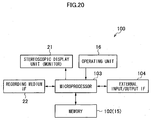
- the present invention may be applied to a computer device 100 illustrated in Fig. 20 .
- Fig. 20 the components identical with those illustrated in Fig. 1 are denoted by the same reference signs.
- the personal computer device 100 illustrated in Fig. 20 includes the operating unit 16, the stereoscopic display unit 21 (monitor), the recording medium interface 22, a memory 102, a microprocessor 103, and an external input/output IF (interface) 104.
- the microprocessor 103 has the respective functions of the electronic zoom processing unit 17, the parallax amount calculating unit 18, the parallax amount correction value unit 19, the parallax amount correcting unit 20, and the control unit 25 in Fig. 1 .
- the memory 102 has the function of the image memory 15 in Fig. 1 .
- the external input/output IF 104 inputs a multi-viewpoint image from a compound-eye camera (an imaging device capable of imaging a multi-viewpoint image) to the device 100 in Fig. 20 , and outputs the multi-viewpoint image whose parallax amount has been corrected by the microprocessor 103 to an external device, such as a hard disk device or a disk recording device.
- the personal computer device 100 (an image processing apparatus) illustrated in Fig. 20 is used as an editing device dedicated to edit a multi-viewpoint image (including parallax amount correction), or as a reproduction device that reproduces and displays a multi-viewpoint image (including a multi-viewpoint after parallax amount correction) on the stereoscopic display unit 21.
Landscapes
- Engineering & Computer Science (AREA)
- Multimedia (AREA)
- Signal Processing (AREA)
- Testing, Inspecting, Measuring Of Stereoscopic Televisions And Televisions (AREA)
- Studio Devices (AREA)
- Processing Or Creating Images (AREA)
- Image Processing (AREA)
Claims (29)
- Bildverarbeitungsvorrichtung umfassend:ein Bilderfassungsmittel, eingerichtet zum Erfassen eines Mehrfach-Betrachtungspunktbilds beinhaltend eine Vielzahl von Betrachtungspunktbildern;ein Zoomwert-Erfassungsmittel, eingerichtet zum Erfassen eines Zoomwerts des durch das Bilderfassungsmittel erfassten Mehrfach-Betrachtungspunktbilds;ein Parallaxen-Berechnungsmittel, eingerichtet zum Berechnen einer Parallaxe von jedem Pixel zwischen der Vielzahl der Betrachtungspunktbilder, die das erfasste Mehrfach-Betrachtungspunktbild bilden;ein Parallaxen-Korrekturmittel, eingerichtet zum Korrigieren der Parallaxe von jedem Pixel von wenigstens einem Abschnitt des erfassten Mehrfach-Betrachtungspunktbilds durch Bildverarbeitung, basierend auf dem durch das Zoomwert-Erfassungsmittel erfassten Zoomwert und der von dem Parallaxen-Berechnungsmittel berechneten Parallaxe von jedem Pixel, wobei das Parallaxen-Korrekturmittel eingerichtet ist zum Korrigieren der Parallaxe von jedem Pixel und eingerichtet ist zum Rekonstruieren des Mehrfach-Betrachtungspunktbilds, so dass eine Differenz der zu einem Objektabstand korrespondierenden Parallaxe unverändert gelassen wird auch wenn der erfasste Zoomwert verändert wird.
- Bildverarbeitungsvorrichtung nach Anspruch 1, wobei
das Parallaxen-Korrekturmittel die Parallaxe von jedem Pixel korrigiert, so dass Parallaxe von jeweiligen Objekten unverändert gelassen werden auch wenn der erfasste Zoomwert verändert wird. - Bildverarbeitungsvorrichtung nach Anspruch 2, wobei
das Parallaxen-Korrekturmittel Parallaxen an einem Zoom-Startpunkt und an einem Zoom-Endpunkt egalisiert. - Bildverarbeitungsvorrichtung nach Anspruch 1, wobei
das Parallaxen-Korrekturmittel die Parallaxe von jedem Pixel korrigiert, so dass stereoskopische Bilder von jeweiligen Objekten näher an einen Betrachter heranrücken wenn sich der erfasste Zoomwert von einer Weitwinkelseite zu einer Teleseite ändert. - Bildverarbeitungsvorrichtung nach einem der Ansprüche 1 bis 4, wobei
das Parallaxen-Korrekturmittel eine Korrektur so durchführt, dass eine Parallaxe sich nichtlinear von einer Weitwinkelseite zu einer Teleseite verändert. - Bildverarbeitungsvorrichtung nach einem der Ansprüche 1 bis 5, wobei
das Parallaxen-Korrekturmittel die Parallaxe von jedem Pixel so korrigiert, dass die Differenz der Parallaxe zwischen Objekten bei verschiedenem Objektabstand bezüglich der Änderung des Zoomwerts zwischen einem nähesten Abstand und einem weitesten Abstand konstant gehalten wird - Bildverarbeitungsvorrichtung nach einem der Ansprüche 1 bis 6, wobei
das Parallaxen-Korrekturmittel die Parallaxe von jedem Pixel so korrigiert, dass während einer Veränderungsperiode der Vergrößerung, für die der erfasste Zoomwert sich verändert, die Differenz der zu einem Objektabstand korrespondierenden Parallaxe unverändert gelassen wird auch wenn der erfasste Zoomwert verändert wird und
das Parallaxen-Korrekturmittel nach einem Ende einer Vergrößerungsveränderung, bei dem der erfasste Zoomwert aufhört sich zu verändern, die Differenz der zu einem Objektabstand korrespondierenden Parallaxe verändert. - Bildverarbeitungsvorrichtung nach Anspruch 7, wobei
das Parallaxen-Korrekturmittel nach dem Ende der Vergrößerungsveränderung die Parallaxe von jedem Pixel korrigiert, so dass die Differenz der zu dem Objektabstand korrespondierenden Parallaxe zu einer Teleseite zunimmt. - Bildverarbeitungsvorrichtung nach Anspruch 7 oder 8, wobei
das Parallaxen-Korrekturmittel die Differenz der zu dem Objektabstand korrespondierenden Parallaxe nach dem Ende der Vergrößerungsveränderung schrittweise verändert. - Bildverarbeitungsvorrichtung nach einem der Ansprüche 7 bis 9, wobei
das Parallaxen-Korrekturmittel die Differenz der zu dem Objektabstand korrespondierenden Parallaxe nach dem Ende der Vergrößerungsveränderung über im Wesentlichen eine gleiche Zeitdauer wie eine Vergrößerungsveränderung verändert. - Bildverarbeitungsvorrichtung nach einem der Ansprüche 1 bis 6, weiterhin umfassend
ein Speichermittel, eingerichtet zum Speichern einer Korrekturtabelle, die eine Korrespondenzbeziehung zwischen einer unkorrigierten Parallaxe, einem Zoomwert und einer korrigierten Parallaxe angibt, wobei
das Parallaxen-Korrekturmittel das Mehrfach-Betrachtungspunktbild unter Zuhilfenahme der von der Korrekturtabelle erfassten korrigierten Parallaxe basierend auf dem erfassten Zoomwert und der von jedem Pixel berechneten Parallaxe rekonstruiert. - Bildverarbeitungsvorrichtung nach Anspruch 11, wobei
das Speichermittel eine Vielzahl von Korrekturtabellen mit verschiedenen, mit Variationen eines Zoomwert korrespondierenden Korrekturen einer Parallaxe speichert, und
das Parallaxen-Korrekturmittel eine der Vielzahl von Korrekturtabellen selektiert um das Mehrfach-Betrachtungspunktbild zu rekonstruieren. - Bildverarbeitungsvorrichtung nach Anspruch 12, weiterhin umfassend
ein Instruktionseingabemittel, eingerichtet zum Annehmen einer Selektionsinstruktion, durch die eine aus einer Vielzahl von Moden selektiert wird, die jeweils mit der Vielzahl von Korrekturtabellen korrespondieren, wobei
das Parallaxen-Korrekturmittel die Korrekturtabelle selektiert, die mit der durch das Befehleingabemittel selektierten Mode korrespondiert. - Bildverarbeitungsvorrichtung nach einem der Ansprüche 7 bis 10, weiterhin umfassend
ein Speichermittel, eingerichtet zum Speichern einer Korrekturtabelle, die eine Korrespondenzbeziehung zwischen einer unkorrigierten Parallaxe, einem Zoomwert und einer korrigierten Parallaxe angibt, wobei das Speichermittel zum Speichern einer ersten Korrekturtabelle, in welcher die Differenz der zu dem Objektabstand korrespondierenden Parallaxe unverändert gelassen wird auch wenn der erfasste Zoomwert verändert wird, und einer zweiten Korrekturtabelle, in welcher die Differenz der zu dem Objektabstand korrespondierenden Parallaxe bezüglich einer Änderung des Zoomwerts verändert wird, eingerichtet ist, wobei
das Parallaxen-Korrekturmittel die erste Korrekturtabelle während der Veränderungsperiode der Vergrößerung selektiert, die zweite Korrekturtabelle nach dem Ende der Vergrößerungsveränderung selektiert, und das Mehrfach-Betrachtungspunktbild unter Verwendung der von der selektierten Korrekturtabelle erfassten korrigierten Parallaxe, basierend auf dem erfassten Zoomwert und der von jedem Pixel berechneten Parallaxe, rekonstruiert. - Bildverarbeitungsvorrichtung nach einem der Ansprüche 1 bis 10, weiterhin umfassend
ein Berechnungsmittel, eingerichtet zum Berechnen einer korrigierten Parallaxe von jedem Pixel, basierend auf dem erfassten Zoomwert und der von jedem Pixel berechneten Parallaxe. - Bildverarbeitungsvorrichtung nach einem der Ansprüche 1 bis 15, weiterhin umfassend
ein Aufzeichnungsmittel, eingerichtet zum Aufzeichnen eines Mehrfach-Betrachtungspunktbilds, dessen Parallaxe durch das Parallaxen-Korrekturmittel noch nicht korrigiert wurde, oder eines Mehrfach-Betrachtungspunktbilds, dessen Parallaxe durch das Parallaxen-Korrekturmittel korrigiert wurde. - Bildverarbeitungsvorrichtung nach Anspruch 16, wobei
das Bilderfassungsmittel das Mehrfach-Betrachtungspunktbild erfasst, dessen Parallaxe von dem Aufzeichnungsmittel noch nicht korrigiert wurde, und
das Parallaxen-Korrekturmittel eine Parallaxe von jedem Pixel des von dem Aufzeichnungsmittel erfassten Mehrfach-Betrachtungspunktbilds korrigiert. - Bildverarbeitungsvorrichtung nach einem der Ansprüche 1 bis 17, weiterhin umfassend:ein Einstellinformations-Eingabemittel, eingerichtet zum Annehmen einer Eingabe von Einstellinformation, zum Bestimmen eines für die Parallaxenkorrektur verwendeten Werts; undein Parallaxenkorrekturwert-Berechnungsmittel, eingerichtet zum Berechnen eines Korrekturwerts der Parallaxe von jedem Pixel, basierend auf der durch das Einstellinformations-Eingabemittel eingegebenen Einstellinformation.
- Bildverarbeitungsvorrichtung nach Anspruch 18, wobei
die Einstellinformation eine Anzeigegröße des Mehrfach-Betrachtungspunktbilds beinhaltet. - Bildverarbeitungsvorrichtung nach Anspruch 18 oder 19, wobei
die Einstellinformation Abstandsinformation über wenigstens ein nähestes Objekt oder ein am weitesten entferntes Objekt beinhaltet. - Bildverarbeitungsvorrichtung nach einem der Ansprüche 1 bis 20, weiterhin umfassend
ein Parallaxenkorrekturwert-Berechnungsmittel, eingerichtet zum Berechnen eines Korrekturwerts der Parallaxe von jedem Pixel, basierend auf einer Parallaxe eines fokussierten Pixels, wobei der Zoomwert auf wenigstens ein Teleende oder ein Weitwinkelende eingestellt ist. - Bildverarbeitungsvorrichtung nach einem der Ansprüche 1 bis 21, weiterhin umfassend:ein Elektronik-Zoommittel, eingerichtet zum Verändern der Vergrößerung des erfassten Mehrfach-Betrachtungspunktbilds durch elektronischen Zoom;ein Ausgabemittel, das in der Lage ist das erfasste Mehrfach-Betrachtungspunktbild auszugeben; undein Steuermittel, eingerichtet zum Verändern der Vergrößerung des Mehrfach-Betrachtungspunktbilds durch das Elektronik-Zoommittel, wenn der Zoomwert verändert wird, unmittelbar bevor oder unmittelbar nachdem der Zoomwert verändert wird, entsprechend dem Zoomwert, eingerichtet zum Durchführen von Parallaxenkorrektur entsprechende dem Zoomwert durch das Parallaxen-Korrekturmittel, und eingerichtet zum Ausgeben eines stereoskopischen Standbilds an das Ausgabemittel, während das Steuermittel ein stereoskopisches Bewegtbild des von dem Bilderfassungsmittel erfassten Mehrfach-Betrachtungspunktbilds an das Ausgabemittel ausgibt wenn der Zoomwert nicht verändert wird.
- Bildverarbeitungsvorrichtung nach Anspruch 22, wobei
das Steuermittel eine Anzeigedauer eines stereoskopischen Standbilds mit veränderter Vergrößerung länger als eine Veränderungsperiode des Zoomwerts macht. - Bildverarbeitungsvorrichtung nach Anspruch 22 oder 23, wobei
das Steuermittel das Ausgabemittel veranlasst das stereoskopische Standbild auszugeben, dessen Vergrößerung schrittweise verändert ist, indem der Zoomwert schrittweise verändert wird. - Bildverarbeitungsvorrichtung nach einem der Ansprüche 22 bis 24, wobei
das Steuermittel ein Umschalten des stereoskopischen Standbilds durch Einblenden und Ausblenden durchführt. - Abbildungsvorrichtung umfassend
die Bildverarbeitungsvorrichtung nach einem der Ansprüche 1 bis 25, wobei
das Bilderfassungsmittel ein Abbildungsobjektiv und eine Abbildungseinrichtung beinhaltet, die eingerichtet ist ein durch das Abbildungsobjektiv ausgebildetes Objektbild abzubilden. - Abbildungsvorrichtung nach Anspruch 26, wobei
das Abbildungsobjektiv ein Zoomobjektiv beinhaltet, und
das Zoomwert-Erfassungsmittel einen Zoomwert des Zoomobjektivs als einen Zoomwert des Mehrfach-Betrachtungspunktbilds erfasst. - Reproduktionsvorrichtung umfassend:die Bildverarbeitungsvorrichtung nach einem der Ansprüche 1 bis 25; undReproduktionsmittel eingerichtet zum Reproduzieren des rekonstruierten Mehrfach-Betrachtungspunktbilds in stereoskopisch betrachtbarer Art und Weise.
- Bildverarbeitungsverfahren, das ein Bilderfassungsmittel, eingerichtet zum Erfassen eines Mehrfach-Betrachtungspunktbilds, beinhaltend eine Vielzahl von Betrachtungspunktbildern, und ein Zoomwert-Erfassungsmittel, eingerichtet zum Erfassen eines Zoomwerts des durch das Bilderfassungsmittel erfassten Mehrfach-Betrachtungspunktbilds, verwendet, wobei das Verfahren umfasst:ein Parallaxen-Berechnungsschritt des Berechnens einer Parallaxe von jedem Pixel zwischen der Vielzahl von Betrachtungspunktbildern, die das erfasste Mehrfach-Betrachtungspunktbild bilden; undein Parallaxen-Korrekturschritt des Korrigierens einer Parallaxe von jedem Pixel von wenigstens einem Abschnitt des erfassten Mehrfach-Betrachtungspunktbilds durch Bildverarbeitung, basierend auf dem erfassten Zoomwert und der berechneten Parallaxe von jedem Pixel, und Korrigieren der Parallaxe von jedem Pixel und Rekonstruieren des Mehrfach-Betrachtungspunktbilds so dass eine Differenz der zu einem Objektabstand korrespondierenden Parallaxe unverändert gelassen wird auch wenn der erfasste Zoomwert verändert wird.
Applications Claiming Priority (2)
| Application Number | Priority Date | Filing Date | Title |
|---|---|---|---|
| JP2011014464 | 2011-01-26 | ||
| PCT/JP2011/078648 WO2012101917A1 (ja) | 2011-01-26 | 2011-12-12 | 画像処理装置、撮像装置、再生装置および画像処理方法 |
Publications (3)
| Publication Number | Publication Date |
|---|---|
| EP2574065A1 EP2574065A1 (de) | 2013-03-27 |
| EP2574065A4 EP2574065A4 (de) | 2013-12-25 |
| EP2574065B1 true EP2574065B1 (de) | 2016-09-07 |
Family
ID=46580500
Family Applications (1)
| Application Number | Title | Priority Date | Filing Date |
|---|---|---|---|
| EP11856794.0A Not-in-force EP2574065B1 (de) | 2011-01-26 | 2011-12-12 | Bildverarbeitungsvorrichtung, bildaufnahmevorrichtung und bildverarbeitungsverfahren |
Country Status (5)
| Country | Link |
|---|---|
| US (1) | US9161016B2 (de) |
| EP (1) | EP2574065B1 (de) |
| JP (1) | JP5243663B2 (de) |
| CN (1) | CN103004216B (de) |
| WO (1) | WO2012101917A1 (de) |
Families Citing this family (15)
| Publication number | Priority date | Publication date | Assignee | Title |
|---|---|---|---|---|
| JP4787369B1 (ja) * | 2010-03-30 | 2011-10-05 | 富士フイルム株式会社 | 画像処理装置および方法並びにプログラム |
| EP2648401B1 (de) * | 2010-12-01 | 2015-08-26 | NEC Corporation | Mobiles endgerät, bildverarbeitungsverfahren und programm dafür |
| JP2012205148A (ja) * | 2011-03-25 | 2012-10-22 | Kyocera Corp | 電子機器 |
| JP5873982B2 (ja) * | 2012-10-09 | 2016-03-01 | パナソニックIpマネジメント株式会社 | 3次元表示装置、3次元画像処理装置および3次元表示方法 |
| US9558555B2 (en) * | 2013-02-22 | 2017-01-31 | Leap Motion, Inc. | Adjusting motion capture based on the distance between tracked objects |
| WO2014141654A1 (ja) * | 2013-03-13 | 2014-09-18 | パナソニック株式会社 | 測距装置、撮像装置および測距方法 |
| US9733715B2 (en) | 2013-03-15 | 2017-08-15 | Leap Motion, Inc. | Resource-responsive motion capture |
| JP5311526B1 (ja) * | 2013-03-28 | 2013-10-09 | 株式会社 アーチウェイ3D | 3d立体視画像作成方法、3d立体視画像作成システム及び3d立体視画像作成プログラム |
| JP6550734B2 (ja) * | 2014-12-02 | 2019-07-31 | セイコーエプソン株式会社 | 頭部装着型表示装置、頭部装着型表示装置の制御方法、および、コンピュータープログラム |
| JP6611531B2 (ja) * | 2015-09-16 | 2019-11-27 | キヤノン株式会社 | 画像処理装置、画像処理装置の制御方法、およびプログラム |
| US10917543B2 (en) | 2017-04-24 | 2021-02-09 | Alcon Inc. | Stereoscopic visualization camera and integrated robotics platform |
| US10299880B2 (en) * | 2017-04-24 | 2019-05-28 | Truevision Systems, Inc. | Stereoscopic visualization camera and platform |
| US11083537B2 (en) | 2017-04-24 | 2021-08-10 | Alcon Inc. | Stereoscopic camera with fluorescence visualization |
| CN110703270B (zh) * | 2019-10-08 | 2022-02-22 | 歌尔光学科技有限公司 | 深度模组测距方法、装置、可读存储介质及深度相机 |
| JP2025081910A (ja) * | 2023-11-16 | 2025-05-28 | キヤノン株式会社 | 電子機器、電子機器の制御方法、プログラム、および記憶媒体 |
Citations (3)
| Publication number | Priority date | Publication date | Assignee | Title |
|---|---|---|---|---|
| EP1489857A1 (de) * | 2002-03-27 | 2004-12-22 | Sanyo Electric Co., Ltd. | Verfahren und einrichtung zur dreidimensionalen bildverarbeitung |
| US20100201789A1 (en) * | 2009-01-05 | 2010-08-12 | Fujifilm Corporation | Three-dimensional display device and digital zoom correction method |
| WO2010151044A2 (ko) * | 2009-06-23 | 2010-12-29 | 엘지전자 주식회사 | 3차원 컨텐츠를 출력하는 디스플레이 기기의 영상 처리 방법 및 그 방법을 채용한 디스플레이 기기 |
Family Cites Families (16)
| Publication number | Priority date | Publication date | Assignee | Title |
|---|---|---|---|---|
| EP0641132B1 (de) * | 1993-08-26 | 1999-04-14 | Matsushita Electric Industrial Co., Ltd. | Stereoskopischer Abtastapparat |
| JP3157384B2 (ja) * | 1994-06-20 | 2001-04-16 | 三洋電機株式会社 | 立体映像装置 |
| US6414709B1 (en) * | 1994-11-03 | 2002-07-02 | Synthonics Incorporated | Methods and apparatus for zooming during capture and reproduction of 3-dimensional images |
| US6384859B1 (en) * | 1995-03-29 | 2002-05-07 | Sanyo Electric Co., Ltd. | Methods for creating an image for a three-dimensional display, for calculating depth information and for image processing using the depth information |
| JP3653790B2 (ja) * | 1995-05-23 | 2005-06-02 | 松下電器産業株式会社 | 立体電子ズーム装置及び立体画質制御装置 |
| TWI223780B (en) * | 2001-01-24 | 2004-11-11 | Vrex Inc | Method for zooming a stereoscopic image, article of manufacture comprising a computer usable medium, computer related product for use with a graphics display device, and program storage device readable by a machine and tangibly embodying a program of iK |
| JP2003052058A (ja) | 2001-08-06 | 2003-02-21 | Nippon Hoso Kyokai <Nhk> | 立体画像撮像装置 |
| JP4442190B2 (ja) * | 2003-10-24 | 2010-03-31 | ソニー株式会社 | 立体視画像処理装置 |
| US7561160B2 (en) * | 2004-07-15 | 2009-07-14 | Olympus Corporation | Data editing program, data editing method, data editing apparatus and storage medium |
| US7566855B2 (en) * | 2005-08-25 | 2009-07-28 | Richard Ian Olsen | Digital camera with integrated infrared (IR) response |
| JP2007081473A (ja) * | 2005-09-09 | 2007-03-29 | Eastman Kodak Co | 複数光学系を有する撮像装置 |
| US20080129844A1 (en) * | 2006-10-27 | 2008-06-05 | Cusack Francis J | Apparatus for image capture with automatic and manual field of interest processing with a multi-resolution camera |
| KR101311896B1 (ko) * | 2006-11-14 | 2013-10-14 | 삼성전자주식회사 | 입체 영상의 변위 조정방법 및 이를 적용한 입체 영상장치 |
| JP2010068182A (ja) * | 2008-09-10 | 2010-03-25 | Fujifilm Corp | 3次元撮影装置および方法並びにプログラム |
| JP4995854B2 (ja) * | 2009-03-11 | 2012-08-08 | 富士フイルム株式会社 | 撮像装置、画像補正方法および画像補正プログラム |
| US7933512B2 (en) * | 2009-03-24 | 2011-04-26 | Patrick Campbell | Stereo camera with controllable pivot point |
-
2011
- 2011-12-12 JP JP2012554637A patent/JP5243663B2/ja not_active Expired - Fee Related
- 2011-12-12 EP EP11856794.0A patent/EP2574065B1/de not_active Not-in-force
- 2011-12-12 WO PCT/JP2011/078648 patent/WO2012101917A1/ja not_active Ceased
- 2011-12-12 CN CN201180034673.3A patent/CN103004216B/zh not_active Expired - Fee Related
-
2012
- 2012-12-11 US US13/711,426 patent/US9161016B2/en not_active Expired - Fee Related
Patent Citations (4)
| Publication number | Priority date | Publication date | Assignee | Title |
|---|---|---|---|---|
| EP1489857A1 (de) * | 2002-03-27 | 2004-12-22 | Sanyo Electric Co., Ltd. | Verfahren und einrichtung zur dreidimensionalen bildverarbeitung |
| US20100201789A1 (en) * | 2009-01-05 | 2010-08-12 | Fujifilm Corporation | Three-dimensional display device and digital zoom correction method |
| WO2010151044A2 (ko) * | 2009-06-23 | 2010-12-29 | 엘지전자 주식회사 | 3차원 컨텐츠를 출력하는 디스플레이 기기의 영상 처리 방법 및 그 방법을 채용한 디스플레이 기기 |
| EP2410753A2 (de) * | 2009-06-23 | 2012-01-25 | LG Electronics Inc. | Bildverarbeitungsverfahren für eine anzeigevorrichtung mit ausgabe dreidimensionaler inhalte und anzeigevorrichtung zur anwendung des verfahrens |
Also Published As
| Publication number | Publication date |
|---|---|
| EP2574065A1 (de) | 2013-03-27 |
| US20130100257A1 (en) | 2013-04-25 |
| CN103004216A (zh) | 2013-03-27 |
| US9161016B2 (en) | 2015-10-13 |
| JP5243663B2 (ja) | 2013-07-24 |
| JPWO2012101917A1 (ja) | 2014-06-30 |
| WO2012101917A1 (ja) | 2012-08-02 |
| CN103004216B (zh) | 2014-07-02 |
| EP2574065A4 (de) | 2013-12-25 |
Similar Documents
| Publication | Publication Date | Title |
|---|---|---|
| US9161016B2 (en) | Image processing apparatus, imaging apparatus, reproduction apparatus, and image processing method for processing zoom in 3D imaging | |
| US9560341B2 (en) | Stereoscopic image reproduction device and method, stereoscopic image capturing device, and stereoscopic display device | |
| JP5346266B2 (ja) | 画像処理装置、カメラ及び画像処理方法 | |
| CN102959969B (zh) | 单眼立体摄像装置 | |
| CN103370943B (zh) | 成像装置和成像方法 | |
| JP5814692B2 (ja) | 撮像装置及びその制御方法、プログラム | |
| JP5647740B2 (ja) | 視差調節装置及び方法、撮影装置、再生表示装置 | |
| US20130162764A1 (en) | Image processing apparatus, image processing method, and non-transitory computer-readable medium | |
| JP5550791B2 (ja) | 画像処理装置、撮像装置及び視差量調整方法 | |
| JP5486697B2 (ja) | 立体動画再生装置、立体動画再生プログラムならびにその記録媒体、立体ディスプレイ装置、立体撮像装置及び立体動画再生方法 | |
| JP5336662B2 (ja) | 画像処理装置、方法およびプログラム | |
| JP4989788B2 (ja) | 立体画像表示制御装置およびその動作制御方法 | |
| JP5449551B2 (ja) | 画像出力装置、方法およびプログラム | |
| CN102959968B (zh) | 图像处理装置、摄像装置及图像处理方法 | |
| JP4988971B2 (ja) | 画像処理装置、撮像装置及び画像処理方法 | |
| JP5466773B2 (ja) | 立体動画再生装置、立体動画再生プログラムならびにその記録媒体、立体ディスプレイ装置、立体撮像装置及び立体動画再生方法 | |
| US20130208097A1 (en) | Three-dimensional imaging system and image reproducing method thereof | |
| JP2012044319A (ja) | 画像処理装置、画像処理方法及び立体撮像装置 | |
| JP2016024335A (ja) | 立体撮像装置 | |
| JP2012060346A (ja) | 立体画像撮影装置 |
Legal Events
| Date | Code | Title | Description |
|---|---|---|---|
| PUAI | Public reference made under article 153(3) epc to a published international application that has entered the european phase |
Free format text: ORIGINAL CODE: 0009012 |
|
| 17P | Request for examination filed |
Effective date: 20121214 |
|
| AK | Designated contracting states |
Kind code of ref document: A1 Designated state(s): AL AT BE BG CH CY CZ DE DK EE ES FI FR GB GR HR HU IE IS IT LI LT LU LV MC MK MT NL NO PL PT RO RS SE SI SK SM TR |
|
| A4 | Supplementary search report drawn up and despatched |
Effective date: 20131121 |
|
| RIC1 | Information provided on ipc code assigned before grant |
Ipc: H04N 13/02 20060101AFI20131115BHEP Ipc: G06T 19/00 20110101ALI20131115BHEP Ipc: H04N 13/04 20060101ALI20131115BHEP |
|
| DAX | Request for extension of the european patent (deleted) | ||
| 17Q | First examination report despatched |
Effective date: 20140729 |
|
| REG | Reference to a national code |
Ref country code: DE Ref legal event code: R079 Ref document number: 602011030259 Country of ref document: DE Free format text: PREVIOUS MAIN CLASS: H04N0013020000 Ipc: H04N0013000000 |
|
| GRAP | Despatch of communication of intention to grant a patent |
Free format text: ORIGINAL CODE: EPIDOSNIGR1 |
|
| RIC1 | Information provided on ipc code assigned before grant |
Ipc: H04N 13/02 20060101ALI20160406BHEP Ipc: H04N 13/00 20060101AFI20160406BHEP |
|
| INTG | Intention to grant announced |
Effective date: 20160419 |
|
| GRAS | Grant fee paid |
Free format text: ORIGINAL CODE: EPIDOSNIGR3 |
|
| GRAA | (expected) grant |
Free format text: ORIGINAL CODE: 0009210 |
|
| AK | Designated contracting states |
Kind code of ref document: B1 Designated state(s): AL AT BE BG CH CY CZ DE DK EE ES FI FR GB GR HR HU IE IS IT LI LT LU LV MC MK MT NL NO PL PT RO RS SE SI SK SM TR |
|
| REG | Reference to a national code |
Ref country code: GB Ref legal event code: FG4D |
|
| REG | Reference to a national code |
Ref country code: CH Ref legal event code: EP |
|
| REG | Reference to a national code |
Ref country code: IE Ref legal event code: FG4D |
|
| REG | Reference to a national code |
Ref country code: AT Ref legal event code: REF Ref document number: 827767 Country of ref document: AT Kind code of ref document: T Effective date: 20161015 |
|
| REG | Reference to a national code |
Ref country code: DE Ref legal event code: R096 Ref document number: 602011030259 Country of ref document: DE |
|
| REG | Reference to a national code |
Ref country code: LT Ref legal event code: MG4D |
|
| REG | Reference to a national code |
Ref country code: NL Ref legal event code: MP Effective date: 20160907 |
|
| PG25 | Lapsed in a contracting state [announced via postgrant information from national office to epo] |
Ref country code: RS Free format text: LAPSE BECAUSE OF FAILURE TO SUBMIT A TRANSLATION OF THE DESCRIPTION OR TO PAY THE FEE WITHIN THE PRESCRIBED TIME-LIMIT Effective date: 20160907 Ref country code: HR Free format text: LAPSE BECAUSE OF FAILURE TO SUBMIT A TRANSLATION OF THE DESCRIPTION OR TO PAY THE FEE WITHIN THE PRESCRIBED TIME-LIMIT Effective date: 20160907 Ref country code: NO Free format text: LAPSE BECAUSE OF FAILURE TO SUBMIT A TRANSLATION OF THE DESCRIPTION OR TO PAY THE FEE WITHIN THE PRESCRIBED TIME-LIMIT Effective date: 20161207 Ref country code: LT Free format text: LAPSE BECAUSE OF FAILURE TO SUBMIT A TRANSLATION OF THE DESCRIPTION OR TO PAY THE FEE WITHIN THE PRESCRIBED TIME-LIMIT Effective date: 20160907 Ref country code: FI Free format text: LAPSE BECAUSE OF FAILURE TO SUBMIT A TRANSLATION OF THE DESCRIPTION OR TO PAY THE FEE WITHIN THE PRESCRIBED TIME-LIMIT Effective date: 20160907 |
|
| REG | Reference to a national code |
Ref country code: AT Ref legal event code: MK05 Ref document number: 827767 Country of ref document: AT Kind code of ref document: T Effective date: 20160907 |
|
| PG25 | Lapsed in a contracting state [announced via postgrant information from national office to epo] |
Ref country code: LV Free format text: LAPSE BECAUSE OF FAILURE TO SUBMIT A TRANSLATION OF THE DESCRIPTION OR TO PAY THE FEE WITHIN THE PRESCRIBED TIME-LIMIT Effective date: 20160907 Ref country code: NL Free format text: LAPSE BECAUSE OF FAILURE TO SUBMIT A TRANSLATION OF THE DESCRIPTION OR TO PAY THE FEE WITHIN THE PRESCRIBED TIME-LIMIT Effective date: 20160907 Ref country code: ES Free format text: LAPSE BECAUSE OF FAILURE TO SUBMIT A TRANSLATION OF THE DESCRIPTION OR TO PAY THE FEE WITHIN THE PRESCRIBED TIME-LIMIT Effective date: 20160907 Ref country code: GR Free format text: LAPSE BECAUSE OF FAILURE TO SUBMIT A TRANSLATION OF THE DESCRIPTION OR TO PAY THE FEE WITHIN THE PRESCRIBED TIME-LIMIT Effective date: 20161208 Ref country code: SE Free format text: LAPSE BECAUSE OF FAILURE TO SUBMIT A TRANSLATION OF THE DESCRIPTION OR TO PAY THE FEE WITHIN THE PRESCRIBED TIME-LIMIT Effective date: 20160907 |
|
| PG25 | Lapsed in a contracting state [announced via postgrant information from national office to epo] |
Ref country code: EE Free format text: LAPSE BECAUSE OF FAILURE TO SUBMIT A TRANSLATION OF THE DESCRIPTION OR TO PAY THE FEE WITHIN THE PRESCRIBED TIME-LIMIT Effective date: 20160907 Ref country code: RO Free format text: LAPSE BECAUSE OF FAILURE TO SUBMIT A TRANSLATION OF THE DESCRIPTION OR TO PAY THE FEE WITHIN THE PRESCRIBED TIME-LIMIT Effective date: 20160907 |
|
| PG25 | Lapsed in a contracting state [announced via postgrant information from national office to epo] |
Ref country code: BG Free format text: LAPSE BECAUSE OF FAILURE TO SUBMIT A TRANSLATION OF THE DESCRIPTION OR TO PAY THE FEE WITHIN THE PRESCRIBED TIME-LIMIT Effective date: 20161207 Ref country code: SK Free format text: LAPSE BECAUSE OF FAILURE TO SUBMIT A TRANSLATION OF THE DESCRIPTION OR TO PAY THE FEE WITHIN THE PRESCRIBED TIME-LIMIT Effective date: 20160907 Ref country code: BE Free format text: LAPSE BECAUSE OF FAILURE TO SUBMIT A TRANSLATION OF THE DESCRIPTION OR TO PAY THE FEE WITHIN THE PRESCRIBED TIME-LIMIT Effective date: 20160907 Ref country code: PT Free format text: LAPSE BECAUSE OF FAILURE TO SUBMIT A TRANSLATION OF THE DESCRIPTION OR TO PAY THE FEE WITHIN THE PRESCRIBED TIME-LIMIT Effective date: 20170109 Ref country code: PL Free format text: LAPSE BECAUSE OF FAILURE TO SUBMIT A TRANSLATION OF THE DESCRIPTION OR TO PAY THE FEE WITHIN THE PRESCRIBED TIME-LIMIT Effective date: 20160907 Ref country code: CZ Free format text: LAPSE BECAUSE OF FAILURE TO SUBMIT A TRANSLATION OF THE DESCRIPTION OR TO PAY THE FEE WITHIN THE PRESCRIBED TIME-LIMIT Effective date: 20160907 Ref country code: IS Free format text: LAPSE BECAUSE OF FAILURE TO SUBMIT A TRANSLATION OF THE DESCRIPTION OR TO PAY THE FEE WITHIN THE PRESCRIBED TIME-LIMIT Effective date: 20170107 Ref country code: SM Free format text: LAPSE BECAUSE OF FAILURE TO SUBMIT A TRANSLATION OF THE DESCRIPTION OR TO PAY THE FEE WITHIN THE PRESCRIBED TIME-LIMIT Effective date: 20160907 Ref country code: AT Free format text: LAPSE BECAUSE OF FAILURE TO SUBMIT A TRANSLATION OF THE DESCRIPTION OR TO PAY THE FEE WITHIN THE PRESCRIBED TIME-LIMIT Effective date: 20160907 |
|
| REG | Reference to a national code |
Ref country code: DE Ref legal event code: R097 Ref document number: 602011030259 Country of ref document: DE |
|
| PG25 | Lapsed in a contracting state [announced via postgrant information from national office to epo] |
Ref country code: IT Free format text: LAPSE BECAUSE OF FAILURE TO SUBMIT A TRANSLATION OF THE DESCRIPTION OR TO PAY THE FEE WITHIN THE PRESCRIBED TIME-LIMIT Effective date: 20160907 |
|
| PLBE | No opposition filed within time limit |
Free format text: ORIGINAL CODE: 0009261 |
|
| STAA | Information on the status of an ep patent application or granted ep patent |
Free format text: STATUS: NO OPPOSITION FILED WITHIN TIME LIMIT |
|
| PG25 | Lapsed in a contracting state [announced via postgrant information from national office to epo] |
Ref country code: DK Free format text: LAPSE BECAUSE OF FAILURE TO SUBMIT A TRANSLATION OF THE DESCRIPTION OR TO PAY THE FEE WITHIN THE PRESCRIBED TIME-LIMIT Effective date: 20160907 |
|
| REG | Reference to a national code |
Ref country code: CH Ref legal event code: PL |
|
| 26N | No opposition filed |
Effective date: 20170608 |
|
| GBPC | Gb: european patent ceased through non-payment of renewal fee |
Effective date: 20161212 |
|
| PG25 | Lapsed in a contracting state [announced via postgrant information from national office to epo] |
Ref country code: SI Free format text: LAPSE BECAUSE OF FAILURE TO SUBMIT A TRANSLATION OF THE DESCRIPTION OR TO PAY THE FEE WITHIN THE PRESCRIBED TIME-LIMIT Effective date: 20160907 |
|
| PG25 | Lapsed in a contracting state [announced via postgrant information from national office to epo] |
Ref country code: MC Free format text: LAPSE BECAUSE OF FAILURE TO SUBMIT A TRANSLATION OF THE DESCRIPTION OR TO PAY THE FEE WITHIN THE PRESCRIBED TIME-LIMIT Effective date: 20160907 |
|
| REG | Reference to a national code |
Ref country code: FR Ref legal event code: ST Effective date: 20170831 |
|
| REG | Reference to a national code |
Ref country code: IE Ref legal event code: MM4A |
|
| PG25 | Lapsed in a contracting state [announced via postgrant information from national office to epo] |
Ref country code: CH Free format text: LAPSE BECAUSE OF NON-PAYMENT OF DUE FEES Effective date: 20161231 Ref country code: LU Free format text: LAPSE BECAUSE OF NON-PAYMENT OF DUE FEES Effective date: 20161212 Ref country code: FR Free format text: LAPSE BECAUSE OF NON-PAYMENT OF DUE FEES Effective date: 20170102 Ref country code: LI Free format text: LAPSE BECAUSE OF NON-PAYMENT OF DUE FEES Effective date: 20161231 |
|
| PG25 | Lapsed in a contracting state [announced via postgrant information from national office to epo] |
Ref country code: GB Free format text: LAPSE BECAUSE OF NON-PAYMENT OF DUE FEES Effective date: 20161212 Ref country code: IE Free format text: LAPSE BECAUSE OF NON-PAYMENT OF DUE FEES Effective date: 20161212 |
|
| PGFP | Annual fee paid to national office [announced via postgrant information from national office to epo] |
Ref country code: DE Payment date: 20171206 Year of fee payment: 7 |
|
| PG25 | Lapsed in a contracting state [announced via postgrant information from national office to epo] |
Ref country code: HU Free format text: LAPSE BECAUSE OF FAILURE TO SUBMIT A TRANSLATION OF THE DESCRIPTION OR TO PAY THE FEE WITHIN THE PRESCRIBED TIME-LIMIT; INVALID AB INITIO Effective date: 20111212 Ref country code: CY Free format text: LAPSE BECAUSE OF FAILURE TO SUBMIT A TRANSLATION OF THE DESCRIPTION OR TO PAY THE FEE WITHIN THE PRESCRIBED TIME-LIMIT Effective date: 20160907 |
|
| PG25 | Lapsed in a contracting state [announced via postgrant information from national office to epo] |
Ref country code: MK Free format text: LAPSE BECAUSE OF FAILURE TO SUBMIT A TRANSLATION OF THE DESCRIPTION OR TO PAY THE FEE WITHIN THE PRESCRIBED TIME-LIMIT Effective date: 20160907 Ref country code: TR Free format text: LAPSE BECAUSE OF FAILURE TO SUBMIT A TRANSLATION OF THE DESCRIPTION OR TO PAY THE FEE WITHIN THE PRESCRIBED TIME-LIMIT Effective date: 20160907 |
|
| PG25 | Lapsed in a contracting state [announced via postgrant information from national office to epo] |
Ref country code: MT Free format text: LAPSE BECAUSE OF NON-PAYMENT OF DUE FEES Effective date: 20161212 |
|
| PG25 | Lapsed in a contracting state [announced via postgrant information from national office to epo] |
Ref country code: AL Free format text: LAPSE BECAUSE OF FAILURE TO SUBMIT A TRANSLATION OF THE DESCRIPTION OR TO PAY THE FEE WITHIN THE PRESCRIBED TIME-LIMIT Effective date: 20160907 |
|
| REG | Reference to a national code |
Ref country code: DE Ref legal event code: R119 Ref document number: 602011030259 Country of ref document: DE |
|
| PG25 | Lapsed in a contracting state [announced via postgrant information from national office to epo] |
Ref country code: DE Free format text: LAPSE BECAUSE OF NON-PAYMENT OF DUE FEES Effective date: 20190702 |