EP2575175A2 - Bildsensor mit großer Chipfläche - Google Patents
Bildsensor mit großer Chipfläche Download PDFInfo
- Publication number
- EP2575175A2 EP2575175A2 EP12186374A EP12186374A EP2575175A2 EP 2575175 A2 EP2575175 A2 EP 2575175A2 EP 12186374 A EP12186374 A EP 12186374A EP 12186374 A EP12186374 A EP 12186374A EP 2575175 A2 EP2575175 A2 EP 2575175A2
- Authority
- EP
- European Patent Office
- Prior art keywords
- image sensor
- chip
- carrier
- chip carrier
- sensor according
- Prior art date
- Legal status (The legal status is an assumption and is not a legal conclusion. Google has not performed a legal analysis and makes no representation as to the accuracy of the status listed.)
- Granted
Links
Images


Classifications
-
- H—ELECTRICITY
- H10—SEMICONDUCTOR DEVICES; ELECTRIC SOLID-STATE DEVICES NOT OTHERWISE PROVIDED FOR
- H10F—INORGANIC SEMICONDUCTOR DEVICES SENSITIVE TO INFRARED RADIATION, LIGHT, ELECTROMAGNETIC RADIATION OF SHORTER WAVELENGTH OR CORPUSCULAR RADIATION
- H10F39/00—Integrated devices, or assemblies of multiple devices, comprising at least one element covered by group H10F30/00, e.g. radiation detectors comprising photodiode arrays
- H10F39/80—Constructional details of image sensors
- H10F39/804—Containers or encapsulations
-
- H—ELECTRICITY
- H10—SEMICONDUCTOR DEVICES; ELECTRIC SOLID-STATE DEVICES NOT OTHERWISE PROVIDED FOR
- H10D—INORGANIC ELECTRIC SEMICONDUCTOR DEVICES
- H10D62/00—Semiconductor bodies, or regions thereof, of devices having potential barriers
- H10D62/10—Shapes, relative sizes or dispositions of the regions of the semiconductor bodies; Shapes of the semiconductor bodies
- H10D62/117—Shapes of semiconductor bodies
-
- H—ELECTRICITY
- H10—SEMICONDUCTOR DEVICES; ELECTRIC SOLID-STATE DEVICES NOT OTHERWISE PROVIDED FOR
- H10F—INORGANIC SEMICONDUCTOR DEVICES SENSITIVE TO INFRARED RADIATION, LIGHT, ELECTROMAGNETIC RADIATION OF SHORTER WAVELENGTH OR CORPUSCULAR RADIATION
- H10F39/00—Integrated devices, or assemblies of multiple devices, comprising at least one element covered by group H10F30/00, e.g. radiation detectors comprising photodiode arrays
- H10F39/80—Constructional details of image sensors
- H10F39/805—Coatings
- H10F39/8053—Colour filters
-
- H—ELECTRICITY
- H10—SEMICONDUCTOR DEVICES; ELECTRIC SOLID-STATE DEVICES NOT OTHERWISE PROVIDED FOR
- H10W—GENERIC PACKAGES, INTERCONNECTIONS, CONNECTORS OR OTHER CONSTRUCTIONAL DETAILS OF DEVICES COVERED BY CLASS H10
- H10W70/00—Package substrates; Interposers; Redistribution layers [RDL]
- H10W70/60—Insulating or insulated package substrates; Interposers; Redistribution layers
- H10W70/67—Insulating or insulated package substrates; Interposers; Redistribution layers characterised by their insulating layers or insulating parts
- H10W70/68—Shapes or dispositions thereof
- H10W70/682—Shapes or dispositions thereof comprising holes having chips therein
-
- H—ELECTRICITY
- H10—SEMICONDUCTOR DEVICES; ELECTRIC SOLID-STATE DEVICES NOT OTHERWISE PROVIDED FOR
- H10W—GENERIC PACKAGES, INTERCONNECTIONS, CONNECTORS OR OTHER CONSTRUCTIONAL DETAILS OF DEVICES COVERED BY CLASS H10
- H10W72/00—Interconnections or connectors in packages
- H10W72/071—Connecting or disconnecting
- H10W72/075—Connecting or disconnecting of bond wires
- H10W72/07531—Techniques
- H10W72/07532—Compression bonding, e.g. thermocompression bonding
-
- H—ELECTRICITY
- H10—SEMICONDUCTOR DEVICES; ELECTRIC SOLID-STATE DEVICES NOT OTHERWISE PROVIDED FOR
- H10W—GENERIC PACKAGES, INTERCONNECTIONS, CONNECTORS OR OTHER CONSTRUCTIONAL DETAILS OF DEVICES COVERED BY CLASS H10
- H10W72/00—Interconnections or connectors in packages
- H10W72/071—Connecting or disconnecting
- H10W72/075—Connecting or disconnecting of bond wires
- H10W72/07531—Techniques
- H10W72/07532—Compression bonding, e.g. thermocompression bonding
- H10W72/07533—Ultrasonic bonding, e.g. thermosonic bonding
-
- H—ELECTRICITY
- H10—SEMICONDUCTOR DEVICES; ELECTRIC SOLID-STATE DEVICES NOT OTHERWISE PROVIDED FOR
- H10W—GENERIC PACKAGES, INTERCONNECTIONS, CONNECTORS OR OTHER CONSTRUCTIONAL DETAILS OF DEVICES COVERED BY CLASS H10
- H10W72/00—Interconnections or connectors in packages
- H10W72/071—Connecting or disconnecting
- H10W72/075—Connecting or disconnecting of bond wires
- H10W72/07551—Connecting or disconnecting of bond wires characterised by changes in properties of the bond wires during the connecting
- H10W72/07554—Connecting or disconnecting of bond wires characterised by changes in properties of the bond wires during the connecting changes in dispositions
-
- H—ELECTRICITY
- H10—SEMICONDUCTOR DEVICES; ELECTRIC SOLID-STATE DEVICES NOT OTHERWISE PROVIDED FOR
- H10W—GENERIC PACKAGES, INTERCONNECTIONS, CONNECTORS OR OTHER CONSTRUCTIONAL DETAILS OF DEVICES COVERED BY CLASS H10
- H10W72/00—Interconnections or connectors in packages
- H10W72/30—Die-attach connectors
- H10W72/351—Materials of die-attach connectors
- H10W72/353—Materials of die-attach connectors not comprising solid metals or solid metalloids, e.g. ceramics
- H10W72/354—Materials of die-attach connectors not comprising solid metals or solid metalloids, e.g. ceramics comprising polymers
-
- H—ELECTRICITY
- H10—SEMICONDUCTOR DEVICES; ELECTRIC SOLID-STATE DEVICES NOT OTHERWISE PROVIDED FOR
- H10W—GENERIC PACKAGES, INTERCONNECTIONS, CONNECTORS OR OTHER CONSTRUCTIONAL DETAILS OF DEVICES COVERED BY CLASS H10
- H10W72/00—Interconnections or connectors in packages
- H10W72/50—Bond wires
- H10W72/541—Dispositions of bond wires
- H10W72/5445—Dispositions of bond wires being orthogonal to a side surface of the chip, e.g. parallel arrangements
-
- H—ELECTRICITY
- H10—SEMICONDUCTOR DEVICES; ELECTRIC SOLID-STATE DEVICES NOT OTHERWISE PROVIDED FOR
- H10W—GENERIC PACKAGES, INTERCONNECTIONS, CONNECTORS OR OTHER CONSTRUCTIONAL DETAILS OF DEVICES COVERED BY CLASS H10
- H10W72/00—Interconnections or connectors in packages
- H10W72/50—Bond wires
- H10W72/551—Materials of bond wires
- H10W72/552—Materials of bond wires comprising metals or metalloids, e.g. silver
- H10W72/5522—Materials of bond wires comprising metals or metalloids, e.g. silver comprising gold [Au]
-
- H—ELECTRICITY
- H10—SEMICONDUCTOR DEVICES; ELECTRIC SOLID-STATE DEVICES NOT OTHERWISE PROVIDED FOR
- H10W—GENERIC PACKAGES, INTERCONNECTIONS, CONNECTORS OR OTHER CONSTRUCTIONAL DETAILS OF DEVICES COVERED BY CLASS H10
- H10W72/00—Interconnections or connectors in packages
- H10W72/50—Bond wires
- H10W72/551—Materials of bond wires
- H10W72/552—Materials of bond wires comprising metals or metalloids, e.g. silver
- H10W72/5524—Materials of bond wires comprising metals or metalloids, e.g. silver comprising aluminium [Al]
-
- H—ELECTRICITY
- H10—SEMICONDUCTOR DEVICES; ELECTRIC SOLID-STATE DEVICES NOT OTHERWISE PROVIDED FOR
- H10W—GENERIC PACKAGES, INTERCONNECTIONS, CONNECTORS OR OTHER CONSTRUCTIONAL DETAILS OF DEVICES COVERED BY CLASS H10
- H10W72/00—Interconnections or connectors in packages
- H10W72/50—Bond wires
- H10W72/551—Materials of bond wires
- H10W72/552—Materials of bond wires comprising metals or metalloids, e.g. silver
- H10W72/5525—Materials of bond wires comprising metals or metalloids, e.g. silver comprising copper [Cu]
-
- H—ELECTRICITY
- H10—SEMICONDUCTOR DEVICES; ELECTRIC SOLID-STATE DEVICES NOT OTHERWISE PROVIDED FOR
- H10W—GENERIC PACKAGES, INTERCONNECTIONS, CONNECTORS OR OTHER CONSTRUCTIONAL DETAILS OF DEVICES COVERED BY CLASS H10
- H10W72/00—Interconnections or connectors in packages
- H10W72/50—Bond wires
- H10W72/59—Bond pads specially adapted therefor
-
- H—ELECTRICITY
- H10—SEMICONDUCTOR DEVICES; ELECTRIC SOLID-STATE DEVICES NOT OTHERWISE PROVIDED FOR
- H10W—GENERIC PACKAGES, INTERCONNECTIONS, CONNECTORS OR OTHER CONSTRUCTIONAL DETAILS OF DEVICES COVERED BY CLASS H10
- H10W72/00—Interconnections or connectors in packages
- H10W72/851—Dispositions of multiple connectors or interconnections
- H10W72/853—On the same surface
- H10W72/865—Die-attach connectors and bond wires
-
- H—ELECTRICITY
- H10—SEMICONDUCTOR DEVICES; ELECTRIC SOLID-STATE DEVICES NOT OTHERWISE PROVIDED FOR
- H10W—GENERIC PACKAGES, INTERCONNECTIONS, CONNECTORS OR OTHER CONSTRUCTIONAL DETAILS OF DEVICES COVERED BY CLASS H10
- H10W72/00—Interconnections or connectors in packages
- H10W72/851—Dispositions of multiple connectors or interconnections
- H10W72/874—On different surfaces
- H10W72/884—Die-attach connectors and bond wires
-
- H—ELECTRICITY
- H10—SEMICONDUCTOR DEVICES; ELECTRIC SOLID-STATE DEVICES NOT OTHERWISE PROVIDED FOR
- H10W—GENERIC PACKAGES, INTERCONNECTIONS, CONNECTORS OR OTHER CONSTRUCTIONAL DETAILS OF DEVICES COVERED BY CLASS H10
- H10W72/00—Interconnections or connectors in packages
- H10W72/90—Bond pads, in general
- H10W72/941—Dispositions of bond pads
- H10W72/944—Dispositions of multiple bond pads
- H10W72/9445—Top-view layouts, e.g. mirror arrays
-
- H—ELECTRICITY
- H10—SEMICONDUCTOR DEVICES; ELECTRIC SOLID-STATE DEVICES NOT OTHERWISE PROVIDED FOR
- H10W—GENERIC PACKAGES, INTERCONNECTIONS, CONNECTORS OR OTHER CONSTRUCTIONAL DETAILS OF DEVICES COVERED BY CLASS H10
- H10W72/00—Interconnections or connectors in packages
- H10W72/90—Bond pads, in general
- H10W72/951—Materials of bond pads
- H10W72/952—Materials of bond pads comprising metals or metalloids, e.g. PbSn, Ag or Cu
-
- H—ELECTRICITY
- H10—SEMICONDUCTOR DEVICES; ELECTRIC SOLID-STATE DEVICES NOT OTHERWISE PROVIDED FOR
- H10W—GENERIC PACKAGES, INTERCONNECTIONS, CONNECTORS OR OTHER CONSTRUCTIONAL DETAILS OF DEVICES COVERED BY CLASS H10
- H10W74/00—Encapsulations, e.g. protective coatings
-
- H—ELECTRICITY
- H10—SEMICONDUCTOR DEVICES; ELECTRIC SOLID-STATE DEVICES NOT OTHERWISE PROVIDED FOR
- H10W—GENERIC PACKAGES, INTERCONNECTIONS, CONNECTORS OR OTHER CONSTRUCTIONAL DETAILS OF DEVICES COVERED BY CLASS H10
- H10W76/00—Containers; Fillings or auxiliary members therefor; Seals
- H10W76/60—Seals
- H10W76/67—Seals characterised by their materials
-
- H—ELECTRICITY
- H10—SEMICONDUCTOR DEVICES; ELECTRIC SOLID-STATE DEVICES NOT OTHERWISE PROVIDED FOR
- H10W—GENERIC PACKAGES, INTERCONNECTIONS, CONNECTORS OR OTHER CONSTRUCTIONAL DETAILS OF DEVICES COVERED BY CLASS H10
- H10W90/00—Package configurations
- H10W90/701—Package configurations characterised by the relative positions of pads or connectors relative to package parts
- H10W90/731—Package configurations characterised by the relative positions of pads or connectors relative to package parts of die-attach connectors
- H10W90/732—Package configurations characterised by the relative positions of pads or connectors relative to package parts of die-attach connectors between stacked chips
-
- H—ELECTRICITY
- H10—SEMICONDUCTOR DEVICES; ELECTRIC SOLID-STATE DEVICES NOT OTHERWISE PROVIDED FOR
- H10W—GENERIC PACKAGES, INTERCONNECTIONS, CONNECTORS OR OTHER CONSTRUCTIONAL DETAILS OF DEVICES COVERED BY CLASS H10
- H10W90/00—Package configurations
- H10W90/701—Package configurations characterised by the relative positions of pads or connectors relative to package parts
- H10W90/731—Package configurations characterised by the relative positions of pads or connectors relative to package parts of die-attach connectors
- H10W90/734—Package configurations characterised by the relative positions of pads or connectors relative to package parts of die-attach connectors between a chip and a stacked insulating package substrate, interposer or RDL
-
- H—ELECTRICITY
- H10—SEMICONDUCTOR DEVICES; ELECTRIC SOLID-STATE DEVICES NOT OTHERWISE PROVIDED FOR
- H10W—GENERIC PACKAGES, INTERCONNECTIONS, CONNECTORS OR OTHER CONSTRUCTIONAL DETAILS OF DEVICES COVERED BY CLASS H10
- H10W90/00—Package configurations
- H10W90/701—Package configurations characterised by the relative positions of pads or connectors relative to package parts
- H10W90/751—Package configurations characterised by the relative positions of pads or connectors relative to package parts of bond wires
- H10W90/752—Package configurations characterised by the relative positions of pads or connectors relative to package parts of bond wires between stacked chips
-
- H—ELECTRICITY
- H10—SEMICONDUCTOR DEVICES; ELECTRIC SOLID-STATE DEVICES NOT OTHERWISE PROVIDED FOR
- H10W—GENERIC PACKAGES, INTERCONNECTIONS, CONNECTORS OR OTHER CONSTRUCTIONAL DETAILS OF DEVICES COVERED BY CLASS H10
- H10W90/00—Package configurations
- H10W90/701—Package configurations characterised by the relative positions of pads or connectors relative to package parts
- H10W90/751—Package configurations characterised by the relative positions of pads or connectors relative to package parts of bond wires
- H10W90/754—Package configurations characterised by the relative positions of pads or connectors relative to package parts of bond wires between a chip and a stacked insulating package substrate, interposer or RDL
-
- H—ELECTRICITY
- H10—SEMICONDUCTOR DEVICES; ELECTRIC SOLID-STATE DEVICES NOT OTHERWISE PROVIDED FOR
- H10W—GENERIC PACKAGES, INTERCONNECTIONS, CONNECTORS OR OTHER CONSTRUCTIONAL DETAILS OF DEVICES COVERED BY CLASS H10
- H10W90/00—Package configurations
- H10W90/701—Package configurations characterised by the relative positions of pads or connectors relative to package parts
- H10W90/751—Package configurations characterised by the relative positions of pads or connectors relative to package parts of bond wires
- H10W90/758—Package configurations characterised by the relative positions of pads or connectors relative to package parts of bond wires between a chip and a stacked discrete passive device
Definitions
- the invention relates to an image sensor with a large chip area, comprising an image sensor chip located on a chip carrier with wire bonding pads arranged on the periphery thereof.
- ceramic housings in the form of ball grid array (BGA), chip carrier (CC) or quad flat package (QFP) housings in correspondingly large dimensions are usually used as the carrier.
- build ceramic components of the above design with a thickness of typically> 3 mm relatively thick or have a relatively large height, such as from DE 10 2005 059 161 A1 is apparent.
- soldering load during the assembly of ceramic housings in a reflow process leads to a high thermal load of the image sensor and also the glued connections glass to housing, which can be overloaded.
- the invention has for its object to provide an image sensor with a large image area, which is inexpensive to produce and allows a low-stress design with the least possible chip curvature.
- the object underlying the invention is achieved in an image sensor of the type mentioned above in that the image sensor chip is arranged centrally on the chip carrier, which in turn is attached to a circuit carrier, that the image sensor chip is surrounded by a frame with the chip carrier is firmly connected and that is located between the image sensor chip and the chip carrier and between the chip carrier and the circuit substrate in each case a ductile adhesive.
- the invention achieves a low-stress construction with as little chip curvature as possible, in particular the frame significantly increases the mechanical rigidity of the image sensor, in particular against acting bending forces.
- the chip carrier at least two rows of inner Drahtbondpads, between which the image sensor chip is mounted, and at least two further rows of outer test and Drahtbondpads respectively along the periphery of the chip carrier.
- the circuit carrier is provided with a cavity in which the chip carrier is recessed, so that the overall height of the image sensor is significantly reduced.
- the dimensions of the cavity must be selected so that the chip carrier can be used tension-free. It is also possible to provide the chip carrier with a cavity for receiving the image sensor.
- the chip carrier is arranged below the circuit carrier, which in this case is provided with an opening above the image sensor chip.
- the opening must be large enough so that the image sensor surface is unrestricted.
- the frame is arranged on the chip carrier around the inner Drahtbondpads around a frame.
- the frame can also be arranged in the periphery of the circuit carrier, so that it surrounds both the test and Drahtbondpads, as well as the chip carrier. Now, this design is combined with the recessed arrangement of the chip carrier in the circuit carrier or the image sensor in the chip carrier, the lowest possible height reached.
- the frame is fixedly connected to the chip carrier or the circuit carrier by an adhesive connection.
- the frame can also be integrally formed on the chip carrier.
- a filter or a glass plate for protecting the image sensor chip is arranged on the frame.
- the frame also serves as a spacer.
- the chip carrier and the frame preferably consist of ceramic, glass, silicon or special materials which have comparable or identical thermal expansion coefficients as the image sensor chip.
- the circuit carrier may be a conventional printed circuit board, or consist of a glass fiber reinforced plastic or a ceramic material, which ensures a high flexural rigidity.
- each Drahtbondeducationen For the electrical connection between the Drahtbondpads on the image sensor chip and the Drahtbondpads on the chip carrier and between the test and Drahtbondpads and the Drahtbondpads on the circuit board each Drahtbondeducationen are provided, which are largely insensitive to thermal loads. These Wire bonds can be made using the known wire bonding techniques.
- At least the wirebond connections between the image sensor chip and the chip carrier are covered for their protection by a filter or a glass plate.
- wire bonds may also be embedded in a potting compound. Covering wire bonds and wire bonding pads eliminates reflective surfaces (gilded wire bonding pads). For this purpose, the plastic materials commonly used for this purpose come into consideration.
- the image sensor includes a large image sensor chip 2 with a chip area of> 100 mm 2 , for example 20 mm x 30 mm, which is electrically conductively or non-conductively fixed by means of a first adhesive 5 on a chip carrier 7.
- the wire bonding pads 13 may also be arranged along the four edges of the image sensor chip 2.
- the ends of the wire bonding connections 4 are welded (bonded) to the wire bonding pads by a suitable wire bonding method.
- Ultrasonic wire bonding or thermosonic bonding can be considered for this purpose.
- the choice of one of the known wire bonding methods depends on the material of the bonding wires used as well as the wire bonding pads 13, which may be made of aluminum, gold, copper, or other suitable materials.
- Drahtbondpads 8 are arranged on the upper side, which are electrically connected to the inner Drahtbondpads 14 via not shown on the surface of the chip carrier 7 or near the surface extending interconnects.
- test and Drahtbondpads 8 are used for testing the image sensor and at the same time asmaschinetechnikspads for the electrical connection to a circuit for image processing o. Like. Via Drahtbonditati 9 to Drahtbondpads 10 on a circuit substrate 12.
- the test and Drahtbondpads 8 on the chip carrier. 7 allow a measurement or the test of the image sensor chip 2 before the Final assembly on the circuit substrate 12. Thus, further expensive installation steps can be avoided in case of failure.
- the chip carrier 7 is fastened on the circuit carrier 12 by means of a second ductile adhesive 11.
- the circuit carrier 12 which is usually designed as a printed circuit board, are located on the edge at least one row of Drahtbondpads 10, which are connected via Drahtbondeducation 9 with the Drahtbondpads 8 on the chip carrier.
- the circuit carrier 12 may also consist of a reinforced with GlasmaschineN plastic, or a ceramic material.
- the frame 6 serves as a spacer for receiving a filter or a glass plate 1, which also protects the image sensor surface 3 of the image sensor chip 2. In the drawing figure, only the lateral parts of the frame 6 can be seen.
- the frame 6, which serves as a spacer, at the same time has a stabilizing function for the image sensor.
- a ductile adhesive is used, which can compensate for the mismatch of the expansion coefficients of the individual components of the image sensor.
- this image sensor can be seen in a particularly simple structure, which is particularly suitable for low-stress mounting large image sensor chips 2.
- the thus achieved low-stress construction has an extremely low chip curvature after assembly, which is used in the assembly of CMOS image sensors, LCOS (Liquid Crystal on Silicon), Photodiode arrays and other optical sensors is essential.
- Chip carriers 7 e.g. made of ceramic, glass, silicon or special materials are used, which have similar coefficients of thermal expansion, as the image sensor chip 2. Also, the frame 6 may consist of such materials.
- SMD Surface Mounted Device
- the filter or the glass plate 1 can be made thinner.
- the advantage is that the overall structure can be made flatter.
- the chip carrier 7 may include active or passive devices (e.g., capacitors) as SMD devices or in thick film design, which may be disposed inside or outside the frame 6.
- active or passive devices e.g., capacitors
- the complete image sensor can be inexpensively manufactured by the simple installation.
- Fig. 2 a variant of the image sensor is shown, in which the image sensor chip 2 is arranged in a cavity 16 in the chip carrier 7.
- the frame 6 can be made lower in this case than in the embodiment according to Fig. 1 , so that the image sensor builds lower overall.
- the frame 6, on which the filter 1 or the glass cover is arranged is, can also be integrally formed on the chip carrier 7, as from Fig. 2 is apparent.
- the chip carrier 7 is also possible to arrange the chip carrier 7 on the rear side of the circuit carrier 12, wherein the optical region then extends through an opening 15 in the circuit carrier 12 so that the incident light can reach the image sensor chip 2 located on the chip carrier 7 ( Fig. 3 ).
- the opening 15 in the circuit carrier 12 must be smaller than the outline of the chip carrier 7 so that it can be attached to the circuit carrier.
- the opening 15 must be so large that the preassembled and wired chip carrier 7 with the image sensor chip 2 and attached filter or glass plate 1 can be inserted from below into the circuit carrier 12.
- the chip carrier 7 is also provided here with a cavity 16 for receiving the image sensor chip 2.
- the wire bond 9 between the chip carrier 7 and the circuit substrate 12 are in this case on the bottom of the image sensor.
- the frame 6 may also be formed integrally on the chip carrier 7 here, or glued as a separate component on the chip carrier 7, on which the filter or the glass plate 1 is glued.
- the frame 6 here also has a stabilizing function and also serves to provide the necessary clearance for the wire bonding connections 4 between the image sensor chip 2 and the chip carrier 7 under the filter or the glass plate 1.
- the advantage of this variant is that the image sensor is very flat and has a nearly flat surface.
- the rear side of the circuit carrier 12 may additionally be provided with a cooling device (not shown) for cooling the image sensor chip 2.
- a cooling device (not shown) for cooling the image sensor chip 2.
- the cooling device is correspondingly on the back of the Chip carrier 7 to assemble.
- the cooling device may be a conventional heat sink for similar cases.
- the chip carrier 7 can also be installed in a cavity or recess 17 in the circuit carrier 12 ( Fig. 4 ), thereby achieving a reduction in the overall thickness of the image sensor.
- the dimensions of the cavity must be selected so that the chip carrier 7 fits without distortion. Otherwise, the structure of the image sensor corresponds to Fig. 1 ,
- the optical cover can also be omitted if the image sensor surface 3 is provided with a passivation with sufficient hardness, which offers a sufficient protection against mechanical and chemical stress.
- glass / filters 1 and organic or inorganic layers can be applied directly to the image sensor surface 3 as single layers or as layer combinations.
- a covering of the wire bond connections 9 between chip carrier 7 and circuit carrier 12 with the known materials, e.g. by casting, or with mechanical components.
- the optical cover with the filter / glass 1 can also be arranged so that the wire bonds 9 are covered with the circuit substrate 12, wherein the frame 6 also serves as handling protection.
- the frame 6 must be placed on the periphery of the circuit substrate 12 immediately at the edge thereof.
- a ductile adhesive can be used.
Landscapes
- Solid State Image Pick-Up Elements (AREA)
- Transforming Light Signals Into Electric Signals (AREA)
Abstract
Description
- Die Erfindung betrifft einen Bildsensor mit großer Chipfläche, enthaltend einen auf einem Chipträger befindlichen Bildsensor-Chip mit an dessen Peripherie angeordneten Drahtbondpads.
- Für Bildsensoren mit großer Chip- bzw. Sensorfläche werden als Träger zumeist Keramikgehäuse in Form von BGA (Ball Grid Array)-, Chip-Carrier (CC) oder QFP (Quad Flat Package) -Gehäusen in entsprechend großen Abmessungen eingesetzt.
- So zeigt die
DE 10 2005 059 161 A1 ein optisches Modul mit einem in einem Keramikgehäuse montierten Bildsensor, der über Drahtbrücken mit Kontaktpads im Gehäuse elektrisch verbunden ist. Über dem Bildsensor befindet sich eine optische Einrichtung, die in einem Linsenhalter montiert ist und die mit dem Keramikgehäuse dicht verbunden ist, um das Eindringen von Wasserdampf zu verhindern. - Als große Bildsensoren werden solche angesehen, die eine Chipfläche von >100 mm2 aufweisen. Die Gehäuse für solche Bildsensoren müssen dann entsprechend dimensioniert werden.
- Die Verwendung von CC - Gehäusen ohne Metallpins am Gehäuse ist problematisch, da eine beträchtliche Fehlanpassung der thermischen Ausdehnungskoeffizienten zwischen dem Gehäuse und dem Substrat, auf welches das Gehäuse gelötet ist, vorliegt. Die Folge sind Ausfälle durch Rissbildung, Delaminierung sowie thermo-mechanische Spannungen und eine nicht zu tolerierende Gehäuse- und damit Chipkrümmung.
- Außerdem bauen keramische Bauelemente der o.g. Bauform mit einer Dicke von typisch >3 mm relativ dick bzw. besitzen eine verhältnismäßig große Bauhöhe, wie z.B. aus der
DE 10 2005 059 161 A1 ersichtlich ist. - Weiterhin führt die Lötbelastung bei der Montage von Keramikgehäusen in einem Reflowprozess zu einer hohen thermischen Belastung des Bildsensors und auch der Klebeverbindungen Glas zu Gehäuse, die überlastet werden können.
- Im Falle der Direktmontage von großen Bildsensoren auf dem PCB (Printed Circuit Board) in COB (Chip on Board)- Technologien werden diese auf Grund der Fehlanpassung der thermischen Ausdehnungskoeffizienten thermo-mechanisch belastet und verkrümmen sich, was zu schlechteren optischen und mechanischen Eigenschaften führt.
- Der Erfindung liegt die Aufgabe zugrunde, einen Bildsensor mit großer Bildfläche zu schaffen, der kostengünstig herstellbar ist und einen stressarmen Aufbau mit möglichst geringer Chipkrümmung ermöglicht.
- Die der Erfindung zugrunde liegende Aufgabe wird bei einem Bildsensor der eingangs genannten Art dadurch gelöst, dass der Bildsensor-Chip zentrisch auf dem Chipträger angeordnet ist, der seinerseits an einem Schaltungsträger befestigt ist, dass der Bildsensor-Chip durch einen Rahmen umgeben ist, der mit dem Chipträger fest verbunden ist und dass sich zwischen dem Bildsensor-Chip und dem Chipträger sowie zwischen dem Chipträger und dem Schaltungsträger jeweils ein duktiler Kleber befindet.
Durch die Erfindung wird ein stressarmer Aufbau mit möglichst geringer Chipkrümmung erreicht, wobei insbesondere der Rahmen die mechanische Steifigkeit des Bildsensors insbesondere gegen einwirkende Biegekräfte deutlich deutlich erhöht. - In einer ersten Fortbildung der Erfindung befinden sich auf dem Chipträger mindestens zwei Reihen von inneren Drahtbondpads, zwischen denen der Bildsensor-Chip befestigt ist, sowie mindestens zwei weitere Reihen von äußeren Test- und Drahtbondpads jeweils entlang der Peripherie des Chipträgers.
- In einer alternativen Ausführungsform ist der Schaltungsträger mit einer Kavität versehen, in welcher der Chipträger vertieft angeordnet ist, so dass sich die Bauhöhe des Bildsensors deutlich verringert. Die Abmessungen der Kavität müssen so gewählt werden, dass der Chipträger verspannungsfrei eingesetzt werden kann. Es ist auch möglich, den Chipträger mit einer Kavität zur Aufnahme des Bildsensors zu versehen.
- In einer anderen alternativen Ausführung ist der Chipträger unter dem Schaltungsträger angeordnet, der in diesem Fall mit einer Öffnung über dem Bildsensor-Chip versehen ist. Die Öffnung muss so groß sein, dass die Bildsensor-Fläche uneingeschränkt frei liegt.
- In einer Fortführung der Erfindung ist der Rahmen auf dem Chipträger um die inneren Drahtbondpads herum ein Rahmen angeordnet.
- Alternativ kann der Rahmen auch in der Peripherie des Schaltungsträgers angeordnet werden, so dass dieser sowohl die Test- und Drahtbondpads, als auch den Chipträger umgibt. Wird nun diese Ausführung mit der vertieften Anordnung des Chipträgers im Schaltungsträger oder des Bildsensors im Chipträger kombiniert, wird die geringst mögliche Bauhöhe erreicht.
- Vorzugsweise ist der Rahmen mit dem Chipträger bzw. dem Schaltungsträger durch eine Klebeverbindung fest verbunden.
- Alternativ kann der Rahmen auch einstückig am Chipträger angeformt sein.
- In einer weiteren Ausgestaltung der Erfindung ist auf dem Rahmen ein Filter oder eine Glasplatte zum Schutz des Bildsensor-Chips angeordnet. Der Rahmen dient hier zusätzlich als Abstandshalter.
- Weiterhin ist es auch möglich, unmittelbar auf die Bildsensorfläche Filter oder eine Glasplatte direkt und/oder organische bzw. anorganische Schichten als Einzelschichten oder Schichtkombinationen aufzubringen.
- Vorzugsweise bestehen der Chipträger und der Rahmen aus Keramik, Glas, Silizium oder Sondermaterialien, die vergleichbare oder identische thermische Ausdehnungskoeffizienten aufweisen, wie der Bildsensor-Chip.
- Der Schaltungsträger kann eine übliche gedruckte Leiterplatte sein, oder aus einem glasfaserverstärkten Kunststoff oder einem Keramikmaterial bestehen, was eine hohe Biegesteifigkeit gewährleistet.
- Für die elektrische Verbindung zwischen den Drahtbondpads auf dem Bildsensor-Chip und den Drahtbondpads auf dem Chipträger sowie zwischen den Test- und Drahtbondpads und den Drahtbondpads auf dem Schaltungsträger sind jeweils Drahtbondverbindungen vorgesehen, die weitgehend unempfindlich gegen thermische Belastungen sind. Diese Drahtbondverbindungen können mit den bekannten Drahtbondverfahren hergestellt werden.
- Zumindest die Drahtbondverbindungen zwischen dem Bildsensor-Chip und dem Chipträger sind zu deren Schutz durch einen Filter bzw. eine Glasplatte abgedeckt.
- Um die Stabilität der Drahtbondverbindungen gegen mechanische Belastungen, wie Erschütterungen, zu erhöhen, können sämtliche Drahtbondverbindungen auch in eine Vergussmasse eingebettet sein. Mit der Abdeckung der Drahtbondverbindungen und der Drahtbondpads können reflektierende Flächen (vergoldete Drahtbondpads) beseitigt werden. Hierfür kommen die für diesen Zweck üblicherweise eingesetzten Kunststoffmaterialien in Betracht.
- Die Erfindung wird nachfolgend an einem Ausführungsbeispiel näher erläutert.
- In den zugehörigen Zeichnungsfiguren zeigen:
- Fig. 1:
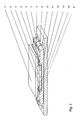
- eine perspektivische schematische Schnittdarstellung eines erfindungsgemäßen Bildsensors mit großer Chipfläche;
- Fig. 2:
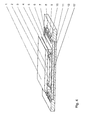
- eine perspektivische Schnittdarstellung einer weiteren Ausführung, bei der der Bildsensorchip in einer Kavität im Chipträger angeordnet ist;
- Fig. 3:
- eine perspektivische Schnittdarstellung einer weiteren Ausführung nach
Fig. 2 , bei der der Chipträger unter einer Öffnung im Schaltungsträger angeordnet ist; und - Fig. 4:
- eine perspektivische Schnittdarstellung einer Ausführung des erfindungsgemäßen Bildsensors, bei der der Chipträger in einer Kavität im Schaltungsträger angeordnet ist.
- Der Bildsensor enthält einen großen Bildsensor-Chip 2 mit einer Chipfläche von >100mm2, beispielsweise 20 mm x 30 mm, der mittels eines ersten Klebstoffs 5 auf einem Chipträger 7 elektrisch leitend oder nichtleitend befestigt ist.
- Auf dem Bildsensor-Chip 2 befinden sich an der Peripherie entlang von zwei einander gegenüberliegenden Rändern jeweils Reihen von Drahtbondpads 13 neben der eigentlichen Sensorfläche, die über erste Drahtbondverbindungen 4 mit entsprechenden Drahtbondpads 14, die sich neben dem Bildsensor-Chip 2 auf dem Chipträger 7 befinden, elektrisch verbunden sind. Die Drahtbondpads 13 können auch entlang der vier Ränder des Bildsensor-Chips 2 angeordnet sein. Die Enden der Drahtbondverbindungen 4 sind durch ein geeignetes Drahtbondverfahren auf die Drahtbondpads geschweißt (gebondet). Hierfür kommt Ultraschalldrahtbonden, oder auch Thermosonicbonden in Betracht. Die Auswahl eines der bekannten Drahtbondverfahren hängt von dem Material der verwendeten Bonddrähte sowie der Drahtbondpads 13 ab, die aus Aluminium, Gold, Kupfer, oder anderen geeigneten Materialien bestehen können.
- Am Außenrand des Chipträgers 7 sind auf dessen Oberseite Test- und Drahtbondpads 8 angeordnet, die entsprechend mit den innen liegenden Drahtbondpads 14 über nicht dargestellte an der Oberfläche des Chipträgers 7 oder oberflächennah verlaufende Leitbahnen elektrisch verbunden sind.
- Diese Test- und Drahtbondpads 8 dienen zum Testen des Bildsensors und gleichzeitig als Kontaktierungspads für die elektrische Verbindung zu einer Schaltung zur Bildverarbeitung o. dgl. über Drahtbondverbindung 9 zu den Drahtbondpads 10 auf einem Schaltungsträger 12. Die Test- und Drahtbondpads 8 auf dem Chipträger 7 ermöglichen eine Messung bzw. den Test des Bildsensor-Chips 2 vor der Endmontage auf dem Schaltungsträger 12. Damit können im Fehlerfall weitere kostspielige Montageschritte vermieden werden.
- Der Chipträger 7 ist mittels eines zweiten duktilen Klebstoffes 11 auf dem Schaltungsträger 12 befestigt.
- Auf dem Schaltungsträger 12, der gewöhnlich als Leiterplatte ausgebildet ist, befinden sich am Rand mindestens jeweils eine Reihe von Drahtbondpads 10, die über Drahtbondverbindung 9 mit der Drahtbondpads 8 auf dem Chipträger verbunden sind. Der Schaltungsträger 12 kann auch aus einem mit GlasfaserN verstärkten Kunststoff, oder einem Keramikmaterial bestehen.
- Außen um die Drahtbondpads 14 auf dem Chipträger 7 herum ist ein Rahmen 6 angeordnet, der mit dem Chipträger 7, beispielsweise durch Kleben, fest verbunden ist. Der Rahmen 6 dient als Abstandshalter zur Aufnahme eines Filters oder einer Glasplatte 1, die zugleich die Bildsensor-Fläche 3 des Bildsensor-Chips 2 schützt. In der Zeichnungsfigur sind nur die seitlichen Teile des Rahmens 6 ersichtlich. Der Rahmen 6, der als Abstandshalter dient, hat zugleich eine stabilisierende Funktion für den Bildsensor.
- Für die Montage des Filters oder der Glasplatte 1 auf dem Rahmen 6, bzw. des Rahmens 6 auf dem Chipträger 7 wird ein duktiler Klebstoff verwendet, der die Fehlanpassung der Ausdehnungskoeffizienten der einzelnen Bestandteile des Bildsensors ausgleichen kann.
- Die besonderen Merkmale dieses Bildsensors sind in einem besonders einfachen Aufbau zu sehen, der sich speziell für die stressarme Montage großer Bildsensor-Chips 2 eignet. Der somit erreichte stressarme Aufbau weist nach der Montage eine äußerst geringe Chipkrümmung auf, die bei der Montage von CMOS-Bildsensoren, LCOS (Liquid Crystal on Silicon), Photodiodenarrays und anderen optischen Sensoren unerlässlich ist.
- Es können Chipträger 7 z.B. aus Keramik, Glas, Silizium oder Sondermaterialien eingesetzt werden, die ähnliche thermische Ausdehnungskoeffizienten aufweisen, wie der Bildsensor-Chip 2. Auch der Rahmen 6 kann aus solchen Materialien bestehen.
- Die Montage auf dem Schaltungsträger 12, der typisch eine Leiterplatte mit Signalverarbeitungsbausteinen ist, die mit SMD-Bausteinen (SMD: Surface Mounted Device) bestückt ist, erfolgt vor der Montag des Bildsensors, so dass der Bildsensor-Chip 2 keine Lötbelastung erfährt.
- Wegen der insgesamt geringen thermo-mechanischen Belastung, da die Lötbelastung weggefallen ist, kann der Filter bzw. die Glasplatte 1 dünner ausgeführt werden. Der Vorteil ist, dass der Gesamtaufbau flacher gestaltet werden kann.
- Die Verbindung zwischen Chipträger 7 und Schaltungsträger 12, z.B. in Form einer bestückten Leiterplatte, erfolgt ebenfalls über Drahtbbondverbindung 9, die ausreichend robust sind.
- Außerdem kann der Chipträger 7 aktive oder passive Bauelemente (z.B. Kondensatoren) als SMD-Bauelemente oder in Dickschichtausführung enthalten, die innerhalb oder außerhalb des Rahmens 6 angeordnet werden können.
- Der komplette Bildsensor ist durch die einfache Montage kostengünstig herstellbar.
- In
Fig. 2 ist eine Variante des Bildsensors dargestellt, bei welcher der Bildsensorchip 2 in einer Kavität 16 im Chipträger 7 angeordnet ist. Der Rahmen 6 kann in diesem Fall niedriger ausgeführt werden, als bei der Ausführung nachFig. 1 , so dass der Bildsensor insgesamt niedriger baut. Der Rahmen 6, auf dem der Filter 1 bzw. die Glasabdeckung angeordnet ist, kann auch einstückig am Chipträger 7 angeformt sein, wie ausFig. 2 ersichtlich ist. - Es ist auch möglich, den Chipträger 7 auf der Rückseite des Schaltungsträgers 12 anzuordnen, wobei der optische Bereich sich dann durch eine Öffnung 15 im Schaltungsträger 12 erstreckt, so dass das einfallende Licht den auf dem Chipträger 7 befindlichen Bildsensor-Chip 2 erreichen kann (
Fig. 3 ). Die Öffnung 15 im Schaltungsträger 12 muss kleiner sein, als der Umriss des Chipträgers 7, damit dieser am Schaltungsträger befestigt werden kann. Andererseits muss die Öffnung 15 aber so groß sein, dass der vormontierte und verdrahtete Chipträger 7 mit dem Bildsensor-Chip 2 und aufgesetztem Filter bzw. Glasplatte 1 von unten in den Schaltungsträger 12 eingesetzt werden kann. Der Chipträger 7 ist hier ebenfalls mit einer Kavität 16 zur Aufnahme des Bildsensor-Chips 2 versehen. Die Drahtbondverbindung 9 zwischen Chipträger 7 und Schaltungsträger 12 befinden sich in diesem Fall auf der Unterseite des Bildsensors. - Der Rahmen 6 kann hier ebenfalls einstückig am Chipträger 7 angeformt sein, oder als separates Bauteil auf den Chipträger 7 geklebt sein, auf den der Filter bzw. die Glasplatte 1 geklebt ist. Der Rahmen 6 hat hier ebenfalls eine stabilisierende Funktion und dient auch dazu, den nötigen Freiraum für die Drahtbondverbindungen 4 zwischen dem Bildsensor-Chip 2 und dem Chipträger 7 unter dem Filter bzw. der Glasplatte 1 zu schaffen.
- Der Vorteil dieser Variante ist, dass der Bildsensor sehr flach baut und eine nahezu ebene Oberfläche besitzt.
- Die Rückseite des Schaltungsträgers 12 kann zusätzlich auch mit einer Kühleinrichtung (nicht dargestellt) zur Kühlung des Bildsensor-Chips 2 versehen werden. Im Fall, dass der Chipträger 7 unter dem Schaltungsträger 12 angeordnet ist, ist die Kühleinrichtung entsprechend auf der Rückseite des Chipträgers 7 zu montieren. Die Kühleinrichtung kann ein für ähnliche Fälle üblicher Kühlkörper sein.
- Alternativ kann der Chipträger 7 auch in eine Kavität bzw. Vertiefung 17 im Schaltungsträger 12 eingebaut werden (
Fig. 4 ), so dass dadurch eine Verringerung der Gesamtdicke des Bildsensors erreicht wird. Die Abmessungen der Kavität müssen so gewählt werden, dass der Chipträger 7 verspannungsfrei hineinpasst. Ansonsten entspricht der Aufbau des Bildsensors nachFig. 1 . - Die optische Abdeckung kann optional auch entfallen, wenn die Bildsensor-Fläche 3 mit einer Passivierung mit ausreichender Härte versehen wird, die einen hinreichenden Schutz vor mechanischen und chemischen Belastungen bietet.
- Auch können als Abdeckung oder Passivierung des Bildsensor-Chips 2 auch Glas/Filter 1 und organische bzw. anorganische Schichten direkt auf die Bildsensorfläche 3 als Einzelschichten oder als Schichtkombinationen aufgebracht werden.
- Es ist auch möglich, die Kontaktierung zwischen Chipträger 7 und Schaltungsträger 12 mit Hilfe von speziellen Klemmfassungen vorzunehmen.
- Weiterhin kann eine Abdeckung der Drahtbondverbindungen 9 zwischen Chipträger 7 und Schaltungsträger 12 mit den bekannten Materialien, z.B. durch Vergießen, oder mit mechanischen Komponenten, erfolgen.
- Die optische Abdeckung mit dem Filter/Glas 1 kann auch so angeordnet werden, dass die Drahtbondverbindungen 9 zum Schaltungsträger 12 mit abgedeckt werden, wobei der Rahmen 6 gleichzeitig als Handlingschutz dient.
- In diesem Fall muss der Rahmen 6 auf der Peripherie des Schaltungsträgers 12 unmittelbar an dessen Rand angeordnet werden.
- Für sämtliche vorstehend beschriebenen Klebeverbindungen kann ein duktiler Klebstoff verwendet werden.
-
- 1
- Filter/Glas
- 2
- Bildsensor-Chip
- 3
- Bildsensor-Fläche
- 4
- Drahtbondverbindung
- 5
- erster Klebstoff
- 6
- Rahmen
- 7
- Chipträger
- 8
- Test- und Drahtbondpad
- 9
- Drahtbondverbindung
- 10
- Drahtbondpad Board/Schaltungsträger
- 11
- zweiter Klebstoff
- 12
- Schaltungsträger
- 13
- Drahtbondpad
- 14
- Drahtbondpad
- 15
- Öffnung
- 16
- Kavität im Chipträger
- 17
- Kavität im Schaltungsträger
Claims (16)
- Bildsensor mit großer Chipfläche, enthaltend einen auf einem Chipträger befindlichen Bildsensor-Chip mit an dessen Peripherie angeordneten Reihen von Drahtbondpads, dadurch gekennzeichnet, dass der Bildsensor-Chip (2) zentrisch auf dem Chipträger (7) angeordnet ist, der seinerseits an einem Schaltungsträger (12) befestigt ist, dass der Bildsensor-Chip (2) durch einen Rahmen (6) umgeben ist, der mit dem Chipträger (7) verbunden ist und dass sich zwischen dem Bildsensor-Chip (2) und dem Chipträger (7) sowie zwischen dem Chipträger (7) und dem Schaltungsträger (12) ein duktiler Kleber (5; 11) befindet.
- Bildsensor nach Anspruch 1, dadurch gekennzeichnet, dass sich auf dem Chipträger (7) mindestens zwei Reihen von inneren Drahtbondpads (14) befinden, zwischen denen der Bildsensor-Chip (6) befestigt ist, sowie mindestens zwei weitere Reihen von äußeren Test- und Drahtbondpads (8) jeweils entlang der Peripherie des Chipträgers (7).
- Bildsensor nach Anspruch 1und 2, dadurch gekennzeichnet, dass der Schaltungsträger (12) mit einer Kavität (17) versehen ist, in welcher der Chipträger (7) eingelassen ist.
- Bildsensor nach Anspruch 1 und 2, dadurch gekennzeichnet, dass der Chipträger (7) mit einer Kavität (16) zur Aufnahme des Bildsensor-Chips (6) versehen ist.
- Bildsensor nach einem der Ansprüche 1 bis 3, dadurch gekennzeichnet, dass der Chipträger (7) unter dem Schaltungsträger (12) angeordnet ist, der mit einer Öffnung (15) über dem Bildsensor-Chip (2) versehen ist.
- Bildsensor nach einem der Ansprüche 1 bis 5, dadurch gekennzeichnet, dass der Rahmen (6) auf dem Chipträger (7) um die inneren Drahtbondpads (14) herum angeordnet ist.
- Bildsensor nach einem der Ansprüche 1 bis 5, dadurch gekennzeichnet, dass der Rahmen (6) in der Peripherie des Schaltungsträgers (12) angeordnet ist, der sowohl die Test- und Drahtbondpads (8), als auch den Chipträger (7) umgibt.
- Bildsensor nach Anspruch 7, dadurch gekennzeichnet, dass der Rahmen (6) mit dem Chipträger (7) bzw. dem Schaltungsträger (12) durch eine Klebeverbindung fest verbunden ist.
- Bildsensor nach Anspruch 7, dadurch gekennzeichnet, dass der Rahmen (6) einstückig am Chipträger (7) angeformt ist.
- Bildsensor nach den Ansprüchen 7 bis 9, dadurch gekennzeichnet, dass auf dem Rahmen (6) ein Filter oder eine Glasplatte (1) angeordnet sind.
- Bildsensor nach einem der Ansprüche 1 bis 5, dadurch gekennzeichnet, dass unmittelbar auf die Bildsensorfläche (2) Filter oder eine Glasplatte (1) direkt und/oder organische bzw. anorganische Schichten als Einzelschichten oder Schichtkombinationen aufgebracht sind.
- Bildsensor nach einem der Ansprüche 1 bis 8, dadurch gekennzeichnet, dass der Chipträger (7) und der Rahmen (6) aus Keramik, Glas, Silizium oder Sondermaterialien bestehen.
- Bildsensor nach einem der Ansprüche 1 bis 12, dadurch gekennzeichnet, dass der Schaltungsträger (12) eine gedruckte Leiterplatte ist, die aus einem glasfaserverstärkten Kunststoff oder einem Keramikmaterial besteht.
- Bildsensor nach einem der Ansprüche 1 bis 13, dadurch gekennzeichnet, dass für die elektrische Verbindung zwischen den Drahtbondpads (13) auf dem Bildsensor-Chip (2) und den Drahtbondpads (14) auf dem Chipträger (7), sowie zwischen den Test- und Drahtbondpads (8) und den Drahtbondpads (10) auf dem Schaltungsträger (12) jeweils Drahtbrücken vorgesehen sind.
- Bildsensor nach einem der Ansprüche 1 bis 14, dadurch gekennzeichnet, dass zumindest die Drahtbondverbindungen (4) zwischen dem Bildsensor-Chip (2) und dem Chipträger (7) durch den Filter bzw. die Glasplatte 1 abgedeckt sind.
- Bildsensor nach einem der Ansprüche 1 bis 15, dadurch gekennzeichnet, dass sämtliche Drahtbondverbindungen (4, 9) in einer Vergussmasse eingebettet sind.
Applications Claiming Priority (1)
| Application Number | Priority Date | Filing Date | Title |
|---|---|---|---|
| DE202011106207U DE202011106207U1 (de) | 2010-12-09 | 2011-09-30 | Bildsensor mit großer Chipfläche |
Publications (3)
| Publication Number | Publication Date |
|---|---|
| EP2575175A2 true EP2575175A2 (de) | 2013-04-03 |
| EP2575175A3 EP2575175A3 (de) | 2014-05-21 |
| EP2575175B1 EP2575175B1 (de) | 2017-04-26 |
Family
ID=47351375
Family Applications (1)
| Application Number | Title | Priority Date | Filing Date |
|---|---|---|---|
| EP12186374.0A Active EP2575175B1 (de) | 2011-09-30 | 2012-09-27 | Bildsensor mit großer Chipfläche |
Country Status (1)
| Country | Link |
|---|---|
| EP (1) | EP2575175B1 (de) |
Cited By (1)
| Publication number | Priority date | Publication date | Assignee | Title |
|---|---|---|---|---|
| DE102019124365A1 (de) | 2018-11-07 | 2020-05-07 | Viimagic Gmbh | Bildsensoranordnung mit optischer Abdeckung |
Citations (1)
| Publication number | Priority date | Publication date | Assignee | Title |
|---|---|---|---|---|
| DE102005059161A1 (de) | 2005-12-12 | 2007-06-21 | Robert Bosch Gmbh | Optisches Modul sowie Verfahren zur Montage eines optischen Moduls |
Family Cites Families (5)
| Publication number | Priority date | Publication date | Assignee | Title |
|---|---|---|---|---|
| EP0790652B1 (de) * | 1995-08-02 | 2007-02-21 | Matsushita Electric Industrial Co., Ltd. | Festkörperbildaufnahmegerät und herstellungsverfahren |
| DE10055040C1 (de) * | 2000-11-07 | 2002-06-06 | Hella Kg Hueck & Co | Verfahren zur Befestigung eines elektrischen Schaltungsträgers auf einer Platte, insbesondere für Schaltungsträger aus Keramik |
| KR100790994B1 (ko) * | 2006-08-01 | 2008-01-03 | 삼성전자주식회사 | 이미지 센서 패키지, 그 제조 방법 및 이미지 센서패키지를 포함하는 이미지 센서 모듈 |
| US20080191335A1 (en) * | 2007-02-08 | 2008-08-14 | Advanced Chip Engineering Technology Inc. | Cmos image sensor chip scale package with die receiving opening and method of the same |
| US20120106085A1 (en) * | 2009-02-19 | 2012-05-03 | Takao Yamazaki | Vacuum sealed package, printed circuit board having vacuum sealed package, electronic device, and method for manufacturing vacuum sealed package |
-
2012
- 2012-09-27 EP EP12186374.0A patent/EP2575175B1/de active Active
Patent Citations (1)
| Publication number | Priority date | Publication date | Assignee | Title |
|---|---|---|---|---|
| DE102005059161A1 (de) | 2005-12-12 | 2007-06-21 | Robert Bosch Gmbh | Optisches Modul sowie Verfahren zur Montage eines optischen Moduls |
Cited By (1)
| Publication number | Priority date | Publication date | Assignee | Title |
|---|---|---|---|---|
| DE102019124365A1 (de) | 2018-11-07 | 2020-05-07 | Viimagic Gmbh | Bildsensoranordnung mit optischer Abdeckung |
Also Published As
| Publication number | Publication date |
|---|---|
| EP2575175A3 (de) | 2014-05-21 |
| EP2575175B1 (de) | 2017-04-26 |
Similar Documents
| Publication | Publication Date | Title |
|---|---|---|
| EP1547166B1 (de) | Lichtquellenmodul sowie verfahren zu dessen herstellung | |
| EP1380056B1 (de) | Optoelektronische bauelementanordnung und verfahren zur herstellung einer optoelektronischen bauelementanordnung | |
| DE102007017831B4 (de) | Halbleitermodul und ein Verfahren zur Herstellung eines Halbleitermoduls | |
| DE102006023879B4 (de) | Verfahren zum Häusen eines Bildsensors und ein gehäuster Bildsensor | |
| DE68926448T2 (de) | Bildsensor und verfahren zu dessen herstellung | |
| WO2003067657A2 (de) | Halbleiterbauteil mit sensor- bzw. aktoroberfläche und verfahren zu seiner herstellung | |
| WO2002037074A1 (de) | Drucksensormodul | |
| DE102014221650A1 (de) | Elektronisches bauelement, elektronisches gerät und verfahren zur herstellung des elektronischen bauelements | |
| DE10251530A1 (de) | Stapelanordnung eines Speichermoduls | |
| EP3830534B1 (de) | Spektrometereinrichtung und verfahren zum herstellen einer spektrometereinrichtung | |
| WO2013037556A1 (de) | Verfahren zum herstellen einer mehrzahl von optoelektronischen bauelementen und optoelektronisches bauelement | |
| DE102014114618A1 (de) | Laserbauelement und Verfahren zu seiner Herstellung | |
| DE112012005022T5 (de) | Halbleitervorrichtung und Verfahren zu deren Fertigung | |
| EP2575175B1 (de) | Bildsensor mit großer Chipfläche | |
| DE10227544B4 (de) | Vorrichtung zur optischen Datenübertragung | |
| DE102005027365A1 (de) | Hochdrucksensoreinrichtung und Verfahren zu ihrer Herstellung | |
| DE3610288A1 (de) | Leistungshalbleitermodul | |
| DE10233641B4 (de) | Verfahren zur Verbindung einer integrierten Schaltung mit einem Substrat und entsprechende Schaltungsanordnung | |
| DE10214121C1 (de) | Optoelektronisches Bauelement mit mehreren Halbleiterchips | |
| DE102005046164A1 (de) | Röntgendetektor | |
| DE102018208230B4 (de) | Mems-baustein und verfahren zum herstellen eines mems-bausteins | |
| DE202011106207U1 (de) | Bildsensor mit großer Chipfläche | |
| EP2436242B1 (de) | Optoelektronisches modul und verfahren zur herstellung eines optoelektronischen moduls | |
| DE102004045854A1 (de) | Halbleitersensor mit einem Hohlraumgehäuse und Verfahren zur Herstellung desselben | |
| DE102019124365A1 (de) | Bildsensoranordnung mit optischer Abdeckung |
Legal Events
| Date | Code | Title | Description |
|---|---|---|---|
| PUAI | Public reference made under article 153(3) epc to a published international application that has entered the european phase |
Free format text: ORIGINAL CODE: 0009012 |
|
| AK | Designated contracting states |
Kind code of ref document: A2 Designated state(s): AL AT BE BG CH CY CZ DE DK EE ES FI FR GB GR HR HU IE IS IT LI LT LU LV MC MK MT NL NO PL PT RO RS SE SI SK SM TR |
|
| AX | Request for extension of the european patent |
Extension state: BA ME |
|
| 17P | Request for examination filed |
Effective date: 20131206 |
|
| PUAL | Search report despatched |
Free format text: ORIGINAL CODE: 0009013 |
|
| AK | Designated contracting states |
Kind code of ref document: A3 Designated state(s): AL AT BE BG CH CY CZ DE DK EE ES FI FR GB GR HR HU IE IS IT LI LT LU LV MC MK MT NL NO PL PT RO RS SE SI SK SM TR |
|
| AX | Request for extension of the european patent |
Extension state: BA ME |
|
| RIC1 | Information provided on ipc code assigned before grant |
Ipc: H01L 23/00 20060101ALI20140416BHEP Ipc: H01L 27/146 20060101AFI20140416BHEP |
|
| RBV | Designated contracting states (corrected) |
Designated state(s): AL AT BE BG CH CY CZ DE DK EE ES FI FR GB GR HR HU IE IS IT LI LT LU LV MC MK MT NL NO PL PT RO RS SE SI SK SM TR |
|
| 17Q | First examination report despatched |
Effective date: 20151207 |
|
| RAP1 | Party data changed (applicant data changed or rights of an application transferred) |
Owner name: FIRST SENSOR MICROELECTRONIC PACKAGING GMBH |
|
| GRAP | Despatch of communication of intention to grant a patent |
Free format text: ORIGINAL CODE: EPIDOSNIGR1 |
|
| INTG | Intention to grant announced |
Effective date: 20161110 |
|
| GRAS | Grant fee paid |
Free format text: ORIGINAL CODE: EPIDOSNIGR3 |
|
| GRAA | (expected) grant |
Free format text: ORIGINAL CODE: 0009210 |
|
| AK | Designated contracting states |
Kind code of ref document: B1 Designated state(s): AL AT BE BG CH CY CZ DE DK EE ES FI FR GB GR HR HU IE IS IT LI LT LU LV MC MK MT NL NO PL PT RO RS SE SI SK SM TR |
|
| REG | Reference to a national code |
Ref country code: GB Ref legal event code: FG4D Free format text: NOT ENGLISH |
|
| REG | Reference to a national code |
Ref country code: CH Ref legal event code: EP |
|
| REG | Reference to a national code |
Ref country code: AT Ref legal event code: REF Ref document number: 888547 Country of ref document: AT Kind code of ref document: T Effective date: 20170515 |
|
| REG | Reference to a national code |
Ref country code: IE Ref legal event code: FG4D Free format text: LANGUAGE OF EP DOCUMENT: GERMAN |
|
| REG | Reference to a national code |
Ref country code: DE Ref legal event code: R096 Ref document number: 502012010153 Country of ref document: DE |
|
| REG | Reference to a national code |
Ref country code: NL Ref legal event code: MP Effective date: 20170426 |
|
| REG | Reference to a national code |
Ref country code: LT Ref legal event code: MG4D |
|
| REG | Reference to a national code |
Ref country code: FR Ref legal event code: PLFP Year of fee payment: 6 |
|
| REG | Reference to a national code |
Ref country code: ES Ref legal event code: FG2A Ref document number: 2634234 Country of ref document: ES Kind code of ref document: T3 Effective date: 20170927 |
|
| PG25 | Lapsed in a contracting state [announced via postgrant information from national office to epo] |
Ref country code: NL Free format text: LAPSE BECAUSE OF FAILURE TO SUBMIT A TRANSLATION OF THE DESCRIPTION OR TO PAY THE FEE WITHIN THE PRESCRIBED TIME-LIMIT Effective date: 20170426 |
|
| PG25 | Lapsed in a contracting state [announced via postgrant information from national office to epo] |
Ref country code: NO Free format text: LAPSE BECAUSE OF FAILURE TO SUBMIT A TRANSLATION OF THE DESCRIPTION OR TO PAY THE FEE WITHIN THE PRESCRIBED TIME-LIMIT Effective date: 20170726 Ref country code: HR Free format text: LAPSE BECAUSE OF FAILURE TO SUBMIT A TRANSLATION OF THE DESCRIPTION OR TO PAY THE FEE WITHIN THE PRESCRIBED TIME-LIMIT Effective date: 20170426 Ref country code: LT Free format text: LAPSE BECAUSE OF FAILURE TO SUBMIT A TRANSLATION OF THE DESCRIPTION OR TO PAY THE FEE WITHIN THE PRESCRIBED TIME-LIMIT Effective date: 20170426 Ref country code: GR Free format text: LAPSE BECAUSE OF FAILURE TO SUBMIT A TRANSLATION OF THE DESCRIPTION OR TO PAY THE FEE WITHIN THE PRESCRIBED TIME-LIMIT Effective date: 20170727 Ref country code: FI Free format text: LAPSE BECAUSE OF FAILURE TO SUBMIT A TRANSLATION OF THE DESCRIPTION OR TO PAY THE FEE WITHIN THE PRESCRIBED TIME-LIMIT Effective date: 20170426 |
|
| PG25 | Lapsed in a contracting state [announced via postgrant information from national office to epo] |
Ref country code: IS Free format text: LAPSE BECAUSE OF FAILURE TO SUBMIT A TRANSLATION OF THE DESCRIPTION OR TO PAY THE FEE WITHIN THE PRESCRIBED TIME-LIMIT Effective date: 20170826 Ref country code: BG Free format text: LAPSE BECAUSE OF FAILURE TO SUBMIT A TRANSLATION OF THE DESCRIPTION OR TO PAY THE FEE WITHIN THE PRESCRIBED TIME-LIMIT Effective date: 20170726 Ref country code: SE Free format text: LAPSE BECAUSE OF FAILURE TO SUBMIT A TRANSLATION OF THE DESCRIPTION OR TO PAY THE FEE WITHIN THE PRESCRIBED TIME-LIMIT Effective date: 20170426 Ref country code: PL Free format text: LAPSE BECAUSE OF FAILURE TO SUBMIT A TRANSLATION OF THE DESCRIPTION OR TO PAY THE FEE WITHIN THE PRESCRIBED TIME-LIMIT Effective date: 20170426 Ref country code: RS Free format text: LAPSE BECAUSE OF FAILURE TO SUBMIT A TRANSLATION OF THE DESCRIPTION OR TO PAY THE FEE WITHIN THE PRESCRIBED TIME-LIMIT Effective date: 20170426 Ref country code: LV Free format text: LAPSE BECAUSE OF FAILURE TO SUBMIT A TRANSLATION OF THE DESCRIPTION OR TO PAY THE FEE WITHIN THE PRESCRIBED TIME-LIMIT Effective date: 20170426 |
|
| REG | Reference to a national code |
Ref country code: DE Ref legal event code: R097 Ref document number: 502012010153 Country of ref document: DE |
|
| PG25 | Lapsed in a contracting state [announced via postgrant information from national office to epo] |
Ref country code: RO Free format text: LAPSE BECAUSE OF FAILURE TO SUBMIT A TRANSLATION OF THE DESCRIPTION OR TO PAY THE FEE WITHIN THE PRESCRIBED TIME-LIMIT Effective date: 20170426 Ref country code: DK Free format text: LAPSE BECAUSE OF FAILURE TO SUBMIT A TRANSLATION OF THE DESCRIPTION OR TO PAY THE FEE WITHIN THE PRESCRIBED TIME-LIMIT Effective date: 20170426 Ref country code: CZ Free format text: LAPSE BECAUSE OF FAILURE TO SUBMIT A TRANSLATION OF THE DESCRIPTION OR TO PAY THE FEE WITHIN THE PRESCRIBED TIME-LIMIT Effective date: 20170426 Ref country code: EE Free format text: LAPSE BECAUSE OF FAILURE TO SUBMIT A TRANSLATION OF THE DESCRIPTION OR TO PAY THE FEE WITHIN THE PRESCRIBED TIME-LIMIT Effective date: 20170426 Ref country code: SK Free format text: LAPSE BECAUSE OF FAILURE TO SUBMIT A TRANSLATION OF THE DESCRIPTION OR TO PAY THE FEE WITHIN THE PRESCRIBED TIME-LIMIT Effective date: 20170426 |
|
| PG25 | Lapsed in a contracting state [announced via postgrant information from national office to epo] |
Ref country code: IT Free format text: LAPSE BECAUSE OF FAILURE TO SUBMIT A TRANSLATION OF THE DESCRIPTION OR TO PAY THE FEE WITHIN THE PRESCRIBED TIME-LIMIT Effective date: 20170426 Ref country code: SM Free format text: LAPSE BECAUSE OF FAILURE TO SUBMIT A TRANSLATION OF THE DESCRIPTION OR TO PAY THE FEE WITHIN THE PRESCRIBED TIME-LIMIT Effective date: 20170426 |
|
| PLBE | No opposition filed within time limit |
Free format text: ORIGINAL CODE: 0009261 |
|
| STAA | Information on the status of an ep patent application or granted ep patent |
Free format text: STATUS: NO OPPOSITION FILED WITHIN TIME LIMIT |
|
| 26N | No opposition filed |
Effective date: 20180129 |
|
| REG | Reference to a national code |
Ref country code: CH Ref legal event code: PL |
|
| PG25 | Lapsed in a contracting state [announced via postgrant information from national office to epo] |
Ref country code: MC Free format text: LAPSE BECAUSE OF FAILURE TO SUBMIT A TRANSLATION OF THE DESCRIPTION OR TO PAY THE FEE WITHIN THE PRESCRIBED TIME-LIMIT Effective date: 20170426 Ref country code: SI Free format text: LAPSE BECAUSE OF FAILURE TO SUBMIT A TRANSLATION OF THE DESCRIPTION OR TO PAY THE FEE WITHIN THE PRESCRIBED TIME-LIMIT Effective date: 20170426 |
|
| REG | Reference to a national code |
Ref country code: IE Ref legal event code: MM4A |
|
| REG | Reference to a national code |
Ref country code: BE Ref legal event code: MM Effective date: 20170930 |
|
| PG25 | Lapsed in a contracting state [announced via postgrant information from national office to epo] |
Ref country code: LU Free format text: LAPSE BECAUSE OF NON-PAYMENT OF DUE FEES Effective date: 20170927 |
|
| PG25 | Lapsed in a contracting state [announced via postgrant information from national office to epo] |
Ref country code: LI Free format text: LAPSE BECAUSE OF NON-PAYMENT OF DUE FEES Effective date: 20170930 Ref country code: CH Free format text: LAPSE BECAUSE OF NON-PAYMENT OF DUE FEES Effective date: 20170930 Ref country code: IE Free format text: LAPSE BECAUSE OF NON-PAYMENT OF DUE FEES Effective date: 20170927 |
|
| PG25 | Lapsed in a contracting state [announced via postgrant information from national office to epo] |
Ref country code: BE Free format text: LAPSE BECAUSE OF NON-PAYMENT OF DUE FEES Effective date: 20170930 |
|
| REG | Reference to a national code |
Ref country code: FR Ref legal event code: PLFP Year of fee payment: 7 |
|
| PG25 | Lapsed in a contracting state [announced via postgrant information from national office to epo] |
Ref country code: MT Free format text: LAPSE BECAUSE OF FAILURE TO SUBMIT A TRANSLATION OF THE DESCRIPTION OR TO PAY THE FEE WITHIN THE PRESCRIBED TIME-LIMIT Effective date: 20170426 |
|
| REG | Reference to a national code |
Ref country code: AT Ref legal event code: MM01 Ref document number: 888547 Country of ref document: AT Kind code of ref document: T Effective date: 20170927 |
|
| PG25 | Lapsed in a contracting state [announced via postgrant information from national office to epo] |
Ref country code: AT Free format text: LAPSE BECAUSE OF NON-PAYMENT OF DUE FEES Effective date: 20170927 |
|
| PG25 | Lapsed in a contracting state [announced via postgrant information from national office to epo] |
Ref country code: HU Free format text: LAPSE BECAUSE OF FAILURE TO SUBMIT A TRANSLATION OF THE DESCRIPTION OR TO PAY THE FEE WITHIN THE PRESCRIBED TIME-LIMIT; INVALID AB INITIO Effective date: 20120927 |
|
| PG25 | Lapsed in a contracting state [announced via postgrant information from national office to epo] |
Ref country code: CY Free format text: LAPSE BECAUSE OF NON-PAYMENT OF DUE FEES Effective date: 20170426 |
|
| PG25 | Lapsed in a contracting state [announced via postgrant information from national office to epo] |
Ref country code: MK Free format text: LAPSE BECAUSE OF FAILURE TO SUBMIT A TRANSLATION OF THE DESCRIPTION OR TO PAY THE FEE WITHIN THE PRESCRIBED TIME-LIMIT Effective date: 20170426 |
|
| PG25 | Lapsed in a contracting state [announced via postgrant information from national office to epo] |
Ref country code: TR Free format text: LAPSE BECAUSE OF FAILURE TO SUBMIT A TRANSLATION OF THE DESCRIPTION OR TO PAY THE FEE WITHIN THE PRESCRIBED TIME-LIMIT Effective date: 20170426 |
|
| PG25 | Lapsed in a contracting state [announced via postgrant information from national office to epo] |
Ref country code: PT Free format text: LAPSE BECAUSE OF FAILURE TO SUBMIT A TRANSLATION OF THE DESCRIPTION OR TO PAY THE FEE WITHIN THE PRESCRIBED TIME-LIMIT Effective date: 20170426 |
|
| PG25 | Lapsed in a contracting state [announced via postgrant information from national office to epo] |
Ref country code: AL Free format text: LAPSE BECAUSE OF FAILURE TO SUBMIT A TRANSLATION OF THE DESCRIPTION OR TO PAY THE FEE WITHIN THE PRESCRIBED TIME-LIMIT Effective date: 20170426 |
|
| REG | Reference to a national code |
Ref country code: DE Ref legal event code: R079 Ref document number: 502012010153 Country of ref document: DE Free format text: PREVIOUS MAIN CLASS: H01L0027146000 Ipc: H10F0039180000 |
|
| PGFP | Annual fee paid to national office [announced via postgrant information from national office to epo] |
Ref country code: DE Payment date: 20250702 Year of fee payment: 14 |
|
| PGFP | Annual fee paid to national office [announced via postgrant information from national office to epo] |
Ref country code: GB Payment date: 20250703 Year of fee payment: 14 |
|
| PGFP | Annual fee paid to national office [announced via postgrant information from national office to epo] |
Ref country code: FR Payment date: 20250808 Year of fee payment: 14 |
|
| PGFP | Annual fee paid to national office [announced via postgrant information from national office to epo] |
Ref country code: ES Payment date: 20251014 Year of fee payment: 14 |