EP2575278A1 - Anzeigeverfahren, basisstation und system für ein csi-feedback - Google Patents
Anzeigeverfahren, basisstation und system für ein csi-feedback Download PDFInfo
- Publication number
- EP2575278A1 EP2575278A1 EP11817776A EP11817776A EP2575278A1 EP 2575278 A1 EP2575278 A1 EP 2575278A1 EP 11817776 A EP11817776 A EP 11817776A EP 11817776 A EP11817776 A EP 11817776A EP 2575278 A1 EP2575278 A1 EP 2575278A1
- Authority
- EP
- European Patent Office
- Prior art keywords
- feedback scheme
- csi
- base station
- ccs
- feedback
- Prior art date
- Legal status (The legal status is an assumption and is not a legal conclusion. Google has not performed a legal analysis and makes no representation as to the accuracy of the status listed.)
- Granted
Links
Images



Classifications
-
- H—ELECTRICITY
- H04—ELECTRIC COMMUNICATION TECHNIQUE
- H04W—WIRELESS COMMUNICATION NETWORKS
- H04W48/00—Access restriction; Network selection; Access point selection
- H04W48/08—Access restriction or access information delivery, e.g. discovery data delivery
-
- H—ELECTRICITY
- H04—ELECTRIC COMMUNICATION TECHNIQUE
- H04L—TRANSMISSION OF DIGITAL INFORMATION, e.g. TELEGRAPHIC COMMUNICATION
- H04L1/00—Arrangements for detecting or preventing errors in the information received
- H04L1/0001—Systems modifying transmission characteristics according to link quality, e.g. power backoff
- H04L1/0023—Systems modifying transmission characteristics according to link quality, e.g. power backoff characterised by the signalling
- H04L1/0026—Transmission of channel quality indication
-
- H—ELECTRICITY
- H04—ELECTRIC COMMUNICATION TECHNIQUE
- H04B—TRANSMISSION
- H04B7/00—Radio transmission systems, i.e. using radiation field
- H04B7/02—Diversity systems; Multi-antenna system, i.e. transmission or reception using multiple antennas
- H04B7/04—Diversity systems; Multi-antenna system, i.e. transmission or reception using multiple antennas using two or more spaced independent antennas
- H04B7/06—Diversity systems; Multi-antenna system, i.e. transmission or reception using multiple antennas using two or more spaced independent antennas at the transmitting station
- H04B7/0613—Diversity systems; Multi-antenna system, i.e. transmission or reception using multiple antennas using two or more spaced independent antennas at the transmitting station using simultaneous transmission
- H04B7/0615—Diversity systems; Multi-antenna system, i.e. transmission or reception using multiple antennas using two or more spaced independent antennas at the transmitting station using simultaneous transmission of weighted versions of same signal
- H04B7/0619—Diversity systems; Multi-antenna system, i.e. transmission or reception using multiple antennas using two or more spaced independent antennas at the transmitting station using simultaneous transmission of weighted versions of same signal using feedback from receiving side
- H04B7/0621—Feedback content
- H04B7/0626—Channel coefficients, e.g. channel state information [CSI]
-
- H—ELECTRICITY
- H04—ELECTRIC COMMUNICATION TECHNIQUE
- H04B—TRANSMISSION
- H04B7/00—Radio transmission systems, i.e. using radiation field
- H04B7/02—Diversity systems; Multi-antenna system, i.e. transmission or reception using multiple antennas
- H04B7/04—Diversity systems; Multi-antenna system, i.e. transmission or reception using multiple antennas using two or more spaced independent antennas
- H04B7/06—Diversity systems; Multi-antenna system, i.e. transmission or reception using multiple antennas using two or more spaced independent antennas at the transmitting station
- H04B7/0613—Diversity systems; Multi-antenna system, i.e. transmission or reception using multiple antennas using two or more spaced independent antennas at the transmitting station using simultaneous transmission
- H04B7/0615—Diversity systems; Multi-antenna system, i.e. transmission or reception using multiple antennas using two or more spaced independent antennas at the transmitting station using simultaneous transmission of weighted versions of same signal
- H04B7/0619—Diversity systems; Multi-antenna system, i.e. transmission or reception using multiple antennas using two or more spaced independent antennas at the transmitting station using simultaneous transmission of weighted versions of same signal using feedback from receiving side
- H04B7/0636—Feedback format
- H04B7/0645—Variable feedback
-
- H—ELECTRICITY
- H04—ELECTRIC COMMUNICATION TECHNIQUE
- H04B—TRANSMISSION
- H04B7/00—Radio transmission systems, i.e. using radiation field
- H04B7/02—Diversity systems; Multi-antenna system, i.e. transmission or reception using multiple antennas
- H04B7/04—Diversity systems; Multi-antenna system, i.e. transmission or reception using multiple antennas using two or more spaced independent antennas
- H04B7/06—Diversity systems; Multi-antenna system, i.e. transmission or reception using multiple antennas using two or more spaced independent antennas at the transmitting station
- H04B7/0613—Diversity systems; Multi-antenna system, i.e. transmission or reception using multiple antennas using two or more spaced independent antennas at the transmitting station using simultaneous transmission
- H04B7/0615—Diversity systems; Multi-antenna system, i.e. transmission or reception using multiple antennas using two or more spaced independent antennas at the transmitting station using simultaneous transmission of weighted versions of same signal
- H04B7/0619—Diversity systems; Multi-antenna system, i.e. transmission or reception using multiple antennas using two or more spaced independent antennas at the transmitting station using simultaneous transmission of weighted versions of same signal using feedback from receiving side
- H04B7/0658—Feedback reduction
-
- H—ELECTRICITY
- H04—ELECTRIC COMMUNICATION TECHNIQUE
- H04L—TRANSMISSION OF DIGITAL INFORMATION, e.g. TELEGRAPHIC COMMUNICATION
- H04L1/00—Arrangements for detecting or preventing errors in the information received
- H04L1/0001—Systems modifying transmission characteristics according to link quality, e.g. power backoff
- H04L1/0023—Systems modifying transmission characteristics according to link quality, e.g. power backoff characterised by the signalling
- H04L1/0027—Scheduling of signalling, e.g. occurrence thereof
-
- H—ELECTRICITY
- H04—ELECTRIC COMMUNICATION TECHNIQUE
- H04L—TRANSMISSION OF DIGITAL INFORMATION, e.g. TELEGRAPHIC COMMUNICATION
- H04L5/00—Arrangements affording multiple use of the transmission path
- H04L5/0001—Arrangements for dividing the transmission path
- H04L5/0003—Two-dimensional division
- H04L5/0005—Time-frequency
- H04L5/0007—Time-frequency the frequencies being orthogonal, e.g. OFDM(A) or DMT
- H04L5/001—Time-frequency the frequencies being orthogonal, e.g. OFDM(A) or DMT the frequencies being arranged in component carriers
-
- H—ELECTRICITY
- H04—ELECTRIC COMMUNICATION TECHNIQUE
- H04L—TRANSMISSION OF DIGITAL INFORMATION, e.g. TELEGRAPHIC COMMUNICATION
- H04L5/00—Arrangements affording multiple use of the transmission path
- H04L5/003—Arrangements for allocating sub-channels of the transmission path
- H04L5/0053—Allocation of signalling, i.e. of overhead other than pilot signals
- H04L5/0055—Physical resource allocation for ACK/NACK
-
- H—ELECTRICITY
- H04—ELECTRIC COMMUNICATION TECHNIQUE
- H04L—TRANSMISSION OF DIGITAL INFORMATION, e.g. TELEGRAPHIC COMMUNICATION
- H04L5/00—Arrangements affording multiple use of the transmission path
- H04L5/003—Arrangements for allocating sub-channels of the transmission path
- H04L5/0053—Allocation of signalling, i.e. of overhead other than pilot signals
- H04L5/0057—Physical resource allocation for CQI
-
- H—ELECTRICITY
- H04—ELECTRIC COMMUNICATION TECHNIQUE
- H04L—TRANSMISSION OF DIGITAL INFORMATION, e.g. TELEGRAPHIC COMMUNICATION
- H04L1/00—Arrangements for detecting or preventing errors in the information received
- H04L1/12—Arrangements for detecting or preventing errors in the information received by using return channel
- H04L1/16—Arrangements for detecting or preventing errors in the information received by using return channel in which the return channel carries supervisory signals, e.g. repetition request signals
- H04L1/18—Automatic repetition systems, e.g. Van Duuren systems
- H04L1/1829—Arrangements specially adapted for the receiver end
- H04L1/1854—Scheduling and prioritising arrangements
Definitions
- the present invention relates to the field of wireless communications and particularly to a method, base station and system for indicating channel state information (CSI) feedback.
- CSI channel state information
- a User Equipment measures a channel quality over only a single downlink carrier and feeds back a measurement result of Channel State Information (CSI).
- the CSI includes Rank Indicator (RI), Channel Quality Indicator (CQI), Precoding Matrix Indicator (PMI) and other information.
- RI Rank Indicator
- CQI Channel Quality Indicator
- PMI Precoding Matrix Indicator
- a specific feedback can be performed periodically over a Physical Uplink Control Channel (PUCCH) or aperiodically over a Physical Uplink Shared Channel (PUSCH).
- PUCCH Physical Uplink Control Channel
- PUSCH Physical Uplink Shared Channel
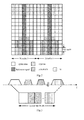
- the RI information is encoded separately, and the CQI and the PMI are encoded separately, and ACK/NACK information is also encoded separately, and all such uplink control information is multiplexed with uplink data as illustrated in Fig.1 .
- uplink data symbols are mapped to physical resources by firstly mapping the CQI/PMI information and then mapping the uplink data onto the remaining resources.
- the ACK/NACK and the RI information is mapped by punching the uplink data so that the ACK/NACK is placed in four columns of symbols on both sides of reference signal in an order of ascending frequencies firstly in the time domain and then in the frequency domain and the RI information is mapped in four columns of symbols immediately next to the ACK/NACK in an order of ascending frequencies firstly in the time domain and then in the frequency domain.
- aperiodic transmission of CSI over a PUSCH is triggered by 1-bit CQI Request information in an uplink (UL) grant. If the UE receives the CQI Request bit which is set to 1, then the UE forms the relevant CSI information and inserts in a pre-configured feedback scheme over the PUSCH and transmits it; otherwise, no CSI is transmitted.
- LTE-advanced system In order to support a larger system bandwidth in an LTE-advanced system than in the LTE system, resources of a plurality of LTE carriers (also referred to as component carriers) have to be connected together for use, particularly in two approaches:
- a plurality of consecutive LTE carriers are aggregated to provide the LTE-A system with a larger transmission bandwidth
- a plurality of inconsecutive LTE carriers are aggregated to provide the LTE-A system with a larger transmission bandwidth.
- Fig.3 illustrates an example of aggregation of a plurality of inconsecutive carriers.
- a research demand of the existing LTE-A system has been ascertained that aggregation of up to at most 5 component carriers can be supported and a UE can support concurrent transmission/reception of data over at most 5 component carriers.
- a support of uplink and downlink asymmetric and symmetric carrier aggregation has been decided in the research on carrier aggregation.
- Asymmetric and symmetric carrier aggregation can be configured from the perspective of the system (that is, an uplink and downlink asymmetric or symmetric carrier configuration can be supported in the system) or allocated per UE (that is, a UE is allocated with an uplink and downlink asymmetric or symmetric carrier configuration).
- a pairing relationship between uplink and downlink carriers, where a downlink carrier can be paired with one or more uplink carriers and an uplink carrier can also be paired with one or more downlink carriers.
- a pairing relationship is as illustrated in Fig.4A and Fig.4B with an arrowed connection between an uplink carrier and a downlink carrier representing the presence of a pairing relationship between both of them, where a pair of downlink/uplink carriers with a linking relationship is referred to as a cell, and the correspondence relationship between the uplink and downlink carriers in each cell is broadcasted from the system to all the user equipments in the cell.
- Fig.5 illustrates a UE-specific uplink and downlink asymmetric or symmetric carrier configuration supported in the LTE-A Rel-10, where a UE1 is configured with an uplink and downlink symmetric carrier configuration, and linking relationships of paired carriers in two cells are the same as contents broadcasted in respective system messages.
- a UE2 is configured with an uplink and downlink asymmetric carrier configuration, and at this time an Uplink Component Carrier (UL CC) can belong to only one cell; and a linking relationship of a UL CC3 with a Downlink Component Carrier (DL CC) 3 applies to the UE, but a linking relationship thereof with a DL CC4 does not apply to the UE, where the DL CC4 is referred to a standalone Downlink Component Carrier (DL CC).
- UL CC Uplink Component Carrier
- DL CC Downlink Component Carrier
- the numbers of uplink and downlink carriers are symmetric from the perspective of the system, and there is a one-to-one linking relationship; and a UE is allocated with asymmetric numbers of uplink and downlink carriers in the system as illustrated in Fig.6 , where the DL CC2 in the figure is also referred to a standalone DL CC, and also this configuration scenario has to be supported in the LTE-A Rel-10.
- each user equipment reports its own uplink and downlink carrier aggregation capability to a base station in an initial access procedure.
- the base station cannot configure downlink and uplink carriers beyond the uplink and downlink carrier aggregation capability of the user equipment.
- a aperiodic CSI feedback is triggered by a 1-bit CQI Request information in a UL grant.
- a 1-bit CQI Request in a UL grant continues the use of the design in the LTE Rel-8 without any extension or modification, and specific multi-carrier aperiodic CSI feedback schemes are as follows:
- aperiodic CSI information of a plurality of DL CCs are fed back concurrently;
- the UE is triggered by a 1-bit CQI Request information in a UL grant to put aperiodic CSI information of all the activated DL CCs over a PUSCH scheduled by the UL grant for feedback together.
- This scheme is the simplest but has a drawback of a considerable feedback overhead and thus poses a considerable influence upon transmission performance over the PUSCH, especially when the UE is configured with a plurality of downlink component carriers (up to 5) and there is a small physical resource scheduled over the PUSCH.
- aperiodic CSI information of each DL CC is fed back separately, particularly in the following two schemes, and such schemes also have their corresponding restrictions although they avoid the problem of a feedback overhead resulting from CSI information of a plurality of DL CCs being fed back concurrently.
- the UE is triggered by a 1-bit CQI Request information in a UL grant to put aperiodic CSI information, of each DL CC in which the UL grant is transmitted from the network, over a PUSCH scheduled by the UL grant for feedback.
- This scheme has such drawbacks that: 1) for a UE configured with cross-carrier scheduling, e.g., the UE1 in Fig.5 , where a dotted arrow represents a configuration of uplink cross-carrier scheduling, that is, PUSCH transmission of both the UL CC1 and the UL CC2 is scheduled by a UL grant over the DL CC1, here no UL grant is transmitted over the DL CC2 as concluded so far, and a aperiodic CSI feedback of the DL CC2 cannot be triggered; and 2) no UL grant will be transmitted over a standalone downlink component carrier as concluded so far, and thus a aperiodic CSI feedback thereof cannot be triggered either.
- the UE is triggered by a 1-bit CQI Request information in a UL grant to put aperiodic CSI information, of each DL CC having a system-level paired linking relationship with each UL CC scheduled by the UL grant, over a PUSCH scheduled by the UL grant for feedback.
- This scheme has such a drawback that aperiodic CSI of a part of DL CCs of a UE configured with uplink and downlink carriers cannot be fed back, e.g., the DL CC4 of the UE2 in Fig.5 and the DL CC2 of the UE3 in Fig.6 .
- Embodiments of the invention provide a method of indicating a CSI feedback, a method of feeding back CSI, a UE, a base station and a wireless communication system as CSI feedback schemes applicable to a multi-carrier system.
- the invention provides a method of indicating a CSI feedback, which includes:
- the invention further provides a method of feeding back CSI, which includes:
- the invention further provides a base station including:
- the invention further provides a UE including:
- the invention further provides a wireless communication system including:
- the base station can select an appropriate aperiodic CSI feedback scheme dependent upon a carrier configuration condition of the system or the user equipment to thereby improve the flexibility of designing the system.
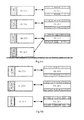
- Fig.1 is a flow chart of multiplexing uplink control information and uplink data in the prior art
- Fig.2 is a schematic diagram of mapping uplink control information onto uplink physical resources in the prior art
- Fig.3 is a schematic diagram of carrier aggregation adopted in an LTE-A system
- Fig.4A is a schematic diagram of an asymmetric configuration of uplink and downlink carriers provided in a linking relationship from the perspective of the system;
- Fig.4B is a schematic diagram of a symmetric configuration of uplink and downlink carriers provided in a linking relationship from the perspective of the system;
- Fig.5 is a schematic diagram of asymmetric/symmetric configurations of uplink and downlink carriers provided from the perspective of a UE;
- Fig.6 is a schematic diagram of an asymmetric configuration of uplink and downlink carriers provided from the perspective of a UE;
- Fig.7 is a schematic flow chart of a method of indicating a CSI feedback according to an embodiment of the invention.
- Fig.8 is a schematic flow chart of a method of feeding back CSI according to an embodiment of the invention.
- Fig.9 is a structural diagram of a base station according to an embodiment of the invention.
- Fig.10 is a structural diagram of a UE according to an embodiment of the invention.
- a base station In order to perform carrier scheduling and link adaptation processes effectively in an LTE-A system with carrier aggregation, a base station shall obtain CSI feedbacks of a plurality of DL CCs measured by a UE and hereby perform multi-carrier scheduling, where CSI fed back from the UE can include, for example, RI information, CQI information, wideband PMI information, etc., and a CQI includes a wideband CQI and a sub-band CQI.
- the invention provides a method of indicating a CSI feedback. As illustrated in Fig.7 , the method includes:
- a base station configures a UE with a CSI feedback scheme
- each user equipment reports its own uplink and downlink carrier aggregation capability to a base station in an initial access procedure.
- the base station cannot configure downlink and uplink carriers beyond the uplink and downlink carrier aggregation capability of the user equipment.
- the base station configures the UE with a corresponding CSI feedback scheme dependent upon a carrier configuration condition of the UE in a multi-carrier system.
- the UE can design flexibly a CSI feedback scheme suitable for the carrier configuration condition of the UE dependent upon the carrier configuration condition of the UE, where a preferred CSI feedback scheme can be selected according to a scenario on one hand, and the flexibility of designing the system can be improved on the other hand.
- the base station transmits the configured CSI feedback scheme to the UE in configuration signaling to indicate the CSI feedback scheme to be adopted by the UE in aperiodic CSI reporting.
- the invention enables the base station to configures selectively the UE to adopt an appropriate aperiodic CSI feedback scheme in a different scenario to thereby avoid the drawbacks in the prior art of the use of only one feedback mechanism and of the impossibility to design flexibly a CSI feedback scheme of the system.
- the base station can design a CSI feedback scheme suitable for the UE dependent upon the carrier configuration condition of the UE by selecting from existing CSI feedback schemes a CSI feedback scheme suitable for the UE, and preferably the CSI feedback scheme configured for the UE by the base station is any CSI feedback scheme selected from system configured feedback schemes including a joint feedback scheme and a first independent feedback scheme or including a joint feedback scheme and a second independent feedback scheme or including a joint feedback scheme, a first independent feedback scheme and a second independent feedback scheme, where:
- CSI of all the activated DL CCs of the UE is put over a PUSCH scheduled by a UL grant for feedback;
- This feedback scheme has such an advantage that all the CSI is fed back but also a disadvantage of a considerable feedback overhead, so this feedback scheme can be applicable to some UE which cannot feed back all the CSI in other feedback schemes although it is not applicable to all the UEs.
- This feedback scheme has such an advantage that aperiodic CSI information of each DL CC is fed back separately to thereby avoid the problem of a feedback overhead resulting from CSI information of a plurality of DL CCs being fed back concurrently but also such a disadvantage that this pattern is not applicable to a UE configured with DL CCs between which there is a significant difference in channel quality, for example, in an application scenario where the base station configures cross-carrier scheduling when the difference is above a preset threshold.
- CSI of each DL CC having a system-level paired linking relationship with each UL CC scheduled by a UL grant is put over a PUSCH scheduled by the UL grant for feedback.
- This feedback scheme has such an advantage that aperiodic CSI information of each DL CC is fed back separately to thereby avoid the problem of a feedback overhead resulting from CSI information of a plurality of DL CCs being fed back concurrently but also such a disadvantage that the UE with an asymmetric configuration of uplink and downlink carriers cannot feed back aperiodic CSI information of all the DL CCs.
- a CSI feedback scheme suitable for the UE can be selected dependent upon a specific application scenario in an implementation of the invention.
- a specific CSI feedback scheme can alternatively be any other feedback scheme that can occur to those skilled in the art.
- the base station selects a CSI feedback scheme the most suitable for the UE taking into account the advantage and the disadvantage of the specific feedback scheme and notifies the UE in configuration signaling.
- the configuration signaling in this embodiment can particularly be Radio Resource Control (RRC) signaling (cell-specific or UE-specific) or MAC CE signaling specific to the UE or Physical Downlink Control Channel (PDCCH) signaling specific to the UE.
- RRC Radio Resource Control
- MAC CE Packet Control Channel
- PDCCH Physical Downlink Control Channel
- the configuration signaling can alternatively be newly defined to feed back the configured CSI feedback scheme.
- the configured CSI feedback scheme can be carried in configuration signaling particularly by setting identification information corresponding to the different feedback schemes and carrying the identification information corresponding to the configured CSI feedback scheme in the configuration signaling.
- a UE with a symmetric configuration of UL CCs and DL CCs is configured with the first independent feedback scheme or the second independent feedback scheme, and when the first independent feedback scheme is configured, CSI of each DL CC over which a UL grant is transmitted from the base station is put over a PUSCH scheduled by the UL grant for feedback; and when the second independent feedback scheme is configured, the UE puts CSI of each DL CC having a system-level paired linking relationship with each UL CC scheduled by a UL grant, over a PUSCH scheduled by the UL grant for feedback.
- the UE with the symmetric configuration of UL CCs and DL CCs can further be configured as follows: the UE is configured with the first independent feedback scheme or the second independent feedback scheme when the UE is configured with DL CCs between which the difference in channel quality satisfies a preset requirement; and the UE is configured with the second independent feedback scheme when the UE is configured with DL CCs between which the difference in channel quality does not satisfy the preset requirement.
- the base station will perform cross-carrier scheduling upon determining that the UE is configured with a plurality of DL CCs between which there is a considerable difference in channel quality. As illustrated in Fig.5 , when determining serious interference between the DL CC1 and the DL CC2 of the UE1, the base station will perform cross-carrier transmission, over the DL CC1, of a UL grant scheduling the UL CC2, which would otherwise be transmitted over the DL CC2. If there is a considerable difference in channel quality between the DL CCs, then the second independent feedback scheme can be adopted; otherwise, CSI information can also be well fed back in the first independent feedback scheme.
- the base station can determine whether the UE adopts the first independent feedback scheme or the second independent feedback scheme dependent upon the difference in channel quality between DL CCs configured for the UE in the embodiment of the invention.
- a UE with an asymmetric configuration of UL CCs and DL CCs is configured with the joint feedback scheme.
- the joint feedback scheme is adopted for the UE with an asymmetric configuration of uplink and downlink carriers in the embodiment of the invention.
- a considerable resource overhead will not be incurred due to a limited number of UEs with an asymmetric configuration of uplink and downlink carriers in the system.
- a specific scheme to configure a CSI feedback scheme for a UE with a different CC configuration will not be limited to the foregoing several schemes in the embodiments of the invention, and when there are other application scenarios and other feedback patters in practice, the UE can be configured flexibly dependent upon advantages and disadvantages of the respective feedback schemes.
- the CSI feedback schemes configured by the base station includes two feedback schemes, i.e., the joint feedback scheme and the independent feedback scheme.
- the base station can notify in the configuration signaling, the UE of the CSI feedback scheme to be used, and thus the base station can update and notify the UE of the CSI feedback scheme in real time when the CSI feedback scheme suitable for the UE is reselected because the carrier configuration condition of the UE is updated or other information is updated.
- a UE receives configuration signaling transmitted from a base station and obtains a CSI feedback scheme configured for the UE by the base station;
- the configuration signaling can particularly be RRC signaling (cell-specific or UE-specific) or MAC CE signaling specific to the UE or PDCCH signaling specific to the UE.
- the configuration signaling can alternatively be signaling newly defined to feed back the configured CSI feedback scheme.
- the UE feeds back CSI in the CSI feedback scheme configured for the UE by the base station upon determining that aperiodic CSI reporting is triggered.
- the UE can determine that aperiodic CSI reporting is triggered by continuing the use of the design in the LTE Rel-8, particularly as follows: the UE determines that aperiodic CSI reporting is triggered, according to a UL grant transmitted from the base station in which a CQI Request is set, and determines not to perform aperiodic CSI reporting when the CQI Request in the UL grant is not set.
- the UE feeds back CSI in the CSI feedback scheme indicated by the base station to thereby avoid the drawback when the UE reports CSI uniformly in the same CSI feedback scheme.
- the UE puts CSI of all the activated DL CCs over a PUSCH scheduled by a UL grant for feedback upon determining the CSI feedback scheme configured for the UE by the base station as a joint feedback scheme;
- the UE puts CSI, of each DL CC over which a UL grant is transmitted from the base station, over a PUSCH scheduled by the UL grant for feedback upon determining the CSI feedback scheme configured for the UE by the base station as a first independent feedback scheme;
- the UE puts CSI, of each DL CC having a system-level paired linking relationship with each UL CC scheduled by a UL grant, over a PUSCH scheduled by the UL grant for feedback upon determining the CSI feedback scheme configured for the UE by the base station as a second independent feedback scheme.
- the CSI feedback scheme obtained by the UE is the first independent feedback scheme or the second independent feedback scheme when the UE is configured symmetrically with UL CCs and DL CCs; or
- the CSI feedback scheme obtained by the UE is the first independent feedback scheme or the second independent feedback scheme when the UE is configured symmetrically with UL CCs and DL CCs and the difference in channel quality between the DL CCs configured for the UE satisfies a preset requirement; and the CSI feedback scheme obtained by the UE is the second independent feedback scheme when the UE is configured symmetrically with UL CCs and DL CCs and the difference in channel quality between the DL CCs configured for the UE does not satisfy the preset requirement; or
- the CSI feedback scheme obtained by the UE is the joint feedback scheme when the UE is configured asymmetrically with UL CCs and DL CCs.
- the UE can continue the use of specific information in CSI determined in the LTE Rel-8 to be fed back upon determining the CSI feedback scheme. Specifically a corresponding number of bits of CSI are selected for feedback in the feedback mode configured for the UE by the base station.
- the UE feeds back CSI aperiodically over a PUSCH in numerous different feedback modes, where specific CQI/PMI feedback modes are defined as depicted in Table 1: Table 1 CQI/PMI feedback m PMI feedback type No PMI Single PMI Multiple PMIs PUSCH CQI feedback type Wideband CQI 1-2 UE selected sub-band CQI 2-0 2-2 Higher-layer configured sub-band CQI 3-0 3-1
- each transmission mode there are a limited number of optional feedback modes in each transmission mode and particularly as specified below, which feedback mode is adopted by the UE in a specific transmission mode is configured by the base station in higher-layer signaling.
- Optional feedback modes correspond to transmission modes as follows:
- Transmission mode 1 Feedback mode 2-0 and Feedback mode 3-0;
- Transmission mode 2 Feedback mode 2-0 and Feedback mode 3-0;
- Transmission mode 3 Feedback mode 2-0 and Feedback mode 3-0;
- Transmission mode 4 Feedback mode 1-2, Feedback mode 2-2 and Feedback mode 3-1;
- Transmission mode 5 Feedback mode 3-1;
- Transmission mode 6 Feedback mode 1-2, Feedback mode 2-2 and Feedback mode 3-1;
- Transmission mode 7 Feedback mode 2-0 and Feedback mode 3-0.
- Transmission mode 1 Single antenna port using port 0;
- Transmission mode 2 Transmit diversity
- Transmission mode 3 Open-loop spatial multiplexing
- Transmission mode 4 Closed-loop spatial multiplexing
- Transmission mode 5 MU-MIMO(Multi-User Multiple Input Multiple Output);
- Transmission mode 7 Single antenna port using port 5.
- an RI is fed back only in the transmission mode 3 and the transmission mode 4, and the RI is 1-bit information when the base station configures a 2-antenna port.
- the RI is fed back as 2-bit information when the base station configures a 4-antenna port.
- the length in bits of the CQI/PMI fed back from the UE over the PUSCH is related to the specific feedback mode and the number of sub-bands defined in the system and the like, and the base station firstly reads the RI information over the PUSCH and then reads the CQI/PMI information according to a corresponding format based on the rank given by the RI information.
- the feedback mode 1-2 is a "Wideband CQI and Multiple PMIs" mode including wideband CQI information of 1 to 2 space codewords (4 bits per codeword) and PMI information of N sub-bands, where N is the number of sub-bands in the system.
- the feedback mode 2-0 is a "UE selected sub-band CQI but no PMI" mode, as depicted in Table 3, including wideband CQI information (4 bits) of one codeword and information on one differential CQI (2 bits) reflecting M UE-selected sub-bands, where L is sub-band number indication information of M sub-bands selected from N sub-bands, and the values of both N and M are standard-specified and system broadcast-related.
- Table 3 Number of bits corresponding to Feedback mode 2-0 Field Number of bits Wideband CQI codeword 4 Differential CQI of M sub-bands 2 Locations of M sub-bands L
- the feedback mode 2-2 is a "UE selected sub-bands and multiple PMIs" mode, as depicted in Table 4, including wideband CQI information of 1 to 2 space codewords (4 bits each), differential CQI information of M UE-selected sub-bands of 1 to 2 space codewords (2 bits each) and information on one sub-band PMI and one wideband PMI.
- the feedback mode 3-0 is a "Higher-layer configured sub-band CQI but no PMI" mode, as depicted in Table 5, including information on one wideband CQI (4 bits) and differential CQI information ofN sub-bands (2 bits each).
- Table 5 Number of bits corresponding to Feedback mode 3-0 Field Number of bits Wideband CQI codeword 4 Differential CQI ofN sub-bands 2N
- the feedback mode 3-1 is a "Higher-layer configured sub-band CQI and single PMI" mode, as depicted in Table 6, including wideband CQI information of 1 to 2 space codewords (4 bits each), differential CQI information of N sub-bands of 1 to 2 space codewords (2 bits each) and information on one PMI.
- the base station includes: a feedback scheme configuring unit 901 configured to configure a UE with a CSI feedback scheme; and a feedback scheme indicating unit 902 configured to transmit the configured CSI feedback scheme to the UE in configuration signaling to indicate the CSI feedback scheme to be adopted by the UE in aperiodic CSI reporting.
- the feedback scheme configuring unit 901 is particularly configured to configure the UE with the corresponding CSI feedback scheme dependent upon a carrier configuration condition of the UE.
- the feedback scheme configuring unit 901 is particularly configured to configure the UE with the CSI feedback scheme by selecting one of system configured feedback schemes including a joint feedback scheme and a first independent feedback scheme or including a joint feedback scheme and a second independent feedback scheme or including a joint feedback scheme, a first independent feedback scheme and a second independent feedback scheme.
- the joint feedback scheme is particularly to put CSI of all the activated DL CCs of the UE over a PUSCH scheduled by a UL grant for feedback;
- the first independent feedback scheme is particularly to put CSI, of each DL CC over which a UL grant is transmitted from the base station, over a PUSCH scheduled by the UL grant for feedback;
- the second independent feedback scheme is particularly to put CSI, of each DL CC having a system-level paired linking relationship with each UL CC scheduled by a UL grant, over a PUSCH scheduled by the UL grant for feedback.
- the feedback scheme configuring unit 901 is particularly configured to configure the UE with the first independent feedback scheme or the second independent feedback scheme when the UE is configured symmetrically with UL CCs and DL CCs.
- the feedback scheme configuring unit 901 is particularly configured to configure the UE with the first independent feedback scheme or the second independent feedback scheme when the UE is configured symmetrically with UL CCs and DL CCs and the difference in channel quality between the DL CCs configured for the UE satisfies a preset requirement; and to configure the UE with the second independent feedback scheme when the UE is configured symmetrically with UL CCs and DL CCs and the difference in channel quality between the DL CCs configured for the UE does not satisfy the preset requirement.
- the feedback scheme configuring unit 901 is particularly configured to configure the UE with the joint feedback scheme when the UE is configured asymmetrically with UL CCs and DL CCs.
- the configuration signaling adopted by the feedback scheme indicating unit 902 is particularly RRC signaling or MAC CE signaling specific to the UE or PDCCH signaling specific to the UE.
- the UE includes: a feedback scheme obtaining unit 101 configured to receive configuration signaling transmitted from a base station and to obtain a CSI feedback scheme configured for the UE by the base station; and a CSI feedback unit 102 configured to feed back CSI in the CSI feedback scheme configured for the UE by the base station upon determining that aperiodic CSI reporting is triggered.
- a feedback scheme obtaining unit 101 configured to receive configuration signaling transmitted from a base station and to obtain a CSI feedback scheme configured for the UE by the base station
- a CSI feedback unit 102 configured to feed back CSI in the CSI feedback scheme configured for the UE by the base station upon determining that aperiodic CSI reporting is triggered.
- the CSI feedback unit 102 is particularly configured to determine that aperiodic CSI reporting is triggered, according to a UL grant transmitted from the base station in which a CQI Request is set.
- the CSI feedback unit 102 is particularly configured to put CSI of all the activated DL CCs over a PUSCH scheduled by a UL grant for feedback upon determining the CSI feedback scheme configured for the UE by the base station as a joint feedback scheme; to put CSI, of each DL CC over which a UL grant is transmitted from the base station, over a PUSCH scheduled by the UL grant for feedback upon determining the CSI feedback scheme configured for the UE by the base station as a first independent feedback scheme; and to put CSI, of each DL CC having a system-level paired linking relationship with each UL CC in a UL grant, over a PUSCH scheduled by the UL grant for feedback upon determining the CSI feedback scheme configured for the UE by the base station as a second independent feedback scheme.
- the feedback scheme obtaining unit 101 obtains the CSI feedback scheme which is the first independent feedback scheme or the second independent feedback scheme when the UE is configured symmetrically with UL CCs and DL CCs.
- the feedback scheme obtaining unit 101 obtains the CSI feedback scheme which is the first independent feedback scheme or the second independent feedback scheme when the UE is configured symmetrically with UL CCs and DL CCs and the difference in channel quality between the DL CCs configured for the UE satisfies a preset requirement; and obtains the CSI feedback scheme which is the second independent feedback scheme when the UE is configured symmetrically with UL CCs and DL CCs and the difference in channel quality between the DL CCs configured for the UE does not satisfy the preset requirement.
- the feedback scheme obtaining unit 101 obtains the CSI feedback scheme which is the joint feedback scheme when the UE is configured asymmetrically with UL CCs and DL CCs.
- a wireless communication system including: a base station configured to configure a UE with a CSI feedback scheme and to transmit the configured CSI feedback scheme to the UE in configuration signaling to indicate the CSI feedback scheme to be adopted by the UE in aperiodic CSI reporting; and the UE configured to receive the configuration signaling transmitted from the base station, to obtain the CSI feedback scheme configured for the UE by the base station, and to feed back CSI in the CSI feedback scheme configured for the UE by the base station upon determining that aperiodic CSI reporting is triggered.
- the base station can be embodied as the base station according to the foregoing embodiment
- the UE can be embodied as the UE according to the foregoing embodiment.
- the invention proposes the solutions to a multi-carrier CSI feedback over a PUSCH in a multi-carrier system, and the base station can select an appropriate aperiodic CSI feedback scheme dependent upon carrier configuration information of the UE and also in combination with a carrier configuration condition of the system to thereby improve the flexibility of designing the system.
Landscapes
- Engineering & Computer Science (AREA)
- Signal Processing (AREA)
- Computer Networks & Wireless Communication (AREA)
- Quality & Reliability (AREA)
- Computer Security & Cryptography (AREA)
- Mobile Radio Communication Systems (AREA)
Priority Applications (1)
| Application Number | Priority Date | Filing Date | Title |
|---|---|---|---|
| EP15152522.7A EP2897317B1 (de) | 2010-08-16 | 2011-08-16 | Anzeigeverfahren, Basisstation und System für ein CSI-Feedback |
Applications Claiming Priority (2)
| Application Number | Priority Date | Filing Date | Title |
|---|---|---|---|
| CN2010102553294A CN102082636B (zh) | 2010-08-16 | 2010-08-16 | 一种信道状态信息csi反馈指示方法和基站及系统 |
| PCT/CN2011/078447 WO2012022249A1 (zh) | 2010-08-16 | 2011-08-16 | 一种信道状态信息csi反馈指示方法和基站及系统 |
Related Child Applications (1)
| Application Number | Title | Priority Date | Filing Date |
|---|---|---|---|
| EP15152522.7A Division EP2897317B1 (de) | 2010-08-16 | 2011-08-16 | Anzeigeverfahren, Basisstation und System für ein CSI-Feedback |
Publications (3)
| Publication Number | Publication Date |
|---|---|
| EP2575278A1 true EP2575278A1 (de) | 2013-04-03 |
| EP2575278A4 EP2575278A4 (de) | 2013-08-21 |
| EP2575278B1 EP2575278B1 (de) | 2015-02-18 |
Family
ID=44088398
Family Applications (2)
| Application Number | Title | Priority Date | Filing Date |
|---|---|---|---|
| EP15152522.7A Active EP2897317B1 (de) | 2010-08-16 | 2011-08-16 | Anzeigeverfahren, Basisstation und System für ein CSI-Feedback |
| EP11817776.5A Active EP2575278B1 (de) | 2010-08-16 | 2011-08-16 | Anzeigeverfahren, basisstation und system für ein csi-feedback |
Family Applications Before (1)
| Application Number | Title | Priority Date | Filing Date |
|---|---|---|---|
| EP15152522.7A Active EP2897317B1 (de) | 2010-08-16 | 2011-08-16 | Anzeigeverfahren, Basisstation und System für ein CSI-Feedback |
Country Status (5)
| Country | Link |
|---|---|
| US (1) | US8750237B2 (de) |
| EP (2) | EP2897317B1 (de) |
| KR (1) | KR101462415B1 (de) |
| CN (1) | CN102082636B (de) |
| WO (1) | WO2012022249A1 (de) |
Cited By (4)
| Publication number | Priority date | Publication date | Assignee | Title |
|---|---|---|---|---|
| WO2013148347A1 (en) * | 2012-03-29 | 2013-10-03 | Qualcomm Incorporated | Channel state information reference signal (csi-rs) configuration and csi reporting restrictions |
| US20130343301A1 (en) * | 2012-06-22 | 2013-12-26 | Qualcomm Incorporated | TECHNIQUES FOR JOINT SUPPORT OF COORDINATED MULTIPOINT (CoMP) OPERATIONS AND CARRIER AGGREGATION (CA) |
| WO2014190903A1 (en) * | 2013-05-31 | 2014-12-04 | Qualcomm Incorporated | Linear precoding in full-dimensional mimo systems and dynamic vertical sectorization |
| EP3751766A2 (de) * | 2011-09-23 | 2020-12-16 | Huawei Technologies Co. Ltd. | Verfahren, benutzergerät und basisstation zur übertragung von kanalzustandsinformation |
Families Citing this family (52)
| Publication number | Priority date | Publication date | Assignee | Title |
|---|---|---|---|---|
| US9209933B2 (en) * | 2009-06-11 | 2015-12-08 | Qualcomm Incorporated | Method and apparatus for dispatching a channel quality indicator feedback in multicarrier system |
| CN102082636B (zh) | 2010-08-16 | 2013-05-08 | 电信科学技术研究院 | 一种信道状态信息csi反馈指示方法和基站及系统 |
| CN102595596B (zh) * | 2011-01-10 | 2015-06-17 | 华为技术有限公司 | 一种csi的传输方法和装置 |
| CN102255694A (zh) * | 2011-07-19 | 2011-11-23 | 电信科学技术研究院 | 信道状态信息传输方法和设备 |
| CN102291223B (zh) * | 2011-08-05 | 2014-03-12 | 电信科学技术研究院 | 信道状态信息反馈指示及反馈方法和设备 |
| CN102281128B (zh) * | 2011-08-08 | 2014-07-30 | 电信科学技术研究院 | 信道状态信息反馈触发及反馈方法和设备 |
| CN102932111B (zh) * | 2011-08-10 | 2017-04-12 | 中兴通讯股份有限公司 | 无线信道状态信息上报方法及装置 |
| CN102938688B (zh) * | 2011-08-15 | 2015-05-27 | 上海贝尔股份有限公司 | 用于多维天线阵列的信道测量和反馈的方法和设备 |
| CN102291213B (zh) | 2011-08-15 | 2017-06-16 | 中兴通讯股份有限公司 | 一种计算信道质量指示信息的终端及方法 |
| CN102315910A (zh) * | 2011-09-30 | 2012-01-11 | 中兴通讯股份有限公司 | 一种信道状态信息的发送方法和用户设备 |
| WO2013091231A1 (zh) * | 2011-12-23 | 2013-06-27 | 华为技术有限公司 | 处理层指示ri的方法、装置及系统 |
| CN104081827B (zh) * | 2012-01-27 | 2018-04-13 | 三星电子株式会社 | 用于非周期性的信道状态信息的多个过程的报告 |
| CN103368697B (zh) * | 2012-03-26 | 2018-08-17 | 中兴通讯股份有限公司 | 协作cqi和/或节点间的pci的反馈方法及装置 |
| CN103378950B (zh) | 2012-04-20 | 2016-06-29 | 华为技术有限公司 | 一种信道状态信息反馈方法及装置 |
| CN110266432B (zh) * | 2012-05-11 | 2021-11-19 | 华为技术有限公司 | 触发信道状态信息非周期反馈的方法、ue、基站及系统 |
| JP6324954B2 (ja) * | 2012-06-18 | 2018-05-16 | サムスン エレクトロニクス カンパニー リミテッド | 協調マルチポイント送信のための非周期的及び周期的csiフィードバックモード |
| CN103516464B (zh) * | 2012-06-20 | 2018-04-10 | 中兴通讯股份有限公司 | 信道状态信息报告的反馈方法及装置 |
| US20130343300A1 (en) * | 2012-06-21 | 2013-12-26 | Lg Electronics Inc. | Method and apparatus for transmitting and receiving data |
| BR112015007031B1 (pt) * | 2012-09-28 | 2018-08-07 | Huawei Technologies Co., Ltd. | Método de processamento de processo de informação de estado de canal, dispositivo de rede e equipamento de usuário |
| CN103780358B (zh) * | 2012-10-24 | 2018-08-21 | 中兴通讯股份有限公司 | 一种确定信道状态信息的方法及终端 |
| CN103812617B (zh) * | 2012-11-13 | 2017-03-22 | 上海贝尔股份有限公司 | 用于改善用户设备初始接入时延的方法、装置及基站 |
| KR102117024B1 (ko) * | 2012-11-28 | 2020-06-01 | 삼성전자 주식회사 | 무선 통신 시스템의 통신 방법 및 장치 |
| EP2739107B1 (de) * | 2012-11-28 | 2019-01-02 | Samsung Electronics Co., Ltd | Verfahren und Vorrichtung zur Kommunikationsdurchführung in einem drahtlosen Kommunikationssystem |
| CN103929225B (zh) * | 2013-01-11 | 2018-02-23 | 株式会社日立制作所 | 反馈控制装置、反馈装置及多用户mimo反馈方法 |
| US9825747B2 (en) * | 2013-01-23 | 2017-11-21 | Qualcomm Incorporated | Efficient uplink resource indication for CSI feedback |
| CN104125040A (zh) * | 2013-04-28 | 2014-10-29 | 华为技术有限公司 | 一种上行控制信息的传输方法及用户设备 |
| CN114257341B (zh) * | 2013-05-24 | 2023-08-29 | 中兴通讯股份有限公司 | 信道状态信息反馈方法和终端 |
| PL3117545T3 (pl) | 2013-08-21 | 2020-07-27 | Telefonaktiebolaget Lm Ericsson (Publ) | Sposób i układ do konfigurowania pomiarów CSI |
| CN105099532B (zh) * | 2014-05-16 | 2018-12-11 | 普天信息技术有限公司 | 一种选择非周期信道状态信息上报模式的方法 |
| HUE049819T2 (hu) * | 2014-05-22 | 2020-10-28 | Qualcomm Inc | Periodikus és aperiodikus csatornaállapot információ (CSI) jelentés MIMO-hoz |
| US9331881B2 (en) * | 2014-09-03 | 2016-05-03 | Motorola Solutions, Inc. | Methods and systems for embedding supplementary data channel in OFDM-based communication systems |
| CN105610542A (zh) * | 2014-11-14 | 2016-05-25 | 北京三星通信技术研究有限公司 | 信道状态信息报告的方法及装置 |
| CN105790905A (zh) * | 2014-12-16 | 2016-07-20 | 北京信威通信技术股份有限公司 | 下行信道状态信息参考信号的发送方法、装置及系统 |
| US10659126B2 (en) * | 2015-03-13 | 2020-05-19 | Lg Electronics Inc. | Method for feeding back CSI information in wireless communication system and device therefor |
| US10084552B2 (en) * | 2015-05-11 | 2018-09-25 | Collision Communications, Inc. | Methods, systems, and computer program products for calibrating hardware-induced distortion in a communication system |
| KR102053135B1 (ko) | 2015-05-15 | 2020-01-08 | 후아웨이 테크놀러지 컴퍼니 리미티드 | 반송파 집성 능력 보고 및 반송파 측정 장치 및 방법 |
| CN106301509B (zh) * | 2015-05-21 | 2020-01-17 | 电信科学技术研究院 | 一种信道状态信息反馈方法和终端 |
| CN106301692B (zh) | 2015-05-21 | 2019-12-10 | 电信科学技术研究院 | 一种信道状态信息获取方法及装置 |
| US10104568B2 (en) * | 2015-06-30 | 2018-10-16 | Qualcomm Incorporated | Periodic channel state information reporting for enhanced carrier aggregation |
| CN106411377A (zh) * | 2015-07-31 | 2017-02-15 | 电信科学技术研究院 | 一种信息反馈方法、装置、终端及基站 |
| CN106487484B (zh) * | 2015-08-25 | 2021-02-12 | 中兴通讯股份有限公司 | 信息配置、信息反馈方法、基站及终端 |
| CN108141823A (zh) * | 2015-10-19 | 2018-06-08 | 华为技术有限公司 | 一种用户设备、网络节点、方法和计算机程序产品 |
| WO2017209417A1 (ko) * | 2016-06-03 | 2017-12-07 | 엘지전자 주식회사 | 무선 통신 시스템에서 상향링크 제어 정보 전송 방법 및 이를 위한 장치 |
| CN109479247B (zh) * | 2016-08-08 | 2021-07-16 | Lg 电子株式会社 | 用于报告功率余量的方法和设备 |
| JP6869351B2 (ja) * | 2017-01-09 | 2021-05-12 | テレフオンアクチーボラゲット エルエム エリクソン(パブル) | 半永続的csi−rsに対する信頼できる動的指示のためのシステムおよび方法 |
| US11218268B2 (en) * | 2017-03-23 | 2022-01-04 | Ntt Docomo, Inc. | User terminal and radio communication method |
| CN108631848A (zh) * | 2017-03-24 | 2018-10-09 | 夏普株式会社 | 信道状态信息反馈方法、用户设备和基站 |
| CA3072140A1 (en) | 2017-08-18 | 2019-02-21 | Guangdong Oppo Mobile Telecommunications Corp., Ltd. | Channel state information reporting method and related equipment |
| WO2019136650A1 (zh) * | 2018-01-10 | 2019-07-18 | 富士通株式会社 | 触发状态配置方法以及装置、通信系统 |
| CN110149185B (zh) * | 2018-02-13 | 2021-01-08 | 维沃移动通信有限公司 | Csi资源类型的确定方法、终端和网络侧设备 |
| CN110971370B (zh) | 2018-09-28 | 2024-01-05 | 夏普株式会社 | 由用户设备执行的方法以及用户设备 |
| CN111278005B (zh) * | 2019-01-22 | 2021-09-24 | 维沃移动通信有限公司 | 能力信息上报方法、预编码矩阵指示反馈方法和相关设备 |
Family Cites Families (30)
| Publication number | Priority date | Publication date | Assignee | Title |
|---|---|---|---|---|
| KR100571806B1 (ko) * | 2003-02-11 | 2006-04-17 | 삼성전자주식회사 | 적응적 ofdma 시스템에서 궤환되는 채널 상태 정보를줄이기 위한 방법 및 이를 사용하는 적응적 ofdma시스템 |
| KR20050081528A (ko) * | 2004-02-14 | 2005-08-19 | 삼성전자주식회사 | 다중반송파 통신시스템을 위한 채널 상태정보 피드백 방법 |
| US7564814B2 (en) * | 2004-05-07 | 2009-07-21 | Qualcomm, Incorporated | Transmission mode and rate selection for a wireless communication system |
| KR20080041096A (ko) * | 2007-03-13 | 2008-05-09 | 엘지전자 주식회사 | 무선 통신 시스템에서 피드백 정보를 이용한 링크 적응방법 |
| CN101378277B (zh) * | 2007-08-29 | 2016-04-06 | 上海贝尔股份有限公司 | 多用户预编码及调度方法和实现该方法的基站 |
| KR100939353B1 (ko) * | 2007-12-11 | 2010-01-29 | 한국전자통신연구원 | 신호 수신 방법 및 신호 전송 방법 |
| KR101124907B1 (ko) * | 2008-01-02 | 2012-06-01 | 인터디지탈 패튼 홀딩스, 인크 | Lte에서 cqi 보고를 위한 구성 |
| KR101531914B1 (ko) * | 2008-01-28 | 2015-06-29 | 엘지전자 주식회사 | 단말 유발 채널상태정보 전송 방법 |
| WO2009147053A2 (en) * | 2008-06-04 | 2009-12-10 | Nokia Siemens Networks Oy | Channel quality signaling for persistent/semi-persistent radio resource allocations |
| CN101635987B (zh) * | 2008-07-25 | 2012-03-07 | 中兴通讯股份有限公司 | 一种反馈下行接收状态的方法 |
| CN101640656B (zh) * | 2008-07-31 | 2012-05-23 | 中兴通讯股份有限公司 | 信道质量指数反馈方法、接收机和发射机 |
| CN101741506A (zh) * | 2008-11-14 | 2010-06-16 | 中兴通讯股份有限公司 | 基于多载波的信道质量指示反馈方法及装置 |
| KR101611290B1 (ko) * | 2008-12-29 | 2016-04-11 | 엘지전자 주식회사 | 복수의 전송 대역을 지원하는 무선 통신 시스템에 있어서, cqi를 요청하기 위한 제어정보를 전송하는 방법 |
| WO2010089408A1 (en) * | 2009-02-09 | 2010-08-12 | Nokia Siemens Networks Oy | Method and apparatus for providing channel state reporting |
| KR101590010B1 (ko) * | 2009-02-27 | 2016-01-29 | 엘지전자 주식회사 | 무선 통신 시스템에서 하향링크 멀티 캐리어에 대한 채널 품질 정보를 전송하는 방법 |
| CN101873647B (zh) | 2009-04-22 | 2012-07-18 | 中兴通讯股份有限公司 | 一种非周期信道质量信息发送方法 |
| US8797945B2 (en) * | 2009-05-01 | 2014-08-05 | Clearwire Ip Holdings Llc | System and method for hybrid schemes of MIMO mode decision |
| US8638684B2 (en) * | 2010-04-05 | 2014-01-28 | Qualcomm | Aperiodic channel state information request in wireless communication |
| WO2011129585A2 (ko) * | 2010-04-12 | 2011-10-20 | 엘지전자 주식회사 | 다중 안테나 지원 무선 통신 시스템에서 효율적인 피드백 방법 및 장치 |
| WO2011155777A2 (ko) * | 2010-06-09 | 2011-12-15 | 엘지전자 주식회사 | 다중 반송파 지원 무선 통신 시스템에서 채널상태정보 송수신 방법 및 장치 |
| WO2011162522A2 (ko) * | 2010-06-21 | 2011-12-29 | 엘지전자 주식회사 | 채널 상태 정보 전송 방법 및 장치 |
| WO2011162520A2 (ko) * | 2010-06-22 | 2011-12-29 | 엘지전자 주식회사 | 채널 상태 정보 전송 방법 및 장치 |
| CN103004116B (zh) * | 2010-07-16 | 2017-04-12 | Lg电子株式会社 | 发送控制信息的方法和设备 |
| KR101507865B1 (ko) * | 2010-07-21 | 2015-04-07 | 엘지전자 주식회사 | 채널 상태 정보 피드백을 송수신하는 방법 및 그 장치 |
| WO2012011775A2 (ko) * | 2010-07-22 | 2012-01-26 | 엘지전자 주식회사 | 다중 반송파 시스템에서 상향링크 제어 정보 전송 방법 및 장치 |
| CN102082643B (zh) | 2010-07-28 | 2013-05-22 | 电信科学技术研究院 | 一种发送反馈信息的方法、系统和设备 |
| CN102082636B (zh) * | 2010-08-16 | 2013-05-08 | 电信科学技术研究院 | 一种信道状态信息csi反馈指示方法和基站及系统 |
| WO2012150807A2 (ko) * | 2011-05-02 | 2012-11-08 | 엘지전자 주식회사 | 무선 접속 시스템에서 데이터 송수신 방법 및 이를 위한 기지국 |
| US9538509B2 (en) * | 2012-05-18 | 2017-01-03 | Alcatel Lucent | Method and apparatus for multi-mode control information on uplink channel |
| US9167585B2 (en) * | 2012-05-21 | 2015-10-20 | Samsung Electronics Co., Ltd. | Transmission mode and feedback designs to support MTC type devices in LTE |
-
2010
- 2010-08-16 CN CN2010102553294A patent/CN102082636B/zh active Active
-
2011
- 2011-08-16 EP EP15152522.7A patent/EP2897317B1/de active Active
- 2011-08-16 US US13/701,018 patent/US8750237B2/en active Active
- 2011-08-16 KR KR1020127031549A patent/KR101462415B1/ko active Active
- 2011-08-16 EP EP11817776.5A patent/EP2575278B1/de active Active
- 2011-08-16 WO PCT/CN2011/078447 patent/WO2012022249A1/zh not_active Ceased
Cited By (9)
| Publication number | Priority date | Publication date | Assignee | Title |
|---|---|---|---|---|
| EP3751766A2 (de) * | 2011-09-23 | 2020-12-16 | Huawei Technologies Co. Ltd. | Verfahren, benutzergerät und basisstation zur übertragung von kanalzustandsinformation |
| WO2013148347A1 (en) * | 2012-03-29 | 2013-10-03 | Qualcomm Incorporated | Channel state information reference signal (csi-rs) configuration and csi reporting restrictions |
| US9155098B2 (en) | 2012-03-29 | 2015-10-06 | Qualcomm Incorporated | Channel state information reference signal (CSI-RS) configuration and CSI reporting restrictions |
| US20130343301A1 (en) * | 2012-06-22 | 2013-12-26 | Qualcomm Incorporated | TECHNIQUES FOR JOINT SUPPORT OF COORDINATED MULTIPOINT (CoMP) OPERATIONS AND CARRIER AGGREGATION (CA) |
| US9755706B2 (en) * | 2012-06-22 | 2017-09-05 | Qualcomm Incorporated | Techniques for joint support of coordinated multipoint (CoMP) operations and carrier aggregation (CA) |
| WO2014190903A1 (en) * | 2013-05-31 | 2014-12-04 | Qualcomm Incorporated | Linear precoding in full-dimensional mimo systems and dynamic vertical sectorization |
| US10461824B2 (en) | 2013-05-31 | 2019-10-29 | Qualcomm Incorporated | Linear precoding in full-dimensional MIMO systems and dynamic vertical sectorization |
| US10879972B2 (en) | 2013-05-31 | 2020-12-29 | Qualcomm Incorporated | Linear precoding in full-dimensional MIMO systems and dynamic vertical sectorization |
| US11283497B2 (en) | 2013-05-31 | 2022-03-22 | Qualcomm Incorporated | Linear precoding in full-dimensional MIMO systems and dynamic vertical sectorization |
Also Published As
| Publication number | Publication date |
|---|---|
| US8750237B2 (en) | 2014-06-10 |
| CN102082636A (zh) | 2011-06-01 |
| EP2575278A4 (de) | 2013-08-21 |
| KR20130028115A (ko) | 2013-03-18 |
| WO2012022249A1 (zh) | 2012-02-23 |
| EP2897317A1 (de) | 2015-07-22 |
| KR101462415B1 (ko) | 2014-11-17 |
| CN102082636B (zh) | 2013-05-08 |
| EP2897317B1 (de) | 2016-06-22 |
| US20130070720A1 (en) | 2013-03-21 |
| EP2575278B1 (de) | 2015-02-18 |
Similar Documents
| Publication | Publication Date | Title |
|---|---|---|
| EP2575278B1 (de) | Anzeigeverfahren, basisstation und system für ein csi-feedback | |
| KR102345353B1 (ko) | 무선 통신 시스템에서 채널 상태 보고를 위한 방법 및 이를 위한 장치 | |
| EP2524448B1 (de) | Verfahren zur konfiguration eines übertragungsknotens in einem drahtlosen netzwerk | |
| KR102472992B1 (ko) | 상향링크 제어 정보를 전송하기 위한 방법 및 이를 위한 장치 | |
| CN105049164B (zh) | 非周期性探测参考信号设定方法、基站和用户设备 | |
| KR102518821B1 (ko) | 상향링크 제어 정보를 전송하기 위한 방법 및 이를 위한 장치 | |
| US9060283B2 (en) | Method and device for transmitting/receiving channel state information in wireless communication system supporting multicarriers | |
| EP3537816B1 (de) | Signalisierungsinformationen von uplinksteuerungsinformationen in lte-a | |
| KR102006194B1 (ko) | 하향 링크 코오디네이티드 멀티 포인트 시스템에서 채널 상태 정보 송수신 방법 및 장치 | |
| US9521688B2 (en) | Signaling for uplink sounding | |
| EP2584825A2 (de) | Verfahren und vorrichtung zur übertragung von kanalstatusinformationen | |
| US20110310818A1 (en) | Sounding mechanism under carrier aggregation | |
| KR102359788B1 (ko) | 광대역 서비스를 제공하는 무선통신 시스템에서 스케쥴링 방법 및 장치 | |
| CN102293043A (zh) | 长期演进探测的资源分配及发信方法 | |
| US20130022008A1 (en) | Method and Apparatus of Communication | |
| WO2011129585A2 (ko) | 다중 안테나 지원 무선 통신 시스템에서 효율적인 피드백 방법 및 장치 | |
| KR20120023635A (ko) | 무선 통신 시스템에서 사운딩 기준 신호 송수신 방법 및 장치 |
Legal Events
| Date | Code | Title | Description |
|---|---|---|---|
| PUAI | Public reference made under article 153(3) epc to a published international application that has entered the european phase |
Free format text: ORIGINAL CODE: 0009012 |
|
| 17P | Request for examination filed |
Effective date: 20121203 |
|
| AK | Designated contracting states |
Kind code of ref document: A1 Designated state(s): AL AT BE BG CH CY CZ DE DK EE ES FI FR GB GR HR HU IE IS IT LI LT LU LV MC MK MT NL NO PL PT RO RS SE SI SK SM TR |
|
| A4 | Supplementary search report drawn up and despatched |
Effective date: 20130719 |
|
| RIC1 | Information provided on ipc code assigned before grant |
Ipc: H04L 5/00 20060101ALI20130715BHEP Ipc: H04L 1/06 20060101AFI20130715BHEP |
|
| 17Q | First examination report despatched |
Effective date: 20130830 |
|
| DAX | Request for extension of the european patent (deleted) | ||
| RIC1 | Information provided on ipc code assigned before grant |
Ipc: H04L 1/00 20060101ALI20140819BHEP Ipc: H04L 1/06 20060101AFI20140819BHEP Ipc: H04L 5/00 20060101ALI20140819BHEP Ipc: H04B 7/06 20060101ALI20140819BHEP |
|
| GRAP | Despatch of communication of intention to grant a patent |
Free format text: ORIGINAL CODE: EPIDOSNIGR1 |
|
| INTG | Intention to grant announced |
Effective date: 20140929 |
|
| GRAS | Grant fee paid |
Free format text: ORIGINAL CODE: EPIDOSNIGR3 |
|
| GRAA | (expected) grant |
Free format text: ORIGINAL CODE: 0009210 |
|
| AK | Designated contracting states |
Kind code of ref document: B1 Designated state(s): AL AT BE BG CH CY CZ DE DK EE ES FI FR GB GR HR HU IE IS IT LI LT LU LV MC MK MT NL NO PL PT RO RS SE SI SK SM TR |
|
| REG | Reference to a national code |
Ref country code: GB Ref legal event code: FG4D |
|
| REG | Reference to a national code |
Ref country code: CH Ref legal event code: EP |
|
| REG | Reference to a national code |
Ref country code: AT Ref legal event code: REF Ref document number: 711026 Country of ref document: AT Kind code of ref document: T Effective date: 20150315 |
|
| REG | Reference to a national code |
Ref country code: IE Ref legal event code: FG4D |
|
| REG | Reference to a national code |
Ref country code: DE Ref legal event code: R096 Ref document number: 602011013842 Country of ref document: DE Effective date: 20150326 |
|
| REG | Reference to a national code |
Ref country code: NL Ref legal event code: VDEP Effective date: 20150218 |
|
| REG | Reference to a national code |
Ref country code: AT Ref legal event code: MK05 Ref document number: 711026 Country of ref document: AT Kind code of ref document: T Effective date: 20150218 |
|
| REG | Reference to a national code |
Ref country code: LT Ref legal event code: MG4D |
|
| PG25 | Lapsed in a contracting state [announced via postgrant information from national office to epo] |
Ref country code: FI Free format text: LAPSE BECAUSE OF FAILURE TO SUBMIT A TRANSLATION OF THE DESCRIPTION OR TO PAY THE FEE WITHIN THE PRESCRIBED TIME-LIMIT Effective date: 20150218 Ref country code: LT Free format text: LAPSE BECAUSE OF FAILURE TO SUBMIT A TRANSLATION OF THE DESCRIPTION OR TO PAY THE FEE WITHIN THE PRESCRIBED TIME-LIMIT Effective date: 20150218 Ref country code: ES Free format text: LAPSE BECAUSE OF FAILURE TO SUBMIT A TRANSLATION OF THE DESCRIPTION OR TO PAY THE FEE WITHIN THE PRESCRIBED TIME-LIMIT Effective date: 20150218 Ref country code: SE Free format text: LAPSE BECAUSE OF FAILURE TO SUBMIT A TRANSLATION OF THE DESCRIPTION OR TO PAY THE FEE WITHIN THE PRESCRIBED TIME-LIMIT Effective date: 20150218 Ref country code: HR Free format text: LAPSE BECAUSE OF FAILURE TO SUBMIT A TRANSLATION OF THE DESCRIPTION OR TO PAY THE FEE WITHIN THE PRESCRIBED TIME-LIMIT Effective date: 20150218 Ref country code: NO Free format text: LAPSE BECAUSE OF FAILURE TO SUBMIT A TRANSLATION OF THE DESCRIPTION OR TO PAY THE FEE WITHIN THE PRESCRIBED TIME-LIMIT Effective date: 20150518 |
|
| PG25 | Lapsed in a contracting state [announced via postgrant information from national office to epo] |
Ref country code: AT Free format text: LAPSE BECAUSE OF FAILURE TO SUBMIT A TRANSLATION OF THE DESCRIPTION OR TO PAY THE FEE WITHIN THE PRESCRIBED TIME-LIMIT Effective date: 20150218 Ref country code: GR Free format text: LAPSE BECAUSE OF FAILURE TO SUBMIT A TRANSLATION OF THE DESCRIPTION OR TO PAY THE FEE WITHIN THE PRESCRIBED TIME-LIMIT Effective date: 20150519 Ref country code: LV Free format text: LAPSE BECAUSE OF FAILURE TO SUBMIT A TRANSLATION OF THE DESCRIPTION OR TO PAY THE FEE WITHIN THE PRESCRIBED TIME-LIMIT Effective date: 20150218 Ref country code: RS Free format text: LAPSE BECAUSE OF FAILURE TO SUBMIT A TRANSLATION OF THE DESCRIPTION OR TO PAY THE FEE WITHIN THE PRESCRIBED TIME-LIMIT Effective date: 20150218 Ref country code: NL Free format text: LAPSE BECAUSE OF FAILURE TO SUBMIT A TRANSLATION OF THE DESCRIPTION OR TO PAY THE FEE WITHIN THE PRESCRIBED TIME-LIMIT Effective date: 20150218 Ref country code: IS Free format text: LAPSE BECAUSE OF FAILURE TO SUBMIT A TRANSLATION OF THE DESCRIPTION OR TO PAY THE FEE WITHIN THE PRESCRIBED TIME-LIMIT Effective date: 20150618 |
|
| PG25 | Lapsed in a contracting state [announced via postgrant information from national office to epo] |
Ref country code: EE Free format text: LAPSE BECAUSE OF FAILURE TO SUBMIT A TRANSLATION OF THE DESCRIPTION OR TO PAY THE FEE WITHIN THE PRESCRIBED TIME-LIMIT Effective date: 20150218 Ref country code: RO Free format text: LAPSE BECAUSE OF FAILURE TO SUBMIT A TRANSLATION OF THE DESCRIPTION OR TO PAY THE FEE WITHIN THE PRESCRIBED TIME-LIMIT Effective date: 20150218 Ref country code: DK Free format text: LAPSE BECAUSE OF FAILURE TO SUBMIT A TRANSLATION OF THE DESCRIPTION OR TO PAY THE FEE WITHIN THE PRESCRIBED TIME-LIMIT Effective date: 20150218 Ref country code: SK Free format text: LAPSE BECAUSE OF FAILURE TO SUBMIT A TRANSLATION OF THE DESCRIPTION OR TO PAY THE FEE WITHIN THE PRESCRIBED TIME-LIMIT Effective date: 20150218 Ref country code: CZ Free format text: LAPSE BECAUSE OF FAILURE TO SUBMIT A TRANSLATION OF THE DESCRIPTION OR TO PAY THE FEE WITHIN THE PRESCRIBED TIME-LIMIT Effective date: 20150218 |
|
| REG | Reference to a national code |
Ref country code: DE Ref legal event code: R097 Ref document number: 602011013842 Country of ref document: DE |
|
| PG25 | Lapsed in a contracting state [announced via postgrant information from national office to epo] |
Ref country code: PL Free format text: LAPSE BECAUSE OF FAILURE TO SUBMIT A TRANSLATION OF THE DESCRIPTION OR TO PAY THE FEE WITHIN THE PRESCRIBED TIME-LIMIT Effective date: 20150218 |
|
| PLBE | No opposition filed within time limit |
Free format text: ORIGINAL CODE: 0009261 |
|
| STAA | Information on the status of an ep patent application or granted ep patent |
Free format text: STATUS: NO OPPOSITION FILED WITHIN TIME LIMIT |
|
| PG25 | Lapsed in a contracting state [announced via postgrant information from national office to epo] |
Ref country code: IT Free format text: LAPSE BECAUSE OF FAILURE TO SUBMIT A TRANSLATION OF THE DESCRIPTION OR TO PAY THE FEE WITHIN THE PRESCRIBED TIME-LIMIT Effective date: 20150218 |
|
| 26N | No opposition filed |
Effective date: 20151119 |
|
| PG25 | Lapsed in a contracting state [announced via postgrant information from national office to epo] |
Ref country code: SI Free format text: LAPSE BECAUSE OF FAILURE TO SUBMIT A TRANSLATION OF THE DESCRIPTION OR TO PAY THE FEE WITHIN THE PRESCRIBED TIME-LIMIT Effective date: 20150218 |
|
| PG25 | Lapsed in a contracting state [announced via postgrant information from national office to epo] |
Ref country code: MC Free format text: LAPSE BECAUSE OF FAILURE TO SUBMIT A TRANSLATION OF THE DESCRIPTION OR TO PAY THE FEE WITHIN THE PRESCRIBED TIME-LIMIT Effective date: 20150218 Ref country code: LU Free format text: LAPSE BECAUSE OF FAILURE TO SUBMIT A TRANSLATION OF THE DESCRIPTION OR TO PAY THE FEE WITHIN THE PRESCRIBED TIME-LIMIT Effective date: 20150816 |
|
| REG | Reference to a national code |
Ref country code: CH Ref legal event code: PL |
|
| PG25 | Lapsed in a contracting state [announced via postgrant information from national office to epo] |
Ref country code: CH Free format text: LAPSE BECAUSE OF NON-PAYMENT OF DUE FEES Effective date: 20150831 Ref country code: LI Free format text: LAPSE BECAUSE OF NON-PAYMENT OF DUE FEES Effective date: 20150831 |
|
| REG | Reference to a national code |
Ref country code: IE Ref legal event code: MM4A |
|
| PG25 | Lapsed in a contracting state [announced via postgrant information from national office to epo] |
Ref country code: IE Free format text: LAPSE BECAUSE OF NON-PAYMENT OF DUE FEES Effective date: 20150816 |
|
| REG | Reference to a national code |
Ref country code: FR Ref legal event code: PLFP Year of fee payment: 6 |
|
| PG25 | Lapsed in a contracting state [announced via postgrant information from national office to epo] |
Ref country code: MT Free format text: LAPSE BECAUSE OF FAILURE TO SUBMIT A TRANSLATION OF THE DESCRIPTION OR TO PAY THE FEE WITHIN THE PRESCRIBED TIME-LIMIT Effective date: 20150218 |
|
| PG25 | Lapsed in a contracting state [announced via postgrant information from national office to epo] |
Ref country code: BG Free format text: LAPSE BECAUSE OF FAILURE TO SUBMIT A TRANSLATION OF THE DESCRIPTION OR TO PAY THE FEE WITHIN THE PRESCRIBED TIME-LIMIT Effective date: 20150218 Ref country code: SM Free format text: LAPSE BECAUSE OF FAILURE TO SUBMIT A TRANSLATION OF THE DESCRIPTION OR TO PAY THE FEE WITHIN THE PRESCRIBED TIME-LIMIT Effective date: 20150218 Ref country code: HU Free format text: LAPSE BECAUSE OF FAILURE TO SUBMIT A TRANSLATION OF THE DESCRIPTION OR TO PAY THE FEE WITHIN THE PRESCRIBED TIME-LIMIT; INVALID AB INITIO Effective date: 20110816 |
|
| PG25 | Lapsed in a contracting state [announced via postgrant information from national office to epo] |
Ref country code: CY Free format text: LAPSE BECAUSE OF FAILURE TO SUBMIT A TRANSLATION OF THE DESCRIPTION OR TO PAY THE FEE WITHIN THE PRESCRIBED TIME-LIMIT Effective date: 20150218 |
|
| PG25 | Lapsed in a contracting state [announced via postgrant information from national office to epo] |
Ref country code: TR Free format text: LAPSE BECAUSE OF FAILURE TO SUBMIT A TRANSLATION OF THE DESCRIPTION OR TO PAY THE FEE WITHIN THE PRESCRIBED TIME-LIMIT Effective date: 20150218 |
|
| REG | Reference to a national code |
Ref country code: FR Ref legal event code: PLFP Year of fee payment: 7 |
|
| PG25 | Lapsed in a contracting state [announced via postgrant information from national office to epo] |
Ref country code: PT Free format text: LAPSE BECAUSE OF FAILURE TO SUBMIT A TRANSLATION OF THE DESCRIPTION OR TO PAY THE FEE WITHIN THE PRESCRIBED TIME-LIMIT Effective date: 20150218 Ref country code: MK Free format text: LAPSE BECAUSE OF FAILURE TO SUBMIT A TRANSLATION OF THE DESCRIPTION OR TO PAY THE FEE WITHIN THE PRESCRIBED TIME-LIMIT Effective date: 20150218 |
|
| REG | Reference to a national code |
Ref country code: FR Ref legal event code: PLFP Year of fee payment: 8 |
|
| PG25 | Lapsed in a contracting state [announced via postgrant information from national office to epo] |
Ref country code: AL Free format text: LAPSE BECAUSE OF FAILURE TO SUBMIT A TRANSLATION OF THE DESCRIPTION OR TO PAY THE FEE WITHIN THE PRESCRIBED TIME-LIMIT Effective date: 20150218 |
|
| REG | Reference to a national code |
Ref country code: DE Ref legal event code: R081 Ref document number: 602011013842 Country of ref document: DE Owner name: DATANG MOBILE COMMUNICATIONS EQUIPMENT CO., LT, CN Free format text: FORMER OWNER: CHINA ACADEMY OF TELECOMMUNICATIONS TECHNOLOGY, BEIJING, CN |
|
| REG | Reference to a national code |
Ref country code: BE Ref legal event code: PD Owner name: DATANG MOBILE COMMUNICATIONS EQUIPMENT CO., LTD.; CN Free format text: DETAILS ASSIGNMENT: CHANGE OF OWNER(S), ASSIGNMENT; FORMER OWNER NAME: CHINA ACADEMY OF TELECOMMUNICATIONS TECHNOLOGY Effective date: 20210816 |
|
| REG | Reference to a national code |
Ref country code: GB Ref legal event code: 732E Free format text: REGISTERED BETWEEN 20211007 AND 20211013 |
|
| P01 | Opt-out of the competence of the unified patent court (upc) registered |
Effective date: 20230512 |
|
| PGFP | Annual fee paid to national office [announced via postgrant information from national office to epo] |
Ref country code: DE Payment date: 20250820 Year of fee payment: 15 |
|
| PGFP | Annual fee paid to national office [announced via postgrant information from national office to epo] |
Ref country code: BE Payment date: 20250820 Year of fee payment: 15 Ref country code: GB Payment date: 20250821 Year of fee payment: 15 |
|
| PGFP | Annual fee paid to national office [announced via postgrant information from national office to epo] |
Ref country code: FR Payment date: 20250829 Year of fee payment: 15 |