EP2577931B1 - Bewahrung eines status während eines anrufs bei sitzungen ims-zentralisierter dienste - Google Patents
Bewahrung eines status während eines anrufs bei sitzungen ims-zentralisierter dienste Download PDFInfo
- Publication number
- EP2577931B1 EP2577931B1 EP11718367.3A EP11718367A EP2577931B1 EP 2577931 B1 EP2577931 B1 EP 2577931B1 EP 11718367 A EP11718367 A EP 11718367A EP 2577931 B1 EP2577931 B1 EP 2577931B1
- Authority
- EP
- European Patent Office
- Prior art keywords
- message
- user terminal
- scc
- sip
- circuit
- Prior art date
- Legal status (The legal status is an assumption and is not a legal conclusion. Google has not performed a legal analysis and makes no representation as to the accuracy of the status listed.)
- Active
Links
Images



Classifications
-
- H—ELECTRICITY
- H04—ELECTRIC COMMUNICATION TECHNIQUE
- H04L—TRANSMISSION OF DIGITAL INFORMATION, e.g. TELEGRAPHIC COMMUNICATION
- H04L65/00—Network arrangements, protocols or services for supporting real-time applications in data packet communication
- H04L65/10—Architectures or entities
- H04L65/1016—IP multimedia subsystem [IMS]
-
- H—ELECTRICITY
- H04—ELECTRIC COMMUNICATION TECHNIQUE
- H04L—TRANSMISSION OF DIGITAL INFORMATION, e.g. TELEGRAPHIC COMMUNICATION
- H04L65/00—Network arrangements, protocols or services for supporting real-time applications in data packet communication
- H04L65/1066—Session management
- H04L65/1083—In-session procedures
-
- H—ELECTRICITY
- H04—ELECTRIC COMMUNICATION TECHNIQUE
- H04L—TRANSMISSION OF DIGITAL INFORMATION, e.g. TELEGRAPHIC COMMUNICATION
- H04L65/00—Network arrangements, protocols or services for supporting real-time applications in data packet communication
- H04L65/1066—Session management
- H04L65/1083—In-session procedures
- H04L65/1095—Inter-network session transfer or sharing
-
- H—ELECTRICITY
- H04—ELECTRIC COMMUNICATION TECHNIQUE
- H04L—TRANSMISSION OF DIGITAL INFORMATION, e.g. TELEGRAPHIC COMMUNICATION
- H04L65/00—Network arrangements, protocols or services for supporting real-time applications in data packet communication
- H04L65/1066—Session management
- H04L65/1096—Supplementary features, e.g. call forwarding or call holding
-
- H—ELECTRICITY
- H04—ELECTRIC COMMUNICATION TECHNIQUE
- H04W—WIRELESS COMMUNICATION NETWORKS
- H04W36/00—Hand-off or reselection arrangements
- H04W36/0005—Control or signalling for completing the hand-off
-
- H—ELECTRICITY
- H04—ELECTRIC COMMUNICATION TECHNIQUE
- H04W—WIRELESS COMMUNICATION NETWORKS
- H04W36/00—Hand-off or reselection arrangements
- H04W36/14—Reselecting a network or an air interface
- H04W36/144—Reselecting a network or an air interface over a different radio air interface technology
- H04W36/1443—Reselecting a network or an air interface over a different radio air interface technology between licensed networks
Definitions
- the present invention relates generally to wireless communication systems and more particularly relates to managing sessions in networks providing IP Multimedia Subsystem (IMS) Centralized Services.
- IMS IP Multimedia Subsystem
- IMS Centralized Services provides a number of features for users, including support for multiple active devices associated with a single user, handling of legacy GSM devices in addition to IMS-capable devices, and standardized support for supplementary services such as call forwarding and conference calling.
- ICS also supports various types of media, such as video calling. With ICS, media streams can be added to or removed from ongoing sessions.
- ICS IP Multimedia Subsystem
- 3GPP TS 23.292 3 rd Generation Partnership Project; Technical Specification Group Services and System Aspects; IP Multimedia Subsystem (IMS) centralized services; Stage 2 (Release 10),” v 10.2.0, September 2010 .
- IMS IP Multimedia Subsystem
- an ICS-enabled mobile terminal user equipment, or UE, in 3GPP terminology
- accessing a wireless network in the CS domain or accessing a PS access network that does not support the full-duplex speech/video component of an IMS service
- the circuit-switched call serves as the sole media bearer, and is thus shared by all the sessions. At any given time, the circuit-switched call is associated with the active ICS session.
- the ICS mobile terminal When the ICS mobile terminal is operating in a GERAN network with dual-transfer mode (DTM) support, or if the ICS mobile terminal is operating in a UTRAN network, the mobile terminal can transmit and receive packet-switched Internet Protocol (IP) data while simultaneously maintaining a circuit-switched bearer.
- IP Internet Protocol
- the mobile terminal can use SIP-based signaling (at the Gm reference point) to manage the ICS sessions.
- the network steers the ICS mobile terminal to a GERAN network without DTM support then the mobile terminal is no longer able to use Gm signaling to manage the sessions, since simultaneous transport of IP data and maintenance of a circuit-switched call becomes unsupported. In such a case, the circuit-switched call is kept, while IP transport is suspended.
- Nontel Mid call services for SR-VCC when Gm (on target access) or I1 and be used, 3GPP TD S2-092388 presented are 3GPP TSG SA WG2 Meeting # 72 (Hangzhou, China, 30 March - 3 April, 2009 ) (hereinafter "Nortel") relates to a PS-to-CS access transfer when a user terminal is transferred from a packet-switched network to a circuit-switched network.
- the user terminal engaged in a packet-switched call performs an attach procedure to establish a circuit-switched bearer to maintain the call.
- the user terminal initiates the attachment procedure by sending a setup request to the MSC.
- the MSC server In response to the setup request, the MSC server sends a SIP INVITE request to the SCC AS to request transfer of the ICS session for the packet-switched call to the MSC server, and the SCC-AS sends session state information for the ICS session to the MSC server.
- the SCC-AS may also transfer session state information for additional held sessions, if any.
- Mutikainen et al, WO 2010/054698 A1 (hereinafter "Mutikainen”) relates to service continuity and session transfer for ICS enabled user terminals. Mutikainen notes that both an ICS enabled user terminal and an ICS enhanced MSC server can trigger a session transfer. Thus, reference Mutikainen describes mechanisms to mid-call continuity procedures for either the ICS enabled user terminal or ICS enhanced MSC so that both are not executed for the same transfer occurrence.
- Salkintzis et al, Voice Call Handover Mechanisms in Next-Generation 3GPP Systems, IEE Communications Magazine (February 2009 ) (hereinafter (“Salkintzis") describes various mechanisms for handover of a call between a packet-switched network and a circuit-switched network.
- a Service Centralization and Continuity Application Server requests a Mobile Switching Center (MSC) server to inform the SCC AS about the access network used by a user terminal configured for IMS Centralized Service (ICS) support, and whether simultaneous transport of IP data and support of a circuit-switched call by the user terminal possible.
- MSC Mobile Switching Center
- the MSC server informs the SCC AS that the user terminal has moved to a network that does not support simultaneous circuit-switched calls and IP data transport, such as GERAN without DTM
- the SCC AS will trigger the MSC server-assisted mid-call feature and the MSC server will create a transaction identifier for each held circuit-switched call.
- the user terminal detects that it has moved to GERAN without DTM
- the user terminal will also create corresponding transaction identifiers for the held circuit-switched call. In this manner, the held session will be preserved.
- the user terminal when it detects that it has moved to GERAN without DTM, it will put the circuit-switched call controlled by Gm signaling on hold, using conventional circuit-switched signaling techniques, and will perform a packet-switched to circuit-switched (PS to CS) access transfer, using non-ICS procedures as specified in 3GPP TS 24.237.
- PS to CS packet-switched to circuit-switched
- the SCC AS can determine that this session transfer request has been sent by the user terminal (because the request uses a Session Transfer Number, STN, and not a Session Transfer Number for Single Radio Voice Call Continuity, STN-SR), and that the DTM coverage must have been lost.
- the SCC AS then performs the regular PS to CS access transfer, including transfer of the held session using MSC server-assisted mid-call feature (if supported).
- MSC server-assisted mid-call feature if supported.
- Example methods for managing multiple ICS sessions at an SCC AS and an MSC server are described.
- a MSC server detects that a user terminal has been transferred from a first access network to a second access network and, in response, sends a first message to an SCC AS, the first message indicating that the user terminal has been transferred.
- the MSC server receives, in response to this first message, one or more requests for MSC server-assisted mid-call feature services for the user terminal, and assigns transaction identifiers to one or more sessions held for the user terminal or to one or more conference participants corresponding to the user terminal, in response to these requests.
- the first message comprises information indicating a type of the second network.
- the MSC server first determines that the user terminal is unable to simultaneously support a circuit-switched call and the transport of IP data in the second access network, in which case the first message is sent to the SCC AS in response to the detecting of the user terminal transfer and this determining, and includes an indication that the user terminal is unable to simultaneously support a circuit-switched call and the transport of IP data in the second network.
- the first message comprises one of: a SIP UPDATE message; a SIP INFO message; and a SIP NOTIFY message.
- the MSC server first receives, from the SCC AS, a SIP request or SIP response, the SIP request or SIP response including an indication that the SCC AS is requesting notification of any transfer of the user terminal, in which case the first message described above is sent only after determining that this indication has been received.
- the MSC server receives, from the SCC AS, a SIP request or SIP response, the SIP request or SIP response including an indication that the SCC AS is requesting notification of transfers of the user terminal to an access network in which the user terminal cannot support transport of IP data simultaneously with a circuit-switched call, in which case the first message described above is sent only after determining that this indication has been received.
- the indication received from the SCC AS may comprise a feature tag.
- the MSC server first receives, from the SCC AS, a SIP SUBSCRIBE request indicating that the SCC AS is requesting notification of any transfer of the user terminal or indicating that the SCC AS is requesting notification when the user terminal is transferred to an access network in which the user terminal cannot support transport of IP data simultaneously with a circuit-switched call.
- the first message is sent only after determining, at the MSC server, that the SIP SUBSCRIBE request has been received
- an SCC AS receives a first message from a MSC server, the first message indicating that a user terminal engaged in one or more ICS sessions has been transferred from a first access network to a second access network.
- the SCC AS sends one or more requests for MSC server-assisted mid-call feature services for the user terminal and releases an access leg corresponding to the user terminal and controlled by Gm signaling.
- this first message comprises information indicating a type of the second access network, while in others the message may include instead (or in addition) an indication that the user terminal is unable to simultaneously support a circuit-switched call and the transport of IP data in the second network.
- the requests for MSC server-assisted mid-call feature services for the user terminal are sent in response to this indication.
- the first message is a SIP message, in many embodiments, such as a SIP UPDATE message, a SIP INFO message, or a SIP NOTIFY message.
- the SCC AS first sends, to the MSC server, at least one of: a SIP request including an indication that the SCC AS is requesting notification when the user terminal is transferred; a SIP response including an indication that the SCC AS is requesting notification when the user terminal is transferred; a SIP request including an indication that the SCC AS is requesting notification when the user terminal is transferred to an access network in which the user terminal cannot support transport of IP data simultaneously with a circuit-switched call; a SIP response that includes an indication that the SCC AS is requesting notification when the user terminal is transferred to an access network in which the user terminal cannot support transport of IP data simultaneously with a circuit-switched call; a SIP SUBSCRIBE request including an indication that the SCC AS is requesting notification when the user terminal is transferred; and a SIP SUBSCRIBE request including an indication that the SCC AS is requesting notification when the user terminal is transferred to an access network in which the user terminal cannot support transport of IP data simultaneously with a circuit-switched call.
- an SCC AS receives a SIP UPDATE message indicating that a circuit-switched call anchored at the SCC AS is being placed on hold and determines that an ICS session corresponding to the circuit-switched call is still active, by detecting that the SIP UPDATE message was sent via an MSC server.
- the SCC AS receives a SIP INVITE message comprising a PS-CS session transfer request corresponding to the ICS session, and sends one or more requests for MSC server-assisted mid-call feature services for the ICS session and releases an access leg controlled by Gm signaling and corresponding to the ICS session.
- Apparatus configured to carry out the methods summarized above are also described, including an SCC AS and an MSC server.
- FIG 1 illustrates several components of a wireless network 100 that supports IMS Centralized Services (ICS).
- User Equipment (UE) 110 obtains circuit-switched services (e.g., conventional voice call services) through a circuit-switched access network 120, which uses a radio access technology that supports circuit-switched services, such as the Wideband-CDMA (W-CDMA) technology used in systems based on 3GPP's Universal Terrestrial Radio Access Network (UTRAN).
- W-CDMA Wideband-CDMA
- UTRAN Universal Terrestrial Radio Access Network
- mobile terminal or “mobile equipment” are intended to refer to radio access terminals in general, and are not meant to be limited to devices that are movable or portable.
- user terminal is meant to refer generally to radio access terminals, including devices used in machine-to-machine, or M2M, applications, and is not limited to devices carried or generally used by a person.
- the Mobile Switching Center Server (MSC server) 150 controls the network switching subsystem elements of wireless network 100.
- the MSC server is standards-based, communicating with the other components of the network using standards such as media gateway control protocol, Megaco/H.248, session initiation protocol (SIP), etc.
- the MSC server 150 communicates with circuit-switched Medina Gateway (CS-MGW) 160 over a media gateway control protocol such as Megaco or MGCP.
- CS-MGW 160 provides a translation service to connect digital media streams flowing to and from the CS Access network to the core network and the Public-Switched Telephone Network (PSTN).
- PSTN Public-Switched Telephone Network
- TAS 170 provides supplementary services to UE 110, i.e., services that are not directly related to the routing of messages through the network 100, such as in-network voicemail services, automatic call forwarding, conference bridges, and the like.
- the Call Session Control Function (CSCF) 140 is a key component for signaling and control within the IMS network. CSCF 140 is responsible for all signaling between the Transport Plane, Control Plane, and Application Plane of IMS, using the SIP Protocol.
- the interface between UE 110 and the CSCF is defined by 3GPP as the "Gm" reference point, while the interface between the CSCF 140 and MSC server 150 is known as the "12" reference point.
- the CSCF 140 includes a Proxy CSCF (P-CSCF) function, which is a proxy for all SIP messages from endpoints (such as UE 110) to the rest of the IMS network, and a Serving CSCF (S-CSCF) function, which provides an interface to application servers in IMS's Application Plane (e.g., to the SCC AS 130 via the "ISC" reference point, as seen in Figure 1 .)
- P-CSCF Proxy CSCF
- S-CSCF Serving CSCF
- the CSCF 140 also includes an Interrogating CSCF (I-CSCF), which provides a proxy between the P-CSCF as entry point and S-CSCF as control point for applications found in the Applications Plane.
- I-CSCF Interrogating CSCF
- the Service Centralization and Continuity Application Server (SCC AS) 130 is a dedicated application server connected to the IMS, as any other application server, over a standard ISC interface.
- the SCC AS 130 enables seamless handover of voice and multimedia sessions and synchronization of services.
- Supported services can include, for example, voice over LTE and mobile video over LTE services, and the handover of these services to and from UTRAN systems.
- an ICS mobile terminal such as UE 110
- DTM dual-transfer mode
- the mobile terminal can transmit and receive IP data while simultaneously maintaining a circuit-switched bearer.
- the mobile terminal can use SIP-based signaling (at the Gm reference point) to manage the ICS sessions.
- the network steers the ICS mobile terminal to a GERAN network without DTM support, then the mobile terminal is no longer able to use Gm signaling to manage the sessions, since simultaneous transport of IP data and maintenance of a circuit-switched call is no longer supported.
- the circuit-switched call is kept, while IP transport is suspended.
- the ICS mobile terminal when an ICS mobile terminal engaged in a conference call or otherwise using multiple ICS sessions is transferred to a GERAN network without DTM support, the ICS mobile terminal will retain a single circuit-switched call associated with the active ICS session (or with the most-recently-active held session, if there are only held sessions). Since only the ICS mobile terminal and the SCC AS (but not the MSC server) are aware of the remaining held sessions, the other held sessions (and the current conference state) are lost.
- the SCC AS could attempt to establish the held CS calls in MSC server using the MSC server-assisted mid-call feature (if supported by MSC server and SCC AS).
- the SCC AS is unaware of the ICS UE being transferred to GERAN without DTM, and can detect this change of camping only after a SIP re-INVITE request (or other in-dialog SIP request) sent toward the ICS UE fails. This may be too late, as the user at ICS UE may have already released the held sessions or even all calls.
- MSC server 150 informs SCC AS 130 that the UE 110 has moved to a GERAN without DTM
- the SCC AS 130 will trigger the MSC server-assisted mid-call feature and MSC server 150 will create a transaction identifier for each held circuit-switched call.
- the ICS UE 110 detects that it has moved to GERAN without DTM
- the ICS UE 110 will also create corresponding transaction identifiers for the held circuit-switched call. In this manner, the held session will be preserved.
- ICS UE 110 when ICS UE 110 detects that it has moved to GERAN without DTM, the ICS UE 110 will put the circuit-switched call controlled by Gm signaling on hold, using conventional circuit-switched signaling techniques, and will perform a packet-switched to circuit-switched (PS to CS) access transfer, using non-ICS procedures as specified in 3GPP TS 24.237.
- the SCC AS 130 can determine that this session transfer request has been sent by the UE 110 (because the request uses a Session Transfer Number, STN, and not a Session Transfer Number for Single Radio Voice Call Continuity, STN-SR), and that the DTM coverage must have been lost.
- the SCC AS 130 then performs the regular PS to CS access transfer, including transfer of the held session using MSC server-assisted mid-call feature (if supported by SCC AS 130 and MSC server 150).
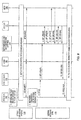
- Figure 2 illustrates a signaling flow for several embodiments of these techniques, involving one or more ICS sessions including at least two end user terminals, ICS UE A 220 and IP-phone UE B 230.
- the SCC AS 130 sends a SIP request or response related to a circuit-switched call controlled by Gm towards the MSC server (enhanced for ICS) 150
- the SCC AS 130 includes a feature tag XYZ.
- the feature tag XYZ indicates to the MSC server 150 that the SCC AS 130 wishes to be informed of changes in status for ICS UE A 220.
- the MSC server 150 when the MSC server 150 subsequently detects that ICS UE A 220 moved between access networks (e.g., from UTRAN or GERAN with DTM to GERAN without DTM), then the MSC server 150 sends a SIP UPDATE or SIP INFO message to SCC AS 130, indicating the access network to which the ICS UE A 220 is attached and whether simultaneous transport of IP data and support of a circuit-switched call is possible or not.
- SCC AS 130 indicating the access network to which the ICS UE A 220 is attached and whether simultaneous transport of IP data and support of a circuit-switched call is possible or not.
- the SCC AS 130 If the SCC AS 130 receives the SIP UPDATE or SIP INFO and an indication that simultaneous transport of IP data and support of a circuit-switched call is not possible, the SCC AS 130 starts the MSC server-assisted mid-call feature and releases the old Gm access leg.
- the basic flow for the originating ICS session set-up (specified in 3GPP TS 24.292, A.4.1) is modified as shown in Figure 2 .
- the ICS UE A 220 accessing the IMS network via a radio access network 210 that supports simultaneous IP transport and circuit-switched call, such as UTRAN or GERAN with DTM, determines that an ICS session is to be set up.
- a radio access network 210 that supports simultaneous IP transport and circuit-switched call, such as UTRAN or GERAN with DTM, determines that an ICS session is to be set up.
- one or more end-to-end ICS sessions are established between ICS UE A 220 and UE B 230.
- this process includes the transfer of a SIP 200 (OK) message from the SCC AS 130 to the MSC server 150 (via intermediate IM CN subsystem entities 250); this SIP 200 (OK) message includes feature tag XYZ.
- a circuit-switched bearer is established between ICS UE A 220 and Media Gateway 160, and an IP bearer is established form Media Gateway 160 to UE B 230.
- ICS UE A 220 is transferred to a network that does not support simultaneous IP transport and support of a circuit-switched bearer, such as a GERAN network without DTM.
- MSC server 150 detects this transfer, it sends a SIP UPDATE to SCC AS 130 (via intermediate IM CN subsystem entities 250), as shown at steps 4 and 5.
- the SIP UPDATE indicates the network to which UE 220 A has been transferred, e.g., GERAN without DTM, and also includes an indication of whether the target network provides simultaneous support of a circuit-switched call and transport of IP data.
- the SIP UPDATE does not identify the specific network to which UE A 220 has been transferred, but indicates whether simultaneous support of a circuit-switched call and transport of IP data is available).
- the SCC AS 130 confirms the SIP UPDATE with a SIP 200 (OK), as shown at steps 6 and 7. From the SIP UPDATE, the SCC AS 130 can detect that UE A 220 is no longer able to simultaneously support a circuit-switched call and the transport of IP data. Because the ICS UE A 220 and the SCC AS 130 are now each aware of the change in status, each can use the MSC server-assisted mid-call feature to maintain one or more held sessions, as shown at steps 8 and 9. The SCC AS 130 can then release the old Gm access leg, as it is no longer accessible to the UE 220.
- FIG 3 illustrates another signaling flow, applicable to a variant of the techniques illustrated in Figure 2 .
- the SCC AS 130 sends a SIP SUBSCRIBE message to the MSC server (enhanced for ICS) 150.
- This message can be sent on the creation of the first session controlled by Gm with a circuit-switched call; the SCC AS 130 de-subscribes when the last such session is released.
- the SUBSCRIBE message indicates to the MSC server 150 that the SCC AS 130 wishes to be informed of changes in status for ICS UE A 220.
- the MSC server 150 if the SCC AS 130 has subscribed, when the MSC server 150 subsequently detects that ICS UE A 220 moved between access networks (e.g., from UTRAN or GERAN with DTM to GERAN without DTM), then the MSC server 150 sends a SIP NOTIFY message to SCC AS 130, indicating the access network to which the ICS UE A 220 is attached and whether simultaneous transport of IP data and support of a circuit-switched call is possible or not.
- ICS UE A 220 moved between access networks e.g., from UTRAN or GERAN with DTM to GERAN without DTM
- the SCC AS 130 If the SCC AS 130 receives the SIP NOTIFY message, including an indication that simultaneous transport of IP data and support of a circuit-switched call is not possible, the SCC AS 130 starts the MSC server-assisted mid-call feature and releases the old Gm access leg.
- the basic flow for the originating ICS session set-up (specified in 3GPP TS 24.292, A.4.1) is modified as shown in Figure 3 .
- the ICS UE A 220 accessing the IMS network via a radio access network 210 that supports simultaneous IP transport and circuit-switched call, such as UTRAN or GERAN with DTM, determines that an ICS session is to be set up.
- a radio access network 210 that supports simultaneous IP transport and circuit-switched call, such as UTRAN or GERAN with DTM, determines that an ICS session is to be set up.
- one or more end-to-end ICS sessions are established between ICS UE A 220 and UE B 230. This is done in the same manner as discussed above for Figure 2 .
- SCC AS 130 sends a SIP SUBSCRIBE message to MSC server 150 (via intermediate IM CN subsystem entities 250), as shown at steps 3 and 4 of Figure 3 ; this SUBSCRIBE is confirmed by the MSC server 150 at steps 5 and 6.
- ICS UE A 220 is transferred to a network that does not support simultaneous IP transport and support of a circuit-switched bearer, such as a GERAN network without DTM.
- MSC server 150 detects this transfer, it sends a SIP NOTIFY to SCC AS 130 (via intermediate IM CN subsystem entities 250), as shown at steps 8 and 9.
- the SIP NOTIFY indicates whether the target network provides simultaneous support of a circuit-switched call and transport of IP data, and may also indicate the network or type of network to which UE 220 A has been transferred, e.g., GERAN without DTM.
- the SCC AS 130 confirms the SIP NOTIFY with a SIP 200 (OK), as shown at steps 10 and 11.
- the SCC AS 130 can detect that UE A 220 is no longer able to simultaneously support a circuit-switched call and the transport of IP data. Because the ICS UE A 220 and the SCC AS 130 are now each aware of the change in status, each can use the MSC server-assisted mid-call feature to maintain one or more held sessions, as shown at steps 12 and 13. The SCC AS 130 can then release the old Gm access leg, as it is no longer accessible to the UE 220.
- Figure 4 illustrates a process flow illustrating a method 400, generally corresponding to the signaling flows of Figures 2 and 3 , for managing IMS Centralized Services (ICS) sessions.
- the process flow of Figure 4 may be carried out at an MSC server, such as the MSC server 150 of Figures 1-3 .
- a corresponding process flow, for implementation at application server, such as the SCC AS 130 of Figures 1-3 is illustrated in Figure 5 .
- the illustrated method 400 begins with the step of receiving at the MSC server, from the SCC AS, a SIP request or SIP response, the SIP request or SIP response including an indication that the SCC AS is requesting notification of any transfer of the user terminal, or an indication that the SCC AS is requesting notification of transfers of the user terminal to an access network in which the user terminal cannot support transport of IP data simultaneously with a circuit-switched call.
- This is shown at block 410, which is enclosed in a dashed outline to indicate that this step is optional, in that an MSC server could alternatively be configured to always provide notification of user terminal transfers, for example.
- this indication may be a feature tag, while in others the indication may comprise a SUBSCRIBE message.
- the illustrated method 400 continues, as shown at block 420, with detecting, at the MSC server, that a user terminal has been transferred from a first access network to a second access network.
- the MSC server sends a first message to the SCC AS, as shown at block 430, the first message indicating that the user terminal has been transferred.
- one or more requests for MSC server-assisted mid-call feature services for the user terminal are received at the MSC server, as shown at block 440, in response to which the MSC server assigns transaction identifiers to one or more sessions held for the user terminal or to one or more conference participants corresponding to the user terminal.
- the first message (sent from the MSC server to the SCC AS) comprises information indicating a type of the second network.
- the MSC server after detecting transfer of the user terminal, determines that the user terminal is unable to simultaneously support a circuit-switched call and the transport of IP data in the second access network, and sends the first message to the SCC AS in response to said detecting and said determining.
- the first message includes an indication that the user terminal is unable to simultaneously support a circuit-switched call and the transport of IP data in the second network.
- the first message in any of these embodiments may comprise one of several SIP messages, such as a SIP UPDATE message, a SIP INFO message, or a SIP NOTIFY message.
- FIG. 5 is a corresponding process flow for implementation at an SCC AS, the illustrated method 500 beings with the optional step, as shown at block 510, of sending an indication to an MSC server that the SCC AS is requesting notification when the user terminal is transferred, or that the SCC AS is requesting notification when the user terminal is transferred to an access network in which the user terminal cannot support transport of IP data simultaneously with a circuit-switched call.
- this step comprises the sending of at least one of: a SIP request including an indication that the SCC AS is requesting notification when the user terminal is transferred; a SIP response including an indication that the SCC AS is requesting notification when the user terminal is transferred; a SIP request that includes an indication that the SCC AS is requesting notification when the user terminal is transferred to an access network in which the user terminal cannot support transport of IP data simultaneously with a circuit-switched call; a SIP response that includes a fourth indication indicating that the SCC AS is requesting notification when the user terminal is transferred to an access network in which the user terminal cannot support transport of IP data simultaneously with a circuit-switched call; a SIP SUBSCRIBE request indicating that the SCC AS is requesting notification when the user terminal is transferred; and a SIP SUBSCRIBE request indicating that the SCC AS is requesting notification when the user terminal is transferred to an access network in which the user terminal cannot support transport of IP data simultaneously with a circuit-switched call.
- a SIP request including an
- the illustrated process continues, as shown at block 520, with receiving a first message from the MSC server, the first message indicating that a user terminal engaged in one or more ICS sessions has been transferred from a first access network to a second access network.
- the first message comprises information indicating a type of the second access network.
- the message may indicate that the user terminal is unable to simultaneously support a circuit-switched call and the transport of IP data in the second network.
- this first message is a SIP message, such as a SIP UPDATE message, a SIP INFO message, or a SIP NOTIFY message
- the SCC AS sends one or more requests for MSC server-assisted mid-call feature services for the user terminal, as shown at block 530, and releases an access leg corresponding to the user terminal and controlled by Gm signaling, as shown at block 540.
- PS to CS access transfer procedures are used as part of the process for managing ICS sessions when a user terminal is transferred to a network that does not support simultaneous circuit-switched calls and transport of IP data.
- the ICS user terminal moves to such a network, such as GERAN without DTM, the ICS user terminal puts the existing circuit-switched call on hold, using conventional circuit-switched procedures such as those described in 3GPP TS 24.008.
- the user terminal then performs a PS to CS access transfer, using the non-ICS procedures specified in 3GPP TS 24.237, Sections 9.2.1 and 9.2.1A (if applicable).
- the SCC AS will still consider the ICS session to be active (since this is the state given by Gm control), but can determine that the user terminal has been transferred to a network that does not support simultaneous circuit-switched calls and transport of IP data by detecting that the session transfer request was sent via the 12 reference point.
- the SCC AS responds as specified in 3GPP TS 24.237, Sections 9.3.2 and 9.3.2A (if applicable).
- FIG. 6 illustrates a signaling flow for several embodiments of this technique, again involving one or more ICS sessions between at least two end user terminals, ICS UE A 220 and IP-phone UE B 230.
- the ICS UE A 220 accessing the IMS network via a radio access network 210 that supports simultaneous IP transport and circuit-switched call, such as UTRAN or GERAN with DTM, determines that an ICS session is to be set up.
- one or more end-to-end ICS sessions are established between ICS UE A 220 and UE B 230. Details of this set-up process were described above in connection with the signal flow of Figure 2 .
- a circuit-switched bearer is established between ICS UE A 220 and Media Gateway 160, and an IP bearer is established form Media Gateway 160 to UE B 230.
- ICS UE A 220 is transferred to a network 215 that does not support simultaneous IP transport and support of a circuit-switched bearer, such as a GERAN network without DTM.
- a circuit-switched bearer such as a GERAN network without DTM.
- the MSC server 150 sends a SIP UPDATE to SCC AS 130 (via intermediate IM CN subsystem entitities 250), as shown at steps 5 and 6.
- the SCC AS 130 updates UE B 230 that the call is placed on hold, as shown at steps 7 and 8.
- the SCC AS considers the circuit-switched call to be active, since it is still indicated as such in Gm control. Because the ICS UE A 220 and the SCC AS 130 are now each aware of the change in status, each can use the MSC server-assisted mid-call feature to maintain one or more held sessions. The SCC AS 130 can then release the old Gm access leg, as it is no longer accessible to the UE 220.
- FIG. 7 illustrates a process flow corresponding generally to the signaling flow of Figure 6 .
- the illustrated method 700 may be implemented at an SCC AS, and begins, as shown at block 710, with receiving a SIP UPDATE message indicating that a circuit-switched call anchored at the SCC AS is being placed on hold.
- the SCC AS determines that an ICS session corresponding to the circuit-switched call is still active, by detecting that the SIP UPDATE message was sent via an MSC server.
- the SCC AS also receives a SIP INVITE message comprising a PS-CS session transfer request corresponding to the ICS session, as shown at block 730.
- the SCC AS then sends one or more requests for MSC server-assisted mid-call feature services for the ICS session, as shown at block 740, and releases an access leg controlled by Gm signaling and corresponding to the ICS session, as shown at block 750.
- ICS session an access leg controlled by Gm signaling and corresponding to the ICS session, as shown at block 750.
- Figure 8 thus illustrates a block diagram for an example server 800, which may correspond to either an MSC server or SCC AS server. Of course, configurations other than the one pictured are possible.
- processing circuits 810 may comprise one or more microprocessors configured to execute program code 825, stored in memory 820 and comprising instructions for carrying out one or more of the techniques described above for managing multiple ICS sessions.
- server 800 The detailed design and cost tradeoffs for the various hardware approaches possible for server 800, which may depend on system-level requirements that are outside the scope of the present disclosure, are well known to those of ordinary skill in the art, and are not necessary to a full understanding of the presently disclosed techniques. Accordingly further details of specific hardware implementation are not disclosed herein.
- circuits of various embodiments of server 800 may be configured in ways that vary in certain details from the broad descriptions given above. For instance, one or more of the signal processing and control functionalities discussed above may be implemented using dedicated hardware, rather than a microprocessor configured with program instructions. Such variations, and the engineering tradeoffs associated with each, will be readily appreciated by the skilled practitioner.
Landscapes
- Engineering & Computer Science (AREA)
- Multimedia (AREA)
- Computer Networks & Wireless Communication (AREA)
- Signal Processing (AREA)
- Business, Economics & Management (AREA)
- General Business, Economics & Management (AREA)
- Mobile Radio Communication Systems (AREA)
- Telephonic Communication Services (AREA)
Claims (22)
- Verfahren in einem Server einer Mobilvermittlungsstelle, MSC, (150) in einem drahtlosen Netz (100) zum Verwalten von Sitzungen zentralisierter IMS-Dienste, ICS, wobei das Verfahren umfasst:Empfangen (410) am MSC-Server (150) von einem Anwendungsserver für Dienstzentralisierung und Kontinuität, SCC-AS, (130) einer ersten Nachricht, die eine Anzeige umfasst, dass der SCC-AS (130) Benachrichtigung von einer Änderung des Status des Benutzerendgeräts (110) anfordert;Erkennen (420) am MSC-Server (150) nach Empfang der ersten Nachricht, dass ein Benutzerendgerät (110) während seiner Beteiligung an einem leitungsvermittelten Anruf von einem ersten Zugangsnetz zu einem zweiten Zugangsnetz weitergeschaltet wurde;Senden (430) in Reaktion auf das Erkennen einer zweiten Nachricht an den SCC-AS (130) vom MSC-Server (150), wobei die zweite Nachricht anzeigt, dass das Benutzerendgerät (110) erfolgreich weitergeschaltet wurde; undEmpfangen (440) in Reaktion auf die zweite Nachricht einer oder mehrerer Anforderungen für MSC-Server-unterstützte Dienste mit Mid-Call-Merkmalen für das Benutzerendgerät (110), um eine oder mehrere abgehaltene ICS-Sitzungen oder -Konferenzen aufrechtzuerhalten; undZuordnen von Transaktionskennungen zu einer oder mehreren Sitzungen, die für das Benutzerendgerät (110) abgehalten werden, oder zu einem oder mehreren Konferenzteilnehmern, die dem Benutzerendgerät (110) entsprechen, in Reaktion auf die Anforderungen.
- Verfahren nach Anspruch 1, wobei die zweite Nachricht Informationen umfasst, die einen Typ des zweiten Netzes anzeigen.
- Verfahren nach Anspruch 1, ferner umfassend:Bestimmen am MSC-Server (150), dass das Benutzerendgerät (110) nicht imstande ist, gleichzeitig einen leitungsvermittelten Anruf und den Transport von IP-Daten im zweiten Zugangsnetz zu unterstützen;wobei die zweite Nachricht in Reaktion auf das Erkennen und das Bestimmen an den SCC-AS (130) gesendet wird; undwobei die zweite Nachricht eine Anzeige umfasst, dass das Benutzerendgerät (110) nicht imstande ist, gleichzeitig einen leitungsvermittelten Anruf und den Transport von IP-Daten im zweiten Netz zu unterstützen.
- Verfahren nach Anspruch 1, wobei die zweite Nachricht eine von einer SIP UPDATE-Nachricht, einer SIP INFO-Nachricht und einer SIP NOTIFY-Nachricht umfasst.
- Verfahren nach Anspruch 1, wobei die erste Nachricht eine von einer SIP-Anforderung oder einer SIP-Antwort umfasst, und wobei die Anzeige in der ersten Nachricht Benachrichtigung von allen Weiterschaltungen des Benutzerendgeräts (110) anfordert.
- Verfahren nach Anspruch 5, wobei die Anzeige in der ersten Nachricht ein Merkmals-Tag umfasst.
- Verfahren nach Anspruch 1, wobei die erste Nachricht eine von einer SIP-Anforderung oder einer SIP-Antwort umfasst, und wobei die Anzeige in der ersten Nachricht Benachrichtigung von Weiterschaltungen des Benutzerendgeräts (110) zu einem Zugangsnetz anfordert, in welchem das Benutzerendgerät (110) Transport von IP-Daten nicht gleichzeitig mit einem leitungsvermittelten Anruf unterstützen kann.
- Verfahren nach Anspruch 7, wobei die Anzeige ein Merkmals-Tag umfasst.
- Verfahren nach Anspruch 1, wobei die erste Nachricht eine SIP SUBSCRIBE-Anforderung umfasst, die anzeigt, dass der SCC-AS (130) Benachrichtigung von jeglicher Weiterschaltung des Benutzerendgeräts (110) anfordert.
- Verfahren nach Anspruch 1, wobei die erste Nachricht eine SIP SUBSCRIBE-Anforderung umfasst, die anzeigt, dass der SCC-AS (130) Benachrichtigung anfordert, wenn das Benutzerendgerät (110) zu einem Zugangsnetz weitergeschaltet wird, in welchem das Benutzerendgerät (110) Transport von IP-Daten nicht gleichzeitig mit einem leitungsvermittelten Anruf unterstützen kann.
- Server einer Mobilvermittlungsstelle, MSC, der so konfiguriert ist, dass er Sitzungen zentralisierter IMS-Dienste, ICS, verwaltet, wobei der MSC-Server (150) eine Netzschnittstellenschaltung (830), die für Kommunikation mit einem Anwendungsserver für Dienstzentralisierung und Kontinuität, SCC-AS, (130) über eine Rufsitzungssteuerfunktion, CSCF, (140) konfiguriert ist, und eine Verarbeitungsschaltung (810) umfasst, die konfiguriert ist zum:Empfangen vom SCC-AS (130) einer ersten Nachricht, die eine Anzeige umfasst, dass der SCC-AS (130) Benachrichtigung von einer Änderung des Status des Benutzerendgeräts (110) anfordert;Erkennen, dass ein Benutzerendgerät (110) während seiner Beteiligung an einem leitungsvermittelten Anruf von einem ersten Zugangsnetz zu einem zweiten Zugangsnetz weitergeschaltet wurde;Senden in Reaktion auf das Erkennen einer zweiten Nachricht an den SCC-AS (130) vom MSC-Server (150), wobei die zweite Nachricht anzeigt, dass das Benutzerendgerät (110) erfolgreich weitergeschaltet wurde;Empfangen in Reaktion auf die zweite Nachricht einer oder mehrerer Anforderungen für MSC-Server-unterstützte Dienste mit Mid-Call-Merkmalen für das Benutzerendgerät (110); undZuordnen von Transaktionskennungen zu einer oder mehreren Sitzungen, die für das Benutzerendgerät (110) abgehalten werden, oder zu einem oder mehreren Konferenzteilnehmern, die dem Benutzerendgerät (110) entsprechen, in Reaktion auf die Anforderungen.
- MSC-Server (150) nach Anspruch 11, wobei die Verarbeitungsschaltung (810) ferner konfiguriert ist zum:Bestimmen, dass das Benutzerendgerät (110) nicht imstande ist, gleichzeitig einen leitungsvermittelten Anruf und den Transport von IP-Daten im zweiten Zugangsnetz zu unterstützen;wobei die zweite Nachricht in Reaktion auf das Erkennen und das Bestimmen an den SCC-AS (130) gesendet wird; undwobei die erste Nachricht eine Anzeige umfasst, dass das Benutzerendgerät (110) nicht imstande ist, gleichzeitig einen leitungsvermittelten Anruf und den Transport von IP-Daten im zweiten Netz zu unterstützen.
- Verfahren in einem Anwendungsserver für Dienstzentralisierung und Kontinuität, SCC-AS, in einem drahtlosen Netz zum Verwalten von Sitzungen zentralisierter IMS-Dienste, ICS, wobei das Verfahren umfasst:Senden in Reaktion auf das Erkennen, dass ein leitungsvermittelter Anruf für ein Benutzerendgerät (110) durch Gm-Signalisierung gesteuert wird, einer ersten Nachricht vom SCC-AS (130) an einen Server einer Mobilvermittlungsstelle, MSC, (150), wobei die erste Nachricht eine Anzeige umfasst, dass der SCC-AS (130) eine Benachrichtigung von einer Änderung des Status des Benutzerendgeräts (110) anfordert;Empfangen nach dem Senden der ersten Nachricht einer zweiten Nachricht vom MSC-Server (150) am SCC-AS (130), wobei die zweite Nachricht anzeigt, dass das an einer oder mehreren ICS-Sitzungen beteiligte Benutzerendgerät (110) von einem ersten Zugangsnetz zu einem zweiten Zugangsnetz weitergeschaltet wurde; undSenden in Reaktion auf die zweite Nachricht einer oder mehrerer Anforderungen für MSC-Server-unterstützte Dienste mit Mid-Call-Merkmalen für das Benutzerendgerät (110), um eine oder mehrere abgehaltene ICS-Sitzungen für das Benutzerendgerät (110) aufrechtzuerhalten; undFreigeben eines Zugangsabschnitts für die Gm-Signalisierung.
- Verfahren nach Anspruch 13, wobei die zweite Nachricht Informationen umfasst, die einen Typ des zweiten Zugangsnetzes anzeigen.
- Verfahren nach Anspruch 13, wobei die zweite Nachricht eine Anzeige umfasst, dass das Benutzerendgerät (110) nicht imstande ist, gleichzeitig einen leitungsvermittelten Anruf und den Transport von IP-Daten im zweiten Netz zu unterstützen, und wobei eine oder mehrere Anforderungen für MSC-Server-unterstütze Dienste mit Mid-Call-Merkmalen für das Benutzerendgerät (110) in Reaktion auf die Anzeige gesendet werden.
- Verfahren nach Anspruch 13, wobei die zweite Nachricht eine von einer SIP UPDATE-Nachricht, einer SIP INFO-Nachricht und einer SIP NOTIFY-Nachricht umfasst.
- Verfahren nach Anspruch 13, wobei die erste Nachricht eine von einer SIP-Anforderung und einer SIP-Antwort umfasst, und wobei die Anzeige ein Merkmals-Tag in der SIP-Anforderung oder der SIP-Antwort umfasst.
- Verfahren nach Anspruch 17, wobei die erste Nachricht eine SIP SUBSCRIBE-Anforderung umfasst.
- Anwendungsserver für Dienstzentralisierung und Kontinuität, SCC-AS, (130), der so konfiguriert ist, dass er Sitzungen zentralisierter IMS-Dienste, ICS, verwaltet, wobei der SCC-AS (130) eine Netzschnittstellenschaltung (830), die für Kommunikation mit einem Server einer Mobilvermittlungsstelle, MSC, (150) über eine Rufsitzungssteuerfunktion, CSCF, (140) konfiguriert ist, und eine Verarbeitungsschaltung (810) umfasst, die konfiguriert ist zum:Senden in Reaktion auf das Erkennen, dass ein leitungsvermittelter Anruf für ein Benutzerendgerät (110) durch Gm-Signalisierung gesteuert wird, einer ersten Nachricht an den MSC-Server (150), wobei die erste Nachricht eine Anzeige umfasst, dass der SCC-AS (130) eine Benachrichtigung von einer Änderung des Status des Benutzerendgeräts (110) anfordert;Empfangen einer zweiten Nachricht vom MSC-Server (150), wobei die zweite Nachricht anzeigt, dass das an einer oder mehreren ICS-Sitzungen beteiligte Benutzerendgerät (110) von einem ersten Zugangsnetz zu einem zweiten Zugangsnetz weitergeschaltet wurde; undSenden in Reaktion auf die zweite Nachricht einer oder mehrerer Anforderungen für MSC-Server-unterstützte Dienste mit Mid-Call-Merkmalen für das Benutzerendgerät (110), um eine oder mehrere abgehaltene ICS-Sitzungen für das Benutzerendgerät (110) aufrechtzuerhalten; undFreigeben eines Zugangsabschnitts für die Gm-Signalisierung.
- SCC-AS (130) nach Anspruch 19, wobei die zweite Nachricht eine Anzeige umfasst, dass das Benutzerendgerät (110) nicht imstande ist, gleichzeitig einen leitungsvermittelten Anruf und den Transport von IP-Daten im zweiten Netz zu unterstützen, und wobei die Verarbeitungsschaltung (810) so konfiguriert ist, dass sie die eine oder die mehreren Anforderungen für MSC-Server-unterstütze Dienste mit Mid-Call-Merkmalen für das Benutzerendgerät (110) in Reaktion auf die Anzeige sendet.
- SCC-AS (130) nach Anspruch 19, wobei die erste Nachricht, die von der Verarbeitungsschaltung (810) gesendet wird, eine von einer SIP-Anforderung und einer SIP-Antwort umfasst, und wobei die Anzeige ein Merkmals-Tag in der SIP-Anforderung oder der SIP-Antwort umfasst.
- SCC-AS (130) nach Anspruch 19, wobei die erste Nachricht, die von der Verarbeitungsschaltung (810) gesendet wird, eine SIP SUBSCRIBE-Anforderung ist.
Applications Claiming Priority (3)
| Application Number | Priority Date | Filing Date | Title |
|---|---|---|---|
| US35016510P | 2010-06-01 | 2010-06-01 | |
| US12/952,968 US8509120B2 (en) | 2010-06-01 | 2010-11-23 | Preserving mid-call state in IMS centralized services sessions |
| PCT/EP2011/057201 WO2011151126A1 (en) | 2010-06-01 | 2011-05-05 | Preserving mid-call state in ims centralized services sessions |
Publications (2)
| Publication Number | Publication Date |
|---|---|
| EP2577931A1 EP2577931A1 (de) | 2013-04-10 |
| EP2577931B1 true EP2577931B1 (de) | 2016-07-06 |
Family
ID=45022072
Family Applications (1)
| Application Number | Title | Priority Date | Filing Date |
|---|---|---|---|
| EP11718367.3A Active EP2577931B1 (de) | 2010-06-01 | 2011-05-05 | Bewahrung eines status während eines anrufs bei sitzungen ims-zentralisierter dienste |
Country Status (4)
| Country | Link |
|---|---|
| US (1) | US8509120B2 (de) |
| EP (1) | EP2577931B1 (de) |
| AR (1) | AR081298A1 (de) |
| WO (1) | WO2011151126A1 (de) |
Families Citing this family (8)
| Publication number | Priority date | Publication date | Assignee | Title |
|---|---|---|---|---|
| US8886730B2 (en) * | 2010-09-22 | 2014-11-11 | Intel Mobile Communications GmbH | Methods and devices for authorization in collaborative communications sessions |
| WO2013054189A1 (fr) * | 2011-10-12 | 2013-04-18 | Cassidian Sas | Structure d'intégration de services mobiles |
| US20150031355A1 (en) * | 2013-07-25 | 2015-01-29 | Nokia Siemens Networks Oy | Method and apparatus for single-radio-voice-call continuity |
| US10660002B2 (en) | 2013-11-19 | 2020-05-19 | At&T Intellectual Property I, L.P. | System and method for differentiated system continuity when changing networks |
| US9769221B2 (en) * | 2014-01-17 | 2017-09-19 | Mediatek Inc. | Method to support service continuity for multiple sessions |
| US9881070B2 (en) | 2014-12-12 | 2018-01-30 | Microsoft Technology Licensing, Llc | Controlling service functions in response to service instigation and service reactivation messages |
| US9826000B2 (en) | 2014-12-12 | 2017-11-21 | Microsoft Technology Licensing, Llc | Effecting communication events |
| WO2022153154A1 (en) * | 2021-01-15 | 2022-07-21 | Telefonaktiebolaget Lm Ericsson (Publ) | Simultaneous calling in 5g |
Family Cites Families (4)
| Publication number | Priority date | Publication date | Assignee | Title |
|---|---|---|---|---|
| ATE542389T1 (de) * | 2008-04-24 | 2012-02-15 | Ericsson Telefon Ab L M | Verfahren, vorrichtung und computerprogramm zur unterstützung einer sitzungskennung im fall eines transfers zwischen verschiedenen funkzugangsnetzen |
| US8619675B2 (en) * | 2008-08-18 | 2013-12-31 | Telefonaktiebolaget L M Ericsson (Publ) | Technique for emergency session handling in a communication network |
| WO2010028369A1 (en) * | 2008-09-08 | 2010-03-11 | Research In Motion Limited | Apparatus and method for reducing responses when executing a session initiation protocol operation |
| WO2010054698A1 (en) | 2008-11-17 | 2010-05-20 | Nokia Corporation | Service continuity of ip multimedia subsystem centralized services |
-
2010
- 2010-11-23 US US12/952,968 patent/US8509120B2/en active Active
-
2011
- 2011-05-05 WO PCT/EP2011/057201 patent/WO2011151126A1/en not_active Ceased
- 2011-05-05 EP EP11718367.3A patent/EP2577931B1/de active Active
- 2011-05-31 AR ARP110101877A patent/AR081298A1/es unknown
Also Published As
| Publication number | Publication date |
|---|---|
| US20110292841A1 (en) | 2011-12-01 |
| AR081298A1 (es) | 2012-08-01 |
| WO2011151126A1 (en) | 2011-12-08 |
| EP2577931A1 (de) | 2013-04-10 |
| US8509120B2 (en) | 2013-08-13 |
Similar Documents
| Publication | Publication Date | Title |
|---|---|---|
| EP2577931B1 (de) | Bewahrung eines status während eines anrufs bei sitzungen ims-zentralisierter dienste | |
| AU2011374206B2 (en) | Methods and apparatuses for enabling an Single Radio Voice Call Continuity (SRVCC) access transfer of an emergency call back session | |
| US9026663B2 (en) | Method, apparatus and program product for merging communication sessions in an IMS | |
| US9338625B2 (en) | Geographically redundant and multiple EATF nodes | |
| US10462191B2 (en) | Circuit-switched and multimedia subsystem voice continuity with bearer path interruption | |
| EP1920572B1 (de) | Multimedia-subsystem-dienststeuerung für schaltkreisgeschaltete subsystemrufe | |
| EP2342909B1 (de) | Korrelation von sitzungen im fall von sitzungstransfer in der ims-domäne | |
| EP3096584B1 (de) | Verzögerungsoptimierung bei der übergabe | |
| US8825875B2 (en) | Session establishment in a communication network | |
| JP6109928B2 (ja) | Drvcc携帯端末のアクセス転送 | |
| EP3179675A1 (de) | Routing eines anrufs zwischen domänen | |
| EP2249537A1 (de) | Verfahren, benutzergerät und server für multimedia-sessiontransfer | |
| CN103703737A (zh) | 用于支持ims服务连续性的实现的方法和设备 | |
| EP2852119B1 (de) | Verfahren zur sitzungsumschaltung eines ims-netzwerks und eatf | |
| EP2254308B1 (de) | Verfahren, vorrichtung und system zum ersetzen des dienststeuerungssignalisierungskanals | |
| EP2834955B1 (de) | Präferenzeinstellung für bestmögliche rufleitweglenkung | |
| CN102474763B (zh) | 用于提高会话连续性的方法和设备 | |
| WO2009149635A1 (zh) | 一种实现显式呼叫转移的方法、设备及移动通信系统 | |
| EP2230814B1 (de) | Verfahren zur realisierung eines haltens eines anrufs | |
| WO2016075510A1 (en) | Terminating a mobile call | |
| EP2839696B1 (de) | Srvcc-übergabe von anrufen zwischen zugangsnetzwerken mit effizienter mediagateway-auswahl | |
| HK1238446A1 (en) | Inter-domain call routing | |
| WO2016091287A1 (en) | Handover between circuit switched gateways |
Legal Events
| Date | Code | Title | Description |
|---|---|---|---|
| PUAI | Public reference made under article 153(3) epc to a published international application that has entered the european phase |
Free format text: ORIGINAL CODE: 0009012 |
|
| 17P | Request for examination filed |
Effective date: 20121217 |
|
| AK | Designated contracting states |
Kind code of ref document: A1 Designated state(s): AL AT BE BG CH CY CZ DE DK EE ES FI FR GB GR HR HU IE IS IT LI LT LU LV MC MK MT NL NO PL PT RO RS SE SI SK SM TR |
|
| DAX | Request for extension of the european patent (deleted) | ||
| GRAP | Despatch of communication of intention to grant a patent |
Free format text: ORIGINAL CODE: EPIDOSNIGR1 |
|
| INTG | Intention to grant announced |
Effective date: 20160127 |
|
| GRAS | Grant fee paid |
Free format text: ORIGINAL CODE: EPIDOSNIGR3 |
|
| GRAA | (expected) grant |
Free format text: ORIGINAL CODE: 0009210 |
|
| AK | Designated contracting states |
Kind code of ref document: B1 Designated state(s): AL AT BE BG CH CY CZ DE DK EE ES FI FR GB GR HR HU IE IS IT LI LT LU LV MC MK MT NL NO PL PT RO RS SE SI SK SM TR |
|
| REG | Reference to a national code |
Ref country code: GB Ref legal event code: FG4D |
|
| REG | Reference to a national code |
Ref country code: AT Ref legal event code: REF Ref document number: 811403 Country of ref document: AT Kind code of ref document: T Effective date: 20160715 Ref country code: CH Ref legal event code: EP |
|
| REG | Reference to a national code |
Ref country code: IE Ref legal event code: FG4D |
|
| REG | Reference to a national code |
Ref country code: DE Ref legal event code: R096 Ref document number: 602011027925 Country of ref document: DE |
|
| REG | Reference to a national code |
Ref country code: NL Ref legal event code: MP Effective date: 20160706 |
|
| REG | Reference to a national code |
Ref country code: LT Ref legal event code: MG4D |
|
| REG | Reference to a national code |
Ref country code: AT Ref legal event code: MK05 Ref document number: 811403 Country of ref document: AT Kind code of ref document: T Effective date: 20160706 |
|
| PG25 | Lapsed in a contracting state [announced via postgrant information from national office to epo] |
Ref country code: NL Free format text: LAPSE BECAUSE OF FAILURE TO SUBMIT A TRANSLATION OF THE DESCRIPTION OR TO PAY THE FEE WITHIN THE PRESCRIBED TIME-LIMIT Effective date: 20160706 Ref country code: RS Free format text: LAPSE BECAUSE OF FAILURE TO SUBMIT A TRANSLATION OF THE DESCRIPTION OR TO PAY THE FEE WITHIN THE PRESCRIBED TIME-LIMIT Effective date: 20160706 Ref country code: LT Free format text: LAPSE BECAUSE OF FAILURE TO SUBMIT A TRANSLATION OF THE DESCRIPTION OR TO PAY THE FEE WITHIN THE PRESCRIBED TIME-LIMIT Effective date: 20160706 Ref country code: HR Free format text: LAPSE BECAUSE OF FAILURE TO SUBMIT A TRANSLATION OF THE DESCRIPTION OR TO PAY THE FEE WITHIN THE PRESCRIBED TIME-LIMIT Effective date: 20160706 Ref country code: NO Free format text: LAPSE BECAUSE OF FAILURE TO SUBMIT A TRANSLATION OF THE DESCRIPTION OR TO PAY THE FEE WITHIN THE PRESCRIBED TIME-LIMIT Effective date: 20161006 Ref country code: IS Free format text: LAPSE BECAUSE OF FAILURE TO SUBMIT A TRANSLATION OF THE DESCRIPTION OR TO PAY THE FEE WITHIN THE PRESCRIBED TIME-LIMIT Effective date: 20161106 Ref country code: IT Free format text: LAPSE BECAUSE OF FAILURE TO SUBMIT A TRANSLATION OF THE DESCRIPTION OR TO PAY THE FEE WITHIN THE PRESCRIBED TIME-LIMIT Effective date: 20160706 Ref country code: FI Free format text: LAPSE BECAUSE OF FAILURE TO SUBMIT A TRANSLATION OF THE DESCRIPTION OR TO PAY THE FEE WITHIN THE PRESCRIBED TIME-LIMIT Effective date: 20160706 |
|
| PG25 | Lapsed in a contracting state [announced via postgrant information from national office to epo] |
Ref country code: LV Free format text: LAPSE BECAUSE OF FAILURE TO SUBMIT A TRANSLATION OF THE DESCRIPTION OR TO PAY THE FEE WITHIN THE PRESCRIBED TIME-LIMIT Effective date: 20160706 Ref country code: AT Free format text: LAPSE BECAUSE OF FAILURE TO SUBMIT A TRANSLATION OF THE DESCRIPTION OR TO PAY THE FEE WITHIN THE PRESCRIBED TIME-LIMIT Effective date: 20160706 Ref country code: PT Free format text: LAPSE BECAUSE OF FAILURE TO SUBMIT A TRANSLATION OF THE DESCRIPTION OR TO PAY THE FEE WITHIN THE PRESCRIBED TIME-LIMIT Effective date: 20161107 Ref country code: BE Free format text: LAPSE BECAUSE OF FAILURE TO SUBMIT A TRANSLATION OF THE DESCRIPTION OR TO PAY THE FEE WITHIN THE PRESCRIBED TIME-LIMIT Effective date: 20160706 Ref country code: SE Free format text: LAPSE BECAUSE OF FAILURE TO SUBMIT A TRANSLATION OF THE DESCRIPTION OR TO PAY THE FEE WITHIN THE PRESCRIBED TIME-LIMIT Effective date: 20160706 Ref country code: ES Free format text: LAPSE BECAUSE OF FAILURE TO SUBMIT A TRANSLATION OF THE DESCRIPTION OR TO PAY THE FEE WITHIN THE PRESCRIBED TIME-LIMIT Effective date: 20160706 Ref country code: PL Free format text: LAPSE BECAUSE OF FAILURE TO SUBMIT A TRANSLATION OF THE DESCRIPTION OR TO PAY THE FEE WITHIN THE PRESCRIBED TIME-LIMIT Effective date: 20160706 Ref country code: GR Free format text: LAPSE BECAUSE OF FAILURE TO SUBMIT A TRANSLATION OF THE DESCRIPTION OR TO PAY THE FEE WITHIN THE PRESCRIBED TIME-LIMIT Effective date: 20161007 |
|
| REG | Reference to a national code |
Ref country code: DE Ref legal event code: R097 Ref document number: 602011027925 Country of ref document: DE |
|
| PG25 | Lapsed in a contracting state [announced via postgrant information from national office to epo] |
Ref country code: RO Free format text: LAPSE BECAUSE OF FAILURE TO SUBMIT A TRANSLATION OF THE DESCRIPTION OR TO PAY THE FEE WITHIN THE PRESCRIBED TIME-LIMIT Effective date: 20160706 Ref country code: EE Free format text: LAPSE BECAUSE OF FAILURE TO SUBMIT A TRANSLATION OF THE DESCRIPTION OR TO PAY THE FEE WITHIN THE PRESCRIBED TIME-LIMIT Effective date: 20160706 |
|
| PLBE | No opposition filed within time limit |
Free format text: ORIGINAL CODE: 0009261 |
|
| STAA | Information on the status of an ep patent application or granted ep patent |
Free format text: STATUS: NO OPPOSITION FILED WITHIN TIME LIMIT |
|
| PG25 | Lapsed in a contracting state [announced via postgrant information from national office to epo] |
Ref country code: CZ Free format text: LAPSE BECAUSE OF FAILURE TO SUBMIT A TRANSLATION OF THE DESCRIPTION OR TO PAY THE FEE WITHIN THE PRESCRIBED TIME-LIMIT Effective date: 20160706 Ref country code: SK Free format text: LAPSE BECAUSE OF FAILURE TO SUBMIT A TRANSLATION OF THE DESCRIPTION OR TO PAY THE FEE WITHIN THE PRESCRIBED TIME-LIMIT Effective date: 20160706 Ref country code: BG Free format text: LAPSE BECAUSE OF FAILURE TO SUBMIT A TRANSLATION OF THE DESCRIPTION OR TO PAY THE FEE WITHIN THE PRESCRIBED TIME-LIMIT Effective date: 20161006 Ref country code: DK Free format text: LAPSE BECAUSE OF FAILURE TO SUBMIT A TRANSLATION OF THE DESCRIPTION OR TO PAY THE FEE WITHIN THE PRESCRIBED TIME-LIMIT Effective date: 20160706 Ref country code: SM Free format text: LAPSE BECAUSE OF FAILURE TO SUBMIT A TRANSLATION OF THE DESCRIPTION OR TO PAY THE FEE WITHIN THE PRESCRIBED TIME-LIMIT Effective date: 20160706 |
|
| 26N | No opposition filed |
Effective date: 20170407 |
|
| PG25 | Lapsed in a contracting state [announced via postgrant information from national office to epo] |
Ref country code: LU Free format text: LAPSE BECAUSE OF NON-PAYMENT OF DUE FEES Effective date: 20170531 Ref country code: SI Free format text: LAPSE BECAUSE OF FAILURE TO SUBMIT A TRANSLATION OF THE DESCRIPTION OR TO PAY THE FEE WITHIN THE PRESCRIBED TIME-LIMIT Effective date: 20160706 |
|
| REG | Reference to a national code |
Ref country code: DE Ref legal event code: R119 Ref document number: 602011027925 Country of ref document: DE |
|
| REG | Reference to a national code |
Ref country code: CH Ref legal event code: PL |
|
| PG25 | Lapsed in a contracting state [announced via postgrant information from national office to epo] |
Ref country code: MC Free format text: LAPSE BECAUSE OF FAILURE TO SUBMIT A TRANSLATION OF THE DESCRIPTION OR TO PAY THE FEE WITHIN THE PRESCRIBED TIME-LIMIT Effective date: 20160706 |
|
| REG | Reference to a national code |
Ref country code: IE Ref legal event code: MM4A |
|
| PG25 | Lapsed in a contracting state [announced via postgrant information from national office to epo] |
Ref country code: LI Free format text: LAPSE BECAUSE OF NON-PAYMENT OF DUE FEES Effective date: 20170531 Ref country code: CH Free format text: LAPSE BECAUSE OF NON-PAYMENT OF DUE FEES Effective date: 20170531 |
|
| REG | Reference to a national code |
Ref country code: FR Ref legal event code: ST Effective date: 20180131 |
|
| PG25 | Lapsed in a contracting state [announced via postgrant information from national office to epo] |
Ref country code: LU Free format text: LAPSE BECAUSE OF NON-PAYMENT OF DUE FEES Effective date: 20170505 |
|
| PG25 | Lapsed in a contracting state [announced via postgrant information from national office to epo] |
Ref country code: IE Free format text: LAPSE BECAUSE OF NON-PAYMENT OF DUE FEES Effective date: 20170505 Ref country code: DE Free format text: LAPSE BECAUSE OF NON-PAYMENT OF DUE FEES Effective date: 20171201 |
|
| PG25 | Lapsed in a contracting state [announced via postgrant information from national office to epo] |
Ref country code: FR Free format text: LAPSE BECAUSE OF NON-PAYMENT OF DUE FEES Effective date: 20170531 |
|
| PG25 | Lapsed in a contracting state [announced via postgrant information from national office to epo] |
Ref country code: MT Free format text: LAPSE BECAUSE OF NON-PAYMENT OF DUE FEES Effective date: 20170505 |
|
| PG25 | Lapsed in a contracting state [announced via postgrant information from national office to epo] |
Ref country code: AL Free format text: LAPSE BECAUSE OF FAILURE TO SUBMIT A TRANSLATION OF THE DESCRIPTION OR TO PAY THE FEE WITHIN THE PRESCRIBED TIME-LIMIT Effective date: 20160706 |
|
| PG25 | Lapsed in a contracting state [announced via postgrant information from national office to epo] |
Ref country code: HU Free format text: LAPSE BECAUSE OF FAILURE TO SUBMIT A TRANSLATION OF THE DESCRIPTION OR TO PAY THE FEE WITHIN THE PRESCRIBED TIME-LIMIT; INVALID AB INITIO Effective date: 20110505 |
|
| PG25 | Lapsed in a contracting state [announced via postgrant information from national office to epo] |
Ref country code: CY Free format text: LAPSE BECAUSE OF NON-PAYMENT OF DUE FEES Effective date: 20160706 |
|
| PG25 | Lapsed in a contracting state [announced via postgrant information from national office to epo] |
Ref country code: MK Free format text: LAPSE BECAUSE OF FAILURE TO SUBMIT A TRANSLATION OF THE DESCRIPTION OR TO PAY THE FEE WITHIN THE PRESCRIBED TIME-LIMIT Effective date: 20160706 |
|
| PG25 | Lapsed in a contracting state [announced via postgrant information from national office to epo] |
Ref country code: TR Free format text: LAPSE BECAUSE OF FAILURE TO SUBMIT A TRANSLATION OF THE DESCRIPTION OR TO PAY THE FEE WITHIN THE PRESCRIBED TIME-LIMIT Effective date: 20160706 |
|
| PGFP | Annual fee paid to national office [announced via postgrant information from national office to epo] |
Ref country code: GB Payment date: 20250527 Year of fee payment: 15 |