EP2578207A2 - Masquage des ouvertures permettant un échange d'automatisme et de solution dans des bicouches de lipides à gouttelettes sessiles - Google Patents
Masquage des ouvertures permettant un échange d'automatisme et de solution dans des bicouches de lipides à gouttelettes sessiles Download PDFInfo
- Publication number
- EP2578207A2 EP2578207A2 EP12006905.9A EP12006905A EP2578207A2 EP 2578207 A2 EP2578207 A2 EP 2578207A2 EP 12006905 A EP12006905 A EP 12006905A EP 2578207 A2 EP2578207 A2 EP 2578207A2
- Authority
- EP
- European Patent Office
- Prior art keywords
- solution
- bilayer
- aperture
- amphiphilic molecule
- chamber
- Prior art date
- Legal status (The legal status is an assumption and is not a legal conclusion. Google has not performed a legal analysis and makes no representation as to the accuracy of the status listed.)
- Withdrawn
Links
- 239000000232 Lipid Bilayer Substances 0.000 title claims description 42
- 230000000873 masking effect Effects 0.000 title description 15
- 238000005259 measurement Methods 0.000 claims abstract description 202
- 238000000034 method Methods 0.000 claims abstract description 120
- 238000004519 manufacturing process Methods 0.000 claims abstract description 7
- 239000000243 solution Substances 0.000 claims description 367
- 239000012530 fluid Substances 0.000 claims description 83
- 239000007864 aqueous solution Substances 0.000 claims description 43
- 239000000758 substrate Substances 0.000 claims description 43
- 239000002356 single layer Substances 0.000 claims description 37
- 238000011068 loading method Methods 0.000 claims description 18
- 230000002209 hydrophobic effect Effects 0.000 claims description 14
- 230000003287 optical effect Effects 0.000 claims description 12
- 239000000126 substance Substances 0.000 claims description 12
- 238000004891 communication Methods 0.000 claims description 8
- 230000000670 limiting effect Effects 0.000 abstract description 5
- 239000013043 chemical agent Substances 0.000 description 100
- 102000004310 Ion Channels Human genes 0.000 description 94
- 108090000862 Ion Channels Proteins 0.000 description 94
- 230000015572 biosynthetic process Effects 0.000 description 65
- 150000002632 lipids Chemical class 0.000 description 51
- 108091006146 Channels Proteins 0.000 description 47
- 238000002474 experimental method Methods 0.000 description 36
- 239000012528 membrane Substances 0.000 description 35
- NOOLISFMXDJSKH-UHFFFAOYSA-N DL-menthol Natural products CC(C)C1CCC(C)CC1O NOOLISFMXDJSKH-UHFFFAOYSA-N 0.000 description 33
- 229940041616 menthol Drugs 0.000 description 33
- NOOLISFMXDJSKH-UTLUCORTSA-N (+)-Neomenthol Chemical compound CC(C)[C@@H]1CC[C@@H](C)C[C@@H]1O NOOLISFMXDJSKH-UTLUCORTSA-N 0.000 description 32
- 150000001875 compounds Chemical class 0.000 description 28
- GXDALQBWZGODGZ-UHFFFAOYSA-N astemizole Chemical compound C1=CC(OC)=CC=C1CCN1CCC(NC=2N(C3=CC=CC=C3N=2)CC=2C=CC(F)=CC=2)CC1 GXDALQBWZGODGZ-UHFFFAOYSA-N 0.000 description 27
- 229920004943 Delrin® Polymers 0.000 description 26
- 102000005962 receptors Human genes 0.000 description 26
- 229960004754 astemizole Drugs 0.000 description 25
- 239000000203 mixture Substances 0.000 description 25
- 229940079593 drug Drugs 0.000 description 24
- 239000003814 drug Substances 0.000 description 24
- DIOQZVSQGTUSAI-UHFFFAOYSA-N decane Chemical compound CCCCCCCCCC DIOQZVSQGTUSAI-UHFFFAOYSA-N 0.000 description 22
- BLZVCIGGICSWIG-UHFFFAOYSA-N 2-aminoethoxydiphenylborane Chemical compound C=1C=CC=CC=1B(OCCN)C1=CC=CC=C1 BLZVCIGGICSWIG-UHFFFAOYSA-N 0.000 description 21
- 230000001965 increasing effect Effects 0.000 description 21
- 108010052285 Membrane Proteins Proteins 0.000 description 20
- -1 anionic lipid Chemical class 0.000 description 18
- 230000000694 effects Effects 0.000 description 17
- 230000006870 function Effects 0.000 description 17
- 150000003915 phosphatidylinositol 4,5-bisphosphates Chemical class 0.000 description 17
- 210000004027 cell Anatomy 0.000 description 16
- 238000002360 preparation method Methods 0.000 description 14
- 108020004084 membrane receptors Proteins 0.000 description 13
- 108020003175 receptors Proteins 0.000 description 13
- 239000002502 liposome Substances 0.000 description 12
- 239000000463 material Substances 0.000 description 12
- 108090000623 proteins and genes Proteins 0.000 description 12
- 102000004169 proteins and genes Human genes 0.000 description 12
- 239000013554 lipid monolayer Substances 0.000 description 11
- 235000018102 proteins Nutrition 0.000 description 11
- 229910021607 Silver chloride Inorganic materials 0.000 description 10
- 238000007792 addition Methods 0.000 description 10
- HKZLPVFGJNLROG-UHFFFAOYSA-M silver monochloride Chemical compound [Cl-].[Ag+] HKZLPVFGJNLROG-UHFFFAOYSA-M 0.000 description 10
- IAZDPXIOMUYVGZ-UHFFFAOYSA-N Dimethylsulphoxide Chemical compound CS(C)=O IAZDPXIOMUYVGZ-UHFFFAOYSA-N 0.000 description 9
- BQCADISMDOOEFD-UHFFFAOYSA-N Silver Chemical compound [Ag] BQCADISMDOOEFD-UHFFFAOYSA-N 0.000 description 9
- NIXOWILDQLNWCW-UHFFFAOYSA-N acrylic acid group Chemical group C(C=C)(=O)O NIXOWILDQLNWCW-UHFFFAOYSA-N 0.000 description 9
- 239000000872 buffer Substances 0.000 description 9
- 230000008859 change Effects 0.000 description 9
- 108010030416 proteoliposomes Proteins 0.000 description 9
- 230000001419 dependent effect Effects 0.000 description 8
- 235000014113 dietary fatty acids Nutrition 0.000 description 8
- 239000000194 fatty acid Substances 0.000 description 8
- 229930195729 fatty acid Natural products 0.000 description 8
- 230000010412 perfusion Effects 0.000 description 8
- UKDDQGWMHWQMBI-UHFFFAOYSA-O 1,2-diphytanoyl-sn-glycero-3-phosphocholine Chemical compound CC(C)CCCC(C)CCCC(C)CCCC(C)CC(=O)OCC(COP(O)(=O)OCC[N+](C)(C)C)OC(=O)CC(C)CCCC(C)CCCC(C)CCCC(C)C UKDDQGWMHWQMBI-UHFFFAOYSA-O 0.000 description 7
- 230000004913 activation Effects 0.000 description 7
- DCAYPVUWAIABOU-UHFFFAOYSA-N hexadecane Chemical compound CCCCCCCCCCCCCCCC DCAYPVUWAIABOU-UHFFFAOYSA-N 0.000 description 7
- 230000005764 inhibitory process Effects 0.000 description 7
- 238000012216 screening Methods 0.000 description 7
- 239000004094 surface-active agent Substances 0.000 description 7
- LFQSCWFLJHTTHZ-UHFFFAOYSA-N Ethanol Chemical compound CCO LFQSCWFLJHTTHZ-UHFFFAOYSA-N 0.000 description 6
- 206010028980 Neoplasm Diseases 0.000 description 6
- 210000003050 axon Anatomy 0.000 description 6
- 201000011510 cancer Diseases 0.000 description 6
- 231100000673 dose–response relationship Toxicity 0.000 description 6
- XLYOFNOQVPJJNP-UHFFFAOYSA-N water Substances O XLYOFNOQVPJJNP-UHFFFAOYSA-N 0.000 description 6
- 108010009685 Cholinergic Receptors Proteins 0.000 description 5
- RTZKZFJDLAIYFH-UHFFFAOYSA-N Diethyl ether Chemical compound CCOCC RTZKZFJDLAIYFH-UHFFFAOYSA-N 0.000 description 5
- 102000034337 acetylcholine receptors Human genes 0.000 description 5
- 239000008346 aqueous phase Substances 0.000 description 5
- 230000008901 benefit Effects 0.000 description 5
- 230000000747 cardiac effect Effects 0.000 description 5
- 230000007423 decrease Effects 0.000 description 5
- 238000007876 drug discovery Methods 0.000 description 5
- 150000002148 esters Chemical class 0.000 description 5
- 239000011148 porous material Substances 0.000 description 5
- 230000002829 reductive effect Effects 0.000 description 5
- 229910052709 silver Inorganic materials 0.000 description 5
- 239000004332 silver Substances 0.000 description 5
- TWRXJAOTZQYOKJ-UHFFFAOYSA-L Magnesium chloride Chemical compound [Mg+2].[Cl-].[Cl-] TWRXJAOTZQYOKJ-UHFFFAOYSA-L 0.000 description 4
- 102000004257 Potassium Channel Human genes 0.000 description 4
- 125000002091 cationic group Chemical group 0.000 description 4
- 230000003247 decreasing effect Effects 0.000 description 4
- 238000010790 dilution Methods 0.000 description 4
- 239000012895 dilution Substances 0.000 description 4
- 108020001213 potassium channel Proteins 0.000 description 4
- JKMHFZQWWAIEOD-UHFFFAOYSA-N 2-[4-(2-hydroxyethyl)piperazin-1-yl]ethanesulfonic acid Chemical compound OCC[NH+]1CCN(CCS([O-])(=O)=O)CC1 JKMHFZQWWAIEOD-UHFFFAOYSA-N 0.000 description 3
- 206010013710 Drug interaction Diseases 0.000 description 3
- IAYPIBMASNFSPL-UHFFFAOYSA-N Ethylene oxide Chemical compound C1CO1 IAYPIBMASNFSPL-UHFFFAOYSA-N 0.000 description 3
- PEDCQBHIVMGVHV-UHFFFAOYSA-N Glycerine Chemical compound OCC(O)CO PEDCQBHIVMGVHV-UHFFFAOYSA-N 0.000 description 3
- 239000007995 HEPES buffer Substances 0.000 description 3
- IMNFDUFMRHMDMM-UHFFFAOYSA-N N-Heptane Chemical compound CCCCCCC IMNFDUFMRHMDMM-UHFFFAOYSA-N 0.000 description 3
- 150000001408 amides Chemical class 0.000 description 3
- 125000000129 anionic group Chemical group 0.000 description 3
- 238000011161 development Methods 0.000 description 3
- 230000018109 developmental process Effects 0.000 description 3
- 208000037265 diseases, disorders, signs and symptoms Diseases 0.000 description 3
- 238000005516 engineering process Methods 0.000 description 3
- 150000004665 fatty acids Chemical class 0.000 description 3
- PCHJSUWPFVWCPO-UHFFFAOYSA-N gold Chemical compound [Au] PCHJSUWPFVWCPO-UHFFFAOYSA-N 0.000 description 3
- 150000002500 ions Chemical class 0.000 description 3
- 239000003921 oil Substances 0.000 description 3
- 238000000746 purification Methods 0.000 description 3
- 230000004044 response Effects 0.000 description 3
- 230000035945 sensitivity Effects 0.000 description 3
- 239000011550 stock solution Substances 0.000 description 3
- 238000012360 testing method Methods 0.000 description 3
- 229920000178 Acrylic resin Polymers 0.000 description 2
- 239000004925 Acrylic resin Substances 0.000 description 2
- 241000588724 Escherichia coli Species 0.000 description 2
- 102000018697 Membrane Proteins Human genes 0.000 description 2
- 229930040373 Paraformaldehyde Natural products 0.000 description 2
- 239000004698 Polyethylene Substances 0.000 description 2
- 241000700159 Rattus Species 0.000 description 2
- 229930006000 Sucrose Natural products 0.000 description 2
- 239000004809 Teflon Substances 0.000 description 2
- 229920006362 Teflon® Polymers 0.000 description 2
- 239000005557 antagonist Substances 0.000 description 2
- 238000003491 array Methods 0.000 description 2
- 238000003556 assay Methods 0.000 description 2
- 239000007844 bleaching agent Substances 0.000 description 2
- 239000003153 chemical reaction reagent Substances 0.000 description 2
- 238000013461 design Methods 0.000 description 2
- 239000003599 detergent Substances 0.000 description 2
- 201000010099 disease Diseases 0.000 description 2
- 230000000763 evoking effect Effects 0.000 description 2
- 230000004907 flux Effects 0.000 description 2
- 235000011187 glycerol Nutrition 0.000 description 2
- 229910052737 gold Inorganic materials 0.000 description 2
- 239000010931 gold Substances 0.000 description 2
- 238000000338 in vitro Methods 0.000 description 2
- 238000002955 isolation Methods 0.000 description 2
- 229910001629 magnesium chloride Inorganic materials 0.000 description 2
- 238000012986 modification Methods 0.000 description 2
- 230000004048 modification Effects 0.000 description 2
- VLKZOEOYAKHREP-UHFFFAOYSA-N n-Hexane Chemical compound CCCCCC VLKZOEOYAKHREP-UHFFFAOYSA-N 0.000 description 2
- 210000002569 neuron Anatomy 0.000 description 2
- BKIMMITUMNQMOS-UHFFFAOYSA-N nonane Chemical compound CCCCCCCCC BKIMMITUMNQMOS-UHFFFAOYSA-N 0.000 description 2
- 239000012457 nonaqueous media Substances 0.000 description 2
- TVMXDCGIABBOFY-UHFFFAOYSA-N octane Chemical compound CCCCCCCC TVMXDCGIABBOFY-UHFFFAOYSA-N 0.000 description 2
- 210000003463 organelle Anatomy 0.000 description 2
- 230000008520 organization Effects 0.000 description 2
- 150000003904 phospholipids Chemical class 0.000 description 2
- 229920000573 polyethylene Polymers 0.000 description 2
- 229920006324 polyoxymethylene Polymers 0.000 description 2
- 230000009467 reduction Effects 0.000 description 2
- 150000003839 salts Chemical class 0.000 description 2
- 239000005720 sucrose Substances 0.000 description 2
- 150000005846 sugar alcohols Polymers 0.000 description 2
- 238000012549 training Methods 0.000 description 2
- WTJKGGKOPKCXLL-VYOBOKEXSA-N 1-hexadecanoyl-2-(9Z-octadecenoyl)-sn-glycero-3-phosphocholine Chemical compound CCCCCCCCCCCCCCCC(=O)OC[C@H](COP([O-])(=O)OCC[N+](C)(C)C)OC(=O)CCCCCCC\C=C/CCCCCCCC WTJKGGKOPKCXLL-VYOBOKEXSA-N 0.000 description 1
- CNWINRVXAYPOMW-FCNJXWMTSA-N 1-stearoyl-2-arachidonoyl-sn-glycero-3-phospho-1D-myo-inositol 4,5-biphosphate Chemical compound CCCCC\C=C/C\C=C/C\C=C/C\C=C/CCCC(=O)O[C@H](COC(=O)CCCCCCCCCCCCCCCCC)COP(O)(=O)O[C@@H]1[C@H](O)[C@H](O)[C@@H](OP(O)(O)=O)[C@H](OP(O)(O)=O)[C@H]1O CNWINRVXAYPOMW-FCNJXWMTSA-N 0.000 description 1
- QKNYBSVHEMOAJP-UHFFFAOYSA-N 2-amino-2-(hydroxymethyl)propane-1,3-diol;hydron;chloride Chemical compound Cl.OCC(N)(CO)CO QKNYBSVHEMOAJP-UHFFFAOYSA-N 0.000 description 1
- QTDIEDOANJISNP-UHFFFAOYSA-N 2-dodecoxyethyl hydrogen sulfate Chemical compound CCCCCCCCCCCCOCCOS(O)(=O)=O QTDIEDOANJISNP-UHFFFAOYSA-N 0.000 description 1
- 201000003883 Cystic fibrosis Diseases 0.000 description 1
- 241000196324 Embryophyta Species 0.000 description 1
- 102000003688 G-Protein-Coupled Receptors Human genes 0.000 description 1
- 108090000045 G-Protein-Coupled Receptors Proteins 0.000 description 1
- 101001047090 Homo sapiens Potassium voltage-gated channel subfamily H member 2 Proteins 0.000 description 1
- DGAQECJNVWCQMB-PUAWFVPOSA-M Ilexoside XXIX Chemical compound C[C@@H]1CC[C@@]2(CC[C@@]3(C(=CC[C@H]4[C@]3(CC[C@@H]5[C@@]4(CC[C@@H](C5(C)C)OS(=O)(=O)[O-])C)C)[C@@H]2[C@]1(C)O)C)C(=O)O[C@H]6[C@@H]([C@H]([C@@H]([C@H](O6)CO)O)O)O.[Na+] DGAQECJNVWCQMB-PUAWFVPOSA-M 0.000 description 1
- 208000005615 Interstitial Cystitis Diseases 0.000 description 1
- 229920001732 Lignosulfonate Polymers 0.000 description 1
- 150000001204 N-oxides Chemical class 0.000 description 1
- ISWSIDIOOBJBQZ-UHFFFAOYSA-N Phenol Chemical compound OC1=CC=CC=C1 ISWSIDIOOBJBQZ-UHFFFAOYSA-N 0.000 description 1
- 102000017033 Porins Human genes 0.000 description 1
- 108010013381 Porins Proteins 0.000 description 1
- 102100022807 Potassium voltage-gated channel subfamily H member 2 Human genes 0.000 description 1
- GOOHAUXETOMSMM-UHFFFAOYSA-N Propylene oxide Chemical compound CC1CO1 GOOHAUXETOMSMM-UHFFFAOYSA-N 0.000 description 1
- JUJWROOIHBZHMG-UHFFFAOYSA-N Pyridine Chemical class C1=CC=NC=C1 JUJWROOIHBZHMG-UHFFFAOYSA-N 0.000 description 1
- XUIMIQQOPSSXEZ-UHFFFAOYSA-N Silicon Chemical compound [Si] XUIMIQQOPSSXEZ-UHFFFAOYSA-N 0.000 description 1
- CZMRCDWAGMRECN-UGDNZRGBSA-N Sucrose Chemical compound O[C@H]1[C@H](O)[C@@H](CO)O[C@@]1(CO)O[C@@H]1[C@H](O)[C@@H](O)[C@H](O)[C@@H](CO)O1 CZMRCDWAGMRECN-UGDNZRGBSA-N 0.000 description 1
- 229940123537 TRPM8 antagonist Drugs 0.000 description 1
- 241000251735 Torpedo marmorata Species 0.000 description 1
- 238000002441 X-ray diffraction Methods 0.000 description 1
- 241000269370 Xenopus <genus> Species 0.000 description 1
- 239000011358 absorbing material Substances 0.000 description 1
- 239000012190 activator Substances 0.000 description 1
- 230000002411 adverse Effects 0.000 description 1
- 238000013019 agitation Methods 0.000 description 1
- 239000000556 agonist Substances 0.000 description 1
- 150000003973 alkyl amines Chemical class 0.000 description 1
- 150000004996 alkyl benzenes Chemical class 0.000 description 1
- 150000001412 amines Chemical class 0.000 description 1
- 235000001014 amino acid Nutrition 0.000 description 1
- 150000001413 amino acids Chemical class 0.000 description 1
- 239000012491 analyte Substances 0.000 description 1
- 238000004458 analytical method Methods 0.000 description 1
- 210000001557 animal structure Anatomy 0.000 description 1
- 229940124623 antihistamine drug Drugs 0.000 description 1
- 239000000739 antihistaminic agent Substances 0.000 description 1
- 230000002763 arrhythmic effect Effects 0.000 description 1
- 230000001580 bacterial effect Effects 0.000 description 1
- 239000003012 bilayer membrane Substances 0.000 description 1
- 229920001400 block copolymer Polymers 0.000 description 1
- 230000001413 cellular effect Effects 0.000 description 1
- 238000012790 confirmation Methods 0.000 description 1
- 239000000470 constituent Substances 0.000 description 1
- 238000005520 cutting process Methods 0.000 description 1
- 238000010586 diagram Methods 0.000 description 1
- 239000010432 diamond Substances 0.000 description 1
- 238000007865 diluting Methods 0.000 description 1
- 239000004205 dimethyl polysiloxane Substances 0.000 description 1
- 235000013870 dimethyl polysiloxane Nutrition 0.000 description 1
- 230000003292 diminished effect Effects 0.000 description 1
- JMGZBMRVDHKMKB-UHFFFAOYSA-L disodium;2-sulfobutanedioate Chemical class [Na+].[Na+].OS(=O)(=O)C(C([O-])=O)CC([O-])=O JMGZBMRVDHKMKB-UHFFFAOYSA-L 0.000 description 1
- 208000035475 disorder Diseases 0.000 description 1
- 239000002270 dispersing agent Substances 0.000 description 1
- 238000006073 displacement reaction Methods 0.000 description 1
- 238000010494 dissociation reaction Methods 0.000 description 1
- 230000005593 dissociations Effects 0.000 description 1
- SNRUBQQJIBEYMU-UHFFFAOYSA-N dodecane Chemical compound CCCCCCCCCCCC SNRUBQQJIBEYMU-UHFFFAOYSA-N 0.000 description 1
- MOTZDAYCYVMXPC-UHFFFAOYSA-N dodecyl hydrogen sulfate Chemical compound CCCCCCCCCCCCOS(O)(=O)=O MOTZDAYCYVMXPC-UHFFFAOYSA-N 0.000 description 1
- 229940043264 dodecyl sulfate Drugs 0.000 description 1
- 238000007877 drug screening Methods 0.000 description 1
- 230000009977 dual effect Effects 0.000 description 1
- 229920001971 elastomer Polymers 0.000 description 1
- 239000000806 elastomer Substances 0.000 description 1
- 238000009760 electrical discharge machining Methods 0.000 description 1
- 238000001493 electron microscopy Methods 0.000 description 1
- 206010015037 epilepsy Diseases 0.000 description 1
- 238000005530 etching Methods 0.000 description 1
- 150000002170 ethers Chemical class 0.000 description 1
- 238000011049 filling Methods 0.000 description 1
- 238000000799 fluorescence microscopy Methods 0.000 description 1
- 239000004088 foaming agent Substances 0.000 description 1
- 238000009472 formulation Methods 0.000 description 1
- 239000011521 glass Substances 0.000 description 1
- HNDVDQJCIGZPNO-UHFFFAOYSA-N histidine Natural products OC(=O)C(N)CC1=CN=CN1 HNDVDQJCIGZPNO-UHFFFAOYSA-N 0.000 description 1
- 125000001165 hydrophobic group Chemical group 0.000 description 1
- 239000003752 hydrotrope Substances 0.000 description 1
- MTNDZQHUAFNZQY-UHFFFAOYSA-N imidazoline Chemical class C1CN=CN1 MTNDZQHUAFNZQY-UHFFFAOYSA-N 0.000 description 1
- 239000003112 inhibitor Substances 0.000 description 1
- 238000003780 insertion Methods 0.000 description 1
- 230000037431 insertion Effects 0.000 description 1
- 230000010354 integration Effects 0.000 description 1
- 230000003993 interaction Effects 0.000 description 1
- 239000010410 layer Substances 0.000 description 1
- 208000004731 long QT syndrome Diseases 0.000 description 1
- 239000000314 lubricant Substances 0.000 description 1
- 238000003754 machining Methods 0.000 description 1
- 201000004792 malaria Diseases 0.000 description 1
- 210000004962 mammalian cell Anatomy 0.000 description 1
- HHVOOJDLCVOLKI-VWLOTQADSA-N methyl (2S)-2-(dibenzylamino)-3-(1H-indol-3-yl)propanoate Chemical compound C=1C=CC=CC=1CN([C@@H](CC=1C2=CC=CC=C2NC=1)C(=O)OC)CC1=CC=CC=C1 HHVOOJDLCVOLKI-VWLOTQADSA-N 0.000 description 1
- 239000002480 mineral oil Substances 0.000 description 1
- 230000000869 mutational effect Effects 0.000 description 1
- 229940094933 n-dodecane Drugs 0.000 description 1
- 239000005445 natural material Substances 0.000 description 1
- 230000001537 neural effect Effects 0.000 description 1
- CXQXSVUQTKDNFP-UHFFFAOYSA-N octamethyltrisiloxane Chemical compound C[Si](C)(C)O[Si](C)(C)O[Si](C)(C)C CXQXSVUQTKDNFP-UHFFFAOYSA-N 0.000 description 1
- 210000000287 oocyte Anatomy 0.000 description 1
- 238000012402 patch clamp technique Methods 0.000 description 1
- 150000003014 phosphoric acid esters Chemical class 0.000 description 1
- 230000035790 physiological processes and functions Effects 0.000 description 1
- 238000004987 plasma desorption mass spectroscopy Methods 0.000 description 1
- 230000010287 polarization Effects 0.000 description 1
- 229920000435 poly(dimethylsiloxane) Polymers 0.000 description 1
- 229920001343 polytetrafluoroethylene Polymers 0.000 description 1
- 239000004810 polytetrafluoroethylene Substances 0.000 description 1
- 239000002243 precursor Substances 0.000 description 1
- 125000002924 primary amino group Chemical group [H]N([H])* 0.000 description 1
- 230000008569 process Effects 0.000 description 1
- 239000003725 proteoliposome Substances 0.000 description 1
- 238000005086 pumping Methods 0.000 description 1
- 150000003856 quaternary ammonium compounds Chemical class 0.000 description 1
- 239000002287 radioligand Substances 0.000 description 1
- 238000011160 research Methods 0.000 description 1
- 238000012552 review Methods 0.000 description 1
- 238000005070 sampling Methods 0.000 description 1
- 229930195734 saturated hydrocarbon Natural products 0.000 description 1
- 238000007789 sealing Methods 0.000 description 1
- 238000001338 self-assembly Methods 0.000 description 1
- 239000002453 shampoo Substances 0.000 description 1
- 230000011664 signaling Effects 0.000 description 1
- 239000010703 silicon Substances 0.000 description 1
- 229910052710 silicon Inorganic materials 0.000 description 1
- 239000000344 soap Substances 0.000 description 1
- 239000011734 sodium Substances 0.000 description 1
- 229910052708 sodium Inorganic materials 0.000 description 1
- SUKJFIGYRHOWBL-UHFFFAOYSA-N sodium hypochlorite Chemical compound [Na+].Cl[O-] SUKJFIGYRHOWBL-UHFFFAOYSA-N 0.000 description 1
- 230000006641 stabilisation Effects 0.000 description 1
- 238000011105 stabilization Methods 0.000 description 1
- 230000004936 stimulating effect Effects 0.000 description 1
- 125000001273 sulfonato group Chemical group [O-]S(*)(=O)=O 0.000 description 1
- BDHFUVZGWQCTTF-UHFFFAOYSA-N sulfonic acid Chemical compound OS(=O)=O BDHFUVZGWQCTTF-UHFFFAOYSA-N 0.000 description 1
- 208000024891 symptom Diseases 0.000 description 1
- 238000010189 synthetic method Methods 0.000 description 1
- 230000002123 temporal effect Effects 0.000 description 1
- 150000005621 tetraalkylammonium salts Chemical class 0.000 description 1
- 238000002560 therapeutic procedure Methods 0.000 description 1
- 210000001519 tissue Anatomy 0.000 description 1
- 230000001052 transient effect Effects 0.000 description 1
- 238000013519 translation Methods 0.000 description 1
- 102000035160 transmembrane proteins Human genes 0.000 description 1
- 108091005703 transmembrane proteins Proteins 0.000 description 1
- 238000010200 validation analysis Methods 0.000 description 1
- 230000003612 virological effect Effects 0.000 description 1
- 238000010792 warming Methods 0.000 description 1
- 238000001262 western blot Methods 0.000 description 1
- 239000000080 wetting agent Substances 0.000 description 1
- FHQVHHIBKUMWTI-OTMQOFQLSA-N {1-hexadecanoyl-2-[(Z)-octadec-9-enoyl]-sn-glycero-3-phospho}ethanolamine Chemical compound CCCCCCCCCCCCCCCC(=O)OC[C@H](COP(O)(=O)OCCN)OC(=O)CCCCCCC\C=C/CCCCCCCC FHQVHHIBKUMWTI-OTMQOFQLSA-N 0.000 description 1
- 239000004711 α-olefin Substances 0.000 description 1
Images





Classifications
-
- A—HUMAN NECESSITIES
- A61—MEDICAL OR VETERINARY SCIENCE; HYGIENE
- A61K—PREPARATIONS FOR MEDICAL, DENTAL OR TOILETRY PURPOSES
- A61K9/00—Medicinal preparations characterised by special physical form
- A61K9/10—Dispersions; Emulsions
- A61K9/127—Synthetic bilayered vehicles, e.g. liposomes or liposomes with cholesterol as the only non-phosphatidyl surfactant
-
- C—CHEMISTRY; METALLURGY
- C07—ORGANIC CHEMISTRY
- C07F—ACYCLIC, CARBOCYCLIC OR HETEROCYCLIC COMPOUNDS CONTAINING ELEMENTS OTHER THAN CARBON, HYDROGEN, HALOGEN, OXYGEN, NITROGEN, SULFUR, SELENIUM OR TELLURIUM
- C07F9/00—Compounds containing elements of Groups 5 or 15 of the Periodic Table
- C07F9/02—Phosphorus compounds
- C07F9/06—Phosphorus compounds without P—C bonds
- C07F9/22—Amides of acids of phosphorus
-
- G—PHYSICS
- G01—MEASURING; TESTING
- G01N—INVESTIGATING OR ANALYSING MATERIALS BY DETERMINING THEIR CHEMICAL OR PHYSICAL PROPERTIES
- G01N27/00—Investigating or analysing materials by the use of electric, electrochemical, or magnetic means
-
- G—PHYSICS
- G01—MEASURING; TESTING
- G01N—INVESTIGATING OR ANALYSING MATERIALS BY DETERMINING THEIR CHEMICAL OR PHYSICAL PROPERTIES
- G01N33/00—Investigating or analysing materials by specific methods not covered by groups G01N1/00 - G01N31/00
- G01N33/48—Biological material, e.g. blood, urine; Haemocytometers
- G01N33/483—Physical analysis of biological material
- G01N33/487—Physical analysis of biological material of liquid biological material
- G01N33/48707—Physical analysis of biological material of liquid biological material by electrical means
- G01N33/48728—Investigating individual cells, e.g. by patch clamp, voltage clamp
Definitions
- Ion channels are present in every cell, playing key roles in a range of physiological processes, including cardiac and neural activity. Ion channel disorders have been implicated in epilepsy, cystic fibrosis, malaria, and a number of other diseases ( Nilius, B. Biochimica Et Biophysica Acta-Molecular Basis of Disease 1772, 805-812 (2007 ). Because of their central importance, ion channels are intensely studied scientifically and are critical targets for drugs ( Molokanova, M. et al. Drug Discovery Today 13, 14-22 (2008 )) as well as the subject of safety concerns for off-target drug interactions ( e.g., hERG cardiac K + channels) ( Keating, M.T. et al. Cell 104, 569-580 (2001 )).
- Electrophysiological measurements of ion channels are complicated by the requirement that they must be incorporated into a lipid bilayer membrane to pass ionic current. These currents can be measured using the techniques of Patch Clamp (primarily used to measure ion channels in cells) or artificial lipid bilayers.
- Manual patch clamp is regarded as the gold standard for in vitro measurement of ion channels ( Dunlop, J., et al., Nature Reviews Drug Discovery 7, 358-368 (2008 ); Hertzberg, R.P. et al. Current Opinion in Chemical Biology 4, 445-451 (2000 ), but despite its high quality data, patch clamp's low throughput and high equipment and skill requirements have limited its use to specialists.
- Ion channel drug screening in industry uses automated patch clamp (APC), an arrayed and automated version of manual patch clamp, which has increased measurement throughput, but is characterized by limited cell compatibility and very high instrumentation and consumable costs, also strongly limiting its use ( Comley, J., Drug Discovery World, 47-57 (2003 ).
- API automated patch clamp
- Electrophysiological activity of ion channels can be measured directly using cell-based patch clamp and cell-free artificial lipid bilayers.
- these labor intensive platforms also require considerable technical expertise, severely limiting the potential user population as well as the scope and type of measurements that can be conducted.
- Studies of ion channels and transmembrane proteins in planar lipid bilayer membranes allow for functionality testing in highly controlled environments. Applications ranging from drug interaction testing to mutational studies have been demonstrated. Fully automatable formation and measurement of functional planar lipid bilayers have been shown using the contacting monolayer technique; automated formation of such 'droplet' lipid bilayers having consistent and repeatable sizes, however, has not been demonstrated. Further, the ability to perfuse such bilayers during measurement has not been shown.
- the invention in one aspect, relates to devices and methods related to bilayer formation, such an amphiphilic molecule bilayer formation.
- a device comprising: a) a first chamber; b) at least one second chamber; and c) a substrate defining at least one aperture having a diameter size, wherein the substrate is positioned between the at least one second chamber and the first chamber, and wherein the first chamber is in fluid communication with the at least one second chamber through the at least one aperture.
- Also disclosed herein is a method of making a lipid bilayer comprising: a) providing a device comprising a substrate defining at least one aperture; b) providing an first solution on one side of the aperture; c) providing a second solution on the opposite side of the aperture from the first solution, wherein the first solution is immiscible in the second solution; d) providing a first amphiphilic molecule in the first solution, or second solution, or in both the first solution and second solution; e) contacting the first solution and the second solution through the aperture, thereby forming a first amphiphilic molecule monolayer; f) providing an fourth solution; g) providing a second amphiphilic molecule in the second solution, or fourth solution, or in both the second solution and fourth solution; h) submerging at least a portion of the fourth solution in the second solution, wherein the fourth solution is immiscible in the second solution, thereby forming a second amphiphilic molecule monolayer; and i) contacting the second amphi
- Also disclosed herein is a method of performing electrical measurements on an amphiphilic molecule bilayer comprising: a) providing an amphiphilic molecule bilayer formed at an aperture; and b) performing a measurement.
- providing an amphiphilic molecule bilayer comprises the methods for forming an amphiphilic molecule bilayer as described herein.
- providing a lipid bilayer formed at an aperture can comprise: a) providing a device comprising a substrate defining at least one aperture; b) providing an first solution on one side of the aperture; c) providing a second solution on the opposite side of the aperture from the first solution, wherein the first solution is immiscible in the second solution; d) providing a first amphiphilic molecule in the first solution, or second solution, or in both the first solution and second solution; e) contacting the first solution and the second solution through the aperture, thereby forming a first amphiphilic molecule monolayer; f) providing an fourth solution; g) providing a second amphiphilic molecule in the second solution, or fourth solution, or in both the second solution and fourth solution; h) submerging at least a portion of the fourth solution in the second solution, wherein the fourth solution is immiscible in the second solution, thereby forming a second amphiphilic molecule monolayer; and i) contacting the second amphiphilic molecule mono
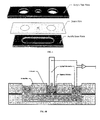
- Figure 1A and 1B show diagrams of a bilayer measurement chamber.
- Top Exploded view of top acrylic piece, center Delrin film containing cutouts for access to the lower fluidic channel and bilayer masking aperture and bottom acrylic piece connecting the side and center wells.
- Bottom Cross-section of assembled chamber. Aqueous fluid is first loaded into one of the two side wells followed by loading of n-decane into the central well. The aperture size in the Delrin film masks the contact area between these two solutions. Lipids in the decane or aqueous solutions form a monolayer at this contact area.
- a Ag/AgCl pin electrode with sessile aqueous droplet in the central well causes self-assembly of another lipid monolayer; lowering the pin contacts the two monolayers to form a bilayer defined by the Delrin aperture. Electrical measurements of this bilayer are made by the pin electrode and Ag/AgCl counterelectrode inserted into the side well.
- Figure 2 shows the bilayer capacitance as a function of vertical pin position with masking apertures of diameter (50-200 ⁇ m) and with no aperture.
- the apertures allow control of bilayer area and strongly reduce its dependence on pin vertical position.
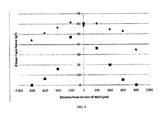
- Figure 3 shows the bilayer capacitance as a function of lateral pin position with a 150 ⁇ m diameter masking aperture (squares) and with no aperture (diamonds). For each measurement, the pin is raised vertically 500 ⁇ m from its starting position and moved laterally before being lowered.
- FIG. 4 show that masking apertures increase tolerance of bilayers to solution flow.
- Bilayer capacitance is measured as a function of flow rate of the buffer in the lower aqueous chamber. Data shown from two separate trials with a 200 ⁇ m diameter aperture. Without the masking aperture, bilayer failure was immediate even for flow rates ⁇ 1 ml/hr.
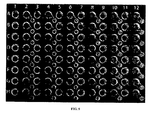
- Figure 5 show fabricated array plate of wells depicted in Figure 1 of manuscript.
- Well spacing is SBS standard and compatible with multichannel fluid handling and motion control standard apparatus.
- Figure 6A-6D show a droplet bilayer apparatus use.
- the lower channel was filled with an aqueous solution containing TRPM8 proteoliposomes (1 mg mL21 in 20 mM HEPES (pH 7.2), 150 mM KCl, 0.2 mM MgCl2).
- the central well was then filled with n-decane, resulting in lipid monolayer formation at the aqueous-decane interface, restricted by the aperture in the Delrin film.
- 2 mL of proteoliposome solution was then deposited on the bottom of a Ag/AgCl pin electrode.
- the electrode was lowered, via a micromanipulator, into the central well to allow a lipid monolayer to form at the droplet interface. After approximately five-minutes dwell time, the pin was lowered to contact the monolayers on the aqueous interfaces in order to form a bilayer.
- Drug dosing was achieved through the addition and withdrawal of solution from the lower channel via the fluid inlet and fluid outlet lines. Electrical measurements of the bilayer were made by the pin electrode and Ag/AgCl counter electrode (inserted into the outlet well).
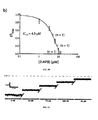
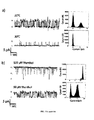
- Figure 7A and 7B show a dose-dependent activation of TRPM8 by menthol and inhibition of menthol-evoked TRPM8 currents by 2-APB.
- proteoliposomes at a protein : lipid ratio of 1 : 1000 diluted to 1 mg mL21 in reconstitution buffer with 2.5 mM PI(4,5)P2 added.
- (a) Excerpts of one experiment in which the channel currents were continuously measured as menthol concentration was increased: 0 mM, 20 mM, 40 mM, 60 mM, 80 mM, 100 mM, 120 mM, 140 mM and 500 mM. Step-wise, dose-dependent increases in current were observed.
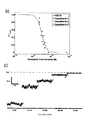
- Figure 8A and 8B show IC50 and EC50 results for TRPM8 following menthol and 2-APB addition.
- Currents recorded e.g. Fig. 3
- I/Imax fractional unblocked current
- proteoliposomes at a protein : lipid ratio of 1 : 1000 diluted to 1 mg mL21 in reconstitution buffer with 2.5 mM PI(4,5)P2 added.
- Figure 9A - 9D show: (a) Dose-dependence effect of astemizole on hERG currents. (Left) hERG currents measured following sequential application of solutions with increasing astemizole concentration shows dose-dependent inhibition, with a small amount of measured unblockable current remaining at high (50 ⁇ M) astemizole concentration (-100 mV applied). (Right) This unblockable current was subtracted from each measured current and the difference was normalized to the current measured before application of astemizole to result in the ratio I/I max . This ratio was plotted versus astemizole concentration and fit to the Hill equation (see Example 3) to find the concentration at 50% conductance, IC 50 .
- Figure 10 shows the ensemble recordings of TRPM8 currents while varying PI(4,5)P 2 concentration in the presence of 250 ⁇ M menthol and a clamping potential of +100 mV. Data were filtered at 200 Hz. Measurements began in the absence of PI(4,5)P 2 . After ten minutes at each concentration, the concentration of PI(4,5)P 2 was then increased by 0.8 ⁇ M with the addition of 2.4 ⁇ L PI(4,5)P 2 stock solution (100 ⁇ M) to the 200 ⁇ L lower aqueous solution. With no PI(4,5)P 2 in the measurement solution, there was no observed channel activity. As the concentration of PI(4,5)P 2 increased, frequency of channel opening increased. At 2.4 ⁇ M PI(4,5)P 2 , the maximum current did not increase further. Throughout experiments, temperature was kept constant at 20 °C.
- Figure 11 shows the cold and menthol activation of TRPM8.
- Figure 12 shows the ensemble recordings of TRPM8 currents while varying temperature in the presence of 250 ⁇ M menthol and a clamping potential of +100 mV. Data were filtered at 200 Hz. Measurements made in the presence of 2.5 ⁇ M PI(4,5)P 2 and at a starting temperature of 20°C. After recording channel activity at 20°C for five minutes, alcohol lamp was then ignited and chamber temperature was slowly increased to 35°C. In representative trace, maximal current (275 pA) was achieved at 20°C and, upon warming, remained constant until 23°C. For temperatures greater than 23°C, the measured current progressively decreased and was finally extinguished at 28°C.
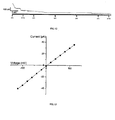
- Figure 13 shows a plot of current versus applied voltage obtained on a lipid bilayer produced with hERG membrane preparations.
- Ranges can be expressed herein as from “about” one particular value, and/or to "about” another particular value. When such a range is expressed, a further aspect includes from the one particular value and/or to the other particular value. Similarly, when values are expressed as approximations, by use of the antecedent "about,” it will be understood that the particular value forms a further aspect. It will be further understood that the endpoints of each of the ranges are significant both in relation to the other endpoint, and independently of the other endpoint. It is also understood that there are a number of values disclosed herein, and that each value is also herein disclosed as "about” that particular value in addition to the value itself. For example, if the value “10” is disclosed, then “about 10" is also disclosed. It is also understood that each unit between two particular units are also disclosed. For example, if 10 and 15 are disclosed, then 11, 12, 13, and 14 are also disclosed.
- references in the specification and concluding claims to parts by weight of a particular element or component in a composition denotes the weight relationship between the element or component and any other elements or components in the composition or article for which a part by weight is expressed.
- X and Y are present at a weight ratio of 2:5, and are present in such ratio regardless of whether additional components are contained in the compound.
- a weight percent (wt. %) of a component is based on the total weight of the formulation or composition in which the component is included.
- the terms "optional” or “optionally” means that the subsequently described event or circumstance can or can not occur, and that the description includes instances where said event or circumstance occurs and instances where it does not.
- the terms "optional” or “optionally” means that the subsequently described event or circumstance can or cannot occur, and that the description includes instances where said event or circumstance occurs and instances where it does not.
- a chemical agent refers to any natural or synthetic composition, molecule, or atom.
- a chemical agent can be a drug that has been approved by the FDA.
- a chemical agent can be a molecule that is in clinical trial.
- Suitable chemical agents include, but are not limited to, substances, molecules, or atoms that targets membrane proteins such as ion channels and/or GPCRs or the membrane itself.
- the terms “effective amount” and “amount effective” refer to an amount that is sufficient to achieve the desired result or to have an effect on an undesired condition.
- an effective amount of a chemical agent can achieve desired results in a formed amphiphilic bilayer.
- the term "derivative" refers to a compound having a structure derived from the structure of a parent compound (e.g., a compound disclosed herein, such as a lipid) and whose structure is sufficiently similar to those disclosed herein and based upon that similarity, would be expected by one skilled in the art to exhibit the same or similar activities and utilities as the claimed compounds, or to induce, as a precursor, the same or similar activities and utilities as the claimed compounds.
- exemplary derivatives include salts, esters, amides, salts of esters or amides, and N-oxides of a parent compound.
- compositions disclosed herein have certain functions. Disclosed herein are certain structural requirements for performing the disclosed functions, and it is understood that there are a variety of structures that can perform the same function that are related to the disclosed structures, and that these structures will typically achieve the same result.
- amphiphilic molecule as used herein is a molecule composed of hydrophilic and hydrophobic groups. Amphiphilic molecules can form an amphiphilic bilayer under suitable conditions. An amphiphilic molecule can for an amphiphilic monolayer at the interface of an aqueous and non-aqueous solution. An amphiphilic molecule can be any amphiphilic molecule that forms a bilayer found in a mammalian cell. In one aspect, the amphiphilic molecule can be a lipid.
- a lipid can comprise mixtures of two or more lipids.
- Suitable lipids can be generally classified as ionic (anionic/cationic/dipolar) and nonionic. More specifically, polymeric surfactants, silicon surfactants, fluorinated surfactants, oligomeric surfactants, dimeric surfactants, natural lipids, and the like, are suitable lipids for the devices and methods disclosed herein.
- the lipds disclosed herein can comprise an anionic lipid.
- Any anionic lipid can be used. Suitable anionic lipids are commonly used in detergents, shampoos, soaps, etc., and can be obtained commercially or prepared by methods known in the art. They include, but are not limited to, alkylbenzene sulfonates (detergent), fatty acid based surfactants, lauryl sulfate ( e.g., a foaming agent), di-alkyl sulfosuccinate ( e.g ., a wetting agent), lignosulfonates ( e.g ., a dispersant), and the like, including mixtures thereof.
- alkylbenzene sulfonates detergent
- fatty acid based surfactants e.g., a foaming agent
- di-alkyl sulfosuccinate e.g ., a wetting agent
- lignosulfonates e.
- linear alkylbenzene sulphonic acid sodium lauryl ether sulphate, alpha olefin sulphonates, phosphate esters, sodium sulphosuccinates, hydrotropes, and the like, including mixtures thereof, can be used.
- the lipids disclosed herein can comprise a cationic lipid.
- Any cationic lipid can be used.
- Such cationic lipids can be obtained commercially or can be prepared by methods known in the art.
- the lipids disclosed herein can comprise a nonionic lipid. Any nonionic lipid can be used. Suitable nonionic lipids do not ionize in aqueous solution, because their hydrophilic group is of a non-dissociable type, such as alcohol, phenol, ether, ester, or amide.
- ethers e.g ., polyhydric alcohols such as glycerin, solbitole, sucrose, etc.
- fatty acid esters e.g ., glycerin fatty acid ester, sobitan fatty acid ester, sucrose fatty acid ester, etc.
- esters e.g ., compounds made by applying, for example, ethylene oxide to a material having hydroxyl radicals such as high alcohol, alkyl-phenol, and the like
- ether/esters e.g ., compounds made by applying, for example, the ethylene oxide to the fatty acid or polyhydric alcohol fatty acid ester, having both ester bond and ether bond in the molecule
- other types e.g ., the fatty acid alkanol-amide type or the alkylpolyglyceride type.
- nonionic lipids can include, but are not limited to, alcohol ethoxylates and alkyl phenol ethyoxylates, fatty amine oxides, alkanolamides, ethylene oxide/propylene oxide block copolymers, alkyl amine ethoxylates, tigercol lubricants, etc.
- the lipids disclosed herein can comprise dipolar lipids. Any dipolar lipid can be used. Suitable dipolar lipids (called amphoteric or zwitterionic) exhibit both anionic and cationic dissociation. Suitable examples of dipolar lipids include, but are not limited to, products like betaines or sulfobetaines and natural substances such as amino acids and phospholipids. In one aspect, the betaines disclosed in U.S. Patent Nos. 6,852,816 ; 6,846,795 ; 6,846,352 ; and 6,849,426 , which are incorporated by reference in their entireties, can be used herein.
- Suitable lipids include natural surfactants, which can have their source from plant or animal organs.
- a bolaform lipids can be used.
- a bolaform lipid is a lipid that has two hydrophilic head groups at opposite ends of a hydrophobic tail.
- Mixtures of these lipids can also be used in the compositions and methods disclosed herein.
- the disclosed lipids comprises diphytanoylphosphatidylcholine and/or 1,2-diphytanoyl-sn-glycero-3-phosphatidylcholine.
- a device comprising: a) a first chamber; b) at least one second chamber; and c) a substrate defining at least one aperture having a diameter size, wherein the substrate is positioned between the at least one second chamber and the first chamber, and wherein the first chamber is in fluid communication with the at least one second chamber through the at least one aperture.
- the substrate is a hydrophobic substrate.
- the hydrophobic substrate comprises polyoxymethylene, Teflon, polyethylene, acrylic resin, or a mixture thereof.
- the hydrophobic substrate can be Delrin.
- the substrate can be a film. In one aspect, the substrate can have a thickness that is less than 1 cm, 0.5 cm, or 0.1 cm. In another aspect the can have a thickness that is less than 500 ⁇ m, 200 ⁇ m, 100 ⁇ m, 50 ⁇ m, 25 ⁇ m, or 10 ⁇ m.
- the first and at least one second chamber can be in any spatial orientation relative to one another.
- the first and at least one second chamber can be side-by-side.
- the first chamber can be a first side chamber and the at least one second chamber can be at least one side second chamber.
- the first and at least one second chamber can above and below on another.
- the first chamber is a lower chamber and wherein the second chamber is at least one upper chamber.
- the first chamber defines a first plate defining a solution chamber; and the second chamber defines a second plate defining at least one loading chamber having a diameter size.
- the lower chamber defines a first plate defining a solution chamber; and the at least one upper chamber defines a second plate defining at least one loading chamber having a diameter size.
- the first plate and the second plate are made of a non-absorbing material.
- the first plate and the second plate are made of the same material.
- the first plate and the second plate can be acrylic based plates.
- the substrate can be in contact with the first plate. In another aspect, the substrate can be in contact with the second plate. In another aspect, the substrate can be in contact with the first plate and the second plate.
- the substrate can define the upper limit of the solution chamber. In another aspect, the substrate can define the lower limit of the at least one loading chamber.
- the diameter of the at least one loading chamber is larger than the aperture of the substrate. In another aspect, the diameter of the at least one loading chamber is smaller than the solution chamber.
- the first plate further defines at least one solution aperture and the substrate further defines at least one solution aperture, wherein the at least one solution aperture of the first plate is in fluid communication with the solution chamber through the at least one solution aperture of the substrate.
- the first plate further defines at least one solution aperture and the hydrophobic substrate further defines at least one solution aperture, wherein the at least one solution aperture of the first plate is in fluid communication with the solution chamber through the at least one solution aperture of the hydrophobic substrate.
- the second plate further defines at least one solution aperture. The at least one solution aperture of the second plate can be in fluid communication with the at least one solution aperture of the first plate through the at least one solution aperture of the substrate.
- the device comprises at least two solution apertures.
- the device comprises at least four solution apertures.
- the device comprises at least six solution apertures.
- the at least one solution aperture defines a solution inlet. In another aspect, the at least one solution aperture defines a solution outlet. In yet another aspect, the at least one solution aperture defines a solution inlet and a solution outlet. Means can be provided to produce a flow rate of a solution via the solution inlet and solution outlet.
- the solution can, for example, be a third solution as defined herein.
- the diameter size of the at least one aperture is about 500 nm to about 10,000 ⁇ m. In another aspect, the diameter size of the at least one aperture is about 500 nm to about 5,000 ⁇ m. In yet another aspect, the diameter size of the at least one aperture is about 500 nm to about 1,000 ⁇ m. In yet another aspect, the diameter size of the at least one aperture is about 500 nm to about 750 ⁇ m. In yet another aspect, the diameter size of the at least one aperture is about 500 nm to about 500 ⁇ m. In yet another aspect, the diameter size of the at least one aperture is about 500 nm to about 200 ⁇ m. In yet another aspect, the diameter size of the at least one aperture is about 500 nm to about 100 ⁇ m.
- the diameter size of the at least one aperture is about 500 nm to about 50 ⁇ m. In yet another aspect, the diameter size of the at least one aperture is about 500 nm to about 20 ⁇ m. In yet another aspect, the diameter size of the at least one aperture is about 500 nm to about 10 ⁇ m. In yet another aspect, the diameter size of the at least one aperture is about 500 nm to about 5 ⁇ m. In yet another aspect, the diameter size of the at least one aperture is about 500 nm to about 1 ⁇ m. For example, the diameter size of the at least one aperture can be about 20 ⁇ m to about 500 ⁇ m. In another example, the diameter size of the at least one aperture is about 50 ⁇ m to about 200 ⁇ m.
- the diameter size of the at least one aperture is smaller than the diameter size of the at least one loading chamber.
- the thickness of the substrate and the diameter size of the aperture are such that an amphiphilic molecule bilayer, such as a lipid bilayer, can be formed.
- an amphiphilic molecule bilayer such as a lipid bilayer
- the device further comprises means for performing a measurement.
- the measurement can be any measurement that produces information about the formation or disruption of an amphiphilic monolayer or amphiphilic bilayer. Such measurements are well known in the art. Suitable measurements include, but are not limited to, an electrical measurement, an optical measurement, a chemical measurement, an acoustic measurement, or combination thereof. The above measurements can include, fluorescence microscopy, dual polarization interferometery, x-ray diffraction, and electron microscopy. In one example, the measurement can be an electrical measurement. In one aspect, the means for performing electrical measurements comprises an electrode.
- the first chamber further comprises a first fluid.
- the first fluid can be an aqueous fluid.
- An aqueous fluid can be water, such as deionized or milipure water.
- the first fluid can be a non-aqueous solution.
- the first fluid, such as an aqueous fluid can comprise at least one amphiphilic molecule, such as a lipid.
- the first fluid can further comprise a chemical agent.
- the first fluid can further comprise a chemical agent and at least one amphiphilic molecule.
- the at least one second chamber comprises a second fluid.
- the second fluid is immiscible in the first fluid.
- the second fluid can be a non-aqueous solution.
- Suitable non-aqueous solutions are saturated hydrocarbon fluids such as n-hexane, n-heptane, n-octane, n-nonane, n-decane, and n-dodecane.
- Other suitable non-aqueous solutions include oils, such mineral oils.
- the second fluid can be an aqueous solution.
- the second fluid can be a non-aqueous solution and the first fluid can be an aqueous solution.
- viscosity of the second fluid and first fluids are substantially the same.
- the second fluid comprises at least one amphiphilic molecule, such as at least one lipid.
- the first and second fluid comprises at least one amphiphilic molecule, such as at least one lipid.
- the second fluid comprises at least one amphiphilic molecule, such as at least one lipid and the first fluid does not comprise at least one amphiphilic molecule.
- the first fluid comprises at least one amphiphilic molecule, such as at least one lipid and the second fluid does not comprise at least one amphiphilic molecule.
- the second fluid comprises a chemical agent.
- the second fluid comprises a chemical agent and at least on amphiphilic molecule, such a lipid.
- the at least one second chamber is an array of loading chambers.
- the array can comprise at least 2, 3, 4, 5, 6, 7, 8, 9, 10, 15, 20, 30, 50, 100, 500 or 1000 loading chambers.
- the at least one aperture is an array of apertures.
- the array can comprise at least 2, 3, 4, 5, 6, 7, 8, 9, 10, 15, 20, 30, 50, 100, 500 or 1000 apertures.
- the at least one solution aperture can be an array of solution apertures.
- the array can comprise at least 2, 3, 4, 5, 6, 7, 8, 9, 10, 15, 20, 30, 50, 100, 500, 1000 or 2000 solution apertures.
- the solution chamber comprises a third fluid.
- the third fluid and first fluid are identical.
- the third solution is immiscible in the second fluid.
- the third fluid comprises a chemical agent.
- the third fluid and first fluid are identical but for that the third fluid comprises a chemical agent which the first fluid does not.
- the third fluid is an aqueous solution.
- the third fluid is a non-aqueous solution.
- the device comprises means for flowing a third fluid through the solution chamber.
- the means for flowing a third fluid through the solution chamber comprises a fluid inlet and a fluid outlet.
- the chemical agent comprises a chemical agent that interacts with membrane proteins, receptors, or ion channels. In another aspect, the chemical agent comprises a chemical agent that modifies membrane proteins, receptors, or ion channels. In another aspect, the chemical agent comprises a chemical agent that disrupts membrane proteins, receptors, or ion channels. In another aspect, the chemical agent comprises a chemical agent that does not interact with membrane proteins, receptors, or ion channels.
- the first chamber or at least one second chamber comprises a fourth solution.
- the at least one second chamber can comprise the fourth solution.
- the first chamber can comprise the fourth solution.
- the fourth solution when the at least one second chamber comprises a second solution the fourth solution is immiscible in the second solution.
- the further solution is immiscible in a fluid present in the first chamber or the at least one second chamber.
- the fourth solution when the first chamber comprises a first solution the fourth solution is immiscible in the first solution.
- the fourth solution is an aqueous solution.
- the fourth solution is a non-aqueous solution.
- the fourth solution comprises at least one amphiphilic molecule, such as a lipid.
- the fourth solution comprises a chemical agent.
- the fourth solution is a droplet, such as an aqueous droplet.
- the loading chamber comprises an aqueous droplet.
- least a portion of the fourth solution is in contact with means for performing measurements, such as electrical measurements.
- the loading chamber can comprise an aqueous droplet, and wherein at least a portion of the aqueous droplet is in contact with the means for performing electrical measurements.
- Also disclosed herein is a method of making a lipid bilayer comprising: a) providing a device comprising a substrate defining at least one aperture; b) providing an first solution on one side of the aperture; c) providing a second solution on the opposite side of the aperture from the first solution, wherein the first solution is immiscible in the second solution; d) providing a first amphiphilic molecule in the first solution, or second solution, or in both the first solution and second solution; e) contacting the first solution and the second solution through the aperture, thereby forming a first amphiphilic molecule monolayer; f) providing an fourth solution; g) providing a second amphiphilic molecule in the second solution, or fourth solution, or in both the second solution and fourth solution; h) submerging at least a portion of the fourth solution in the second solution, wherein the fourth solution is immiscible in the second solution, thereby forming a second amphiphilic molecule monolayer; and i) contacting the second amphi
- the device is a device disclosed herein.
- the fourth solution is a droplet.
- the fourth solution comprises an amphiphilic molecule.
- the fourth solution can comprise a lipid.
- the amphiphilic molecule bilayer is a lipid bilayer. In one aspect, the amphiphilic molecule bilayer comprises at least one ion channel. In another aspect, the amphiphilic molecule bilayer comprises at least one receptor. In another aspect, the amphiphilic molecule bilayer comprises at least one membrane proteins. In another aspect, the amphiphilic molecule bilayer comprises at least one ion channel and at least one receptor. In another aspect, the amphiphilic molecule bilayer comprises at least one ion channel, at least one receptor, and at least one membrane protein.
- amphiphilic molecule bilayer is stable for at least 3 days, 5 days, 1 week, 2 weeks, 1 month, 3 months or 6 months.
- the method further comprises providing means for performing measurements.
- Suitable means for performing measurements are known in the art and include, but are not limited to means for performing electrical measurements, means for performing optical measurements, means for performing chemical measurements, means for performing acoustic measurements, or a combination thereof.
- the method can further comprise providing means for performing electrical measurements.
- the method further comprises performing measurements. Suitable measurements are known in the art and include, but are not limited to an electrical measurement, an optical measurement, a chemical measurement, an acoustic measurement, or combination thereof.
- the method can further comprise performing an electrical measurement.
- At least a portion of the fourth solution is in contact with the means for performing measurements, such as electrical measurements.
- the means for performing measurements such as electrical measurements.
- at least a portion of the droplet is in contact with the means for performing measurements, such as electrical measurements.
- the method further comprises providing a third solution on the same side of the aperture as the first solution.
- the third solution is identical to the first solution.
- the third solution is an aqueous solution.
- the third solution is a non-aqueous solution.
- the chemical agent in the third solution can be present before or after the formation of the amphiphilic molecule bilayer.
- the chemical agent in the third solution can be present before the formation of the amphiphilic molecule bilayer.
- the chemical agent in the third solution can be present after the formation of the amphiphilic molecule bilayer.
- the third solution does not comprise a chemical agent before the formation of the amphiphilic molecule bilayer.
- the third solution has a flow rate.
- the flow rate can be at least 1 ml/hr, 3 ml/hr, 5, ml/hr, 10 ml/hr, 15 ml/hr, 20 ml/hr, 25 ml/hr, 30 ml/hr or 50 ml/hr.
- the flow rate of the third solution does not influence the stability of the amphiphilic molecule bilayer.
- the third solution further comprises a chemical agent.
- the first solution is an aqueous solution. In another aspect, the first solution is a non-aqueous solution. In one aspect, the first solution further comprises a chemical agent.
- the chemical agent in the first solution can be present before the formation of the amphiphilic molecule bilayer. In another example, the chemical agent in the first solution can be present after the formation of the amphiphilic molecule bilayer. In another example, the first solution does not comprise a chemical agent before the formation of the amphiphilic molecule bilayer.
- the second solution is a non-aqueous solution. In another aspect, the second solution is an aqueous solution. In one aspect, the second solution further comprises a chemical agent.
- the chemical agent in the second solution can be present before the formation of the amphiphilic molecule bilayer. In another example, the chemical agent in the second solution can be present after the formation of the amphiphilic molecule bilayer. In another example, the second solution does not comprise a chemical agent before the formation of the amphiphilic molecule bilayer.
- the chemical agent comprises a chemical agent that interacts with membrane proteins, receptors, or ion channels. In another aspect, the chemical agent comprises a chemical agent that modifies membrane proteins, receptors, or ion channels. In another aspect, the chemical agent comprises a chemical agent that disrupts membrane proteins, receptors, or ion channels. In another aspect, the chemical agent comprises a chemical agent that does not interact with membrane proteins, receptors, or ion channels. The method of paragraph 53, wherein the chemical agent is known to interact with amphiphilic molecule bilayer.
- the defining at least one aperture is an array of apertures.
- the array can comprise at least 2, 3, 4, 5, 6, 7, 8, 9, 10, 15, 20, 30, 50, 100, 500 or 1000 apertures.
- a chemical agent can be added to the first solution, second solution, third solution or fourth solution before or after the formation of the amphiphilic molecule bilayer.
- a chemical agent can be added to the first solution before or after the formation of the amphiphilic molecule bilayer.
- a chemical agent can be added to the second solution before or after the formation of the amphiphilic molecule bilayer.
- a chemical agent can be added to the third solution before or after the formation of the amphiphilic molecule bilayer.
- a chemical agent can be added to the fourth solution before or after the formation of the amphiphilic molecule bilayer.
- Also disclosed herein is a method of performing electrical measurements on an amphiphilic molecule bilayer comprising: a) providing an amphiphilic molecule bilayer formed at an aperture; and b) performing a measurement.
- providing an amphiphilic molecule bilayer comprises the methods for forming an amphiphilic molecule bilayer as described herein.
- providing a lipid bilayer formed at an aperture can comprise: a) providing a device comprising a substrate defining at least one aperture; b) providing an first solution on one side of the aperture; c) providing a second solution on the opposite side of the aperture from the first solution, wherein the first solution is immiscible in the second solution; d) providing a first amphiphilic molecule in the first solution, or second solution, or in both the first solution and second solution; e) contacting the first solution and the second solution through the aperture, thereby forming a first amphiphilic molecule monolayer; f) providing an fourth solution; g) providing a second amphiphilic molecule in the second solution, or fourth solution, or in both the second solution and fourth solution; h) submerging at least a portion of the fourth solution in the second solution, wherein the fourth solution is immiscible
- the aperture can be an aperture as disclosed herein. In another aspect, the aperture can be present in a device disclosed herein. In one aspect, the aperture can be an array of apertures. The array can comprise at least 2, 3, 4, 5, 6, 7, 8, 9, 10, 15, 20, 30, 50, 100, 500 or 1000 apertures.
- the device can be a device disclosed herein.
- the amphiphilic molecule bilayer is a lipid bilayer. In one aspect, the amphiphilic molecule bilayer comprises at least one ion channel. In another aspect, the amphiphilic molecule bilayer comprises at least one receptor. In another aspect, the amphiphilic molecule bilayer comprises at least one membrane proteins. In another aspect, the amphiphilic molecule bilayer comprises at least one ion channel and at least one receptor. In another aspect, the amphiphilic molecule bilayer comprises at least one ion channel, at least one receptor, and at least one membrane protein.
- the fourth solution is a droplet.
- the method further comprises performing measurements prior to providing an amphiphilic molecule bilayer. In one aspect, the method further comprises performing measurements during the formation of an amphiphilic molecule bilayer.
- the measurement can be an electrical measurement, an optical measurement, a chemical measurement, an acoustic measurement, or combination thereof.
- the measurement can be an electrical measurement or an optical measurement.
- the measurement can be an electrical measurement.
- performing a measurement comprises providing means for performing measurements.
- Suitable means for performing measurements are known in the art and include, but are not limited to means for performing electrical measurements, means for performing optical measurements, means for performing chemical measurements, means for performing acoustic measurements, or a combination thereof.
- the method can further comprise providing means for performing electrical measurements.
- performing electrical measurements comprises an electrode.
- the fourth solution is in contact with at least a portion of the means for performing electrical measurements.
- the fourth solution can be a droplet.
- at least portion of the droplet can be in contact with at least a portion of the electrode.
- the method can further comprise detecting a change in the measurements.
- the method can further comprise detecting a change in the electrical measurements or optical measurements.
- the method can further comprise detecting a change in the electrical measurements.
- the method further comprises providing a third solution on the same side of the aperture as the first solution.
- the method further comprises providing a third solution on the same side of the aperture as the first solution.
- the third solution is identical to the first solution.
- the third solution is an aqueous solution.
- the third solution is a non-aqueous solution.
- the chemical agent in the third solution can be present before or after the formation of the amphiphilic molecule bilayer.
- the chemical agent in the third solution can be present before the formation of the amphiphilic molecule bilayer.
- the chemical agent in the third solution can be present after the formation of the amphiphilic molecule bilayer.
- the third solution does not comprise a chemical agent before the formation of the amphiphilic molecule bilayer.
- the third solution has a flow rate.
- the flow rate can be at least 1 ml/hr, 3 ml/hr, 5, ml/hr, 10 ml/hr, 15 ml/hr, 20 ml/hr, 25 ml/hr, 30 ml/hr or 50 ml/hr.
- the flow rate of the third solution does not influence the stability of the amphiphilic molecule bilayer.
- the third solution further comprises a chemical agent.
- the first solution is an aqueous solution. In another aspect, the first solution is a non-aqueous solution. In one aspect, the first solution further comprises a chemical agent.
- the chemical agent in the first solution can be present before the formation of the amphiphilic molecule bilayer. In another example, the chemical agent in the first solution can be present after the formation of the amphiphilic molecule bilayer. In another example, the first solution does not comprise a chemical agent before the formation of the amphiphilic molecule bilayer.
- the second solution is a non-aqueous solution. In another aspect, the second solution is an aqueous solution. In one aspect, the second solution further comprises a chemical agent.
- the chemical agent in the second solution can be present before the formation of the amphiphilic molecule bilayer. In another example, the chemical agent in the second solution can be present after the formation of the amphiphilic molecule bilayer. In another example, the second solution does not comprise a chemical agent before the formation of the amphiphilic molecule bilayer.
- the chemical agent comprises a chemical agent that interacts with membrane proteins, receptors, or ion channels. In another aspect, the chemical agent comprises a chemical agent that modifies membrane proteins, receptors, or ion channels. In another aspect, the chemical agent comprises a chemical agent that disrupts membrane proteins, receptors, or ion channels. In another aspect, the chemical agent comprises a chemical agent that does not interact with membrane proteins, receptors, or ion channels. The method of paragraph 53, wherein the chemical agent is known to interact with amphiphilic molecule bilayer.
- a chemical agent can be added to the first solution, second solution, third solution or fourth solution before or after the formation of the amphiphilic molecule bilayer.
- a chemical agent can be added to the first solution before or after the formation of the amphiphilic molecule bilayer.
- a chemical agent can be added to the second solution before or after the formation of the amphiphilic molecule bilayer.
- a chemical agent can be added to the third solution before or after the formation of the amphiphilic molecule bilayer.
- a chemical agent can be added to the fourth solution before or after the formation of the amphiphilic molecule bilayer.
- the method provides information regarding the potency of the chemical agent.
- the method provides information regarding the potency of the chemical agent towards an amphiphilic molecule bilayer.
- the at least one second amphiphilic molecule is the at least one first amphiphilic molecule.
- an apparatus was designed for artificial lipid bilayer formation and measurement plate which constrains the contact area of the two aqueous phases, also constraining the bilayer area.
- the apparatus consists of a lower aqueous solution chamber plate, a hydrophobic film in which a small aperture is cut, and a top chamber plate that allows for top loading and electrical access of all solutions.
- Lipid bilayers are formed by contacting monolayers through the small aperture in the hydrophobic film, which constrains the bilayer size.
- the measurements in the examples demonstrate a reduced sensitivity of bilayer area to the relative position of the aqueous phases, reducing the precision needed by fluid handling and motion control hardware in automation.
- the apparatus is also easily arrayed and compatible with SBS standard instrumentation.
- the examples demonstrate fully automated fluid exchange of the lower aqueous solution with intact droplet bilayers allowing for stable solution perfusion. While masking of lipid bilayers formed by contacting monolayers has been studied previously (Zagnoni M 2009), here were present a platform that is easily automatable and scalable, presenting a way forward toward high-throughput study.
- Chambers were made from 0.125" thick acrylic (McMaster-Carr) and 0.003" thick Delrin film (McMaster-Carr). Two acrylic pieces were milled to form fluidic wells and channels by stacking them vertically and sandwiching the Delrin. Apertures in the Delrin film were cut using a CO 2 laser (Universal Laser Systems) to connect the wells formed by the upper and lower acrylic pieces. Two wells were connected through a channel in the lower acrylic piece. Aperture sizes were measured microscopically. The center measurement well was connected to the channel through a pore between 50 - 200 ⁇ m in diameter laser cut into the Delrin film on which the bilayer is formed.
- CO 2 laser Universal Laser Systems
- Measurement buffer (MB) containing liposomes were made as previously described(Poulos J L 2010). Briefly, a 1 ml solution of 1M KCL, 10mM Tris-HCL (Sigma), pH 8.0, and additionally containing 33 mg of 1,2-Diphytanoyl-sn-Glycero-3-Phosphocholine (DPhPC) lipid (Avanti Polar Lipids), was extruded through a 200nm filter (Avanti). 150 ⁇ l MB was first loaded into the aqueous inlet to completely fill the portion of the chamber below the Delrin film.
- DPhPC 1,2-Diphytanoyl-sn-Glycero-3-Phosphocholine
- n-decane MP Biomedicals
- Silver pins were fabricated using 16 gauge silver wire (0.999 purity, C.C. Silver & Gold). The pins were cut to approximately 1 inch and electrical discharge machining was used to create a blunt end and cut slots 0.05" deep and 0.015" wide into the ends of the pins.
- Counter electrodes were made from 200 ⁇ m diameter silver wire (Ted Pella). The silver wires were chloridized by immersing them in bleach for approximately 1 min, followed by a deionized (DI) water rinse.
- DI deionized
- the chloridized pin was lowered into liposome-containing MB to a depth of approximately 10 mm for 1 s and removed ( Figure 1(b) ), resulting in a small ⁇ 1.1 ⁇ l droplet hanging from the end of the pin.
- This pin with hanging droplet was then lowered into the decane solution.
- the pin was lowered further using a micromanipulator (Newport) until the droplet contacted the lower aqueous phase within the Delrin pore, forming a lipid bilayer membrane.
- Newport micromanipulator
- the apparatus was placed inside a Faraday cage and the Ag/AgCl pin and counter-electrode were connected to an Axopatch 200B amplifier (Axon Instruments).
- the signals were digitized with a Digidata 1332A (Axon Instruments) at 5 kHz, filtered in hardware with a 1 kHz Bessel filter and subsequently filtered further with a 30 Hz Bessel filter and analyzed with Clampfit software (Axon Instruments).
- PTFE tubing Zeus
- KD Scientific syringe pump
- 10mL glass syringe Hamilton
- the sensitivity of bilayer area was also investigated to the lateral position of the pin.
- a pin with 2 ⁇ l sessile droplet was axially aligned with the center of a 150 ⁇ m aperture and lowered to form a bilayer. After each capacitance measurement, the pin was raised and moved in 200 ⁇ m steps laterally before being lowered again, after which the capacitance was measured.
- These experiments were compared to measurements taken with no separating Delrin film. With the Delrin film, the bilayer capacitance was still within 90% of its original value when the droplet was positioned over 500 ⁇ m from the aperture center. In contrast, without the masking aperture, the bilayer capacitance decreased to approximately 15% of its original value ( Figure 3 ).
- the relative position of the aqueous fluid interfaces must be precise within 3.6 ⁇ m. This relative position is determined by the position of the pin holding the sessile droplet, the volume of sessile droplet, and the position of the lower aqueous interface, which itself depends on the volume of the lower fluids and the dimensions of the channels and wells. Estimating the shape of the 2.5 ⁇ l sessile droplet on the pin as a spherical cap, 3.6 ⁇ m precision in height of this droplet corresponds to 15 nl required precision in droplet volume. Further, for development of parallel arrays, this vertical precision also requires a high degree of machining tolerance, uniformity, and alignment of the component parts.
- Solution exchange enables increased experimental throughput by allowing for a variety of different experimental conditions to be tested in a short time, as well as measuring the activity of a large but fixed number of ion channels in the presence of varying concentrations of pharmaceutically active compounds for IC 50 /EC 50 determination.
- This type of apparatus enables automated, repeatable high yield formation and measurement of artificial lipid bilayers and ion channels incorporated into them. This goal is achieved by constraining the bilayer area using a masking aperture, which were superior in performance compared to their absence.
- the devices using these apertures are easily arrayable to result in multi-well plates for parallel bilayer and ion channel measurements. This parallelization, in combination with improved compatibility of bilayer formation with automation and the ability to support solution exchange without disturbing the bilayer, can result in significantly increased throughput ion channel studies using artificial bilayers.
- the potency of pharmaceutical compounds acting on ion channels can be determined through measurements of ion channel conductance as a function of compound concentration. Described herein is artificial lipid bilayer apparatus for simple, fast, and high yield measurement of ion channel conductance with simultaneous solution perfusion.
- this chip the application of this chip to the measurement of the mammalian cold and menthol receptor TRPM8.
- Ensemble measurements of TRPM8 as a function of concentration of menthol and 2-aminoethoxydiphenyl borate (2-APB) enabled efficient determination of menthol's EC 50 (111.8 ⁇ M ⁇ 2.4 ⁇ M) and 2-APB's IC 50 (4.9 ⁇ M ⁇ 0.2 ⁇ M) in agreement with published values.
- This validation coupled with the compatibility of this platform with automation and parallelization, indicates significant potential for large scale pharmaceutical ion channel screening.
- Electrophysiological measurements of ion channels are important scientifically and pharmacologically.
- the potency of pharmaceutical compounds on ion channels can be shown through measured changes in ion channel conductance as a function of compound concentration and expressed in the form of IC 50 and EC 50 concentrations. These are commonly measured with cells using the patch clamp technique ( B. Sakmann et al., Ann. Rev. Physiol., 1984, 46, 455-472 ; J.A. Fernández, et al., J. Gen. Physiol., 2011, 137, 173-195 ).
- TRPM8 a member of the Transient Receptor Potential Melastatin (TRPM) family ( N. Kedei, et al., J. Biol. Chem., 2001, 276, 28613-28619 ; T. Rosenbaum, et al., BMC Neurosci. 2002, 3, 4-13 ), was the first temperature-activated channel found to sense cold ( A.M. Peier, et al., Cell, 2002, 108, 705-715 ; D.D. McKemy, et al., Nature, 2002, 416, 52-58 ), and has become a primary target in studies of thermosensation and cold stimulating compounds ( J.A. Fernández, et al., J. Gen.
- TRPM8 has been identified with multiple cancer types ( L.
- TRPM8 is an important drug discovery target.
- TRPM8 single channel conductance, temperature response, and phospholipid sensitivity agreed well with previously published studies. Measurements of TRPM8 ensembles during perfusion of solutions of menthol and 2-aminoethoxydiphenyl borate at varying concentrations enabled us to efficiently determine the EC 50 and IC 50 values of these compounds with TRPM8, also in agreement with the literature. These results, combined with the simplicity and high yield of this platform and its compatibility with automation and parallelism, show great promise for lipid bilayers to play a role in ion channel drug discovery and safety screening.
- Example 1 The general apparatus for these experiments is described in Example 1.
- the apparatus was prepared for use by filling the outer wells and lower channel with 200 ⁇ L of an aqueous solution containing liposomes (described below) ( Fig. 1B ).
- the 200 ⁇ m aperture in the hydrophobic Delrin film is sufficiently small to prevent flow of aqueous solution through it.
- 80 ⁇ L of n-decane was then added to the center well, contacting the lower aqueous solution through the Delrin aperture ( Fig. 1B ).
- a Ag/AgCl pin electrode with 2 ⁇ L sessile droplet of aqueous liposome solution was introduced to the decane in the center well ( Fig. 1B ) ( J.L.
- TRPM8 construct with 6x histidine tag at the amino terminus was transformed into E. coli, expressed, and purified. Following purification, TRPM8 was reconstituted into liposomes, adapted from Long et al. ( S.B. Long, et al, Nature, 2007, 450, 376-382 ) 200 nm diameter unilamellar liposomes were prepared, composed of 1-palmitoyl-2-oleoyl- sn -glycero-3-phosphocholine (POPC) and 1-palmitoyl-2-oleoyl- sn -glycero-3-phosphoethanolamine (POPE) (Avanti Polar Lipids) at a ratio of 3:1 (w:w).
- POPC 1-palmitoyl-2-oleoyl- sn -glycero-3-phosphocholine
- POPE 1-palmitoyl-2-oleoyl- sn -glycero-3-phosphoethanolamine
- TRPM8 proteoliposomes were diluted to a final concentration of 1 mg/mL in reconstitution buffer (RB, 20 mM HEPES (pH 7.2), 150 mM KCl, 0.2 mM MgCl 2 ). 2 ⁇ L of this solution was used for the sessile droplet and 200 ⁇ L of this solution (or a similarly prepared liposome solution not containing TRPM8) was added to the lower aqueous channel.
- reconstitution buffer RB, 20 mM HEPES (pH 7.2), 150 mM KCl, 0.2 mM MgCl 2 .
- a Ag/AgCl counter electrode placed in the one of the outer wells and the Ag/AgCl pin electrode were connected to an Axopatch 200B amplifier (Axon Instruments), which was used to apply a transmembrane potential and measure the resultant ionic current ( Figure 1B ).
- the signals were digitized with a Digidata 1332A (Axon Instruments) at 10 kHz, filtered in hardware with a 1 kHz Bessel filter, filtered post-acquisition with a 200 Hz Bessel filter and analyzed with Clampfit10 software (Axon Instruments). Bilayer capacitance was measured throughout to ensure that changes in measured current were due to changes in channel conductance and not changes in bilayer size or stability.
- Temperature was measured using a 10 k ⁇ n-type thermistor (Newark) placed in the solution of one of the outer wells.
- the thermistor was connected in series with a 10 k ⁇ resistor (Newark) to form a voltage divider; resistor voltage was recorded using a BNC-2110 connector block and PCI-6036E DAQ Card (National Instruments) and used to determine resistance and temperature with LabVIEW 9.2.1 (National Instruments).
- Experiments were performed at room temperature, ⁇ 20°C, unless otherwise mentioned.
- An alcohol lamp was placed near the bilayer chamber to gently heat the experimental environment for temperature experiments.
- Short-chain phosphatidylinositol-4,5-bisphosphate (PI(4,5)P 2 ) (Avanti Polar Lipids)
- menthol and 2-APB were dissolved in RB to a final concentration of 100 ⁇ M, 2 mM, and 300 ⁇ M, respectively.
- solutions were added to the fluid inlet well and withdrawn from the fluid outlet well ( Fig. 6D ).
- Ensembles of TRPM8 were measured using a 1:1000 protein:lipid ratio. The magnitude of measured currents varied widely between experiments. The average observed current over 20 experiments was 693.5 ⁇ 502.7 pA, corresponding to 108 ⁇ 79 channels based on the observed single channel conductance determined above. As described below, this variability did not affect drug potency measurements because, once reconstituted, the magnitude of the current and number of channels remained constant, enabling the relative change in channel conductance between experiments to be compared.
- TRPM8 channels reconstituted at a 1:1000 protein:lipid ratio, were measured with a +100 mV applied potential to measure menthol and 2-APB potency.
- concentration of menthol, a TRPM8 activator, in the lower aqueous solution was increased from 20-140 ⁇ M in 20 ⁇ M increments and a final measurement at 500 ⁇ M.
- the resultant current at each concentration was measured over 10 minutes before the concentration was increased ( Fig. 7 ).
- TRPM8 currents were similarly measured with 2-APB, a TRPM8 inhibitor, at concentrations 1 ⁇ M, 3.3 ⁇ M, 6.6 ⁇ M, 9.9 ⁇ M, and 13.2 ⁇ M in solutions containing 500 ⁇ M menthol to activate TRPM8 ( Fig. 7a ). These experiments were repeated three times for each compound. In one experiment with 2-APB, we also measured concentrations of 5 ⁇ M, 9 ⁇ M and 11 ⁇ M.
- the average current at each concentration was determined and normalized by the maximum value measured.
- Droplet bilayers have been the subject of much recent activity in part because bilayer formation results from a mechanical step, which is simple and highly amenable to automation and parallelization. Coupled with solution perfusion ( S.A. Portonovo , Biomed. Microdevices, 2011 , DOI: 10.1007/s10544-011-9596-5), they have considerable potential for pharmaceutical screening of ion channels, as well as greatly reducing the time and expertise required for ion channel measurement in bilayers. Toward this goal, we aimed to validate this platform through ensemble measurements of TRPM8 in the presence of agonist and antagonist compounds, menthol and 2-APB, respectively, and the determination of their EC 50 and IC 50 values enabled by solution perfusion.
- Membrane composition is critical to the function of many ion channels, including those in the TRP family.
- the membrane composition in our system was specifiable through the prepared liposomes and amount of PI(4,5)P 2 added, and could be easily changed for studies with other ion channels or different membrane compositions.
- Leptihn et al. recently showed ion channel measurement from native cells in a similar droplet bilayer platform ( J. Am. Chem. Soc., 2011, 133, 9370-9375 ).
- TRPM8 measurements at the single channel and ensemble level matched well with previously published results as did the determined IC 50 and EC 50 values of 2-APB and menthol.
- the bilayer chip allowed electrical and fluidic access from the chamber top, allowing quick set up and convenient exchange of chambers between experiments. This chip design is also easily arrayed and compatible with parallel-automated fluid handling and motion control hardware.
- concentration-dependent modulation of channel conductance by pharmaceutical candidates may be measured rapidly and repeatedly in parallel, giving it considerable potential for high throughput electrophysiological screening.
- Ion channel conductance measurements are used to determine drug potency and also detect off-target drug interactions, most commonly for the cardiac potassium ion channel K v 11.1 (hERG).(Hancox, McPate et al. 2008). In these measurements, inhibition (or enhancement) of the conductance is measured as a function of drug concentration, from which the IC 50 (or EC 50 ) is determined, defined as the concentration for which the measured channel conductance is 50% of the maximum. Ion channel drug inhibition can also be determined optically through radioligand binding,(Chiu, Marcoe et al. 2004; Diaz, Daniell et al. 2004) measurements of ion flux,(Cheng, Alderman et al. 2002; Titus, Beacham et al.
- Electrophysiological measurements of ion channel conductance are predominantly made from ion channel ensembles in whole cells using patch clamp.
- Ion channel ensembles have also been measured in lipid bilayers,(Schindler and Rosenbusch 1978; Schindler and Quast 1980; Tao and MacKinnon 2008; Leptihn, Thompson et al. 2011; Brohawn, del Marmol et al. 2012; El-Arabi, Salazar et al. 2012) which offer simplified apparatus, reduced training, and the ability to easily control membrane and solution composition.
- DIBs Droplet interface bilayers
- DIBs for ion channel drug potency measurements were performed. Concentration dependent drug activation and inhibition was previously measured of the rat cold and menthol sensitive ion channel TRPM8, which was expressed in E. coli, purified, and reconstituted into proteoliposomes for measurement in DIBs (El-Arabi, Salazar et al. 2012). However, this result is not readily generalizable because very few physiologically relevant ion channels have been successfully expressed in bacterial expression systems.
- the apparatus described in Example 1 was used during ion channel measurement and used it to measure the dose-dependent attenuation of hERG conductance from increasing concentrations of astemizole and E-4031.
- Membrane preparations were diluted from 1:100,000 to 1:1,000,000 in measurement buffer (MB: 350 mM KCl, 10 mM HEPES, pH 7.5).
- Diphytanoyl-phosphatidylcholine (DPhPC, Avanti Polar Lipids) was dissolved at 1% (wt/vol) in hexadecane (Sigma).
- Bilayer measurement chambers and droplet bilayer formation were similar to previous work.(Zagnoni, Sandison et al. 2009; El-Arabi, Salazar et al. 2012; Portonovo and Schmidt 2012)
- Each chamber consisted of a lower compartment and an upper compartment, connected by a 200 ⁇ m circular aperture in a 75 ⁇ m thick Delrin sheet.
- the droplet was then lowered into contact with the monolayer formed at the lower aqueous/organic interface, bounded by the Delrin masking aperture.
- An Ag/AgCl counter-electrode made from 22 gauge silver wire (Ted Pella) was inserted into a side well accessing the lower aqueous solution, which served as the ground electrode. Both electrodes were chloridized for at least 20 min in Clorox bleach. Transmembrane voltages and electronic measurement of ion channel currents were measured using an Axopatch 200B amplifier (Molecular Devices) and digitized with a Digidata 1332A (Molecular Devices) at a sampling rate of 20 kHz and unfiltered. Over the course of the experiment any non-zero offset currents observed with 0 V applied potential were eliminated using hardware adjustment.
- Astemizole and E-4031 was added to the lower aqueous solution during the experiment. Following bilayer formation and measurement of steady currents, solutions of MB containing either astemizole or E-4031 were added to the lower compartment of the measurement chambers in step-wise increasing concentrations.
- Astemizole is an anti-histamine drug no longer commercially available in many countries due to its role in producing cardiac arrhythmic side effects including Long QT syndrome. It is a known antagonist to voltage-gated potassium ion channels, including hERG.(Wulff, Castle et al. 2009)
- Astemizole (Sigma) was first dissolved in DMSO to yield a 10 mM stock solution, which was diluted to 5.0 ⁇ M in MB. 2 ⁇ L of this diluted astemizole solution was pipetted into one of the side wells of the bilayer chamber, followed by gentle agitation, resulting in a 50 nM solution of astemizole in the 200 ⁇ L lower chamber. Sequential additions of 1 ⁇ L of the diluted astemizole solution into the lower chamber increased the astemizole concentration to 75 nM, 100 nM, 150 nM, 200 nM, and 500 nM. Finally, 1 ⁇ L of the undiluted stock solution was added to achieve a 50 ⁇ M final concentration.
- E-4031 Experiments using the hERG-specific blocker E-4031 (Sigma) were conducted similarly to those conducted with astemizole. E-4031 doses were sequentially added to the lower aqueous compartments of active bilayer chambers to produce resultant concentrations of 10 nM, 20 nM, 30 nM, 40 nM, 50 nM, 80 nM, and 10 ⁇ M. Currents were observed to decrease with each added dose of drug ( Figure 9c ). As with astemizole, a small residual current was measured for the 10 ⁇ M concentration of E-4031. Control experiments applying E-4031 to DPhPC lipid bilayers without hERG did not produce ion currents. Each set of experiments was repeated at least three times for astemizole and E-4031.
- any unblockable current measured at the maximum concentration was subtracted from the current recorded for each concentration to obtain the magnitude of drug-responsive current.
- the ratio of this drug-responsive current to the maximum blockable current was plotted as a function of concentration to obtain dose-response plots for astemizole and E-4031 ( Figures 9b and 9c ).
- the menthol receptor TRPM8 is the principal detector of environmental cold. Nature, 2007, 448, 204-208 .
- the [3H]dofetilide binding assay is a predictive screening tool for hERG blockade and proarrhythmia: Comparison of intact cell and membrane preparations and effects of altering [K+]. Journal of Pharmacological and Toxicological Methods 50(3): 187-199 (2004 )
- Hromada L.P., Nablo, B.J., Kasianowicz, J.J., Gaitan, M.A. & DeVoe, D.L. Single molecule measurements within individual membrane-bound ion channels using a polymer-based bilayer lipid membrane chip. Lab on a Chip 8, 602-608 (2008 ).
- TRPM8 Transient Receptor Potential Melastatin 8
Landscapes
- Health & Medical Sciences (AREA)
- Chemical & Material Sciences (AREA)
- Life Sciences & Earth Sciences (AREA)
- Engineering & Computer Science (AREA)
- General Health & Medical Sciences (AREA)
- Biomedical Technology (AREA)
- Physics & Mathematics (AREA)
- Biochemistry (AREA)
- Medicinal Chemistry (AREA)
- Molecular Biology (AREA)
- General Physics & Mathematics (AREA)
- Analytical Chemistry (AREA)
- Pathology (AREA)
- Immunology (AREA)
- Organic Chemistry (AREA)
- Dispersion Chemistry (AREA)
- Public Health (AREA)
- Hematology (AREA)
- Food Science & Technology (AREA)
- Pharmacology & Pharmacy (AREA)
- Epidemiology (AREA)
- Animal Behavior & Ethology (AREA)
- Biophysics (AREA)
- Veterinary Medicine (AREA)
- Urology & Nephrology (AREA)
- Chemical Kinetics & Catalysis (AREA)
- Electrochemistry (AREA)
- Apparatus Associated With Microorganisms And Enzymes (AREA)
- Organic Low-Molecular-Weight Compounds And Preparation Thereof (AREA)
Applications Claiming Priority (1)
| Application Number | Priority Date | Filing Date | Title |
|---|---|---|---|
| US201161543771P | 2011-10-05 | 2011-10-05 |
Publications (2)
| Publication Number | Publication Date |
|---|---|
| EP2578207A2 true EP2578207A2 (fr) | 2013-04-10 |
| EP2578207A3 EP2578207A3 (fr) | 2015-10-07 |
Family
ID=47172199
Family Applications (1)
| Application Number | Title | Priority Date | Filing Date |
|---|---|---|---|
| EP12006905.9A Withdrawn EP2578207A3 (fr) | 2011-10-05 | 2012-10-05 | Masquage des ouvertures permettant un échange d'automatisme et de solution dans des bicouches de lipides à gouttelettes sessiles |
Country Status (2)
| Country | Link |
|---|---|
| US (1) | US9150598B2 (fr) |
| EP (1) | EP2578207A3 (fr) |
Cited By (4)
| Publication number | Priority date | Publication date | Assignee | Title |
|---|---|---|---|---|
| US8772041B2 (en) | 2008-05-22 | 2014-07-08 | The Regents Of The University Of California | Membrane precursors and membranes formed therefrom |
| US9068280B2 (en) | 2010-01-05 | 2015-06-30 | The Regents Of The University Of California | Droplet bilayer formation using throughput liquid handling techniques |
| US9150598B2 (en) | 2011-10-05 | 2015-10-06 | The Regents Of The University Of California | Masking apertures enabling automation and solution exchange in sessile bilayers |
| US9233846B2 (en) | 2005-10-14 | 2016-01-12 | The Regents Of The University Of California | Formation and encapsulation of molecular bilayer and monolayer membranes |
Families Citing this family (5)
| Publication number | Priority date | Publication date | Assignee | Title |
|---|---|---|---|---|
| WO2017085189A1 (fr) * | 2015-11-17 | 2017-05-26 | Paris Sciences Et Lettres - Quartier Latin | Procédé d'analyse de l'activité d'un canal ionique |
| US10324080B2 (en) * | 2015-11-17 | 2019-06-18 | Purdue Research Foundation | Systems and methods for automated image-guided patch-clamp electrophysiology in vitro |
| US10488394B2 (en) * | 2016-03-21 | 2019-11-26 | Ontera Inc. | Wafer-scale assembly of insulator-membrane-insulator devices for nanopore sensing |
| JP7086072B2 (ja) * | 2016-12-02 | 2022-06-17 | ソフィオン・バイオサイエンス・アクティーゼルスカブ | シールエンハンサー |
| JP7353597B2 (ja) * | 2019-10-04 | 2023-10-02 | 地方独立行政法人神奈川県立産業技術総合研究所 | 計測器具及びそれを用いた標的物質の計測方法 |
Citations (4)
| Publication number | Priority date | Publication date | Assignee | Title |
|---|---|---|---|---|
| US6846795B2 (en) | 2000-10-31 | 2005-01-25 | The Procter & Gamble Company | Detergent compositions |
| US6846352B2 (en) | 1999-12-28 | 2005-01-25 | Seiko Epson Corporation | Ink composition for ink-jet recording and ink set comprising the same |
| US6849426B2 (en) | 2001-06-28 | 2005-02-01 | Cambrex Bio Science Walkersville, Inc. | Methods and reagents for detecting endotoxin |
| US6852816B2 (en) | 2000-10-06 | 2005-02-08 | Biocompatibles Uk Limited | Zwitterionic polymers |
Family Cites Families (37)
| Publication number | Priority date | Publication date | Assignee | Title |
|---|---|---|---|---|
| US3846795A (en) | 1972-11-03 | 1974-11-05 | Transfer Systems | Early warning material failure indicator |
| AU695237B2 (en) | 1994-10-22 | 1998-08-13 | Central Research Laboratories Limited | Method and apparatus for diffusive transfer between immiscible fluids |
| US6699719B2 (en) | 1996-11-29 | 2004-03-02 | Proteomic Systems, Inc. | Biosensor arrays and methods |
| WO1999033559A1 (fr) | 1997-12-24 | 1999-07-08 | Cepheid | Cartouche de manipulation de fluide integree |
| GB9717905D0 (en) | 1997-08-22 | 1997-10-29 | Univ Aston | Lipid-containing compositions and uses thereof |
| US6583251B1 (en) | 1997-09-08 | 2003-06-24 | Emory University | Modular cytomimetic biomaterials, transport studies, preparation and utilization thereof |
| US20020144905A1 (en) | 1997-12-17 | 2002-10-10 | Christian Schmidt | Sample positioning and analysis system |
| AU2460399A (en) | 1998-01-20 | 1999-08-02 | Packard Bioscience Company | Gel pad arrays and methods and systems for making them |
| WO2001020330A1 (fr) | 1999-09-17 | 2001-03-22 | The Texas A & M University System | Agencements de bicouches lipidiques adressees et bicouches lipidiques avec compartiments aqueux confines adressables |
| WO2002039083A2 (fr) | 2000-11-08 | 2002-05-16 | Science & Technology Corporation @ Unm | Analyses de fluorescence et de transfert de fluorescence (fret) de biomolecules liees a des perles |
| DE60213948T2 (de) | 2001-01-18 | 2007-03-08 | Newcastle University Ventures Ltd. | Biosensor mit kovalent gebundenen membranüberspannenden proteinen |
| US6913697B2 (en) | 2001-02-14 | 2005-07-05 | Science & Technology Corporation @ Unm | Nanostructured separation and analysis devices for biological membranes |
| US20060029955A1 (en) * | 2001-03-24 | 2006-02-09 | Antonio Guia | High-density ion transport measurement biochip devices and methods |
| US20020158016A1 (en) | 2001-04-26 | 2002-10-31 | Jan Norberg | Separation unit, a method for separation, and a device for mounting a separation unit in a separation apparatus |
| JP2002361002A (ja) | 2001-06-04 | 2002-12-17 | Minolta Co Ltd | 抽出方法および装置、分離方法および装置 |
| US6863833B1 (en) * | 2001-06-29 | 2005-03-08 | The Board Of Trustees Of The Leland Stanford Junior University | Microfabricated apertures for supporting bilayer lipid membranes |
| US7943067B2 (en) | 2001-08-16 | 2011-05-17 | Polytechnic Institute Of New York University | Nanogels and their production using liposomes as reactors |
| WO2003061585A2 (fr) | 2002-01-22 | 2003-07-31 | The Penn State Research Foundation | Systemes de criblage de candidats medicaments bases sur des hydrogels microstructures et des systemes microfluidiques |
| US7125592B2 (en) | 2002-04-10 | 2006-10-24 | Wisconsin Alumni Research Foundation | Detecting interactions at biomimetic interfaces with liquid crystals |
| GB0312309D0 (en) | 2003-05-29 | 2003-07-02 | Gaslini Children S Hospital G | Targeted liposome |
| US20060003097A1 (en) | 2003-08-06 | 2006-01-05 | Andres Ronald P | Fabrication of nanoparticle arrays |
| AU2004293463A1 (en) | 2003-11-20 | 2005-06-09 | Angiotech International Ag | Implantable sensors and implantable pumps and anti-scarring agents |
| US9198645B2 (en) | 2003-11-26 | 2015-12-01 | The United States of America, as represented by the Secretary of Commerce of The National Institute of Standards and Technology | Controlled vesicle self-assembly in continuous two phase flow microfluidic channels |
| JP4213160B2 (ja) * | 2004-01-21 | 2009-01-21 | 独立行政法人科学技術振興機構 | 膜タンパク質分析用平面脂質二重膜の形成方法とその装置 |
| US7655470B2 (en) | 2004-10-29 | 2010-02-02 | University Of Chicago | Method for manipulating a plurality of plugs and performing reactions therein in microfluidic systems |
| EP1801572A4 (fr) * | 2004-09-17 | 2010-09-01 | Japan Science & Tech Agency | Procede de substitution de lipide dans une double membrane de lipide artificiel, double membrane de lipide artificiel obtenue selon ce procede, equipement de fabrication de double membrane de lipide artificiel et équipement de mesure de perméation ionique |
| CA2601918A1 (fr) | 2005-01-20 | 2006-07-27 | The Regents Of The University Of California | Microreseaux cellulaires pour le criblage de facteurs de differenciation |
| GB0505971D0 (en) * | 2005-03-23 | 2005-04-27 | Isis Innovation | Delivery of molecules to a lipid bilayer |
| US8005526B2 (en) | 2005-08-31 | 2011-08-23 | The Regents Of The University Of Michigan | Biologically integrated electrode devices |
| US9233846B2 (en) | 2005-10-14 | 2016-01-12 | The Regents Of The University Of California | Formation and encapsulation of molecular bilayer and monolayer membranes |
| US8038885B2 (en) * | 2005-10-14 | 2011-10-18 | The Regents Of The University Of California | Formation and encapsulation of molecular bilayer and monolayer membranes |
| NZ579083A (en) * | 2007-02-20 | 2012-07-27 | Oxford Nanopore Tech Ltd | Lipid bilayer sensor system |
| GB2446823A (en) * | 2007-02-20 | 2008-08-27 | Oxford Nanolabs Ltd | Formulation of lipid bilayers |
| GB0724736D0 (en) * | 2007-12-19 | 2008-01-30 | Oxford Nanolabs Ltd | Formation of layers of amphiphilic molecules |
| EP2293921A4 (fr) | 2008-05-22 | 2013-05-22 | Univ California | Précurseurs de membranes et membranes formées à partir de ceux-ci |
| US9068280B2 (en) | 2010-01-05 | 2015-06-30 | The Regents Of The University Of California | Droplet bilayer formation using throughput liquid handling techniques |
| EP2578207A3 (fr) | 2011-10-05 | 2015-10-07 | Jacob J. Schmidt | Masquage des ouvertures permettant un échange d'automatisme et de solution dans des bicouches de lipides à gouttelettes sessiles |
-
2012
- 2012-10-05 EP EP12006905.9A patent/EP2578207A3/fr not_active Withdrawn
- 2012-10-05 US US13/646,305 patent/US9150598B2/en not_active Expired - Fee Related
Patent Citations (4)
| Publication number | Priority date | Publication date | Assignee | Title |
|---|---|---|---|---|
| US6846352B2 (en) | 1999-12-28 | 2005-01-25 | Seiko Epson Corporation | Ink composition for ink-jet recording and ink set comprising the same |
| US6852816B2 (en) | 2000-10-06 | 2005-02-08 | Biocompatibles Uk Limited | Zwitterionic polymers |
| US6846795B2 (en) | 2000-10-31 | 2005-01-25 | The Procter & Gamble Company | Detergent compositions |
| US6849426B2 (en) | 2001-06-28 | 2005-02-01 | Cambrex Bio Science Walkersville, Inc. | Methods and reagents for detecting endotoxin |
Non-Patent Citations (178)
| Title |
|---|
| "Single-channel recording", 1995, PLENUM PRESS |
| A. ZHOLOS, BR. J. PHARMACOL., vol. 159, 2010, pages 1559 - 1571 |
| A. ZHOLOS, BRIT. J PHARMACOL., vol. 159, 2010, pages 1559 - 1571 |
| A.M. PEIER ET AL., CELL, vol. 108, 2002, pages 705 - 715 |
| ADV. MATER., vol. 19, 2007, pages 4466 - 4470 |
| ANDERSSON, D.; CHASE, H.W.N.; BEVAN, S., TRPM8 ACTIVATION BY MENTHOL, ICILIN, AND COLD IS DIFFERENTIALLY MODULATED BY INTRACELLULAR PH. J NEUROSCI., vol. 24, 2004, pages 5364 - 5369 |
| B. LIU AND F. QIN, J NEUROSCI., vol. 25, 2005, pages 1674 - 1681 |
| B. SAKMANN ET AL., ANN. REV. PHYSIOL., vol. 46, 1984, pages 455 - 472 |
| BAAKEN, G.; ANKRI, N.; SCHULER, A.K.; RUHE, J.; BEHRENDS, J.C.: "Nanopore-Based Single-Molecule Mass Spectrometry on a Lipid Membrane Microarray", ACS NANO, vol. 5, 2011, pages 8080 - 8088, XP055023858, DOI: doi:10.1021/nn202670z |
| BAAKEN, G.; SONDERMANN, M.; SCHLEMMER, C.; RUHE, J.; BEHRENDS, J.C.: "Planar microelectrode-cavity array for high-resolution and parallel electrical recording of membrane ionic currents", LAB CHIP, vol. 8, 2008, pages 938 - 944, XP007919564, DOI: doi:10.1039/b800431e |
| BAUTISTA, D.M.; SIEMENS, J.; GLAZER, J.M.; TSURUDA, P.R.; BASBAUM, A.I.; STUCKY, C.L.; JORDT, S.E.; JULIUS, D., THE MENTHOL RECEPTOR TRPM8 IS THE PRINCIPAL DETECTOR OF ENVIRONMENTAL COLD. NATURE, vol. 448, 2007, pages 204 - 208 |
| BAYLEY H.; CRONIN, B.; HERON A.; HOLDEN M.A.; HWANG W.; SYEDA R.; THOMPSON J.; WALLACE M.: "Droplet interface bilayers", MOL. BIOSYST, vol. 4, 2008, pages 1191 - 1208 |
| BEHRENDT, H.J.; GERMANN, T.; GILLEN, C.; HATT, H.; JOSTOCK, R.: "Characterization of the mouse cold-menthol receptor TRPM8 and vanilloid receptor type-1 VR1 using a fluorometric imaging plate reader (FLIPR) assay", BR. J PHARMACOL., vol. 141, 2004, pages 737 - 745, XP002338125, DOI: doi:10.1038/sj.bjp.0705652 |
| BLAKE, S.; MAYER, T.; MAYER, M.; YANG: "J. Monitoring chemical reactions by using ion-channel-forming peptides", CHEMBIOCHEM, vol. 7, 2006, pages 433 - 435 |
| BLAUSTEIN, R.O.; KOEHLER, T.M.; COLLIER, R.J.; FINKELSTEIN: "A. Anthrax Toxin - Channel-Forming Activity of Protective Antigen in Planar Phospholipid-Bilayers", PROCEEDINGS OF THE NATIONAL ACADEMY OF SCIENCES OF THE UNITED STATES OF AMERICA, vol. 86, 1989, pages 2209 - 2213 |
| BRAHA, O.; GU, L.Q.; ZHOU, L.; XIAOFENG, L.; CHELEY, S.; BAYLEY, H.: "Simultaneous stochastic sensing of divalent metal ions", NATURE BIOTECHNOLOGY, vol. 18, 2000, pages 1005 - 1007 |
| BRAHA, O.; WALKER, B.; CHELEY, S.; KASIANOWICZ, J.J.; SONG, L.; GOUAUX, J.E.; BAYLEY H.: "Designed protein pores as components for biosensors", CHEMISTRY AND BIOLOGY, vol. 4, 1997, pages 497 - 505, XP004556332, DOI: doi:10.1016/S1074-5521(97)90321-5 |
| BRAUCHI, S.; ORIO, P.; LATORRE, R.: "Clues to understanding cold sensation: Thermodynamics and electrophysiological analysis of the cold receptor TRPM8", PROC. NATL. ACAD. SCI. U.S.A., vol. 101, 2004, pages 15494 - 154999 |
| BROHAWN, S. G.; MARMOL J.; MACKINNON R.: "Crystal structure of the human K2P TRAAK, a lipid- and mechano-sensitive K+ ion channel", SCIENCE, vol. 335, no. 6067, 2012, pages 436 - 41 |
| CAPONE, R.; BLAKE, S.; RESTREPO, M.R.; YANG, J.; MAYER, M.: "Designing Nanosensors Based on Charged Derivatives of Gramicidin", A. JAM CHEM SOC, vol. 129, 2007, pages 9737 - 9745 |
| CHACHIN, M.; Y. KATAYAMA; YAMADA, M., HORIO; Y., OHMURA, T.; KITAGAWA, H.; UCHIDA, S.; KURACHI, Y.: "Epinastine, a nonsedating histamine H'' receptor antagonist, has a negligible effect on HERG channel", EUROPEAN JOURNAL OFPHARMACOLOGY, vol. 374, no. 3, 1999, pages 457 - 460 |
| CHELEY, S.; GU, L.Q.; BAYLEY, H.: "Stochastic sensing of nanomolar inositol 1,4,5- trisphosphate with an engineered pore", CHEMISTRY & BIOLOGY, vol. 9, 2002, pages 829 - 838, XP026919871, DOI: doi:10.1016/S1074-5521(02)00172-2 |
| CHEN, J.; SEEBOHM, G.; SANGUINETTI, M.C.: "Position of aromatic residues in the S6 domain, not inactivation, dictates cisapride sensitivity of HERG and eag potassium channels", PROCEEDINGS OF THE NATIONAL ACADEMY OF SCIENCES, vol. 99, no. 19, 2002, pages 12461 - 12466, XP002494676, DOI: doi:10.1073/pnas.192367299 |
| CHENG, C. S.; ALDERMAN, D.; KWASH, J.; DESSAINT, J.; PATEL, R.; LESCOE, M.K.; KINRADE, M.B.; WEIFENG, Y. A: "high-throughput HERG potassium channel function assay: An old assay with a new look", DRUG DEVELOPMENT AND INDUSTRIAL PHARMACY, vol. 28, no. 2, 2002, pages 177 - 191 |
| CHIU, P. J. S.; MARCOE, K.F.; BOUNDS, S.E.; LIN, C.H.; FENG, J.J.; ATSUI, L.; CHENG, F.C.; CRUMB, W.J.; MITCHELL, R.: "Validation of a [3H]astemizole binding assay in HEK293 cells expressing HERG K+ channels", JOURNAL OF PHARMACOLOGICAL SCIENCES, vol. 95, no. 3, 2004, pages 311 - 319 |
| CHUANG, H.; NEUHAUSSER, W.M.; JULIUS, D.: "The super-cooling agent icilin reveals a mechanism of coincidence detection by a temperature-sensitive TRP channel", NEURON, vol. 43, 2004, pages 859 - 869 |
| COHEN, F.S.: "Fusion of phospholipid vesicles with planar phospholipid bilayer membranes. II. Incorporation of a vesicular membrane marker into the planar membrane", THE JOURNAL OF GENERAL PHYSIOLOGY, vol. 75, 1980, pages 251 - 270 |
| COLBURN, R.W.; LUBIN, M.L.; STONE, D.J.; WANG, Y.; LAWRENCE, D.; D'ANDREA, M.R.; BRANDT, M.R.; LIU, Y.M.; FLORES, C.M.; QIN, N.: "Attenuated cold sensitivity in TRPM8 null mice", NEURON, vol. 54, 2007, pages 379 - 386 |
| COMLEY, J., DRUG DISCOVERY WORLD, 2003, pages 47 - 57 |
| COMLEY, J.: "Patchers verses screener: divergent opinion on high throughput electrophysiology", DRUG DISCOVERY WORLD, vol. 47, 2003, pages 57 |
| D. ANDERSSON ET AL., J NEUROSCI., vol. 24, 2004, pages 5364 - 5369 |
| D. ANDERSSON; H.W.N. CHASE; S. BEVAN, J NEUROSCI., vol. 24, 2004, pages 5364 - 5369 |
| D.D. MCKEMY ET AL., NATURE, vol. 416, 2002, pages 52 - 58 |
| D.M. BAUTISTA ET AL., NATURE, vol. 448, 2007, pages 204 - 208 |
| DIAZ, G. J.; DANIELL, K.; LEITZA, S.T.; MARTIN, R.L.; SU, Z.; MCDERMOTT, J.S.; COX, B.F.; GINTANT, G.A.: "The [3H]dofetilide binding assay is a predictive screening tool for hERG blockade and proarrhythmia: Comparison of intact cell and membrane preparations and effects of altering [K+", JOURNAL OF PHARMACOLOGICAL AND TOXICOLOGICAL METHODS, vol. 50, no. 3, 2004, pages 187 - 199, XP004618447, DOI: doi:10.1016/j.vascn.2004.04.001 |
| DRAGONI ET AL., J BIOL. CHEM., vol. 281, 2006, pages 37353 - 37360 |
| DRAGONI, E. GUIDA; P. MCINTYRE, J BIOL. CHEM., vol. 281, 2006, pages 37353 - 37360 |
| DRAGONI, I.; GUIDA, E.; MCINTYRE, P.: "The Cold and Menthol Receptor TRPM8 Contains a Functionally Important Double Cysteine Motif", J BIOL. CHEM., vol. 281, 2006, pages 37353 - 37360 |
| DUNLOP, J. ET AL., NATURE REVIEWS DRUG DISCOVERY, vol. 7, 2008, pages 358 - 368 |
| DUNLOP, J.; BOWLBY, M.; PERI, R.; VASILYEV, D.; ARIAS, R.: "High-throughput electrophysiology: an emerging paradigm for ion-channel screening and physiology", NATURE REVIEWS DRUG DISCOVERY, vol. 7, 2008, pages 358 - 368, XP055011674, DOI: doi:10.1038/nrd2552 |
| E. ZAKHARIAN ET AL., J NEUROSCI., vol. 30, 2010, pages 12526 - 12534 |
| E. ZAKHARIAN ET AL., PLOS ONE, vol. 4, 2009, pages E5404 |
| E.S.R. LASHINGER ET AL., AM. J PHYSIOL. RENAL PHYSIOL., vol. 295, 2008, pages 803 - 810 |
| ECCLES, R.: "Methanol and related cooling compounds", J PHARM. PHARMACOL., vol. 46, 1994, pages 618 - 630, XP009076858 |
| EL-ARABI, A. M.; SALAZAR, C.S.; SCHMIDT, J.J.: "Ion channel drug potency assay with an artificial bilayer chip", LAB ON A CHIP, vol. 12, no. 13, 2012, pages 2409 - 2413 |
| FALCONER, M.; SMITH, F.; SURAH-NARWAL S; CONGRAVE G; LIU Z; HAYTER P; CIARAMELLA G; KEIGHLEY W; HADDOCK P; WALDRON G: "High-Throughput Screening for Ion Channel Modulators", JOURNAL OF BIOMOLECULAR SCREENING, vol. 7, no. 5, 2002, pages 460 - 465, XP009055746, DOI: doi:10.1177/108705702237678 |
| FERNÁNDEZ, J.A.; SKRYMA, R.; BIDAUX, G.; MAGLEBY, K.L.; SCHOLFIELD, C.N.; MCGEOWN, J.G.; PREVARSKAYA, N.; ZHOLOS, A.V.: "Voltage- and cold-dependent gating of single TRPM8 ion channels", J GEN. PHYSIOL., vol. 137, 2011, pages 173 - 195 |
| FUNAKOSHI, K.; SUZUKI, H.; TAKEUCHI, S.: "Lipid bilayer formation by contacting monolayers in a microfluidic device for membrane protein analysis", ANAL CHEM, vol. 78, 2006, pages 8169 - 8174, XP002456397, DOI: doi:10.1021/ac0613479 |
| G. BAAKEN ET AL., ACS NANO, vol. 5, 2011, pages 8080 - 8088 |
| G. BAAKEN ET AL., LAB CHIP, vol. 8, 2008, pages 938 - 944 |
| GOLOWASCH, J.; KIRKWOOD, A.; MOLLER, C.: "Allosteric effects of Mg2+ on the gating of Ca2+-activated K+ channels from mammalian skeletal muscle", JOURNAL OF EXPERIMENTAL BIOLOGY, vol. 124, no. 1, 1986, pages 5 - 13 |
| GU, L.Q.; BRAHA, O.; CONLAN, S.; CHELEY, S.; BAYLEY, H.: "Stochastic sensing of organic analytes by a pore-forming protein containing a molecular adapter", NATURE, vol. 398, 1999, pages 686 - 690, XP002252375, DOI: doi:10.1038/19491 |
| GUAN, X.Y.; GU, L.Q.; CHELEY, S.; BRAHA, O.; BAYLEY, H.: "Stochastic sensing of TNT with a genetically engineered pore", CHEMBIOCHEM, vol. 6, 2005, pages 1875 - 1881 |
| H. CHUANG ET AL., NEURON, vol. 43, 2004, pages 859 - 869 |
| H. SUZUKI ET AL., LANGMUIR, vol. 22, 2006, pages 1937 - 1942 |
| H.-J. BEHRENDT ET AL., BR. J PHARMACOL., vol. 141, 2004, pages 737 - 745 |
| H.-Z. HU ET AL., J BIOL. CHEM., vol. 279, 2004, pages 35741 - 35748 |
| H.-Z. HU ET AL., J. BIOL. CHEM., vol. 279, 2004, pages 35741 - 35748 |
| HAN, X.; STUDER, A.; SEHR, H.; GEISSBIIHLER, I.; DIBERARDINO, M.; WINKLER, F.K.; TIEFENAUER, L.X.: "Nanopore Arrays for Stable and Functional Free-Standing Lipid Bilayers", ADV. MATER., vol. 19, 2007, pages 4466 - 4470 |
| HANCOX, J. C.; MCPATE, M.J.; EL HARCHI, A.; ZHANG, Y.H.: "The hERG potassium channel and hERG screening for drug-induced torsades de pointes", PHARMACOLOGY & THERAPEUTICS, vol. 119, no. 2, 2008, pages 118 - 132, XP024339862, DOI: doi:10.1016/j.pharmthera.2008.05.009 |
| HANKE, W.; SCHLUE, W.R.: "Planar Lipid Bilayers: Methods and Applications", 1993, ACADEMIC PRESS |
| HERON, A.J.; THOMPSON, J.R.; MASON, A.E.; WALLACE, M.I.: "Direct detection of membrane channels from gels using water-in-oil droplet bilayers", JAM CHEM SOC, vol. 129, 2007, pages 16042 - 16047, XP002502214, DOI: doi:10.1021/JA075715H |
| HERTZBERG, R.P. ET AL., CURRENT OPINION IN CHEMICAL BIOLOGY, vol. 4, 2000, pages 445 - 451 |
| HERTZBERG, R.P.; POPE, A.J.: "High-throughput screening: new technology for the 21st century", CURRENT OPINION IN CHEMICAL BIOLOGY, vol. 4, 2000, pages 445 - 451, XP002256444, DOI: doi:10.1016/S1367-5931(00)00110-1 |
| HIRANO, M.; KOBAYASHI, T.; IDE, T.: "Lipid Bilayers at Gel/Gel Interface for Ion Channel Recordings", J SURF SCI. NANOTECHNOL., vol. 6, 2008, pages 130 - 133 |
| HOLDEN, M.A.; NEEDHAM, D.; BAYLEY, H.: "Functional bionetworks from nanoliter water droplets", JAM CHEM SOC, vol. 129, 2007, pages 8650 - 8655, XP002456396, DOI: doi:10.1021/ja072292a |
| HROMADA, L.P.; NABLO, B.J.; KASIANOWICZ, J.J.; GAITAN, M.A.; DEVOE, D.L.: "Single molecule measurements within individual membrane-bound ion channels using a polymer-based bilayer lipid membrane chip", LAB ON A CHIP, vol. 8, 2008, pages 602 - 608 |
| HU, H.Z.; GU, Q.; WANG, C.; COLTON, C.K.; TANG, J.; KINOSHITA-KAWADA, M.; LEE, L.Y.; WOOD, J.D.; ZHU, M.X.: "2-Aminoethoxydiphenyl borate is a common activator of TRPV1, TRPV2, and TRPV3", J BIOL. CHEM., vol. 279, 2004, pages 35741 - 35748 |
| HWANG, W.L.; CHEN, M.; CRONIN, B.; HOLDEN, M.A.; BAYLEY, H.: "Asymmetric droplet interface bilayers", JAM CHEM SOC, vol. 130, 2008, pages 5878, XP055058912, DOI: doi:10.1021/ja802089s |
| IDE, T.; KOBAYASHI, T.; HIRANO, M.: "Lipid Bilayers at the Gel Interface for Single Ion Channel Recordings", ANAL. CHEM., vol. 80, 2008, pages 7792 - 7795, XP055058894, DOI: doi:10.1021/ac801224a |
| J AM. CHEM. SOC., vol. 133, 2011, pages 9370 - 9375 |
| J. DUNLOP ET AL., NAT. REV. DRUG DISCOV., vol. 7, 2008, pages 358 - 368 |
| J.A. FERNÁNDEZ ET AL., J GEN. PHYSIOL., vol. 137, 2011, pages 173 - 195 |
| J.A. FERNÁNDEZ ET AL., J. GEN. PHYSIOL., vol. 137, 2011, pages 173 - 195 |
| J.J. KASIANOWICZ ET AL., NATL. ACAD. SCI. U.S.A., vol. 93, 1996, pages 13770 - 13773 |
| J.J. SCHMIDT, BIOMED. MICRODEVICES, 2011 |
| J.L. POULOS ET AL., BIOSENS. BIOELECTRON., vol. 24, 2009, pages 1806 - 1810 |
| J.L. POULOS ET AL., BIOTECHNOL. J, vol. 5, 2010, pages 511 - 514 |
| J.L. POULOS ET AL., J PHYS.-CONDENS. MAT., vol. 22, 2010, pages 454105 |
| JEON, T.J.; MALMSTADT, N.; SCHMIDT, J.J.: "Hydrogel-encapsulated lipid membranes", JAM CHEM SOC, vol. 128, 2006, pages 42 - 43, XP055059552, DOI: doi:10.1021/ja056901v |
| JEON, T.J.; POULOS, J.L.; SCHMIDT, J.J.: "Black lipid membranes stabilized through substrate conjugation to a hydrogel", BIOINTERPHASES, vol. 3, 2008, pages 96 - 100 |
| K. FUNAKOSHI ET AL., ANAL. CHEM., vol. 78, 2006, pages 8169 - 8174 |
| KANG, X.F.; CHELEY, S.; RICE-FICHT, A.C.; BAYLEY, H. A: "storable encapsulated bilayer chip containing a single protein nanopore", JAM CHEM SOC, vol. 129, 2007, pages 4701 - 4705, XP002603421, DOI: doi:10.1021/JA068654G |
| KASIANOWICZ, J.; BRANDIN, E.; BRANTON, D.; DEAMER, D.W.: "Characterization of individual polynucleotide molecules using a membrane channel", PROC. NATL. ACAD. SCI. U.S.A., vol. 93, 1996, pages 13770 - 13773, XP002139846, DOI: doi:10.1073/pnas.93.24.13770 |
| KEATING, M.T. ET AL., CELL, vol. 104, 2001, pages 569 - 580 |
| KEATING, M.T.; SANGUINETTI, M.C.: "Molecular and cellular mechanisms of cardiac arrhythmias", CELL, vol. 104, 2001, pages 569 - 580 |
| KEDEI, N.; SZABO, T.; LILE, J.D.; TREANOR, J.J.; OLAH, Z.Z.; IADAROLA, M.J.; BLUMBERG, P.M.: "Analysis of the native quaternary structure of vanilloid receptor 1", J BIOL. CHEM., vol. 276, 2001, pages 28613 - 28619 |
| KIEHN, J.; LACERDA, A.E.; WIBLE, B.; BROWN, A.: "Cellular and Molecular Cardiology: Molecular Physiology and Pharmacology of HERG: Single-Channel Currents and Block by Dofetilide", CIRCULATION, vol. 94, no. 10, 1996, pages 2572 - 2579 |
| L. TSAVALER ET AL., CANCER RES., vol. 61, 2001, pages 3760 - 3769 |
| L. TSOFINA ET AL., NATURE, vol. 212, 1966, pages 681 - 683 |
| L. ZHANG ET AL., ENDOCR. RELAT. CANCER, vol. 13, 2006, pages 27 - 38 |
| L. ZHANG; G.J. BARRITT, ENDOCR. RELAT. CANCER, vol. 13, 2006, pages 27 - 38 |
| LASHINGER, E.S.R.; STEIGINGA, M.S.; HIEBLE, J.P.; LEON, L.A.; GARDNER, S.D.; NAGILLA, R.; DAVENPORT, E.A.; HOFFMAN, B.E.; LAPING N: "a TRPM8 channel blocker: evidence in rats for activity in overactive bladder and painful bladder syndrome", AM. J PHYSIOL. RENAL PHYSIOL., vol. 295, 2008, pages 803 - 810 |
| LE PIOUFLE, B.; SUZUKI, H.; TABATA, K.V.; NOJI, H.; TAKEUCHI, S.: "Lipid bilayer microarray for parallel recording of transmembrane ion currents", ANAL CHEM, vol. 80, 2008, pages 328 - 332, XP002607039, DOI: doi:10.1021/AC7016635 |
| LEPTIHN S, T.J.R.; ELLORY J C; TUCKER S J; WALLACE M I: "In Vitro Reconstitution of Eukaryotic Ion Channels using Droplet Interface Bilayers", JAM. CHEM. SOC., vol. 133, 2011, pages 9370 - 9375 |
| LIU B.; QIN F.: "Functional control of cold- and menthol-sensitive TRPM8 ion channels by phosphatidylinositol 4,5-bisphosphate", J NEUROSCI., vol. 25, 2005, pages 1674 - 1681 |
| LONG, S.B.; TAO, X.; CAMPBELL, E.B.; MACKINNON, R.: "Atomic structure of a voltage-dependent K+ channel in a lipid membrane-like environment", NATURE, vol. 450, 2007, pages 376 - 382 |
| M. HIRANO ET AL., J SURF SCI. NANOTECHNOL., vol. 6, 2008, pages 130 - 133 |
| M. ZAGNONI ET AL., BIOSENS. BIOELECTRON., vol. 24, 2009, pages 1235 - 1240 |
| M.A. HOLDEN ET AL., J AM CHEM. SOC., vol. 129, 2007, pages 8650 - 8655 |
| MALMSTADT, N.; JEON, T.J.; SCHMIDT, J.J.: "Long-lived Planar Lipid Bilayer Membranes Anchored to an In Situ Polymerized Hydrogel", ADVANCED MATERIALS, vol. 20, 2008, pages 84 - 89, XP055059553, DOI: doi:10.1002/adma.200700810 |
| MALMSTADT, N.; NASH, M.A.; PURNELL, R.F.; SCHMIDT, J.J.: "Automated formation of lipid- bilayer membranes in a microfluidic device", NANO LETTERS, vol. 6, 2006, pages 1961 - 1965, XP002607037, DOI: doi:10.1021/NL0611034 |
| MAYER, M.; KRIEBEL, J.K.; TOSTESON, M.T.; WHITESIDES, G.M.: "Microfabricated teflon membranes for low-noise recordings of ion channels in planar lipid bilayers", BIOPHYS J, vol. 85, 2003, pages 2684 - 2695, XP002333351 |
| MAYER, M.; SEMETEY, V.; GITLIN, I.; YANG, J.; WHITESIDES, G.M.: "Using ion channel- forming peptides to quantify protein-ligand interactions", JAM CHEM SOC, vol. 130, 2008, pages 1453 - 1465 |
| MCKEMY, D.D.; NEUHAUSSER W.M.; JULIUS, D.: "Identification of a cold receptor reveals a general role for TRP channels in thermosensation", NATURE, vol. 416, 2002, pages 52 - 58, XP002250383, DOI: doi:10.1038/nature719 |
| MILLER, C.: "Ion channel reconstitution", 1986, PLENUM PRESS |
| MOLOKANOVA, M. ET AL., DRUG DISCOVERY TODAY, vol. 13, 2008, pages 14 - 22 |
| MOLOKANOVA, M.; SAVCHENKO, A.: "Bright future of optical assays for ion channel drug discovery", DRUG DISCOVERY TODAY, vol. 13, 2008, pages 14 - 22, XP022413776, DOI: doi:10.1016/j.drudis.2007.11.009 |
| MONTAL, M.; MUELLER, P.: "Formation of bimolecular membranes from lipid monolayers and a study of their electrical properties", PROCEEDINGS OF THE NATIONAL ACADEMY OF SCIENCES OF THE UNITED STATES OFAMERICA, vol. 69, 1972, pages 3561 - 3566, XP009006007, DOI: doi:10.1073/pnas.69.12.3561 |
| MUELLER, P.; RUDIN, D.O.; TI TIEN, H.; WESCOTT, W.C.: "Reconstiution of Cell Membrane Structure in vitro and its Transformation into an Excitable System", NATURE, vol. 194, 1962, pages 979 - 980 |
| N. KEDEI ET AL., J BIOL. CHEM., vol. 276, 2001, pages 28613 - 28619 |
| N. MALMSTADT ET AL., NANO LETT., vol. 6, 2006, pages 1961 - 1965 |
| NILIUS, B., BIOCHIMICA ET BIOPHYSICA ACTA-MOLECULAR BASIS OF DISEASE, vol. 1772, 2007, pages 805 - 812 |
| NILIUS, B.: "TRP channels in disease", BIOCHIMICA ET BIOPHYSICA ACTA-MOLECULAR BASIS OF DISEASE, vol. 1772, 2007, pages 805 - 812, XP022183760, DOI: doi:10.1016/j.bbadis.2007.02.002 |
| OTTOVA, A.L.; TIEN, H.T.: "Self-assembled bilayer lipid membranes: from mimicking biomembranes to practical applications", BIOELECTROCHEMISTRY AND BIOENERGETICS, vol. 42, 1997, pages 141 - 152 |
| PEIER, A.M.; MOQRICH, A.; HERGARDEN, A.C.; REEVE, A.J.; ANDERSSON, D.A.; STORY, G.M.; EARLEY, T.J.; DRAGONI, L; MCINTYRE, P.; BEVA: "A TRP Channel that Senses Cold Stimuli and Menthol", CELL, vol. 108, 2002, pages 705 - 715, XP002246274, DOI: doi:10.1016/S0092-8674(02)00652-9 |
| PEREZ, G.; LAGRUTTA, A.; ADELMAN, J.P.; TORO, L.: "Reconstitution of Expressed K-Ca Channels from Xenopus-Oocytes to Lipid Bilayers", BIOPHYS J, vol. 66, 1994, pages 1022 - 1027 |
| PORTONOVO, S.A.; SCHMIDT, J.J.: "Masking apertures enabling automation and solution exchange in sessile droplet lipid bilayers", BIOMED. MICRODEVICES, 2011 |
| POULOS, J.L.; BANG, H.; JEON, T.-J.; SCHMIDT, J.: "J.", vol. 7035, 2008, SPIE, pages: 703509 |
| POULOS, J.L.; JEON T.J.; DAMOISEAUX R.; GILLESPIE E.J.; BRADLEY K.A.; SCHMIDT J.J.: "Ion channel and toxin measurement using a high throughput lipid membrane platform", BIOSENSORS & BIOELECTRONICS, vol. 24, 2009, pages 1806 - 1810, XP025922763, DOI: doi:10.1016/j.bios.2008.08.041 |
| POULOS, J.L.; JEON, T.J.; SCHMIDT, J.J.: "Automatable bilayer chips", BIOTECHNOL. J, vol. 5, 2010, pages 511 - 514, XP055058885, DOI: doi:10.1002/biot.200900297 |
| POULOS, J.L.; NELSON, W.C.; JEON, T.-J.; KIM, C.-J.; SCHMIDT, J.: "Electrowetting on dielectric-based microfluidics for integrated lipid bilayer formation and measurement", APPLIED PHYSICS LETTERS, vol. 95, 2009, pages 013706 |
| POULOS, J.L.; PORTONOVO, S.A.; BANG, H.; SCHMIDT, J.J.: "Automatable lipid bilayer formation and ion channel measurement using sessile droplets", J PHYS.: CONDENS. MATTER, vol. 22, 2010, pages 454105, XP020199813, DOI: doi:10.1088/0953-8984/22/45/454105 |
| PURNELL, R.F.; MEHTA, K.H.; SCHMIDT, J.J.: "Nucleotide identification and orientation discrimination of DNA homopolymers immobilized in a protein nanopores", NANOLETTERS, 2008 |
| R. ECCLES, J PHARM. PHARMACOL., vol. 46, 1994, pages 618 - 630 |
| R. ECCLES, J. PHARM. PHARMACOL., vol. 46, 1994, pages 618 - 630 |
| R. SYEDA ET AL., J. AM CHEM. SOC., vol. 130, 2008, pages 15543 - 15548 |
| R.W. COLBURN ET AL., NEURON, vol. 54, 2007, pages 379 - 386 |
| ROHÁCS, T.; LOPES, C.M.B.: "Michailidis, 1. and Logothetis, D.E. PI(4,5)P2 regulates the activation and desensitization of TRPM8 channels through the TRP domain", NAT. NEUROSCI., vol. 8, 2005, pages 626 - 634 |
| ROSENBAUM, T.; AWAYA, M.; GORDON, S.E.: "Subunit modification and association in VR1 ion channels", BMC NEUROSCI, vol. 3, 2002, pages 4 - 13 |
| S. BRAUCHI ET AL., P. NATL. ACAD. SCI. U.S.A., vol. 101, 2004, pages 15494 - 154999 |
| S. LEPTIHN ET AL., J AM CHEM. SOC., vol. 133, 2011, pages 9370 - 9375 |
| S. LEPTIHN ET AL., JAM. CHEM. SOC., vol. 133, 2011, pages 9370 - 9375 |
| S.A. PORTONOVO ET AL., BIOMED. MICRODEVICES, 2011 |
| S.A. PORTONOVO, BIOMED. MICRODEVICES, 2011 |
| S.B. LONG ET AL., NATURE, vol. 450, 2007, pages 376 - 382 |
| S.H. WHITE: "The physical nature of planar bilayer membranes in Ion Channel Reconstitution", 1986, PLENUM PRESS |
| SAKMANN B.; NEHER E.: "Patch clamp techniques for studying ionic channels in excitable membranes", ANN. REV. PHYSIOL., vol. 46, 1984, pages 455 - 472, XP008066364, DOI: doi:10.1146/annurev.ph.46.030184.002323 |
| SANDISON, M.E.; MORGAN, H.: "Rapid fabrication of polymer microfluidic systems for the production of artificial lipid bilayers", JOURNAL OF MICROMECHANICS AND MICROENGINEERING, vol. 15, 2005, pages S 139 - S 144 |
| SANDISON, M.E.; ZAGNONI, M.; ABU-HANTASH, M.; MORGAN, H.: "Micromachined glass apertures for artificial lipid bilayer formation in a microfluidic system", JOURNAL OF MICROMECHANICS AND MICROENGINEERING, vol. 17, 2007, pages S 189 - S 196 |
| SANDISON, M.E.; ZAGNONI, M.; MORGAN, H.: "Air-exposure technique for the formation of artificial lipid bilayers in microsystems", LANGMUIR, vol. 23, 2007, pages 8277 - 8284, XP002526094, DOI: doi:10.1021/LA7007528 |
| SCHEIN, S. J.; COLOMBINI, M.; FINKELSTEIN, A.: "Reconstitution in planar lipid bilayers of a voltage-dependent anion-selective channel obtained from paramecium mitochondria", JOURNAL OFMEMBRANE BIOLOGY, vol. 30, no. 1, 1976, pages 99 - 120 |
| SCHINDLER, H.: "Formation of Planar Bilayers from Artificial or Native Membrane-Vesicles", FEBS LETTERS, vol. 122, 1980, pages 77 - 79, XP025598678, DOI: doi:10.1016/0014-5793(80)80405-4 |
| SCHINDLER, H.; J. P. ROSENBUSCH: "Matrix Protein from Escherichia coli Outer Membranes Forms Voltage-Controlled Channels in Lipid Bilayers", PROCEEDINGS OF THE NATIONAL ACADEMY OF SCIENCES, vol. 75, no. 8, 1978, pages 3751 - 3755 |
| SCHINDLER, H.; U. QUAST: "Functional acetylcholine receptor from Torpedo marmorata in planar membranes", PROCEEDINGS OF THE NATIONAL ACADEMY OF SCIENCES, vol. 77, no. 5, 1980, pages 3052 |
| SCHMALHOFER; SWENSEN, A.M.; THOMAS, B.S.; FELIX, J.P.; HAEDO, R.J.; SOLLY, K.; KISS, L.; KACZOROWSKI, G.J.; GARCIA M.L.: "A Pharmacologically Validated, High-Capacity, Functional Thallium Flux Assay for the Human Ether-a-go-go Related Gene Potassium Channel", ASSAY AND DRUG DEVELOPMENT TECHNOLOGIES, vol. 8, no. 6, 2010, pages 714 - 726 |
| SHIM, J.W.; GU, L.Q.: "Stochastic sensing on a modular chip containing a single-ion channel", ANAL CHEM, vol. 79, 2007, pages 2207 - 2213, XP002482461, DOI: doi:10.1021/ac0614285 |
| SUAREZISLA, B.A.; WAN, K.; LINDSTROM, J.; MONTAL, M.: "Single-Channel Recordings from Purified Acetylcholine-Receptors Reconstituted in Bilayers Formed at the Tip of Patch Pipets", BIOCHEMISTRY, vol. 22, 1983, pages 2319 - 2323 |
| SUZUKI, H.; TABATA, K.; KATO-YAMADA, Y.; NOJI, H.; TAKEUCHI, S.: "Planar lipid bilayer reconstitution with a microfluidic system", LAB ON A CHIP, vol. 4, 2004 |
| SUZUKI, H.; TABATA, K.V.; NOJI, H.; TAKEUCHI, S.: "Electrophysiological recordings of single ion channels in planar lipid bilayers using a polymethyl methacrylate microfluidic chip", BIOSENSORS & BIOELECTRONICS, vol. 22, 2007, pages 1111 - 1115, XP005730916, DOI: doi:10.1016/j.bios.2006.04.013 |
| SUZUKI, H.; TABATA, K.V.; NOJI, H.; TAKEUCHI, S.: "Highly reproducible method of planar lipid bilayer reconstitution in polymethyl methacrylate microfluidic chip", LANGMUIR, vol. 22, 2006, pages 1937 - 1942, XP002481436, DOI: doi:10.1021/la052534p |
| SYEDA, R.; HOLDEN, M.A.; HWANG, W.L.; BAYLEY, H.: "Screening Blockers Against a Potassium Channel with a Droplet Interface Bilayer Array", JAM CHEM SOC, vol. 130, 2008, pages 15543 - 15548, XP055106754, DOI: doi:10.1021/ja804968g |
| T. IDE ET AL., ANAL. CHEM., vol. 80, 2008, pages 7792 - 7795 |
| T. ROHÁCS; C.M.B. LOPES; MICHAILIDIS; D.E. LOGOTHETIS, NAT. NEUROSCI., vol. 8, 2005, pages 626 - 634 |
| T. ROSENBAUM ET AL., BMC NEUROSCI., vol. 3, 2002, pages 4 - 13 |
| T. THAPLIYAL ET AL., BIOSENS. BIOELECTRON., vol. 26, 2011, pages 2651 - 2654 |
| T.-J. JEON ET AL., J AM. CHEM. SOC., vol. 128, 2006, pages 42 - 43 |
| TAKAGI, M.; AZUMA, K.; KISHIMOTO, U.: "A new method for the formation of bilayer membranes in aqueous solutions", ANNU. REP. BIOL. FAC. SCI. OSAKA, vol. 13, 1965, pages 107 - 110 |
| TAO, X.; MACKINNON, R.: "Functional analysis of Kvl.2 and paddle chimera Kv channels in planar lipid bilayers", J MOL. BIOL., vol. 382, 2008, pages 24 - 33, XP023906554, DOI: doi:10.1016/j.jmb.2008.06.085 |
| THAPLIYAL, T.; POULOS, J.L.; SCHMIDT, J.J.: "Automated lipid bilayer and ion channel measurement platform", BIOSENS. BIOELECTRON., vol. 26, 2011, pages 2651 - 2654, XP027580213 |
| TITUS, S. A.; BEACHAM D.; SHAHANE, S.A.; SOUTHALL, N.; XIA, M.; HUANG, R.; HOOTEN, E.; ZHAO, Y.; SHOU, L.; AUSTIN, C.P.: "A new homogeneous high-throughput screening assay for profiling compound activity on the human ether-a-go-go-related gene channel", ANALYTICAL BIOCHEMISTRY, vol. 394, no. 1, 2009, pages 30 - 38, XP026524829, DOI: doi:10.1016/j.ab.2009.07.003 |
| TSAVALER, L.; SHAPERO, M.H.; MORKOWSKI, S.; LAUS, R.: "Trp-p8, a novel prostate- specific gene, is up-regulated in prostate cancer and other malignancies and shares high homology with transient receptor potential calcium channel proteins", CANCER RES., vol. 61, 2001, pages 3760 - 3769, XP002246273 |
| TSOFINA, L.M.; LIBERMAN, E.A.; BABAKOV, A.V.: "Production of Bimolecular Protein-Lipid Membranes in Aqueous Solution", NATURE, vol. 212, 1966, pages 681 - 683, XP055106792 |
| VODYANOY, I.; HALL, J.E.; BALASUBRAMANIAN, T.M.: "Alamethicin-Induced Current-Voltage Curve Asymmetry in Lipid Bilayers", BIOPHYS J, vol. 42, 1983, pages 71 - 82 |
| WHITE, S.H.: "Ion Channel Reconstitution", 1986, PLENUM PRESS, article "The physical nature of planar bilayer membranes" |
| WONDERLIN, W.F.; FINKEL, A.; FRENCH, R.J.: "Optimizing Planar Lipid Bilayer Single-Channel Recordings for High-Resolution with Rapid Voltage Steps", BIOPHYS J, vol. 58, 1990, pages 289 - 297, XP000974335 |
| WONG, D., NANOTECHNOLOGY, vol. 17, 2006, pages 3710 - 3717 |
| WONG, D.; JEON, T.J.; SCHMIDT, J.: "Single molecule measurements of channel proteins incorporated into biomimetic polymer membranes", NANOTECHNOLOGY, vol. 17, 2006, pages 3710 - 3717, XP020103932, DOI: doi:10.1088/0957-4484/17/15/016 |
| WULFF, H.; CASTLE, N.A.; PARDO, L.A.: "Voltage-gated potassium channels as therapeutic targets", NATURE REVIEWS DRUG DISCOVERY, vol. 8, no. 12, 2009, pages 982 - 1001, XP055101638, DOI: doi:10.1038/nrd2983 |
| YUAN, C.; O'CONNELL, R.J.; FEINBERG-ZADEK, P.L.; JOHNSTON, L.J.; TREISTMAN, S.N.: "Bilayer Thickness Modulates the Conductance of the BK Channel in Model Membranes", BIOPHYSICAL JOURNAL, vol. 86, no. 6, 2004, pages 3620 - 3633 |
| ZAGNONI M.; SANDISON, M.E.; MARIUS, P.; MORGAN, H.: "Bilayer lipid membranes from falling droplets", ANAL. BIOANAL. CHEM., vol. 393, 2009, pages 1601 - 1605, XP019702612 |
| ZAGNONI, M.; SANDISON, M.E.; MORGAN, H.: "Microfluidic array platform for simultaneous lipid bilayer membrane formation", BIOSENS. BIOELECTRON., vol. 24, 2009, pages 1235 - 1240, XP025868510, DOI: doi:10.1016/j.bios.2008.07.022 |
| ZAKHARIAN, E.; CAO, C.; ROHACS, T.: "Gating of Transient Receptor Potential Melastatin 8 (TRPM8) Channels Activated by Cold and Chemical Agonists in Planar Lipid Bilayers", J NEUROSCI., vol. 30, 2010, pages 12526 - 12534 |
| ZAKHARIAN, E.; THYAGARAJAN, B.; FRENCH, R.J.; PAVLOV, E.; ROHACS, T.: "Inorganic polyphosphate modulates TRPM8 channels", PLOS ONE, vol. 4, 2009, pages E5404 |
| ZHANG, L.; BARRITT, G.J.: "TRPM8 in prostate cancer cells: a potential diagnostic and prognostic marker with a secretory function", ENDOCR. RELAT. CANCER, vol. 13, 2006, pages 27 - 38 |
| ZHOLOS, A.: "Pharmacology of transient receptor potential melastatin channels in the vasculature", BRIT. J PHARMACOL., vol. 159, 2010, pages 1559 - 1571 |
| ZHOU, Z.; GONG, Q.; YE, B.; FAN, Z.; MAKIELSKI, J.C.; ROBERTSON, G.A.; JANUARY, C.T.: "Properties of HERG channels stably expressed in HEK 293 cells studied at physiological temperature", BIOPHYSICAL JOURNAL, vol. 74, no. 1, 1998, pages 230 - 241, XP002281087 |
| ZOU, A.; CURRAN, M.E.; KEATING, M.T.; SANGUINETTI, M.C.: "Single HERG delayed rectifier K+ channels expressed in Xenopus oocytes", AMERICAN JOURNAL OF PHYSIOLOGY-HEART AND CIRCULATORY PHYSIOLOGY, vol. 272, no. 3, 1997, pages H1309 - H1314 |
Cited By (4)
| Publication number | Priority date | Publication date | Assignee | Title |
|---|---|---|---|---|
| US9233846B2 (en) | 2005-10-14 | 2016-01-12 | The Regents Of The University Of California | Formation and encapsulation of molecular bilayer and monolayer membranes |
| US8772041B2 (en) | 2008-05-22 | 2014-07-08 | The Regents Of The University Of California | Membrane precursors and membranes formed therefrom |
| US9068280B2 (en) | 2010-01-05 | 2015-06-30 | The Regents Of The University Of California | Droplet bilayer formation using throughput liquid handling techniques |
| US9150598B2 (en) | 2011-10-05 | 2015-10-06 | The Regents Of The University Of California | Masking apertures enabling automation and solution exchange in sessile bilayers |
Also Published As
| Publication number | Publication date |
|---|---|
| EP2578207A3 (fr) | 2015-10-07 |
| US9150598B2 (en) | 2015-10-06 |
| US20130147461A1 (en) | 2013-06-13 |
Similar Documents
| Publication | Publication Date | Title |
|---|---|---|
| US9150598B2 (en) | Masking apertures enabling automation and solution exchange in sessile bilayers | |
| Urban et al. | Light-controlled lipid interaction and membrane organization in photolipid bilayer vesicles | |
| Yue et al. | Dynamic protonation dramatically affects the membrane permeability of drug-like molecules | |
| Leptihn et al. | In vitro reconstitution of eukaryotic ion channels using droplet interface bilayers | |
| Simons et al. | Lipid rafts and signal transduction | |
| Lin et al. | Domain stability in biomimetic membranes driven by lipid polyunsaturation | |
| Lee et al. | Lipid raft phase modulation by membrane-anchored proteins with inherent phase separation properties | |
| Elkins et al. | Direct observation of cholesterol dimers and tetramers in lipid bilayers | |
| US20120220481A1 (en) | Bilayers | |
| Watanabe et al. | Lipid-surrounding water molecules probed by time-resolved emission spectra of laurdan | |
| Khadka et al. | Macroscopic and nanoscopic heterogeneous structures in a three-component lipid bilayer mixtures determined by atomic force microscopy | |
| Stubbs et al. | Fluorescence techniques for probing water penetration into lipid bilayers | |
| Perez et al. | Differential interaction of cannabidiol with biomembranes dependent on cholesterol concentration | |
| Ma et al. | Nanodomains in biological membranes | |
| Jemmett et al. | Effect of molecular structure on electrochemical phase behavior of phospholipid bilayers on au (111) | |
| Dazzoni et al. | Tandem NMR and mass spectrometry analysis of human nuclear membrane lipids | |
| Owen et al. | Dynamic organization of lymphocyte plasma membrane: lessons from advanced imaging methods | |
| Ali et al. | Advanced DNA Zipper probes for detecting cell membrane lipid domains | |
| Bilginer et al. | Biomimetic model membranes as drug screening platform | |
| Deng et al. | Membrane-active peptides attack cell membranes in a lipid-regulated curvature-generating mode | |
| Koulen et al. | Reversible block of the calcium release channel/ryanodine receptor by protamine, a heparin antidote | |
| Keller et al. | Model membrane systems | |
| Ackerman et al. | Effects of transmembrane α-helix length and concentration on phase behavior in four-component lipid mixtures: a molecular dynamics study | |
| JP3813602B2 (ja) | 人工脂質二重膜における脂質置換方法、その人工脂質二重膜を製造する装置、イオン透過測定方法、および、イオン透過測定装置 | |
| Skrobecki et al. | Sulpiride, amisulpride, thioridazine, and olanzapine: interaction with model membranes. Thermodynamic and structural aspects |
Legal Events
| Date | Code | Title | Description |
|---|---|---|---|
| PUAI | Public reference made under article 153(3) epc to a published international application that has entered the european phase |
Free format text: ORIGINAL CODE: 0009012 |
|
| AK | Designated contracting states |
Kind code of ref document: A2 Designated state(s): AL AT BE BG CH CY CZ DE DK EE ES FI FR GB GR HR HU IE IS IT LI LT LU LV MC MK MT NL NO PL PT RO RS SE SI SK SM TR |
|
| AX | Request for extension of the european patent |
Extension state: BA ME |
|
| PUAL | Search report despatched |
Free format text: ORIGINAL CODE: 0009013 |
|
| AK | Designated contracting states |
Kind code of ref document: A3 Designated state(s): AL AT BE BG CH CY CZ DE DK EE ES FI FR GB GR HR HU IE IS IT LI LT LU LV MC MK MT NL NO PL PT RO RS SE SI SK SM TR |
|
| AX | Request for extension of the european patent |
Extension state: BA ME |
|
| RIC1 | Information provided on ipc code assigned before grant |
Ipc: C07F 9/22 20060101ALI20150903BHEP Ipc: G01N 33/487 20060101ALI20150903BHEP Ipc: A61C 8/00 20060101ALI20150903BHEP Ipc: A61K 9/127 20060101AFI20150903BHEP |
|
| STAA | Information on the status of an ep patent application or granted ep patent |
Free format text: STATUS: THE APPLICATION IS DEEMED TO BE WITHDRAWN |
|
| 18D | Application deemed to be withdrawn |
Effective date: 20160408 |