EP2580903B1 - Classification du trafic - Google Patents
Classification du trafic Download PDFInfo
- Publication number
- EP2580903B1 EP2580903B1 EP10724079.8A EP10724079A EP2580903B1 EP 2580903 B1 EP2580903 B1 EP 2580903B1 EP 10724079 A EP10724079 A EP 10724079A EP 2580903 B1 EP2580903 B1 EP 2580903B1
- Authority
- EP
- European Patent Office
- Prior art keywords
- user
- traffic
- pattern
- class
- representative
- Prior art date
- Legal status (The legal status is an assumption and is not a legal conclusion. Google has not performed a legal analysis and makes no representation as to the accuracy of the status listed.)
- Not-in-force
Links
- 238000000034 method Methods 0.000 claims description 40
- 238000004458 analytical method Methods 0.000 description 15
- 238000012545 processing Methods 0.000 description 9
- 238000004891 communication Methods 0.000 description 7
- 238000007689 inspection Methods 0.000 description 6
- 239000013598 vector Substances 0.000 description 5
- 238000010586 diagram Methods 0.000 description 4
- 238000001914 filtration Methods 0.000 description 4
- 230000007246 mechanism Effects 0.000 description 4
- 230000006399 behavior Effects 0.000 description 2
- 238000010801 machine learning Methods 0.000 description 2
- 238000012544 monitoring process Methods 0.000 description 2
- 230000004044 response Effects 0.000 description 2
- 238000012552 review Methods 0.000 description 2
- 238000012549 training Methods 0.000 description 2
- 230000003542 behavioural effect Effects 0.000 description 1
- 230000005540 biological transmission Effects 0.000 description 1
- 230000003247 decreasing effect Effects 0.000 description 1
- 230000006870 function Effects 0.000 description 1
- 238000012986 modification Methods 0.000 description 1
- 230000004048 modification Effects 0.000 description 1
- 238000010606 normalization Methods 0.000 description 1
- 230000008569 process Effects 0.000 description 1
- 229920006395 saturated elastomer Polymers 0.000 description 1
- 238000007619 statistical method Methods 0.000 description 1
- 238000012546 transfer Methods 0.000 description 1
- 238000013519 translation Methods 0.000 description 1
Images

Classifications
-
- H—ELECTRICITY
- H04—ELECTRIC COMMUNICATION TECHNIQUE
- H04L—TRANSMISSION OF DIGITAL INFORMATION, e.g. TELEGRAPHIC COMMUNICATION
- H04L67/00—Network arrangements or protocols for supporting network services or applications
- H04L67/2866—Architectures; Arrangements
- H04L67/30—Profiles
- H04L67/306—User profiles
-
- H—ELECTRICITY
- H04—ELECTRIC COMMUNICATION TECHNIQUE
- H04L—TRANSMISSION OF DIGITAL INFORMATION, e.g. TELEGRAPHIC COMMUNICATION
- H04L67/00—Network arrangements or protocols for supporting network services or applications
- H04L67/50—Network services
- H04L67/535—Tracking the activity of the user
-
- H—ELECTRICITY
- H04—ELECTRIC COMMUNICATION TECHNIQUE
- H04L—TRANSMISSION OF DIGITAL INFORMATION, e.g. TELEGRAPHIC COMMUNICATION
- H04L69/00—Network arrangements, protocols or services independent of the application payload and not provided for in the other groups of this subclass
- H04L69/22—Parsing or analysis of headers
Definitions
- the present invention relates to traffic classification, and, more particularly, to methods and apparatus for optimising the classification of user traffic flows.
- a packet is a formatted unit of data carried by a packet switched network. When data has to be transmitted, it is broken down into segments and formatted into packets for transmission over the network. When the packets reach their destination the segments of data encapsulated within the packets can be retrieved and reassembled into the original data. The exact format of the packets depends upon the protocol used by the network. However, a packet typically has a header and a payload. The header usually contains information required to route the packet to its intended destination, and possibly information identifying the source of the packet. The payload or content of the packet contains the data segment carried by the packet.
- a packet flow or traffic flow is a sequence of packets sent from a particular source to a particular destination.
- Packet filtering involves parsing a packet header, and applying a pre-defined set of rules to the information contained within the header in an attempt to classify the type of network traffic to which the packet belongs.
- packet filtering has been used by firewalls to prevent unauthorized access to or from a particular network or computer, whilst permitting authorized communications.
- packet filters are stateless, as they examine packets on an individual basis and have no memory of previous packets, which makes them vulnerable to spoofing attacks. Spoofing involves an attacker gaining unauthorized access to a computer or network by making it appear that a malicious message has come from a trusted machine by faking the address of that machine in the packet header.
- stateful packet inspection can be used to determine which network packets to allow through the firewall. Stateful packet inspection involves examining packet headers and remembering something about them. This information can then be used when processing later packets. For example, both incoming and outgoing packets can be examined over a period of time and outgoing packets that request specific types of incoming packets are tracked, with only those incoming packets constituting a proper response to an outgoing packet being allowed through the firewall.
- SPI Shallow Packet Inspection
- DPI Deep Packet Inspection
- a DPI system analyzes the header and payload of packets flowing through it, and applies a set of packet classification rules or criterion to the information in the header and payload of packets in an attempt to identify the class of traffic and user session to which a traffic flow belongs. For example, a DPI system will parse the packets in a flow to determine the type of protocols (HTTP, SMTP, etc) that the packets relate to, the metrics of the packets (size, ports, etc), the packet or octet transfer rates, and the sequence(s) of exchanged packets etc. A DPI system will then apply the packet classification rules to all of this information in an attempt to determine the class of traffic.
- HTTP HyperText Transfer Protocol
- SMTP Simple SMTP
- packet classification rules can make use a variety of techniques such as port analysis, string matching, statistical analysis, heuristic analysis, protocol header analysis, packet payload analysis etc.
- systems that implement DPI are required to thoroughly analyse packets in real-time and, in general, will be required to analyse at least a minimum number of packets at the beginning of almost every traffic flow sent and/or received by a user. DPI systems are therefore required to be capable of providing a significant amount of computing power.
- optimisation for DPI systems is achieved using either horizontal or vertical scaling.
- Horizontal scaling makes use of an increasing number of machines to perform the DPI analysis in parallel, whereas vertical scaling involves delegating individual steps of the DPI analysis to specialised hardware.
- both increasing the number of machines and the use of specialized hardware can be expensive such that it may well be unfeasible, from a business perspective, to acquire and maintain the systems required to perform DPI.
- DPI is likely to be unfeasible for the traffic flows generated by or for the users of a flat-fee mobile broadband service.
- both horizontal scaling and vertical scaling are only capable of achieving a linear increase in performance.
- the system would require double the number of machines, or double the amount of resources.
- this linear increase in DPI throughput will not be sufficient, at a reasonable cost, to keep up with the traffic that will have to be analyzed. It is therefore desirable to provide a mechanism for optimising the traffic classification performance of DPI systems to sufficiently increase their throughput at a minimal cost.
- Traffic Classification On The Fly (Bernaille et al, ACM SIGCOMM Computer Communication Review, vol. 36, no. 2, 30 April 2006 ) describes the classification of TCP traffic in two phases: a learning phase that uses training data to cluster TCP flows that share a common behaviour and a traffic classification phase that uses that information to determine the application associated with each TCP flow.
- US patent US7664048 describes a traffic classification engine that applies heuristics to match behavioural attributes of data flows to one or more known application behaviour patterns.
- an apparatus configured to classifying user traffic flows carried by a network, each user traffic flow being associated with one of a plurality of users.
- the apparatus comprises a classification unit for classifying each user traffic flow into one of a plurality of traffic classes, a pattern generation unit for generating a user pattern for each user, each user pattern comprising the traffic class of each user traffic flow associated with said user, a grouping unit for grouping the plurality of users into one or more user groups based on the user pattern associated with each user, and for identifying a user pattern within each user group that is representative of all user patterns within the user group, and an optimised classification unit for identifying a user associated with a subsequent user traffic flow, determining the user group to which the user belongs, retrieving the representative user pattern of said user group, and using the traffic classes included in the representative user pattern to classify the subsequent user traffic flow.
- This optimised traffic classification procedure can reduce the processing required to classify each new user traffic flow, increasing the efficiency of the traffic classification processing without the need for significant additional hardware or processing resources.
- the apparatus may further comprise a memory storing one or more traffic criterion for each of the plurality of traffic classes, the one or more traffic criterion of a traffic class being configured to determine if a user traffic flow belongs to said traffic class, each traffic criterion defining a characteristic of a user traffic flow and a value for said characteristic.
- the classification unit may be configured to obtain, from each user traffic flow, a value for the characteristic defined by each of the one or more traffic criterion of the plurality of traffic classes, determine a traffic class for which the value of the characteristic defined in each of the one or more traffic criterion of said traffic class matches the obtained value for said characteristic, and classify the user traffic flow into said traffic class.
- the optimised classification unit may be configured to obtain, from the subsequent user traffic flow, a value for the characteristic defined by each of the one or more traffic criterion of those traffic classes included in the representative user pattern, attempt to identify a traffic class, from amongst those traffic classes included in the representative user pattern, for which the value of the characteristic defined in each of the one or more traffic criterion of said traffic class matches the obtained value for said characteristic, and, if a traffic class is identified, classify the subsequent user traffic flow into said traffic class, and update the user pattern of the user accordingly.
- the optimised classification unit may be further configured to not classify the subsequent user traffic flow.
- the optimised classification unit may be further configured to obtain, from each user traffic flow, a value for the characteristic defined by each of the one or more traffic criterion of the plurality of traffic classes, determine a traffic class for which the value of the characteristic defined in each of the one or more traffic criterion of said traffic class matches the obtained value for said characteristic, and classify the user traffic flow into said traffic class.
- the apparatus may further comprise a transceiver for obtaining the additional user-related information from one or more entities within or attached to the network.
- the pattern generation unit may be configured to generate a user pattern for each user that further comprises additional user-related information.
- the grouping unit may be configured to group the plurality of users into one or more user groups and to identify the representative user pattern of each user group using a clustering algorithm.
- the grouping unit may also be configured to use a k-means algorithm as the clustering algorithm, and to identify the representative user pattern of a user group as a centroid of the user group as determined by the k-means algorithm.
- the grouping unit may be configured to only group the plurality of users into one or more user groups once a pre-defined learning period has expired and/or once a pre-defined minimum number of user patterns have been generated by the pattern generation unit.
- the method comprises:
- the method may further comprise, for each traffic class, configuring one or more traffic criterion to be used to determine if a user traffic flow belongs to said traffic class, each traffic criterion defining a characteristic of a user traffic flow and a value for said characteristic.
- the characteristics of a traffic flow may comprise information obtained from packets that constitute the traffic flow. This information may comprise any of:
- the step of classifying each user traffic flow into one of a plurality of traffic classes may comprise:
- the step of using the traffic classes included in the representative user pattern to classify the subsequent user traffic flow may comprise:
- the subsequent user traffic flow may not be classified.
- the method may further comprises:
- the user pattern generated for each user may further comprise additional user-related information.
- the step of generating a user pattern for each user may then further comprise a step of obtaining the additional user-related information from one or more entities within or attached to the network.
- This additional user-related information can comprise any of:
- the plurality of users may be grouped into one or more groups and the representative user pattern of each group identified using a clustering algorithm.
- the clustering algorithm may be a k-means algorithm, and the representative user pattern of a user group identified as a centroid of the user group as determined by the k-means algorithm.
- the steps of classifying user traffic flows into a traffic class and generating user patterns may be performed for the duration of a pre-defined learning period and/or until a pre-defined minimum number of user patterns have been generated, prior to grouping the plurality of users into one or more user groups.
- the method comprises:
- a traffic classification system performs a conventional traffic classification procedure in order to classify a number of initial user traffic flows, each user traffic flow being associated with a particular user.
- the information obtained when classifying these initial user traffic flows is then used to generate a user pattern for each user, each user pattern comprising at least the traffic class of each user traffic flow associated with the user.
- the traffic classification system Upon the expiry of a pre-defined learning period and/or once a pre-defined minimum number of user patterns have been generated, the traffic classification system then groups the users into one or more user groups based on the user pattern associated with each user.
- the traffic classification system then identifies a user pattern within each user group that is representative of all user patterns within the user group.
- the traffic classification system For each subsequent user traffic flow, the traffic classification system identifies the user associated with the subsequent user traffic flow, determines the user group to which the user belongs, and retrieves the representative user pattern of the user group. The traffic classification system then classifies the subsequent user traffic flow using only those traffic classes that are included within the representative user pattern.
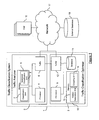
- FIG 1 illustrates schematically an example of a traffic classification system 1 suitable for implementing the method.
- the traffic classification system 1 can be implemented as a combination of computer hardware and software, and comprises a traffic analyser 2 with an interface to a traffic classification optimiser 3.
- the traffic analyser 2 and the traffic classification optimiser 3 can each be implemented by separate hardware (as illustrated in Figure 1 ), such as in separate computers or servers.
- the traffic analyser 2 and the traffic classification optimiser 3 can be implemented in the same item of hardware (not shown).
- the traffic analyser 2 comprises a processor 4, a memory 5, and a transceiver 6.
- the memory 5 stores the various programmes that are implemented by the processor 4, together with any required data, such as a set of traffic criterion.
- the programmes include a classification unit 7 and an optimised classification unit 8.
- the transceiver 6 connects the traffic analyser 2 and to the users 16 via the network 17 and to the traffic classification optimiser 3.
- the packet analyser 2 is responsible for performing inspection of packets making up the user traffic flows, classifying user traffic flows into the appropriate traffic class based upon the one or more traffic criterion, and providing information relating to the user traffic flows to the traffic classification optimiser 3.
- the traffic classification optimiser 3 comprises a processor 9, a memory 10, a database 11, and a transceiver 12.
- the memory 10 stores the various programmes that are implemented by the processor 9, together with any required data. These programmes include a pattern generation unit 13, and a grouping unit 14.
- the database 11 is used to store information relating to the user traffic flows and any other relevant information.
- the transceiver 12 connects the traffic classification optimiser 3 to any external databases 18 via the network 17 and to the traffic analyser 2.
- the traffic classification optimiser 3 is responsible for generating and maintaining a user pattern/signature for each user, grouping the users according to their user patterns, identifying a user pattern within each group that is representative of all user patterns within the group, providing the traffic analyser 2 with the representative user pattern when required, and maintaining and updating the user groups and representative user patterns with the latest user-related information.
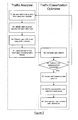
- Figure 2 is a flow diagram illustrating an example of the procedure implemented by the traffic classification system 1 in order to group the users 16, and to identify a representative user pattern within each group. The steps performed are as follows:
- the user patterns generated by the traffic classification optimiser 3 may comprise a set of parameters or characteristics that describes how the user consumes the services available over the communications network.
- the characteristics that may be included within the user patterns can be defined by the operator of the traffic classification system 1.
- the traffic classification optimiser 3 can communicate with other databases 18 to enrich the user patterns. For example, the traffic classification optimiser 3 can retrieve details of URLs visited by a user from different databases and web logs. The traffic classification optimiser 3 can then use this as an additional characteristic within the user patterns.
- the operator's of telecommunications networks can have a database that returns the terminal type (i.e. smartphone, basic phone, device model etc.) when queried with the International Mobile Equipment Identity (IMEI) of a mobile telecommunications device.
- the traffic classification optimiser 3 can therefore be configured to communicate with such a database to identify the terminal type used by each user.
- the terminal type can then be included within the user pattern, and used by the traffic classification optimiser 3 as an additional parameter when dividing the users into user groups.
- Table 1 illustrates the user patterns of four different users. These exemplary user patterns are made up of five characteristics, including:
- the traffic classification optimiser 3 can make use of some form of clustering analysis, such as a k-means algorithm.
- clustering analysis such as a k-means algorithm.
- at least some of the parameters making up the user pattern may need to be 'normalised' in some way, such that each user pattern can be represented as a vector or tuple of N dimensions.
- the nature of this normalisation will depend on the individual parameters and the clustering algorithm to be applied. For example, any parameters that take the form of a string will need to be translated into a numerical value. This can be achieved by performing a look-up in a database or dictionary. For example, Table 2 illustrates a dictionary for assigning numerical values to terminal types.
- parameters that take the form of a string can be translated into a numerical value using a translation mechanism.
- a translation mechanism For example, if one of the parameters within the user pattern comprises a URL, a hashing algorithm could be applied to the URL in order to generate a numerical value that is representative of that URL.
- a clustering algorithm can be applied to the N-dimensional vectors that represent the user patterns in order to group the user patterns based upon the distance between each of the vectors.
- distance measures or functions that can be applied by the same clustering algorithm including, among others, the Euclidean distance, the Manhattan distance, and the Hamming distance.
- Each user pattern is then assigned to a user group/cluster by the clustering algorithm, together with other user patterns that have similar characteristics and are therefore 'nearby'.
- An identifier for the user is then associated with an identifier for the user group/cluster to which the user's user pattern has been assigned, as illustrated in Table 3.
- the representative user pattern for a user group can then be defined as the vector that shares most of its characteristics with the rest of the vectors within that cluster. For example, a k-means algorithm assigns each point of a data set to a cluster whose centre or centroid is nearest to that point. The centroid is therefore the average of all the points in the cluster. The centroid of a user group can therefore be identified as the representative user pattern of that user group.
- Figure 3 illustrates a plot showing an example of two clusters and their centroids determined using a k-means algorithm.
- FIG. 4 is a flow diagram illustrating an example of the procedure implemented by the traffic classification system 1 in order to enable optimised traffic classification. The steps performed are as follows:
- the packets within a traffic flow are identified as being associated with a particular user. That user is then identified as belonging to a particular user group.
- the representative user pattern of that user group is then identified.
- the representative user pattern includes the classes of traffic and the volume of each class of traffic that has previously been consumed by the representative user.
- the representative user pattern indicates that 50% of the packets related to Skype traffic, 30% of the packets as related to BitTorrent traffic, and the remaining 10% of packets as related to another known application. Having been placed in this user group, the user pattern has previously been identified as being similar to that of the representative user pattern, it can therefore be inferred that it is likely that subsequent traffic flows associated with the user will relate to either Skype traffic, BitTorrent traffic, or to the other known application.
- the information obtained from any subsequent user traffic flow is firstly compared with the traffic criterion defined for Skype. If the obtained information does not match the traffic criterion defined for Skype, then the obtained information is compared to the traffic criterion defined for BitTorrent. If the obtained information does not match the traffic criterion defined for either Skype or BitTorrent, then the obtained information is compared to the traffic criterion defined for the other application. Only if the obtained information does not match the traffic criterion defined for any of Skype, BitTorrent or the other application is it then compared with the traffic criteria defined for all the remaining traffic classes.
- this optimised traffic classification will, in most cases, reduce the amount of processing required in order to identify the class of traffic to which the user traffic flow belongs.
- the obtained information will only need to be compared against the traffic criterion defined for one application (i.e. Skype)
- a 30% probability that the obtained information will only need to be compared against the traffic criterion defined for two applications (i.e. Skype and BitTorrent)
- a 10% probability that the obtained information will only need to be compared against the traffic criterion defined for three applications (i.e. Skype, BitTorrent and the other application).
- the number of traffic classes whose traffic criterion need to be compared to the obtained information is decreased by a factor of around 140.
- the traffic classification optimizer 3 could be configured to identify the user as belonging to both user groups, and therefore to provide the traffic analyser 2 with a combination of the representative user patterns from both user groups.
- the optimised traffic classification procedure described above can reduce by several orders of magnitude the processing required to classify each new user traffic flow, increasing the efficiency of the traffic classification processing without the need for significant additional hardware or processing resources.
- this optimisation can be extended to other uses of packet analysis. For example, if DPI is being implemented to provide usage statistics or the like, and the packet analyser has become congested such that it cannot analyse any further traffic, then the system can switch to an optimised mode, in which only the traffic of the representative user from within each user group is analysed. In doing so, the usage statistics of the representative user can be used as an approximation of the usage of all user's within a user group.
- the traffic classification system can go through a learning or training period in which it builds up a database of user patterns on which to base optimisation, prior to performing any optimisation.
- the traffic classification system can then begin applying the optimised procedure whilst continual adding user information to the database and updating the user groups and the representative users accordingly.
- the packet classification system could only periodically make use of additional user traffic flow information to update the user groups and the representative users. As such, the process of grouping the users and the application of the optimised procedure can happen in sequence or in parallel.
Landscapes
- Engineering & Computer Science (AREA)
- Computer Networks & Wireless Communication (AREA)
- Signal Processing (AREA)
- Computer Security & Cryptography (AREA)
- Computer Hardware Design (AREA)
- General Engineering & Computer Science (AREA)
- Data Exchanges In Wide-Area Networks (AREA)
Claims (22)
- Appareil (1) configuré de manière à classer des flux de trafic utilisateur transportés par un réseau, chaque flux de trafic utilisateur étant associé à un utilisateur parmi une pluralité d'utilisateurs, l'appareil comprenant :une unité de classification (7) destinée à classer chaque flux de trafic utilisateur dans l'une d'une pluralité de classes de trafic ;une unité de génération de motifs (13) destinée à générer un motif d'utilisateur pour chaque utilisateur, chaque motif d'utilisateur comprenant la classe de trafic de chaque flux de trafic utilisateur associé audit utilisateur ;une unité de regroupement (14) destinée à regrouper la pluralité d'utilisateurs dans un ou plusieurs groupes d'utilisateurs sur la base du motif d'utilisateur associé à chaque utilisateur, et à identifier un motif d'utilisateur, au sein de chaque groupe d'utilisateurs, qui est représentatif de la totalité des motifs d'utilisateur au sein du groupe d'utilisateurs ; etune unité de classification optimisée (8) destinée à identifier un utilisateur associé à un flux de trafic utilisateur subséquent, à déterminer le groupe d'utilisateurs auquel appartient l'utilisateur, à récupérer le motif d'utilisateur représentatif dudit groupe d'utilisateurs, et à utiliser les classes de trafic incluses dans le motif d'utilisateur représentatif en vue de classer le flux de trafic utilisateur subséquent.
- Appareil selon la revendication 1, comprenant en outre une mémoire (5) stockant un ou plusieurs critères de trafic pour chaque classe de la pluralité de classes de trafic, ledit un ou lesdits plusieurs critères de trafic d'une classe de trafic étant configurés de manière à déterminer si un flux de trafic utilisateur appartient à ladite classe de trafic, chaque critère de trafic définissant une caractéristique d'un flux de trafic utilisateur et une valeur pour ladite caractéristique.
- Appareil selon la revendication 2, dans lequel l'unité de classification (7) est configurée de manière à :obtenir, à partir de chaque flux de trafic utilisateur, une valeur pour la caractéristique définie par chaque critère dudit un ou desdits plusieurs critères de trafic de la pluralité de classes de trafic ;déterminer une classe de trafic pour laquelle la valeur de la caractéristique définie dans chaque critère dudit un ou desdits plusieurs critères de trafic de ladite classe de trafic correspond à la valeur obtenue pour ladite caractéristique ; etclasser le flux de trafic utilisateur dans ladite classe de trafic.
- Appareil selon l'une quelconque des revendications 2 ou 3, dans lequel l'unité de classification optimisée (8) est configurée de manière à :obtenir, à partir du flux de trafic utilisateur subséquent, une valeur pour la caractéristique définie par chaque critère dudit un ou desdits plusieurs critères de trafic de ces classes de trafic incluses dans le motif d'utilisateur représentatif ;tenter d'identifier une classe de trafic, parmi ces classes de trafic incluses dans le motif d'utilisateur représentatif, pour laquelle la valeur de la caractéristique définie dans chaque critère dudit un ou desdits plusieurs critères de trafic de ladite classe de trafic correspond à la valeur obtenue pour ladite caractéristique ; etsi une classe de trafic est identifiée, classer le flux de trafic utilisateur subséquent dans ladite classe de trafic, et mettre à jour le motif d'utilisateur de l'utilisateur en conséquence.
- Appareil selon la revendication 4, dans lequel, si une classe de trafic ne peut pas être identifiée parmi ces classes de trafic incluses dans le motif d'utilisateur représentatif, alors l'unité de classification optimisée (8) est en outre configurée de manière à ne pas classer le flux de trafic utilisateur subséquent.
- Appareil selon la revendication 4, dans lequel, si une classe de trafic ne peut pas être identifiée parmi ces classes de trafic incluses dans le motif d'utilisateur représentatif, alors l'unité de classification optimisée (8) est en outre configurée de manière à :obtenir, à partir de chaque flux de trafic utilisateur, une valeur pour la caractéristique définie par chaque critère dudit un ou desdits plusieurs critères de trafic de la pluralité de classes de trafic ;déterminer une classe de trafic pour laquelle la valeur de la caractéristique définie dans chaque critère dudit un ou desdits plusieurs critères de trafic de ladite classe de trafic correspond à la valeur obtenue pour ladite caractéristique ; etclasser le flux de trafic utilisateur dans ladite classe de trafic.
- Appareil selon l'une quelconque des revendications précédentes, dans lequel l'unité de génération de motifs (13) est configurée de manière à générer un motif d'utilisateur pour chaque utilisateur, lequel comporte en outre des informations supplémentaires connexes à l'utilisateur.
- Appareil selon la revendication 7, comprenant en outre un émetteur-récepteur (12) destiné à obtenir les informations supplémentaires connexes à l'utilisateur à partir d'une ou plusieurs entités situées au sein du réseau ou rattachées au réseau.
- Appareil selon l'une quelconque des revendications précédentes, dans lequel l'unité de regroupement (14) est configurée de manière à regrouper la pluralité d'utilisateurs dans un ou plusieurs groupes d'utilisateurs et à identifier le motif d'utilisateur représentatif de chaque groupe d'utilisateurs en faisant appel à un algorithme de partitionnement.
- Appareil selon l'une quelconque des revendications précédentes, dans lequel l'unité de regroupement (14) est configurée de manière à utiliser un algorithme des k-moyennes en tant qu'algorithme de partitionnement, et à identifier le motif d'utilisateur représentatif d'un groupe d'utilisateurs en tant que centroïde du groupe d'utilisateurs tel que déterminé par l'algorithme des k-moyennes.
- Appareil selon l'une quelconque des revendications précédentes, dans lequel l'unité de regroupement (14) est configurée de manière à regrouper la pluralité d'utilisateurs dans un ou plusieurs groupes d'utilisateurs dès lors qu'une période d'apprentissage prédéfinie a expiré et/ou dès lors qu'un nombre minimum prédéfini de motifs d'utilisateur a été généré par l'unité de génération de motifs.
- Procédé, mis en oeuvre par un système de classification de trafic, de classification de flux de trafic utilisateur transportés par un réseau, dans lequel chaque flux de trafic utilisateur est associé à un utilisateur parmi une pluralité d'utilisateurs, le procédé consistant à :classer chaque flux de trafic utilisateur dans l'une d'une pluralité de classes de trafic (A3) ;pour chaque utilisateur, générer un motif d'utilisateur comprenant la classe de trafic de chaque flux de trafic utilisateur associé audit utilisateur (A5) ;regrouper la pluralité d'utilisateurs dans un ou plusieurs groupes d'utilisateurs sur la base du motif d'utilisateur associé à chaque utilisateur (A7) ;pour chaque groupe d'utilisateurs, identifier un motif d'utilisateur qui est représentatif de la totalité des motifs d'utilisateur au sein du groupe d'utilisateurs (A8) ; etpour chaque flux de trafic utilisateur subséquent, identifier un utilisateur associé au flux de trafic utilisateur subséquent (B5), déterminer le groupe d'utilisateurs auquel appartient l'utilisateur, récupérer le motif d'utilisateur représentatif dudit groupe d'utilisateurs (B6), et utiliser les classes de trafic incluses dans le motif d'utilisateur représentatif en vue de classer le flux de trafic utilisateur subséquent (B9).
- Procédé selon la revendication 12, consistant en outre à :pour chaque classe de trafic, configurer un ou plusieurs critères de trafic à utiliser en vue de déterminer si un flux de trafic utilisateur appartient à ladite classe de trafic, chaque critère de trafic définissant une caractéristique d'un flux de trafic utilisateur et une valeur pour ladite caractéristique.
- Procédé selon la revendication 13, dans lequel l'étape de classification de chaque flux de trafic utilisateur dans l'une d'une pluralité de classes de trafic consiste à :obtenir, à partir de chaque flux de trafic utilisateur, une valeur pour la caractéristique définie par chaque critère dudit un ou desdits plusieurs critères de trafic de la pluralité de classes de trafic ;déterminer une classe de trafic pour laquelle la valeur de la caractéristique définie dans chaque critère dudit un ou desdits plusieurs critères de trafic de ladite classe de trafic correspond à la valeur obtenue pour ladite caractéristique ; etclasser le flux de trafic utilisateur dans ladite classe de trafic.
- Procédé selon l'une quelconque des revendications 13 ou 14, dans lequel l'étape consistant à utiliser les classes de trafic incluses dans le motif d'utilisateur représentatif en vue de classer le flux de trafic utilisateur subséquent consiste à :obtenir, à partir du flux de trafic utilisateur subséquent, une valeur pour la caractéristique définie par chaque critère dudit un ou desdits plusieurs critères de trafic des classes de trafic incluses dans le motif d'utilisateur représentatif ;tenter d'identifier une classe de trafic, parmi ces classes de trafic incluses dans le motif d'utilisateur représentatif, pour laquelle la valeur de la caractéristique définie dans chaque critère dudit un ou desdits plusieurs critères de trafic de ladite classe de trafic correspond à la valeur obtenue pour ladite caractéristique ; etsi une classe de trafic est identifiée, classer le flux de trafic utilisateur subséquent dans ladite classe de trafic, et mettre à jour le motif d'utilisateur de l'utilisateur en conséquence.
- Procédé selon la revendication 15, dans lequel, si une classe de trafic ne peut pas être identifiée parmi ces classes de trafic incluses dans le motif d'utilisateur représentatif, alors le flux de trafic utilisateur subséquent n'est pas classé (B 10).
- Procédé selon la revendication 15, dans lequel, si une classe de trafic ne peut pas être identifiée parmi ces classes de trafic incluses dans le motif d'utilisateur représentatif, alors le procédé consiste en outre à :obtenir, à partir de chaque flux de trafic utilisateur, une valeur pour la caractéristique définie par chaque critère dudit un ou desdits plusieurs critères de trafic de la pluralité de classes de trafic ;déterminer une classe de trafic pour laquelle la valeur de la caractéristique définie dans chaque critère dudit un ou desdits plusieurs critères de trafic de ladite classe de trafic correspond à la valeur obtenue pour ladite caractéristique ; etclasser le flux de trafic utilisateur dans ladite classe de trafic (B4).
- Procédé selon l'une quelconque des revendications 12 à 17, dans lequel le motif d'utilisateur généré pour chaque utilisateur comprend en outre des informations supplémentaires connexes à l'utilisateur.
- Procédé selon la revendication 18, dans lequel l'étape de génération d'un motif d'utilisateur pour chaque utilisateur consiste en outre à :obtenir les informations supplémentaires connexes à l'utilisateur à partir d'une ou plusieurs entités situées au sein du réseau ou rattachées au réseau.
- Procédé selon l'une quelconque des revendications 12 à 19, dans lequel les utilisateurs de la pluralité d'utilisateurs sont regroupés dans un ou plusieurs groupes et le motif d'utilisateur représentatif de chaque groupe est identifié en faisant appel à un algorithme de partitionnement.
- Procédé selon la revendication 20, dans lequel l'algorithme de partitionnement est un algorithme des k-moyennes, et le motif d'utilisateur représentatif d'un groupe d'utilisateurs est identifié en tant qu'un centroïde du groupe d'utilisateurs tel que déterminé par l'algorithme des k-moyennes.
- Procédé selon l'une quelconque des revendications 12 à 21, dans lequel les étapes consistant à classer des flux de trafic utilisateur dans une classe de trafic, et à générer des motifs d'utilisateur, sont mises en oeuvre pour la durée d'une période d'apprentissage prédéfinie et/ou jusqu'à ce qu'un nombre minimum prédéfini de motifs d'utilisateur ait été généré, préalablement au regroupement de la pluralité d'utilisateurs dans un ou plusieurs groupes d'utilisateurs.
Applications Claiming Priority (1)
| Application Number | Priority Date | Filing Date | Title |
|---|---|---|---|
| PCT/EP2010/058090 WO2011154038A1 (fr) | 2010-06-09 | 2010-06-09 | Classification du trafic |
Publications (2)
| Publication Number | Publication Date |
|---|---|
| EP2580903A1 EP2580903A1 (fr) | 2013-04-17 |
| EP2580903B1 true EP2580903B1 (fr) | 2014-05-07 |
Family
ID=43567748
Family Applications (1)
| Application Number | Title | Priority Date | Filing Date |
|---|---|---|---|
| EP10724079.8A Not-in-force EP2580903B1 (fr) | 2010-06-09 | 2010-06-09 | Classification du trafic |
Country Status (4)
| Country | Link |
|---|---|
| US (1) | US9191468B2 (fr) |
| EP (1) | EP2580903B1 (fr) |
| ES (1) | ES2468793T3 (fr) |
| WO (1) | WO2011154038A1 (fr) |
Families Citing this family (36)
| Publication number | Priority date | Publication date | Assignee | Title |
|---|---|---|---|---|
| US9717021B2 (en) | 2008-07-03 | 2017-07-25 | Silver Peak Systems, Inc. | Virtual network overlay |
| US10164861B2 (en) | 2015-12-28 | 2018-12-25 | Silver Peak Systems, Inc. | Dynamic monitoring and visualization for network health characteristics |
| US10805840B2 (en) | 2008-07-03 | 2020-10-13 | Silver Peak Systems, Inc. | Data transmission via a virtual wide area network overlay |
| US20120035979A1 (en) * | 2010-08-06 | 2012-02-09 | Avaya Inc. | System and method for improving customer service with models for social synchrony and homophily |
| EP2698946B1 (fr) * | 2011-05-06 | 2019-02-20 | Huawei Technologies Co., Ltd. | Procédé de traitement de groupe de tarification et dispositif passerelle relié |
| US9565120B2 (en) * | 2012-01-30 | 2017-02-07 | Broadcom Corporation | Method and system for performing distributed deep-packet inspection |
| US9634945B2 (en) * | 2012-08-30 | 2017-04-25 | Hughes Network Systems, Llc | Apparatus and method for staged traffic classification among terminal and aggregation nodes of a broadband communications system |
| US9413651B2 (en) | 2012-12-14 | 2016-08-09 | Broadcom Corporation | Selective deep packet inspection |
| WO2015036033A1 (fr) * | 2013-09-13 | 2015-03-19 | Telefonaktiebolaget L M Ericsson (Publ) | Analyse de trafic pour détection d'activité de l'utilisateur |
| US10021116B2 (en) * | 2014-02-19 | 2018-07-10 | HCA Holdings, Inc. | Network segmentation |
| US9948496B1 (en) | 2014-07-30 | 2018-04-17 | Silver Peak Systems, Inc. | Determining a transit appliance for data traffic to a software service |
| US9875344B1 (en) | 2014-09-05 | 2018-01-23 | Silver Peak Systems, Inc. | Dynamic monitoring and authorization of an optimization device |
| US9613527B2 (en) | 2014-09-26 | 2017-04-04 | Here Global B.V. | Method and apparatus for providing smaller incremental updates to a navigational database |
| US9733973B2 (en) * | 2015-09-16 | 2017-08-15 | Cisco Technology, Inc. | Automatically determining sensor location in a virtualized computing environment |
| CN105429792B (zh) * | 2015-11-04 | 2019-01-25 | 北京网康科技有限公司 | 用户行为流量获取方法及装置、用户行为分析方法及系统 |
| US9882807B2 (en) | 2015-11-11 | 2018-01-30 | International Business Machines Corporation | Network traffic classification |
| CN105681389B (zh) * | 2015-12-18 | 2019-03-26 | 北京神州绿盟信息安全科技股份有限公司 | 一种基于Skype不同功能通信流的识别方法及装置 |
| US10432484B2 (en) | 2016-06-13 | 2019-10-01 | Silver Peak Systems, Inc. | Aggregating select network traffic statistics |
| US10897474B2 (en) | 2016-06-23 | 2021-01-19 | Cisco Technology, Inc. | Adapting classifier parameters for improved network traffic classification using distinct private training data sets |
| EP3279811B1 (fr) | 2016-08-04 | 2023-10-04 | HERE Global B.V. | Réduction de taille de paquet de mise à jour des données pour des bases de données de navigation |
| US9967056B1 (en) | 2016-08-19 | 2018-05-08 | Silver Peak Systems, Inc. | Forward packet recovery with constrained overhead |
| US10764311B2 (en) * | 2016-09-21 | 2020-09-01 | Cequence Security, Inc. | Unsupervised classification of web traffic users |
| US11044202B2 (en) | 2017-02-06 | 2021-06-22 | Silver Peak Systems, Inc. | Multi-level learning for predicting and classifying traffic flows from first packet data |
| US10771394B2 (en) * | 2017-02-06 | 2020-09-08 | Silver Peak Systems, Inc. | Multi-level learning for classifying traffic flows on a first packet from DNS data |
| US10257082B2 (en) * | 2017-02-06 | 2019-04-09 | Silver Peak Systems, Inc. | Multi-level learning for classifying traffic flows |
| US10892978B2 (en) | 2017-02-06 | 2021-01-12 | Silver Peak Systems, Inc. | Multi-level learning for classifying traffic flows from first packet data |
| US11212210B2 (en) | 2017-09-21 | 2021-12-28 | Silver Peak Systems, Inc. | Selective route exporting using source type |
| US11102174B2 (en) * | 2017-12-26 | 2021-08-24 | Palo Alto Networks, Inc. | Autonomous alerting based on defined categorizations for network space and network boundary changes |
| US10367746B2 (en) * | 2017-12-30 | 2019-07-30 | Hughes Network Systems, Llc | Statistical traffic classification with adaptive boundaries in a broadband data communications network |
| US10637721B2 (en) | 2018-03-12 | 2020-04-28 | Silver Peak Systems, Inc. | Detecting path break conditions while minimizing network overhead |
| CN109889401B (zh) * | 2019-01-22 | 2021-03-16 | 金蝶软件(中国)有限公司 | 流量统计方法、装置、计算机设备和存储介质 |
| US11546216B2 (en) | 2020-12-22 | 2023-01-03 | Mellanox Technologies, Ltd. | Real time performance tuning of network devices |
| US11627074B1 (en) * | 2022-01-24 | 2023-04-11 | Mellanox Technologies, Ltd. | Network device with real-time data-path optimization |
| US12021755B2 (en) * | 2022-01-28 | 2024-06-25 | Hewlett Packard Enterprise Development Lp | Classification and forwarding of network traffic flows |
| US20230273907A1 (en) * | 2022-01-28 | 2023-08-31 | International Business Machines Corporation | Managing time series databases using workload models |
| US12556482B2 (en) * | 2022-04-21 | 2026-02-17 | Verizon Patent And Licensing Inc. | User plane congestion control service |
Family Cites Families (4)
| Publication number | Priority date | Publication date | Assignee | Title |
|---|---|---|---|---|
| US7664048B1 (en) * | 2003-11-24 | 2010-02-16 | Packeteer, Inc. | Heuristic behavior pattern matching of data flows in enhanced network traffic classification |
| KR20090126104A (ko) * | 2008-06-03 | 2009-12-08 | 서울대학교산학협력단 | 전력 수요 관리 방법 및 시스템 |
| US8108406B2 (en) * | 2008-12-30 | 2012-01-31 | Expanse Networks, Inc. | Pangenetic web user behavior prediction system |
| US8555343B2 (en) * | 2010-03-23 | 2013-10-08 | Verizon Patent And Licensing Inc. | Managing resource allocations based on traffic patterns |
-
2010
- 2010-06-09 EP EP10724079.8A patent/EP2580903B1/fr not_active Not-in-force
- 2010-06-09 WO PCT/EP2010/058090 patent/WO2011154038A1/fr not_active Ceased
- 2010-06-09 ES ES10724079.8T patent/ES2468793T3/es active Active
- 2010-06-09 US US13/702,807 patent/US9191468B2/en not_active Expired - Fee Related
Also Published As
| Publication number | Publication date |
|---|---|
| EP2580903A1 (fr) | 2013-04-17 |
| WO2011154038A1 (fr) | 2011-12-15 |
| ES2468793T3 (es) | 2014-06-17 |
| US20130083806A1 (en) | 2013-04-04 |
| US9191468B2 (en) | 2015-11-17 |
Similar Documents
| Publication | Publication Date | Title |
|---|---|---|
| EP2580903B1 (fr) | Classification du trafic | |
| US11641343B2 (en) | Methods and systems for API proxy based adaptive security | |
| Li et al. | A survey of network flow applications | |
| US12113768B2 (en) | Using intent to access in discovery protocols in a network for analytics | |
| EP3229407B1 (fr) | Génération et distribution de signature d'application | |
| Nykvist et al. | A lightweight portable intrusion detection communication system for auditing applications | |
| US20200220875A1 (en) | Methods and systems for data traffic based adaptive security | |
| EP2258084B1 (fr) | Technique pour classifier un trafic réseau et pour valider un mécanisme de classification de trafic réseau | |
| CA2947325C (fr) | Procede et dispositif d'identification d'un type de protocole | |
| US12489695B2 (en) | Generating network system maps based on network traffic | |
| CN101352018A (zh) | 分布式网络保护 | |
| CN107888605A (zh) | 一种物联网云平台流量安全分析方法和系统 | |
| US8102879B2 (en) | Application layer metrics monitoring | |
| CN101465809B (zh) | 一种网络流量管理方法、设备和系统 | |
| US20210058769A1 (en) | Systems and methods for intercepting network traffic | |
| CN116074136A (zh) | 会话检测和推断 | |
| CN112261021B (zh) | 软件定义物联网下DDoS攻击检测方法 | |
| Ojetunde et al. | A selection technique for effective utilization of post-quantum cryptography in 5g application and beyond | |
| US20230319684A1 (en) | Resource filter for integrated networks | |
| CN118250032A (zh) | 防火墙策略的配置方法和装置、存储介质及电子设备 | |
| Yang et al. | DDoS attacks detection and traceback method based on flow entropy algorithm and MPLS principle | |
| CN110661744A (zh) | 一种网络访问控制方法 | |
| US20220360990A1 (en) | 4g / 5g core network deep packet inspection system | |
| CN118199903A (zh) | 流量过滤方法、装置、设备、系统及存储介质 | |
| CN115277106A (zh) | 一种网络设备的用户识别方法及系统 |
Legal Events
| Date | Code | Title | Description |
|---|---|---|---|
| PUAI | Public reference made under article 153(3) epc to a published international application that has entered the european phase |
Free format text: ORIGINAL CODE: 0009012 |
|
| 17P | Request for examination filed |
Effective date: 20121213 |
|
| AK | Designated contracting states |
Kind code of ref document: A1 Designated state(s): AL AT BE BG CH CY CZ DE DK EE ES FI FR GB GR HR HU IE IS IT LI LT LU LV MC MK MT NL NO PL PT RO SE SI SK SM TR |
|
| DAX | Request for extension of the european patent (deleted) | ||
| GRAP | Despatch of communication of intention to grant a patent |
Free format text: ORIGINAL CODE: EPIDOSNIGR1 |
|
| INTG | Intention to grant announced |
Effective date: 20140123 |
|
| INTG | Intention to grant announced |
Effective date: 20140130 |
|
| GRAS | Grant fee paid |
Free format text: ORIGINAL CODE: EPIDOSNIGR3 |
|
| GRAA | (expected) grant |
Free format text: ORIGINAL CODE: 0009210 |
|
| AK | Designated contracting states |
Kind code of ref document: B1 Designated state(s): AL AT BE BG CH CY CZ DE DK EE ES FI FR GB GR HR HU IE IS IT LI LT LU LV MC MK MT NL NO PL PT RO SE SI SK SM TR |
|
| REG | Reference to a national code |
Ref country code: GB Ref legal event code: FG4D |
|
| REG | Reference to a national code |
Ref country code: AT Ref legal event code: REF Ref document number: 667424 Country of ref document: AT Kind code of ref document: T Effective date: 20140515 |
|
| REG | Reference to a national code |
Ref country code: IE Ref legal event code: FG4D |
|
| REG | Reference to a national code |
Ref country code: ES Ref legal event code: FG2A Ref document number: 2468793 Country of ref document: ES Kind code of ref document: T3 Effective date: 20140617 |
|
| REG | Reference to a national code |
Ref country code: DE Ref legal event code: R096 Ref document number: 602010015855 Country of ref document: DE Effective date: 20140618 |
|
| REG | Reference to a national code |
Ref country code: AT Ref legal event code: MK05 Ref document number: 667424 Country of ref document: AT Kind code of ref document: T Effective date: 20140507 |
|
| REG | Reference to a national code |
Ref country code: NL Ref legal event code: VDEP Effective date: 20140507 |
|
| REG | Reference to a national code |
Ref country code: LT Ref legal event code: MG4D |
|
| PG25 | Lapsed in a contracting state [announced via postgrant information from national office to epo] |
Ref country code: CY Free format text: LAPSE BECAUSE OF FAILURE TO SUBMIT A TRANSLATION OF THE DESCRIPTION OR TO PAY THE FEE WITHIN THE PRESCRIBED TIME-LIMIT Effective date: 20140507 Ref country code: LT Free format text: LAPSE BECAUSE OF FAILURE TO SUBMIT A TRANSLATION OF THE DESCRIPTION OR TO PAY THE FEE WITHIN THE PRESCRIBED TIME-LIMIT Effective date: 20140507 Ref country code: IS Free format text: LAPSE BECAUSE OF FAILURE TO SUBMIT A TRANSLATION OF THE DESCRIPTION OR TO PAY THE FEE WITHIN THE PRESCRIBED TIME-LIMIT Effective date: 20140907 Ref country code: FI Free format text: LAPSE BECAUSE OF FAILURE TO SUBMIT A TRANSLATION OF THE DESCRIPTION OR TO PAY THE FEE WITHIN THE PRESCRIBED TIME-LIMIT Effective date: 20140507 Ref country code: NO Free format text: LAPSE BECAUSE OF FAILURE TO SUBMIT A TRANSLATION OF THE DESCRIPTION OR TO PAY THE FEE WITHIN THE PRESCRIBED TIME-LIMIT Effective date: 20140807 |
|
| PG25 | Lapsed in a contracting state [announced via postgrant information from national office to epo] |
Ref country code: HR Free format text: LAPSE BECAUSE OF FAILURE TO SUBMIT A TRANSLATION OF THE DESCRIPTION OR TO PAY THE FEE WITHIN THE PRESCRIBED TIME-LIMIT Effective date: 20140507 Ref country code: PL Free format text: LAPSE BECAUSE OF FAILURE TO SUBMIT A TRANSLATION OF THE DESCRIPTION OR TO PAY THE FEE WITHIN THE PRESCRIBED TIME-LIMIT Effective date: 20140507 Ref country code: AT Free format text: LAPSE BECAUSE OF FAILURE TO SUBMIT A TRANSLATION OF THE DESCRIPTION OR TO PAY THE FEE WITHIN THE PRESCRIBED TIME-LIMIT Effective date: 20140507 Ref country code: SE Free format text: LAPSE BECAUSE OF FAILURE TO SUBMIT A TRANSLATION OF THE DESCRIPTION OR TO PAY THE FEE WITHIN THE PRESCRIBED TIME-LIMIT Effective date: 20140507 Ref country code: LV Free format text: LAPSE BECAUSE OF FAILURE TO SUBMIT A TRANSLATION OF THE DESCRIPTION OR TO PAY THE FEE WITHIN THE PRESCRIBED TIME-LIMIT Effective date: 20140507 |
|
| PG25 | Lapsed in a contracting state [announced via postgrant information from national office to epo] |
Ref country code: PT Free format text: LAPSE BECAUSE OF FAILURE TO SUBMIT A TRANSLATION OF THE DESCRIPTION OR TO PAY THE FEE WITHIN THE PRESCRIBED TIME-LIMIT Effective date: 20140908 |
|
| PG25 | Lapsed in a contracting state [announced via postgrant information from national office to epo] |
Ref country code: CZ Free format text: LAPSE BECAUSE OF FAILURE TO SUBMIT A TRANSLATION OF THE DESCRIPTION OR TO PAY THE FEE WITHIN THE PRESCRIBED TIME-LIMIT Effective date: 20140507 Ref country code: BE Free format text: LAPSE BECAUSE OF FAILURE TO SUBMIT A TRANSLATION OF THE DESCRIPTION OR TO PAY THE FEE WITHIN THE PRESCRIBED TIME-LIMIT Effective date: 20140507 Ref country code: SK Free format text: LAPSE BECAUSE OF FAILURE TO SUBMIT A TRANSLATION OF THE DESCRIPTION OR TO PAY THE FEE WITHIN THE PRESCRIBED TIME-LIMIT Effective date: 20140507 Ref country code: EE Free format text: LAPSE BECAUSE OF FAILURE TO SUBMIT A TRANSLATION OF THE DESCRIPTION OR TO PAY THE FEE WITHIN THE PRESCRIBED TIME-LIMIT Effective date: 20140507 Ref country code: RO Free format text: LAPSE BECAUSE OF FAILURE TO SUBMIT A TRANSLATION OF THE DESCRIPTION OR TO PAY THE FEE WITHIN THE PRESCRIBED TIME-LIMIT Effective date: 20140507 Ref country code: DK Free format text: LAPSE BECAUSE OF FAILURE TO SUBMIT A TRANSLATION OF THE DESCRIPTION OR TO PAY THE FEE WITHIN THE PRESCRIBED TIME-LIMIT Effective date: 20140507 |
|
| REG | Reference to a national code |
Ref country code: CH Ref legal event code: PL |
|
| REG | Reference to a national code |
Ref country code: DE Ref legal event code: R097 Ref document number: 602010015855 Country of ref document: DE |
|
| PG25 | Lapsed in a contracting state [announced via postgrant information from national office to epo] |
Ref country code: NL Free format text: LAPSE BECAUSE OF FAILURE TO SUBMIT A TRANSLATION OF THE DESCRIPTION OR TO PAY THE FEE WITHIN THE PRESCRIBED TIME-LIMIT Effective date: 20140507 |
|
| PLBE | No opposition filed within time limit |
Free format text: ORIGINAL CODE: 0009261 |
|
| STAA | Information on the status of an ep patent application or granted ep patent |
Free format text: STATUS: NO OPPOSITION FILED WITHIN TIME LIMIT |
|
| REG | Reference to a national code |
Ref country code: IE Ref legal event code: MM4A |
|
| REG | Reference to a national code |
Ref country code: FR Ref legal event code: ST Effective date: 20150227 |
|
| 26N | No opposition filed |
Effective date: 20150210 |
|
| PG25 | Lapsed in a contracting state [announced via postgrant information from national office to epo] |
Ref country code: CH Free format text: LAPSE BECAUSE OF NON-PAYMENT OF DUE FEES Effective date: 20140630 Ref country code: LI Free format text: LAPSE BECAUSE OF NON-PAYMENT OF DUE FEES Effective date: 20140630 Ref country code: IE Free format text: LAPSE BECAUSE OF NON-PAYMENT OF DUE FEES Effective date: 20140609 Ref country code: IT Free format text: LAPSE BECAUSE OF FAILURE TO SUBMIT A TRANSLATION OF THE DESCRIPTION OR TO PAY THE FEE WITHIN THE PRESCRIBED TIME-LIMIT Effective date: 20140507 |
|
| REG | Reference to a national code |
Ref country code: DE Ref legal event code: R097 Ref document number: 602010015855 Country of ref document: DE Effective date: 20150210 |
|
| PG25 | Lapsed in a contracting state [announced via postgrant information from national office to epo] |
Ref country code: FR Free format text: LAPSE BECAUSE OF NON-PAYMENT OF DUE FEES Effective date: 20140707 |
|
| PG25 | Lapsed in a contracting state [announced via postgrant information from national office to epo] |
Ref country code: SI Free format text: LAPSE BECAUSE OF FAILURE TO SUBMIT A TRANSLATION OF THE DESCRIPTION OR TO PAY THE FEE WITHIN THE PRESCRIBED TIME-LIMIT Effective date: 20140507 |
|
| PG25 | Lapsed in a contracting state [announced via postgrant information from national office to epo] |
Ref country code: MT Free format text: LAPSE BECAUSE OF FAILURE TO SUBMIT A TRANSLATION OF THE DESCRIPTION OR TO PAY THE FEE WITHIN THE PRESCRIBED TIME-LIMIT Effective date: 20140507 |
|
| PG25 | Lapsed in a contracting state [announced via postgrant information from national office to epo] |
Ref country code: SM Free format text: LAPSE BECAUSE OF FAILURE TO SUBMIT A TRANSLATION OF THE DESCRIPTION OR TO PAY THE FEE WITHIN THE PRESCRIBED TIME-LIMIT Effective date: 20140507 Ref country code: MC Free format text: LAPSE BECAUSE OF FAILURE TO SUBMIT A TRANSLATION OF THE DESCRIPTION OR TO PAY THE FEE WITHIN THE PRESCRIBED TIME-LIMIT Effective date: 20140507 |
|
| PG25 | Lapsed in a contracting state [announced via postgrant information from national office to epo] |
Ref country code: GR Free format text: LAPSE BECAUSE OF FAILURE TO SUBMIT A TRANSLATION OF THE DESCRIPTION OR TO PAY THE FEE WITHIN THE PRESCRIBED TIME-LIMIT Effective date: 20140507 Ref country code: BG Free format text: LAPSE BECAUSE OF FAILURE TO SUBMIT A TRANSLATION OF THE DESCRIPTION OR TO PAY THE FEE WITHIN THE PRESCRIBED TIME-LIMIT Effective date: 20140507 |
|
| PG25 | Lapsed in a contracting state [announced via postgrant information from national office to epo] |
Ref country code: TR Free format text: LAPSE BECAUSE OF FAILURE TO SUBMIT A TRANSLATION OF THE DESCRIPTION OR TO PAY THE FEE WITHIN THE PRESCRIBED TIME-LIMIT Effective date: 20140507 Ref country code: LU Free format text: LAPSE BECAUSE OF NON-PAYMENT OF DUE FEES Effective date: 20140609 Ref country code: HU Free format text: LAPSE BECAUSE OF FAILURE TO SUBMIT A TRANSLATION OF THE DESCRIPTION OR TO PAY THE FEE WITHIN THE PRESCRIBED TIME-LIMIT; INVALID AB INITIO Effective date: 20100609 |
|
| PG25 | Lapsed in a contracting state [announced via postgrant information from national office to epo] |
Ref country code: MK Free format text: LAPSE BECAUSE OF FAILURE TO SUBMIT A TRANSLATION OF THE DESCRIPTION OR TO PAY THE FEE WITHIN THE PRESCRIBED TIME-LIMIT Effective date: 20140507 |
|
| PG25 | Lapsed in a contracting state [announced via postgrant information from national office to epo] |
Ref country code: AL Free format text: LAPSE BECAUSE OF FAILURE TO SUBMIT A TRANSLATION OF THE DESCRIPTION OR TO PAY THE FEE WITHIN THE PRESCRIBED TIME-LIMIT Effective date: 20140507 |
|
| PGFP | Annual fee paid to national office [announced via postgrant information from national office to epo] |
Ref country code: ES Payment date: 20190701 Year of fee payment: 10 |
|
| PGFP | Annual fee paid to national office [announced via postgrant information from national office to epo] |
Ref country code: DE Payment date: 20210629 Year of fee payment: 12 |
|
| PGFP | Annual fee paid to national office [announced via postgrant information from national office to epo] |
Ref country code: GB Payment date: 20210628 Year of fee payment: 12 |
|
| REG | Reference to a national code |
Ref country code: ES Ref legal event code: FD2A Effective date: 20211027 |
|
| REG | Reference to a national code |
Ref country code: DE Ref legal event code: R079 Ref document number: 602010015855 Country of ref document: DE Free format text: PREVIOUS MAIN CLASS: H04L0029080000 Ipc: H04L0065000000 |
|
| PG25 | Lapsed in a contracting state [announced via postgrant information from national office to epo] |
Ref country code: ES Free format text: LAPSE BECAUSE OF NON-PAYMENT OF DUE FEES Effective date: 20200610 |
|
| REG | Reference to a national code |
Ref country code: DE Ref legal event code: R119 Ref document number: 602010015855 Country of ref document: DE |
|
| GBPC | Gb: european patent ceased through non-payment of renewal fee |
Effective date: 20220609 |
|
| PG25 | Lapsed in a contracting state [announced via postgrant information from national office to epo] |
Ref country code: GB Free format text: LAPSE BECAUSE OF NON-PAYMENT OF DUE FEES Effective date: 20220609 Ref country code: DE Free format text: LAPSE BECAUSE OF NON-PAYMENT OF DUE FEES Effective date: 20230103 |