EP2581846A1 - Kardiopulmonales Bypass- oder CPB-Überwachungsinstrument - Google Patents
Kardiopulmonales Bypass- oder CPB-Überwachungsinstrument Download PDFInfo
- Publication number
- EP2581846A1 EP2581846A1 EP11184981.6A EP11184981A EP2581846A1 EP 2581846 A1 EP2581846 A1 EP 2581846A1 EP 11184981 A EP11184981 A EP 11184981A EP 2581846 A1 EP2581846 A1 EP 2581846A1
- Authority
- EP
- European Patent Office
- Prior art keywords
- module
- cpb
- monitoring tool
- enabling
- data
- Prior art date
- Legal status (The legal status is an assumption and is not a legal conclusion. Google has not performed a legal analysis and makes no representation as to the accuracy of the status listed.)
- Withdrawn
Links
- 238000012544 monitoring process Methods 0.000 title claims abstract description 85
- 230000002612 cardiopulmonary effect Effects 0.000 title claims abstract description 6
- 230000037452 priming Effects 0.000 claims abstract description 43
- 238000004364 calculation method Methods 0.000 claims abstract description 36
- 229940079593 drug Drugs 0.000 claims abstract description 36
- 239000003814 drug Substances 0.000 claims abstract description 36
- 210000004369 blood Anatomy 0.000 claims abstract description 33
- 239000008280 blood Substances 0.000 claims abstract description 33
- 206010059484 Haemodilution Diseases 0.000 claims abstract description 18
- 238000013480 data collection Methods 0.000 claims abstract description 10
- HTTJABKRGRZYRN-UHFFFAOYSA-N Heparin Chemical compound OC1C(NC(=O)C)C(O)OC(COS(O)(=O)=O)C1OC1C(OS(O)(=O)=O)C(O)C(OC2C(C(OS(O)(=O)=O)C(OC3C(C(O)C(O)C(O3)C(O)=O)OS(O)(=O)=O)C(CO)O2)NS(O)(=O)=O)C(C(O)=O)O1 HTTJABKRGRZYRN-UHFFFAOYSA-N 0.000 claims description 42
- 229960002897 heparin Drugs 0.000 claims description 42
- 229920000669 heparin Polymers 0.000 claims description 42
- 238000000034 method Methods 0.000 claims description 30
- 239000000463 material Substances 0.000 claims description 24
- 238000002618 extracorporeal membrane oxygenation Methods 0.000 claims description 16
- 238000005534 hematocrit Methods 0.000 claims description 12
- 231100000673 dose–response relationship Toxicity 0.000 claims description 11
- 210000000709 aorta Anatomy 0.000 claims description 10
- 230000007170 pathology Effects 0.000 claims description 8
- 230000003872 anastomosis Effects 0.000 claims description 6
- 238000013479 data entry Methods 0.000 claims description 6
- 238000002372 labelling Methods 0.000 claims description 6
- 238000005259 measurement Methods 0.000 claims description 5
- 230000004044 response Effects 0.000 claims description 3
- 230000010100 anticoagulation Effects 0.000 claims description 2
- 230000015271 coagulation Effects 0.000 claims description 2
- 238000005345 coagulation Methods 0.000 claims description 2
- SYJGKVOENHZYMQ-UHFFFAOYSA-N Penoxsulam Chemical compound N1=C2C(OC)=CN=C(OC)N2N=C1NS(=O)(=O)C1=C(OCC(F)F)C=CC=C1C(F)(F)F SYJGKVOENHZYMQ-UHFFFAOYSA-N 0.000 description 13
- 241000271897 Viperidae Species 0.000 description 13
- 230000008859 change Effects 0.000 description 11
- 230000006870 function Effects 0.000 description 10
- 239000000243 solution Substances 0.000 description 10
- 230000017531 blood circulation Effects 0.000 description 9
- 239000012530 fluid Substances 0.000 description 8
- QVGXLLKOCUKJST-UHFFFAOYSA-N atomic oxygen Chemical compound [O] QVGXLLKOCUKJST-UHFFFAOYSA-N 0.000 description 7
- 239000001301 oxygen Substances 0.000 description 7
- 229910052760 oxygen Inorganic materials 0.000 description 7
- 238000006243 chemical reaction Methods 0.000 description 6
- 239000000203 mixture Substances 0.000 description 6
- 230000000694 effects Effects 0.000 description 5
- 230000007717 exclusion Effects 0.000 description 4
- 238000013523 data management Methods 0.000 description 3
- 238000002615 hemofiltration Methods 0.000 description 3
- 210000004072 lung Anatomy 0.000 description 3
- 238000012986 modification Methods 0.000 description 3
- 230000004048 modification Effects 0.000 description 3
- 230000000007 visual effect Effects 0.000 description 3
- 238000012800 visualization Methods 0.000 description 3
- 206010002091 Anaesthesia Diseases 0.000 description 2
- XSQUKJJJFZCRTK-UHFFFAOYSA-N Urea Chemical compound NC(N)=O XSQUKJJJFZCRTK-UHFFFAOYSA-N 0.000 description 2
- 239000013543 active substance Substances 0.000 description 2
- 238000001949 anaesthesia Methods 0.000 description 2
- 230000037005 anaesthesia Effects 0.000 description 2
- 230000000747 cardiac effect Effects 0.000 description 2
- 239000000470 constituent Substances 0.000 description 2
- DDRJAANPRJIHGJ-UHFFFAOYSA-N creatinine Chemical compound CN1CC(=O)NC1=N DDRJAANPRJIHGJ-UHFFFAOYSA-N 0.000 description 2
- 238000005516 engineering process Methods 0.000 description 2
- 230000003993 interaction Effects 0.000 description 2
- 238000007726 management method Methods 0.000 description 2
- 239000012528 membrane Substances 0.000 description 2
- 230000036284 oxygen consumption Effects 0.000 description 2
- 230000010412 perfusion Effects 0.000 description 2
- 230000036581 peripheral resistance Effects 0.000 description 2
- 230000008439 repair process Effects 0.000 description 2
- 238000001356 surgical procedure Methods 0.000 description 2
- 238000012384 transportation and delivery Methods 0.000 description 2
- 206010053567 Coagulopathies Diseases 0.000 description 1
- 102100037114 Elongin-C Human genes 0.000 description 1
- WQZGKKKJIJFFOK-GASJEMHNSA-N Glucose Natural products OC[C@H]1OC(O)[C@H](O)[C@@H](O)[C@@H]1O WQZGKKKJIJFFOK-GASJEMHNSA-N 0.000 description 1
- 102000001554 Hemoglobins Human genes 0.000 description 1
- 108010054147 Hemoglobins Proteins 0.000 description 1
- 101001011859 Homo sapiens Elongin-A Proteins 0.000 description 1
- 101001011846 Homo sapiens Elongin-B Proteins 0.000 description 1
- 101000881731 Homo sapiens Elongin-C Proteins 0.000 description 1
- 101000836005 Homo sapiens S-phase kinase-associated protein 1 Proteins 0.000 description 1
- 206010028980 Neoplasm Diseases 0.000 description 1
- 208000004880 Polyuria Diseases 0.000 description 1
- 238000004458 analytical method Methods 0.000 description 1
- 210000001765 aortic valve Anatomy 0.000 description 1
- 238000013459 approach Methods 0.000 description 1
- 238000010009 beating Methods 0.000 description 1
- WQZGKKKJIJFFOK-VFUOTHLCSA-N beta-D-glucose Chemical compound OC[C@H]1O[C@@H](O)[C@H](O)[C@@H](O)[C@@H]1O WQZGKKKJIJFFOK-VFUOTHLCSA-N 0.000 description 1
- 230000000740 bleeding effect Effects 0.000 description 1
- 210000001772 blood platelet Anatomy 0.000 description 1
- 201000011510 cancer Diseases 0.000 description 1
- 239000004202 carbamide Substances 0.000 description 1
- 210000004027 cell Anatomy 0.000 description 1
- 230000001413 cellular effect Effects 0.000 description 1
- 230000035602 clotting Effects 0.000 description 1
- 238000004590 computer program Methods 0.000 description 1
- 238000012790 confirmation Methods 0.000 description 1
- 238000012937 correction Methods 0.000 description 1
- 229940109239 creatinine Drugs 0.000 description 1
- 239000012895 dilution Substances 0.000 description 1
- 238000010790 dilution Methods 0.000 description 1
- 230000035619 diuresis Effects 0.000 description 1
- 210000003743 erythrocyte Anatomy 0.000 description 1
- 210000001105 femoral artery Anatomy 0.000 description 1
- 210000003191 femoral vein Anatomy 0.000 description 1
- 239000007789 gas Substances 0.000 description 1
- 239000008103 glucose Substances 0.000 description 1
- 230000006698 induction Effects 0.000 description 1
- 230000001939 inductive effect Effects 0.000 description 1
- 238000009533 lab test Methods 0.000 description 1
- 210000000265 leukocyte Anatomy 0.000 description 1
- 239000007788 liquid Substances 0.000 description 1
- 230000007774 longterm Effects 0.000 description 1
- 210000001349 mammary artery Anatomy 0.000 description 1
- 238000013178 mathematical model Methods 0.000 description 1
- 210000004115 mitral valve Anatomy 0.000 description 1
- 239000002547 new drug Substances 0.000 description 1
- 238000005457 optimization Methods 0.000 description 1
- 210000000056 organ Anatomy 0.000 description 1
- 238000006213 oxygenation reaction Methods 0.000 description 1
- 238000004806 packaging method and process Methods 0.000 description 1
- 230000001575 pathological effect Effects 0.000 description 1
- 102000004169 proteins and genes Human genes 0.000 description 1
- 108090000623 proteins and genes Proteins 0.000 description 1
- 210000003102 pulmonary valve Anatomy 0.000 description 1
- 210000005245 right atrium Anatomy 0.000 description 1
- 229920002379 silicone rubber Polymers 0.000 description 1
- 239000004945 silicone rubber Substances 0.000 description 1
- 238000001228 spectrum Methods 0.000 description 1
- 238000012546 transfer Methods 0.000 description 1
- 230000002861 ventricular Effects 0.000 description 1
Images










Classifications
-
- G—PHYSICS
- G16—INFORMATION AND COMMUNICATION TECHNOLOGY [ICT] SPECIALLY ADAPTED FOR SPECIFIC APPLICATION FIELDS
- G16H—HEALTHCARE INFORMATICS, i.e. INFORMATION AND COMMUNICATION TECHNOLOGY [ICT] SPECIALLY ADAPTED FOR THE HANDLING OR PROCESSING OF MEDICAL OR HEALTHCARE DATA
- G16H15/00—ICT specially adapted for medical reports, e.g. generation or transmission thereof
-
- A—HUMAN NECESSITIES
- A61—MEDICAL OR VETERINARY SCIENCE; HYGIENE
- A61M—DEVICES FOR INTRODUCING MEDIA INTO, OR ONTO, THE BODY; DEVICES FOR TRANSDUCING BODY MEDIA OR FOR TAKING MEDIA FROM THE BODY; DEVICES FOR PRODUCING OR ENDING SLEEP OR STUPOR
- A61M1/00—Suction or pumping devices for medical purposes; Devices for carrying-off, for treatment of, or for carrying-over, body-liquids; Drainage systems
- A61M1/36—Other treatment of blood in a by-pass of the natural circulatory system, e.g. temperature adaptation, irradiation ; Extra-corporeal blood circuits
- A61M1/3621—Extra-corporeal blood circuits
- A61M1/3623—Means for actively controlling temperature of blood
-
- A—HUMAN NECESSITIES
- A61—MEDICAL OR VETERINARY SCIENCE; HYGIENE
- A61M—DEVICES FOR INTRODUCING MEDIA INTO, OR ONTO, THE BODY; DEVICES FOR TRANSDUCING BODY MEDIA OR FOR TAKING MEDIA FROM THE BODY; DEVICES FOR PRODUCING OR ENDING SLEEP OR STUPOR
- A61M1/00—Suction or pumping devices for medical purposes; Devices for carrying-off, for treatment of, or for carrying-over, body-liquids; Drainage systems
- A61M1/36—Other treatment of blood in a by-pass of the natural circulatory system, e.g. temperature adaptation, irradiation ; Extra-corporeal blood circuits
- A61M1/3621—Extra-corporeal blood circuits
- A61M1/3643—Priming, rinsing before or after use
- A61M1/3644—Mode of operation
-
- A—HUMAN NECESSITIES
- A61—MEDICAL OR VETERINARY SCIENCE; HYGIENE
- A61M—DEVICES FOR INTRODUCING MEDIA INTO, OR ONTO, THE BODY; DEVICES FOR TRANSDUCING BODY MEDIA OR FOR TAKING MEDIA FROM THE BODY; DEVICES FOR PRODUCING OR ENDING SLEEP OR STUPOR
- A61M1/00—Suction or pumping devices for medical purposes; Devices for carrying-off, for treatment of, or for carrying-over, body-liquids; Drainage systems
- A61M1/36—Other treatment of blood in a by-pass of the natural circulatory system, e.g. temperature adaptation, irradiation ; Extra-corporeal blood circuits
- A61M1/3621—Extra-corporeal blood circuits
- A61M1/3666—Cardiac or cardiopulmonary bypass, e.g. heart-lung machines
-
- G—PHYSICS
- G16—INFORMATION AND COMMUNICATION TECHNOLOGY [ICT] SPECIALLY ADAPTED FOR SPECIFIC APPLICATION FIELDS
- G16H—HEALTHCARE INFORMATICS, i.e. INFORMATION AND COMMUNICATION TECHNOLOGY [ICT] SPECIALLY ADAPTED FOR THE HANDLING OR PROCESSING OF MEDICAL OR HEALTHCARE DATA
- G16H40/00—ICT specially adapted for the management or administration of healthcare resources or facilities; ICT specially adapted for the management or operation of medical equipment or devices
- G16H40/60—ICT specially adapted for the management or administration of healthcare resources or facilities; ICT specially adapted for the management or operation of medical equipment or devices for the operation of medical equipment or devices
- G16H40/63—ICT specially adapted for the management or administration of healthcare resources or facilities; ICT specially adapted for the management or operation of medical equipment or devices for the operation of medical equipment or devices for local operation
-
- A—HUMAN NECESSITIES
- A61—MEDICAL OR VETERINARY SCIENCE; HYGIENE
- A61M—DEVICES FOR INTRODUCING MEDIA INTO, OR ONTO, THE BODY; DEVICES FOR TRANSDUCING BODY MEDIA OR FOR TAKING MEDIA FROM THE BODY; DEVICES FOR PRODUCING OR ENDING SLEEP OR STUPOR
- A61M1/00—Suction or pumping devices for medical purposes; Devices for carrying-off, for treatment of, or for carrying-over, body-liquids; Drainage systems
- A61M1/36—Other treatment of blood in a by-pass of the natural circulatory system, e.g. temperature adaptation, irradiation ; Extra-corporeal blood circuits
- A61M1/3621—Extra-corporeal blood circuits
- A61M1/3643—Priming, rinsing before or after use
-
- A—HUMAN NECESSITIES
- A61—MEDICAL OR VETERINARY SCIENCE; HYGIENE
- A61M—DEVICES FOR INTRODUCING MEDIA INTO, OR ONTO, THE BODY; DEVICES FOR TRANSDUCING BODY MEDIA OR FOR TAKING MEDIA FROM THE BODY; DEVICES FOR PRODUCING OR ENDING SLEEP OR STUPOR
- A61M2205/00—General characteristics of the apparatus
- A61M2205/50—General characteristics of the apparatus with microprocessors or computers
- A61M2205/502—User interfaces, e.g. screens or keyboards
Definitions
- the present invention generally relates to a tool for monitoring a cardiopulmonary bypass or CPB, i.e. technology that temporarily takes over the function of heart and lungs during surgery through extracorporeal blood circulation and oxygenation.
- CPB cardiopulmonary bypass
- the invention in particular concerns a tool for CPB monitoring that is universally compatible with numerous CPB pumps and other devices, that is intuitive and user-friendly to the perfusionists that use it, and that supports customized graphic representation of parameters, curves and printing reports in order to reduce the overall input effort required from busy perfusionists.
- Cardiopulmonary bypass or CPB is used during heart surgery because of the difficulty of operating on a beating heart.
- Extracorporeal membrane oxygenation or ECMO a simplified form of CPB, is used as a long term life-support technology.
- CPB mechanically circulates and oxygenates blood while bypassing the heart and lungs, thereby maintaining perfusion of other body organs and tissues.
- the surgeon typically places a cannula in the right atrium, vena cava or femoral vein to extract blood from the patients body. Venous blood extracted from the body via the cannula is filtered, cooled or warmed, oxygenated and returned to the patients body.
- a so called heart-lung machine typically featuring two functional units: a pump and an extracorporeal oxygenator that remove oxygen-deprived blood from the patients body and replace it with oxygen-rich blood.
- the cannula used to return the blood is inserted in the ascending aorta, or femoral artery.
- the blood is administered heparin to prevent clotting.
- the components of the CPB are interconnected by tubes, typically made of silicone rubber or PVC.
- Different tools exist for monitoring a CPB i.e. hardware and/or software tools that operate as a data management system, collecting data from the CPB components, and interacting with the perfusionist operating the CPB equipment.
- These tools are usually proprietary tools, i.e. hardware specific tools that interface only with CPB components from one particular supplier, and these tools require significant input effort from the perfusionist because they are not or poorly customizable and non-intuitive to the perfusionist.
- this tool is adapted to be mounted on and to interface with Sorin's perfusion system.
- Sorin's DMS is a proprietary tool that connects an interfaces only with Sorin's SIII, S5 and C5 heart-lung machines, i.e. pumps and oxygenators from a single manufacturer, requiring the medical team or hospital to use only heart-lung machines from a single manufacturer, or to use plural CPB monitoring tools that each generate different visuals, data entry screens, graphs, reports, etc. This heterogeneity is not desirable.
- VIPER Spectrum Medical's VIPER product described by author A. Hart in the "VIPER INDEPENDENT DATA MANAGEMENT USER MANUAL" is a tool for CPB monitoring that is built on an internal data base receiving data from the connected CPB devices and input data from the perfusionist using VIPER's graphical user interface.
- VIPER contains appropriate data entry interfaces for preoperative information such as patient data including pathology and medication information (paragraph 2.0 in the manual), personnel data for the medical team (paragraph 2.2 in the manual), and disposables and equipment data eventually selected from a pre-set (paragraphs 2.5 and 2.6 in the manual).
- VIPER further contains a priming module enabling to define and select pre-set priming fluid constitution (paragraph 2.4 in the manual).
- This module predicts the hemodilution in function of the selected priming fluid constitution and volume entered by the perfusionist.
- a prime optimization function enables to determine the priming fluid necessary to achieve a hemodilution target, assuming the perfusionist has entered a priming constitution (e.g. a pre-set) and target HCT value.
- the priming fluid predictions are calculated from preoperation statistics, i.e. lab values received before the operation, and the patient data.
- VIPER further contains a live data collection module collecting data during operation such as information on events during operation entered by the perfusionist (paragraph 3.1 in the manual) and data collected from the connected CPB equipment through an RS232 or Ethernet interface (paragraph 5.2 in the manual) and collected either automatically or manually from various sensors (paragraphs 3.4 and 3.5 in the manual).
- data collection module collecting data during operation such as information on events during operation entered by the perfusionist (paragraph 3.1 in the manual) and data collected from the connected CPB equipment through an RS232 or Ethernet interface (paragraph 5.2 in the manual) and collected either automatically or manually from various sensors (paragraphs 3.4 and 3.5 in the manual).
- the user of VIPER at last is enabled to configure which parameters are to be collected and recorded by VIPER during operation (paragraph 4.2 in the manual), to configure the frequency, resolution and page settings of printed charts (paragraph 4.4 in the manual).
- VIPER is able to connect and interface with various heart-lung machines and consequently not tied to pumps or oxygenators from one particular manufacturer, it is still limitedly customizable as a result of which perfusionists cannot use it in an intuitive and user-friendly manner without assistance from IT personnel.
- VIPER does not enable the perfusionist to select, label and position in GUI screens the fields for preoperative data collection, does not enable the perfusionist to configure screens that are displayed during operation, to configure printing reports (apart from some resolution and page settings) in such a manner that the hospital can maintain the reporting formats it was used to, and does not enable the perfusionist to retroactively configure or manipulate the timing of events in case these events took place or were reported at a point in time during operation where the perfusionist was too busy.
- VIPER further is disadvantageous in its accuracy and completeness, for instance not taking into account the patient's body surface area, age or gender in priming calculations, and not generating information indicative for the operation risk. It is not exploring derived calculated parameters in order to assist the perfusionist's decision-making during the procedure. The overall impression of VIPER for the perfusionist hence is a lack of flexibility and lack of dynamics in its user-configurability. In addition, VIPER fails to produce accurate and essential information to assist the perfusionist during the procedure, and is in fact just a data logger enabling to produce a report after treatment.
- the objective of the present invention is to help and assist the perfusionist during the procedure instead of merely providing an automatic data gathering system to produce a database used after the procedure for report printing.
- a cardiopulmonary bypass or CPB monitoring tool as defined by claim 1, the CPB monitoring tool comprising:
- the perfusionist can tune the CPB monitoring tool to request the preoperative data, display charts during operation and produce printed reports in a user-friendly, intuitive manner where the medical team in the hospital is used to and that is identical independent of the heart-lung machine hardware that is used.
- the CPB monitoring tool according to the invention further enables the perfusionist to adapt the timing of events, even after the operation, such that event logging becomes more accurate, even if the perfusionist is busy at the point in time where an event takes place.
- the CPB monitoring tool according to the invention gains in accurateness for priming calculations because the software first estimates the body surface area, blood volume and theoretical weight of the patient from the preoperative patient data.
- the CPB monitoring tool according to the invention is generic in terms of its connectivity to a wide variety of heart-lung machinery from different vendors, and in addition provides an unmatched accurateness and configurability of GUI screens and reports to the perfusionist.
- the priming module in the CPB monitoring tool according to the current invention may further be adapted to determine valve diameters and/or cannula sizes for paediatric CPB.
- the priming module determines the size of the valves for paediatric CPB.
- y PV represents the pulmonary valve diameter
- y MV represents the mitral valve diameter
- y TV represents the tricuspide valve diameter
- y AV represents the aortic valve diameter
- x represents the body surface area or BSA expressed in m 2 .
- the timer module may comprise:
- the timing module may contain at least four chronometers for measuring the bypass time, the aorta clamp time, the ACT time and CPG time.
- the aorta clamp timer When the aorta clamp timer is stopped and the bypass timer is not stopped, the recirculation time is seen.
- the ACT timer shows the time elapsed since the last ACT measurement and automatically restarts after entering a new ACT value.
- the CPG timer shows the time elapsed since the last CPG dose and automatically restarts after entereing a new CPG amount.
- the timer module may comprise one or more user-configurable timers.
- these user configurable timers may be labelled and used according to the perfusionist's preferences, creating another degree of flexibility.
- the events module in the CPB monitoring tool stores a list of standard events that take place before, during and after a PCB.
- a list of standard events in the CPB procedure may be preconfigured, such as for instance "Patient in the waiting room”, “Induction anaesthesia”, “Patient ready”, etc.
- the CPB monitoring tool according to the current invention may further comprise:
- the CPB monitoring tool shall log medication administered during operation.
- the medication is entered or selected from a list, and the dose administered can be entered by the medical team in various units.
- the CPB monitoring tool according to the invention further comprises:
- the CPB monitoring tool according to the invention further comprises:
- This curve represents the patient's individual reaction to a specific amount of heparin administered and can be drawn when the ACT value before heparin supply, the first heparin dose, and the ACT value after supply of the first heparin dose are entered into the CPB monitoring tool. Knowledge of this individual reaction can then be used to determine the extra heparin that is needed to reach a target ACT value.
- the CPB monitoring tool according to the current invention may comprise:
- the CPB monitoring tool contains a drawing program that enables to visualize e.g. up to six bypasses, and to indicate a sequential anastomosis.
- the drawing module may further assist in selecting and memorizing the materials used for the bypass.
- the material module in the CPB monitoring tool according to the current invention may be adapted for evidence based material selection.
- Such evidence based material selection maps the patient to other patients memorized in a database, determines the deviation from these patients, and determines which materials are best used for the patient in function of materials that were used with the best matching patients in the database.
- the CPB monitoring tool according to the current invention may comprise:
- the statistical module is a server application that enables to select a population of patients through exclusion/inclusion criteria, e.g. starting and ending dates, blood group(s), gender, etc.
- the statistical module further enables to select the parameters or data that will be exported.
- the exported data are then used to generate graphs visualizing all kinds of statistics for the selected population of patients enabling to assist researchers in developing taxonomies, to discover structures and associations in data.
- An embodiment of the CPB monitoring tool according the current invention, defined by claim 12, further comprises:
- the CPB hardware may be used for extracorporeal membrane oxygenation or ECMO in combination with an embodiment of the CPB monitoring tool according to the present invention that supports remote take-over of the screen, e.g. on a smartphone, tablet PC or laptop.
- the CPB monitoring tool contains software that establishes connectivity to a wide area wireless network, e.g. a 3G network, and the GUI screens generated by the CPB monitoring tool are made available via a wireless connection to a CPB monitoring application installed on the user's mobile device. This way, the perfusionist or other medical personnel need not be present during the 24 hour or 48 hour ECMO heart assist.
- the CPB monitoring tool according to the invention may comprise:
- the perfusionist or medical personal may be informed regularly, e.g. every 3 hours, on the ECMO patient's status, and/or alarm generating SMS or e-mail messages may be sent when certain events take place.
- the CPB monitoring tool is further adapted to visualize during operation derived calculated parameters to assist a perfusionist.
- derived calculated parameters like oxygen consumption and systemic vascular resistance curves are continuously visualised in order to assist the perfusionist during the procedure.
- the absolute minimum blood flow needed to assure vital oxygen delivery is constantly calculated taking into account the temperature, hemodilution and morphology of the patient.
- the actual cardiac index blood flow per m 2
- the temperature difference between patient temperature and blood temperature is monitored and shown in order to alert the perfusionist when temperature gradients become too large.
- the in-line pressure differences measured before and after the membrane oxygenator are constantly shown to be evaluated by the perfusionist during the procedure and to alert him in case of overpressure. All this among other features makes the tool according to the present invention much more than just a data logger to produce a database, but a real monitor assisting the perfusionist during the procedure and enabling him to make better founded decisions throughout the whole procedure.
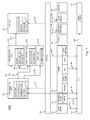
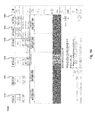
- Fig. 1 is a functional block scheme of an embodiment of the CPB monitoring tool 100 according to the present invention
- Fig. 2 shows a GUI screen 200 for entry of preoperative data in the embodiment 100 of the CPB monitoring tool according to the present invention
- Fig. 3 shows a GUI screen 300 illustrating preoperative calculations in the embodiment 100 of the CPB monitoring tool according to the invention
- Fig. 4 shows a GUI screen 400 for entry of team data in the embodiment 100 of the CPB monitoring tool according to the present invention
- Fig. 5 shows a GUI screen 500 for entry of material data in the embodiment 100 of the CPB monitoring tool according to the present invention
- Fig. 6 shows a GUI screen 600 for entry of pathology data in the embodiment 100 of the CPB monitoring tool according to the present invention
- Fig. 7 shows a GUI screen 700 for entry of medication data in the embodiment 100 of the CPB monitoring tool according to the present invention
- Fig. 8 shows a GUI screen 800 illustrating operation risk calculation in the embodiment 100 of the CPB monitoring tool according to the present invention
- Fig. 9 shows a GUI screen 900 illustrating drug calculation in the embodiment 100 of the CPB monitoring tool according to the present invention
- Fig. 10 shows a GUI screen 1000 displaying timers in the embodiment 100 of the CPB monitoring tool according to the present invention
- Fig. 11 shows a GUI screen 1100 for entry of event data in the embodiment 100 of the CPB monitoring tool according to the present invention
- Fig. 12 shows a GUI screen 1200 for entry of data related to medication administered during CPB in the embodiment 100 of the CPB monitoring tool according to the present invention
- Fig. 13 shows a GUI screen 1300 illustrating Ht-Hb graph generation in the embodiment 100 of the CPB monitoring tool according to the present invention
- Fig. 14 shows a GUI screen 1400 illustrating heparin dose response curve generation in the embodiment 100 of the CPB monitoring tool according to the present invention
- Fig. 15 shows a GUI screen 1500 illustrating operation of a drawing module in the embodiment 100 of the CPB monitoring tool according to the present invention
- Fig. 16 shows a GUI screen 1600 illustrating configuration of the preoperative data screen 200 in the embodiment 100 of the CPB monitoring tool according to the present invention
- Fig. 17 shows a GUI screen 1700 illustrating configuration of standard priming constitution in the embodiment 100 of the CPB monitoring tool according to the present invention
- Fig. 18 shows a GUI screen 1800 illustrating configuration of the medical team data screen 400 in the embodiment 100 of the CPB monitoring tool according to the present invention
- Fig. 19 shows a GUI screen 1900 illustrating configuration of the material data screen 500 in the embodiment 100 of the CPB monitoring tool according to the present invention
- Fig. 20 shows a GUI screen 2000 illustrating configuration of the data collection interface in the embodiment 100 of the CPB monitoring tool according to the present invention
- Fig. 21 shows a GUI screen 2100 illustrating statistics generation in the embodiment 100 of the CPB monitoring tool according to the present invention
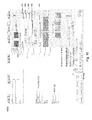
- Fig. 22 shows a GUI screen 2200 shown during operation by the embodiment of the CPB monitoring tool 100 according to the present invention
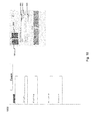
- Fig. 23 illustrates in more detail the visualization of derived parameters in GUI screen 2200.
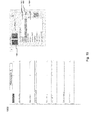
- Fig. 24 illustrates in more detail visualization of the minimum blood flow needed to transport oxygen to the whole body in GUI screen 2200.
- Fig. 1 shows the functional blocks of an embodiment 100 of the CPB monitoring tool according to the present invention.
- the preoperative information block 101 collects preoperative information, including patient data 121, pathology data 122, medication data 123, medical team data 124 and information on the materials used during operation 125.
- the preoperative information is collected from the user through interaction via various GUI screens that can be preconfigured by the user / perfusionist through the configuration module 114, as is indicated by arrow 191.
- the preoperative information, or portions thereof are communicated to the preoperative calculation block 102, as is indicated by arrow 181.
- This preoperative calculation method 102 calculates a number of parameters including the patient's body surface area or BSA 131, the patient's blood volume or BLOOD_VOL 132, and the patient's theoretical weight or T_WEIGHT 133. A few formula's that can be used to calculate these parameters from for instance the patient data 121 will be listed further below.
- the preoperative information and certain parameters calculated by the preoperative calculation block 102 are further communicated to the operation risk calculation block 105, as is indicated by arrows 183 and 184 in Fig. 1 .
- the operation risk calculator 105 calculates the operation risk for the patient according to Euroscore formulae 141 and/or Parsonnet formulae 142.
- the preoperative information or portions thereof are further communicated to the drug calculation block 104, as is indicated by arrow 185, in order to enable the drug calculator 104 to determine the medical doses 151 to be administered.
- priming module 103 determines the constitution 161, flow 162 and volume 163 of the priming fluid that will be used during operation.
- the priming module 103 thereto uses the parameter values determined by the preoperative calculation block 102, as is indicated by arrow 182.
- the priming module 103 may use preconfigured priming sets, as is indicated by arrow 192. This will be explained in more detail further below.
- the priming module 103 or the preoperative calculation block 102 may further determine the valve diameters 164. This is of particular importance in case of paediatric CPB.
- the embodiment 100 illustrated by Fig. 1 further contains a timers module 106 at least comprising a chronometer for the bypass time, a chronometer for the aorta clamp time, a chronometer measuring the time since the last ACT, a chronometer measuring the time since the last CPG dose, and one or more user configurable timers.
- the embodiment 100 further also contains a data collection module 107 that interfaces with the heart-lung machine and eventual other devices to collect various sensed parameters such as temperatures, pressures, etc.
- the interfacing and the parameter values that are collected are configured by the user through the configuration module 114 as is indicated by arrow 193.
- the user can configure the contents, structure and layout of printing reports that are produced by printing reports module 109. This is indicated by arrow 194 in Fig.
- Events module 108 enables the user to enter event information prior to and during operation. The timing of these events can be adjusted retroactively which is advantageous in case the perfusionist is busy for instance at the point in time an event takes place.
- the Ht-Hb graph generator 110 enables the perfusionist to monitor the evolution of the hemodilution.
- the heparin dose response curve generator 111 visualizes the patient's individual response to an initial heparin dose and enables the perfusionist to estimate the amount of additional heparin needed to achieve a certain target.
- the STATS block 112 maintains a historic database and enables to generate a wide variety of statistics for selected patient populations.
- At least the preoperative information block 101, the Ht-Hb graph generator 110, the heparin dose response curve 111 and the timers module 106 interface with the graphical user interface or GUI module 113 as is indicated by the arrows 190, 188, 187 and 186 in Fig. 1 .
- the GUI module 113 generates the various GUI screens for interfacing with the user. Various of these GUI screens will be described in the following paragraphs.
- the interfacing with the user may be through a monitor in the operation room, preferably a touch screen based monitor, or may be remote via an application running on the user's smartphone, tablet PC or laptop, as is indicated by the ECMO REMOTE block 115 that transfers the screens generated by GUI 113 to the remote application as is indicated by arrow 189.
- a simplified form of CPB remote monitoring of the life -support is advantageous since it saves the medical personnel in the hospital from doing so.
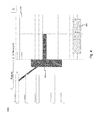
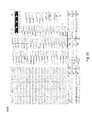
- Fig. 2 shows a GUI screen generated by GUI 113 to collect preoperative information for module 101 related to the patient.
- the input fields that are shown on the screen are chosen and configured in advance by the user via configuration module 114.
- the visible input fields, their labelling and the position on the screen can be updated via the configuration module 114.
- keyboard 202 appears in the screen enabling the user to enter the preoperative data for that field.
- the keyboard that appears automatically adapts to the type of information that is requested, e.g.
- alphanumeric information such as the name, numeric information such as the postal code, date information such as the birth date, a list of clickable options such as the gender, blood group, etc., and/or a list of possible answers that is pre-entered by the user during initialisation.
- the perfusionist can select the composition of the priming from a number of priming compositions that were are entered and named beforehand during initialisation.
- the pre-programmed priming 203 shall than appear on the preoperative data screen 200.
- the perfusionist must specify the volume of priming fluid extracted before the start of the CPB, the expected volume of crystalloid cardioplegia, the eventual volume of blood withdrawn from the patient before starting the CPB, and the volume used for inducing anaesthesia. This is not shown in Fig. 2 .
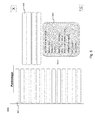
- Fig. 3 shows a GUI screen 300 generated by GUI 113 with input from the preoperative calculation module 102.
- a number of calculations are made by the preoperative calculations module 102, like for instance the body surface area or BSA 131 or 303, the blood volume 132 or 301, and the theoretical weight, T_WEIGHT or 133.
- Other parameters that may be calculated by the preoperative calculation module 102 are the total volume of priming fluid required, the age of the patient, the body mass index or BMI of the patient, the expected hemodilution 302, the expected hemodilution after cardioplegia, the theoretical flow rate 304 for different index values, the normalised weight, the normalised body surface area, the normalised flow rate, and the initial heparin dose in mg.
- the preoperative calculation module 102 or the priming module 103 may further determine the expected valve diameters 164 and the expected cannula sizes to be used.
- the theoretical weight 133 for adults is for instance calculated as follows:
- the blood volume is for instance calculated as follows:
- the body surface area or BSA 131 may be calculated according to different methods respectively described by Dubois D, Dubois EF. in Arch. Intern. Med. 1916; 17:863-871 , by Gehan EA, George SL. in Cancer Chemother. Rep. 1970; 54: 225-235 , or by Mosteller RD. N. in Engl. J. Med. 1987; 317: 1098 .
- the word "B.S.A.” is clicked in the screen 300.
- the user can then select the desired formula 304 for BSA calculation.
- the user can click on the word "Flow" in screen 300 and select the desired index, e.g. l/m 2 .
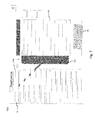
- Fig. 4 shows a GUI screen 400 generated by the GUI module 113 to collect team information for the preoperative information module 101.
- the team information contains the names of the medical staff that will assist during the CPB, i.e. the names of the surgeon, assistant, anaesthesiologist, perfusionist, cardiologist, nurse, etc.
- the fields shown on this screen 400, their labelling and their positioning is in advance configured by the user through configuration module 114. By clicking on one of the fields, a list of pre-entered team member names appears.
- the pre-entered names are configured at initialisation using the configuration module 114.
- One of the names in the list can be selected and will be copied into the corresponding field after confirmation via the "enter" button 402.
- the "change" button 403 can be used to change a name or enter a new name of a team member. Thereto, an alphanumeric keyboard will be displayed as soon as the "change” button 403 is clicked.
- Fig. 5 shows a GUI screen 500 that is generated by the GUI module 113 to collect information on the materials 125 used during CPB, such as an identification of the set, oxygenator, cannula, etc.
- the fields shown in screen 500 are preconfigured by the user during initialisation via the configuration module 114.
- the user can select items from a list of materials that is also pre-entered via the configuration module 114.
- the list of pre-entered materials pops-up.
- An item can be copied into the corresponding field by selecting the item and touching the "enter” button 503.
- the "change” button 504 an item can be changed or a new item can be entered and added to the list maintained for that particular field.
- a keyboard appears in screen 500 enabling the user to modify or enter an item. It is noticed that the fields for collecting the material information 125 may be spread over multiple screens or pages between which the user can easily swap.
- Fig. 6 shows a GUI screen 600 with input fields 601 for pathology information 122. If any one of the fields is clicked, the same list 603 of pathologies will appear. By selecting an item, the item of the list 603 gets copied to one of the fields 601. It is possible to add additional information in relation to the pathology in the input fields 602.
- the GUI screen 700 depicted in Fig. 7 is generated by the GUI module 113 to collect medication information 123 for the preoperative data module 101.
- the same list of drugs 702 shall appear, allowing the user to select a drug and copy it into one of the fields 701 via the "enter" button 703.
- the "change” button 704 again enables the user to modify an item or enter a new item in the drug list 702.
- Each filed 701 further has a black frame 705. When the black frame 705 is clicked, a keyboard shall appear enabling the user to enter the medication dose, e.g. "3 x 2,5 mg/day".
- Fig. 8 shows a GUI screen 800 that is generated by the GUI module 114 using information received from the operation risk calculator 105.
- the user In order to calculate the Euroscore operation risk 141, the user must indicate in screen 800 which parameters 801 are applicable to the patient.
- the Parsonnet operation risk 142 a similar screen can be opened by touching the "Parsonnet" button 802.
- the operation risk calculation i.e. the mortality calculated according to Euroscore or Parsonnet formulae, can be printed via button 803. Information on either the Euroscore or Parsonnet formulae is accessible through the "information" button 804.
- Fig. 9 shows the GUI screen 900 that is generated by GUI module 113 with information produced by the drug calculation module 104.
- This drug calculation module 104 calculates the medical dose 151 that must be administered during operation, i.e. how many ml/hour must be administered of a specific solution with a specific amount of active substance (in mg), in a well-defined total amount of liquid (in ml) in order to achieve a dosage expressed in gamma.
- the screen 900 contains a field for the drug name 901, a field 902 to express the total quantity in ml, a field 903 to express the total quantity of active substance in mg, and five fields 904 for possible quantities for five different doses. All changes made in this screen 900 are temporarily until the user touches the "save” button 906.
- the calculated drug doses can be printed using the "print” button 907.
- Fig. 10 illustrates a GUI screen 1000 that is generated by the GUI module 113 on instruction of the timers module 106.
- the GUI screen 1000 contains six chronometers: a first timer 1010 for measuring the bypass time, a second timer 1020 for measuring the aorta clamp time, a third timer 1030 and a fourth timer 1040 that are user configurable through configuration module 114, a fifth timer 1050 to measure the time lapsed since the last ACT, and a sixth timer 1060 for measuring the time lapsed since the last CPG dose. It is noticed that when the aorta clamp time chronometer 1020 is stopped while the bypass time chronometer 1010 is not yet stopped, the recirculation time can be seen.
- the chronometer menu By clicking in a chronometer in screen 1000, the chronometer menu will open. This chronometer menu will enable to start the chronometer, start the chronometer one minute or click earlier than the actual time, or start the chronometer 1 minute or click later than the actual time.
- the chronometer menu also allows the user to stop the chronometers. For each of the timers, the total time since starting the chronometer can be seen in the middle whereas the interval time - in case there are for instance multiple clamp times - is displayed in smaller fonts.
- the times menu By clicking in the blank field near each chronometer in screen 1000, the times menu will open.
- the times menu displays all start times, stop times and total times of all chronometers.
- the labelling of the third timer 1030 and fourth timer 1040 can be modified via the configuration module 114.
- Start and stop times of the third and fourth chronometers 1030 and 1040 are then saved in a database under the user-defined name(s) for these chronometers.
- the fifth timer 1050 starts automatically after entering a new ACT value. By clicking on the space in screen 1000 that is occupied by the fifth chronometer 1050, a window opens that allows the user to enter the ACT value and heparin dose.
- the new ACT value or the new heparin dose is saved, using the actual time or an earlier or later time when entered so by the user.
- the user can specify the length in time that an audible and/or visual alarm must be generated to warn the perfusionist with respect to ACT.
- the last measured ACT value is always displayed as part of the timer 1050.
- the sixth timer 1060 starts automatically after entering a new CPG amount.
- a window opens that allows the user to enter the CPG doses.
- the user can enter the anterograde CPG, the retrograde CPG and the selective CPG.
- the new CPG doses are saved with the actual time unless the user specifies an earlier or later time to be saved with the new CPG doses.
- the user can further specify the length in time that an audible and/or visual alarm must be generated to warn the perfusionist with respect to CPG.
- the total amount of CPG is always displayed as part of the timer 1060.
- the user can indicate which percentage of the CPG that is not blood.
- the part that is not blood can be taken into account to indicate the effect of the CPG on the haemoglobin and haematocrit.
- the chronometer menu for the third, fourth, fifth and sixth timer contain timer alerts that can be set on or off.
- Fig. 11 shows a GUI screen 1100 that is generated by the GUI module 113 to collect information on events during CPB for the events module 108.
- a list of events 1101 is available. These events can be selected to become copied in the events entry field 1102. The information can be saved with the actual time or the time may be modified using the buttons 1103. To change the sequence of lines, the buttons 1104 are used. When clicking on a line in the list 1101, the information in the list can be modified or a new event can be added to the list.
- a keyboard will appear in the screen 1100 to assist the user in changing or adding new events to the list 1101.
- Fig. 12 shows a GUI screen 1200 that is generated by the GUI module 113 in order to collect infor on medication and solutions that are administered during the CPB procedure.
- a list 1201 appears in this screen 1200.
- An item in the list 1201 can be selected and copied into the medication entry field 1202.
- the numerical keyboard enables the user to enter the quantity of the drug or solution that is administered, and to select the unit wherein the quantity is expressed.
- the information is saved in the database with the actual time unless the user specifies an earlier or later time via the buttons 1204.
- clicking on an item in the list 1201 or clicking on a blank line in the list 1201 the item can be modified or a new item can be added to the list 1201.
- a modification screen will appear enabling the user to change the name, packaging or volume per package.
- a keyboard will appear enabling the user to enter information with respect to a new drug or solution.
- FIG. 13 An advantageous feature of the CPB monitoring tool according to the invention is illustrated by Fig. 13 .
- This GUI screen 1300 displays the evolution of the patient's hemodilution in order to give the perfusionist a better view on the evolution of the oxygen transport capacity of the circulating blood.
- the screen 1300 thereto contains three graphs that follow different parameters: graph 1301 depicts the evolution of the in-line haematocrit, graph 1302 depicts the evolution of the calculated haematrocrit, and graph 1303 depicts the evolution of the haemoglobin values measured via gasometry. Whereas the first and third graphs, 1301 and 1303, show values that are measured and stored in a database, the second graph 1302 shows the evolution of the theoretically calculated haematocrit.
- This calculation done by the Ht-Hb graph generating module 110 is based on the patient's haematocrit measured before the CPB, the patient's calculated blood volume based on length, weight, gender and age, the priming, the solutions and medication administered during CPB, and the diuresis and hemofiltration.
- the patient's calculated blood volume is not always perfect. A number of pathological conditions, medication or the patient's overall condition may influence the accurateness of this parameter. The calculation should therefore be checked by a lab test and correction of this parameter in the CPB monitoring tool according to the invention is foreseen. In order to verify if the theoretical calculation of the blood volume is acceptable or not, the difference between the calculated haematocrit and the haematocrit measured at the beginning of the CPB procedure is examined.
- the predicted blood volume must be changed accordingly. This can be done via the screen enabling entry of preoperative data. As soon as the blood volume is modified there to match the laboratory value at the beginning of the CPB, all calculations with respect to hemodilution will be correct. The changes to the calculated haematocrit can be followed via the graphs displayed in GUI screen 1300. The actual effect on the hemodilution of for instance addition of solutions during the CPB, or the effect of for instance hemofiltration, etc. can be followed, enabling the perfusionist to take better founded decisions based on up-to-date information.
- buttons 1304, 1305 and 1306 in GUI screen 1300 allow the user to indicate the respective amounts of packed cells, non-cellular solutions and hemofiltration administered, whereas the graphs 1301, 1302 and 1303 visualize the effect on the hemodilution.
- Fig. 14 shows the heparin dose response curve 1400 that represents the patient's individual reaction to a specific amount of heparin.
- This curve is generated by the heparin dose response curve module 111 and made accessible by GUI module 113 via the chronometer GUI screen 1000, more particularly via the fifth chronometer 1050 therein.
- the patient's individual reaction to heparin is used to calculate the amount of heparin that must be added to reach a specific target ACT value.
- the ACT value 1401 before heparin dose, the first heparin dose 1402, and the ACT value 1403 measured after the first heparin dose must be entered chronologically in order to enable the module 111 to draw the heparin dose response curve 1400 correctly.
- the angle of this curve determines the patient's individual reaction to the first heparin dose and enables to predict the amount of extra heparin that is needed to obtain a target ACT value 1404 that is specified by the user.
- the curve 1400 is updated. If the final ACT value is smaller than the minimum desired ACT value, the CPB monitoring tool shall indicate the amount of heparin that must be added to achieve the desired ACT value. Further, the CPB monitoring tool according to the invention enables to take into account the dilution factor.
- the heparin dose response GUI screen shall indicate how much heparin is still active.
- two calculation methods are used by module 111.
- the "120 minute half-life method” all heparin doses that were administered together with their times of administration are analysed in order to calculate the amount of heparin that is still active when the CPB procedure is stopped. This is done based on metabolization of half the heparin dose every 120 minutes.
- the last measured ACT method the last measured ACT value together with the individual heparin dose response curve are used to determine how much heparin is still active at the point in time where the last ACT value is measured.
- Fig. 15 shows the GUI screen 1500 generated by module 113 in collaboration with an optional draw module not shown in Fig. 1 .
- This draw module allows the user to draw coronary bypasses. Up to six bypasses can be drawn. Thereto, the user identifies the number of the bypass, selects in screen 1500 the place where the bypass begins, identifies additional points of the bypass, and at last selects in screen 1500 the place where the bypass ends. This is possible as long as the "Draw" button 1501 is activated. The course of a previously drawn bypass can be modified using the "Move” button 1502, and the last drawn part of an active bypass can be removed using the "Erase” button 1503. When all bypasses have been drawn, the computer program will examine the drawing and display data in the fields 1504.
- Each bypass that begins at the aorta will receive the designation "VSM" or vena saphena. If the bypass is not a VSM but for instance a free mammary artery, the conduit field must be modified by selecting a conduit out of a list of possible conduits that appears. To indicate a sequential anastomosis, the complete bypass is drawn. Thereafter, the exact location where the sequential anastomosis should be placed, is identified. The tool further enables to enter additional, specific information with respect to the anastomosis or conduit. A menu appears that allows to indicate which thread is used.
- the preoperative data input fields can be configured: the desired parameters and their location on screen 200 can be set. This is illustrated by Fig. 16 which shows how the GUI screen 200 for preoperative data is configured.
- the buttons 1601 and 1602 allow to choose the location on screen 200 where the parameter entry field is positioned.
- the possible locations may be organised in a table, e.g. 35 locations in 2 columns. When clicking on the field 1603, the list of possible parameters for entering preoperative information becomes visible.
- This list may for instance contain the patient's identification number, the second patient's identification number, a CPB number, the patient's last name and first name, the date if intervention, the patient's birthdate, the patient's gender, the patient's social security institution number, the patient's social security number, the patient's address, the weight, length, blood group, haemoglobin, haematocrit, red blood cells, white blood cells, thrombocytes, total proteins, K, Na, Ca, Mg, Urea, creatinine, glucose, left ventricular ejection fraction, operating room, etc.
- the user can enter or change the label of the field.
- the user can enter or change the unit wherein the parameter value must be expressed.
- the parameter In case the parameter is related to a list of choices, the possible choices must be entered.
- the parameter, its labelling and positioning are confirmed through the "Save" button 1608.
- Fig. 17 illustrates configuration of the priming compositions through the configuration module 114.
- the priming screen 1700 enables to change or enter the pre-programmable priming compositions of for instance 10 priming fluids.
- the name of the priming set is entered in field 1701.
- table 1702 allows the user to enter the constituents and their amount in various units.
- the amount may for instance be expressed in ml/kg patient weight, such that the amount needed for a particular patient can be exactly calculated in function of the patient's weight.
- the amount may be expressed in ml/m 2 BSA. This way, the amount needed for a particular patient can be exactly calculated in function of the patient's BSA.
- the amount may be calculated in ml/I priming.
- the priming constituents can be selected from a list of solutions.
- the pre-programming of a priming composition is confirmed through the "Save" button 1703, as a result of which the priming composition becomes available for use.
- Fig. 18 illustrates initialisation of the name list of the medical team through the configuration module 114.
- the desired parameters, and their location in the medical team screen 400 is set-up. Thereto, the buttons 1801 and 1802 are used to determine the position of the entry field in screen 400.
- the desired parameter is then selected from a list that is accessible through clicking field 1803.
- Possible parameters for the medical team data are the names of several surgeons, the names of several anaesthesiologists, the names of several perfusionists, the names of several instrumentists, the names of several nurses, the name of the cardiologist, the names of several family doctors, etc.
- the field 1804 enables the user to specify the label of the parameter.
- Fig. 19 illustrates initialisation of the name list for the materials through the configuration module 114.
- the desired parameters, and their location in material screen 500 is set-up.
- the arrow buttons 1901 and 1902 allow the user to select the position of the entry field in screen 500. A number of locations are available.
- the field 1903 gives access to a number of parameters that can be collected with respect to materials used during CPB.
- This list 1904 may contain the name of the CPB console, the oxygenator, the venous reservoir, the cardiotomy reservoir, the hemofilter, the circuits, the arterial cannulation site 1, the arterial cannulation site 2, the arterial cannula 1, the arterial cannula 2, the venous cannulation site 1, the venous cannulation site 2, the venous cannulation site 3, the venous cannula 1, the venous cannula 2, the venous cannula 3, the cannula CPG anterograde, the cannula CPG retrograde, the arterial pump, the left aspiration cannula, the autotransfusion, etc.
- the user can further enter the label that has to appear near the entry field in screen 500. Once the screen 500 is configured, the "Save" button 1905 allows to memorize the configuration.
- Fig. 21 shows a GUI screen 2100 generated by the statistical module 112.
- This statistical module 112 encompasses a number of different algorithms and methods for grouping objects in a way that the degree of association between two objects is maximal if they belong to the same group and minimal otherwise.
- the statistical module 112 in other words discovers structures in data.
- the statistics module 112 lists the parameters intuitively and allows the user to include/exclude criteria in different parameters.
- the data are then intelligently clustered in data groups and graphic representations of the distinguished data groups are generated. All parameters stored during the CPB procedure with respect to one patient can be collected, exported, stored and printed for further analysis. A listing of all patients is generated, and each of the columns in the list can be populated with one of the parameters available in the database.
- exclusion/inclusion criteria are defined, e.g. the starting and ending date of the list, patients with a particular blood group, gender, etc.
- the list can be exported. Also exported are the number of patients, the period in time, the complete set of exclusion criteria and a graphical representation of the column's parameter appearance. These graphics can be copied into another application, e.g. Powerpoint.
- the statistical module 112 repairs the data when new patients are added. Further, the repeatability is improved through a modify function in the statistical module 112 that deals with spelling, word order, the use of capitals, etc. and avoids that such kind of errors have an influence on the statistics.
- pre-programmed graphics are then available, like for instance bar graphics.
- the minimum and maximum values for each of the bars in these graphics are adaptable by the user, the y scale can be set automatically or by the user for minimum and maximum scan graphics, the X and Y axes can be swapped in XY graphics, etc.
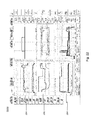
- Fig. 22 shows a GUI screen 2200 representing the main working screen during the operation procedure, showing all measured and derived parameters and their evolution in time. Derived calculated parameters like oxygen consumption and systemic vascular resistance curves are continuously visualised in order to assist the perfusionist during the procedure.
- the absolute minimum blood flow needed to assure vital oxygen delivery is constantly calculated taking into account the temperature, hemodilution and morphology of the patient.
- the actual cardiac index 2201 i.e. the blood flow per m 2 , is constantly visualised.
- the temperature difference 2202 between patient temperature and blood temperature is monitored and shown in order to alert the perfusionist when temperature gradients become too large.
- the in-line pressure differences 2203 measured before and after the membrane oxygenator are constantly shown to be evaluated by the perfusionist during the procedure and to alert him in case of overpressure. All this among other features makes the tool according to the present invention much more than just a data logger to produce a database, but a real monitor assisting the perfusionist during the procedure and enabling him to make better founded decisions throughout the whole procedure. Thanks to the tool according to the present invention, the perfusionist has a better view on the individual reactions of the patient at any moment during the procedure. This additional information helps the perfusionist to have a better quality judgement and be able to make changes in the treatment based on more reliable data.
- This main screen 2200 shown during the bypass operation can be configured through the configuration module 114.
- the number of curve fields that is displayed can be varied, e.g. 1 to 3 left side curve fields and 1 to 3 right side curve fields.
- the maximum and minimum values shown along X- and Y-axes, the units, and certain aspects of the curves can be configured as well in order to increase the user-friendliness and intuitive interaction with the perfusionist during operation.
- Fig. 23 illustrates visualization of derived parameters in GUI screen 2200 such as the percentage of the blood pump flow compared to the pre-calculated flow 2301, the index 2302 of the blood flow referenced to the body surface area in L/m 2 , the ratio of gas flow versus blood flow 2303, the temperature gradient between blood and patient temperature 2304, and the pressure difference 2304 between the pre-oxygenator and post-oxygenator line pressure. These measurements are constantly visualised to inform the perfusionist at any moment during the procedure.
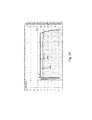
- the dotted line 2401 shows the minimum blood flow needed to transport oxygen to the whole body taking into account the morphology of the actual patient, the actual temperature, and the actual hemodilution at any point in time during the operation procedure.
- the arterial pump flow is shown by the full line 2402.
- top, bottom, over, under, and the like are introduced for descriptive purposes and not necessarily to denote relative positions. It is to be understood that the terms so used are interchangeable under appropriate circumstances and embodiments of the invention are capable of operating according to the present invention in other sequences, or in orientations different from the one(s) described or illustrated above.
Landscapes
- Health & Medical Sciences (AREA)
- Heart & Thoracic Surgery (AREA)
- Engineering & Computer Science (AREA)
- Vascular Medicine (AREA)
- Public Health (AREA)
- General Health & Medical Sciences (AREA)
- Biomedical Technology (AREA)
- Cardiology (AREA)
- Animal Behavior & Ethology (AREA)
- Life Sciences & Earth Sciences (AREA)
- Hematology (AREA)
- Anesthesiology (AREA)
- Veterinary Medicine (AREA)
- Epidemiology (AREA)
- Medical Informatics (AREA)
- Primary Health Care (AREA)
- Pulmonology (AREA)
- Business, Economics & Management (AREA)
- General Business, Economics & Management (AREA)
- External Artificial Organs (AREA)
- Measuring And Recording Apparatus For Diagnosis (AREA)
Priority Applications (2)
| Application Number | Priority Date | Filing Date | Title |
|---|---|---|---|
| EP11184981.6A EP2581846A1 (de) | 2011-10-13 | 2011-10-13 | Kardiopulmonales Bypass- oder CPB-Überwachungsinstrument |
| US13/649,353 US20130094996A1 (en) | 2011-10-13 | 2012-10-11 | Cardiopulmonary bypass or cpb monitoring tool |
Applications Claiming Priority (1)
| Application Number | Priority Date | Filing Date | Title |
|---|---|---|---|
| EP11184981.6A EP2581846A1 (de) | 2011-10-13 | 2011-10-13 | Kardiopulmonales Bypass- oder CPB-Überwachungsinstrument |
Publications (1)
| Publication Number | Publication Date |
|---|---|
| EP2581846A1 true EP2581846A1 (de) | 2013-04-17 |
Family
ID=44862550
Family Applications (1)
| Application Number | Title | Priority Date | Filing Date |
|---|---|---|---|
| EP11184981.6A Withdrawn EP2581846A1 (de) | 2011-10-13 | 2011-10-13 | Kardiopulmonales Bypass- oder CPB-Überwachungsinstrument |
Country Status (2)
| Country | Link |
|---|---|
| US (1) | US20130094996A1 (de) |
| EP (1) | EP2581846A1 (de) |
Cited By (3)
| Publication number | Priority date | Publication date | Assignee | Title |
|---|---|---|---|---|
| WO2015053979A1 (en) * | 2013-10-09 | 2015-04-16 | Medtronic Inc. | Surgical and post-surgical fluid management to prevent low hematocrit |
| EP3806108A1 (de) * | 2015-05-13 | 2021-04-14 | MAQUET Cardiopulmonary GmbH | System zur berechnung, simulation und überwachung klinischer parameter |
| US11797158B2 (en) | 2015-10-07 | 2023-10-24 | MAQUET CARDIOPULMONARY GmbH | User interface system for a medical device |
Families Citing this family (25)
| Publication number | Priority date | Publication date | Assignee | Title |
|---|---|---|---|---|
| ITMI20050866A1 (it) | 2005-05-13 | 2006-11-14 | Marco Ranucci | Sistema di monitoraggio per interventi di chirurgia cardiaca con bypass cardiopolmonare |
| US9652655B2 (en) * | 2011-07-09 | 2017-05-16 | Gauss Surgical, Inc. | System and method for estimating extracorporeal blood volume in a physical sample |
| US10426356B2 (en) | 2011-07-09 | 2019-10-01 | Gauss Surgical, Inc. | Method for estimating a quantity of a blood component in a fluid receiver and corresponding error |
| JP6151771B2 (ja) | 2012-05-14 | 2017-06-21 | ガウス サージカル, インコーポレイテッドGauss Surgical, Inc. | 流体キャニスタ中の血液成分量を測定するシステム及び方法 |
| EP4033405B1 (de) | 2012-05-14 | 2024-06-12 | Gauss Surgical, Inc. | Verfahren zur verwaltung von blutverlust eines patienten |
| USD764480S1 (en) * | 2013-05-30 | 2016-08-23 | P&W Solutions Co., Ltd. | Display screen for a personal digital assistant with graphical user interface |
| USD765666S1 (en) * | 2013-05-30 | 2016-09-06 | P&W Solutions Co., Ltd. | Display screen for a personal digital assistant with graphical user interface |
| USD790558S1 (en) * | 2013-05-30 | 2017-06-27 | P&W Solutions Co., Ltd. | Display screen for a personal digital assistant with graphical user interface |
| USD764482S1 (en) * | 2013-05-30 | 2016-08-23 | P&W Solutions Co., Ltd. | Display screen for a personal digital assistant with graphical user interface |
| USD766255S1 (en) * | 2013-05-30 | 2016-09-13 | P&W Solutions Co., Ltd. | Display screen for a personal digital assistant with graphical user interface |
| USD764481S1 (en) * | 2013-05-30 | 2016-08-23 | P&W Solutions Co., Ltd. | Display screen for a personal digital assistant with graphical user interface |
| USD774043S1 (en) * | 2013-10-23 | 2016-12-13 | St. Jude Medical, Cardiology Division, Inc. | Display screen with graphical user interface for ablation generator |
| US11504037B2 (en) | 2015-05-15 | 2022-11-22 | Gauss Surgical, Inc. | Systems and methods for assessing fluids from a patient |
| WO2016187072A1 (en) | 2015-05-15 | 2016-11-24 | Gauss Surgical, Inc. | Methods and systems for characterizing fluids from a patient |
| US10555675B2 (en) | 2015-05-15 | 2020-02-11 | Gauss Surgical, Inc. | Method for projecting blood loss of a patient during a surgery |
| JP6934253B2 (ja) | 2015-12-23 | 2021-09-15 | ガウス サージカル, インコーポレイテッドGauss Surgical, Inc. | 外科織物内の血液構成要素の量の評価方法 |
| JP6968427B2 (ja) | 2015-12-23 | 2021-11-17 | ガウス サージカル, インコーポレイテッドGauss Surgical, Inc. | ある体積の流体における血液成分の量を推定するためのシステム及び方法 |
| EP3563343A4 (de) | 2017-01-02 | 2020-08-19 | Gauss Surgical, Inc. | Verfolgung chirurgischer objekte mit vorhersage der doppelten bildgebung von artikeln |
| US11229368B2 (en) | 2017-01-13 | 2022-01-25 | Gauss Surgical, Inc. | Fluid loss estimation based on weight of medical items |
| US10960119B2 (en) | 2017-05-03 | 2021-03-30 | Fresenius Medical Care Deutschland Gmbh | Method for operating a blood treatment apparatus, control unit and treatment apparatus for executing the method |
| WO2019026846A1 (ja) * | 2017-07-31 | 2019-02-07 | テルモ株式会社 | 分析装置、分析システム、分析装置の制御方法及び分析装置の制御プログラム |
| WO2020050136A1 (ja) * | 2018-09-06 | 2020-03-12 | テルモ株式会社 | 体外循環管理装置、体外循環装置および体外循環管理プログラム |
| US11314375B2 (en) * | 2018-10-01 | 2022-04-26 | Precigenome, LLC | Multichannel pressure control system with user friendly interface |
| CN112569417A (zh) * | 2020-12-09 | 2021-03-30 | 中国人民解放军海军军医大学第一附属医院 | 肝素用药监测系统 |
| USD1063954S1 (en) * | 2021-11-25 | 2025-02-25 | Koninklijke Philips N.V. | Display screen or portion thereof with animated graphical user interface |
Citations (4)
| Publication number | Priority date | Publication date | Assignee | Title |
|---|---|---|---|---|
| EP1721571A2 (de) * | 2005-05-13 | 2006-11-15 | Marco Ranucci | Überwachungssystem für herzchirurgische Operationen mit kardiopulmonalem Bypass |
| US20100036676A1 (en) * | 2008-08-07 | 2010-02-11 | E-Merge Health Solutions, Ltd. | Computer implemented medical treatment management system |
| US20100152544A1 (en) * | 2008-11-19 | 2010-06-17 | Spectrum Medical Limited | Cardiac monitoring system and method |
| US20100222671A1 (en) * | 2007-03-08 | 2010-09-02 | Sync-Rx, Ltd. | Identification and presentation of device-to-vessel relative motion |
Family Cites Families (1)
| Publication number | Priority date | Publication date | Assignee | Title |
|---|---|---|---|---|
| US20100119131A1 (en) * | 2008-11-07 | 2010-05-13 | Gebow Dan | Expert system and method with registry for interpreting advanced visualization images |
-
2011
- 2011-10-13 EP EP11184981.6A patent/EP2581846A1/de not_active Withdrawn
-
2012
- 2012-10-11 US US13/649,353 patent/US20130094996A1/en not_active Abandoned
Patent Citations (4)
| Publication number | Priority date | Publication date | Assignee | Title |
|---|---|---|---|---|
| EP1721571A2 (de) * | 2005-05-13 | 2006-11-15 | Marco Ranucci | Überwachungssystem für herzchirurgische Operationen mit kardiopulmonalem Bypass |
| US20100222671A1 (en) * | 2007-03-08 | 2010-09-02 | Sync-Rx, Ltd. | Identification and presentation of device-to-vessel relative motion |
| US20100036676A1 (en) * | 2008-08-07 | 2010-02-11 | E-Merge Health Solutions, Ltd. | Computer implemented medical treatment management system |
| US20100152544A1 (en) * | 2008-11-19 | 2010-06-17 | Spectrum Medical Limited | Cardiac monitoring system and method |
Non-Patent Citations (7)
| Title |
|---|
| CAPPS S B ET AL: "Body surface area as a predictor of aortic and pulmonary valve diameter", JOURNAL OF THORACIC AND CARDIOVASCULAR SURGERY, MOSBY-YEAR BOOK, INC., ST. LOUIS, MO, US, vol. 119, no. 5, 1 May 2000 (2000-05-01), pages 975 - 982, XP027314461, ISSN: 0022-5223, [retrieved on 20000501] * |
| DUBOIS D, DUBOIS EF., ARCH. INTERN. MED., vol. 17, 1916, pages 863 - 871 |
| GEHAN EA, GEORGE SL., CANCER CHEMOTHER. REP., vol. 54, 1970, pages 225 - 235 |
| LINDERKAMP 0., VERSMOLD HT. ET AL.: "Estimation and Prediction of Blood Volume in Infants and Children", EUR J. PEDIATR, vol. 125, 1977, pages 227 - 234 |
| MOSTELLER RD. N., ENGL. J. MED., vol. 317, 1987, pages 1098 |
| RL PEVERINI ET AL: "Anticoagulation therapy advisor: a decision-support system for heparin therapy during ECMO", PROC ANNU SYMP COMPUT APPL MED CARE 1992, 8 November 1992 (1992-11-08), Baltimore, pages 567 - 571, XP002670625, Retrieved from the Internet <URL:http://www.ncbi.nlm.nih.gov/pmc/articles/PMC2248144/> [retrieved on 20120301] * |
| SMETANNIKOV Y, HOPKINS D.: "Interoperative Bleeding: A Mathematical Model for Minimizing Hemoglobin Loss", TRANSFUSION, vol. 36, 1996, pages 832, XP055013768, DOI: doi:10.1046/j.1537-2995.1996.36996420764.x |
Cited By (4)
| Publication number | Priority date | Publication date | Assignee | Title |
|---|---|---|---|---|
| WO2015053979A1 (en) * | 2013-10-09 | 2015-04-16 | Medtronic Inc. | Surgical and post-surgical fluid management to prevent low hematocrit |
| JP2016539671A (ja) * | 2013-10-09 | 2016-12-22 | メドトロニック,インコーポレイテッド | 低ヘマトクリットを防止するための手術中及び術後の体液管理 |
| EP3806108A1 (de) * | 2015-05-13 | 2021-04-14 | MAQUET Cardiopulmonary GmbH | System zur berechnung, simulation und überwachung klinischer parameter |
| US11797158B2 (en) | 2015-10-07 | 2023-10-24 | MAQUET CARDIOPULMONARY GmbH | User interface system for a medical device |
Also Published As
| Publication number | Publication date |
|---|---|
| US20130094996A1 (en) | 2013-04-18 |
Similar Documents
| Publication | Publication Date | Title |
|---|---|---|
| EP2581846A1 (de) | Kardiopulmonales Bypass- oder CPB-Überwachungsinstrument | |
| JP3083465B2 (ja) | 患者情報解析管理システム及び方法 | |
| US20210005315A1 (en) | Apparatus, process and system for monitoring a plurality of patients affected by kidney failure | |
| CN107592818B (zh) | 一种临床参数计算模拟监测系统 | |
| US5921920A (en) | Intensive care information graphical display | |
| CN104380295B (zh) | 体外血液处理数据界面 | |
| JP4276834B2 (ja) | 生体情報及び血液処理装置情報管理システム | |
| US20110078608A1 (en) | Integrating protocols for infusion management | |
| BR112018002822B1 (pt) | Sistema de tratamento de saúde em rede | |
| US20100152544A1 (en) | Cardiac monitoring system and method | |
| JP2005525853A (ja) | 患者医療パラメータ・トレンド表示ディスプレイ構成・提示システム及びユーザ・インターフェース装置 | |
| WO2007112148A2 (en) | Neonatal nutrition assessment system | |
| WO2021140997A1 (ja) | 予測表示システム及び治療方法 | |
| US20110072381A1 (en) | Integrating quick sign for infusion management | |
| JP6134976B2 (ja) | 臨床情報表示装置および臨床情報表示装置の作動方法並びに臨床情報表示プログラム | |
| US12476002B2 (en) | Interface between heart pump controller database and hospital | |
| US20250014749A1 (en) | System for assessing the state of a vascular access | |
| CN119278483A (zh) | 血流动力学管理系统、装置和方法 | |
| Clemmer et al. | Computer support in critical care medicine | |
| JP7248576B2 (ja) | 分析装置、分析システム、分析装置の制御方法及び分析装置の制御プログラム | |
| Hujcs et al. | Description and Evaluation of the Use of MIB in the ICU | |
| JP2024137408A (ja) | 管理装置、管理装置を有する体外循環管理装置、管理装置の作動方法及び管理装置の作動プログラム | |
| CN117590983A (zh) | 一种医疗设备及其数据显示方法、存储介质 | |
| CN115381394A (zh) | 中央监护系统的护理管理方法、中央站及可读存储介质 | |
| JP2024137406A (ja) | 管理装置、管理装置を有する体外循環管理装置、管理装置の作動方法及び管理装置の作動プログラム |
Legal Events
| Date | Code | Title | Description |
|---|---|---|---|
| PUAI | Public reference made under article 153(3) epc to a published international application that has entered the european phase |
Free format text: ORIGINAL CODE: 0009012 |
|
| AK | Designated contracting states |
Kind code of ref document: A1 Designated state(s): AL AT BE BG CH CY CZ DE DK EE ES FI FR GB GR HR HU IE IS IT LI LT LU LV MC MK MT NL NO PL PT RO RS SE SI SK SM TR |
|
| AX | Request for extension of the european patent |
Extension state: BA ME |
|
| 17P | Request for examination filed |
Effective date: 20131017 |
|
| RAX | Requested extension states of the european patent have changed |
Extension state: ME Payment date: 20131017 Extension state: BA Payment date: 20131017 |
|
| RBV | Designated contracting states (corrected) |
Designated state(s): AL AT BE BG CH CY CZ DE DK EE ES FI FR GB GR HR HU IE IS IT LI LT LU LV MC MK MT NL NO PL PT RO RS SE SI SK SM TR |
|
| 17Q | First examination report despatched |
Effective date: 20140602 |
|
| STAA | Information on the status of an ep patent application or granted ep patent |
Free format text: STATUS: THE APPLICATION IS DEEMED TO BE WITHDRAWN |
|
| 18D | Application deemed to be withdrawn |
Effective date: 20141213 |