EP2582096B1 - Klassifizierungsverfahren und vorrichtung für pakete - Google Patents
Klassifizierungsverfahren und vorrichtung für pakete Download PDFInfo
- Publication number
- EP2582096B1 EP2582096B1 EP10842861.6A EP10842861A EP2582096B1 EP 2582096 B1 EP2582096 B1 EP 2582096B1 EP 10842861 A EP10842861 A EP 10842861A EP 2582096 B1 EP2582096 B1 EP 2582096B1
- Authority
- EP
- European Patent Office
- Prior art keywords
- segmentation
- bit
- rule
- rules
- codes
- Prior art date
- Legal status (The legal status is an assumption and is not a legal conclusion. Google has not performed a legal analysis and makes no representation as to the accuracy of the status listed.)
- Not-in-force
Links
- 238000000034 method Methods 0.000 title claims description 63
- 230000011218 segmentation Effects 0.000 claims description 334
- 238000003066 decision tree Methods 0.000 claims description 83
- 238000012545 processing Methods 0.000 claims description 16
- 238000004364 calculation method Methods 0.000 claims description 8
- 238000012163 sequencing technique Methods 0.000 claims description 7
- 101100063432 Caenorhabditis elegans dim-1 gene Proteins 0.000 description 5
- 238000010586 diagram Methods 0.000 description 5
- 238000004422 calculation algorithm Methods 0.000 description 4
- 238000007635 classification algorithm Methods 0.000 description 3
- 230000003247 decreasing effect Effects 0.000 description 3
- 230000000694 effects Effects 0.000 description 3
- 230000003044 adaptive effect Effects 0.000 description 2
- 238000012217 deletion Methods 0.000 description 2
- 230000037430 deletion Effects 0.000 description 2
- 101000773151 Homo sapiens Thioredoxin-like protein 4B Proteins 0.000 description 1
- 102100030273 Thioredoxin-like protein 4B Human genes 0.000 description 1
- 230000001174 ascending effect Effects 0.000 description 1
- 238000005516 engineering process Methods 0.000 description 1
- 230000006870 function Effects 0.000 description 1
- 230000010354 integration Effects 0.000 description 1
- 238000012986 modification Methods 0.000 description 1
- 230000004048 modification Effects 0.000 description 1
- 230000003287 optical effect Effects 0.000 description 1
- 238000004904 shortening Methods 0.000 description 1
Images

Classifications
-
- H—ELECTRICITY
- H04—ELECTRIC COMMUNICATION TECHNIQUE
- H04L—TRANSMISSION OF DIGITAL INFORMATION, e.g. TELEGRAPHIC COMMUNICATION
- H04L47/00—Traffic control in data switching networks
- H04L47/10—Flow control; Congestion control
- H04L47/24—Traffic characterised by specific attributes, e.g. priority or QoS
- H04L47/2441—Traffic characterised by specific attributes, e.g. priority or QoS relying on flow classification, e.g. using integrated services [IntServ]
Definitions
- the present invention relates to the field of communications technologies, and in particular to a method and a device for classifying a packet.
- Traffic classification refers to the classification of the received packet, which is one of key functions of a router and provides technical support for complicated value-added services of the router such as network security, QoS (Quality of Service, quality of service), load balancing and traffic counting.
- QoS Quality of Service, quality of service
- a basic idea of a traffic classification method based on a decision tree is as follows: a rule set is recursively divided through a certain segmentation policy, till the number of rules in each sub-rule set is less than a preset Bucket Size (bucket size); and a decision tree may be created through segmentation, in which an intermediate node of the decision tree stores a method for segmenting the rule set, leaf nodes store the sub-rule sets, that is, the leaf nodes store all possible matching rules.
- Bucket Size Bucket size
- Algorithms based on the decision tree include HiCuts (one-dimensional segmentation), HyperCuts (multi-dimensional segmentation) and Modular (bit-selection segmentation).
- a solution to improving the traffic classification method based on the decision tree may be as follows: first, an original rule set is divided into several non-overlapping sub-rule sets, and then the decision tree is created with the obtained sub-rule sets.
- a process of dividing the original rule set into several sub-rule sets may be implemented in the following manners:
- the subclasses obtained in the manners 1) and 2) are the required sub-rule sets. If multiple domains exist in the original rule set, for example, it is possibly required to divide the Ipv4 quintuple rules with respect to 5 domains; and at this time, subclasses obtained by using different classification methods may be formed into different combinations according to an intersection product method, and then multiple non-overlapping sub-rule sets are obtained.
- the original rule set may be divided into s1 subclasses and s2 subclasses respectively by using the methods described in the manners 1) and 2), and then the original rule set may be divided into s1*s2 sub-rule sets by using the intersection product method.
- the original rule set may be divided into "fully" non-overlapping sub-rule sets, which reduces rule duplication at a certain degree.
- the inventors find that the prior art may be summed up as follows:
- Embodiments of the present invention provide a method and a device for classifying a packet, so as to reduce rule duplication in a classification process, and improve classification efficiency.
- a method for classifying a packet includes:
- a device for classifying a packet includes:
- the decision tree used in the rule searching process is a decision tree created after the original rule set is divided based on the segmentation code
- the use of the segmentation code to divide the rule set may not only reduce the rule duplication, but also greatly decrease depth of the decision tree, memory usage and tree creation time. Therefore, when the rule is searched for by using the solution provided by the embodiments of the present invention, the speed of the processing such as searching and classifying may be greatly improved with searching bandwidth remaining unchanged.
- the method and the device provided in the embodiments of the present invention may reduce rule duplication during a classification process and improve classification efficiency.
- the number and positions of wildcards '*' refer to that a certain binary bit is '*') in a rule determine whether rule duplication is likely to be caused in a process of creating a decision tree.
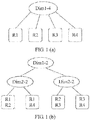
- the wildcards '*' exist in the rules of Table 2 in a cross manner, and at this time, rule duplication is caused in selecting any bit for segmentation. For example, when a first bit on a first dimension (Dim1) and a first bit on a second dimension (Dim2) are selected for segmentation, the rule set in Table 2 may be segmented into four sub-rule sets, in which each sub-rule set includes 2 rules, as shown in FIG. 1(b) . It can be seen from the above that, although the number of the wildcards '*' is the same in the two examples shown in Table 1 and Table 2, the degrees of rule duplication are far different from each other. Table 1 Rules Dim 1 Dim 2 R1 00* * R2 01* * R3 10* * R4 11* * Table 2 Rules Dim 1 Dim 2 R1 00* * R2 * 01* R3 10* * R4 * 11*
- rule segmentation For a rule set, if the selection of some bits for segmentation does not cause duplication, it is regarded that the rules in the rule set match; and if the selection of any bit for segmentation causes the duplication, it is regarded that the rules in the rule set do not match. In the example corresponding to FIG. 1 , the four rules in Table 1 match, while the four rules in Table 2 do not match. Moreover, for matching rules, during segmentation, the more selective bits not causing duplication are, the higher a degree of matching each other is, and then it is more unlikely to cause the duplication in a process of creating the decision tree. To better describe the matching among the rules, rule segmentation is introduced in the following.
- each rule is regarded as a three-value bit string formed by '0', '1' and '*'. If the bit string corresponding to each rule is divided into N (N ⁇ 2) segments and '*' in each segment is counted and the number of '*' is obtained, the number of '*' in the segment determines whether the rule is likely to be duplicated when bits in the segment are used for segmentation.
- a specific threshold t for example, a segment of rule includes 16 bits of characters, and when the number of '*' exceeds 8
- t a specific threshold
- the bits in the segment are "bad” for the rule, that is, when the bits in the segment are used for segmentation, the rule is likely to be duplicated or has a great trend to be duplicated; otherwise, it is regarded that the bits in the segment are "good” for the rule.
- each rule is a three-value bit string formed by '0', '1' and '*', that is, each rule includes multiple bits of characters formed by '0', '1' and '*'. At least two bits of characters are used as one segment to divide the bit string corresponding to each rule into N segments. When the number of '*' in a certain segment exceeds a specific threshold t, the segment is regarded to be "bad” and encoded into 0; otherwise, the segment is regarded to be "good” and encoded into 1. In this way, each rule corresponds to one N-bit binary code, which is referred to as a segmentation code.
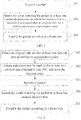
- a method for classifying a packet includes the following steps:
- a router may receive multiple packets from a network, and a traffic classifier then checks multiple domains in the packet, so as to search for a rule matching the packet.
- Step 202 Search for a rule matching the packet in at least one created decision tree, in which the decision tree is a decision tree created after an original rule set is divided based on a segmentation code.
- the decision tree created after the original rule set is divided based on the segmentation code is created, the number and position of '*' are taken into consideration at the same time.
- the decision tree of the present invention results in fewer cases of rule duplication, and moreover, the depth of the decision tree of the present invention is less than that of the decision tree in the prior art. Therefore, through the decision tree created after the original rule set is divided based on the segmentation code in this embodiment, time for searching for the rule matching the packet may be shortened, and the classification efficiency is improved.
- Step 203 Classify the packet according to a found rule.
- step 203 it may be regarded that the packet matching the same rule all belong to the same type, and the processing manners for packets of different types may be different.
- the processing may be discarding, accepting or counting.
- an execution subject of the above steps may be a router or a traffic classification engine integrated inside the router.
- the decision tree used in the rule searching process is a decision tree created after the original rule set is divided based on the segmentation code
- the use of the segmentation code to divide the rule set may not only reduce the rule duplication, but also greatly decrease the depth of the decision tree, memory usage and tree creation time. Therefore, when the rule is searched for by using the solution provided by the embodiment of the present invention, the speed of the processing such as searching and classifying may be greatly improved with searching bandwidth remaining unchanged.
- segmentation codes A, B, C and D exist, during the calculation of a common matching segmentation code of the four segmentation codes, it is required to first perform the bit-by-bit AND operation on A and B, and then perform the bit-by-bit AND operation on a bit-by-bit AND result of A and B, and C; and so forth, thereby obtaining the common matching segmentation code of A, B, C and D.
- a common matching segmentation code of the N segmentation codes reflects a matching degree between the rules in S.
- the common matching segmentation code reflects the bits which are unlikely to cause the rule duplication when selected for segmentation in creating a decision tree for the sub-rule set. If one bit in the segmentation code is 1, a segment corresponding to the bit includes K bits of characters, and a threshold of the number of '*' used to judge whether the segment is "good” or "bad” is t, when the rule set is segmented by using the first (k-t) bits in the segment, the rule duplication is not likely to be caused.
- the first (k-t) bits in a segment corresponding to a bit being 1 in the common matching segmentation code may be used to establish a more effective jump table (jump table).
- bits that are not likely to cause the rule duplication may be selected preferentially.
- bits in a dimension (corresponding to some segments) that are not likely to cause the rule duplication may be selected preferentially according to the common matching segmentation code for segmentation, thereby making the segmentation more effective.
- the method for classifying the packet specifically includes the following steps:
- a process of dividing the original rule set into at least two sub-rule sets according to the segmentation codes may be implemented by performing the following steps, as shown in FIG. 4 .
- S 11 Use at least two bits of characters as a segment to segment each rule in the original rule set, and calculate a segmentation code corresponding to each rule.
- a segmentation code corresponding to the rule is an N-bit binary code.
- the segmentation codes may also be sequenced according to an ascending order of the numbers of the rules corresponding to the segmentation codes, and the specific sequencing manner may be determined according to the requirements in an actual execution process.
- S 13 Select a segmentation code corresponding to the largest number of the rules among the segmentation codes sequenced according to the numbers of the rules as a seed segmentation code, and perform a bit-by-bit AND operation on the seed segmentation code and each of other segmentation codes sequenced according to the numbers of the rules; count '1' in a bit-by-bit AND result and obtain the number of '1', and classify and sequence the segmentation codes according to the number of '1' in the bit-by-bit AND result.
- step S 13 the segmentation code corresponding to the largest number of the rules is selected as the seed segmentation code, so as to separate a large proportion of the rules as fast as possible.
- the seed segmentation code not only corresponds to a great number of rules, but also matches a relatively great number of segmentation codes generally.
- step S13 all the obtained segmentation codes are sequenced according to the matching level between each of other segmentation codes and the seed segmentation code.
- the matching level between the segmentation codes reflects a duplication trend during rule segmentation, that is, the higher the matching level is, the smaller the duplication trend during rule segmentation is; vice versa.
- S14 Perform, in sequence, a continuous bit-by-bit AND operation on the segmentation codes of which the matching level is not 0 and that are sequenced according to the matching level, and when the number of '1' in a continuous bit-by-bit AND result is less than a minimum matching level, sort a last segmentation code participating in the continuous bit-by-bit AND operation into a type of which a matching level is 0.
- the performing, in sequence, the continuous bit-by-bit AND operation on the segmentation codes of which the matching levels are not 0 refers to that, in the segmentation codes of which matching levels are not 0, the bit-by-bit AND operation is performed on a bit-by-bit AND result of all previous segmentation codes and a following segmentation code in sequence, till a bit-by-bit AND result of all the segmentation codes is obtained.
- all the segmentation codes possibly enabling the number of '1' in the bit-by-bit AND result to be less than the minimum matching level are sorted into a type between which and the seed segmentation code the matching level is 0.
- a final result obtained from the bit-by-bit AND operation on the remaining segmentation codes is a common matching segmentation code of all the segmentation codes in types between which and the seed segmentation code the matching levels are greater than 0.
- the calculated common matching segmentation code of the segmentation codes each with a matching level greater than 0 should be stored.
- a minimum matching level of a rule set reflects the number of the bits for segmentation and not likely to cause duplication in the rule set.
- the minimum matching level may be set to be lower.
- many bits are required to segment the rules, and at this time, it is required to set the minimum matching level needs to be higher. For example, it is set that when the number of '*' in one segment exceeds 8, a bit corresponding to the segment is '0'.
- the minimum matching level between the rules is 1, a degree of the rule duplication is low when the rules are segmented by using bits less than 8. However, when it is required to perform segmentation by using more bits, the duplication may be increased. Such a problem may be solved by raising the minimum matching level of the rule set.
- S15 Sort the rules corresponding to the segmentation codes of which matching levels are greater than 0 into a first sub-rule set.
- the common matching segmentation code of all the segmentation codes of which matching levels are greater than 0 that is obtained in step S14 and the minimum matching level may be stored as attributes of the first sub-rule set.
- the first threshold may be, but not limited to, a multiple of the number of the rules admissible to each leaf node, for example, n*bucketSize, n ⁇ 2.
- n*bucketSize a multiple of the number of the rules admissible to each leaf node
- n*bucketSize a multiple of the number of the rules admissible to each leaf node
- the sub-rule set into which the remaining segmentation codes of which the matching level is 0 should be sorted may be determined in the following manners.
- the rules corresponding to the segmentation codes of which the matching level is 0 may be sorted into the second sub-rule set, so as to create different decision trees for different sub-rule sets, thereby decreasing the depth of each decision tree.
- the rules corresponding to the segmentation codes of which the matching level is 0 may be sorted into the first sub-rule set.
- the division scheme is applicable to the case in which the original rule set is small, and the depth of the decision tree created according to the first sub-rule set is not very large, which has a small effect on a searching rate in a classification process.
- the rule set in which the rules well match one another may be divided into a large number of sub-rule sets. In this way, the rule set is divided according to the requirements.
- the original rule set may be basically divided into at least two sub-rule sets.
- step S13 and step S14 may be combined, that is, the number of '1' in the bit-by-bit AND result obtained in step S13 is compared with the minimum matching level. Specifically, when the number of '1' in the bit-by-bit AND result in step S 13 is less than the minimum matching level, a current segmentation code, on which and the seed segmentation code the bit-by-bit AND operation is performed, is sorted into a type of which a matching level is 0. At this time, it is equivalent to that only the matching level between each of other segmentation codes and the seed segmentation code is used as a judgment standard to divided the rule set.
- step 302 Create a decision tree for each of the at least two sub-rule sets obtained in step 301, and store the decision trees.
- step 301 and step 302 are unnecessary to perform step 301 and step 302 during each classification.
- the router stores the decision trees created after the original rule set is divided based on the segmentation codes, the above two steps may be directly skipped in the subsequent classification process.
- Step 303 Receive a packet.
- the router may receive multiple packets from a network, and a traffic classifier then checks multiple domains in the packet, so as to search for a rule matching the packet.
- Step 304 Search for a rule matching the packet in at least one created decision tree, in which the decision tree is a decision tree created after the original rule set is divided based on the segmentation codes in step 302.
- Step 305 Classify the packet according to a found rule.
- step 305 it may be regarded that the packet matching the same rule all belong to the same type, and processing manners for packets of different types are different.
- the processing may be discarding, accepting or counting.
- the segmentation codes corresponding to different rules are determined, and the seed segmentation code is selected therefrom. Then, the segmentation codes are classified according to the matching level between each of other segmentation codes and the seed segmentation code and the preset minimum matching segmentation code, so as to implement the division of the original rule set, and further obtain at least two sub-rule sets and create at least two decision trees. Afterwards, the received packet may be classified according to the created decision trees.
- not only the rule duplication may be reduced, and the bit selection may be performed accurately during the rule set segmentation, so as to greatly decrease the depth of the decision tree, the memory usage and the tree creation time and improve a processing speed of the division of the rule set, but also the rule searching time may be decreased and the classification efficiency may be improved during the classification of the packet.
- an original rule set includes 10 two-dimensional rules, and each rule includes 8 bits, in which the rule is represented by a three-vale bit string formed by '0', '1' and '*'. Every 8 bits is set to be a segment, when the number of '*' in each segment exceeds 4, a code of the segment is '0'; otherwise, a code of the segment is '1'.
- the minimum matching level may be set to 1.
- a method for dividing the rule set is as follows: S21: Calculate a segmentation code of each rule shown in Table 3, in which a result is shown in the last column of Table 3. S22: Sequence segmentation codes according to a descending order of the numbers of rules (as shown in Table 4).
- the bit-by-bit AND operation is performed on the result 01 and the segmentation code 10, and the number of '1' in the result obtained after the bit-by-bit AND operation is performed for the second time is less than the minimum matching level 1. Therefore, the segmentation code 10 is moved into the type of which the matching level is 0.
- Table 6 Matching levels 2 1 0 Segmentation codes 11 01 10, 00 Number of rules 4 3 3 S25: Sort the rules corresponding to the segmentation codes (11 and 01) of which the matching levels are greater than 0 into a rule set, and meanwhile record the common matching segmentation code thereof as 01.
- the number of the rules of which the matching level is 0 is 3, which meets the condition iii), that is, when the number of the rules of which the matching level is 0 is greater than 2 and less than or equal to 4, the rules of which the matching level is 0 in the sub-rule sets may be directly used as a new sub-rule set; therefore, the rules of which the matching level is 0 are sorted into a new sub-rule set.
- the original rule set is divided by performing the above steps, so that the original rule set may be divided into two sub-rule sets. It can be known according to the common matching segmentation code (01) that, when the first sub-rule set is segmented by using the first 4 bits of the second dimension, no rule duplication occurs.
- the rule set is divided according to the segmentation codes to create the decision trees, and the effect of the number and position of wildcards '*' in each rule on the rule division can be taken into consideration at the same time, so that appropriate bits may be selected to segment the rules during the creation of the decision trees, thereby effectively reducing the rule duplication, shortening the tree creation time and improving the memory utilization.
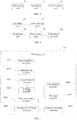
- the embodiment of the present invention provides a device for classifying a packet, and as shown in FIG. 5 , the device includes:
- the device for classifying the packet in this embodiment may be a router, or a traffic classification engine integrated inside the router.
- the decision tree used in the rule searching process is a decision tree created after the original rule set is divided based on the segmentation code
- the use of the segmentation code to divide the rule set may not only reduce the rule duplication, but also greatly decrease the depth of the decision tree, memory usage and tree creation time. Therefore, when the rule is searched for by using the solution provided by the embodiment of the present invention, the speed of the processing such as searching and classifying may be greatly improved with searching bandwidth remaining unchanged.
- the device for classifying the packet provided in the embodiment of the present invention is described in detail below through a specific embodiment.
- the device for classifying the packet includes: a receiving unit 61, a searching unit 62, a classification unit 63, a dividing unit 64 and a tree creating unit 65.
- the dividing unit 64 is configured to divide an original rule set into at least two sub-rule sets according to a segmentation code, in which the segmentation code refers to an N-bit binary code representing the rules and determined according to the number of wildcards '*' in each segment after one rule is divided into N (N ⁇ 2) segments, reference may be made to the description in Embodiment 2 for the specific determination manner, and the details are not described herein again.
- the tree creating unit 65 is configured to create a decision tree for each of the at least two sub-rule sets obtained through division by the dividing unit 64, so as to enable the searching unit 62 to search for the rule during packet classification.
- the receiving unit 61 is configured to receive the packet, in which the packet may be multiple packets received by a router from a network.
- the searching unit 62 is configured to search for a rule matching the packet in at least one created decision tree, in which the decision tree is a decision tree created after the original rule set is divided based on the segmentation code.
- the classification unit 63 is configured to classify the packet according to a found rule, in which the processing mentioned here may be operations required to be performed on packets of different kinds, such as discarding, accepting and counting.
- the dividing unit 64 may be implemented in the following manners.
- the dividing unit 64 includes: a segmentation module 641, a sequencing module 642, a classification module 643, a sorting module 644, a first set sorting module 645, a second set sorting module 646, a third set sorting module 647, a calculation module 648, and a storage module 649.
- the segmentation module 641 is configured to use at least two bits of characters as a segment to segment each rule in the original rule set, and calculate a segmentation code corresponding to each rule.
- the sequencing module 642 is configured to count rules corresponding to a same segmentation code and obtain the number of the rules, and sequence segmentation codes according to a descending order of the numbers of rules.
- the classification module 643 is configured to select a segmentation code corresponding to the largest number of the rules, perform a bit-by-bit AND operation on the selected segmentation code and each of other segmentation codes sequenced according to the numbers of the rules, use the number of '1' in a bit-by-bit AND result as a matching level to sequence segmentation codes according to a descending order of the matching levels.
- the sorting module 644 is configured to perform, in sequence, a continuous bit-by-bit AND operation on the segmentation codes of which the matching level is not 0 and that are sequenced according to the matching level, and when the number of '1' in a continuous bit-by-bit AND result is less than a minimum matching level, sort a last segmentation code participating in the bit-by-bit AND operation into a type of which a matching level is 0.
- the first set sorting module 645 is configured to sort the rules corresponding to the segmentation codes of which matching levels are greater than 0 into a first sub-rule set.
- the second set sorting module 646 is configured to, when the number of the rules corresponding to the segmentation codes of which the matching level is 0 is less than or equal to a first threshold, sort the rules corresponding to the segmentation codes of which the matching level is 0 into a second sub-rule set; and when the number of the rules corresponding to the segmentation codes of which the matching level is 0 is greater than the first threshold, re-select a segmentation code corresponding to the largest number of the rules from the multiple segmentation codes of which the matching level is 0 through the dividing unit 64, especially through the classification module 643, the sorting module 644, the first set sorting module 645 and the second set sorting module 646 in the dividing unit 64, so as to complete the further division of the segmentation codes of which the matching level is 0.
- a second threshold less than the first threshold may be introduced.
- the second set sorting module 646 is specifically configured to, when the number of the rules corresponding the segmentation codes of which the matching level is 0 is less than or equal to the first threshold, and greater than a second threshold, sort the rules corresponding to the segmentation codes of which the matching level is 0 into the second sub-rule set.
- the dividing unit 64 further includes the third set sorting module 647.
- the third set sorting module 647 is configured to, when the number of the rules corresponding to the segmentation codes of which the matching level is 0 is less than or equal to the second threshold, sort the rules corresponding to the segmentation codes of which the matching level is 0 into the first sub-rule set.
- the minimum matching level used when the sorting module 644 sorts the segmentation codes may be obtained through calculation by the calculation module 648.
- the dividing unit 64 further includes the storage module 649.
- the storage module 649 is configured to calculate and store a bit-by-bit AND result obtained after the continuous bit-by-bit AND operation is performed in sequence on the segmentation codes of which the matching levels are greater than 0 after the sorting processing by the sorting module 644, that is, a common matching segmentation code of the segmentation codes of which the matching levels are greater than 0 after the sorting processing by the sorting module 644.
- the segmentation codes corresponding to different rules are determined, and a seed segmentation code is selected from the segmentation codes. Then, the segmentation codes are classified according to the matching level between each of other segmentation codes and the seed segmentation code and the preset minimum matching segmentation code, so as to implement the division of the original rule set, and further obtain at least two sub-rule sets and create at least two decision trees. Afterwards, the received packet may be classified according to the created decision trees.
- the device especially, especially through the division of the original rule set based on the segmentation codes, not only the rule duplication may be reduced, and the bit selection may be performed accurately during the rule set segmentation, so as to greatly decrease the depth of the decision tree, the memory usage and the tree creation time and improve a processing speed of the division of the rule set, but also the rule searching time may be decreased and the classification efficiency may be improved during the classification of the packet.
- the method and the device for classifying the packet may further support incremental update.
- the involved incremental update refers to that, after the original rule set is divided into multiple sub-rule sets, when it is required to add or delete some rules, by using the method based on the segmentation codes, it is not required to re-divide the divided sub-rule sets, and it is merely required to classify the newly added rules into an appropriate sub-rule set, or delete the old rules from a certain sub-rule set.
- a segmentation code of the rule is first calculated, and a matching level between the segmentation code and a common matching segmentation code of each sub-rule set is calculated according to a generation order of the multiple sub-rule sets.
- the matching level between the segmentation code of the newly added rule and a common matching segmentation code of a certain sub-rule set is greater than or equal to the minimum matching level of the sub-rule set, the newly added rule is added into the sub-rule set.
- a segmentation code of the rule is first calculated, and then it is judged which sub-rule set the rule belongs to according to the common matching segmentation code and the minimum matching level of each sub-rule set, and the rule is deleted from the sub-rule set.
- the rule is deleted from a certain sub-rule set, when the number of the rules included in the sub-rule set is less than a certain threshold, the sub-rule set is combined with other sub-rule sets, in which the threshold may be set according to actual requirements in an actual process.
- the sub-rule sets may be flexibly updated, in which the update includes the adding of a new rule into the sub-rule set or the deletion of an old rule from the sub-rule set.
- the method based on the segmentation codes greatly reduces the update time and the memory usage caused by the update.
- TCAM Ternary Content Addressable Memory, ternary content addressable memory
- the present invention may be accomplished through software plus necessary universal hardware or through hardware. But in many cases, the software implementation is preferred. Based on this, the above technical solutions or the part that makes contributions to the prior art can be substantially embodied in the form of a software product.
- the computer software product may be stored in a computer readable storage medium such as a floppy disk, a hard disk, or an optical disk of a computer, and contain several instructions to instruct computer equipment (for example, a personal computer, a server, or network equipment) to perform the method described in the embodiments of the present invention.
Landscapes
- Engineering & Computer Science (AREA)
- Computer Networks & Wireless Communication (AREA)
- Signal Processing (AREA)
- Data Exchanges In Wide-Area Networks (AREA)
- Theoretical Computer Science (AREA)
- Evolutionary Computation (AREA)
- Data Mining & Analysis (AREA)
- Physics & Mathematics (AREA)
- Computing Systems (AREA)
- General Engineering & Computer Science (AREA)
- General Physics & Mathematics (AREA)
- Mathematical Physics (AREA)
- Software Systems (AREA)
- Computational Linguistics (AREA)
- Artificial Intelligence (AREA)
Claims (9)
- Verfahren zur Klassifizierung eines Pakets, aufweisend:Empfangen (201) eines Pakets;Suchen (202, 304) nach einer Regel, die dem Paket entspricht, in mindestens einem erzeugten Entscheidungsbaum, wobei der Entscheidungsbaum ein Entscheidungsbaum ist, der nach dem Teilen eines Originalregelsatzes basierend auf einem Segmentierungscode erzeugt wird, wobei der Segmentierungscode ein N-Bit-Binärcode ist, der gemäß der Anzahl und Position von '*' in jeder Regel des Originalregelsatzes bestimmt wird; undKlassifizieren (203, 305) des Pakets gemäß einer gefundenen Regel;wobei das Verfahren dadurch gekennzeichnet ist, dassdas Verfahren vor dem Suchen nach der dem Paket entsprechenden Regel in dem mindestens einen erzeugten Entscheidungsbaum ferner aufweist:Teilen (301) des Originalregelsatzes in mindestens zwei Teilregelsätze gemäß dem Segmentierungscode; undErzeugen (302) eines Entscheidungsbaums für jeden der Teilregelsätze;wobei das Teilen des Originalregelsatzes in die mindestens zwei Teilregelsätze gemäß dem Segmentierungscode aufweist:Verwenden (S11) mindestens zweier Bits von Zeichen als ein Segment zum Segmentieren jeder Regel im Originalregelsatz und Berechnen des Segmentierungscodes, der jeder Regel entspricht;Zählen (S12) von Regeln, die einem gleichen Segmentierungscode entsprechen, und Erhalten der Anzahl der Regeln und Sequenzieren von Segmentierungscodes gemäß einer absteigenden Reihenfolge der Anzahlen von Regeln;Auswählen eines Segmentierungscodes, der einer größten Anzahl der Regeln entspricht, sequenzielles Durchführen einer bitweisen UND-Operation am ausgewählten Segmentierungscode und jedem von anderen Segmentierungscodes, die gemäß den Anzahlen der Regeln sequenziert sind, Verwenden der Zahl '1' in einem bitweisen UND-Ergebnis als ein Entsprechungsniveau zum Klassifizieren und Sequenzieren der Segmentierungscodes;sequenzielles Durchführen (S 14) einer kontinuierlichen bitweisen UND-Operation an den Segmentierungscodes, von welchen das Entsprechungsniveau nicht 0 ist und welche gemäß dem Entsprechungsniveau sequenziert sind, und Sortieren, wenn die Zahl '1' in einem kontinuierlichen bitweisen UND-Ergebnis niedriger als ein Mindestentsprechungsniveau ist, eines letzten Segmentierungscodes, der an der kontinuierlichen bitweisen UND-Operation beteiligt ist, in einen Typ, von welchem ein Entsprechungsniveau 0 ist;Sortieren (S15) von Regeln, die den Segmentierungscodes entsprechen, von welchen Entsprechungsniveaus größer als 0 sind, in einen ersten Teilregelsatz; undSortieren (S16), wenn die Anzahl der Regeln, die den Segmentierungscodes entsprechen, von welchen ein Entsprechungsniveau 0 ist, niedriger als oder gleich wie eine erste Schwelle ist, der Regeln, die den Segmentierungscodes entsprechen, von welchen das Entsprechungsniveau 0 ist, in einen zweiten Teilregelsatz; undNeuauswählen, wenn die Anzahl der Regeln, die den Segmentierungscodes entsprechen, von welchen das Entsprechungsniveau 0 ist, größer als die erste Schwelle ist, eines Segmentierungscodes, der einer größten Anzahl der Regeln entspricht, aus den mehreren Segmentierungscodes, von welchen das Entsprechungsniveau 0 ist, und Wiederholen der zuvor beschriebenen Schritte, um die Segmentierungscodes, von welchen das Entsprechungsniveau 0 ist, kontinuierlich zu teilen.
- Verfahren zur Klassifizierung eines Pakets nach Anspruch 1, wobei das Verfahren nach dem sequenziellen Durchführen der bitweisen UND-Operation an den Segmentierungscodes, von welchen Entsprechungsniveaus nicht 0 sind und welche gemäß den Entsprechungsniveaus sequenziert sind, ferner aufweist:Berechnen und Speichern eines bitweisen UND-Ergebnisses, das nach dem sequenziellen Durchführen der kontinuierlichen bitweisen UND-Operation an den Segmentierungscodes erhalten wird, von welchen Entsprechungsniveaus größer als 0 sind.
- Verfahren zur Klassifizierung eines Pakets nach Anspruch 1, wobei das Sortieren, wenn die Anzahl der Regeln, die den Segmentierungscodes entsprechen, von welchen das Entsprechungsniveau 0 ist, niedriger als oder gleich wie die erste Schwelle ist, der Regeln, die den Segmentierungscodes entsprechen, von welchen das Entsprechungsniveau 0 ist, in den zweiten Teilregelsatz aufweist:Sortieren, wenn die Anzahl der Regeln, die den Segmentierungscodes entsprechen, von welchen das Entsprechungsniveau 0 ist, niedriger als oder gleich wie die erste Schwelle und größer als eine zweite Schwelle ist, der Regeln, die den Segmentierungscodes entsprechen, von welchen das Entsprechungsniveau 0 ist, in den zweiten Teilregelsatz, wobei die erste Schwelle größer als die zweite Schwelle ist;das Teilen des Originalregelsatzes in die mindestens zwei Teilregelsätze gemäß dem Segmentierungscode ferner aufweist:Sortieren, wenn die Anzahl der Regeln, die den Segmentierungscodes entsprechen, von welchen das Entsprechungsniveau 0 ist, niedriger als oder gleich wie die zweite Schwelle ist, der Regeln, die den Segmentierungscodes entsprechen, von welchen das Entsprechungsniveau 0 ist, in den ersten Teilregelsatz.
- Verfahren zur Klassifizierung eines Pakets nach Anspruch 1, wobei das Mindestentsprechungsniveau durch die folgende Formel berechnet wird:

- Vorrichtung zum Klassifizieren eines Pakets, aufweisend:eine Empfangseinheit (51, 61), die so ausgelegt ist, dass sie ein Paket empfängt;eine Sucheinheit (52, 62), die so ausgelegt ist, dass sie in mindestens einem erzeugten Entscheidungsbaum nach einer Regel sucht, die dem Paket entspricht, wobei der Entscheidungsbaum ein Entscheidungsbaum ist, der nach dem Teilen eines Originalregelsatzes basierend auf einem Segmentierungscode erzeugt wird, wobei der Segmentierungscode ein N-Bit-Binärcode ist, der gemäß der Anzahl und Position von '*' in jeder Regel des Originalregelsatzes bestimmt wird; undeine Klassizifierungseinheit (53, 63), die so ausgelegt ist, dass sie das Paket gemäß einer gefundenen Regel klassifiziert;wobei die Vorrichtung dadurch gekennzeichnet, dass sie ferner aufweist:eine Teilungseinheit (64), die so ausgelegt ist, dass sie den Originalregelsatz in mindestens zwei Teilregelsätze gemäß dem Segmentierungscode teilt; undeine Baumerzeugungseinheit (65), die so ausgelegt ist, dass sie für jeden der Teilregelsätze einen Entscheidungsbaum erzeugt, um die Sucheinheit zum Suchen nach der Regel zu befähigen;wobei die Teilungseinheit aufweist:ein Segmentierungsmodul (641), das so ausgelegt ist, dass es mindestens zwei Bits von Zeichen als ein Segment zum Segmentieren jeder Regel im Originalregelsatz verwendet und den Segmentierungscode berechnet, der jeder Regel entspricht;ein Sequenzierungsmodul (642), das so ausgelegt ist, dass es Regeln zählt, die einem gleichen Segmentierungscode entsprechen, und die Anzahl der Regeln erhält und Segmentierungscodes gemäß einer absteigenden Reihenfolge der Anzahlen von Regeln sequenziert;ein Klassifizierungsmodul (643), das so ausgelegt ist, dass es einen Segmentierungscode auswählt, welcher einer größten Anzahl der Regeln entspricht, sequenziell eine bitweise UND-Operation am ausgewählten Segmentierungscode und jedem von anderen Segmentierungscodes durchführt, die gemäß den Anzahlen der Regeln sequenziert sind, die Zahl '1' in einem bitweisen UND-Ergebnis als ein Entsprechungsniveau zum Klassifizieren und Sequenzieren der Segmentierungscodes verwendet;ein Sortierungsmodul (644), das so ausgelegt ist, dass es sequenziell eine kontinuierliche bitweise UND-Operation an den Segmentierungscodes durchführt, von welchen das Entsprechungsniveau nicht 0 ist und welche gemäß dem Entsprechungsniveau sequenziert sind, und, wenn die Zahl '1' in einem kontinuierlichen bitweisen UND-Ergebnis niedriger als ein Mindestentsprechungsniveau ist, einen letzten Segmentierungscode, der an der kontinuierlichen bitweisen UND-Operation beteiligt ist, in einen Typ sortiert, von welchem ein Entsprechungsniveau 0 ist;ein erstes Satzsortierungsmodul (645), das so ausgelegt ist, dass es Regeln, die den Segmentierungscodes entsprechen, von welchen Entsprechungsniveaus größer als 0 sind, in einen ersten Teilregelsatz sortiert;ein zweites Satzsortierungsmodul (646), das so ausgelegt ist, dass es, wenn die Anzahl der Regeln, die den Segmentierungscodes entsprechen, von welchen das Entsprechungsniveau 0 ist, niedriger als oder gleich wie eine erste Schwelle ist, die Regeln, die den Segmentierungscodes entsprechen, von welchen ein Entsprechungsniveau 0 ist, in einen zweiten Teilregelsatz sortiert.
- Vorrichtung zum Klassifizieren eines Pakets nach Anspruch 5, wobei die Teilungseinheit ferner so ausgelegt ist, dass sie, wenn die Anzahl der Regeln, die den Segmentierungscodes entsprechen, von welchen das Entsprechungsniveau 0 ist, größer als die erste Schwelle ist, einen Segmentierungscode, der einer größten Anzahl der Regeln entspricht, aus den mehreren Segmentierungscodes, von welchen das Entsprechungsniveau 0 ist, neu auswählt, um die Segmentierungscodes, von welchen das Entsprechungsniveau 0 ist, kontinuierlich zu teilen.
- Vorrichtung zum Klassifizieren eines Pakets nach Anspruch 5, ferner aufweisend:ein Speichermodul (649), das so ausgelegt ist, dass es ein bitweises UND-Ergebnis, das nach dem sequenziellen Durchführen der kontinuierlichen bitweisen UND-Operation an den Segmentierungscodes erhalten wird, von welchen die Entsprechungsniveaus größer als 0 sind, nach der Sortierungsverarbeitung durch das Sortierungsmodul berechnet und speichert.
- Vorrichtung zum Klassifizieren eines Pakets nach Anspruch 5, wobei das zweite Satzsortierungsmodul insbesondere so ausgelegt ist, das es, wenn die Anzahl der Regeln, die den Segmentierungscodes entsprechen, von welchen das Entsprechungsniveau 0 ist, niedriger als oder gleich wie die erste Schwelle und größer als eine zweite Schwelle ist, die Regeln, die den Segmentierungscodes entsprechen, von welchen das Entsprechungsniveau 0 ist, in einen zweiten Teilregelsatz sortiert, wobei die erste Schwelle größer als die zweite Schwelle ist; die Teilungseinheit ferner aufweist:ein drittes Satzsortierungsmodul (647), das so ausgelegt ist, dass es, wenn die Anzahl der Regeln, die den Segmentierungscodes entsprechen, von welchen das Entsprechungsniveau 0 ist, niedriger als oder gleich wie die zweite Schwelle ist, die Regeln, die den Segmentierungscodes entsprechen, von welchen ein Entsprechungsniveau 0 ist, in den ersten Teilregelsatz sortiert.
- Vorrichtung zum Klassifizieren eines Pakets nach Anspruch 5, ferner aufweisend:ein Berechnungsmodul (648), das so ausgelegt ist, dass es das Mindestentsprechungsniveau durch die folgende Formel berechnet:

Applications Claiming Priority (1)
| Application Number | Priority Date | Filing Date | Title |
|---|---|---|---|
| PCT/CN2010/074575 WO2011085577A1 (zh) | 2010-06-28 | 2010-06-28 | 对报文进行分类的方法及装置 |
Publications (3)
| Publication Number | Publication Date |
|---|---|
| EP2582096A1 EP2582096A1 (de) | 2013-04-17 |
| EP2582096A4 EP2582096A4 (de) | 2013-07-03 |
| EP2582096B1 true EP2582096B1 (de) | 2016-03-30 |
Family
ID=44303819
Family Applications (1)
| Application Number | Title | Priority Date | Filing Date |
|---|---|---|---|
| EP10842861.6A Not-in-force EP2582096B1 (de) | 2010-06-28 | 2010-06-28 | Klassifizierungsverfahren und vorrichtung für pakete |
Country Status (4)
| Country | Link |
|---|---|
| US (1) | US8732110B2 (de) |
| EP (1) | EP2582096B1 (de) |
| CN (1) | CN102308533B (de) |
| WO (1) | WO2011085577A1 (de) |
Families Citing this family (23)
| Publication number | Priority date | Publication date | Assignee | Title |
|---|---|---|---|---|
| CN102664787B (zh) | 2012-04-01 | 2014-10-08 | 华为技术有限公司 | 决策树的生成方法和装置 |
| CN103516757B (zh) * | 2012-06-28 | 2016-12-21 | 华为技术有限公司 | 内容处理方法、装置及系统 |
| GB2521406A (en) | 2013-12-18 | 2015-06-24 | Ibm | Transforming rules into generalised rules in a rule management system |
| CN103780435B (zh) * | 2014-02-18 | 2017-09-26 | 迈普通信技术股份有限公司 | 使用端口号掩码对数据流进行分类的方法及系统 |
| US9967309B2 (en) * | 2014-10-06 | 2018-05-08 | Microsoft Technology Licensing, Llc | Dynamic loading of routes in a single-page application |
| CN106209614B (zh) | 2015-04-30 | 2019-09-17 | 新华三技术有限公司 | 一种网包分类方法和装置 |
| CN105072122A (zh) * | 2015-08-19 | 2015-11-18 | 山东超越数控电子有限公司 | 一种数据包快速匹配分类方法 |
| CN106096022B (zh) * | 2016-06-22 | 2020-02-11 | 杭州迪普科技股份有限公司 | 多域网包分类规则的划分方法及装置 |
| CN108572921B (zh) * | 2017-05-15 | 2021-03-12 | 北京金山云网络技术有限公司 | 规则集更新方法、装置、规则匹配方法及装置 |
| CN109218211B (zh) * | 2017-07-06 | 2022-04-19 | 创新先进技术有限公司 | 数据流的控制策略中阈值的调整方法、装置和设备 |
| GB2580285B (en) | 2018-08-13 | 2021-01-06 | Metaswitch Networks Ltd | Packet processing graphs |
| JP7136217B2 (ja) * | 2018-09-21 | 2022-09-13 | 日本電気株式会社 | 決定リスト学習装置、決定リスト学習方法および決定リスト学習プログラム |
| US11552887B2 (en) * | 2019-08-07 | 2023-01-10 | Arista Networks, Inc. | System and method of processing packet classification with range sets |
| CN110705227A (zh) * | 2019-08-15 | 2020-01-17 | 广州文冲船厂有限责任公司 | 一种型材下料表的转化方法 |
| WO2021255171A1 (en) * | 2020-06-19 | 2021-12-23 | Albert-Ludwigs-Universität Freiburg | Architecture for classification of a decision tree ensemble and method |
| CN112367262B (zh) * | 2020-08-20 | 2022-07-05 | 国家计算机网络与信息安全管理中心 | 一种五元组规则的匹配方法及装置 |
| WO2022152231A1 (zh) * | 2021-01-15 | 2022-07-21 | 华为技术有限公司 | 一种网络配置规则的处理方法以及相关设备 |
| CN113347173B (zh) * | 2021-05-31 | 2022-04-22 | 新华三信息安全技术有限公司 | 一种包过滤方法、装置及电子设备 |
| US12058023B2 (en) * | 2021-06-28 | 2024-08-06 | Arista Networks, Inc. | Staging in-place updates of packet processing rules of network devices to eliminate packet leaks |
| US12375411B2 (en) * | 2021-12-31 | 2025-07-29 | Fortinet, Inc. | Generic tree policy search optimization for high-speed network processor configuration |
| US12335154B2 (en) * | 2021-12-31 | 2025-06-17 | Fortinet, Inc. | Dynamic leaf determination for tree creations for high-speed network policy search during data packet scanning |
| CN115834340B (zh) * | 2022-10-28 | 2024-09-20 | 新华三半导体技术有限公司 | 一种规则存储方法、装置、电子设备及存储介质 |
| CN117609894B (zh) * | 2024-01-23 | 2024-04-09 | 中国人民解放军国防科技大学 | 一种基于分区策略的高性能报文分类方法、设备及介质 |
Family Cites Families (6)
| Publication number | Priority date | Publication date | Assignee | Title |
|---|---|---|---|---|
| US7039641B2 (en) | 2000-02-24 | 2006-05-02 | Lucent Technologies Inc. | Modular packet classification |
| CN1992673B (zh) * | 2005-12-31 | 2011-02-16 | 华为技术有限公司 | 一种路由器或防火墙中实现分组流识别的方法 |
| CN1992674B (zh) * | 2005-12-31 | 2010-05-12 | 华为技术有限公司 | 一种基于多比特分割的多维分组分类方法 |
| SE532426C2 (sv) * | 2008-05-26 | 2010-01-19 | Oricane Ab | Metod för datapaketklassificering i ett datakommunikationsnät |
| CN101345707B (zh) * | 2008-08-06 | 2010-12-08 | 北京邮电大学 | 一种实现IPv6报文分类的方法及设备 |
| CN101478551B (zh) * | 2009-01-19 | 2011-12-28 | 清华大学 | 基于多核处理器的多域网包分类方法 |
-
2010
- 2010-06-28 WO PCT/CN2010/074575 patent/WO2011085577A1/zh not_active Ceased
- 2010-06-28 CN CN201080002602.0A patent/CN102308533B/zh not_active Expired - Fee Related
- 2010-06-28 EP EP10842861.6A patent/EP2582096B1/de not_active Not-in-force
-
2012
- 2012-12-21 US US13/724,797 patent/US8732110B2/en not_active Expired - Fee Related
Also Published As
| Publication number | Publication date |
|---|---|
| US20130166491A1 (en) | 2013-06-27 |
| CN102308533B (zh) | 2013-10-09 |
| US8732110B2 (en) | 2014-05-20 |
| WO2011085577A1 (zh) | 2011-07-21 |
| EP2582096A4 (de) | 2013-07-03 |
| CN102308533A (zh) | 2012-01-04 |
| EP2582096A1 (de) | 2013-04-17 |
Similar Documents
| Publication | Publication Date | Title |
|---|---|---|
| US8732110B2 (en) | Method and device for classifying a packet | |
| Waldvogel | Fast longest prefix matching: algorithms, analysis, and applications | |
| US9521082B2 (en) | Methods and devices for creating, compressing and searching binary tree | |
| US10460250B2 (en) | Scope in decision trees | |
| US7957387B2 (en) | Packet classification | |
| Jain | A comparison of hashing schemes for address lookup in computer networks | |
| US7684400B2 (en) | Logarithmic time range-based multifield-correlation packet classification | |
| US7535906B2 (en) | Packet classification | |
| US7227842B1 (en) | Fast IP packet classification with configurable processor | |
| CN1282332C (zh) | 一种快速数据包过滤方法 | |
| US7251651B2 (en) | Packet classification | |
| US20080186970A1 (en) | System and method of fast adaptive TCAM sorting for IP longest prefix matching | |
| CN115834340B (zh) | 一种规则存储方法、装置、电子设备及存储介质 | |
| CN106789668B (zh) | 一种处理报文的方法和装置 | |
| Sonai et al. | Ctla: compressed table look up algorithm for open flow switch | |
| Sahni et al. | Data structures for one-dimensional packet classification using most-specific-rule matching | |
| Macián et al. | An evaluation of the key design criteria to achieve high update rates in packet classifiers | |
| Trabelsi et al. | Dynamic traffic awareness statistical model for firewall performance enhancement | |
| Chang | Efficient multidimensional packet classification with fast updates | |
| Wang et al. | Performance improvement of two-dimensional packet classification by filter rephrasing | |
| Wang et al. | Scalable packet classification for enabling internet differentiated services | |
| Dai et al. | An advanced TCAM-SRAM architecture for ranges towards minimizing packet classifiers | |
| CN117880193A (zh) | 一种基于ip位掩码规则的流量分流方法 | |
| Ashok et al. | Fast and efficient lookups via data-driven FIB designs | |
| CN1980179A (zh) | 一种分组数据传输方法及设备 |
Legal Events
| Date | Code | Title | Description |
|---|---|---|---|
| PUAI | Public reference made under article 153(3) epc to a published international application that has entered the european phase |
Free format text: ORIGINAL CODE: 0009012 |
|
| 17P | Request for examination filed |
Effective date: 20130104 |
|
| AK | Designated contracting states |
Kind code of ref document: A1 Designated state(s): AL AT BE BG CH CY CZ DE DK EE ES FI FR GB GR HR HU IE IS IT LI LT LU LV MC MK MT NL NO PL PT RO SE SI SK SM TR |
|
| A4 | Supplementary search report drawn up and despatched |
Effective date: 20130605 |
|
| RIC1 | Information provided on ipc code assigned before grant |
Ipc: H04L 12/851 20130101AFI20130529BHEP |
|
| DAX | Request for extension of the european patent (deleted) | ||
| REG | Reference to a national code |
Ref country code: DE Ref legal event code: R079 Ref document number: 602010031931 Country of ref document: DE Free format text: PREVIOUS MAIN CLASS: H04L0012560000 Ipc: H04L0012851000 |
|
| GRAP | Despatch of communication of intention to grant a patent |
Free format text: ORIGINAL CODE: EPIDOSNIGR1 |
|
| RIC1 | Information provided on ipc code assigned before grant |
Ipc: H04L 12/851 20130101AFI20150901BHEP |
|
| INTG | Intention to grant announced |
Effective date: 20150930 |
|
| GRAS | Grant fee paid |
Free format text: ORIGINAL CODE: EPIDOSNIGR3 |
|
| GRAA | (expected) grant |
Free format text: ORIGINAL CODE: 0009210 |
|
| AK | Designated contracting states |
Kind code of ref document: B1 Designated state(s): AL AT BE BG CH CY CZ DE DK EE ES FI FR GB GR HR HU IE IS IT LI LT LU LV MC MK MT NL NO PL PT RO SE SI SK SM TR |
|
| REG | Reference to a national code |
Ref country code: GB Ref legal event code: FG4D |
|
| REG | Reference to a national code |
Ref country code: CH Ref legal event code: EP |
|
| REG | Reference to a national code |
Ref country code: AT Ref legal event code: REF Ref document number: 786459 Country of ref document: AT Kind code of ref document: T Effective date: 20160415 |
|
| REG | Reference to a national code |
Ref country code: IE Ref legal event code: FG4D |
|
| REG | Reference to a national code |
Ref country code: DE Ref legal event code: R096 Ref document number: 602010031931 Country of ref document: DE |
|
| REG | Reference to a national code |
Ref country code: LT Ref legal event code: MG4D |
|
| PG25 | Lapsed in a contracting state [announced via postgrant information from national office to epo] |
Ref country code: FI Free format text: LAPSE BECAUSE OF FAILURE TO SUBMIT A TRANSLATION OF THE DESCRIPTION OR TO PAY THE FEE WITHIN THE PRESCRIBED TIME-LIMIT Effective date: 20160330 Ref country code: GR Free format text: LAPSE BECAUSE OF FAILURE TO SUBMIT A TRANSLATION OF THE DESCRIPTION OR TO PAY THE FEE WITHIN THE PRESCRIBED TIME-LIMIT Effective date: 20160701 Ref country code: HR Free format text: LAPSE BECAUSE OF FAILURE TO SUBMIT A TRANSLATION OF THE DESCRIPTION OR TO PAY THE FEE WITHIN THE PRESCRIBED TIME-LIMIT Effective date: 20160330 Ref country code: NO Free format text: LAPSE BECAUSE OF FAILURE TO SUBMIT A TRANSLATION OF THE DESCRIPTION OR TO PAY THE FEE WITHIN THE PRESCRIBED TIME-LIMIT Effective date: 20160630 |
|
| REG | Reference to a national code |
Ref country code: NL Ref legal event code: MP Effective date: 20160330 |
|
| REG | Reference to a national code |
Ref country code: AT Ref legal event code: MK05 Ref document number: 786459 Country of ref document: AT Kind code of ref document: T Effective date: 20160330 |
|
| PG25 | Lapsed in a contracting state [announced via postgrant information from national office to epo] |
Ref country code: SE Free format text: LAPSE BECAUSE OF FAILURE TO SUBMIT A TRANSLATION OF THE DESCRIPTION OR TO PAY THE FEE WITHIN THE PRESCRIBED TIME-LIMIT Effective date: 20160330 Ref country code: LT Free format text: LAPSE BECAUSE OF FAILURE TO SUBMIT A TRANSLATION OF THE DESCRIPTION OR TO PAY THE FEE WITHIN THE PRESCRIBED TIME-LIMIT Effective date: 20160330 Ref country code: LV Free format text: LAPSE BECAUSE OF FAILURE TO SUBMIT A TRANSLATION OF THE DESCRIPTION OR TO PAY THE FEE WITHIN THE PRESCRIBED TIME-LIMIT Effective date: 20160330 |
|
| PG25 | Lapsed in a contracting state [announced via postgrant information from national office to epo] |
Ref country code: NL Free format text: LAPSE BECAUSE OF FAILURE TO SUBMIT A TRANSLATION OF THE DESCRIPTION OR TO PAY THE FEE WITHIN THE PRESCRIBED TIME-LIMIT Effective date: 20160330 |
|
| PG25 | Lapsed in a contracting state [announced via postgrant information from national office to epo] |
Ref country code: PL Free format text: LAPSE BECAUSE OF FAILURE TO SUBMIT A TRANSLATION OF THE DESCRIPTION OR TO PAY THE FEE WITHIN THE PRESCRIBED TIME-LIMIT Effective date: 20160330 Ref country code: EE Free format text: LAPSE BECAUSE OF FAILURE TO SUBMIT A TRANSLATION OF THE DESCRIPTION OR TO PAY THE FEE WITHIN THE PRESCRIBED TIME-LIMIT Effective date: 20160330 Ref country code: IS Free format text: LAPSE BECAUSE OF FAILURE TO SUBMIT A TRANSLATION OF THE DESCRIPTION OR TO PAY THE FEE WITHIN THE PRESCRIBED TIME-LIMIT Effective date: 20160730 |
|
| PG25 | Lapsed in a contracting state [announced via postgrant information from national office to epo] |
Ref country code: CZ Free format text: LAPSE BECAUSE OF FAILURE TO SUBMIT A TRANSLATION OF THE DESCRIPTION OR TO PAY THE FEE WITHIN THE PRESCRIBED TIME-LIMIT Effective date: 20160330 Ref country code: PT Free format text: LAPSE BECAUSE OF FAILURE TO SUBMIT A TRANSLATION OF THE DESCRIPTION OR TO PAY THE FEE WITHIN THE PRESCRIBED TIME-LIMIT Effective date: 20160801 Ref country code: ES Free format text: LAPSE BECAUSE OF FAILURE TO SUBMIT A TRANSLATION OF THE DESCRIPTION OR TO PAY THE FEE WITHIN THE PRESCRIBED TIME-LIMIT Effective date: 20160330 Ref country code: AT Free format text: LAPSE BECAUSE OF FAILURE TO SUBMIT A TRANSLATION OF THE DESCRIPTION OR TO PAY THE FEE WITHIN THE PRESCRIBED TIME-LIMIT Effective date: 20160330 Ref country code: RO Free format text: LAPSE BECAUSE OF FAILURE TO SUBMIT A TRANSLATION OF THE DESCRIPTION OR TO PAY THE FEE WITHIN THE PRESCRIBED TIME-LIMIT Effective date: 20160330 Ref country code: SK Free format text: LAPSE BECAUSE OF FAILURE TO SUBMIT A TRANSLATION OF THE DESCRIPTION OR TO PAY THE FEE WITHIN THE PRESCRIBED TIME-LIMIT Effective date: 20160330 Ref country code: SM Free format text: LAPSE BECAUSE OF FAILURE TO SUBMIT A TRANSLATION OF THE DESCRIPTION OR TO PAY THE FEE WITHIN THE PRESCRIBED TIME-LIMIT Effective date: 20160330 |
|
| PG25 | Lapsed in a contracting state [announced via postgrant information from national office to epo] |
Ref country code: BE Free format text: LAPSE BECAUSE OF FAILURE TO SUBMIT A TRANSLATION OF THE DESCRIPTION OR TO PAY THE FEE WITHIN THE PRESCRIBED TIME-LIMIT Effective date: 20160330 Ref country code: IT Free format text: LAPSE BECAUSE OF FAILURE TO SUBMIT A TRANSLATION OF THE DESCRIPTION OR TO PAY THE FEE WITHIN THE PRESCRIBED TIME-LIMIT Effective date: 20160330 |
|
| REG | Reference to a national code |
Ref country code: DE Ref legal event code: R097 Ref document number: 602010031931 Country of ref document: DE |
|
| PG25 | Lapsed in a contracting state [announced via postgrant information from national office to epo] |
Ref country code: MC Free format text: LAPSE BECAUSE OF FAILURE TO SUBMIT A TRANSLATION OF THE DESCRIPTION OR TO PAY THE FEE WITHIN THE PRESCRIBED TIME-LIMIT Effective date: 20160330 Ref country code: DK Free format text: LAPSE BECAUSE OF FAILURE TO SUBMIT A TRANSLATION OF THE DESCRIPTION OR TO PAY THE FEE WITHIN THE PRESCRIBED TIME-LIMIT Effective date: 20160330 |
|
| REG | Reference to a national code |
Ref country code: CH Ref legal event code: PL |
|
| PLBE | No opposition filed within time limit |
Free format text: ORIGINAL CODE: 0009261 |
|
| STAA | Information on the status of an ep patent application or granted ep patent |
Free format text: STATUS: NO OPPOSITION FILED WITHIN TIME LIMIT |
|
| 26N | No opposition filed |
Effective date: 20170103 |
|
| REG | Reference to a national code |
Ref country code: IE Ref legal event code: MM4A |
|
| REG | Reference to a national code |
Ref country code: FR Ref legal event code: ST Effective date: 20170228 |
|
| PG25 | Lapsed in a contracting state [announced via postgrant information from national office to epo] |
Ref country code: CH Free format text: LAPSE BECAUSE OF NON-PAYMENT OF DUE FEES Effective date: 20160630 Ref country code: LI Free format text: LAPSE BECAUSE OF NON-PAYMENT OF DUE FEES Effective date: 20160630 Ref country code: FR Free format text: LAPSE BECAUSE OF NON-PAYMENT OF DUE FEES Effective date: 20160630 |
|
| PG25 | Lapsed in a contracting state [announced via postgrant information from national office to epo] |
Ref country code: SI Free format text: LAPSE BECAUSE OF FAILURE TO SUBMIT A TRANSLATION OF THE DESCRIPTION OR TO PAY THE FEE WITHIN THE PRESCRIBED TIME-LIMIT Effective date: 20160330 Ref country code: IE Free format text: LAPSE BECAUSE OF NON-PAYMENT OF DUE FEES Effective date: 20160628 |
|
| PG25 | Lapsed in a contracting state [announced via postgrant information from national office to epo] |
Ref country code: CY Free format text: LAPSE BECAUSE OF FAILURE TO SUBMIT A TRANSLATION OF THE DESCRIPTION OR TO PAY THE FEE WITHIN THE PRESCRIBED TIME-LIMIT Effective date: 20160330 Ref country code: HU Free format text: LAPSE BECAUSE OF FAILURE TO SUBMIT A TRANSLATION OF THE DESCRIPTION OR TO PAY THE FEE WITHIN THE PRESCRIBED TIME-LIMIT; INVALID AB INITIO Effective date: 20100628 |
|
| PG25 | Lapsed in a contracting state [announced via postgrant information from national office to epo] |
Ref country code: LU Free format text: LAPSE BECAUSE OF NON-PAYMENT OF DUE FEES Effective date: 20160628 Ref country code: MK Free format text: LAPSE BECAUSE OF FAILURE TO SUBMIT A TRANSLATION OF THE DESCRIPTION OR TO PAY THE FEE WITHIN THE PRESCRIBED TIME-LIMIT Effective date: 20160330 Ref country code: MT Free format text: LAPSE BECAUSE OF NON-PAYMENT OF DUE FEES Effective date: 20160630 Ref country code: TR Free format text: LAPSE BECAUSE OF FAILURE TO SUBMIT A TRANSLATION OF THE DESCRIPTION OR TO PAY THE FEE WITHIN THE PRESCRIBED TIME-LIMIT Effective date: 20160330 |
|
| PG25 | Lapsed in a contracting state [announced via postgrant information from national office to epo] |
Ref country code: BG Free format text: LAPSE BECAUSE OF FAILURE TO SUBMIT A TRANSLATION OF THE DESCRIPTION OR TO PAY THE FEE WITHIN THE PRESCRIBED TIME-LIMIT Effective date: 20160330 |
|
| PG25 | Lapsed in a contracting state [announced via postgrant information from national office to epo] |
Ref country code: AL Free format text: LAPSE BECAUSE OF FAILURE TO SUBMIT A TRANSLATION OF THE DESCRIPTION OR TO PAY THE FEE WITHIN THE PRESCRIBED TIME-LIMIT Effective date: 20160330 |
|
| REG | Reference to a national code |
Ref country code: DE Ref legal event code: R079 Ref document number: 602010031931 Country of ref document: DE Free format text: PREVIOUS MAIN CLASS: H04L0012851000 Ipc: H04L0047240000 |
|
| PGFP | Annual fee paid to national office [announced via postgrant information from national office to epo] |
Ref country code: DE Payment date: 20230502 Year of fee payment: 14 |
|
| PGFP | Annual fee paid to national office [announced via postgrant information from national office to epo] |
Ref country code: GB Payment date: 20230504 Year of fee payment: 14 |
|
| REG | Reference to a national code |
Ref country code: DE Ref legal event code: R119 Ref document number: 602010031931 Country of ref document: DE |
|
| GBPC | Gb: european patent ceased through non-payment of renewal fee |
Effective date: 20240628 |
|
| PG25 | Lapsed in a contracting state [announced via postgrant information from national office to epo] |
Ref country code: DE Free format text: LAPSE BECAUSE OF NON-PAYMENT OF DUE FEES Effective date: 20250101 |
|
| PG25 | Lapsed in a contracting state [announced via postgrant information from national office to epo] |
Ref country code: GB Free format text: LAPSE BECAUSE OF NON-PAYMENT OF DUE FEES Effective date: 20240628 |