EP2582191A2 - Mobiles Kommunikationsverfahren, mobiles Kommunikationssystem und Zugriffseinheit - Google Patents
Mobiles Kommunikationsverfahren, mobiles Kommunikationssystem und Zugriffseinheit Download PDFInfo
- Publication number
- EP2582191A2 EP2582191A2 EP12191839.5A EP12191839A EP2582191A2 EP 2582191 A2 EP2582191 A2 EP 2582191A2 EP 12191839 A EP12191839 A EP 12191839A EP 2582191 A2 EP2582191 A2 EP 2582191A2
- Authority
- EP
- European Patent Office
- Prior art keywords
- access entity
- user equipment
- access
- networks
- entity
- Prior art date
- Legal status (The legal status is an assumption and is not a legal conclusion. Google has not performed a legal analysis and makes no representation as to the accuracy of the status listed.)
- Granted
Links
Images





Classifications
-
- H—ELECTRICITY
- H04—ELECTRIC COMMUNICATION TECHNIQUE
- H04W—WIRELESS COMMUNICATION NETWORKS
- H04W68/00—User notification, e.g. alerting and paging, for incoming communication, change of service or the like
- H04W68/12—Inter-network notification
-
- H—ELECTRICITY
- H04—ELECTRIC COMMUNICATION TECHNIQUE
- H04W—WIRELESS COMMUNICATION NETWORKS
- H04W68/00—User notification, e.g. alerting and paging, for incoming communication, change of service or the like
- H04W68/06—User notification, e.g. alerting and paging, for incoming communication, change of service or the like using multi-step notification by changing the notification area
-
- H—ELECTRICITY
- H04—ELECTRIC COMMUNICATION TECHNIQUE
- H04W—WIRELESS COMMUNICATION NETWORKS
- H04W60/00—Affiliation to network, e.g. registration; Terminating affiliation with the network, e.g. de-registration
-
- H—ELECTRICITY
- H04—ELECTRIC COMMUNICATION TECHNIQUE
- H04W—WIRELESS COMMUNICATION NETWORKS
- H04W64/00—Locating users or terminals or network equipment for network management purposes, e.g. mobility management
-
- H—ELECTRICITY
- H04—ELECTRIC COMMUNICATION TECHNIQUE
- H04W—WIRELESS COMMUNICATION NETWORKS
- H04W88/00—Devices specially adapted for wireless communication networks, e.g. terminals, base stations or access point devices
- H04W88/02—Terminal devices
- H04W88/06—Terminal devices adapted for operation in multiple networks or having at least two operational modes, e.g. multi-mode terminals
Definitions
- the present invention relates to communication field, and more specifically, to mobile communication method, mobile communication system and access entity.
- Third Generation mobile communication technology generally refers to a new generation of a mobile communication system that integrates multimedia communications such as wireless communication and internet. Such mobile communication system is able to process various types of media such as image, music, video streams and provide various information services such as web page browsing, teleconference, e-commerce.
- 3GPP 3 rd Generation Partnership Project
- LTE Long Term Evolution
- SAE System Architecture Evolution
- the evolved network structure needs to meet the following requirements.
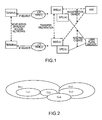
- FIG. 1 illustrates a popular network architecture derived from the above.
- the network architecture mainly includes four logic function modules: a Mobility Management Entity (MME), a user plane entity (SAE) gateway including two Serving Gateways (S-GW), a PDN Gateway (P-GW), an LTE Radio Access Network (LTE RAN), and a Home Subscriber Server (HSS), etc.
- MME is a mobility management module responsible for mobility management for a control plane, including management for user context and mobility status, assignment of information such as user temporary identity, mobility status, tracking area (TA), and verification of user identity.
- the MME corresponds to a control plane of a Serving GPRS Support Node (SGSN) in the Universal Mobile Telecommunications System (UMTS).
- SGSN Serving GPRS Support Node
- UMTS Universal Mobile Telecommunications System
- S-GW is a Serving Gateway responsible for initiating paging downstream data of a user equipment (UE) in idle mode, managing and storing UE context, IP bearer parameter and routing information in the network, and managing UE's mobility control plane anchor and a user plane anchor functions between 3G and SAE network.
- the S-GW corresponds to a data plane of SGSN in the current UMTS.
- P-GW is responsible for a user anchor function that UE accesses the packet data network.
- the P-GW has packet routing and forwarding functions and is responsible for policy charging enhancement, packet filtering function based on each user, and is coupled to S-GW to carry and deliver control information such as create/modify/delete.
- LTE RAN is a radio access network for the evolved network.
- the LTE RAN includes an evolved base station (eNodeB), and may also include a control plane server (CPS) logic entity.
- eNodeB evolved base station
- CPS control plane server
- the LTE RAN can be treated as a Long Term Evolution Radio Access Network (LTE-RAN) entity.
- LTE-RAN Long Term Evolution Radio Access Network
- Routing Area 1 (RA1) and Routing Area 2 (RA2) are routing areas for an existing 2G/3G.
- the UE of the existing 2G/3G always initiates a Routing Area Update (RAU) procedure when switching a routing area (RA).
- RAU Routing Area Update
- TA1, TA2, TA3, TA4 are tracking areas in the evolved network.
- TA is similar to RA in 2G/3G.
- the UE needs to register with RA and TA it enters. If the UE enters RA1, the UE needs to register with SGSN of 2G/3G.
- the UE further needs to register with MME of the evolved network.
- the UE exits TA1 and re-enters RA1 the UE needs to register with SGSN of 2G/3G again.
- the method results in frequent network registration procedures for guarantee the paging, causing thereby considerable consumption of registration signaling.
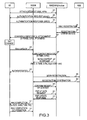
- the UE attaches to SAE, sending an "attach request" message to MME.
- the MME may acquire context from HSS and initiate an authentication procedure with the UE.
- the UE returns an authentication response to the MME. If the authentication passes, it indicates that the UE has registered with MME successfully.
- the MME assigns an SAE temporary mobile subscriber identity (S-TMSI) / SAE routing area (S-RA, i.e., TA) and a default IP to the UE.
- S-TMSI denotes a temporary mobile subscriber identity of the SAE.
- S-RA demotes the RA of the SAE, i.e., TA.
- the MME may register with HSS (if MME already contains the UE context, there is no need for the MME to acquire the context from HSS).
- the MME confirms that the UE has attached to the network successfully and allows the UE to enter.
- the MME assigns S-TMSI/S-RA to the UE and sends information of the default IP to the UE.
- the UE initiates an RAU procedure and carries S-TMSI/S-RA assigned by the MME to the SGSN (and may also carry parameters such as TMSI/RA assigned by the SGSN).
- the SGSN may send an SGSN Context Request message to associated MME to request UE context. After the MME receives the request message, the MME sends the associated context to the SGSN. Such procedure is referred to as a Context Retrieval procedure.
- authentication procedure may be performed.
- the SGSN may register with HSS, as illustrated in steps 309 and 309' (SGSN may not register with HSS, but may treat MME as HSS).
- the SGSN confirms the receipt of the context and may trigger the MME to transfer data.
- the SGSN may update Packet Data Protocol (PDP) context with MME because MME, at the user plane, is similar to an original GPRS Gateway Support Node (GGSN).
- PDP Packet Data Protocol
- the SGSN assigns U-TMSI (UMTS TMSI, Temporary Mobile Subscriber Identity of UMTS)/L1-RA (Routing Area of UMTS) and S-TMSI/S-RA to the UE.
- U-TMSI UMTS TMSI, Temporary Mobile Subscriber Identity of UMTS
- L1-RA Ring Area of UMTS
- S-TMSI/S-RA S-TMSI/S-RA
- the UE returns an RAU completion message.
- the procedure that the UE first attaches to 2G/3G and then moves to SAE is similar to the procedure that the UE first attaches to SAE and then moves to 2G/3G as illustrated in Figure 4 , which will not be detailed herein.
- the UE first attaches to the SGSN.
- the SGSN registers with HSS.
- the UE enters SAE and initiates RAU and retrieves context from SGSN.
- the MME registers with HSS and assigns S-RA/S-TMSI to UE.
- the UE does not need to initiate a location update/registration message when moving between the registered RA and S-RA (in terms of TA, RA, UE may be assigned with a plurality of areas of SAE or 2G/3G, such as several S-RAs.
- the UE does not need to initiate the update message when moving between the registered areas assigned by the network).
- the UE moves to areas beyond registered S-RA/RA, the UE needs to initiate an update message. It should be noted that if SGSN is not replaced, the SGSN registration procedure may be unnecessary.
- the network side may page UE in an unnecessary paging area, reducing efficiency for paging UE.
- the root cause behind such problem is that in the current registration procedure, after the UE enters an RAT network, the UE performs registration and is assigned with TA/RA of the RAT network. After the UE enters another RAT network, the UE initiates an update procedure and is assigned with RA/TA of another RAT network. Then, the UE does not need to initiate the update procedure when moving between the registered RA and TA. When the UE enters a new RA or TA, the UE needs to initiate an update message.
- the SGSN/MME of the new RA/TA establishes an association with an access entity (MME/SGSN) of another RAT network. Accordingly, the UE does not need to initiate an update message when moving between the new RA/TA and the TA/RA assigned by the access entity of another RAT network.
- the TA is a registered area of SAE while RA is a registered area of UMTS.
- the UE registers with MME when entering TA1 and initiates an UMTS location update after entering RA1 and registers with SGSN. Then, the UE does not need to initiate a location update procedure when moving between TA1 and RA1. As such, location update procedures due to ping-pang movement between two RAT networks can be saved. That is, the notion of TA may help to avoid ping-pang update due to different TAs in one RAT.
- the UE After UE moves to RA2, the UE initiates a location update. Then, the UE does not need to initiate a location update procedure between TA1 and RA2 (when UE moves back to RA1, the UE still needs to initiate a location update. After that, the UE does not need to initiate a location update when moving between TA1 and RA1).
- UE does not need to initiate a location update procedure when moving between TA1 and RA2, and the UE will initiate a location update procedure again when moving back from TA1 to TA2. After that, the UE does not need to initiate a location update procedure when moving between TA2 and RA2.
- the MME managing TA5 may not be associated with the SGSN managing RA2 (e.g., the MME and the SGSN belong to different Public Land Mobile Networks, and have no roaming interface, or due to distance reason, the "associable SGSN list" configured on the MME does not include SGSN which RA2 belongs to). Therefore, a signaling procedure between TA5 and RA2 is not necessary. Since the UE can only enter an area around TA5 in a next step and the UE is unlikely to enter RA2, it is meaningless to associate the SGSN of RA2 with the MME of TA5. However, RA2 still needs to be paged during paging period, which may cause a mass of paging and reduce efficiency for paging UE.
- UMTS is an all-covered network.
- SAE is a network covering spots of interests, as illustrated in Figure 6 .
- the area with which the UE registers is referred to as UE registered area or non-update area.
- the paging area of UE is the UE registered area (non-update area).
- the necessary paging area of UE is just the registered area of RAT network where the UE currently locates. Therefore, the network side may page UE in an unnecessary paging area, reducing efficiency for paging UE.
- the HSS may record entity information of two systems. That is, the HSS may record information of SGSN and MME with which the UE registers, i.e., dual registration. However, single registration refers to that the HSS may only record information of the entity in one system after ISR is activated (i.e., record the information of the entity with which UE initiates the update most recently). However, information of entities in other system with which the UE registers is stored in another system entity. If the UE first registers with 2G/3G first, then the HSS records information of SGSN with which the UE registers (a location update message is sent to HSS via SGSN).
- the UE When UE moves to another RAT SAE system and initiates a location update, the UE again registers with MME in the SAE system. The ISR is then activated. Also, the MME sends a location update to HSS.
- the HSS records the information of MME and deletes the information of SGSN. However, the information of SGSN is stored in the MME. The SGSN and MME all record UE information. However, HSS only saves entity information of one system.
- the present invention provides a mobile communication method, a mobile communication system and an access entity so as to improve the efficiency for paging UE.
- a mobile communication method comprises: registering, by a user equipment, with access entities of at least two networks, wherein the access entities which accept the registration of the user equipment are associated with one another; and initiating, by the user equipment, a location update procedure with an access entity in one of the at least two networks, wherein the location update procedure is a tracking area update, TAU, procedure or a routing area update, RAU, procedure; wherein when the access entity in one of the at least two networks performs the location update for the user equipment, a paging to the user equipment in a paging area administered by an originally associated access entity in another network is prohibited if an area where the user equipment currently locates satisfies a predetermined condition; and wherein the predetermined condition comprises one or more of the following: a distance between the area where the user equipment currently locates and the paging area administered by the originally associated access entity in the another network exceeds a predetermined threshold; or these two areas are not adjacent to each
- the paging to the user equipment in the paging area administered by the originally associated access entity in the another network is prohibited in one or more of the following manners: the access entity deleting an association with the originally associated access entity in the another network; the access entity informing the originally associated access entity in the another network to set the user equipment to a detach status or deactivate the user equipment; the access entity modifying the association; setting the association between the access entity and the originally associated access entity in the another network as invalid, and paging the user equipment only in the paging area administered by the access entity when the user equipment needs to be paged; and the access entity informing a related user plane equipment, and letting the user plane equipment prohibit data or paging request from being sent to an access entity in the another network.
- the user equipment registering with the access entities in the at least two networks, wherein the access entities which accept the registration of the user equipment are associated with one another comprises: the user equipment registering respectively with two access entities in two networks with different radio access technologies, RATs; wherein the two access entities are associated with each other.
- the access entity in one of the at least two networks performs a location update for the user equipment or other access procedure is an access entity, of one RAT network of the two networks, in the area where the user equipment currently locates.
- the originally associated access entity is an access entity of another RAT network of the two networks.
- the access entity in the area where the user equipment currently locates is a Mobility Management Entity, MME, and the access entity of another RAT network of the two networks is a Serving GPRS Support Node, SGSN; or the access entity in the area where the user equipment currently locates is an SGSN, and access entity of another RAT network of the two networks is an MME.
- the user plane equipment prohibiting data or paging request from being sent to an access entity in the another network further comprises: marking at the user plane equipment; releasing, by the user plane equipment, to a channel of the originally associated access entity; or establishing, by the user plane equipment, only the channel of the access entity.
- whether the predetermined condition is satisfied is determined by the access entity according to a related context and the area where the user equipment currently locates.
- the paging to the user equipment in the paging area administered by the originally associated access entity in the another network is prohibited in the following manners: the access entity in one of at least two networks informing a home subscriber server and letting the home subscriber server inform the originally associated access entity in the another network to delete the association with the access entity in one of at least two networks; or the access entity in one of at least two networks informing the originally associated access entity in the another network to delete the association with the access entity in one of at least two networks.
- the originally associated access entity in the another network deleting the association with the access entity in one of at least two networks comprises: deleting, by the originally associated access entity in the another network, the context of the user equipment; and deleting, by a Serving Gateway, bearer information in originally associated other network.
- a communication system comprises a user equipment in communication with access entities in at least two networks, wherein, the user equipment is configured to register with the access entities of at least two networks, wherein the access entities which accept the registration of the user equipment are associated with one another, and to initiate a location update procedure with an access entity in one of the at least two networks, wherein the location update procedure is a tracking area update, TAU, procedure or a routing area update, RAU, procedure; wherein when the access entity in one of the at least two networks performs the location update for the user equipment, a paging to the user equipment in a paging area administered by an originally associated access entity in another network is prohibited if an area where the user equipment currently locates satisfies a predetermined condition; and wherein the predetermined condition comprises one or more of the following: a distance between the area where the user equipment currently locates and the paging area administered by the originally associated access entity in the another network exceeds a predetermined threshold
- the paging to the user equipment in the paging area administered by the originally associated access entity in the another network is prohibited in one or more of the following manners: the access entity deleting an association with the originally associated access entity in the another network; the access entity informing the originally associated access entity in the another network to set the user equipment to a detach status or deactivate the user equipment; the access entity modifying the association; setting the association between the access entity and the originally associated access entity in the another network as invalid, and paging the user equipment only in the paging area administered by the access entity when the user equipment needs to be paged; and the access entity informing a related user plane equipment, and letting the user plane equipment prohibit data or paging request from being sent to an access entity in the another network.
- the user equipment is configured to register respectively with two access entities in two networks with different radio access technologies, RATs; wherein the two access entities are associated with each other.
- the access entity in one of the at least two networks performs a location update for the user equipment or other access procedure is an access entity, of one RAT network of the two networks, in the area where the user equipment currently locates.
- the originally associated access entity is an access entity of another RAT network of the two networks.
- the access entity in the area where the user equipment currently locates is a Mobility Management Entity, MME, and the access entity of another RAT network of the two networks is a Serving GPRS Support Node, SGSN; or the access entity in the area where the user equipment currently locates is an SGSN, and access entity of another RAT network of the two networks is an MME.
- the user plane equipment prohibiting data or paging request from being sent to an access entity in the another network further comprises: marking at the user plane equipment; releasing, by the user plane equipment, to a channel of the originally associated access entity; or establishing, by the user plane equipment, only the channel of the access entity.
- whether the predetermined condition is satisfied is determined by the access entity according to a related context and the area where the user equipment currently locates.
- the paging to the user equipment in the paging area administered by the originally associated access entity in the another network is prohibited in the following manners: the access entity in one of at least two networks informing a home subscriber server and letting the home subscriber server inform the originally associated access entity in the another network to delete the association with the access entity in one of at least two networks; or the access entity in one of at least two networks informing the originally associated access entity in the another network to delete the association with the access entity in one of at least two networks.
- the originally associated access entity in the another network deleting the association with the access entity in one of at least two networks comprises: deleting, by the originally associated access entity in the another network, the context of the user equipment; and deleting, by a Serving Gateway, bearer information in originally associated other network.
- a bearer transfer method is provided according to one embodiment of the present invention.
- a user equipment registers with access entities of at least two networks and the access entities which accept the registration of the user equipment are associated with one another.
- the method includes:
- a bearer transfer system is also provided according to one embodiment of the present invention.
- the bearer transfer system includes an access entity in one of at least two networks and a Serving Gateway; wherein the access entity in one of at least two networks is configured to send a bearer transfer request to the Serving Gateway; and the Serving Gateway is configured to delete, after receiving the bearer transfer request, bearer information in another network of the at least two networks which is originally associated with the access entity in one of the at least two networks.
- the Serving Gateway optionally, if the Serving Gateway in the area where the user equipment currently locates changes, the Serving Gateway is regarded as an old Serving Gateway, and after the Serving Gateway receives the bearer transfer request, the Serving Gateway deletes bearer information of the user equipment.
- the present invention may include determining whether or not the area which the UE currently locates satisfies a predetermined condition. If the predetermined condition is met, the UE is paged in a paging area administered by the access entity and it is prohibited to page the UE in the paging area administered by the originally associated access entity in the other network when the UE needs to be paged. As such, the situation that the UE is paged in an area where it is impossible for the UE to appear can be avoided, so that the efficiency for paging UE is improved.
- Figure 1 is a conventional architecture of an evolved network
- Figure 2 is a conventional network structure adopting different RATs at the same time
- Figure 3 is a conventional registration procedure of UE first attaching to SAE and then moving to 2G/3G;
- Figure 4 is a conventional registration procedure of UE first attaching to 2G/3G and then moving to SAE;
- Figure 5 is a conventional location schematic of TA and RA
- Figure 6 is another conventional location schematic of TA and RA
- Figure 7 is a flowchart of a mobile communication method according to a first embodiment of the present invention.
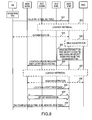
- Figure 8 is a flowchart of a mobile communication method according to a second embodiment of the present invention.
- Figure 9 is a flowchart of a mobile communication method according to a third embodiment of the present invention.
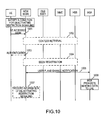
- Figure 10 is a flowchart of a mobile communication method according to a fourth embodiment of the present invention.
- Figure 11 is a flowchart of a mobile communication method according to a fifth embodiment of the present invention.
- Figure 12 is a flowchart of a mobile communication method according to a sixth embodiment of the present invention.
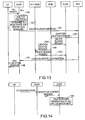
- Figure 13 is a flowchart of a mobile communication method according to a seventh embodiment of the present invention.
- Figure 14 is a flowchart of a mobile communication method according to an eighth embodiment of the present invention.
- the UE when UE is moving in the networks with different RATs, the UE may register respectively with access entities in the two networks. These two access entities are associated with each other.
- the access entity in the area where the UE currently locates determines based on the area where the UE currently locates whether a predetermined condition is met.
- Such a predetermined condition may be that the distance between the area where the UE currently locates and a paging area administered by another access entity originally associated with the area where the UE currently locates is above a predetermined threshold; or these two areas are not adjacent to each other; or the access entity in the area where the UE currently locates cannot to be associated with the another access entity; or the time that UE stays in the current area reaches a time threshold.
- the predetermined condition is triggered by time or events (e.g., location update, terminal initiating a call MOC, mobile station termination initiating a Mobile Terminating Call, etc.). If the access entity in the area where the UE currently locates determines based on the area where the UE currently locates that the predetermined condition is not met, then, when the UE needs to be paged, the UE is paged in a paging area administered by the access entity in the area where the UE currently locates and a paging area administered by the originally associated access entity in another network.
- time or events e.g., location update, terminal initiating a call MOC, mobile station termination initiating a Mobile Terminating Call, etc.
- the UE may be assigned with a plurality of areas in SAE or 2G/3G. If a plurality of S-RAs is assigned, the UE does not need to initiate an update message when moving among registered area assigned by the network.
- Embodiments of the present invention are illustrated by way of an example where each RAT network assigns an RA or TA to UE. However, the embodiments of the present invention are not so limiting.
- a first embodiment of the present invention is detailed below.
- the embodiment relates to a mobile communication method.
- the access entity in the area where the UE currently locates deletes the association with an originally associated another access entity or informs the another access entity to set UE to an detach status so as to prohibit paging the UE in the paging area administered by the another access entity which was originally associated with the access entity in the area where the UE currently locates.
- the embodiment is illustrated by way of an example where UE registers with RA2 (as illustrated in Figure 5 ) and moves to till TA5 and initiates a TAU procedure after UE moves from TA4 to TA5.
- a processing procedure of the access entity MME in the area where the UE currently locates is illustrated below.
- a TAU update message may carry S-RA, S-TMSI, RA, TMSI or parts of these parameters.
- the parameters described in various embodiments of the present invention are not limited in this respect.
- the S-TMSI refers to a temporary mobile subscriber identity of SAE.
- the S-RA refers to RA of SAE, i.e., TA.
- the TMSI refers to a temporary mobile subscriber identity of UMTS.
- the RA refers to RA of UMTS.
- the new access entity may go through a context retrieval procedure. That is, if the MME of the new TA where the UE moves to is not the same MME with which the UE registered, i.e., the old MME, the new MME needs to retrieve necessary context from the old MME or/and SGSN or/and HSS.
- Step 703 is an optional procedure such as safety authentication.
- the new MME may initiate a registration procedure with the HSS.
- the new MME determines if the area where the UE currently locates satisfies a predetermined condition. For instance, the new MME determines if the distance between the area where the UE currently locates and the paging area administered by another access entity originally associated with the area where the UE currently locates is above a predetermined threshold; or if these two areas are not adjacent to each other; or if the access entity in the area where the UE currently locates cannot be associated with another access entity which was originally associated with the area where the UE currently locates; or the time that UE stays in the current area reaches a time threshold; or the speed of the UE in the current area is lower than a threshold.
- the new MME determines if the distance between TA5 and RA2 (RA2 is retrieved from messages sent by UE or from the context retrieval procedure) exceeds a threshold or TA5 and RA2 are not adjacent with each other or the association between MME and SGSN is limited (e.g., SGSN is not in the "associable SGSN list" of the new MME) or the time that the UE resides in the RAT exceeds a threshold (if the UE stays most of the time in one area, the possibility that the UE is still within the area is high, for instance, the user works at office or go home and sleep, etc.
- paging resource can be saved by de-associating/de-registering UE from another RAT area and preventing the network from paging in other area.
- the UE initiates a registration and re-establish the association).
- the RA2 may be acquired from the message sent from UE or acquired from the context retrieval procedure.
- the mew MME may initiate a message such as a detach request or association cancellation request and inform the SGSN to set UE to a detach status or de-register the UE, or mark the UE so as to indicate that the SGSN does not need to page this UE.
- the SGSN sets UE to the detach status or de-registers the UE, or marks the UE to indicate that the SGSN does not need to page this UE.
- the SGSN returns a response to the new MME.
- the new MME cancels association with the originally associated SGSN, i.e., deletes the address information of the SGSN.
- Step 709 and step 710 are not limited in sequence.
- the new MME sends a TAU Accept (TAU completion) message.
- the message only contains SAE ID or corresponding instructions for the UE.
- the UE initiates an access procedure using the SAE ID. The reason for doing this is that the new accessed SGSN is not able to retrieve related context from the old SGSN.
- the MME may send a detach request or an association cancellation request, informing another access entity SGSN to set the UE status recorded thereon to a detach status or to de-register the UE, or cancel association between the two access entity.
- the access entity in the area where the UE currently locates is SGSN and another RAT entity is MME is similar to the present embodiment, which is omitted herein for brevity.
- a second embodiment of the present invention relates to a mobile communication method.
- the embodiment is likewise illustrated by way of an example where UE registers with RA2 (as illustrated in Figure 5 ) and moves to till TA5 and initiates a TAU procedure after UE moves from TA4 to TA5.
- a processing procedure of the access entity MME in the area where the UE currently locates is illustrated below.
- the access entity in the area where the UE currently locates deletes the association with the originally associated another access entity or informs the another access entity to set UE to an detach status so as to prohibit paging the UE in the paging area administered by the another access entity which was originally associated with the access entity in the area where the UE currently locates.
- the access entity in the area where the UE currently locates modifies association in order to prohibit paging the UE in the paging area administered by the another access entity which was originally associated with the access entity in the area where the UE currently locates.
- step 801 to step 804 are identical to step 701 to step 704, the description of which is omitted herein for brevity.
- the new MME determines if the area where the UE currently locates satisfies the predetermined condition. For instance, the new MME determines if the distance between the area where the UE currently locates and the paging area administered by another access entity originally associated with the area where the UE currently locates is above a predetermined threshold; or if these two areas are not adjacent to each other; or the time that UE stays in the current area reaches a time threshold or the speed of the UE in the current area is lower than a threshold; or if the access entity in the area where the UE currently locates is not able to be associated with another access entity which was originally associated with the area where the UE currently locates.
- the new MME determines if the distance between TA5 and RA2 (the RA2 is acquired from the messages sent by the UE or from the context retrieval procedure) exceeds a certain threshold or if TA5 and RA2 is not adjacent or the association between MME and SGSN is limited (e.g., the SGSN is not in the "associable SGSN list" of the new MME).
- the RA2 may be acquired from the message sent from UE or acquired from the context retrieval procedure.
- the new MME may select an access entity administered by an RA which is adjacent to TA5 as another new access entity associated with the current access entity MME. Since there is a plurality of RAs which are adjacent to TA5, the new MME may select, according to a selection algorithm, an adjacent area where UE has a high probability to move into that area, i.e., the RA where the UE has a high probability to move into, or may select an RA adjacent to TA5 randomly.
- the newly associated access entity SGSN may select, according to a selection algorithm, an RA where the UE has a high probability to move into or may select an RA adjacent to TA5 randomly as a paging area administered by the newly associated SGSN for the UE.
- the new MME sends a location update request (or Update Location request) to the SGSN, carries RA adjacent to TA5 selected by the MME, e.g., RA3.
- the new MME may send TA5 information and have the SGSN select an appropriate RA.
- a context retrieval procedure may be performed such that the new SGSN may obtain necessary context of the UE, as illustrated in step 807.
- the newly associated SGSN selected by the new MME is not the original SGSN with which the UE registered, the newly associated SGSN may also need to initiate a registration with a Home Subscriber Server (HSS), as illustrated in step 808.
- HSS Home Subscriber Server
- the newly associated SGSN if the newly associated SGSN accepts the location update, the newly associated SGSN returns a response to the new MME.
- the association between the MME and SGSN is established (i.e., the new MME acquires address information of the newly associated SGSN, the newly associated SGSN acquires address information of the new MME) as illustrated in step 809'.
- the MME sends a TAU Accept message.
- the message contains RA/TMSI ID of the new UMTS (i.e., RA3).
- RA3 new UMTS
- the UE does not need to initiate an update message when moving between TA5 and RA3.
- paging will be initiated in TA5 and RA3.
- the MME may actively let the UE register with the access entity SGSN in another RAT network adjacent to the new access entity and the SGSN is treated as the newly associated access entity.
- the newly associated SGSN assigns new TMSI for UE such that the UE does not need to initiate an update message when moving within TA5 and RA3.
- the UE When the UE needs to be paged, the UE is paged in the paging area (i.e., TA5 and RA3) administered by the newly associated SGSN. Consequently, the network side may conduct paging within the area where the UE is likely to be within. As such, the efficiency for paging UE is further improved.
- the paging area i.e., TA5 and RA3
- the network side may conduct paging within the area where the UE is likely to be within. As such, the efficiency for paging UE is further improved.
- a third embodiment of the present invention relates to a mobile communication method.
- the embodiment is likewise illustrated by way of an example where UE registers with RA2 (as illustrated in Figure 5 ) and moves to till TA5 and initiates a TAU procedure after UE moves from TA4 to TA5.
- a processing procedure of the access entity MME in the area where the UE currently locates is illustrated below.
- the difference between the present embodiment and the first embodiment is that, in the first embodiment, the access entity in the area where the UE currently locates deletes the association with another access entity or informs the another access entity to set UE to an detach status so as to prohibit paging the UE in the paging area administered by another access entity which was originally associated with the access entity in the area where the UE currently locates.
- the UE is prohibited to be paged in the paging area administered by the originally associated another access entity by setting the association between the access entity in the area where the UE currently locates and the originally associated another access entity as invalid.
- the UE is paged only in the paging area administered by the access entity in the area where the UE currently locates.
- the difference between setting the association as invalid and cancelling the association is that, in the case of setting the association as invalid, the access entity in the area where the UE currently locates still records address information of the associated another access entity.
- MME may also inform the S-GW to stop transmitting data to another access entity.
- step 901 to step 904 are identical to step 701 to step 704, the description of which is omitted herein for brevity.
- the new MME determines if the area where the UE currently locates satisfies a predetermined condition. For instance, the new MME determines if the distance between the area where the UE currently locates and the paging area administered by another access entity originally associated with the area where the UE currently locates exceeds a predetermined threshold; or if these two areas are not adjacent to each other; or the time that UE stays in the current area reaches a time threshold or the speed of the UE in the current area is lower than a threshold; or if the access entity in the area where the UE currently locates is unlikely to be associated with another access entity which was originally associated with the area where the UE currently locates.
- the new MME determines if the distance between TA5 and RA2 (the RA2 is acquired from the messages sent by the UE or from the context retrieval procedure) exceeds a certain threshold or if TA5 and RA2 is not adjacent or the association between MME and SGSN is limited (e.g., the SGSN is not in the "associable SGSN list" of the new MME).
- the RA2 may be acquired from the message sent from UE or acquired from the context retrieval procedure.
- the new MME marks the association between the new MME and the originally associated SGSN as invalid.
- Downstream data may always be the first to arrive at MME.
- the SGSN needs to inform the MME of this information.
- the UE is still attached to the MME.
- paging will not be performed in the evolved network after the downstream data arrives at the MME, instead, the downstream data will be sent to the SGSN directly and the paging will be performed in the paging area administered by the SGSN.
- the new MME sends a normal TAU Accept message. Since it is impossible for the UE to move from TA5 to RA2, the UE does not need any modification.
- step 907 and step 907' If any downstream data or any paging arrives, since the new MME or UPE has marked the association with SGSN as invalid, the data or paging will not be sent to SGSN, as illustrated in step 907 and step 907'.
- step 908 when the UE needs to be paged, the paging of UE will only be performed in the SAE, rather than in the RA2 corresponding to the UMTS. As such, the situation that the UE is paged in an area where it is impossible for the UE to appear can be avoided, so that the efficiency for paging UE is improved.
- the UE When the UE enters a new RA, the UE initiates an RAU, as illustrated in step 909 and step 909'.
- a normal RAU procedure is performed, such as context retrieval, registration, association. That is, when the UE enters a new RA, the UE initiates an RAU update. If the SGSN is replaced, the UE acquires context from MME or/and old SGSN. The MME sets up a new association with the new SGSN. The method of marking MME as invalid or cancelling association by the new SGSN is similar to marking SGSN as invalid or cancelling association by the new MME according to the embodiments of the present invention, which is omitted herein for brevity. If SGSN has not been replaced, the association between MME and SGSN is recovered. Then, the SGSN may also determine that the association with MME needs to be cancelled, which is similar to the method according to the present embodiment.
- a fourth embodiment of the present invention relates to a mobile communication method, as illustrated in Figure 10 .
- the embodiment is illustrated by way of example where the access entity in the area where the UE currently locates is SGSN and another RAT entity is MME.
- the method also applies to the situation where the access entity in the area where the UE currently locates is MME and another RAT entity is SGSN.
- the UE accessing the new SGSN may be triggered by UE access event (e.g., location update, or other access) or by time or event of the network (e.g., timer expires), as illustrated in step 1001.
- UE access event e.g., location update, or other access
- time or event of the network e.g., timer expires
- the new access entity may go through a context retrieval procedure.
- Step 1003 is an optional procedure such as safety authentication. If the access entity is a new access entity, the new SGSN may further initiate a registration procedure with HSS, as illustrated in step 1004.
- the SGSN informs a related user plane entity.
- the related user plane entity may be an S-GW or P-GW, or other network device.
- the related user plane entity receives the notification, it prohibits sending data to another RAT.
- the method of disabling sending data to another RAT includes marking the related user plane entity, or releasing to a channel of another RAT entity (MME in this example), or only establishing in the channel of the access entity (SGSN in this example).
- the SGSN records de-activation information and prevents to send data or paging request to another RAT entity after receiving data.
- the step is optional.
- a fifth embodiment of the present invention relates to a mobile communication method.
- the present invention is described in a case of dual registration and an ISR de-activation procedure is illustrated by way of example where the UE accesses the SGSN and the SGSN performs an ISR de-activation through an HSS.
- Figure 11 is a flowchart of a mobile communication method according to the fifth embodiment of the present invention.
- the UE initiates an RAU request
- the SGSN acquires UE context information.
- the new SGSN may need to acquire UE context information.
- the most updated UE context information can be acquired from the old SGSN or MME or HSS. If the SGSN which UE currently accesses does not change and the UE context information stored in the SGSN is the most updated, step 1102 may be skipped and step 1103 is performed directly.
- the SGSN which the UE currently accesses determines to initiate an ISR de-activation procedure.
- the SGSN which the UE currently accesses sends a location update message (Update Location) to the HSS.
- Update Location a location update message
- the Update Location message may carry de-activation information, such as values for special reasons, or special value for Update Type, or other indication parameters.
- de-activation information such as values for special reasons, or special value for Update Type, or other indication parameters.
- the access entity of UE sends to the HSS an Update Location request carrying ISR activation information (by carrying values for special reasons, or carrying special value for Update Type, or other indication parameters).
- the access entity of UE does not carry activation information and the de-activation information is acquired from the HSS.
- the message may also carry information of the change of the S-GW.
- the message may carry values for special reasons or other indications.
- the message may carry entire or partial information of the change of S-GW and/or de-activation ISR information.
- the de-activation ISR may also just carry information of the change of S-GW, rather than further carrying de-activation restriction information. As such, the S-GW may delete all the bearers. The subsequent procedure is identical, which may not be detailed herein.
- step 1105 is performed. If the SGSN which the UE currently accesses does not change, step 1106 is performed directly.
- the HSS sends a location deletion message to the old SGSN.
- the location deletion message may carry ISR de-activation information. If S-GW changes, the message can also carry information of the change of S-GW. For example, the message may carry values for special reasons or other indications.
- the old SGSN sends an Update PDP Context Request to the S-GW.
- the old SGSN When the Update PDP Context Request carries values for de-activation related reasons or other indication indicative of only deleting bearer information of one access system, the old SGSN requests, in a delete bearer request, the S-GW to only delete related bearers in the SAE network according to the information and also transfers Idle Mode User Plane Termination. If the message carries related reasons or indications for the change of the S-GW, the old SGSN may request, in the delete bearer request, the S-GW to delete all the bearer information of the UE according to the information.
- the Idle Mode User Plane Termination refers to the node where the downstream data terminates when the UE is in Idle mode, and triggers the paging of UE.
- the IMUPT is on S-GW, i.e., after downstream data reaches S-GW, when the S-GW discovers that the UE is in an idle status, the UE is paged within 2G/3G and SAE.
- the ISR is activated, when the UE only registers with 2G/3G, if the IMUPT is still in S-GW, S-GW needs to be informed of any change of UE in 2G/3G.
- the embodiment of the present invention proposes that, when the UE deactivates ISR and the UE only registers with 2G/3G, the IMUPT is transferred to SGSN or wireless network controller.
- the HSS sends a location deletion message to MME.
- the location deletion message requests MME to delete UE context information, and may further carry the ISR de-activation information.
- the MME knows about the de-activation information, and step 11061 is performed according to the ISR de-activation information.
- the message can also carry information of the change of S-GW. For example, the message may carry values for special reasons or other indications.
- MME sends a Delete Bearer Request to S-GW.
- the MME requests, in the Delete Bearer Request, the S-GW to only delete related bearers in the SAE network according to the ISR de-activation information and also transfers IMUPT. If the message carries related reasons or indications for the change of the S-GW, the old SGSN may request, in the Delete Bearer Request, the S-GW to delete all the bearer information of the UE according to the information.
- step 11051 can be performed and step 11061 can be skipped.
- the Delete Bear Request sent at step 1106 does not carry ISR de-activation information.
- step 11061 can be performed and step 11051 can be skipped.
- the Delete Bear Request sent at step 1105 may not carry ISR de-activation information.
- other method can be employed to delete a bearer or all the bearers in the de-activation system of S-GW. In this case, both steps 11051 and 11061 can be skipped. Step 1105 and step 1106 can be performed without a specific sequence.
- the HSS returns a location update confirmation to SGSN which the UE currently accesses.
- the UE returns an RAU completion message to SGSN which the UE currently accesses.
- the procedure of UE accessing SGSN and de-activating ISR in a dual registration case is performed.
- the procedure of UE accessing MME and de-activating ISR is similar to the above procedure.
- the MME may also directly send an Update Bearer Request to S-GW, requesting the S-GW to delete bearer information of 2G/3G system.
- the MME sends a bearer create request (or Create Bearer Request) to the new S-GW.
- the transfer of IMUPT is not involved.
- the embodiment further involves deletion of all the related bearers of the UE on the old S-GW.
- the HSS records two RAT entities with which the UE registers. Assume that the two RAT entities are not purged from the HSS (e.g., the entire UE context is deleted and the information of the entities with which the UE registers is deleted from the HSS).
- the HSS may only delete the old entity of the RAT (i.e., old MME).
- the UE When the UE again enters another RAT (e.g., 2G/3G) and the ISR has not been activated (e.g., the SGSN accessed does not support the ISR or for other reasons), the UE initiates an Update Location with the HSS which may carry values for special reasons. Such information is delivered to the HSS (or when the ISR activated, information of a certain parameter may be carried and when the ISR is not activated, the information will not be carried. The de-activation information is acquired from the HSS). If the SGSN which the UE accesses changes, the HSS may initiate a Cancel Location to two entities. One is the entity to be attached by the UE and the other is the old entity detached by the UE previously.
- another RAT e.g., 2G/3G
- a sixth embodiment of the present invention relates to a mobile communication method.
- the SGSN registers with HSS and the MME registers with SGSN, and an ISR de-activation procedure is illustrated by way of example where the UE accesses SGSN.
- Figure 12 is a flowchart of a mobile communication method according to the sixth embodiment of the present invention.
- UE initiates an RAU request.
- SGSN acquires UE context information.
- the new SGSN may need to acquire UE context information.
- the most updated UE context information can be acquired from the old SGSN or MME or HSS. If the SGSN which UE currently accesses dose not change and the UE context information stored in the SGSN is the most updated, step 1202 is skipped and step 1203 is performed directly.
- SGSN which the UE currently accesses determines to initiate an ISR de-activation.
- step 1204 is performed. If the SGSN which the UE currently accesses does not change, step 1208 is performed directly.
- the SGSN which the UE currently accesses sends an Update Location message to HSS.
- the Update Location message may carry de-activation information, such as values for special reasons, or special value for Update Type.
- de-activation information such as values for special reasons, or special value for Update Type.
- the access entity of UE sends to the HSS an Update Location request carrying information indicative of activating the ISR (by carrying values for special reasons, or carrying special value for Update Type).
- the access entity of UE does not carry activation information and the de-activation information is acquired from the HSS.
- the message can also carry information of the change of S-GW. For example, the message may carry values for special reasons or other indications.
- the HSS sends a location deletion message to the old SGSN.
- the location deletion message may carry the ISR de-activation information.
- the message may also carry the information of the change of S-GW. After the old SGSN receives the location deletion message, step 12051 is performed.
- the old SGSN sends a Delete Bearer Request to S-GW.
- the old SGSN requests, in a Delete Bearer Request, the S-GW to only delete related bearer in the SAE network according to the ISR de-activation information and also transfers IMUPT. If the message carries related reasons or indications for the change of the S-GW, the old SGSN may request, in the Delete Bearer Request, the S-GW to delete all the bearer information of the UE according to the information.
- the old SGSN sends a location deletion message to the MME.
- the location deletion message may carry ISR de-activation information.
- the message may also carry the information of the change of S-GW. Since the MME is registered with the old SGSN, the old SGSN may send the location deletion message to the MME.
- the location deletion message requests MME to delete UE context information, and may further carry the ISR de-activation information and/or the information of the change of S-GW.
- the MME may perform step 12061 according to the ISR de-activation information.
- the MME sends a Delete Bearer Request to S-GW.
- the MME requests, in a Delete Bearer Request message, the S-GW to only delete related bearer in the SAE network according to the ISR de-activation information and also transfers IMUPT. If the message carries related reasons or indications for the change of the S-GW, the MME may request, in the Delete Bearer Request, the S-GW to delete all the bearer information of the UE according to the information.
- step 11051 can be performed and step 11061 can be skipped.
- the Delete Bear Request sent at step 1106 does not carry ISR de-activation information.
- step 11061 can be performed and step 11051 can be skipped.
- other method can be employed to delete a bearer or all the bearers in the de-activation system of S-GW. In this case, both steps 11051 and 11061 can be skipped.
- Step 1205 and step 1206 can be performed without a specific sequence. If the bearer is deleted according to other method or according to step 12051 or 12061, then the de-activation information and/or the information of the change of S-GW is not needed in step 1204, or 1205, or 12051, or 1206, or 12061.
- the HSS returns a location update confirmation to the SGSN which the UE currently accesses.
- step 1209 is performed.
- the SGSN sends a location deletion message to MME.
- the SGSN may directly send the location deletion message to the MME.
- the message may carry ISR de-activation information.
- the MME deletes UE context information according to the ISR de-activation information and may further perform step 12081.
- the message can also carry information of the change of S-GW. For example, the message may carry values for special reasons or other indications. If the bearer is deleted according to other method, it is not necessary for the message to carry the de-activation information and/or the information of the change of S-GW, and step 12081 may not be performed.
- the MME sends a Delete Bearer Request to S-GW.
- the MME requests, in a Delete Bearer Request, the S-GW to only delete related bearer in the SAE network according to the ISR de-activation information and also transfers IMUPT. If the message carries related reasons or indications for the change of the S-GW, the old SGSN may request, in the Delete Bearer Request, the S-GW to delete all the bearer information of the UE according to the information.
- step 1209 is performed.
- the UE returns an RAU completion message to SGSN which the UE currently accesses.
- a procedure of UE accessing the SGSN and de-activating ISR is performed in a single registration case where the SGSN registers with HSS and MME registers with SGSN.
- the procedure of UE accessing MME and de-activating ISR is similar to the above procedure.
- the MME may also directly send an Update Bearer Request to the S-GW, requesting the S-GW to delete bearer information of 2G/3G system.
- the MME sends a Create Bearer Request to the new S-GW.
- the MME needs to registers with HSS and deletes registration information of SGSN in the HSS.
- the embodiment further involves deletion of all the related bearers of the UE on the old S-GW.
- a seventh embodiment of the present invention relates to a mobile communication method.
- the MME registers with HSS and the SGSN registers with MME, and an ISR de-activation procedure is illustrated by way of example where the UE accesses SGSN.
- the UE initiates an RAU request.
- the SGSN acquires UE context information.
- the new SGSN may need to acquire UE context information.
- the most updated UE context information can be acquired from the old SGSN or MME or HSS. If the SGSN which UE currently accesses does not change and the UE context information stored in the SGSN is the most updated, step 1302 may be skipped and step 1303 is performed directly.
- SGSN which the UE currently accesses determines to initiate an ISR de-activation.
- the SGSN sends an Update Location message to HSS.
- the Update Location message may carry de-activation information, such as values for special reasons, or special value for Update Type.
- de-activation information such as values for special reasons, or special value for Update Type.
- the access entity of UE sends to the HSS an Update Location request carrying ISR de-activation information (by carrying values for special reasons, or carrying special value for Update Type).
- the access entity of UE does not carry activation information and the de-activation information is acquired from the HSS.
- the message can also carry information of the change of S-GW. For example, the message may carry values for special reasons or other indications.
- step 1306 is performed after step 1305 is performed. If the SGSN which the UE currently accesses does not change, step 1306 can be skipped.
- the HSS sends a location deletion message to MME.
- the location deletion message requests the MME to delete ME context information and the message may carry ISR de-activation information and/or the information of the change of S-GW. After the MME receives the location deletion message, the MME performs step 13051 according to the restriction signal de-activation information.
- the MME sends a Delete Bearer Request to S-GW.
- the MME requests, in a Delete Bearer Request, the S-GW to only delete related bearer in the SAE network according to the ISR de-activation information and also transfers IMUPT. If the message carries information of the change of the S-GW, the MME may request, in the Delete Bearer Request, the S-GW to delete all bearer information of the UE according to the information.
- the MME sends a location deletion message to the old SGSN.
- the MME After the MME receives the location deletion message sent by the HSS, the MME sends the location deletion message to the old SGSN according to the ISR de-activation information. After the old SGSN receives the location deletion message, step 13061 is performed.
- the message may carry ISR de-activation information and/or the information of the change of S-GW.
- the old SGSN sends a Delete Bearer Request to S-GW.
- the old SGSN requests, in a Delete Bearer Request, the S-GW to only delete related bearer in the SAE network according to the ISR de-activation information and also transfers IMUPT. If the message carries information of the change of the S-GW, the old SGSN may request, in the Delete Bearer Request, the S-GW to delete all bearer information of the UE according to the information.
- step 13051 can be performed and step 13061 can be skipped.
- the Delete Bear Request sent at step 1306 does not carry ISR de-activation information.
- step 13061 can be performed and step 13051 can be skipped.
- other method can be employed to delete a bearer. In this case, both steps 13051 and 13061 can be skipped and the location bearer request may not carry ISR de-activation information and/or information of the change of S-GW at step 1305 and/or 1306.
- the HSS returns a location update confirmation to the SGSN which the UE currently accesses.
- the UE returns an RAU completion message to SGSN which the UE currently accesses.
- a procedure of UE accessing the SGSN and de-activating ISR is performed in a single registration case where the MME registers with HSS and SGSN registers with HSS.
- the procedure of UE accessing MME and de-activating ISR is similar to the above procedure.
- the new MME may also directly send an Update Bearer Request to S-GW, requesting the S-GW to delete bearer information of 2G/3G system.
- the S-GW changes the MME sends a Create Bearer Request to the new S-GW.
- the MME needs to delete the registration information of SGSN.
- the transfer of IMUPT is not involved.
- the embodiment further involves deletion of all the related bearers of the UE on the old S-GW.
- the SGSN which the UE currently accesses is SGSN (e.g., SGSN of R6) of Pre-R8 (e.g., SGSN of R7)
- the SGSN does not support ISR.
- the SGSN which the UE currently accesses needs to establish a bearer connection with P-GW, and deletes all the related bearer information of UE on the S-GW.
- the access entity (MME/SGSN) which the UE currently accesses does not support ISR
- the MME/SGSN needs to establish a bearer connection with P-GW and deletes all the related bearer information of UE on the S-GW.
- the access entity which the UE currently accesses does not support ISR, the method described in the above embodiment also applies.
- the SGSN which the UE currently accesses determines to initiate the de-activation of the ISR.
- the cause for triggering to initiate the ISR de-activation may be that the distance between the area where the UE currently locates and the paging area administered by the originally associated access entity in another network exceeds the threshold, or these two areas are not adjacent with each other; or the access entity in the area where the UE currently locates can not be associated with the originally associated access entity in the other network (e.g., the entity which the UE accesses does not support ISR or does not allow to use ISR) or association is not required according to the configurations; or the time that the UE stays in the current access system exceeds a threshold; or the speed of the UE in the current area is lower than a threshold, etc.
- the ISR de-activation procedure may be different, the ISR de-activation under various network environment or UE mobility statuses follows the below principle.
- the access entity in another network may delete, invalidate or update the context associated with the UE and may delete the bearer of the access entity of other network and the S-GW or delete the registration information of the access entity in the HSS.
- the process may further involve a transfer of IMUPT.
- the bearers of the access entity in the network and the old S-GW need to be deleted and all the bearer information related to the UE on the SGSN needs to be deleted and the bearers to the new S-GW needs to be established.
- the UE accesses SGSN and the SGSN sends a request for establishing PDP context to the new S-GW.
- the request carries related de-activation information and the bearer information established by the S-GW to the SGSN.
- An eighth embodiment of the present invention relates to a mobile communication method, which applies to the single registration case and the double registration case.
- the SGSN decides to deactivate the ISR. Referring to Figure 14 , following steps are included.
- Update Bearer Request also referred to as Update PDP Context Request
- the S-GW decides to delete bearer information of SAE and may transfer IMUPT.
- the S-GW After the deletion is completed, the S-GW returns a successful deletion response to the SGSN.
- the procedure after the UE accesses MME is also similar.
- the MME initiates an Update Bearer procedure with the S-GW after the MME decides to perform de-activation.
- the S-GW may delete bearer information of 2G/3G, but may not transfer IMUPT.
- the embodiments may include determining whether or not the area which the UE currently locates satisfies a predetermined condition. If the predetermined condition is satisfied and when the UE needs to be paged, the UE is paged in the paging area administered by the access entity and it is prohibited to page the UE in the paging area administered by the originally associated access entity in the other network. As such, the situation that the UE is paged in an area where it is impossible for the UE to appear can be avoided, so that the efficiency for paging UE is improved.
- the embodiments of the present invention prohibit paging the UE in the paging area administered by the originally associated access entity in another network by deleting the association with the originally associated access entity in another network; or by setting the UE to a detach status via the originally associated access entity in another network; or altering the original association; or by setting the association between the access entity and the originally associated access entity in another network as invalid and paging the UE only in the paging area administered by the current access entity.
- Various approaches are provided for the embodiment of the embodiments of the present invention.
- the access entity may modify the original association in the following ways.
- the UE is registered with the access entity in paging area in another network adjacent to the area where the UE currently locates.
- the access entity is treated as a new access entity associated with the current access entity in the other network.
- the UE When the UE needs to be paged, the UE is paged in the paging area administered by the access entity and the paging area in the other network. Consequently, the network side may conduct paging within the area where the UE is likely to be within. As such, the efficiency for paging UE is further improved.
- a ninth embodiment of the present invention relates to a mobile communication system.
- the system includes access entities in at least two networks which accept the registration of a same UE where each access entity is associated with one another.
- the system also includes a determination module, configured to determine if the area where the UE currently locates meets a predetermined condition in the process of the access entity performing a location update for the UE or performing UE access; and an enabling modification module, configured to prohibit paging the UE in the paging area administered by the originally associated access entity in the other network when the determination module determines that the predetermined condition is met.
- Such a predetermined condition may be that the distance between the area where the UE currently locates and the paging area administered by the originally associated access entity exceeds a predetermined threshold; or these two areas are not adjacent to each other; or the access entity in the area where the UE currently locates can not be associated with the originally associated access entity in another network; or the time that UE stays in an RAT exceeds a time threshold.
- the enabling modification module may be used to prohibit paging the UE in the paging area administered by the originally associated access entity in another network by deleting the association between the access entity in the area where the UE currently locates and the originally associated access entity in another network; or by informing the originally associated access entity in another network to set UE to a detach status; or by modifying the original association; or by setting the association between the access entity in the area where the UE currently locates and the originally associated access entity in another network as invalid and paging, when there is a need to page UE, the UE only in the paging area administered by the current access entity in the area where the UE currently locates.
- the enabling module prohibits paging the UE in the paging area administered by the originally associated access entity in another network so that the situation that the UE is paged in an area where it is impossible for the UE to appear can be avoided, and the efficiency for paging UE is improved.
- the mobile communication system may further include a registration module and a paging module.
- the registration module is configured to register US with the access entity associated with the paging area in the other network adjacent to the area where the UE currently locates when the predetermined condition is met.
- the access entity is treated as a new access entity in another network associated with the access entity in the area where the UE currently locates.
- the enabling modification module modifies the original association via the registration module.
- the paging module is configured to page, when there is a need to page the UE, the UE in the paging area administered by the access entity in the area where the UE currently locates and the paging area administered by the newly associated access entity, i.e., the UE is paged in the adjacent paging area in another network. Consequently, the network side may conduct paging within the area where the UE is likely to be within. As such, the efficiency for paging UE is further improved.
- the paging module pages the UE in the paging area administered by the access entity in the area where the UE currently locates and the paging area administered by the originally associated access entity in another network.
- a tenth embodiment of the present invention relates to an access entity,
- the access entity includes an association module configured to associate access entities in another network which may accept the registration of a same UE; a determination module, configured to determine if the area where the UE currently locates meets a predetermined condition in the process of location update for the UE or UE access; and an enabling modification module, configured to prohibit paging the UE in the paging area administered by the originally associated access entity in the other network when the determination module determines that the predetermined condition is met.
- Such a predetermined condition may be that the distance between the area where the UE currently locates and the paging area administered by the originally associated access entity exceeds a predetermined threshold; or these two areas are not adjacent to each other; or the current access entity can not be associated with the originally associated access entity in another network.
- the enabling modification module may be used to prohibit paging the UE in the paging area administered by the originally associated access entity in another network by deleting the association between the current access entity and the originally associated access entity in another network; or by informing the originally associated access entity in another network to set UE to a detach status; or by modifying the original association; or by setting the association between the current access entity and the originally associated access entity in another network as invalid and paging, when there is a need to page UE, the UE only in the paging area administered by the current access entity.
- the enabling module prohibits paging the UE in the paging area administered by the originally associated access entity in another network so that the situation that the UE is paged in an area where it is impossible for the UE to appear can be avoided, and the efficiency for paging UE is improved.
- the access entity may further include a registration module and a paging module.
- the registration module is configured to register UE with the access entity associated with the paging area in the other network adjacent to the area where the UE currently locates when the predetermined condition is met.
- the access entity is treated as a new access entity in another network associated with the current access entity.
- the enabling modification module modifies the original association via the registration module.
- the paging module is configured to page the UE in the paging area administered by the current access entity when the UE needs to be paged and inform the newly associated access entity to page the UE in the paging area administered by the newly associated access entity. Consequently, the network side may conduct paging within the area where the UE is likely to be within. As such, the efficiency for paging UE is further improved.
- the embodiment of the present invention is not limiting as to whether or not to integrate MME/S-GW and integrate S-GW and P-GW regarding embodiments of the present invention. Some of the above embodiments are described in an example where the MME/S-GW/P-GW are integrated. However, such embodiments also apply to the procedure where the MME/S-GW/P-GW are separated.
- the access entity includes an association module for associating access entities in another network which accept the registration of a same UE.
- the access entity also includes: an enabling modification module, configured to prohibit paging UE in a paging area administered by an originally associated access entity in another network when an access entity in one of at least two networks performs a location update for the UE or other access procedure.
- the access entity further includes: a transfer notification module, configured to inform the originally associated access entity in another network to transfer IMUPT; and an enabling modification module, configured to prohibit paging the UE in the paging area administered by the originally associated access entity in another network in such manners as to inform the HSS and let the HSS inform the originally associated access entity in another network to delete the association with an access entity in one of at least two networks or inform the originally associated access entity in another network to delete association with an access entity in one of at least two networks.
- a transfer notification module configured to inform the originally associated access entity in another network to transfer IMUPT
- an enabling modification module configured to prohibit paging the UE in the paging area administered by the originally associated access entity in another network in such manners as to inform the HSS and let the HSS inform the originally associated access entity in another network to delete the association with an access entity in one of at least two networks or inform the originally associated access entity in another network to delete association with an access entity in one of at least two networks.
- the system includes an access entity in one of at least two networks and a Serving Gateway; wherein the access entity in one of at least two networks is configured to send a bearer transfer request to the Serving Gateway.
- the Serving Gateway After receiving the bearer transfer request, the Serving Gateway deletes bearer information of other network which is originally associated with the access entity in one of the at least two networks.
- the bearer transfer system further includes an originally associated access entity in another network and an HSS.
- the HSS is configured to send a location deletion message to the originally associated access entity in another network after receiving an Update Location message from the access entity in one of the at least two networks.
- the originally associated access entity in another network is configured to send a bearer transfer request to the Serving Gateway after receiving the location deletion message.
- the bearer transfer system further includes an old access entity in one of two networks.
- the HSS is further configured to send a location deletion message to the old access entity in one of the two networks.
- the old access entity in one of the networks After receiving the location deletion message, the old access entity in one of the networks sends the bearer transfer request to the Serving Gateway.
- the Serving Gateway After receiving the bearer transfer request, the Serving Gateway deletes bearer information of other network which is originally associated with the access entity in one of the at least two networks.
- the bearer transfer system further includes an old Serving Gateway;
- the access entity in one of the two networks is further configured to send a Create Bearer request to the Serving Gateway and send a location deletion message to the originally associated access entity in another network.
- the serving network is further configured to return a Create Bearer response to the access entity in one of the two networks after receiving the Create Bearer request.
- the originally associated access entity in another network or the old access entity in one of the two networks is configured to send a bearer transfer request to the old Serving Gateway after receiving the location deletion message.
- the old Serving Gateway is configured to delete bearer information of the UE after receiving the bearer transfer request.
- a mobile communication method is provided according to one embodiment of the present invention, wherein a user equipment registers with access entities in at least two networks, and the access entities which accept the registration of the user equipment are associated with one another, the method includes: when an access entity in one of at least two networks performs a location update for the user equipment or other access procedure, prohibiting paging the user equipment in a paging area administered by an originally associated access entity in another network if an area where the user equipment currently locates satisfies a predetermined condition.
- the predetermined condition comprises one or more of the following: a distance between the area where the user equipment currently locates and the paging area administered by the originally associated access entity in the another network exceeds a predetermined threshold; or these two areas are not adjacent to each other; the access entity in the area where the user equipment currently locates cannot be associated with the originally associated access entity in the another network; or no association needs to be performed according to a configuration; the time that the user equipment stays in a current access system exceeds a threshold; the speed of the user equipment in a current access system is lower than a threshold.
- prohibiting paging the user equipment in a paging area administered by the originally associated access entity in the another network is performed in one or more of the following manners: deleting, by the access entity, association with the originally associated access entity in the another network; informing, by the access entity, the originally associated access entity in the another network to set the user equipment to a detach status or deactivate the user equipment; modifying the association by the access entity; setting the association between the access entity and the originally associated access entity in the another network as invalid, and paging the user equipment only in the paging area administered by the access entity when the user equipment needs to be paged; informing, by the access entity, a related user plane equipment, and letting the user plane equipment prohibit data or paging request from being sent to an access entity in the another network.
- the access entity modifies the association in the following manners: registering, by the access entity, the user equipment with an access entity associated with a paging area in the another network adjacent to the area where the user equipment currently locates, and treating the access entity as a new access entity in the another network associated with the current access entity; paging the user equipment in the paging area administered by the access entity and the adjacent paging area in the another network when the user equipment needs to be paged.
- the access entity selects or randomly selects an adjacent paging area in the another network according to a predetermined algorithm.
- the method further includes: requesting, by the access entity, related context of the user equipment from other access entity with which the user equipment has registered and/or from a home subscriber server, if the user equipment has not registered with the access entity; determining, by the access entity, if a predetermined condition is satisfied according to the related context and the area where the user equipment currently locates.
- the method further includes: if the area where the user equipment currently locates does not satisfies a predetermined condition, paging the user equipment in a paging area administered by the access entity and a paging area administered by an originally associated access entity in the another network when the user equipment needs to be paged.
- another mobile communication method is provided according to one embodiment of the present invention, wherein a user equipment registers with access entities of at least two networks and the access entities which accept the registration of the user equipment are associated with one another, and the method includes: prohibiting paging the user equipment in a paging area administered by an originally associated access entity in another network of the at least two networks when an access entity in one of the at least two networks performs a location update for the user equipment or other access procedure.
- the access entity in one of at least two networks is a Serving GPRS Support Node
- the method further comprises: informing the originally associated access entity in the another network or a Serving Gateway to transfer an Idle Mode User Plane Termination.
- prohibiting paging the user equipment in a paging area administered by an originally associated access entity in the another network is performed in the following manners: informing, by the access entity in one of at least two networks, a home subscriber server and letting the home subscriber server inform the originally associated access entity in the another network to delete the association with the access entity in one of at least two networks; or informing, by the access entity in one of at least two networks, the originally associated access entity in the another network to delete the association with the access entity in one of at least two networks.
- deleting, by the originally associated access entity in the another network, the association with the access entity in one of at least two networks comprises: deleting, by the originally associated access entity in the another network, the context of the user equipment; deleting, by the Serving Gateway, bearer information in originally associated other network.
- a bearer transfer method is provided according to one embodiment of the present invention, wherein a user equipment registers with access entities of at least two networks and the access entities which accept the registration of the user equipment are associated with one another, and the method comprises: sending, by an access entity in one of the at least two networks, a bearer transfer request to a Serving Gateway; deleting, by the Serving Gateway, after the Serving Gateway receives the bearer transfer request, bearer information in another network which is originally associated with the access entity in one of the at least two networks.
- sending, by an access entity in one of at least two networks, a bearer transfer request to a Serving Gateway comprises: sending, by the access entity, a location update message to a home subscriber server; sending, by the home subscriber server, a location deletion message to the access entity in the another network originally associated with the user equipment after the home subscriber receives the location update message; sending, by the originally associated access entity in the another network, a bearer transfer request to the Serving Gateway after receiving the location deletion message.
- the method further comprises: sending, by the home subscriber server, a location deletion message to an old access entity in one of two networks accessed by the user equipment after the home subscriber server receives the location update message; sending, by the old access entity, a bearer transfer request to the Serving Gateway after receiving the location deletion message.
- the method further comprises: sending, by the old access entity, a location deletion message to the originally associated access entity in the another network after receiving the location deletion message; sending, by the originally associated access entity in the another network, a bearer transfer request to the Serving Gateway after receiving the location deletion message.
- a mobile communication system comprises at least two networks, each network comprising an access entity which accepts registration of a same user equipment, wherein each access entity is associated with one another.
- the system further comprises: a determination module, configured to determine if an area where the user equipment currently locates satisfies a predetermined condition when the access entity performs a location update for the user equipment or other access procedure; an enabling modification module, configured to prohibit paging the user equipment in a paging area administered by an originally associated access entity in another network when the determination module determines that the predetermined condition is met.
- a determination module configured to determine if an area where the user equipment currently locates satisfies a predetermined condition when the access entity performs a location update for the user equipment or other access procedure
- an enabling modification module configured to prohibit paging the user equipment in a paging area administered by an originally associated access entity in another network when the determination module determines that the predetermined condition is met.
- the predetermined condition comprises one or more of the following: a distance between the area where the user equipment currently locates and the paging area administered by the originally associated access entity in the another network exceeds a predetermined threshold; or these two areas are not adjacent to each other; the access entity in the area where the user equipment currently locates cannot be associated with the originally associated access entity in the another network; or no association needs to be performed according to a configuration; the time that the user equipment stays in a current access system exceeds a threshold; the speed of the user equipment in a current access system is lower than a threshold.
- the enabling modification module prohibits paging the user equipment in a paging area administered by an originally associated access entity in the another network in the following manners: deleting association between the access entity in the area where the user equipment currently locates and the originally associated access entity in the another network; informing the originally associated access entity in the another network to set the user equipment to a detach status, or deactivate the user equipment; modifying the association; setting the association between the access entity in the area where the user equipment currently locates and the originally associated access entity in the another network as invalid, and paging the user equipment only in the paging area administered by the access entity in the area where the user equipment currently locates when the user equipment needs to be paged; informing a related user plane equipment and letting the user plane equipment prohibit data or paging request from being sent to an access entity in the another network.
- the system further comprises: a registration module, configured to register the user equipment with an access entity associated with a paging area in the other network adjacent to the area where the UE currently locates when the predetermined condition is met, wherein the access entity is treated as a new access entity in the another network associated with the access entity in the area where the UE currently locates and the enabling modification module modifies the association via the registration module; a paging module, configured to page the user equipment in a paging area administered by the access entity in the area where the user equipment currently locates and an adjacent paging area in the another network when the user equipment needs to be paged.
- a registration module configured to register the user equipment with an access entity associated with a paging area in the other network adjacent to the area where the UE currently locates when the predetermined condition is met, wherein the access entity is treated as a new access entity in the another network associated with the access entity in the area where the UE currently locates and the enabling modification module modifies the association via the registration module
- an access entity is provided according to one embodiment of the present invention.
- the access entity comprises an association module for associating access entities in another network which accept registration of a same user equipment.
- the access entity further comprises: a determination module, configured to determine, based on the area where the user equipment currently locates, if a predetermined condition is satisfied when a location update for the user equipment or other access procedure is performed; an enabling modification module, configured to prohibit paging the user equipment in a paging area administered by the originally associated access entity in the another network when the determination module determines that the predetermined condition is met.
- the predetermined condition comprises one or more of the following: a distance between the area where the user equipment currently locates and the paging area administered by the originally associated access entity in the another network exceeds a predetermined threshold; or these two areas are not adjacent to each other; the access entity cannot be associated with the originally associated access entity in the another network; or no association needs to be performed according to a configuration; the time that the user equipment stays in a current access system exceeds a threshold; the speed of the user equipment in a current access system is lower than a threshold.
- the enabling modification module prohibits paging the user equipment in a paging area administered by an originally associated access entity in the another network in one of the following manners: deleting association with the originally associated access entity in the another network; informing the originally associated access entity in the another network to set the user equipment to a detach status, or deactivate the user equipment; modifying the association; setting the association between the access entity and the originally associated access entity in the another network as invalid, and paging the user equipment only in the paging area administered by the access entity when the user equipment needs to be paged; informing a related user plane equipment and letting the user plane equipment prohibit data or paging request from being sent to an access entity in the another network.
- the access entity further comprises: a registration module, configured to register the user equipment with an access entity associated with the paging area in the other network adjacent to the area where the UE currently locates when the predetermined condition is met, wherein the access entity is treated as a new access entity in the another network associated with the access entity and the enabling modification module modifies the association via the registration module; a paging module, configured to page the user equipment in a paging area administered by the access entity when the user equipment needs to be paged and inform the newly associated access entity in the another network to page the user equipment in a paging area administered by the newly associated access entity.
- a registration module configured to register the user equipment with an access entity associated with the paging area in the other network adjacent to the area where the UE currently locates when the predetermined condition is met, wherein the access entity is treated as a new access entity in the another network associated with the access entity and the enabling modification module modifies the association via the registration module
- a paging module configured to page the user equipment in a pag
- the access entity includes an association module for associating access entities in another network which accept registration of a same user equipment.
- the access entity further comprises: an enabling modification module, configured to prohibit paging user equipment in a paging area administered by an originally associated access entity in the another network when an access entity in one of the at least two networks performs a location update for the user equipment or other access procedure.
- the access entity further comprises: a transfer notification module, configured to inform the originally associated access entity in the another network or a Serving Gateway to transfer an Idle Mode User Plane Termination.
- the enabling modification module prohibits paging the user equipment in a paging area administered by an originally associated access entity in the another network in the following manners: informing a home subscriber server and letting the home subscriber server inform the originally associated access entity in the another network to delete the association with the access entity in one of the at least two networks; or informing the originally associated access entity in the another network to delete the association with the access entity in one of the at least two networks.
- a bearer transfer system is provided according to one embodiment of the present invention.
- the system includes: an access entity in one of at least two networks and a Serving Gateway; wherein the access entity in one of at least two networks is configured to send a bearer transfer request to the Serving Gateway; and the Serving Gateway is configured to delete, after receiving the bearer transfer request, bearer information in another network which is originally associated with the access entity in one of the at least two networks.
- the system further comprises: an originally associated access entity in the another network and a home subscriber server, wherein the home subscriber server is configured to send a location deletion message to the originally associated access entity in the another network after receiving a location update message from the access entity in one of the at least two networks; the originally associated access entity in the another network is configured to send a bearer transfer request to the Serving Gateway after receiving the location deletion message.
- the system further comprises: an old access entity in one of two networks; wherein, the home subscriber server is further configured to send a location deletion message to the old access entity in one of the two networks; the old access entity in one of the two networks is configured to send the bearer transfer request to the Serving Gateway after receiving the location deletion message; the Serving Gateway is configured to delete originally associated bearer information of the other network after receiving the bearer transfer request.
- the system further comprises: an old Serving Gateway; wherein, the access entity in one of the two networks is further configured to send a bearer create request to the Serving Gateway and send a location deletion message to the originally associated access entity in the other network; the serving network is further configured to return a bearer create response to the access entity in one of the two networks after receiving the bearer create request; the old Serving Gateway is configured to delete bearer information of the user equipment.
Landscapes
- Engineering & Computer Science (AREA)
- Computer Networks & Wireless Communication (AREA)
- Signal Processing (AREA)
- Mobile Radio Communication Systems (AREA)
Applications Claiming Priority (4)
| Application Number | Priority Date | Filing Date | Title |
|---|---|---|---|
| CN200610146106 | 2006-11-03 | ||
| CNA200610173372XA CN101237671A (zh) | 2006-11-03 | 2006-12-30 | 移动通信方法、移动通信系统及接入实体 |
| CNA2007101380934A CN101370252A (zh) | 2007-08-15 | 2007-08-15 | 移动通信方法、移动通信系统及接入实体 |
| EP07801099A EP2081396B1 (de) | 2006-11-03 | 2007-09-14 | Mobilkommunikationsverfahren und zugangsentität |
Related Parent Applications (2)
| Application Number | Title | Priority Date | Filing Date |
|---|---|---|---|
| EP07801099A Division EP2081396B1 (de) | 2006-11-03 | 2007-09-14 | Mobilkommunikationsverfahren und zugangsentität |
| EP07801099.8 Division | 2007-09-14 |
Publications (3)
| Publication Number | Publication Date |
|---|---|
| EP2582191A2 true EP2582191A2 (de) | 2013-04-17 |
| EP2582191A3 EP2582191A3 (de) | 2013-05-01 |
| EP2582191B1 EP2582191B1 (de) | 2018-03-07 |
Family
ID=40759010
Family Applications (2)
| Application Number | Title | Priority Date | Filing Date |
|---|---|---|---|
| EP12191839.5A Active EP2582191B1 (de) | 2006-11-03 | 2007-09-14 | Mobiles Kommunikationsverfahren, mobiles Kommunikationssystem und Zugriffseinheit |
| EP07801099A Not-in-force EP2081396B1 (de) | 2006-11-03 | 2007-09-14 | Mobilkommunikationsverfahren und zugangsentität |
Family Applications After (1)
| Application Number | Title | Priority Date | Filing Date |
|---|---|---|---|
| EP07801099A Not-in-force EP2081396B1 (de) | 2006-11-03 | 2007-09-14 | Mobilkommunikationsverfahren und zugangsentität |
Country Status (4)
| Country | Link |
|---|---|
| US (3) | US8139505B2 (de) |
| EP (2) | EP2582191B1 (de) |
| CN (2) | CN102638856B (de) |
| WO (1) | WO2008052454A1 (de) |
Cited By (1)
| Publication number | Priority date | Publication date | Assignee | Title |
|---|---|---|---|---|
| EP2395777A4 (de) * | 2009-02-04 | 2017-03-29 | Nec Corporation | Verfahren zur registrierung von mobilstationen in der drahtlosen kommunikation, registrierverfahren, programm und basisstation |
Families Citing this family (41)
| Publication number | Priority date | Publication date | Assignee | Title |
|---|---|---|---|---|
| EP2315027A1 (de) † | 2002-08-16 | 2011-04-27 | Decision Biomarkers Incorporated | Substrate zur Isolierung, Umsetzung und mikroskopischen Analyse von Materialien |
| EP2582191B1 (de) * | 2006-11-03 | 2018-03-07 | Huawei Technologies Co., Ltd. | Mobiles Kommunikationsverfahren, mobiles Kommunikationssystem und Zugriffseinheit |
| CN101425959B (zh) * | 2007-10-29 | 2013-04-24 | 华为技术有限公司 | 一种承载处理方法和装置 |
| CN101511079B (zh) | 2007-11-01 | 2010-10-27 | 华为技术有限公司 | 一种通过演进网络临时标识接入旧有网络的方法和装置 |
| US7974228B2 (en) * | 2008-01-07 | 2011-07-05 | Alcatel-Lucent Usa Inc. | Method of signaling-free idle mode mobility for an integrated 3GPP and 3GPP2 network |
| US8165068B2 (en) * | 2008-04-18 | 2012-04-24 | Research In Motion Limited | User equipment detach with multiple packet data network connectivity |
| CN101610504B (zh) | 2008-06-18 | 2012-08-08 | 上海华为技术有限公司 | 接入、获取用户设备上下文及用户设备标识的方法和装置 |
| CN101610576B (zh) * | 2008-06-18 | 2013-01-30 | 上海华为技术有限公司 | 限制信令下的信息处理方法及相关设备 |
| CN101459905A (zh) * | 2008-06-27 | 2009-06-17 | 中兴通讯股份有限公司 | Isr去激活方法及isr去激活指示装置 |
| JP5185152B2 (ja) * | 2009-02-09 | 2013-04-17 | 株式会社エヌ・ティ・ティ・ドコモ | 移動通信方法、ゲートウェイ装置及びサーバ装置 |
| US8787362B2 (en) * | 2009-04-01 | 2014-07-22 | Qualcomm Incorporated | Fall back using mobile device assisted terminating access domain selection |
| US20100318656A1 (en) * | 2009-06-16 | 2010-12-16 | Intel Corporation | Multiple-channel, short-range networking between wireless devices |
| US9092069B2 (en) * | 2009-06-16 | 2015-07-28 | Intel Corporation | Customizable and predictive dictionary |
| US8776177B2 (en) * | 2009-06-16 | 2014-07-08 | Intel Corporation | Dynamic content preference and behavior sharing between computing devices |
| WO2011025422A1 (en) * | 2009-08-25 | 2011-03-03 | Telefonaktiebolaget L M Ericsson (Publ) | Relocation of mobility anchor for nomadic subscribers |
| JP5297941B2 (ja) * | 2009-08-25 | 2013-09-25 | 株式会社日立製作所 | 移動体通信システムおよび移動体通信システムにおけるページングエリア決定方法ならびに呼処理制御装置 |
| EP2471306B1 (de) * | 2009-08-25 | 2017-06-28 | Telefonaktiebolaget LM Ericsson (publ) | Umpositionierung eines mobilitätsankers |
| US8441985B2 (en) * | 2009-10-21 | 2013-05-14 | Lg Electronics Inc. | Method for determining ISR activation in mobile communications system |
| PT2491705T (pt) * | 2009-10-23 | 2019-01-28 | Ericsson Telefon Ab L M | Relatório de li de informações de localização atualizadas para eps |
| US10251146B2 (en) * | 2009-12-11 | 2019-04-02 | Qualcomm Incorporated | Apparatus and method for network-initiated attachment and registration-less paging |
| KR20110076733A (ko) * | 2009-12-29 | 2011-07-06 | 엘지전자 주식회사 | 이동통신 시스템에서의 isr 비활성화 결정 방법 |
| JP5063787B2 (ja) * | 2011-02-07 | 2012-10-31 | 株式会社エヌ・ティ・ティ・ドコモ | 移動通信方法及び移動管理ノード |
| JP5603792B2 (ja) * | 2011-02-07 | 2014-10-08 | 株式会社Nttドコモ | 移動通信方法 |
| IL218046B (en) | 2012-02-12 | 2018-11-29 | Elta Systems Ltd | An architecture for a multi-directional relay and the devices and methods of operation useful by the way |
| CN103460785A (zh) * | 2011-04-07 | 2013-12-18 | 瑞典爱立信有限公司 | 分组核心和无线电网络中的服务质量处理 |
| US8560647B2 (en) * | 2011-07-19 | 2013-10-15 | Telefonaktiebolaget L M Ericsson (Publ) | Controller placement for split architecture networks |
| WO2013025008A1 (en) | 2011-08-12 | 2013-02-21 | Lg Electronics Inc. | Method for processing data associated with idle mode signaling reduction in a wireless communication system |
| CN102497629A (zh) * | 2011-12-13 | 2012-06-13 | 华为终端有限公司 | 一种触发lte单卡双待多模终端进行联合注册的方法及终端 |
| TWI469599B (zh) * | 2012-06-08 | 2015-01-11 | Arcadyan Technology Corp | 無線行動通訊方法 |
| US9380553B1 (en) * | 2012-09-14 | 2016-06-28 | Sprint Spectrum L.P. | Paging a wireless device |
| US9247528B2 (en) * | 2012-10-12 | 2016-01-26 | Cisco Technology, Inc. | System and method for reducing paging in UTRAN/GERAN/E-UTRAN networks when idle signaling reduction is active |
| EP2804441A1 (de) * | 2013-05-15 | 2014-11-19 | Alcatel Lucent | Netzwerkknoten und Verfahren |
| US9596588B1 (en) * | 2013-11-26 | 2017-03-14 | Sprint Communications Company L.P. | CQI verification for a roaming WCD |
| CN104754551B (zh) * | 2013-12-31 | 2019-03-29 | 中国移动通信集团公司 | 一种用户终端的语音流量路由优化方法及设备 |
| EP4090094B1 (de) | 2014-06-06 | 2025-08-13 | Nokia Solutions and Networks Oy | Funkrufnachrichtabdeckungsverbesserung |
| JP6520044B2 (ja) * | 2014-10-24 | 2019-05-29 | 日本電気株式会社 | 無線端末、ネットワーク装置、及びこれらの方法 |
| US10863382B2 (en) | 2015-03-12 | 2020-12-08 | Nec Corporation | Methods and systems for balancing load among communication control apparatuses |
| CN108282818B (zh) | 2017-01-06 | 2020-11-17 | 中兴通讯股份有限公司 | 一种ran通知范围信息处理方法及装置 |
| US10728952B2 (en) * | 2017-01-09 | 2020-07-28 | Huawei Technologies Co., Ltd. | System and methods for session management |
| CN108429723B (zh) * | 2017-02-15 | 2021-08-20 | 百度在线网络技术(北京)有限公司 | 访问控制方法和装置 |
| EP3970406A1 (de) * | 2019-05-15 | 2022-03-23 | Telefonaktiebolaget Lm Ericsson (Publ) | Meldung von netzwerkleistungsabbau in einem kommunikationssystem |
Family Cites Families (22)
| Publication number | Priority date | Publication date | Assignee | Title |
|---|---|---|---|---|
| FI102234B (fi) * | 1996-01-16 | 1998-10-30 | Nokia Telecommunications Oy | Digitaalinen matkaviestinjärjestelmä ja menetelmiä päättyvän puhelun k äsittelemiseksi |
| US5946619A (en) | 1996-11-01 | 1999-08-31 | Ericsson Inc | System and method for improved paging and location updating of mobile subscribers |
| US6230009B1 (en) * | 1996-12-27 | 2001-05-08 | At&T Wireless Services, Inc. | Method and apparatus for alerting a station in one network of a requested communication from a second network |
| WO2001010080A2 (en) * | 1999-07-30 | 2001-02-08 | Ericsson Inc. | Methods and systems for switching terminals from packet switched service to circuit switched service |
| EP1079655B1 (de) | 1999-08-23 | 2005-02-09 | Lucent Technologies Inc. | RAU optimierung für UMTS im URA zustand |
| EP1415494A2 (de) * | 2000-11-28 | 2004-05-06 | Nortel Networks Limited | Verfahren und vorrichtung für ein hybrides mobiles endgerät |
| DE60215871T2 (de) * | 2001-10-01 | 2007-09-06 | Research In Motion Ltd., Waterloo | Kontaktmanagement für mobile Kommunikationsgeräte in mobilen Paketnetzen |
| CN1173500C (zh) * | 2001-12-05 | 2004-10-27 | 华为技术有限公司 | 高速下行数据包接入系统对不同服务质量业务的支持方法 |
| CN1567757A (zh) | 2003-06-13 | 2005-01-19 | 北京三星通信技术研究有限公司 | 通信系统中使用mbms业务的ue进行路由区域更新的方法 |
| CN100334891C (zh) | 2003-08-04 | 2007-08-29 | 华为技术有限公司 | 一种进行网络重定向的实现方法 |
| US7957352B2 (en) * | 2003-10-02 | 2011-06-07 | Qualcomm Incorporated | Inter-system handoff between wireless communication networks of different radio access technologies |
| DE602004025323D1 (de) * | 2004-02-27 | 2010-03-18 | Research In Motion Ltd | Intelligentes Funkrufverfahren in mehreren Netzwerken |
| US7450953B2 (en) * | 2004-02-27 | 2008-11-11 | Research In Motion Limited | Intelligent paging in multiple networks |
| DE602004001335T2 (de) * | 2004-04-29 | 2006-11-09 | Matsushita Electric Industrial Co., Ltd., Kadoma | Verlagerung, auch teilweise, einer Kontrollfunktionalität einer Resourcenverwaltung von einer Basistation in eine andere in einem verteilten Funkzugangsnetz |
| CN1697394A (zh) * | 2004-05-12 | 2005-11-16 | 华为技术有限公司 | 多媒体广播/组播服务业务中路由区更新的方法 |
| CN100370879C (zh) | 2004-10-19 | 2008-02-20 | 华为技术有限公司 | 用户控制的wcdma到gprs系统间切换的性能统计方法 |
| ATE434361T1 (de) | 2004-11-03 | 2009-07-15 | Nokia Corp | Inter-system-weiterreichung eines mobilen endgeräts, das mit einem ersten und zweiten funkzugangsnetz betreibbar ist |
| CN100484315C (zh) | 2005-03-08 | 2009-04-29 | 华为技术有限公司 | 一种双模终端选网注册方法 |
| CN1992958A (zh) | 2005-12-28 | 2007-07-04 | 上海原动力通信科技有限公司 | 不同接入系统共存时多模终端的网络附着方法 |
| CN101237671A (zh) | 2006-11-03 | 2008-08-06 | 华为技术有限公司 | 移动通信方法、移动通信系统及接入实体 |
| EP2582191B1 (de) * | 2006-11-03 | 2018-03-07 | Huawei Technologies Co., Ltd. | Mobiles Kommunikationsverfahren, mobiles Kommunikationssystem und Zugriffseinheit |
| CN101370252A (zh) | 2007-08-15 | 2009-02-18 | 华为技术有限公司 | 移动通信方法、移动通信系统及接入实体 |
-
2007
- 2007-09-14 EP EP12191839.5A patent/EP2582191B1/de active Active
- 2007-09-14 CN CN201210028755.3A patent/CN102638856B/zh not_active Expired - Fee Related
- 2007-09-14 WO PCT/CN2007/070691 patent/WO2008052454A1/zh not_active Ceased
- 2007-09-14 EP EP07801099A patent/EP2081396B1/de not_active Not-in-force
- 2007-09-14 CN CN200780036788XA patent/CN101523938B/zh not_active Expired - Fee Related
-
2009
- 2009-05-01 US US12/434,478 patent/US8139505B2/en not_active Expired - Fee Related
-
2012
- 2012-02-14 US US13/396,547 patent/US8355346B2/en not_active Expired - Fee Related
- 2012-12-17 US US13/717,179 patent/US8619648B2/en not_active Expired - Fee Related
Non-Patent Citations (1)
| Title |
|---|
| None |
Cited By (1)
| Publication number | Priority date | Publication date | Assignee | Title |
|---|---|---|---|---|
| EP2395777A4 (de) * | 2009-02-04 | 2017-03-29 | Nec Corporation | Verfahren zur registrierung von mobilstationen in der drahtlosen kommunikation, registrierverfahren, programm und basisstation |
Also Published As
| Publication number | Publication date |
|---|---|
| US8619648B2 (en) | 2013-12-31 |
| EP2582191B1 (de) | 2018-03-07 |
| CN101523938B (zh) | 2012-02-01 |
| US8355346B2 (en) | 2013-01-15 |
| CN101523938A (zh) | 2009-09-02 |
| EP2582191A3 (de) | 2013-05-01 |
| CN102638856A (zh) | 2012-08-15 |
| EP2081396A1 (de) | 2009-07-22 |
| US20120142349A1 (en) | 2012-06-07 |
| US8139505B2 (en) | 2012-03-20 |
| US20130115978A1 (en) | 2013-05-09 |
| US20090213762A1 (en) | 2009-08-27 |
| CN102638856B (zh) | 2015-09-09 |
| EP2081396B1 (de) | 2012-12-12 |
| EP2081396A4 (de) | 2010-06-09 |
| WO2008052454A1 (en) | 2008-05-08 |
Similar Documents
| Publication | Publication Date | Title |
|---|---|---|
| US8139505B2 (en) | Mobile communication method, mobile communication system and access entity | |
| US9351332B2 (en) | Method, system, and device for implicit detachment | |
| US20100120427A1 (en) | Method and system for dual registration processing | |
| US8170566B2 (en) | Telecommunications network | |
| US8837355B2 (en) | Bearer processing method and mobile management device | |
| US20110013623A1 (en) | Method and system of circuit switched domain page realization, method of service realization | |
| CN101370252A (zh) | 移动通信方法、移动通信系统及接入实体 | |
| CN102098655A (zh) | 空闲模式下信令节约激活控制方法、系统及用户设备 | |
| WO2011153750A1 (zh) | 一种用户数据的同步方法和系统 | |
| WO2009097775A1 (zh) | Isr机制下处理承载的方法及系统 | |
| CN102281519B (zh) | 一种承载修改方法及系统 | |
| CN102638785A (zh) | 一种双注册处理方法及装置 | |
| CN101448320A (zh) | 注销网络方法及双模用户设备 | |
| CN101237671A (zh) | 移动通信方法、移动通信系统及接入实体 | |
| CN101175314A (zh) | 异构网络间的通信方法及其系统 | |
| CN102761854B (zh) | 对承载的处理方法及移动管理设备 | |
| WO2011153899A1 (zh) | 一种网元失败处理的方法和系统 | |
| CN104144398B (zh) | 一种终呼业务的实现方法及系统、hss、scc as |
Legal Events
| Date | Code | Title | Description |
|---|---|---|---|
| PUAL | Search report despatched |
Free format text: ORIGINAL CODE: 0009013 |
|
| PUAI | Public reference made under article 153(3) epc to a published international application that has entered the european phase |
Free format text: ORIGINAL CODE: 0009012 |
|
| 17P | Request for examination filed |
Effective date: 20121108 |
|
| AC | Divisional application: reference to earlier application |
Ref document number: 2081396 Country of ref document: EP Kind code of ref document: P |
|
| AK | Designated contracting states |
Kind code of ref document: A2 Designated state(s): AT BE BG CH CY CZ DE DK EE ES FI FR GB GR HU IE IS IT LI LT LU LV MC MT NL PL PT RO SE SI SK TR |
|
| AK | Designated contracting states |
Kind code of ref document: A3 Designated state(s): AT BE BG CH CY CZ DE DK EE ES FI FR GB GR HU IE IS IT LI LT LU LV MC MT NL PL PT RO SE SI SK TR |
|
| RIC1 | Information provided on ipc code assigned before grant |
Ipc: H04W 68/12 20090101AFI20130322BHEP |
|
| 17Q | First examination report despatched |
Effective date: 20170315 |
|
| GRAP | Despatch of communication of intention to grant a patent |
Free format text: ORIGINAL CODE: EPIDOSNIGR1 |
|
| INTG | Intention to grant announced |
Effective date: 20170914 |
|
| GRAS | Grant fee paid |
Free format text: ORIGINAL CODE: EPIDOSNIGR3 |
|
| GRAA | (expected) grant |
Free format text: ORIGINAL CODE: 0009210 |
|
| AC | Divisional application: reference to earlier application |
Ref document number: 2081396 Country of ref document: EP Kind code of ref document: P |
|
| AK | Designated contracting states |
Kind code of ref document: B1 Designated state(s): AT BE BG CH CY CZ DE DK EE ES FI FR GB GR HU IE IS IT LI LT LU LV MC MT NL PL PT RO SE SI SK TR |
|
| REG | Reference to a national code |
Ref country code: GB Ref legal event code: FG4D |
|
| REG | Reference to a national code |
Ref country code: CH Ref legal event code: EP Ref country code: AT Ref legal event code: REF Ref document number: 977878 Country of ref document: AT Kind code of ref document: T Effective date: 20180315 |
|
| REG | Reference to a national code |
Ref country code: IE Ref legal event code: FG4D |
|
| REG | Reference to a national code |
Ref country code: DE Ref legal event code: R096 Ref document number: 602007054200 Country of ref document: DE |
|
| REG | Reference to a national code |
Ref country code: NL Ref legal event code: FP |
|
| REG | Reference to a national code |
Ref country code: LT Ref legal event code: MG4D |
|
| PG25 | Lapsed in a contracting state [announced via postgrant information from national office to epo] |
Ref country code: ES Free format text: LAPSE BECAUSE OF FAILURE TO SUBMIT A TRANSLATION OF THE DESCRIPTION OR TO PAY THE FEE WITHIN THE PRESCRIBED TIME-LIMIT Effective date: 20180307 Ref country code: CY Free format text: LAPSE BECAUSE OF FAILURE TO SUBMIT A TRANSLATION OF THE DESCRIPTION OR TO PAY THE FEE WITHIN THE PRESCRIBED TIME-LIMIT Effective date: 20180307 Ref country code: LT Free format text: LAPSE BECAUSE OF FAILURE TO SUBMIT A TRANSLATION OF THE DESCRIPTION OR TO PAY THE FEE WITHIN THE PRESCRIBED TIME-LIMIT Effective date: 20180307 Ref country code: FI Free format text: LAPSE BECAUSE OF FAILURE TO SUBMIT A TRANSLATION OF THE DESCRIPTION OR TO PAY THE FEE WITHIN THE PRESCRIBED TIME-LIMIT Effective date: 20180307 |
|
| REG | Reference to a national code |
Ref country code: FR Ref legal event code: PLFP Year of fee payment: 12 |
|
| REG | Reference to a national code |
Ref country code: AT Ref legal event code: MK05 Ref document number: 977878 Country of ref document: AT Kind code of ref document: T Effective date: 20180307 |
|
| PG25 | Lapsed in a contracting state [announced via postgrant information from national office to epo] |
Ref country code: BG Free format text: LAPSE BECAUSE OF FAILURE TO SUBMIT A TRANSLATION OF THE DESCRIPTION OR TO PAY THE FEE WITHIN THE PRESCRIBED TIME-LIMIT Effective date: 20180607 Ref country code: GR Free format text: LAPSE BECAUSE OF FAILURE TO SUBMIT A TRANSLATION OF THE DESCRIPTION OR TO PAY THE FEE WITHIN THE PRESCRIBED TIME-LIMIT Effective date: 20180608 Ref country code: SE Free format text: LAPSE BECAUSE OF FAILURE TO SUBMIT A TRANSLATION OF THE DESCRIPTION OR TO PAY THE FEE WITHIN THE PRESCRIBED TIME-LIMIT Effective date: 20180307 Ref country code: LV Free format text: LAPSE BECAUSE OF FAILURE TO SUBMIT A TRANSLATION OF THE DESCRIPTION OR TO PAY THE FEE WITHIN THE PRESCRIBED TIME-LIMIT Effective date: 20180307 |
|
| PG25 | Lapsed in a contracting state [announced via postgrant information from national office to epo] |
Ref country code: PL Free format text: LAPSE BECAUSE OF FAILURE TO SUBMIT A TRANSLATION OF THE DESCRIPTION OR TO PAY THE FEE WITHIN THE PRESCRIBED TIME-LIMIT Effective date: 20180307 Ref country code: EE Free format text: LAPSE BECAUSE OF FAILURE TO SUBMIT A TRANSLATION OF THE DESCRIPTION OR TO PAY THE FEE WITHIN THE PRESCRIBED TIME-LIMIT Effective date: 20180307 Ref country code: RO Free format text: LAPSE BECAUSE OF FAILURE TO SUBMIT A TRANSLATION OF THE DESCRIPTION OR TO PAY THE FEE WITHIN THE PRESCRIBED TIME-LIMIT Effective date: 20180307 Ref country code: IT Free format text: LAPSE BECAUSE OF FAILURE TO SUBMIT A TRANSLATION OF THE DESCRIPTION OR TO PAY THE FEE WITHIN THE PRESCRIBED TIME-LIMIT Effective date: 20180307 |
|
| PG25 | Lapsed in a contracting state [announced via postgrant information from national office to epo] |
Ref country code: AT Free format text: LAPSE BECAUSE OF FAILURE TO SUBMIT A TRANSLATION OF THE DESCRIPTION OR TO PAY THE FEE WITHIN THE PRESCRIBED TIME-LIMIT Effective date: 20180307 Ref country code: SK Free format text: LAPSE BECAUSE OF FAILURE TO SUBMIT A TRANSLATION OF THE DESCRIPTION OR TO PAY THE FEE WITHIN THE PRESCRIBED TIME-LIMIT Effective date: 20180307 Ref country code: CZ Free format text: LAPSE BECAUSE OF FAILURE TO SUBMIT A TRANSLATION OF THE DESCRIPTION OR TO PAY THE FEE WITHIN THE PRESCRIBED TIME-LIMIT Effective date: 20180307 |
|
| REG | Reference to a national code |
Ref country code: DE Ref legal event code: R097 Ref document number: 602007054200 Country of ref document: DE |
|
| PG25 | Lapsed in a contracting state [announced via postgrant information from national office to epo] |
Ref country code: PT Free format text: LAPSE BECAUSE OF FAILURE TO SUBMIT A TRANSLATION OF THE DESCRIPTION OR TO PAY THE FEE WITHIN THE PRESCRIBED TIME-LIMIT Effective date: 20180709 |
|
| PLBE | No opposition filed within time limit |
Free format text: ORIGINAL CODE: 0009261 |
|
| STAA | Information on the status of an ep patent application or granted ep patent |
Free format text: STATUS: NO OPPOSITION FILED WITHIN TIME LIMIT |
|
| PG25 | Lapsed in a contracting state [announced via postgrant information from national office to epo] |
Ref country code: DK Free format text: LAPSE BECAUSE OF FAILURE TO SUBMIT A TRANSLATION OF THE DESCRIPTION OR TO PAY THE FEE WITHIN THE PRESCRIBED TIME-LIMIT Effective date: 20180307 |
|
| 26N | No opposition filed |
Effective date: 20181210 |
|
| PG25 | Lapsed in a contracting state [announced via postgrant information from national office to epo] |
Ref country code: SI Free format text: LAPSE BECAUSE OF FAILURE TO SUBMIT A TRANSLATION OF THE DESCRIPTION OR TO PAY THE FEE WITHIN THE PRESCRIBED TIME-LIMIT Effective date: 20180307 |
|
| PG25 | Lapsed in a contracting state [announced via postgrant information from national office to epo] |
Ref country code: MC Free format text: LAPSE BECAUSE OF FAILURE TO SUBMIT A TRANSLATION OF THE DESCRIPTION OR TO PAY THE FEE WITHIN THE PRESCRIBED TIME-LIMIT Effective date: 20180307 |
|
| REG | Reference to a national code |
Ref country code: CH Ref legal event code: PL |
|
| REG | Reference to a national code |
Ref country code: BE Ref legal event code: MM Effective date: 20180930 |
|
| REG | Reference to a national code |
Ref country code: IE Ref legal event code: MM4A |
|
| PG25 | Lapsed in a contracting state [announced via postgrant information from national office to epo] |
Ref country code: LU Free format text: LAPSE BECAUSE OF NON-PAYMENT OF DUE FEES Effective date: 20180914 |
|
| PG25 | Lapsed in a contracting state [announced via postgrant information from national office to epo] |
Ref country code: IE Free format text: LAPSE BECAUSE OF NON-PAYMENT OF DUE FEES Effective date: 20180914 |
|
| PG25 | Lapsed in a contracting state [announced via postgrant information from national office to epo] |
Ref country code: CH Free format text: LAPSE BECAUSE OF NON-PAYMENT OF DUE FEES Effective date: 20180930 Ref country code: LI Free format text: LAPSE BECAUSE OF NON-PAYMENT OF DUE FEES Effective date: 20180930 Ref country code: BE Free format text: LAPSE BECAUSE OF NON-PAYMENT OF DUE FEES Effective date: 20180930 |
|
| PG25 | Lapsed in a contracting state [announced via postgrant information from national office to epo] |
Ref country code: MT Free format text: LAPSE BECAUSE OF NON-PAYMENT OF DUE FEES Effective date: 20180914 |
|
| PG25 | Lapsed in a contracting state [announced via postgrant information from national office to epo] |
Ref country code: TR Free format text: LAPSE BECAUSE OF FAILURE TO SUBMIT A TRANSLATION OF THE DESCRIPTION OR TO PAY THE FEE WITHIN THE PRESCRIBED TIME-LIMIT Effective date: 20180307 |
|
| PG25 | Lapsed in a contracting state [announced via postgrant information from national office to epo] |
Ref country code: HU Free format text: LAPSE BECAUSE OF FAILURE TO SUBMIT A TRANSLATION OF THE DESCRIPTION OR TO PAY THE FEE WITHIN THE PRESCRIBED TIME-LIMIT; INVALID AB INITIO Effective date: 20070914 |
|
| PG25 | Lapsed in a contracting state [announced via postgrant information from national office to epo] |
Ref country code: IS Free format text: LAPSE BECAUSE OF FAILURE TO SUBMIT A TRANSLATION OF THE DESCRIPTION OR TO PAY THE FEE WITHIN THE PRESCRIBED TIME-LIMIT Effective date: 20180707 |
|
| PGFP | Annual fee paid to national office [announced via postgrant information from national office to epo] |
Ref country code: NL Payment date: 20220819 Year of fee payment: 16 |
|
| PGFP | Annual fee paid to national office [announced via postgrant information from national office to epo] |
Ref country code: DE Payment date: 20220803 Year of fee payment: 16 |
|
| PGFP | Annual fee paid to national office [announced via postgrant information from national office to epo] |
Ref country code: FR Payment date: 20220808 Year of fee payment: 16 |
|
| REG | Reference to a national code |
Ref country code: DE Ref legal event code: R119 Ref document number: 602007054200 Country of ref document: DE |
|
| REG | Reference to a national code |
Ref country code: NL Ref legal event code: MM Effective date: 20231001 |
|
| PG25 | Lapsed in a contracting state [announced via postgrant information from national office to epo] |
Ref country code: NL Free format text: LAPSE BECAUSE OF NON-PAYMENT OF DUE FEES Effective date: 20231001 |
|
| PG25 | Lapsed in a contracting state [announced via postgrant information from national office to epo] |
Ref country code: NL Free format text: LAPSE BECAUSE OF NON-PAYMENT OF DUE FEES Effective date: 20231001 |
|
| PG25 | Lapsed in a contracting state [announced via postgrant information from national office to epo] |
Ref country code: FR Free format text: LAPSE BECAUSE OF NON-PAYMENT OF DUE FEES Effective date: 20230930 Ref country code: DE Free format text: LAPSE BECAUSE OF NON-PAYMENT OF DUE FEES Effective date: 20240403 |
|
| PGFP | Annual fee paid to national office [announced via postgrant information from national office to epo] |
Ref country code: GB Payment date: 20250731 Year of fee payment: 19 |