EP2583463B1 - Kombination mehrerer bitraten und skalierbare videocodierung - Google Patents
Kombination mehrerer bitraten und skalierbare videocodierung Download PDFInfo
- Publication number
- EP2583463B1 EP2583463B1 EP11796178.9A EP11796178A EP2583463B1 EP 2583463 B1 EP2583463 B1 EP 2583463B1 EP 11796178 A EP11796178 A EP 11796178A EP 2583463 B1 EP2583463 B1 EP 2583463B1
- Authority
- EP
- European Patent Office
- Prior art keywords
- streams
- clients
- video
- client
- video conference
- Prior art date
- Legal status (The legal status is an assumption and is not a legal conclusion. Google has not performed a legal analysis and makes no representation as to the accuracy of the status listed.)
- Active
Links
Images

Classifications
-
- H—ELECTRICITY
- H04—ELECTRIC COMMUNICATION TECHNIQUE
- H04N—PICTORIAL COMMUNICATION, e.g. TELEVISION
- H04N7/00—Television systems
- H04N7/14—Systems for two-way working
- H04N7/15—Conference systems
-
- H—ELECTRICITY
- H04—ELECTRIC COMMUNICATION TECHNIQUE
- H04N—PICTORIAL COMMUNICATION, e.g. TELEVISION
- H04N19/00—Methods or arrangements for coding, decoding, compressing or decompressing digital video signals
- H04N19/30—Methods or arrangements for coding, decoding, compressing or decompressing digital video signals using hierarchical techniques, e.g. scalability
- H04N19/31—Methods or arrangements for coding, decoding, compressing or decompressing digital video signals using hierarchical techniques, e.g. scalability in the temporal domain
-
- H—ELECTRICITY
- H04—ELECTRIC COMMUNICATION TECHNIQUE
- H04N—PICTORIAL COMMUNICATION, e.g. TELEVISION
- H04N19/00—Methods or arrangements for coding, decoding, compressing or decompressing digital video signals
- H04N19/30—Methods or arrangements for coding, decoding, compressing or decompressing digital video signals using hierarchical techniques, e.g. scalability
- H04N19/33—Methods or arrangements for coding, decoding, compressing or decompressing digital video signals using hierarchical techniques, e.g. scalability in the spatial domain
-
- H—ELECTRICITY
- H04—ELECTRIC COMMUNICATION TECHNIQUE
- H04N—PICTORIAL COMMUNICATION, e.g. TELEVISION
- H04N19/00—Methods or arrangements for coding, decoding, compressing or decompressing digital video signals
- H04N19/30—Methods or arrangements for coding, decoding, compressing or decompressing digital video signals using hierarchical techniques, e.g. scalability
- H04N19/34—Scalability techniques involving progressive bit-plane based encoding of the enhancement layer, e.g. fine granular scalability [FGS]
-
- H—ELECTRICITY
- H04—ELECTRIC COMMUNICATION TECHNIQUE
- H04N—PICTORIAL COMMUNICATION, e.g. TELEVISION
- H04N21/00—Selective content distribution, e.g. interactive television or video on demand [VOD]
- H04N21/20—Servers specifically adapted for the distribution of content, e.g. VOD servers; Operations thereof
- H04N21/25—Management operations performed by the server for facilitating the content distribution or administrating data related to end-users or client devices, e.g. end-user or client device authentication, learning user preferences for recommending movies
- H04N21/258—Client or end-user data management, e.g. managing client capabilities, user preferences or demographics, processing of multiple end-users preferences to derive collaborative data
- H04N21/25808—Management of client data
- H04N21/25833—Management of client data involving client hardware characteristics, e.g. manufacturer, processing or storage capabilities
Definitions
- Clients participating in video conferencing typically have different processing capabilities and available bandwidth.
- a video conferencing client may have a fluctuating amount of bandwidth while other clients have a stable amount of bandwidth.
- Some clients may not be able to receive the same quality video stream or encode video streams as other clients.
- some clients may be able to encode and play back at 1080p resolution (1920x1080 pixels per frame) with a frame rate of 30 frames per second (fps), while other clients may only be able to encode and receive at CIF resolution (352x288) with a 15fps rate.
- US 2010/153574 A1 discloses a video conference server that receives video source streams from clients on a video conference.
- the server analyzes each client's capabilities and chooses a video stream to send to each client based on those capabilities. For example, a client capable of encoding and decoding a high definition video stream provides three source video streams - a high definition stream, a medium resolution stream, and a low resolution stream.
- the server sends only the low resolution stream to a client with a low amount of available bandwidth.
- the server sends the medium resolution stream to another client with sufficient bandwidth for the high definition stream, but which lacks the ability to decode the high definition stream.
- Choosing at least one of the plurality of data streams to send to the at least one of the plurality of clients based on the analyzed at least one capability; and sending the chosen at least one of the plurality of data streams to the at least one of the plurality of clients.
- H. SCHWARZ ET AL "Overview of the Scalable Video Coding Extension of the H.264/AVC Standard", IEEE TRANSACTIONS ON CIRCUITS AND SYSTEMS FOR VIDEO TECHNOLOGY., US, (20070901), vol. 17, no. 9, doi:10.1109/TCSVT.2007.905532, ISSN 1051-8215, pages 1103 - 1120 discloses that SVC enables the transmission and decoding of partial bit streams to provide video services with lower temporal or spatial resolutions or reduced fidelity while retaining a reconstruction quality that is high relative to the rate of the partial bit streams.
- SVC provides functionalities such as graceful degradation in lossy transmission environments as well as bit rate, format, and power adaptation. These functionalities provide enhancements to transmission and storage applications.
- SVC has achieved significant improvements in coding efficiency with an increased degree of supported scalability relative to the scalable profiles of prior video coding standards.
- An overview is provided of the basic concepts for extending H.264/AVC towards SVC. Moreover, the basic tools for providing temporal, spatial, and quality scalability are described in detail and experimentally analyzed regarding their efficiency and complexity.
- ELEFTHERIADIS ALEXANDROS ET AL "Multipoint videoconferencing with scalable video coding", JOURNAL OF ZHEJIANG UNIVERSITY SCIENCE A, ZHEIJIANG UNIVERSITY PRESS, CN, vol. 7, no. 5 discloses a system for multipoint videoconferencing that offers extremely low end-to-end delay, low cost and complexity, and high scalability, alongside standard features associated with high-end solutions such as rate matching and personal video layout.
- the system accommodates heterogeneous receivers and networks based on the Internet Protocol and relies on scalable video coding to provide a coded representation of a source video signal at multiple temporal and spatial resolutions as well as quality levels. These are represented by distinct bitstream components which are created at each end-user encoder.
- a Scalable Video Conferencing Server SVCS
- the SVCS redirects these components to one or more recipients depending on, e.g., the available network conditions and user preferences.
- the scalable aspect of the video coding technique allows the system to adapt to different network conditions, and also accommodates different end-user requirements (e.g., a user may elect to view another user at a high or low spatial resolution).
- Performance results concerning flexibility, video quality and delay of the system are presented using the Joint Scalable Video Model (JSVM) of the forthcoming SVC (H.264 Annex G) standard, demonstrating that scalable coding outperforms existing state-of-the-art systems and offers the right platform for building next-generation multipoint videoconferencing systems.
- JSVM Joint Scalable Video Model
- Video streams are generated using a combination of Multiple Bit Rate (MBR) encoding and Scalable Video Coding (SVC). Capabilities and requests of the clients are used in determining the video streams to generate as well as what video streams to deliver to the clients.
- MBR Multiple Bit Rate
- SVC Scalable Video Coding
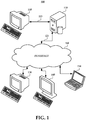
- FIG. 1 is a block diagram of an operating environment.
- the operating environment may comprise a video conference environment 100.
- Video conference environment 100 may comprise a variety of clients having a variety of capabilities, such as an intranet client 110 and a video conference server 120 connected via an intranet network connection 115.
- Video conference environment 100 may further comprise a first Internet client 130, a second Internet client 140, and a third Internet client 150.
- Each of the Internet clients may be connected to video conference server 120 via the Internet 160.
- Video conference server 120, intranet client 110, first Internet client 130, second Internet client 140, and third Internet client 150 may each comprise a computing device 600, described below in greater detail with respect to FIG. 6 .
- Video conference environment 100 may be used when multiple clients want to share data streams amongst each other.
- Each client may connect to video conference server 120.
- Video conference server 120 may maintain a list of which clients are connected and each client's capabilities.
- the capabilities may be provided by the clients participating in the video conference and/or obtained by the video conference server.
- the capabilities for each of the clients may include all or a portion of the following, but are not limited to the: processing power, resolution capability, frame rate, bitrate, connection speed, available bandwidth, camera being used, and the like of a client.
- the capabilities may be different for some/all of the clients. For example, some clients may be able to encode and play back at lower resolutions (e.g.
- CIF resolution (352x288) with a rate of 15 frames per second (fps) rate); some at medium resolutions (e.g. VGA resolution (640x480 pixels per frame) with a frame rate of 30 fps); and others at higher resolutions (e.g. 720p and 1080p with a 30fps rate). Additionally, some of the clients may be able to encode and play back a larger number of streams.
- Video conference server 120 may periodically update any changes in the client's capabilities. For example, video conference server 120 may either periodically automatically analyze or manually analyze network connections and determine that a client has more bandwidth available than previously determined. Video conference server 120 may also receive a message from a client that indicates a change in capability and store that information for use in facilitating the generation of the streams and the data sharing. Video conference server 120 may also be configured for determining which clients are responsible for generating data streams and request the generated data streams to be sent to video conference server 120 and/or some/all of the connected clients.
- Video conference server 120 is configured to aggregate client capabilities into different groups based on their resolution capability. Each group may include a resolution range that comprises one or more different resolutions and/or a range that consists of only one resolution. For example, there may be a group for 1080p clients; a group for 720p clients and 480p clients; and another group for CIF clients. The clients may also provide video conference server 120 with their desired preferences for viewing and playing video (e.g. full screen mode, full scale mode, small-window mode, bitrate and frame rate).
- Video conference server 120 aggregates this information and sends it to each client that is generating streams. For example, there may be CIF, VGA, and HD requests from the clients to the video conference server 120 with CIF's bitrate range of 100 to 250Kbps with frame rate ranging from 10 to 30fps, VGA of 500 to 700K with 15 to 30fps, and HD of 1 to 1.5Mbps with 30fps.
- video conference server 120 sends the following information: (CIF, 150K to 250K, 10 to 30), (VGA, 500K to 700K, 15 to 30), and (720p, 1M to 1.5M, 30) to each of the clients that are requested to generate streams (e.g. active speaker and/or subscribed streams).
- Video streams are encoded using a combination of Multiple Bit Rate (MBR) coding and Scalable Video Coding (SVC).
- Scalable Video Coding (SVC) is an extension of the H.264 standard.
- SVC allows for the transmission and decoding of partial bit streams to provide video services with lower temporal or spatial resolutions or reduced fidelity.
- SVC can have high encoding and decoding complexity.
- the spatial and quality scalabilities are the most complex modes to encode and decode. As such, not all of the clients in a video conference are configured to efficiently perform these operations. Most clients, however, are able to efficiently perform other SVC encoding/decoding that is not as complex.
- MBR refers to a data stream in which the same content is encoded at several resolutions and/or frame rates to optimize content delivery to one or more clients.
- each client generating streams uses MBR for spatial scalability and SVC is used for temporal and quality scalability.
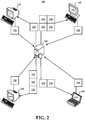
- FIG. 2 is a diagram illustrating different clients generating different streams that combine MBR and SVC in a video conference environment 100.
- Each client may generate one or more data streams to send to video conference server 120 and/or some other destination.
- Each client may have an audio/video input such as a webcam and/or microphone connected to the client. The input may be used in the generation of one or more video streams (that may include audio) and encoding of the video stream(s) before sending it to video conference server 120 and/or some other destination.
- client 130 may encode a video stream as a series of video frames comprising a person currently talking.
- a video stream may be encoded as a series of video frames wherein each frame may comprise a single image.
- Each frame may be represented by bits of data.
- the video stream may be encoded so that not every bit of data in every frame needs to be sent in order to represent the source of the video stream.
- Different frame types may be used to encode and/or compress the video stream.
- Frame types may comprise I-frames, P-frames, and B-frames.
- I-frame stands for Intra-Frame, and may comprise a frame that may be decoded by itself without reference to any other frame in a video stream.
- P-frame stands for Predicted Frame and may be decoded by referencing at least one previous frame in the video stream sequence.
- B-frame stands for Bidirectional Predicted Frame and may be decoded by referencing at least one previous frame and at least one subsequent frame in the video stream.
- a client may generate streams that combine MBR and SVC for more than one resolution. For example, client 130 may generate separate streams for 1080p, 720p, 480p, and CIF.
- Video conference server 120 is configured to determine the capabilities of the clients and direct the generated streams to the appropriate client(s). For example, video conference server 120 may receive streams of a current speaker that are generated by client 130 at different resolutions and deliver them to the requesting clients. In the current example, video from client 130 is delivered to client 110 at a CIF resolution, client 140 at a 720p resolution, and client 150 at a 480p resolution. Different frame rates/bit rates may be delivered to the clients.
- capabilities and requests of the clients are determined by video conference server 120.
- the requests relate to the desired manner in which to view the video sources and the capabilities relate to the capability of the device for displaying and encoding/decoding video.
- client 110 is a CIF client
- client 130 is a 1080p client
- client 140 is a 720p client
- client 150 is a 480p client.
- Video conference server 120 receives the requests and capabilities from each of the clients and aggregates this information before sending it out to the clients that are requested to generate streams. For example, each client may send a subscription request to video conference server 120 that includes the desired viewing parameters as well as capabilities of the client.
- the subscription request may include requested parameters such as a source client, a resolution, a bitrate, and/or a frame rate.
- client 110 may request a subscription to a video stream (230) from client 130 at a CIF resolution at 15fps and a bitrate of 150Kbps.
- a client may also wish to see video streams from all participating clients in the video conference.
- client 140 may participate in a four client video conference and request to subscribe to video streams (210, 230, 240, 250) showing all four participating clients in 720p with a frame rate ranging from 15fps to 30ps and a bitrate ranging from IMbps to 1.5Mbps.
- Client 150 may request a subscription to a video stream (210, 230) from client 110 and client 130 shown in 480p using frame rates between 15fps and 30fps and a bitrate ranging from 500Kbps to 700Kbps. As illustrated, client 130 has requested to subscribe to video streams (210, 240, 250) from client 110, client 140, and client 150 shown in 1080p at 30fps and a bitrate of 10Mpbs.
- Video conference server 120 aggregates the requests and sends this information to each of the clients that are to generate video streams.
- CIF, VGA, and HD requests from the clients to video conference server 120 with CIF's bitrate range of 100 to 250Kbps with frame rate ranging from 10 to 30fps, VGA of 500 to 700K with 15 to 30fps, and HD of 1 to 1.5Mbps with 30fps.
- MCU would then send (CIF, 150K, 15), (VGA, 500K to 700K, 15 to 30), (720p, 1M to 1.5M, 15 to 30), and (1080p, 10M, 30) to all the clients that are requested to generate streams (active speaker and/or subscribed ones).
- each client uses this information and its own capability to generate MBR and SVC streams.
- each client decides how many MBR "groups" to generate. For each MBR group generated there are multiple SVC layers (one base + enhancement layers). Each SVC layer (within each MBR group) is sent as a separate RTP stream.
- CIF client 110 may be requested to generate a CIF MBR stream and a CIF SVC stream resulting in 4 RTP streams (210).
- VGA client 150 may be requested to generate 480p streams plus any CIF streams (250).
- VGA clients may be able to generate all of the 480p and CIF SVC streams that result in 10 RTP streams, whereas other clients may only be able to generate a portion of the SVC layers thereby resulting in a lower number of streams generated.
- Client 140 may be requested to send 720p, 480p, and CIF SVC streams, resulting in a total of 16 RTP streams (240).
- Client 130 may be requested to send 1080p + 720p + 480p + CIF SVC streams, resulting in 22 RTP streams (230).
- Client 130 may send the streams 230 that it generates to video conference server 120.
- Client 140 may send the streams 240 that it generates to video conference server 120.
- Client 150 may send streams 250 that it generates to video conference server 120 and client 110 may send the video streams 210 it generates to video conference server 120.
- Video conference server 120 directs the received streams to the requested destination(s). Alternatively, a client may send all or a portion of the streams to the video conference server 120 and all or a portion of the streams directly to other destinations.
- Each client that is generating streams determines the streams to generate based on the received information from video conference server 120 that includes the SVC and MBR scalability types, range or number of MBR streams and SVC layers, and bitrate for each layer based on the client's capability.
- the bitrate and frame rate ranges are associated with each resolution and the number of streams that are generated are based on the requests from the clients.
- the determined stream configurations may change during the video conference.
- the video conference server 120 or client, may send updated information at any time during the video conference to allow the other clients adapt to the change of conditions/configurations of the clients (such as bandwidth, video viewing mode of a particular stream from big/full screen to sub-window mode, or the addition/removal of clients).
- the client when there is a status change of a client, the client notifies the video conference server 120.
- Video conference server 120 then aggregates the information and sends the updated info to the current senders that are being requested to send out streams.
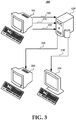
- FIG. 3 is a diagram illustrating combining SVC and MBR during video conferencing.
- video conference system 300 comprises a video conference server 120 and a variety of clients, such as client 301, client 303, and client 304.
- Clients in video conference system 300 may connect with different bandwidths and/or different video encoding and/or decoding capabilities.
- Each client in video conference system 300 may register with video conference server 120 and establish capabilities such as available bandwidth, a maximum encoding resolution, a maximum decoding resolution, and available data encoding and/or decoding algorithms.
- client 301 may register with video conference server 120 and establish an available bandwidth of 2 Mbps with capability to encode/decode a video stream with VGA (640x480) resolution at 30 fps and CIF (352x288) resolution at 15 fps.
- VGA 640x480
- CIF 352x288
- Client 303 may register with video conference server 120 and establish an available bandwidth of 150 Kbps with capability to encode/decode a video stream with 720p (1280x720) resolution at 30 fps, VGA (640x480) resolution at 30 fps, and CIF (352x288) resolution at 15 fps.
- Client 304 may register with video conference server 120 and establish an available bandwidth of 200 Kbps with capability to encode/decode a video stream only at CIF (352x288) resolution at 15 fps.
- Clients may be capable of encoding a video stream they may be incapable of decoding, and vice versa.
- client 304 may be capable of receiving and decoding VGA resolution video streams, but may only be able to encode a CIF resolution video stream.
- client 301 and client 303 may only encode streams at VGA resolution that video conference server 120 may send to client 304.
- the CIF resolution encoded video stream from client 304 may be sent to client 301 and client 303.
- video conference server 120 may communicate an encoding request to each client.
- client 301 and client 303 may be requested to each encode two video resolutions of video streams that combine MBR and SVC and send them to video conference server 120 - a first version of the video stream may be encoded as streams with VGA resolution at 30 fps and a second version of the video stream may be encoded as streams with CIF resolution at 15 fps.
- Client 304 may be requested to encode one set of video streams with CIF resolution at 15 fps.
- the encoding request is placed within a message that includes the aggregated information created from the requests and capabilities of each of the clients.
- Video conference server 120 may then receive the stream(s) that are generated from each client and choose at least one received stream to send to other client(s) based on the registered and/or determined capabilities of each client. For example, video conference server 120 may determine that client 304 is only capable of decoding a CIF resolution video stream while client 301 and client 303 are capable of decoding both VGA resolution and CIF resolution video streams. Video conference server 120 may then send the CIF resolution stream generated by client 304 to client 301 and client 303. Video conference server 120 may send the VGA resolution stream generated by client 301 to client 303 and the CIF stream generated by client 301 to client 304. Similarly, video conference server 120 may send the VGA resolution stream from client 303 to client 301 and the CIF stream from client 303 to client 304.
- Video conference server 120 may determine whether each client has sufficient bandwidth to receive a video stream and may choose a different stream based on that determination. Consistent with further embodiments of the invention, video conference server 120 and/or one of the clients such as client 303 may periodically re-evaluate the amount of bandwidth available. For example, video conference server 120 may determine that bandwidth available to client 303 has dropped from 150 Kbps to 75 Kbps and may begin sending the CIF resolution video stream instead of the VGA resolution video stream from client 301 to client 303.
- Video conference server 120 may also periodically re-evaluate each client's encoding/decoding capabilities, and dynamically alter what encoding algorithms are requested for video streams for each client. The re-evaluation may be performed automatically at predetermined times and/or manually.
- client 304 may be the only client receiving the CIF resolution video streams from client 301 and client 303. If client 304 drops out of the video conference call, video conference server 120 may request that client 301 and client 303 stop encoding and sending a CIF resolution version of their respective video streams. According to one embodiment, this updated information is sent to each of the clients generating streams as the aggregated information as described above.
- Video conference server 120 may instruct at least one of the clients associated with the video conference call to encode a video stream determined to be in-use by one of the other clients associated with the video conference call. For example, video conference server 120 may determine that client 304 is currently using CIF decoding; video conference server 120 may instruct client 303 to encode a CIF resolution stream to send to video conference server 120 that may be relayed to second Internet server 304.
- Video conference server 120 may alter a video stream before sending it to a client.
- client 301 may be capable of encoding and sending video streams at a 720p, VGA, and CIF resolutions and have a large, stable amount of bandwidth available.
- Client 303 may be capable of receiving and decoding video streams at a 720p, VGA, and CIF resolutions, but have a highly variable amount of bandwidth available. As the bandwidth available to client 303 reduces, video conference server 120 may alter the video stream relayed from client 301 to client 303 as best suited to the available amount of bandwidth.
- the choice of streams sent to each client may depend on each client's viewing preferences as well as the client's capabilities.
- client 303 may be configured to view the other two participants in video conference system 300 side by side, simultaneously, while client 304 may be configured to only show a current speaker.
- video conference server may send the VGA resolution stream from client 301 and the CIF resolution stream from client 304 to client 303.
- Client 304 may alternately receive the CIF resolution streams from client 301 and client 303 as each of those clients speak on the video conference call.
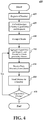
- FIG. 4 is a flow chart illustrating a video conference system that combines MBR and SVC in video streams.
- a client may be operatively connected to computing device 600 via a network connection and may request participation in a video conference call hosted by computing device 600.
- capabilities and requests of each registered client are collected and/or analyzed.
- computing device 600 may determine an amount of bandwidth available to each client.
- Computing device 600 may also determine data processing capabilities for each client, such as video encoding and/or decoding capability and/or data processing speed.
- Video encoding/decoding capability may include a resolution capability, such as a maximum resolution capability.
- a subscription request may also be received from at least one client in the video conference.
- computing device 600 may receive a subscription request from one client for a VGA encoded, 30 fps stream from a second client.
- the request may include information such as a desired resolution, bitrate and frame rate.
- computing device 600 may receive multiple subscription requests from any and/or all of the clients participating in the video conference. For example, one client may request lower resolution versions of all the other participating clients; another client may request a high resolution version from whichever client may be designated an active speaker in the video conference and low resolution versions from some or all of the other clients.
- the clients are grouped based on their capabilities. According to one embodiment, the clients are grouped according to the resolution they support. For example, clients may be placed into groups relating to standard resolution formats (e.g. 1080p, 720p, VGA, CIF, and the like). Each group may include one or more clients that support a resolution range that comprises one or more different resolutions and/or a range that consists of only one resolution. For example, there may be a group for 1080p clients; a group for 720p clients and 480p clients; and another group for CIF clients.
- standard resolution formats e.g. 1080p, 720p, VGA, CIF, and the like.
- Each group may include one or more clients that support a resolution range that comprises one or more different resolutions and/or a range that consists of only one resolution. For example, there may be a group for 1080p clients; a group for 720p clients and 480p clients; and another group for CIF clients.
- the capabilities and requests are aggregated and then sent to at least one client that is requested to generate video streams.
- the aggregated information may be represented in different ways, such as by creating a vector index having entries of resolution, bitrate range and frame rate range. For example, when there are CIF, VGA, and HD requests from the clients having CIF's bitrate range of 100 to 250Kbps with frame rate ranging from 10 to 30fps, VGA of 500 to 700K with 15 to 30fps, and HD of 1 to 1.5Mbps with 30fps, the following vector index may be generated: (CIF, 150K to 250K, 10 to 30), (VGA, 500K to 700K, 15 to 30), (720p, 1M to 1.5M, 30). This information is then provided in a message to the clients that are requested to generate streams (active speaker and/or subscribed ones). Each client uses this information and its own capability to generate the proper MBR and SVC streams (See FIGURE 5 ).
- one or more data streams are received from at least one client that is requested to generate streams.
- computing device 600 may receive a plurality of streams for one or more resolutions from a client.
- each resolution is represented by an MBR stream and one or more SVC streams.
- streams are sent to at least one client.
- computing device 600 may send a first resolution of a stream received from a first client to a second client and send a second resolution of a stream received from the first client to a third client.
- Computing device 600 may also determine that a client does not have sufficient bandwidth to receive a requested high resolution version of a video stream from a second client and computing device 600 may choose a lower resolution version of the video stream to send to the client.
- method 400 may return to operation 440 where the aggregated information is updated that represents a request for different video streams to be generated by one or more of the clients.
- computing device 600 may determine that the only client in a video conference call utilizing CIF decoding has dropped out.
- Computing device 600 may then request by sending out the aggregated information that any other clients on the video conference call stop generating CIF streams.
- a client's available bandwidth may decrease, and the client may inform computing device 600 of this occurrence.
- Computing device 600 may choose a lower resolution data stream for that client and/or alter the currently chosen data stream for that client to take the reduced bandwidth into account. This determination may be made periodically throughout the conference.
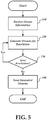
- FIG. 5 is a flow chart illustrating the generation of streams that combines MBR and SVC.
- the process flows to operation 510 where the client receives the aggregated information relating to the desired streams to be generated.
- the aggregated information includes the desired resolutions, bitrates, and frame rates that are grouped according to a resolution.
- the aggregated information may be received/updated at different times. For example, the information may be received after a client joins a video conference and updated when the conditions of the video conference change. For example, a client may be added/dropped from the video conference, a client's capabilities/requests may change during the video conference, and the like.
- the streams for a resolution are generated.
- the client device determines the MBR streams and SVC layer streams to encode. For example, one 1080p client may encode streams for all of the resolutions that utilize all of the SVC layers, whereas another 1080p client may encode streams for all of the resolutions but only generate streams for a portion of the SVC layers.
- a client attempts to encode streams for its supported resolution and any resolutions that it supports that is a lower resolution then its maximum resolution.
- the client may be requested to generate streams for many different resolutions, such as a 720p resolution video stream, a VGA resolution video stream, and a CIF resolution video stream.
- the process returns to operation 520.
- the process flows to operation 540.
- the generated streams are sent from the client that created the streams.
- the generated streams may be sent to a video server and/or to a different destination.
- a client may send some of the streams to a video server and other streams directly to a client device.
- FIG. 6 is a block diagram of a system including computing device 600.
- the aforementioned memory storage and processing unit may be implemented in a computing device, such as computing device 600 of FIG. 6 . Any suitable combination of hardware, software, or firmware may be used to implement the memory storage and processing unit.
- the memory storage and processing unit may be implemented with computing device 600 or any of other computing devices 618, in combination with computing device 600.
- the aforementioned system, device, and processors are examples and other systems, devices, and processors may comprise the aforementioned memory storage and processing unit, consistent with embodiments of the invention.
- computing device 600 may comprise an operating environment for system 100 as described above. System 100 may operate in other environments and is not limited to computing device 600.
- a system consistent with an embodiment of the invention may include a computing device, such as computing device 600.
- computing device 600 may include at least one processing unit 602 and a system memory 604.
- system memory 604 may comprise, but is not limited to, volatile (e.g. random access memory (RAM)), non-volatile (e.g. read-only memory (ROM)), flash memory, or any combination.
- System memory 604 may include operating system 605, one or more programming modules 606, and may include a program 607 relating to determining capabilities and the encoding/decoding of video. Operating system 605, for example, may be suitable for controlling computing device 600's operation.
- programming modules 606 may include, for example, a data analysis module and/or a video conference server 620.
- embodiments of the invention may be practiced in conjunction with a graphics library, other operating systems, or any other application program and is not limited to any particular application or system. This basic configuration is illustrated in FIG. 6 by those components within a dashed line 608.
- Computing device 600 may have additional features or functionality.
- computing device 600 may also include additional data storage devices (removable and/or non-removable) such as, for example, magnetic disks, optical disks, or tape.
- additional storage is illustrated in FIG. 6 by a removable storage 609 and a non-removable storage 610.
- Computer readable media may include computer storage media.
- Computer storage media may include volatile and nonvolatile, removable and non-removable media implemented in any method or technology for storage of information, such as computer readable instructions, data structures, program modules, or other data.
- System memory 604, removable storage 609, and non-removable storage 610 are all computer storage media examples (i.e. memory storage.)
- Computer storage media may include, but is not limited to, RAM, ROM, electrically erasable read-only memory (EEPROM), flash memory or other memory technology, CD-ROM, digital versatile disks (DVD) or other optical storage, magnetic cassettes, magnetic tape, magnetic disk storage or other magnetic storage devices, or any other medium which can be used to store information and which can be accessed by computing device 600.
- Computing device 600 may also have input device(s) 612 such as a camera, keyboard, a mouse, a pen, a sound input device, a touch input device, etc.
- Output device(s) 614 such as a display, speakers, a printer, etc. may also be included.
- the aforementioned devices are examples and others may be used.
- Computer readable media may also include communication media.
- Communication media may be embodied by computer readable instructions, data structures, program modules, or other data in a modulated data signal, such as a carrier wave or other transport mechanism, and includes any information delivery media.
- modulated data signal may describe a signal that has one or more characteristics set or changed in such a manner as to encode information in the signal.
- communication media may include wired media such as a wired network or direct-wired connection, and wireless media such as acoustic, radio frequency (RF), infrared, and other wireless media.
- RF radio frequency
- Computing device 600 may also contain a communication connection 616 that may allow device 600 to communicate with other computing devices 618, such as over a network in a distributed computing environment, for example, an intranet or the Internet.
- Communication connection 616 is one example of communication media.
- program modules 606 may perform processes including, for example, one or more of method stages as described above.
- processing unit 602 may perform other processes.
- Other programming modules that may be used in accordance with embodiments of the present invention may include electronic mail and contacts applications, word processing applications, spreadsheet applications, database applications, slide presentation applications, drawing or computer-aided application programs, etc.
- program modules may include routines, programs, components, data structures, and other types of structures that may perform particular tasks or that may implement particular abstract data types.
- embodiments of the invention may be practiced with other computer system configurations, including hand-held devices, multiprocessor systems, microprocessor-based or programmable consumer electronics, minicomputers, mainframe computers, and the like.
- Embodiments of the invention may also be practiced in distributed computing environments where tasks are performed by remote processing devices that are linked through a communications network.
- program modules may be located in both local and remote memory storage devices.
- embodiments of the invention may be practiced in an electrical circuit comprising discrete electronic elements, packaged or integrated electronic chips containing logic gates, a circuit utilizing a microprocessor, or on a single chip containing electronic elements or microprocessors.
- Embodiments of the invention may also be practiced using other technologies capable of performing logical operations such as, for example, AND, OR, and NOT, including but not limited to mechanical, optical, fluidic, and quantum technologies.
- embodiments of the invention may be practiced within a general purpose computer or in any other circuits or systems.
- Embodiments of the invention may be implemented as a computer process (method), a computing system, or as an article of manufacture, such as a computer program product or computer readable media.
- the computer program product may be a computer storage media readable by a computer system and encoding a computer program of instructions for executing a computer process.
- the computer program product may also be a propagated signal on a carrier readable by a computing system and encoding a computer program of instructions for executing a computer process.
- the present invention may be embodied in hardware and/or in software (including firmware, resident software, micro-code, etc.).
- embodiments of the present invention may take the form of a computer program product on a computer-usable or computer-readable storage medium having computer-usable or computer-readable program code embodied in the medium for use by or in connection with an instruction execution system.
- a computer-usable or computer-readable medium may be any medium that can contain, store, communicate, propagate, or transport the program for use by or in connection with the instruction execution system, apparatus, or device.
- the computer-usable or computer-readable medium may be, for example but not limited to, an electronic, magnetic, optical, electromagnetic, infrared, or semiconductor system, apparatus, device, or propagation medium. More specific computer-readable medium examples (a non-exhaustive list), the computer-readable medium may include the following: an electrical connection having one or more wires, a portable computer diskette, a random access memory (RAM), a read-only memory (ROM), an erasable programmable read-only memory (EPROM or Flash memory), an optical fiber, and a portable compact disc read-only memory (CD-ROM).
- RAM random access memory
- ROM read-only memory
- EPROM or Flash memory erasable programmable read-only memory
- CD-ROM portable compact disc read-only memory
- the computer-usable or computer-readable medium could even be paper or another suitable medium upon which the program is printed, as the program can be electronically captured, via, for instance, optical scanning of the paper or other medium, then compiled, interpreted, or otherwise processed in a suitable manner, if necessary, and then stored in a computer memory.
- Embodiments of the present invention are described above with reference to block diagrams and/or operational illustrations of methods, systems, and computer program products according to embodiments of the invention.
- the functions/acts noted in the blocks may occur out of the order as shown in any flowchart.
- two blocks shown in succession may in fact be executed substantially concurrently or the blocks may sometimes be executed in the reverse order, depending upon the functionality/acts involved.
Landscapes
- Engineering & Computer Science (AREA)
- Multimedia (AREA)
- Signal Processing (AREA)
- Databases & Information Systems (AREA)
- Computer Graphics (AREA)
- Two-Way Televisions, Distribution Of Moving Picture Or The Like (AREA)
- Television Signal Processing For Recording (AREA)
Claims (8)
- Verfahren zum Kodieren von Videostreams mit einer Kombination von MBR-Kodierung (MBR: Multiple Bit Rate) und SVC-Kodierung (SVC: Scalable Video Coding), wobei MBR sich auf einen Datenstrom bezieht, in dem der gleiche Inhalt in mehreren Auflösungen und/oder Bildraten kodiert ist, wobei das Verfahren Folgendes umfasst:Bestimmen (420) von Fähigkeiten, die Clients (110, 130, 140, 150, 301, 303, 304) in einer Videokonferenz und von Anfragen der Clients, wobei sich die Fähigkeiten auf Video-Stream-Kodierungsfähigkeiten jedes der Clients beziehen und wobei die Anfragen gewünschte Betrachtungsparameter der Clients für Videoquellen beinhalten;Zusammenfassen (440) der Anforderungen und Fähigkeiten von jedem der Clients zu einer Nachricht und Bereitstellen der Nachricht an Clients in der Videokonferenz, die angefragt werden Streams (210, 230, 240, 250, 310, 320, 330) innerhalb der Videokonferenz zu erzeugen; undEmpfangen (450) einer Vielzahl von Streams für eine oder mehrere Auflösungen von mindestens einem der Clients, die angefragt werden Streams innerhalb der Videokonferenz zu erzeugen, wobei die Streams unter Verwendung der bereitgestellten Nachricht erzeugt werden und für jede Auflösung einen MBR-Stream und einen oder mehrere SVC-Streams enthalten, wobei der MBR-Stream für die räumliche Skalierbarkeit verwendet wird und der eine oder die mehreren SVC-Streams die zeitliche und/oder die qualitative Skalierbarkeit betreffen.
- Verfahren nach Anspruch 1, welches ferner das Einordnen jedes der Clients in eine Gruppe durch Bestimmen einer unterstützten Auflösung für jeden der Clients und das Gruppieren der Clients gemäß der unterstützten Auflösung umfasst.
- Verfahren nach Anspruch 1, wobei jede Schicht eines SVC-Streams in einen separaten Stream zusammengefügt wird.
- Verfahren nach Anspruch 1, welches ferner das Empfangen einer Anforderung umfasst, die eine gewünschte Auflösung, eine Bildrate und eine Bitrate umfasst.
- Verfahren nach Anspruch 1, welches ferner folgendes umfasst: Bestimmen, wenn sich die Bedingungen innerhalb der Videokonferenz ändern; und Aktualisieren der Nachricht, so dass andere Streams von dem einen oder den mehreren Clients erzeugt werden.
- Computerlesbares Medium (604, 609, 610), das einen Satz von Befehlen speichert, die, wenn sie ausgeführt werden, ein Verfahren durchführen zum Kodieren von Videostreams mit einer Kombination von MBR-Kodierung (MBR: Multiple Bit Rate) und SVC-Kodierung (SVC: Scalable Video Coding), wobei MBR sich auf einen Datenstrom bezieht, in dem der gleiche Inhalt in mehreren Auflösungen und/oder Bildraten kodiert ist, wobei das Verfahren Folgendes umfasst:Bestimmen (420) von Fähigkeiten, die Clients (110, 130, 140, 150, 301, 303, 304) in einer Videokonferenz zugeordnet sind und von Anfragen der Clients, wobei die Fähigkeiten das Bestimmen einer Kodierungsfähigkeit für jeden Client beinhaltet und wobei die Anfragen gewünschte Betrachtungsparameter der Clients für Videoquellen beinhalten;Zusammenfassen (440) der Anforderungen und Fähigkeiten für die Clients zu einer Nachricht;Senden der Nachricht an Clients, die aufgefordert werden, Streams (210, 230, 240, 250, 310, 320, 330) für die Videokonferenz zu erzeugen; undEmpfangen (450) einer Vielzahl von Streams für eine oder mehrere Auflösungen von mindestens einem der Clients, die angefragt werden Streams zu erzeugen, wobei die Streams unter Verwendung der bereitgestellten Nachricht erzeugt werden und für jede Auflösung einen MBR-Stream und einen oder mehrere SVC-Streams enthalten, wobei der MBR-Stream für die räumliche Skalierbarkeit verwendet wird und der eine oder die mehreren SVC-Streams die zeitliche und/oder die qualitative Skalierbarkeit betreffen.
- System zum Erzeugen von Videostreams, das MBR-Kodierung (MBR: Multiple Bit Rate) und SVC-Kodierung (SVC: Scalable Video Coding) in einer Videokonferenz kombiniert, wobei MBR sich auf einen Datenstrom bezieht, in dem der gleiche Inhalt in mehreren Auflösungen und/oder Bildraten kodiert ist, wobei das System Folgendes umfasst:einen Speicher (604, 609, 610);einen Netzwerkverbindungsvorrichtung (616); undeine Verarbeitungseinheit (602), die an den Speicher angebunden ist, wobei die Verarbeitungseinheit ausgelegt ist zum:Registrieren mindestens eines ersten Videokonferenz-Clients (110, 130, 140, 150, 301, 303, 304) und mindestens eines zweiten Videokonferenz-Clients (110, 130, 140, 150, 301, 303, 304), die über die Netzwerkverbindungsvorrichtung mit dem System verbunden sind, wobei das Registrieren des mindestens einen ersten Videokonferenz-Clients und des mindestens einen zweiten Videokonferenz-Clients das Feststellen von Fähigkeiten und Anforderungen für den mindestens einen ersten Videokonferenz-Client und den mindestens einen zweiten Videokonferenz-Client umfasst, wobei sich die Fähigkeiten auf die Videostream-Kodierungsfähigkeiten jedes der Clients beziehen und wobei die Anforderungen gewünschte Betrachtungsparameter für Videoquellen für jeden der Clients beinhalten;Zusammenfassen der Anforderungen und Fähigkeiten von jedem der Clients zu einer Nachricht und Bereitstellen der Nachricht an Clients in der Videokonferenz, die angefragt werden Streams innerhalb der Videokonferenz zu erzeugen; undEmpfangen einer Vielzahl von Videostreams (210, 230, 240, 250, 310, 320, 330) von dem mindestens einen ersten Videokonferenz-Client, wobei die Vielzahl von Videostreams durch den ersten Videokonferenz-Client unter Verwendung der bereitgestellten Nachricht erzeugt wird und einen ersten Satz von Streams umfasst, der einen MBR-Stream und mindestens einen SVC-Stream umfasst, wobei die Vielzahl von Videostreams einen zweiten Satz von Videostreams umfasst, der einen MBR-Stream und mindestens einen SVC-Stream umfasst, wobei der mindestens eine erste Satz von Streams Videostreams mit höherer Auflösung als der zweite Satz von Videostreams umfasst, wobei die MBR-Streams für die räumliche Skalierbarkeit verwendet werden und die SVC-Streams zeitliche und/oder qualitative Skalierbarkeit betreffen.
- System nach Anspruch 7, welches es ferner umfasst zu bestimmen, wenn Fähigkeiten sich innerhalb der Videokonferenz ändern.
Applications Claiming Priority (2)
| Application Number | Priority Date | Filing Date | Title |
|---|---|---|---|
| US12/819,092 US8947492B2 (en) | 2010-06-18 | 2010-06-18 | Combining multiple bit rate and scalable video coding |
| PCT/US2011/039245 WO2011159505A2 (en) | 2010-06-18 | 2011-06-06 | Combining multiple bit rate and scalable video coding |
Publications (3)
| Publication Number | Publication Date |
|---|---|
| EP2583463A2 EP2583463A2 (de) | 2013-04-24 |
| EP2583463A4 EP2583463A4 (de) | 2017-07-19 |
| EP2583463B1 true EP2583463B1 (de) | 2020-02-26 |
Family
ID=45328294
Family Applications (1)
| Application Number | Title | Priority Date | Filing Date |
|---|---|---|---|
| EP11796178.9A Active EP2583463B1 (de) | 2010-06-18 | 2011-06-06 | Kombination mehrerer bitraten und skalierbare videocodierung |
Country Status (4)
| Country | Link |
|---|---|
| US (1) | US8947492B2 (de) |
| EP (1) | EP2583463B1 (de) |
| CN (1) | CN102948148B (de) |
| WO (1) | WO2011159505A2 (de) |
Families Citing this family (34)
| Publication number | Priority date | Publication date | Assignee | Title |
|---|---|---|---|---|
| US8947492B2 (en) * | 2010-06-18 | 2015-02-03 | Microsoft Corporation | Combining multiple bit rate and scalable video coding |
| US8576271B2 (en) * | 2010-06-25 | 2013-11-05 | Microsoft Corporation | Combining direct and routed communication in a video conference |
| US9009341B2 (en) * | 2011-10-11 | 2015-04-14 | Avaya Inc. | Video bandwidth management system and method |
| US8842159B2 (en) * | 2012-02-13 | 2014-09-23 | Microsoft Corporation | Encoding processing for conferencing systems |
| US9532080B2 (en) * | 2012-05-31 | 2016-12-27 | Sonic Ip, Inc. | Systems and methods for the reuse of encoding information in encoding alternative streams of video data |
| US9584573B2 (en) * | 2012-08-29 | 2017-02-28 | Ericsson Ab | Streaming policy management system and method |
| US10034031B2 (en) | 2012-10-05 | 2018-07-24 | Adobe Systems Incorporated | Generating a single content entity to manage multiple bitrate encodings for multiple content consumption platforms |
| US8970661B2 (en) | 2012-10-20 | 2015-03-03 | Microsoft Technology Licensing, Llc | Routing for video in conferencing |
| US20140114664A1 (en) * | 2012-10-20 | 2014-04-24 | Microsoft Corporation | Active Participant History in a Video Conferencing System |
| CN102984494B (zh) * | 2012-12-06 | 2015-11-25 | 小米科技有限责任公司 | 一种视频通讯方法及装置 |
| US9369671B2 (en) * | 2013-02-11 | 2016-06-14 | Polycom, Inc. | Method and system for handling content in videoconferencing |
| US9357210B2 (en) | 2013-02-28 | 2016-05-31 | Sonic Ip, Inc. | Systems and methods of encoding multiple video streams for adaptive bitrate streaming |
| US9031358B2 (en) | 2013-03-15 | 2015-05-12 | Qualcomm Incorporated | Video retargeting using seam carving |
| US20140375755A1 (en) * | 2013-06-24 | 2014-12-25 | Electronics And Telecommunications Research Institute | Apparatus and method for changing main screen based on distributed telepresence |
| EP2838268B1 (de) * | 2013-07-31 | 2019-02-20 | Axis AB | Verfahren, Vorrichtung und System zur Herstellung einer zusammengeführten digitalen Videosequenz |
| US9344218B1 (en) | 2013-08-19 | 2016-05-17 | Zoom Video Communications, Inc. | Error resilience for interactive real-time multimedia applications |
| TW201517631A (zh) * | 2013-08-29 | 2015-05-01 | Vid Scale Inc | 使用者適應視訊電話 |
| US9813461B2 (en) * | 2013-11-04 | 2017-11-07 | Cisco Technology, Inc. | Viewing full screen applications in a sharing session |
| EP3127285B1 (de) * | 2014-03-31 | 2021-03-03 | Polycom, Inc. | Verfahren und systeme zur optimierung der bandbreitennutzung in einer full-mesh-peer-to-peer-videositzung mit mehreren teilnehmern |
| US9948889B2 (en) * | 2014-07-04 | 2018-04-17 | Telefonaktiebolaget Lm Ericsson (Publ) | Priority of uplink streams in video switching |
| US9578285B1 (en) * | 2014-08-22 | 2017-02-21 | Google Inc. | Facilitating presentations during video conferences |
| CN105491461B (zh) * | 2014-10-11 | 2018-11-20 | 成都鼎桥通信技术有限公司 | 一种视频传输方法 |
| US10841640B2 (en) * | 2014-11-04 | 2020-11-17 | Comcast Cable Communications, Llc | Methods and systems for displaying content based on preference information |
| FR3031862B1 (fr) * | 2015-01-16 | 2017-02-17 | Sagemcom Broadband Sas | Procede de transmission d'un flux de donnees utilisant un protocole de diffusion en direct. |
| US10171536B2 (en) * | 2016-09-30 | 2019-01-01 | Atlassian Pty Ltd | Rapid optimization of media stream bitrate |
| US10389772B1 (en) * | 2018-01-31 | 2019-08-20 | Facebook, Inc. | Systems and methods for optimizing simulcast streams in group video calls |
| CN109963110A (zh) * | 2019-03-15 | 2019-07-02 | 兰州大学 | 多方视频会议的处理方法、装置、存储介质及计算设备 |
| CN112995570B (zh) * | 2019-12-18 | 2023-08-01 | 中国移动通信有限公司研究院 | 一种信息处理方法、装置、设备、系统及存储介质 |
| CN113453046B (zh) * | 2020-03-24 | 2022-07-12 | 腾讯科技(深圳)有限公司 | 沉浸式媒体提供方法、获取方法、装置、设备及存储介质 |
| CN114500914A (zh) * | 2020-11-11 | 2022-05-13 | 中兴通讯股份有限公司 | 音视频转发方法、装置、终端与系统 |
| US12200401B2 (en) * | 2021-06-04 | 2025-01-14 | Apple Inc. | Optimizing media experience in conferencing with diverse participants |
| CN114640818B (zh) * | 2022-03-04 | 2026-04-14 | 京东科技信息技术有限公司 | 视频处理方法、装置、电子设备及存储介质 |
| SE546090C2 (en) * | 2023-04-14 | 2024-05-21 | Livearena Tech Ab | Systems and methods for managing sharing of a video in a collaboration session |
| US12212888B2 (en) | 2023-06-20 | 2025-01-28 | Microsoft Technology Licensing, Llc | Computer system for preprocessing video stream at requested video data rate parameter |
Family Cites Families (95)
| Publication number | Priority date | Publication date | Assignee | Title |
|---|---|---|---|---|
| US5687095A (en) * | 1994-11-01 | 1997-11-11 | Lucent Technologies Inc. | Video transmission rate matching for multimedia communication systems |
| US5838664A (en) * | 1997-07-17 | 1998-11-17 | Videoserver, Inc. | Video teleconferencing system with digital transcoding |
| US5600646A (en) | 1995-01-27 | 1997-02-04 | Videoserver, Inc. | Video teleconferencing system with digital transcoding |
| US6343313B1 (en) | 1996-03-26 | 2002-01-29 | Pixion, Inc. | Computer conferencing system with real-time multipoint, multi-speed, multi-stream scalability |
| US5963547A (en) | 1996-09-18 | 1999-10-05 | Videoserver, Inc. | Method and apparatus for centralized multipoint conferencing in a packet network |
| JPH10155149A (ja) | 1996-11-25 | 1998-06-09 | Matsushita Electric Ind Co Ltd | フレームレート変換方式、及びフレームレート変換装置 |
| WO1998038798A1 (fr) | 1997-02-26 | 1998-09-03 | Mitsubishi Denki Kabushiki Kaisha | Dispositif, systeme et procede pour distribuer des donnees video |
| US6229850B1 (en) * | 1997-07-22 | 2001-05-08 | C-Cube Semiconductor Ii, Inc. | Multiple resolution video compression |
| US6091777A (en) | 1997-09-18 | 2000-07-18 | Cubic Video Technologies, Inc. | Continuously adaptive digital video compression system and method for a web streamer |
| US6622171B2 (en) | 1998-09-15 | 2003-09-16 | Microsoft Corporation | Multimedia timeline modification in networked client/server systems |
| US6501797B1 (en) * | 1999-07-06 | 2002-12-31 | Koninklijke Phillips Electronics N.V. | System and method for improved fine granular scalable video using base layer coding information |
| US7111316B1 (en) * | 1999-08-06 | 2006-09-19 | Wisconsin Alumni Research Foundation | Method for efficient, on-demand data streaming |
| US6731734B1 (en) | 1999-08-19 | 2004-05-04 | Siemens Information & Communication Networks, Inc. | Apparatus and method for intelligent conference call codec selection |
| US7089285B1 (en) * | 1999-10-05 | 2006-08-08 | Polycom, Inc. | Videoconferencing apparatus having integrated multi-point conference capabilities |
| KR20020070362A (ko) * | 1999-12-22 | 2002-09-06 | 제너럴 인스트루먼트 코포레이션 | 공간 스케일성 및 시뮬캐스트 코딩을 이용한 멀티캐스트환경의 비디오 압축 |
| RU2226320C2 (ru) | 2000-04-28 | 2004-03-27 | Свисском Мобиле Аг | Способ и система для осуществления видеоконференций |
| JP2002034047A (ja) * | 2000-07-18 | 2002-01-31 | Pioneer Electronic Corp | 画像符号化装置及び画像符号化方法、情報符号化装置及び情報符号化方法、情報記録装置並びに情報記録媒体 |
| US7007098B1 (en) * | 2000-08-17 | 2006-02-28 | Nortel Networks Limited | Methods of controlling video signals in a video conference |
| WO2002035844A2 (en) | 2000-10-24 | 2002-05-02 | Eyeball Networks Inc. | Dynamic quality adaptation using personal quality profiles and composite performance metric |
| US7313593B1 (en) | 2000-10-24 | 2007-12-25 | International Business Machines Corporation | Method and apparatus for providing full duplex and multipoint IP audio streaming |
| US20020131496A1 (en) | 2001-01-18 | 2002-09-19 | Vinod Vasudevan | System and method for adjusting bit rate and cost of delivery of digital data |
| US6766407B1 (en) | 2001-03-27 | 2004-07-20 | Microsoft Corporation | Intelligent streaming framework |
| JP4852228B2 (ja) | 2001-09-26 | 2012-01-11 | インタラクト デヴァイシーズ インコーポレイテッド | メディア信号を通信するためのシステム及び方法 |
| US6535238B1 (en) | 2001-10-23 | 2003-03-18 | International Business Machines Corporation | Method and apparatus for automatically scaling processor resource usage during video conferencing |
| CN1618071B (zh) | 2001-12-15 | 2012-01-04 | 汤姆森特许公司 | 基于时间预约的服务质量设置 |
| US20030135863A1 (en) | 2002-01-17 | 2003-07-17 | Koninklijke Philips Electronics N.V. | Targeted scalable multicast based on client bandwidth or capability |
| US7362349B2 (en) * | 2002-07-10 | 2008-04-22 | Seiko Epson Corporation | Multi-participant conference system with controllable content delivery using a client monitor back-channel |
| DE60208474T2 (de) | 2002-08-27 | 2006-07-13 | Matsushita Electric Industrial Co., Ltd., Kadoma | Verfahren zur Übertragung von Datenströmen abhängig vom überwachten Zustand des Anwendungsspeichers des Nutzers |
| JP4329358B2 (ja) | 2003-02-24 | 2009-09-09 | 富士通株式会社 | ストリーム配信方法、及びストリーム配信システム |
| US7034860B2 (en) * | 2003-06-20 | 2006-04-25 | Tandberg Telecom As | Method and apparatus for video conferencing having dynamic picture layout |
| US20040257434A1 (en) | 2003-06-23 | 2004-12-23 | Robert Davis | Personal multimedia device video format conversion across multiple video formats |
| US7054774B2 (en) | 2003-06-27 | 2006-05-30 | Microsoft Corporation | Midstream determination of varying bandwidth availability |
| US20050013309A1 (en) * | 2003-07-14 | 2005-01-20 | Channasandra Ravishankar | System and method for high quality video conferencing with heterogeneous end-points and networks |
| CN100388780C (zh) | 2003-08-13 | 2008-05-14 | 华为技术有限公司 | 码流的带宽均衡方法 |
| US20050076363A1 (en) * | 2003-08-29 | 2005-04-07 | Derek Dukes | System and method for navigation of a multimedia interface |
| US20050049957A1 (en) * | 2003-08-29 | 2005-03-03 | Valla Vakili | System and method for auctioning utilizing a broadcast-based device |
| US7346556B2 (en) * | 2003-08-29 | 2008-03-18 | Yahoo! Inc. | System and method for performing purchase transactions utilizing a broadcast-based device |
| US7844992B2 (en) * | 2003-09-10 | 2010-11-30 | Thomson Licensing | Video on demand server system and method |
| IL158276A (en) | 2003-10-02 | 2010-04-29 | Radvision Ltd | Method for dynamically optimizing bandwidth allocation in variable bitrate (multi-rate) conferences |
| NO318911B1 (no) | 2003-11-14 | 2005-05-23 | Tandberg Telecom As | Distribuert sammensetting av sanntids-media |
| US7447740B2 (en) * | 2003-12-19 | 2008-11-04 | Microsoft Corporation | Internet video conferencing on a home television |
| JP2005333358A (ja) | 2004-05-19 | 2005-12-02 | Ntt Communications Kk | 画像通信装置、その処理方法及びクライアント装置並びにプログラム |
| EP1769318B1 (de) * | 2004-06-03 | 2015-12-23 | Hillcrest Laboratories, Inc. | Client-Server Architekturen und Verfahren für eine Zoombare Benutzeroberfläche |
| JP5038134B2 (ja) * | 2004-07-01 | 2012-10-03 | クゥアルコム・インコーポレイテッド | スケーラブルなビデオ符号化において、フレームレートアップ変換技術を使用する方法及び装置 |
| US20060047779A1 (en) * | 2004-07-12 | 2006-03-02 | Sharp Laboratories Of America, Inc. | HTTP agent-driven content negotiation for scalable video coding |
| US8442108B2 (en) * | 2004-07-12 | 2013-05-14 | Microsoft Corporation | Adaptive updates in motion-compensated temporal filtering |
| US8340177B2 (en) * | 2004-07-12 | 2012-12-25 | Microsoft Corporation | Embedded base layer codec for 3D sub-band coding |
| US8374238B2 (en) * | 2004-07-13 | 2013-02-12 | Microsoft Corporation | Spatial scalability in 3D sub-band decoding of SDMCTF-encoded video |
| ES2759365T3 (es) | 2004-07-27 | 2020-05-08 | Telecom Italia Spa | Comunicación por vídeo en redes móviles |
| US7571246B2 (en) | 2004-07-29 | 2009-08-04 | Microsoft Corporation | Media transrating over a bandwidth-limited network |
| US7561112B2 (en) | 2004-07-29 | 2009-07-14 | Panasonic Corporation | Composite antenna device |
| US7536469B2 (en) * | 2004-12-10 | 2009-05-19 | Microsoft Corporation | System and process for controlling the coding bit rate of streaming media data employing a limited number of supported coding bit rates |
| US7543073B2 (en) * | 2004-12-10 | 2009-06-02 | Microsoft Corporation | System and process for performing an exponentially weighted moving average on streaming data to establish a moving average bit rate |
| US20060143678A1 (en) | 2004-12-10 | 2006-06-29 | Microsoft Corporation | System and process for controlling the coding bit rate of streaming media data employing a linear quadratic control technique and leaky bucket model |
| US7653129B2 (en) | 2004-12-28 | 2010-01-26 | General Instrument Corporation | Method and apparatus for providing intra coding frame bit budget |
| WO2006126974A1 (en) * | 2005-04-11 | 2006-11-30 | Tubitak Bilten | Optimal video adaptation for resource constrained mobile devices based on subjective utility models |
| US7692682B2 (en) * | 2005-04-28 | 2010-04-06 | Apple Inc. | Video encoding in a video conference |
| US7899170B2 (en) * | 2005-04-28 | 2011-03-01 | Apple Inc. | Multi-participant conference setup |
| US7949117B2 (en) | 2005-04-28 | 2011-05-24 | Apple Inc. | Heterogeneous video conferencing |
| US20070022215A1 (en) | 2005-07-19 | 2007-01-25 | Singer David W | Method and apparatus for media data transmission |
| US20070024705A1 (en) | 2005-08-01 | 2007-02-01 | Richter Roger K | Systems and methods for video stream selection |
| KR100703354B1 (ko) * | 2005-08-11 | 2007-04-03 | 삼성전자주식회사 | 휴대단말기의 화상통화모드에서 영상데이터 전송방법 |
| EP1758334A1 (de) | 2005-08-26 | 2007-02-28 | Matsushita Electric Industrial Co., Ltd. | Mediensitzungseinrichtung mit Medienanpassung |
| EP1966917B1 (de) | 2005-09-07 | 2016-05-04 | Vidyo, Inc. | System und verfahren für eine konferenzserverarchitektur für verzögerungsarme und verteilte konferenzanwendungen |
| DE102005050588B4 (de) | 2005-10-21 | 2010-07-08 | Siemens Ag | Signalisierung bezüglich des Aufbaus von H.324 Videotelefonie zwischen einer Mediagateway und einem Controller |
| JP2007124354A (ja) | 2005-10-28 | 2007-05-17 | Canon Inc | サーバ及びその制御方法並びに映像配信システム |
| CN100387063C (zh) * | 2005-12-01 | 2008-05-07 | 西安交通大学 | 可伸缩视频编码中的三维码率控制方法 |
| EP1985116A4 (de) | 2005-12-22 | 2013-06-05 | Vidyo Inc | System und verfahren für videokonferenzen unter verwendung skalierbarer videocodierung und zusammensetzung von skalierbaren videokonferenzservern |
| US8619865B2 (en) | 2006-02-16 | 2013-12-31 | Vidyo, Inc. | System and method for thinning of scalable video coding bit-streams |
| US7916755B2 (en) * | 2006-02-27 | 2011-03-29 | Time Warner Cable Inc. | Methods and apparatus for selecting digital coding/decoding technology for programming and data delivery |
| US8718100B2 (en) * | 2006-02-27 | 2014-05-06 | Time Warner Cable Enterprises Llc | Methods and apparatus for selecting digital interface technology for programming and data delivery |
| US7800642B2 (en) | 2006-03-01 | 2010-09-21 | Polycom, Inc. | Method and system for providing continuous presence video in a cascading conference |
| JP4585479B2 (ja) * | 2006-03-30 | 2010-11-24 | 株式会社東芝 | サーバ装置および映像配信方法 |
| US7773672B2 (en) * | 2006-05-30 | 2010-08-10 | Freescale Semiconductor, Inc. | Scalable rate control system for a video encoder |
| US8311102B2 (en) | 2006-07-26 | 2012-11-13 | Microsoft Corporation | Bitstream switching in multiple bit-rate video streaming environments |
| KR100800748B1 (ko) | 2006-07-28 | 2008-02-01 | 삼성전자주식회사 | 블루투스를 이용한 동영상 스트림 전송 장치 및 방법 |
| US20080043090A1 (en) | 2006-08-07 | 2008-02-21 | Yair Wiener | Systems and methods for optimizing video processing |
| CN200953634Y (zh) * | 2006-08-17 | 2007-09-26 | 弘瀚科技有限公司 | 多重数字数据流输出装置 |
| US7898950B2 (en) | 2006-08-18 | 2011-03-01 | Microsoft Corporation | Techniques to perform rate matching for multimedia conference calls |
| US7764632B2 (en) | 2006-08-24 | 2010-07-27 | Interwise Ltd. | Software bridge for multi-point multi-media teleconferencing and telecollaboration |
| US8773494B2 (en) | 2006-08-29 | 2014-07-08 | Microsoft Corporation | Techniques for managing visual compositions for a multimedia conference call |
| US7788395B2 (en) | 2007-02-14 | 2010-08-31 | Microsoft Corporation | Adaptive media playback |
| JP2008288974A (ja) | 2007-05-18 | 2008-11-27 | Sony Corp | ビデオ会議システム及びビデオ会議装置 |
| US8243119B2 (en) * | 2007-09-30 | 2012-08-14 | Optical Fusion Inc. | Recording and videomail for video conferencing call systems |
| US20090184962A1 (en) | 2008-01-22 | 2009-07-23 | Dell Product L.P. | Systems and Methods for Managing Video Resolution in a Multiple-Output Information Handling System |
| US8144187B2 (en) | 2008-03-14 | 2012-03-27 | Microsoft Corporation | Multiple video stream capability negotiation |
| US8421840B2 (en) | 2008-06-09 | 2013-04-16 | Vidyo, Inc. | System and method for improved view layout management in scalable video and audio communication systems |
| US8594178B2 (en) * | 2008-06-20 | 2013-11-26 | Dolby Laboratories Licensing Corporation | Video compression under multiple distortion constraints |
| US8319820B2 (en) | 2008-06-23 | 2012-11-27 | Radvision, Ltd. | Systems, methods, and media for providing cascaded multi-point video conferencing units |
| US8249144B2 (en) | 2008-07-08 | 2012-08-21 | Imagine Communications Ltd. | Distributed transcoding |
| US20100091888A1 (en) | 2008-10-13 | 2010-04-15 | General Instrument Corporation | Multi-Rate Encoder with GOP Alignment |
| US8380790B2 (en) * | 2008-12-15 | 2013-02-19 | Microsoft Corporation | Video conference rate matching |
| US20100149301A1 (en) | 2008-12-15 | 2010-06-17 | Microsoft Corporation | Video Conferencing Subscription Using Multiple Bit Rate Streams |
| KR101478656B1 (ko) * | 2010-03-05 | 2015-01-02 | 톰슨 라이센싱 | 적응 스트리밍 시스템에서 비트 전송률 조정 |
| US8947492B2 (en) * | 2010-06-18 | 2015-02-03 | Microsoft Corporation | Combining multiple bit rate and scalable video coding |
-
2010
- 2010-06-18 US US12/819,092 patent/US8947492B2/en active Active
-
2011
- 2011-06-06 CN CN201180029756.3A patent/CN102948148B/zh active Active
- 2011-06-06 EP EP11796178.9A patent/EP2583463B1/de active Active
- 2011-06-06 WO PCT/US2011/039245 patent/WO2011159505A2/en not_active Ceased
Non-Patent Citations (1)
| Title |
|---|
| None * |
Also Published As
| Publication number | Publication date |
|---|---|
| US20110310216A1 (en) | 2011-12-22 |
| CN102948148A (zh) | 2013-02-27 |
| WO2011159505A3 (en) | 2012-04-05 |
| EP2583463A4 (de) | 2017-07-19 |
| CN102948148B (zh) | 2017-07-14 |
| EP2583463A2 (de) | 2013-04-24 |
| US8947492B2 (en) | 2015-02-03 |
| WO2011159505A2 (en) | 2011-12-22 |
Similar Documents
| Publication | Publication Date | Title |
|---|---|---|
| EP2583463B1 (de) | Kombination mehrerer bitraten und skalierbare videocodierung | |
| CN102246521B (zh) | 视频会议速率匹配 | |
| US8576271B2 (en) | Combining direct and routed communication in a video conference | |
| US10630938B2 (en) | Techniques for managing visual compositions for a multimedia conference call | |
| JP5781441B2 (ja) | マルチビットレートストリームを使用するビデオ会議のサブスクリプション | |
| US12108097B2 (en) | Combining video streams in composite video stream with metadata | |
| CN103210642B (zh) | 在http流送期间发生表达切换时传送用于自然再现的可缩放http流的方法 | |
| AU2011305593B2 (en) | System and method for the control and management of multipoint conferences | |
| CN106464842B (zh) | 用于混合式拓扑媒体会议系统的方法和系统 | |
| EP2965508B1 (de) | Virtuelle endpunkte für videokonferenz | |
| US11290680B1 (en) | High-fidelity freeze-frame for precision video communication applications | |
| US20130250037A1 (en) | System and Method for the Control and Management of Multipoint Conferences | |
| Ramya et al. | QOE Enhanced Social Live Interactive Streaming | |
| Guo et al. | Adaptive transmission of split-screen video over wireless networks | |
| Palaniappan | Scalable video communications: Bitstream extraction algorithms for streaming, conferencing and 3DTV |
Legal Events
| Date | Code | Title | Description |
|---|---|---|---|
| PUAI | Public reference made under article 153(3) epc to a published international application that has entered the european phase |
Free format text: ORIGINAL CODE: 0009012 |
|
| 17P | Request for examination filed |
Effective date: 20121218 |
|
| AK | Designated contracting states |
Kind code of ref document: A2 Designated state(s): AL AT BE BG CH CY CZ DE DK EE ES FI FR GB GR HR HU IE IS IT LI LT LU LV MC MK MT NL NO PL PT RO RS SE SI SK SM TR |
|
| DAX | Request for extension of the european patent (deleted) | ||
| RAP1 | Party data changed (applicant data changed or rights of an application transferred) |
Owner name: MICROSOFT TECHNOLOGY LICENSING, LLC |
|
| REG | Reference to a national code |
Ref country code: DE Ref legal event code: R079 Ref document number: 602011065254 Country of ref document: DE Free format text: PREVIOUS MAIN CLASS: H04N0007260000 Ipc: H04N0007150000 |
|
| A4 | Supplementary search report drawn up and despatched |
Effective date: 20170620 |
|
| RIC1 | Information provided on ipc code assigned before grant |
Ipc: H04N 19/34 20140101ALI20170613BHEP Ipc: H04N 19/31 20140101ALI20170613BHEP Ipc: H04N 19/33 20140101ALI20170613BHEP Ipc: H04N 21/258 20110101ALI20170613BHEP Ipc: H04N 7/15 20060101AFI20170613BHEP |
|
| STAA | Information on the status of an ep patent application or granted ep patent |
Free format text: STATUS: EXAMINATION IS IN PROGRESS |
|
| 17Q | First examination report despatched |
Effective date: 20180530 |
|
| GRAP | Despatch of communication of intention to grant a patent |
Free format text: ORIGINAL CODE: EPIDOSNIGR1 |
|
| STAA | Information on the status of an ep patent application or granted ep patent |
Free format text: STATUS: GRANT OF PATENT IS INTENDED |
|
| INTG | Intention to grant announced |
Effective date: 20191001 |
|
| GRAS | Grant fee paid |
Free format text: ORIGINAL CODE: EPIDOSNIGR3 |
|
| GRAA | (expected) grant |
Free format text: ORIGINAL CODE: 0009210 |
|
| STAA | Information on the status of an ep patent application or granted ep patent |
Free format text: STATUS: THE PATENT HAS BEEN GRANTED |
|
| AK | Designated contracting states |
Kind code of ref document: B1 Designated state(s): AL AT BE BG CH CY CZ DE DK EE ES FI FR GB GR HR HU IE IS IT LI LT LU LV MC MK MT NL NO PL PT RO RS SE SI SK SM TR |
|
| REG | Reference to a national code |
Ref country code: GB Ref legal event code: FG4D |
|
| REG | Reference to a national code |
Ref country code: CH Ref legal event code: EP |
|
| REG | Reference to a national code |
Ref country code: DE Ref legal event code: R096 Ref document number: 602011065254 Country of ref document: DE |
|
| REG | Reference to a national code |
Ref country code: AT Ref legal event code: REF Ref document number: 1239098 Country of ref document: AT Kind code of ref document: T Effective date: 20200315 |
|
| REG | Reference to a national code |
Ref country code: IE Ref legal event code: FG4D |
|
| PG25 | Lapsed in a contracting state [announced via postgrant information from national office to epo] |
Ref country code: RS Free format text: LAPSE BECAUSE OF FAILURE TO SUBMIT A TRANSLATION OF THE DESCRIPTION OR TO PAY THE FEE WITHIN THE PRESCRIBED TIME-LIMIT Effective date: 20200226 Ref country code: FI Free format text: LAPSE BECAUSE OF FAILURE TO SUBMIT A TRANSLATION OF THE DESCRIPTION OR TO PAY THE FEE WITHIN THE PRESCRIBED TIME-LIMIT Effective date: 20200226 Ref country code: NO Free format text: LAPSE BECAUSE OF FAILURE TO SUBMIT A TRANSLATION OF THE DESCRIPTION OR TO PAY THE FEE WITHIN THE PRESCRIBED TIME-LIMIT Effective date: 20200526 |
|
| REG | Reference to a national code |
Ref country code: NL Ref legal event code: MP Effective date: 20200226 |
|
| REG | Reference to a national code |
Ref country code: LT Ref legal event code: MG4D |
|
| PG25 | Lapsed in a contracting state [announced via postgrant information from national office to epo] |
Ref country code: LV Free format text: LAPSE BECAUSE OF FAILURE TO SUBMIT A TRANSLATION OF THE DESCRIPTION OR TO PAY THE FEE WITHIN THE PRESCRIBED TIME-LIMIT Effective date: 20200226 Ref country code: SE Free format text: LAPSE BECAUSE OF FAILURE TO SUBMIT A TRANSLATION OF THE DESCRIPTION OR TO PAY THE FEE WITHIN THE PRESCRIBED TIME-LIMIT Effective date: 20200226 Ref country code: BG Free format text: LAPSE BECAUSE OF FAILURE TO SUBMIT A TRANSLATION OF THE DESCRIPTION OR TO PAY THE FEE WITHIN THE PRESCRIBED TIME-LIMIT Effective date: 20200526 Ref country code: GR Free format text: LAPSE BECAUSE OF FAILURE TO SUBMIT A TRANSLATION OF THE DESCRIPTION OR TO PAY THE FEE WITHIN THE PRESCRIBED TIME-LIMIT Effective date: 20200527 Ref country code: IS Free format text: LAPSE BECAUSE OF FAILURE TO SUBMIT A TRANSLATION OF THE DESCRIPTION OR TO PAY THE FEE WITHIN THE PRESCRIBED TIME-LIMIT Effective date: 20200626 Ref country code: HR Free format text: LAPSE BECAUSE OF FAILURE TO SUBMIT A TRANSLATION OF THE DESCRIPTION OR TO PAY THE FEE WITHIN THE PRESCRIBED TIME-LIMIT Effective date: 20200226 |
|
| PG25 | Lapsed in a contracting state [announced via postgrant information from national office to epo] |
Ref country code: NL Free format text: LAPSE BECAUSE OF FAILURE TO SUBMIT A TRANSLATION OF THE DESCRIPTION OR TO PAY THE FEE WITHIN THE PRESCRIBED TIME-LIMIT Effective date: 20200226 |
|
| PG25 | Lapsed in a contracting state [announced via postgrant information from national office to epo] |
Ref country code: EE Free format text: LAPSE BECAUSE OF FAILURE TO SUBMIT A TRANSLATION OF THE DESCRIPTION OR TO PAY THE FEE WITHIN THE PRESCRIBED TIME-LIMIT Effective date: 20200226 Ref country code: SM Free format text: LAPSE BECAUSE OF FAILURE TO SUBMIT A TRANSLATION OF THE DESCRIPTION OR TO PAY THE FEE WITHIN THE PRESCRIBED TIME-LIMIT Effective date: 20200226 Ref country code: DK Free format text: LAPSE BECAUSE OF FAILURE TO SUBMIT A TRANSLATION OF THE DESCRIPTION OR TO PAY THE FEE WITHIN THE PRESCRIBED TIME-LIMIT Effective date: 20200226 Ref country code: SK Free format text: LAPSE BECAUSE OF FAILURE TO SUBMIT A TRANSLATION OF THE DESCRIPTION OR TO PAY THE FEE WITHIN THE PRESCRIBED TIME-LIMIT Effective date: 20200226 Ref country code: ES Free format text: LAPSE BECAUSE OF FAILURE TO SUBMIT A TRANSLATION OF THE DESCRIPTION OR TO PAY THE FEE WITHIN THE PRESCRIBED TIME-LIMIT Effective date: 20200226 Ref country code: PT Free format text: LAPSE BECAUSE OF FAILURE TO SUBMIT A TRANSLATION OF THE DESCRIPTION OR TO PAY THE FEE WITHIN THE PRESCRIBED TIME-LIMIT Effective date: 20200719 Ref country code: LT Free format text: LAPSE BECAUSE OF FAILURE TO SUBMIT A TRANSLATION OF THE DESCRIPTION OR TO PAY THE FEE WITHIN THE PRESCRIBED TIME-LIMIT Effective date: 20200226 Ref country code: RO Free format text: LAPSE BECAUSE OF FAILURE TO SUBMIT A TRANSLATION OF THE DESCRIPTION OR TO PAY THE FEE WITHIN THE PRESCRIBED TIME-LIMIT Effective date: 20200226 Ref country code: CZ Free format text: LAPSE BECAUSE OF FAILURE TO SUBMIT A TRANSLATION OF THE DESCRIPTION OR TO PAY THE FEE WITHIN THE PRESCRIBED TIME-LIMIT Effective date: 20200226 |
|
| REG | Reference to a national code |
Ref country code: AT Ref legal event code: MK05 Ref document number: 1239098 Country of ref document: AT Kind code of ref document: T Effective date: 20200226 |
|
| REG | Reference to a national code |
Ref country code: DE Ref legal event code: R097 Ref document number: 602011065254 Country of ref document: DE |
|
| PLBE | No opposition filed within time limit |
Free format text: ORIGINAL CODE: 0009261 |
|
| STAA | Information on the status of an ep patent application or granted ep patent |
Free format text: STATUS: NO OPPOSITION FILED WITHIN TIME LIMIT |
|
| PG25 | Lapsed in a contracting state [announced via postgrant information from national office to epo] |
Ref country code: MC Free format text: LAPSE BECAUSE OF FAILURE TO SUBMIT A TRANSLATION OF THE DESCRIPTION OR TO PAY THE FEE WITHIN THE PRESCRIBED TIME-LIMIT Effective date: 20200226 Ref country code: AT Free format text: LAPSE BECAUSE OF FAILURE TO SUBMIT A TRANSLATION OF THE DESCRIPTION OR TO PAY THE FEE WITHIN THE PRESCRIBED TIME-LIMIT Effective date: 20200226 Ref country code: IT Free format text: LAPSE BECAUSE OF FAILURE TO SUBMIT A TRANSLATION OF THE DESCRIPTION OR TO PAY THE FEE WITHIN THE PRESCRIBED TIME-LIMIT Effective date: 20200226 |
|
| REG | Reference to a national code |
Ref country code: CH Ref legal event code: PL |
|
| 26N | No opposition filed |
Effective date: 20201127 |
|
| PG25 | Lapsed in a contracting state [announced via postgrant information from national office to epo] |
Ref country code: SI Free format text: LAPSE BECAUSE OF FAILURE TO SUBMIT A TRANSLATION OF THE DESCRIPTION OR TO PAY THE FEE WITHIN THE PRESCRIBED TIME-LIMIT Effective date: 20200226 Ref country code: PL Free format text: LAPSE BECAUSE OF FAILURE TO SUBMIT A TRANSLATION OF THE DESCRIPTION OR TO PAY THE FEE WITHIN THE PRESCRIBED TIME-LIMIT Effective date: 20200226 |
|
| PG25 | Lapsed in a contracting state [announced via postgrant information from national office to epo] |
Ref country code: LU Free format text: LAPSE BECAUSE OF NON-PAYMENT OF DUE FEES Effective date: 20200606 |
|
| REG | Reference to a national code |
Ref country code: BE Ref legal event code: MM Effective date: 20200630 |
|
| PG25 | Lapsed in a contracting state [announced via postgrant information from national office to epo] |
Ref country code: LI Free format text: LAPSE BECAUSE OF NON-PAYMENT OF DUE FEES Effective date: 20200630 Ref country code: IE Free format text: LAPSE BECAUSE OF NON-PAYMENT OF DUE FEES Effective date: 20200606 Ref country code: CH Free format text: LAPSE BECAUSE OF NON-PAYMENT OF DUE FEES Effective date: 20200630 |
|
| PG25 | Lapsed in a contracting state [announced via postgrant information from national office to epo] |
Ref country code: BE Free format text: LAPSE BECAUSE OF NON-PAYMENT OF DUE FEES Effective date: 20200630 |
|
| PG25 | Lapsed in a contracting state [announced via postgrant information from national office to epo] |
Ref country code: TR Free format text: LAPSE BECAUSE OF FAILURE TO SUBMIT A TRANSLATION OF THE DESCRIPTION OR TO PAY THE FEE WITHIN THE PRESCRIBED TIME-LIMIT Effective date: 20200226 Ref country code: MT Free format text: LAPSE BECAUSE OF FAILURE TO SUBMIT A TRANSLATION OF THE DESCRIPTION OR TO PAY THE FEE WITHIN THE PRESCRIBED TIME-LIMIT Effective date: 20200226 Ref country code: CY Free format text: LAPSE BECAUSE OF FAILURE TO SUBMIT A TRANSLATION OF THE DESCRIPTION OR TO PAY THE FEE WITHIN THE PRESCRIBED TIME-LIMIT Effective date: 20200226 |
|
| PG25 | Lapsed in a contracting state [announced via postgrant information from national office to epo] |
Ref country code: MK Free format text: LAPSE BECAUSE OF FAILURE TO SUBMIT A TRANSLATION OF THE DESCRIPTION OR TO PAY THE FEE WITHIN THE PRESCRIBED TIME-LIMIT Effective date: 20200226 Ref country code: AL Free format text: LAPSE BECAUSE OF FAILURE TO SUBMIT A TRANSLATION OF THE DESCRIPTION OR TO PAY THE FEE WITHIN THE PRESCRIBED TIME-LIMIT Effective date: 20200226 |
|
| P01 | Opt-out of the competence of the unified patent court (upc) registered |
Effective date: 20230505 |
|
| PGFP | Annual fee paid to national office [announced via postgrant information from national office to epo] |
Ref country code: FR Payment date: 20240521 Year of fee payment: 14 |
|
| PGFP | Annual fee paid to national office [announced via postgrant information from national office to epo] |
Ref country code: DE Payment date: 20250520 Year of fee payment: 15 |
|
| PGFP | Annual fee paid to national office [announced via postgrant information from national office to epo] |
Ref country code: GB Payment date: 20250520 Year of fee payment: 15 |
|
| PG25 | Lapsed in a contracting state [announced via postgrant information from national office to epo] |
Ref country code: FR Free format text: LAPSE BECAUSE OF NON-PAYMENT OF DUE FEES Effective date: 20250630 |