EP2584579A1 - Schutzelement und verfahren zur herstellung des schutzelements - Google Patents
Schutzelement und verfahren zur herstellung des schutzelements Download PDFInfo
- Publication number
- EP2584579A1 EP2584579A1 EP11795755.5A EP11795755A EP2584579A1 EP 2584579 A1 EP2584579 A1 EP 2584579A1 EP 11795755 A EP11795755 A EP 11795755A EP 2584579 A1 EP2584579 A1 EP 2584579A1
- Authority
- EP
- European Patent Office
- Prior art keywords
- electrically conductive
- substrate
- electrodes
- melting metal
- low melting
- Prior art date
- Legal status (The legal status is an assumption and is not a legal conclusion. Google has not performed a legal analysis and makes no representation as to the accuracy of the status listed.)
- Withdrawn
Links
Images






Classifications
-
- H—ELECTRICITY
- H01—ELECTRIC ELEMENTS
- H01H—ELECTRIC SWITCHES; RELAYS; SELECTORS; EMERGENCY PROTECTIVE DEVICES
- H01H61/00—Electrothermal relays
- H01H61/02—Electrothermal relays wherein the thermally-sensitive member is heated indirectly, e.g. resistively, inductively
-
- H—ELECTRICITY
- H01—ELECTRIC ELEMENTS
- H01H—ELECTRIC SWITCHES; RELAYS; SELECTORS; EMERGENCY PROTECTIVE DEVICES
- H01H37/00—Thermally-actuated switches
- H01H37/74—Switches in which only the opening movement or only the closing movement of a contact is effected by heating or cooling
- H01H37/76—Contact member actuated by melting of fusible material, actuated due to burning of combustible material or due to explosion of explosive material
- H01H37/761—Contact member actuated by melting of fusible material, actuated due to burning of combustible material or due to explosion of explosive material with a fusible element forming part of the switched circuit
-
- H—ELECTRICITY
- H01—ELECTRIC ELEMENTS
- H01H—ELECTRIC SWITCHES; RELAYS; SELECTORS; EMERGENCY PROTECTIVE DEVICES
- H01H69/00—Apparatus or processes for the manufacture of emergency protective devices
- H01H69/02—Manufacture of fuses
-
- H—ELECTRICITY
- H01—ELECTRIC ELEMENTS
- H01H—ELECTRIC SWITCHES; RELAYS; SELECTORS; EMERGENCY PROTECTIVE DEVICES
- H01H85/00—Protective devices in which the current flows through a part of fusible material and this current is interrupted by displacement of the fusible material when this current becomes excessive
- H01H85/02—Details
- H01H85/04—Fuses, i.e. expendable parts of the protective device, e.g. cartridges
- H01H85/041—Fuses, i.e. expendable parts of the protective device, e.g. cartridges characterised by the type
- H01H85/046—Fuses formed as printed circuits
-
- H—ELECTRICITY
- H01—ELECTRIC ELEMENTS
- H01H—ELECTRIC SWITCHES; RELAYS; SELECTORS; EMERGENCY PROTECTIVE DEVICES
- H01H37/00—Thermally-actuated switches
- H01H37/02—Details
- H01H37/04—Bases; Housings; Mountings
- H01H2037/046—Bases; Housings; Mountings being soldered on the printed circuit to be protected
-
- H—ELECTRICITY
- H01—ELECTRIC ELEMENTS
- H01H—ELECTRIC SWITCHES; RELAYS; SELECTORS; EMERGENCY PROTECTIVE DEVICES
- H01H37/00—Thermally-actuated switches
- H01H37/74—Switches in which only the opening movement or only the closing movement of a contact is effected by heating or cooling
- H01H37/76—Contact member actuated by melting of fusible material, actuated due to burning of combustible material or due to explosion of explosive material
- H01H2037/768—Contact member actuated by melting of fusible material, actuated due to burning of combustible material or due to explosion of explosive material characterised by the composition of the fusible material
-
- Y—GENERAL TAGGING OF NEW TECHNOLOGICAL DEVELOPMENTS; GENERAL TAGGING OF CROSS-SECTIONAL TECHNOLOGIES SPANNING OVER SEVERAL SECTIONS OF THE IPC; TECHNICAL SUBJECTS COVERED BY FORMER USPC CROSS-REFERENCE ART COLLECTIONS [XRACs] AND DIGESTS
- Y10—TECHNICAL SUBJECTS COVERED BY FORMER USPC
- Y10T—TECHNICAL SUBJECTS COVERED BY FORMER US CLASSIFICATION
- Y10T29/00—Metal working
- Y10T29/49—Method of mechanical manufacture
- Y10T29/49002—Electrical device making
- Y10T29/49107—Fuse making
Definitions
- This invention relates to an element for protecting an electric circuit against an over-current or an over-voltage state, and a method for producing the circuit.
- Patent Document 1 melt-disruption of an interconnect pattern in case of over-current is disclosed, in which a solder is formed on part of interconnections of a printed circuit board to take advantage of the operation of erosion such as phenomenon of copper dissolution by the solder.
- a pattern width of a melt disconnect part is made narrow to reduce the melt disconnect time, and that a slit is formed in the current flowing direction.
- Patent Publication 1 Japanese Laid-Open Patent Publication H09-223854
- the protective function described in the above Patent Publication is, after all, a function as a fuse for protection against an over-current. Viz., the function is not such a function to promptly reliably disconnect a current path in response to a non-normal signal from a voltage detection IC adapted to detect the non-normal battery voltage. Such function to promptly reliably disconnect the current path is required in e.g., a secondary protection circuit for battery protection.
- a lead-free substitution solder material is attracting notice.
- the present invention has been proposed in view of the above depicted status of the art. It is an object of the present invention to provide a protective element in which it is possible to promptly reliably disconnect a current path by exploiting the erosion phenomenon by a solder in the melted state, and a method for manufacturing the protective element.
- the solder formed of a low melting alloy, is fed with current in response to a non-normal situation, such as an over-voltage, and is melted just by self-heating due to heat generated by a resistor or by over-current.
- a current path may be disconnected promptly reliably by taking advantage of the erosion phenomenon exhibited by the solder in the melted state.
- the present invention provides a protective element including a substrate, a plurality of electrodes formed on the substrate, low-melting metal connected to a current path between the electrodes and melt-disconnected on heating to disconnect the current path, and a resistor that, when fed with current, generates heat that melts the low-melting metal.
- Each of the electrodes is composed by a first electrically conductive layer deposited on the substrate and a plurality of second electrically conductive layers spaced apart from one another in the in-plane direction of the substrate on which the first electrically conductive layer is formed.
- the low melting metal has a wetting performance for the electrodes higher than that for the substrate, and is deposited on the first and second electrically conductive layers formed on the substrate.
- the low melting metal melts by at least one out of heat generated by the resistor and heat generated by a stack of the electrodes and the low melting metal, in such a manner that, as the low melting metal erodes the portion of the first electrically conductive layer intermediate between the electrodes, the metal is attracted towards the electrodes exhibiting higher wettability by the metal than that of the substrate.
- the present invention also provides a method for manufacturing a protective element including a first depositing step of forming a first electrically conductive layer on a substrate provided with a resistor that, when fed with current, generates heat to melt low melting metal, a second depositing step and a third depositing step.
- the second depositing step forms a plurality of second electrically conductive layers spaced apart from one another in the in-plane direction of the substrate on which the first electrically conductive layer has been deposited by the first depositing step, thereby forming a plurality of electrodes.
- the third depositing step forms low melting metal on the first and second electrically conductive layers formed on the substrate.
- the low melting metal has a wetting performance for the electrodes higher than that for the substrate.
- the low melting metal is melt-disconnected by at least one out of heat generated by the resistor and heat generated by a stack of the electrodes and the low melting metal, in such a manner that, as the low melting metal erodes the portion of the first electrically conductive layer intermediate between the electrodes, the metal is attracted towards the electrodes exhibiting higher wettability by the metal than that of the substrate.
- the low melting metal is deposited between neighbored electrodes on top of the first electrically conductive layer.
- the electrodes are formed by a stack of layers presenting a film thickness difference with respect to the substrate. It is thus possible that the low melting metal in the melted state is attracted by surface tension towards the electrode, whose wettability by the low melting metal is higher than that of the substrate, as the melted metal erodes the first electrically conductive layer.
- the solder formed of the low melting metal is melted just by self-heating due to over-current or by heat generated by the resistor fed with current in response to a non-normal situation such as over-voltage.
- the current path may promptly reliably be disconnected by taking advantage of the phenomenon of erosion by the solder in the so melted state.
- the protective element according to the present invention is configured to safeguard an electrical circuit against at least one out of the over-current state and the over-voltage state.
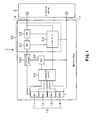
- the protective element is used as it is built into a battery pack 1 including a battery 10 composed by four chargeable/ dischargeable battery cells 11 to 14.
- the battery pack 1 includes the battery 10, a charging/ discharging controlling circuit 20, controlling the charging/ discharging of the battery 10, and a protective element 100 that protects the battery 10 and the charging/ discharging controlling circuit 20.
- the battery pack includes a detection circuit 40 that detects the voltage of each of the battery cells 11 to 14 and a current control element 50 that controls the operation of the voltages of the protective element 100 in response to the result of detection by the detection circuit 40.
- the battery 10 is made up of a series connection of the battery cells 11 to 14 that need to be controlled so as not to fall into the over-charging or over-discharging state, such as lithium ion cells.
- the battery is removable connected to the charging device 2 via a positive electrode terminal 1a and a negative electrode terminal 1b of the battery pack 1 and hence is fed with a charging voltage from the charging device 2.
- the charging/ discharging controlling circuit 20 includes two current controlling elements 21, 22, connected in series with each other on a current path for the current flowing from the battery 10 to the charging device 2, and a controller 23 that controls the operation of the current controlling elements 21, 22.
- Each of the current controlling elements 21, 22 is made up of, for example, a field effect transistor, referred to below as FET, whose gate voltage is controlled by the controller 23 to control the on/off of the current path through the battery 10.
- the controller is run into operation by power delivered from the charging device 2 to control the operation of the current controlling elements 21, 22, depending on the result of detection by the detection circuit 40, such as to turn off the current path in case the battery 10 is in the over-discharged or over-charged state.
- the protective element 100 is provided on a charging/ discharging current path between the battery 10 and the charging/ discharging controlling circuit 20, and has its operation controlled by the current control element 50.
- the detection circuit 40 is connected to each of the battery cells 11 to 14 to detect voltage values of the battery cells 11 to 14 to transmit respective voltage values detected to the controller 23 of the charging/ discharging controlling circuit 20.
- the detection circuit 40 outputs a control signal to control the current control element 50 in case any one or more of the battery cells 11 to 14 has fallen into the over-charging state or into the over-discharging voltage state.
- a detection signal, output from the detection circuit 40 indicates that the voltage value of any of the battery cells 11 to 14 has become offset from a pre-set range, more specifically, has fallen into the over-charging or over-discharging state.
- the current control element 50 sets the protective element 100 into operation to turn off the charging/discharging current path of the battery 10.
- the protective element 100 has the circuit configuration shown in Fig.2 .
- the protective element 100 includes fuses 101, 102 formed of low-melting metal which melts and becomes disrupted on heating, and a resistor 103 which, when fed with current, emits heat to melt the fuses101, 102, as shown in Fig.2 .
- the fuses 101, 102 are inherently formed by a single member which is formed of low melting metal and which is split into two parts to form a circuit shown. Viz., the two parts are joined together at a junction point P1 to form a series circuit composed by the two parts.
- the fuses are connected in series with each other on a charging/ discharging current path between the battery 10 and the charging/ discharging controlling circuit 20.
- the fuse 101 is connected to the battery 10 via a junction point A1 not connected to the fuse 102
- the fuse 102 is connected to the battery charging/ discharging controlling circuit 20 via a junction point A2 not connected to the fuse 101.
- the resistor 103 has one end connected via the junction point P1 to the fuses 101, 102, while having the other end connected via another junction point P2 to the current control element 50.
- the resistor 103 If, in the above described circuit configuration of the protective element 100, the resistor 103 is fed with current, the resistor emits heat which will melt the fuses 101, 102, by the operation of the current control element 50. With the fuses 101, 102 thus melted, it is possible to protect the electrical circuit within the battery pack 1.
- the protective element 100 it is necessary to use a solder formed of low melting metal for operation as fuses 101, 102 to promptly reliably disconnect a current path by taking advantage of the erosion phenomenon by the solder.
- the protective element is manufactured by the following process.
- the protective element 100 includes a ceramic substrate member 111a on which the resistor 103 is formed via a glass layer 111b.
- the protective element also includes a first electrically conductive layer 112 formed thereon via a glass layer 111c.
- the protective element according to the present invention is not limited to the above described stack of layers.
- a stack of layers including an insulation member formed by other than glass may be used.
- the glass layer 111b may not be used and the resistor 103 may directly be formed on the surface of the ceramic substrate member 111a.
- the ceramic substrate member 111a a substrate member of alumina or glass ceramics may, for example, be used.
- the first electrically conductive layer 112 of an excellently electrically conductive material such as Ag or Pt, is formed on a substrate 111 to a film thickness d1 by printing or the like processing.
- the second electrically conductive layers 113 are formed at a plurality of locations separated from one another in the in-plane direction on the substrate 111 to the same film thickness d2 by printing or the like processing.
- the site of the electrode 114b corresponds to the junction point P1 in the circuit configuration of Fig.2
- the site of the electrode 114c corresponds to the junction point A2 in the circuit configuration of Fig.2 .
- the electrodes 114a, 114b and 114c are sometimes referred to collectively as the electrodes 114.
- both the first and second electrically conductive layers 112, 113 are formed of excellently electrically conductive materials, such as Ag or Pt. It is preferred that, to relatively promote the action of erosion of the first electrically conductive layer 112 by the solder, the physical properties of the raw materials for the first electrically conductive layer 112 are adjusted so that the layer 112 will be eroded by the solder more readily than the second electrically conductive layer 113, as later explained.
- a lead-free solder 116 such as SnAg based solder, as low-melting metal, is applied by printing or the like processing on the substrate 111 on which the electrodes 114 are already deposited as described above.
- the lead-free solder 116 is layered at this time in contact with the first and second electrically conductive layers 112, 113, as shown in Fig.3B .
- the solder 116, deposited in this step to bridge the electrodes 114a, 114b, operates as the fuse 101, whereas the solder 116, deposited to bridge the electrodes 114b, 114c, operates as the fuse 102.
- the metallic material applied in the third layering step, has, in a melted state, a wetting performance for the electrodes 114 higher than that that for the substrate 111.
- the metallic material is not limited to the SnAg based metallic material.
- a film-forming step of forming a plurality of insulation films 117 is preferably carried out before the third layering step on each of the electrodes 114 formed by the second layering step.
- the solder 116 in the liquidus state may be retained in locations 116a, 116b, delimited by the insulation films 117, until the solder solidifies after printing.
- the solder 116 may be deposited to an even film thickness.
- the locations 116a, 116b may be seen in a plan view of Fig.4 showing the stack of layers of Fig.3B from above.
- the electrode 114b is connected to an electrode 118a equivalent to the junction point P1.
- the resistor 103 arranged within the bulk of the substrate 111, is connected via an electrically conductive member 103a to the electrode 118a, while being connected via an electrically conductive member 103b to an electrode 118b.
- a flux 119 which activates fluidity of the solder 116 in its melted state, is deposited on a site where the solder 116 has been applied.
- a cap 120 protects the protective element 100 in its entirety.
- the solder 116 begins to melt by at least one out of heat generated by the resistor 103 and heat generated by a layered site 121 formed by part of the electrode 114 and part of the solder 116, as shown in Fig.5 .
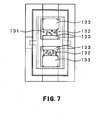
- the solder 116 in the melted state is attracted by surface tension towards the electrode 114, which is higher in wettability by the solder 116 than the substrate 111, as the solder 116 erodes the portion of the first electrically conductive layer 112 deposited between the neighbored electrodes 114, as shown in Figs.6 and 7 .
- melt residues 131 composed by the solder 116 and the first electrically conductive layer 112 are left over, as shown in Fig.6 .
- the amount of the melt residues, thus left over is only small.
- the current path is melt-disrupted between the neighbored electrodes 114.
- the portions of the first electrically conductive layer 112, not covered by the second electrically conductive layers 113, and hence located between the neighbored electrodes 114 operate as a melt-disconnect part 132.
- the second electrically conductive layer 113, forming the electrode 114 operates as a solder sink 133 to attract the eroding solder.
- the electrodes 114 are formed by a stack of layers in which the first and second electrically conductive layers 112, 113 provide a step of a film thickness difference relative to the substrate 111. It is thus possible that the solder 116 is drawn onto the electrodes 114 as the solder erodes only the first electrically conductive layer 112.
- the solder 116 is layered in an area of the first electrically conductive layer 112 delimited between the neighbored electrodes 114. It is thus possible to prevent the protective element 100 from being melt-disconnected under heat applied e.g., when the protective element 100 is reflow-packaged on a circuit substrate within the battery 1. Viz., the protective element 100 is not subjected to an erosive action at the first electrically conductive layer 112, and hence the current path is not disconnected, unless the protective element is self-heated due to over-current or heated by the resistor 103.
- the solder 116 formed of low-melting metal, is melted just due to self-heating in case of over-current or under heat generated by the resistor 103 through which the current flows in response to a non-normal state such as over-voltage.
- the current path may be disconnected promptly reliably by taking advantage of the phenomenon of erosion by the solder in the melted state.
- a lead-free paste-like solder is preferably used. It is because the above mentioned third layering processing may readily be performed by printing as the range of selection of solder materials is made broader. It should be noted that, in the protective element, according to the present invention, not only the lead-free paste-like solder but also a lead-based solder or a solder other than the paste-like solder, such as a solder foil, may also be used.
- the portion of the first electrically conductive layer 112, arranged between the electrodes 114 on the substrate 111 so as to be eroded by solder 116 in the melted state includes one or more slits 112a by which the above mentioned portion of the first electrically conductive layer 112 is divided into a plurality of sections.
- the configuration is desirable in that the current path may be disconnected reliably and promptly.
- the solder 116 is deposited to contact with both the first electrically conductive layer 112 and the second electrically conductive layer 113, as shown in Fig.9 .
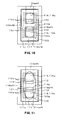
- a plurality of insulation films 117 may be provided on the electrodes 114. It is thus possible to deposit the solder 116 to an even film thickness on location sites 116a, 116b, delimited by the insulation films 117, as indicated in a plan view of Fig. 10 showing the stack of Fig.9 from above.
- a flux 119 which promotes fluidity of the solder 116 in the melted state, is placed on the solder 116 deposited.
- a cap 120 is also provided to protect the protective element 100 in its entirety.
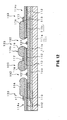
- the solder 116 in the melted state is intruded into the slits 112a, as shown in the cross-sectional view of Fig.12 . Since this permits erosion of the first electrically conductive layer 112 more efficiently, the melt residues 131, composed by the solder 116 and the first electrically conductive layer 112, are scarcely produced. Viz., in the protective element 100 of the present modification, the leakage current between the neighbored electrodes 114 may be decreased, while the current path may be disconnected promptly reliably.
- the first and second electrically conductive layers 112, 113 are used to provide an electrically conductive layer having a step by film thickness difference relative to the substrate 111 to form the electrodes 114.
- the film thickness ratio of the electrode 114 to the first electrically conductive layer 112 of 2 or more is desirable from the solder erosion characteristic against the film thickness of an electrically conductive layer. The result of a test which yielded solder erosion characteristic will now be described.
- the solder erosion characteristic related to the film thickness of the electrically conductive layer was evaluated by a test which makes use of a test substrate 200 shown in Figs.14A and 14B.
- Fig.14A shows a cross-sectional structure of a test substrate 200
- Fig.14B depicts a top plan view of the test substrate.
- the test substrate 200 is made up of a substrate 202, in the bulk of which a resistor 201 is provided, an electrically conductive layer 203 having a film thickness d, and a solder 204, arranged in this order.
- a sintered silver-based thick film was used as a material for the electrically conductive layer 203.
- the lead-based solder 204 melting at a temperature higher than with a SnAg based material, was used.
- a lead-free solder such as SnAg based solder, is preferred in that it melts at a lower temperature and hence may erode more readily.
- the electrically conductive layer 203 under the constant heating conditions, the electrically conductive layer 203, with the film thickness d on the order of 7 [ ⁇ m], is eroded severely and may properly be used as the first electrically conductive layer 112 operating as the melt-disconnect part 132.
- the electrically conductive layer 203, with the film thickness d on the order of 22 [ ⁇ m] is not eroded and may properly be used as the electrode 114.
- the ratio of the film thickness of the electrode 114 to that of the first electrically conductive layer 112 is not less than 2 and, in particular, not less than 3, from the perspective of reliable melt-disconnection of the current path between the electrodes 114.
- the film thickness of the electrode 114 are meant the film thicknesses of the first and second electrically conductive layers 112, 113 summed together.
- the ratio of the film thickness of the electrode 114 to that of the first electrically conductive layer 112 ranging between 2 and 3 is desirable in preventing the erosion from occurring in the electrodes 114 as the low cost for the raw materials of the electrically conductive layers is maintained.
- the film thickness of the first electrically conductive layer 112 is desirably 7 [ ⁇ m] or less in view of efficient demonstration of the erosive operation. It is desirably not less than 1 [ ⁇ m] which is the minimum film thickness for which no erosion may occur even in reflow packaging.
- the film thickness of the electrode 114 viz., the sum of the film thicknesses of the first and second electrically conductive layers 112, 113, is desirably not less than 14 [ ⁇ m] and, in particular, not less than 22 [ ⁇ m], for preventing the erosive action from occurring.
- the area of the melt-disconnect part 132, where the first electrically conductive layer 112 is eroded, is preferably on the order of 0.5 to 2 [mm] (width) ⁇ 0.2 to 0.4 [mm] (length). If a slit is formed by way of a modification, the slit size is preferably ca. 0.5 to 2 [mm] along the width of the gap between the neighbored electrodes 114 and ca. 0.1 to 0.2 [mm] along the length of the gap between the neighbored electrodes 114 perpendicular thereto.
- the protective element according to the present invention may promptly reliably disconnect a current path by taking advantage of the solder erosion phenomenon in case the element is mounted in electrical circuits other than the above mentioned battery pack 1. The reason is that the protective element according to the present invention is aimed to protect a device of interest against at least one out of the over-current state and the over-voltage state.
Landscapes
- Engineering & Computer Science (AREA)
- Chemical & Material Sciences (AREA)
- Combustion & Propulsion (AREA)
- Manufacturing & Machinery (AREA)
- Fuses (AREA)
Applications Claiming Priority (2)
| Application Number | Priority Date | Filing Date | Title |
|---|---|---|---|
| JP2010135806A JP5656466B2 (ja) | 2010-06-15 | 2010-06-15 | 保護素子、及び、保護素子の製造方法 |
| PCT/JP2011/063648 WO2011158851A1 (ja) | 2010-06-15 | 2011-06-15 | 保護素子、及び、保護素子の製造方法 |
Publications (2)
| Publication Number | Publication Date |
|---|---|
| EP2584579A1 true EP2584579A1 (de) | 2013-04-24 |
| EP2584579A4 EP2584579A4 (de) | 2014-08-27 |
Family
ID=45348248
Family Applications (1)
| Application Number | Title | Priority Date | Filing Date |
|---|---|---|---|
| EP11795755.5A Withdrawn EP2584579A4 (de) | 2010-06-15 | 2011-06-15 | Schutzelement und verfahren zur herstellung des schutzelements |
Country Status (7)
| Country | Link |
|---|---|
| US (1) | US20130099890A1 (de) |
| EP (1) | EP2584579A4 (de) |
| JP (1) | JP5656466B2 (de) |
| KR (1) | KR101791292B1 (de) |
| CN (1) | CN102934188B (de) |
| TW (1) | TWI518729B (de) |
| WO (1) | WO2011158851A1 (de) |
Families Citing this family (30)
| Publication number | Priority date | Publication date | Assignee | Title |
|---|---|---|---|---|
| US8976001B2 (en) * | 2010-11-08 | 2015-03-10 | Cyntec Co., Ltd. | Protective device |
| JP6249600B2 (ja) | 2012-03-29 | 2017-12-20 | デクセリアルズ株式会社 | 保護素子 |
| WO2013146889A1 (ja) * | 2012-03-29 | 2013-10-03 | デクセリアルズ株式会社 | 保護素子 |
| JP6420053B2 (ja) * | 2013-03-28 | 2018-11-07 | デクセリアルズ株式会社 | ヒューズエレメント、及びヒューズ素子 |
| JP6171500B2 (ja) * | 2013-04-03 | 2017-08-02 | 株式会社村田製作所 | ヒューズ |
| JP6151550B2 (ja) | 2013-04-25 | 2017-06-21 | デクセリアルズ株式会社 | 保護素子 |
| JP6227276B2 (ja) | 2013-05-02 | 2017-11-08 | デクセリアルズ株式会社 | 保護素子 |
| JP6184238B2 (ja) * | 2013-08-07 | 2017-08-23 | デクセリアルズ株式会社 | 短絡素子、及び短絡回路 |
| JP6324684B2 (ja) | 2013-08-21 | 2018-05-16 | デクセリアルズ株式会社 | 保護素子 |
| CN103396769B (zh) * | 2013-08-21 | 2014-05-28 | 北京依米康科技发展有限公司 | 一种低熔点金属导热膏及其制备方法和应用 |
| JP6184805B2 (ja) | 2013-08-28 | 2017-08-23 | デクセリアルズ株式会社 | 遮断素子、及び遮断素子回路 |
| CN103426681B (zh) * | 2013-08-30 | 2016-06-22 | 蒋闯 | 可控可锁定保护开关、开关控制系统及锂电池 |
| JP6196856B2 (ja) | 2013-09-11 | 2017-09-13 | デクセリアルズ株式会社 | 切替回路 |
| JP6173859B2 (ja) | 2013-09-26 | 2017-08-02 | デクセリアルズ株式会社 | 短絡素子 |
| JP6223142B2 (ja) | 2013-11-20 | 2017-11-01 | デクセリアルズ株式会社 | 短絡素子 |
| JP6576618B2 (ja) * | 2014-05-28 | 2019-09-18 | デクセリアルズ株式会社 | 保護素子 |
| JP6381975B2 (ja) | 2014-06-04 | 2018-08-29 | デクセリアルズ株式会社 | 短絡素子 |
| JP6381980B2 (ja) * | 2014-06-11 | 2018-08-29 | デクセリアルズ株式会社 | スイッチ素子及びスイッチ回路 |
| JP2016018683A (ja) * | 2014-07-08 | 2016-02-01 | デクセリアルズ株式会社 | 保護素子 |
| JP2016035816A (ja) * | 2014-08-01 | 2016-03-17 | デクセリアルズ株式会社 | 保護素子及び保護回路 |
| JP6343201B2 (ja) | 2014-08-04 | 2018-06-13 | デクセリアルズ株式会社 | 短絡素子 |
| JP6411123B2 (ja) * | 2014-08-04 | 2018-10-24 | デクセリアルズ株式会社 | 温度短絡素子、温度切替素子 |
| JP6437262B2 (ja) * | 2014-09-26 | 2018-12-12 | デクセリアルズ株式会社 | 実装体の製造方法、温度ヒューズ素子の実装方法及び温度ヒューズ素子 |
| JP6622960B2 (ja) * | 2014-12-18 | 2019-12-18 | デクセリアルズ株式会社 | スイッチ素子 |
| DE102015202071B4 (de) * | 2015-02-05 | 2018-11-15 | Continental Automotive Gmbh | Leiterplattenanordnung |
| US10032583B2 (en) | 2016-02-17 | 2018-07-24 | Dexerials Corporation | Protective circuit substrate |
| US9870886B2 (en) | 2016-02-17 | 2018-01-16 | Dexerials Corporation | Protective element and protective circuit substrate using the same |
| US10283296B2 (en) * | 2016-10-05 | 2019-05-07 | Chin-Chi Yang | Controllable circuit protector for power supplies with different voltages |
| TWI731801B (zh) | 2020-10-12 | 2021-06-21 | 功得電子工業股份有限公司 | 保護元件及其製作方法 |
| CN119208079B (zh) * | 2024-09-29 | 2025-10-14 | 东莞市竞沃电子科技有限公司 | 可自恢复的三端保险器 |
Family Cites Families (12)
| Publication number | Priority date | Publication date | Assignee | Title |
|---|---|---|---|---|
| JP2788072B2 (ja) * | 1989-09-04 | 1998-08-20 | 株式会社フジクラ | 温度ヒューズ |
| JP3794047B2 (ja) | 1996-02-15 | 2006-07-05 | 松下電器産業株式会社 | プリント配線基板 |
| JP2001043781A (ja) * | 1999-07-29 | 2001-02-16 | Nec Kansai Ltd | 保護素子およびその製造方法 |
| JP2001325868A (ja) * | 2000-05-17 | 2001-11-22 | Sony Chem Corp | 保護素子 |
| JP2004079306A (ja) * | 2002-08-14 | 2004-03-11 | Fujikura Ltd | 抵抗回路基板の温度ヒューズ |
| JP4528308B2 (ja) | 2004-12-28 | 2010-08-18 | パイオニア株式会社 | ビーム記録方法及び装置 |
| DE102005024346B4 (de) * | 2005-05-27 | 2012-04-26 | Infineon Technologies Ag | Sicherungselement mit Auslöseunterstützung |
| US7733620B2 (en) * | 2006-07-19 | 2010-06-08 | Ta-I Technology Co., Ltd | Chip scale gas discharge protective device and fabrication method of the same |
| JP2008311161A (ja) * | 2007-06-18 | 2008-12-25 | Sony Chemical & Information Device Corp | 保護素子 |
| US8888932B2 (en) * | 2007-07-18 | 2014-11-18 | Senju Metal Industry Co., Ltd. | Indium-containing lead-free solder for vehicle-mounted electronic circuits |
| JP5287154B2 (ja) * | 2007-11-08 | 2013-09-11 | パナソニック株式会社 | 回路保護素子およびその製造方法 |
| DE102009040022B3 (de) * | 2009-09-03 | 2011-03-24 | Beru Ag | Verfahren zum Ausbilden einer Schmelzsicherung und Leiterplatte mit Schmelzsicherung |
-
2010
- 2010-06-15 JP JP2010135806A patent/JP5656466B2/ja active Active
-
2011
- 2011-06-15 CN CN201180029446.1A patent/CN102934188B/zh active Active
- 2011-06-15 EP EP11795755.5A patent/EP2584579A4/de not_active Withdrawn
- 2011-06-15 US US13/704,774 patent/US20130099890A1/en not_active Abandoned
- 2011-06-15 KR KR1020137000897A patent/KR101791292B1/ko active Active
- 2011-06-15 WO PCT/JP2011/063648 patent/WO2011158851A1/ja not_active Ceased
- 2011-06-15 TW TW100120801A patent/TWI518729B/zh active
Also Published As
| Publication number | Publication date |
|---|---|
| KR101791292B1 (ko) | 2017-11-20 |
| CN102934188A (zh) | 2013-02-13 |
| WO2011158851A1 (ja) | 2011-12-22 |
| JP5656466B2 (ja) | 2015-01-21 |
| KR20130085408A (ko) | 2013-07-29 |
| CN102934188B (zh) | 2015-12-02 |
| HK1179405A1 (zh) | 2013-09-27 |
| US20130099890A1 (en) | 2013-04-25 |
| TW201212087A (en) | 2012-03-16 |
| TWI518729B (zh) | 2016-01-21 |
| JP2012003878A (ja) | 2012-01-05 |
| EP2584579A4 (de) | 2014-08-27 |
Similar Documents
| Publication | Publication Date | Title |
|---|---|---|
| EP2584579A1 (de) | Schutzelement und verfahren zur herstellung des schutzelements | |
| TWI671777B (zh) | 保護元件及電池包 | |
| JP6249600B2 (ja) | 保護素子 | |
| KR102238851B1 (ko) | 보호 소자 | |
| KR102214299B1 (ko) | 보호 소자 | |
| KR101946106B1 (ko) | 보호 소자 및 배터리 팩 | |
| KR20150040954A (ko) | 보호 소자 및 배터리 팩 | |
| WO2020209071A1 (ja) | 保護素子及びバッテリパック | |
| TW201522031A (zh) | 可溶導體的製造方法 | |
| JP6538936B2 (ja) | 保護素子及びバッテリパック | |
| JP6254859B2 (ja) | 遮断素子、遮断素子回路、 | |
| WO2021210634A1 (ja) | 保護素子及びバッテリパック | |
| JP6078332B2 (ja) | 保護素子、バッテリモジュール | |
| US20250166947A1 (en) | Protective element | |
| CN119404273A (zh) | 保护元件及保护元件的制造方法 | |
| HK1179405B (en) | Protection element, and method for producing protection element | |
| WO2015107633A1 (ja) | 保護素子、バッテリモジュール | |
| WO2015107632A1 (ja) | 保護素子 |
Legal Events
| Date | Code | Title | Description |
|---|---|---|---|
| PUAI | Public reference made under article 153(3) epc to a published international application that has entered the european phase |
Free format text: ORIGINAL CODE: 0009012 |
|
| 17P | Request for examination filed |
Effective date: 20121128 |
|
| AK | Designated contracting states |
Kind code of ref document: A1 Designated state(s): AL AT BE BG CH CY CZ DE DK EE ES FI FR GB GR HR HU IE IS IT LI LT LU LV MC MK MT NL NO PL PT RO RS SE SI SK SM TR |
|
| DAX | Request for extension of the european patent (deleted) | ||
| A4 | Supplementary search report drawn up and despatched |
Effective date: 20140729 |
|
| RIC1 | Information provided on ipc code assigned before grant |
Ipc: H01H 85/046 20060101ALI20140723BHEP Ipc: H01H 37/76 20060101AFI20140723BHEP |
|
| RIC1 | Information provided on ipc code assigned before grant |
Ipc: H01H 37/76 20060101AFI20150209BHEP Ipc: H01H 85/046 20060101ALI20150209BHEP |
|
| GRAP | Despatch of communication of intention to grant a patent |
Free format text: ORIGINAL CODE: EPIDOSNIGR1 |
|
| INTG | Intention to grant announced |
Effective date: 20150320 |
|
| STAA | Information on the status of an ep patent application or granted ep patent |
Free format text: STATUS: THE APPLICATION IS DEEMED TO BE WITHDRAWN |
|
| 18D | Application deemed to be withdrawn |
Effective date: 20150731 |