EP2584609A2 - Photovoltaikmodul - Google Patents
Photovoltaikmodul Download PDFInfo
- Publication number
- EP2584609A2 EP2584609A2 EP12169409.5A EP12169409A EP2584609A2 EP 2584609 A2 EP2584609 A2 EP 2584609A2 EP 12169409 A EP12169409 A EP 12169409A EP 2584609 A2 EP2584609 A2 EP 2584609A2
- Authority
- EP
- European Patent Office
- Prior art keywords
- electrode
- collecting electrode
- cell
- collecting
- photovoltaic module
- Prior art date
- Legal status (The legal status is an assumption and is not a legal conclusion. Google has not performed a legal analysis and makes no representation as to the accuracy of the status listed.)
- Withdrawn
Links
Images




Classifications
-
- H—ELECTRICITY
- H10—SEMICONDUCTOR DEVICES; ELECTRIC SOLID-STATE DEVICES NOT OTHERWISE PROVIDED FOR
- H10F—INORGANIC SEMICONDUCTOR DEVICES SENSITIVE TO INFRARED RADIATION, LIGHT, ELECTROMAGNETIC RADIATION OF SHORTER WAVELENGTH OR CORPUSCULAR RADIATION
- H10F77/00—Constructional details of devices covered by this subclass
- H10F77/93—Interconnections
- H10F77/933—Interconnections for devices having potential barriers
- H10F77/935—Interconnections for devices having potential barriers for photovoltaic devices or modules
- H10F77/939—Output lead wires or elements
-
- H—ELECTRICITY
- H10—SEMICONDUCTOR DEVICES; ELECTRIC SOLID-STATE DEVICES NOT OTHERWISE PROVIDED FOR
- H10F—INORGANIC SEMICONDUCTOR DEVICES SENSITIVE TO INFRARED RADIATION, LIGHT, ELECTROMAGNETIC RADIATION OF SHORTER WAVELENGTH OR CORPUSCULAR RADIATION
- H10F19/00—Integrated devices, or assemblies of multiple devices, comprising at least one photovoltaic cell covered by group H10F10/00, e.g. photovoltaic modules
- H10F19/30—Integrated devices, or assemblies of multiple devices, comprising at least one photovoltaic cell covered by group H10F10/00, e.g. photovoltaic modules comprising thin-film photovoltaic cells
- H10F19/31—Integrated devices, or assemblies of multiple devices, comprising at least one photovoltaic cell covered by group H10F10/00, e.g. photovoltaic modules comprising thin-film photovoltaic cells having multiple laterally adjacent thin-film photovoltaic cells deposited on the same substrate
- H10F19/35—Structures for the connecting of adjacent photovoltaic cells, e.g. interconnections or insulating spacers
-
- H—ELECTRICITY
- H10—SEMICONDUCTOR DEVICES; ELECTRIC SOLID-STATE DEVICES NOT OTHERWISE PROVIDED FOR
- H10F—INORGANIC SEMICONDUCTOR DEVICES SENSITIVE TO INFRARED RADIATION, LIGHT, ELECTROMAGNETIC RADIATION OF SHORTER WAVELENGTH OR CORPUSCULAR RADIATION
- H10F19/00—Integrated devices, or assemblies of multiple devices, comprising at least one photovoltaic cell covered by group H10F10/00, e.g. photovoltaic modules
- H10F19/90—Structures for connecting between photovoltaic cells, e.g. interconnections or insulating spacers
-
- H—ELECTRICITY
- H10—SEMICONDUCTOR DEVICES; ELECTRIC SOLID-STATE DEVICES NOT OTHERWISE PROVIDED FOR
- H10F—INORGANIC SEMICONDUCTOR DEVICES SENSITIVE TO INFRARED RADIATION, LIGHT, ELECTROMAGNETIC RADIATION OF SHORTER WAVELENGTH OR CORPUSCULAR RADIATION
- H10F77/00—Constructional details of devices covered by this subclass
- H10F77/93—Interconnections
- H10F77/933—Interconnections for devices having potential barriers
- H10F77/935—Interconnections for devices having potential barriers for photovoltaic devices or modules
- H10F77/937—Busbar structures for modules
-
- Y—GENERAL TAGGING OF NEW TECHNOLOGICAL DEVELOPMENTS; GENERAL TAGGING OF CROSS-SECTIONAL TECHNOLOGIES SPANNING OVER SEVERAL SECTIONS OF THE IPC; TECHNICAL SUBJECTS COVERED BY FORMER USPC CROSS-REFERENCE ART COLLECTIONS [XRACs] AND DIGESTS
- Y02—TECHNOLOGIES OR APPLICATIONS FOR MITIGATION OR ADAPTATION AGAINST CLIMATE CHANGE
- Y02E—REDUCTION OF GREENHOUSE GAS [GHG] EMISSIONS, RELATED TO ENERGY GENERATION, TRANSMISSION OR DISTRIBUTION
- Y02E10/00—Energy generation through renewable energy sources
- Y02E10/50—Photovoltaic [PV] energy
Definitions
- the present disclosure relates to a photovoltaic module. More particularly, the present disclosure relates to a photovoltaic module, in which cell sets are electrically connected in parallel.
- a photovoltaic module is a device to transform light into electricity by the photovoltaic effect.
- the photovoltaic industry develops so rapidly because every country works hard to promote renewable energy.
- a low voltage photovoltaic module is manufactured by a laser process to complete the layout of common electrodes at front end and then by a module process to electrically connect the common electrodes by ribbons across a part of cell units of cell sets.
- this approach requires the ribbons to be bonded on a part of the cell units of the cell sets, and thus the whole lay-up structure of the photovoltaic module is very complicated.
- the complicated lay-up structure affects the yield of the module process and the lamination process.
- the hardware cost also increases.
- the module cost also increases because the ribbons are needed to connect the common electrodes.
- it causes a waste that a part of the cell units are shielded by the ribbons and thus are unable to generate electricity because the ribbons must be across a part of the cell units of the cell sets.
- the present invention provides a photovoltaic module having a plurality of cell sets electrically connected in parallel to supply a stable and large photocurrent.
- the photovoltaic module of the present invention at least has a collecting electrode and a plurality of cell sets, wherein the collecting electrode and the cell set are substantially made of the same layer.
- the compacted photovoltaic module of the present invention makes the structure simple and stable, and the manufacture cost can be therefore reduced.
- a photovoltaic module includes a substrate, a plurality of cell sets, a first connecting electrode and a second connecting electrode.
- the cell sets is disposed on the substrate.
- Each of the cell sets includes a plurality of cell units, a bottom connecting electrode and an upper connecting electrode.
- the plurality of cell units are electrically connected to each other in series.
- the cell units are electrically connected between the bottom connecting electrode and the upper connecting electrode.
- the first collecting electrode is disposed on the substrate and is electrically connected to the bottom connecting electrode of every cell set.
- the second collecting electrode is disposed on the substrate and is electrically connected to the upper connecting electrode of every cell set.
- the second collecting electrode and the cell sets are substantially made of the same layer.
- the cell units include a transparent electrode, a back electrode and a photovoltaic layer.
- the photovoltaic layer is located between the transparent electrode and the back electrode.
- the first collecting electrode includes a stack of a transparent conductive layer, a photovoltaic layer and a conductive metal layer.
- the first collecting electrode includes a plurality of branch electrode parts and a cross-connected electrode part.
- the branch electrode parts are electrically connected to the upper connecting electrodes.
- the cross-connected electrode part electrically connects these branch electrode parts.
- the photovoltaic module further includes an isolation line.
- the isolation line is disposed between the cell sets and the cross-connected electrode part of the first collecting electrode for electrically isolated therebetween.
- the first collecting electrode is an integrally formed conductive layer.
- the first collecting electrode is not across the cell sets.
- the second collecting electrode includes a stack of a transparent conductive layer, a photovoltaic layer and a conductive metal layer.
- the second collecting electrode includes a plurality of branch electrode parts and a cross-connected electrode part.
- the branch electrode parts are electrically connected to the upper connecting electrodes.
- the cross-connected electrode part electrically connects these branch electrode parts.
- the photovoltaic module further includes an isolation line.
- the isolation line is disposed between the cell sets and the cross-connected electrode part of the second collecting electrode for electrically isolated therebetween.
- the second collecting electrode is not across the cell sets.
- the first collecting electrode is across at least a part of the cell sets.
- the second collecting electrode is an integrally formed conductive layer.
- the photovoltaic module further includes a first leading-out electrode, a second leading-out electrode and a patterned insulation layer.
- the first leading-out electrode is electrically connected to the first collecting electrode.
- the second leading-out electrode is electrically connected to the second collecting electrode.
- the patterned insulation layer is disposed between a combination of the first leading-out electrode and the second leading-out electrode and the cell sets.
- the photovoltaic module further includes a first auxiliary electrode and a second auxiliary electrode.
- the first auxiliary electrode and the second auxiliary electrode are respectively disposed on the first collecting electrode and the second collecting electrode.
- Fig. 1 is a top view of a photovoltaic module according to the first embodiment of the present invention.
- Fig. 2 is a sectional view taken along line 2-2 of Fig. 1 .
- a photovoltaic module includes a substrate 110, a first cell set 120, a second cell set 130, a first collecting electrode 140 and a second collecting electrode 150.
- the first cell set 120 is disposed on the substrate 110.
- the first cell set 120 includes a plurality of first cell units 128, a first bottom connecting electrode 121 and a first upper connecting electrode 123.
- the plurality of first cell units 128 are electrically connected to each other in series.
- the first cell units 128 are electrically connected between the first bottom connecting electrode 121 and the first upper connecting electrode 123.
- the second cell set 130 is disposed on the substrate 110.
- the second cell set 130 includes a plurality of second cell units 138, a second bottom connecting electrode 131 and a second upper connecting electrode 133.
- the plurality of second cell units 138 are electrically connected to each other in series.
- the second cell units 138 are electrically connected between the second bottom connecting electrode 131 and the second upper connecting electrode 133.
- the first collecting electrode 140 is disposed on the substrate 110 and electrically connects the first bottom connecting electrode 121 and the second bottom connecting electrode 131.
- the second collecting electrode 150 is disposed on the substrate 110 and electrically connects the first upper connecting electrode 123 and the second upper connecting electrode 133.
- the second collecting electrode 150, the first cell set 120 and the second cell set 130 are substantially made of the same layer.
- the second collecting electrode 150 can be made of substantially the same stack of layers or materials as the first cell set 120 and the second cell set 130 or only partially the same stack of layers or materials as the first cell set 120 and the second cell set 130.
- the first collecting electrode 140 and the second collecting electrode 150 can electrically connect the first cell set 120 and the second cell set 130 in parallel to supply a larger and more stable electrical current.
- the first collecting electrode 140, the second collecting electrode 150, the first cell set 120 and the second cell set 130 can be formed together by patterning a transparent layer, a photovoltaic layer and a conductive metal layer on the substrate 110. Therefore, in the first embodiment, it is unnecessary to attach additional ribbons on the first collecting electrode 140 and the second collecting electrode 150 so that the complexity of the lay-up structure can be reduced, and thus the process yield problem resulting from the overcomplicated lay-up structure may be further improved. In addition, the hardware cost and the module cost can be further reduced as well.
- the substrate 110 can be any substrate which supplies enough structural support.
- the substrate 110 includes, but is not limited to, a transparent substrate, a glass substrate, a plastic substrate, a silicon substrate, a hard substrate, a flexible substrate or any combinations thereof. It should be understood that the aforementioned specific types of the substrate 110 are for examples only and should not limit the claimed scope of the present invention. The person having ordinary skill in the art may select a proper substrate depending on actual requirements.
- Each of the first cell units 128 may include a transparent electrode 122, a back electrode 124 and a photovoltaic layer 126.
- the photovoltaic layer 126 is located between the transparent electrode 122 and the back electrode 124.
- the material of the transparent electrode 122 may include, but be not limited to, indium tin oxide, indium zinc oxide, aluminum zinc oxide or any combinations thereof.
- the material of the back electrode 124 may include, but be not limited to, a conductive material, metal, aluminum, copper or any combinations thereof.
- the material of the photovoltaic layer 126 may include, but be not limited to, monocrystalline silicon, polycrystalline silicon, amorphous silicon, cadmium telluride, copper indium selenide, copper indium gallium selenide, gallium arsenide, photochemical photovoltaic material, dye-sensitized photovoltaic material, polymer photovoltaic material, nanocrystalline photovoltaic material, or any combinations thereof.
- the substrate 110 is made of a transparent material
- one of the transparent electrode 122 and the back electrode 124 can be chosen to be disposed on the substrate 110.
- the back electrode 124 can be chosen to be disposed on the substrate 110.
- each of the second cell units 138 may also include a transparent electrode 132, a back electrode 134 and a photovoltaic layer 136, and the structure cooperation among the transparent electrode 132, the back electrode 134 and the photovoltaic layer 136 is substantially the same as the aforementioned embodiment.
- the photovoltaic layer 136 is located between the transparent electrode 132 and the back electrode 134.
- the material of the transparent electrode 132 may include, but be not limited to, indium tin oxide, indium zinc oxide, aluminum zinc oxide or any combinations thereof.
- the material of the back electrode 134 may include, but be not limited to, a conductive material, metal, aluminum, copper or any combinations thereof.
- the material of the photovoltaic layer 136 may include, but be not limited to, monocrystalline silicon, polycrystalline silicon, amorphous silicon, cadmium telluride, copper indium selenide, copper indium gallium selenide, gallium arsenide, photochemical photovoltaic material, dye-sensitized photovoltaic material, polymer photovoltaic material, nanocrystalline photovoltaic material, or any combinations thereof.
- the first collecting electrode 140 may include a stack of a transparent layer 142, a photovoltaic layer 144 and a conductive metal layer 146.
- the first collecting electrode 140 may be replaced with only a part of the stack of the transparent layer 142, the photovoltaic layer 144 and the conductive metal layer 146.
- the material of the transparent electrode 142 may include, but be not limited to, indium tin oxide, indium zinc oxide, aluminum zinc oxide or any combinations thereof.
- the material of the photovoltaic layer 144 may include, but be not limited to, monocrystalline silicon, polycrystalline silicon, amorphous silicon, cadmium telluride, copper indium selenide, copper indium gallium selenide, gallium arsenide, photochemical photovoltaic material, dye-sensitized photovoltaic material, polymer photovoltaic material, nanocrystalline photovoltaic material, or any combinations thereof.
- the material of the conductive metal layer 146 may include, but be not limited to, a conductive material, metal, aluminum, copper or any combinations thereof.
- the first collecting electrode 140 of Fig. 2 is the stack of the transparent conductive layer 142, the photovoltaic layer 144 and the conductive metal layer 146, only the conductive metal layer 146 is enough to provide an electrical connection between the first bottom connecting electrode 121 and the second bottom connecting electrode 131. Therefore, in the first embodiment, only the conductive metal layer 146 may be considered the first collecting electrode 140 as well.
- the conductive metal layer 146 within the first collecting electrode 140 is integrally formed to provide a collecting function.
- manufactures may omit the transparent conductive layer 142 and the photovoltaic layer 144 and dispose the conductive metal layer 146 on the substrate 110 alone to be the first collecting electrode 140.
- the manufactures may omit the photovoltaic layer 144 and dispose a stack of the transparent conductive layer 142 and the conductive metal layer 146 alone to be the first collecting electrode 140.
- each of the second collecting electrodes 150 may include a stack of a transparent conductive layer 152, a photovoltaic layer 154 and a conductive metal layer 156 as well.
- the material of the transparent conductive layer 152 may include, but be not limited to, indium tin oxide, indium zinc oxide, aluminum zinc oxide or any combinations thereof.
- the material of the photovoltaic layer 154 may include, but be not limited to, monocrystalline silicon, polycrystalline silicon, amorphous silicon, cadmium telluride, copper indium selenide, copper indium gallium selenide, gallium arsenide, photochemical photovoltaic material, dye-sensitized photovoltaic material, polymer photovoltaic material, nanocrystalline photovoltaic material, or any combinations thereof.
- the material of the conductive metal layer 156 may include, but be not limited to, a conductive material, metal, aluminum, copper or any combinations thereof.
- the second collecting electrode 150 of Fig. 2 is the stack of the transparent conductive layer 152, the photovoltaic layer 154 and the conductive metal layer 156, or the second collecting electrode 150 of Fig. 2 may be a part of the stack of the transparent conductive layer 152, the photovoltaic layer 154 and the conductive metal layer 156, only the conductive metal layer 156 is enough to provide an electrical connection between the first upper connecting electrode 123 and the second upper connecting electrode 133. Therefore, in the first embodiment, only the conductive metal layer 156 may be considered the second collecting electrode 150 as well.
- the conductive metal layer 156 within the second collecting electrode 150 is integrally formed to provide a collecting function.
- manufactures may omit the transparent conductive layer 152 and the photovoltaic layer 154 and dispose the conductive metal layer 156 on the substrate 110 alone to be the second collecting electrode 150.
- manufactures may omit the photovoltaic layer 154 and dispose a stack of the transparent conductive layer 152 and the conductive metal layer 156 alone to be the second collecting electrode 150.
- the material of the transparent electrode 122 of each of the first cell units 128, the transparent electrode 132 of each of the second cell units 138, the transparent conductive layer 142 of the first collecting electrode 140 and the transparent conductive layer 152 of the second collecting electrode 150 are the same.
- the material of the back electrode 124 of each of the first cell units 128, the back electrode 134 of each of the second cell units 138, the conductive metal layer 146 of the first collecting electrode 140 and the conductive metal layer 156 of the second collecting electrode 150 are the same.
- the material of the photovoltaic layer 126 of each of the first cell units 128, the photovoltaic layer 136 of each of the second cell units 138, the photovoltaic layer 144 of the first collecting electrode 140 and the photovoltaic layer 154 of the second collecting electrode 150 are also the same.
- the transparent electrodes 122/132 of Fig. 2 are disposed on the substrate 110, this should not limit the claimed scope of the present invention.
- the manufacturers may choose the transparent electrodes 122/132 to be disposed on the substrate 110 so that light is allowed to be transmitted from a side of the substrate 110 into the photovoltaic layers 126/136.
- the manufacturers may choose the back electrodes 124/134 to be disposed on the substrate 110 and dispose the transparent electrodes 122/132 and a transparent substrate opposite the back electrodes 124/134 and the opaque backboard.
- first bottom connecting electrode 121 and the second bottom connecting electrode 131 of Fig. 2 are electrically connected to the back electrodes 124/134, and the first upper connecting electrode 123 and the second upper connecting electrode 133 are electrically connected to the transparent electrodes 122/132, these should not limit the claimed scope of the present invention.
- the substrate 110 is the opaque backboard, since the back electrodes 124/134 is disposed on the substrate 110, the first bottom connecting electrode 121 and the second bottom connecting electrode 131 are electrically connected to the transparent electrodes 122/132, and the first upper connecting electrode 123 and the second upper connecting electrode 133 are electrically connected to the back electrodes 124/134.
- the first collecting electrode 140 is disposed between the first cell set 120 and the second cell set 130.
- the second collecting electrode 150 is disposed around the first cell set 120 and the second cell set 130.
- the second collecting electrode 150 may include a plurality of branch electrode parts 151 (there are two branch electrode parts 151 in Fig. 1 ) and a cross-connected electrode part 153.
- the branch electrode parts 151 are electrically connected to the first upper connecting electrode 123 and the second upper connecting electrode 133 respectively (as shown in Fig. 2 ).
- the cross-connected electrode part 153 electrically connects the branch electrode parts 151.
- the first collecting electrode 140 is disposed between the first cell set 120 and the second cell set 130.
- the branch electrode parts 151 of the second collecting electrode 150 are respectively disposed on opposite sides of the first cell set 120 and the second cell set 130.
- the cross-connected electrode part 153 of the second collecting electrode 150 is disposed at an edge which lies on the same horizontal plane with the first cell set 120 and the second cell set 130.
- the cross-connected electrode part 153 of the second collecting electrode 150 of Fig. 1 is disposed at an upper edge.
- the cross-connected electrode part 153 of the second collecting electrode 150 can be disposed at other edge as well.
- the first collecting electrode 140 and the second collecting electrode 150 are not vertically across any of the first cell units 128 of the first cell set 120 and/or any of the second cell units 138 of the second cell set 130. Therefore, all of the first cell units 128 of the first cell set 120 and all of the second cell units 138 of the second cell set 130 are used to generate electricity. No cell unit is shielded by ribbons and thus unable to generate electricity.
- both sides of any of the cell sets may be electrically connected to different collecting electrodes (for example, the first collecting electrode 140 and the second collecting electrode 150) which are responsible for the anode and cathode electric potentials respectively.
- the first collecting electrode 140 is responsible for the anode electric potential.
- the second collecting electrode 150 is responsible for the cathode electric potential. But, in other embodiments, the first collecting electrode 140 may be responsible for the cathode electric potential.
- the second collecting electrode 150 may be responsible for the anode electric potential.
- Fig. 3 is a sectional view taken along line 3-3 of Fig. 1 . Reference is made to Figs. 1 and 3 .
- the electric isolation between the cross-connected electrode part 153 of the second collecting electrode 150 and the first cell set 120 and the second cell set 130 is accomplished by an isolation line 160.
- the isolation line 160 is disposed between the cross-connected electrode part 153 of the second collecting electrode 150 and the first cell set 120, the second cell set 130 and the first collecting electrode 140 for electrically isolated therebetween.
- the isolation line 160 may be a groove through all layers on the substrate 110. In manufacture, the manufacturers may utilize laser cutting, photolithography, or any combinations thereof to manufacture the isolation line 160.
- the isolation line 160 may fill with an electric insulation material or a following encapsulating material, but these should not limit the claimed scope of the present invention.
- the photovoltaic module may further include a first leading-out electrode 170, a second leading-out electrode 180 and a patterned insulation layer 190.
- the first leading-out electrode 170 is electrically connected to the first collecting electrode 140.
- the second leading-out electrode 180 is electrically connected to the second collecting electrode 150.
- the patterned insulation layer 190 is disposed between a combination of the first leading-out electrode 170 and the second leading-out electrode 180 and another combination of the first cell set 120 and the second cell set 130.
- first leading-out electrode 170 and the second leading-out electrode 180 may be ribbons, photovoltaic ribbons, tin-plated copper tapes, tin-coated copper tapes, or any combinations thereof. It should be understood that the materials of the first leading-out electrode 170 and the second leading-out electrode 180 are for example only and should not limit the claimed scope of the present invention. The person having ordinary skill in the art may select a proper first leading-out electrode and/or a proper second leading-out electrode depending on actual requirements.
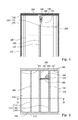
- Fig. 5 is a top view of a photovoltaic module according to the second embodiment of the present invention.
- the photovoltaic module of the second embodiment further includes a first auxiliary electrode 200 and a second auxiliary electrode 210.
- the first auxiliary electrode 200 and the second auxiliary electrode 210 are disposed on the first collecting electrode 140 and the second collecting electrode 150 respectively and almost cover the entire area of the first collecting electrode 140 and the second collecting electrode 150 to improve the conductivity of the first collecting electrode 140 and the second collecting electrode 150.
- first auxiliary electrode 200 and the second auxiliary electrode 210 may be ribbons, photovoltaic ribbons, tin-plated copper tapes, tin-coated copper tapes, or any combinations thereof. It should be understood that the materials of the first auxiliary electrode 200 and the second auxiliary electrode 210 are for example only and should not limit the claimed scope of the present invention. The person having ordinary skill in the art may select a proper first auxiliary electrode and/or a second auxiliary electrode depending on actual requirements.
- the first auxiliary electrode 200 and the first leading-out electrode 170 may be an integrally formed ribbon.
- the second auxiliary electrode 210 and the second leading-out electrode 180 may be an integrally formed ribbon.
- the first auxiliary electrode 200 and the first leading-out electrode 170 may be two independent ribbons electrically connected to each other, and the second auxiliary electrode 210 and the second leading-out electrode 180 may be two independent ribbons electrically connected to each other as well.
- Fig. 6 is a top view of a photovoltaic module according to the third embodiment of the present invention.
- Fig. 10 is a sectional view taken along line 10-10 of Fig. 6 .
- the difference between the third embodiment and the first embodiment is that there are four cell sets such as the first cell set 120, the second cell set 130, a third cell set 125 and a fourth cell set 135 on the substrate 110 of the third embodiment.
- the first collecting electrode 140 may include a plurality of branch electrode parts 141 (there are two branch electrode parts 141 in Fig. 6 ) and a cross-connected electrode part 143.
- the branch electrode parts 141 are electrically connected to the bottom connecting electrodes 121/131 of the first cell set 120, the second cell set 130, the third cell set 125 and the fourth cell set 135 respectively, and the cross-connected electrode part 143 electrically connects the branch electrode parts 141.
- the electric isolation between the cross-connected electrode part 143 of the first collecting electrode 140 and the first cell set 120, the second cell set 130, the third cell set 125, the fourth cell set 135 and the second collecting electrode 150 is accomplished by an isolation line 165.
- the isolation line 165 is disposed between the cross-connected electrode part 143 of the first collecting electrode 140 and the first cell set 120, the second cell set 130, the third cell set 125, the fourth cell set 135 and the second collecting electrode 150 for electrically isolated therebetween.
- the isolation line 165 may be a groove through all layers on the substrate 110. In manufacture, the manufacturers may utilize laser cutting, photolithography, or any combinations thereof to manufacture the isolation line 165.
- the branch electrode parts 141 of the first collecting electrode 140 and the branch electrode parts 151 of the second collecting electrode 150 may be alternatively disposed at opposite sides of the first cell set 120, the second cell set 130, the third cell set 125 and the fourth cell set 135 in a comb arrangement.
- the left side of the first cell set 120 is adjacent to the branch electrode part 141 of the first collecting electrode 140.
- the right side of the first cell set 120 is adjacent to the branch electrode part 151 of the second collecting electrode 150.
- the left side of the second cell set 130 is adjacent to the branch electrode part 151 of the second collecting electrode 150.
- the right side of the second cell set 130 is adjacent to the branch electrode part 141 of the first collecting electrode 140.
- the left side of the third cell set 125 is adjacent to the branch electrode part 151 of the second collecting electrode 150.
- the right side of the third cell set 125 is adjacent to the branch electrode part 141 of the first collecting electrode 140.
- the left side of the fourth cell set 135 is adjacent to the branch electrode part 141 of the first collecting electrode 140.
- the right side of the fourth cell set 135 is adjacent to the branch electrode part 151 of the second collecting electrode 150.
- the branch electrode parts which both sides of any of the cell sets are adjacent to belong to different collecting electrodes (for example, the first collecting electrode 140 and the second collecting electrode 150) which are responsible for the anode and cathode electric potentials respectively.
- the first collecting electrode 140 is responsible for the anode electric potential.
- the second collecting electrode 150 is responsible for the cathode electric potential. But, in other embodiments, the first collecting electrode 140 may be responsible for the cathode electric potential.
- the second collecting electrode 150 may be responsible for the anode electric potential.
- the cross-connected electrode part 153 of the second collecting electrode 150 and the cross-connected electrode part 143 of the first collecting electrode 140 may be located at upper and bottom edges of the first cell set 120, the second cell set 130, the third cell set 125 and the fourth cell set 135.
- the cross-connected electrode part 143 of the first collecting electrode 140 may be located at the bottom edge of the first cell set 120, the second cell set 130, the third cell set 125 and the fourth cell set 135.
- the cross-connected electrode part 153 of the second collecting electrode 150 may be located at the upper edge of the first cell set 120, the second cell set 130, the third cell set 125 and the fourth cell set 135.
- the first collecting electrode 140 and the second collecting electrode 150 are disposed around the first cell set 120, the second cell set 130, the third cell set 125 and the fourth cell set 135 and are not across any cell unit of the first cell set 120, the second cell set 130, the third cell set 125 and the fourth cell set 135. Therefore, all cell units of the first cell set 120, the second cell set 130, the third cell set 125 and the fourth cell set 135 are used to generate electricity. No cell unit is shielded by ribbons and thus unable to generate electricity.
- Fig. 7 is a top view of a photovoltaic module according to the fourth embodiment of the present invention.
- the photovoltaic module of the fourth embodiment further includes a first auxiliary electrode 200 and a second auxiliary electrode 210.
- the first auxiliary electrode 200 and the second auxiliary electrode 210 are disposed on the first collecting electrode 140 and the second collecting electrode 150 respectively and almost cover the entire area of the first collecting electrode 140 and the second collecting electrode 150 to improve the conductivity of the first collecting electrode 140 and the second collecting electrode 150.
- first auxiliary electrode 200 and the second auxiliary electrode 210 may be ribbons, photovoltaic ribbons, tin-plated copper tapes, tin-coated copper tapes, or any combinations thereof. It should be understood that the materials of the first auxiliary electrode 200 and the second auxiliary electrode 210 are for example only and should not limit the claimed scope of the present invention. The person having ordinary skill in the art may select a proper first auxiliary electrode and/or a second auxiliary electrode depending on actual requirements.
- first auxiliary electrode 200 and the first leading-out electrode 170 may be an integrally formed ribbon.
- the second auxiliary electrode 210 and the second leading-out electrode 180 may be an integrally formed ribbon.
- first auxiliary electrode 200 and the first leading-out electrode 170 may be two independent ribbons electrically connected to each other, and the second auxiliary electrode 210 and the second leading-out electrode 180 may be two independent ribbons electrically connected to each other as well.
- Fig. 8 is a top view of a photovoltaic module according to the fifth embodiment of the present invention.
- the difference between the fifth embodiment and the third embodiment is that the cross-connected electrode part 143 of the first collecting electrode 140 is across at least a part of the cell sets (e.g., the first cell set 120 and the second cell set 130.)
- the cross-connected electrode part 143 of the first collecting electrode 140 and a combination of the first cell set 120, the second cell set 130, the third cell set 125 and the fourth cell set 135 are not made of the same layer.
- the cross-connected electrode part 143 of the first collecting electrode 140 may be ribbons, photovoltaic ribbons, tin-plated copper tapes, tin-coated copper tapes, or any combinations thereof. It should be understood that the materials of the cross-connected electrode part 143 are for example only and should not limit the claimed scope of the present invention. The person having ordinary skill in the art may select a proper cross-connected electrode part depending on actual requirements.
- the electric isolation between the cross-connected electrode part 143 and a combination of the first cell set 120, the second cell set 130 and the second collecting electrode 150 is accomplished by a patterned insulation layer 168.
- the patterned insulation layer 168 is disposed between the combination of the first cell set 120, the second cell set 130 and the second collecting electrode 150 and the cross-connected electrode part 143.
- Fig. 9 is a top view of a photovoltaic module according to the sixth embodiment of the present invention.
- the photovoltaic module of the sixth embodiment may further include a first auxiliary electrode 200 and a second auxiliary electrode 210.
- the first auxiliary electrode 200 and the second auxiliary electrode 210 are disposed on the first collecting electrode 140 and the second collecting electrode 150 respectively and almost cover the entire area of the first collecting electrode 140 and the second collecting electrode 150 to improve the conductivity of the first collecting electrode 140 and the second collecting electrode 150.
- first auxiliary electrode 200 and the second auxiliary electrode 210 may be ribbons, photovoltaic ribbons, tin-plated copper tapes, tin-coated copper tapes, or any combinations thereof. It should be understood that the materials of the first auxiliary electrode 200 and the second auxiliary electrode 210 are for example only and should not limit the claimed scope of the present invention. The person having ordinary skill in the art may select a proper first auxiliary electrode and/or a second auxiliary electrode depending on actual requirements.
- first auxiliary electrode 200 and the first leading-out electrode 170 may be an integrally formed ribbon.
- the second auxiliary electrode 210 and the second leading-out electrode 180 may be an integrally formed ribbon.
- first auxiliary electrode 200 and the first leading-out electrode 170 may be two independent ribbons electrically connected to each other, and the second auxiliary electrode 210 and the second leading-out electrode 180 may be two independent ribbons electrically connected to each other as well.
- the cross-connected electrode part 143 and the first auxiliary electrode 200 may be an integrally formed ribbon as well. But these should not limit the claimed scope of the present invention. In other embodiments of the present invention, the cross-connected electrode part 143 and the first auxiliary electrode 200 may be two independent ribbons electrically connected to each other.
- the present invention provides a photovoltaic module having a plurality of cell sets electrically connected in parallel to supply a stable and large photocurrent.
- the photovoltaic module of the present invention has at least a collecting electrode and a plurality of cell sets, wherein the collecting electrode and the cell set are substantially made of substantially the same layer.
- the compacted photovoltaic module of the present invention makes the structure simple and stable, and the manufacture cost can be therefore reduced. Therefore, attach additional ribbons on the collecting electrodes can be unnecessary so that the complexity of the lay-up structure can be reduced, and thus the process yield problem resulting from the overcomplicated lay-up structure may be further improved.
- the hardware cost and the module cost can be further reduced as well.
Landscapes
- Photovoltaic Devices (AREA)
- Life Sciences & Earth Sciences (AREA)
- Sustainable Development (AREA)
Applications Claiming Priority (1)
| Application Number | Priority Date | Filing Date | Title |
|---|---|---|---|
| TW100138114A TWI478361B (zh) | 2011-10-20 | 2011-10-20 | 太陽能電池模組 |
Publications (2)
| Publication Number | Publication Date |
|---|---|
| EP2584609A2 true EP2584609A2 (de) | 2013-04-24 |
| EP2584609A3 EP2584609A3 (de) | 2014-07-09 |
Family
ID=46188437
Family Applications (1)
| Application Number | Title | Priority Date | Filing Date |
|---|---|---|---|
| EP12169409.5A Withdrawn EP2584609A3 (de) | 2011-10-20 | 2012-05-24 | Photovoltaikmodul |
Country Status (4)
| Country | Link |
|---|---|
| US (1) | US8981209B2 (de) |
| EP (1) | EP2584609A3 (de) |
| CN (1) | CN102496635B (de) |
| TW (1) | TWI478361B (de) |
Families Citing this family (4)
| Publication number | Priority date | Publication date | Assignee | Title |
|---|---|---|---|---|
| EP3146528A4 (de) * | 2014-05-23 | 2018-01-03 | The Regents of The University of Michigan | Ultradünne dotierte edelmetallschichten für optoelektronika und photonische anwendungen |
| NL2017527B1 (en) * | 2016-09-26 | 2018-04-04 | Stichting Energieonderzoek Centrum Nederland | Thin Film Photo-Voltaic Module |
| KR101898593B1 (ko) * | 2017-04-06 | 2018-09-13 | 엘지전자 주식회사 | 태양전지 모듈 |
| NL2019226B1 (en) * | 2017-07-11 | 2019-01-28 | Tno | Solar panel with four terminal tandem solar cell arrangement |
Family Cites Families (25)
| Publication number | Priority date | Publication date | Assignee | Title |
|---|---|---|---|---|
| US4162928A (en) * | 1978-09-29 | 1979-07-31 | Nasa | Solar cell module |
| CA2024662A1 (en) * | 1989-09-08 | 1991-03-09 | Robert Oswald | Monolithic series and parallel connected photovoltaic module |
| JP2002246628A (ja) | 2001-02-14 | 2002-08-30 | Showa Shell Sekiyu Kk | バイパスダイオード一体封止型太陽電池モジュール及び該モジュールの製造方法 |
| US7098395B2 (en) | 2001-03-29 | 2006-08-29 | Kaneka Corporation | Thin-film solar cell module of see-through type |
| JP2002373997A (ja) * | 2001-04-10 | 2002-12-26 | Kanegafuchi Chem Ind Co Ltd | 集積型ハイブリッド薄膜光電変換モジュール |
| JP4599099B2 (ja) | 2004-06-09 | 2010-12-15 | 三菱重工業株式会社 | 太陽電池モジュール及び太陽電池モジュールの製造方法 |
| US7759158B2 (en) | 2005-03-22 | 2010-07-20 | Applied Materials, Inc. | Scalable photovoltaic cell and solar panel manufacturing with improved wiring |
| JP4684075B2 (ja) * | 2005-10-14 | 2011-05-18 | シャープ株式会社 | 太陽電池、太陽電池ストリングおよび太陽電池モジュール |
| US20070144577A1 (en) | 2005-12-23 | 2007-06-28 | Rubin George L | Solar cell with physically separated distributed electrical contacts |
| TW200807736A (en) | 2006-07-28 | 2008-02-01 | Univ Chang Gung | Transparent solar battery system |
| DE102006057454A1 (de) * | 2006-12-06 | 2008-06-26 | Schott Solar Gmbh | Photovoltaisches Modul |
| US20110017263A1 (en) * | 2007-09-05 | 2011-01-27 | Solaria Corporation | Method and device for fabricating a solar cell using an interface pattern for a packaged design |
| WO2009076403A1 (en) | 2007-12-13 | 2009-06-18 | First Solar, Inc. | Systems and methods of parallel interconnection of photovoltaic modules |
| KR20090121629A (ko) | 2008-05-22 | 2009-11-26 | 삼성전자주식회사 | 태양전지 셀 및 이를 이용하는 태양전지 모듈 |
| TW201006090A (en) | 2008-07-16 | 2010-02-01 | Chien-Chiang Chan | Applied structure of energy storage device |
| JP5171490B2 (ja) * | 2008-09-04 | 2013-03-27 | シャープ株式会社 | 集積型薄膜太陽電池 |
| KR20110073600A (ko) | 2008-10-23 | 2011-06-29 | 알타 디바이씨즈, 인크. | 광전지 장치의 통합 |
| JP4637244B2 (ja) * | 2009-01-09 | 2011-02-23 | シャープ株式会社 | 薄膜太陽電池モジュール |
| US20100190275A1 (en) | 2009-01-29 | 2010-07-29 | Applied Materials, Inc. | Scribing device and method of producing a thin-film solar cell module |
| WO2010091025A2 (en) | 2009-02-04 | 2010-08-12 | Applied Materials, Inc. | Metrology and inspection suite for a solar production line |
| US20100263719A1 (en) | 2009-04-16 | 2010-10-21 | Applied Materials, Inc. | Thin-Film Solar Cell Module |
| US20100132759A1 (en) | 2009-06-12 | 2010-06-03 | Renhe Jia | Cell isolation on photovoltaic modules for hot spot reduction |
| IN2012DN00387A (de) * | 2009-06-15 | 2015-08-21 | Tenksolar Inc | |
| DE102009042093A1 (de) * | 2009-09-18 | 2011-03-24 | Inventux Technologies Ag | Niederspannungsmodul mit Rückkontakt |
| JP4889779B2 (ja) | 2009-10-30 | 2012-03-07 | 三洋電機株式会社 | 光電変換モジュール |
-
2011
- 2011-10-20 TW TW100138114A patent/TWI478361B/zh active
- 2011-12-16 CN CN201110424583.7A patent/CN102496635B/zh active Active
-
2012
- 2012-05-23 US US13/478,345 patent/US8981209B2/en active Active
- 2012-05-24 EP EP12169409.5A patent/EP2584609A3/de not_active Withdrawn
Non-Patent Citations (1)
| Title |
|---|
| None |
Also Published As
| Publication number | Publication date |
|---|---|
| TW201318183A (zh) | 2013-05-01 |
| CN102496635A (zh) | 2012-06-13 |
| TWI478361B (zh) | 2015-03-21 |
| US20130098422A1 (en) | 2013-04-25 |
| EP2584609A3 (de) | 2014-07-09 |
| CN102496635B (zh) | 2015-04-29 |
| US8981209B2 (en) | 2015-03-17 |
Similar Documents
| Publication | Publication Date | Title |
|---|---|---|
| US9948232B2 (en) | Method for fabricating flexible solar panel module | |
| US20200343395A1 (en) | Thin-Film Photovoltaic Cell | |
| US20150129019A1 (en) | Solar cell module and solar cell thereof | |
| US20150129011A1 (en) | Solar cell module | |
| US12568695B2 (en) | Tandem solar cell | |
| WO2016158299A1 (ja) | 太陽電池およびその製造方法、太陽電池モジュール、ならびに配線シート | |
| US8981209B2 (en) | Photovoltaic module | |
| CN100559614C (zh) | 薄膜太阳电池模块及其加工方法 | |
| CN104205619A (zh) | 太阳能电池装置 | |
| JP2017174986A (ja) | 太陽電池セルおよび太陽電池モジュール | |
| US20140332062A1 (en) | Solar cell apparatus | |
| KR102097516B1 (ko) | 유연소자 및 이를 이용하여 체결된 태양전지 | |
| JP2013187304A (ja) | 太陽電池セル、太陽電池モジュール、及び、太陽電池システム、並びに、太陽電池システムにおける融雪方法 | |
| CN210040229U (zh) | 太阳能电池串组及太阳能电池组件 | |
| JP2013058702A (ja) | 太陽電池セルおよびその製造方法、太陽電池モジュールおよびその製造方法 | |
| JP2012119394A (ja) | 太陽電池セル及び太陽電池モジュール | |
| CN201270255Y (zh) | 薄膜太阳电池模块 | |
| CN102664207A (zh) | 太阳能电池 | |
| KR101382221B1 (ko) | 태양전지 모듈 및 그 제조 방법과, 그를 이용한 태양전지 시스템 | |
| TW202240924A (zh) | 太陽能電池模組與太陽能電池顯示裝置 | |
| US20140305487A1 (en) | Solar cell apparatus | |
| TWI602319B (zh) | 太陽能電池模組 | |
| JP2014173361A (ja) | 太陽電池モジュールの取付構造及び建造物 | |
| US10090418B2 (en) | Solar battery module | |
| JPWO2013065289A1 (ja) | 太陽電池モジュール |
Legal Events
| Date | Code | Title | Description |
|---|---|---|---|
| PUAI | Public reference made under article 153(3) epc to a published international application that has entered the european phase |
Free format text: ORIGINAL CODE: 0009012 |
|
| 17P | Request for examination filed |
Effective date: 20120524 |
|
| AK | Designated contracting states |
Kind code of ref document: A2 Designated state(s): AL AT BE BG CH CY CZ DE DK EE ES FI FR GB GR HR HU IE IS IT LI LT LU LV MC MK MT NL NO PL PT RO RS SE SI SK SM TR |
|
| AX | Request for extension of the european patent |
Extension state: BA ME |
|
| PUAL | Search report despatched |
Free format text: ORIGINAL CODE: 0009013 |
|
| AK | Designated contracting states |
Kind code of ref document: A3 Designated state(s): AL AT BE BG CH CY CZ DE DK EE ES FI FR GB GR HR HU IE IS IT LI LT LU LV MC MK MT NL NO PL PT RO RS SE SI SK SM TR |
|
| AX | Request for extension of the european patent |
Extension state: BA ME |
|
| RIC1 | Information provided on ipc code assigned before grant |
Ipc: H01L 31/0224 20060101AFI20140603BHEP |
|
| 17Q | First examination report despatched |
Effective date: 20160627 |
|
| STAA | Information on the status of an ep patent application or granted ep patent |
Free format text: STATUS: THE APPLICATION IS DEEMED TO BE WITHDRAWN |
|
| 18D | Application deemed to be withdrawn |
Effective date: 20161108 |