EP2585554B9 - Leuchtstoff und lichtquelle mit derartigem leuchtstoff - Google Patents
Leuchtstoff und lichtquelle mit derartigem leuchtstoff Download PDFInfo
- Publication number
- EP2585554B9 EP2585554B9 EP11727415.9A EP11727415A EP2585554B9 EP 2585554 B9 EP2585554 B9 EP 2585554B9 EP 11727415 A EP11727415 A EP 11727415A EP 2585554 B9 EP2585554 B9 EP 2585554B9
- Authority
- EP
- European Patent Office
- Prior art keywords
- luminophore
- sio
- radiation
- proportion
- phosphor
- Prior art date
- Legal status (The legal status is an assumption and is not a legal conclusion. Google has not performed a legal analysis and makes no representation as to the accuracy of the status listed.)
- Active
Links
Images
Classifications
-
- C—CHEMISTRY; METALLURGY
- C09—DYES; PAINTS; POLISHES; NATURAL RESINS; ADHESIVES; COMPOSITIONS NOT OTHERWISE PROVIDED FOR; APPLICATIONS OF MATERIALS NOT OTHERWISE PROVIDED FOR
- C09K—MATERIALS FOR MISCELLANEOUS APPLICATIONS, NOT PROVIDED FOR ELSEWHERE
- C09K11/00—Luminescent materials, e.g. electroluminescent or chemiluminescent
- C09K11/08—Luminescent materials, e.g. electroluminescent or chemiluminescent containing inorganic luminescent materials
- C09K11/77—Luminescent materials, e.g. electroluminescent or chemiluminescent containing inorganic luminescent materials containing rare earth metals
- C09K11/7783—Luminescent materials, e.g. electroluminescent or chemiluminescent containing inorganic luminescent materials containing rare earth metals containing two or more rare earth metals one of which being europium
- C09K11/77927—Silicon Nitrides or Silicon Oxynitrides
-
- C—CHEMISTRY; METALLURGY
- C09—DYES; PAINTS; POLISHES; NATURAL RESINS; ADHESIVES; COMPOSITIONS NOT OTHERWISE PROVIDED FOR; APPLICATIONS OF MATERIALS NOT OTHERWISE PROVIDED FOR
- C09K—MATERIALS FOR MISCELLANEOUS APPLICATIONS, NOT PROVIDED FOR ELSEWHERE
- C09K11/00—Luminescent materials, e.g. electroluminescent or chemiluminescent
- C09K11/08—Luminescent materials, e.g. electroluminescent or chemiluminescent containing inorganic luminescent materials
- C09K11/0883—Arsenides; Nitrides; Phosphides
-
- C—CHEMISTRY; METALLURGY
- C09—DYES; PAINTS; POLISHES; NATURAL RESINS; ADHESIVES; COMPOSITIONS NOT OTHERWISE PROVIDED FOR; APPLICATIONS OF MATERIALS NOT OTHERWISE PROVIDED FOR
- C09K—MATERIALS FOR MISCELLANEOUS APPLICATIONS, NOT PROVIDED FOR ELSEWHERE
- C09K11/00—Luminescent materials, e.g. electroluminescent or chemiluminescent
- C09K11/08—Luminescent materials, e.g. electroluminescent or chemiluminescent containing inorganic luminescent materials
- C09K11/77—Luminescent materials, e.g. electroluminescent or chemiluminescent containing inorganic luminescent materials containing rare earth metals
-
- C—CHEMISTRY; METALLURGY
- C09—DYES; PAINTS; POLISHES; NATURAL RESINS; ADHESIVES; COMPOSITIONS NOT OTHERWISE PROVIDED FOR; APPLICATIONS OF MATERIALS NOT OTHERWISE PROVIDED FOR
- C09K—MATERIALS FOR MISCELLANEOUS APPLICATIONS, NOT PROVIDED FOR ELSEWHERE
- C09K11/00—Luminescent materials, e.g. electroluminescent or chemiluminescent
- C09K11/08—Luminescent materials, e.g. electroluminescent or chemiluminescent containing inorganic luminescent materials
- C09K11/77—Luminescent materials, e.g. electroluminescent or chemiluminescent containing inorganic luminescent materials containing rare earth metals
- C09K11/7728—Luminescent materials, e.g. electroluminescent or chemiluminescent containing inorganic luminescent materials containing rare earth metals containing europium
- C09K11/77348—Silicon Aluminium Nitrides or Silicon Aluminium Oxynitrides
-
- C—CHEMISTRY; METALLURGY
- C09—DYES; PAINTS; POLISHES; NATURAL RESINS; ADHESIVES; COMPOSITIONS NOT OTHERWISE PROVIDED FOR; APPLICATIONS OF MATERIALS NOT OTHERWISE PROVIDED FOR
- C09K—MATERIALS FOR MISCELLANEOUS APPLICATIONS, NOT PROVIDED FOR ELSEWHERE
- C09K11/00—Luminescent materials, e.g. electroluminescent or chemiluminescent
- C09K11/08—Luminescent materials, e.g. electroluminescent or chemiluminescent containing inorganic luminescent materials
- C09K11/77—Luminescent materials, e.g. electroluminescent or chemiluminescent containing inorganic luminescent materials containing rare earth metals
- C09K11/7766—Luminescent materials, e.g. electroluminescent or chemiluminescent containing inorganic luminescent materials containing rare earth metals containing two or more rare earth metals
- C09K11/7774—Aluminates
-
- H—ELECTRICITY
- H01—ELECTRIC ELEMENTS
- H01J—ELECTRIC DISCHARGE TUBES OR DISCHARGE LAMPS
- H01J1/00—Details of electrodes, of magnetic control means, of screens, or of the mounting or spacing thereof, common to two or more basic types of discharge tubes or lamps
- H01J1/54—Screens on or from which an image or pattern is formed, picked-up, converted, or stored; Luminescent coatings on vessels
- H01J1/62—Luminescent screens; Selection of materials for luminescent coatings on vessels
- H01J1/63—Luminescent screens; Selection of materials for luminescent coatings on vessels characterised by the luminescent material
-
- H—ELECTRICITY
- H05—ELECTRIC TECHNIQUES NOT OTHERWISE PROVIDED FOR
- H05B—ELECTRIC HEATING; ELECTRIC LIGHT SOURCES NOT OTHERWISE PROVIDED FOR; CIRCUIT ARRANGEMENTS FOR ELECTRIC LIGHT SOURCES, IN GENERAL
- H05B33/00—Electroluminescent light sources
- H05B33/12—Light sources with substantially two-dimensional [2D] radiating surfaces
-
- H—ELECTRICITY
- H05—ELECTRIC TECHNIQUES NOT OTHERWISE PROVIDED FOR
- H05B—ELECTRIC HEATING; ELECTRIC LIGHT SOURCES NOT OTHERWISE PROVIDED FOR; CIRCUIT ARRANGEMENTS FOR ELECTRIC LIGHT SOURCES, IN GENERAL
- H05B33/00—Electroluminescent light sources
- H05B33/12—Light sources with substantially two-dimensional [2D] radiating surfaces
- H05B33/14—Light sources with substantially two-dimensional [2D] radiating surfaces characterised by the chemical or physical composition or the arrangement of the electroluminescent material, or by the simultaneous addition of the electroluminescent material in or onto the light source
-
- H—ELECTRICITY
- H10—SEMICONDUCTOR DEVICES; ELECTRIC SOLID-STATE DEVICES NOT OTHERWISE PROVIDED FOR
- H10H—INORGANIC LIGHT-EMITTING SEMICONDUCTOR DEVICES HAVING POTENTIAL BARRIERS
- H10H20/00—Individual inorganic light-emitting semiconductor devices having potential barriers, e.g. light-emitting diodes [LED]
- H10H20/80—Constructional details
- H10H20/85—Packages
- H10H20/851—Wavelength conversion means
- H10H20/8511—Wavelength conversion means characterised by their material, e.g. binder
- H10H20/8512—Wavelength conversion materials
-
- H—ELECTRICITY
- H10—SEMICONDUCTOR DEVICES; ELECTRIC SOLID-STATE DEVICES NOT OTHERWISE PROVIDED FOR
- H10W—GENERIC PACKAGES, INTERCONNECTIONS, CONNECTORS OR OTHER CONSTRUCTIONAL DETAILS OF DEVICES COVERED BY CLASS H10
- H10W72/00—Interconnections or connectors in packages
- H10W72/851—Dispositions of multiple connectors or interconnections
- H10W72/874—On different surfaces
- H10W72/884—Die-attach connectors and bond wires
-
- H—ELECTRICITY
- H10—SEMICONDUCTOR DEVICES; ELECTRIC SOLID-STATE DEVICES NOT OTHERWISE PROVIDED FOR
- H10W—GENERIC PACKAGES, INTERCONNECTIONS, CONNECTORS OR OTHER CONSTRUCTIONAL DETAILS OF DEVICES COVERED BY CLASS H10
- H10W90/00—Package configurations
- H10W90/701—Package configurations characterised by the relative positions of pads or connectors relative to package parts
- H10W90/731—Package configurations characterised by the relative positions of pads or connectors relative to package parts of die-attach connectors
- H10W90/736—Package configurations characterised by the relative positions of pads or connectors relative to package parts of die-attach connectors between a chip and a stacked lead frame, conducting package substrate or heat sink
-
- H—ELECTRICITY
- H10—SEMICONDUCTOR DEVICES; ELECTRIC SOLID-STATE DEVICES NOT OTHERWISE PROVIDED FOR
- H10W—GENERIC PACKAGES, INTERCONNECTIONS, CONNECTORS OR OTHER CONSTRUCTIONAL DETAILS OF DEVICES COVERED BY CLASS H10
- H10W90/00—Package configurations
- H10W90/701—Package configurations characterised by the relative positions of pads or connectors relative to package parts
- H10W90/751—Package configurations characterised by the relative positions of pads or connectors relative to package parts of bond wires
- H10W90/756—Package configurations characterised by the relative positions of pads or connectors relative to package parts of bond wires between a chip and a stacked lead frame, conducting package substrate or heat sink
Definitions
- the invention is based on a phosphor according to the preamble of claim 1 and a light source equipped with such a phosphor according to claim 4, in particular a conversion LED.
- a conversion LED is particularly suitable for general lighting.
- Stable green phosphors in particular with an emission maximum around 520-540 nm, are hardly available. This complicates the use of conversion LEDs in the display backlighting and restricts the optimization of high-CRI LEDs or warm white LEDs.
- orthosilicates have mainly been used as green phosphors in this field in products. These have partly high quantum efficiencies, but show insufficient aging behavior in LEDs.
- the object of the present invention is to provide a phosphor according to the preamble of claim 1, which allows to adapt the properties of nitridic phosphors specifically to specific tasks.
- a novel nitridic phosphor is now provided. These include blue or blue-green to yellow-emitting phosphors, which are excitable in particular in the emission range of typical UV and blue LEDs and at the same time have a very high stability in the LED. Applications can find the phosphors in particular in LEDs with good color rendering, in LEDs for LCD backlight, color-on-demand LEDs or white OLEDs.
- White LEDs are becoming increasingly important in general lighting.
- the demand for warm white LEDs is increasing with low color temperatures and good color rendition and, at the same time, high efficiency.
- alternative light sources with the best possible color rendering (CRI) are becoming increasingly important.
- Many consumers attach importance to lamps with light bulb-like light spectrum.
- the phosphors must meet a number of requirements: very high stability to chemical influences, such as oxygen, moisture, interactions with potting materials, as well as to radiation. In order to ensure a stable color location with increasing system temperature, phosphors are also required which have a low temperature quenching behavior.
- Such phosphors are used in white LEDs and color-on-demand LEDs.
- the excitation of such phosphors is preferably done with short-wave radiation in the UV and short-wave blue, in particular in the range 360 to 480 nm.
- the invention is based on the provision of phosphors from the substance classes of the nitrido-orthosilicates.
- EA 2-xa SE x Eu a Si 1-y O 4 -x -2y N x either EACO 3 , SiO 2 , (La, Y) N and Eu 2 O 3 or EACO 3 , SiO 2 are required , Si 3 N 4 , (La, Y) 2 O 3 and Eu 2 O 3 as starting materials.
- fluorides and chlorides such as EACl 2 , EAF 2 , but also NH 4 Cl / NH 4 F, H 3 BO 3 , LiF and cryolites, and combinations thereof, can be used as a flux.
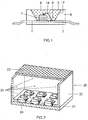
- FIG. 1 shows the construction of an RGB-based white light conversion LED as known per se.
- the light source is a semiconductor device comprising a blue-emitting InGaN chip 1 with a peak emission wavelength of 435 to 455 nm peak wavelength, for example 445 nm, embedded in an opaque base housing 8 in the region of a recess 9.
- the chip 1 is connected via a bonding wire 14 to a first terminal 3 and directly to a second electrical terminal 2.
- the recess 9 is filled with a potting compound 5 containing as main components a silicone (60- 90 wt .-%) and phosphors 6 (about 15 to 40 wt .-%).
- a first phosphor is a green emitting nitrido-orthosilicate phosphor EA 2-xa SE x Eu a Si 1 -y O 4-x-2y N x where EA is Ba and Y is Y.
- the second phosphor used is a red-emitting phosphor, for example an aluminonitridosilicate or calsine.
- the recess has a wall 17, which serves as a reflector for the primary and secondary radiation from the chip 1 and the phosphors 6.
- FIG. 2 shows such a module 20 with various LEDs 24 on a base plate 21.
- a housing is mounted with side walls 22 and a cover plate 12.
- the phosphor mixture is here as a layer 25 on both the side walls and especially on the cover plate 23, the is transparent, attached.
- Suitable light sources are fluorescent lamps or high pressure discharge lamps in which the novel phosphor is used to convert the primary radiation can be alone or in combination with other phosphors.
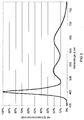
- FIG. 3 shows the spectrum of an LCD backlight LED based on two phosphors.
- the abscissa represents the wavelength in nm, the ordinate the relative emission intensity.
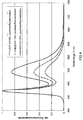
- FIG. 4 shows a comparison of emission spectra of LEDs with incorporated phosphorus concentrations of 9, 13 and 20 wt .-%.
- the abscissa represents the wavelength in nm, the ordinate the relative emission intensity.
- Embodiment 3 or 4 with a corresponding deficit of SiO 2 demonstrably leads to improved LED stability, especially in humid environments and at higher temperatures.
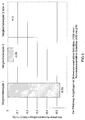
- FIG. 5 the LED stability is shown at a temperature of 45 ° C and 95% humidity for the four different batch mixes.
- the ordinate is the relative conversion ratio, the abscissa is the time in minutes. It can be seen that Embodiments 3 and 4 are approximately equivalent to each other and both are considerably superior to Comparative Examples 1 and 2.
- the relative quantum efficiencies QE 460 of the novel phosphors according to embodiments 3 and 4 when excited at 460 nm is 3% higher than in comparative example 2.
- Preparation of the represented nitrido-orthosilicates of the form EA 2-xa SE x Eu a Si 1-y O 4 -x -2y N x is typically made of EACO 3 , SiO 2 , SEN and Eu 2 O 3 or EACO 3 , SiO 2 , Si 3 N 4 , (SEN) 2 O 3 and Eu 2 O 3 as starting materials.
- the rare earths are used as (SEN) 2 O 3 , when trivalent oxides are preferably formed.
- rare-earth oxides which are preferably present as mixed oxides, for example Tb is usually present as III / IV mixed oxide Tb 4 O 7 , the mixed oxides are preferably used.
- Y or Sc as nitride or as a combination of oxide and Si 3 N 4 are used.
- fluorides and chlorides such as EACl 2 or SECl 2 , EAF 2 or SECl 2 , but also NH 4 Cl / NH 4 F, H 3 BO 3 , LiF and cryolites, and combinations thereof, can be used as a flux.
- the educts analogous to the batch mixtures 1 to are weighed and homogenized together with a suitable flux. Subsequently, the educt mixture is calcined for several hours under a reducing atmosphere (eg under N 2 or Ar or a mixture of N 2 / H 2 or Ar / H 2 ) at temperatures between 1000 ° C and 1500 ° C. This can be followed by a second annealing, likewise under a reducing atmosphere (for example under N 2 or Ar or a mixture of N 2 / H 2 or Ar / H 2 ) at temperatures between 800 ° C and 1400 ° C.
- a suitable furnace such as a tube or chamber furnace.
- Table 1 below shows a comparison of the spectral properties using the example of a La / N doping with and without an SiO 2 subcutaneous coating.
- Tab. 1 composition ⁇ exc. [Nm] x y ⁇ dom [nm] FWHM [nm] QE [%] (Ba 0.9575 Sr 0.9575 La 0.005 Eu 0.08 ) Si 3.995 N 0.005 460 0285 0638 545.9 64.2 87 (Ba 0.9575 Sr 0.9575 La 0.005 Eu 0.08 ) v 460 0285 0639 545.9 64.1 100
Landscapes
- Chemical & Material Sciences (AREA)
- Inorganic Chemistry (AREA)
- Engineering & Computer Science (AREA)
- Materials Engineering (AREA)
- Organic Chemistry (AREA)
- Luminescent Compositions (AREA)
- Electroluminescent Light Sources (AREA)
- Led Device Packages (AREA)
Description
- Die Erfindung geht aus von einem Leuchtstoff gemäß dem Oberbegriff des Anspruchs 1 und einer mit derartigem Leuchtstoff ausgestatteten Lichtquelle gemäß Anspruch 4, insbesondere einer Konversions-LED. Derartige Konversions-LEDs sind insbesondere für Allgemeinbeleuchtung geeignet.
- Aus der
US-B 7 489 073 ist eine Konversions-LED bekannt, die als Leuchtstoff ein modifiziertes reguläres Orthosilikat verwendet. - Stabile grüne Leuchtstoffe, insbesondere mit einem Emissionsmaximum um 520-540 nm, stehen kaum zur Verfügung. Das erschwert den Einsatz von Konversions-LEDs bei der Displayhinterleuchtung und schränkt die Optimierung von High-CRI-LEDs oder Warmweiß-LEDs ein. Bisher werden in Produkten hauptsächlich Orthosilikate als Grünleuchtstoffe für diesen Bereich eingesetzt. Diese besitzen zwar teils hohe Quanteneffizienzen, zeigen aber ein unzureichendes Alterungsverhalten in LEDs.
- Aus der
US-B 7,489,073 ist ein Nitrido-Orthosilikat mit der Zusammensetzung AE2-x-aRE x EuaSiO4-xNx (AE=Sr, Ba, Ca, Mg; RE=Seltene Erden, insbesondere Y und/oder La) bekannt. EA oder auch AE steht hier für Erdalkali-Elemente. Durch den Einbau von YN und/oder LaN wird eine Rotverschiebung der spektralen Lage und zumeist eine Verbesserung der Quanteneffizienz des Leuchtstoffes erreicht. Das LED-Alterungsverhalten dieses- Leuchtstoffs ist bereits mit dem dort beschriebenen Herstellverfahren deutlich besser als bei den konventionellen Orthosilikaten oder anderen grünen Sion-Leuchtstoffen wie z. B.
Ba3Si6O12N2: Eu. - Die
US 2006/232109 A1 offenbart einen Leuchtstoff der Formel AE2-x-aRExEuaSiO4-xNx mit AE = Sr, Ba, Ca oder Mg und RE = Seltene Erden. - Für viele Anwendungen, wie z. B. für LCD-Hintergrundbeleuchtung, ist die Stabilität in feuchter Umgebung und bei höheren Temperaturen jedoch immer noch nicht optimal.
- Die Aufgabe der vorliegenden Erfindung ist es, einen Leuchtstoff gemäß dem Oberbegriff des Anspruchs 1 bereitzustellen, der es gestattet, die Eigenschaften von nitridischen Leuchtstoffen gezielt an spezielle Aufgaben anzupassen.
- Diese Aufgabe wird gelöst durch die kennzeichnenden Merkmale des Anspruchs 1.
- Besonders vorteilhafte Ausgestaltungen finden sich in den abhängigen Ansprüchen.
- Erfindungsgemäß wird jetzt ein neuartiger nitridischer Leuchtstoff bereitgestellt. Darunter fallen blau bzw. blau-grün bis gelb emittierende Leuchtstoffe, die insbesondere im Emissionsbereich typischer UV- und Blau-LEDs anregbar sind und gleichzeitig eine sehr hohe Stabilität in der LED aufweisen. Anwendungen können die Leuchtstoffe insbesondere in LEDs mit guter Farbwiedergabe, in LEDs für LCD-Hintergrundbeleuchtung, Color-on-demand LEDs oder weißen OLEDs finden.
- Weiße LEDs gewinnen in der Allgemeinbeleuchtung immer mehr an Bedeutung. Insbesondere steigt die Nachfrage nach warmweißen LEDs mit niedrigen Farbtemperaturen und guter Farbwiedergabe und gleichzeitig hoher Effizienz. Vor dem Hintergrund des kommenden Verbots der wenig energieeffizienten Allgebrauchsglühlampe gewinnen alternative Lichtquellen mit möglichst guter Farbwiedergabe (CRI) immer mehr an Bedeutung. Viele Verbraucher legen Wert auf Leuchtmittel mit glühlampenähnlichem Lichtspektrum.
- Die Leuchtstoffe müssen eine Reihe von Anforderungen erfüllen: Eine sehr hohe Stabilität gegenüber chemischen Einflüssen, beispielsweise Sauerstoff, Feuchtigkeit, Wechselwirkungen mit Vergussmaterialien, sowie gegenüber Strahlung. Um einen stabilen Farbort bei steigender Systemtemperatur zu gewährleisten, sind außerdem Leuchtstoffe erforderlich, die ein geringes Temperaturlöschverhalten aufweisen.
- Derartige Leuchtstoffe werden in weißen LEDs und Color-on-Demand LEDs eingesetzt.
- Die Anregung derartiger Leuchtstoffe geschieht bevorzugt mit kurzwelliger Strahlung im UV und kurzwelligen Blau, insbesondere im Bereich 360 bis 480 nm.
- Die Erfindung basiert auf der Bereitstellung von Leuchtstoffen aus den Stoffklassen der Nitrido-Orthosilikate.
- Es hat sich gezeigt, dass ein erfindungsgemäßer Unterschuss an SiO2 zu höheren Quanteneffizienzen führt. Damit ergibt sich eine Zusammensetzung der Ansatzmischung für das stabilisierte Nitrido-Orthosilikat von EA2-x-aSExEuaSi1-yO4-x-2yNx (EA=Sr, Ba, Ca, Mg; SE = Seltene Erden, insbesondere Y und/oder La), wobei x bevorzugt zwischen 0,003 und 0,02, a bevorzugt zwischen 0,01 und 0,2 liegt. Der für den SiO2-Unterschuss maßgebende Faktor y kann im Bereich zwischen 0 < y ≤ 0,1 liegen, erfindungsgemäß liegt y im Bereich von 0,002 ≤ y ≤ 0,02. Bei dem hier beschriebenen Verfahren zur Herstellung eines stabilisierten Nitrido-Orthosilikats erweitert sich außerdem bevorzugt in einer Ausführungsform die Eduktseite um Si3N4 und La2O3 bzw. Y2O3.
- Für die Präparation von EA2-x-aSExEuaSi1-yO4-x-2yNx benötigt man entweder EACO3, SiO2, (La,Y)N und Eu2O3 oder EACO3, SiO2, Si3N4, (La,Y)2O3 und Eu2O3 als Ausgangssubstanzen. Weiterhin können insbesondere Fluoride und Chloride, wie EACl2, EAF2, aber auch NH4Cl/NH4F, H3BO3, LiF und Kryolithe, sowie Kombinationen davon, als Schmelzmittel eingesetzt werden.
- Wesentliche Merkmale der Erfindung in Form einer nummerierten Aufzählung sind:
- 1. Blau bis Gelb emittierender Leuchtstoff aus der Klasse der Orthosilikate, der im wesentlichen die Struktur EA2SiO4:D besitzt, dadurch gekennzeichnet, dass der Leuchtstoff als Komponente EA = Sr, Ba, Ca oder Mg allein oder in Kombination aufweist, wobei die aktivierende Dotierung D aus Eu besteht und einen Anteil von EA ersetzt, und wobei SiO2 im Unterschuss eingebracht ist, so dass ein modifiziertes unterstöchiometrisches Orthosilikat vorliegt.
- 2. Der Leuchtstoff ist dadurch gekennzeichnet, dass das Orthosilikat ein mit SE und N stabilisiertes Orthosilikat ist, mit SE = Seltenerdmetall, so dass die Stöchiometrie EA2-x-aSExEuaSi1-yO4-x-2yNx entspricht. Der Anteil a des Eu beträgt zwischen a = 0,01 und 0,20. Der Anteil x beträgt zwischen 0,003 und 0,02. Der Leuchtstoff ist dadurch gekennzeichnet, dass der für den Unterschuss maßgebende Faktor y zwischen 0,002 ≤ y ≤ 0,02, liegt. Der für den Unterschuss maßgebende Faktor y kann im Bereich von 0 < y ≤ 0,1 liegen.
- 3. In einer Ausführungsform ist der Leuchtstoff dadurch gekennzeichnet, dass SE = La oder Y allein oder in Kombination ist.
- 4. In einer Ausführungsform ist der Leuchtstoff dadurch gekennzeichnet, dass EA Sr und/oder Ba mit mindestens 66 mol-% enthält, insbesondere mit einem Anteil des Ca von maximal 5 mol-% und insbesondere mit einem Anteil des Mg von maximal 30 mol-%.
- 5. Die Erfindung betrifft eine Lichtquelle mit einer primären Strahlungsquelle, die Strahlung im kurzwelligen Bereich des optischen Spektralbereichs im Wellenlängenbereich 140 bis 480 nm emittiert, wobei diese Strahlung mittels eines ersten Leuchtstoffs nach einer der vorhergehenden erfindungsgemäßen Ausführungsformen ganz oder teilweise in sekundäre längerwellige Strahlung im sichtbaren Spektralbereich konvertiert wird.
- 6. In einer Ausführungsform ist die Lichtquelle dadurch gekennzeichnet, dass als primäre Strahlungsquelle eine Leuchtdiode auf Basis von InGaN oder InGaAlP oder eine Entladungslampe auf Niederdruck- oder Hochdruckbasis, insbesondere mit einer Indiumhaltigen Füllung, oder eine elektrolumineszente Lampe verwendet wird.
- 7. In einer Ausführungsform ist die Lichtquelle dadurch gekennzeichnet, dass ein Teil der primären Strahlung weiterhin mittels weiterer Leuchtstoffe in längerwellige Strahlung konvertiert wird, wobei die Leuchtstoffe insbesondere geeignet gewählt und gemischt sind um weißes Licht zu erzeugen.
- 8. Es wird ein Verfahren zur Herstellung eines hocheffizienten Leuchtstoffs nach einem der erfindungsgemäßen Ausführungsformen angegeben. Das Verfahren ist gekennzeichnet durch folgende Verfahrensschritte:
- a) Bereitstellen der Ausgangsstoffe SiO2 allein oder in Kombination mit Si3N4 als Si-Komponente, sowie mindestens eines SE-Vorläufers ausgewählt aus der Gruppe SEN oder SE203, sowie mindestens eines EA-Vorläufers, bevorzugt EACO3, insbesondere mindestens ein Vorläufer aus der Gruppe SrCO3, BaCO3, CaCO3 und MgO, sowie eines Eu-Vorläufers, insbesondere Eu203, wobei die Si-Komponente in unterstöchiometrischem Anteil bereitgestellt wird;
- b) Mischen der Ausgangsstoffe und Glühung für mindestens 1 Std. unter reduzierender Atmosphäre bei Temperaturen von 1000 bis 1500 °C;
- c) ggf. anschließendes zweites Glühen des in Schritt b) hergestellten Leuchtstoffs bei 800 bis 1400 °C.
- 9. In einer Ausführungsform ist das Verfahren dadurch gekennzeichnet, dass Fluoride oder Chloride, insbesondere mindestens eines aus der Gruppe EAF2, EACl2, SECl2 oder SEF2, oder von Ammonium, oder auch H3B03, oder-LiF oder Kryolithe allein oder in Kombination als Schmelzmittel beim Schritt a) und/oder beim Schritt c) eingesetzt werden.
- 10. Es wird eine Konversions-LED angegeben: Konversions-LED mit einem Chip, der primäre Strahlung emittiert, sowie einer dem Chip vorgelagerten Leuchtstoff enthaltenden Schicht, die mindestens einen Teil der primären Strahlung des Chips in sekundäre Strahlung konvertiert, wobei ein Leuchtstoff gemäß einem der erfindungsgemäßen Ausführungsformen verwendet wird.
- 11. In einer Ausführungsform ist die Konversions-LED dadurch gekennzeichnet, dass als weiterer Leuchtstoff zur Erzeugung von Weiß (Lu,Y,Gd)3(Al,Ga)5O12:Ce verwendet wird.
- 12. In einer Ausführungsform ist die Konversions-LED dadurch gekennzeichnet, dass als weiterer Leuchtstoff ein durch Cu modifiziertes CaAlSiN3:Eu verwendet wird.
- Im Folgenden soll die Erfindung anhand mehrerer Ausführungsbeispiele näher erläutert werden. Die Figuren zeigen:
- Fig. 1
- eine Konversions-LED;
- Fig. 2
- ein LED-Modul mit entfernt angebrachter Leuchtstoffmischung;
- Fig. 3
- ein Emissionsspektrum einer LCD-Backlight-LED mit einer Mischung aus einem grünen Leuchtstoff des Typs (Sr,Ba,La)2Si1-yO4-x-2yNx:Eu2+ und einem roten Leuchtstoff des Typs Alumonitridosilikat CaAl-SiN3 : Eu2+
- Fig. 4
- einen Vergleich der Emission einer LED mit dem Leuchtstoff des Typs (Sr,Ba,La)2Si1-yO4-x-2yNx : Eu2+ bei unterschiedlichen Leuchtstoffkonzentrationen
- Fig. 5
- einen Vergleich der Änderung des Konversionsverhältnisses (Grün-/Blau-Emission) pro 1 h.ermittelt nach einer vorhergehenden LED-Betriebsdauer von ca. 6 h bei einer Umgebungstemperatur von 45°C und 95% Luftfeuchtigkeit (LED auf Leiterplatte ohne zusätzliche Kühlung montiert; LED-Stromdichte 500 mA/mm2).
-
Figur 1 zeigt den Aufbau einer Konversions-LED für weißes Licht auf RGB-Basis wie an sich bekannt. Die Lichtquelle ist ein Halbleiterbauelement mit einem blau emittierende Chip 1 des Typs InGaN mit einer Peakemissionswellenlänge von 435 bis 455 nm Peakwellenlänge, beispielsweise 445 nm, das in ein lichtundurchlässiges Grundgehäuse 8 im Bereich einer Ausnehmung 9 eingebettet ist. Der Chip 1 ist über einen Bonddraht 14 mit einem ersten Anschluss 3 und direkt mit einem zweiten elektrischen Anschluss 2 verbunden. Die Ausnehmung 9 ist mit einer Vergussmasse 5 gefüllt, die als Hauptbestandteile ein Silikon (60- 90 Gew.-%) und Leuchtstoffe 6 (etwa 15 bis 40 Gew.-%) enthält. Ein erster Leuchtstoff ist ein grün emittierender Nitrido-Orthosilikat-Leuchtstoff EA2-x-aSExEuaSi1-yO4-x-2yNx mit EA ist Ba und mit SE ist Y. Andere Ausführungsbeispiele verwenden zumindest eines der folgenden Elemente: für EA = Ba,Sr,Ca,Mg und für SE = La,Y. Außerdem wird als zweiter Leuchtstoff ein rot emittierender Leuchtstoff, beispielsweise ein Alumonitridosilikat oder Calsin verwendet. Die Ausnehmung hat eine Wand 17, die als Reflektor für die Primär- und Sekundärstrahlung vom Chip 1 bzw. den Leuchtstoffen 6 dient. Konkrete Ausführungsbeispiele für weitere Leuchtstoffe sind zur Erzeugung von Weiß (Lu,Y,Gd)3(Al,Ga)5O12:Ce oder auch ein durch Cu modifiziertes CaAlSiN3:Eu. - Grundsätzlich ist die Verwendung der Leuchtstoff-Mischung als Dispersion, als Dünnfilm etc. direkt auf der LED oder auch, wie an sich bekannt, auf einem separaten, der LED vorgeschalteten Träger möglich.
-
Figur 2 zeigt ein derartiges Modul 20 mit diversen LEDs 24 auf einer Grundplatte 21. Darüber ist ein Gehäuse montiert mit Seitenwänden 22 und einer Deckplatte 12. Die Leuchtstoff-Mischung ist hier als Schicht 25 sowohl auf den Seitenwänden als auch vor allem auf der Deckplatte 23, die transparent ist, angebracht. - Andere geeignete Lichtquellen sind Leuchtstofflampen oder Hochdruckentladungslampen, bei denen der neuartige Leuchtstoff zur Konversion der primären Strahlung herangezogen werden kann, allein oder in Kombination mit anderen Leuchtstoffen.
-
Figur 3 zeigt das Spektrum einer LCD-Backlight-LED auf Basis zweier Leuchtstoffe. Auf der Abszisse ist die Wellenlänge in nm, auf der Ordinate die relative Emissionsintensität aufgetragen. Ein erster eingebrachter Leuchtstoff ist ein Rotleuchtstoff des Typs CaAlSiN3 : Eu, der zweite ist ein erfindungsgemäßer Grünleuchtstoff mit der Ansatzstöchiometrie (Ba, Sr)2-x-aLaxEuaSi1-yO4-x-2yNx mit x = 0,005, a = 0,08 und y = 0,0075. -
Figur 4 zeigt einen Vergleich von Emissionsspektren von LEDs mit eingebrachten Leuchtstoffkonzentrationen von 9, 13 und 20 Gew.-% . Der Leuchtstoff ist ein erfindungsgemäßer Grünleuchtstoff mit der Ansatzstöchiometrie (Ba, Sr)2-x-aLaxEuaSi1-yO4-x-2yNx mit x = 0,005, a = 0,08 und y = 0,0075. Auf der Abszisse ist die Wellenlänge in nm, auf der Ordinate die relative Emissionsintensität aufgetragen. - Die Herstellung des neuartigen unterstöchiometrischen Leuchtstoffs gelingt auf folgende Weise:
- Die Edukte analog den Ansatzmischungen 1 bis 4 werden, bevorzugt zusammen mit einem geeigneten Schmelzmittel, eingewogen und homogenisiert. Anschließend wird die Eduktmischung für mehrere Stunden unter reduzierender Atmosphare (insbesondere unter N2 bzw. Ar oder einem Gemisch aus N2/H2 oder Ar/H2) bei Temperaturen zwischen 1000°C und 1500°C geglüht. Darauf kann eine Zweitglühung, ebenfalls unter reduzierender Atmosphäre (insbesondere unter N2 bzw. Ar oder einem Gemisch aus N2/H2 oder Ar/H2) bei Temperaturen zwischen 800°C und 1400°C, erfolgen. Die Synthese wird in einem geeigneten Ofen, wie z.B. Rohr- oder Kammerofen durchgeführt.
- a) Vergleichsbeispiel/Ansatzmischung 1 (Stand der Technik) :
- 73,5 g SrCO3, 98,1 g BaCO3, 31,1 g SiO2 und 7,2 g Eu2O3 ;
- b) Vergleichsbeispiel/Ansatzmischung 2 (Stand der Technik):
- 73,3 g SrC03, 97,9 g BaCO3, 31,1 g SiO2, 0,4 g LaN und 7,2 g Eu2O3 ;
- c) Ausführungsbeispiel /Ansatzmischung 3:
- 73, 4 g SrCO3, 98,0 g BaCO3, 30, 8 g SiO2, 0,1 g Si3N4, 0,4 g La2O3 und 7, 2 g Eu2O3 ;
- d) Ausführungsbeispiel/Ansatzmischung 4:
- 73,3 g SrCO3, 98,0 g BaCO3, 30,9 g SiO2, 0,4 g LaN und 7,2 g Es2O3 ;
- Bereits durch den Einbau von Lanthan und Stickstoff wie in Vergleichsbeispiel 2 ist bereits bei höheren Temperaturen und in feuchter Umgebung eine deutliche Verbesserung der LED-Stabilität zu erkennen. Für viele Anwendungen, wie z. B. für LCD-Hintergrundbeleuchtung, ist diese Stabilität jedoch immer noch nicht optimal.
- Die hier beschriebene neue Ansatzstöchiometrie gemäß Ausführungsbeispiel 3 bzw. 4 mit einem entsprechenden Unterschuss an SiO2 führt nachweislich zu einer verbesserten LED-Stabilität, vor allem in feuchter Umgebung und bei höheren Temperaturen. In
Figur 5 ist die LED-Stabilität bei einer Temperatur von 45 °C und 95% Luftfeuchtigkeit für die vier verschiedenen Ansatzmischungen dargestellt. Als Ordinate ist das relative Konversionsverhältnis aufgetragen, die Abszisse ist die Zeit in Minuten. Es zeigt sich, dass die Ausführungsbeispiele 3 und 4 etwa zueinander gleichwertig sind und beide den Vergleichsbeispielen 1 und 2 merklich überlegen sind. - Die relative Quanteneffizienzen QE460 der neuartigen Leuchtstoffe gemäß Ausführungsbeispiel 3 und 4 bei Anregung mit 460 nm ist um 3% höher als beim Vergleichsbeispiel 2.
- Die Präparation der dargestellten Nitrido-Orthosilikate der Form
EA2-x-aSExEuaSi1-yO4-x-2yNx erfolgt typischerweise aus EACO3, SiO2, SEN und Eu2O3 oder EACO3, SiO2, Si3N4, (SEN)2O3 und Eu2O3 als Ausgangssubstanzen. Im Letzteren werden die Seltenen Erden als (SEN)2O3 eingesetzt, wenn bevorzugt dreiwertige Oxide gebildet werden. Bei Selten-Erd-Oxiden die bevorzugt als Mischoxide vorliegen wie beispielsweise Tb gewöhnlich als III/IV Mischoxid Tb4O7 vorliegt, werden die Mischoxide bevorzugt eingesetzt. Weiterhin können anstelle von SEN oder SE-Oxid in Verbindung mit Si3N4, auch In, Y oder Sc als Nitrid bzw. als eine Kombination aus Oxid und Si3N4 eingesetzt werden. - Weiterhin können insbesondere Fluoride und Chloride, wie EACl2 oder SECl2, EAF2 oder SECl2, aber auch NH4Cl/NH4F, H3BO3, LiF und Kryolithe, sowie Kombinationen davon, als Schmelzmittel eingesetzt werden.
- Die Edukte analog der Ansatzmischungen 1 bis werden zusammen mit einem geeigneten Schmelzmittel eingewogen und homogenisiert. Anschließend wird die Eduktmischung für mehrere Stunden unter reduzierender Atmosphäre (z. B. unter N2 bzw. Ar oder einem Gemisch aus N2/H2 oder Ar/H2) bei Temperaturen zwischen 1000°C und 1500°C geglüht. Darauf kann eine Zweitglühung, ebenfalls unter reduzierender Atmosphäre (z. B. unter N2 bzw. Ar oder einem Gemisch aus N2/H2 oder Ar/H2) bei Temperaturen zwischen 800°C und 1400°C, erfolgen. Die Synthese wird in einem geeigneten Ofen, wie z.B. Rohr- oder Kammerofen durchgeführt.
- 69,9 g SrCO3, 93,3 g BaCO3, 29,3 g SiO2, 0,1 g Si3N4, 0,5 g La2O3 und 7,0 g Eu2O3
- 69,9 g SrCO3, 93,3 g BaCO3, 29,3 g SiO2, 0,1 g Si3N4, 0,4 g Per6O11 und 7,0 g Eu2O3
- 69,9 g SrCO3, 93,3 g BaCO3, 29,3 g SiO2, 0,1 g Si3N4, 0,4 g Nd2O3 und 7,0 g Eu2O3
- 69,9 g SrCO3, 93,3 g BaCO3, 29,3 g SiO2, 0,1 g Si3N4, 0,4 g Sm2O3 und 7,0 g Eu2O3
- 69,9 g SrCO3, 93,3 g BaCO3, 29,3 g SiO2, 0,1 g Si3N4, 0,4 g Gd2O3 und 7,0 g Eu2O3
- 69,9 g SrCO3, 93,3 g BaCO3, 29,3 g SiO2, 0,1 g Si3N4, 0,5 g Tb4O7 und 7,0 g Eu2O3
- 69,9 g SrCO3, 93,3 g BaCO3, 29,3 g SiO2, 0,1 g Si3N4, 0,5 g DY2O3 und 7,0 g Eu2O3
- 69,9 g SrCO3, 93,3 g BaCO3, 29,3 g SiO2, 0,1 g Si3N4, 0,5 g Ho2O3 und 7,0 g Eu2O3
- 69,9 g SrCO3, 93,3 g BaCO3, 29,3 g SiO2, 0,2 g Si3N4, 0,5 g Er2O3 und 7,0 g Eu2O3
- 69,9 g SrCO3, 93,3 g BaCO3, 29,3 g SiO2, 0,1 g Si3N4, 0,5 g Tm2O3 und 7,0 g Eu2O3
- 69,9 g SrCO3, 93,3 g BaCO3, 29,3 g SiO2, 0,1 g Si3N4, 0,5 g Yb2O3 und 7,0 g Eu2O3
- 69,9 g SrCO3, 93,3 g BaCO3, 29,3 g SiO2, 0,1 g Si3N4, 0,5 g Lu2O3 und 7,0 g Eu2O3
- 69,9 g SrCO3, 93,3 g BaCO3, 29,3 g SiO2, 0,1 g Si3N4, 0,4 g Y2O3 und 7,0 g Eu2O3
- 69,9 g SrCO3, 93,3 g BaCPO3, 29,3 g SiO2, 0,1 g Si3N4, 0,2 g Sc2O3 und 7,0 g Eu2O3
- 69, 9 g SrCO3, 93,3 g BaCO3, 29, 3 g SiO2, 0,1 g Si3N4, 0,4 g In2O3 und 7,0 g Eu2O3
- In der nachfolgenden Tabelle 1 ist ein Vergleich der spektralen Eigenschaften am Beispiel einer La/N-Dotierung mit und ohne SiO2-Unterschuss wiedergegeben.
Tab. 1 Zusammensetzung λexc. [nm] x y λdom [nm] FWHM [nm] QE[%] (Ba0.9575Sr0.9575La0.005Eu0.08)Si3.995N0.005 460 0.285 0.638 545.9 64.2 87 (Ba0.9575Sr0.9575La0.005Eu0.08)v 460 0.285 0.639 545.9 64.1 100 - Die spektralen Daten weiterer Ausführungsbeispiele sind in der nachfolgenden Tabelle 2 aufgeführt.
Tab. 2 Zusammensetzung λexc. [nm] x y λdom [nm] FWHM [nm] QE%] (Ba0.9575Sr0.9575La0.005Eu0.08)Si0.9925O3,9875N0,005 460 0.285 0.639 545.9 64.1 1.00 (Ba0.9575Sr0.9575Pr0.005Eu0.08)Si0.9925O3.9875N0.005 460 0.288 0.636 546.4 64.4 0.95 (Ba0.9575Sr0.9575Sm0.005Eu0.08)Si0.9925O3.9875N0.005 460 0.285 0.638 545.9 65.0 0.89 (Ba0.9575Sr0.9575Gd0.005Eu0.08)Si0.9925O3.9875N0.005 460 0.286 0.637 546.1 65.4 0.97 (Ba0.9575Sr0.9575Tb0.005Eu0.08)Si0.9925O3.9875N0.005 460 0.290 0.637 546.9 65.2 1.02 (Ba0.9575Sr0.9575Dy0.005Eu0.08)Si0.9925O3.9875N0.005 460 0.289 0.637 546.7 65.1 1.00 (Ba0.9575Sr0.9575Ho0.005Eu0.08)Si0.9925O3.9875N0.005 460 0.292 0.635 547.2 65.7 0.98 (Ba0.9575Sr0.9575Er0.005Eu0.08)Si0.9925O3.9875N0.005 460 0.297 0.632 548.1 66.5 0.97 (Ba0.9575Sr0.9575Tm0.005Eu0.08)Si0.9925O3.9875N0.005 460 0.297 0.634 548.2 66.4 1.00 (Ba0.9575Sr0.9575Yb0.005Eu0.08)Si0.9925O3.9875N0.005 460 0.298 0.633 548.3 67.1 0.98 (Ba0.9575Sr0.9575Lu0.005Eu0.08)Si0.9925O3.9875N0.005 460 0.298 0.632 548.3 67.2 1.01 (Ba0.9575Sr0.9575Y0.005Eu0.08)Si0.9925O3.9875N0.005 460 0.294 0.635 547.6 65.5 1.02 (Ba0.9575Sr0.9575In0.005Eu0.08)Si0.9925O3.9875N0.005 460 0.301 0.630 548.8 68.0 0.99 (B0.9575Sr0.9575Sc0.005Eu0.08)Si0.9925O3.9875N0.005 460 0.296 0.633 548.0 66.9 1.00
Claims (11)
- Blau bis Gelb emittierender Leuchtstoff aus der Klasse der Orthosilikate, der im wesentlichen die Struktur EA2SiO4:D besitzt, dadurch gekennzeichnet, dass der Leuchtstoff als Komponente EA mindestens eines der Elemente EA = Sr, Ba, Ca oder Mg allein oder in Kombination aufweist, wobei die aktivierende Dotierung D aus Eu besteht und wobei SiO2 im Unterschuss eingebracht ist, so dass ein modifiziertes unterstöchiometrisches Orthosilikat vorliegt, wobei das Orthosilikat mit SE und N stabilisiert ist, mit SE = Seltenerdmetall, wobei die Stöchiometrie des modifizierten Orthosilikats der Formel EA2-x-aSExEuaSi1-yO4-x-2yNx entspricht, wobei der Anteil a des Eu zwischen a = 0,01 und 0,20 beträgt, wobei der Anteil x zwischen 0,003 und 0,02 beträgt und wobei der für den Unterschuss maßgebende Faktor y im Bereich von 0,002 ≤ y ≤ 0,02 liegt.
- Leuchtstoff nach Anspruch 1, dadurch gekennzeichnet, dass SE = La oder Y allein oder in Kombination ist.
- Leuchtstoff nach Anspruch 1, dadurch gekennzeichnet, dass EA Sr und/oder Ba mit mindestens 66 mol-% enthält, insbesondere mit einem Anteil des Ca von maximal 5 mol-% und insbesondere mit einem Anteil des Mg von maximal 30 mol-%.
- Lichtquelle mit einer primären Strahlungsquelle, die Strahlung im kurzwelligen Bereich des optischen Spektralbereichs im Wellenlängenbereich 140 bis 480 nm emittiert, wobei diese Strahlung mittels eines ersten Leuchtstoffs nach einem der vorhergehenden Ansprüche ganz oder teilweise in sekundäre längerwellige Strahlung im sichtbaren Spektralbereich konvertiert wird.
- Lichtquelle nach Anspruch 4, dadurch gekennzeichnet, dass als primäre Strahlungsquelle eine Leuchtdiode auf Basis von InGaN oder InGaAlP oder eine Entladungslampe auf Niederdruck-oder Hochdruckbasis, insbesondere mit einer Indiumhaltigen Füllung, oder eine elektrolumineszente Lampe verwendet wird.
- Lichtquelle nach Anspruch 4, dadurch gekennzeichnet, dass ein Teil der primären Strahlung weiterhin mittels weiterer Leuchtstoffe in längerwellige Strahlung konvertiert wird, wobei die Leuchtstoffe insbesondere geeignet gewählt und gemischt sind um weißes Licht zu erzeugen.
- Verfahren zur Herstellung eines hocheffizienten Leuchtstoffs nach einem der Ansprüche 1 bis 3, gekennzeichnet durch folgende Verfahrensschritte:a) Bereitstellen der Ausgangsstoffe SiO2 allein oder in Kombination mit Si3N4 als Si-Komponente, sowie mindestens eines SE-Vorläufers ausgewählt aus der Gruppe SEN oder SE203, sowie mindestens eines EA-Vorläufers, bevorzugt EAC03, insbesondere mindestens ein Vorläufer aus der Gruppe SrCO3, BaCO3, CaCO3 und MgO, sowie eines Eu-Vorläufers, insbesondere Eu203, wobei die Si-Komponente in unterstöchiometrischem Anteil bereitgestellt wird;b) Mischen der Ausgangsstoffe und Glühung für mindestens 1 Std. unter reduzierender Atmosphäre bei Temperaturen von 1000 bis 1500 °C;c) ggf. anschließendes zweites Glühen des in Schritt b) hergestellten Leuchtstoffs bei 800 bis 1400 °C.
- Verfahren nach Anspruch 7, dadurch gekennzeichnet, dass Fluoride oder Chloride, insbesondere mindestens eines aus der Gruppe EAF2, EACl2, RECl2 oder REF2, oder von Ammonium, oder von H3B03, oder LiF oder Kryolithe allein oder in Kombination als Schmelzmittel beim Schritt a) und/oder beim Schritt c) eingesetzt werden.
- Konversions-LED mit einem Chip, der primäre Strahlung emittiert, sowie einer dem Chip vorgelagerten Leuchtstoff enthaltenden Schicht, die mindestens einen Teil, der primären Strahlung des Chips in sekundäre Strahlung konvertiert, wobei ein Leuchtstoff gemäß einem der Ansprüche 1 bis 3 verwendet wird.
- Konversions-LED nach Anspruch 9, dadurch gekennzeichnet, dass als weiterer Leuchtstoff (Lu,Y,Gd)3(Al,Ga)5O12:Ce verwendet wird.
- Konversions-LED nach Anspruch 9, dadurch gekennzeichnet, dass als weiterer Leuchtstoff ein durch Cu modifiziertes CaAlSiN3:Eu verwendet wird.
Applications Claiming Priority (2)
| Application Number | Priority Date | Filing Date | Title |
|---|---|---|---|
| DE102010030473A DE102010030473A1 (de) | 2010-06-24 | 2010-06-24 | Leuchtstoff und Lichtquelle mit derartigem Leuchtstoff |
| PCT/EP2011/059412 WO2011160944A1 (de) | 2010-06-24 | 2011-06-07 | Leuchtstoff und lichtquelle mit derartigem leuchtstoff |
Publications (3)
| Publication Number | Publication Date |
|---|---|
| EP2585554A1 EP2585554A1 (de) | 2013-05-01 |
| EP2585554B1 EP2585554B1 (de) | 2016-08-31 |
| EP2585554B9 true EP2585554B9 (de) | 2017-01-25 |
Family
ID=44357987
Family Applications (1)
| Application Number | Title | Priority Date | Filing Date |
|---|---|---|---|
| EP11727415.9A Active EP2585554B9 (de) | 2010-06-24 | 2011-06-07 | Leuchtstoff und lichtquelle mit derartigem leuchtstoff |
Country Status (7)
| Country | Link |
|---|---|
| US (1) | US20130140981A1 (de) |
| EP (1) | EP2585554B9 (de) |
| JP (1) | JP2013536264A (de) |
| KR (1) | KR20130038340A (de) |
| CN (1) | CN103097491B (de) |
| DE (1) | DE102010030473A1 (de) |
| WO (1) | WO2011160944A1 (de) |
Families Citing this family (19)
| Publication number | Priority date | Publication date | Assignee | Title |
|---|---|---|---|---|
| DE202011106052U1 (de) * | 2011-09-23 | 2011-11-09 | Osram Ag | Lichtquelle mit Leuchtstoff und zugehörige Beleuchtungseinheit. |
| DE102013205329A1 (de) * | 2013-03-26 | 2014-10-16 | Siemens Aktiengesellschaft | Verfahren zum Herstellen einer Leuchtstoffkeramik |
| CN104109536B (zh) * | 2013-04-19 | 2016-03-02 | 四川新力光源股份有限公司 | 氮氧化物发光材料、制备方法及由其制成的led光源 |
| DE102013207448A1 (de) * | 2013-04-24 | 2014-10-30 | Osram Opto Semiconductors Gmbh | Konverterelement, Baugruppe, Hintergrundbeleuchtung und Anzeigevorrichtung |
| DE102013217055B4 (de) * | 2013-05-17 | 2022-08-25 | Tridonic Gmbh & Co Kg | Weisslicht-LED-Modul zur Objektbeleuchtung |
| KR101772353B1 (ko) | 2013-10-08 | 2017-08-28 | 오스람 옵토 세미컨덕터스 게엠베하 | 발광 재료, 발광 재료의 제조 방법, 및 발광 재료의 용도 |
| ES2988423T3 (es) | 2014-07-23 | 2024-11-20 | Solvay | Proceso para la fabricación de carbonato de metal alcalinotérreo purificado, carbonato de metal alcalinotérreo y su uso |
| DE102016109138A1 (de) | 2016-05-18 | 2017-11-23 | Osram Gmbh | Optoelektronisches Bauelement und Verwendung eines optoelektronischen Bauelements |
| US10711192B2 (en) | 2016-08-12 | 2020-07-14 | Osram Oled Gmbh | Lighting device |
| CN109642155B (zh) | 2016-08-12 | 2023-04-07 | 欧司朗光电半导体有限公司 | 照明设备 |
| US10644206B2 (en) | 2016-08-12 | 2020-05-05 | Osram Oled Gmbh | Lighting device |
| DE102016121692A1 (de) | 2016-08-12 | 2018-02-15 | Osram Gmbh | Leuchtstoff und Verfahren zur Herstellung eines Leuchtstoffs |
| DE102016121694A1 (de) * | 2016-08-12 | 2018-02-15 | Osram Gmbh | Beleuchtungsvorrichtung |
| US10519371B2 (en) | 2016-11-11 | 2019-12-31 | Osram Opto Semiconductors Gmbh | Phosphor, illumination device and use of an illumination device |
| JP7050774B2 (ja) | 2016-11-11 | 2022-04-08 | オスラム オプト セミコンダクターズ ゲゼルシャフト ミット ベシュレンクテル ハフツング | 蛍光体、照明装置および照明装置の使用 |
| WO2019029849A1 (de) | 2016-11-11 | 2019-02-14 | Osram Opto Semiconductors Gmbh | Dimmbare lichtquelle |
| CN107011895B (zh) * | 2017-05-26 | 2019-04-09 | 厦门科煜光电有限公司 | 一种蓝绿色led发光材料的制备方法 |
| DE102018205464A1 (de) | 2017-11-10 | 2019-05-16 | Osram Opto Semiconductors Gmbh | Beleuchtungsvorrichtung und verwendung einer beleuchtungsvorrichtung |
| DE102018101428A1 (de) * | 2018-01-23 | 2019-07-25 | Osram Opto Semiconductors Gmbh | Optoelektronisches Bauelement |
Family Cites Families (9)
| Publication number | Priority date | Publication date | Assignee | Title |
|---|---|---|---|---|
| NL8900364A (nl) * | 1989-02-15 | 1990-09-03 | Philips Nv | Luminescerend aardalkalimetaal-orthosilicaat, luminescerend scherm voorzien van een dergelijk silicaat en lagedrukkwikdampontladingslamp voorzien van een dergelijk scherm. |
| AT410266B (de) * | 2000-12-28 | 2003-03-25 | Tridonic Optoelectronics Gmbh | Lichtquelle mit einem lichtemittierenden element |
| JP4511849B2 (ja) * | 2004-02-27 | 2010-07-28 | Dowaエレクトロニクス株式会社 | 蛍光体およびその製造方法、光源、並びにled |
| JP4836429B2 (ja) * | 2004-10-18 | 2011-12-14 | 株式会社東芝 | 蛍光体およびこれを用いた発光装置 |
| US7489073B2 (en) * | 2005-04-15 | 2009-02-10 | Patent-Treuhand-Gesellschaft für elektrische Glühlampen mbH | Blue to yellow-orange emitting phosphor, and light source having such a phosphor |
| US7501753B2 (en) * | 2005-08-31 | 2009-03-10 | Lumination Llc | Phosphor and blends thereof for use in LEDs |
| KR100939936B1 (ko) * | 2006-06-21 | 2010-02-04 | 대주전자재료 주식회사 | 툴리움을 포함하는 백색 발광다이오드용 형광체 및 그제조방법 |
| DE102007016228A1 (de) * | 2007-04-04 | 2008-10-09 | Litec Lll Gmbh | Verfahren zur Herstellung von Leuchtstoffen basierend auf Orthosilikaten für pcLEDs |
| CN101591535B (zh) * | 2009-06-29 | 2012-09-19 | 彩虹集团公司 | 一种稀土元素激活的碱土硅酸盐荧光粉的制备方法 |
-
2010
- 2010-06-24 DE DE102010030473A patent/DE102010030473A1/de not_active Withdrawn
-
2011
- 2011-06-07 CN CN201180031311.9A patent/CN103097491B/zh active Active
- 2011-06-07 JP JP2013515808A patent/JP2013536264A/ja active Pending
- 2011-06-07 WO PCT/EP2011/059412 patent/WO2011160944A1/de not_active Ceased
- 2011-06-07 US US13/805,754 patent/US20130140981A1/en not_active Abandoned
- 2011-06-07 KR KR1020137001803A patent/KR20130038340A/ko not_active Withdrawn
- 2011-06-07 EP EP11727415.9A patent/EP2585554B9/de active Active
Also Published As
| Publication number | Publication date |
|---|---|
| US20130140981A1 (en) | 2013-06-06 |
| EP2585554A1 (de) | 2013-05-01 |
| EP2585554B1 (de) | 2016-08-31 |
| KR20130038340A (ko) | 2013-04-17 |
| WO2011160944A1 (de) | 2011-12-29 |
| JP2013536264A (ja) | 2013-09-19 |
| CN103097491B (zh) | 2014-12-10 |
| CN103097491A (zh) | 2013-05-08 |
| DE102010030473A1 (de) | 2011-12-29 |
Similar Documents
| Publication | Publication Date | Title |
|---|---|---|
| EP2585554B9 (de) | Leuchtstoff und lichtquelle mit derartigem leuchtstoff | |
| DE102007035592B4 (de) | Temperaturstabiler Leuchtstoff, Verwendung eines Leuchtstoffs und Verfahren zur Herstellung eines Leuchtstoffs | |
| DE60307415T2 (de) | Fotolumineszierende stoffe für leuchtdioden, und leuchtdiode | |
| DE112007001638B4 (de) | Leuchtstoff aus der Klasse der Nitridosilikate, Verfahren zur Herstellung eines Leuchtstoff aus der Klasse der Nitridosilikate und Verwendung eines derartigen Leuchtstoffs in einer Lichtquelle | |
| DE112006003161B4 (de) | Ladungskompensierte Nitridleuchtstoffe und deren Verwendung | |
| EP1664239B1 (de) | Weiss emittierende led mit definierter farbtemperatur | |
| EP2718396B9 (de) | Beleuchtungseinheit | |
| DE112011103143B4 (de) | Sialon-leuchtstoff, verfahren zum herstellen desselben und licht-emittierende vorrichtung, welche denselben verwendet | |
| EP1670876B1 (de) | Hocheffizienter leuchtstoff | |
| WO2006081803A1 (de) | Gelb emittierender leuchtstoff und lichtquelle mit derartigem leuchtstoff | |
| EP2356196A1 (de) | Rot emittierender sr2s15n8 leuchtstoff und lichtquelle mit derartigem leuchtstoff sowie verfahrer zur herstellung des leuchtstoff | |
| DE102006016548B4 (de) | Blau bis Gelb-Orange emittierender Leuchtstoff und Lichtquelle mit derartigem Leuchtstoff | |
| EP1966345B1 (de) | Rot emittierender leuchtstoff und lichtquelle mit einem derartigen leuchtstoff | |
| EP2217678B1 (de) | Leuchtstoff und beleuchtungssystem mit derartigem leuchtstoff | |
| EP2220191B1 (de) | Wellenlängenkonvertierte LED | |
| EP2491095B1 (de) | Leuchtstoff und lichtquelle mit derartigem leuchtstoff | |
| DE112009001977T5 (de) | Verfahren zur Herstellung eines ß-SiAION-Leuchtstoffs |
Legal Events
| Date | Code | Title | Description |
|---|---|---|---|
| PUAI | Public reference made under article 153(3) epc to a published international application that has entered the european phase |
Free format text: ORIGINAL CODE: 0009012 |
|
| 17P | Request for examination filed |
Effective date: 20130124 |
|
| AK | Designated contracting states |
Kind code of ref document: A1 Designated state(s): AL AT BE BG CH CY CZ DE DK EE ES FI FR GB GR HR HU IE IS IT LI LT LU LV MC MK MT NL NO PL PT RO RS SE SI SK SM TR |
|
| DAX | Request for extension of the european patent (deleted) | ||
| 17Q | First examination report despatched |
Effective date: 20140324 |
|
| RIC1 | Information provided on ipc code assigned before grant |
Ipc: H01J 1/63 20060101ALI20160223BHEP Ipc: H05B 33/12 20060101ALI20160223BHEP Ipc: C09K 11/08 20060101ALI20160223BHEP Ipc: H01L 33/50 20100101ALI20160223BHEP Ipc: C09K 11/77 20060101AFI20160223BHEP Ipc: H05B 33/14 20060101ALI20160223BHEP |
|
| GRAP | Despatch of communication of intention to grant a patent |
Free format text: ORIGINAL CODE: EPIDOSNIGR1 |
|
| INTG | Intention to grant announced |
Effective date: 20160411 |
|
| GRAS | Grant fee paid |
Free format text: ORIGINAL CODE: EPIDOSNIGR3 |
|
| GRAA | (expected) grant |
Free format text: ORIGINAL CODE: 0009210 |
|
| AK | Designated contracting states |
Kind code of ref document: B1 Designated state(s): AL AT BE BG CH CY CZ DE DK EE ES FI FR GB GR HR HU IE IS IT LI LT LU LV MC MK MT NL NO PL PT RO RS SE SI SK SM TR |
|
| REG | Reference to a national code |
Ref country code: CH Ref legal event code: EP Ref country code: GB Ref legal event code: FG4D Free format text: NOT ENGLISH |
|
| REG | Reference to a national code |
Ref country code: IE Ref legal event code: FG4D Free format text: LANGUAGE OF EP DOCUMENT: GERMAN |
|
| REG | Reference to a national code |
Ref country code: DE Ref legal event code: R096 Ref document number: 502011010573 Country of ref document: DE |
|
| REG | Reference to a national code |
Ref country code: AT Ref legal event code: REF Ref document number: 824986 Country of ref document: AT Kind code of ref document: T Effective date: 20161015 |
|
| GRAT | Correction requested after decision to grant or after decision to maintain patent in amended form |
Free format text: ORIGINAL CODE: EPIDOSNCDEC |
|
| REG | Reference to a national code |
Ref country code: NL Ref legal event code: FP |
|
| REG | Reference to a national code |
Ref country code: LT Ref legal event code: MG4D |
|
| PG25 | Lapsed in a contracting state [announced via postgrant information from national office to epo] |
Ref country code: HR Free format text: LAPSE BECAUSE OF FAILURE TO SUBMIT A TRANSLATION OF THE DESCRIPTION OR TO PAY THE FEE WITHIN THE PRESCRIBED TIME-LIMIT Effective date: 20160831 Ref country code: RS Free format text: LAPSE BECAUSE OF FAILURE TO SUBMIT A TRANSLATION OF THE DESCRIPTION OR TO PAY THE FEE WITHIN THE PRESCRIBED TIME-LIMIT Effective date: 20160831 Ref country code: NO Free format text: LAPSE BECAUSE OF FAILURE TO SUBMIT A TRANSLATION OF THE DESCRIPTION OR TO PAY THE FEE WITHIN THE PRESCRIBED TIME-LIMIT Effective date: 20161130 Ref country code: LT Free format text: LAPSE BECAUSE OF FAILURE TO SUBMIT A TRANSLATION OF THE DESCRIPTION OR TO PAY THE FEE WITHIN THE PRESCRIBED TIME-LIMIT Effective date: 20160831 Ref country code: FI Free format text: LAPSE BECAUSE OF FAILURE TO SUBMIT A TRANSLATION OF THE DESCRIPTION OR TO PAY THE FEE WITHIN THE PRESCRIBED TIME-LIMIT Effective date: 20160831 |
|
| PG25 | Lapsed in a contracting state [announced via postgrant information from national office to epo] |
Ref country code: ES Free format text: LAPSE BECAUSE OF FAILURE TO SUBMIT A TRANSLATION OF THE DESCRIPTION OR TO PAY THE FEE WITHIN THE PRESCRIBED TIME-LIMIT Effective date: 20160831 Ref country code: SE Free format text: LAPSE BECAUSE OF FAILURE TO SUBMIT A TRANSLATION OF THE DESCRIPTION OR TO PAY THE FEE WITHIN THE PRESCRIBED TIME-LIMIT Effective date: 20160831 Ref country code: LV Free format text: LAPSE BECAUSE OF FAILURE TO SUBMIT A TRANSLATION OF THE DESCRIPTION OR TO PAY THE FEE WITHIN THE PRESCRIBED TIME-LIMIT Effective date: 20160831 Ref country code: GR Free format text: LAPSE BECAUSE OF FAILURE TO SUBMIT A TRANSLATION OF THE DESCRIPTION OR TO PAY THE FEE WITHIN THE PRESCRIBED TIME-LIMIT Effective date: 20161201 |
|
| PG25 | Lapsed in a contracting state [announced via postgrant information from national office to epo] |
Ref country code: EE Free format text: LAPSE BECAUSE OF FAILURE TO SUBMIT A TRANSLATION OF THE DESCRIPTION OR TO PAY THE FEE WITHIN THE PRESCRIBED TIME-LIMIT Effective date: 20160831 Ref country code: RO Free format text: LAPSE BECAUSE OF FAILURE TO SUBMIT A TRANSLATION OF THE DESCRIPTION OR TO PAY THE FEE WITHIN THE PRESCRIBED TIME-LIMIT Effective date: 20160831 |
|
| PG25 | Lapsed in a contracting state [announced via postgrant information from national office to epo] |
Ref country code: PL Free format text: LAPSE BECAUSE OF FAILURE TO SUBMIT A TRANSLATION OF THE DESCRIPTION OR TO PAY THE FEE WITHIN THE PRESCRIBED TIME-LIMIT Effective date: 20160831 Ref country code: DK Free format text: LAPSE BECAUSE OF FAILURE TO SUBMIT A TRANSLATION OF THE DESCRIPTION OR TO PAY THE FEE WITHIN THE PRESCRIBED TIME-LIMIT Effective date: 20160831 Ref country code: SK Free format text: LAPSE BECAUSE OF FAILURE TO SUBMIT A TRANSLATION OF THE DESCRIPTION OR TO PAY THE FEE WITHIN THE PRESCRIBED TIME-LIMIT Effective date: 20160831 Ref country code: CZ Free format text: LAPSE BECAUSE OF FAILURE TO SUBMIT A TRANSLATION OF THE DESCRIPTION OR TO PAY THE FEE WITHIN THE PRESCRIBED TIME-LIMIT Effective date: 20160831 Ref country code: BG Free format text: LAPSE BECAUSE OF FAILURE TO SUBMIT A TRANSLATION OF THE DESCRIPTION OR TO PAY THE FEE WITHIN THE PRESCRIBED TIME-LIMIT Effective date: 20161130 Ref country code: SM Free format text: LAPSE BECAUSE OF FAILURE TO SUBMIT A TRANSLATION OF THE DESCRIPTION OR TO PAY THE FEE WITHIN THE PRESCRIBED TIME-LIMIT Effective date: 20160831 Ref country code: PT Free format text: LAPSE BECAUSE OF FAILURE TO SUBMIT A TRANSLATION OF THE DESCRIPTION OR TO PAY THE FEE WITHIN THE PRESCRIBED TIME-LIMIT Effective date: 20170102 |
|
| REG | Reference to a national code |
Ref country code: DE Ref legal event code: R097 Ref document number: 502011010573 Country of ref document: DE |
|
| PLBE | No opposition filed within time limit |
Free format text: ORIGINAL CODE: 0009261 |
|
| STAA | Information on the status of an ep patent application or granted ep patent |
Free format text: STATUS: NO OPPOSITION FILED WITHIN TIME LIMIT |
|
| 26N | No opposition filed |
Effective date: 20170601 |
|
| PG25 | Lapsed in a contracting state [announced via postgrant information from national office to epo] |
Ref country code: SI Free format text: LAPSE BECAUSE OF FAILURE TO SUBMIT A TRANSLATION OF THE DESCRIPTION OR TO PAY THE FEE WITHIN THE PRESCRIBED TIME-LIMIT Effective date: 20160831 |
|
| PG25 | Lapsed in a contracting state [announced via postgrant information from national office to epo] |
Ref country code: MC Free format text: LAPSE BECAUSE OF FAILURE TO SUBMIT A TRANSLATION OF THE DESCRIPTION OR TO PAY THE FEE WITHIN THE PRESCRIBED TIME-LIMIT Effective date: 20160831 |
|
| REG | Reference to a national code |
Ref country code: CH Ref legal event code: PL |
|
| GBPC | Gb: european patent ceased through non-payment of renewal fee |
Effective date: 20170607 |
|
| REG | Reference to a national code |
Ref country code: IE Ref legal event code: MM4A |
|
| REG | Reference to a national code |
Ref country code: FR Ref legal event code: ST Effective date: 20180228 |
|
| PG25 | Lapsed in a contracting state [announced via postgrant information from national office to epo] |
Ref country code: LI Free format text: LAPSE BECAUSE OF NON-PAYMENT OF DUE FEES Effective date: 20170630 Ref country code: LU Free format text: LAPSE BECAUSE OF NON-PAYMENT OF DUE FEES Effective date: 20170607 Ref country code: CH Free format text: LAPSE BECAUSE OF NON-PAYMENT OF DUE FEES Effective date: 20170630 Ref country code: IE Free format text: LAPSE BECAUSE OF NON-PAYMENT OF DUE FEES Effective date: 20170607 Ref country code: GB Free format text: LAPSE BECAUSE OF NON-PAYMENT OF DUE FEES Effective date: 20170607 |
|
| PG25 | Lapsed in a contracting state [announced via postgrant information from national office to epo] |
Ref country code: FR Free format text: LAPSE BECAUSE OF NON-PAYMENT OF DUE FEES Effective date: 20170630 |
|
| REG | Reference to a national code |
Ref country code: BE Ref legal event code: MM Effective date: 20170630 |
|
| PG25 | Lapsed in a contracting state [announced via postgrant information from national office to epo] |
Ref country code: BE Free format text: LAPSE BECAUSE OF NON-PAYMENT OF DUE FEES Effective date: 20170630 |
|
| PG25 | Lapsed in a contracting state [announced via postgrant information from national office to epo] |
Ref country code: MT Free format text: LAPSE BECAUSE OF FAILURE TO SUBMIT A TRANSLATION OF THE DESCRIPTION OR TO PAY THE FEE WITHIN THE PRESCRIBED TIME-LIMIT Effective date: 20160831 |
|
| PG25 | Lapsed in a contracting state [announced via postgrant information from national office to epo] |
Ref country code: AL Free format text: LAPSE BECAUSE OF FAILURE TO SUBMIT A TRANSLATION OF THE DESCRIPTION OR TO PAY THE FEE WITHIN THE PRESCRIBED TIME-LIMIT Effective date: 20160831 |
|
| PG25 | Lapsed in a contracting state [announced via postgrant information from national office to epo] |
Ref country code: HU Free format text: LAPSE BECAUSE OF FAILURE TO SUBMIT A TRANSLATION OF THE DESCRIPTION OR TO PAY THE FEE WITHIN THE PRESCRIBED TIME-LIMIT; INVALID AB INITIO Effective date: 20110607 |
|
| PG25 | Lapsed in a contracting state [announced via postgrant information from national office to epo] |
Ref country code: CY Free format text: LAPSE BECAUSE OF NON-PAYMENT OF DUE FEES Effective date: 20160831 |
|
| PG25 | Lapsed in a contracting state [announced via postgrant information from national office to epo] |
Ref country code: MK Free format text: LAPSE BECAUSE OF FAILURE TO SUBMIT A TRANSLATION OF THE DESCRIPTION OR TO PAY THE FEE WITHIN THE PRESCRIBED TIME-LIMIT Effective date: 20160831 |
|
| PG25 | Lapsed in a contracting state [announced via postgrant information from national office to epo] |
Ref country code: TR Free format text: LAPSE BECAUSE OF FAILURE TO SUBMIT A TRANSLATION OF THE DESCRIPTION OR TO PAY THE FEE WITHIN THE PRESCRIBED TIME-LIMIT Effective date: 20160831 |
|
| PG25 | Lapsed in a contracting state [announced via postgrant information from national office to epo] |
Ref country code: IS Free format text: LAPSE BECAUSE OF FAILURE TO SUBMIT A TRANSLATION OF THE DESCRIPTION OR TO PAY THE FEE WITHIN THE PRESCRIBED TIME-LIMIT Effective date: 20161231 |
|
| P01 | Opt-out of the competence of the unified patent court (upc) registered |
Effective date: 20230821 |
|
| PGFP | Annual fee paid to national office [announced via postgrant information from national office to epo] |
Ref country code: AT Payment date: 20240620 Year of fee payment: 14 |
|
| PGFP | Annual fee paid to national office [announced via postgrant information from national office to epo] |
Ref country code: IT Payment date: 20240625 Year of fee payment: 14 |
|
| PGFP | Annual fee paid to national office [announced via postgrant information from national office to epo] |
Ref country code: DE Payment date: 20250618 Year of fee payment: 15 |
|
| PGFP | Annual fee paid to national office [announced via postgrant information from national office to epo] |
Ref country code: NL Payment date: 20250618 Year of fee payment: 15 |
|
| REG | Reference to a national code |
Ref country code: AT Ref legal event code: MM01 Ref document number: 824986 Country of ref document: AT Kind code of ref document: T Effective date: 20250607 |
|
| PG25 | Lapsed in a contracting state [announced via postgrant information from national office to epo] |
Ref country code: AT Free format text: LAPSE BECAUSE OF NON-PAYMENT OF DUE FEES Effective date: 20250607 |
|
| PG25 | Lapsed in a contracting state [announced via postgrant information from national office to epo] |
Ref country code: IT Free format text: LAPSE BECAUSE OF NON-PAYMENT OF DUE FEES Effective date: 20250607 |