EP2586082B1 - Separator für eine bleisäurebatterie - Google Patents
Separator für eine bleisäurebatterie Download PDFInfo
- Publication number
- EP2586082B1 EP2586082B1 EP11798929.3A EP11798929A EP2586082B1 EP 2586082 B1 EP2586082 B1 EP 2586082B1 EP 11798929 A EP11798929 A EP 11798929A EP 2586082 B1 EP2586082 B1 EP 2586082B1
- Authority
- EP
- European Patent Office
- Prior art keywords
- layer
- separator
- battery
- lead
- rubber
- Prior art date
- Legal status (The legal status is an assumption and is not a legal conclusion. Google has not performed a legal analysis and makes no representation as to the accuracy of the status listed.)
- Not-in-force
Links
- 239000002253 acid Substances 0.000 title claims description 27
- 229920001971 elastomer Polymers 0.000 claims description 57
- 239000005060 rubber Substances 0.000 claims description 57
- 239000003792 electrolyte Substances 0.000 claims description 13
- 230000003014 reinforcing effect Effects 0.000 claims description 8
- 239000000463 material Substances 0.000 claims description 6
- -1 polyethylene Polymers 0.000 claims description 6
- 239000004698 Polyethylene Substances 0.000 claims description 5
- 229920000573 polyethylene Polymers 0.000 claims description 5
- 244000043261 Hevea brasiliensis Species 0.000 claims description 4
- 229920003052 natural elastomer Polymers 0.000 claims description 4
- 229920001194 natural rubber Polymers 0.000 claims description 4
- 239000002861 polymer material Substances 0.000 claims description 3
- 229920000642 polymer Polymers 0.000 description 34
- 229910052787 antimony Inorganic materials 0.000 description 16
- WATWJIUSRGPENY-UHFFFAOYSA-N antimony atom Chemical compound [Sb] WATWJIUSRGPENY-UHFFFAOYSA-N 0.000 description 16
- QAOWNCQODCNURD-UHFFFAOYSA-N Sulfuric acid Chemical compound OS(O)(=O)=O QAOWNCQODCNURD-UHFFFAOYSA-N 0.000 description 13
- 239000011521 glass Substances 0.000 description 11
- 238000012546 transfer Methods 0.000 description 8
- 210000004027 cell Anatomy 0.000 description 7
- 230000000052 comparative effect Effects 0.000 description 6
- 239000007773 negative electrode material Substances 0.000 description 6
- 239000007774 positive electrode material Substances 0.000 description 6
- 210000001787 dendrite Anatomy 0.000 description 5
- YADSGOSSYOOKMP-UHFFFAOYSA-N dioxolead Chemical compound O=[Pb]=O YADSGOSSYOOKMP-UHFFFAOYSA-N 0.000 description 5
- HTUMBQDCCIXGCV-UHFFFAOYSA-N lead oxide Chemical compound [O-2].[Pb+2] HTUMBQDCCIXGCV-UHFFFAOYSA-N 0.000 description 5
- KAKZBPTYRLMSJV-UHFFFAOYSA-N Butadiene Chemical compound C=CC=C KAKZBPTYRLMSJV-UHFFFAOYSA-N 0.000 description 4
- 238000006243 chemical reaction Methods 0.000 description 4
- 229920001577 copolymer Polymers 0.000 description 3
- 238000002386 leaching Methods 0.000 description 3
- 229910000464 lead oxide Inorganic materials 0.000 description 3
- 229920000728 polyester Polymers 0.000 description 3
- KEQXNNJHMWSZHK-UHFFFAOYSA-L 1,3,2,4$l^{2}-dioxathiaplumbetane 2,2-dioxide Chemical compound [Pb+2].[O-]S([O-])(=O)=O KEQXNNJHMWSZHK-UHFFFAOYSA-L 0.000 description 2
- 229920002943 EPDM rubber Polymers 0.000 description 2
- RRHGJUQNOFWUDK-UHFFFAOYSA-N Isoprene Chemical compound CC(=C)C=C RRHGJUQNOFWUDK-UHFFFAOYSA-N 0.000 description 2
- PPBRXRYQALVLMV-UHFFFAOYSA-N Styrene Chemical compound C=CC1=CC=CC=C1 PPBRXRYQALVLMV-UHFFFAOYSA-N 0.000 description 2
- 230000002378 acidificating effect Effects 0.000 description 2
- 239000011149 active material Substances 0.000 description 2
- 230000015572 biosynthetic process Effects 0.000 description 2
- SLGWESQGEUXWJQ-UHFFFAOYSA-N formaldehyde;phenol Chemical compound O=C.OC1=CC=CC=C1 SLGWESQGEUXWJQ-UHFFFAOYSA-N 0.000 description 2
- 239000003365 glass fiber Substances 0.000 description 2
- YEXPOXQUZXUXJW-UHFFFAOYSA-N lead(II) oxide Inorganic materials [Pb]=O YEXPOXQUZXUXJW-UHFFFAOYSA-N 0.000 description 2
- 230000003647 oxidation Effects 0.000 description 2
- 238000007254 oxidation reaction Methods 0.000 description 2
- 229920001568 phenolic resin Polymers 0.000 description 2
- OYPRJOBELJOOCE-UHFFFAOYSA-N Calcium Chemical compound [Ca] OYPRJOBELJOOCE-UHFFFAOYSA-N 0.000 description 1
- 208000036829 Device dislocation Diseases 0.000 description 1
- VGGSQFUCUMXWEO-UHFFFAOYSA-N Ethene Chemical compound C=C VGGSQFUCUMXWEO-UHFFFAOYSA-N 0.000 description 1
- 239000005977 Ethylene Substances 0.000 description 1
- 239000004743 Polypropylene Substances 0.000 description 1
- ATJFFYVFTNAWJD-UHFFFAOYSA-N Tin Chemical compound [Sn] ATJFFYVFTNAWJD-UHFFFAOYSA-N 0.000 description 1
- 239000003929 acidic solution Substances 0.000 description 1
- 238000005275 alloying Methods 0.000 description 1
- 229910052924 anglesite Inorganic materials 0.000 description 1
- 239000011260 aqueous acid Substances 0.000 description 1
- 230000004888 barrier function Effects 0.000 description 1
- 229910052791 calcium Inorganic materials 0.000 description 1
- 239000011575 calcium Substances 0.000 description 1
- 230000015556 catabolic process Effects 0.000 description 1
- 229920003174 cellulose-based polymer Polymers 0.000 description 1
- 230000008859 change Effects 0.000 description 1
- 238000005336 cracking Methods 0.000 description 1
- 238000006731 degradation reaction Methods 0.000 description 1
- 238000013461 design Methods 0.000 description 1
- 238000007599 discharging Methods 0.000 description 1
- 239000008151 electrolyte solution Substances 0.000 description 1
- 238000010894 electron beam technology Methods 0.000 description 1
- 239000000835 fiber Substances 0.000 description 1
- 229910000376 lead(II) sulfate Inorganic materials 0.000 description 1
- 239000011159 matrix material Substances 0.000 description 1
- 239000012528 membrane Substances 0.000 description 1
- 238000013508 migration Methods 0.000 description 1
- 230000005012 migration Effects 0.000 description 1
- 238000012986 modification Methods 0.000 description 1
- 230000004048 modification Effects 0.000 description 1
- 150000002825 nitriles Chemical class 0.000 description 1
- 230000001590 oxidative effect Effects 0.000 description 1
- 231100000572 poisoning Toxicity 0.000 description 1
- 230000000607 poisoning effect Effects 0.000 description 1
- 229920002587 poly(1,3-butadiene) polymer Polymers 0.000 description 1
- 229920001155 polypropylene Polymers 0.000 description 1
- 229920000915 polyvinyl chloride Polymers 0.000 description 1
- 239000004800 polyvinyl chloride Substances 0.000 description 1
- QQONPFPTGQHPMA-UHFFFAOYSA-N propylene Natural products CC=C QQONPFPTGQHPMA-UHFFFAOYSA-N 0.000 description 1
- 125000004805 propylene group Chemical group [H]C([H])([H])C([H])([*:1])C([H])([H])[*:2] 0.000 description 1
- 229920005989 resin Polymers 0.000 description 1
- 239000011347 resin Substances 0.000 description 1
- 238000007789 sealing Methods 0.000 description 1
- 239000000243 solution Substances 0.000 description 1
- 238000010561 standard procedure Methods 0.000 description 1
- 229920003051 synthetic elastomer Polymers 0.000 description 1
- 239000005061 synthetic rubber Substances 0.000 description 1
- 238000012360 testing method Methods 0.000 description 1
- 229910052718 tin Inorganic materials 0.000 description 1
Images



Classifications
-
- H—ELECTRICITY
- H01—ELECTRIC ELEMENTS
- H01M—PROCESSES OR MEANS, e.g. BATTERIES, FOR THE DIRECT CONVERSION OF CHEMICAL ENERGY INTO ELECTRICAL ENERGY
- H01M10/00—Secondary cells; Manufacture thereof
- H01M10/06—Lead-acid accumulators
- H01M10/12—Construction or manufacture
-
- H—ELECTRICITY
- H01—ELECTRIC ELEMENTS
- H01M—PROCESSES OR MEANS, e.g. BATTERIES, FOR THE DIRECT CONVERSION OF CHEMICAL ENERGY INTO ELECTRICAL ENERGY
- H01M50/00—Constructional details or processes of manufacture of the non-active parts of electrochemical cells other than fuel cells, e.g. hybrid cells
- H01M50/40—Separators; Membranes; Diaphragms; Spacing elements inside cells
- H01M50/409—Separators, membranes or diaphragms characterised by the material
- H01M50/44—Fibrous material
-
- H—ELECTRICITY
- H01—ELECTRIC ELEMENTS
- H01M—PROCESSES OR MEANS, e.g. BATTERIES, FOR THE DIRECT CONVERSION OF CHEMICAL ENERGY INTO ELECTRICAL ENERGY
- H01M50/00—Constructional details or processes of manufacture of the non-active parts of electrochemical cells other than fuel cells, e.g. hybrid cells
- H01M50/40—Separators; Membranes; Diaphragms; Spacing elements inside cells
- H01M50/409—Separators, membranes or diaphragms characterised by the material
- H01M50/411—Organic material
- H01M50/414—Synthetic resins, e.g. thermoplastics or thermosetting resins
-
- H—ELECTRICITY
- H01—ELECTRIC ELEMENTS
- H01M—PROCESSES OR MEANS, e.g. BATTERIES, FOR THE DIRECT CONVERSION OF CHEMICAL ENERGY INTO ELECTRICAL ENERGY
- H01M50/00—Constructional details or processes of manufacture of the non-active parts of electrochemical cells other than fuel cells, e.g. hybrid cells
- H01M50/40—Separators; Membranes; Diaphragms; Spacing elements inside cells
- H01M50/409—Separators, membranes or diaphragms characterised by the material
- H01M50/411—Organic material
- H01M50/429—Natural polymers
-
- H—ELECTRICITY
- H01—ELECTRIC ELEMENTS
- H01M—PROCESSES OR MEANS, e.g. BATTERIES, FOR THE DIRECT CONVERSION OF CHEMICAL ENERGY INTO ELECTRICAL ENERGY
- H01M50/00—Constructional details or processes of manufacture of the non-active parts of electrochemical cells other than fuel cells, e.g. hybrid cells
- H01M50/40—Separators; Membranes; Diaphragms; Spacing elements inside cells
- H01M50/409—Separators, membranes or diaphragms characterised by the material
- H01M50/431—Inorganic material
- H01M50/434—Ceramics
- H01M50/437—Glass
-
- H—ELECTRICITY
- H01—ELECTRIC ELEMENTS
- H01M—PROCESSES OR MEANS, e.g. BATTERIES, FOR THE DIRECT CONVERSION OF CHEMICAL ENERGY INTO ELECTRICAL ENERGY
- H01M50/00—Constructional details or processes of manufacture of the non-active parts of electrochemical cells other than fuel cells, e.g. hybrid cells
- H01M50/40—Separators; Membranes; Diaphragms; Spacing elements inside cells
- H01M50/409—Separators, membranes or diaphragms characterised by the material
- H01M50/449—Separators, membranes or diaphragms characterised by the material having a layered structure
- H01M50/457—Separators, membranes or diaphragms characterised by the material having a layered structure comprising three or more layers
-
- H—ELECTRICITY
- H01—ELECTRIC ELEMENTS
- H01M—PROCESSES OR MEANS, e.g. BATTERIES, FOR THE DIRECT CONVERSION OF CHEMICAL ENERGY INTO ELECTRICAL ENERGY
- H01M50/00—Constructional details or processes of manufacture of the non-active parts of electrochemical cells other than fuel cells, e.g. hybrid cells
- H01M50/40—Separators; Membranes; Diaphragms; Spacing elements inside cells
- H01M50/46—Separators, membranes or diaphragms characterised by their combination with electrodes
-
- H—ELECTRICITY
- H01—ELECTRIC ELEMENTS
- H01M—PROCESSES OR MEANS, e.g. BATTERIES, FOR THE DIRECT CONVERSION OF CHEMICAL ENERGY INTO ELECTRICAL ENERGY
- H01M50/00—Constructional details or processes of manufacture of the non-active parts of electrochemical cells other than fuel cells, e.g. hybrid cells
- H01M50/40—Separators; Membranes; Diaphragms; Spacing elements inside cells
- H01M50/463—Separators, membranes or diaphragms characterised by their shape
- H01M50/466—U-shaped, bag-shaped or folded
-
- Y—GENERAL TAGGING OF NEW TECHNOLOGICAL DEVELOPMENTS; GENERAL TAGGING OF CROSS-SECTIONAL TECHNOLOGIES SPANNING OVER SEVERAL SECTIONS OF THE IPC; TECHNICAL SUBJECTS COVERED BY FORMER USPC CROSS-REFERENCE ART COLLECTIONS [XRACs] AND DIGESTS
- Y02—TECHNOLOGIES OR APPLICATIONS FOR MITIGATION OR ADAPTATION AGAINST CLIMATE CHANGE
- Y02E—REDUCTION OF GREENHOUSE GAS [GHG] EMISSIONS, RELATED TO ENERGY GENERATION, TRANSMISSION OR DISTRIBUTION
- Y02E60/00—Enabling technologies; Technologies with a potential or indirect contribution to GHG emissions mitigation
- Y02E60/10—Energy storage using batteries
-
- Y—GENERAL TAGGING OF NEW TECHNOLOGICAL DEVELOPMENTS; GENERAL TAGGING OF CROSS-SECTIONAL TECHNOLOGIES SPANNING OVER SEVERAL SECTIONS OF THE IPC; TECHNICAL SUBJECTS COVERED BY FORMER USPC CROSS-REFERENCE ART COLLECTIONS [XRACs] AND DIGESTS
- Y02—TECHNOLOGIES OR APPLICATIONS FOR MITIGATION OR ADAPTATION AGAINST CLIMATE CHANGE
- Y02P—CLIMATE CHANGE MITIGATION TECHNOLOGIES IN THE PRODUCTION OR PROCESSING OF GOODS
- Y02P70/00—Climate change mitigation technologies in the production process for final industrial or consumer products
- Y02P70/50—Manufacturing or production processes characterised by the final manufactured product
-
- Y—GENERAL TAGGING OF NEW TECHNOLOGICAL DEVELOPMENTS; GENERAL TAGGING OF CROSS-SECTIONAL TECHNOLOGIES SPANNING OVER SEVERAL SECTIONS OF THE IPC; TECHNICAL SUBJECTS COVERED BY FORMER USPC CROSS-REFERENCE ART COLLECTIONS [XRACs] AND DIGESTS
- Y02—TECHNOLOGIES OR APPLICATIONS FOR MITIGATION OR ADAPTATION AGAINST CLIMATE CHANGE
- Y02T—CLIMATE CHANGE MITIGATION TECHNOLOGIES RELATED TO TRANSPORTATION
- Y02T10/00—Road transport of goods or passengers
- Y02T10/60—Other road transportation technologies with climate change mitigation effect
- Y02T10/70—Energy storage systems for electromobility, e.g. batteries
Definitions
- the present invention relates to a separator for a lead-acid electrochemical battery, especially a flooded or wet cell lead-acid electrochemical battery.
- a typical lead-acid battery eg a flooded lead-acid battery, includes positive and negative plates separated by porous separators and immersed in an electrolyte.
- Positive and negative active materials are manufactured as pastes that are coated on the positive and negative electrode grids, respectively, forming positive and negative plates.
- the electrode grids while primarily constructed of lead, are often alloyed with antimony, calcium, or tin to improve their mechanical characteristics. Antimony is generally a preferred alloying material for deep discharge batteries.
- the positive and negative active material pastes generally comprise lead oxide (PbO or lead (II) oxide).
- the electrolyte typically includes an aqueous acid solution, most commonly sulfuric acid (H 2 SO 4 ).
- the battery undergoes a formation step in which a charge is applied to the battery in order to convert the lead oxide of the positive plates to lead dioxide (PbO 2 or lead (IV) oxide) and the lead oxide of the negative plates to lead (Pb).
- a charge is applied to the battery in order to convert the lead oxide of the positive plates to lead dioxide (PbO 2 or lead (IV) oxide) and the lead oxide of the negative plates to lead (Pb).
- a battery may be repeatedly discharged and charged in operation.
- the positive and negative active materials react with the sulfuric acid of the electrolyte to form lead (II) sulfate (PbSO 4 ).
- PbSO 4 lead (II) sulfate
- a portion of the sulfuric acid of the electrolyte is consumed.
- sulfuric acid returns to the electrolyte upon battery charging.
- the reaction of the positive and negative active materials with the sulfuric acid of the electrolyte during discharge may be represented by the following formulae.
- flooded lead-acid batteries may be used as power sources for electric vehicles such as forklifts, golf cars, electric cars, and hybrid cars.
- Flooded lead-acid batteries are also used for emergency or standby power supplies, or to store power generated by photovoltaic systems.
- antimony may leach or migrate out of the electrode grid. Once the antimony deposits on the surface of negative electrode, it will change potential of negative electrode and cause battery to be overcharged easily during application. This will undesirably shorten battery life. Rubber is known to be an effective barrier for preventing or delaying the antimony from leaching from the positive electrode to the negative electrode. Accordingly, some separators for flooded lead acid batteries include a glass mat (i.e., a glass fiber mat) against the positive electrode and a porous rubber sheet between the glass mat and the negative electrode.
- a glass mat i.e., a glass fiber mat
- a polymer separator is much sturdier than a rubber separator, and thus does not tend to split when used in a flooded-lead acid battery. Such a separator may prevent the short circuits caused by lead dendrite growth, but does not prevent antimony migration. Thus, batteries using only a polymer separator have shortened battery life.
- a mixed rubber and polymer separator generally include a porous polymer matrix filled with rubber. It was believed that these mixed separators would have improved strength and prevent antimony from transferring to negative electrode. While such separators are more sturdy than rubber alone, and additionally may prevent some antimony leaching, they allow more antimony transfer than a rubber separator alone. Accordingly, due to antimony leaching, flooded lead-acid batteries using a mixed rubber polymer separator have a reduced battery life.
- US 4213815A and US4288503A disclose two-layer separators comprising a rubber layer and a polyester layer, the separator being shaped as an envelope.
- US 2247091A discloses a two-layer separator, shaped as an envelope and having a first and second rubber layer.
- the present invention provides a separator for a lead acid battery as claimed in claim 1. It further provides a lead-acid battery as claimed in claim 8. Further optional features are disclosed in the remaining claims.
- FIGS. 2, 2A , 4, 4A , 5, 5A all relate to comparative examples not part of the claimed invention as defined in the claims.
- a separator for a flooded lead-acid battery includes a first layer and a second layer.
- the first layer is made of a rubber material.
- the second layer is made of a polymer material.
- the rubber layer may prevent or reduce antimony transfer, while the polymer layer may prevent short circuits caused by lead dendrite growth.
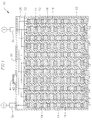
- a single cell flooded deep discharge lead-acid battery 10 includes a plurality of positive electrode grids 12 and a plurality of negative electrode grids 14. Each positive electrode grid is coated with a positive active material paste 16 to form a positive plate. Each negative electrode grid 14 is coated with a negative active material paste 18 to form a negative plate. The coated positive and negative electrode grids are arranged in an alternating stack within a battery case 22 using a plurality of separators 24 to separate each electrode grid from adjacent electrode grids and prevent short circuits.
- a positive current collector 28 connects the positive electrode grids and a negative current collector 26 connects the negative electrode grids.
- An electrolyte solution 32 fills the battery case.
- Positive and negative battery terminal posts 34, 36 extend from the battery case to provide external electrical contact points used for charging and discharging the battery.
- the battery case includes a vent 42 to allow excess gas produced during the charge cycle to be vented to atmosphere.
- a vent cap 44 prevents electrolyte from spilling from the battery case. While a single cell battery is illustrated, it should be clear to one of ordinary skill in the art that the invention can be applied to multiple cell batteries as well.
- Suitable polymers for the polymer layer include polyethylene, polyvinyl chloride, polypropylene, copolymers of ethylene and propylene, phenol formaldehyde (PF) resin, polyester, copolymers of styrene and butadiene, copolymers of a nitrile and butadiene, and cellulose based polymers.
- the polymer layer should be sufficiently porous to allow the electrolyte to be able to transfer through the layer to the negative electrode.
- polyethylene is used for the polymer layer.
- Suitable rubbers for the rubber layer include natural rubber, synthetic rubber (isoprene), and ethylene propylene diene monomer (EPDM) rubber.
- the rubber layer may be partially cross-linked by an electron beam unit. Using this or a similar treatment, a porous rubber layer may be formed.
- the rubber layer should be sufficiently porous to allow the electrolyte to be able to transfer through the layer to the negative electrode.
- the rubber layer includes natural rubber.
- a separator 124 has a rubber layer 140 and a polymer layer 150.
- the rubber layer 140 includes a backweb 142 and ribs 144.
- the ribs 144 form channels 146 that allow electrolyte to flow and gas to escape during charging of the battery.
- a reinforcing layer 160 is included.
- the reinforcing layer may be a material such as glass mat (i.e., glass fiber mat) or polyester fibers.
- the reinforcing layer 160 reinforces an adjacent electrode and prevents the active material of the adjacent electrode from expanding into the channels 146. In a flooded lead-acid battery, the ribs 144 generally face the positive electrode.
- the inclusion of the rubber layer 140 substantially prevents antimony transfer from the positive electrode grid to the negative electrode, and thus substantially prevents or reduces antimony poisoning. This is true even if the rubber layer 140 cracks or splits due to degradation.
- the polymer layer 150 is resistant to oxidation, and thus generally does not crack and split in an acidic solution. Therefore, the polymer layer 150 may physically prevent lead dendrite growth from the negative electrode to the positive electrode, thus preventing short circuits even when the rubber layer 140 cracks or splits.
- a thinner rubber layer 140 backweb 142 may be used as a polymer layer 150 physically prevents lead transfer in separators of the present invention.
- a rubber layer 140 having a backweb 142 of 0.2 to 0.3 cm (0.008 to 0.012 inches) may be used as a polymer layer 150 physically prevents lead transfer in separators of the present invention.
- the polymer layer 150 may have a thickness of less than 0.25 cm (0.010 inches). However, any suitable thicknesses may be used.
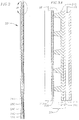
- FIGs. 3 and 3A depict a separator 224 with a positive electrode 212 and negative electrode 214.
- a glass mat 260 is adjacent to the positive electrode 212.
- a rubber layer 240 is adjacent to the glass mat 260 and includes a backweb 242 and ribs 244.
- a polymer layer 250 is adjacent to the rubber layer 240 and is wrapped around the negative electrode 214.
- the polymer layer 250 in FIGs. 3 and 3A is a pocket enveloping the negative electrode 214.
- the polymer layer 250 envelope may be open at the top.
- the polymer envelope may be formed by wrapping a polymer sheet around the bottom of the negative electrode 214 and sealing the polymer sheet on the sides of the negative electrode 214.
- any lead or lead containing materials in or adjacent to the negative electrodes that could cause short circuits will be separated from the remainder of the battery by the envelope. Even if cracks or splits develop in the rubber layer 260 due to oxidation, the polymer layer envelope 250 will also prevent lead dendrite travel from the negative electrode 214 to the positive electrode 212 through the cracks or splits of the rubber layer 260, thus preventing this type of battery short circuit.
- FIGs. 4 and 4A depict an alternative structure for a separator.
- a separator 324 includes a polymer layer 350 having a backweb 352 and ribs 354.
- the separator 324 also includes a flat rubber layer 340 on one side of the polymer layer 350 and a glass mat 360 on the other side of the polymer layer 350.
- the rubber layer 340 and the polymer layer 350 are reversed so that the rubber layer 340 is adjacent to the negative electrode and the polymer layer 350 is sandwiched between the rubber layer 340 and the glass mat 360.
- the polymer layer 350 may have a backweb 352 thickness of 0.18 to 0.33 cm (0.007 to 0.013 inches).
- the flat rubber layer 340 may have a thickness of less than 0.33 cm (0.013 inches). However, any suitable thicknesses may be used.
- FIGs. 5 and 5A depict an additional alternative structure for a separator.
- a separator 424 includes a foamed rubber layer 440 and a polymer layer 450.
- the polymer layer 450 includes a backweb 452 and ribs 454.
- the ribs 454 form channels 456.
- the foamed rubber layer 440 of FIGs. 5 and 5A functions as both a rubber layer and a replacement for a glass mat.
- the foamed rubber layer 440 is effective at preventing or reducing antimony transfer, serves to reinforce an adjacent electrode, and also prevents active material of an adjacent electrode from expanding into the channels 456.
- Positive and negative electrodes for lead-acid batteries were formed according to customary practices. Separators according to an embodiment of the present invention were formed and placed between each positive and negative plates in a cell.
- the separators used in Example 1 included a rubber sheet having a backweb and ribs, a flat porous polyethylene sheet, and a glass mat. The separators were assembled with the rubber sheet in the middle, the ribs facing the positive electrode.
- Example 1 Cells were formed as in Example 1 except that a traditional lead-acid separator was used.
- the traditional lead-acid separators used in Comparative Example 1 included a rubber sheet having a backweb and ribs and a glass mat. The separators were assembled with the glass mat adjacent to the positive electrode and the flat side of the rubber sheet backweb adjacent to the negative electrode.
- Example 1 For the tests, the cells were repeatedly discharged and charged using standard procedures as established by Battery Council International. The corrected capacity and end of charge voltage of Example 1 and Comparative Example 1 were measured after each cycle. As expected, there were no substantial changes to the capacity or end of charge voltage in Example 1. In other words, battery performed was not negatively impacted by the inclusion of an additional layer. However, the use of an additional membrane in a battery, i.e., the use of both a rubber layer and a polymer layer, increases the resistance of a battery. While this may negatively affect a battery if used for high current applications, the increase in resistance generally does not affect the performance of the battery. It is expected that Example 1 will have a significantly higher cycle life than Comparative Example 1.
- Example 1 even if the rubber layer oxidizes and cracks, the polymer layer should prevent lead migration, and thus should prevent a short circuit.
Landscapes
- Chemical & Material Sciences (AREA)
- Chemical Kinetics & Catalysis (AREA)
- Electrochemistry (AREA)
- General Chemical & Material Sciences (AREA)
- Engineering & Computer Science (AREA)
- Manufacturing & Machinery (AREA)
- Ceramic Engineering (AREA)
- Inorganic Chemistry (AREA)
- Secondary Cells (AREA)
- Cell Separators (AREA)
Claims (12)
- Separator für eine Bleisäurebatterie, umfassend:eine erste Schicht (240), aus einem Gummimaterial hergestellt ist; undeine zweite Schicht (250), die aus einem Polymermaterial hergestellt ist, dadurch gekennzeichnet, dass die zweite Schicht eine Hülle ist, die angepasst ist, eine Elektrode durch Umgeben ihrer Seite und und ihres Bodens zu enthalten, wobei die erste Schicht ein Backweb (242) mit einer ersten und zweiten Seite ist, wobei die erste Seite flach ist und die zweite Schicht angrenzt, und wobei die zweite Seite eine Vielzahl von Rippen (244) aufweist, die sich daraus erstrecken.
- Separator nach Anspruch 1, wobei das Gummimaterial Naturgummi umfasst.
- Separator nach Anspruch 1, wobei das Polymermaterial Polyethylen umfasst.
- Separator nach Anspruch 1, wobei der Separator ferner eine Verstärkungsschicht (160) umfasst.
- Separator nach Anspruch 1, wobei der Separator ferner eine Verstärkungsschicht umfasst, wobei die Verstärkungsschicht an die Vielzahl von Rippen angrenzt und die zweite Schicht an die erste Seite angrenzt.
- Separator nach Anspruch 1, wobei das Backweb eine Dicke von ca. 0,20 bis ca. 0,30 mm (0.008 bis 0.012 Zoll) aufweist.
- Separator nach Anspruch 1, wobei die erste Schicht Schaumgummi umfasst.
- Bleisäurebatterie, umfassend:eine negative Elektrode (14);eine positive Elektrode (12); undeinen Elektrolyt (32);gekennzeichnet durch den Separator von Anspruch 1 zwischen der negativen Elektrode und der positiven Elektrode.
- Batterie nach Anspruch 8, wobei die Vielzahl von Rippen der positiven Elektrode zugewandt ist.
- Batterie nach Anspruch 9, die ferner eine Verstärkungsschicht (160) umfasst, wobei sich die Verstärkungsschicht zwischen der Vielzahl von Rippen und der Elektrode befindet.
- Bleisäurebatterie: wie in Anspruch 10 beansprucht, wobei die erste Schicht Naturgummi umfasst und die zweite Schicht Polyethylen umfasst.
- Batterie nach Anspruch 8, wobei die zweite Schicht die negative Elektrode umgibt.
Applications Claiming Priority (2)
| Application Number | Priority Date | Filing Date | Title |
|---|---|---|---|
| US12/823,976 US20110318629A1 (en) | 2010-06-25 | 2010-06-25 | Separator for lead acid battery |
| PCT/US2011/041651 WO2011163489A1 (en) | 2010-06-25 | 2011-06-23 | Separator for lead acid battery |
Publications (3)
| Publication Number | Publication Date |
|---|---|
| EP2586082A1 EP2586082A1 (de) | 2013-05-01 |
| EP2586082A4 EP2586082A4 (de) | 2014-01-08 |
| EP2586082B1 true EP2586082B1 (de) | 2016-09-07 |
Family
ID=45352845
Family Applications (1)
| Application Number | Title | Priority Date | Filing Date |
|---|---|---|---|
| EP11798929.3A Not-in-force EP2586082B1 (de) | 2010-06-25 | 2011-06-23 | Separator für eine bleisäurebatterie |
Country Status (6)
| Country | Link |
|---|---|
| US (1) | US20110318629A1 (de) |
| EP (1) | EP2586082B1 (de) |
| CN (1) | CN102959763A (de) |
| MX (1) | MX2012013894A (de) |
| TW (1) | TW201222939A (de) |
| WO (1) | WO2011163489A1 (de) |
Families Citing this family (16)
| Publication number | Priority date | Publication date | Assignee | Title |
|---|---|---|---|---|
| CN105514504B (zh) * | 2012-12-21 | 2018-01-26 | 株式会社杰士汤浅国际 | 铅蓄电池 |
| KR20220071298A (ko) * | 2013-03-07 | 2022-05-31 | 다라믹 엘엘씨 | 적층 산화 보호 분리막 |
| CN112542654A (zh) * | 2014-01-02 | 2021-03-23 | 达拉米克有限责任公司 | 多层隔板及制造和使用方法 |
| US9755235B2 (en) | 2014-07-17 | 2017-09-05 | Ada Technologies, Inc. | Extreme long life, high energy density batteries and method of making and using the same |
| CN104201316B (zh) * | 2014-09-10 | 2017-01-11 | 太仓派欧技术咨询服务有限公司 | 一种碳泡沫铅酸电池隔板 |
| US10230088B1 (en) * | 2015-01-30 | 2019-03-12 | Johnson Controls Technology Company | Battery electrode assembly, separator and method of making same |
| CN118073772A (zh) | 2015-05-05 | 2024-05-24 | 达拉米克有限责任公司 | 材料化学:复合电池隔板、vrla电池及相关方法 |
| WO2016187496A2 (en) * | 2015-05-21 | 2016-11-24 | Daramic, Llc | Polyolefinic plate wraps, improved wrapped plates, improved lead acid batteries, and related methods |
| US10692659B2 (en) * | 2015-07-31 | 2020-06-23 | Ada Technologies, Inc. | High energy and power electrochemical device and method of making and using same |
| WO2018147866A1 (en) | 2017-02-10 | 2018-08-16 | Daramic, Llc | Improved separators with fibrous mat, lead acid batteries, and methods and systems associated therewith |
| US11024846B2 (en) | 2017-03-23 | 2021-06-01 | Ada Technologies, Inc. | High energy/power density, long cycle life, safe lithium-ion battery capable of long-term deep discharge/storage near zero volt and method of making and using the same |
| US11233275B2 (en) * | 2017-12-21 | 2022-01-25 | Trojan Battery Company, Llc | Coated lead acid battery separator and lead acid batteries containing coated separator |
| US11549631B2 (en) | 2018-01-10 | 2023-01-10 | Lydall, Inc. | Asymmetrical stretch composite for pipe liner |
| US20230145483A1 (en) * | 2020-03-30 | 2023-05-11 | Asahi Kasei Kabushiki Kaisha | Lead Storage Battery |
| EP4080641A1 (de) * | 2021-04-23 | 2022-10-26 | Amer-Sil sa | Batterieseparator zur verminderung des wasserverlustes |
| JP2025528471A (ja) * | 2023-02-27 | 2025-08-28 | 香港時代新能源科技有限公司 | 電極アセンブリ、電池セル、電池及び電力消費装置 |
Family Cites Families (15)
| Publication number | Priority date | Publication date | Assignee | Title |
|---|---|---|---|---|
| FR821465A (fr) * | 1936-05-27 | 1937-12-06 | Comp Generale Electricite | Assemblages plaques-organes de séparation pour accumulateurs électriques |
| US4213815A (en) * | 1978-06-16 | 1980-07-22 | Amerace Corporation | Continuous process for producing, by irradiation, a microporous rubber composition suitable for battery separators |
| US4288503A (en) * | 1978-06-16 | 1981-09-08 | Amerace Corporation | Laminated microporous article |
| US4317872A (en) * | 1980-04-25 | 1982-03-02 | Gould Inc. | Lead acid battery with gel electrolyte |
| US4327163A (en) * | 1980-11-14 | 1982-04-27 | General Motors Corporation | Half-envelope separator assemblies on individual plates |
| US5154988A (en) * | 1991-03-18 | 1992-10-13 | W. R. Grace & Co.-Conn. | Deep cycle battery separators |
| DE69214338T2 (de) * | 1991-03-09 | 1997-04-30 | Daramic Inc | Blei/Schwefelsäure-Akkumulator |
| US5679479A (en) * | 1996-05-08 | 1997-10-21 | Amtek Research International Llc | Battery separator |
| US6242127B1 (en) * | 1999-08-06 | 2001-06-05 | Microporous Products, L.P. | Polyethylene separator for energy storage cell |
| US6458491B1 (en) * | 2000-09-15 | 2002-10-01 | Microporous Products, Lp | Separator for energy storage cells |
| ITTO20030092U1 (it) * | 2003-05-30 | 2004-11-30 | Exide Italia S R L | Separatore a busta per piastre di elettrodi di accumulatori di tipo pe rfezionato. |
| DE10327080B4 (de) * | 2003-06-13 | 2007-08-16 | Daramic, Inc. | Separatormaterial zum Bilden eines Separators für einen Säureakkumulator und Verfahren zu deren Herstellung |
| CN105870379B (zh) * | 2007-06-01 | 2022-02-01 | 达拉米克有限责任公司 | 具有增强刚度的铅酸电池隔板 |
| CN201060887Y (zh) * | 2007-06-07 | 2008-05-14 | 江苏双登集团有限公司 | 铅酸蓄电池隔板 |
| US8404382B2 (en) * | 2008-04-08 | 2013-03-26 | Trojan Battery Company | Flooded lead-acid battery and method of making the same |
-
2010
- 2010-06-25 US US12/823,976 patent/US20110318629A1/en not_active Abandoned
-
2011
- 2011-06-23 EP EP11798929.3A patent/EP2586082B1/de not_active Not-in-force
- 2011-06-23 CN CN2011800315720A patent/CN102959763A/zh active Pending
- 2011-06-23 WO PCT/US2011/041651 patent/WO2011163489A1/en not_active Ceased
- 2011-06-23 MX MX2012013894A patent/MX2012013894A/es not_active Application Discontinuation
- 2011-06-24 TW TW100122205A patent/TW201222939A/zh unknown
Also Published As
| Publication number | Publication date |
|---|---|
| EP2586082A4 (de) | 2014-01-08 |
| WO2011163489A4 (en) | 2012-02-16 |
| CN102959763A (zh) | 2013-03-06 |
| TW201222939A (en) | 2012-06-01 |
| US20110318629A1 (en) | 2011-12-29 |
| EP2586082A1 (de) | 2013-05-01 |
| WO2011163489A1 (en) | 2011-12-29 |
| MX2012013894A (es) | 2013-02-21 |
Similar Documents
| Publication | Publication Date | Title |
|---|---|---|
| US20110318629A1 (en) | Separator for lead acid battery | |
| US5368961A (en) | Thin plate electrochemical cell | |
| KR101664244B1 (ko) | 전극의 표면에 패턴을 형성하는 방법, 이 방법을 이용해 제조된 전극 및 이 전극을 포함하는 이차전지 | |
| WO2006064344A3 (en) | Lithium-ion battery and method for its manufacture | |
| JPH11214027A (ja) | 陽極と陰極の容量比を補償した二次電池 | |
| KR101850180B1 (ko) | 관통구가 천공되어 있는 집전체를 포함하는 이차전지 | |
| KR20130043308A (ko) | 이차전지 | |
| JP4603108B2 (ja) | 二次電池の電極ロール | |
| US12451493B2 (en) | Battery grid | |
| EP1717896B1 (de) | Bleiakkumulator | |
| KR20200141859A (ko) | 전극조립체 및 그 제조방법 | |
| KR20180034660A (ko) | 납 축전지 | |
| KR20240000462U (ko) | 리튬 이온 배터리 | |
| WO2006113924A3 (en) | Safer high energy battery | |
| KR101403383B1 (ko) | 안전성이 향상된 원통형 이차전지 | |
| CN210926190U (zh) | 一种基于镍钴铝酸锂正极层的卷绕结构 | |
| KR20240039043A (ko) | 전극 어셈블리, 전지 셀, 전지 및 전력 소비 장치 | |
| KR20120091184A (ko) | 전기화학 전지 및 그 전지의 제조방법 | |
| KR20200102167A (ko) | 전극조립체 | |
| WO2021067292A1 (en) | Active material having oxidized fiber additive & electrode and battery having same | |
| CN222735275U (zh) | 一种隔膜、电池及用电设备 | |
| US20240105914A1 (en) | Bipolar battery plate and fabrication thereof | |
| JP7256702B2 (ja) | 固体電解質電池 | |
| US20120328912A1 (en) | Winding assembly for electrochemical cells, methods of making the winding assembly, and the electrochemical cell | |
| KR20260041468A (ko) | 이차전지 및 이의 제조 방법 |
Legal Events
| Date | Code | Title | Description |
|---|---|---|---|
| PUAI | Public reference made under article 153(3) epc to a published international application that has entered the european phase |
Free format text: ORIGINAL CODE: 0009012 |
|
| 17P | Request for examination filed |
Effective date: 20121122 |
|
| AK | Designated contracting states |
Kind code of ref document: A1 Designated state(s): AL AT BE BG CH CY CZ DE DK EE ES FI FR GB GR HR HU IE IS IT LI LT LU LV MC MK MT NL NO PL PT RO RS SE SI SK SM TR |
|
| DAX | Request for extension of the european patent (deleted) | ||
| REG | Reference to a national code |
Ref country code: DE Ref legal event code: R079 Ref document number: 602011030212 Country of ref document: DE Free format text: PREVIOUS MAIN CLASS: H01M0002140000 Ipc: H01M0010120000 |
|
| A4 | Supplementary search report drawn up and despatched |
Effective date: 20131206 |
|
| RIC1 | Information provided on ipc code assigned before grant |
Ipc: H01M 2/16 20060101ALI20131202BHEP Ipc: H01M 2/18 20060101ALI20131202BHEP Ipc: H01M 10/12 20060101AFI20131202BHEP |
|
| 17Q | First examination report despatched |
Effective date: 20140812 |
|
| GRAP | Despatch of communication of intention to grant a patent |
Free format text: ORIGINAL CODE: EPIDOSNIGR1 |
|
| INTG | Intention to grant announced |
Effective date: 20160404 |
|
| GRAS | Grant fee paid |
Free format text: ORIGINAL CODE: EPIDOSNIGR3 |
|
| GRAA | (expected) grant |
Free format text: ORIGINAL CODE: 0009210 |
|
| AK | Designated contracting states |
Kind code of ref document: B1 Designated state(s): AL AT BE BG CH CY CZ DE DK EE ES FI FR GB GR HR HU IE IS IT LI LT LU LV MC MK MT NL NO PL PT RO RS SE SI SK SM TR |
|
| REG | Reference to a national code |
Ref country code: GB Ref legal event code: FG4D |
|
| REG | Reference to a national code |
Ref country code: CH Ref legal event code: EP |
|
| REG | Reference to a national code |
Ref country code: IE Ref legal event code: FG4D |
|
| REG | Reference to a national code |
Ref country code: AT Ref legal event code: REF Ref document number: 827574 Country of ref document: AT Kind code of ref document: T Effective date: 20161015 |
|
| REG | Reference to a national code |
Ref country code: DE Ref legal event code: R096 Ref document number: 602011030212 Country of ref document: DE |
|
| REG | Reference to a national code |
Ref country code: LT Ref legal event code: MG4D |
|
| REG | Reference to a national code |
Ref country code: NL Ref legal event code: MP Effective date: 20160907 |
|
| PG25 | Lapsed in a contracting state [announced via postgrant information from national office to epo] |
Ref country code: LT Free format text: LAPSE BECAUSE OF FAILURE TO SUBMIT A TRANSLATION OF THE DESCRIPTION OR TO PAY THE FEE WITHIN THE PRESCRIBED TIME-LIMIT Effective date: 20160907 Ref country code: RS Free format text: LAPSE BECAUSE OF FAILURE TO SUBMIT A TRANSLATION OF THE DESCRIPTION OR TO PAY THE FEE WITHIN THE PRESCRIBED TIME-LIMIT Effective date: 20160907 Ref country code: HR Free format text: LAPSE BECAUSE OF FAILURE TO SUBMIT A TRANSLATION OF THE DESCRIPTION OR TO PAY THE FEE WITHIN THE PRESCRIBED TIME-LIMIT Effective date: 20160907 Ref country code: NO Free format text: LAPSE BECAUSE OF FAILURE TO SUBMIT A TRANSLATION OF THE DESCRIPTION OR TO PAY THE FEE WITHIN THE PRESCRIBED TIME-LIMIT Effective date: 20161207 Ref country code: FI Free format text: LAPSE BECAUSE OF FAILURE TO SUBMIT A TRANSLATION OF THE DESCRIPTION OR TO PAY THE FEE WITHIN THE PRESCRIBED TIME-LIMIT Effective date: 20160907 |
|
| REG | Reference to a national code |
Ref country code: AT Ref legal event code: MK05 Ref document number: 827574 Country of ref document: AT Kind code of ref document: T Effective date: 20160907 |
|
| PG25 | Lapsed in a contracting state [announced via postgrant information from national office to epo] |
Ref country code: LV Free format text: LAPSE BECAUSE OF FAILURE TO SUBMIT A TRANSLATION OF THE DESCRIPTION OR TO PAY THE FEE WITHIN THE PRESCRIBED TIME-LIMIT Effective date: 20160907 Ref country code: ES Free format text: LAPSE BECAUSE OF FAILURE TO SUBMIT A TRANSLATION OF THE DESCRIPTION OR TO PAY THE FEE WITHIN THE PRESCRIBED TIME-LIMIT Effective date: 20160907 Ref country code: SE Free format text: LAPSE BECAUSE OF FAILURE TO SUBMIT A TRANSLATION OF THE DESCRIPTION OR TO PAY THE FEE WITHIN THE PRESCRIBED TIME-LIMIT Effective date: 20160907 Ref country code: NL Free format text: LAPSE BECAUSE OF FAILURE TO SUBMIT A TRANSLATION OF THE DESCRIPTION OR TO PAY THE FEE WITHIN THE PRESCRIBED TIME-LIMIT Effective date: 20160907 Ref country code: GR Free format text: LAPSE BECAUSE OF FAILURE TO SUBMIT A TRANSLATION OF THE DESCRIPTION OR TO PAY THE FEE WITHIN THE PRESCRIBED TIME-LIMIT Effective date: 20161208 |
|
| PG25 | Lapsed in a contracting state [announced via postgrant information from national office to epo] |
Ref country code: RO Free format text: LAPSE BECAUSE OF FAILURE TO SUBMIT A TRANSLATION OF THE DESCRIPTION OR TO PAY THE FEE WITHIN THE PRESCRIBED TIME-LIMIT Effective date: 20160907 Ref country code: EE Free format text: LAPSE BECAUSE OF FAILURE TO SUBMIT A TRANSLATION OF THE DESCRIPTION OR TO PAY THE FEE WITHIN THE PRESCRIBED TIME-LIMIT Effective date: 20160907 |
|
| PG25 | Lapsed in a contracting state [announced via postgrant information from national office to epo] |
Ref country code: IS Free format text: LAPSE BECAUSE OF FAILURE TO SUBMIT A TRANSLATION OF THE DESCRIPTION OR TO PAY THE FEE WITHIN THE PRESCRIBED TIME-LIMIT Effective date: 20170107 Ref country code: BE Free format text: LAPSE BECAUSE OF FAILURE TO SUBMIT A TRANSLATION OF THE DESCRIPTION OR TO PAY THE FEE WITHIN THE PRESCRIBED TIME-LIMIT Effective date: 20160907 Ref country code: BG Free format text: LAPSE BECAUSE OF FAILURE TO SUBMIT A TRANSLATION OF THE DESCRIPTION OR TO PAY THE FEE WITHIN THE PRESCRIBED TIME-LIMIT Effective date: 20161207 Ref country code: PT Free format text: LAPSE BECAUSE OF FAILURE TO SUBMIT A TRANSLATION OF THE DESCRIPTION OR TO PAY THE FEE WITHIN THE PRESCRIBED TIME-LIMIT Effective date: 20170109 Ref country code: PL Free format text: LAPSE BECAUSE OF FAILURE TO SUBMIT A TRANSLATION OF THE DESCRIPTION OR TO PAY THE FEE WITHIN THE PRESCRIBED TIME-LIMIT Effective date: 20160907 Ref country code: SM Free format text: LAPSE BECAUSE OF FAILURE TO SUBMIT A TRANSLATION OF THE DESCRIPTION OR TO PAY THE FEE WITHIN THE PRESCRIBED TIME-LIMIT Effective date: 20160907 Ref country code: CZ Free format text: LAPSE BECAUSE OF FAILURE TO SUBMIT A TRANSLATION OF THE DESCRIPTION OR TO PAY THE FEE WITHIN THE PRESCRIBED TIME-LIMIT Effective date: 20160907 Ref country code: AT Free format text: LAPSE BECAUSE OF FAILURE TO SUBMIT A TRANSLATION OF THE DESCRIPTION OR TO PAY THE FEE WITHIN THE PRESCRIBED TIME-LIMIT Effective date: 20160907 Ref country code: SK Free format text: LAPSE BECAUSE OF FAILURE TO SUBMIT A TRANSLATION OF THE DESCRIPTION OR TO PAY THE FEE WITHIN THE PRESCRIBED TIME-LIMIT Effective date: 20160907 |
|
| REG | Reference to a national code |
Ref country code: DE Ref legal event code: R097 Ref document number: 602011030212 Country of ref document: DE |
|
| PG25 | Lapsed in a contracting state [announced via postgrant information from national office to epo] |
Ref country code: IT Free format text: LAPSE BECAUSE OF FAILURE TO SUBMIT A TRANSLATION OF THE DESCRIPTION OR TO PAY THE FEE WITHIN THE PRESCRIBED TIME-LIMIT Effective date: 20160907 |
|
| PLBE | No opposition filed within time limit |
Free format text: ORIGINAL CODE: 0009261 |
|
| STAA | Information on the status of an ep patent application or granted ep patent |
Free format text: STATUS: NO OPPOSITION FILED WITHIN TIME LIMIT |
|
| PG25 | Lapsed in a contracting state [announced via postgrant information from national office to epo] |
Ref country code: DK Free format text: LAPSE BECAUSE OF FAILURE TO SUBMIT A TRANSLATION OF THE DESCRIPTION OR TO PAY THE FEE WITHIN THE PRESCRIBED TIME-LIMIT Effective date: 20160907 |
|
| 26N | No opposition filed |
Effective date: 20170608 |
|
| PG25 | Lapsed in a contracting state [announced via postgrant information from national office to epo] |
Ref country code: SI Free format text: LAPSE BECAUSE OF FAILURE TO SUBMIT A TRANSLATION OF THE DESCRIPTION OR TO PAY THE FEE WITHIN THE PRESCRIBED TIME-LIMIT Effective date: 20160907 |
|
| REG | Reference to a national code |
Ref country code: DE Ref legal event code: R119 Ref document number: 602011030212 Country of ref document: DE |
|
| PG25 | Lapsed in a contracting state [announced via postgrant information from national office to epo] |
Ref country code: MC Free format text: LAPSE BECAUSE OF FAILURE TO SUBMIT A TRANSLATION OF THE DESCRIPTION OR TO PAY THE FEE WITHIN THE PRESCRIBED TIME-LIMIT Effective date: 20160907 |
|
| REG | Reference to a national code |
Ref country code: CH Ref legal event code: PL |
|
| GBPC | Gb: european patent ceased through non-payment of renewal fee |
Effective date: 20170623 |
|
| REG | Reference to a national code |
Ref country code: IE Ref legal event code: MM4A |
|
| REG | Reference to a national code |
Ref country code: FR Ref legal event code: ST Effective date: 20180228 |
|
| PG25 | Lapsed in a contracting state [announced via postgrant information from national office to epo] |
Ref country code: GB Free format text: LAPSE BECAUSE OF NON-PAYMENT OF DUE FEES Effective date: 20170623 Ref country code: LU Free format text: LAPSE BECAUSE OF NON-PAYMENT OF DUE FEES Effective date: 20170623 Ref country code: CH Free format text: LAPSE BECAUSE OF NON-PAYMENT OF DUE FEES Effective date: 20170630 Ref country code: IE Free format text: LAPSE BECAUSE OF NON-PAYMENT OF DUE FEES Effective date: 20170623 Ref country code: LI Free format text: LAPSE BECAUSE OF NON-PAYMENT OF DUE FEES Effective date: 20170630 Ref country code: DE Free format text: LAPSE BECAUSE OF NON-PAYMENT OF DUE FEES Effective date: 20180103 |
|
| PG25 | Lapsed in a contracting state [announced via postgrant information from national office to epo] |
Ref country code: FR Free format text: LAPSE BECAUSE OF NON-PAYMENT OF DUE FEES Effective date: 20170630 |
|
| PG25 | Lapsed in a contracting state [announced via postgrant information from national office to epo] |
Ref country code: MT Free format text: LAPSE BECAUSE OF NON-PAYMENT OF DUE FEES Effective date: 20170623 |
|
| PG25 | Lapsed in a contracting state [announced via postgrant information from national office to epo] |
Ref country code: AL Free format text: LAPSE BECAUSE OF FAILURE TO SUBMIT A TRANSLATION OF THE DESCRIPTION OR TO PAY THE FEE WITHIN THE PRESCRIBED TIME-LIMIT Effective date: 20160907 |
|
| PG25 | Lapsed in a contracting state [announced via postgrant information from national office to epo] |
Ref country code: HU Free format text: LAPSE BECAUSE OF FAILURE TO SUBMIT A TRANSLATION OF THE DESCRIPTION OR TO PAY THE FEE WITHIN THE PRESCRIBED TIME-LIMIT; INVALID AB INITIO Effective date: 20110623 |
|
| PG25 | Lapsed in a contracting state [announced via postgrant information from national office to epo] |
Ref country code: CY Free format text: LAPSE BECAUSE OF NON-PAYMENT OF DUE FEES Effective date: 20160907 |
|
| PG25 | Lapsed in a contracting state [announced via postgrant information from national office to epo] |
Ref country code: MK Free format text: LAPSE BECAUSE OF FAILURE TO SUBMIT A TRANSLATION OF THE DESCRIPTION OR TO PAY THE FEE WITHIN THE PRESCRIBED TIME-LIMIT Effective date: 20160907 |
|
| PG25 | Lapsed in a contracting state [announced via postgrant information from national office to epo] |
Ref country code: TR Free format text: LAPSE BECAUSE OF FAILURE TO SUBMIT A TRANSLATION OF THE DESCRIPTION OR TO PAY THE FEE WITHIN THE PRESCRIBED TIME-LIMIT Effective date: 20160907 |