EP2587436A2 - Interaktives Einzelhandelssystem - Google Patents
Interaktives Einzelhandelssystem Download PDFInfo
- Publication number
- EP2587436A2 EP2587436A2 EP12190307.4A EP12190307A EP2587436A2 EP 2587436 A2 EP2587436 A2 EP 2587436A2 EP 12190307 A EP12190307 A EP 12190307A EP 2587436 A2 EP2587436 A2 EP 2587436A2
- Authority
- EP
- European Patent Office
- Prior art keywords
- customer
- interactive
- user
- retail system
- product
- Prior art date
- Legal status (The legal status is an assumption and is not a legal conclusion. Google has not performed a legal analysis and makes no representation as to the accuracy of the status listed.)
- Ceased
Links
Images




Classifications
-
- G—PHYSICS
- G06—COMPUTING OR CALCULATING; COUNTING
- G06Q—INFORMATION AND COMMUNICATION TECHNOLOGY [ICT] SPECIALLY ADAPTED FOR ADMINISTRATIVE, COMMERCIAL, FINANCIAL, MANAGERIAL OR SUPERVISORY PURPOSES; SYSTEMS OR METHODS SPECIALLY ADAPTED FOR ADMINISTRATIVE, COMMERCIAL, FINANCIAL, MANAGERIAL OR SUPERVISORY PURPOSES, NOT OTHERWISE PROVIDED FOR
- G06Q30/00—Commerce
- G06Q30/06—Buying, selling or leasing transactions
-
- G—PHYSICS
- G06—COMPUTING OR CALCULATING; COUNTING
- G06Q—INFORMATION AND COMMUNICATION TECHNOLOGY [ICT] SPECIALLY ADAPTED FOR ADMINISTRATIVE, COMMERCIAL, FINANCIAL, MANAGERIAL OR SUPERVISORY PURPOSES; SYSTEMS OR METHODS SPECIALLY ADAPTED FOR ADMINISTRATIVE, COMMERCIAL, FINANCIAL, MANAGERIAL OR SUPERVISORY PURPOSES, NOT OTHERWISE PROVIDED FOR
- G06Q30/00—Commerce
- G06Q30/02—Marketing; Price estimation or determination; Fundraising
- G06Q30/0241—Advertisements
- G06Q30/0251—Targeted advertisements
- G06Q30/0255—Targeted advertisements based on user history
-
- G—PHYSICS
- G06—COMPUTING OR CALCULATING; COUNTING
- G06Q—INFORMATION AND COMMUNICATION TECHNOLOGY [ICT] SPECIALLY ADAPTED FOR ADMINISTRATIVE, COMMERCIAL, FINANCIAL, MANAGERIAL OR SUPERVISORY PURPOSES; SYSTEMS OR METHODS SPECIALLY ADAPTED FOR ADMINISTRATIVE, COMMERCIAL, FINANCIAL, MANAGERIAL OR SUPERVISORY PURPOSES, NOT OTHERWISE PROVIDED FOR
- G06Q10/00—Administration; Management
- G06Q10/40—Business processes related to social networking or social networking services
-
- G—PHYSICS
- G06—COMPUTING OR CALCULATING; COUNTING
- G06Q—INFORMATION AND COMMUNICATION TECHNOLOGY [ICT] SPECIALLY ADAPTED FOR ADMINISTRATIVE, COMMERCIAL, FINANCIAL, MANAGERIAL OR SUPERVISORY PURPOSES; SYSTEMS OR METHODS SPECIALLY ADAPTED FOR ADMINISTRATIVE, COMMERCIAL, FINANCIAL, MANAGERIAL OR SUPERVISORY PURPOSES, NOT OTHERWISE PROVIDED FOR
- G06Q30/00—Commerce
- G06Q30/02—Marketing; Price estimation or determination; Fundraising
- G06Q30/0207—Discounts or incentives, e.g. coupons or rebates
- G06Q30/0238—Discounts or incentives, e.g. coupons or rebates at point-of-sale [POS]
-
- G—PHYSICS
- G06—COMPUTING OR CALCULATING; COUNTING
- G06Q—INFORMATION AND COMMUNICATION TECHNOLOGY [ICT] SPECIALLY ADAPTED FOR ADMINISTRATIVE, COMMERCIAL, FINANCIAL, MANAGERIAL OR SUPERVISORY PURPOSES; SYSTEMS OR METHODS SPECIALLY ADAPTED FOR ADMINISTRATIVE, COMMERCIAL, FINANCIAL, MANAGERIAL OR SUPERVISORY PURPOSES, NOT OTHERWISE PROVIDED FOR
- G06Q30/00—Commerce
- G06Q30/02—Marketing; Price estimation or determination; Fundraising
- G06Q30/0241—Advertisements
- G06Q30/0251—Targeted advertisements
- G06Q30/0255—Targeted advertisements based on user history
- G06Q30/0256—User search
-
- G—PHYSICS
- G06—COMPUTING OR CALCULATING; COUNTING
- G06Q—INFORMATION AND COMMUNICATION TECHNOLOGY [ICT] SPECIALLY ADAPTED FOR ADMINISTRATIVE, COMMERCIAL, FINANCIAL, MANAGERIAL OR SUPERVISORY PURPOSES; SYSTEMS OR METHODS SPECIALLY ADAPTED FOR ADMINISTRATIVE, COMMERCIAL, FINANCIAL, MANAGERIAL OR SUPERVISORY PURPOSES, NOT OTHERWISE PROVIDED FOR
- G06Q30/00—Commerce
- G06Q30/02—Marketing; Price estimation or determination; Fundraising
- G06Q30/0241—Advertisements
- G06Q30/0251—Targeted advertisements
- G06Q30/0261—Targeted advertisements based on user location
-
- G—PHYSICS
- G06—COMPUTING OR CALCULATING; COUNTING
- G06Q—INFORMATION AND COMMUNICATION TECHNOLOGY [ICT] SPECIALLY ADAPTED FOR ADMINISTRATIVE, COMMERCIAL, FINANCIAL, MANAGERIAL OR SUPERVISORY PURPOSES; SYSTEMS OR METHODS SPECIALLY ADAPTED FOR ADMINISTRATIVE, COMMERCIAL, FINANCIAL, MANAGERIAL OR SUPERVISORY PURPOSES, NOT OTHERWISE PROVIDED FOR
- G06Q30/00—Commerce
- G06Q30/02—Marketing; Price estimation or determination; Fundraising
- G06Q30/0241—Advertisements
- G06Q30/0251—Targeted advertisements
- G06Q30/0269—Targeted advertisements based on user profile or attribute
-
- G—PHYSICS
- G06—COMPUTING OR CALCULATING; COUNTING
- G06Q—INFORMATION AND COMMUNICATION TECHNOLOGY [ICT] SPECIALLY ADAPTED FOR ADMINISTRATIVE, COMMERCIAL, FINANCIAL, MANAGERIAL OR SUPERVISORY PURPOSES; SYSTEMS OR METHODS SPECIALLY ADAPTED FOR ADMINISTRATIVE, COMMERCIAL, FINANCIAL, MANAGERIAL OR SUPERVISORY PURPOSES, NOT OTHERWISE PROVIDED FOR
- G06Q30/00—Commerce
- G06Q30/06—Buying, selling or leasing transactions
- G06Q30/0601—Electronic shopping [e-shopping]
- G06Q30/0641—Electronic shopping [e-shopping] utilising user interfaces specially adapted for shopping
-
- G—PHYSICS
- G06—COMPUTING OR CALCULATING; COUNTING
- G06V—IMAGE OR VIDEO RECOGNITION OR UNDERSTANDING
- G06V40/00—Recognition of biometric, human-related or animal-related patterns in image or video data
- G06V40/10—Human or animal bodies, e.g. vehicle occupants or pedestrians; Body parts, e.g. hands
- G06V40/103—Static body considered as a whole, e.g. static pedestrian or occupant recognition
-
- G—PHYSICS
- G06—COMPUTING OR CALCULATING; COUNTING
- G06V—IMAGE OR VIDEO RECOGNITION OR UNDERSTANDING
- G06V40/00—Recognition of biometric, human-related or animal-related patterns in image or video data
- G06V40/10—Human or animal bodies, e.g. vehicle occupants or pedestrians; Body parts, e.g. hands
- G06V40/16—Human faces, e.g. facial parts, sketches or expressions
- G06V40/174—Facial expression recognition
-
- H—ELECTRICITY
- H04—ELECTRIC COMMUNICATION TECHNIQUE
- H04L—TRANSMISSION OF DIGITAL INFORMATION, e.g. TELEGRAPHIC COMMUNICATION
- H04L63/00—Network architectures or network communication protocols for network security
- H04L63/08—Network architectures or network communication protocols for network security for authentication of entities
Definitions
- a customer When shopping, for example, for shoes, a customer typically obtains and analyzes information so that they can make an informed purchase. For example, a website that sells shoes may use digital images of shoes so that a customer can see the appearance of the shoes.
- customers are not able to physically try on the shoes to determine if the shoes have the desired fit, customers often choose to visit traditional "brick and mortar" stores over shopping online.
- a customer may also favor a traditional "brick and mortar" store over shopping online because they can interact with a salesperson.
- the effectiveness of a salesperson is limited for a number of reasons. As an example, a salesperson may not have adequate information to meet the customer's needs. Such may be the case when the salesperson is a recent hire or the shoe is a newly released product.
- a salesperson may not be able to pay attention to everyone at the same time. Consequently, some customers may have to wait for long periods of time or make purchases without receiving product advice. It can be also very difficult for a salesperson to identify the needs of customers and to provide suggestions which meet the customer's needs.
- Various embodiments of the present invention relate to an interactive retail system configured to display a user interactive environment featuring a virtual projection (e.g, "virtual shelf, " “virtual display”) populated with at least one image of at least one retail item available for purchase.
- a virtual projection e.g, "virtual shelf, " “virtual display”
- Displaying "virtual products", i.e. images thereof, in this manner has the technical advantage of optimizing the space needed for displaying the products, as compared to conventionally displaying a plurality of physical products in a customer store.
- the retail system reacts when users (e.g., consumers) approach and can display retail items based on various user characteristics.
- the retail system may determine the user's gender, physical dimensions, and/or purchase preferences (e.g., based on user purchase history), select appropriate retail items based thereon, and display images of the selected retail items on the virtual projection, virtual shelf, or other type of display.
- virtual projection can be any suitable visual multimedia presentation (e.g., on a video screen, projector screen or surface, holographic image, and the like).
- the retail system may make additional recommendations, display marketing information and media content related to selected retail items, display the technology behind the retail items, and provide a user interface for customization of selected retail items.
- a user may access social media, web content, and gaming services through the user interactive environment. The user may complete a purchase transaction on the retail system or in conjunction with additional mobile devices including tablet computers, mobile phones, remote devices and the like.
- mobile devices can be available within the retail environment.
- mobile devices can be associated with the interactive retail system.
- the mobile devices can be provided by the commercial entity operating the interactive retail system.
- the mobile devices are privately owned (e.g., by the customer) and can be logged in or connected to a network associated with the interactive retail system.
- a customer e.g., user
- QR-code can be displayed on the projection or screen associated with the interactive retail system.
- the QR-code can be a user ID to allow the personal interaction to be continued on the mobile device (e.g., registered access to web page with content from customer interaction with interactive retail system).
- the QR-code can be a product ID, such that the user interaction on the mobile device begins with product related content.
- the QR-code can be placed on a product, on a different display, etc., and can be used by the mobile device as an additional element for acquiring product related information or identifying similar products.
- the QR-code can be shared with other people through social networks.
- Mobile devices can also track customer shopping behavior and analyze customer needs and/or interests based on the customer's transaction and/or viewing history with the interactive retail system. Furthermore, mobile devices associated with the interactive retail system can function as a shop assistant guide by providing the customer's transaction and viewing history to the shop assistant to help them provide a more informed and individually tailored customer service experience.
- the interactive retail system tracks the customers viewing history with the interactive retail system.
- the interactive retail system can be configured to recognize registered customers (e.g., customers who have previously opened at account) and access consumer data which may include previous purchases, consumer behavior (e.g., media interactive history, visited web pages, social network interactions, etc.).
- the interactive retail system can be configured to align the interactive environment with a customer's preferences. For example, if a customer prefers a certain color with a given set of products, the interactive retail system can provide product suggestions in that particular color, or provide assortments of colors with higher instances of the favored color. This process can be dynamically adjusted or modified during the interactive session. It should be noted that this interactive feature can be applied to other product features including identified customer preferences in certain product materials, patterns, or other product features.
- the interactive retail system can scan a music database on a personal mobile device to determine a preferred type of music or song list.
- the interactive retail system can compare the information associated with a music file with database where products or color ranges are associated with certain types of music (e.g., musical genres, titles, etc.) and recommend those products to the customer.
- the interactive retail system can track the physical movements of a customer by a camera and provide product suggestions to the customer (e.g., by audio or video interface) based on the movements. For example, body language and/or facial expressions with respect to a customer's attention to certain products can be captured and used to determine customer preferences.
- the interactive retail system can utilize the customer preferences to customize the interactive retail system to provide a shopping experience tailored to those preferences to meet customer interests. For example, if the customer views or selects a large number of baseball shoes and accessories, then the interactive retail system can be adapted to suggest additional baseball related products based, for example, on the customer's viewing or purchase history.
- the interactive retail system can dynamically adjust the shopping experience based on the customer's interest, attention, and positive feedback (e.g., body language, facial expressions, identifiable audio responses, etc.).
- the interactive retail system can use cameras to capture facial micro expressions and analyze the customer's emotional reaction to various suggested products. Based partly on that analysis, the interactive retail system can maintain the customer's interest and attention by determining which products are favorable to the particular customer.
- product suggestions can be based, in part or in whole, on the measured reactions of the customer (e.g., facial expressions, body language, etc.) as identified by the interactive retail system by way of cameras, microphones, and the like.
- the retail system comprises a frame, a plurality of bays disposed in the frame, wherein the bays comprise one or more video cameras, one or more video screens, and one or more user-input devices.
- One or more processors execute instructions to analyze video data received from the one or more video cameras to detect the presence of a user and to determine one or more physical attributes of the user.
- the interactive retail system selects from a catalog of retail items one or more retail items appropriate for the user based at least in part on the one or more physical attributes of the user and displays one or more images of the one or more retail items selected from the catalog on the one or more video screens.
- the interactive retail system preferably analyzes input data received from the one or more user-input devices to detect a user input command which may include one of a scroll-items command and a select-item command.
- the scroll items command may cause one or more processors to scroll the one or more retail items selected from the catalog on the one or more displays and the select-item command may cause the one or more processors to select and display a rotatable image of the retail item intended to be selected.
- the retail system may cause the one or more processors to display statistics, physical dimensions, and related media files of the retail items on the one or more video screens.
- the display can be a screen (e.g., monitor) or a touch screen.
- the interactive interface of the interactive retail system can be projected on a surface (e.g., wall, mannequins, shoes, shirts, sports equipment, flat surfaces, etc.) by a video projector.
- a surface e.g., wall, mannequins, shoes, shirts, sports equipment, flat surfaces, etc.
- sensors e.g., cameras, infra-red detection, product sensors, QR codes, etc.
- certain products can be projected on a mannequin (e.g., shoes and/or clothing), according to certain embodiments.
- the mannequin may be outfitted with sensors to detect a touch by a customer (e.g., if a customer touches a shoe projected on the mannequin's foot).
- the sensor determines the location that was touched and sends it to the interactive retail system for further processing.
- the interactive retail system can then determine, based on the sensor signals, which product was touched by the customer and subsequently display the shoe and/or related merchandise on one of the screens of the interactive retail system for further customer interaction.
- the screen can be curved and/or flexible and/or transparent.
- the interactive retail system can be mobilized and implemented in a variety of locations including, but not limited to, public locations (e.g., airports, train stations, bus stops), remote locations (e.g., mountain huts, parks, walking trails, beaches, by lakes, etc.), sports facilities (e.g., fitness studios, sports stadiums, gyms, etc.), in restaurants, schools, shopping malls, golf courses, and the like.
- the interactive retail system can project advertisements during certain times or on demand.
- the interactive retail system can perform other services in different modes of operation (e.g., separately or simultaneously) including, but not limited to, ticket machine services, display public transportation schedules, etc.
- the interactive retail system can be configured to perform retail functions during peak hours of high customer interaction, and provide other services like displaying public service information during low periods of interaction.
- Some embodiments can be configured to switch from a non-retail mode (e.g., ticket machine) to a retail mode when the interactive retail system detects the presence of a user, or a user interacts with or engages the interactive retail system.
- a non-retail mode e.g., ticket machine
- a customer can register with the interactive retail system.
- the customer can register (e.g., during a product purchase, during mobile device registration, etc.) in a data base and log in before interacting with the interactive retail system.
- the database can store purchase history, product viewing history, and the like.
- the consumer can register via near field communication, exchange additional data, and/or pay via near field communication.
- the interactive retail system can recognize customers (e.g., registered customers) via product sensors (e.g., sensors in shoes, shirts, heat rate belts, sensors carried by user, etc. for tracking movement and/or workout statistics), which can be recognized by the interactive retail system and associated with the specific customer.
- product sensors e.g., sensors in shoes, shirts, heat rate belts, sensors carried by user, etc.
- the interactive retail system can recognize the customer via face or voice recognition capabilities, as further described below with respect to FIG. 2 .
- the interactive retail system can track other metrics including shopping behavior such as attention to particular areas of a store (e.g., specific product displays, etc.) to determine a customer's interests.
- the interactive retail system can determine characteristics of products in the particular product display (e.g., type, brand, etc.) and display similar products on its screens (e.g., monitors, etc.) to better appeal to the customer's product preferences and entice the customer to engage the interactive retail system.
- the interactive retail system can detect customer location, face/voice recognition, etc., to determine shopping behavior with its various hardware (e.g., cameras, infra-red detection, sensors, etc.) as further described below in the detailed description.
- Information about customers can be stored in a customer database which can be local, remote, centralized, spread over multiple databases, or any storage configuration known by those of ordinary skill in the art.
- the database can store and update sports related activities of a customer, shopping related data (e.g., payment methods, favorite products, etc.) or any other information and any combination thereof.
- the interactive retail system and/or one or more of the previously mentioned databases can access social network profiles of the customer. For example, data can be exchanged between the social network(s), the database(s), mobile devices (e.g., registered devices), product sensors (e.g., shoe sensors, etc.) and the interactive retail system to collect a detailed description of a customer profile to better provide a more personalized interactive experience for the particular customer.
- the customer can have personal access to their database by a variety of methods (e.g., name/password, answer a series of questions regarding the customer's personal characteristics, statistics, product purchases and/or preferences) and can tailor the interactive environment based on the customer's purchase history and preferences.
- methods e.g., name/password, answer a series of questions regarding the customer's personal characteristics, statistics, product purchases and/or preferences
- FIG. 1A is a simplified block diagram of aspects of a retail system network, according to embodiments of the present invention.
- FIG. 1 B is a simplified block diagram of aspects of a retail system network, according to embodiments of the present invention.
- FIG. 2 is a simplified block diagram of retail system, according to embodiments of the present invention.
- FIG. 3 is a simplified flow diagram illustrating a method for creating a user interactive environment on a retail system, according to embodiments of the present invention.
- FIG. 4A is a simplified block diagram of aspects of a retail system network, according to embodiments of the present invention.
- FIG. 4B is a depiction of an interactive retail system, according to certain exemplary embodiments.
- FIG. 4C is a depiction of a tablet computer used in conjunction with an interactive retail system, according to certain exemplary embodiments.
- FIG. 4D is a depiction of an interactive retail system and several mobile devices used in conjunction with the interactive retail system, according to certain exemplary embodiments.
- FIG. 4E is a depiction of a mobile retail system, according to certain exemplary embodiments.
- FIG. 5A is a simplified diagram illustrating some available features in a user interactive environment of a retail system, according to embodiments of the invention.
- FIG. 5B is a simplified flow diagram illustrating a method for creating a shopping session with a customer, according to embodiments of the present invention.
- FIG. 6 is a diagram of a computer apparatus, according to certain exemplary embodiments.
- Embodiments of the invention are generally directed to interactive retail systems.
- FIG. 1A is a simplified block diagram of a retail system network 100, according to certain embodiments of the present invention.
- the retail system network 100 comprises a retail system 105, retail system servers 110, a data storage device 115, mobile device(s) 120, and settlement servers 130.
- the retail system 105 is configured to display a user interactive environment 108 which is further detailed below and depicted in FIG. 2 .
- the retail system 105 is configured for electronic communication with the retail system servers 110, the mobile device(s) 120, and the settlement servers 130.
- the mobile device(s) 120 are configured for electronic communication with the settlement servers 130.
- the mobile devices 120 are configured for electronic communication with the retail system servers 110 (connection not shown).
- the data storage device 115 is configured for electronic communication with the retail system server(s) 110 and/or the retail system 105.
- the retail system 105 displays a user interactive environment 108 on one or more screens to allow a user to browse, select, research, and/or purchase a variety of retail items for purchase.
- the data storage device 115 stores images and information (e.g., marketing, technical, and pricing information, etc.) of the various retail items.
- the data storage device 115 is located within the retail system server(s) 110. The details of the retail system 105 and the user interactive environment are further discussed below and depicted in FIGS. 2-5 .
- the retail system servers 110 control the hardware and software operations of the retail system 105. According to certain embodiments, the retail system servers 110 are remotely located from the retail system 105 and provide various data processing, networking, and management functions. In one non-limiting example, the retail system servers 110 operate the user interactive environment 108 on the retail system 105. In some embodiments, the retail system server(s) 110 is located within the retail system 105. For example, the retail system server(s) 110 may be located within the frame of the retail system 105 (see FIG. 2 ) or connected to the retail system. In other embodiments, there may be dedicated processors built into the retail system 105 to replace or provide support to the retail system servers 110.
- a user may use one or more mobile devices 120 to wirelessly access the user interactive environment 108 of retail system 105 to remotely perform a variety of retail functions. For example, a user may browse and select a retail item, perform a settlement transaction to complete a purchase, or customize retail items in conjunction with the retail system 105.
- Some examples of mobile devices include cell phones, smart phones, tablet computers, notebook computers, personal digital assistants, and the like.
- a user may use one or more mobile devices 120 to access the user interactive environment 108 by way of a hardwired connection.
- the mobile device 120 may perform a user settlement transaction (i.e. purchase of retail items) with the settlement transaction servers 130 through the retail system 105.
- the mobile device 120 may perform a settlement transaction directly with the settlement transaction servers 130, thus bypassing the retail system 105 to complete the purchase transaction.
- a mobile device 120 may optionally bypass the retail system 105 and communicate directly with the settlement transaction servers 130 if, for example, the retail item the user wants is out of stock.
- the user or a sales person may request that the retail system servers 110 send a message to the user's mobile device 120 once the retail items is available wherein the user may use their mobile device 120 to log into their online account stored on the retail system servers 110 to purchase the item. Details regarding online accounts are further discussed below in reference to FIG. 5 .
- the settlement servers 130 perform the settlement transactions with the retail system 105 and mobile device(s) 120 to complete a sale.
- the operations and protocols of settlement transactions are not discussed in detail herein to avoid obfuscation of the novelty and focus of the present invention, but are known to those skilled in the relevant art.
- Each server typically will include an operating system that provides executable program instructions for the general administration and operation of that server, and typically will include a computer-readable medium storing instructions that, when executed by a processor of the server, allow the server to perform its intended functions.
- Suitable implementations for the operating system and general functionality of the servers are known or commercially available, and are readily implemented by persons having ordinary skill in the art, particularly in light of the disclosure herein.
- the retail system network 100 in one embodiment is a distributed computing environment utilizing several computer systems and components that are interconnected via communication links, using one or more computer networks or direct connections.
- the retail system network 100 could operate equally well in a system having fewer or a greater number of components than are illustrated in FIG. 1A .
- the depiction of the retail system network 100 in FIG. 1 A should be taken as being illustrative in nature, and not limiting to the scope of the disclosure.
- FIG. 1B is a simplified block diagram of a retail system network 150, according to certain embodiments of the present invention.
- the retail system network 150 comprises a retail system 105, cloud server 160, mobile device(s) 120, and settlement servers 130.
- the retail system 105 is configured to display a user interactive environment 108 which is further detailed below and depicted in FIG. 2 .
- the retail system 105 is configured for electronic communication with the could server 160, the mobile device(s) 120, and the settlement servers 130.
- the mobile device(s) 120 are configured for electronic communication with the settlement servers 130.
- the mobile devices 120 are configured for electronic communication with the cloud server 160 (connection not shown).
- the cloud server 160 can be configured to serve the functions of the retail system servers 110 and data storage devices 115, as described above with respect to FIG. 1A .
- the retail system 105 of FIG. 1 B is configured as a "slave" system served by the cloud servers (e.g., "cloud network”) which provides cloud computing services.
- the cloud servers 160 can provide the retail system 105 with the requisite processing needs (e.g., memory, resources, etc.) to operate the user interactive environment 108 (as further described with respect to FIG. 5 ).
- FIG. 2 is a simplified block diagram of interactive retail system 200, according to some embodiments of the present invention.
- the interactive retail system 200 corresponds to the retail system 105 of FIG. 1A and may be implemented in the retail system network 100 of FIG. 1A .
- the interactive retail system 200 may optionally comprise a frame 210, one or more bays 220, one or more screens 230 (e.g., video screens), one or more cameras 240 (e.g., video cameras), a communications unit 250, and a detection system 260.
- the communications unit 250 and detection system 260 may be disposed in the frame 210.
- Each of the one or more bays 220 is disposed in the frame 210.
- Each of the plurality of screens 230 and cameras 240 is disposed in the plurality of bays 220.
- the screens 230, cameras 240, communications unit 250 and detection system 260 are in electronic communication with and controlled by one or more processors (not shown).
- the one or more processors may be located in the frame in each individual bay 220, or otherwise in communication with the retail system.
- the frame 210 is a structural component that surrounds or encapsulates some of the other components of interactive retail system 200.
- the frame 210 is configured to house three bays 220 and the components therein.
- the frame 210 may be adaptable to encapsulate any number of bays in a modular fashion.
- FIG. 2 depicts a frame 210 with three bays disposed therein, however other frame configurations may include more bays 220 or fewer bays 220 as required.
- the frame 210 of interactive retail system 200 is mobile and/or transportable.
- the frame 210 may include rollers, wheels, or other means known by those of ordinary skill in the art to transport the interactive retail system 200.
- each of the bays 220 may be removable in a modular fashion to further accommodate transporting the interactive retail system 200.
- the portable nature of the interactive retail system 200 due in part to the frame 200, provides for the use of the interactive retail system 200 in a variety of venues.
- the interactive retail system 200 may be operable as a kiosk or in a store, a vehicle (e.g., a semi-truck or other suitably sized commercial vehicle), or other commercial venue that would be known or appreciated by one of ordinary skill in the art.
- the frame 210 comprises the communications unit 250 and the detection system 260.
- the communications unit 250 and detection system 260 may be disposed in one or more of the bays 220.
- FIG. 4E is a depiction of a mobile retail system 450, according to certain exemplary embodiments.
- Mobile retail system 450 can include a vehicle 460 and an interactive retail system 200.
- the mobile retail system 290 can be setup at any location (e.g., football games, events, parades, etc.) and provide any and all functions as described above with FIG. 2 an the other various embodiments described herein.
- each bay 220 is disposed in the frame 210 and includes one or more screens 230 and cameras 240.
- the combination of the frame 210 and bays 220 are modular such that the frame 210, bay(s) 220, or both may be adapted to include any number of bays 220 as required.
- Each camera (camera) 240 is disposed in a bay 220 and may be configured to perform a number of functions in conjunction with one or more processors including, but not limited to, motion detection, gender detection, user gesture detection, user physical attribute detection, and other types of camera based detection that would be known and appreciated by one of ordinary skill in the art.
- motion detection the camera 240 enables the interactive retail system 200 to detect when a user is nearby. This may be used, for example, to cause the interactive retail system 200 to initiate a specific type of advertisement on the screens 230 in response to detecting the presence of a user.
- the one or more video screens 230 may display various banners or marketing information until a user is detected, at which point the display changes to an array of retail items available for purchase.
- a camera 240 is configured to detect a person's gender. This may be useful for better targeted advertising.
- the interactive retail system 200 may display men's shoes in response to detecting a male user. Gender detection may be based on various facial features and identifiers that would be known by one of ordinary skill in the art.
- the interactive retail system 200 may optionally detect a user's fingerprint (e.g., in touch sensitive screens 230) to identify a user.
- the interactive retail system 200 can include speech recognition when a user, for example, gives voice commands to perform various retail functions (e.g., make a payment, customize a product, etc.).
- the system 200 may optionally utilize the user's data (e.g., facial feature data, fingerprint data, voice data) in combination with login data, payment devices (e.g., credit card number), and/or mobile devices to identify a user.
- the camera 240 is used to detect a user's physical gestures to enhance a user's interactive advertisement experience. For example, some embodiments can detect the position of a finger on a projection, shopping window, or the like, as an alternative to touch screen interfacing. In some embodiments, detecting a user swiping gesture may initiate a retail item scrolling function or move a selected retail item to a virtual trash bin or checkout bin on a screen 230. Similarly, a user kicking or jumping motion may prompt the interactive retail system 200 to display various athletic shoes on the screens 230. For example, a kicking motion or gesture may cause the interactive retail system 200 to display soccer shoes and/or related accessories.
- Some other non-limiting examples of associating user gestures with retail items on display in the user interactive environment include throwing gestures (e.g., football/baseball/basketball shoes, equipment, and accessories), swinging gestures (e.g., golf/hockey/lacrosse shoes and accessories), running gestures (e.g., running/hiking shoes and accessories), shooting gestures (e.g., sport hunting equipment), and the like.
- throwing gestures e.g., football/baseball/basketball shoes, equipment, and accessories
- swinging gestures e.g., golf/hockey/lacrosse shoes and accessories
- running gestures e.g., running/hiking shoes and accessories
- shooting gestures e.g., sport hunting equipment
- the interactive retail system 200 uses camera(s) 240 to detect a user's physical attributes.
- the camera(s) 240 may detect a user's shoe size (length and width) or physical dimensions including height, weight, or other measurements related to garment sizing using shape and pattern recognition techniques.
- the interactive retail system 200 may provide a virtual mirror where the cameras 240 capture the user's image and display it on the screens 230.
- Various retail items may be superimposed on the user's image to provide a virtual dressing room without having to physically try on each retail item. These various attributes may be useful in determining which clothing or shoe size (e.g., length and width measurement) would be appropriate for the user.
- the interactive retail system 200 can make size suggestions based on the captured image of the user.
- other types of scanners can be used including laser or infra-red body scanners. These scanners can be used alone or in conjunction with the cameras 240 for image capture or to enhance the interactive experience (e.g., gesture detection, body image capture, etc.).
- the camera 240 may be integrated within the bay 220 as shown, or within the frame 210.
- the camera 240 has a minimum capture resolution of 640 x 480. Increasing the capture resolution may improve detection sensitivity at the cost of increased bandwidth to retail system servers 110 if desired.
- connectivity between the cameras 240 and the system servers 110 may be established over internet protocol (IP), USB, or other communication standards known to those of ordinary skill in the art.
- IP internet protocol
- the example interactive retail system 200 includes multiple cameras 240 per bay 220, however any number of cameras 240 arranged in a variety of configurations may be used to suit the desired application. For example, some cameras 240 may perform motion capture while others perform gesture detection.
- each bay 220 comprises four cameras 240 where three perform motion capture and one performs gesture detection, however any number and type of camera 240 may be used as described above.
- one or more cameras 240 can include video cameras (color and/or monochrome), infra-red (IR) cameras, thermo cameras, low and/or high resolution cameras, or other types of cameras that would be applicable in a commercial retail setting, as would be appreciated by one of ordinary skill in the art with the benefit of this disclosure.
- video cameras color and/or monochrome
- IR infra-red
- thermo cameras thermo cameras
- low and/or high resolution cameras or other types of cameras that would be applicable in a commercial retail setting, as would be appreciated by one of ordinary skill in the art with the benefit of this disclosure.
- the one or more screens (screens) 230 are disposed in each bay 220 and may be controlled by a processor (not shown).
- the video screens 230 may be configured to display a user interactive environment which includes a visual array of images for retail items available for purchase and audio/visual media, marketing, and statistics designed to promote and/or accompany the various retail items on display.
- the user interactive environment may be designed to appear as a virtual projection (e.g., virtual shelf, virtual display, holographic image, etc.) such that various images of retail items are arranged on the screens 230 to appear as if they were present and physically displayed on a shelf.
- the screens 230 may depict the user interactive environment and are addressed below with respect to FIG. 5 .
- each screen 230 may be programmed to display images in conjunction with other screens 230.
- a particular bay 220 may include three screens 230 depicting a virtual projection (e.g., virtual shelf, virtual display) populated with an assortment of retail items and one screen directed to video advertisements of a particular retail item.
- combinations of video screen images may be combined across multiple bays 220.
- each screen 230 in the interactive retail system 200 may be programmed to depict multiple virtual shelves (e.g., product displays, etc.).
- the detection system 260 detects when a user interacts (e.g., touches) the screen 230 to make a selection of a retail item.
- the screens 230 are touch screens and may detect user interaction with the screens 230 independent of, or in conjunction with, the detection system 260.
- the communications unit (COM unit) 250 is controlled by a processor (not shown) and is configured to provide wireless communication between the interactive retail system 200 and external electronic devices (e.g. see FIG. 4A ).
- the COM unit 250 provides for communication between the interactive retail system 200 and personal electronic devices including cell phones, smart phones, tablet computers, notebook computers, personal digital assistants, and the like.
- a user may perform some of the interactive retail system 200 functions on a personal electronic device. For example, a user may select a particular retail item on the interactive retail system 200, and the COM unit 250 enables transfer of the selection to a tablet computer for further retail processing.
- the COM unit 250 is also configured to complete a settlement transaction (i.e., complete a purchase). This may include facilitating communications with a settlement server to settle a transaction between the user and a merchant associated with the interactive retail system 200. Settlement transactions involving credit cards, debit cards, prepaid cards, and the like are known by those of ordinary skill in the art.
- the COM unit 250 may be disposed in the frame 210, a bay 220, or a combination of both.
- the interactive retail system 200 may utilize multiple COM units 250 if communication with multiple users (e.g., multiple tablet computers) and/or multiple settlement transactions are to be performed simultaneously.
- the detection system 260 is configured to detect when and where a user touches one of the screens 230 in the interactive retail system 200.
- the detection system 260 utilizes infra-red (IR) technology to detect user interaction with the screens 230.
- IR infra-red
- the detection system 260 incorporates multiple IR components (not shown) to provide touch detection coverage over each of the screens 230.
- the detection system 260 is configured to recognize a variety of user gestures to manipulate images within the user interactive environment (e.g., images of retail items). For example, a touch gesture may select a retail item and a swipe gesture may move the image to another location. Other user gestures may rotate an item, select a group of items, or the like.
- the IR detection system 260 may provide a different type of gesture detection than the gesture detection cameras described above.
- the IR detection system 260 may detect gestures on the one or more video screens 230 (e.g., touches, swipes, or other hand gestures, etc.) while the gesture detection cameras may be configured to detect gestures made a distance away from the interactive retail system 200 (e.g., a running or kicking motion, a hand swipe in the air, etc.)
- the interactive retail system 200 may utilize either or both the IR detection system 260 and the gesture detection cameras.
- the video screens 230 are touch screens configured to detect user touch commands.
- the screens 230 can be video displays.
- a user may open a user account and log in to the interactive retail system 200 by way of the user interactive environment (e.g., a "soft" keyboard on one of the screens 230) or a personal electronic device.
- a user account may provide the interactive retail system 200 with additional user information to better determine an appropriate selection of retail items to display in the interactive environment.
- a user's purchase history may include size, model, color, and design for shoes and apparel, as well as purchase trends.
- user accounts store user customization preferences for both the retail items and various settings in the interactive environment.
- the user interactive environment may have a variety of display options, styles, or configurations.
- the interactive retail system 200 may be configured to automatically adapt to a user's preferred configuration for the interactive environment when the user logs in to the system.
- the interactive retail system 200 may track user behavior and adapt marketing and display configurations based on user responses to new and existing products. For example, if a user browses or selects a specific model or brand of sports shoe in the user interactive environment, the interactive retail system 200 can display additional advertisements, product media (e.g., commercials), or similar products related to the specific brand/model chosen by the user on the one or more screens 230.
- the interactive retail system 200 can display and suggest newer products and/or related accessories related to the user's product selection.
- the interactive retail system 200 may optionally store information related to web browsing sessions, online shopping sessions, purchase transactions, product customizations, and the like, that are performed within the user interactive environment.
- the web browsing sessions can include data transferred between the user and various sports and/or product related websites (e.g., www.miadidas.com, www.micoach.com, etc.).
- the stored information can be used to provide a shop assistant (e.g., salesperson) with additional information about the user for an improved customer service experience.
- the shop assistant can better know how to address the customer's needs, questions, or interests, even before interacting with the customer.
- the additional data e.g., web browsing data, purchase history, etc.
- a mobile device e.g., tablet 280, mobile phone 270,etc.
- the user's tablet 280 can transfer the additional data to another tablet 280 (e.g., used by the shop assistant) and/or the interactive retail system 200.
- FIG. 3 is a simplified flow diagram illustrating a method 300 for creating a user interactive environment on a interactive retail system 200, according to certain embodiments of the present invention.
- the method 300 is performed by processing logic that may comprise hardware (circuitry, dedicated logic, etc.), software (such as is run on a general purpose computing system or a dedicated machine), firmware (embedded software), or any combination thereof.
- the method 300 is performed by one or more processors in the interactive retail system 200 of FIG. 2 .
- the method 300 is performed in conjunction with the server computer 110 of FIG. 1A .
- the method 300 is performed by, or in conjunction with, processors located in a cloud server.
- the method 300 includes detecting the presence of a user by one or more cameras 240 (s310).
- the one or more cameras 240 may utilize motion detection or gesture detection to determine the presence of a user.
- the interactive retail system 200 utilizes both motion detection and gesture detection to detect and interact with a user.
- the interactive retail system 200 identifies various user characteristics and/or identifying information. For example, the interactive retail system 200 can detect a person's gender based on the images captured by the cameras 240. Some embodiments can detect a user's physical dimensions including, but not limited to, a user's shoe size, height, and approximate body dimensions to determine appropriate sizes for shoes and apparel. Alternatively, the retail system may acquire user characteristics from a user account as previously described.
- the interactive retail system 200 displays a user interactive environment on one or more of the screens 230.
- the user interactive environment displays an assortment of media, marketing materials, statistics, web information, technical specifications, and more for retail items available for purchase.
- the interactive retail system 200 searches across a database (e.g., data storage 115) to identify the retail items, media, and marketing materials etc., that match the user characteristics (e.g. user gender). For example, if a user has logged in to the interactive retail system 200 (manually or automatically) and the interactive retail system 200 determines that the user has purchased a number of athletic shoes of a particular brand in the past, the interactive retail system 200 may display an assortment of similarly styled shoes on the one or more video screens 230.
- the interactive retail system 200 displays retail items with sizes based on the user's physical dimensions captured at step s320.
- the interactive retail system 200 may display a default selection of retail items available for purchase.
- the interactive retail system 200 may scan a retail item and display related information (e.g., marketing information, statistics, product specifications, etc.) on the one or more screens 230.
- the retail item can be scanned by photo or video, by bar code, quick response (QR) code, and the like. or any other way that would be appreciated by one of ordinary skill in the art.
- QR quick response
- the interactive environment may be configured and displayed in a great variety of combinations and is no way limited to the examples described herein. The user interactive environment is discussed in more detail below with respect to FIG. 5 .
- the interactive retail system 200 detects a user selection of retail items displayed on the one or more screens 230 by a detection device 260.
- the detection device 260 is an IR detection system configured to detect a location where the user touches the one or more screens 230 to select, manipulate, and interact with one or more displayed images (e.g., retail items, related marketing media and statistics, etc.).
- IR technology is described herein, other wireless technologies (e.g., blue tooth) or different bandwidths (e.g., visible light spectrum) may be used to detect user interaction with the one or more video screens.
- the screens 230 are touch screens.
- the user may step on a platform to initiate interaction with the system 200.
- the platform can have one or more pressure sensors, proximity sensors, and the like, included with and/or attached to the system 200.
- the interactive retail system 200 displays the user selected retail items in a customization mode to allow the user to customize various parameters of the selected retail items. For example, if the user selects a particular athletic shoe, various parameters such as the size, color (e.g., from an available color palette), and model may be selected. In a further embodiment, the user may reconfigure various features of the retail item including logos, product insignia, distinguishing symbols, etc., and place them in alternate locations. It should be noted that multiple retail items may be selected and customized on one or more screens 230.
- one of the bays 220 and the screens 230 therein are dedicated to displaying a customization environment for a particular retail item selected by the user, while the remaining bays display marketing information, relevant media, or other products directed toward the user's buying preferences.
- the customization environment can be limited to any one screen 230 or a plurality of screens 230 that may or may not be disposed in one particular bay 220.
- Other customization options are available and are further discussed below with reference to FIG. 5 .
- the interactive retail system 200 completes a settlement transaction to complete a user purchase of a selected retail item(s). For example, a user enters their credit card information to the interactive retail system 200 to effectuate a purchase of a selected item on a screen 230.
- Other payment devices may be used (e.g., debit cards, prepaid cards, etc.) and are known to those skilled in the art.
- the interactive retail system 200 performs the settlement transaction between the user (i.e., with the user's payment device) and a settlement server, as described with respect to FIG. 1A .
- the settlement transaction is performed in conjunction with a mobile electronic device.
- the interactive retail system 200 can communicate with external payment systems (e.g., in-store cash register) to complete a purchase transaction. For example, after a user selects an item to purchase, the interactive retail system 200 can send the purchase information (e.g., product selection, price, model, etc.) to a cash register for payment. In addition to payment information, the interactive retail system 200 can send supplementary information about the user (e.g., product preferences, purchase history, product browsing history, shoe size, etc.) to a shop assistant to help provide for more informed customer service. The supplementary information can be sent to the external payment system or the various mobile communications systems (e.g., tablet 280, mobile phone 270, etc.) described herein.
- external payment systems e.g., in-store cash register
- FIG. 3 provides a particular method of creating a user interactive environment on the retail system 100, according to embodiments of the present invention. Other sequences of steps may also be performed according to alternative embodiments. For example, alternative embodiments of the present invention may perform the steps outlined above in a different order. Moreover, the individual steps illustrated in FIG. 3 may include multiple sub-steps that may be performed in various sequences as appropriate to the individual step. Furthermore, additional steps may be added or removed depending on the particular applications. One of ordinary skill in the art would recognize and appreciate many variations, modifications, and alternatives of the method 300.
- FIG. 4A is a simplified block diagram of retail system network 400, according to certain embodiments of the present invention.
- the retail system network 400 includes a interactive retail system 200, a mobile phone 270, a tablet computer (tablet) 280, a laptop computer 290, and a mobile sensor device 295.
- the mobile devices described herein may be configured to process some of the functionality of the retail device 200 including retail item browsing, selection, customization, and purchase transactions.
- the retail system network 400 may optionally include more or fewer mobile devices.
- the retail system network 400 may only include the tablet 280.
- the retail system network 400 can include all of the mobile devices listed above in addition to a personal digital assistant (not shown), net book (not shown), additional tablets 280, additional mobile phones 270, additional laptops 290, and the like.
- the interactive retail system 200 may communicate with one or more tablets 280.
- each bay 220 can individually communicate with one or more tablets 280, wherein each of the bays function as an independent user interactive environment.
- each tablet 280 may be configured to interact with other tablets 280 in addition to the interactive retail system 200 via wireless or hardwired connection.
- a user may communicate with the interactive retail system 200. It should be noted that other methods of communication may be used including, but not limited to, Bluetooth and USB protocols.
- the tablet 280 can download and display the same user interactive layout as the interactive retail system 200.
- the user can download retail item designs or discount offers from the retail device 200 onto a tablet 280 for further processing, or vice versa.
- a tablet 280 may perform checkout (e.g., finalizing a retail purchase, payment via payment device, etc.), offer additional information related to interactive retail system 200 including offers for promotions, host games, offer discounts for related products (e.g., discount socks for a given shoe), and host private sessions where most or all of the retail functions are performed on the tablet 280 and processed in the background cooperatively with the interactive retail system 200.
- the tablet 280 can communicate with the interactive retail system 200 to display its content on one or more of the screens 230.
- notebooks, web books, or laptop computers 290 may perform similar functions.
- a tablet 280 can be provided to customers by a shop assistant. Alternatively, customers can use their own mobile devices that are configured to interact with interactive retail system 200.
- the interactive retail system 200 is configured to communicate with one or more mobile phones 270 and provide similar functionality as described above with respect to the tablet computer 280.
- the functionality of interactive retail system 200 can be downloaded into a mobile phone application to provide a private shopping experience to the customer.
- the interactive retail system 200 can identify products based on a quick response (“QR") code.
- QR codes are specific matrix barcodes than can be readable by smart phone 270 cameras and/or tablet 280 cameras, QR barcode readers, and the like.
- the interactive retail system 200 is configured to communicate with a mobile sensor device 295.
- a mobile sensor device 295 include, but are not limited to, shoe sensors, heart rate belts, and wristwatches.
- the interactive retail system 200 is configured to receive data related to exercise activity previously collected by the mobile sensor device 295.
- a shoe sensor may send performance data (a user's running speed, distance, time, route, geography, best time, last activity, etc.) to prompt the interactive retail system 200 to display suggested retail items related to the particular activity (e.g., running shoes, performance drinks, etc.).
- the interactive retail system 200 uploads the performance data to a workout webpage and retrieves a workout plan for the user based on aspects of the data.
- the workout plan may be displayed on the video screens 230, emailed to the user, or the like.
- Some mobile sensor devices 295 can be registered to a specific user (e.g., a shoe sensor) and configured to send user identifying data to the interactive retail system 200.
- User identifying data may be a customer number, a payment device number, or other identifying information that the interactive retail system 200 can use to associate with a specific user.
- the interactive retail system 200 can store the mobile sensor device 295 data (e.g., best time, distance, time, etc.) with additional data saved from the user's previous interaction with the interactive retail system 200 (e.g., user purchase histories, product customizations, product preferences, etc.).
- a shop assistant can utilize the saved information to better understand the user's needs and/or preferences to provide a better customer service experience. The shop assistant can then make informed product suggestions or give product advice based on the saved information without requiring the shop assistant to ask the user a lot of questions. It should be noted that other types of mobile electronic devices can be integrated into the interactive retail system 200 for an enhanced retail experience as would be appreciated by one of ordinary skill in the art with the benefit of this disclosure.
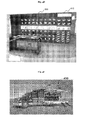
- FIG. 4B is a depiction of a interactive retail system 200, according to certain exemplary embodiments.
- FIG. 4B includes an interactive retail system 200 and a real shelf 410 populated with various products for sale.
- the real shelf can be positioned adjacent to the interactive retail system for aesthetic continuity (e.g, display products in a similar configuration as can be shown on the interactive retail system 200).
- FIG. 4C is a depiction of a tablet computer 280 used in conjunction with an interactive retail system 200 (not pictured), according to certain exemplary embodiments.
- FIG. 4D is a depiction of an interactive retail system 200 and several mobile devices 280 used in conjunction with the interactive retail system 200, according to certain exemplary embodiments.
- FIG. 4D includes an interactive retail system 200 and a real shelf 410 populated with various products for sale.
- the real shelf can be positioned adjacent to the interactive retail system for aesthetic continuity (e.g, display products in a similar configuration as can be shown on the interactive retail system 200).
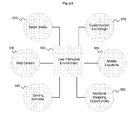
- FIG. 5A is a simplified diagram illustrating some available features in the user interactive environment (UIE) 500 of the interactive retail system 200, according to an embodiment of the invention.
- Some features include access to social media 520, web content 530, gaming services 540, additional shopping opportunities 550, mobile capability 560, and customization and design 570.
- the user interactive environment 500 is presented by a combination of the one or more video screens 230 (e.g., the visual depiction of retail items, media, etc.), cameras 240 (e.g., detecting the presence of a user, detecting user gestures, etc.), and the detection system 260 (detect user interaction with the one or more screens 230).
- a user may access social media 520 from the user interactive environment of interactive retail system 200.
- a user can connect to social media pages, post messages from the user interactive environment 500 to their own user profile, share customized products, post or share special offers and/or discounts, and post any product of the interactive retail system 200 on their own social profiles.
- a user may access web content 530 including all websites and usage of all services through the user interactive environment 500.
- a user can access all websites associated with the related products, the brand of the products or services of the interactive retail wall, and use all services from the UIE 500.
- a user can connect to their own profile on a website for managing workout data and workout plans, or for customization of products with the possibility to store and share the user's own creations and designs from the UIE 500.
- Some applicable fitness managing websites that can be managed from the UIE 500 include micoach (www.adidas.com/us/micoach) and miadidas (www.miadidas.com), however it should be noted that these websites are exemplary and other websites can be used.
- the interactive retail system 200 can be configured to allow a customer to access any public website from the UIE 500.
- Some embodiments may host gaming services 540 within the user interactive environment 500. For example, some games may offer special prices or discounts, offer unlockable features of a customizable product or retail item, or provide in-store entertainment for waiting customers including adults and children alike. In certain embodiments, games associated with the interactive retail system 200 may be downloaded and hosted on one or more tablets 280, mobile phones 270, and the like.
- the user interactive environment 500 may offer additional shopping opportunities 550.
- the UIE 500 may save viewed products from the user and send the information to a shop assistant (e.g., store employee) for further advice or recommendations.
- the UIE 500 can save many types of data including workout data uploaded from a workout website (e.g., www.micoach.com), sales data and/or browsing history from online shopping sites, and the like.
- the UIE 500 may offer coupons or special offers when the interactive retail system 200 recognizes a return customer (e.g., by user registration).
- the UIE 500 can evaluate a user's product likes and dislikes and display product selections based those criteria.
- the UIE 500 may offer auctions or display marketing content for special events with associated special offers.
- the UIE 500 provides support for 24 hour shopping.
- the interactive retail system 200 may be located behind a shopping window where a user may access the UIE 500 and order retail item(s) for shipping to their residence or for later pickup.
- the UIE 500 can offer variable pricing on certain products based on the number of product purchases or on the total amount of the transaction. For example, large purchases may yield greater discounts than smaller purchases.
- the UIE 500 can display targeted advertisements when a user is recognized by the interactive retail system 200.
- the UIE 500 can switch from a general advertising mode (e.g., cycling through various advertisements when the UIE 500 is not interacting with a user) to a series of advertisements based on the user's purchase history, product preferences, previous product customizations, and the like.
- the UIE 500 can make special offers (e.g., coupons and/or discounts) to the user to incentivize purchases.
- the UIE 500 can welcome new customers (e.g., user's that have not previously accessed or registered with the interactive retail system 200) by prompting or asking specific questions regarding their fitness behavior and/or sports interests and suggest products based on the user's answers. For example, if a user plays basketball, the interactive retail system 200 can display an assortment of popular basketball shoes and/or accessories. In other embodiments, the UIE 500 asks or prompts customers to interact with the various interactive features described herein (e.g., product customization, product media, websites, etc.). In certain embodiments, the UIE 500 is configured to prompt the questions to the user on one or more of the screens 230. The interactive retail system 200 can optionally prompt questions to the user by way of an audio system (not shown) in conjunction with a voice recognition system (not shown) to process user responses.
- an audio system not shown
- a voice recognition system not shown
- the UIE 500 provides customer support services to the user.
- the customer support can be passive (e.g., help screens with answers to frequently asked questions) or real-time (e.g., automated or human interaction).
- the customer can connect to customer service personnel via the UIE 500 and conduct a personalized customer service experience.
- Services can include technical support for using the interactive retail system 200, answering customer questions, and the like.
- the service personnel can be a real person videoconferencing with the customer on the wall (e.g., screen 230, projection, or separate display device) to answer specific questions or provide general guidance.
- the service person can be additionally connected to the secondary device. In such embodiments, the service personnel can guide the user though the various menus and/or features of the interactive retail system 200.
- the customer service personnel can be a virtual person interacting with the customer.
- the virtual person can follow a program which responds to a catalog of common questions.
- the customer selects a question on the screen 230 (e.g., display) of the interactive retail system 200 or secondary device (e.g., tablet computer 280) to receive answers or guidance through various menus.
- a customer service person can provide specialized advice with regard to medical questions.
- the customer service person can provide advice on how to adjust fitness training to accommodate certain health problems particular to a customer, and which products are best suited to help alleviate or reduce symptoms that are associated with the particular health problem (e.g., shoes adapted to the particular type off fitness training).
- the service person can be a specialist on a certain sport or product, for example for football shoes, or golf clubs.
- the service person can be a stylist or a technical specialist.
- the customer service interface can be also used for events within a shopping environment.
- one or more customers can have coached fitness training in front of the screen 230 (wall, projection) or receive advice on how to use specific products (e.g., golf club).
- the service person can be a celebrity (e.g., pro-football player) to answer questions from fans during certain events within the shopping environment.
- the interactive retail system 200 has mobile capabilities 560.
- the mobile capabilities 560 include physically transporting the interactive retail system 200 from one location to the next, and sending retail data via mobile communication devices and/or networks.
- the interactive retail system 200 i.e., the user interactive environment 500
- the interactive retail system 200 may be displayed within a store, in a suitably sized vehicle, or at unconventional locations (airports, sporting events, in a tent, in desolate areas, on a screen for public viewing, in the background on a stage, etc.).
- the interactive retail system 200 can provide a decorative function.
- the interactive retail system 200 can depict decorative images and/or non-product related interactive displays during a scheduled sporting event and can return to the retail mode during breaks or before/after the scheduled event, according to an embodiment of the invention.
- the mobile capabilities may be extended to the external mobile devices and settlement transactions, as described above with reference to FIGS. 1 and 2 .
- a user may perform detailed customization and design 570 operations to create unique and detailed retail items on the UIE 500.
- a user can create a shoe with colors, logos, logo placement, and the like in any desirable configuration within the specifications of the interactive retail system 200.
- the user may enlarge the selected retail item to provide for detailed customizations and feature placement.
- the screens 230 can be configured to display retail products in their actual size, which may be rotated or resized by the user to view the retail items from all angles. The user may further upload the new products to a mobile device (e.g., tablet or mobile phone) or website.
- a mobile device e.g., tablet or mobile phone
- the UIE 500 can store data generated from user interaction with the various interactive features (e.g., customization, gaming, accessing web content and social media, etc.) described herein.
- the data generated from user interaction (“user interaction data") with the various interactive features can be stored in the data storage device 115.
- the interaction data can be used for business tracking (e.g., tracking customer purchase trends, sales numbers, etc.), feature evaluation (e.g., determine which interactive features are popular with customers), and the like.
- the interaction data can be sent to a store assistant to give them information about the customers to help provide an improved customer service experience as described above.
- FIG. 5B is a simplified flow diagram illustrating a method 580 for creating a shopping session with a customer, according to certain embodiments of the present invention.
- the method 580 is performed by processing logic that may comprise hardware (circuitry, dedicated logic, etc.), software (such as is run on a general purpose computing system or a dedicated machine), firmware (embedded software), or any combination thereof.
- the method 580 is performed by one or more processors in the interactive retail system 200 of FIG. 2 .
- the method 580 is performed in conjunction with the server computer 110 of FIG. 1A .
- the method 580 is performed by, or in conjunction with, processors located in a cloud server.
- the method 580 includes displaying images of products available for purchase to attract customers (step s582).
- the interactive retail system 200 displays the images of products on one or more of the screens 230.
- the images of products can be images of merchandise related to shoes, apparel, accessories, and the like.
- the interactive retail system 200 initiates a shopping session with a customer.
- the customer may select an image of a particular product (e.g., running shoes), thus prompting the interactive retail system 200 to begin a user interactive environment as described above with reference to FIG. 5A .
- the customer may customize a product, access web content or media about the selected product, play interactive games, and the like.
- the interactive retail system 200 transfers the shopping session to a secondary device.
- a customer i.e., a user
- the shopping session can be transferred to a tablet computer 280.
- the secondary device can continue the shopping session (step s588).
- the shopping session on the secondary device can be substantially identical to the shopping session on the interactive retail system 200 (e.g., similar UIE interface, same interactive features, etc.).
- the interactive retail system 200 ends the shopping session on itself (step 590). In certain embodiments, this may be desirable because it makes the interactive retail system 200 available for additional customers. In this manner, i.e. by continuing the shopping session on the secondary device, the interactive retail system 200 may be used by a second user while the first user still finishes his/her shopping session, thereby optimizing the resource usage in case of multiple concurrent users.
- the secondary device completes a purchase transaction of one or more of the products available for purchase.
- the secondary device e.g., tablet 280
- the secondary device can provide purchasing options where the customer selects one or more products for purchase, enters payment information (e.g., credit card information), and completes the purchase transaction.
- the payment information can be sent to a shop assistant (i.e., wirelessly transmit transaction data to a shop assistant's tablet 280) to complete the purchase transaction.
- the transaction can be redirected to the interactive retail system 200.
- FIG. 5B provides a particular method creating a shopping session with a customer, according to embodiments of the present invention.
- Other sequences of steps may also be performed according to alternative embodiments.
- alternative embodiments of the present invention may perform the steps outlined above in a different order.
- the individual steps illustrated in FIG. 5B may include multiple sub-steps that may be performed in various sequences as appropriate to the individual step.
- additional steps may be added or removed depending on the particular applications.
- One of ordinary skill in the art would recognize and appreciate many variations, modifications, and alternatives of the method 580.
- FIG. 6 is a diagram of a computer apparatus 600, according to an example embodiment.
- the various participants and elements in the previously described system diagrams may use any suitable number of subsystems in the computer apparatus to facilitate the functions described herein. Examples of such subsystems or components are shown in FIG. 6 .
- the subsystems shown in FIG. 6 are interconnected via a system bus 610. Additional subsystems such as a printer 620, keyboard 630, fixed disk 640 (or other memory comprising computer-readable media), monitor 650, which is coupled to display adapter 655, and others are shown.
- Peripherals and input/output (I/O) devices (not shown), which couple to I/O controller 660, can be connected to the computer system by any number of means known in the art, such as serial port 665.
- serial port 665 or external interface 670 can be used to connect the computer apparatus to a wide area network such as the Internet, a mouse input device, or a scanner.
- the interconnection via system bus allows the central processor 680 to communicate with each subsystem and to control the execution of instructions from system memory 690 or the fixed disk 640, as well as the exchange of information between subsystems.
- the system memory 690 and/or the fixed disk 640 may embody a computer-readable medium.
- the software components or functions described in this application may be implemented as software code to be executed by one or more processors using any suitable computer language such as, for example, Java, C++ or Perl using, for example, conventional or object-oriented techniques.
- the software code may be stored as a series of instructions, or commands on a computer-readable medium, such as a random access memory (RAM), a read-only memory (ROM), a magnetic medium such as a hard-drive or a floppy disk, or an optical medium such as a CD-ROM. Any such computer-readable medium may also reside on or within a single computational apparatus, and may be present on or within different computational apparatuses within a system or network.
- the present invention can be implemented in the form of control logic in software or hardware or a combination of both.
- the control logic may be stored in an information storage medium as a plurality of instructions adapted to direct an information processing device to perform a set of steps disclosed in embodiments of the present invention. Based on the disclosure and teachings provided herein, a person of ordinary skill in the art will appreciate other ways and/or methods to implement the present invention.
- any of the entities described herein may be embodied by a computer that performs any or all of the functions and steps disclosed.
Landscapes
- Business, Economics & Management (AREA)
- Engineering & Computer Science (AREA)
- Finance (AREA)
- Accounting & Taxation (AREA)
- Strategic Management (AREA)
- Development Economics (AREA)
- Theoretical Computer Science (AREA)
- Physics & Mathematics (AREA)
- General Physics & Mathematics (AREA)
- Marketing (AREA)
- Economics (AREA)
- General Business, Economics & Management (AREA)
- Entrepreneurship & Innovation (AREA)
- Game Theory and Decision Science (AREA)
- Tourism & Hospitality (AREA)
- Human Resources & Organizations (AREA)
- Quality & Reliability (AREA)
- Operations Research (AREA)
- Human Computer Interaction (AREA)
- Multimedia (AREA)
- Computing Systems (AREA)
- General Engineering & Computer Science (AREA)
- Computer Hardware Design (AREA)
- Computer Security & Cryptography (AREA)
- Computer Networks & Wireless Communication (AREA)
- Signal Processing (AREA)
- Oral & Maxillofacial Surgery (AREA)
- General Health & Medical Sciences (AREA)
- Health & Medical Sciences (AREA)
- Management, Administration, Business Operations System, And Electronic Commerce (AREA)
- User Interface Of Digital Computer (AREA)
- Image Analysis (AREA)
- Image Processing (AREA)
Applications Claiming Priority (1)
| Application Number | Priority Date | Filing Date | Title |
|---|---|---|---|
| US13/284,681 US20130110666A1 (en) | 2011-10-28 | 2011-10-28 | Interactive retail system |
Publications (2)
| Publication Number | Publication Date |
|---|---|
| EP2587436A2 true EP2587436A2 (de) | 2013-05-01 |
| EP2587436A3 EP2587436A3 (de) | 2013-10-09 |
Family
ID=47257447
Family Applications (1)
| Application Number | Title | Priority Date | Filing Date |
|---|---|---|---|
| EP12190307.4A Ceased EP2587436A3 (de) | 2011-10-28 | 2012-10-29 | Interaktives Einzelhandelssystem |
Country Status (4)
| Country | Link |
|---|---|
| US (2) | US20130110666A1 (de) |
| EP (1) | EP2587436A3 (de) |
| JP (1) | JP6412299B2 (de) |
| CN (2) | CN103093543B (de) |
Cited By (8)
| Publication number | Priority date | Publication date | Assignee | Title |
|---|---|---|---|---|
| WO2014207646A1 (en) * | 2013-06-24 | 2014-12-31 | Barrows Design & Manufacturing (Pty) Ltd | A system and method for monitoring customer behaviour in relation to a product display arrangement |
| US20150101134A1 (en) * | 2013-10-16 | 2015-04-16 | Adidas Ag | Three-Dimensional Shoe Manufacturing |
| US9681709B2 (en) | 2013-10-16 | 2017-06-20 | Adidas Ag | Two-dimensional shoe manufacturing |
| CN109803450A (zh) * | 2018-12-12 | 2019-05-24 | 平安科技(深圳)有限公司 | 无线设备与电脑连接方法、电子装置及存储介质 |
| CN112651793A (zh) * | 2021-02-09 | 2021-04-13 | 广东天正计算机服务有限公司 | 一种基于人脸识别的智能零售系统 |
| CN113327309A (zh) * | 2021-05-27 | 2021-08-31 | 百度在线网络技术(北京)有限公司 | 视频播放方法和装置 |
| WO2022132411A1 (en) * | 2020-12-18 | 2022-06-23 | Apple Inc. | Product showcase system |
| US11397997B2 (en) * | 2014-02-28 | 2022-07-26 | Christine E. Akutagawa | Device for implementing body fluid analysis and social networking event planning |
Families Citing this family (129)
| Publication number | Priority date | Publication date | Assignee | Title |
|---|---|---|---|---|
| US7693752B2 (en) | 2004-05-26 | 2010-04-06 | Hothand, Inc. | Mobile commerce framework |
| US20150154799A1 (en) * | 2013-11-29 | 2015-06-04 | At&T Intellectual Property I, L.P. | Replacing A Physical Object Perception With A Modified Perception |
| JP5581292B2 (ja) * | 2011-09-30 | 2014-08-27 | 楽天株式会社 | 検索装置、検索方法、記録媒体、ならびに、プログラム |
| US9129338B2 (en) * | 2011-10-19 | 2015-09-08 | Facebook, Inc. | Digital currency purchasing flows |
| US9009614B2 (en) | 2011-12-15 | 2015-04-14 | Nike, Inc. | Customized article type |
| US9690368B2 (en) | 2011-12-30 | 2017-06-27 | Adidas Ag | Customization based on physiological data |
| US10402879B2 (en) | 2011-12-30 | 2019-09-03 | Adidas Ag | Offering a customized collection of products |
| US20150278585A1 (en) * | 2012-04-18 | 2015-10-01 | Vixs Systems, Inc. | Video processing system for video surveillance and methods for use therewith |
| US9978048B2 (en) | 2012-05-30 | 2018-05-22 | Sears Brands, L.L.C. | Methods and systems for connected sales associate services |
| US9619812B2 (en) * | 2012-08-28 | 2017-04-11 | Nuance Communications, Inc. | Systems and methods for engaging an audience in a conversational advertisement |
| US20140067624A1 (en) * | 2012-09-05 | 2014-03-06 | Microsoft Corporation | Accessing a shopping service through a game console |
| GB2506203B (en) * | 2012-09-25 | 2016-12-14 | Jaguar Land Rover Ltd | Method of interacting with a simulated object |
| US9277017B2 (en) * | 2012-10-30 | 2016-03-01 | Netiq Corporation | Techniques for device independent session migration |
| US9621602B2 (en) * | 2012-11-27 | 2017-04-11 | Facebook, Inc. | Identifying and providing physical social actions to a social networking system |
| US10977701B2 (en) * | 2012-12-04 | 2021-04-13 | Crutchfield Corporation | Techniques for providing retail customers a seamless, individualized discovery and shopping experience between online and brick and mortar retail locations |
| US20140156470A1 (en) * | 2012-12-04 | 2014-06-05 | Verizon Patent And Licensing Inc. | Method and system for providing a transient virtual shop |
| US9965799B2 (en) * | 2012-12-12 | 2018-05-08 | Perch Interactive, Inc. | Apparatus and method for interactive product displays |
| US20140173503A1 (en) * | 2012-12-18 | 2014-06-19 | Michael R. Catania | System and Method for the Obfuscation, Non-Obfuscation, and De-Obfuscation of Online Text and Images |
| WO2014144173A1 (en) | 2013-03-15 | 2014-09-18 | Nike, Inc. | Product presentation assisted by visual search |
| JP6271921B2 (ja) * | 2013-05-17 | 2018-01-31 | 株式会社スタートトゥデイ | コーディネート情報提供システム及び読取情報管理システム |
| HK1219337A1 (zh) * | 2013-05-31 | 2017-03-31 | 旗帜间(奥斯特)私人有限公司 | 零售系统 |
| US10319012B2 (en) | 2013-06-27 | 2019-06-11 | Walmart Apollo, Llc | View items based on purchases of social media contacts |
| CN104252825A (zh) * | 2013-06-28 | 2014-12-31 | 鸿富锦精密工业(武汉)有限公司 | 数字电子广告牌信息获取方法及系统 |
| US9710787B2 (en) * | 2013-07-31 | 2017-07-18 | The Board Of Trustees Of The Leland Stanford Junior University | Systems and methods for representing, diagnosing, and recommending interaction sequences |
| US20150052013A1 (en) * | 2013-08-14 | 2015-02-19 | MyPose Oy | Customer service apparatus for providing services to customers when assessing and/or purchasing items |
| US10713688B2 (en) * | 2013-09-25 | 2020-07-14 | Transform Sr Brands Llc | Method and system for gesture-based cross channel commerce and marketing |
| CN103530945A (zh) * | 2013-09-27 | 2014-01-22 | 申烽 | 一种售餐机 |
| CN103530942A (zh) * | 2013-09-27 | 2014-01-22 | 申烽 | 一种售餐机 |
| CN103530944A (zh) * | 2013-09-27 | 2014-01-22 | 申烽 | 一种售餐机 |
| JP6228416B2 (ja) * | 2013-09-27 | 2017-11-08 | 株式会社エクサ | ショッピングシステム |
| TW201514934A (zh) * | 2013-10-15 | 2015-04-16 | Utechzone Co Ltd | 自動販賣裝置及商品販售方法 |
| US9875496B2 (en) * | 2013-10-29 | 2018-01-23 | Ebay Inc. | Product schematics collection and projection |
| JP2015090612A (ja) * | 2013-11-06 | 2015-05-11 | 株式会社ネクストシステム | 情報表示システムおよび情報表示装置 |
| US9767501B1 (en) * | 2013-11-07 | 2017-09-19 | Amazon Technologies, Inc. | Voice-assisted scanning |
| JP2017508200A (ja) * | 2014-01-24 | 2017-03-23 | ピーシーエムエス ホールディングス インコーポレイテッド | 現実世界の場所と関連する現実を拡張するための方法、装置、システム、デバイス、およびコンピュータプログラム製品 |
| US9895841B2 (en) * | 2014-05-09 | 2018-02-20 | Autodesk, Inc. | User specific design customization for 3D printing |
| WO2015173871A1 (ja) * | 2014-05-12 | 2015-11-19 | 富士通株式会社 | 商品情報出力方法、プログラムおよび制御装置 |
| WO2015173872A1 (ja) * | 2014-05-12 | 2015-11-19 | 富士通株式会社 | 商品情報表示システム、制御装置、制御プログラムおよび制御方法 |
| EP3166815A1 (de) | 2014-07-10 | 2017-05-17 | Volta Industries, LLC | Systeme und verfahren zur bereitstellung gezielter werbung auf einer ladestation für elektrofahrzeuge |
| US9779420B2 (en) * | 2014-10-20 | 2017-10-03 | Bernada Limited | Systems and methods for observing the movements of passengers on conveying devices |
| US10027501B1 (en) * | 2014-11-06 | 2018-07-17 | United Services Automobile Association (Usaa) | Systems and methods for pre-configuring a payment vehicle |
| US10475185B1 (en) | 2014-12-23 | 2019-11-12 | Amazon Technologies, Inc. | Associating a user with an event |
| US10438277B1 (en) | 2014-12-23 | 2019-10-08 | Amazon Technologies, Inc. | Determining an item involved in an event |
| US10552750B1 (en) | 2014-12-23 | 2020-02-04 | Amazon Technologies, Inc. | Disambiguating between multiple users |
| WO2016138327A1 (en) * | 2015-02-26 | 2016-09-01 | Rath Matthias W | Method and system for a positional display of nutrients and their effect on the human body |
| US20160267577A1 (en) * | 2015-03-11 | 2016-09-15 | Ventana 3D, Llc | Holographic interactive retail system |
| US10438215B2 (en) | 2015-04-10 | 2019-10-08 | International Business Machines Corporation | System for observing and analyzing customer opinion |
| JP5906558B1 (ja) * | 2015-04-17 | 2016-04-20 | パナソニックIpマネジメント株式会社 | 顧客行動分析装置、顧客行動分析システム及び顧客行動分析方法 |
| US10825081B2 (en) | 2015-05-14 | 2020-11-03 | Ebay Inc. | Displaying a virtual environment of a session |
| US10176471B2 (en) | 2015-06-09 | 2019-01-08 | GeoPRI, LLC | Systems and methods for providing product information via an interactive display device |
| JP6548967B2 (ja) * | 2015-06-16 | 2019-07-24 | 株式会社東芝 | 画像処理装置、画像処理方法及びプログラム |
| KR102136223B1 (ko) * | 2015-08-18 | 2020-07-21 | 삼성전자주식회사 | LFD(large format display) 장치 및 그 제어 방법 |
| WO2017030255A1 (en) * | 2015-08-18 | 2017-02-23 | Samsung Electronics Co., Ltd. | Large format display apparatus and control method thereof |
| CN105184584A (zh) * | 2015-09-17 | 2015-12-23 | 北京京东方多媒体科技有限公司 | 虚拟试衣系统及方法 |
| CA3002808A1 (en) * | 2015-10-21 | 2017-04-27 | Walmart Apollo, Llc | Apparatus and method for providing a virtual shopping space |
| TWI639130B (zh) * | 2015-11-18 | 2018-10-21 | 財團法人資訊工業策進會 | 投影系統及投影方法 |
| TWI605422B (zh) * | 2016-01-08 | 2017-11-11 | en-xin Zhu | An interactive vending machine interaction system and its interactive management method using Bluetooth communication to manage personal information of members |
| US10120437B2 (en) * | 2016-01-29 | 2018-11-06 | Rovi Guides, Inc. | Methods and systems for associating input schemes with physical world objects |
| US10582740B2 (en) | 2016-02-26 | 2020-03-10 | Nike, Inc. | Method of customizing stability in articles of footwear |
| US10117478B2 (en) | 2016-02-26 | 2018-11-06 | Nike, Inc. | Method of customizing heel cushioning in articles of footwear |
| US10032202B2 (en) | 2016-02-26 | 2018-07-24 | Nike, Inc. | Method of custom manufacturing footwear according to a cycle |
| TWI611376B (zh) * | 2016-03-18 | 2018-01-11 | 一種選物販賣互動管理方法及其系統 | |
| CN110023832A (zh) * | 2016-06-23 | 2019-07-16 | 奥特涅茨公司 | 交互式内容管理 |
| WO2017223137A1 (en) | 2016-06-23 | 2017-12-28 | Wal-Mart Stores, Inc. | System and method for fresh online experience |
| US10085571B2 (en) | 2016-07-26 | 2018-10-02 | Perch Interactive, Inc. | Interactive display case |
| US12131371B2 (en) | 2016-09-06 | 2024-10-29 | Nike, Inc. | Method, platform, and device for personalized shopping |
| CA3034696A1 (en) | 2016-09-07 | 2018-03-15 | Walmart Apollo, Llc | Apparatus and method for providing item interaction with a virtual store |
| US10445813B2 (en) * | 2016-09-11 | 2019-10-15 | Cloudtags, Inc. | Tap walls that recommend products based on in-store and out-of-store interactions of anonymous users |
| US10602133B2 (en) * | 2016-10-04 | 2020-03-24 | Facebook, Inc. | Controls and interfaces for user interactions in virtual spaces |
| CN110084712A (zh) * | 2016-10-26 | 2019-08-02 | 奥康科技有限公司 | 用于分析图像和提供反馈的可佩戴设备和方法 |
| US10657718B1 (en) | 2016-10-31 | 2020-05-19 | Wells Fargo Bank, N.A. | Facial expression tracking during augmented and virtual reality sessions |
| US20180160777A1 (en) | 2016-12-14 | 2018-06-14 | Black Brass, Inc. | Foot measuring and sizing application |
| KR102643553B1 (ko) | 2017-01-06 | 2024-03-05 | 나이키 이노베이트 씨.브이. | 자동 쇼핑 어시스턴트를 이용한 개인화 쇼핑을 위한 시스템, 플랫폼 및 방법 |
| KR102758130B1 (ko) * | 2017-02-24 | 2025-01-20 | 성균관대학교산학협력단 | 디지털 사이니지 운영 시스템 및 그 방법 |
| CN106697702A (zh) * | 2017-03-20 | 2017-05-24 | 钟泽超 | 智能箱柜系统 |
| WO2018203965A1 (en) * | 2017-05-01 | 2018-11-08 | Walmart Apollo, Llc | System for autonomous configuration of product displays |
| US10665022B2 (en) * | 2017-06-06 | 2020-05-26 | PerfectFit Systems Pvt. Ltd. | Augmented reality display system for overlaying apparel and fitness information |
| CN111066051B (zh) * | 2017-06-27 | 2024-09-10 | 耐克创新有限合伙公司 | 使用自动化购物助手进行个性化购物的系统、平台以及方法 |
| CN107358451A (zh) * | 2017-07-17 | 2017-11-17 | 竹间智能科技(上海)有限公司 | 一种交互式智能魔镜 |
| CN108876427A (zh) * | 2017-07-18 | 2018-11-23 | 北京旷视科技有限公司 | 商品促销的方法、装置、系统及计算机存储介质 |
| US11698219B2 (en) | 2017-08-10 | 2023-07-11 | Cooler Screens Inc. | Smart movable closure system for cooling cabinet |
| US12118510B2 (en) | 2017-08-10 | 2024-10-15 | Cooler Screens Inc. | Intelligent marketing and advertising platform |
| CN207148815U (zh) | 2017-08-15 | 2018-03-27 | 阿里巴巴集团控股有限公司 | 智能播报设备 |
| CN107480965A (zh) * | 2017-09-07 | 2017-12-15 | 阿里巴巴集团控股有限公司 | 线下信息推送方法和装置 |
| US20190102831A1 (en) * | 2017-10-02 | 2019-04-04 | Walmart Apollo, Llc | System and Method for Virtual Display of Customized Products in a Facility |
| US10831704B1 (en) * | 2017-10-16 | 2020-11-10 | BlueOwl, LLC | Systems and methods for automatically serializing and deserializing models |
| US11379655B1 (en) | 2017-10-16 | 2022-07-05 | BlueOwl, LLC | Systems and methods for automatically serializing and deserializing models |
| US10796359B2 (en) * | 2017-10-18 | 2020-10-06 | Mastercard International Incorporated | Consumer sampling webpage linked with digital wallet |
| CN109697786A (zh) * | 2017-10-23 | 2019-04-30 | 北京京东尚科信息技术有限公司 | 用于售货机的操作方法和操作装置 |
| US20190156270A1 (en) | 2017-11-18 | 2019-05-23 | Walmart Apollo, Llc | Distributed Sensor System and Method for Inventory Management and Predictive Replenishment |
| CN107944960A (zh) * | 2017-11-27 | 2018-04-20 | 深圳码隆科技有限公司 | 一种无人售货方法和设备 |
| CN107862557B (zh) * | 2017-12-05 | 2022-03-25 | 英业达科技有限公司 | 顾客动态追踪系统及其方法 |
| CN109993595B (zh) * | 2017-12-29 | 2024-06-21 | 北京三星通信技术研究有限公司 | 个性化推荐商品及服务的方法、系统及设备 |
| US11481805B2 (en) | 2018-01-03 | 2022-10-25 | Grabango Co. | Marketing and couponing in a retail environment using computer vision |
| CN120894094A (zh) | 2018-01-24 | 2025-11-04 | 耐克创新有限合伙公司 | 使用虚拟购物助手进行个性化购物的系统、平台和方法 |
| US10798211B2 (en) | 2018-02-13 | 2020-10-06 | Ebay Inc. | Generating attribute preference models based on disparate attribute spectrums |
| US11051571B2 (en) * | 2018-02-27 | 2021-07-06 | Levi Strauss & Co. | Apparel design system including garment features with allocation insights |
| TWI749202B (zh) * | 2018-03-29 | 2021-12-11 | 全家便利商店股份有限公司 | 店鋪導引系統及方法 |
| CN110737325A (zh) * | 2018-07-19 | 2020-01-31 | 杭州大穿越旅游策划有限公司 | 交互式操作设施 |
| WO2020069517A2 (en) | 2018-09-30 | 2020-04-02 | Strong Force Intellectual Capital, Llc | Intelligent transportation systems |
| US11354965B2 (en) * | 2018-11-02 | 2022-06-07 | Pepsico, Inc. | Interactive vending machine |
| US11288733B2 (en) * | 2018-11-14 | 2022-03-29 | Mastercard International Incorporated | Interactive 3D image projection systems and methods |
| CN111311343B (zh) * | 2018-12-11 | 2023-05-02 | 阿里巴巴集团控股有限公司 | 商品信息处理方法及装置 |
| CN109615433B (zh) * | 2018-12-17 | 2020-08-04 | 海南大学 | 融合公平度、体验感和价格的用户满意度建模与展示空间调整方法 |
| CN109711889A (zh) * | 2018-12-28 | 2019-05-03 | 四川省烟草公司自贡市公司 | 信息采集系统及集群 |
| US10986940B2 (en) | 2019-02-01 | 2021-04-27 | Xerox Corporation | Modular point-of-purchase (POP) display |
| EP3942443A4 (de) | 2019-03-19 | 2022-12-21 | NIKE Innovate C.V. | Steuerung des zugangs auf eine sichere rechenressource |
| JP7211210B2 (ja) * | 2019-03-29 | 2023-01-24 | コニカミノルタ株式会社 | 画像形成装置 |
| CN112424763B (zh) * | 2019-04-30 | 2023-09-12 | 抖音视界有限公司 | 对象推荐方法及装置、存储介质与终端设备 |
| US11546657B1 (en) | 2019-05-22 | 2023-01-03 | Sector Media Group Incorporated | Method and system for roles based selection and control of video content |
| US11797921B2 (en) * | 2019-08-26 | 2023-10-24 | Grabango Co. | Dynamic product marketing through computer vision |
| US11562423B2 (en) | 2019-08-29 | 2023-01-24 | Levi Strauss & Co. | Systems for a digital showroom with virtual reality and augmented reality |
| US11100521B2 (en) | 2019-09-20 | 2021-08-24 | International Business Machines Corporation | Dynamic boundary implementation for an augmented reality application |
| US10607080B1 (en) | 2019-10-25 | 2020-03-31 | 7-Eleven, Inc. | Feedback and training for a machine learning algorithm configured to determine customer purchases during a shopping session at a physical store |
| US11341569B2 (en) | 2019-10-25 | 2022-05-24 | 7-Eleven, Inc. | System and method for populating a virtual shopping cart based on video of a customer's shopping session at a physical store |
| US11798065B2 (en) | 2019-10-25 | 2023-10-24 | 7-Eleven, Inc. | Tool for generating a virtual store that emulates a physical store |
| JP7440627B2 (ja) * | 2019-10-25 | 2024-02-28 | セブン-イレブン インコーポレイテッド | 実店舗で客のショッピングセッションの映像に基づき仮想ショッピングカートをポピュレートするシステム及び方法 |
| AU2020412699B2 (en) * | 2019-12-26 | 2023-03-23 | Imaplayer, Llc | Display of related objects in compartmentalized virtual display units |
| US11810067B2 (en) | 2019-12-31 | 2023-11-07 | Grabango Co. | Digitally managed shelf space marketplace |
| CN110931011A (zh) * | 2020-01-07 | 2020-03-27 | 杭州凯旗科技有限公司 | 一种应用于智能零售设备的ai智能语音交互方法 |
| SE2050058A1 (en) * | 2020-01-22 | 2021-07-23 | Itab Shop Products Ab | Customer behavioural system |
| KR102890679B1 (ko) * | 2020-03-24 | 2025-11-27 | 라인플러스 주식회사 | 제품의 공통된 특징을 비교하여 비교 결과를 제공하는 방법, 시스템, 및 컴퓨터 프로그램 |
| CN111445283B (zh) * | 2020-03-25 | 2023-09-01 | 北京百度网讯科技有限公司 | 基于交互设备的数字人处理方法、设备及存储介质 |
| US11610436B2 (en) * | 2020-04-08 | 2023-03-21 | Nec Corporation | Efficient watchlist searching with normalized similarity |
| IT202000011569A1 (it) * | 2020-05-19 | 2021-11-19 | Ikonic S R L | Sistema e procedimento di profilazione |
| JP7534444B2 (ja) | 2020-05-29 | 2024-08-14 | ナイキ イノベイト シーブイ | キャプチャ画像の処理システム及び方法 |
| CN116529750A (zh) * | 2020-07-16 | 2023-08-01 | 加拿大露露乐檬运动用品有限公司 | 用于产品个性化或推荐的接口的方法和系统 |
| CN113762667B (zh) * | 2020-08-13 | 2024-07-19 | 北京京东振世信息技术有限公司 | 一种车辆调度方法和装置 |
| CN117136371A (zh) * | 2020-12-31 | 2023-11-28 | 苹果公司 | 在虚拟环境中显示产品的方法 |
Citations (7)
| Publication number | Priority date | Publication date | Assignee | Title |
|---|---|---|---|---|
| US20050177463A1 (en) * | 2004-02-10 | 2005-08-11 | Crutchfield William G.Jr. | Virtual showroom for interactive electronic shopping |
| US20060149818A1 (en) * | 2004-12-30 | 2006-07-06 | Odell James A | Managing instant messaging sessions on multiple devices |
| US20070130020A1 (en) * | 2005-12-01 | 2007-06-07 | Paolini Michael A | Consumer representation rendering with selected merchandise |
| US20070288332A1 (en) * | 2005-02-14 | 2007-12-13 | Fujitsu Limited | Apparatus for supporting sales of product |
| US20080153670A1 (en) * | 2006-12-01 | 2008-06-26 | Mckirdy Sean | System and method for processing information |
| US20090157799A1 (en) * | 2007-12-13 | 2009-06-18 | Vrijlal Sukumaran | Method for sharing service identity among multiple client devices in a real-time communications network |
| WO2011002787A1 (en) * | 2009-06-30 | 2011-01-06 | Paul Tiffany L | Design of consumer products |
Family Cites Families (14)
| Publication number | Priority date | Publication date | Assignee | Title |
|---|---|---|---|---|
| US6026376A (en) * | 1997-04-15 | 2000-02-15 | Kenney; John A. | Interactive electronic shopping system and method |
| US7418407B2 (en) * | 1999-10-14 | 2008-08-26 | Jarbridge, Inc. | Method for electronic gifting using merging images |
| AU2001255295A1 (en) * | 2000-04-14 | 2001-10-30 | The Procter And Gamble Company | An interactive system for conducting business and method for the interactive distribution of information relating to products and services |
| US20030225633A1 (en) * | 2002-06-04 | 2003-12-04 | Emn8, Inc. | Point of sale computer system delivering composited two- and three-dimensional images |
| JP2004118269A (ja) * | 2002-09-24 | 2004-04-15 | Hiroshi Sato | 販売方法、販売装置、情報処理方法。 |
| US7461012B2 (en) * | 2004-06-08 | 2008-12-02 | Elbex Video Ltd. | Method and apparatus for simplified e-commerce shopping via home shopping terminals |
| US7647247B2 (en) * | 2004-12-06 | 2010-01-12 | International Business Machines Corporation | Method and system to enhance web-based shopping collaborations |
| EP1952265A2 (de) * | 2005-10-03 | 2008-08-06 | Teletech Holdings Inc. | Virtueller einzelhandelsverkäufer |
| US20070106670A1 (en) * | 2005-11-08 | 2007-05-10 | Nortel Networks Limited | Interactive communication session cookies |
| US7933955B2 (en) * | 2006-07-11 | 2011-04-26 | Igor Khalatian | One-click universal screen sharing |
| JP2008108287A (ja) * | 2008-01-21 | 2008-05-08 | Rei Take | ファッションアドバイジングシステム |
| CN102460343B (zh) * | 2009-05-30 | 2017-02-15 | 耐克创新有限合伙公司 | 消费产品的在线设计 |
| WO2011000020A1 (en) * | 2009-06-12 | 2011-01-06 | Sbc Research Pty Ltd | Enhanced method of detection |
| JP2012519922A (ja) * | 2009-10-20 | 2012-08-30 | サムスン エレクトロニクス カンパニー リミテッド | 物品提供装置、ディスプレイ装置及びこれを用いたgui提供方法 |
-
2011
- 2011-10-28 US US13/284,681 patent/US20130110666A1/en not_active Abandoned
-
2012
- 2012-10-25 CN CN201210411807.5A patent/CN103093543B/zh active Active
- 2012-10-25 CN CN201610809266.XA patent/CN106886912A/zh active Pending
- 2012-10-26 JP JP2012236670A patent/JP6412299B2/ja active Active
- 2012-10-29 EP EP12190307.4A patent/EP2587436A3/de not_active Ceased
-
2016
- 2016-06-22 US US15/189,593 patent/US20160335667A1/en not_active Abandoned
Patent Citations (7)
| Publication number | Priority date | Publication date | Assignee | Title |
|---|---|---|---|---|
| US20050177463A1 (en) * | 2004-02-10 | 2005-08-11 | Crutchfield William G.Jr. | Virtual showroom for interactive electronic shopping |
| US20060149818A1 (en) * | 2004-12-30 | 2006-07-06 | Odell James A | Managing instant messaging sessions on multiple devices |
| US20070288332A1 (en) * | 2005-02-14 | 2007-12-13 | Fujitsu Limited | Apparatus for supporting sales of product |
| US20070130020A1 (en) * | 2005-12-01 | 2007-06-07 | Paolini Michael A | Consumer representation rendering with selected merchandise |
| US20080153670A1 (en) * | 2006-12-01 | 2008-06-26 | Mckirdy Sean | System and method for processing information |
| US20090157799A1 (en) * | 2007-12-13 | 2009-06-18 | Vrijlal Sukumaran | Method for sharing service identity among multiple client devices in a real-time communications network |
| WO2011002787A1 (en) * | 2009-06-30 | 2011-01-06 | Paul Tiffany L | Design of consumer products |
Cited By (14)
| Publication number | Priority date | Publication date | Assignee | Title |
|---|---|---|---|---|
| WO2014207646A1 (en) * | 2013-06-24 | 2014-12-31 | Barrows Design & Manufacturing (Pty) Ltd | A system and method for monitoring customer behaviour in relation to a product display arrangement |
| US10463114B2 (en) | 2013-10-16 | 2019-11-05 | Adidas Ag | Two-dimensional shoe manufacturing |
| US9681709B2 (en) | 2013-10-16 | 2017-06-20 | Adidas Ag | Two-dimensional shoe manufacturing |
| US10028552B2 (en) | 2013-10-16 | 2018-07-24 | Adidas Ag | Two-dimensional shoe manufacturing |
| US10426230B2 (en) * | 2013-10-16 | 2019-10-01 | Adidas Ag | Three-dimensional shoe manufacturing |
| US20150101134A1 (en) * | 2013-10-16 | 2015-04-16 | Adidas Ag | Three-Dimensional Shoe Manufacturing |
| US11330870B2 (en) | 2013-10-16 | 2022-05-17 | Adidas Ag | Three-dimensional shoe manufacturing |
| US11397997B2 (en) * | 2014-02-28 | 2022-07-26 | Christine E. Akutagawa | Device for implementing body fluid analysis and social networking event planning |
| CN109803450A (zh) * | 2018-12-12 | 2019-05-24 | 平安科技(深圳)有限公司 | 无线设备与电脑连接方法、电子装置及存储介质 |
| WO2022132411A1 (en) * | 2020-12-18 | 2022-06-23 | Apple Inc. | Product showcase system |
| US11553805B2 (en) | 2020-12-18 | 2023-01-17 | Apple Inc. | Product showcase system |
| CN112651793A (zh) * | 2021-02-09 | 2021-04-13 | 广东天正计算机服务有限公司 | 一种基于人脸识别的智能零售系统 |
| CN113327309A (zh) * | 2021-05-27 | 2021-08-31 | 百度在线网络技术(北京)有限公司 | 视频播放方法和装置 |
| CN113327309B (zh) * | 2021-05-27 | 2024-04-09 | 百度在线网络技术(北京)有限公司 | 视频播放方法和装置 |
Also Published As
| Publication number | Publication date |
|---|---|
| CN106886912A (zh) | 2017-06-23 |
| EP2587436A3 (de) | 2013-10-09 |
| JP6412299B2 (ja) | 2018-10-24 |
| JP2013097799A (ja) | 2013-05-20 |
| US20130110666A1 (en) | 2013-05-02 |
| US20160335667A1 (en) | 2016-11-17 |
| CN103093543A (zh) | 2013-05-08 |
| CN103093543B (zh) | 2016-11-16 |
Similar Documents
| Publication | Publication Date | Title |
|---|---|---|
| JP6412299B2 (ja) | 双方向小売システム | |
| US12373783B2 (en) | Virtual planogram management systems and methods | |
| US20100265311A1 (en) | Apparatus, systems, and methods for a smart fixture | |
| US20140363059A1 (en) | Retail customer service interaction system and method | |
| US20130117153A1 (en) | Fully interactive, wireless, retail video display tag, integrated with content distribution, data management, feedback data collection, inventory and product price search capabilities | |
| WO2017065187A1 (ja) | 情報表示端末装置及び商品情報提供システム並びに商品販売促進方法 | |
| JP2014514643A (ja) | 自動化消費者対話体験に関する方法および装置 | |
| JP2014508987A (ja) | 自動化消費者対話体験に関する方法および装置 | |
| TWI709098B (zh) | 多媒體物料推送方法和裝置 | |
| KR20120057668A (ko) | 오프라인 쇼핑몰에서 고객들 간의 커뮤니케이션 지원시스템 및 방법 | |
| KR101763981B1 (ko) | 어플리케이션을 이용한 마켓팅 방법 및 장치 | |
| MA | Retailtainment, digitalization, and sportization. How sports and health retail can be changed by digital apps | |
| JP2026003637A (ja) | 情報処理方法、情報処理装置及びプログラム |
Legal Events
| Date | Code | Title | Description |
|---|---|---|---|
| PUAI | Public reference made under article 153(3) epc to a published international application that has entered the european phase |
Free format text: ORIGINAL CODE: 0009012 |
|
| AK | Designated contracting states |
Kind code of ref document: A2 Designated state(s): AL AT BE BG CH CY CZ DE DK EE ES FI FR GB GR HR HU IE IS IT LI LT LU LV MC MK MT NL NO PL PT RO RS SE SI SK SM TR |
|
| AX | Request for extension of the european patent |
Extension state: BA ME |
|
| PUAL | Search report despatched |
Free format text: ORIGINAL CODE: 0009013 |
|
| AK | Designated contracting states |
Kind code of ref document: A3 Designated state(s): AL AT BE BG CH CY CZ DE DK EE ES FI FR GB GR HR HU IE IS IT LI LT LU LV MC MK MT NL NO PL PT RO RS SE SI SK SM TR |
|
| AX | Request for extension of the european patent |
Extension state: BA ME |
|
| RIC1 | Information provided on ipc code assigned before grant |
Ipc: G06Q 30/02 20120101ALI20130903BHEP Ipc: G06Q 30/00 20120101AFI20130903BHEP |
|
| 17P | Request for examination filed |
Effective date: 20140408 |
|
| RBV | Designated contracting states (corrected) |
Designated state(s): AL AT BE BG CH CY CZ DE DK EE ES FI FR GB GR HR HU IE IS IT LI LT LU LV MC MK MT NL NO PL PT RO RS SE SI SK SM TR |
|
| 17Q | First examination report despatched |
Effective date: 20160607 |
|
| STAA | Information on the status of an ep patent application or granted ep patent |
Free format text: STATUS: THE APPLICATION HAS BEEN REFUSED |
|
| 18R | Application refused |
Effective date: 20190427 |