EP2587852A2 - Système et dispositif de configuration de dispositif sans fil - Google Patents
Système et dispositif de configuration de dispositif sans fil Download PDFInfo
- Publication number
- EP2587852A2 EP2587852A2 EP12183399.0A EP12183399A EP2587852A2 EP 2587852 A2 EP2587852 A2 EP 2587852A2 EP 12183399 A EP12183399 A EP 12183399A EP 2587852 A2 EP2587852 A2 EP 2587852A2
- Authority
- EP
- European Patent Office
- Prior art keywords
- policy
- wireless device
- platforms
- policies
- platform
- Prior art date
- Legal status (The legal status is an assumption and is not a legal conclusion. Google has not performed a legal analysis and makes no representation as to the accuracy of the status listed.)
- Granted
Links
Images


Classifications
-
- H—ELECTRICITY
- H04—ELECTRIC COMMUNICATION TECHNIQUE
- H04W—WIRELESS COMMUNICATION NETWORKS
- H04W8/00—Network data management
- H04W8/18—Processing of user or subscriber data, e.g. subscribed services, user preferences or user profiles; Transfer of user or subscriber data
- H04W8/186—Processing of subscriber group data
-
- H—ELECTRICITY
- H04—ELECTRIC COMMUNICATION TECHNIQUE
- H04L—TRANSMISSION OF DIGITAL INFORMATION, e.g. TELEGRAPHIC COMMUNICATION
- H04L41/00—Arrangements for maintenance, administration or management of data switching networks, e.g. of packet switching networks
- H04L41/02—Standardisation; Integration
- H04L41/0226—Mapping or translating multiple network management protocols
-
- H—ELECTRICITY
- H04—ELECTRIC COMMUNICATION TECHNIQUE
- H04L—TRANSMISSION OF DIGITAL INFORMATION, e.g. TELEGRAPHIC COMMUNICATION
- H04L41/00—Arrangements for maintenance, administration or management of data switching networks, e.g. of packet switching networks
- H04L41/08—Configuration management of networks or network elements
- H04L41/0803—Configuration setting
- H04L41/0806—Configuration setting for initial configuration or provisioning, e.g. plug-and-play
-
- H—ELECTRICITY
- H04—ELECTRIC COMMUNICATION TECHNIQUE
- H04L—TRANSMISSION OF DIGITAL INFORMATION, e.g. TELEGRAPHIC COMMUNICATION
- H04L41/00—Arrangements for maintenance, administration or management of data switching networks, e.g. of packet switching networks
- H04L41/08—Configuration management of networks or network elements
- H04L41/0893—Assignment of logical groups to network elements
-
- H—ELECTRICITY
- H04—ELECTRIC COMMUNICATION TECHNIQUE
- H04L—TRANSMISSION OF DIGITAL INFORMATION, e.g. TELEGRAPHIC COMMUNICATION
- H04L41/00—Arrangements for maintenance, administration or management of data switching networks, e.g. of packet switching networks
- H04L41/08—Configuration management of networks or network elements
- H04L41/0894—Policy-based network configuration management
Definitions
- the present disclosure relates to wireless devices and in particular to systems and methods for managing policy configurations on wireless devices of differing types and platforms deployed within an organization.
- IT policy is a set of rules that dictates the allowable or unallowable functionality of a device that operates on a network. Accordingly, an IT administrator can use IT policy to ensure that all devices comply with certain rules, and are limited to certain functionality. For instance, the IT administrator can use IT policy to allow the use of certain features on a device, specify certain security settings for the device, specify applications that are allowed to execute on the device, and the like.
- Device manufacturers and vendors are interested in delivering wireless device management solutions that are specific to their own devices and that support their own product range and platforms.
- An organization wishing to deploy wireless devices from more than one manufacturer is faced with implementing and managing multiple management systems. These systems allow an administrator to manage devices over-the-air, including activating devices, distributing software and applications, locking or wiping devices, enforcing and resetting device passwords, setting IT policies, and managing optional mobile applications for end users.
- the user and/or the enterprise network may have different requirements for each of the user's accounts on the different devices and the enterprise network might impose different policies, permissions and guidelines for each device type even though the accounts on each device belong to the same user.
- One approach is to take a set of policies and configurations for a first platform and convert those policies and configurations into a second set of policies suitable for a second platform. This approach can be cumbersome and error prone, since one of the platforms may have more or fewer features than the other or there may not be a direct relationship between features across the different platforms.
- Another approach is to manage configurations for wireless devices in "silos". Specifically policies have sections specific to each platform, for example iOS configurations, Android configurations, Windows mobile configurations.
- the management system comprises multiple sub applications or "silos" that work independently of each other.
- an administrator may have to duplicate configurations across platforms i.e. the same policy configurations may have to be created multiple times which makes future maintenance error prone, particularly if new device types or platforms are added.
- the administrator needs knowledge of the peculiarities of the various platforms and devices and very little will be presented as "common” across all platforms.
- the system may further be able to present configurations in a device agnostic manner allowing an administrator to focus on mobile device management rather than device and platform idiosyncrasies.
- wireless device used in a wireless communication network may also be referred to as a mobile station ("MS"), mobile device, a terminal, a cellular phone, a cellular handset, a personal digital assistant ("PDA"), a smartphone, a handheld computer, a desktop computer, a laptop computer, a tablet computer, a set-top box, a television, a wireless appliance, or some other equivalent terminology.
- a wireless device may contain one or more RF transmitters and receivers, and one or more antennas to communicate with a base station.
- a wireless device may be fixed or mobile and may have the ability to move through a wireless communication network.
- the wireless device is also referred to as user equipment ("UE").
- the present disclosure describes a method for managing policies for groups of wireless devices, associated with a corresponding one of multiple different wireless device platforms comprising: collecting for all platforms a set of configurations and policies supported by the platforms; and generating a master set of device agnostic rule definitions from the collected configurations and policies, the rules being defined without regard to constraints on the configuration settings governed by the multiple different wireless device platforms.
- a further aspect of the method including creating mappings for each platform, the mappings allowing for selection of appropriate platform subsets from the master set.
- a further aspect of the method including, the mapping associating device hardware with rule definitions.
- a further aspect of the method including the mapping associating wireless operating system type with rule definitions.
- a further aspect of the method including, the mapping associating device vendor with rule definitions.
- a further aspect of the method including the mapping associating operating system family with rule definitions.
- the present disclosure further describes a method for managing policies on groups of wireless devices, members of the group having configurable options that are set by configuration settings governed by a platform policy corresponding to one of multiple different wireless device platforms associated with respective ones of the group of wireless devices, the method comprising: generating a global policy for the group, the policy having at least one policy item, defining rules for limiting certain functionality of the group, the rules being defined without regard to constraints on the configuration settings governed by the multiple different wireless device platforms; determining said platform policies from the global policy by selecting subsets of policy items applicable to particular ones of said wireless device platforms; and mapping policy items in the platform policy to the corresponding configuration settings for the particular ones of said wireless device platforms; and applying the mapped policy items to the associated wireless devices.
- platform policies are applied during configuration of the specific device.
- policy items and rules are represented as key-value pairs.
- the generating of the global policy is via a user interface (UI).
- UI user interface
- the generating of the global policy includes receiving configuration settings for the respective ones of the group of wireless devices from their corresponding platforms; and collating the received configurations into a single union set to represent similar configurations under a new policy item; presenting the collated configurations as a combined set of device agnostic policies for manipulation by an administrator.
- the received configurations are combined into a set of generic keys to represent a set of policies.
- collating of the received configurations includes processing all collected keys to produce newly defined keys such that no direct reference to the platforms from which the configurations were obtained can be identified in the newly defined keys.
- a further aspect of the present disclosure describes a system for managing policies for groups of wireless devices, each member of the group having configurable options that are set by configuration settings defined in a platform policy, the configuration settings in the platform policy are determined by a corresponding one of multiple different wireless device platforms associated with respective ones of the group of wireless devices, the system comprising: a core module configured for: generating a global policy for the group, the policy having at least one policy item, defining rules for limiting certain functionality of the group, the rules being defined without regard to constraints on the configuration settings governed by the multiple different wireless device platforms; and determining said platform policies from the global policy by selecting subsets of policy items applicable to particular ones of said wireless device platforms; and a communications module configured for: mapping rules in said subsets of policy items to the corresponding configuration settings for the particular ones of said wireless device platforms.
- the communications module includes applying the platform polices to the associated wireless devices during configuration of the device.
- a further aspect of the present system including a console module for presenting the global policy for manipulation by an administrator.
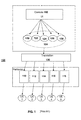
- the system 100 typically includes a console module 102 presenting a user interface (UI) for an administrator (not shown) for managing by creating, displaying or manipulating a configuration policy 104 to be applied to devices UE1- UE5.
- the system 100 as illustrated includes five different management platforms 110-118 to which the respective devices UE1- UE5 are associated.
- the one or more devices UE1- UE5 may connect through a cellular network (not shown) to provide voice and/or data services.
- the devices may be different devices such as BlackBerryTM devices, tablets, Apple iPhoneTM, AndroidTM-based devices, etc. employing correspondingly different operating systems such as AndroidTM, Windows 7 TM etc.
- Policy information 104 may be applied by a policy server (not shown). These policies comprise one or more policy elements that define one or more aspects of the wireless device's configuration. The different device models, from the same or different manufacturers, may have differing implementations 120-128 of the policy applied to them. Thus, the policy elements used, and their settings may vary from device to device. Policies are defined in various ways, depending on the device type they apply to, the policy server used to install them and/or verify device compliance with them.
- policies are disseminated from policy servers, which act as a source of policies for transport to the devices they apply to, using various policy management protocols.
- Policy management protocols comprise protocols for interaction between policy servers and devices receiving policies. These protocols can provide means not only to transfer the policy to the receiving device or devices, but also to manage policies on those devices, such as by verifying that the policy has been received by the device, verifying device compliance with the policy, removing the policy, updating the policy, or other policy-related activities. The manner in which these functions are accomplished varies from one policy management protocol to another.
- the configuration policies 104 although treated as a single policy, include five different implementation policies 120-128 corresponding to respective ones of the platforms 110-118.
- a translation module 130 receives the policy 104 and identifies the policies 120-128 applicable to the device platforms and supplies the policy elements to the appropriate platform for transmission to the mobile devices. This example is illustrative of an approach where policies for the group are maintained as independent policies for each of the platforms and where the administrator creating a global policy 104 has to be aware of the different devices and platforms.
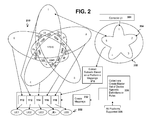
- FIG. 2 there is shown conceptually a method 200 for managing policies for a group of wireless devices 202 according to an embodiment of the present matter.
- a number of configuration and policy settings for all platforms to be supported 228 by the system are collected and collated into a single union set which represents a combined set of policies and configurations 230 across all the platforms of interest in an enterprise.
- the resulting set is then abstracted into a device-agnostic state such that the collected configurations and settings of a similar nature are grouped together.
- a set of mappings 232 may be created for each platform 110-118 which allows both for selection of appropriate platform subsets for a specific platform from a global policy created from the master set and for translating the subsets into device specific configurations for application to the appropriate devices UE1- UE5.
- the mappings modules thus contain platform and device associations to the generic definitions. Set-up may be performed by an Administrator via a console module 201.
- the administrator via the console module 201 creates a global policy 204 from this master set of device agnostic policies within circle 203.
- This global policy 204 is notionally illustrated as a subset set of the master set 203 containing generic policy items to be applied to a group of wireless devices UE1- UE5.
- the policy items in the set are device agnostic and can be set by an administrator without regard to the specific devices that the policies are being applied to. For example, the Administrator could create a policy such as "no social networking, no games, password must comply with these rules, the following WiFi/VPN network settings should be defined, the following email account configuration should be defined".
- the set 204 is a union of the various platform specific policies (five in the subject example), as is notionally represented by Venn diagram 210. From the Venn diagram 210 each platform policy may be seen as a subset of the global policy set 204. In other words, the policy 204 is comprised of a union of five platform policy sets. However, when the policy 204 is created the Administrator need not be aware of the specific subsets of the policies that apply to the specific different wireless device platforms 110-118 or wireless devices UE1-UE2. For example as shown by the Venn diagram 210, regions labeled '1' - '5' are configurations or features not shared by all the platforms, but rather are specific to their respective platforms.
- the region labeled '12345' is common to all platforms.
- Table I below represents different regions of the Venn diagram 210 and better illustrates various combinations of policy items in the global policy 204.
- the first row of Table I shows where policy items are unique to each of the platforms 110-118 ('1'-'5'), the subsequent rows two, three and four show policy items shared by the different platforms.
- the numeral '12' indicates platforms '1' and '2' share some policy items
- numeral '345' indicates platforms '3', '4' and '5' share those policy items and so forth.
- mapping 110-118 the mapping 110-118 of its configurations to the generic policy items i.e. each platform is aware of all the generic policy definitions that apply to it.
- the relevant subset is extracted using this mapping.
- the platform then takes the subset of policies and maps or translates the generic policy definitions to the appropriate wireless device configurations.
- the mapping contains the appropriate translations to the device specific/supported configurations. It may be seen that the administrator does not have to be aware, for example, of the various combinations of features either supported or not supported by the various platforms or devices. Thus in traditional approaches the administrator would have to be aware of the various combinations shown in Table I . i.e the Administrator would have to be aware of what is supported or not supported by various platforms/devices.
- global policy information 204 may be stored in the form of key-value pairs or "tuples.” Tuples are unordered sequences of (key, value) pairs: ((k1, v1) (k2, v2) ... ). Keys are text strings, and values are uninterpreted byte sequences. A value v may also be comprised of additional tuples. For the purposes of the description, the key definitions may be represented in a dot-notation. In one embodiment the policy containing key-value pairs is stored in a suitable database.
- a key definition defines attributes of an entity, wherein an entity is an element that that uniquely defines a specific class of object within the realm of mobile device management. The entity properties are stored using key-value pairs.
- scope.policy. ⁇ restriction.disable.social.video ⁇ scope.policy. ⁇ restriction.disable.social.networking would refer to applications such as YouTube TM /Vimeo TM and Facebook TM /Orkut TM the specific application being referred to is platform specific; but from an administrator's or enterprise policy point of view what is meant is "do not allow any form of social video application to be used and do not allow any form of social networking application to be used”.
- Key-value mappings describe all mappings between the key-value pairs and the devices. It is to be noted that while key value pairs are exemplified other schemas may also be possible.
- the system thus also provides mappings to platform specific restrictions from the device agnostic view of the configuration.
- the present system thus allows for definition of a device agnostic wireless device management policies, which are then mapped by the system to specific platforms based on the specific capabilities or features of the platform and or devices.
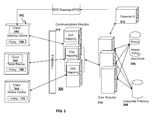
- the system includes a data store 306, corporate directory 308, core modules 310, console module 312, communications module subsystem 314 and client modules on the wireless devices 302.
- the core module is responsible for controlling access to the data store, communications with enterprise services, and notifications to the devices.
- the communication modules are responsible for managing communications with the wireless devices 302 and for translating key value pairs into XML, JSON, text, binary or the appropriate distinct protocol of the wireless device.
- a separate communications module may be implemented for each platform along with the associated mappings between the generic policy definitions (key value pairs) and the supported configurations and settings of the platform. In the illustrated FIG.
- each platform has its own respective set of mappings OS1, OS2, OS3.
- OS1, OS2, OS3 As mentioned earlier, for each operating system/device there is a key names-mapping relationship that specifies policy items (keynames) applicable to a platform. This mapping is then used against the global policy to extract the appropriate subset of policies which is then mapped to the requesting device protocol.
- the console 312 is responsible for presenting the administrative UI and provides a web application that allows administrators to manage mobile devices.
- Client applications 340-344 on the wireless device are responsible for communicating from the wireless device to the management system.
- a scheduler may also be deployed and is responsible for managing scheduled tasks, such as informing the wireless device it should establish a session with the communication module immediately.
- the wireless device has pre-defined polling intervals to contact the communication server.
- the system 300 can be deployed in a variety of server configurations to address IT requirements for security, scalability, and availability. Various deployment scenarios fall into three main categories: Single server for simpler small organization deployments; Dual server with DMZ for deployments having the enhanced network security of an extra firewall between the communication subsystem and the core module; and high availability multi-server farm for deployments that require the enhanced scalability and availability of a server farm.
- the core module is responsible for all business logic and 'state machine' logic, ensuring that all the appropriate aspects of a particular action are executed properly. For example when a configuration is updated the business logic includes notifying all affected devices to retrieve the updated profile.
- the Core module is stateless and it is possible to deploy multiple instances of Core modules to provide significant scalability for database access.
- the Core module is also responsible for communication with enterprise systems such as Active Directory, and notification communications via APNS (Apple Push Notification Service for iOS devices) and C2DM (Cloud to Device Message for Android devices).
- APNS Apple Push Notification Service for iOS devices
- C2DM Cloud to Device Message for Android devices
- Other platforms can utilize special SMS (ie: Symbian), email handling techniques for triggering a response from the mobile device.
- the mobile client can register as a receiver for SMS messages and process special messages accordingly.
- FIG. 4 there is shown a flow chart 400 of a method for creating a master set of device agnostic definitions or rules as described earlier with reference to FIG.2 .
- the process of FIG. 4 receives aggregate configuration and policy settings from all platforms. The process then proceeds to block 408 in which similar configurations are grouped under a new key. The process then proceeds to block 410 in which a master policy is created.
- FIG. 5 there is shown a flow chart 500 for creating a global policy for a group of devices according to an embodiment of the present matter.
- a user logs onto the system from a console.
- the process then proceeds to block 504 in which policy definitions are created.
- FIG. 6 there is shown a flow chart for deriving the device configurations from a subset of the created global policy in accordance with an embodiment of the present matter.
- a communication is received from the device at block 602.
- the process then proceeds to block 604 to determine the device or platform type.
- the process then proceeds to block 608 in which the policy subset is mapped to device configurations. These mapped configurations are then sent to a client on a device, as shown by block 610.
- FIG. 7 there is shown a schematic diagram of a process of device enrollment according to an embodiment of the present matter.
- a device driver installed on the communications module waits for incoming communication.
- a client installed on the device periodically initiates communication with the communication module. Once the communication module obtains the device id or type the appropriate mappings in the communications module can be determined and the appropriate subset of polices can be extracted, mapped and then applied to the device.
- FIG. 8 shows an exception to the generic case when the mobile operating system implements a mobile device management daemon where a local client is not necessary and communication is triggered from the device.
- any network element including wireless devices could be used to perform the methods described herein.
- such network element will include a communications subsystem to communicate with other network elements, a processor and memory which interact and cooperate to perform the functionality of the network element.
- any wireless device may be used.
- One exemplary wireless device is described below with reference to FIG. 9 .
- the use of the wireless device of FIG. 9 is not meant to be limiting, but is provided for illustrative purposes.
- Wireless device 1100 is a two-way wireless communication device.
- the wireless device may be referred to as a data messaging device, a two-way pager, a wireless e-mail device, a cellular telephone with data messaging capabilities, a wireless Internet appliance, or a data communication device, as examples.
- wireless device 1100 can incorporate a communication subsystem 1111, including both a receiver 1112 and a transmitter 1114, as well as associated components such as one or more, antenna elements 1116 and 1118, local oscillators (LOs) 1113, and a processing module such as a digital signal processor (DSP) 1120
- LOs local oscillators
- DSP digital signal processor
- wireless device 1100 may send and receive communication signals over the network 1119.
- network 1119 can comprise of multiple base stations communicating with the wireless device.
- Signals received by antenna 1116 through communication network 1119 are input to receiver 1112, which may perform such common receiver functions as signal amplification, frequency down conversion, filtering, channel selection and the like, and in the example system shown in FIG. 9 , analog to digital (A/D) conversion.
- A/D conversion of a received signal allows more complex communication functions such as demodulation and decoding to be performed in the DSP 1120.
- signals to be transmitted are processed, including modulation and encoding for example, by DSP 1120 and input to transmitter 1114 for digital to analog conversion, frequency up conversion, filtering, amplification and transmission over the communication network 1119 via antenna 1118.
- DSP 1120 not only processes communication signals, but also provides for receiver and transmitter control. For example, the gains applied to communication signals in receiver 1112 and transmitter 1114 may be adaptively controlled through automatic gain control algorithms implemented in DSP 1120.
- Network access requirements will also vary depending upon the type of network 1119.
- network access is associated with a subscriber or user of wireless device 1100.
- a wireless device may require a removable user identity module (RUIM) or a subscriber identity module (SIM) card in order to operate on a network.
- the SIM/RUIM interface 1144 is normally similar to a card-slot into which a SIM/RUIM card can be inserted and ejected.
- the SIM/RUIM card holds many key configurations 1151, and other information 1153 such as identification, and subscriber related information.
- Wireless device 1100 includes a processor 1138 which controls the overall operation of the device. Communication functions, including at least data and voice communications, are performed through communication subsystem 1111. Processor 1138 also interacts with further device subsystems such as the display 1122, flash memory 1124, random access memory (RAM) 1126, auxiliary input/output (I/O) subsystems 1128, serial port 1130, one or more keyboards or keypads 1132, speaker 1134, microphone 1136, other communication subsystem 1140 such as a short-range communications subsystem and any other device subsystems generally designated as 1142. Serial port 1130 could include a USB port or other port known to those in the art.
- Some of the subsystems shown in FIG. 9 perform communication-related functions, whereas other subsystems may provide "resident" or on-device functions.
- some subsystems such as keyboard 1132 and display 1122, for example, may be used for both communication-related functions, such as entering a text message for transmission over a communication network, and device-resident functions such as a calculator or task list.
- Operating system software used by the processor 1138 can be stored in a persistent store such as flash memory 1124, which may instead be a read-only memory (ROM) or similar storage element (not shown). Specific device applications, or parts thereof, may be temporarily loaded into a volatile memory such as RAM 1126. Received communication signals may also be stored in RAM 1126.
- a persistent store such as flash memory 1124, which may instead be a read-only memory (ROM) or similar storage element (not shown).
- ROM read-only memory
- Specific device applications, or parts thereof, may be temporarily loaded into a volatile memory such as RAM 1126. Received communication signals may also be stored in RAM 1126.
- flash memory 1124 can be segregated into different areas for both computer programs 1158 and program data storage 1150, 1152, 1154 and 1156. These different storage types indicate each program can allocate a portion of flash memory 1124 for their own data storage requirements.
- Processor 1138 in addition to its operating system functions, can enable execution of software applications on the wireless device. A predetermined set of applications which control basic operations, including at least data and voice communication applications for example, will normally be installed on wireless device 1100 during manufacturing. Other applications could be installed subsequently or dynamically.
- a software application may be a personal information manager (PIM) application having the ability to organize and manage data items relating to the user of the wireless device such as, but not limited to, e-mail, calendar events, voice mails, appointments, and task items. Naturally, one or more memory stores would be available on the wireless device to facilitate storage of PIM data items.
- PIM application can have the ability to send and receive data items, via the wireless network 1119.
- the PIM data items are seamlessly integrated, synchronized and updated, via the wireless network 1119, with the wireless device user's corresponding data items stored or associated with a host computer system.
- auxiliary I/O subsystem 1128 may also be loaded onto the wireless device 1100 through the network 1119, an auxiliary I/O subsystem 1128, serial port 1130, short-range communications subsystem 1140 or any other suitable subsystem 1142, and installed by a user in the RAM 1126 or a non-volatile store (not shown) for execution by the microprocessor 1138.
- Such flexibility in application installation increases the functionality of the device and may provide enhanced on-device functions, communication-related functions, or both.
- a received signal such as a text message or web page download will be processed by the communication subsystem 1111 and input to the microprocessor 1138, which further processes the received signal for element attributes for output to the display 1122, or alternatively to an auxiliary I/O device 1128.
- a user of wireless device 1100 may also compose data items such as email messages for example, using the keyboard 1132, which can be a complete alphanumeric keyboard or telephone-type keypad, in conjunction with the display 1122 and possibly an auxiliary I/O device 1128. Such composed items may then be transmitted over a communication network through the communication subsystem 1111.
- wireless device 1100 For voice communications, overall operation of wireless device 1100 is similar, except that received signals would be output to a speaker 1134 and signals for transmission would be generated by a microphone 1136.
- Alternative voice or audio I/O subsystems such as a voice message recording subsystem, may also be implemented on wireless device 1100.
- voice or audio signal output is accomplished primarily through the speaker 1134, display 1122 may also be used to provide an indication of the identity of a calling party, the duration of a voice call, or other voice call related information for example.
- Serial port 1130 in FIG. 9 would normally be implemented in a personal digital assistant (PDA)-type wireless device for which synchronization with a user's desktop computer (not shown) may be desirable, but is an optional device component.
- PDA personal digital assistant
- Such a port 1130 would enable a user to set preferences through an external device or software application and would extend the capabilities of wireless device 1100 by providing for information or software downloads to wireless device 1100 other than through a wireless communication network.
- the alternate download path may for example be used to load an encryption key onto the device through a direct and thus reliable and trusted connection to thereby enable secure device communication.
- Serial port 1130 can further be used to connect the wireless device to a computer to act as a modem.
- WiFi Communications Subsystem 1140 is used for WiFi Communications and can provide for communication with access point 1140.
- communications subsystem(s) 1141 are further components that may provide for communication between wireless device 1100 and different systems or devices, which need not necessarily be similar devices.
- the subsystem(s) 1141 may include an infrared device and associated circuits and components or a BluetoothTM communication module to provide for communication with similarly enabled systems and devices.
- the embodiments described herein are examples of structures, systems or methods having elements corresponding to elements of the techniques of the present application.
- the above written description may enable those skilled in the art to make and use embodiments having alternative elements that likewise correspond to the elements of the techniques of the present application.
- the intended scope of the techniques of the above application thus includes other structures, systems or methods that do not differ from the techniques of the present application as described herein, and further includes other structures, systems or methods with insubstantial differences from the techniques of the present application as described herein.
Landscapes
- Engineering & Computer Science (AREA)
- Computer Networks & Wireless Communication (AREA)
- Signal Processing (AREA)
- Databases & Information Systems (AREA)
- Mobile Radio Communication Systems (AREA)
Applications Claiming Priority (2)
| Application Number | Priority Date | Filing Date | Title |
|---|---|---|---|
| US201161550684P | 2011-10-24 | 2011-10-24 | |
| US13/331,851 US9756501B2 (en) | 2011-10-24 | 2011-12-20 | System and method for wireless device configuration |
Publications (3)
| Publication Number | Publication Date |
|---|---|
| EP2587852A2 true EP2587852A2 (fr) | 2013-05-01 |
| EP2587852A3 EP2587852A3 (fr) | 2015-09-16 |
| EP2587852B1 EP2587852B1 (fr) | 2018-11-07 |
Family
ID=47074585
Family Applications (1)
| Application Number | Title | Priority Date | Filing Date |
|---|---|---|---|
| EP12183399.0A Active EP2587852B1 (fr) | 2011-10-24 | 2012-09-06 | Système et dispositif de configuration de dispositif sans fil |
Country Status (3)
| Country | Link |
|---|---|
| US (1) | US9756501B2 (fr) |
| EP (1) | EP2587852B1 (fr) |
| CA (1) | CA2790259C (fr) |
Families Citing this family (11)
| Publication number | Priority date | Publication date | Assignee | Title |
|---|---|---|---|---|
| US20130226812A1 (en) * | 2012-02-24 | 2013-08-29 | Mads Landrok | Cloud proxy secured mobile payments |
| CN102915113B (zh) * | 2012-08-24 | 2016-01-27 | 深圳创维-Rgb电子有限公司 | 一种数据输入支持方法及装置 |
| US20140282839A1 (en) * | 2013-03-15 | 2014-09-18 | Microsoft Corporation | Unified enterprise device enrollment |
| US10554486B2 (en) * | 2014-09-26 | 2020-02-04 | Microsoft Technology Licensing, Llc | Multi-enrollments of a computing device into configuration sources |
| JP6312842B2 (ja) * | 2015-08-14 | 2018-04-18 | エスゼット ディージェイアイ テクノロジー カンパニー リミテッドSz Dji Technology Co.,Ltd | 異機種環境においてデータ通信を支援するためのシステム及び方法、並びにプログラム |
| CN110381100B (zh) * | 2018-04-13 | 2022-03-29 | 佛山市顺德区美的电热电器制造有限公司 | 一种消息推送方法、服务器及计算机可读存储介质 |
| US10848390B2 (en) | 2018-04-16 | 2020-11-24 | Cisco Technology, Inc. | Prioritized rule set identification and on-demand constrained deployment in constrained network devices |
| CN114785626B (zh) | 2018-06-26 | 2024-01-30 | 华为技术有限公司 | 数据管理的方法和装置 |
| US20200028879A1 (en) | 2018-07-17 | 2020-01-23 | Microsoft Technology Licensing, Llc | Queryless device configuration determination-based techniques for mobile device management |
| US11184223B2 (en) * | 2018-07-31 | 2021-11-23 | Microsoft Technology Licensing, Llc | Implementation of compliance settings by a mobile device for compliance with a configuration scenario |
| US12454951B2 (en) | 2019-07-18 | 2025-10-28 | Kennametal Inc. | Wear resistant fluid ends |
Family Cites Families (9)
| Publication number | Priority date | Publication date | Assignee | Title |
|---|---|---|---|---|
| US7441051B2 (en) * | 2001-06-12 | 2008-10-21 | International Business Machines Corporation | Apparatus and method for managing configuration of computer systems on a computer network |
| US7062259B1 (en) * | 2003-02-20 | 2006-06-13 | Sprint Communications Company L.P. | Configuration of wireless control systems for broadband wireless communications |
| US8572676B2 (en) * | 2008-11-06 | 2013-10-29 | Mcafee, Inc. | System, method, and device for mediating connections between policy source servers, corporate repositories, and mobile devices |
| US7516478B2 (en) | 2005-06-03 | 2009-04-07 | Microsoft Corporation | Remote management of mobile devices |
| US9081981B2 (en) * | 2005-12-29 | 2015-07-14 | Nextlabs, Inc. | Techniques and system to manage access of information using policies |
| US8997170B2 (en) * | 2006-12-29 | 2015-03-31 | Shared Spectrum Company | Method and device for policy-based control of radio |
| US8903365B2 (en) | 2006-08-18 | 2014-12-02 | Ca, Inc. | Mobile device management |
| JP4347335B2 (ja) * | 2006-12-18 | 2009-10-21 | 富士通株式会社 | ネットワーク中継プログラム、ネットワーク中継装置、通信システム、ネットワーク中継方法 |
| US8504680B1 (en) * | 2008-12-23 | 2013-08-06 | Symantec Corporation | Automatically adjusting polling intervals based on remote administrative activity |
-
2011
- 2011-12-20 US US13/331,851 patent/US9756501B2/en active Active
-
2012
- 2012-09-06 CA CA2790259A patent/CA2790259C/fr active Active
- 2012-09-06 EP EP12183399.0A patent/EP2587852B1/fr active Active
Non-Patent Citations (1)
| Title |
|---|
| None |
Also Published As
| Publication number | Publication date |
|---|---|
| US20130318220A2 (en) | 2013-11-28 |
| US20130103815A1 (en) | 2013-04-25 |
| CA2790259C (fr) | 2017-10-31 |
| US9756501B2 (en) | 2017-09-05 |
| EP2587852B1 (fr) | 2018-11-07 |
| EP2587852A3 (fr) | 2015-09-16 |
| CA2790259A1 (fr) | 2013-04-24 |
Similar Documents
| Publication | Publication Date | Title |
|---|---|---|
| US9756501B2 (en) | System and method for wireless device configuration | |
| CN110915247B (zh) | 订阅管理服务数据馈送 | |
| AU2018220050B2 (en) | Enforcing policies based on information received from external systems | |
| US9189753B2 (en) | Multiplatform management system and method for mobile devices | |
| EP3219128B1 (fr) | Système et procédé pour fournir une agrégation de licences de service entre plusieurs cartes sim physiques et virtuelles | |
| US20190181901A1 (en) | Local profile assistant and application programming interface | |
| CN113455033B (zh) | 用于配设设备特定的wlan凭证的方法和系统 | |
| EP3695633B1 (fr) | Entité d'embarquement pour gestion de carte à circuit intégré universelle intégrée distante | |
| US10379829B2 (en) | System and method for restricting system and application software available for installation on a managed mobile device | |
| US10667124B2 (en) | System and method for providing service license aggregation across multiple physical and virtual sim cards | |
| US20160295412A1 (en) | Wireless network access for social network connections | |
| EP3219129B1 (fr) | Système et procédé pour fournir un service d'agrégation de licence entre plusieurs cartes sim | |
| US10595324B2 (en) | Method and apparatus for server-based scheduling of network traffic to a mobile device | |
| US8910236B2 (en) | System and method for enablement of desktop software functionality based on IT policy | |
| EP3165013A1 (fr) | Mise en uvre de politiques sur la base d'informations reçues en provenance de systèmes externes | |
| KR20190006633A (ko) | 보안 관리 시스템 및 방법과 이를 수행하기 위한 서버 | |
| CA2755701A1 (fr) | Systeme et methode d'activation de la fonctionnalite d'un logiciel de bureau en fonction de sa politique |
Legal Events
| Date | Code | Title | Description |
|---|---|---|---|
| PUAI | Public reference made under article 153(3) epc to a published international application that has entered the european phase |
Free format text: ORIGINAL CODE: 0009012 |
|
| 17P | Request for examination filed |
Effective date: 20120906 |
|
| AK | Designated contracting states |
Kind code of ref document: A2 Designated state(s): AL AT BE BG CH CY CZ DE DK EE ES FI FR GB GR HR HU IE IS IT LI LT LU LV MC MK MT NL NO PL PT RO RS SE SI SK SM TR |
|
| AX | Request for extension of the european patent |
Extension state: BA ME |
|
| RAP1 | Party data changed (applicant data changed or rights of an application transferred) |
Owner name: BLACKBERRY LIMITED |
|
| PUAL | Search report despatched |
Free format text: ORIGINAL CODE: 0009013 |
|
| AK | Designated contracting states |
Kind code of ref document: A3 Designated state(s): AL AT BE BG CH CY CZ DE DK EE ES FI FR GB GR HR HU IE IS IT LI LT LU LV MC MK MT NL NO PL PT RO RS SE SI SK SM TR |
|
| AX | Request for extension of the european patent |
Extension state: BA ME |
|
| RIC1 | Information provided on ipc code assigned before grant |
Ipc: H04W 8/18 20090101AFI20150811BHEP |
|
| STAA | Information on the status of an ep patent application or granted ep patent |
Free format text: STATUS: EXAMINATION IS IN PROGRESS |
|
| 17Q | First examination report despatched |
Effective date: 20161104 |
|
| GRAP | Despatch of communication of intention to grant a patent |
Free format text: ORIGINAL CODE: EPIDOSNIGR1 |
|
| STAA | Information on the status of an ep patent application or granted ep patent |
Free format text: STATUS: GRANT OF PATENT IS INTENDED |
|
| INTG | Intention to grant announced |
Effective date: 20180612 |
|
| GRAS | Grant fee paid |
Free format text: ORIGINAL CODE: EPIDOSNIGR3 |
|
| GRAA | (expected) grant |
Free format text: ORIGINAL CODE: 0009210 |
|
| STAA | Information on the status of an ep patent application or granted ep patent |
Free format text: STATUS: THE PATENT HAS BEEN GRANTED |
|
| AK | Designated contracting states |
Kind code of ref document: B1 Designated state(s): AL AT BE BG CH CY CZ DE DK EE ES FI FR GB GR HR HU IE IS IT LI LT LU LV MC MK MT NL NO PL PT RO RS SE SI SK SM TR |
|
| REG | Reference to a national code |
Ref country code: GB Ref legal event code: FG4D |
|
| REG | Reference to a national code |
Ref country code: CH Ref legal event code: EP Ref country code: AT Ref legal event code: REF Ref document number: 1063556 Country of ref document: AT Kind code of ref document: T Effective date: 20181115 |
|
| REG | Reference to a national code |
Ref country code: IE Ref legal event code: FG4D |
|
| REG | Reference to a national code |
Ref country code: DE Ref legal event code: R096 Ref document number: 602012053102 Country of ref document: DE |
|
| REG | Reference to a national code |
Ref country code: NL Ref legal event code: MP Effective date: 20181107 |
|
| REG | Reference to a national code |
Ref country code: LT Ref legal event code: MG4D |
|
| REG | Reference to a national code |
Ref country code: AT Ref legal event code: MK05 Ref document number: 1063556 Country of ref document: AT Kind code of ref document: T Effective date: 20181107 |
|
| PG25 | Lapsed in a contracting state [announced via postgrant information from national office to epo] |
Ref country code: BG Free format text: LAPSE BECAUSE OF FAILURE TO SUBMIT A TRANSLATION OF THE DESCRIPTION OR TO PAY THE FEE WITHIN THE PRESCRIBED TIME-LIMIT Effective date: 20190207 Ref country code: IS Free format text: LAPSE BECAUSE OF FAILURE TO SUBMIT A TRANSLATION OF THE DESCRIPTION OR TO PAY THE FEE WITHIN THE PRESCRIBED TIME-LIMIT Effective date: 20190307 Ref country code: ES Free format text: LAPSE BECAUSE OF FAILURE TO SUBMIT A TRANSLATION OF THE DESCRIPTION OR TO PAY THE FEE WITHIN THE PRESCRIBED TIME-LIMIT Effective date: 20181107 Ref country code: LT Free format text: LAPSE BECAUSE OF FAILURE TO SUBMIT A TRANSLATION OF THE DESCRIPTION OR TO PAY THE FEE WITHIN THE PRESCRIBED TIME-LIMIT Effective date: 20181107 Ref country code: AT Free format text: LAPSE BECAUSE OF FAILURE TO SUBMIT A TRANSLATION OF THE DESCRIPTION OR TO PAY THE FEE WITHIN THE PRESCRIBED TIME-LIMIT Effective date: 20181107 Ref country code: NO Free format text: LAPSE BECAUSE OF FAILURE TO SUBMIT A TRANSLATION OF THE DESCRIPTION OR TO PAY THE FEE WITHIN THE PRESCRIBED TIME-LIMIT Effective date: 20190207 Ref country code: LV Free format text: LAPSE BECAUSE OF FAILURE TO SUBMIT A TRANSLATION OF THE DESCRIPTION OR TO PAY THE FEE WITHIN THE PRESCRIBED TIME-LIMIT Effective date: 20181107 Ref country code: HR Free format text: LAPSE BECAUSE OF FAILURE TO SUBMIT A TRANSLATION OF THE DESCRIPTION OR TO PAY THE FEE WITHIN THE PRESCRIBED TIME-LIMIT Effective date: 20181107 Ref country code: FI Free format text: LAPSE BECAUSE OF FAILURE TO SUBMIT A TRANSLATION OF THE DESCRIPTION OR TO PAY THE FEE WITHIN THE PRESCRIBED TIME-LIMIT Effective date: 20181107 |
|
| PG25 | Lapsed in a contracting state [announced via postgrant information from national office to epo] |
Ref country code: AL Free format text: LAPSE BECAUSE OF FAILURE TO SUBMIT A TRANSLATION OF THE DESCRIPTION OR TO PAY THE FEE WITHIN THE PRESCRIBED TIME-LIMIT Effective date: 20181107 Ref country code: PT Free format text: LAPSE BECAUSE OF FAILURE TO SUBMIT A TRANSLATION OF THE DESCRIPTION OR TO PAY THE FEE WITHIN THE PRESCRIBED TIME-LIMIT Effective date: 20190307 Ref country code: RS Free format text: LAPSE BECAUSE OF FAILURE TO SUBMIT A TRANSLATION OF THE DESCRIPTION OR TO PAY THE FEE WITHIN THE PRESCRIBED TIME-LIMIT Effective date: 20181107 Ref country code: SE Free format text: LAPSE BECAUSE OF FAILURE TO SUBMIT A TRANSLATION OF THE DESCRIPTION OR TO PAY THE FEE WITHIN THE PRESCRIBED TIME-LIMIT Effective date: 20181107 Ref country code: GR Free format text: LAPSE BECAUSE OF FAILURE TO SUBMIT A TRANSLATION OF THE DESCRIPTION OR TO PAY THE FEE WITHIN THE PRESCRIBED TIME-LIMIT Effective date: 20190208 Ref country code: NL Free format text: LAPSE BECAUSE OF FAILURE TO SUBMIT A TRANSLATION OF THE DESCRIPTION OR TO PAY THE FEE WITHIN THE PRESCRIBED TIME-LIMIT Effective date: 20181107 |
|
| PG25 | Lapsed in a contracting state [announced via postgrant information from national office to epo] |
Ref country code: CZ Free format text: LAPSE BECAUSE OF FAILURE TO SUBMIT A TRANSLATION OF THE DESCRIPTION OR TO PAY THE FEE WITHIN THE PRESCRIBED TIME-LIMIT Effective date: 20181107 Ref country code: IT Free format text: LAPSE BECAUSE OF FAILURE TO SUBMIT A TRANSLATION OF THE DESCRIPTION OR TO PAY THE FEE WITHIN THE PRESCRIBED TIME-LIMIT Effective date: 20181107 Ref country code: DK Free format text: LAPSE BECAUSE OF FAILURE TO SUBMIT A TRANSLATION OF THE DESCRIPTION OR TO PAY THE FEE WITHIN THE PRESCRIBED TIME-LIMIT Effective date: 20181107 Ref country code: PL Free format text: LAPSE BECAUSE OF FAILURE TO SUBMIT A TRANSLATION OF THE DESCRIPTION OR TO PAY THE FEE WITHIN THE PRESCRIBED TIME-LIMIT Effective date: 20181107 |
|
| REG | Reference to a national code |
Ref country code: DE Ref legal event code: R097 Ref document number: 602012053102 Country of ref document: DE |
|
| PG25 | Lapsed in a contracting state [announced via postgrant information from national office to epo] |
Ref country code: EE Free format text: LAPSE BECAUSE OF FAILURE TO SUBMIT A TRANSLATION OF THE DESCRIPTION OR TO PAY THE FEE WITHIN THE PRESCRIBED TIME-LIMIT Effective date: 20181107 Ref country code: SM Free format text: LAPSE BECAUSE OF FAILURE TO SUBMIT A TRANSLATION OF THE DESCRIPTION OR TO PAY THE FEE WITHIN THE PRESCRIBED TIME-LIMIT Effective date: 20181107 Ref country code: RO Free format text: LAPSE BECAUSE OF FAILURE TO SUBMIT A TRANSLATION OF THE DESCRIPTION OR TO PAY THE FEE WITHIN THE PRESCRIBED TIME-LIMIT Effective date: 20181107 Ref country code: SK Free format text: LAPSE BECAUSE OF FAILURE TO SUBMIT A TRANSLATION OF THE DESCRIPTION OR TO PAY THE FEE WITHIN THE PRESCRIBED TIME-LIMIT Effective date: 20181107 |
|
| PLBE | No opposition filed within time limit |
Free format text: ORIGINAL CODE: 0009261 |
|
| STAA | Information on the status of an ep patent application or granted ep patent |
Free format text: STATUS: NO OPPOSITION FILED WITHIN TIME LIMIT |
|
| 26N | No opposition filed |
Effective date: 20190808 |
|
| PG25 | Lapsed in a contracting state [announced via postgrant information from national office to epo] |
Ref country code: SI Free format text: LAPSE BECAUSE OF FAILURE TO SUBMIT A TRANSLATION OF THE DESCRIPTION OR TO PAY THE FEE WITHIN THE PRESCRIBED TIME-LIMIT Effective date: 20181107 |
|
| PG25 | Lapsed in a contracting state [announced via postgrant information from national office to epo] |
Ref country code: TR Free format text: LAPSE BECAUSE OF FAILURE TO SUBMIT A TRANSLATION OF THE DESCRIPTION OR TO PAY THE FEE WITHIN THE PRESCRIBED TIME-LIMIT Effective date: 20181107 |
|
| PG25 | Lapsed in a contracting state [announced via postgrant information from national office to epo] |
Ref country code: MC Free format text: LAPSE BECAUSE OF FAILURE TO SUBMIT A TRANSLATION OF THE DESCRIPTION OR TO PAY THE FEE WITHIN THE PRESCRIBED TIME-LIMIT Effective date: 20181107 |
|
| REG | Reference to a national code |
Ref country code: CH Ref legal event code: PL |
|
| PG25 | Lapsed in a contracting state [announced via postgrant information from national office to epo] |
Ref country code: LU Free format text: LAPSE BECAUSE OF NON-PAYMENT OF DUE FEES Effective date: 20190906 Ref country code: IE Free format text: LAPSE BECAUSE OF NON-PAYMENT OF DUE FEES Effective date: 20190906 Ref country code: CH Free format text: LAPSE BECAUSE OF NON-PAYMENT OF DUE FEES Effective date: 20190930 Ref country code: LI Free format text: LAPSE BECAUSE OF NON-PAYMENT OF DUE FEES Effective date: 20190930 |
|
| REG | Reference to a national code |
Ref country code: BE Ref legal event code: MM Effective date: 20190930 |
|
| PG25 | Lapsed in a contracting state [announced via postgrant information from national office to epo] |
Ref country code: BE Free format text: LAPSE BECAUSE OF NON-PAYMENT OF DUE FEES Effective date: 20190930 |
|
| PG25 | Lapsed in a contracting state [announced via postgrant information from national office to epo] |
Ref country code: CY Free format text: LAPSE BECAUSE OF FAILURE TO SUBMIT A TRANSLATION OF THE DESCRIPTION OR TO PAY THE FEE WITHIN THE PRESCRIBED TIME-LIMIT Effective date: 20181107 |
|
| PG25 | Lapsed in a contracting state [announced via postgrant information from national office to epo] |
Ref country code: MT Free format text: LAPSE BECAUSE OF FAILURE TO SUBMIT A TRANSLATION OF THE DESCRIPTION OR TO PAY THE FEE WITHIN THE PRESCRIBED TIME-LIMIT Effective date: 20181107 Ref country code: HU Free format text: LAPSE BECAUSE OF FAILURE TO SUBMIT A TRANSLATION OF THE DESCRIPTION OR TO PAY THE FEE WITHIN THE PRESCRIBED TIME-LIMIT; INVALID AB INITIO Effective date: 20120906 |
|
| PG25 | Lapsed in a contracting state [announced via postgrant information from national office to epo] |
Ref country code: MK Free format text: LAPSE BECAUSE OF FAILURE TO SUBMIT A TRANSLATION OF THE DESCRIPTION OR TO PAY THE FEE WITHIN THE PRESCRIBED TIME-LIMIT Effective date: 20181107 |
|
| REG | Reference to a national code |
Ref country code: DE Ref legal event code: R081 Ref document number: 602012053102 Country of ref document: DE Owner name: MALIKIE INNOVATIONS LTD., IE Free format text: FORMER OWNER: BLACKBERRY LIMITED, WATERLOO, ONTARIO, CA |
|
| REG | Reference to a national code |
Ref country code: GB Ref legal event code: 732E Free format text: REGISTERED BETWEEN 20240620 AND 20240627 |
|
| PGFP | Annual fee paid to national office [announced via postgrant information from national office to epo] |
Ref country code: DE Payment date: 20250926 Year of fee payment: 14 |
|
| PGFP | Annual fee paid to national office [announced via postgrant information from national office to epo] |
Ref country code: GB Payment date: 20250923 Year of fee payment: 14 |
|
| PGFP | Annual fee paid to national office [announced via postgrant information from national office to epo] |
Ref country code: FR Payment date: 20250925 Year of fee payment: 14 |