EP2588112B1 - Methods and compositions for treatment of multiple sclerosis - Google Patents
Methods and compositions for treatment of multiple sclerosis Download PDFInfo
- Publication number
- EP2588112B1 EP2588112B1 EP11810107.0A EP11810107A EP2588112B1 EP 2588112 B1 EP2588112 B1 EP 2588112B1 EP 11810107 A EP11810107 A EP 11810107A EP 2588112 B1 EP2588112 B1 EP 2588112B1
- Authority
- EP
- European Patent Office
- Prior art keywords
- risperidone
- mice
- formulation
- disease
- treatment
- Prior art date
- Legal status (The legal status is an assumption and is not a legal conclusion. Google has not performed a legal analysis and makes no representation as to the accuracy of the status listed.)
- Not-in-force
Links
- 238000011282 treatment Methods 0.000 title claims description 56
- 239000000203 mixture Substances 0.000 title claims description 49
- 201000006417 multiple sclerosis Diseases 0.000 title claims description 32
- 238000000034 method Methods 0.000 title description 19
- RAPZEAPATHNIPO-UHFFFAOYSA-N risperidone Chemical compound FC1=CC=C2C(C3CCN(CC3)CCC=3C(=O)N4CCCCC4=NC=3C)=NOC2=C1 RAPZEAPATHNIPO-UHFFFAOYSA-N 0.000 claims description 136
- 229960001534 risperidone Drugs 0.000 claims description 126
- 239000003814 drug Substances 0.000 claims description 59
- 229940079593 drug Drugs 0.000 claims description 57
- 229960004170 clozapine Drugs 0.000 claims description 52
- QZUDBNBUXVUHMW-UHFFFAOYSA-N clozapine Chemical compound C1CN(C)CCN1C1=NC2=CC(Cl)=CC=C2NC2=CC=CC=C12 QZUDBNBUXVUHMW-UHFFFAOYSA-N 0.000 claims description 52
- 238000009472 formulation Methods 0.000 claims description 24
- 208000024891 symptom Diseases 0.000 claims description 21
- 239000008194 pharmaceutical composition Substances 0.000 claims description 18
- 239000000443 aerosol Substances 0.000 claims description 14
- PMXMIIMHBWHSKN-UHFFFAOYSA-N 3-{2-[4-(6-fluoro-1,2-benzoxazol-3-yl)piperidin-1-yl]ethyl}-9-hydroxy-2-methyl-6,7,8,9-tetrahydropyrido[1,2-a]pyrimidin-4-one Chemical compound FC1=CC=C2C(C3CCN(CC3)CCC=3C(=O)N4CCCC(O)C4=NC=3C)=NOC2=C1 PMXMIIMHBWHSKN-UHFFFAOYSA-N 0.000 claims description 9
- 229960001057 paliperidone Drugs 0.000 claims description 8
- 208000002193 Pain Diseases 0.000 claims description 7
- 208000003435 Optic Neuritis Diseases 0.000 claims description 4
- 206010033799 Paralysis Diseases 0.000 claims description 4
- 206010016256 fatigue Diseases 0.000 claims description 4
- 208000000044 Amnesia Diseases 0.000 claims description 2
- 206010021639 Incontinence Diseases 0.000 claims description 2
- 208000008238 Muscle Spasticity Diseases 0.000 claims description 2
- 206010044565 Tremor Diseases 0.000 claims description 2
- 238000007918 intramuscular administration Methods 0.000 claims description 2
- 238000001990 intravenous administration Methods 0.000 claims description 2
- 231100000863 loss of memory Toxicity 0.000 claims description 2
- 208000018198 spasticity Diseases 0.000 claims description 2
- 208000009174 transverse myelitis Diseases 0.000 claims description 2
- 238000007912 intraperitoneal administration Methods 0.000 claims 1
- 238000007913 intrathecal administration Methods 0.000 claims 1
- 238000007920 subcutaneous administration Methods 0.000 claims 1
- 201000010099 disease Diseases 0.000 description 66
- 208000037265 diseases, disorders, signs and symptoms Diseases 0.000 description 66
- 241000699670 Mus sp. Species 0.000 description 59
- 230000000052 comparative effect Effects 0.000 description 47
- 238000011740 C57BL/6 mouse Methods 0.000 description 29
- 239000003981 vehicle Substances 0.000 description 24
- 108020003175 receptors Proteins 0.000 description 19
- 102000005962 receptors Human genes 0.000 description 19
- 230000009467 reduction Effects 0.000 description 19
- 230000000694 effects Effects 0.000 description 17
- 238000013270 controlled release Methods 0.000 description 16
- 108010000123 Myelin-Oligodendrocyte Glycoprotein Proteins 0.000 description 15
- 102100023302 Myelin-oligodendrocyte glycoprotein Human genes 0.000 description 15
- 239000000427 antigen Substances 0.000 description 14
- 108091007433 antigens Proteins 0.000 description 14
- 102000036639 antigens Human genes 0.000 description 14
- 230000003053 immunization Effects 0.000 description 14
- 238000002649 immunization Methods 0.000 description 13
- 210000002540 macrophage Anatomy 0.000 description 13
- 210000004556 brain Anatomy 0.000 description 12
- 210000004027 cell Anatomy 0.000 description 12
- 230000009257 reactivity Effects 0.000 description 12
- 210000003289 regulatory T cell Anatomy 0.000 description 12
- 230000001684 chronic effect Effects 0.000 description 11
- 239000002158 endotoxin Substances 0.000 description 10
- 229920006008 lipopolysaccharide Polymers 0.000 description 10
- 230000000862 serotonergic effect Effects 0.000 description 10
- 241001465754 Metazoa Species 0.000 description 9
- ZMXDDKWLCZADIW-UHFFFAOYSA-N N,N-Dimethylformamide Chemical compound CN(C)C=O ZMXDDKWLCZADIW-UHFFFAOYSA-N 0.000 description 9
- 210000001638 cerebellum Anatomy 0.000 description 9
- 230000003291 dopaminomimetic effect Effects 0.000 description 9
- 241000124008 Mammalia Species 0.000 description 8
- 239000003795 chemical substances by application Substances 0.000 description 8
- 150000001875 compounds Chemical class 0.000 description 8
- 238000002474 experimental method Methods 0.000 description 8
- 230000002025 microglial effect Effects 0.000 description 8
- 230000004044 response Effects 0.000 description 8
- 210000001845 splenic macrophage Anatomy 0.000 description 8
- 238000004519 manufacturing process Methods 0.000 description 7
- 210000000274 microglia Anatomy 0.000 description 7
- 230000002516 postimmunization Effects 0.000 description 7
- 230000000770 proinflammatory effect Effects 0.000 description 7
- 230000001225 therapeutic effect Effects 0.000 description 7
- 101150013553 CD40 gene Proteins 0.000 description 6
- 102100040245 Tumor necrosis factor receptor superfamily member 5 Human genes 0.000 description 6
- 230000004913 activation Effects 0.000 description 6
- 230000000561 anti-psychotic effect Effects 0.000 description 6
- 210000004979 bone marrow derived macrophage Anatomy 0.000 description 6
- 238000000684 flow cytometry Methods 0.000 description 6
- 108090000765 processed proteins & peptides Proteins 0.000 description 6
- 210000000952 spleen Anatomy 0.000 description 6
- 238000011725 BALB/c mouse Methods 0.000 description 5
- 102000004127 Cytokines Human genes 0.000 description 5
- 108090000695 Cytokines Proteins 0.000 description 5
- 108010072051 Glatiramer Acetate Proteins 0.000 description 5
- 241000282412 Homo Species 0.000 description 5
- 102000003814 Interleukin-10 Human genes 0.000 description 5
- 108090000174 Interleukin-10 Proteins 0.000 description 5
- 102000003946 Prolactin Human genes 0.000 description 5
- 108010057464 Prolactin Proteins 0.000 description 5
- 230000001154 acute effect Effects 0.000 description 5
- 239000002552 dosage form Substances 0.000 description 5
- 239000003651 drinking water Substances 0.000 description 5
- 235000020188 drinking water Nutrition 0.000 description 5
- 238000010438 heat treatment Methods 0.000 description 5
- 210000002443 helper t lymphocyte Anatomy 0.000 description 5
- 230000031261 interleukin-10 production Effects 0.000 description 5
- 239000000546 pharmaceutical excipient Substances 0.000 description 5
- 229940097325 prolactin Drugs 0.000 description 5
- 210000000278 spinal cord Anatomy 0.000 description 5
- 239000000126 substance Substances 0.000 description 5
- 210000001519 tissue Anatomy 0.000 description 5
- 208000016192 Demyelinating disease Diseases 0.000 description 4
- 206010012305 Demyelination Diseases 0.000 description 4
- 208000004044 Hypesthesia Diseases 0.000 description 4
- 108010005716 Interferon beta-1a Proteins 0.000 description 4
- 102100037850 Interferon gamma Human genes 0.000 description 4
- 108010074328 Interferon-gamma Proteins 0.000 description 4
- 102000006386 Myelin Proteins Human genes 0.000 description 4
- 108010083674 Myelin Proteins Proteins 0.000 description 4
- 208000028017 Psychotic disease Diseases 0.000 description 4
- 210000001744 T-lymphocyte Anatomy 0.000 description 4
- FHEAIOHRHQGZPC-KIWGSFCNSA-N acetic acid;(2s)-2-amino-3-(4-hydroxyphenyl)propanoic acid;(2s)-2-aminopentanedioic acid;(2s)-2-aminopropanoic acid;(2s)-2,6-diaminohexanoic acid Chemical compound CC(O)=O.C[C@H](N)C(O)=O.NCCCC[C@H](N)C(O)=O.OC(=O)[C@@H](N)CCC(O)=O.OC(=O)[C@@H](N)CC1=CC=C(O)C=C1 FHEAIOHRHQGZPC-KIWGSFCNSA-N 0.000 description 4
- 230000009471 action Effects 0.000 description 4
- 239000002671 adjuvant Substances 0.000 description 4
- 238000013459 approach Methods 0.000 description 4
- 230000001413 cellular effect Effects 0.000 description 4
- 210000003169 central nervous system Anatomy 0.000 description 4
- 238000009833 condensation Methods 0.000 description 4
- 230000005494 condensation Effects 0.000 description 4
- 231100000673 dose–response relationship Toxicity 0.000 description 4
- 229960003776 glatiramer acetate Drugs 0.000 description 4
- 208000034783 hypoesthesia Diseases 0.000 description 4
- 230000028993 immune response Effects 0.000 description 4
- 238000000338 in vitro Methods 0.000 description 4
- 230000007246 mechanism Effects 0.000 description 4
- 210000005012 myelin Anatomy 0.000 description 4
- 208000035824 paresthesia Diseases 0.000 description 4
- 239000002245 particle Substances 0.000 description 4
- NLKNQRATVPKPDG-UHFFFAOYSA-M potassium iodide Chemical compound [K+].[I-] NLKNQRATVPKPDG-UHFFFAOYSA-M 0.000 description 4
- 229940106887 risperdal Drugs 0.000 description 4
- 150000003839 salts Chemical group 0.000 description 4
- 201000000980 schizophrenia Diseases 0.000 description 4
- 210000002966 serum Anatomy 0.000 description 4
- NHBKXEKEPDILRR-UHFFFAOYSA-N 2,3-bis(butanoylsulfanyl)propyl butanoate Chemical compound CCCC(=O)OCC(SC(=O)CCC)CSC(=O)CCC NHBKXEKEPDILRR-UHFFFAOYSA-N 0.000 description 3
- QTBSBXVTEAMEQO-UHFFFAOYSA-N Acetic acid Chemical compound CC(O)=O QTBSBXVTEAMEQO-UHFFFAOYSA-N 0.000 description 3
- CURLTUGMZLYLDI-UHFFFAOYSA-N Carbon dioxide Chemical compound O=C=O CURLTUGMZLYLDI-UHFFFAOYSA-N 0.000 description 3
- 208000000094 Chronic Pain Diseases 0.000 description 3
- LFQSCWFLJHTTHZ-UHFFFAOYSA-N Ethanol Chemical compound CCO LFQSCWFLJHTTHZ-UHFFFAOYSA-N 0.000 description 3
- PEDCQBHIVMGVHV-UHFFFAOYSA-N Glycerine Chemical compound OCC(O)CO PEDCQBHIVMGVHV-UHFFFAOYSA-N 0.000 description 3
- 108010005714 Interferon beta-1b Proteins 0.000 description 3
- 102000013462 Interleukin-12 Human genes 0.000 description 3
- 108010065805 Interleukin-12 Proteins 0.000 description 3
- 102000043131 MHC class II family Human genes 0.000 description 3
- 108091054438 MHC class II family Proteins 0.000 description 3
- 108700018351 Major Histocompatibility Complex Proteins 0.000 description 3
- DNIAPMSPPWPWGF-UHFFFAOYSA-N Propylene glycol Chemical compound CC(O)CO DNIAPMSPPWPWGF-UHFFFAOYSA-N 0.000 description 3
- 229940072056 alginate Drugs 0.000 description 3
- 229920000615 alginic acid Polymers 0.000 description 3
- 238000004458 analytical method Methods 0.000 description 3
- 239000005557 antagonist Substances 0.000 description 3
- 230000003110 anti-inflammatory effect Effects 0.000 description 3
- 239000003693 atypical antipsychotic agent Substances 0.000 description 3
- 210000003050 axon Anatomy 0.000 description 3
- 230000008901 benefit Effects 0.000 description 3
- 230000037396 body weight Effects 0.000 description 3
- 210000000133 brain stem Anatomy 0.000 description 3
- 238000001816 cooling Methods 0.000 description 3
- 230000016396 cytokine production Effects 0.000 description 3
- 238000004090 dissolution Methods 0.000 description 3
- 230000006870 function Effects 0.000 description 3
- 210000001320 hippocampus Anatomy 0.000 description 3
- 208000031424 hyperprolactinemia Diseases 0.000 description 3
- 239000012729 immediate-release (IR) formulation Substances 0.000 description 3
- 238000001727 in vivo Methods 0.000 description 3
- 230000001965 increasing effect Effects 0.000 description 3
- 208000015181 infectious disease Diseases 0.000 description 3
- 238000002347 injection Methods 0.000 description 3
- 239000007924 injection Substances 0.000 description 3
- 230000014828 interferon-gamma production Effects 0.000 description 3
- 230000024949 interleukin-17 production Effects 0.000 description 3
- 230000003902 lesion Effects 0.000 description 3
- 210000001165 lymph node Anatomy 0.000 description 3
- 210000003563 lymphoid tissue Anatomy 0.000 description 3
- 230000001404 mediated effect Effects 0.000 description 3
- 210000000440 neutrophil Anatomy 0.000 description 3
- 210000000956 olfactory bulb Anatomy 0.000 description 3
- 230000000750 progressive effect Effects 0.000 description 3
- 230000028327 secretion Effects 0.000 description 3
- 230000003393 splenic effect Effects 0.000 description 3
- 230000020382 suppression by virus of host antigen processing and presentation of peptide antigen via MHC class I Effects 0.000 description 3
- 238000013268 sustained release Methods 0.000 description 3
- 239000012730 sustained-release form Substances 0.000 description 3
- 238000012360 testing method Methods 0.000 description 3
- 230000004584 weight gain Effects 0.000 description 3
- 235000019786 weight gain Nutrition 0.000 description 3
- FHVDTGUDJYJELY-UHFFFAOYSA-N 6-{[2-carboxy-4,5-dihydroxy-6-(phosphanyloxy)oxan-3-yl]oxy}-4,5-dihydroxy-3-phosphanyloxane-2-carboxylic acid Chemical compound O1C(C(O)=O)C(P)C(O)C(O)C1OC1C(C(O)=O)OC(OP)C(O)C1O FHVDTGUDJYJELY-UHFFFAOYSA-N 0.000 description 2
- 206010003591 Ataxia Diseases 0.000 description 2
- FERIUCNNQQJTOY-UHFFFAOYSA-N Butyric acid Chemical compound CCCC(O)=O FERIUCNNQQJTOY-UHFFFAOYSA-N 0.000 description 2
- 206010009346 Clonus Diseases 0.000 description 2
- 208000019505 Deglutition disease Diseases 0.000 description 2
- 208000003164 Diplopia Diseases 0.000 description 2
- 102000015554 Dopamine receptor Human genes 0.000 description 2
- 108050004812 Dopamine receptor Proteins 0.000 description 2
- 206010013887 Dysarthria Diseases 0.000 description 2
- VEXZGXHMUGYJMC-UHFFFAOYSA-N Hydrochloric acid Chemical compound Cl VEXZGXHMUGYJMC-UHFFFAOYSA-N 0.000 description 2
- 206010061218 Inflammation Diseases 0.000 description 2
- 108010050904 Interferons Proteins 0.000 description 2
- 102000014150 Interferons Human genes 0.000 description 2
- LUWJPTVQOMUZLW-UHFFFAOYSA-N Luxol fast blue MBS Chemical compound [Cu++].Cc1ccccc1N\C(N)=N\c1ccccc1C.Cc1ccccc1N\C(N)=N\c1ccccc1C.OS(=O)(=O)c1cccc2c3nc(nc4nc([n-]c5[n-]c(nc6nc(n3)c3ccccc63)c3c(cccc53)S(O)(=O)=O)c3ccccc43)c12 LUWJPTVQOMUZLW-UHFFFAOYSA-N 0.000 description 2
- 241000699666 Mus <mouse, genus> Species 0.000 description 2
- 208000007101 Muscle Cramp Diseases 0.000 description 2
- 208000010428 Muscle Weakness Diseases 0.000 description 2
- 206010028372 Muscular weakness Diseases 0.000 description 2
- 206010060860 Neurological symptom Diseases 0.000 description 2
- 206010034962 Photopsia Diseases 0.000 description 2
- NQRYJNQNLNOLGT-UHFFFAOYSA-N Piperidine Chemical compound C1CCNCC1 NQRYJNQNLNOLGT-UHFFFAOYSA-N 0.000 description 2
- 229920000954 Polyglycolide Polymers 0.000 description 2
- CDBYLPFSWZWCQE-UHFFFAOYSA-L Sodium Carbonate Chemical compound [Na+].[Na+].[O-]C([O-])=O CDBYLPFSWZWCQE-UHFFFAOYSA-L 0.000 description 2
- 208000005392 Spasm Diseases 0.000 description 2
- IQFYYKKMVGJFEH-XLPZGREQSA-N Thymidine Chemical compound O=C1NC(=O)C(C)=CN1[C@@H]1O[C@H](CO)[C@@H](O)C1 IQFYYKKMVGJFEH-XLPZGREQSA-N 0.000 description 2
- 241000700605 Viruses Species 0.000 description 2
- 239000004480 active ingredient Substances 0.000 description 2
- 208000005298 acute pain Diseases 0.000 description 2
- 230000002411 adverse Effects 0.000 description 2
- 150000001298 alcohols Chemical class 0.000 description 2
- 235000010443 alginic acid Nutrition 0.000 description 2
- 230000004075 alteration Effects 0.000 description 2
- 238000010171 animal model Methods 0.000 description 2
- 239000003420 antiserotonin agent Substances 0.000 description 2
- 238000003556 assay Methods 0.000 description 2
- 229940127236 atypical antipsychotics Drugs 0.000 description 2
- 229940003504 avonex Drugs 0.000 description 2
- 229920002988 biodegradable polymer Polymers 0.000 description 2
- 239000004621 biodegradable polymer Substances 0.000 description 2
- 230000033228 biological regulation Effects 0.000 description 2
- 239000002775 capsule Substances 0.000 description 2
- 230000008859 change Effects 0.000 description 2
- 238000006243 chemical reaction Methods 0.000 description 2
- 239000011248 coating agent Substances 0.000 description 2
- 238000000576 coating method Methods 0.000 description 2
- 238000012258 culturing Methods 0.000 description 2
- 230000006378 damage Effects 0.000 description 2
- 230000002950 deficient Effects 0.000 description 2
- VYFYYTLLBUKUHU-UHFFFAOYSA-N dopamine Chemical compound NCCC1=CC=C(O)C(O)=C1 VYFYYTLLBUKUHU-UHFFFAOYSA-N 0.000 description 2
- 201000002491 encephalomyelitis Diseases 0.000 description 2
- 230000007613 environmental effect Effects 0.000 description 2
- 230000001747 exhibiting effect Effects 0.000 description 2
- 210000002865 immune cell Anatomy 0.000 description 2
- 230000006698 induction Effects 0.000 description 2
- 230000008595 infiltration Effects 0.000 description 2
- 238000001764 infiltration Methods 0.000 description 2
- 230000004054 inflammatory process Effects 0.000 description 2
- 210000000265 leukocyte Anatomy 0.000 description 2
- 239000002502 liposome Substances 0.000 description 2
- 239000007788 liquid Substances 0.000 description 2
- 239000000463 material Substances 0.000 description 2
- BDAGIHXWWSANSR-UHFFFAOYSA-N methanoic acid Natural products OC=O BDAGIHXWWSANSR-UHFFFAOYSA-N 0.000 description 2
- -1 minitabs Substances 0.000 description 2
- 229960001156 mitoxantrone Drugs 0.000 description 2
- KKZJGLLVHKMTCM-UHFFFAOYSA-N mitoxantrone Chemical compound O=C1C2=C(O)C=CC(O)=C2C(=O)C2=C1C(NCCNCCO)=CC=C2NCCNCCO KKZJGLLVHKMTCM-UHFFFAOYSA-N 0.000 description 2
- 238000010172 mouse model Methods 0.000 description 2
- 229960005027 natalizumab Drugs 0.000 description 2
- 210000002569 neuron Anatomy 0.000 description 2
- 230000003472 neutralizing effect Effects 0.000 description 2
- 231100000862 numbness Toxicity 0.000 description 2
- 206010029864 nystagmus Diseases 0.000 description 2
- JTJMJGYZQZDUJJ-UHFFFAOYSA-N phencyclidine Chemical compound C1CCCCN1C1(C=2C=CC=CC=2)CCCCC1 JTJMJGYZQZDUJJ-UHFFFAOYSA-N 0.000 description 2
- 229910000065 phosphene Inorganic materials 0.000 description 2
- 230000036470 plasma concentration Effects 0.000 description 2
- 229920000747 poly(lactic acid) Polymers 0.000 description 2
- 239000004633 polyglycolic acid Substances 0.000 description 2
- 239000004626 polylactic acid Substances 0.000 description 2
- BWHMMNNQKKPAPP-UHFFFAOYSA-L potassium carbonate Chemical compound [K+].[K+].[O-]C([O-])=O BWHMMNNQKKPAPP-UHFFFAOYSA-L 0.000 description 2
- 238000002360 preparation method Methods 0.000 description 2
- 230000007112 pro inflammatory response Effects 0.000 description 2
- 239000000047 product Substances 0.000 description 2
- 230000035755 proliferation Effects 0.000 description 2
- 230000002035 prolonged effect Effects 0.000 description 2
- 108090000623 proteins and genes Proteins 0.000 description 2
- 230000000541 pulsatile effect Effects 0.000 description 2
- 230000008439 repair process Effects 0.000 description 2
- 210000002345 respiratory system Anatomy 0.000 description 2
- 230000035807 sensation Effects 0.000 description 2
- 230000035945 sensitivity Effects 0.000 description 2
- 239000007787 solid Substances 0.000 description 2
- 210000004988 splenocyte Anatomy 0.000 description 2
- 230000009747 swallowing Effects 0.000 description 2
- 239000003826 tablet Substances 0.000 description 2
- 230000000007 visual effect Effects 0.000 description 2
- 230000004580 weight loss Effects 0.000 description 2
- NOOLISFMXDJSKH-UTLUCORTSA-N (+)-Neomenthol Chemical compound CC(C)[C@@H]1CC[C@@H](C)C[C@@H]1O NOOLISFMXDJSKH-UTLUCORTSA-N 0.000 description 1
- WZUVPPKBWHMQCE-XJKSGUPXSA-N (+)-haematoxylin Chemical compound C12=CC(O)=C(O)C=C2C[C@]2(O)[C@H]1C1=CC=C(O)C(O)=C1OC2 WZUVPPKBWHMQCE-XJKSGUPXSA-N 0.000 description 1
- MZOFCQQQCNRIBI-VMXHOPILSA-N (3s)-4-[[(2s)-1-[[(2s)-1-[[(1s)-1-carboxy-2-hydroxyethyl]amino]-4-methyl-1-oxopentan-2-yl]amino]-5-(diaminomethylideneamino)-1-oxopentan-2-yl]amino]-3-[[2-[[(2s)-2,6-diaminohexanoyl]amino]acetyl]amino]-4-oxobutanoic acid Chemical compound OC[C@@H](C(O)=O)NC(=O)[C@H](CC(C)C)NC(=O)[C@H](CCCN=C(N)N)NC(=O)[C@H](CC(O)=O)NC(=O)CNC(=O)[C@@H](N)CCCCN MZOFCQQQCNRIBI-VMXHOPILSA-N 0.000 description 1
- KTZQTRPPVKQPFO-UHFFFAOYSA-N 1,2-benzoxazole Chemical compound C1=CC=C2C=NOC2=C1 KTZQTRPPVKQPFO-UHFFFAOYSA-N 0.000 description 1
- NWUYHJFMYQTDRP-UHFFFAOYSA-N 1,2-bis(ethenyl)benzene;1-ethenyl-2-ethylbenzene;styrene Chemical compound C=CC1=CC=CC=C1.CCC1=CC=CC=C1C=C.C=CC1=CC=CC=C1C=C NWUYHJFMYQTDRP-UHFFFAOYSA-N 0.000 description 1
- IXPNQXFRVYWDDI-UHFFFAOYSA-N 1-methyl-2,4-dioxo-1,3-diazinane-5-carboximidamide Chemical group CN1CC(C(N)=N)C(=O)NC1=O IXPNQXFRVYWDDI-UHFFFAOYSA-N 0.000 description 1
- CMWCQQUYLPYOMY-UHFFFAOYSA-N 3-(2-chloroethyl)-2-methyl-6,7,8,9-tetrahydropyrido[1,2-a]pyrimidin-4-one Chemical compound C1CCCN2C(=O)C(CCCl)=C(C)N=C21 CMWCQQUYLPYOMY-UHFFFAOYSA-N 0.000 description 1
- BMYNFMYTOJXKLE-UHFFFAOYSA-N 3-azaniumyl-2-hydroxypropanoate Chemical compound NCC(O)C(O)=O BMYNFMYTOJXKLE-UHFFFAOYSA-N 0.000 description 1
- OSWFIVFLDKOXQC-UHFFFAOYSA-N 4-(3-methoxyphenyl)aniline Chemical compound COC1=CC=CC(C=2C=CC(N)=CC=2)=C1 OSWFIVFLDKOXQC-UHFFFAOYSA-N 0.000 description 1
- MRMGJMGHPJZSAE-UHFFFAOYSA-N 6-fluoro-3-piperidin-4-yl-1,2-benzoxazole Chemical compound N=1OC2=CC(F)=CC=C2C=1C1CCNCC1 MRMGJMGHPJZSAE-UHFFFAOYSA-N 0.000 description 1
- VHRSUDSXCMQTMA-PJHHCJLFSA-N 6alpha-methylprednisolone Chemical compound C([C@@]12C)=CC(=O)C=C1[C@@H](C)C[C@@H]1[C@@H]2[C@@H](O)C[C@]2(C)[C@@](O)(C(=O)CO)CC[C@H]21 VHRSUDSXCMQTMA-PJHHCJLFSA-N 0.000 description 1
- 108700028369 Alleles Proteins 0.000 description 1
- 208000019901 Anxiety disease Diseases 0.000 description 1
- 208000027448 Attention Deficit and Disruptive Behavior disease Diseases 0.000 description 1
- 206010003805 Autism Diseases 0.000 description 1
- 208000020706 Autistic disease Diseases 0.000 description 1
- 208000032116 Autoimmune Experimental Encephalomyelitis Diseases 0.000 description 1
- 108010074708 B7-H1 Antigen Proteins 0.000 description 1
- DWRXFEITVBNRMK-UHFFFAOYSA-N Beta-D-1-Arabinofuranosylthymine Natural products O=C1NC(=O)C(C)=CN1C1C(O)C(O)C(CO)O1 DWRXFEITVBNRMK-UHFFFAOYSA-N 0.000 description 1
- 208000020925 Bipolar disease Diseases 0.000 description 1
- 102100021943 C-C motif chemokine 2 Human genes 0.000 description 1
- 101710155857 C-C motif chemokine 2 Proteins 0.000 description 1
- OYPRJOBELJOOCE-UHFFFAOYSA-N Calcium Chemical compound [Ca] OYPRJOBELJOOCE-UHFFFAOYSA-N 0.000 description 1
- 241000282472 Canis lupus familiaris Species 0.000 description 1
- 239000004215 Carbon black (E152) Substances 0.000 description 1
- 208000009132 Catalepsy Diseases 0.000 description 1
- 206010051290 Central nervous system lesion Diseases 0.000 description 1
- 108010009685 Cholinergic Receptors Proteins 0.000 description 1
- 208000032544 Cicatrix Diseases 0.000 description 1
- 208000028698 Cognitive impairment Diseases 0.000 description 1
- NOOLISFMXDJSKH-UHFFFAOYSA-N DL-menthol Natural products CC(C)C1CCC(C)CC1O NOOLISFMXDJSKH-UHFFFAOYSA-N 0.000 description 1
- 238000002965 ELISA Methods 0.000 description 1
- 208000030814 Eating disease Diseases 0.000 description 1
- 208000019454 Feeding and Eating disease Diseases 0.000 description 1
- VZCYOOQTPOCHFL-OWOJBTEDSA-N Fumaric acid Chemical class OC(=O)\C=C\C(O)=O VZCYOOQTPOCHFL-OWOJBTEDSA-N 0.000 description 1
- 201000004311 Gilles de la Tourette syndrome Diseases 0.000 description 1
- WZUVPPKBWHMQCE-UHFFFAOYSA-N Haematoxylin Natural products C12=CC(O)=C(O)C=C2CC2(O)C1C1=CC=C(O)C(O)=C1OC2 WZUVPPKBWHMQCE-UHFFFAOYSA-N 0.000 description 1
- 208000028782 Hereditary disease Diseases 0.000 description 1
- 101001057504 Homo sapiens Interferon-stimulated gene 20 kDa protein Proteins 0.000 description 1
- 101001055144 Homo sapiens Interleukin-2 receptor subunit alpha Proteins 0.000 description 1
- 101000738771 Homo sapiens Receptor-type tyrosine-protein phosphatase C Proteins 0.000 description 1
- 101000914484 Homo sapiens T-lymphocyte activation antigen CD80 Proteins 0.000 description 1
- 208000026350 Inborn Genetic disease Diseases 0.000 description 1
- 102100026878 Interleukin-2 receptor subunit alpha Human genes 0.000 description 1
- 108090000978 Interleukin-4 Proteins 0.000 description 1
- 108090001005 Interleukin-6 Proteins 0.000 description 1
- 102000004889 Interleukin-6 Human genes 0.000 description 1
- 206010022998 Irritability Diseases 0.000 description 1
- 208000024556 Mendelian disease Diseases 0.000 description 1
- FXHOOIRPVKKKFG-UHFFFAOYSA-N N,N-Dimethylacetamide Chemical compound CN(C)C(C)=O FXHOOIRPVKKKFG-UHFFFAOYSA-N 0.000 description 1
- JNNOSTQEZICQQP-UHFFFAOYSA-N N-desmethylclozapine Chemical compound N=1C2=CC(Cl)=CC=C2NC2=CC=CC=C2C=1N1CCNCC1 JNNOSTQEZICQQP-UHFFFAOYSA-N 0.000 description 1
- 206010028980 Neoplasm Diseases 0.000 description 1
- 208000021384 Obsessive-Compulsive disease Diseases 0.000 description 1
- 229930040373 Paraformaldehyde Natural products 0.000 description 1
- 108010081690 Pertussis Toxin Proteins 0.000 description 1
- 241000288906 Primates Species 0.000 description 1
- 102100024216 Programmed cell death 1 ligand 1 Human genes 0.000 description 1
- OFOBLEOULBTSOW-UHFFFAOYSA-N Propanedioic acid Natural products OC(=O)CC(O)=O OFOBLEOULBTSOW-UHFFFAOYSA-N 0.000 description 1
- 108010010974 Proteolipids Proteins 0.000 description 1
- 102000016202 Proteolipids Human genes 0.000 description 1
- 102100037422 Receptor-type tyrosine-protein phosphatase C Human genes 0.000 description 1
- 208000034189 Sclerosis Diseases 0.000 description 1
- 206010042008 Stereotypy Diseases 0.000 description 1
- 230000037453 T cell priming Effects 0.000 description 1
- 230000006052 T cell proliferation Effects 0.000 description 1
- 230000005867 T cell response Effects 0.000 description 1
- 102100027222 T-lymphocyte activation antigen CD80 Human genes 0.000 description 1
- 208000000323 Tourette Syndrome Diseases 0.000 description 1
- 208000016620 Tourette disease Diseases 0.000 description 1
- 208000028552 Treatment-Resistant Depressive disease Diseases 0.000 description 1
- 108060008682 Tumor Necrosis Factor Proteins 0.000 description 1
- 102000000852 Tumor Necrosis Factor-alpha Human genes 0.000 description 1
- 208000036142 Viral infection Diseases 0.000 description 1
- 206010047853 Waxy flexibility Diseases 0.000 description 1
- 238000010521 absorption reaction Methods 0.000 description 1
- 102000034337 acetylcholine receptors Human genes 0.000 description 1
- 230000036982 action potential Effects 0.000 description 1
- 239000013543 active substance Substances 0.000 description 1
- 231100001133 acute intoxication condition Toxicity 0.000 description 1
- 238000012387 aerosolization Methods 0.000 description 1
- 102000030619 alpha-1 Adrenergic Receptor Human genes 0.000 description 1
- 108020004102 alpha-1 Adrenergic Receptor Proteins 0.000 description 1
- 102000030484 alpha-2 Adrenergic Receptor Human genes 0.000 description 1
- 108020004101 alpha-2 Adrenergic Receptor Proteins 0.000 description 1
- VREFGVBLTWBCJP-UHFFFAOYSA-N alprazolam Chemical compound C12=CC(Cl)=CC=C2N2C(C)=NN=C2CN=C1C1=CC=CC=C1 VREFGVBLTWBCJP-UHFFFAOYSA-N 0.000 description 1
- 239000003708 ampul Substances 0.000 description 1
- 238000000540 analysis of variance Methods 0.000 description 1
- 230000001078 anti-cholinergic effect Effects 0.000 description 1
- VMWNQDUVQKEIOC-CYBMUJFWSA-N apomorphine Chemical compound C([C@H]1N(C)CC2)C3=CC=C(O)C(O)=C3C3=C1C2=CC=C3 VMWNQDUVQKEIOC-CYBMUJFWSA-N 0.000 description 1
- 229960004046 apomorphine Drugs 0.000 description 1
- 230000001174 ascending effect Effects 0.000 description 1
- 230000001363 autoimmune Effects 0.000 description 1
- 230000006472 autoimmune response Effects 0.000 description 1
- 239000011324 bead Substances 0.000 description 1
- 150000008316 benzisoxazoles Chemical class 0.000 description 1
- IQFYYKKMVGJFEH-UHFFFAOYSA-N beta-L-thymidine Natural products O=C1NC(=O)C(C)=CN1C1OC(CO)C(O)C1 IQFYYKKMVGJFEH-UHFFFAOYSA-N 0.000 description 1
- 229940021459 betaseron Drugs 0.000 description 1
- 230000015572 biosynthetic process Effects 0.000 description 1
- 210000004369 blood Anatomy 0.000 description 1
- 239000008280 blood Substances 0.000 description 1
- 239000011575 calcium Substances 0.000 description 1
- 229910052791 calcium Inorganic materials 0.000 description 1
- 159000000007 calcium salts Chemical class 0.000 description 1
- 201000011510 cancer Diseases 0.000 description 1
- 239000001569 carbon dioxide Substances 0.000 description 1
- 229910002092 carbon dioxide Inorganic materials 0.000 description 1
- 235000011089 carbon dioxide Nutrition 0.000 description 1
- 239000000969 carrier Substances 0.000 description 1
- 230000015556 catabolic process Effects 0.000 description 1
- 230000003197 catalytic effect Effects 0.000 description 1
- 230000030833 cell death Effects 0.000 description 1
- 230000036755 cellular response Effects 0.000 description 1
- 208000015114 central nervous system disease Diseases 0.000 description 1
- 210000001175 cerebrospinal fluid Anatomy 0.000 description 1
- 239000003153 chemical reaction reagent Substances 0.000 description 1
- 238000002512 chemotherapy Methods 0.000 description 1
- 210000000349 chromosome Anatomy 0.000 description 1
- 208000010877 cognitive disease Diseases 0.000 description 1
- 230000001149 cognitive effect Effects 0.000 description 1
- 230000000295 complement effect Effects 0.000 description 1
- 238000013329 compounding Methods 0.000 description 1
- 229940038717 copaxone Drugs 0.000 description 1
- 229920001577 copolymer Polymers 0.000 description 1
- 239000003246 corticosteroid Substances 0.000 description 1
- 230000008878 coupling Effects 0.000 description 1
- 238000010168 coupling process Methods 0.000 description 1
- 238000005859 coupling reaction Methods 0.000 description 1
- 239000012228 culture supernatant Substances 0.000 description 1
- 230000034994 death Effects 0.000 description 1
- 230000003247 decreasing effect Effects 0.000 description 1
- 230000003111 delayed effect Effects 0.000 description 1
- 230000001627 detrimental effect Effects 0.000 description 1
- 239000000032 diagnostic agent Substances 0.000 description 1
- 229940039227 diagnostic agent Drugs 0.000 description 1
- 235000014632 disordered eating Nutrition 0.000 description 1
- 208000035548 disruptive behavior disease Diseases 0.000 description 1
- 229960003638 dopamine Drugs 0.000 description 1
- 239000003210 dopamine receptor blocking agent Substances 0.000 description 1
- 231100000371 dose-limiting toxicity Toxicity 0.000 description 1
- 230000000857 drug effect Effects 0.000 description 1
- 230000005670 electromagnetic radiation Effects 0.000 description 1
- 230000002996 emotional effect Effects 0.000 description 1
- 230000002708 enhancing effect Effects 0.000 description 1
- YQGOJNYOYNNSMM-UHFFFAOYSA-N eosin Chemical compound [Na+].OC(=O)C1=CC=CC=C1C1=C2C=C(Br)C(=O)C(Br)=C2OC2=C(Br)C(O)=C(Br)C=C21 YQGOJNYOYNNSMM-UHFFFAOYSA-N 0.000 description 1
- 208000012997 experimental autoimmune encephalomyelitis Diseases 0.000 description 1
- 239000000835 fiber Substances 0.000 description 1
- 239000012530 fluid Substances 0.000 description 1
- 235000019253 formic acid Nutrition 0.000 description 1
- 239000012458 free base Substances 0.000 description 1
- 125000000524 functional group Chemical group 0.000 description 1
- 230000007614 genetic variation Effects 0.000 description 1
- 230000003394 haemopoietic effect Effects 0.000 description 1
- 230000036571 hydration Effects 0.000 description 1
- 238000006703 hydration reaction Methods 0.000 description 1
- 229930195733 hydrocarbon Natural products 0.000 description 1
- 150000002430 hydrocarbons Chemical class 0.000 description 1
- 230000001900 immune effect Effects 0.000 description 1
- 208000026278 immune system disease Diseases 0.000 description 1
- 239000002955 immunomodulating agent Substances 0.000 description 1
- 229940121354 immunomodulator Drugs 0.000 description 1
- 230000002584 immunomodulator Effects 0.000 description 1
- 229960003444 immunosuppressant agent Drugs 0.000 description 1
- 230000001861 immunosuppressant effect Effects 0.000 description 1
- 239000003018 immunosuppressive agent Substances 0.000 description 1
- 239000007943 implant Substances 0.000 description 1
- 238000001802 infusion Methods 0.000 description 1
- 230000005764 inhibitory process Effects 0.000 description 1
- 229940079322 interferon Drugs 0.000 description 1
- 229960004461 interferon beta-1a Drugs 0.000 description 1
- 229960003161 interferon beta-1b Drugs 0.000 description 1
- 229940047124 interferons Drugs 0.000 description 1
- 230000019734 interleukin-12 production Effects 0.000 description 1
- 239000000543 intermediate Substances 0.000 description 1
- 238000010255 intramuscular injection Methods 0.000 description 1
- 239000007927 intramuscular injection Substances 0.000 description 1
- 229940124625 intravenous corticosteroids Drugs 0.000 description 1
- 238000011835 investigation Methods 0.000 description 1
- 239000003456 ion exchange resin Substances 0.000 description 1
- 229920003303 ion-exchange polymer Polymers 0.000 description 1
- 230000002197 limbic effect Effects 0.000 description 1
- 230000007774 longterm Effects 0.000 description 1
- VZCYOOQTPOCHFL-UPHRSURJSA-N maleic acid Chemical compound OC(=O)\C=C/C(O)=O VZCYOOQTPOCHFL-UPHRSURJSA-N 0.000 description 1
- 239000011976 maleic acid Substances 0.000 description 1
- 238000007726 management method Methods 0.000 description 1
- 239000011159 matrix material Substances 0.000 description 1
- 231100000682 maximum tolerated dose Toxicity 0.000 description 1
- 230000010534 mechanism of action Effects 0.000 description 1
- 238000002483 medication Methods 0.000 description 1
- 229940041616 menthol Drugs 0.000 description 1
- 239000002207 metabolite Substances 0.000 description 1
- 229960004584 methylprednisolone Drugs 0.000 description 1
- 239000004530 micro-emulsion Substances 0.000 description 1
- 239000013586 microbial product Substances 0.000 description 1
- 239000011859 microparticle Substances 0.000 description 1
- 230000004048 modification Effects 0.000 description 1
- 238000012986 modification Methods 0.000 description 1
- 230000001730 monoaminergic effect Effects 0.000 description 1
- 210000003007 myelin sheath Anatomy 0.000 description 1
- 230000023105 myelination Effects 0.000 description 1
- 230000001537 neural effect Effects 0.000 description 1
- 230000000926 neurological effect Effects 0.000 description 1
- 231100000956 nontoxicity Toxicity 0.000 description 1
- 238000011369 optimal treatment Methods 0.000 description 1
- 229940100688 oral solution Drugs 0.000 description 1
- 229940100692 oral suspension Drugs 0.000 description 1
- 239000007935 oral tablet Substances 0.000 description 1
- 230000003647 oxidation Effects 0.000 description 1
- 238000007254 oxidation reaction Methods 0.000 description 1
- 229920002866 paraformaldehyde Polymers 0.000 description 1
- 238000010951 particle size reduction Methods 0.000 description 1
- 230000008506 pathogenesis Effects 0.000 description 1
- 230000007170 pathology Effects 0.000 description 1
- 239000008188 pellet Substances 0.000 description 1
- 230000003285 pharmacodynamic effect Effects 0.000 description 1
- 230000000144 pharmacologic effect Effects 0.000 description 1
- 229950010883 phencyclidine Drugs 0.000 description 1
- 239000006187 pill Substances 0.000 description 1
- 229920001610 polycaprolactone Polymers 0.000 description 1
- 229920000642 polymer Polymers 0.000 description 1
- 239000013641 positive control Substances 0.000 description 1
- 229910000027 potassium carbonate Inorganic materials 0.000 description 1
- 230000003389 potentiating effect Effects 0.000 description 1
- 230000002265 prevention Effects 0.000 description 1
- 230000037452 priming Effects 0.000 description 1
- 230000008569 process Effects 0.000 description 1
- 238000004393 prognosis Methods 0.000 description 1
- 239000011251 protective drug Substances 0.000 description 1
- 230000001681 protective effect Effects 0.000 description 1
- 229940038850 rebif Drugs 0.000 description 1
- 238000011084 recovery Methods 0.000 description 1
- 230000008929 regeneration Effects 0.000 description 1
- 238000011069 regeneration method Methods 0.000 description 1
- 230000001105 regulatory effect Effects 0.000 description 1
- 238000011300 routine therapy Methods 0.000 description 1
- 231100000241 scar Toxicity 0.000 description 1
- 230000037390 scarring Effects 0.000 description 1
- 230000037387 scars Effects 0.000 description 1
- 208000022610 schizoaffective disease Diseases 0.000 description 1
- 230000000698 schizophrenic effect Effects 0.000 description 1
- 239000000661 sodium alginate Substances 0.000 description 1
- 235000010413 sodium alginate Nutrition 0.000 description 1
- 229940005550 sodium alginate Drugs 0.000 description 1
- 229910000029 sodium carbonate Inorganic materials 0.000 description 1
- 239000000243 solution Substances 0.000 description 1
- 239000002904 solvent Substances 0.000 description 1
- 230000003637 steroidlike Effects 0.000 description 1
- 230000000638 stimulation Effects 0.000 description 1
- 239000000829 suppository Substances 0.000 description 1
- 206010042772 syncope Diseases 0.000 description 1
- 238000003786 synthesis reaction Methods 0.000 description 1
- 150000003505 terpenes Chemical class 0.000 description 1
- 235000007586 terpenes Nutrition 0.000 description 1
- 238000002560 therapeutic procedure Methods 0.000 description 1
- 230000004797 therapeutic response Effects 0.000 description 1
- 229940104230 thymidine Drugs 0.000 description 1
- 230000001256 tonic effect Effects 0.000 description 1
- 231100000419 toxicity Toxicity 0.000 description 1
- 230000001988 toxicity Effects 0.000 description 1
- VZCYOOQTPOCHFL-UHFFFAOYSA-N trans-butenedioic acid Natural products OC(=O)C=CC(O)=O VZCYOOQTPOCHFL-UHFFFAOYSA-N 0.000 description 1
- 238000011269 treatment regimen Methods 0.000 description 1
- 229940079023 tysabri Drugs 0.000 description 1
- 230000035899 viability Effects 0.000 description 1
- 230000009385 viral infection Effects 0.000 description 1
- XLYOFNOQVPJJNP-UHFFFAOYSA-N water Substances O XLYOFNOQVPJJNP-UHFFFAOYSA-N 0.000 description 1
- 210000004885 white matter Anatomy 0.000 description 1
- 150000003751 zinc Chemical class 0.000 description 1
Images









Classifications
-
- A—HUMAN NECESSITIES
- A61—MEDICAL OR VETERINARY SCIENCE; HYGIENE
- A61K—PREPARATIONS FOR MEDICAL, DENTAL OR TOILETRY PURPOSES
- A61K31/00—Medicinal preparations containing organic active ingredients
- A61K31/33—Heterocyclic compounds
- A61K31/395—Heterocyclic compounds having nitrogen as a ring hetero atom, e.g. guanethidine or rifamycins
- A61K31/495—Heterocyclic compounds having nitrogen as a ring hetero atom, e.g. guanethidine or rifamycins having six-membered rings with two or more nitrogen atoms as the only ring heteroatoms, e.g. piperazine or tetrazines
- A61K31/505—Pyrimidines; Hydrogenated pyrimidines, e.g. trimethoprim
- A61K31/519—Pyrimidines; Hydrogenated pyrimidines, e.g. trimethoprim ortho- or peri-condensed with heterocyclic rings
-
- A—HUMAN NECESSITIES
- A61—MEDICAL OR VETERINARY SCIENCE; HYGIENE
- A61K—PREPARATIONS FOR MEDICAL, DENTAL OR TOILETRY PURPOSES
- A61K31/00—Medicinal preparations containing organic active ingredients
- A61K31/33—Heterocyclic compounds
- A61K31/395—Heterocyclic compounds having nitrogen as a ring hetero atom, e.g. guanethidine or rifamycins
- A61K31/41—Heterocyclic compounds having nitrogen as a ring hetero atom, e.g. guanethidine or rifamycins having five-membered rings with two or more ring hetero atoms, at least one of which being nitrogen, e.g. tetrazole
- A61K31/4164—1,3-Diazoles
- A61K31/4178—1,3-Diazoles not condensed 1,3-diazoles and containing further heterocyclic rings, e.g. pilocarpine, nitrofurantoin
-
- A—HUMAN NECESSITIES
- A61—MEDICAL OR VETERINARY SCIENCE; HYGIENE
- A61K—PREPARATIONS FOR MEDICAL, DENTAL OR TOILETRY PURPOSES
- A61K31/00—Medicinal preparations containing organic active ingredients
- A61K31/33—Heterocyclic compounds
- A61K31/395—Heterocyclic compounds having nitrogen as a ring hetero atom, e.g. guanethidine or rifamycins
- A61K31/55—Heterocyclic compounds having nitrogen as a ring hetero atom, e.g. guanethidine or rifamycins having seven-membered rings, e.g. azelastine, pentylenetetrazole
-
- A—HUMAN NECESSITIES
- A61—MEDICAL OR VETERINARY SCIENCE; HYGIENE
- A61K—PREPARATIONS FOR MEDICAL, DENTAL OR TOILETRY PURPOSES
- A61K31/00—Medicinal preparations containing organic active ingredients
- A61K31/33—Heterocyclic compounds
- A61K31/395—Heterocyclic compounds having nitrogen as a ring hetero atom, e.g. guanethidine or rifamycins
- A61K31/55—Heterocyclic compounds having nitrogen as a ring hetero atom, e.g. guanethidine or rifamycins having seven-membered rings, e.g. azelastine, pentylenetetrazole
- A61K31/551—Heterocyclic compounds having nitrogen as a ring hetero atom, e.g. guanethidine or rifamycins having seven-membered rings, e.g. azelastine, pentylenetetrazole having two nitrogen atoms, e.g. dilazep
-
- A—HUMAN NECESSITIES
- A61—MEDICAL OR VETERINARY SCIENCE; HYGIENE
- A61K—PREPARATIONS FOR MEDICAL, DENTAL OR TOILETRY PURPOSES
- A61K31/00—Medicinal preparations containing organic active ingredients
- A61K31/33—Heterocyclic compounds
- A61K31/395—Heterocyclic compounds having nitrogen as a ring hetero atom, e.g. guanethidine or rifamycins
- A61K31/55—Heterocyclic compounds having nitrogen as a ring hetero atom, e.g. guanethidine or rifamycins having seven-membered rings, e.g. azelastine, pentylenetetrazole
- A61K31/551—Heterocyclic compounds having nitrogen as a ring hetero atom, e.g. guanethidine or rifamycins having seven-membered rings, e.g. azelastine, pentylenetetrazole having two nitrogen atoms, e.g. dilazep
- A61K31/5513—1,4-Benzodiazepines, e.g. diazepam or clozapine
-
- A—HUMAN NECESSITIES
- A61—MEDICAL OR VETERINARY SCIENCE; HYGIENE
- A61P—SPECIFIC THERAPEUTIC ACTIVITY OF CHEMICAL COMPOUNDS OR MEDICINAL PREPARATIONS
- A61P25/00—Drugs for disorders of the nervous system
-
- A—HUMAN NECESSITIES
- A61—MEDICAL OR VETERINARY SCIENCE; HYGIENE
- A61P—SPECIFIC THERAPEUTIC ACTIVITY OF CHEMICAL COMPOUNDS OR MEDICINAL PREPARATIONS
- A61P25/00—Drugs for disorders of the nervous system
- A61P25/28—Drugs for disorders of the nervous system for treating neurodegenerative disorders of the central nervous system, e.g. nootropic agents, cognition enhancers, drugs for treating Alzheimer's disease or other forms of dementia
Definitions
- the present disclosure is directed to pharmaceutical formulations for use in the treatment of at least one symptom of multiple sclerosis using the antipsychotic drug clozapine.
- MS Multiple sclerosis
- disseminated sclerosis also known as disseminated sclerosis or encephalomyelitis disseminata
- MS is a disease in which the fatty myelin sheaths around the axons of the brain and spinal cord are damaged, leading to demyelination and scarring as well as a broad spectrum of signs and symptoms.
- Onset of MS usually occurs in young adults, and it is more common in females. Prevalence ranges between 2 and 150 per 100,000.
- Multiple sclerosis is known for affecting the ability of nerve cells in the brain and spinal cord to communicate with each other.
- nerve cells communicate by sending electrical signals called action potentials down long fibers called axons, which are wrapped in an insulating substance called myelin.
- An autoimmune reaction in MS is thought to result in loss of myelin function. When myelin is lost, the axons can no longer effectively conduct signals.
- the name multiple sclerosis refers to scars (scleroses-better known as plaques or lesions) in the white matter of the brain and spinal cord, which is mainly composed of myelin.
- a person with MS can suffer almost any neurological symptom or sign, including changes in sensation such as loss of sensitivity or tingling, pricking or numbness (hypoesthesia and paraesthesia), muscle weakness, clonus, muscle spasms, or difficulty in moving; difficulties with coordination and balance (ataxia); problems in speech (dysarthria) or swallowing (dysphagia), visual problems (nystagmus, optic neuritis including phosphenes, or diplopia), fatigue, acute or chronic pain, and bladder and bowel difficulties.
- changes in sensation such as loss of sensitivity or tingling, pricking or numbness (hypoesthesia and paraesthesia), muscle weakness, clonus, muscle spasms, or difficulty in moving; difficulties with coordination and balance (ataxia); problems in speech (dysarthria) or swallowing (dysphagia), visual problems (nystagmus, optic neuritis including phosphenes, or diplopia), fatigue, acute or chronic
- multiple sclerosis may be caused by genetics, infections or environmental factors. Genetically speaking, MS is not considered a hereditary disease, however, a number of genetic variations have been shown to increase the risk of developing the disease. The risk of acquiring MS is higher in relatives of a person with the disease than in the general population. The disease has an overall familial recurrence rate of 20%. Certain genes have been linked with multiple sclerosis. Differences in the human leukocyte antigen (HLA) system-a group of genes in chromosome 6 that serves as the major histocompatibility complex (MHC) in humans appear to increase the probability acquiring multiple sclerosis. The most consistent finding is the association between multiple sclerosis and alleles of the MHC defined as DR15 and DQ6.
- HLA human leukocyte antigen
- MHC major histocompatibility complex
- multiple sclerosis may include environmental factors. For example, multiple sclerosis appears to be more common with decreased sunlight exposure as hypothesized in a study by Marrie, Lancet Neurol., 3:709-718, 2004 . Additionally, evidence for viruses as a cause includes the presence of oligoclonal bands in the brain and cerebrospinal fluid of most patients, the association of several viruses with human demyelination encephalomyelitis and the induction of demyelination in animals through viral infection. Ewing and Bernard, Immunol.
- MS Multiple sclerosis can present as almost any neurological symptom and often progresses to physical and cognitive disability.
- MS may take several forms, with new symptoms occurring either in discrete attacks (relapsing forms) or slowly accumulating over time (progressive forms). Between attacks, symptoms may go away completely, but permanent neurological problems often occur, especially as the disease advances.
- Multiple sclerosis currently has no known cure.
- treatments attempt to return function after an attack, prevent new attacks, and prevent disability.
- MS medications can have adverse effects or can be poorly tolerated.
- the prognosis is difficult to predict; it depends on the subtype of the disease, the individual patient's disease characteristics, the initial symptoms and the degree of disability the person experiences as time advances.
- a third medication is glatiramer acetate (Copaxone), a non-interferon, non-steroidal immunomodulator.
- a fourth medication, mitoxantrone, is an immunosuppressant also used in cancer chemotherapy.
- the fifth is natalizumab (marketed as Tysabri).
- the interferons and glatiramer acetate are delivered by frequent injections, varying from once-per-day for glatiramer acetate to once-per-week (but intra-muscular) for Avonex.
- Natalizumab and mitoxantrone are given by IV infusion at monthly intervals. Thus, more available treatment options are desirable.
- the present disclosure is directed to the use of clozapine, a drug with an affinity for both serotonergic 5-HT 2 and dopaminergic D 2 receptors, in pharmaceutical formulations for use in reducing at least one symptom of multiple sclerosis, wherein the dose of clozapine is in the range of 1 mg/kg/body to 5 mg/kg/body.
- the drug may be used to treat a subject, which may be a human subject or a mammal subject diagnosed with multiple sclerosis or a symptom or symptoms of multiple sclerosis.
- the drug may be used on a subject diagnosed with multiple sclerosis or exhibiting one or more symptoms of multiple sclerosis.
- the formulation may also include risperidone and/or paliperidone.
- symptoms of multiple sclerosis include one or more of the following: incontinence, loss of memory, paralysis, loss of coordination, fatigue, pain, optic neuritis, spasticity, transverse myelitis, tremor or a combination thereof.
- the drug or drugs are formulated in a pharmaceutically acceptable formulation.
- the drug or drugs are administered to the subject orally, epidurally, transdermally, subcutaneously, intravenously, intramuscularly, intrathecally, intraperitoneally or via inhalation.
- the present disclosure is directed to pharmaceutical formulations for use in the treatment of at least one symptom of multiple sclerosis, wherein the formulation comprises the drug clozapine and the dose of clozapine is in the range of 1 mg/kg/body to 5 mg/kg/body.
- a subject in need of treatment such as a mammal, and in specific embodiments a human, is administered the pharmaceutical formulation.
- the pharmaceutical formulation may also include risperidone and/or paliperidone.
- the subject in need of treatment is a subject exhibiting one or more signs of multiple sclerosis.
- symptoms may include one or more of the following: 1) changes in sensation such as loss of sensitivity or tingling, 2) pricking or numbness (hypoesthesia and paraesthesia), 3) muscle weakness, clonus, muscle spasms, or difficulty in moving; 4) difficulties with coordination and balance (ataxia); 5) problems in speech (dysarthria) or swallowing (dysphagia), 6) visual problems (nystagmus, optic neuritis including phosphenes, or diplopia), 7) fatigue, acute or chronic pain, 8) bladder and bowel difficulties, and 9) cognitive impairment.
- a subject such as a mammal or a human may be first assessed for a symptom associated with multiple sclerosis and then treated with the pharmaceutical formulation.
- the drug is administered in combination with other drugs.
- risperidone and clozapine may be administered or risperidone
- paliperidone and clozapine may be administered or clozapine and paliperidone may be administered.
- the drugs may be administered at the same time or at different times.
- the drugs may be formulated together, such as a capsule or intravenous formulation which contains two or more of the drugs.
- Risperidone is an atypical antipsychotic that has been shown to be effective in the treatment schizophrenia, schizoaffective disorder, bipolar disorder, and irritability in children with autism. Risperidone has also been used off-label for the treatment of anxiety disorders, such as obsessive-compulsive disorder; severe, treatment-resistant depression with or without psychotic features; Tourette syndrome; disruptive behavior disorders in children; and eating disorders. Risperidone has also been reported to successfully treat the symptoms of phencyclidine (PCP) psychosis due to acute intoxication and chronic use. The drug was developed by Janssen-Cilag and first released in 1994.
- PCP phencyclidine
- Risperdal in the Netherlands, United States, Canada, Australia, United Kingdom, Portugal, Spain, Turkey, New Zealand and several other countries, Risperdal or Ridal in New Zealand, Sizodon or Riscalin in India, Rispolept in Eastern Europe, and Russia, and Belivon, or Rispen elsewhere.
- risperidone has a chemical designation of 3-[2-[4-(6-fluoro-1,2-benzisoxazol-3-yl)-1-piperidinyl]ethyl]-6,7,8,9-tetrahydro-2-methyl-4H-pyrido[1,2-a]pyrimidin-4-one and is a selective monoaminergic antagonist belonging to benzisoxazole derivatives.
- Risperidone has a high affinity for both serotonergic 5-HT 2 and dopaminergic D 2 receptors. It also binds to ⁇ 1-adrenergic receptors and with lower affinity to H 1 -histaminergic and ⁇ 2-adrenergic receptors.
- Risperidone has no affinity for cholinergic receptors. Risperidone contains the functional groups of benzisoxazole and piperidine as part of its molecular structure. As a potent D2 antagonist, risperidone is indicated for use in the treatment of schizophrenia, causing lower adverse effect of motor inhibition and tonic syncope than that of typical neuroleptics cause. It may reduce the extrapyramidal side effects through the action at 5HT and dopamine antagonist, and extend its therapeutic action to negative symptoms and emotional symptoms of schizophrenia. Risperidone reaches peak plasma levels quickly regardless of whether it is administered as a liquid or pill and is metabolized quickly. However, the active metabolite, 9-hydroxy-risperidone, which has similar pharmacodynamics to risperidone, lingers in the body for much longer, and has also been developed as an antipsychotic called paliperidone.
- Risperidone may be prepared by condensation of the following two intermediates, 6-fluoro-3-(4-piperidinyl)-1, 2-benzisoxazole and 3-(2-chloroethyl)-6,7,8,9-tetrahydro-2-methyl-4H-pyrido[1,2-a]pyrimidin-4-one in dimethylformamide (DMF) in basic conditions (Na 2 CO 3 or K 2 CO 3 ) with catalytic amount of potassium iodide (KI).
- DMF dimethylformamide
- KI potassium iodide
- risperidone Current dosage forms of risperidone include a tablet in 0.25, 0.5, 1, 2, 3 and 4 mg sizes, as an oral solution (30ml, 1 mg/ml), and as a 12.5 mg, 25 mg, 37.5 mg and 50 mg ampoule Risperdal Consta, which is a depot injection administered once every two weeks. Risperdal Consta is slowly released from the injection site, facilitating use on sanctioned patients who are declining, or consenting patients and who may have disorganized thinking and cannot remember to take their daily doses. Doses range from 12.5 to 50 mg given as an intramuscular injection once every two weeks. It is also available as a wafer known in the United States and Canada as Risperdal M-Tabs and elsewhere as Risperdal Quicklets.
- Clozapine is also classified as an atypical antipsychotic drug because its profile of binding to serotonergic as well as dopamine receptors.
- clozapine interferes to a lower extent with the binding of dopamine at D 1 , D 2 , D 3 and D 5 receptors, and has a high affinity for the D 4 receptor, but it does not induce catalepsy nor inhibit apomorphine-induced stereotypy in animal models as is seen with 'conventional' neuroleptics.
- This evidence suggests clozapine is preferentially more active at limbic than at striatal dopamine receptors and may explain the relative freedom of clozapine from extrapyramidal side effects together with strong anticholinergic activity.
- Clozapine (8-chloro-11-(4-methyl-1-piperazinyl-5H-dibenzo[b,e][1,4] diazepine) is a well-known compound having anti-psychotic activity. Details about this compound are disclosed in monograph 2448 of the 13th edition of the Merck Index.
- Clozapine is currently used for the management of schizophrenic patients who fail to respond adequately to or are intolerant of standard drug treatment for schizophrenia. Clozapine is also used in the treatment of Parkinson related psychosis. Clozapine is available as oral tablets or as an oral suspension.
- Controlled release refers to the release of an agent such as a drug from a composition or dosage form in which the agent is released according to a desired profile over an extended period of time.
- Controlled release profiles include, for example, sustained release, prolonged release, pulsatile release, and delayed release profiles.
- immediate release compositions controlled release compositions allow delivery of an agent to a subject over an extended period of time according to a predetermined profile.
- Such release rates can provide therapeutically effective levels of an agent for an extended period of time and thereby provide a longer period of pharmacologic or diagnostic response as compared to conventional rapid release dosage forms.
- Such longer periods of response provide for many inherent benefits that are not achieved with the corresponding short acting, immediate release preparations.
- controlled release formulations are often highly preferred over conventional short-acting formulations.
- Controlled release pharmaceutical compositions and dosage forms are designed to improve the delivery profile of agents, such as drugs, medicaments, active agents, diagnostic agents, or any substance to be internally administered to an animal, including humans.
- a controlled release composition is typically used to improve the effects of administered substances by optimizing the kinetics of delivery, thereby increasing bioavailability, convenience, and patient compliance, as well as minimizing side effects associated with inappropriate immediate release rates, such as a high initial release rate and, if undesired, uneven blood or tissue levels.
- bioavailability is used to describe the degree to which a drug becomes available at the site(s) of action after administration.
- the degree and timing in which an agent such as a drug becomes available to the target site(s) after administration is determined by many factors, including the dosage form and various properties, e.g., dissolution rate of the drug. It is well known that some drug compositions suffer from poor bioavailability because of poor solubility of the active ingredient itself.
- Nanoparticulate compositions comprise poorly water-soluble drug or agent particles having an extremely small particle size, i.e., less than one micron. With a decrease in particle size, and a consequent increase in surface area, a composition tends to be rapidly dissolved and absorbed following administration. For certain formulations, this characteristic can be highly desirable, as described, for example, in U.S. Pat. Nos. 5,145,684 , 5,510,118 , 5,534,270 , and 4,826,689 . However, rapid dissolution is contrary to the goal of controlled release. Known controlled release formulations do not present a solution to this problem.
- Exemplary controlled release formulations known in the art include specially coated pellets, microparticles, implants, tablets, minitabs, and capsules in which a controlled release of a drug is brought about, for example, through selective breakdown of the coating of the preparation, through release through the coating, through compounding with a special matrix to affect the release of a drug, or through a combination of these techniques.
- Some controlled release formulations provide for pulsatile release of a single dose of an active compound at predetermined periods after administration.
- U.S. Pat. No. 5,110,605 to Acharya et al. refers to a calcium polycarbophil-alginate controlled release composition.
- U.S. Pat. No. 5,215,758 to Krishnamurthy et al. refers to a controlled release suppository composition of sodium alginate and calcium salt.
- U.S. Pat. No. 5,811,388 to Friend et al. refers to a solid alginate-based formulation including alginate, a water-swellable polymer, and a digestible hydrocarbon derivative for providing controlled release of orally administered compounds.
- WO 91/13612 refers to the sustained release of pharmaceuticals using compositions in which the drug is complexed with an ion-exchange resin.
- Pat. No. 5,811,425 to Woods et al. refers to injectable depot forms of controlled release drugs made by forming microencapsule matrices of the drug in biodegradable polymers, liposomes, or microemulsions compatible with body tissues.
- U.S. Pat. No. 5,811,422 to Lam et al. refers to controlled release compositions obtained by coupling a class of drugs to biodegradable polymers, such as polylactic acid, polyglycolic acid, copolymers of polylactic and polyglycolic acid, polyepsilon caprolactone, polyhydroxy butyric acid, etc.
- U.S. Pat. No. 5,811,404 to De Frees et al. refers to the use of liposomes having prolonged circulation half-lives to provide for the sustained release of drug compositions.
- any suitable method can be used to generate aerosol formulations of the present disclosure.
- one method involves heating a composition comprising drugs with affinity for both serotonergic 5-HT 2 and dopaminergic receptors such as the D 2 receptor to form a vapor, followed by cooling of the vapor such that it condenses to provide a risperidone comprising aerosol (condensation aerosol).
- the composition is heated in one of four forms: as pure active compound of risperidone, as a mixture of active compound and a pharmaceutically acceptable excipient; as a salt form of the pure active compound; and, as a mixture of active compound salt form and a pharmaceutically acceptable excipient.
- Salt forms of drugs with affinity for both serotonergic 5-HT 2 and dopaminergic receptors, such as the D 2 receptor may be obtained from the corresponding free base.
- a variety of pharmaceutically acceptable salts are suitable for aerosolization. Such salts include, but are not limited to the following: hydrochloric acid, hydrobromic acid, acetic acid, maleic acid, formic acid, and fumaric acid salts.
- compositions may be volatile or nonvolatile. Volatile excipients, when heated, are concurrently volatilized, aerosolized and inhaled with the antipsychotic. Classes of such excipients are known in the art and include, without limitation, gaseous, supercritical fluid, liquid and solid solvents. The following is a list of exemplary carriers within the classes: water; terpenes, such as menthol; alcohols, such as ethanol, propylene glycol, glycerol and other similar alcohols; dimethylformamide; dimethylacetamide; wax; supercritical carbon dioxide; dry ice; and mixtures thereof.
- the heating of drugs with affinity for both serotonergic 5-HT 2 and dopaminergic receptors, such as the D 2 receptor composition can be performed using any suitable method.
- Exemplary methods by which heat can be generated include the following: passage of current through an electrical resistance element; absorption of electromagnetic radiation, such as microwave or laser light; and, exothermic chemical reactions, such as exothermic salvation, hydration of pyrophoric materials and oxidation of combustible materials.
- Aerosols containing drugs with affinity for both serotonergic 5-HT 2 and dopaminergic receptors such as the D 2 receptor can be delivered to a mammal using an inhalation device.
- the aerosol is a condensation aerosol
- the device has at least three elements: an element for heating an antipsychotic containing composition to form a vapor; an element allowing the vapor to cool, thereby providing a condensation aerosol; and, an element permitting the mammal to inhale the aerosol.
- Various suitable heating methods are described above.
- the element that allows cooling is, in it simplest form, an inert passageway linking the heating means to the inhalation means.
- the element permitting inhalation is an aerosol exit portal that forms a connection between the cooling element and the mammal's respiratory system.
- the dosage amount of drugs with affinity for both serotonergic 5-HT 2 and dopaminergic receptors, such as the D 2 receptor in aerosol form is generally no greater than twice the standard dose of the drug given orally.
- a typical dosage of an antipsychotic containing aerosol is either administered as a single inhalation or as a series of inhalations taken within an hour or less (dosage equals sum of inhaled amounts). Where the drug is administered as a series of inhalations, a different amount may be delivered in each inhalation.
- One animal experiment involves measuring plasma concentrations of drug in an animal after exposure to the aerosol. Mammals such as dogs or primates are typically used in such studies, since their respiratory systems are similar to that of a human.
- Initial dose levels for testing in humans is generally less than or equal to the dose in the mammal model that resulted in plasma drug levels associated with a therapeutic effect in humans. Dose escalation in humans is then performed, until either an optimal therapeutic response is obtained or a dose-limiting toxicity is encountered.
- the actual dosage amount of a composition for delivery of drugs which are known to be D 2 antagonists and 5HT antagonists such as risperidone, paliperidone or clozapine that is administered to a patient or subject can be determined by physical and physiological factors such as body weight, severity of condition, the type of disease being treated, previous or concurrent therapeutic interventions, idiopathy of the patient and on the route of administration.
- the practitioner responsible for administration will, in any event, determine the concentration of active ingredient(s) in a composition and appropriate dose(s) for the individual subject.
- compositions comprise from 1 milligram/kg/body weight to 5 milligram/kg/body weight of clozapine per administration.
- unit dose refers to physically discrete units suitable for use in a subject, each unit containing a predetermined-quantity of the therapeutic composition calculated to produce the desired responses discussed above in association with its administration (i.e., the appropriate route and treatment regimen).
- the quantity to be administered depends on the protection or effect desired.
- Precise amounts of the drugs each alone or in combination also depend on the judgment of the practitioner and are peculiar to each individual. Factors affecting the dose include the physical and clinical state of the patient, the route of administration, the intended goal of treatment (e.g., alleviation of symptoms versus cure) and the potency, stability and toxicity of the particular therapeutic substance.
- Such treatment may be repeated, for example, every 1, 2, 3, 4, 5, 6, or 7 days, or every 1, 2, 3, 4, and 5 weeks or every 1, 2, 3, 4, 5, 6, 7, 8, 9, 10, 11, or 12 months.
- These treatments may be of varying dosages as well.
- risperidone shows a dose-dependent reduction in the severity of the disease. This reduction in severity correlates to an increase in T regulatory cells (Tregs) chronically and a decrease in auto-reactive T cell responses during the acute stage.
- Tregs T regulatory cells
- mice receiving risperidone have increased numbers of splenic T regulatory cells whereas helper T cells were unaffected during the chronic stage of disease. Additionally, the number of neutrophils in the spleen was significantly reduced which together with the increase in T regulatory cells suggests that alterations in these cellular subsets may contribute to disease protection.
- Antigen-specific IL-17 and IL-10 but not IFN- ⁇ production was reduced in treated mice during the acute stage suggesting a possible effect on the priming of auto-reactive T cells in these mice.
- Examples disclosed herein test the prevention of immune-mediated damage caused by immune dysfunction in multiple sclerosis with the use of risperidone.
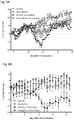
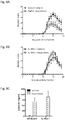
- risperidone was given in the drinking water at a calculated dose of 1 or 3 mg/kg/day. More specifically, C57BL/6 mice were administered this risperidone formulation starting from one day before immunization to induce EAE ( FIG. 1A-E ). The results indicate that this treatment shows significantly reduced disease. The reduction in disease is reproducible and leads to a stable reduction in average disease score during the chronic stage. Interestingly, risperidone treatment at 3 mg/kg/day is more effective in this model compared to 1 mg/kg/day. These doses had no detrimental effects on the mice (either immunized or unimmunized mice) aside from slight weight gain as has been reported by Pajonk, 2004.
- mice treated daily with doses up to 10 mg/kg/day for 18 months showed no toxicity Pajonk, 2004. Moreover, that study was unable to identify a maximum tolerated dose in mice suggesting that risperidone has a large therapeutic window.
- clozapine was administered to C57BL/6 mice in the drinking water at a calculated dose of 15 or 30 mg/kg/day starting from one day before immunization to induce EAE.
- the results indicate that this treatment shows significantly reduced disease ( Fig. 2A ).
- clozapine treatment at 30 mg/kg/day is more effective in this model compared to 15 mg/kg/day.
- the reduction in disease is reproducible and leads to a stable reduction in average disease score during the chronic stage. This reduction is similar to that achieved with risperidone at 3 mg/kg/day ( Fig. 2B ).
- mice For drugs to be practical in treating multiple sclerosis, they must be effective at reducing on-going disease.
- risperidone can reduce disease severity after the onset of disease and/or enhance neuronal repair, one would determine if treating C57BL/6 mice with risperidone just after the onset of disease or during the chronic stage of EAE is effective. Treatment for mice treated after the onset of disease can begin on the day that they have a score of > 1.0 (loss of tail tonicity).
- this time period is between 13-20 days post immunization with myelin oligodendrocyte glycoprotein (50 ⁇ g/mouse) in complete Freund's adjuvant and injected i.p with pertussis toxin (200 ng/mouse) on days 0 and 2.
- Treatment during the "chronic" stage may begin 30 days post immunization with myelin oligodendrocyte glycoprotein.
- the optimal dose of risperidone may be used as determined by the experiments described above.
- the C57BL/6 EAE mouse model can be used, which is thought to represent a progressive form of MS as reported by Steinman, 1999. This model is well established and has the added benefit of having many different immunological reagents available for use in the C57BL/6 system.
- Cytokine production in response to myelin oligodendrocyte glycoprotein antigen (MOG) can be assessed by cytokine bead assay, which measures 10 cytokines simultaneously, or ELISA, and proliferation can be measured by 3 H thymidine uptake.
- cytokine bead assay which measures 10 cytokines simultaneously, or ELISA
- proliferation can be measured by 3 H thymidine uptake.
- Cellular profiles in the spleen and lymph node cells can be determined by flow cytometric analysis and can include markers for helper T cells, T regulatory cells, and macrophages.
- H&E stained sections can allow for the determination of lesion number, size and location whereas the Luxol Fast Blue will reveal the level of demyelination in untreated and treated immunized mice at various times after immunization.
- these methods can be used to compare myelination at peak disease (16 days post infection) and during the chronic stage (30+ days post infection).
- At least two approaches may be used to provide insight into mechanisms of action of risperidone in the EAE model.
- the studies demonstrate that risperidone enhances or expands the suppressive effects of T regulatory cells.
- T regulatory cells can be neutralized by anti-CD25 antibody.
- a method of neutralizing T regulatory cells with anti-CD25 antibody has been reported by Quinn et al., 2006. Accordingly, to confirm that disease reduction is mediated by T regulatory cells, neutralizing their activity will abolish the protective drug effect.
- the other approach that may be used to provide insight into the mechanisms of action of risperidone in the EAE model may reveal that the initial activation of self-reactive T cells is altered by risperidone.
- CD4 T cells from untreated or treated immunized mice are adoptively transferred to naive animals and the induction of disease assessed. This method has been reported by Kuchroo et al., 1992. If T cells from untreated animals but not drug-treated animals induce EAE, then it is likely that risperidone is altering T cell priming but not necessarily the later stages of disease (e.g. CNS infiltration and damage). Overall, these two approaches can be used to determine if helper T cells or Tregs are involved.
- risperidone The direct cellular effects of risperidone (comparative) can be determined by assessing how this drug alters cellular responses after in vitro culture and stimulation of primary macrophages and microglia as risperidone is thought to alter activation of these cells. Identification of how risperidone alters pro-inflammatory and/or anti-inflammatory immune responses is necessary. This can be achieved by isolating and culturing primary bone marrow-derived macrophages or microglia as described by Tierney et al., 2008 and Saura et al., 2003. Briefly, after overnight activation in the presence or absence of IFN- ⁇ (200 U/ml), macrophages and microglia are cultured with pro-inflammatory products (e.g.
- lipopolysaccharide or anti-inflammatory products (e.g. IL-4) without risperidone or in increasing doses of risperidone (1-100 ⁇ g/ml).
- Glatiramer acetate 100 ⁇ g/ml can be used as a positive control as it has been shown to reduce pro-inflammatory (i.e. IL-12) cytokine production by LPS-stimulated macrophages (La Flamme, unpublished results).
- culture supernatants will be collected for analysis of cytokine production (esp. IL-12, TNF- ⁇ , MCP-1, IL-6, and IL-10) as demonstrated by Keating et al., 2009. Changes in the expression of activation markers (esp. MHC class II, CD40, CD80, CD86, and PD-L1) are also determined on macrophages and microglia by flow cytometry as described by Tierney et al., 2008.
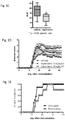
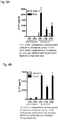
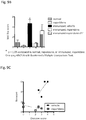
- risperidone (comparatiave) or clozapine treatment does not result in overall loss of immune cells in the spleen during peak disease (day 21) ( Fig. 3A ). Similar overall numbers of immune cells are present after risperidone or clozapine treatment of unimmunized and immunized mice compared to vehicle treated controls. Studies further indicate that risperidone does however reduce the number of neutrophils (Gr1+ cells) in the spleen during the chronic stage of disease ( FIG. 3B ). Risperidone does not alter the number of helper T cells (CD4+CD25-) in the spleen during the chronic stage of disease ( Fig. 3C ). However, risperidone does enhance in the number of regulatory T cells (CD4+CD25+ Treg) in the spleen during this stage of disease ( FIG. 3D ).
- mice were treated with either risperidone (comparative) or clozapine, the effects are seen throughout the brain as assessed in the cerebellum, brain stem, hippocampus, and olfactory bulb, although the effects are most marked in the cerebellum.
- Bone marrow derived macrophages were administered 20 ⁇ g/ml risperidone or 10 ⁇ g/ml clozapine in vitro in the presence or absence of LPS. These treated macrophages were fully viable following treatment ( FIG. 10A ).
- the risperidone (comparative) or clozapine treated macrophages were observed to produce less of the pro-inflammatory mediators IL-12 and NO in response to LPS than vehicle-treated macrophages ( FIG. 10B ).
- the risperidone treated macrophages were observed to produce more of the anti-inflammatory cytokine IL-10 in response to LPS than vehicle-treated macrophages ( FIG. 10C-D ).
- Splenic macrophages show reduced MHC class II expression in risperidone-treated (comparative), immunized mice compared to vehicle-treated immunized mice during peak disease suggesting that splenic macrophages from risperidone-treated mice are less activated during EAE than after vehicle-treatment ( FIG. 11A ). Additionally, splenic macrophages show reduced CD40 expression in risperidone-treated, immunized mice compared to vehicle-treated immunized mice during peak disease suggesting that splenic macrophages from risperidone-treated mice are less activated during EAE than after vehicle-treatment ( FIG. 11B ).
- CD40-expressing splenic macrophages at peak disease is not reduced by risperidone treatment during EAE supporting the idea that risperidone reduces activation but does not lead to cell death/depletion ( FIG. 11C ).
Landscapes
- Health & Medical Sciences (AREA)
- Medicinal Chemistry (AREA)
- Veterinary Medicine (AREA)
- Public Health (AREA)
- General Health & Medical Sciences (AREA)
- Animal Behavior & Ethology (AREA)
- Life Sciences & Earth Sciences (AREA)
- Chemical & Material Sciences (AREA)
- Pharmacology & Pharmacy (AREA)
- Epidemiology (AREA)
- Neurosurgery (AREA)
- Neurology (AREA)
- Engineering & Computer Science (AREA)
- Bioinformatics & Cheminformatics (AREA)
- Biomedical Technology (AREA)
- Chemical Kinetics & Catalysis (AREA)
- General Chemical & Material Sciences (AREA)
- Organic Chemistry (AREA)
- Nuclear Medicine, Radiotherapy & Molecular Imaging (AREA)
- Psychiatry (AREA)
- Hospice & Palliative Care (AREA)
- Pharmaceuticals Containing Other Organic And Inorganic Compounds (AREA)
- Medicines That Contain Protein Lipid Enzymes And Other Medicines (AREA)
- Medicinal Preparation (AREA)
Description
- The present disclosure is directed to pharmaceutical formulations for use in the treatment of at least one symptom of multiple sclerosis using the antipsychotic drug clozapine.
- Multiple sclerosis (abbreviated MS, also known as disseminated sclerosis or encephalomyelitis disseminata) is a disease in which the fatty myelin sheaths around the axons of the brain and spinal cord are damaged, leading to demyelination and scarring as well as a broad spectrum of signs and symptoms. Onset of MS usually occurs in young adults, and it is more common in females. Prevalence ranges between 2 and 150 per 100,000.
- Multiple sclerosis is known for affecting the ability of nerve cells in the brain and spinal cord to communicate with each other. Typically, nerve cells communicate by sending electrical signals called action potentials down long fibers called axons, which are wrapped in an insulating substance called myelin. An autoimmune reaction in MS is thought to result in loss of myelin function. When myelin is lost, the axons can no longer effectively conduct signals. The name multiple sclerosis refers to scars (scleroses-better known as plaques or lesions) in the white matter of the brain and spinal cord, which is mainly composed of myelin. Although much is known about the mechanisms involved in the disease process, the cause remains unknown.
- A person with MS can suffer almost any neurological symptom or sign, including changes in sensation such as loss of sensitivity or tingling, pricking or numbness (hypoesthesia and paraesthesia), muscle weakness, clonus, muscle spasms, or difficulty in moving; difficulties with coordination and balance (ataxia); problems in speech (dysarthria) or swallowing (dysphagia), visual problems (nystagmus, optic neuritis including phosphenes, or diplopia), fatigue, acute or chronic pain, and bladder and bowel difficulties.
- It is theorized that multiple sclerosis may be caused by genetics, infections or environmental factors. Genetically speaking, MS is not considered a hereditary disease, however, a number of genetic variations have been shown to increase the risk of developing the disease. The risk of acquiring MS is higher in relatives of a person with the disease than in the general population. The disease has an overall familial recurrence rate of 20%. Certain genes have been linked with multiple sclerosis. Differences in the human leukocyte antigen (HLA) system-a group of genes in chromosome 6 that serves as the major histocompatibility complex (MHC) in humans appear to increase the probability acquiring multiple sclerosis. The most consistent finding is the association between multiple sclerosis and alleles of the MHC defined as DR15 and DQ6.
- The acquisition of multiple sclerosis may include environmental factors. For example, multiple sclerosis appears to be more common with decreased sunlight exposure as hypothesized in a study by Marrie, Lancet Neurol., 3:709-718, 2004. Additionally, evidence for viruses as a cause includes the presence of oligoclonal bands in the brain and cerebrospinal fluid of most patients, the association of several viruses with human demyelination encephalomyelitis and the induction of demyelination in animals through viral infection. Ewing and Bernard, Immunol. Cell Biol., 76:47-54, 1998 have demonstrated that a mouse model of multiple sclerosis, known as experimental autoimmune encephalomyelitis has proven to be vital in understanding the pathogenesis of multiple sclerosis and in testing the efficacy of currently available MS treatments.
- Multiple sclerosis can present as almost any neurological symptom and often progresses to physical and cognitive disability. MS may take several forms, with new symptoms occurring either in discrete attacks (relapsing forms) or slowly accumulating over time (progressive forms). Between attacks, symptoms may go away completely, but permanent neurological problems often occur, especially as the disease advances.
- Multiple sclerosis currently has no known cure. However, there are some treatment options available. Typically treatments attempt to return function after an attack, prevent new attacks, and prevent disability. Unfortunately many MS medications can have adverse effects or can be poorly tolerated. The prognosis is difficult to predict; it depends on the subtype of the disease, the individual patient's disease characteristics, the initial symptoms and the degree of disability the person experiences as time advances.
- Although there is no known cure for multiple sclerosis, several therapies have proven helpful. During symptomatic attacks, administration of high doses of intravenous corticosteroids, such as methylprednisolone, is the routine therapy for acute relapses. Although generally effective in the short term for relieving symptoms, corticosteroid treatments do not appear to have a significant impact on long-term recovery. Currently, five disease-modifying treatments have been approved by regulatory agencies of different countries for MS. Interferon beta-1a (trade names Avonex, CinnoVex, ReciGen and Rebif) and interferon beta-1b (U.S. trade name Betaseron, in Europe and Japan Betaferon). A third medication is glatiramer acetate (Copaxone), a non-interferon, non-steroidal immunomodulator. A fourth medication, mitoxantrone, is an immunosuppressant also used in cancer chemotherapy. The fifth is natalizumab (marketed as Tysabri). The interferons and glatiramer acetate are delivered by frequent injections, varying from once-per-day for glatiramer acetate to once-per-week (but intra-muscular) for Avonex. Natalizumab and mitoxantrone are given by IV infusion at monthly intervals. Thus, more available treatment options are desirable.
- The present disclosure is directed to the use of clozapine, a drug with an affinity for both serotonergic 5-HT2 and dopaminergic D2 receptors, in pharmaceutical formulations for use in reducing at least one symptom of multiple sclerosis, wherein the dose of clozapine is in the range of 1 mg/kg/body to 5 mg/kg/body.
- In certain instances, the drug may be used to treat a subject, which may be a human subject or a mammal subject diagnosed with multiple sclerosis or a symptom or symptoms of multiple sclerosis.
- In certain instances, the drug may be used on a subject diagnosed with multiple sclerosis or exhibiting one or more symptoms of multiple sclerosis.
- In certain embodiments, the formulation may also include risperidone and/or paliperidone.
- In certain embodiments, symptoms of multiple sclerosis include one or more of the following: incontinence, loss of memory, paralysis, loss of coordination, fatigue, pain, optic neuritis, spasticity, transverse myelitis, tremor or a combination thereof.
- In certain embodiments the drug or drugs are formulated in a pharmaceutically acceptable formulation.
- In certain embodiments the drug or drugs are administered to the subject orally, epidurally, transdermally, subcutaneously, intravenously, intramuscularly, intrathecally, intraperitoneally or via inhalation.
- The foregoing and other objects, features and advantages of the present disclosure will become more readily apparent from the following detailed description of exemplary embodiments as disclosed herein.
- The following figures form part of the present specification and are included to further demonstrate certain aspects of the present disclosure. The disclosure may be better understood by reference to one or more of the figures in combination with the detailed description of specific embodiments presented herein. Embodiments of the present disclosure are described, by way of example only, with reference to the attached figures, wherein:
-
FIG. 1A illustrates a comparative exemplary treatment of C57BL/6 mice with risperidone (administered in drinking water; 3 mg/kg/day) following immunization to induce EAE with MOG (myelin oligodendrocyte glycoprotein) peptide in complete Freund's adjuvant. Disease score is based on the progressive ascending paralysis that characterizes EAE in this animal model where 0 = normal and 5 = complete body paralysis (i.e. moribund). -
FIG. 1B illustrates a comparative exemplary treatment of C57BL/6 mice with risperidone (administered in drinking water; 3 mg/kg/day) following immunization to induce EAE. The data is from 4 separate and independent experiments. -
FIG. 1C illustrates a comparative exemplary reduction in the "area under the curve" (AUC), which is an indication of the reduction in total disease burden through administration of risperidone. AUC was measured from days 0-26 and the results are from 4 separate and independent experiments. -
FIG. 1D illustrates a comparative exemplary dose-response with 3 mg/kg/day having a significant protective effect (p < 0.0001 by 2-way ANOVA). -
FIG. 1E illustrates a comparative exemplary incidence graph. -
FIG. 2A illustrates an exemplary dose-dependent reduction in disease severity through administration of clozapine (administered in drinking water; 15 or 30 mg/kg/day) in C57BL/6 mice immunized to induce EAE. -
FIG. 2B illustrates an exemplary reduction in AUC through administration of clozapine. -
FIG. 3A illustrates that neither risperidone (comparative) nor clozapine cause a reduction in total splenocyte numbers (i.e. do not cause leukocyte death) in unimmunized or immunized C57BL/6 mice treated with risperidone (3 mg/kg/day) or clozapine (30 mg/kg/day). -
FIG. 3B illustrates that risperidone (comparative) alters the neutrophil profile of lymphoid tissue in C57BL/6mice 40 days after immunization with MOG peptide antigen. -
FIG. 3C illustrates that risperidone (comparative) does not alter the CD4 helper T cell profile of lymphoid tissue in C57BL/6mice 40 days after immunization with MOG peptide antigen. -
FIG. 3D illustrates that risperidone (comparative) alters the splenic T regulatory cell profile of lymphoid tissue in C57BL/6mice 40 days after immunization with MOG peptide antigen. -
FIG. 4A illustrates exemplary antigen specific IL-17 production (pg/ml) in C57BL/6 mice, which were treated with risperidone (comparative), clozapine, or vehicle alone, and immunized to induce EAE 21 days earlier. Shown are the mean and standard error of the mean (n=5 mice per group). -
FIG. 4B illustrates exemplary polyclonal IL-17 production (pg/ml) in C57BL/6 mice, which were treated with risperidone (comparative), clozapine, or vehicle alone, and immunized to induce EAE 21 days earlier. Shown are the mean and standard error of the mean (n=5 mice per group). -
FIG. 4C illustrates exemplary antigen specific interferon γ production (pg/ml) in C57BL/6 mice, which were treated with risperidone (comparative), clozapine, or vehicle alone, and immunized to induce EAE 21 days earlier. Shown are the mean and standard error of the mean (n=5 mice per group). -
FIG. 4D illustrates exemplary polyclonal interferon γ production (pg/ml) in C57BL/6 mice, which were treated with risperidone (comparative), clozapine, or vehicle alone, and immunized to induce EAE 21 days earlier. Shown are the mean and standard error of the mean (n=5 mice per group). -
FIG. 4E illustrates exemplary antigen specific IL-10 production (pg/ml) in C57BL/6 mice, which were treated with risperidone (comparative), clozapine, or vehicle alone, and immunized to induce EAE 21 days earlier. Shown are the mean and standard error of the mean (n=5 mice per group). -
FIG. 4F illustrates exemplary polyclonal IL-10 production (pg/ml) in C57BL/6 mice, which were treated with risperidone (comparative), clozapine, or vehicle alone, and immunized to induce EAE 21 days earlier. Shown are the mean and standard error of the mean (n=5 mice per group). -
FIG. 5A illustrates comparative exemplary antigen specific (L-17 production (pg/ml) in C57BL/6 mice, which were treated with risperidone or vehicle alone, and immunized to induceEAE 40 days earlier. Shown are the mean and standard error of the mean (n=5-10 mice per group). -
FIG. 5B illustrates comparative exemplary antigen specific interferon γ production (pg/ml) in C57BL/6 mice, which were treated with risperidone or vehicle alone, and immunized to induceEAE 40 days earlier. Shown are the mean and standard error of the mean (n=5-10 mice per group). -
FIG. 5C illustrates comparative exemplary antigen specific IL-10 production (pg/ml) in C57BL/6 mice, which were treated with risperidone or vehicle alone, and immunized to induceEAE 40 days earlier. Shown are the mean and standard error of the mean (n=5-10 mice per group). -
FIG. 5D illustrates comparative exemplary T cell proliferation in counts per minute in immunized and normal C57BL/6 mice, which were treated with risperidone or vehicle alone. Shown are the mean and standard error of the mean (n=5-10 mice per group). -
FIG. 6A illustrates reduced weight lost in risperidone-treated mice (comparative) after immunization, even when sick with EAE. -
FIG. 6B illustrates reduced weight lost in clozapine-treated mice after immunization, even when sick with EAE. -
FIG. 7A illustrates that treatment of normal and immunized mice with risperidone (comparative) but not clozapine leads to hyperprolactinemia. -
FIG. 7B illustrates that the level of prolactin in the serum does not correlate to EAE disease score in risperidone (comparative) or clozapine treated or vehicle treated mice. -
FIG. 8A illustrates treatment of BALB/c mice with risperidone (comparative) following immunization to induce EAE with PLP (proteolipid protein) peptide in complete Freund's adjuvant. This model is more resistant to EAE but develops brain lesions more similar to MS patients than the C57BL/6 model. Shown are the disease scores of sick mice only (n = 8/ group) combined from 2 independent experiments; there is no difference in % incidence (73% for each group). -
FIG. 8B illustrates that in the absence of IL-4Rα, risperidone (comparative) is not effective at reducing disease in BALB/c mice suggesting that this receptor which is involved in Th2 response is essential for risperidone-mediated protection. Shown are the disease scores of sick mice only (n = 8-9/ group) combined from 2 independent experiments; there is no difference in % incidence. -
FIG. 8C illustrates that although risperidone (comparative) does not protect IL-4Rα-deficient BALB/c mice, the plasma hyperprolactinemia is similar to WT BALB/c. -
FIG. 9A illustrates comparative exemplary Iba-1 expression on microglia in the cerebellum of mice. Shown are images from the cerebellum of unimmunized or immunized mice that have been treated with risperidone or vehicle. Tissue samples were taken at peak disease (15 days post immunization). Shown are the scores for microglia reactivity (Iba score) and disease. -
FIG. 9B illustrates that risperidone (comparative) reduces microglial reactivity (measured by Iba-1 expression) in the cerebellum of immunized mice. One group (risperidone d11) was immunized but only received risperidone treatment starting at day 11 (i.e. after disease onset). Scores for Iba-1 reactivity were assessed blinded and derived from a combined score for Iba intensity (0-3) and # Iba+ foci (0-3). -
FIG. 9C illustrates that microglial reactivity in the cerebellum (i.e. Iba score) correlates to disease score in untreated but not risperidone-treated (comparative), immunized mice. -
FIG. 9D illustrates that risperidone (comparative) reduces microglial reactivity (measured by Iba-1 expression) in the brains of immunized mice. Scores for Iba-1 reactivity were assessed blinded and derived from a combined score (0-6) for Iba intensity (0-3) and number of Iba+ foci (0-3). Scores for the following brain regions were combined: cerebellum, brain stem, hippocampus, and olfactory bulb (0-24). -
FIG. 9E illustrates that microglial reactivity (i.e. Iba-1 score) throughout the brain (cerebellum, hippocampus, brain stem, and olfactory bulb) correlates to disease score in untreated and in risperidone-treated (comparative), immunized mice although the Iba and disease scores are reduced in the risperidone-treated mice. -
FIG. 9F illustrates that clozapine reduces microglial reactivity (measured by Iba-1 expression) in the brains of immunized mice. Scores for Iba-1 reactivity in the cerebellum were assessed blinded and derived from a combined score (0-6) for Iba intensity (0-3) and number of Iba+ foci (0-3). -
FIG. 10A illustrates that exemplary doses of 20 µg/ml risperidone (comparative) or 10 µg/ml clozapine do not alter bone-marrow-derived macrophage viability even in the presence of the microbial product lipopolysaccharide (LPS) as measured by MTT dye reduction assay. -
FIG. 10B illustrates that when bone marrow-derived macrophages are incubated with LPS to induce pro-inflammatory cytokine secretion, the addition of 20 µg/ml risperidone (comparative) or 10 µg/ml clozapine reduces IL-12 production. -
FIG. 10C illustrates that when bone marrow-derived macrophages are incubated with LPS to induce pro-inflammatory cytokine secretion, the addition of 20 µg/ml risperidone (comparative) or 10 µg/ml clozapine reduces NO production. -
FIG. 10D illustrates that when bone marrow-derived macrophages are incubated with LPS to induce pro-inflammatory cytokine secretion, the addition of risperidone (comparative) enhances IL-10 production. -
FIG. 11A illustrates that both risperidone (comparative) and clozapine cause a reduction in MHC class II expression (change in geometric mean fluorescence intensity) on splenic macrophages (F4/80+ cells) in immunized C57BL/6 mice treated with risperidone (3 mg/kg/day) or clozapine (30 mg/kg/day) compared to immunized, vehicle-treated mice and assessed by flow cytometric analysis during peak disease. -
FIG. 11B illustrates that risperidone (comparative) causes a reduction in CD40 expression (change in geometric mean fluorescence intensity) on splenic macrophages (F4/80+ cells) in immunized C57BL/6 mice treated with risperidone (3 mg/kg/day) compared to vehicle-treated, immunized mice and assessed by flow cytometric analysis during peak disease. -
FIG. 11C illustrates that risperidone (comparative) does not alter the number of CD40+ splenic macrophages expression (expressed as % of total splenic F4/80+ cells) in immunized C57BL/6 mice treated with risperidone (3 mg/kg/day) compared to vehicle-treated, immunized mice and assessed by flow cytometric analysis during peak disease. - It will be appreciated that for simplicity and clarity of illustration, where considered appropriate, reference numerals may be repeated among the figures to indicate corresponding or analogous elements. In addition, numerous specific details are set forth in order to provide a thorough understanding of the example embodiments described herein. However, it will be understood by those of ordinary skill in the art that the example embodiments described herein may be practiced without these specific details. In other instances, methods, procedures and components have not been described in detail so as not to obscure the embodiments described herein.
- The present disclosure is directed to pharmaceutical formulations for use in the treatment of at least one symptom of multiple sclerosis, wherein the formulation comprises the drug clozapine and the dose of clozapine is in the range of 1 mg/kg/body to 5 mg/kg/body.
- In examplary embodiments, a subject in need of treatment, such as a mammal, and in specific embodiments a human, is administered the pharmaceutical formulation. In such embodiments, the pharmaceutical formulation may also include risperidone and/or paliperidone.
- In specific embodiments, the subject in need of treatment is a subject exhibiting one or more signs of multiple sclerosis. In such embodiments, symptoms may include one or more of the following: 1) changes in sensation such as loss of sensitivity or tingling, 2) pricking or numbness (hypoesthesia and paraesthesia), 3) muscle weakness, clonus, muscle spasms, or difficulty in moving; 4) difficulties with coordination and balance (ataxia); 5) problems in speech (dysarthria) or swallowing (dysphagia), 6) visual problems (nystagmus, optic neuritis including phosphenes, or diplopia), 7) fatigue, acute or chronic pain, 8) bladder and bowel difficulties, and 9) cognitive impairment.
- In certain embodiments, a subject, such as a mammal or a human may be first assessed for a symptom associated with multiple sclerosis and then treated with the pharmaceutical formulation. In certain further embodiments, the drug is administered in combination with other drugs. For example, risperidone and clozapine may be administered or risperidone, paliperidone and clozapine may be administered or clozapine and paliperidone may be administered. In exemplary embodiments wherein more than one drug is administered to a subject, the drugs may be administered at the same time or at different times. In exemplary embodiments wherein the drugs are administered at the same time, the drugs may be formulated together, such as a capsule or intravenous formulation which contains two or more of the drugs.
- Risperidone is an atypical antipsychotic that has been shown to be effective in the treatment schizophrenia, schizoaffective disorder, bipolar disorder, and irritability in children with autism. Risperidone has also been used off-label for the treatment of anxiety disorders, such as obsessive-compulsive disorder; severe, treatment-resistant depression with or without psychotic features; Tourette syndrome; disruptive behavior disorders in children; and eating disorders. Risperidone has also been reported to successfully treat the symptoms of phencyclidine (PCP) psychosis due to acute intoxication and chronic use. The drug was developed by Janssen-Cilag and first released in 1994. It is sold under the trade name Risperdal in the Netherlands, United States, Canada, Australia, United Kingdom, Portugal, Spain, Turkey, New Zealand and several other countries, Risperdal or Ridal in New Zealand, Sizodon or Riscalin in India, Rispolept in Eastern Europe, and Russia, and Belivon, or Rispen elsewhere.
- Pharmacologically, risperidone has a chemical designation of 3-[2-[4-(6-fluoro-1,2-benzisoxazol-3-yl)-1-piperidinyl]ethyl]-6,7,8,9-tetrahydro-2-methyl-4H-pyrido[1,2-a]pyrimidin-4-one and is a selective monoaminergic antagonist belonging to benzisoxazole derivatives. Risperidone has a high affinity for both serotonergic 5-HT2 and dopaminergic D2 receptors. It also binds to α1-adrenergic receptors and with lower affinity to H1-histaminergic and α2-adrenergic receptors. Risperidone has no affinity for cholinergic receptors. Risperidone contains the functional groups of benzisoxazole and piperidine as part of its molecular structure. As a potent D2 antagonist, risperidone is indicated for use in the treatment of schizophrenia, causing lower adverse effect of motor inhibition and tonic syncope than that of typical neuroleptics cause. It may reduce the extrapyramidal side effects through the action at 5HT and dopamine antagonist, and extend its therapeutic action to negative symptoms and emotional symptoms of schizophrenia. Risperidone reaches peak plasma levels quickly regardless of whether it is administered as a liquid or pill and is metabolized quickly. However, the active metabolite, 9-hydroxy-risperidone, which has similar pharmacodynamics to risperidone, lingers in the body for much longer, and has also been developed as an antipsychotic called paliperidone.
-
U.S. Pat. No. 4,804,663 describes a synthesis of risperidone. Risperidone may be prepared by condensation of the following two intermediates, 6-fluoro-3-(4-piperidinyl)-1, 2-benzisoxazole and 3-(2-chloroethyl)-6,7,8,9-tetrahydro-2-methyl-4H-pyrido[1,2-a]pyrimidin-4-one in dimethylformamide (DMF) in basic conditions (Na2CO3 or K2CO3) with catalytic amount of potassium iodide (KI). - Current dosage forms of risperidone include a tablet in 0.25, 0.5, 1, 2, 3 and 4 mg sizes, as an oral solution (30ml, 1 mg/ml), and as a 12.5 mg, 25 mg, 37.5 mg and 50 mg ampoule Risperdal Consta, which is a depot injection administered once every two weeks. Risperdal Consta is slowly released from the injection site, facilitating use on sanctioned patients who are declining, or consenting patients and who may have disorganized thinking and cannot remember to take their daily doses. Doses range from 12.5 to 50 mg given as an intramuscular injection once every two weeks. It is also available as a wafer known in the United States and Canada as Risperdal M-Tabs and elsewhere as Risperdal Quicklets.
- Clozapine is also classified as an atypical antipsychotic drug because its profile of binding to serotonergic as well as dopamine receptors. In particular, clozapine interferes to a lower extent with the binding of dopamine at D1, D2, D3 and D5 receptors, and has a high affinity for the D4 receptor, but it does not induce catalepsy nor inhibit apomorphine-induced stereotypy in animal models as is seen with 'conventional' neuroleptics. This evidence suggests clozapine is preferentially more active at limbic than at striatal dopamine receptors and may explain the relative freedom of clozapine from extrapyramidal side effects together with strong anticholinergic activity.
- Clozapine (8-chloro-11-(4-methyl-1-piperazinyl-5H-dibenzo[b,e][1,4] diazepine) is a well-known compound having anti-psychotic activity. Details about this compound are disclosed in monograph 2448 of the 13th edition of the Merck Index.
- Clozapine is currently used for the management of schizophrenic patients who fail to respond adequately to or are intolerant of standard drug treatment for schizophrenia. Clozapine is also used in the treatment of Parkinson related psychosis. Clozapine is available as oral tablets or as an oral suspension.
- Controlled release refers to the release of an agent such as a drug from a composition or dosage form in which the agent is released according to a desired profile over an extended period of time. Controlled release profiles include, for example, sustained release, prolonged release, pulsatile release, and delayed release profiles. In contrast to immediate release compositions, controlled release compositions allow delivery of an agent to a subject over an extended period of time according to a predetermined profile. Such release rates can provide therapeutically effective levels of an agent for an extended period of time and thereby provide a longer period of pharmacologic or diagnostic response as compared to conventional rapid release dosage forms. Such longer periods of response provide for many inherent benefits that are not achieved with the corresponding short acting, immediate release preparations. For example, in the treatment of chronic pain, controlled release formulations are often highly preferred over conventional short-acting formulations.
- Controlled release pharmaceutical compositions and dosage forms are designed to improve the delivery profile of agents, such as drugs, medicaments, active agents, diagnostic agents, or any substance to be internally administered to an animal, including humans. A controlled release composition is typically used to improve the effects of administered substances by optimizing the kinetics of delivery, thereby increasing bioavailability, convenience, and patient compliance, as well as minimizing side effects associated with inappropriate immediate release rates, such as a high initial release rate and, if undesired, uneven blood or tissue levels.
- The term bioavailability is used to describe the degree to which a drug becomes available at the site(s) of action after administration. The degree and timing in which an agent such as a drug becomes available to the target site(s) after administration is determined by many factors, including the dosage form and various properties, e.g., dissolution rate of the drug. It is well known that some drug compositions suffer from poor bioavailability because of poor solubility of the active ingredient itself.
- Numerous methods have been developed for enhancing the bioavailability of poorly soluble drugs. Particle size reduction, such as nanoparticulate forms of the agent, is one such method since the dissolution rate of a compound is related to the particle size. Nanoparticulate compositions comprise poorly water-soluble drug or agent particles having an extremely small particle size, i.e., less than one micron. With a decrease in particle size, and a consequent increase in surface area, a composition tends to be rapidly dissolved and absorbed following administration. For certain formulations, this characteristic can be highly desirable, as described, for example, in
U.S. Pat. Nos. 5,145,684 ,5,510,118 ,5,534,270 , and4,826,689 . However, rapid dissolution is contrary to the goal of controlled release. Known controlled release formulations do not present a solution to this problem. - Exemplary controlled release formulations known in the art include specially coated pellets, microparticles, implants, tablets, minitabs, and capsules in which a controlled release of a drug is brought about, for example, through selective breakdown of the coating of the preparation, through release through the coating, through compounding with a special matrix to affect the release of a drug, or through a combination of these techniques. Some controlled release formulations provide for pulsatile release of a single dose of an active compound at predetermined periods after administration.
-
U.S. Pat. No. 5,110,605 to Acharya et al. refers to a calcium polycarbophil-alginate controlled release composition.U.S. Pat. No. 5,215,758 to Krishnamurthy et al. refers to a controlled release suppository composition of sodium alginate and calcium salt.U.S. Pat. No. 5,811,388 to Friend et al. refers to a solid alginate-based formulation including alginate, a water-swellable polymer, and a digestible hydrocarbon derivative for providing controlled release of orally administered compounds.WO 91/13612 U.S. Pat. No. 5,811,425 to Woods et al. refers to injectable depot forms of controlled release drugs made by forming microencapsule matrices of the drug in biodegradable polymers, liposomes, or microemulsions compatible with body tissues.U.S. Pat. No. 5,811,422 to Lam et al. refers to controlled release compositions obtained by coupling a class of drugs to biodegradable polymers, such as polylactic acid, polyglycolic acid, copolymers of polylactic and polyglycolic acid, polyepsilon caprolactone, polyhydroxy butyric acid, etc.U.S. Pat. No. 5,811,404 to De Frees et al. refers to the use of liposomes having prolonged circulation half-lives to provide for the sustained release of drug compositions. - Any suitable method can be used to generate aerosol formulations of the present disclosure. For instance, one method involves heating a composition comprising drugs with affinity for both serotonergic 5-HT2 and dopaminergic receptors such as the D2 receptor to form a vapor, followed by cooling of the vapor such that it condenses to provide a risperidone comprising aerosol (condensation aerosol). The composition is heated in one of four forms: as pure active compound of risperidone, as a mixture of active compound and a pharmaceutically acceptable excipient; as a salt form of the pure active compound; and, as a mixture of active compound salt form and a pharmaceutically acceptable excipient.
- Salt forms of drugs with affinity for both serotonergic 5-HT2 and dopaminergic receptors, such as the D2 receptor may be obtained from the corresponding free base. A variety of pharmaceutically acceptable salts are suitable for aerosolization. Such salts include, but are not limited to the following: hydrochloric acid, hydrobromic acid, acetic acid, maleic acid, formic acid, and fumaric acid salts.
- Pharmaceutically acceptable excipients may be volatile or nonvolatile. Volatile excipients, when heated, are concurrently volatilized, aerosolized and inhaled with the antipsychotic. Classes of such excipients are known in the art and include, without limitation, gaseous, supercritical fluid, liquid and solid solvents. The following is a list of exemplary carriers within the classes: water; terpenes, such as menthol; alcohols, such as ethanol, propylene glycol, glycerol and other similar alcohols; dimethylformamide; dimethylacetamide; wax; supercritical carbon dioxide; dry ice; and mixtures thereof.
- The heating of drugs with affinity for both serotonergic 5-HT2 and dopaminergic receptors, such as the D2 receptor composition can be performed using any suitable method. Exemplary methods by which heat can be generated include the following: passage of current through an electrical resistance element; absorption of electromagnetic radiation, such as microwave or laser light; and, exothermic chemical reactions, such as exothermic salvation, hydration of pyrophoric materials and oxidation of combustible materials.
- Aerosols containing drugs with affinity for both serotonergic 5-HT2 and dopaminergic receptors such as the D2 receptor can be delivered to a mammal using an inhalation device. Where the aerosol is a condensation aerosol, the device has at least three elements: an element for heating an antipsychotic containing composition to form a vapor; an element allowing the vapor to cool, thereby providing a condensation aerosol; and, an element permitting the mammal to inhale the aerosol. Various suitable heating methods are described above. The element that allows cooling is, in it simplest form, an inert passageway linking the heating means to the inhalation means. The element permitting inhalation is an aerosol exit portal that forms a connection between the cooling element and the mammal's respiratory system.
- The dosage amount of drugs with affinity for both serotonergic 5-HT2 and dopaminergic receptors, such as the D2 receptor in aerosol form is generally no greater than twice the standard dose of the drug given orally. A typical dosage of an antipsychotic containing aerosol is either administered as a single inhalation or as a series of inhalations taken within an hour or less (dosage equals sum of inhaled amounts). Where the drug is administered as a series of inhalations, a different amount may be delivered in each inhalation.
- One can determine the appropriate dose of drugs with affinity for both serotonergic 5-HT2 and dopaminergic receptors, such as the D2 receptor containing aerosols to treat multiple sclerosis using methods such as animal experiments and a dose-finding (Phase I/II) clinical trial. One animal experiment involves measuring plasma concentrations of drug in an animal after exposure to the aerosol. Mammals such as dogs or primates are typically used in such studies, since their respiratory systems are similar to that of a human. Initial dose levels for testing in humans is generally less than or equal to the dose in the mammal model that resulted in plasma drug levels associated with a therapeutic effect in humans. Dose escalation in humans is then performed, until either an optimal therapeutic response is obtained or a dose-limiting toxicity is encountered.
- The actual dosage amount of a composition for delivery of drugs which are known to be D2 antagonists and 5HT antagonists such as risperidone, paliperidone or clozapine that is administered to a patient or subject can be determined by physical and physiological factors such as body weight, severity of condition, the type of disease being treated, previous or concurrent therapeutic interventions, idiopathy of the patient and on the route of administration. The practitioner responsible for administration will, in any event, determine the concentration of active ingredient(s) in a composition and appropriate dose(s) for the individual subject.
- In the present invention, pharmaceutical compositions comprise from 1 milligram/kg/body weight to 5 milligram/kg/body weight of clozapine per administration.
- An effective amount of the therapeutic composition is determined based on the intended goal. The term "unit dose" or "dosage" refers to physically discrete units suitable for use in a subject, each unit containing a predetermined-quantity of the therapeutic composition calculated to produce the desired responses discussed above in association with its administration (i.e., the appropriate route and treatment regimen). The quantity to be administered, both according to number of treatments and unit dose, depends on the protection or effect desired.
- Precise amounts of the drugs, each alone or in combination also depend on the judgment of the practitioner and are peculiar to each individual. Factors affecting the dose include the physical and clinical state of the patient, the route of administration, the intended goal of treatment (e.g., alleviation of symptoms versus cure) and the potency, stability and toxicity of the particular therapeutic substance.
- Such treatment may be repeated, for example, every 1, 2, 3, 4, 5, 6, or 7 days, or every 1, 2, 3, 4, and 5 weeks or every 1, 2, 3, 4, 5, 6, 7, 8, 9, 10, 11, or 12 months. These treatments may be of varying dosages as well.
- The following examples are included to demonstrate preferred embodiments of the disclosure. It should be appreciated by those of skill in the art that the techniques disclosed in the examples which follow represent techniques discovered by the inventors to function well in the practice of the disclosure, and thus can be considered to constitute preferred modes for its practice. However, those of skill in the art should, in light of the present disclosure, appreciate that many changes can be made in the specific embodiments which are disclosed and still obtain a like or similar result without departing from the scope of the disclosure, as defined in the appended claims. The following examples are offered by way of illustration and not by way of limitation.
- Previously it was demonstrated that treating C57BL/6 mice with risperidone does not alter the onset or incidence of EAE. However, risperidone shows a dose-dependent reduction in the severity of the disease. This reduction in severity correlates to an increase in T regulatory cells (Tregs) chronically and a decrease in auto-reactive T cell responses during the acute stage.
- Preliminary comparative studies have shown that treating animals daily with risperidone from the time of immunization results in a dose-dependent reduction in the severity of EAE disease. In contrast, drug treatment does not alter the time of onset or the incidence of EAE. Analysis of the cellular profile of mice indicates that immunized mice receiving risperidone have increased numbers of splenic T regulatory cells whereas helper T cells were unaffected during the chronic stage of disease. Additionally, the number of neutrophils in the spleen was significantly reduced which together with the increase in T regulatory cells suggests that alterations in these cellular subsets may contribute to disease protection. Antigen-specific IL-17 and IL-10 but not IFN-γ production was reduced in treated mice during the acute stage suggesting a possible effect on the priming of auto-reactive T cells in these mice. Examples disclosed herein test the prevention of immune-mediated damage caused by immune dysfunction in multiple sclerosis with the use of risperidone.
- In these preliminary comparative studies risperidone was given in the drinking water at a calculated dose of 1 or 3 mg/kg/day. More specifically, C57BL/6 mice were administered this risperidone formulation starting from one day before immunization to induce EAE (
FIG. 1A-E ). The results indicate that this treatment shows significantly reduced disease. The reduction in disease is reproducible and leads to a stable reduction in average disease score during the chronic stage. Interestingly, risperidone treatment at 3 mg/kg/day is more effective in this model compared to 1 mg/kg/day. These doses had no detrimental effects on the mice (either immunized or unimmunized mice) aside from slight weight gain as has been reported by Pajonk, 2004. Previous work has shown that mice treated daily with doses up to 10 mg/kg/day for 18 months showed no toxicity Pajonk, 2004. Moreover, that study was unable to identify a maximum tolerated dose in mice suggesting that risperidone has a large therapeutic window. - In a similar study, clozapine was administered to C57BL/6 mice in the drinking water at a calculated dose of 15 or 30 mg/kg/day starting from one day before immunization to induce EAE. The results indicate that this treatment shows significantly reduced disease (
Fig. 2A ). Interestingly, clozapine treatment at 30 mg/kg/day is more effective in this model compared to 15 mg/kg/day. The reduction in disease is reproducible and leads to a stable reduction in average disease score during the chronic stage. This reduction is similar to that achieved with risperidone at 3 mg/kg/day (Fig. 2B ). - For drugs to be practical in treating multiple sclerosis, they must be effective at reducing on-going disease. In order to determine if risperidone can reduce disease severity after the onset of disease and/or enhance neuronal repair, one would determine if treating C57BL/6 mice with risperidone just after the onset of disease or during the chronic stage of EAE is effective. Treatment for mice treated after the onset of disease can begin on the day that they have a score of > 1.0 (loss of tail tonicity). Commonly this time period is between 13-20 days post immunization with myelin oligodendrocyte glycoprotein (50 µg/mouse) in complete Freund's adjuvant and injected i.p with pertussis toxin (200 ng/mouse) on
days - Identification of the mechanism by which risperidone (comparative) reduces EAE disease can be performed by immunizing and treating C57BL/6 mice with the optimal treatment regimen as determined in Example 1 and the effect of risperidone on immune responses and CNS inflammation can be investigated. The effect of drug treatment on antigen-specific immune responses can be determined at 8 (pre-onset), 16 (peak disease), and 30 (chronic) days post immunization by isolating and culturing draining lymph node (LN) cells and splenocytes from untreated and risperidone-treated, immunized or unimmunized mice. Cytokine production in response to myelin oligodendrocyte glycoprotein antigen (MOG) can be assessed by cytokine bead assay, which measures 10 cytokines simultaneously, or ELISA, and proliferation can be measured by 3H thymidine uptake. Cellular profiles in the spleen and lymph node cells can be determined by flow cytometric analysis and can include markers for helper T cells, T regulatory cells, and macrophages.
- The effects of treatment using risperidone on CNS inflammation and repair/regeneration can allow for a greater understanding of how risperidone treatment reduces CNS disease. For these studies two complementary approaches may be taken. First, a quantitative assessment of CNS infiltration by flow cytometry of CD45+ (i.e. haematopoietic) cells in the spinal cord and brains of treated or untreated mice is performed. This method allows a precise phenotypic analysis on infiltrating cells (i.e. subset markers and activation markers). Second, to determine the location of these cells within the tissue and to determine lesion characteristics (i.e. size, number, location), brain and spinal cords may be fixed in zinc salts or paraformaldehyde and tissue sections stained with haematoxylin & eosin (H&E) or Luxol Fast Blue. The H&E stained sections can allow for the determination of lesion number, size and location whereas the Luxol Fast Blue will reveal the level of demyelination in untreated and treated immunized mice at various times after immunization. In particular, these methods can be used to compare myelination at peak disease (16 days post infection) and during the chronic stage (30+ days post infection).
- At least two approaches may be used to provide insight into mechanisms of action of risperidone in the EAE model. First, the studies demonstrate that risperidone enhances or expands the suppressive effects of T regulatory cells. To confirm, T regulatory cells can be neutralized by anti-CD25 antibody. A method of neutralizing T regulatory cells with anti-CD25 antibody has been reported by Quinn et al., 2006. Accordingly, to confirm that disease reduction is mediated by T regulatory cells, neutralizing their activity will abolish the protective drug effect. The other approach that may be used to provide insight into the mechanisms of action of risperidone in the EAE model may reveal that the initial activation of self-reactive T cells is altered by risperidone. To confirm, CD4 T cells from untreated or treated immunized mice are adoptively transferred to naive animals and the induction of disease assessed. This method has been reported by Kuchroo et al., 1992. If T cells from untreated animals but not drug-treated animals induce EAE, then it is likely that risperidone is altering T cell priming but not necessarily the later stages of disease (e.g. CNS infiltration and damage). Overall, these two approaches can be used to determine if helper T cells or Tregs are involved.
- Further studies regarding weight gain and loss herein demonstrate that the combination of risperidone (comparative) or clozapine treatment promotes weight gain in normal mice, and in mice immunized with MOG (myelin oligodendrocyte glycoprotein) peptide, risperidone or clozapine reduce the weight loss that is commonly associated with EAE (
Fig. 6A-B ). Additionally, treatment with risperidone alone demonstrated high levels of serum prolactin in both immunized and unimmunized mice (Fig. 7A ). This was not observed with clozapine treatment (Fig. 7A ). However, the level of serum prolactin does not correlate to disease severity (i.e. those with a higher level of prolactin do not have reduced disease;Fig. 7B ). - The direct cellular effects of risperidone (comparative) can be determined by assessing how this drug alters cellular responses after in vitro culture and stimulation of primary macrophages and microglia as risperidone is thought to alter activation of these cells. Identification of how risperidone alters pro-inflammatory and/or anti-inflammatory immune responses is necessary. This can be achieved by isolating and culturing primary bone marrow-derived macrophages or microglia as described by Tierney et al., 2008 and Saura et al., 2003. Briefly, after overnight activation in the presence or absence of IFN-γ (200 U/ml), macrophages and microglia are cultured with pro-inflammatory products (e.g. lipopolysaccharide) or anti-inflammatory products (e.g. IL-4) without risperidone or in increasing doses of risperidone (1-100 µg/ml). Glatiramer acetate (100 µg/ml) can be used as a positive control as it has been shown to reduce pro-inflammatory (i.e. IL-12) cytokine production by LPS-stimulated macrophages (La Flamme, unpublished results). At various time points after the addition of stimuli, culture supernatants will be collected for analysis of cytokine production (esp. IL-12, TNF-α, MCP-1, IL-6, and IL-10) as demonstrated by Keating et al., 2009. Changes in the expression of activation markers (esp. MHC class II, CD40, CD80, CD86, and PD-L1) are also determined on macrophages and microglia by flow cytometry as described by Tierney et al., 2008.
- Studies herein indicate that risperidone (comparatiave) or clozapine treatment does not result in overall loss of immune cells in the spleen during peak disease (day 21) (
Fig. 3A ). Similar overall numbers of immune cells are present after risperidone or clozapine treatment of unimmunized and immunized mice compared to vehicle treated controls. Studies further indicate that risperidone does however reduce the number of neutrophils (Gr1+ cells) in the spleen during the chronic stage of disease (FIG. 3B ). Risperidone does not alter the number of helper T cells (CD4+CD25-) in the spleen during the chronic stage of disease (Fig. 3C ). However, risperidone does enhance in the number of regulatory T cells (CD4+CD25+ Treg) in the spleen during this stage of disease (FIG. 3D ). - Studies were performed to assess microglial reactivity via the expression of Iba-1 (
FIG. 9A-F ). The results herein indicate that the expression of Iba-1 is greatly enhanced during EAE in vehicle treated mice. However, this high microglial reactivity is greatly reduced in immunized mice by risperidone (comparative) or clozapine treatment. Treatment with risperidone alone starting at day 11 post-immunization also reduces microglial reactivity onday 15. When mice are treated with either risperidone (comparative) or clozapine, the effects are seen throughout the brain as assessed in the cerebellum, brain stem, hippocampus, and olfactory bulb, although the effects are most marked in the cerebellum. - Studies were conducted herein to evaluate the regulation of macrophage proinflammatory responses in vitro. Bone marrow derived macrophages were administered 20 µg/ml risperidone or 10 µg/ml clozapine in vitro in the presence or absence of LPS. These treated macrophages were fully viable following treatment (
FIG. 10A ). The risperidone (comparative) or clozapine treated macrophages were observed to produce less of the pro-inflammatory mediators IL-12 and NO in response to LPS than vehicle-treated macrophages (FIG. 10B ). However, the risperidone treated macrophages were observed to produce more of the anti-inflammatory cytokine IL-10 in response to LPS than vehicle-treated macrophages (FIG. 10C-D ). - Studies were also conducted herein to evaluate the regulation of macrophage proinflammatory responses in vivo. Splenic macrophages show reduced MHC class II expression in risperidone-treated (comparative), immunized mice compared to vehicle-treated immunized mice during peak disease suggesting that splenic macrophages from risperidone-treated mice are less activated during EAE than after vehicle-treatment (
FIG. 11A ). Additionally, splenic macrophages show reduced CD40 expression in risperidone-treated, immunized mice compared to vehicle-treated immunized mice during peak disease suggesting that splenic macrophages from risperidone-treated mice are less activated during EAE than after vehicle-treatment (FIG. 11B ). Despite expressing lower levels of CD40, the number of CD40-expressing splenic macrophages at peak disease is not reduced by risperidone treatment during EAE supporting the idea that risperidone reduces activation but does not lead to cell death/depletion (FIG. 11C ). - Additional studies were conducted herein on isolated cells treated in vitro and mice treated in vivo with risperidone or with clozapine to evaluate both autoimmune response and general immune response during peak disease at 21 days post immunization (
FIG. 4A-F ) and 40 days post immunization (FIG. 5A-5D ). The findings herein indicate that risperidone and clozapine treatment significantly reduce the production of IL-17 and IL-10 in response to MOG (myelin oligodendrocyte glycoprotein) antigen during peak disease, but treatment with these risperidone and clozapine treatment does not alter the production of IFN-γ. In contrast, when risperidone and clozapine mice were treated with a polyclonal stimulus (ConA), no alteration in the production of IL-10 or INF-γ was observed. Risperidone alone however, does enhance MOG specific IFN-γ production during the chronic stage of the disease, but has no effect on MOG-specific proliferation, IL-10 production, or IL-17 production. - Mice were treated with risperidone (comparative) orally beginning one day before immunization with PLP in complete Freund's adjuvant to induce EAE (n = 11 per group). Both vehicle and risperidone treated, immunized mice had similar incidences and onset of disease, but risperidone treated mice has a significantly reduced disease severity (
Fig. 8A ). BALB/c mice are considered more resistant to EAE but develop brain pathology, which is more similar to that seen in MS patients. - It was discovered that BALB/c mice deficient in IL-4Rα do not experience a reduction in disease symptoms even after risperidone treatment, suggesting IL-4Rα is involved in the reduction of disease by risperidone (
FIG. 8B ). Additionally, both BALB/c and IL-4Rα mice develop hyperprolactinemia after risperidone treatment and the level of prolactin in the serum does not correlate to disease score (FIG. 8C ). - Example embodiments have been described hereinabove regarding compositions for the treatment of multiple sclerosis. Various modifications to and departures from the disclosed example embodiments will occur to those having ordinary skill in the art. The subject matter that is intended to be within the scope of this disclosure is set forth in the appended claims.
Claims (6)
- A pharmaceutical formulation for use in the treatment of at least one symptom of multiple sclerosis, wherein the formulation comprises a drug selected from clozapine, characterised in that the dose of the drug is in the range of 1 mg/kg/body to 5 mg/kg/body.
- A pharmaceutical formulation for use according to claim 1, wherein the pharmaceutical formulation is formulated as an oral formulation, an epidural formulation, a transdermal formulation, a subcutaneous formulation an intravenous formulation, an intramuscular formulation, an intrathecal formulation, an intraperitoneal formulation or an aerosol formulation.
- A pharmaceutical formulation for use according to claim 1, wherein the pharmaceutical formulation further comprises risperidone.
- A pharmaceutical formulation for use according to claim 1, wherein the pharmaceutical formulation further comprises paliperidone.
- A pharmaceutical formulation for use according to claim 1, wherein the pharmaceutical formulation further comprises risperidone and paliperidone.
- The pharmaceutical formulation for use according to claim 1, wherein the multiple sclerosis symptom is selected from the group consisting of incontinence, loss of memory, paralysis, loss of coordination, fatigue, pain, optic neuritis, spasticity, transverse myelitis, tremor or a combination thereof.
Priority Applications (1)
| Application Number | Priority Date | Filing Date | Title |
|---|---|---|---|
| EP17186290.7A EP3263111A1 (en) | 2010-06-30 | 2011-06-28 | Methods and compositions for treatment of multiple sclerosis |
Applications Claiming Priority (2)
| Application Number | Priority Date | Filing Date | Title |
|---|---|---|---|
| US36002010P | 2010-06-30 | 2010-06-30 | |
| PCT/US2011/042244 WO2012012147A2 (en) | 2010-06-30 | 2011-06-28 | Methods and compositions for treatment of multiple sclerosis |
Related Child Applications (2)
| Application Number | Title | Priority Date | Filing Date |
|---|---|---|---|
| EP17186290.7A Division-Into EP3263111A1 (en) | 2010-06-30 | 2011-06-28 | Methods and compositions for treatment of multiple sclerosis |
| EP17186290.7A Division EP3263111A1 (en) | 2010-06-30 | 2011-06-28 | Methods and compositions for treatment of multiple sclerosis |
Publications (3)
| Publication Number | Publication Date |
|---|---|
| EP2588112A2 EP2588112A2 (en) | 2013-05-08 |
| EP2588112A4 EP2588112A4 (en) | 2013-12-11 |
| EP2588112B1 true EP2588112B1 (en) | 2017-09-27 |
Family
ID=45497376
Family Applications (2)
| Application Number | Title | Priority Date | Filing Date |
|---|---|---|---|
| EP11810107.0A Not-in-force EP2588112B1 (en) | 2010-06-30 | 2011-06-28 | Methods and compositions for treatment of multiple sclerosis |
| EP17186290.7A Withdrawn EP3263111A1 (en) | 2010-06-30 | 2011-06-28 | Methods and compositions for treatment of multiple sclerosis |
Family Applications After (1)
| Application Number | Title | Priority Date | Filing Date |
|---|---|---|---|
| EP17186290.7A Withdrawn EP3263111A1 (en) | 2010-06-30 | 2011-06-28 | Methods and compositions for treatment of multiple sclerosis |
Country Status (5)
| Country | Link |
|---|---|
| US (1) | US20130190299A1 (en) |
| EP (2) | EP2588112B1 (en) |
| AU (2) | AU2011280039B2 (en) |
| CA (1) | CA2803006A1 (en) |
| WO (1) | WO2012012147A2 (en) |
Families Citing this family (2)
| Publication number | Priority date | Publication date | Assignee | Title |
|---|---|---|---|---|
| EP3520803A1 (en) * | 2018-01-31 | 2019-08-07 | Zarodex Therapeutics Limited | Novel uses |
| AU2019216380A1 (en) * | 2018-01-31 | 2020-06-25 | Zarodex Therapeutics Limited | Clozapine for the treatment of a immunoglobulin driven B cell disease |
Family Cites Families (19)
| Publication number | Priority date | Publication date | Assignee | Title |
|---|---|---|---|---|
| US4826689A (en) | 1984-05-21 | 1989-05-02 | University Of Rochester | Method for making uniformly sized particles from water-insoluble organic compounds |
| US4804663A (en) | 1985-03-27 | 1989-02-14 | Janssen Pharmaceutica N.V. | 3-piperidinyl-substituted 1,2-benzisoxazoles and 1,2-benzisothiazoles |
| GB9005498D0 (en) | 1990-03-12 | 1990-05-09 | Beecham Group Plc | Composition |
| US5110605A (en) | 1990-08-21 | 1992-05-05 | Oramed, Inc. | Calcium polycarbophil-alginate controlled release composition and method |
| US5145684A (en) | 1991-01-25 | 1992-09-08 | Sterling Drug Inc. | Surface modified drug nanoparticles |
| US5215758A (en) | 1991-09-11 | 1993-06-01 | Euroceltique, S.A. | Controlled release matrix suppository for pharmaceuticals |
| US5610294A (en) | 1991-10-11 | 1997-03-11 | The Du Pont Merck Pharmaceutical Company | Substituted cyclic carbonyls and derivatives thereof useful as retroviral protease inhibitors |
| US5811404A (en) | 1993-05-14 | 1998-09-22 | Cytel Corporation | Sialyl Lex analogues as inhibitors of cellular adhesion |
| US5534270A (en) | 1995-02-09 | 1996-07-09 | Nanosystems Llc | Method of preparing stable drug nanoparticles |
| US5510118A (en) | 1995-02-14 | 1996-04-23 | Nanosystems Llc | Process for preparing therapeutic compositions containing nanoparticles |
| US5811388A (en) | 1995-06-07 | 1998-09-22 | Cibus Pharmaceutical, Inc. | Delivery of drugs to the lower GI tract |
| US5811425A (en) | 1997-03-04 | 1998-09-22 | Abbott Laboratories | Heterocyclic compounds as COX-2 inhibitors |
| CA2514117A1 (en) * | 2003-01-24 | 2004-08-12 | Elan Pharmaceuticals, Inc. | Composition for and treatment of demyelinating diseases and paralysis by administration of remyelinating agents |
| CA2553254C (en) * | 2004-01-12 | 2013-12-17 | The Trustees Of The University Of Pennsylvania | Long-term delivery formulations and methods of use thereof |
| US8053627B2 (en) * | 2005-06-14 | 2011-11-08 | University Of Chicago | Methods for treating demyelination disorders |
| WO2008052354A1 (en) * | 2006-11-03 | 2008-05-08 | University Of Saskatchewan | Method of treating demyelination diseases |
| US7645750B2 (en) * | 2006-12-13 | 2010-01-12 | Yung Shin Pharmaceutical Ind. Co., Ltd. | Method of treating symptoms of hormonal variations |
| US20080286234A1 (en) * | 2007-05-15 | 2008-11-20 | Eyink Daniel A | Method for treating demyelinating diseases |
| US20100119624A1 (en) * | 2008-09-17 | 2010-05-13 | Auspex Pharmaceuticals, Inc. | Benzisoxazole modulators of d2 receptor and/or 5-ht2a receptor |
-
2011
- 2011-06-28 EP EP11810107.0A patent/EP2588112B1/en not_active Not-in-force
- 2011-06-28 AU AU2011280039A patent/AU2011280039B2/en not_active Ceased
- 2011-06-28 WO PCT/US2011/042244 patent/WO2012012147A2/en not_active Ceased
- 2011-06-28 CA CA2803006A patent/CA2803006A1/en not_active Abandoned
- 2011-06-28 EP EP17186290.7A patent/EP3263111A1/en not_active Withdrawn
- 2011-06-28 US US13/807,685 patent/US20130190299A1/en not_active Abandoned
-
2015
- 2015-06-05 AU AU2015203211A patent/AU2015203211B2/en not_active Ceased
Also Published As
| Publication number | Publication date |
|---|---|
| AU2011280039B2 (en) | 2014-08-07 |
| AU2011280039A1 (en) | 2013-01-10 |
| WO2012012147A3 (en) | 2012-04-05 |
| AU2015203211B2 (en) | 2017-07-20 |
| AU2015203211A1 (en) | 2015-07-09 |
| WO2012012147A2 (en) | 2012-01-26 |
| US20130190299A1 (en) | 2013-07-25 |
| CA2803006A1 (en) | 2012-01-26 |
| EP2588112A2 (en) | 2013-05-08 |
| EP3263111A1 (en) | 2018-01-03 |
| EP2588112A4 (en) | 2013-12-11 |
Similar Documents
| Publication | Publication Date | Title |
|---|---|---|
| US12496300B2 (en) | Methods of treating acute depression and anxiety | |
| TWI887465B (en) | Advantageous therapies for disorders mediated by ikaros or aiolos | |
| US20220088029A1 (en) | Combination therapy of tetracyclic quinolone analogs for treating cancer | |
| US20170143726A1 (en) | Adenosine receptor agonists and antagonists to modulate t cell responses | |
| EP2991637A1 (en) | Fenfluramine for use in the treatment of dravet syndrome | |
| CN110402163A (en) | Use the combination therapy to treat gastric cancer for including liposome Irinotecan, oxaliplatin, 5 FU 5 fluorouracil (and formyl tetrahydrofolic acid) | |
| CN106132415A (en) | Aripiprazole formulations with increased injection speed | |
| US9566273B2 (en) | Nicotinic attenuation of CNS inflammation and autoimmunity | |
| KR20240105382A (en) | Novel uses of quinazolinone compounds for cancer treatment | |
| AU2015203211B2 (en) | Methods and Compositions for Treatment of Multiple Sclerosis | |
| CN104800196A (en) | Paediatric compositions for treating1 multiple sclerosis | |
| WO2021154976A1 (en) | Methods of treating brain cancer with panobinostat | |
| TWI850196B (en) | Compositions and methods for treating rheumatoid arthritis | |
| JP2023536944A (en) | Use of BTK inhibitors in treating disease | |
| US9867831B2 (en) | Combination treatment of acute myeloid leukemia and myelodysplastic syndrome | |
| WO2015011235A1 (en) | Volasertib in combination with azacitidine for the treatment of acute myeloid leukemia and myelodysplastic syndrome ii | |
| RU2786570C2 (en) | Combination therapy with tetracyclic quinolone analogues for treatment of cancer | |
| US20130202701A1 (en) | (1r,4r)-6'-Fluoro-(N-methyl- or N,N-dimethyl-)-4-phenyl-4',9'-dihydro-3'H-spiro-[cyclohexane-1,1'-pyrano[3,4,b]indol]-4-amine for Treating Fibromyalgia and Chronic Fatigue Syndrome | |
| HK40015579A (en) | Aripiprazole formulations having increased injection speeds | |
| Class et al. | Patent application title: TREATMENT OF MULTIPLE SCLEROSIS WITH MASITINIB Inventors: Alain Moussy (Paris, FR) Alain Moussy (Paris, FR) Jean-Pierre Kinet (Lexington, MA, US) Jean-Pierre Kinet (Lexington, MA, US) Assignees: AB SCIENCE | |
| HK1091725A1 (en) | Aripiprazole injectable suspension | |
| HK1091725B (en) | Aripiprazole injectable suspension |
Legal Events
| Date | Code | Title | Description |
|---|---|---|---|
| PUAI | Public reference made under article 153(3) epc to a published international application that has entered the european phase |
Free format text: ORIGINAL CODE: 0009012 |
|
| 17P | Request for examination filed |
Effective date: 20121221 |
|
| AK | Designated contracting states |
Kind code of ref document: A2 Designated state(s): AL AT BE BG CH CY CZ DE DK EE ES FI FR GB GR HR HU IE IS IT LI LT LU LV MC MK MT NL NO PL PT RO RS SE SI SK SM TR |
|
| DAX | Request for extension of the european patent (deleted) | ||
| REG | Reference to a national code |
Ref country code: DE Ref legal event code: R079 Ref document number: 602011041986 Country of ref document: DE Free format text: PREVIOUS MAIN CLASS: A61K0031519000 Ipc: A61K0031551300 |
|
| RIC1 | Information provided on ipc code assigned before grant |
Ipc: A61K 31/551 20060101ALI20131031BHEP Ipc: A61K 31/4178 20060101ALI20131031BHEP Ipc: A61K 31/519 20060101ALI20131031BHEP Ipc: A61P 25/28 20060101ALI20131031BHEP Ipc: A61K 31/5513 20060101AFI20131031BHEP Ipc: A61K 31/55 20060101ALI20131031BHEP Ipc: A61P 25/00 20060101ALI20131031BHEP |
|
| A4 | Supplementary search report drawn up and despatched |
Effective date: 20131112 |
|
| 17Q | First examination report despatched |
Effective date: 20150729 |
|
| GRAP | Despatch of communication of intention to grant a patent |
Free format text: ORIGINAL CODE: EPIDOSNIGR1 |
|
| STAA | Information on the status of an ep patent application or granted ep patent |
Free format text: STATUS: GRANT OF PATENT IS INTENDED |
|
| INTG | Intention to grant announced |
Effective date: 20170418 |
|
| GRAS | Grant fee paid |
Free format text: ORIGINAL CODE: EPIDOSNIGR3 |
|
| GRAA | (expected) grant |
Free format text: ORIGINAL CODE: 0009210 |
|
| STAA | Information on the status of an ep patent application or granted ep patent |
Free format text: STATUS: THE PATENT HAS BEEN GRANTED |
|
| AK | Designated contracting states |
Kind code of ref document: B1 Designated state(s): AL AT BE BG CH CY CZ DE DK EE ES FI FR GB GR HR HU IE IS IT LI LT LU LV MC MK MT NL NO PL PT RO RS SE SI SK SM TR |
|
| REG | Reference to a national code |
Ref country code: GB Ref legal event code: FG4D |
|
| REG | Reference to a national code |
Ref country code: CH Ref legal event code: EP |
|
| REG | Reference to a national code |
Ref country code: AT Ref legal event code: REF Ref document number: 931366 Country of ref document: AT Kind code of ref document: T Effective date: 20171015 |
|
| REG | Reference to a national code |
Ref country code: IE Ref legal event code: FG4D |
|
| REG | Reference to a national code |
Ref country code: DE Ref legal event code: R096 Ref document number: 602011041986 Country of ref document: DE |
|
| REG | Reference to a national code |
Ref country code: NL Ref legal event code: FP |
|
| PG25 | Lapsed in a contracting state [announced via postgrant information from national office to epo] |
Ref country code: FI Free format text: LAPSE BECAUSE OF FAILURE TO SUBMIT A TRANSLATION OF THE DESCRIPTION OR TO PAY THE FEE WITHIN THE PRESCRIBED TIME-LIMIT Effective date: 20170927 Ref country code: HR Free format text: LAPSE BECAUSE OF FAILURE TO SUBMIT A TRANSLATION OF THE DESCRIPTION OR TO PAY THE FEE WITHIN THE PRESCRIBED TIME-LIMIT Effective date: 20170927 Ref country code: SE Free format text: LAPSE BECAUSE OF FAILURE TO SUBMIT A TRANSLATION OF THE DESCRIPTION OR TO PAY THE FEE WITHIN THE PRESCRIBED TIME-LIMIT Effective date: 20170927 Ref country code: LT Free format text: LAPSE BECAUSE OF FAILURE TO SUBMIT A TRANSLATION OF THE DESCRIPTION OR TO PAY THE FEE WITHIN THE PRESCRIBED TIME-LIMIT Effective date: 20170927 Ref country code: NO Free format text: LAPSE BECAUSE OF FAILURE TO SUBMIT A TRANSLATION OF THE DESCRIPTION OR TO PAY THE FEE WITHIN THE PRESCRIBED TIME-LIMIT Effective date: 20171227 |
|
| REG | Reference to a national code |
Ref country code: LT Ref legal event code: MG4D |
|
| REG | Reference to a national code |
Ref country code: AT Ref legal event code: MK05 Ref document number: 931366 Country of ref document: AT Kind code of ref document: T Effective date: 20170927 |
|
| PG25 | Lapsed in a contracting state [announced via postgrant information from national office to epo] |
Ref country code: RS Free format text: LAPSE BECAUSE OF FAILURE TO SUBMIT A TRANSLATION OF THE DESCRIPTION OR TO PAY THE FEE WITHIN THE PRESCRIBED TIME-LIMIT Effective date: 20170927 Ref country code: GR Free format text: LAPSE BECAUSE OF FAILURE TO SUBMIT A TRANSLATION OF THE DESCRIPTION OR TO PAY THE FEE WITHIN THE PRESCRIBED TIME-LIMIT Effective date: 20171228 Ref country code: LV Free format text: LAPSE BECAUSE OF FAILURE TO SUBMIT A TRANSLATION OF THE DESCRIPTION OR TO PAY THE FEE WITHIN THE PRESCRIBED TIME-LIMIT Effective date: 20170927 Ref country code: BG Free format text: LAPSE BECAUSE OF FAILURE TO SUBMIT A TRANSLATION OF THE DESCRIPTION OR TO PAY THE FEE WITHIN THE PRESCRIBED TIME-LIMIT Effective date: 20171227 |
|
| PG25 | Lapsed in a contracting state [announced via postgrant information from national office to epo] |
Ref country code: CZ Free format text: LAPSE BECAUSE OF FAILURE TO SUBMIT A TRANSLATION OF THE DESCRIPTION OR TO PAY THE FEE WITHIN THE PRESCRIBED TIME-LIMIT Effective date: 20170927 Ref country code: RO Free format text: LAPSE BECAUSE OF FAILURE TO SUBMIT A TRANSLATION OF THE DESCRIPTION OR TO PAY THE FEE WITHIN THE PRESCRIBED TIME-LIMIT Effective date: 20170927 Ref country code: ES Free format text: LAPSE BECAUSE OF FAILURE TO SUBMIT A TRANSLATION OF THE DESCRIPTION OR TO PAY THE FEE WITHIN THE PRESCRIBED TIME-LIMIT Effective date: 20170927 |
|
| PG25 | Lapsed in a contracting state [announced via postgrant information from national office to epo] |
Ref country code: SM Free format text: LAPSE BECAUSE OF FAILURE TO SUBMIT A TRANSLATION OF THE DESCRIPTION OR TO PAY THE FEE WITHIN THE PRESCRIBED TIME-LIMIT Effective date: 20170927 Ref country code: AT Free format text: LAPSE BECAUSE OF FAILURE TO SUBMIT A TRANSLATION OF THE DESCRIPTION OR TO PAY THE FEE WITHIN THE PRESCRIBED TIME-LIMIT Effective date: 20170927 Ref country code: IS Free format text: LAPSE BECAUSE OF FAILURE TO SUBMIT A TRANSLATION OF THE DESCRIPTION OR TO PAY THE FEE WITHIN THE PRESCRIBED TIME-LIMIT Effective date: 20180127 Ref country code: IT Free format text: LAPSE BECAUSE OF FAILURE TO SUBMIT A TRANSLATION OF THE DESCRIPTION OR TO PAY THE FEE WITHIN THE PRESCRIBED TIME-LIMIT Effective date: 20170927 Ref country code: SK Free format text: LAPSE BECAUSE OF FAILURE TO SUBMIT A TRANSLATION OF THE DESCRIPTION OR TO PAY THE FEE WITHIN THE PRESCRIBED TIME-LIMIT Effective date: 20170927 Ref country code: EE Free format text: LAPSE BECAUSE OF FAILURE TO SUBMIT A TRANSLATION OF THE DESCRIPTION OR TO PAY THE FEE WITHIN THE PRESCRIBED TIME-LIMIT Effective date: 20170927 |
|
| REG | Reference to a national code |
Ref country code: DE Ref legal event code: R097 Ref document number: 602011041986 Country of ref document: DE |
|
| PG25 | Lapsed in a contracting state [announced via postgrant information from national office to epo] |
Ref country code: DK Free format text: LAPSE BECAUSE OF FAILURE TO SUBMIT A TRANSLATION OF THE DESCRIPTION OR TO PAY THE FEE WITHIN THE PRESCRIBED TIME-LIMIT Effective date: 20170927 |
|
| PLBE | No opposition filed within time limit |
Free format text: ORIGINAL CODE: 0009261 |
|
| STAA | Information on the status of an ep patent application or granted ep patent |
Free format text: STATUS: NO OPPOSITION FILED WITHIN TIME LIMIT |
|
| PG25 | Lapsed in a contracting state [announced via postgrant information from national office to epo] |
Ref country code: PL Free format text: LAPSE BECAUSE OF FAILURE TO SUBMIT A TRANSLATION OF THE DESCRIPTION OR TO PAY THE FEE WITHIN THE PRESCRIBED TIME-LIMIT Effective date: 20170927 |
|
| 26N | No opposition filed |
Effective date: 20180628 |
|
| PG25 | Lapsed in a contracting state [announced via postgrant information from national office to epo] |
Ref country code: SI Free format text: LAPSE BECAUSE OF FAILURE TO SUBMIT A TRANSLATION OF THE DESCRIPTION OR TO PAY THE FEE WITHIN THE PRESCRIBED TIME-LIMIT Effective date: 20170927 |
|
| REG | Reference to a national code |
Ref country code: DE Ref legal event code: R119 Ref document number: 602011041986 Country of ref document: DE |
|
| REG | Reference to a national code |
Ref country code: CH Ref legal event code: PL |
|
| REG | Reference to a national code |
Ref country code: NL Ref legal event code: MM Effective date: 20180701 |
|
| GBPC | Gb: european patent ceased through non-payment of renewal fee |
Effective date: 20180628 |
|
| REG | Reference to a national code |
Ref country code: BE Ref legal event code: MM Effective date: 20180630 |
|
| PG25 | Lapsed in a contracting state [announced via postgrant information from national office to epo] |
Ref country code: LU Free format text: LAPSE BECAUSE OF NON-PAYMENT OF DUE FEES Effective date: 20180628 Ref country code: MC Free format text: LAPSE BECAUSE OF FAILURE TO SUBMIT A TRANSLATION OF THE DESCRIPTION OR TO PAY THE FEE WITHIN THE PRESCRIBED TIME-LIMIT Effective date: 20170927 Ref country code: NL Free format text: LAPSE BECAUSE OF NON-PAYMENT OF DUE FEES Effective date: 20180701 |
|
| REG | Reference to a national code |
Ref country code: IE Ref legal event code: MM4A |
|
| PG25 | Lapsed in a contracting state [announced via postgrant information from national office to epo] |
Ref country code: CH Free format text: LAPSE BECAUSE OF NON-PAYMENT OF DUE FEES Effective date: 20180630 Ref country code: IE Free format text: LAPSE BECAUSE OF NON-PAYMENT OF DUE FEES Effective date: 20180628 Ref country code: GB Free format text: LAPSE BECAUSE OF NON-PAYMENT OF DUE FEES Effective date: 20180628 Ref country code: DE Free format text: LAPSE BECAUSE OF NON-PAYMENT OF DUE FEES Effective date: 20190101 Ref country code: LI Free format text: LAPSE BECAUSE OF NON-PAYMENT OF DUE FEES Effective date: 20180630 Ref country code: FR Free format text: LAPSE BECAUSE OF NON-PAYMENT OF DUE FEES Effective date: 20180630 |
|
| PG25 | Lapsed in a contracting state [announced via postgrant information from national office to epo] |
Ref country code: BE Free format text: LAPSE BECAUSE OF NON-PAYMENT OF DUE FEES Effective date: 20180630 |
|
| PG25 | Lapsed in a contracting state [announced via postgrant information from national office to epo] |
Ref country code: MT Free format text: LAPSE BECAUSE OF NON-PAYMENT OF DUE FEES Effective date: 20180628 |
|
| PG25 | Lapsed in a contracting state [announced via postgrant information from national office to epo] |
Ref country code: TR Free format text: LAPSE BECAUSE OF FAILURE TO SUBMIT A TRANSLATION OF THE DESCRIPTION OR TO PAY THE FEE WITHIN THE PRESCRIBED TIME-LIMIT Effective date: 20170927 |
|
| PG25 | Lapsed in a contracting state [announced via postgrant information from national office to epo] |
Ref country code: HU Free format text: LAPSE BECAUSE OF FAILURE TO SUBMIT A TRANSLATION OF THE DESCRIPTION OR TO PAY THE FEE WITHIN THE PRESCRIBED TIME-LIMIT; INVALID AB INITIO Effective date: 20110628 Ref country code: PT Free format text: LAPSE BECAUSE OF FAILURE TO SUBMIT A TRANSLATION OF THE DESCRIPTION OR TO PAY THE FEE WITHIN THE PRESCRIBED TIME-LIMIT Effective date: 20170927 |
|
| PG25 | Lapsed in a contracting state [announced via postgrant information from national office to epo] |
Ref country code: CY Free format text: LAPSE BECAUSE OF FAILURE TO SUBMIT A TRANSLATION OF THE DESCRIPTION OR TO PAY THE FEE WITHIN THE PRESCRIBED TIME-LIMIT Effective date: 20170927 Ref country code: MK Free format text: LAPSE BECAUSE OF NON-PAYMENT OF DUE FEES Effective date: 20170927 |
|
| PG25 | Lapsed in a contracting state [announced via postgrant information from national office to epo] |
Ref country code: AL Free format text: LAPSE BECAUSE OF FAILURE TO SUBMIT A TRANSLATION OF THE DESCRIPTION OR TO PAY THE FEE WITHIN THE PRESCRIBED TIME-LIMIT Effective date: 20170927 |