EP2591808A2 - Radiomarquage sélectif de biomolécules - Google Patents
Radiomarquage sélectif de biomolécules Download PDFInfo
- Publication number
- EP2591808A2 EP2591808A2 EP13154289.6A EP13154289A EP2591808A2 EP 2591808 A2 EP2591808 A2 EP 2591808A2 EP 13154289 A EP13154289 A EP 13154289A EP 2591808 A2 EP2591808 A2 EP 2591808A2
- Authority
- EP
- European Patent Office
- Prior art keywords
- group
- thiol
- alkyne
- linker
- biomolecule
- Prior art date
- Legal status (The legal status is an assumption and is not a legal conclusion. Google has not performed a legal analysis and makes no representation as to the accuracy of the status listed.)
- Withdrawn
Links
- CQMXSDGRDISUJV-UHFFFAOYSA-N C#CCCSSc1ncccc1 Chemical compound C#CCCSSc1ncccc1 CQMXSDGRDISUJV-UHFFFAOYSA-N 0.000 description 1
- ICUUMSPRPCRIQI-BYPYZUCNSA-N C[C@@H](N(C)CO)O Chemical compound C[C@@H](N(C)CO)O ICUUMSPRPCRIQI-BYPYZUCNSA-N 0.000 description 1
Images


Classifications
-
- A—HUMAN NECESSITIES
- A61—MEDICAL OR VETERINARY SCIENCE; HYGIENE
- A61K—PREPARATIONS FOR MEDICAL, DENTAL OR TOILETRY PURPOSES
- A61K51/00—Preparations containing radioactive substances for use in therapy or testing in vivo
- A61K51/02—Preparations containing radioactive substances for use in therapy or testing in vivo characterised by the carrier, i.e. characterised by the agent or material covalently linked or complexing the radioactive nucleus
- A61K51/04—Organic compounds
- A61K51/08—Peptides, e.g. proteins, carriers being peptides, polyamino acids, proteins
- A61K51/088—Peptides, e.g. proteins, carriers being peptides, polyamino acids, proteins conjugates with carriers being peptides, polyamino acids or proteins
-
- C—CHEMISTRY; METALLURGY
- C07—ORGANIC CHEMISTRY
- C07B—GENERAL METHODS OF ORGANIC CHEMISTRY; APPARATUS THEREFOR
- C07B59/00—Introduction of isotopes of elements into organic compounds ; Labelled organic compounds per se
- C07B59/008—Peptides; Proteins
Definitions
- methods for introducing fluorine atom onto a biomolecule, such as polypeptide are disclosed.
- the methods may comprise: (i) providing a linker comprising a thiol-reactive terminus and an azido/alkyne-reactive terminus; (ii) reacting the thiol-reactive terminus of the linker with a biomolecule including at least one thiol group or a reactive derivative thereof; and (iii) subsequently reacting the azido/alkyne-reactive terminus of the linker with a fluorine-substituted azide or alkyne respectively.
- methods for introducing one or more fluorine atoms onto a biomolecule.
- the methods comprises (i) reacting the thiol-reactive group of Mal-alkyne bifunctional linker, such as N-(but-3-ynyl)-3-(2,5-dioxo-2,5-dihydro-1H-pyrrol-1-yl)propanamide linker (1) with a biomolecule comprising at least one thiol group; and (ii) subsequently reacting the alkyne group of the linker with a fluorine-substituted azide.
- Mal-alkyne bifunctional linker such as N-(but-3-ynyl)-3-(2,5-dioxo-2,5-dihydro-1H-pyrrol-1-yl)propanamide linker (1)
- a biomolecule comprising at least one thiol group
- subsequently reacting the alkyne group of the linker with a fluorine-substituted azide
- bioconjugates comprising structural units derived from (i) a biomolecule comprising at least one thiol group; and (ii) a linker; are provided.
- the linker may be prepared by a method comprising reacting an amine compound comprising an azido or alkyne-reactive functional group with a carboxylic acid or an activated ester comprising a thiol-reactive functional group.
- the linker may be prepared by reacting an amine compound comprising a thiol-reactive functional group with a carboxylic acid or an activated ester compound comprising an azido or alkyne-reactive functional group.
- bioconjugate made using the methods, linkers, and biomolecules are provided herein.
- compositions of linkers are provided.
- activating group refers to any group that makes a carbonyl group more reactive towards nucleophiles, for example, N-hydroxysuccinimide, sulfo-N-hydroxysuccinimide, acid chloride, and urea intermediates.
- azido-reactive terminus and/or “azido-reactive functional group” refers to any functional group that can react with an azide functional group.
- azido-reactive functional groups include, but are not limited to, alkynes, allenes and phosphines.
- alkyne-reactive terminus and/or “alkyne-reactive functional group” refers to any functional group that can react with an alkyne functional group.
- alkyne-reactive functional group includes, but it is not limited to, azides, which can react in the presence of a source of Cu I , including but not limited to, Cu 0 , Cu I , Cu II , and a reducing reagent such as sodium ascorbate.
- aliphatic radical or "aliphatic group” generally refers to an array of carbon atoms that is not cyclic and has a point of attachment that is an sp 3 carbon atom.
- the array of carbon atoms may further comprise any combination of sp 3 , sp 2 , or sp hybridized carbon atoms. Further, the array of carbon atoms may be monovalent, divalent, or trivalent.
- alkyl groups include methyl, ethyl, n-propyl, isopropyl, n-butyl, tert-butyl, isooctyl, benzyl, cyclohexylmethyl, and phenethyl, 1',1'-dimethylbenzyl.
- aromatic radical refers to a cyclic array of sp 2 hybridized carbon atoms and conjugated carbon-carbon double bonds, and has a point of attachment at an aromatic sp 2 hybridized carbon atom that forms part of the cyclic array of carbon atoms.
- the aromatic group or radical may have from one to the maximum permissible number of substituents. Examples of aryl groups include phenyl, substituted phenyl, tolyl, substituted tolyl, xylyl, mesityl, chlorophenyl, naphthyl, furyl, thienyl, and pyrrolyl.
- cycloalkyl radical or a “cycloalkyl group” refers to a cyclic array of sp 3 hybridized carbon atoms, and has a point of attachment at an sp 3 hybridized carbon atom that forms part of the cyclic array of carbon atoms.
- the array of carbon atoms may further comprise any combination of sp 3 , sp 2 , or sp hybridized carbon atoms.
- the cyclic array of carbon atoms may be substituted with one to the maximum permissible number of substituents.
- the array of cyclic atoms may comprise heteroatoms, such as O, N, or S.
- cycloalkyl groups include cyclohexyl, methylcyclohexyl, trimethylcyclohexyl, phenylcyclohexyl, tetrahydropyranyl, 4-thiacyclohexyl, and cyclooctyl.
- a disulfide group capable of a thiol exchange reaction with a thiol group refers to groups that may react with a thiol group of a biomolecule.
- a disulfide may be regarded as a thiol-reactive group.
- Pyridyl disulfide is an example of such a disulfide.
- fluorine-substituted azide denotes an azide-containing compound having at least one fluorine substituent.
- the fluorine substituent may be of any isotopic variety, such as for example, 18 F and 19 F. In one embodiment, the fluorine substituent is 18 F.
- the azide may be an aliphatic azide, a cycloaliphatic azide, or an aromatic azide.
- the cycloaliphatic azides and aromatic azides may have monocyclic, bicyclic, or polycyclic structures.
- fluorine-substituted alkyne denotes an alkyne-containing compound having at least one fluorine substituent.
- the fluorine substituent may be of any isotopic variety, such as for example, 18 F and 19 F. In one embodiment, the fluorine substituent is 18 F.
- the alkyne may be an aliphatic alkyne, a cycloaliphatic alkyne, or an aromatic alkyne.
- the cycloaliphatic alkynes and aromatic alkynes may have monocyclic, bicyclic, or polycyclic structures.
- protein protein
- peptide and “polypeptide” are used herein to describe any chain of amino acids, regardless of length or post-translational modification such as glycosylation or phosphorylation.
- the terms may be used interchangeably herein to refer to a polymer of amino acid residues.
- the terms also apply to amino acid polymers in which one or more amino acid residue is an artificial chemical mimetic of a corresponding naturally occurring amino acid.
- polypeptide includes full-length, naturally occurring proteins as well as recombinantly or synthetically produced polypeptides that correspond to a full-length naturally occurring protein or to particular domains or portions of a naturally occurring protein.
- thiol-reactive terminus and/or "thiol-reactive functional group” refers to a functional group that may react with a thiol group or a mercaptan group (i.e., -SH group).
- thiol-reactive functional groups include, but are not limited to a maleimido group, a haloaliphatic group, a haloaromatic group, a halocycloaliphatic group, a (haloacetyl)alkyl group, a (haloacetyl)cycloalkyl group, a (haloacetyl)aryl group, an ⁇ , ⁇ -unsaturated sulfone group, a vinyl sulfone group, an ⁇ , ⁇ -unsaturated carbonyl group, an epoxy group, an aziridine group, and a disulfide group capable of a thiol exchange reaction with a thiol group.
- Suitable maleimido groups include the parent (unsubstituted) group as well as derivatives comprising aliphatic, cycloaliphatic or aromatic groups as substituents.
- Suitable ⁇ , ⁇ -unsaturated carbonyl groups include those comprising an acryloyl group.
- Suitable ⁇ , ⁇ -unsaturated carbonyl groups include ⁇ , ⁇ -unsaturated esters and ⁇ , ⁇ -unsaturated sulfones. Vinyl sulfone group is a specific example of an ⁇ , ⁇ -unsaturated sulfone group.
- aspects of the invention relate to a method for introducing a fluorine atom onto a biomolecule.
- the method includes the steps of
- Another aspect of the invention is to provide a bioconjugate composition comprising structural units derived from a biomolecule comprising at least one thiol group and a linker.
- the linker may be prepared by a method comprising reacting an amine compound comprising an azido or alkyne-reactive functional group with a carboxylic acid or an activated ester comprising a thiol-reactive functional group.
- the linker may be prepared by reacting an amine compound comprising a thiol-reactive functional group with a carboxylic acid or an activated ester compound comprising an azido or alkyne-reactive functional group.
- biomolecules refers to naturally occurring or engineered molecules that comprise at least one thiol group (also sometimes referred to as "mercapto” group) or a reactive derivative thereof for reaction with the linker.
- the thiol group may either occur naturally in the biomolecule or may be chemically introduced or engineered using standard biological methods or suitable art recognized methods.
- the biomolecules specifically exclude having fewer than 50 amino acid residues.
- biomolecules may either have one or more SH groups in their natural state, or they may be engineered, for example using standard molecular biology techniques.
- examples of biomolecules having a SH group naturally include those linked to one or more cysteine amino acids.
- reactive derivative thereof is meant a derivative of the SH group which is activated so as to generate the free thiol group for reaction with the linker compound.
- biomolecules that comprise either one or more thiol groups naturally or chemically engineered thiol groups include peptides, polypeptides, vector, lipids, polysaccharides, glycosaminoglycans and modified versions thereof, glycolipids, glycoproteins, synthetic polymers, cell response modifiers, (e.g., growth factors, chemotactic factors, or cytokines), enzymes, receptors, neurotransmitters, hormones, cytokine, vaccines, haptens, toxins, interferons, and ribozymes.
- the disclosed methods may also be applied to molecules that do not contain a thiol group, but are conjugated to a molecule that does contain a thiol group.
- biomolecules include proteins, protein fragments, protein variants, scaffold-based proteins, engineered proteins, nucleotides and related molecules, nucleic acids, oligo-DNA or oligo-RNA peptide conjugates, antibodies such as polyclonal and monoclonal antibodies, and antibody-based fragments.
- the disclosed methods may be used to fluorinate nucleic acids including deoxyribonucleic acids (e.g., oligodeoxynucleotides, nucleic acid probes, plasmids), ribonucleic acids (e.g., siRNA) associated with a thiol-containing molecule such as a polypeptide that has a thiol group.
- deoxyribonucleic acids e.g., oligodeoxynucleotides, nucleic acid probes, plasmids
- ribonucleic acids e.g., siRNA
- the biomolecules may be any naturally occurring or engineered biomolecules having at least one thiol group.
- the biomolecule may include naturally occurring and/or non-natural amino acid residues.
- the biomolecule comprising the at least one thiol group comprises a cysteine residue or an unnatural group.
- cyste residue is meant the structural fragment other than the thiol group that results after cysteine is included as a part of the biomolecule chain.
- the biomolecule for reaction with the linker is one that has an engineered cysteine residue, which means that a suitable precursor biomolecule may be chemically modified to generate the desired biomolecule having the thiol group and the cysteine residue.
- a biomolecule may be treated with a reducing agent to generate a reactive thiol group.
- a biomolecule having a disulfide linkage may be reduced with a suitable reducing agent to produce two equivalents of a biomolecule having a thiol group.
- useful reducing agents include 2-mercaptoethanol, 2-mercaptoethanolamine, dithiothreitol (DTT), and tris-(2-carboxyethyl)phosphine (TCEP).
- linker refers to a bi-functional compound comprising a thiol-reactive terminus or a protected derivative thereof, and an azido or alkyne-reactive terminus or a protected derivative thereof.
- the linkers may be used to attach a thiol-containing compound at one end via the thiol-reactive terminus, and for attachment to azide or alkyne, especially fluorine-substituted azide or alkyne at the other end via the azido or alkyne-reactive terminus respectively.
- Mal-alkyne bifunctional linker refers to a linker having a maleimido group at a first terminal and an alkyne group at a second terminal, such as N-(but-3-ynyl)-3-(2,5-dioxo-2,5-dihydro-1H-pyrrol-1-yl)propanamide linker (1) and "Mal-azide bifunctional linker” refers to a linker having a maleimido group at a first terminal and an azide group at a second terminal, such as compound (2).
- Some non-limiting examples of linkers are shown in structures (1)-(6).
- the thiol-reactive terminus, the azido or alkyne-reactive terminus, or both the thiol-reactive terminus and the azido or alkyne-reactive terminus may be replaced with a precursor derivative.
- the linkers may be used to attach a thiol-containing compound at one end via the thiol-reactive terminus, and/or to attach azide or alkyne (e.g., fluorine-substituted azide or alkyne) at the other end via the azido or alkyne -reactive terminus respectively.
- the linker may be prepared by any method that makes both the thiol-reactive functional group and the azido or alkyne-reactive functional group accessible for reaction with (i) the biomolecule having at least one thiol group, and (ii) the fluorine-substituted azide or alkyne, respectively.
- the linker is prepared by reacting an amine compound comprising an azido or alkyne-reactive functional group with a carboxylic acid or an activated ester comprising a thiol-reactive functional group. Any amine compound having an azido or alkyne reactive functional group may be used.
- the amine compound comprises a structure (7), G-J-NHR 1 (7) wherein G is an azido or alkyne-reactive functional group, J is a linking unit, and R 1 is H, an aliphatic radical, an aromatic radical, or a cycloaliphatic radical.
- the nature of the divalent linking unit J may be designed to minimize steric hindrance, which could adversely affect the reactivity of the thiol-reactive and the azido or alkyne-reactive functional groups.
- One of the advantages of the present approach is that the linking unit may be tailored to alter the final properties of the bioconjugate.
- the linkers may vary in size, polarity, charge, and chemical composition to modify properties of the final conjugates, such as solubility and pharmacokinetics/pharmakodynamics (PK/PD) properties.
- the linkers may include additional handles for attachment of groups that would improve targeting and /or solubility.
- the linker may be prepared by reacting an amine compound comprising a thiol-reactive functional group with a carboxylic acid or an activated ester compound comprising an azido or alkyne-reactive functional group.
- the carboxylic acid or activated ester comprises a structure (8), L-M-COR 2 (8) wherein L comprises a thiol-reactive functional group, or a protected derivative thereof; M is a divalent linking unit, and R 2 is OH or an activating group.
- the activating group R 2 facilitates the reaction of the amine compound having the azido or alkyne-reactive functional group with the carbonyl carbon atom of structure (8).
- the linker composition comprising a formula: L-M-CO- NH(R 1 )-J-G, where L is a thiol-reactive functional group; M and J are the bifunctional units/linking units; R 1 is H, an aliphatic radical, an aromatic radical, or a cycloaliphatic radical.; and G is an azido or alkyne-reactive functional group
- the bioconjugate comprises structural units derived from: (i) a biomolecule comprising at least one thiol group; and (ii) a linker; where the linker is prepared by a method comprising reacting an amine compound comprising an azido or alkyne-reactive functional group with a carboxylic acid or an activated ester comprising an thiol-reactive functional group.
- the bioconjugate comprises structural units derived from: (i) a biomolecule comprising at least one thiol group; and (ii) a linker; where the linker is prepared by a method comprising reacting an amine compound comprising a thiol-reactive functional group with a carboxylic acid or an activated ester comprising an azido or alkyne-reactive functional group.
- the linker may be prepared by reacting an amine compound comprising a thiol-reactive functional group with a carboxylic acid or an activated ester compound comprising an azido or alkyne-reactive functional group.
- the methods described herein enable the preparation of fluorine-labeled bioconjugates, more particularly radiofluorine (e.g., 18 F) labeled bioconjugates.
- radiofluorine e.g., 18 F
- the linker may be attached selectively to a biomolecule such as a biomolecule under non-radioactive conditions in which the thiol group of the biomolecule may be reacted selectively with the thiol-reactive functional group of the linker, and the resulting bioconjugate may be purified prior to reaction with an 18 F or a normal fluorine-substituted azide or alkyne.
- the radiofluorine label may be added selectively in a final step, eliminating the need for time consuming additional purification steps before the preparation of the final bioconjugate, especially at tracer levels.
- bioconjugate comprises at least 50 amino acid residues or at least 100 amino acid residues.
- methods for introducing one or more fluorine atom(s) onto a biomolecule may comprise: (i) providing a linker comprising a thiol-reactive terminus and an azido or alkyne-reactive terminus; (ii) reacting the thiol-reactive terminus of the linker with a biomolecule comprising at least one thiol group or a reactive derivative thereof; and (iii) subsequently reacting the azido or alkyne-reactive terminus of the linker with a fluorine-substituted azide or alkyne respectively.
- the thiol-reactive terminus of the linker is selected from a maleimido group, a haloaliphatic group, a haloaromatic group, a halocycloaliphatic group, a (haloacetyl)alkyl group, a (haloacetyl)cycloalkyl group, a (haloacetyl)aryl group, a vinyl sulfone group, an acryloyl group, an epoxy group, an aziridine group, and a disulfide group capable of a thiol exchange reaction with a thiol group.
- the methods described herein may be employed to introduce one or more fluorine atoms onto a biomolecule using Mal-alkyne bifunctional linker such as N-(but-3-ynyl)-3-(2,5-dioxo-2,5-dihydro-1H-pyrrol-1-yl)propanamide (1) as the linker.
- Mal-alkyne bifunctional linker such as N-(but-3-ynyl)-3-(2,5-dioxo-2,5-dihydro-1H-pyrrol-1-yl)propanamide (1) as the linker.
- Such methods comprise: (i) reacting the thiol-reactive group of N-(but-3-ynyl)-3-(2,5-dioxo-2,5-dihydro-1H-pyrrol-1-yl)propanamide (1) with a biomolecule comprising at least one thiol group; and (ii) subsequently reacting the alkyne group of the intermediate product resulting from step (i) with a fluorine-substituted azide.
- the methods may be employed to introduce one or more fluorine atoms onto a biomolecule using Mal-azide bifunctional linker such as compound (2) as the linker.
- Such methods comprise: (i) reacting the thiol-reactive functional group of compound (2) with a biomolecule comprising at least one thiol group; and (ii) subsequently reacting the azide group of the intermediate product resulting from step (i) with a fluorine-substituted alkyne.
- the reaction of the azido or alkyne-reactive terminus of the linker with the fluorine-substituted azide or alkyne may be carried out in any medium that may range from mildly acidic to mild basic conditions.
- the reaction may be conducted in a medium having a pH in a range from about 6 to about 9; and in another embodiment, in a pH range from about 7 to about 8.
- the reaction temperature may be varied from ambient temperature to about 70°C.
- Reaction time may vary, but generally may be from about 10 minutes to about 60 minutes. In some embodiments, the reaction time varies from about 10 minutes to about 30 minutes. However, longer reaction times may also be employed.
- reaction may be carried out in the presence of Cu I , or precursor thereof, including but not limited to Cu°, Cu I , or Cu II salts, in the presence of a reducing reagent, such as but not limited to, sodium ascorbate.
- a reducing reagent such as but not limited to, sodium ascorbate.
- the precursor to an alkyne or azide containing linker may be first reacted with a polypeptide comprising a thiol group and the resulting intermediate is transformed to give the desired bioconjugate.
- the precursor to an alkyne or azide containing linker may be first transformed to give the linker, which may then be reacted with the polypeptide comprising the thiol group to give product.
- fluorine or radiofluorine atom(s), such as 18 F onto a biomolecule When a fluorine-substituted azide or alkyne is reacted with a bioconjugate, a fluorine-substituted bioconjugate results.
- a radiofluorine-substituted azide or alkyne When a radiofluorine-substituted azide or alkyne is reacted with bioconjugate, a radiofluorine-labeled bioconjugate results.
- suitable fluorine-substituted azide/alkyne are shown in structures (11)-(14).
- bioconjugates may be produced by reacting scaffold-based proteins such as affibodies with a Mal-alkyne bifunctional linker such as N-(but-3-ynyl)-3-(2,5-dioxo-2,5-dihydro-1H-pyrrol-1-yl)propanamide linker (1).
- bioconjugates may be produced by reacting scaffold-based proteins such as affibodies with a Mal-azide bifunctional linker such as compound (2).
- valuable fluorine-labeled bioconjugates may be produced by reacting the bioconjugate with a fluorine-substituted azide or alkyne.
- the fluorine-labeled bioconjugates are valuable materials in diagnostic applications.
- 18 F labeled bioconjugates may be visualized using imaging techniques known in the art, such as for example PET (Positron Emission Tomography) techniques.
- [ 18 F]-Fluoride was produced by a cyclotron using the 18 O(p,n) 18 F nuclear reaction with 19 MeV proton irradiation of an enriched [ 18 O]H 2 O target.
- a mixture of Kryptofix® (5 mg, 13.3 ⁇ mol), potassium carbonate (1 mg, 7.2 ⁇ mol), and MeCN (1 mL) was added to 18 F-water (1 mL).
- the solvent was removed by heating at 80°C under a stream of nitrogen (100 mL/min). Afterwards, MeCN (0.5 mL) was added and evaporated under heating and nitrogen stream. This procedure was repeated twice.
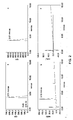
- FIG. 2 shows the results of the HPLC analysis of a reaction mixture containing 2-[ 18 F]Fluoroethylazide (11) using gradient I, UV at 216 nm (a, radioactivity channel, 2-[ 18 F]Fluoroethylazide (11) at 3:51 min; b, UV channel) and distilled product 2-[ 18 F]Fluoroethylazide (11) (c, radioactivity channel; d, UV channel).
- Example 2 Concentration Studies Showing Triazole Formation at Different Concentrations of Small Substrate.
- alkyne model (16) (1.2-0.01 mg, 7.5-0.25 ⁇ mol) was dissolved in DMF (50 ⁇ L) and mixed under nitrogen with an aqueous solution of copper(II) sulfate (25 ⁇ l, 2.8 mg, 11.25 ⁇ mol), and sodium ascorbate (25 ⁇ L, 7.5 mg, 37.5 ⁇ mol).
- [ 18 F]2-fluoroethylazide (11) was added in MeCN (100 ⁇ l) and standing for 15 min. at room temperature, the mixture was analyzed by HPLC. The vials were subsequently heated (15 min, 80°C) and again analyzed.
- Fig. 3 shows the HPLC plot of radiochemical yield of triazole product (17) formed at different alkyne (16) concentrations and temperatures using model compound (16) and 2-[18F]Fluoroethylazide (11).
- N -[ ⁇ -Maleimidopropyloxy]succinimide ester (50 mg, 1.25 equiv) was dissolved in 1.0 mL of dry DMF.
- 3-Butyn-1-amine hydrochloride (16 mg, 1.0 equiv) was dissolved in 0.5 mL of dry dimethylformamide (DMF) and 26 ⁇ L of diisopropylethylamine (DIEA). This amine solution was added drop-wise to the succinimide ester while keeping the ester solution in an ice bath. The mixture was stirred at 0°C for 10 min. The solution was warmed up to room temperature and stirred for 18 h.
- Anti-Her2 affibody 14 kDa (1 mg as a lyophilized powder) was dissolved in 460 ⁇ L of phosphate buffered saline (PBS). The pH of the solution was maintained at 7.4. To this solution was added 40 ⁇ L of a 0.5 M solution of dithiothreitol (DTT) dissolved in PBS; the pH was maintained at 7.4. The resulting mixture was stirred at room temperature for 2h. The reduced affibody was purified via gel filtration. To this pure fraction of reduced affibody was added a 12 ⁇ L aliquot of a solution of the Mal-alkyne Bifunctional Linker (1) (0.15 M in DMSO).
- DTT dithiothreitol
- This reaction mixture was incubated at room temperature for 2h with moderate stirring.
- the reaction mixture was purified using gel filtration followed by Centrifugal Ultrafiltration (Amicon), MWCO 5 kDa (Millipore) to obtain purified Alkynylated affibody (22).
- FIG. 4 shows the MALDI-TOF MS data of Alkynylated affibody (22).
- the typical elution time for the Alkynylated affibody (22) was approximately 11 minutes.
- Alkynylated-affibody (22) using Azido-PEG 23.
- an aqueous solution of sodium phosphate 100 mM, pH 8
- a 3 ⁇ L aliquot of a stock of Alkynylated affibody (22) solution (0.6 mM, -8 mg/mL in phosphate buffered saline, at pH 7.4).
- To this solution 1 ⁇ L aliquot of a freshly prepared 18 mM solution of 11-Azido-3,6,9-trioxaundecan-1-amine (Azido-PEG) (23) (diluted in 100 mM sodium phosphate, at pH 8) was added.
- the resulting solution was mixed at 65°C with moderate agitation for 0.75 hours.
- the reaction mixture was then immediately diluted to 4 mL in pure water (MilliQ) and concentrated to ⁇ 100 ⁇ L using an Amicon Centrifugal Ultrafiltration unit, MWCO 5kDa (Millipore). This water dilution-concentration sequence was repeated two additional times in order to remove excess reagents. Characterization of the resulting purified conjugate (26) was achieved by HPLC and SDS-PAGE protein gel monitoring the dye's fluorescence emission ( FIG. 5 ).
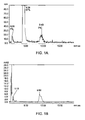
- FIG. 1 shows HPLC analysis of a reaction mixture of the non-optimized system showing 18 F click labeled Anti-Her2 affibody (27) (a, radioactivity channel; b, UV channel at 280 nm).
Landscapes
- Chemical & Material Sciences (AREA)
- Health & Medical Sciences (AREA)
- Organic Chemistry (AREA)
- Life Sciences & Earth Sciences (AREA)
- Proteomics, Peptides & Aminoacids (AREA)
- Pharmacology & Pharmacy (AREA)
- Public Health (AREA)
- Optics & Photonics (AREA)
- Physics & Mathematics (AREA)
- Epidemiology (AREA)
- Animal Behavior & Ethology (AREA)
- General Health & Medical Sciences (AREA)
- Medicinal Chemistry (AREA)
- Veterinary Medicine (AREA)
- Peptides Or Proteins (AREA)
- Medicines Containing Antibodies Or Antigens For Use As Internal Diagnostic Agents (AREA)
- Investigating Or Analysing Biological Materials (AREA)
- Organic Low-Molecular-Weight Compounds And Preparation Thereof (AREA)
- Medicinal Preparation (AREA)
Applications Claiming Priority (2)
| Application Number | Priority Date | Filing Date | Title |
|---|---|---|---|
| US11/961,108 US8071718B2 (en) | 2004-12-22 | 2007-12-20 | Selective radiolabeling of biomolecules |
| EP08865548.5A EP2231201B1 (fr) | 2007-12-20 | 2008-12-12 | Radiomarquage sélectif de biomolécules |
Related Parent Applications (3)
| Application Number | Title | Priority Date | Filing Date |
|---|---|---|---|
| EP08865548.5A Division EP2231201B1 (fr) | 2007-12-20 | 2008-12-12 | Radiomarquage sélectif de biomolécules |
| EP08865548.5A Division-Into EP2231201B1 (fr) | 2007-12-20 | 2008-12-12 | Radiomarquage sélectif de biomolécules |
| EP08865548.5 Division | 2008-12-12 |
Publications (2)
| Publication Number | Publication Date |
|---|---|
| EP2591808A2 true EP2591808A2 (fr) | 2013-05-15 |
| EP2591808A3 EP2591808A3 (fr) | 2014-06-25 |
Family
ID=40510013
Family Applications (2)
| Application Number | Title | Priority Date | Filing Date |
|---|---|---|---|
| EP13154289.6A Withdrawn EP2591808A3 (fr) | 2007-12-20 | 2008-12-12 | Radiomarquage sélectif de biomolécules |
| EP08865548.5A Active EP2231201B1 (fr) | 2007-12-20 | 2008-12-12 | Radiomarquage sélectif de biomolécules |
Family Applications After (1)
| Application Number | Title | Priority Date | Filing Date |
|---|---|---|---|
| EP08865548.5A Active EP2231201B1 (fr) | 2007-12-20 | 2008-12-12 | Radiomarquage sélectif de biomolécules |
Country Status (13)
| Country | Link |
|---|---|
| EP (2) | EP2591808A3 (fr) |
| JP (1) | JP5566905B2 (fr) |
| KR (1) | KR101563758B1 (fr) |
| CN (1) | CN101903047B (fr) |
| AU (1) | AU2008340449B2 (fr) |
| BR (1) | BRPI0821300A8 (fr) |
| CA (1) | CA2705134C (fr) |
| ES (1) | ES2662495T3 (fr) |
| IL (1) | IL205392A (fr) |
| MX (1) | MX2010006910A (fr) |
| NZ (1) | NZ584900A (fr) |
| RU (1) | RU2491958C2 (fr) |
| WO (1) | WO2009080561A1 (fr) |
Families Citing this family (5)
| Publication number | Priority date | Publication date | Assignee | Title |
|---|---|---|---|---|
| GB201203793D0 (en) * | 2012-03-05 | 2012-04-18 | Ge Healthcare Ltd | Imaging neural activity |
| WO2014179715A1 (fr) * | 2013-05-02 | 2014-11-06 | Duke University | Composés prothétiques pour le marquage de biomolécules d'internalisation |
| GB201504755D0 (en) * | 2015-03-20 | 2015-05-06 | Isis Innovation | Fluorination process |
| KR102230657B1 (ko) * | 2018-07-17 | 2021-03-23 | 한국원자력연구원 | 방사성 원소의 표지방법, 방사성 표지화합물 및 이를 포함하는 방사성 원소 표지 키트 |
| JP7670072B2 (ja) * | 2021-01-18 | 2025-04-30 | 味の素株式会社 | 化合物またはその塩、およびそれらにより得られる抗体 |
Family Cites Families (4)
| Publication number | Priority date | Publication date | Assignee | Title |
|---|---|---|---|---|
| GB0428012D0 (en) * | 2004-12-22 | 2005-01-26 | Hammersmith Imanet Ltd | Radiolabelling methods |
| EP1909104B1 (fr) * | 2005-05-26 | 2010-07-21 | Japan Science and Technology Agency | Nouvelle nanoparticule métallique immobilisée par un sucre, procédé pour mesurer l'interaction protéine-sucre en utilisant celle-ci et procédé pour récupérer la protéine à partir d'un interactant protéine-sucre |
| US20070020620A1 (en) * | 2005-07-14 | 2007-01-25 | Finn M G | Compositions and methods for coupling a plurality of compounds to a scaffold |
| WO2007080114A2 (fr) * | 2006-01-11 | 2007-07-19 | Biotech Igg Ab | Conjugué de macromolecule |
-
2008
- 2008-12-12 KR KR1020107013550A patent/KR101563758B1/ko not_active Expired - Fee Related
- 2008-12-12 BR BRPI0821300A patent/BRPI0821300A8/pt not_active IP Right Cessation
- 2008-12-12 CA CA2705134A patent/CA2705134C/fr not_active Expired - Fee Related
- 2008-12-12 WO PCT/EP2008/067413 patent/WO2009080561A1/fr not_active Ceased
- 2008-12-12 JP JP2010538605A patent/JP5566905B2/ja active Active
- 2008-12-12 NZ NZ584900A patent/NZ584900A/xx not_active IP Right Cessation
- 2008-12-12 EP EP13154289.6A patent/EP2591808A3/fr not_active Withdrawn
- 2008-12-12 EP EP08865548.5A patent/EP2231201B1/fr active Active
- 2008-12-12 AU AU2008340449A patent/AU2008340449B2/en not_active Ceased
- 2008-12-12 RU RU2010123475/04A patent/RU2491958C2/ru not_active IP Right Cessation
- 2008-12-12 CN CN200880121657.6A patent/CN101903047B/zh active Active
- 2008-12-12 MX MX2010006910A patent/MX2010006910A/es active IP Right Grant
- 2008-12-12 ES ES08865548.5T patent/ES2662495T3/es active Active
-
2010
- 2010-04-28 IL IL205392A patent/IL205392A/en active IP Right Grant
Non-Patent Citations (1)
| Title |
|---|
| GLASER, M.; ÅRSTAD, E.: "Click labeling' with 2-[18F]fluoroethylazide for Positron Emission Tomography", BIOCONJ. CHEM., vol. 18, 2007, pages 989 - 993, XP002461055, DOI: doi:10.1021/bc060301j |
Also Published As
| Publication number | Publication date |
|---|---|
| ES2662495T3 (es) | 2018-04-06 |
| EP2591808A3 (fr) | 2014-06-25 |
| NZ584900A (en) | 2012-09-28 |
| IL205392A (en) | 2015-07-30 |
| IL205392A0 (en) | 2010-12-30 |
| CA2705134C (fr) | 2018-05-08 |
| WO2009080561A1 (fr) | 2009-07-02 |
| MX2010006910A (es) | 2010-10-25 |
| BRPI0821300A2 (pt) | 2015-06-16 |
| AU2008340449A1 (en) | 2009-07-02 |
| EP2231201B1 (fr) | 2018-02-14 |
| AU2008340449B2 (en) | 2014-05-22 |
| RU2010123475A (ru) | 2012-01-27 |
| BRPI0821300A8 (pt) | 2017-10-03 |
| KR20100098405A (ko) | 2010-09-06 |
| JP5566905B2 (ja) | 2014-08-06 |
| JP2011508194A (ja) | 2011-03-10 |
| CN101903047A (zh) | 2010-12-01 |
| KR101563758B1 (ko) | 2015-10-27 |
| EP2231201A1 (fr) | 2010-09-29 |
| CA2705134A1 (fr) | 2009-07-02 |
| RU2491958C2 (ru) | 2013-09-10 |
| CN101903047B (zh) | 2015-10-21 |
| HK1151225A1 (zh) | 2012-01-27 |
Similar Documents
| Publication | Publication Date | Title |
|---|---|---|
| US8487080B2 (en) | Fluorine-labeled compounds | |
| AU619738B2 (en) | Metal-radionuclide-labeled proteins and glycoproteins for diagnosis and therapy | |
| Krall et al. | Site-selective protein-modification chemistry for basic biology and drug development | |
| EP2231201B1 (fr) | Radiomarquage sélectif de biomolécules | |
| Chiotellis et al. | Novel chemoselective 18 F-radiolabeling of thiol-containing biomolecules under mild aqueous conditions | |
| CN105012972A (zh) | 放射性标记方法 | |
| DE69713913T2 (de) | Stabile radiojodkonjugate und verfahren zu deren herstellung | |
| DE69837038T2 (de) | Tetraaza- oder n2s2-komplexanten, und deren verwendung in der radiodiagnostik oder radiotherapie | |
| Lin et al. | Chemoselective methionine bioconjugation: site-selective fluorine-18 labeling of proteins and peptides | |
| Chiotellis et al. | Synthesis and biological evaluation of 18F-labeled fluoropropyl tryptophan analogs as potential PET probes for tumor imaging | |
| EP2595666B1 (fr) | Procédé de marquage d'une molécule biologiquement active par un 5-fluoro-5-désoxypentose ou un 3-fluoro-3-désoxypentose | |
| US20120288445A1 (en) | Radiolabelling | |
| CN105579434A (zh) | 基于乙烯基砜的18f标记组合物和方法及其用途 | |
| US8071718B2 (en) | Selective radiolabeling of biomolecules | |
| AU2013204388A1 (en) | Selective radiolabeling of biomolecules | |
| Röhrich et al. | A novel tetrabranched neurotensin (8–13) cyclam derivative: Synthesis, 64Cu-labeling and biological evaluation | |
| HK1151225B (en) | Selective radiolabeling of biomolecules | |
| Jacobson et al. | 3-18F-fluoropropane-1-thiol and 18F-PEG4-1-thiol: Versatile prosthetic groups for radiolabeling maleimide functionalized peptides | |
| JPWO2019098291A1 (ja) | ポジトロン放出核種標識タンパク質の合成方法 | |
| Blykers et al. | Site-specific [18 F]-labeling of a sortase-mediated aminooxy-functionalized MMR targeting Nanobody using 2-[18 F] fluoro-and 6-[18 F] fluoro-3-pyridinecarboxaldehyde | |
| EP1985624A2 (fr) | Procédé simple de radiofluorination de composés actifs biologiquement ou de biomolécules |
Legal Events
| Date | Code | Title | Description |
|---|---|---|---|
| PUAI | Public reference made under article 153(3) epc to a published international application that has entered the european phase |
Free format text: ORIGINAL CODE: 0009012 |
|
| AC | Divisional application: reference to earlier application |
Ref document number: 2231201 Country of ref document: EP Kind code of ref document: P |
|
| AK | Designated contracting states |
Kind code of ref document: A2 Designated state(s): AT BE BG CH CY CZ DE DK EE ES FI FR GB GR HR HU IE IS IT LI LT LU LV MC MT NL NO PL PT RO SE SI SK TR |
|
| 17P | Request for examination filed |
Effective date: 20130429 |
|
| RIN1 | Information on inventor provided before grant (corrected) |
Inventor name: GLASER, MATTHIAS, EBERHARD Inventor name: SYUD, FAISAL, AHMED Inventor name: PADILLA DE JESUS, OMAYRA, LIZ Inventor name: ARSTAD, ERIK Inventor name: KOVACS, ERNEST WILLIAM |
|
| RIN1 | Information on inventor provided before grant (corrected) |
Inventor name: GLASER, MATTHIAS, EBERHARD Inventor name: SYUD, FAISAL, AHMED Inventor name: PADILLA DE JESUS, OMAYRA, LIZ Inventor name: KOVACS, ERNEST WILLIAM Inventor name: ARSTAD, ERIK |
|
| PUAL | Search report despatched |
Free format text: ORIGINAL CODE: 0009013 |
|
| AK | Designated contracting states |
Kind code of ref document: A3 Designated state(s): AT BE BG CH CY CZ DE DK EE ES FI FR GB GR HR HU IE IS IT LI LT LU LV MC MT NL NO PL PT RO SE SI SK TR |
|
| RIC1 | Information provided on ipc code assigned before grant |
Ipc: C07B 59/00 20060101ALI20140516BHEP Ipc: A61K 51/08 20060101AFI20140516BHEP Ipc: A61K 101/02 20060101ALN20140516BHEP |
|
| STAA | Information on the status of an ep patent application or granted ep patent |
Free format text: STATUS: THE APPLICATION IS DEEMED TO BE WITHDRAWN |
|
| 18D | Application deemed to be withdrawn |
Effective date: 20150106 |