EP2592149A1 - Verbessertes Verfahren zur homologen Rekombination - Google Patents
Verbessertes Verfahren zur homologen Rekombination Download PDFInfo
- Publication number
- EP2592149A1 EP2592149A1 EP20120182937 EP12182937A EP2592149A1 EP 2592149 A1 EP2592149 A1 EP 2592149A1 EP 20120182937 EP20120182937 EP 20120182937 EP 12182937 A EP12182937 A EP 12182937A EP 2592149 A1 EP2592149 A1 EP 2592149A1
- Authority
- EP
- European Patent Office
- Prior art keywords
- sequence
- dna
- cells
- functional
- replacement
- Prior art date
- Legal status (The legal status is an assumption and is not a legal conclusion. Google has not performed a legal analysis and makes no representation as to the accuracy of the status listed.)
- Withdrawn
Links
- 238000000034 method Methods 0.000 title claims abstract description 63
- 238000002744 homologous recombination Methods 0.000 title claims description 65
- 230000006801 homologous recombination Effects 0.000 title claims description 64
- 239000012634 fragment Substances 0.000 claims abstract description 92
- 210000004027 cell Anatomy 0.000 claims abstract description 67
- 108020004414 DNA Proteins 0.000 claims abstract description 63
- 210000003527 eukaryotic cell Anatomy 0.000 claims abstract description 43
- 108091028043 Nucleic acid sequence Proteins 0.000 claims abstract description 30
- 230000006798 recombination Effects 0.000 claims abstract description 28
- 238000005215 recombination Methods 0.000 claims abstract description 28
- 230000001965 increasing effect Effects 0.000 claims abstract description 17
- 239000013611 chromosomal DNA Substances 0.000 claims abstract description 14
- 102000053602 DNA Human genes 0.000 claims abstract description 10
- 230000001131 transforming effect Effects 0.000 claims abstract description 4
- 239000003550 marker Substances 0.000 claims description 54
- 230000037361 pathway Effects 0.000 claims description 25
- 230000014509 gene expression Effects 0.000 claims description 24
- 240000004808 Saccharomyces cerevisiae Species 0.000 claims description 10
- 101150085005 ku70 gene Proteins 0.000 claims description 8
- 101100264215 Gallus gallus XRCC6 gene Proteins 0.000 claims description 6
- 101150059802 KU80 gene Proteins 0.000 claims description 5
- 230000003247 decreasing effect Effects 0.000 claims description 5
- 239000007850 fluorescent dye Substances 0.000 claims description 5
- 230000002222 downregulating effect Effects 0.000 claims description 3
- 102100033195 DNA ligase 4 Human genes 0.000 claims description 2
- 102100039116 DNA repair protein RAD50 Human genes 0.000 claims description 2
- 102100033996 Double-strand break repair protein MRE11 Human genes 0.000 claims description 2
- 101000927810 Homo sapiens DNA ligase 4 Proteins 0.000 claims description 2
- 101000743929 Homo sapiens DNA repair protein RAD50 Proteins 0.000 claims description 2
- 101000591400 Homo sapiens Double-strand break repair protein MRE11 Proteins 0.000 claims description 2
- 101100409457 Saccharomyces cerevisiae (strain ATCC 204508 / S288c) CDC40 gene Proteins 0.000 claims description 2
- 101100477614 Saccharomyces cerevisiae (strain ATCC 204508 / S288c) SIR4 gene Proteins 0.000 claims description 2
- 101100156959 Saccharomyces cerevisiae (strain ATCC 204508 / S288c) XRS2 gene Proteins 0.000 claims description 2
- 102100036973 X-ray repair cross-complementing protein 5 Human genes 0.000 claims description 2
- 230000000415 inactivating effect Effects 0.000 claims description 2
- 238000001943 fluorescence-activated cell sorting Methods 0.000 claims 1
- 108090000623 proteins and genes Proteins 0.000 description 56
- 230000010354 integration Effects 0.000 description 50
- 238000012217 deletion Methods 0.000 description 47
- 230000037430 deletion Effects 0.000 description 46
- DLFVBJFMPXGRIB-UHFFFAOYSA-N Acetamide Chemical compound CC(N)=O DLFVBJFMPXGRIB-UHFFFAOYSA-N 0.000 description 42
- 101150069003 amdS gene Proteins 0.000 description 33
- 108091034117 Oligonucleotide Proteins 0.000 description 27
- 238000010363 gene targeting Methods 0.000 description 25
- XTEGARKTQYYJKE-UHFFFAOYSA-M Chlorate Chemical compound [O-]Cl(=O)=O XTEGARKTQYYJKE-UHFFFAOYSA-M 0.000 description 24
- QRBLKGHRWFGINE-UGWAGOLRSA-N 2-[2-[2-[[2-[[4-[[2-[[6-amino-2-[3-amino-1-[(2,3-diamino-3-oxopropyl)amino]-3-oxopropyl]-5-methylpyrimidine-4-carbonyl]amino]-3-[(2r,3s,4s,5s,6s)-3-[(2s,3r,4r,5s)-4-carbamoyl-3,4,5-trihydroxy-6-(hydroxymethyl)oxan-2-yl]oxy-4,5-dihydroxy-6-(hydroxymethyl)- Chemical compound N=1C(C=2SC=C(N=2)C(N)=O)CSC=1CCNC(=O)C(C(C)=O)NC(=O)C(C)C(O)C(C)NC(=O)C(C(O[C@H]1[C@@]([C@@H](O)[C@H](O)[C@H](CO)O1)(C)O[C@H]1[C@@H]([C@](O)([C@@H](O)C(CO)O1)C(N)=O)O)C=1NC=NC=1)NC(=O)C1=NC(C(CC(N)=O)NCC(N)C(N)=O)=NC(N)=C1C QRBLKGHRWFGINE-UGWAGOLRSA-N 0.000 description 21
- LTQCLFMNABRKSH-UHFFFAOYSA-N Phleomycin Natural products N=1C(C=2SC=C(N=2)C(N)=O)CSC=1CCNC(=O)C(C(O)C)NC(=O)C(C)C(O)C(C)NC(=O)C(C(OC1C(C(O)C(O)C(CO)O1)OC1C(C(OC(N)=O)C(O)C(CO)O1)O)C=1NC=NC=1)NC(=O)C1=NC(C(CC(N)=O)NCC(N)C(N)=O)=NC(N)=C1C LTQCLFMNABRKSH-UHFFFAOYSA-N 0.000 description 21
- 108010035235 Phleomycins Proteins 0.000 description 21
- 239000013612 plasmid Substances 0.000 description 21
- JLCPHMBAVCMARE-UHFFFAOYSA-N [3-[[3-[[3-[[3-[[3-[[3-[[3-[[3-[[3-[[3-[[3-[[5-(2-amino-6-oxo-1H-purin-9-yl)-3-[[3-[[3-[[3-[[3-[[3-[[5-(2-amino-6-oxo-1H-purin-9-yl)-3-[[5-(2-amino-6-oxo-1H-purin-9-yl)-3-hydroxyoxolan-2-yl]methoxy-hydroxyphosphoryl]oxyoxolan-2-yl]methoxy-hydroxyphosphoryl]oxy-5-(5-methyl-2,4-dioxopyrimidin-1-yl)oxolan-2-yl]methoxy-hydroxyphosphoryl]oxy-5-(6-aminopurin-9-yl)oxolan-2-yl]methoxy-hydroxyphosphoryl]oxy-5-(6-aminopurin-9-yl)oxolan-2-yl]methoxy-hydroxyphosphoryl]oxy-5-(6-aminopurin-9-yl)oxolan-2-yl]methoxy-hydroxyphosphoryl]oxy-5-(6-aminopurin-9-yl)oxolan-2-yl]methoxy-hydroxyphosphoryl]oxyoxolan-2-yl]methoxy-hydroxyphosphoryl]oxy-5-(5-methyl-2,4-dioxopyrimidin-1-yl)oxolan-2-yl]methoxy-hydroxyphosphoryl]oxy-5-(4-amino-2-oxopyrimidin-1-yl)oxolan-2-yl]methoxy-hydroxyphosphoryl]oxy-5-(5-methyl-2,4-dioxopyrimidin-1-yl)oxolan-2-yl]methoxy-hydroxyphosphoryl]oxy-5-(5-methyl-2,4-dioxopyrimidin-1-yl)oxolan-2-yl]methoxy-hydroxyphosphoryl]oxy-5-(6-aminopurin-9-yl)oxolan-2-yl]methoxy-hydroxyphosphoryl]oxy-5-(6-aminopurin-9-yl)oxolan-2-yl]methoxy-hydroxyphosphoryl]oxy-5-(4-amino-2-oxopyrimidin-1-yl)oxolan-2-yl]methoxy-hydroxyphosphoryl]oxy-5-(4-amino-2-oxopyrimidin-1-yl)oxolan-2-yl]methoxy-hydroxyphosphoryl]oxy-5-(4-amino-2-oxopyrimidin-1-yl)oxolan-2-yl]methoxy-hydroxyphosphoryl]oxy-5-(6-aminopurin-9-yl)oxolan-2-yl]methoxy-hydroxyphosphoryl]oxy-5-(4-amino-2-oxopyrimidin-1-yl)oxolan-2-yl]methyl [5-(6-aminopurin-9-yl)-2-(hydroxymethyl)oxolan-3-yl] hydrogen phosphate Polymers Cc1cn(C2CC(OP(O)(=O)OCC3OC(CC3OP(O)(=O)OCC3OC(CC3O)n3cnc4c3nc(N)[nH]c4=O)n3cnc4c3nc(N)[nH]c4=O)C(COP(O)(=O)OC3CC(OC3COP(O)(=O)OC3CC(OC3COP(O)(=O)OC3CC(OC3COP(O)(=O)OC3CC(OC3COP(O)(=O)OC3CC(OC3COP(O)(=O)OC3CC(OC3COP(O)(=O)OC3CC(OC3COP(O)(=O)OC3CC(OC3COP(O)(=O)OC3CC(OC3COP(O)(=O)OC3CC(OC3COP(O)(=O)OC3CC(OC3COP(O)(=O)OC3CC(OC3COP(O)(=O)OC3CC(OC3COP(O)(=O)OC3CC(OC3COP(O)(=O)OC3CC(OC3COP(O)(=O)OC3CC(OC3COP(O)(=O)OC3CC(OC3CO)n3cnc4c(N)ncnc34)n3ccc(N)nc3=O)n3cnc4c(N)ncnc34)n3ccc(N)nc3=O)n3ccc(N)nc3=O)n3ccc(N)nc3=O)n3cnc4c(N)ncnc34)n3cnc4c(N)ncnc34)n3cc(C)c(=O)[nH]c3=O)n3cc(C)c(=O)[nH]c3=O)n3ccc(N)nc3=O)n3cc(C)c(=O)[nH]c3=O)n3cnc4c3nc(N)[nH]c4=O)n3cnc4c(N)ncnc34)n3cnc4c(N)ncnc34)n3cnc4c(N)ncnc34)n3cnc4c(N)ncnc34)O2)c(=O)[nH]c1=O JLCPHMBAVCMARE-UHFFFAOYSA-N 0.000 description 20
- 229920001817 Agar Polymers 0.000 description 19
- 241000228150 Penicillium chrysogenum Species 0.000 description 19
- 239000008272 agar Substances 0.000 description 19
- 108091033319 polynucleotide Proteins 0.000 description 16
- 102000040430 polynucleotide Human genes 0.000 description 16
- 239000002157 polynucleotide Substances 0.000 description 16
- IJGRMHOSHXDMSA-UHFFFAOYSA-N Atomic nitrogen Chemical compound N#N IJGRMHOSHXDMSA-UHFFFAOYSA-N 0.000 description 14
- 238000006243 chemical reaction Methods 0.000 description 14
- 230000001105 regulatory effect Effects 0.000 description 14
- 238000000137 annealing Methods 0.000 description 13
- 230000035945 sensitivity Effects 0.000 description 12
- 230000008685 targeting Effects 0.000 description 12
- 241000894007 species Species 0.000 description 11
- 229930195708 Penicillin V Natural products 0.000 description 10
- 238000004458 analytical method Methods 0.000 description 10
- 230000008859 change Effects 0.000 description 10
- 101150095344 niaD gene Proteins 0.000 description 10
- 229940056367 penicillin v Drugs 0.000 description 10
- BPLBGHOLXOTWMN-MBNYWOFBSA-N phenoxymethylpenicillin Chemical compound N([C@H]1[C@H]2SC([C@@H](N2C1=O)C(O)=O)(C)C)C(=O)COC1=CC=CC=C1 BPLBGHOLXOTWMN-MBNYWOFBSA-N 0.000 description 10
- 230000028070 sporulation Effects 0.000 description 10
- 108090000790 Enzymes Proteins 0.000 description 9
- 102000004190 Enzymes Human genes 0.000 description 9
- 230000002538 fungal effect Effects 0.000 description 9
- 238000004519 manufacturing process Methods 0.000 description 9
- 239000013598 vector Substances 0.000 description 9
- FVTWJXMFYOXOKK-UHFFFAOYSA-N 2-fluoroacetamide Chemical compound NC(=O)CF FVTWJXMFYOXOKK-UHFFFAOYSA-N 0.000 description 8
- 241000233866 Fungi Species 0.000 description 8
- 231100000518 lethal Toxicity 0.000 description 8
- 230000001665 lethal effect Effects 0.000 description 8
- 238000012986 modification Methods 0.000 description 8
- 230000004048 modification Effects 0.000 description 8
- WLJVXDMOQOGPHL-UHFFFAOYSA-N phenylacetic acid Chemical compound OC(=O)CC1=CC=CC=C1 WLJVXDMOQOGPHL-UHFFFAOYSA-N 0.000 description 8
- 210000001938 protoplast Anatomy 0.000 description 8
- 210000000349 chromosome Anatomy 0.000 description 7
- 238000010276 construction Methods 0.000 description 7
- 229910052757 nitrogen Inorganic materials 0.000 description 7
- 230000009466 transformation Effects 0.000 description 7
- 241000196324 Embryophyta Species 0.000 description 6
- 235000014680 Saccharomyces cerevisiae Nutrition 0.000 description 6
- 230000002759 chromosomal effect Effects 0.000 description 6
- 238000010367 cloning Methods 0.000 description 6
- 230000006780 non-homologous end joining Effects 0.000 description 6
- 238000011144 upstream manufacturing Methods 0.000 description 6
- 102100036976 X-ray repair cross-complementing protein 6 Human genes 0.000 description 5
- 230000006872 improvement Effects 0.000 description 5
- 230000002018 overexpression Effects 0.000 description 5
- 238000012360 testing method Methods 0.000 description 5
- YBJHBAHKTGYVGT-ZKWXMUAHSA-N (+)-Biotin Chemical compound N1C(=O)N[C@@H]2[C@H](CCCCC(=O)O)SC[C@@H]21 YBJHBAHKTGYVGT-ZKWXMUAHSA-N 0.000 description 4
- CSNNHWWHGAXBCP-UHFFFAOYSA-L Magnesium sulfate Chemical compound [Mg+2].[O-][S+2]([O-])([O-])[O-] CSNNHWWHGAXBCP-UHFFFAOYSA-L 0.000 description 4
- FAPWRFPIFSIZLT-UHFFFAOYSA-M Sodium chloride Chemical compound [Na+].[Cl-] FAPWRFPIFSIZLT-UHFFFAOYSA-M 0.000 description 4
- 229930006000 Sucrose Natural products 0.000 description 4
- CZMRCDWAGMRECN-UGDNZRGBSA-N Sucrose Chemical compound O[C@H]1[C@H](O)[C@@H](CO)O[C@@]1(CO)O[C@@H]1[C@H](O)[C@@H](O)[C@H](O)[C@@H](CO)O1 CZMRCDWAGMRECN-UGDNZRGBSA-N 0.000 description 4
- 235000013681 dietary sucrose Nutrition 0.000 description 4
- 230000003828 downregulation Effects 0.000 description 4
- 239000000975 dye Substances 0.000 description 4
- 230000000694 effects Effects 0.000 description 4
- 230000002779 inactivation Effects 0.000 description 4
- 230000002934 lysing effect Effects 0.000 description 4
- 239000007003 mineral medium Substances 0.000 description 4
- 229960003424 phenylacetic acid Drugs 0.000 description 4
- 239000003279 phenylacetic acid Substances 0.000 description 4
- 239000000047 product Substances 0.000 description 4
- 230000008929 regeneration Effects 0.000 description 4
- 238000011069 regeneration method Methods 0.000 description 4
- 229960004793 sucrose Drugs 0.000 description 4
- 230000003827 upregulation Effects 0.000 description 4
- 108020005065 3' Flanking Region Proteins 0.000 description 3
- 241000351920 Aspergillus nidulans Species 0.000 description 3
- 108091026890 Coding region Proteins 0.000 description 3
- 230000003321 amplification Effects 0.000 description 3
- 230000029087 digestion Effects 0.000 description 3
- 238000010353 genetic engineering Methods 0.000 description 3
- 210000004962 mammalian cell Anatomy 0.000 description 3
- 239000000463 material Substances 0.000 description 3
- 108020004999 messenger RNA Proteins 0.000 description 3
- 238000003199 nucleic acid amplification method Methods 0.000 description 3
- 102000039446 nucleic acids Human genes 0.000 description 3
- 108020004707 nucleic acids Proteins 0.000 description 3
- 150000007523 nucleic acids Chemical class 0.000 description 3
- 230000008569 process Effects 0.000 description 3
- 102000004169 proteins and genes Human genes 0.000 description 3
- 108091008146 restriction endonucleases Proteins 0.000 description 3
- 238000012216 screening Methods 0.000 description 3
- 238000010561 standard procedure Methods 0.000 description 3
- 231100000331 toxic Toxicity 0.000 description 3
- 231100000167 toxic agent Toxicity 0.000 description 3
- 230000002588 toxic effect Effects 0.000 description 3
- 239000003440 toxic substance Substances 0.000 description 3
- XLYOFNOQVPJJNP-UHFFFAOYSA-N water Substances O XLYOFNOQVPJJNP-UHFFFAOYSA-N 0.000 description 3
- FWBHETKCLVMNFS-UHFFFAOYSA-N 4',6-Diamino-2-phenylindol Chemical compound C1=CC(C(=N)N)=CC=C1C1=CC2=CC=C(C(N)=N)C=C2N1 FWBHETKCLVMNFS-UHFFFAOYSA-N 0.000 description 2
- 108020005029 5' Flanking Region Proteins 0.000 description 2
- 241000228431 Acremonium chrysogenum Species 0.000 description 2
- 229930024421 Adenine Natural products 0.000 description 2
- GFFGJBXGBJISGV-UHFFFAOYSA-N Adenine Chemical compound NC1=NC=NC2=C1N=CN2 GFFGJBXGBJISGV-UHFFFAOYSA-N 0.000 description 2
- ZAINTDRBUHCDPZ-UHFFFAOYSA-M Alexa Fluor 546 Chemical compound [H+].[Na+].CC1CC(C)(C)NC(C(=C2OC3=C(C4=NC(C)(C)CC(C)C4=CC3=3)S([O-])(=O)=O)S([O-])(=O)=O)=C1C=C2C=3C(C(=C(Cl)C=1Cl)C(O)=O)=C(Cl)C=1SCC(=O)NCCCCCC(=O)ON1C(=O)CCC1=O ZAINTDRBUHCDPZ-UHFFFAOYSA-M 0.000 description 2
- QGZKDVFQNNGYKY-UHFFFAOYSA-N Ammonia Chemical compound N QGZKDVFQNNGYKY-UHFFFAOYSA-N 0.000 description 2
- 101100519159 Arabidopsis thaliana PCR3 gene Proteins 0.000 description 2
- 101100519161 Arabidopsis thaliana PCR5 gene Proteins 0.000 description 2
- 235000005340 Asparagus officinalis Nutrition 0.000 description 2
- 235000002566 Capsicum Nutrition 0.000 description 2
- 240000008574 Capsicum frutescens Species 0.000 description 2
- 108020004705 Codon Proteins 0.000 description 2
- 102000016607 Diphtheria Toxin Human genes 0.000 description 2
- 108010053187 Diphtheria Toxin Proteins 0.000 description 2
- PXGOKWXKJXAPGV-UHFFFAOYSA-N Fluorine Chemical compound FF PXGOKWXKJXAPGV-UHFFFAOYSA-N 0.000 description 2
- WQZGKKKJIJFFOK-GASJEMHNSA-N Glucose Natural products OC[C@H]1OC(O)[C@H](O)[C@@H](O)[C@@H]1O WQZGKKKJIJFFOK-GASJEMHNSA-N 0.000 description 2
- 239000007836 KH2PO4 Substances 0.000 description 2
- 101100342585 Neurospora crassa (strain ATCC 24698 / 74-OR23-1A / CBS 708.71 / DSM 1257 / FGSC 987) mus-51 gene Proteins 0.000 description 2
- 241000208125 Nicotiana Species 0.000 description 2
- 108090000913 Nitrate Reductases Proteins 0.000 description 2
- 238000012408 PCR amplification Methods 0.000 description 2
- 229930182555 Penicillin Natural products 0.000 description 2
- JGSARLDLIJGVTE-MBNYWOFBSA-N Penicillin G Chemical compound N([C@H]1[C@H]2SC([C@@H](N2C1=O)C(O)=O)(C)C)C(=O)CC1=CC=CC=C1 JGSARLDLIJGVTE-MBNYWOFBSA-N 0.000 description 2
- 240000003768 Solanum lycopersicum Species 0.000 description 2
- 235000002560 Solanum lycopersicum Nutrition 0.000 description 2
- 102000006601 Thymidine Kinase Human genes 0.000 description 2
- 108020004440 Thymidine kinase Proteins 0.000 description 2
- 229960000643 adenine Drugs 0.000 description 2
- 210000004102 animal cell Anatomy 0.000 description 2
- 230000008901 benefit Effects 0.000 description 2
- 108010005774 beta-Galactosidase Proteins 0.000 description 2
- 229960002685 biotin Drugs 0.000 description 2
- 235000020958 biotin Nutrition 0.000 description 2
- 239000011616 biotin Substances 0.000 description 2
- 239000001390 capsicum minimum Substances 0.000 description 2
- 238000004040 coloring Methods 0.000 description 2
- 150000001875 compounds Chemical class 0.000 description 2
- 238000012790 confirmation Methods 0.000 description 2
- 230000007423 decrease Effects 0.000 description 2
- 230000002950 deficient Effects 0.000 description 2
- 238000000295 emission spectrum Methods 0.000 description 2
- 238000000695 excitation spectrum Methods 0.000 description 2
- 238000002474 experimental method Methods 0.000 description 2
- ODKNJVUHOIMIIZ-RRKCRQDMSA-N floxuridine Chemical compound C1[C@H](O)[C@@H](CO)O[C@H]1N1C(=O)NC(=O)C(F)=C1 ODKNJVUHOIMIIZ-RRKCRQDMSA-N 0.000 description 2
- 238000002866 fluorescence resonance energy transfer Methods 0.000 description 2
- 239000011737 fluorine Substances 0.000 description 2
- 229910052731 fluorine Inorganic materials 0.000 description 2
- 239000008103 glucose Substances 0.000 description 2
- 101150073906 gpdA gene Proteins 0.000 description 2
- 101150095733 gpsA gene Proteins 0.000 description 2
- 239000000411 inducer Substances 0.000 description 2
- 230000001939 inductive effect Effects 0.000 description 2
- 238000009776 industrial production Methods 0.000 description 2
- 238000003780 insertion Methods 0.000 description 2
- 230000037431 insertion Effects 0.000 description 2
- BAUYGSIQEAFULO-UHFFFAOYSA-L iron(2+) sulfate (anhydrous) Chemical compound [Fe+2].[O-]S([O-])(=O)=O BAUYGSIQEAFULO-UHFFFAOYSA-L 0.000 description 2
- 229910000359 iron(II) sulfate Inorganic materials 0.000 description 2
- 239000007788 liquid Substances 0.000 description 2
- 229910052943 magnesium sulfate Inorganic materials 0.000 description 2
- 239000002609 medium Substances 0.000 description 2
- 239000002207 metabolite Substances 0.000 description 2
- 238000010369 molecular cloning Methods 0.000 description 2
- 229910000402 monopotassium phosphate Inorganic materials 0.000 description 2
- 229940049954 penicillin Drugs 0.000 description 2
- 229920001184 polypeptide Polymers 0.000 description 2
- GNSKLFRGEWLPPA-UHFFFAOYSA-M potassium dihydrogen phosphate Chemical compound [K+].OP(O)([O-])=O GNSKLFRGEWLPPA-UHFFFAOYSA-M 0.000 description 2
- 108090000765 processed proteins & peptides Proteins 0.000 description 2
- 102000004196 processed proteins & peptides Human genes 0.000 description 2
- 108010054624 red fluorescent protein Proteins 0.000 description 2
- 230000008263 repair mechanism Effects 0.000 description 2
- 230000000717 retained effect Effects 0.000 description 2
- 239000011780 sodium chloride Substances 0.000 description 2
- 239000000758 substrate Substances 0.000 description 2
- 239000006228 supernatant Substances 0.000 description 2
- 238000012795 verification Methods 0.000 description 2
- NWONKYPBYAMBJT-UHFFFAOYSA-L zinc sulfate Chemical compound [Zn+2].[O-]S([O-])(=O)=O NWONKYPBYAMBJT-UHFFFAOYSA-L 0.000 description 2
- 229910000368 zinc sulfate Inorganic materials 0.000 description 2
- 239000011686 zinc sulphate Substances 0.000 description 2
- 101710192523 30S ribosomal protein S9 Proteins 0.000 description 1
- SEHFUALWMUWDKS-UHFFFAOYSA-N 5-fluoroorotic acid Chemical compound OC(=O)C=1NC(=O)NC(=O)C=1F SEHFUALWMUWDKS-UHFFFAOYSA-N 0.000 description 1
- 241001019659 Acremonium <Plectosphaerellaceae> Species 0.000 description 1
- 239000012103 Alexa Fluor 488 Substances 0.000 description 1
- 239000012110 Alexa Fluor 594 Substances 0.000 description 1
- 241000219194 Arabidopsis Species 0.000 description 1
- 241000219195 Arabidopsis thaliana Species 0.000 description 1
- 244000003416 Asparagus officinalis Species 0.000 description 1
- 241000228212 Aspergillus Species 0.000 description 1
- 241000228245 Aspergillus niger Species 0.000 description 1
- 101000757144 Aspergillus niger Glucoamylase Proteins 0.000 description 1
- 240000006439 Aspergillus oryzae Species 0.000 description 1
- 235000002247 Aspergillus oryzae Nutrition 0.000 description 1
- 241001465318 Aspergillus terreus Species 0.000 description 1
- 241000132028 Bellis Species 0.000 description 1
- 241000283690 Bos taurus Species 0.000 description 1
- 241000219198 Brassica Species 0.000 description 1
- 235000011331 Brassica Nutrition 0.000 description 1
- 235000011303 Brassica alboglabra Nutrition 0.000 description 1
- 240000002791 Brassica napus Species 0.000 description 1
- 235000011293 Brassica napus Nutrition 0.000 description 1
- 240000007124 Brassica oleracea Species 0.000 description 1
- 235000011302 Brassica oleracea Nutrition 0.000 description 1
- 240000008100 Brassica rapa Species 0.000 description 1
- 235000011292 Brassica rapa Nutrition 0.000 description 1
- 241000244202 Caenorhabditis Species 0.000 description 1
- 241000244203 Caenorhabditis elegans Species 0.000 description 1
- 241000282465 Canis Species 0.000 description 1
- 241000282461 Canis lupus Species 0.000 description 1
- 241000123346 Chrysosporium Species 0.000 description 1
- 241001674013 Chrysosporium lucknowense Species 0.000 description 1
- 244000241235 Citrullus lanatus Species 0.000 description 1
- 235000009831 Citrullus lanatus Nutrition 0.000 description 1
- 241000207199 Citrus Species 0.000 description 1
- 244000089742 Citrus aurantifolia Species 0.000 description 1
- 235000008733 Citrus aurantifolia Nutrition 0.000 description 1
- 244000276331 Citrus maxima Species 0.000 description 1
- 235000001759 Citrus maxima Nutrition 0.000 description 1
- 240000004307 Citrus medica Species 0.000 description 1
- 235000001938 Citrus medica Nutrition 0.000 description 1
- 241001672694 Citrus reticulata Species 0.000 description 1
- 244000241257 Cucumis melo Species 0.000 description 1
- 235000009842 Cucumis melo Nutrition 0.000 description 1
- 244000024469 Cucumis prophetarum Species 0.000 description 1
- 235000010071 Cucumis prophetarum Nutrition 0.000 description 1
- 241000219122 Cucurbita Species 0.000 description 1
- 240000001980 Cucurbita pepo Species 0.000 description 1
- 235000009852 Cucurbita pepo Nutrition 0.000 description 1
- 241000252212 Danio rerio Species 0.000 description 1
- 241000255581 Drosophila <fruit fly, genus> Species 0.000 description 1
- 241000255601 Drosophila melanogaster Species 0.000 description 1
- YQYJSBFKSSDGFO-UHFFFAOYSA-N Epihygromycin Natural products OC1C(O)C(C(=O)C)OC1OC(C(=C1)O)=CC=C1C=C(C)C(=O)NC1C(O)C(O)C2OCOC2C1O YQYJSBFKSSDGFO-UHFFFAOYSA-N 0.000 description 1
- 241000283087 Equus Species 0.000 description 1
- 241000283073 Equus caballus Species 0.000 description 1
- 241000588724 Escherichia coli Species 0.000 description 1
- 241000206602 Eukaryota Species 0.000 description 1
- 241000282324 Felis Species 0.000 description 1
- 241000282326 Felis catus Species 0.000 description 1
- 241000287826 Gallus Species 0.000 description 1
- 241000287828 Gallus gallus Species 0.000 description 1
- 108010043121 Green Fluorescent Proteins Proteins 0.000 description 1
- 102000004144 Green Fluorescent Proteins Human genes 0.000 description 1
- 101000904868 Homo sapiens Transcriptional regulator ATRX Proteins 0.000 description 1
- 241000209219 Hordeum Species 0.000 description 1
- 235000007340 Hordeum vulgare Nutrition 0.000 description 1
- 240000005979 Hordeum vulgare Species 0.000 description 1
- 241000235649 Kluyveromyces Species 0.000 description 1
- 241001138401 Kluyveromyces lactis Species 0.000 description 1
- 241000235058 Komagataella pastoris Species 0.000 description 1
- 241000208822 Lactuca Species 0.000 description 1
- 240000008415 Lactuca sativa Species 0.000 description 1
- 235000003228 Lactuca sativa Nutrition 0.000 description 1
- 241000219823 Medicago Species 0.000 description 1
- 240000004658 Medicago sativa Species 0.000 description 1
- 235000010624 Medicago sativa Nutrition 0.000 description 1
- 241000288145 Meleagris Species 0.000 description 1
- 241000288147 Meleagris gallopavo Species 0.000 description 1
- 241000235575 Mortierella Species 0.000 description 1
- 241000907999 Mortierella alpina Species 0.000 description 1
- 241000699660 Mus musculus Species 0.000 description 1
- 206010028980 Neoplasm Diseases 0.000 description 1
- 101100074054 Neurospora crassa (strain ATCC 24698 / 74-OR23-1A / CBS 708.71 / DSM 1257 / FGSC 987) mus-52 gene Proteins 0.000 description 1
- 108091060545 Nonsense suppressor Proteins 0.000 description 1
- 238000000636 Northern blotting Methods 0.000 description 1
- 241000277334 Oncorhynchus Species 0.000 description 1
- 241000277275 Oncorhynchus mykiss Species 0.000 description 1
- 108700026244 Open Reading Frames Proteins 0.000 description 1
- 241000209094 Oryza Species 0.000 description 1
- 240000008346 Oryza glaberrima Species 0.000 description 1
- 240000007594 Oryza sativa Species 0.000 description 1
- 235000007164 Oryza sativa Nutrition 0.000 description 1
- 238000010222 PCR analysis Methods 0.000 description 1
- 241000228143 Penicillium Species 0.000 description 1
- 101100490446 Penicillium chrysogenum PCBAB gene Proteins 0.000 description 1
- 241000228153 Penicillium citrinum Species 0.000 description 1
- 241000235648 Pichia Species 0.000 description 1
- 241000219843 Pisum Species 0.000 description 1
- 240000004713 Pisum sativum Species 0.000 description 1
- 235000010582 Pisum sativum Nutrition 0.000 description 1
- 241000700159 Rattus Species 0.000 description 1
- 241000700157 Rattus norvegicus Species 0.000 description 1
- 108020004511 Recombinant DNA Proteins 0.000 description 1
- 241000235343 Saccharomycetales Species 0.000 description 1
- 241000277263 Salmo Species 0.000 description 1
- 241000277289 Salmo salar Species 0.000 description 1
- 101100342589 Schizosaccharomyces pombe (strain 972 / ATCC 24843) pku70 gene Proteins 0.000 description 1
- 241000209056 Secale Species 0.000 description 1
- 235000007238 Secale cereale Nutrition 0.000 description 1
- 244000082988 Secale cereale Species 0.000 description 1
- 241000700584 Simplexvirus Species 0.000 description 1
- 241000207763 Solanum Species 0.000 description 1
- 235000002634 Solanum Nutrition 0.000 description 1
- 235000002597 Solanum melongena Nutrition 0.000 description 1
- 244000061458 Solanum melongena Species 0.000 description 1
- 244000061456 Solanum tuberosum Species 0.000 description 1
- 235000002595 Solanum tuberosum Nutrition 0.000 description 1
- 235000011684 Sorghum saccharatum Nutrition 0.000 description 1
- 244000062793 Sorghum vulgare Species 0.000 description 1
- 238000002105 Southern blotting Methods 0.000 description 1
- 241000282898 Sus scrofa Species 0.000 description 1
- 101150003725 TK gene Proteins 0.000 description 1
- 108010006785 Taq Polymerase Proteins 0.000 description 1
- 239000004098 Tetracycline Substances 0.000 description 1
- 102100023931 Transcriptional regulator ATRX Human genes 0.000 description 1
- 241000223259 Trichoderma Species 0.000 description 1
- 241000499912 Trichoderma reesei Species 0.000 description 1
- 241000209140 Triticum Species 0.000 description 1
- 235000021307 Triticum Nutrition 0.000 description 1
- 244000098338 Triticum aestivum Species 0.000 description 1
- 235000007264 Triticum durum Nutrition 0.000 description 1
- 241000209143 Triticum turgidum subsp. durum Species 0.000 description 1
- KYOBSHFOBAOFBF-UHFFFAOYSA-N UMP Natural products OC1C(O)C(COP(O)(O)=O)OC1N1C(=O)NC(=O)C=C1C(O)=O KYOBSHFOBAOFBF-UHFFFAOYSA-N 0.000 description 1
- 241001276012 Wickerhamomyces ciferrii Species 0.000 description 1
- 241000209149 Zea Species 0.000 description 1
- 240000008042 Zea mays Species 0.000 description 1
- 235000007244 Zea mays Nutrition 0.000 description 1
- 108010048241 acetamidase Proteins 0.000 description 1
- 239000002253 acid Substances 0.000 description 1
- 239000012190 activator Substances 0.000 description 1
- 244000193174 agave Species 0.000 description 1
- 229910021529 ammonia Inorganic materials 0.000 description 1
- 238000003491 array Methods 0.000 description 1
- 230000001580 bacterial effect Effects 0.000 description 1
- WQZGKKKJIJFFOK-FPRJBGLDSA-N beta-D-galactose Chemical compound OC[C@H]1O[C@@H](O)[C@H](O)[C@@H](O)[C@H]1O WQZGKKKJIJFFOK-FPRJBGLDSA-N 0.000 description 1
- 102000005936 beta-Galactosidase Human genes 0.000 description 1
- 230000003115 biocidal effect Effects 0.000 description 1
- 230000033228 biological regulation Effects 0.000 description 1
- 230000015572 biosynthetic process Effects 0.000 description 1
- 108091005948 blue fluorescent proteins Proteins 0.000 description 1
- 201000011510 cancer Diseases 0.000 description 1
- 235000020971 citrus fruits Nutrition 0.000 description 1
- 108010082025 cyan fluorescent protein Proteins 0.000 description 1
- 230000001419 dependent effect Effects 0.000 description 1
- 238000011161 development Methods 0.000 description 1
- 230000018109 developmental process Effects 0.000 description 1
- 230000034431 double-strand break repair via homologous recombination Effects 0.000 description 1
- 230000009977 dual effect Effects 0.000 description 1
- 238000005516 engineering process Methods 0.000 description 1
- 239000003623 enhancer Substances 0.000 description 1
- 230000005284 excitation Effects 0.000 description 1
- 239000000796 flavoring agent Substances 0.000 description 1
- 235000019634 flavors Nutrition 0.000 description 1
- 238000001215 fluorescent labelling Methods 0.000 description 1
- 230000004927 fusion Effects 0.000 description 1
- 239000005090 green fluorescent protein Substances 0.000 description 1
- 238000009396 hybridization Methods 0.000 description 1
- 230000016784 immunoglobulin production Effects 0.000 description 1
- 230000005764 inhibitory process Effects 0.000 description 1
- 229930027917 kanamycin Natural products 0.000 description 1
- 229960000318 kanamycin Drugs 0.000 description 1
- SBUJHOSQTJFQJX-NOAMYHISSA-N kanamycin Chemical compound O[C@@H]1[C@@H](O)[C@H](O)[C@@H](CN)O[C@@H]1O[C@H]1[C@H](O)[C@@H](O[C@@H]2[C@@H]([C@@H](N)[C@H](O)[C@@H](CO)O2)O)[C@H](N)C[C@@H]1N SBUJHOSQTJFQJX-NOAMYHISSA-N 0.000 description 1
- 229930182823 kanamycin A Natural products 0.000 description 1
- 238000012544 monitoring process Methods 0.000 description 1
- 238000002703 mutagenesis Methods 0.000 description 1
- 231100000350 mutagenesis Toxicity 0.000 description 1
- 230000012666 negative regulation of transcription by glucose Effects 0.000 description 1
- 238000005457 optimization Methods 0.000 description 1
- 210000003463 organelle Anatomy 0.000 description 1
- KYOBSHFOBAOFBF-ZAKLUEHWSA-N orotidine-5'-monophosphate Chemical compound O[C@@H]1[C@@H](O)[C@H](COP(O)(O)=O)O[C@H]1N1C(=O)NC(=O)C=C1C(O)=O KYOBSHFOBAOFBF-ZAKLUEHWSA-N 0.000 description 1
- 238000003752 polymerase chain reaction Methods 0.000 description 1
- 230000008092 positive effect Effects 0.000 description 1
- 230000001915 proofreading effect Effects 0.000 description 1
- XJMOSONTPMZWPB-UHFFFAOYSA-M propidium iodide Chemical compound [I-].[I-].C12=CC(N)=CC=C2C2=CC=C(N)C=C2[N+](CCC[N+](C)(CC)CC)=C1C1=CC=CC=C1 XJMOSONTPMZWPB-UHFFFAOYSA-M 0.000 description 1
- 101150054232 pyrG gene Proteins 0.000 description 1
- 238000010188 recombinant method Methods 0.000 description 1
- 230000009467 reduction Effects 0.000 description 1
- 238000009877 rendering Methods 0.000 description 1
- 229930000044 secondary metabolite Natural products 0.000 description 1
- 230000028327 secretion Effects 0.000 description 1
- 238000010187 selection method Methods 0.000 description 1
- 238000012163 sequencing technique Methods 0.000 description 1
- 238000003786 synthesis reaction Methods 0.000 description 1
- 229930101283 tetracycline Natural products 0.000 description 1
- 229960002180 tetracycline Drugs 0.000 description 1
- 235000019364 tetracycline Nutrition 0.000 description 1
- 150000003522 tetracyclines Chemical class 0.000 description 1
- 238000001262 western blot Methods 0.000 description 1
- 108091005957 yellow fluorescent proteins Proteins 0.000 description 1
Images



Classifications
-
- C—CHEMISTRY; METALLURGY
- C12—BIOCHEMISTRY; BEER; SPIRITS; WINE; VINEGAR; MICROBIOLOGY; ENZYMOLOGY; MUTATION OR GENETIC ENGINEERING
- C12N—MICROORGANISMS OR ENZYMES; COMPOSITIONS THEREOF; PROPAGATING, PRESERVING, OR MAINTAINING MICROORGANISMS; MUTATION OR GENETIC ENGINEERING; CULTURE MEDIA
- C12N15/00—Mutation or genetic engineering; DNA or RNA concerning genetic engineering, vectors, e.g. plasmids, or their isolation, preparation or purification; Use of hosts therefor
- C12N15/09—Recombinant DNA-technology
- C12N15/63—Introduction of foreign genetic material using vectors; Vectors; Use of hosts therefor; Regulation of expression
- C12N15/79—Vectors or expression systems specially adapted for eukaryotic hosts
- C12N15/80—Vectors or expression systems specially adapted for eukaryotic hosts for fungi
-
- C—CHEMISTRY; METALLURGY
- C07—ORGANIC CHEMISTRY
- C07K—PEPTIDES
- C07K14/00—Peptides having more than 20 amino acids; Gastrins; Somatostatins; Melanotropins; Derivatives thereof
- C07K14/37—Peptides having more than 20 amino acids; Gastrins; Somatostatins; Melanotropins; Derivatives thereof from fungi
- C07K14/385—Peptides having more than 20 amino acids; Gastrins; Somatostatins; Melanotropins; Derivatives thereof from fungi from Penicillium
-
- C—CHEMISTRY; METALLURGY
- C12—BIOCHEMISTRY; BEER; SPIRITS; WINE; VINEGAR; MICROBIOLOGY; ENZYMOLOGY; MUTATION OR GENETIC ENGINEERING
- C12N—MICROORGANISMS OR ENZYMES; COMPOSITIONS THEREOF; PROPAGATING, PRESERVING, OR MAINTAINING MICROORGANISMS; MUTATION OR GENETIC ENGINEERING; CULTURE MEDIA
- C12N15/00—Mutation or genetic engineering; DNA or RNA concerning genetic engineering, vectors, e.g. plasmids, or their isolation, preparation or purification; Use of hosts therefor
- C12N15/09—Recombinant DNA-technology
- C12N15/10—Processes for the isolation, preparation or purification of DNA or RNA
- C12N15/1034—Isolating an individual clone by screening libraries
- C12N15/1058—Directional evolution of libraries, e.g. evolution of libraries is achieved by mutagenesis and screening or selection of mixed population of organisms
-
- C—CHEMISTRY; METALLURGY
- C12—BIOCHEMISTRY; BEER; SPIRITS; WINE; VINEGAR; MICROBIOLOGY; ENZYMOLOGY; MUTATION OR GENETIC ENGINEERING
- C12N—MICROORGANISMS OR ENZYMES; COMPOSITIONS THEREOF; PROPAGATING, PRESERVING, OR MAINTAINING MICROORGANISMS; MUTATION OR GENETIC ENGINEERING; CULTURE MEDIA
- C12N15/00—Mutation or genetic engineering; DNA or RNA concerning genetic engineering, vectors, e.g. plasmids, or their isolation, preparation or purification; Use of hosts therefor
- C12N15/09—Recombinant DNA-technology
- C12N15/87—Introduction of foreign genetic material using processes not otherwise provided for, e.g. co-transformation
- C12N15/90—Stable introduction of foreign DNA into chromosome
- C12N15/902—Stable introduction of foreign DNA into chromosome using homologous recombination
-
- C—CHEMISTRY; METALLURGY
- C12—BIOCHEMISTRY; BEER; SPIRITS; WINE; VINEGAR; MICROBIOLOGY; ENZYMOLOGY; MUTATION OR GENETIC ENGINEERING
- C12N—MICROORGANISMS OR ENZYMES; COMPOSITIONS THEREOF; PROPAGATING, PRESERVING, OR MAINTAINING MICROORGANISMS; MUTATION OR GENETIC ENGINEERING; CULTURE MEDIA
- C12N2800/00—Nucleic acids vectors
- C12N2800/30—Vector systems comprising sequences for excision in presence of a recombinase, e.g. loxP or FRT
Definitions
- the present invention relates to an improved method for efficient and targeted integration of nucleic acids into chromosomes of cells.
- mammalian cell lines are used for antibody production; fungal cells are preferred organisms for production of polypeptides and secondary metabolites; bacterial cells are preferred for small metabolite and antibiotic production; plant cells are preferred for taste and flavor compounds.
- Recombinant techniques are widely employed for optimization of the productivity of cells and/or processes. This can involve a multitude of options, including, but not limited to over expression of a gene of interest, deletion or inactivation of competing pathways, changing compartmentalization of enzymes, increasing protein or metabolite secretion, increasing organelle content and the like (see for example Khetan and Hu (1999) In: Manual of Industrial Microbiology Biotechnology, Eds. Demain and Davies, pg. 717-724 ).
- the recombinant construct is stably maintained in the production host.
- This can be either as part of an episomal vector or via integration in the genome.
- the latter situation is the preferred solution as this is the most stable situation.
- Even more preferred is the integration at the predetermined, correct genomic locus. Since in several species, especially most eukaryotic organisms, integration of DNA into the genome occurs with high frequency at random, the construction of industrial production cells by recombinant DNA technology often leads to the unwanted integration of the polynucleotide resulting in genome modifications at random. Moreover, this often results in multiple integrations and thus instable situations. This uncontrolled "at random multiple integration" of a polynucleotide is a potentially dangerous process, which can lead to unwanted modification of the genome of the host, resulting in decreased productivity.
- Eukaryotic cells have at least two separate pathways (one via non-homologous and one via homologous recombination; see Figures 1A and 1B , respectively) through which nucleic acids (in particular of course DNA) can be integrated into the host genome.
- the yeast Saccharomyces cerevisiae is an organism with a preference for homologous recombination (HR).
- the ratio of homologous to non-homologous recombination (HR/NHR) of this organism may vary from about 0.9 to 1.
- most higher eukaryotic cells including fungal, plant and mammalian cells have a preference for non-homologous recombination (NHR).
- the HR/NHR ratio ranges between 0.0001 and 0.5.
- the targeted integration frequency is rather low.
- the length of homologous regions flanking a polynucleotide sequence to be integrated into the genome of such organisms has to be relatively long, for example at least 2,000 base pairs for disrupting a single gene.
- the necessity of such flanking regions represents a heavy burden when cloning the DNA construct comprising said polynucleotide and when transforming the organism with it.
- neighboring genes which lie within those flanking regions can easily be disturbed during the recombination processes following transformation, thereby causing unwanted and unexpected side-effects.
- NHEJ Non-Homologous End-Joining
- the HR/NHR ratio can also be improved by over expressing components of the HR pathway.
- An example of this method is given by Shaked et al. (2005, Proc Natl. Acad. Sci. USA. 102:12265-12269 ). They show that by over expression of yeast RAD54 the HR frequency can be improved a 100-fold. Still, this results in only 1-10% correct transformants, which makes this method not amenable for a High Throughput genome wide analysis and/or modification of gene function.
- Another method is the so-called bipartite gene-targeting method (Nielsen et al., 2006, 43: 54-64; see Figure 1 C) .
- This method is using two overlapping non-functional parts of a selection marker. Upon correct homologous recombination the selection marker becomes functional. They tested the method in the fungal species with the most efficient homologous recombination system, Aspergillus nidulans, with 24% correct gene targeting in WT cells. The method results in a 2.5-fold improvement over the standard method, but even in Aspergillus nidulans only 62% of the transformants obtained is correct. Also, rather long flanking regions are used to obtain correct targeting. This is an acceptable improvement for working with one or several genes, but not suitable for a High Throughput genome wide analysis and/or modification of gene function.
- Kang and Khang US 2005/0181509
- This is a variation on the method of Liu et al. (2001).
- they apply a negative selection marker, i.e. the herpes simplex virus thymidine kinase (HSVtk) gene, as the second selection marker.
- HSVtk herpes simplex virus thymidine kinase
- the selection procedure would work correctly, polynucleotides that integrate at random in the genome would kill the cells as the HSVtk gene would convert the 5-fluoro-2'-deoxyuridine in the agar plates to a toxic compound.
- this method increases the frequencies of correct targeting in cells, but it is limited to 50% of the cells. More importantly there is a very high percentage of false positives obtained (9-100%), which makes this method unsuitable for a High Throughput genome wide analysis and/or modification of gene function.
- Kang and Khang describe testing of the diphtheria toxin A (dtA) gene.
- This gene has been applied in plants and mammalian cells as a second marker to increase the frequency of correct gene targeting to 1-2% (see for examples Terada et al, 2004, Plant Cell Rep. 22:653-659 ; Yagi et al, 1993, Anal. Biochem. 214:77-86 ). However, they failed to get this marker functional in fungal species.
- the present invention discloses a method to construct eukaryotic cells having a target sequence in a chromosomal DNA sequence replaced by a replacement sequence of interest comprising:
- the parent eukaryotic cell with a preference for NHR may be any eukaryotic cell having a HR/NHR ratio ⁇ 0.5, preferably ⁇ 0.2, more preferably ⁇ 0.1, most preferably ⁇ 0.05.
- the exact ratio may vary between different loci in one species. Suitable loci for determining the ratios above are the niaD locus (and its homologues in all species) and the KU70 locus (and its homologues in all species).
- the eukaryotic cell is a eukaryotic cell with a preference for NHR.
- the eukaryotic cell is a fungal, plant or animal cell. More preferably, the fungus is of the genus Aspergillus, Penicillium, Acremonium, Trichoderma, Chrysosporium, Mortierella, Kluyveromyces or Pichia; most preferably of the species Aspergillus niger, Aspergillus nidulans, Aspergillus oryzae, Aspergillus terreus, Penicillium chrysogenum, Penicillium citrinum, Acremonium chrysogenum, Trichoderma reesei, Mortierella alpina, Chrysosporium lucknowense, Kluyveromyces lactis, Pichia pastoris or Pichia ciferrii.
- the plant is of the genus Arabidopsis, Nicotiana, Solanum, Lactuca, Brassica, Oryza, Asparagus, Pisum, Medicago, Zea, Hordeum, Secale, Triticum, Capsicum, Cucumis, Cucurbita, Citrullis, Citrus, Sorghum; most preferably of the species Arabidopsis thaliana, Nicotiana tabaccum, Solanum lycopersicum, Solanum tuberosum, Solanum melongena, Solanum esculentum, Lactuca sativa, Brassica napus, Brassica oleracea, Brassica rapa, Oryza glaberrima, Oryza sativa, Asparagus officinalis, Pisum sativum, Medicago sativa, Zea mays, Hordeum vulgare, Secale cereale, Triticum aestivum, Triticum durum, Capsicum sativus
- the animal cell is of the genus Homo, Rattus, Mus, Sus, Bos, Danio, Canis, Felis, Equus, Salmo, Oncorhynchus, Gallus, Meleagris, Drosophila, Caenorhabditis; most preferably of the species Homo sapies, Rattus norvegicus, Mus musculus, Sus scrofa, Bos taurus, Danio rerio, Canis lupus, Felis catus, Equus caballus, Salmo salar, Oncorhynchus mykiss, Gallus gallus, Meleagris gallopavo, Drosophila melanogaster, Caenorhabditis elegans.
- the HR/NHR ratio is determined by analysis of a set of transformants to determine which part of the transformants has correct gene targeting (HR) and which part of the transformants has incorrect recombination (NHR).
- the preferred method for quickly scanning many transformants is PCR.
- Eukaryotic host cells having an increased HR/NHR ratio as compared to a parent cell may be obtainable by modifying the parent eukaryotic cell by increasing the efficiency of the HR pathway and/or by decreasing the efficiency of the NHR pathway.
- the HR/NHR ratio thereby is increased at least 2 times, preferably at least 4 times, more preferably at least 10 times, even more preferably at least 25 times.
- the HR pathway is defined as those genes and elements being involved in the control of the targeted integration of polynucleotides into the genome of a host, said polynucleotides having a certain homology with a certain predetermined site of the genome of a host to where the integration is targeted.
- the NHR pathway is defined as all genes and elements being involved in the control of the integration of polynucleotides into the genome of a host irrespective of the degree of homology of the polynucleotides with a genomic sequence of the host.
- Increasing the efficiency of the HR pathway and/or decreasing the efficiency of the NHR pathway may be effectuated by up and/or down regulating the expression of genes involved in HR and/or NHR.
- the expression level of a DNA sequence e.g. a gene, is up or down regulated, respectively, when the expression level of this DNA sequence in the obtained eukaryotic cell is higher or lower, respectively, than the expression level of the same DNA sequence in the parent eukaryotic cell, preferably at least 2 times higher or lower, more preferably at least 4 times higher or lower, even more preferably at least 10 times higher or lower.
- the expression of the DNA sequence most preferably is not detectable.
- the up and/or down regulation of the expression level of a DNA sequence may be monitored by quantifying the amount of corresponding mRNA present in a cell by Northern blotting (see Molecular Cloning: A Laboratory Manual, Sambrook et al., New York: Cold Spring Harbour Press, 1989 ) and/or the amount of corresponding protein present by Western blotting. mRNA and protein levels may also be measured by 'omics' techniques like transcriptomics and/or proteomics. The difference in mRNA amount may also be quantified by DNA array analysis ( Eisen, M. B. and Brown, P. O. DNA arrays for analysis of gene expression. Methods Enzymol. 1999: 303: 179-205 ).
- the up and/or down regulation of the expression level of a DNA sequence may be obtained by subjecting the parent eukaryotic cell to recombinant genetic manipulation techniques and/or classical mutagenesis techniques.
- Up regulation of the expression of a DNA sequence using recombinant genetic manipulation techniques preferably comprises over expression of the DNA sequence.
- Down regulation of the expression of a DNA sequence using recombinant genetic manipulation techniques preferably comprises inactivation of the DNA sequence. Inactivation may be done by replacing the DNA sequence by a non-functional variant thereof or by deleting part or all of the DNA sequence from the genome.
- the up and/or down regulation of the expression level of a DNA sequence may be inducible. This can be achieved by replacing the endogenous regulatory regions of the DNA sequence, i.e. a gene encoding the component involved in HR and/or NHR, by new regulatory regions, preferably comprising a repressible or inducible promoter, more preferably a promoter that can be switched on/off, for instance by glucose repression, ammonia repression, and/or pH repression.
- a repressible or inducible promoter preferably a promoter that can be switched on/off, for instance by glucose repression, ammonia repression, and/or pH repression.
- fungal glucose-repressed promoters are the Penicillium chrysogenum pcbAB promoter ( Martin et al, 1999, Antonie Van Leeuwenhoek.
- a suitable eukaryotic cell may subsequently be selected by monitoring the expression level of the relevant DNA sequence.
- the eukaryotic cell may be selected by measuring the efficiency of the NHR and/or of the HR pathways and/or the HR/NHR ratio.
- the efficiency of the HR pathway of a filamentous fungus may be measured by the efficiency of the targeted integration of a given polynucleotide sequence into a predetermined site in the genome of the filamentous fungus using given homology region(s).
- the efficiency of the NHR pathway of a filamentous fungus may be measured by the efficiency of the non targeted integration of a given polynucleotide sequence in the genome of the filamentous fungus irrespective of any homology region(s).
- eukaryotic cells having an increased HR/NHR ratio as compared to a parent cell are obtainable by decreasing the efficiency of the NHR pathway. This can be achieved by down regulating the expression of a gene involved in NHR in the eukaryotic cell as comparison to the expression of said gene in the parent eukaryotic cell measured under identical conditions.
- the eukaryotic cell having an increased HR/NHR ratio as compared to a parent cell is deficient in at least one of its endogenous genes that are equivalents of the following yeast genes involved in the NHR pathway: KU70, KU80, RAD50, MRE11, XRS2, LIG4, LIFL, NEIL and SIR4 ( van den Bosch et al, 2002, Biol. Chem. 383: 873-892 and Allen et al, 2003, Mol. Cancer Res. 1:913-920 ).
- yeast KU70 and KU80 genes are the genes hdfA or mus51 and hdf8 or mus52, respectively, from filamentous fungi (see WO05095624 and Ninomiya et al, 2004). Mammalian equivalents of the yeast genes are also known as KU70 or KU80 genes (see for example Pierce et al, 2001).
- the eukaryotic cell having an increased HR/NHR ratio as compared to a parent cell as specified herein above is preferably used as a host cell for transformation using the DNA molecules as specified herein below.
- Each member of the two sets of DNA molecules comprises a non-functional replacement sequence, the non-functional replacement sequence of the members of the first set overlapping with the non-functional replacement sequence of the of the members other set.
- overlapping as used in this invention is meant that two non-functional DNA sequences together comprising the replacement sequence have a common DNA sequence, localized at the 3'-end of the first sequence and the 5'-end of the second sequence.
- the overlapping sequence typically may be about 30-50% of the functional replacement sequence. Conveniently, the overlapping sequence may have a length of 0.03 to 2 kb.
- the two sets of DNA molecules are transformed into a suitable host cell with an improved HR/NHR ratio as described above, using techniques commonly known in the art.
- the DNA molecules are preferably linear molecules.
- co-transformation may be done with a further set of DNA molecules comprising a selection marker.
- recombination between the two non-functional replacement sequences can occur at the overlapping part of the replacement sequence.
- Such recombination will result in one DNA fragment for insertion into the chromosomal DNA.
- This fragment comprises a 5'-flanking sequence, the functional replacement sequence and a 3'-flanking sequence.
- the substantially homologous flanking sequences further can recombine with their corresponding target sequences on the chromosome. Both recombination events are catalyzed by the enzymes of the HR pathway which are the predominantly present recombination enzymes in cells with an improved HR/NHR ratio.
- the homologous integration event occurs at the target sequence in the host chromosome by a double cross-over event at the substantially homologous sequences flanking the replacement and targeting sequence.
- the integration event ensures that the concurrently recombined replacement sequence is stably integrated in the chromosome.
- substantially homologous refers to a DNA sequence flanking the replacement sequence having a degree of identity to a chromosomal DNA sequence flanking the target sequence of at least 80%, preferably at least 90%, more preferably 100%.
- the degree of required identity may thereby depend on the length of the substantially homologous sequence.
- a flanking having a length lower than about 0.1 kb may need a higher degree of identity than 80% with the chromosomal DNA flanking the target sequence.
- the use of the cells with an improved HR/NHR ratio advantageously allows a reduction of the length of the flankings, for instance to about 0.03-0.1 kb. Larger flankings may also be used, for instance to about 2-3 kb.
- the nature of the replacement sequence may vary depending on the intended use.
- the replacement sequence may for instance confer a screenable and/or selectable phenotype to the eukaryotic cell, in which case the replacement sequence comprises a selection marker.
- the selection marker is a positive selection marker.
- a preferred positive selection marker is the amdS gene.
- selection markers are Green Fluorescent Protein (eGFP), Yellow Fluorescent Protein (eYFP), Cyan Fluorescent Protein (eCFP), Blue Fluorescent Protein (eBFP), Red Fluorescent Protein (RFP), ⁇ -galactosidase ( ⁇ -gal), glucoronidase (GUS), tn5-ble (phleomycin R ), hyg (hygromycin R ), kan (kanamycin R ), gen (G418 R ).
- a selection marker as replacement sequence preferably is used when the target sequence needs to be inactivated.
- the replacement sequence may also be a modified version of the target sequence, for instance to provide for altered regulation of a sequence of interest or expression of a modified gene product with altered properties as compared to the original gene product.
- the replacement sequence may also constitute additional copies of a sequence of interest being present in the genome of a eukaryotic cell, to obtain amplification of that sequence of interest.
- the replacement sequence may be a sequence homologous or heterologous to the eukaryotic cell of interest. It may be obtainable from any suitable source or may be prepared by custom synthesis.
- differential fluorescent labeling may be applied in combination with the use of a fluorescence activated cell sorter to select cells wherein the recombined replacement sequence is correctly integrated.
- the two sets of DNA molecules comprising the overlapping DNA fragments as described above are labeled with two different fluorescent dyes for each set, transformed and selected as described in WO 2005/040186 .
- the fluorescent dye of the first fragment is chosen in such a way that its excitation spectrum does neither overlap with the excitation nor with the emission spectrum of the fluorescent dye of the second fragment and its emission spectrum significantly overlaps with the excitation spectrum of the second fragment.
- FRET Fluorescence Resonance Energy Transfer
- Another way to implement targeted integration of a replacement sequence of interest which does not confer a screenable and/or selectable phenotype to the cell is to include the replacement sequence of interest in the first and/or second DNA molecule as an additional replacement sequence adjacent to the first and/or second non-functional selection marker fragment.
- the additional replacement sequence may be inserted at the 3'-side of the 3'-non-functional selection marker fragment and/or at the 5'-side of the 5'-non-functional selection marker fragment.
- the functional selection marker that is formed upon recombination and integration in the chromosome may optionally be deleted following the strategy of the construction of selection marker-free cells as disclosed in EP 635574 .
- the method of the invention is combined with the use of a further selectable marker physically linked to one of the two non-functional fragments used in the method of the invention.
- the further selectable marker is localized 5'- of the 5'-flanking or 3'- of the 3'-flanking (see Figure 1 D) .
- one DNA fragment is obtained for insertion in the chromosomal DNA, comprising for instance a 5'-flanking sequence; the replacement sequence; a 3'-flanking sequence and the DNA fragment encoding the further selectable marker.
- the further selectable marker may be a selection marker as described above.
- the said further selectable marker is a lethal selection marker, which confers a lethal phenotype to the transformed cell.
- a lethal phenotype may be achieved in various ways.
- a lethal phenotype for instance may directly be achieved when the lethal selection marker encodes a compound that is toxic to the cell, e.g. diphtheria toxin A or suppressor tRNA's.
- a lethal phenotype may also conditionally be achieved when the lethal selection marker encodes an enzyme that converts a particular substrate into a toxic compound.
- conditional lethal markers in combination with a substrate that can be converted into a toxic compound, are: nitrate reductase (niaD gene) in combination with chlorate, orotidine-5'-monophosphate decarboxylase (pyrG gene) in combination with fluoro-orotic acid, acetamidase (amdS gene) in combination with fluoro-acetamide, or thymidine kinase (tk gene) in combination with 5-fluoro-2'-deoxyuridine.
- nitrate reductase niaD gene
- orotidine-5'-monophosphate decarboxylase in combination with fluoro-orotic acid
- acetamidase amdS gene
- tk gene thymidine kinase
- the target sequence may be any sequence of interest.
- the target sequence may be a sequence of which the function is to be investigated by inactivating or modifying the sequence.
- the target sequence may also be a sequence of which inactivation, modification and/or over expression is desirable to confer a eukaryotic cell with a desired phenotype.
- Suitable target sequences may be regulatory sequences and/or coding sequences.
- the replacement sequence and/or the selectable marker may be provided as part of an expression cassette.
- An expression cassette comprises regulatory sequences operably linked to a coding sequence.
- operably linked refers to a juxtaposition wherein the components described are in a relationship permitting them to function in their intended manner.
- a regulatory sequence such as a promoter, an enhancer or another expression regulatory signal "operably linked" to a coding sequence is positioned in such a way that expression of a polypeptide from its coding sequence is achieved under conditions compatible with the regulatory sequences.
- the regulatory sequences of the expression cassette preferably are heterologous to the chromosome of the eukaryotic cell of interest, i.e. the regulatory sequences are from a different eukaryotic species than the eukaryotic cell of interest to be transformed.
- the use of a homologous regulatory sequence may result in a targeted integration event at a chromosomal site corresponding to the homologous regulatory sequence. Such an integration event is undesirable because it decreases the percentage correct targeting to the site comprising the targeting sequence.
- the method of the invention advantageously ensures an increased targeting of a polynucleotide to a chromosomal target site of interest.
- the method of the invention further advantageously allows the provision of transformed eukaryotic cells that are enriched in cells wherein the correct targeted integration event has occurred.
- at least 50% of the transformed clones have the replacement sequence targeted to the target sequence in the chromosome, as compared to 0.1-2% in a transformation with a targeting construct without the use of the bipartite gene-replacement method and without a strain with an improved HR/NHR ratio.
- DNA for plasmid construction was amplified using a proofreading polymerase, Phusion (Finnzymes) following manufacturer's protocol; while verification of constructed strains and plasmids was achieved by using Taq polymerase. Restriction enzymes were from Invitrogen or New England Biolabs. For routine cloning, Escherichia coli strains Top10 and DH10B (Invitrogen) were employed. The Gateway system of Invitrogen was applied according to manufacturer's manuals. Verification of the constructed plasmids was carried out by restriction analysis and sequencing.
- the integration vector pdeI- hdfA was constructed. To this end 2500 bp genomic DNA fragments both directly upstream and directly downstream the hdfA gene were PCR amplified.
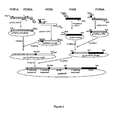
- the upstream region (alias left flanking; PCR1A in Figure 2 ) was PCR amplified from genomic DNA using the oligonucleotides of SEQ ID NO 1 and SEQ ID NO 2, thereby introducing an Xbal site at the far left end.
- a 1000 bp repeat surrounding this cassette was introduced in the construct, by PCR amplification of the first 1000 bp downstream of the hdfA gene from genomic DNA and fusing this to the left flanking (PCR2A in Figure 2 ).
- PCR2A in Figure 2
- the oligonucleotides of SEQ ID NO 3 and SEQ ID NO 4 where used, introducing Srfl and Notl sites at the right end.
- the whole fragment (3.5 kb) was cloned in pZERO-TOPO (Invitrogen), yielding plasmid pTOPO-LFA-RFA2.
- the amdS selection marker cassette was PCR amplified from pHELY-A1 (see WO 04106347 ) using oligonucleotides of SEQ ID NO 5 and SEQ ID NO 6, introducing Notl, Srfl and Sbfl sites on the left end and AscI and NotI sites on the right end (PCR3 in Figure 2 ). Also this fragment was cloned in to pZERO-TOPO (i.e. yielding plasmid pTOPO-L-amdS) and subsequently the SrfI-NotI fragment was recloned into pTOPO-LFA-RFA2, yielding plasmid pLFA2-RFA2-Lox-amdS.
- the downstream region (alias right flanking; PCR4A in Figure 2 ) was PCR amplified from genomic DNA using the oligonucleotides of SEQ ID NO 7 and SEQ ID NO 8, thereby introducing Kpnl, Srfl and AscI sites at the left end and a Kpnl site on the right end. Again the fragment was cloned in to pZERO-TOPO, yielding plasmid pTOPO-L-RFA.
- the phleomycin resistance cassette was PCR amplified (PCR5 in Figure 2 ; Phleo) from pAMPF21 ( Fierro et al, 1996, Curr Genet 29: 482-489 ) using the oligonucleotides of SEQ ID NO 9 and SEQ ID NO 10, thereby introducing HindIII, AscI and Kpnl sites at the left end and Notl at the right end.
- the fragment was digested with HindIII and Notl and cloned in to pCR2.1, yielding pCR2.1-Phleo.
- the right flanking was isolated from pTOPO-L-RFA after digestion with AscI and Kpnl; and cloned into pCR2.1-Phleo, yielding plasmid pLox-RFA-Phleo.
- the complete deletion construct of hdfA was obtained after isolating the Acsl-Notl fragment of pLox-RFA-Phleo and ligating this in pLFA-RFA2-Lox-amdS digested with AcsI-NotI, yielding plasmid pdeI - hdfA ( Figure 2 ).
- the deletion fragment was isolated from plasmid pdeI- hdfA as a Sfil fragment and transfected to Penicillium chrysogenum protoplasts.
- Penicillium chrysogenum protoplasts were produced according to standard protocols (see for examples Cantoral et al., 1987, Biotechnology 5: 494-497 ; Swinkels et al., 1997, WO 97/06261 ) however GlucanexTM (Sigma) was applied as lysing enzyme. After transformation the protoplasts were plated out on selective regeneration agar plates with acetamide as the sole nitrogen source (for an exact description of the media, see Swinkels et al., 1997).
- Acetamide utilizing colonies were transferred to fresh acetamide plates (without saccharose to induce sporulation) and 300 of these were subsequently screened for phleomycin sensitivity (on mineral medium agar as described for Penicillium chrysogenum in US 2002/0039758 , without phenyl acetic acid but supplemented with 15 g/L agar to solidify and 50 mg/L phleomycin).
- the thus obtained transformants should be enriched for targeted integration at the hdfA locus as the random transformants would be phleomycin resistant.
- Out of the 300 acetamide utilizing transformants only 9 were phleomycin sensitive. This suggested that 3% of the original transformants were putative correct transformants, i.e.
- the PCR reaction with oligonucleotides SEQ ID NO 11 and SEQ ID NO 12 showed that all 6 candidates had the correct integration at this site.
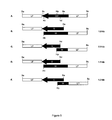
- Using a primer set with the forward primer annealing upstream of the left flank used in the deletion cassette and the reverse primer annealing at the gpdA promoter of the amdS cassette only transformants with the correct integration event should give a 3.6 kb fragment ( Figure 3C ).
- the PCR reaction with oligonucleotides SEQ ID NO 13 and SEQ ID NO 14 showed that only one of the candidates had the correct integration at this site.
- the amdS selection marker cassette had to be removed.
- a 1000 bp repeat was introduced during cloning ( Figure 2 ). This 1000 bp is exactly the same as the first 1000 bp of the right flanking region used in the deletion construct.
- the amdS selection marker has the advantage that one can select for the presence (i.e. enabling growth on acetamide as the sole nitrogen source) as well on the absence (i.e.
- Penicillin V production was checked in liquid medium as described in US 2002/0039758 .
- WT penicillin V production
- SA1 hdfA mutant containing amdS
- AS1 hdfA mutants both marker-free
- the productivities were respectively 100%, 114%, 105% and 100%. So, the hdfA deletion causes no apparent change towards penicillin production. Morphology was checked by growing the mutants on plate. No significant difference could be observed versus the WT. So, the hdfA deletion causes no apparent change towards morphology.
- the integration vector pdeI- hdf B was constructed. The construction was generally the same as outlined in Figure 1 for the hdfA gene. First, two 2500 bp genomic DNA fragments directly upstream and directly downstream the hdfB gene were PCR amplified.
- the upstream region (alias left flanking) was PCR amplified from genomic DNA using the oligonucleotides of SEQ ID NO 19 and SEQ ID NO 20, thereby introducing an Xbal site at the far left end.
- a 1000 bp repeat surrounding this cassette was introduced in the construct, by PCR amplification of the first 1000 bp downstream of the hdfB gene from genomic DNA and fusing this to the left flanking.
- the oligonucleotides of SEQ ID NO 21 and SEQ ID NO 22 where used, introducing Srfl and Notl sites at the right end.
- the whole fragment (3.5 kb) was cloned in pZERO-TOPO (Invitrogen), yielding plasmid pTOPO-LFB-RFB2.
- the Srfl-Notl fragment of pTOPO-L-amdS was recloned into pTOPO-LFB-RFB2, yielding plasmid pLFB2-RFB2-Lox-amdS.
- the downstream region (alias right flanking) of hdfB was PCR amplified from genomic DNA using the oligonucleotides of SEQ ID NO 23 and SEQ ID NO 24, thereby introducing Kpnl, Srfl and AscI sites at the left end and a Kpnl site on the right end.
- the deletion fragment was isolated from plasmid pdeI-hdfB as a Sfil fragment and transfected to Penicillium chrysogenum protoplasts that were produced according to standard protocols (see for example Cantoral et al., 1987, Biotechnology 5: 494-497 ; Swinkels et al., 1997, WO97/06261 ) however GlucanexTM (Sigma) was applied as lysing enzyme. After transformation the protoplasts were plated out on selective regeneration agar plates with acetamide as the sole nitrogen source (for an exact description of the media, see Swinkels et al., 1997).
- Acetamide utilizing colonies were transferred to fresh acetamide plates (without saccharose to induce sporulation) and 375 of these were subsequently screened for phleomycin sensitivity (on mineral medium agar as described for Penicillium chrysogenum in US 2002/0039758 , without phenyl acetic acid but supplemented with 15 g/L agar to solidify and 50 mg/L phleomycin).
- the thus obtained transformants should be enriched for targeted integration at the hdfA locus as the random transformants would be phleomycin resistant (outlined for hdfA in Figure 2 ). Out of the 375 acetamide utilizing transformants only 12 were phleomycin sensitive.
- the PCR reaction with oligonucleotides SEQ ID NO 11 and SEQ ID NO 25 showed that all 8 candidates had the correct integration at this site.
- Using a primer set with the forward primer annealing upstream of the left flank used in the deletion cassette and the reverse primer annealing at the gpdA promoter of the amdS cassette only transformants with the correct integration event should give a 3.6 kb fragment.
- the PCR reaction with oligonucleotides SEQ ID NO 26 and SEQ ID NO 14 showed that 7 out of the 8 candidates had the correct integration at this site.
- the amdS selection marker cassette had to be removed.
- a 1000 bp repeat was introduced during cloning (see above). This 1000 bp is exactly the same as the first 1000 bp of the right flanking region used in the deletion construct.
- the amdS selection marker has the advantage that one can select for the presence (i.e. enabling growth on acetamide as the sole nitrogen source) as well on the absence (i.e.
- fluoroacetamide would generate toxic fluorine in the presence of amdS) of the gene.
- Spores of the 5 hdfB strains were plated on fluoroacetamide containing agar plates (see WO 9706261 ) and growing colonies were isolated and checked with colony PCR.
- PCR template material was obtained as described above and the PCR was run using the oligonucleotides SEQ ID NO 29 and SEQ ID NO 30. If amdS would be present this should give a fragment of 5.5 kb, while in the recombined situation (i.e. marker-free hdfB deletion) this should give a fragment of 1 kb (as outlined for hdfA in Figure 4 ).
- hdfA mutant we determined if the hdfB mutants had no obvious phenotypes. The same 5 items were checked: penicillin V production, morphology, growth rate, sporulation and phleomycin sensitivity. Penicillin V production was checked in liquid medium as described in US 2002/0039758 . Two marker-free derivatives were checked per amdS-positive hdfB strain and compared to the productivity of the WT strain (see Table 1). Table 1.
- Penicillin V productivities of hdfB mutants (productivity of the WT set at 100) AMDS + - Strain Penicillin V Strain Penicillin V Strain Penicillin V SB2 108 BS1 98 BS2 100 SB3 106 BS3 100 BS4 102 SB4 100 BS5 98 BS6 101 SB5 116 BS7 101 BS8 97 SB12 92 BS9 86 BS10 88
- hdfB gene product possibly has a role in repair mechanisms the sensitivity versus phleomycin, a known inducer of DNA breaks, was check. This was done by testing the growth on mineral medium agar plates as described for Penicillium chrysogenum in US 2002/0039758 , without phenyl acetic acid but supplemented with 15 g/L agar to solidify and 0-50 mg/L phleomycin. No significant difference could be observed versus the WT. So, the hdfB deletion causes no apparent change towards phleomycin sensitivity. Finally, we concluded that, like the hdfA mutant, the hdfB mutant has no apparent phenotype and can be used for further studies.
- a deletion cassette for the niaD locus encoding nitrate reductase, was constructed.
- the two 1800 bp fragments of the niaD locus were amplified, these were separated by the amdS expression cassette and should enable the exchange of part of the niaD gene for the amdS expression cassette, thereby rendering the transformants chlorate resistant (due to the deletion of niaD) and able to use acetamide as the sole nitrogen source.
- the three obtained vectors were used to perform a multi-site Gateway reaction into pDESTR4-R3, yielding plasmid pDESTR4R3NamdSN.
- This plasmid was linearized with EcoRI and transfected to Penicillium chrysogenum that were produced according to standard protocols (see for examples Cantoral et al., 1987, Biotechnology 5: 494-497 ; Swinkels et al., 1997, WO 97/06261 ) however GlucanexTM (Sigma) was applied as lysing enzyme. After transformation the protoplasts were plated out on selective regeneration agar plates with acetamide as the sole nitrogen source (for an exact description of the media, see Swinkels et al., 1997).
- Acetamide utilizing colonies were transferred to fresh acetamide plates (without saccharose to induce sporulation) and 100 of these were subsequently screened for chlorate sensitivity (per liter: NaCl, 3 g; KH 2 PO 4 , 1 g; FeSO 4 . 7 H 2 O, 10 mg; MgSO 4 . 7 H 2 O, 0.5 g; Oxoid Agar no.1, 15 g; Glucose, 20 g; spore elements, see WO9706261 , page 10-11, all components from ZnSO 4 to biotin; adenine, 1.85 g; KClO 3 , 12.5 g).
- Penicillium chrysogenum protoplasts were produced according to standard protocols (see for examples Cantoral et al., 1987, Biotechnology 5: 494-497 ; Swinkels et al., 1997, WO97/06261 ) however GlucanexTM (Sigma) was applied as lysing enzyme. After transformation the protoplasts were plated out on selective regeneration agar plates with acetamide as the sole nitrogen source (for an exact description of the media, see Swinkels et al., 1997).
- Acetamide utilizing colonies were transferred to fresh acetamide plates (without saccharose to induce sporulation) and 100 of these were subsequently screened for chlorate sensitivity (per liter: NaCl, 3 g; KH 2 PO 4 , 1 g; FeSO 4 . 7 H 2 O, 10 mg; MgSO 4 . 7 H 2 O, 0.5 g; Oxoid Agar no.1, 15 g; Glucose, 20 g; spore elements, see WO9706261 , page 10-11, all components from ZnSO 4 to biotin; adenine, 1.85 g; KClO 3 , 12.5 g). Table 4.
Landscapes
- Life Sciences & Earth Sciences (AREA)
- Health & Medical Sciences (AREA)
- Genetics & Genomics (AREA)
- Chemical & Material Sciences (AREA)
- Engineering & Computer Science (AREA)
- Organic Chemistry (AREA)
- Wood Science & Technology (AREA)
- General Engineering & Computer Science (AREA)
- Bioinformatics & Cheminformatics (AREA)
- Biotechnology (AREA)
- Biomedical Technology (AREA)
- Zoology (AREA)
- Molecular Biology (AREA)
- Biophysics (AREA)
- General Health & Medical Sciences (AREA)
- Biochemistry (AREA)
- Microbiology (AREA)
- Plant Pathology (AREA)
- Physics & Mathematics (AREA)
- Mycology (AREA)
- Medicinal Chemistry (AREA)
- Proteomics, Peptides & Aminoacids (AREA)
- Gastroenterology & Hepatology (AREA)
- Bioinformatics & Computational Biology (AREA)
- Ecology (AREA)
- Crystallography & Structural Chemistry (AREA)
- Micro-Organisms Or Cultivation Processes Thereof (AREA)
Priority Applications (1)
| Application Number | Priority Date | Filing Date | Title |
|---|---|---|---|
| EP20120182937 EP2592149A1 (de) | 2007-03-21 | 2008-03-20 | Verbessertes Verfahren zur homologen Rekombination |
Applications Claiming Priority (4)
| Application Number | Priority Date | Filing Date | Title |
|---|---|---|---|
| EP07104588 | 2007-03-21 | ||
| EP07111826 | 2007-07-05 | ||
| EP08735442A EP2126100B1 (de) | 2007-03-21 | 2008-03-20 | Verbessertes verfahren zur homologen rekombination |
| EP20120182937 EP2592149A1 (de) | 2007-03-21 | 2008-03-20 | Verbessertes Verfahren zur homologen Rekombination |
Related Parent Applications (2)
| Application Number | Title | Priority Date | Filing Date |
|---|---|---|---|
| WOPCT/EP2008/053352 Previously-Filed-Application | 2008-03-20 | ||
| EP08735442.9 Division | 2008-03-20 |
Publications (1)
| Publication Number | Publication Date |
|---|---|
| EP2592149A1 true EP2592149A1 (de) | 2013-05-15 |
Family
ID=39766543
Family Applications (2)
| Application Number | Title | Priority Date | Filing Date |
|---|---|---|---|
| EP20120182937 Withdrawn EP2592149A1 (de) | 2007-03-21 | 2008-03-20 | Verbessertes Verfahren zur homologen Rekombination |
| EP08735442A Revoked EP2126100B1 (de) | 2007-03-21 | 2008-03-20 | Verbessertes verfahren zur homologen rekombination |
Family Applications After (1)
| Application Number | Title | Priority Date | Filing Date |
|---|---|---|---|
| EP08735442A Revoked EP2126100B1 (de) | 2007-03-21 | 2008-03-20 | Verbessertes verfahren zur homologen rekombination |
Country Status (4)
| Country | Link |
|---|---|
| US (2) | US20100120154A1 (de) |
| EP (2) | EP2592149A1 (de) |
| DK (1) | DK2126100T3 (de) |
| WO (1) | WO2008113847A2 (de) |
Families Citing this family (17)
| Publication number | Priority date | Publication date | Assignee | Title |
|---|---|---|---|---|
| EP3351637B1 (de) | 2004-04-02 | 2020-06-10 | DSM IP Assets B.V. | Fadenpilzmutanten mit verbesserter homologer rekombinationseffizienz |
| EP2563921B1 (de) | 2010-04-30 | 2016-11-23 | Cellectis | Verfahren zur modulierung einer doppelsträngigen bruchinduzierten homologen rekombination |
| CA2801799C (en) * | 2010-06-03 | 2018-11-20 | Danisco Us Inc. | Filamentous fungal host strains and dna constructs, and methods of use thereof |
| EP2683732B1 (de) | 2011-03-11 | 2016-08-24 | DSM IP Assets B.V. | Vektor-host-system |
| US20150197760A1 (en) | 2012-06-19 | 2015-07-16 | Dsm Ip Assets B.V. | Promoters for expressing a gene in a cell |
| PL3686280T3 (pl) | 2013-02-04 | 2022-09-19 | Dsm Ip Assets B.V. | Polipeptyd degradujący węglowodany i jego zastosowania |
| WO2014202622A2 (en) | 2013-06-19 | 2014-12-24 | Dsm Ip Assets B.V. | Rasamsonia gene and use thereof |
| WO2014202620A2 (en) | 2013-06-19 | 2014-12-24 | Dsm Ip Assets B.V. | Rasamsonia gene and use thereof |
| WO2014202624A2 (en) | 2013-06-19 | 2014-12-24 | Dsm Ip Assets B.V. | Rasamsonia gene and use thereof |
| WO2014202621A1 (en) | 2013-06-20 | 2014-12-24 | Dsm Ip Assets B.V. | Carbohydrate degrading polypeptide and uses thereof |
| CN105992821A (zh) * | 2013-12-03 | 2016-10-05 | 诺维信公司 | 真菌基因文库的双分裂标记物整合 |
| NL2011912C2 (en) * | 2013-12-06 | 2015-06-09 | Univ Delft Tech | Novel genome alteration system for microorganisms. |
| KR20150096019A (ko) * | 2014-02-13 | 2015-08-24 | 삼성전자주식회사 | 유전자 조작 효율이 향상된 효모 세포 및 그의 용도 |
| EP3512953A1 (de) * | 2016-09-15 | 2019-07-24 | Novozymes A/S | Genomische integration von dna-fragmenten in pilzwirtszellen |
| WO2018226900A2 (en) * | 2017-06-06 | 2018-12-13 | Zymergen Inc. | A htp genomic engineering platform for improving fungal strains |
| WO2019236848A1 (en) | 2018-06-06 | 2019-12-12 | Zymergen Inc. | Manipulation of genes involved in signal transduction to control fungal morphology during fermentation and production |
| US11479779B2 (en) | 2020-07-31 | 2022-10-25 | Zymergen Inc. | Systems and methods for high-throughput automated strain generation for non-sporulating fungi |
Citations (8)
| Publication number | Priority date | Publication date | Assignee | Title |
|---|---|---|---|---|
| EP0635574A1 (de) | 1993-07-23 | 1995-01-25 | Gist-Brocades N.V. | Selektionmarker-genfreie rekombinante Stämme: Verfahren zur ihrer Herstellung und die Verwendung dieser Stämme |
| WO1997006261A2 (en) | 1995-08-03 | 1997-02-20 | Gist-Brocades B.V. | THE USE OF HOMOLOGOUS amdS GENES AS SELECTABLE MARKERS |
| US20020039758A1 (en) | 1997-02-20 | 2002-04-04 | De Laat Wilhelmus Theodorus Antonius Maria | Fermentative production of valuable compounds on an industrial scale using chemically defined media |
| WO2004106347A1 (en) | 2003-05-28 | 2004-12-09 | Dsm Ip Assets B.V. | Cephem compound |
| WO2005040186A2 (en) | 2003-10-14 | 2005-05-06 | Dsm Ip Assets B.V. | Method for preparing a modified host cell |
| US20050181509A1 (en) | 2004-02-12 | 2005-08-18 | The Penn State Research Foundation | Dual selection based, targeted gene disruption method for fungi and fungus-like organisms |
| WO2005095624A2 (en) | 2004-04-02 | 2005-10-13 | Dsm Ip Assets B.V. | Filamentous fungal mutants with improved homologous recombination efficiency |
| WO2007013979A2 (en) * | 2005-07-20 | 2007-02-01 | Invitrogen Corporation | Methods for increasing efficiency of homologous recombination |
Family Cites Families (2)
| Publication number | Priority date | Publication date | Assignee | Title |
|---|---|---|---|---|
| EP1217074A1 (de) * | 2000-12-22 | 2002-06-26 | Universiteit Leiden | Integration von Nukleinsäure in Eukaryoten |
| US20090124014A1 (en) * | 2006-04-08 | 2009-05-14 | Marco Alexander Van Den Berg | Method for homologous recombination in fungal cells |
-
2008
- 2008-03-20 EP EP20120182937 patent/EP2592149A1/de not_active Withdrawn
- 2008-03-20 WO PCT/EP2008/053352 patent/WO2008113847A2/en not_active Ceased
- 2008-03-20 EP EP08735442A patent/EP2126100B1/de not_active Revoked
- 2008-03-20 US US12/532,205 patent/US20100120154A1/en not_active Abandoned
- 2008-03-20 DK DK08735442.9T patent/DK2126100T3/da active
-
2014
- 2014-01-03 US US14/146,858 patent/US20140154807A1/en not_active Abandoned
Patent Citations (8)
| Publication number | Priority date | Publication date | Assignee | Title |
|---|---|---|---|---|
| EP0635574A1 (de) | 1993-07-23 | 1995-01-25 | Gist-Brocades N.V. | Selektionmarker-genfreie rekombinante Stämme: Verfahren zur ihrer Herstellung und die Verwendung dieser Stämme |
| WO1997006261A2 (en) | 1995-08-03 | 1997-02-20 | Gist-Brocades B.V. | THE USE OF HOMOLOGOUS amdS GENES AS SELECTABLE MARKERS |
| US20020039758A1 (en) | 1997-02-20 | 2002-04-04 | De Laat Wilhelmus Theodorus Antonius Maria | Fermentative production of valuable compounds on an industrial scale using chemically defined media |
| WO2004106347A1 (en) | 2003-05-28 | 2004-12-09 | Dsm Ip Assets B.V. | Cephem compound |
| WO2005040186A2 (en) | 2003-10-14 | 2005-05-06 | Dsm Ip Assets B.V. | Method for preparing a modified host cell |
| US20050181509A1 (en) | 2004-02-12 | 2005-08-18 | The Penn State Research Foundation | Dual selection based, targeted gene disruption method for fungi and fungus-like organisms |
| WO2005095624A2 (en) | 2004-04-02 | 2005-10-13 | Dsm Ip Assets B.V. | Filamentous fungal mutants with improved homologous recombination efficiency |
| WO2007013979A2 (en) * | 2005-07-20 | 2007-02-01 | Invitrogen Corporation | Methods for increasing efficiency of homologous recombination |
Non-Patent Citations (27)
| Title |
|---|
| ALLEN C. ET AL.: "INTERACTIVE COMPETITION BETWEEN HOMOLOGOUS RECOMBINATION AND NON-HOMOLOGOUS END JOINING", MOLECULAR CANCER RESEARCH, vol. 1, October 2003 (2003-10-01), pages 913 - 920, XP002616893 |
| ALLEN ET AL., MOL. CANCER RES., vol. 1, 2003, pages 913 - 920 |
| BELLI ET AL., NUCL. ACID RES., vol. 26, 1998, pages 942 - 947 |
| CANTORAL ET AL., BIOTECHNOLOGY, vol. 5, 1987, pages 494 - 497 |
| CELLI ET AL., NAT CELL BIOL, vol. 8, 2006, pages 885 - 890 |
| EISEN, M. B.; BROWN, P. O.: "DNA arrays for analysis of gene expression", METHODS ENZYMOL., vol. 303, 1999, pages 179 - 205 |
| FIERRO ET AL., CURR GENET, vol. 29, 1996, pages 482 - 489 |
| KHETAN; HU: "Manual of Industrial Microbiology Biotechnology", 1999, pages: 717 - 724 |
| KOOISTRA R. ET AL.: "EFFICIENT GENE TARGETING IN KLUYVEROMYCES LACTIS", YEAST, vol. 21, 2004, pages 781 - 792, XP002371803 |
| KRAPPMANN S.: "GENE TARGETING IN FILAMENTOUS FUNGI: THE BENEFITS OF IMPAIRED REPAIR", FUNGAL BIOLOGY REVIEWS, vol. 21, 2007, pages 25 - 29, XP022072050 |
| KRAPPMANN, EUKARYOT. CELL, vol. 5, 2006, pages 212 - 215 |
| LEWIS L.K. ET AL.: "TYING UP LOOSE ENDS: NONHOMOLOGOUS END-JOINING IN SACCHAROMYCES CEREVISIAE", MUTATION REEARCH, vol. 451, 2000, pages 71 - 89, XP055184281 |
| LIU; 2001 ET AL., J. BACTERIOL., vol. 183, pages 1765 - 1772 |
| MARTIN ET AL., ANTONIE VAN LEEUWENHOEK, vol. 75, 1999, pages 21 - 31 |
| NIELSEN ET AL.: "TRANSIENTLY DISRUPTED NON-HOMOLOGOUS END JOINING PATHWAY IN ASPERGILLUS NIDULANS ALLOWS SIMPLE AND EFFICIENT GENE TARGETING", 4TH INTERNATIONAL ASPERGILLUS MEETING - POSTER, 18 March 2007 (2007-03-18) - 20 March 2007 (2007-03-20), CALIFORNIA, USA, XP003035208 |
| NIELSEN ET AL: "Efficient PCR-based gene targeting with a recyclable marker for Aspergillus nidulans", FUNGAL GENETICS AND BIOLOGY, SAN DIEGO, CA, US, vol. 43, no. 1, January 2006 (2006-01-01), pages 54 - 64, XP005234491, ISSN: 1087-1845 * |
| NINOMIYA ET AL., PROC. NATL. ACAD. SCI. USA, vol. 101, 2004, pages 12248 - 12253 |
| NINOMIYA Y ET AL: "Highly efficient gene replacements in Neurospora strains deficient for nonhomologous end-joining", PROCEEDINGS OF THE NATIONAL ACADEMY OF SCIENCES OF USA, NATIONAL ACADEMY OF SCIENCE, WASHINGTON, DC, US, vol. 101, no. 33, 17 August 2004 (2004-08-17), pages 12248 - 12253, XP002346025, ISSN: 0027-8424 * |
| PIERCE ET AL., GENES AND DEVELOPMENT, vol. 15, 2001, pages 3237 - 3242 |
| SAMBROOK ET AL.: "Molecular Cloning: A Laboratory Manual", 1989, NEW YORK: COLD SPRING HARBOUR PRESS |
| SAMBROOK ET AL.: "Molecular cloning: a laboratory manual, 2nd Ed.", 1989, COLD SPRING HARBOR LABORATORY PRESS |
| SHAKED ET AL., PROC NATL. ACAD. SCI. USA., vol. 102, 2005, pages 12265 - 12269 |
| SHIMIZU ET AL., NAT. BIOTECH., vol. 20, 2002, pages 1041 - 1044 |
| TERADA ET AL., PLANT CELL REP., vol. 22, 2004, pages 653 - 659 |
| VAN DEN BOSCH ET AL., BIOL. CHEM., vol. 383, 2002, pages 873 - 892 |
| VAN DEN BOSCH M. ET AL.: "REVIEW - DNA DOUBLE-STRAND BREAK REPAIR BY HOMOLOGOUS RECOMBINATION", BIOL. CHEM., vol. 383, June 2002 (2002-06-01), pages 873 - 892, XP003035207 |
| YAGI ET AL., ANAL. BIOCHEM., vol. 214, 1993, pages 77 - 86 |
Also Published As
| Publication number | Publication date |
|---|---|
| WO2008113847A2 (en) | 2008-09-25 |
| WO2008113847A3 (en) | 2009-02-12 |
| US20100120154A1 (en) | 2010-05-13 |
| DK2126100T3 (da) | 2013-01-14 |
| US20140154807A1 (en) | 2014-06-05 |
| EP2126100A2 (de) | 2009-12-02 |
| EP2126100B1 (de) | 2012-11-14 |
Similar Documents
| Publication | Publication Date | Title |
|---|---|---|
| EP2126100B1 (de) | Verbessertes verfahren zur homologen rekombination | |
| EP2004826B1 (de) | Verbessertes verfahren zur homologen rekombination in eukaryontischen zellen | |
| EP0635574A1 (de) | Selektionmarker-genfreie rekombinante Stämme: Verfahren zur ihrer Herstellung und die Verwendung dieser Stämme | |
| EP2825650B1 (de) | Rekombinationssystem | |
| Jin et al. | Adenine auxotrophic mutants of Aspergillus oryzae: development of a novel transformation system with triple auxotrophic hosts | |
| EP2683732B1 (de) | Vektor-host-system | |
| EP2831238A1 (de) | Klonverfahren | |
| EP3234160A1 (de) | Zusammensetzungen und verfahren zur helferstammvermittelten pilzgenommodifizierung | |
| CN103975063A (zh) | 核酸组装系统 | |
| CN106191041B (zh) | 基因打靶方法 | |
| Gems et al. | An ‘instant gene bank’method for gene cloning by mutant complementation | |
| CN102933710A (zh) | 产生基因嵌合体的方法 | |
| Zhgun et al. | Genetic transformation of the mycelium fungi Acremonium chrysogenum | |
| Starling et al. | Evaluation of alternative reporter genes for the yeast two-hybrid system | |
| JP4756125B2 (ja) | アスペルギルス・オリザの新規変異株及び選択マーカー | |
| EP4004211A1 (de) | Fadenpilzexpressionssystem | |
| CN108866050B (zh) | 一种高效的基因工程载体 | |
| Pappu et al. | Drosophila melanogaster tRNASer suppressor genes function with strict codon specificity when introduced into Saccharomyces cerevisiae | |
| AU724400B2 (en) | Recombinant yeast strain and a method for obtaining same | |
| WO2001020007A1 (en) | A multifunctional system for the efficient manipulation of protein expression in filamentous fungi and method using same |
Legal Events
| Date | Code | Title | Description |
|---|---|---|---|
| PUAI | Public reference made under article 153(3) epc to a published international application that has entered the european phase |
Free format text: ORIGINAL CODE: 0009012 |
|
| AC | Divisional application: reference to earlier application |
Ref document number: 2126100 Country of ref document: EP Kind code of ref document: P |
|
| AK | Designated contracting states |
Kind code of ref document: A1 Designated state(s): AT BE BG CH CY CZ DE DK EE ES FI FR GB GR HR HU IE IS IT LI LT LU LV MC MT NL NO PL PT RO SE SI SK TR |
|
| 17P | Request for examination filed |
Effective date: 20131112 |
|
| RBV | Designated contracting states (corrected) |
Designated state(s): AT BE BG CH CY CZ DE DK EE ES FI FR GB GR HR HU IE IS IT LI LT LU LV MC MT NL NO PL PT RO SE SI SK TR |
|
| GRAP | Despatch of communication of intention to grant a patent |
Free format text: ORIGINAL CODE: EPIDOSNIGR1 |
|
| RIC1 | Information provided on ipc code assigned before grant |
Ipc: C12N 15/90 20060101AFI20140314BHEP |
|
| INTG | Intention to grant announced |
Effective date: 20140414 |
|
| GRAP | Despatch of communication of intention to grant a patent |
Free format text: ORIGINAL CODE: EPIDOSNIGR1 |
|
| INTG | Intention to grant announced |
Effective date: 20140926 |
|
| TPAC | Observations filed by third parties |
Free format text: ORIGINAL CODE: EPIDOSNTIPA |
|
| TPAC | Observations filed by third parties |
Free format text: ORIGINAL CODE: EPIDOSNTIPA |
|
| STAA | Information on the status of an ep patent application or granted ep patent |
Free format text: STATUS: THE APPLICATION IS DEEMED TO BE WITHDRAWN |
|
| 18D | Application deemed to be withdrawn |
Effective date: 20150207 |