EP2597567A1 - Procédé et système pour le déploiement automatique des procédés dans un environnement de réseau distribué - Google Patents
Procédé et système pour le déploiement automatique des procédés dans un environnement de réseau distribué Download PDFInfo
- Publication number
- EP2597567A1 EP2597567A1 EP11190879.4A EP11190879A EP2597567A1 EP 2597567 A1 EP2597567 A1 EP 2597567A1 EP 11190879 A EP11190879 A EP 11190879A EP 2597567 A1 EP2597567 A1 EP 2597567A1
- Authority
- EP
- European Patent Office
- Prior art keywords
- definition
- activity
- xml
- link
- operand
- Prior art date
- Legal status (The legal status is an assumption and is not a legal conclusion. Google has not performed a legal analysis and makes no representation as to the accuracy of the status listed.)
- Withdrawn
Links
Images



Classifications
-
- G—PHYSICS
- G06—COMPUTING OR CALCULATING; COUNTING
- G06F—ELECTRIC DIGITAL DATA PROCESSING
- G06F8/00—Arrangements for software engineering
- G06F8/60—Software deployment
-
- G—PHYSICS
- G06—COMPUTING OR CALCULATING; COUNTING
- G06F—ELECTRIC DIGITAL DATA PROCESSING
- G06F8/00—Arrangements for software engineering
- G06F8/30—Creation or generation of source code
Definitions
- the present invention relates to a method and a system for automated deployment of processes to a distributed network environment.
- Complex software applications are typically executed on a plurality of distributed processing components (such as clients and servers) connected over a network.
- distributed software applications are nowadays widely used for supporting the execution of complex processes, such as the manufacturing of a complex technical product (e.g. an automobile), the controlling of an assembly line, or the execution of business processes.
- each computing component is in charge of executing a certain processing step of the process and thus, the interworking of the computing components must be coordinated correctly in order to achieve the overall process results.
- a further drawback of the known process definition formats is that these formats (e.g. the above-mentioned BPMN, BPEL, JPDL, SVBR, ebXML and WS-CDL) are typically limited to fully automated business processes (i.e. the process steps are performed in an entirely computerized manner, e.g. by web services).
- typical real-life processes oftentimes comprise a mixture of automated processing steps and processing steps that involve human interactions. Therefore, most of the known description formats are not well suited for human-centric processes.
- This problem is according to one aspect of the invention solved by a method for deploying a process to a distributed network environment, wherein the process comprises a plurality of processing steps to be performed by a plurality of computing components of the distributed network environment.
- the method comprises the steps of:
- the embodiment defines an XML-based description format usable for defining a process definition which comprises all information needed to execute the process during runtime.
- the generated XML process package not only defines the control flow of the process (i.e. a definition of the individual processing steps and their connections), but also includes a (preferably complete) definition of the dataflows of all activities involves in the process.
- the dataflow definition preferably comprises a definition of the data exchanged between the individual processing steps, such as input and output data items and / or their types (which will be explained in more detail further below).
- the XML process package provided by the present invention comprises all information needed for the computing components to be able to interchange the information needed to execute the process. It should be noted that complete data flows are not part of the known process description formats, such as the above-mentioned BPEL 4 People or BPMN, but that such data flows play an essential role during the execution of a process.
- control flow definition comprises a plurality of activity types for the plurality of processing steps selected from the group comprising: abstract activity, human task activity, web service activity, scripting activity, email activity, embedded sub-process and / or independent sub-process.
- an abstract activity is to be understood as an activity (i.e. processing step) used for variable assignments. Typically, it does not have any specific semantic and does not perform any specific operation, but is rather used as a location where values can be assigned to process/instance/global variables.
- a scripting activity is an activity which executes e.g. JavaScript code.
- An embedded subprocess may be understood as an activity which has an assignment of a subprocess.
- the subprocess is considered part of the main process and preferably has access to the data of the parent process.
- an independent subprocess is to be understood as an activity which also has an assignment of a subprocess, however, it preferably constitutes a main process itself and has its own data and variable scope.
- control flow definition may comprise a definition of at least one event selected from the group comprising: start event (e.g. reflecting that a process instance has been triggered), end event (e.g. reflecting that a process instance ends with this step), cancel event (such an event may be attached to an activity (e.g. human task activity; see above) and may be activated when the activity has been cancelled), rule event, message event, intermediate event, terminate event (terminates the process instance), error event (may be activated when an activity runs into an error), timer event (may act as activity and wait a certain time (in which the process execution is paused and waiting), which may be defined in the data flow of the timer event) and / or link event (for connecting two processes with each other).
- start event e.g. reflecting that a process instance has been triggered
- end event e.g. reflecting that a process instance ends with this step
- cancel event such an event may be attached to an activity (e.g. human task activity; see above) and may be activated when the activity has been
- control flow definition may comprise a definition of at least one gateway selected from the group comprising: parallel gateway (e.g. an opening AND gateway), synchronizer gateway (e.g. a closing AND gateway) and / or conditional gateway (e.g. OR or XOR gateway, wherein the condition(s) is/are defined in the data flow of the gateway).
- parallel gateway e.g. an opening AND gateway
- synchronizer gateway e.g. a closing AND gateway
- conditional gateway e.g. OR or XOR gateway, wherein the condition(s) is/are defined in the data flow of the gateway.
- the plurality of processing steps comprises a human task activity and the control flow definition comprises a definition of a workflow form, the workflow form comprising at least one input element for inputting data into the workflow form to execute the human task activity.
- the XML process package defined in accordance with the present invention is not limited to fully automated processes, but supports processes involving human interaction. Such human interaction is achieved by providing workflow forms in certain processing steps, where a user can input the information needed to perform the step.
- the plurality of processing steps may also comprise a web service activity and the control flow definition may comprise a web service address of the web service in charge of executing the web service activity.
- the definition of at least one dataflow between the plurality of processing components defined in the data flow definition comprises at least one dataflow operator, at least one source processing step of the dataflow, at least one target processing step of the dataflow, at least one constant and / or at least one variable.
- the data flow definition preferably comprises at least one definition selected from the group comprising: executor or group of executors of the human task activity, a reference to a workflow form, human workflow patterns (such as a task-specific escalation and / or a predefined user for this task), human task completion policies (e.g. all required, only one required, all from pre-selection, voting), human task scenarios (e.g. resource patterns like segregation of duties (four eyes principle) and / or commit resource (chained execution)), task throughput time (e.g. the maximum throughput time indicating how long it should take to complete the task and triggering automated mechanisms such as reminders and / or escalation) and / or task priority (e.g. high, normal, low).
- human workflow patterns such as a task-specific escalation and / or a predefined user for this task
- human task completion policies e.g. all required, only one required, all from pre-selection, voting
- human task scenarios e.g.
- the data flow definition preferably comprises at least one definition selected from the group comprising: database name, database language, user login and / or password.
- the data flow definition preferably comprises at least one definition selected from the group comprising: at least one recipient of the email, email subject and / or email body.
- the XML process package further comprises a definition of an organizational structure for executing the plurality of processing steps, wherein the organizational structure comprises at least one organizational unit, at least one role, at least one person, at least one relationship between the organizational units and / or at least one escalation manager.
- the method comprises the further steps of exporting the XML process package from a first computing component of the plurality of computing components of the distributed network environment; transmitting the XML process package to a second computing component of the plurality of computing components of the distributed network environment; and deploying the XML process package at the second computing component of the plurality of computing components of the distributed network environment.
- the XML process package of the present invention may be used to exchange deployable process versions from one server to another server (e.g. running ARIS Process Governance).
- the present invention is also directed to a computer program comprising instructions for implementing any of the above-described methods.
- a system for deploying a process to a distributed network environment, wherein the process comprises a plurality of processing steps to be performed by a plurality of computing components of the distributed network environment, and wherein the system comprises:
- the above-described system may further comprise means adapted for performing any of the methods explained further above.
- the present invention provides a description format for the exchange of business processes including data model, organizational structure, forms and services.
- the present invention is not limited to business processes, but may be similarly employed for defining other types of processes, such as complex manufacturing processes or processes for controlling technical machinery, such as assembly lines or the like.
- the business processes of an organization are typically based on multiple information aspects, such as:
- Model2Execute of applicant which concerns a tight integration with CentraSite and webMethods BPMS of applicant to take business processes from a strategy and design point of view and transform them into models for process automation; cf.
- a preferred application of the present invention is based on a complex governance process which is automatically supporting and governing the complete workflow between the multiple processing components preferably executing applicant's products, such as ARIS, webMethods Designer and CentraSite.
- applicant's products such as ARIS, webMethods Designer and CentraSite.
- the present invention proposes a generic format which contains all necessary information for the process execution.
- the proposed format may be also used to exchange deployable process versions from one server to another server (as e.g. ARIS Process Governance). Concretely, this may be achieved by the application setup based on a packaged XML representation of the executable governance processes in the proposed format.
- the present invention proposes in one embodiment a specification in generic format (preferably XML-based) for executable governance processes, which supports all data needed for the execution of human-centric governance workflows, i.e. control flow 110 (cf. Fig. 1 ), organizational structures 30, workflow forms 20, IT services and data flow models 110.
- the present invention thereby differs from the known process description formats, in that most of the known formats are targeting fully automated business processes (i.e. process steps are typically web services) without human interactions (e.g. BPMN, BPEL, JPDL, SVBR, ebXML, WS-CDL). Therefore, the present invention provides e.g. for user/role modeling (organization structure) and also user interactions, such as workflow forms in a human readable format or human workflow patterns, such as escalation, delegation, human task completion policies or human task scenarios (resource patterns) like segregation of duties (four eyes principle) and commit resource (chained execution) (e.g. XPDL supports human interaction however not human workflow patterns).
- user/role modeling organization structure
- user interactions such as workflow forms in a human readable format or human workflow patterns, such as escalation, delegation, human task completion policies or human task scenarios (resource patterns) like segregation of duties (four eyes principle) and commit resource (chained execution)
- BPEL 4 People does not include the complete workflow definition and does not support subprocesses.
- BPMN 1.0, YAWL are simply modeling formats without a defined serialization format, as provided by the present invention.
- some of the known formats do not support sub-processes (BPEL, BPEL 4 People) and data modeling (clear definition of data flow) (BPMN).
- JPDL is used inside the JBoss jBPM product and is more developer-centric rather than targeted to non-technical users.
- an XML-based process package 1 (cf. Fig. 1 ) defined in accordance with the proposed description format is based on defined XML schemas for each component described in the following.
- the control flow definition 100 preferably comprises definitions of the following elements:
- the control flow of a human task activity preferably includes:
- An XML-based example is:
- the control flow of a conditional gateway preferably includes:
- An XML-based example is:
- the control flow of a web service (e.g. SOAP) activity preferably includes:
- An XML-based example is:
- the control flow of a scripting activity preferably includes:
- An XML-based example is:
- the control flow of a timer event preferably includes:
- An XML-based example is:
- the data flow definition 110 preferably comprises definitions of the following elements:
- the data flow of a human task preferably includes:
- An XML-based example is:
- the data flow of an email activity preferably includes:
- An XML-based example is:
- the data flow of an ARIS web service preferably includes (corresponding parts are represented by data flow links):
- An XML-based example is:
- the data flow of a scripting activity preferably includes a mapping of an input massage which is expected by the script, which is defined in the control flow of the scripting activity, for example:
- a user cannot use the dataflow of a start event as target.
- the data flow of a timer event preferably includes a duration mapping in ISO format, for example:
- An XML-based example is:
- the organizational structure schema 30 preferably comprises definitions of the following organizational elements (preferably including LDAP attributes):
- the forms (dialogs) schema 20 preferably comprises definitions of forms (e.g. ARIS Form, which is used in human interaction and used by human task activities).
- an XML process package 1 (cf. Fig. 1 ) adhering to the proposed description format provides all information necessary to deploy (i.e. install) and execute the defined process on a plurality of computing components of a networked environment.
- the necessary information includes all of the above-explained aspects of control flow 100, organizational structures 30, data flow models 110 and human-workflow forms 20. These components are preferably stored in XML files and packed in a package 1. Each component is well defined in an XML schema (cf. the examples above and the further examples below).
- the package 1 is fully sufficient for further transmission and execution of a business process (e.g. on ARIS Process Governance). It may be used for transferring the Model2Execution governance processes (e.g. Share with IT) after process design as a pre-deployed and ready-to-be-instantiated governance process.
- a business process e.g. on ARIS Process Governance
- Model2Execution governance processes e.g. Share with IT
- Fig. 2 shows a preferred life cycle of a deployment package 1.
- a user may export a certain package 1 (e.g. by using the export menu item from the UI to create the package, for example in ARIS Process Automation Architect (APAA)).
- the transmit phase 2000 exchange of package
- the package 1 is transferred and can be used in different ARIS Process governance (APG) servers.
- APG ARIS Process Governance
- the deploy phase 3000 represents the deployment of the package inside the APG server.
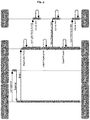
- Fig. 3 shows an exemplary sequence diagram for the exporting step 1000.
- the client obtains an Exporter class instance and calls a method to export the process structure into the XML-based business process package 1.
- the Exporter class instance executes an export for each component.
- the write operation is in the responsibility of an Xml Saver class instance, which will save the exported component as XML.
- JAXB is preferably used as backend.
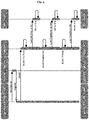
- Fig. 4 shows an exemplary sequence diagram for the importing step 3000.
- the client obtains an Importer class instance and calls a method to import the business process package 1.
- the Importer class instance performs an operation reverse to that explained further above in connection with the Exporter class instance.
- the Importer class is essentially the mirror of the Exporter class.
- the exemplary business process is intended to send an email to a user. It uses a work flow form, where the user can select the addressee of the message and can enter an email body and person type, which is of one of types which are defined by the organizational structure 30.
- the examples provided herein are based on the notation provided by ARIS Process Automation Architect 7.2 (APAA).
- APAA ARIS Process Automation Architect 7.2
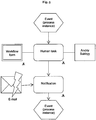
- the above-described control flow 100 can be modeled as shown in Fig. 5 .
- the data flow 110 of the "human task” activity shown in Fig. 5 can be graphically represented as depicted in Fig. 6 .
- the data flow of the separately standing, individual, activity "human task” is not very interesting when it comes to the question of interaction. For example, we need to send an email to the "Selected user" with the text from "E-mail body", respectively. It should be emphasized that the addressee and the text of the email will be entered during human interaction within the workflow form of the "human task” activity.
- this requirement can be implemented by a data flow definition 110 for the "Notification" activity as it is shown in Fig. 7 .
- the "Notification" activity data flow comprises the "Human task” activity data flow, the “Notification” activity dataflow itself, a concatenate operator and assignments.
- the "Notification” activity data flow comprises the "Human task” activity data flow, the “Notification” activity dataflow itself, a concatenate operator and assignments.
- connection As a base abstraction for connections, an XML schema complex type "connection" is used:
Landscapes
- Engineering & Computer Science (AREA)
- Software Systems (AREA)
- General Engineering & Computer Science (AREA)
- Theoretical Computer Science (AREA)
- Physics & Mathematics (AREA)
- General Physics & Mathematics (AREA)
- Management, Administration, Business Operations System, And Electronic Commerce (AREA)
Priority Applications (3)
| Application Number | Priority Date | Filing Date | Title |
|---|---|---|---|
| EP11190879.4A EP2597567A1 (fr) | 2011-11-28 | 2011-11-28 | Procédé et système pour le déploiement automatique des procédés dans un environnement de réseau distribué |
| US13/323,339 US8862698B2 (en) | 2011-11-28 | 2011-12-12 | Method and system for automated deployment of processes to a distributed network environment |
| CN2012104963803A CN103135984A (zh) | 2011-11-28 | 2012-11-28 | 用于向分布式网络环境自动部署流程的方法和系统 |
Applications Claiming Priority (1)
| Application Number | Priority Date | Filing Date | Title |
|---|---|---|---|
| EP11190879.4A EP2597567A1 (fr) | 2011-11-28 | 2011-11-28 | Procédé et système pour le déploiement automatique des procédés dans un environnement de réseau distribué |
Publications (1)
| Publication Number | Publication Date |
|---|---|
| EP2597567A1 true EP2597567A1 (fr) | 2013-05-29 |
Family
ID=45346256
Family Applications (1)
| Application Number | Title | Priority Date | Filing Date |
|---|---|---|---|
| EP11190879.4A Withdrawn EP2597567A1 (fr) | 2011-11-28 | 2011-11-28 | Procédé et système pour le déploiement automatique des procédés dans un environnement de réseau distribué |
Country Status (3)
| Country | Link |
|---|---|
| US (1) | US8862698B2 (fr) |
| EP (1) | EP2597567A1 (fr) |
| CN (1) | CN103135984A (fr) |
Families Citing this family (5)
| Publication number | Priority date | Publication date | Assignee | Title |
|---|---|---|---|---|
| US20150006231A1 (en) * | 2013-06-28 | 2015-01-01 | International Business Machines Corporation | Conversion and/or consolidation of business process management systems |
| CN107463421B (zh) * | 2017-07-14 | 2020-03-31 | 清华大学 | 一种静态流程模型的编译执行方法及系统 |
| US11399068B2 (en) * | 2019-08-21 | 2022-07-26 | Salesforce, Inc. | Distributing data management setup between multiple users |
| AU2023218154B2 (en) * | 2022-02-10 | 2025-08-14 | Ibc | Process execution system, data structure, and process execution program |
| CN115857882A (zh) * | 2022-12-16 | 2023-03-28 | 北京朗思智能科技有限公司 | 一种集成开发环境系统 |
Citations (13)
| Publication number | Priority date | Publication date | Assignee | Title |
|---|---|---|---|---|
| US20040237066A1 (en) * | 2003-04-17 | 2004-11-25 | Auckland Uniservices Limited | Software design system and method |
| EP1662431A1 (fr) | 2004-11-29 | 2006-05-31 | Microsoft Corporation | Modélisation commerciale efficace et flexible basée sur des capacités commerciales structurées |
| US20060241956A1 (en) | 2005-04-22 | 2006-10-26 | Microsoft Corporation | Transforming business models |
| US20070005618A1 (en) | 2005-06-07 | 2007-01-04 | Konstantin Ivanov | Systems and methods for modeling business processes |
| EP1818813A1 (fr) * | 2006-02-02 | 2007-08-15 | Research In Motion Limited | Système, procédé et appareil pour l'utilisation d'outils UML pour la définition d'applications à composants liés de services web |
| US7461335B2 (en) | 2005-05-31 | 2008-12-02 | Sap Ag | Dynamic conversion of data into markup language format |
| US20090144729A1 (en) | 2007-11-30 | 2009-06-04 | Alejandro Guizar | Portable business process deployment model across different application servers |
| US7562041B2 (en) | 2001-01-09 | 2009-07-14 | International Business Machines Corporation | Method and apparatus for facilitating business processes |
| US20090265684A1 (en) | 2008-04-18 | 2009-10-22 | Ids Scheer Aktiengesellschaft | Systems and methods for graphically developing rules for transforming models between description notations |
| US20100057482A1 (en) | 2008-08-28 | 2010-03-04 | Oracle International Corporation | Roundtrip merge of bpel processes and bpmn models |
| US7707158B2 (en) | 2005-02-28 | 2010-04-27 | International Business Machines Corporation | Method and computer program product for enabling dynamic and adaptive business processes through an ontological data model |
| US20100185478A1 (en) | 2009-01-22 | 2010-07-22 | International Business Machines Corporation | Collaborative Working of Business Process Management Methods |
| US20110004564A1 (en) | 2007-12-20 | 2011-01-06 | Jerome Rolia | Model Based Deployment Of Computer Based Business Process On Dedicated Hardware |
Family Cites Families (5)
| Publication number | Priority date | Publication date | Assignee | Title |
|---|---|---|---|---|
| WO2000065763A2 (fr) * | 1999-04-26 | 2000-11-02 | Dodots, Inc. | Appareil et procede pour fournir un contenu provenant d'internet |
| US6571253B1 (en) * | 2000-04-28 | 2003-05-27 | International Business Machines Corporation | Hierarchical view of data binding between display elements that are organized in a hierarchical structure to a data store that is also organized in a hierarchical structure |
| US8418065B2 (en) * | 2001-07-16 | 2013-04-09 | Nuance Communications, Inc. | Method of and system for dynamically controlling during run time a multifunction peripheral (MFP) touch panel user interface (UI) from an external remote network-connected computer |
| WO2006046666A1 (fr) * | 2004-10-27 | 2006-05-04 | Justsystems Corporation | Dispositif de traitement de document et procede de traitement de document |
| JP5239674B2 (ja) * | 2008-09-17 | 2013-07-17 | 株式会社リコー | 情報処理装置、処理制御方法、プログラムおよび記録媒体 |
-
2011
- 2011-11-28 EP EP11190879.4A patent/EP2597567A1/fr not_active Withdrawn
- 2011-12-12 US US13/323,339 patent/US8862698B2/en active Active
-
2012
- 2012-11-28 CN CN2012104963803A patent/CN103135984A/zh active Pending
Patent Citations (14)
| Publication number | Priority date | Publication date | Assignee | Title |
|---|---|---|---|---|
| US7562041B2 (en) | 2001-01-09 | 2009-07-14 | International Business Machines Corporation | Method and apparatus for facilitating business processes |
| US20040237066A1 (en) * | 2003-04-17 | 2004-11-25 | Auckland Uniservices Limited | Software design system and method |
| EP1662431A1 (fr) | 2004-11-29 | 2006-05-31 | Microsoft Corporation | Modélisation commerciale efficace et flexible basée sur des capacités commerciales structurées |
| US20060116922A1 (en) | 2004-11-29 | 2006-06-01 | Microsoft Corporation | Efficient and flexible business modeling based upon structured business capabilities |
| US7707158B2 (en) | 2005-02-28 | 2010-04-27 | International Business Machines Corporation | Method and computer program product for enabling dynamic and adaptive business processes through an ontological data model |
| US20060241956A1 (en) | 2005-04-22 | 2006-10-26 | Microsoft Corporation | Transforming business models |
| US7461335B2 (en) | 2005-05-31 | 2008-12-02 | Sap Ag | Dynamic conversion of data into markup language format |
| US20070005618A1 (en) | 2005-06-07 | 2007-01-04 | Konstantin Ivanov | Systems and methods for modeling business processes |
| EP1818813A1 (fr) * | 2006-02-02 | 2007-08-15 | Research In Motion Limited | Système, procédé et appareil pour l'utilisation d'outils UML pour la définition d'applications à composants liés de services web |
| US20090144729A1 (en) | 2007-11-30 | 2009-06-04 | Alejandro Guizar | Portable business process deployment model across different application servers |
| US20110004564A1 (en) | 2007-12-20 | 2011-01-06 | Jerome Rolia | Model Based Deployment Of Computer Based Business Process On Dedicated Hardware |
| US20090265684A1 (en) | 2008-04-18 | 2009-10-22 | Ids Scheer Aktiengesellschaft | Systems and methods for graphically developing rules for transforming models between description notations |
| US20100057482A1 (en) | 2008-08-28 | 2010-03-04 | Oracle International Corporation | Roundtrip merge of bpel processes and bpmn models |
| US20100185478A1 (en) | 2009-01-22 | 2010-07-22 | International Business Machines Corporation | Collaborative Working of Business Process Management Methods |
Also Published As
| Publication number | Publication date |
|---|---|
| US20130138713A1 (en) | 2013-05-30 |
| US8862698B2 (en) | 2014-10-14 |
| CN103135984A (zh) | 2013-06-05 |
Similar Documents
| Publication | Publication Date | Title |
|---|---|---|
| Lapouchnian et al. | Requirements-driven design and configuration management of business processes | |
| JP5173128B2 (ja) | フローベースおよび制約ベースのワークフローをオーサリングし、実行するための統一モデル | |
| JP5710852B2 (ja) | 設計時および実行時にワークフローを継ぎ目なくオーサリングし編集するためのフレームワーク | |
| US8209672B2 (en) | Systems and methods for transforming modeled business processes into executable processes | |
| JP4496067B2 (ja) | サービス指向アーキテクチャ向けのサービス・インターフェースを自動的に生成するための方法およびシステム | |
| Wang et al. | Change impact analysis in service-based business processes | |
| Khalaf et al. | Business processes for Web Services: Principles and applications | |
| US8108834B2 (en) | Defining and executing processes using declarative programming language constructs | |
| US20040254945A1 (en) | Business process management for a message-based exchange infrastructure | |
| US20060074734A1 (en) | Declarative representation for an extensible workflow model | |
| US20060080117A1 (en) | Maintaining integrity within an adaptive value chain involving cross enterprise interactions | |
| US8538793B2 (en) | System and method for managing real-time batch workflows | |
| JP2006107479A (ja) | ワークフロー領域内の分野横断的動作問題(cross−cuttingbehavioralconcerns)をモデル化するためのフレームワーク | |
| US20120215581A1 (en) | Ad-Hoc and Priority-Based Business Process Execution | |
| Juric | A Hands-on Introduction to BPEL | |
| EP2597567A1 (fr) | Procédé et système pour le déploiement automatique des procédés dans un environnement de réseau distribué | |
| Durai et al. | A novel approach with an extensive case study and experiment for automatic code generation from the XMI schema Of UML models | |
| Wang et al. | A survey of change management in service-based environments | |
| Bendraou et al. | Software process modeling and execution: the UML4SPM to WS-BPEL approach | |
| CN101221637A (zh) | 工作流过程语言定义的一个或多个任务的运行时执行方法 | |
| Hemel et al. | WebWorkFlow: an object-oriented workflow modeling language for web applications | |
| Dai et al. | A framework for model checking web service compositions based on bpel4ws | |
| Ding et al. | SCAFE: A service-centered cloud-native workflow engine architecture | |
| Riccobene et al. | A modeling and executable language for designing and prototyping service-oriented applications | |
| Mendling et al. | Standards for workflow definition and execution |
Legal Events
| Date | Code | Title | Description |
|---|---|---|---|
| PUAI | Public reference made under article 153(3) epc to a published international application that has entered the european phase |
Free format text: ORIGINAL CODE: 0009012 |
|
| 17P | Request for examination filed |
Effective date: 20111128 |
|
| AK | Designated contracting states |
Kind code of ref document: A1 Designated state(s): AL AT BE BG CH CY CZ DE DK EE ES FI FR GB GR HR HU IE IS IT LI LT LU LV MC MK MT NL NO PL PT RO RS SE SI SK SM TR |
|
| AX | Request for extension of the european patent |
Extension state: BA ME |
|
| STAA | Information on the status of an ep patent application or granted ep patent |
Free format text: STATUS: THE APPLICATION IS DEEMED TO BE WITHDRAWN |
|
| 18D | Application deemed to be withdrawn |
Effective date: 20131130 |