EP2597582A2 - Vorrichtung und verfahren zur manipulation einer virtuellen welt durch den einsatz biometrischer informationen - Google Patents
Vorrichtung und verfahren zur manipulation einer virtuellen welt durch den einsatz biometrischer informationen Download PDFInfo
- Publication number
- EP2597582A2 EP2597582A2 EP11809792.2A EP11809792A EP2597582A2 EP 2597582 A2 EP2597582 A2 EP 2597582A2 EP 11809792 A EP11809792 A EP 11809792A EP 2597582 A2 EP2597582 A2 EP 2597582A2
- Authority
- EP
- European Patent Office
- Prior art keywords
- sensor
- sensed information
- virtual world
- unit
- flag
- Prior art date
- Legal status (The legal status is an assumption and is not a legal conclusion. Google has not performed a legal analysis and makes no representation as to the accuracy of the status listed.)
- Granted
Links
Images







Classifications
-
- G—PHYSICS
- G06—COMPUTING OR CALCULATING; COUNTING
- G06F—ELECTRIC DIGITAL DATA PROCESSING
- G06F3/00—Input arrangements for transferring data to be processed into a form capable of being handled by the computer; Output arrangements for transferring data from processing unit to output unit, e.g. interface arrangements
- G06F3/01—Input arrangements or combined input and output arrangements for interaction between user and computer
- G06F3/011—Arrangements for interaction with the human body, e.g. for user immersion in virtual reality
- G06F3/015—Input arrangements based on nervous system activity detection, e.g. brain waves [EEG] detection, electromyograms [EMG] detection, electrodermal response detection
-
- A—HUMAN NECESSITIES
- A61—MEDICAL OR VETERINARY SCIENCE; HYGIENE
- A61B—DIAGNOSIS; SURGERY; IDENTIFICATION
- A61B5/00—Measuring for diagnostic purposes; Identification of persons
-
- A—HUMAN NECESSITIES
- A61—MEDICAL OR VETERINARY SCIENCE; HYGIENE
- A61B—DIAGNOSIS; SURGERY; IDENTIFICATION
- A61B5/00—Measuring for diagnostic purposes; Identification of persons
- A61B5/02—Detecting, measuring or recording for evaluating the cardiovascular system, e.g. pulse, heart rate, blood pressure or blood flow
- A61B5/0205—Simultaneously evaluating both cardiovascular conditions and different types of body conditions, e.g. heart and respiratory condition
- A61B5/02055—Simultaneously evaluating both cardiovascular condition and temperature
-
- A—HUMAN NECESSITIES
- A61—MEDICAL OR VETERINARY SCIENCE; HYGIENE
- A61B—DIAGNOSIS; SURGERY; IDENTIFICATION
- A61B5/00—Measuring for diagnostic purposes; Identification of persons
- A61B5/02—Detecting, measuring or recording for evaluating the cardiovascular system, e.g. pulse, heart rate, blood pressure or blood flow
- A61B5/021—Measuring pressure in heart or blood vessels
-
- A—HUMAN NECESSITIES
- A61—MEDICAL OR VETERINARY SCIENCE; HYGIENE
- A61B—DIAGNOSIS; SURGERY; IDENTIFICATION
- A61B5/00—Measuring for diagnostic purposes; Identification of persons
- A61B5/02—Detecting, measuring or recording for evaluating the cardiovascular system, e.g. pulse, heart rate, blood pressure or blood flow
- A61B5/024—Measuring pulse rate or heart rate
-
- A—HUMAN NECESSITIES
- A61—MEDICAL OR VETERINARY SCIENCE; HYGIENE
- A61B—DIAGNOSIS; SURGERY; IDENTIFICATION
- A61B5/00—Measuring for diagnostic purposes; Identification of persons
- A61B5/05—Detecting, measuring or recording for diagnosis by means of electric currents or magnetic fields; Measuring using microwaves or radio waves
- A61B5/053—Measuring electrical impedance or conductance of a portion of the body
- A61B5/0531—Measuring skin impedance
- A61B5/0533—Measuring galvanic skin response
-
- A—HUMAN NECESSITIES
- A61—MEDICAL OR VETERINARY SCIENCE; HYGIENE
- A61B—DIAGNOSIS; SURGERY; IDENTIFICATION
- A61B5/00—Measuring for diagnostic purposes; Identification of persons
- A61B5/103—Measuring devices for testing the shape, pattern, colour, size or movement of the body or parts thereof, for diagnostic purposes
- A61B5/107—Measuring physical dimensions, e.g. size of the entire body or parts thereof
- A61B5/1072—Measuring physical dimensions, e.g. size of the entire body or parts thereof measuring distances on the body, e.g. measuring length, height or thickness
-
- A—HUMAN NECESSITIES
- A61—MEDICAL OR VETERINARY SCIENCE; HYGIENE
- A61B—DIAGNOSIS; SURGERY; IDENTIFICATION
- A61B5/00—Measuring for diagnostic purposes; Identification of persons
- A61B5/145—Measuring characteristics of blood in vivo, e.g. gas concentration or pH-value ; Measuring characteristics of body fluids or tissues, e.g. interstitial fluid or cerebral tissue
- A61B5/14542—Measuring characteristics of blood in vivo, e.g. gas concentration or pH-value ; Measuring characteristics of body fluids or tissues, e.g. interstitial fluid or cerebral tissue for measuring blood gases
-
- A—HUMAN NECESSITIES
- A63—SPORTS; GAMES; AMUSEMENTS
- A63F—CARD, BOARD, OR ROULETTE GAMES; INDOOR GAMES USING SMALL MOVING PLAYING BODIES; VIDEO GAMES; GAMES NOT OTHERWISE PROVIDED FOR
- A63F13/00—Video games, i.e. games using an electronically generated display having two or more dimensions
- A63F13/20—Input arrangements for video game devices
- A63F13/21—Input arrangements for video game devices characterised by their sensors, purposes or types
- A63F13/212—Input arrangements for video game devices characterised by their sensors, purposes or types using sensors worn by the player, e.g. for measuring heart beat or leg activity
-
- A—HUMAN NECESSITIES
- A63—SPORTS; GAMES; AMUSEMENTS
- A63F—CARD, BOARD, OR ROULETTE GAMES; INDOOR GAMES USING SMALL MOVING PLAYING BODIES; VIDEO GAMES; GAMES NOT OTHERWISE PROVIDED FOR
- A63F13/00—Video games, i.e. games using an electronically generated display having two or more dimensions
- A63F13/20—Input arrangements for video game devices
- A63F13/21—Input arrangements for video game devices characterised by their sensors, purposes or types
- A63F13/215—Input arrangements for video game devices characterised by their sensors, purposes or types comprising means for detecting acoustic signals, e.g. using a microphone
-
- A—HUMAN NECESSITIES
- A63—SPORTS; GAMES; AMUSEMENTS
- A63F—CARD, BOARD, OR ROULETTE GAMES; INDOOR GAMES USING SMALL MOVING PLAYING BODIES; VIDEO GAMES; GAMES NOT OTHERWISE PROVIDED FOR
- A63F2300/00—Features of games using an electronically generated display having two or more dimensions, e.g. on a television screen, showing representations related to the game
- A63F2300/10—Features of games using an electronically generated display having two or more dimensions, e.g. on a television screen, showing representations related to the game characterized by input arrangements for converting player-generated signals into game device control signals
- A63F2300/1012—Features of games using an electronically generated display having two or more dimensions, e.g. on a television screen, showing representations related to the game characterized by input arrangements for converting player-generated signals into game device control signals involving biosensors worn by the player, e.g. for measuring heart beat, limb activity
-
- A—HUMAN NECESSITIES
- A63—SPORTS; GAMES; AMUSEMENTS
- A63F—CARD, BOARD, OR ROULETTE GAMES; INDOOR GAMES USING SMALL MOVING PLAYING BODIES; VIDEO GAMES; GAMES NOT OTHERWISE PROVIDED FOR
- A63F2300/00—Features of games using an electronically generated display having two or more dimensions, e.g. on a television screen, showing representations related to the game
- A63F2300/50—Features of games using an electronically generated display having two or more dimensions, e.g. on a television screen, showing representations related to the game characterized by details of game servers
- A63F2300/55—Details of game data or player data management
- A63F2300/5546—Details of game data or player data management using player registration data, e.g. identification, account, preferences, game history
- A63F2300/5553—Details of game data or player data management using player registration data, e.g. identification, account, preferences, game history user representation in the game field, e.g. avatar
-
- G—PHYSICS
- G16—INFORMATION AND COMMUNICATION TECHNOLOGY [ICT] SPECIALLY ADAPTED FOR SPECIFIC APPLICATION FIELDS
- G16H—HEALTHCARE INFORMATICS, i.e. INFORMATION AND COMMUNICATION TECHNOLOGY [ICT] SPECIALLY ADAPTED FOR THE HANDLING OR PROCESSING OF MEDICAL OR HEALTHCARE DATA
- G16H50/00—ICT specially adapted for medical diagnosis, medical simulation or medical data mining; ICT specially adapted for detecting, monitoring or modelling epidemics or pandemics
- G16H50/50—ICT specially adapted for medical diagnosis, medical simulation or medical data mining; ICT specially adapted for detecting, monitoring or modelling epidemics or pandemics for simulation or modelling of medical disorders
Definitions
- Example embodiments relate to a method and apparatus for processing a virtual world, and more particularly, to an apparatus and method for applying information about a real world to the virtual world.
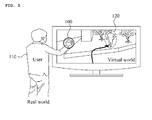
- the interaction between a real world and a virtual world has two directions. In one direction, data information obtained by a sensor in the real world may be reflected to the virtual world. In the other direction, data information obtained from the virtual world may be reflected to the real world using an actuator.
- Embodiments suggest a virtual world processing apparatus and method for applying data obtained through a sensor in the real world to the virtual world, to achieve the interaction between the real world and the virtual world.
- Example embodiments provide a virtual world processing apparatus for enabling interoperability between a virtual world and a real world or interoperability between virtual worlds, the virtual world processing apparatus including an input unit to receive an input of sensed information collected by a bio sensor with respect to biometrics of a user in the real world, and an adapting unit to adapt the sensed information, based on a sensor capability associated with a capability of the bio sensor.
- the virtual world may be classified into a virtual environment and a virtual world obj ect.
- the virtual world obj ect may be classified into an avatar and a virtual object.
- the bio sensor may correspond to a sensor configured using a combination of at least two of the body height sensor, the body weight sensor 111, the body temperature sensor 112, the body fat sensor, the blood type sensor, the blood pressure sensor 114, the blood sugar sensor 115, the blood oxygen sensor 113, the heart rate sensor, the EEG sensor, the ECG sensor, the EMG sensor, the EOG sensor, the GSR sensor, and the electrograph sensor.
- the virtual world processing apparatus may collect EEG information of the user 101 in the real world, using the EEG sensor, and may adapt an ability with respect to a concentration in the experience-type game 141, for example, an archery game, based on the collected EEG information.
- the virtual world processing apparatus may collect electrograph information between a reference electrode and an active electrode of the user 101, using the electrograph sensor, and may determine the health 142 of the user 101 in the real world, based on the collected electrograph information.
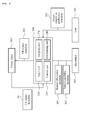
- a virtual world processing apparatus 300 that enables interoperability between a virtual world and a real world, or interoperability between virtual worlds may include an input unit 310, and an adapting unit 320.
- the input unit 310 may receive an input of sensed information 302 collected by a bio sensor 301 with respect to biometrics of a user in the real world.
- the sensed information 302 will be described in detail later.
- the input unit 310 may receive an input of a plurality of sensed information 302 from a plurality of bio sensors 301.
- the adapting unit 320 may adapt the sensed information 102, based on sensor capability 303 associated with capability of the bio sensor 301.
- the sensor capability 302 will be described in detail later.
- the adapting unit 320 may adapt the VR object data 361 by applying the sensed information adapted, to the VR object data 361, thereby generating VR object data 362.
- the virtual world processing apparatus 300 may further include a control unit 330.
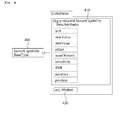
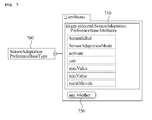
- FIG. 6 illustrates a syntax of sensor capability base attributes according to example embodiments.
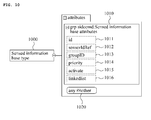
- the binary representation may indicate at least one flag as a data field. That is, using the binary representation, the sensed information may include the at least one flag.
- Example 2 shows an example of the body weight sensor type. However, Example 2 is provided as only an example of the body weight sensor type, and example embodiments are not limited thereto.
- Table 12 shows additional semantics for the binary representation of the body weight sensor type.
- Name Definition unitFlag This field, which is only present in the binary representation, signals that a unit other than a default unit is being used. A value of "1" means that the unit being used is specified in unit attributes, and "0" means that the default unit is being used.
- Example 3 shows an example of the body temperature sensor type. However, Example 3 is provided as only an example of the body temperature sensor type, and example embodiments are not limited thereto.
- the body fat sensor type may include at least one of attributes of a timestamp, a unit, and a value.
- the value denotes information about a value sensed by the body fat sensor.
- the value may be sensed in units of a percentage (%).
- Table 20 shows a binary representation syntax of the body fat sensor type.
- Source 6 shows sensed information with respect to a blood type sensor, using XML.
- a program source of Source 6 is provided only as an example, and example embodiments are not limited thereto.
- the blood type sensor type may include at least one of attributes of an ABO type and an Rh type.
- the ABO type denotes information about ABO blood types sensed by the blood type sensor.
- the ABO blood types may include A, B, AB, and O.
- the Rh type denotes information about Rh blood types sensed by the blood type sensor.
- the Rh types may include Rh positive (+) and Rh negative (-).
- Table 24 shows a binary representation syntax of the blood type sensor type.
- BloodTypeSensorType Number of bits Mnemonic SensedInfoBaseType See above SensedInfoBaseType ABOType 3 bslbf RhType 1 bslbf ⁇
- Table 25 shows additional semantics for the binary representation of the blood type sensor type.
- ABOType describes a sensed value of ABO blood types, for example, A, B, AB, and O.
- Table 26 specifies binary representations of respective types.
- RHType describes a sensed value of Rh blood types, for example, Rh positive (+) and Rh negative (1). (0: Rh positive (+), 1: Rh negative (-))
- Table 26 shows a binary representation and types of the ABOType field. [Table 26] Binary representation (3 bits) Type 0 A 1 B 2 AB 3 O 4-7 reserved
- Source 7 shows sensed information with respect to a blood pressure sensor, using XML.
- a program source of Source 7 is provided only as an example, and example embodiments are not limited thereto.
- a blood pressure sensor type may correspond to a tool to describe sensed information with respect to the blood pressure sensor.
- the blood pressure sensor type may include at least one of attributes of a timestamp, a unit, a systolic blood pressure (systolicBP), a diastolic blood pressure (diastolic BP), and a mean arterial pressure (MAP).
- systolicBP systolic blood pressure
- diastolic blood pressure diastolic blood pressure
- MAP mean arterial pressure
- the diastolicBP denotes information about a diastolic blood pressure sensed by the blood pressure sensor.
- Example 6 shows an example of the blood pressure sensor type. However, Example 6 is provided as only an example of the blood pressure sensor type, and example embodiments are not limited thereto.
- Source 8 shows sensed information with respect to a blood sugar sensor, using XML.
- a program source of Source 8 is provided only as an example, and example embodiments are not limited thereto.
- the value denotes information about a value sensed by the blood sugar sensor.
- the value may be sensed in units of milligrams per deciliter (mg/dL).
- Example 7 shows an example of the blood sugar sensor type. However, Example 7 is provided as only an example of the blood sugar sensor type, and example embodiments are not limited thereto.
- the sensed information measured by the blood sugar sensor may correspond to a value of 115 mg/dL.
- Table 34 shows additional semantics for the binary representation of the blood sugar sensor type.
- Name Definition unitFlag This field, which is only present in the binary representation, signals that a unit other than a default unit is being used. A value of "1" means that the unit being used is specified in unit attributes, and "0" means that the default unit is being used.
- Table 36 shows additional semantics for the binary representation of the blood oxygen sensor type.
- Name Definition unitFlag This field, which is only present in the binary representation, signals that a unit other than a default unit is being used. A value of "1" means that the unit being used is specified in unit attributes, and "0" means that the default unit is being used.
- the timestamp denotes information about a sensing time of the heart rate sensor.
- the unit denotes information about a unit of the sensed information of the heart rate sensor.
- the value denotes information about a value sensed by the heart rate sensor.
- the value may be sensed in units of beats per minute (bpm).
- Example 9 shows an example of the EEG sensor type. However, Example 9 is provided as only an example of the EEG sensor type, and example embodiments are not limited thereto.
- Table 44 shows additional semantics for the binary representation of the EEG sensor type.
- electrodeLocationBaseFlag This field, which is only present in the binary representation, signals whether electrodeLocationBase attributes are specified. A value of “1” means the attributes shall be used, and “0” means the attributes shall not be used.
- electrodeLocationFlag This field, which is only present in the binary representation, signals whether electrodeLocationFlag attributes are specified. A value of "1” means the attributes shall be used, and "0” means the attributes shall not be used.
- wavePatternFlag This field, which is only present in the binary representation, signals whether wavePatternFlag attributes are specified.
- Table 45 shows a binary representation of the electrodeLocationBase field and an electrode location type.
- Binary representation (8 bits) Electrode location type 0 reserved 1 EEG Frontal Pole 1 2 EEG Frontal Pole 2 3 EEG Frontal 3 4 EEG Frontal 4 5 EEG Central 3 6 EEG Central 4 7 EEG Parietal 3 8 EEG Parietal 4 9 EEG Occipital 1 10 EEG Occipital 2 11 EEG Anterior temporal 7 12 EEG Anterior temporal 8 13 EEG Middle temporal 3 14 EEG Middle temporal 4 15 EEG Posterior temporal 5 16 EEG Posterior temporal 6 17 EEG Midline-Frontal 18 EEG Midline-Central 19 EEG Midline-Parietal 20 EEG Auricular 1 21 EEG Auricular 2 22 ECG Right Arm 23 ECG Left Arm 24 ECG Right Leg 25 ECG Left Leg 26 ECG V1 27 ECG V2 28 ECG V3 29 ECG V4 30 ECG V5 31 ECG V6 32 EOG A 33 EOG B 34
- Source 11 shows sensed information with respect to an ECG sensor, using XML.
- a program source of Source 11 is provided only as an example, and example embodiments are not limited thereto.
- the timestamp denotes information about a sensing time of the ECG sensor.
- the unit denotes information about a unit of the sensed information of the ECG sensor.
- the EMG sensor type may include at least one of attributes of a timestamp, a unit, and an array value.
- the timestamp denotes information about a sensing time of the EMG sensor.
- the units denote information about units of the sensed information of the EMG sensor.
- the array value denotes information about a value sensed by the EMG sensor.
- the array value may be sensed in units of mV.
- Example 11 shows an example of the EMG sensor type. However, Example 11 is provided as only an example of the EMG sensor type, and example embodiments are not limited thereto.
- Table 52 shows a binary representation syntax of the EMG sensor type.
- EMGSensorType Number of bits
- ElectrographSensorBaseAttributesType ElectrographSensor BaseAttributesType electrographSensorType See above electrographSensor Type ⁇
- the unit denotes information about a unit of the sensed information of the EOG sensor.
- the array value denotes information about a value sensed by the EOG sensor.
- the array value may be sensed in units of ⁇ V.
- Example 12 shows an example of the EOG sensor type. However, Example 12 is provided as only an example of the EOG sensor type, and example embodiments are not limited thereto.
- electrodeLocation describes a location of a base electrode as a reference to a classification scheme term which is provided by ElectrodeLocationCS defined in A.2.X of ISO/IEC 23005-6. Note that these attributes may use the binary representation table for electrodeLocationBase, identically.
- Table 57 shows a binary representation of the electrodeLocationBase field and an electrode location type.
- Binary representation (8 bits) Electrode location type 0 reserved 1 EEG Frontal Pole 1 2 EEG Frontal Pole 2 3 EEG Frontal 3 4 EEG Frontal 4 5 EEG Central 3 6 EEG Central 4 7 EEG Parietal 3 8 EEG Parietal 4 9 EEG Occipital 1 10 EEG Occipital 2 11 EEG Anterior temporal 7 12 EEG Anterior temporal 8 13 EEG Middle temporal 3 14 EEG Middle temporal 4 15 EEG Posterior temporal 5 16 EEG Posterior temporal 6 17 EEG Midline-Frontal 18 EEG Midline-Central 19 EEG Midline-Parietal 20 EEG Auricular 1 21 EEG Auricular 2 22 ECG Right Arm 23 ECG Left Arm 24 ECG Right Leg 25 ECG Left Leg 26 ECG V1 27 ECG V2 28 ECG V3 29 ECG V4 30 ECG V5 31 ECG V6 32 EOG A 33 EOG
- Table 58 shows Source 14.
- Source 14 shows sensed information with respect to a GSR sensor, using XML.
- a program source of Source 14 is provided only as an example, and example embodiments are not limited thereto.
- the GSR sensor type may include at least one of attributes of a timestamp, a unit, and an array value.
- the timestamp denotes information about a sensing time of the GSR sensor.
- the unit denotes information about a unit of the sensed information of the GSR sensor.
- the array value denotes information about a value sensed by the GSR sensor.
- the array value may be sensed in units of micromhos ( ⁇ ).
- Example 13 shows an example of the GSR sensor type. However, Example 13 is provided as only an example of the GSR sensor type, and example embodiments are not limited thereto.
- Table 60 shows a binary representation syntax of the GSR sensor type.
- Table 61 shows additional semantics for the binary representation of the GSR sensor type.
- Name Definition unitFlag This field, which is only present in the binary representation, signals that a unit other than a default unit is being used. A value of "1" means that the unit being used is specified in unit attributes, and "0" means that the default unit is being used.
- dimX This field, which is only present in the binary representation, indicates a number of sensing locations.
- dimY This field, which is only present in the binary representation, indicates a number of pieces of time series-sensed information with respect to each sensing location.
- Table 62 shows Source 15.
- Source 15 shows sensed information with respect to a bio sensor, using XML.
- a program source of Source 15 is provided only as an example, and example embodiments are not limited thereto.
- a bio sensor type may correspond to a tool to describe sensed information with respect to the bio sensor.
- the bio sensor type may include at least one of attributes of a body height, a body weight, a body temperature, a body fat, a blood type, a blood pressure, a blood sugar, a blood oxygen, a heart rate, an EEG, an ECG, an EMG, an EOG, and GSR.
- Table 63 shows a binary representation syntax of the bio sensor type.
- BioSensorType ⁇ Number of bits Mnemonic BodyHeightFlag 1 bslbf BodyWeightFlag 1 bslbf BodyTemperatureFlag 1 bslbf BodyFatFlag 1 bslbf BloodTypeFlag 1 bslbf BloodPressureFlag 1 bslbf BloodSugarFlag 1 bslbf BloodOxygenFlag 1 bslbf HeartRateFlag 1 bslbf EEGFlag 1 bslbf ECGFlag 1 bslbf EMGFlag 1 bslbf EOGFlag 1 bslbf GSRFlag 1 bslbf SensedlnfoBaseType SensedInfoBaseTypeTyp e if(BodyHeightFlag) ⁇ BodyHeight BodyHeightSensorType ⁇ if(BodyWeightF
- Table 64 shows additional semantics for the binary representation of the bio sensor type.
- BodyHeightFlag This field, which is only present in the binary representation, signals whether height-sensed information is available. A value of “1” means the sensed information is included, and “0” means the sensed information is not included.
- BodyWeightFlag This field, which is only present in the binary representation, signals whether weight-sensed information is available. A value of “1” means the sensed information is included, and “0” means the sensed information is not included.
- BodyTemperatureFlag This field, which is only present in the binary representation, signals whether temperature-sensed information is available. A value of "1” means the sensed information is included, and "0" means the sensed information is not included.
- BodyFatFlag This field, which is only present in the binary representation, signals whether body fat-sensed information is available. A value of “1” means the sensed information is included, and “0” means the sensed information is not included.
- BloodTypeFlag This field, which is only present in the binary representation, signals whether blood type-sensed information is available. A value of “1” means the sensed information is included, and “0” means the sensed information is not included.
- BloodPressureFlag This field, which is only present in the binary representation, signals whether blood pressure-sensed information is available. A value of “1” means the sensed information is included, and "0" means the sensed information is not included.
- BloodSugarFlag This field, which is only present in the binary representation, signals whether blood sugar-sensed information is available. A value of “1” means the sensed information is included, and “0” means the sensed information is not included.
- BloodOxygenFlag This field, which is only present in the binary representation, signals whether blood oxygen-sensed information is available. A value of “1” means the sensed information is included, and “0” means the sensed information is not included.
- HeartRateFlag This field, which is only present in the binary representation, signals whether heart rate-sensed information is available. A value of "1" means the sensed information is included, and "0" means the sensed information is not included.
- EOGFlag This field, which is only present in the binary representation, signals whether EOG-sensed information is available. A value of "1” means the sensed information is included, and “0” means the sensed information is not included.
- GSRFlag This field, which is only present in the binary representation, signals whether GSR-sensed information is available. A value of "1” means the sensed information is included, and “0” means the sensed information is not included.
- Table 65 shows Source 16.
- Source 16 shows sensed information with respect to an electrograph sensor, using XML.
- a program source of Source 16 is provided only as an example, and example embodiments are not limited thereto.
- the timestamp denotes information about a sensing time of the electrograph sensor.
- the waveform label describes a label of a based waveform.
- the waveform label may reference a classification scheme term which is provided by an electrography classification scheme.
- the electrography classification scheme may be defined in A.2.X of ISO/IEC 23005-6.
- the electrode location described a location of a base electrode.
- the electrode location base may reference a classification scheme term which is provided by the electrography classification scheme.
- the electrography classification scheme may be defined in A.2.X of ISO/IEC 23005-6.
- the wave value denotes a time series-sensed value of the electrograph sensor, in units of microvolts ( ⁇ V).
- the unit describes a unit of a sensed value with respect to both the wave value and a maximum amplitude when another unit, other than a default unit, is used.
- the unit may reference a classification scheme term which is provided by the electrography classification scheme.
- the electrography classification scheme may be defined in A.2.X of ISO/IEC 23005-6.
- the maximum amplitude denotes a maximum amplitude of the electrograph sensor, in units of ⁇ V.
- the wave pattern describes a pattern of a sensed wave.
- the wave pattern may reference a classification scheme term which is provided by the electrography classification scheme.
- the electrography classification scheme may be defined in A.2.X of ISO/IEC 23005-6.
- the electrical activity may create a waveform between the two electrodes.
- a first waveform may be obtained from two electrodes FP1 and F7, as shown in FIG. 12 .
- Table 66 shows types of waveforms classified based on a frequency.
- Alpha waveform waveform having frequency ranging from 8 to13 Hz
- Beta waveform waveform having frequency ranging from 13 to 30 Hz
- Theta waveform waveform having frequency ranging from 4 to 8 Hz
- Delta waveform waveform having frequency ranging from 0.5 to 4 Hz
- Table 67 shows a classification scheme for waveform patterns.
- the sensed information with respect to the electrograph sensor may include time series electrical potential data, labels corresponding to two electrode locations, waveform classification based on patterns of the waveform, and a maximum amplitude.
- Table 68 shows a binary representation syntax of the electrograph sensor type.
- Table 70 shows a binary representation of the waveformLabel field and a waveform type.
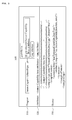
- FIG. 11 illustrates an operating method of a virtual world processing apparatus according to example embodiments.
- the virtual world processing apparatus may enable interoperability between a virtual world and a real world, or interoperability between virtual worlds.
- the virtual world processing apaprauts may receive an input of sensed information collected by a bio sensor with respect to biometrics of a user in the real world.
- the virtual world processing apparatus may adapt the sensed information based on a sensor capability associated with a capability of the bio sensor.
- the virtual world processing apparatus may receive an input of the sensed information of 80 kg.
- the virtual world processing apparatus may adapt the sensed information of 80 kg to 70 kg.
- the virtual world processing apparatus may apply the sensed information of 70 kg adapted, to the virtual world.
- the virtual world processing apparatus may adapt the VR object data by applying the sensed information adapted, to the VR object data, thereby generating another piece of VR object data.
- the virtual world processing apparatus may control an experience-type game played in the virtual world, based on the sensed information adapted.
- the virtual world processing apparatus may generate the other piece of the VR object data by applying the sensed information adapted, to the VR object data indicating information about the virtual object in the experience-type game, and may apply the other piece of the VR object data generated to the experience-type game, thereby controlling the experience-type game.
- the virtual world processing apparatus may determine a health of the user in the real world, based on the sensed information adapted. In addition, the virtual world processing apparatus may provide the user with the determined health of the user.
- FIG. 12 illustrates location names used in a 10-20 system for EEG according to example embodiments.
- symbols of FP1 and FP2 denote a frontal pole.
- symbols of F3 and F4 denote a frontal lobe.
- symbols of C3 and C4 denotes a central lobe.
- symbols of P3 and P4 denote a pariental lobe.
- Symbols of O1 and O2 denote an occipital lobe.
- Symbols of F7 and F8 denote an anterior temporal lobe.
- symbols of T3 and T4 denote a middle temporal lobe.
- Symbols of T5 and T6 denote a posterior temporal lobe.
- a symbol of FZ dentoes a midline-frontal lobe.
- a symbol of CZ dentoes a midline-central lobe.
- a symbol of PZ denotes a midline-pariental lobe.
- Symbols of A1 and A2 denotes an auricular lobe.
- first letters of F, T, C, P, and O denote frontal, temporal, central, pariental, and occipital lobes, respectively.
- a latter letter of Z denotes an electrode positioned in the center.
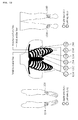
- FIG. 13 illustrates location names used in a 12-lead ECG system according to example embodiments.
- An ECG may include a location map that is widely used to indciate electrodes. Acronyms of each location are illustrated in FIG. 13 .
- each label in the 12-lead system may have predetermined locations of the electrodes.
- V 1 may be obtained from a unipolar electrode at a location of V 1 .
- Table 71 describes electrode labels and electrode placement.
- Electrode label Electrode placement RA 1310 On the right arm, avoiding bony prominences.
- LA 1320 In the same location that RA 1310 was placed, but on the left arm this time.
- RL 1330 On the right leg, avoiding bony prominences.
- LL 1340 In the same location that RL 1330 was placed, but on the left leg this time
- V 1 1350 In the fourth intercostal space (between ribs 4 & 5) just to the right of the sternum (breastbone).
- V 2 1352 In the fourth intercostal space (between ribs 4 & 5) just to the left of the sternum V 3 1354 Between leads V 2 1352 and V 4 1356.
- V 4 1356 In the fifth intercostal space (between ribs 5 & 6) in the mid-clavicular line (the imaginary line that extends down from the midpoint of the clavicle (collarbone).
- V 5 1358 Horizontally even with V 4 1356, but in the anterior axillary line.
- the anterior axillary line is the imaginary line that runs down from the point midway between the middle of the clavicle and the lateral end of the clavicle; the lateral end of the collarbone is the end closer to the arm.
- V 6 1360 Horizontally even with V 4 1356 and V 5 1358 in the mid-axillary line.
- the mid-axillary line is the imaginary line that extends down from the middle of the patient's armpit.
- Table 72 shows a classification scheme for electrode placement.
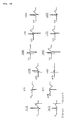
- FIG. 14 illustrates 12 leads derived from 10-electrode placement.
- a lead I 1410, a lead II 1415, and a lead III 1420 are limb leads. Electrodes of each of these signals may be placed on limbs, for example, each arm, and a left leg.
- the lead II 1415 denotes a voltage between a left leg (LL) electrode and the RA electrode.
- the lead III 1420 denotes a voltage between the LL electrode and the LA electrode.
- Bipolar leads may have a single positive pole and a single negative pole.
- the limb leads for example, the lead I 1410, the lead II 1415, and the lead III 1420, may correspond to bipolar leads.
- Unipolar leads also may have two poles, however, a negative pole may correspond to a composite pole made up of signals from several other electrodes.
- leads excluding the limb leads may correspond to unipolar leads.
- the leads excluding the limb leads may correspond to a lead augmented vector right (aVR) 1425, a lead augmented vector left (aVL) 1430, a lead augmented vector foot (aVF) 1435, a lead V 1 1440, a lead V 2 1445, a lead V 3 1450, a lead V 4 1455, a lead V 5 1460, and a lead V 6 1465.
- aVR lead augmented vector right
- aVL lead augmented vector left
- aVF lead augmented vector foot
- the lead aVR 1425, the lead aVL 1430, and the lead aVF 1435 may correspond to augmented limb leads.
- the augmented limb leads may be derived from three electrodes, like the limb leads. However, the augmented limb leads may veiw a heart from different angles or vectors.
- the lead aVR 1425 may have an positive electrode on a right arm.
- a negative electrode may correspond to a combination of the LA electrdoe and the LL electrode, which may augment a signal strength of the positive electrdoe on the right arm.
- the lead aVR 1425 may be computed by Equation 4.
- ⁇ VR RA - 1 2 ⁇ LA + LL .
- the lead aVL 1430 may have a positive electrode on a left arm.
- a negative electrode may correspond to a combination of the RA electrode and the LL electrode, which may augment a signal strength of the positive electrode on the left arm.
- the lead aVL 1430 may be computed by Equation 5.
- ⁇ VR RA - 1 2 ⁇ LA + LL .
- the lead aVF 1435 may have a positive electrode on the left leg.
- a negative electrode may correspond to a combination of the RA electrode and the LL electrode, which may augment a signal strength of the positive electrode on the left leg.
- the lead aVR 1425, the lead aVL 1430, and the lead aVF 1435 may be computed based on the limb leads, as expressed by Equation 7.
- ⁇ ⁇ VR - I + II 2
- ⁇ ⁇ VL I - II 2
- ⁇ VF II - I 2
- FIG. 15 illustrates a typical waveform of ECG.
- a typical ECG tracing of a cardiac cycle may consist of a P wave 1510, a QRS complex 1595, a T wave 1550, and a U wave, which is normally visible in 50 to 75% of ECGs.
- an ECG waveform may correspond to a composite waveform of five different waveforms, for example, the P wave 1510, a Q wave 1520 an R wave 1530, an S wave 1540, and the T wave 1550, in series.
- a main electrical vector may be directed from an SA node to an AV node, and may spread from a right atrium to a left atrium.
- the main electrical vector may be converted into the P wave 1510 on the ECG. Duration of the P wave 1510 may correspond to 80 milliseconds (ms).
- the T wave 1550 may represent repolarization or recovery of ventricles.
- An interval from the beginning of the QRS complex 1595 to an apex of the T wave 1550 may be referred to as an absolute refractory period.
- a last half of the T wave 1550 may be referred to as a relative refractory period.
- Duration of the T wave 1550 may correspond to 160 ms.
- a PR segment 1560 may connect the P wave 1510 and the QRS complex 1595.
- An ST segment 1570 may connect the QRS complex 1595 and the T wave 1550.
- a PR interval 1580 may be measured from the beginning of the P wave 1510 to the beginning of the QRS complex 1595.
- the QRS complex 1595 may reflect a rapid depolarization of the right and left ventricles.
- the right and left ventricles may have a large muscle mass when compared to the atria. Accordingly, the QRS complex 1595 may have a much larger amplitude than the P wave 1510.
- time series data of the ECG waveform may not be classified in a predetermined pattern, however, may need the whole time series data to identify characteristics of the waveform. Therefore, the time series of electrical potential data at each lead and a corresponding label of the each lead may need to be used.
- Example embodiments include computer-readable media including program instructions to implement various operations embodied by a computer.
- the media may also include, alone or in combination with the program instructions, data files, data structures, tables, and the like.
- the media and program instructions may be those specially designed and constructed for the purposes of example embodiments, or they may be of the kind well known and available to those having skill in the computer software arts.
- Examples of computer-readable media include magnetic media such as hard disks, floppy disks, and magnetic tape; optical media such as CD ROM discs; magneto-optical media such as floptical discs; and hardware devices that are specially configured to store and perform program instructions, such as read-only memory devices (ROM) and random access memory (RAM).
- ROM read-only memory devices
- RAM random access memory
- Examples of program instructions include both machine code, such as produced by a compiler, and files containing higher level code that may be executed by the computer using an interpreter.
- the described hardware devices may be configured to act as one or more software modules in order to perform the operations of the above-described example embodiments, or vice versa.
Landscapes
- Health & Medical Sciences (AREA)
- Life Sciences & Earth Sciences (AREA)
- Engineering & Computer Science (AREA)
- Cardiology (AREA)
- General Health & Medical Sciences (AREA)
- Heart & Thoracic Surgery (AREA)
- Biophysics (AREA)
- Physics & Mathematics (AREA)
- Biomedical Technology (AREA)
- Animal Behavior & Ethology (AREA)
- Veterinary Medicine (AREA)
- Public Health (AREA)
- Pathology (AREA)
- Medical Informatics (AREA)
- Molecular Biology (AREA)
- Surgery (AREA)
- Multimedia (AREA)
- Physiology (AREA)
- Human Computer Interaction (AREA)
- Pulmonology (AREA)
- Dermatology (AREA)
- General Engineering & Computer Science (AREA)
- Theoretical Computer Science (AREA)
- Nuclear Medicine, Radiotherapy & Molecular Imaging (AREA)
- Radiology & Medical Imaging (AREA)
- Oral & Maxillofacial Surgery (AREA)
- Vascular Medicine (AREA)
- Dentistry (AREA)
- Neurology (AREA)
- Neurosurgery (AREA)
- Optics & Photonics (AREA)
- General Physics & Mathematics (AREA)
- User Interface Of Digital Computer (AREA)
- Measuring And Recording Apparatus For Diagnosis (AREA)
Applications Claiming Priority (4)
| Application Number | Priority Date | Filing Date | Title |
|---|---|---|---|
| KR20100070135 | 2010-07-20 | ||
| KR20100097267 | 2010-10-06 | ||
| KR1020110024289A KR101890717B1 (ko) | 2010-07-20 | 2011-03-18 | 생체 정보를 활용한 가상 세계 조작 장치 및 방법 |
| PCT/KR2011/004346 WO2012011665A2 (ko) | 2010-07-20 | 2011-06-14 | 생체 정보를 활용한 가상 세계 조작 장치 및 방법 |
Publications (3)
| Publication Number | Publication Date |
|---|---|
| EP2597582A2 true EP2597582A2 (de) | 2013-05-29 |
| EP2597582A4 EP2597582A4 (de) | 2015-06-10 |
| EP2597582B1 EP2597582B1 (de) | 2017-10-04 |
Family
ID=45497248
Family Applications (1)
| Application Number | Title | Priority Date | Filing Date |
|---|---|---|---|
| EP11809792.2A Active EP2597582B1 (de) | 2010-07-20 | 2011-06-14 | Verfahren zur Manipulation einer virtuellen Welt durch den Einsatz biometrischer Informationen |
Country Status (6)
| Country | Link |
|---|---|
| US (1) | US9545567B2 (de) |
| EP (1) | EP2597582B1 (de) |
| JP (1) | JP6145405B2 (de) |
| KR (1) | KR101890717B1 (de) |
| CN (1) | CN103026360B (de) |
| WO (1) | WO2012011665A2 (de) |
Cited By (2)
| Publication number | Priority date | Publication date | Assignee | Title |
|---|---|---|---|---|
| US9457229B2 (en) | 2012-12-21 | 2016-10-04 | Applejack 199 L.P. | Sensor-based gaming system for an avatar to represent a player in a virtual environment |
| US10157487B2 (en) | 2015-07-30 | 2018-12-18 | International Business Machines Corporation | VR biometric integration |
Families Citing this family (29)
| Publication number | Priority date | Publication date | Assignee | Title |
|---|---|---|---|---|
| US8860563B2 (en) * | 2012-06-14 | 2014-10-14 | Immersion Corporation | Haptic effect conversion system using granular synthesis |
| KR102013708B1 (ko) * | 2013-03-29 | 2019-08-23 | 삼성전자주식회사 | 자동 초점 설정 방법 및 이를 위한 장치 |
| KR101539923B1 (ko) * | 2013-12-27 | 2015-07-29 | 가톨릭대학교 산학협력단 | 이중 기계학습 구조를 이용한 생체신호 기반의 안구이동추적 시스템 및 이를 이용한 안구이동추적 방법 |
| CN103654733B (zh) * | 2014-01-08 | 2015-08-05 | 南京鱼跃软件技术有限公司 | 一种全科测量系统 |
| JP2015196091A (ja) * | 2014-04-02 | 2015-11-09 | アップルジャック 199 エル.ピー. | アバターが仮想環境内でプレイヤーを表すためのセンサベースのゲームシステム |
| US9389733B2 (en) * | 2014-08-18 | 2016-07-12 | Sony Corporation | Modal body touch using ultrasound |
| JP2016110631A (ja) | 2014-12-02 | 2016-06-20 | 三星電子株式会社Samsung Electronics Co.,Ltd. | 状態推定装置、状態推定方法およびプログラム |
| WO2016089105A1 (ko) * | 2014-12-02 | 2016-06-09 | 삼성전자 주식회사 | 사용자의 상태를 나타내는 상태 데이터를 획득하는 방법 및 디바이스 |
| KR101756326B1 (ko) * | 2015-11-20 | 2017-07-26 | 동국대학교 산학협력단 | Nui/nux 기반의 vr환경 게임 컨트롤을 시뮬레이션하는 방법, 시스템 및 컴퓨터 판독가능 기록매체 |
| WO2017113387A1 (zh) * | 2015-12-31 | 2017-07-06 | 深圳市洛书和科技发展有限公司 | 传感器采集平台 |
| KR102038120B1 (ko) | 2016-12-02 | 2019-10-30 | 피손 테크놀로지, 인크. | 신체 조직 전기 신호의 검출 및 사용 |
| US10394324B2 (en) | 2017-03-13 | 2019-08-27 | Disney Enterprises, Inc. | Configuration for adjusting a user experience based on a biological response |
| US11625473B2 (en) | 2018-02-14 | 2023-04-11 | Samsung Electronics Co., Ltd. | Method and apparatus with selective combined authentication |
| CN110227244A (zh) * | 2019-06-21 | 2019-09-13 | 上海电机学院 | 肌肉电控制的模拟拳击互动系统 |
| CN110237514A (zh) * | 2019-06-21 | 2019-09-17 | 上海电机学院 | 肌肉电控制的模拟打保龄球互动设备 |
| KR102381446B1 (ko) * | 2019-08-05 | 2022-04-01 | 장대규 | 스마트 기기를 구비한 led 마스크 |
| CN110917612A (zh) * | 2019-11-13 | 2020-03-27 | 芯海科技(深圳)股份有限公司 | 游戏交互方法、装置、电子设备及存储介质 |
| KR102341866B1 (ko) * | 2021-08-31 | 2021-12-22 | 주식회사 에스에이엠지엔터테인먼트 | 메타버스 디지털아이돌을 구현하는 인공지능 기반 플랫폼 제공 시스템 및 그 방법 |
| KR102592521B1 (ko) * | 2021-11-22 | 2023-10-23 | 주식회사 바이오브레인 | 기상 데이터와 메타버스 연동을 위한 확장현실 가상 콘텐츠 제공 시스템 |
| JP7466083B2 (ja) * | 2021-11-25 | 2024-04-12 | 株式会社カプコン | ゲームプログラム、ゲーム装置、ゲームシステム |
| KR102443946B1 (ko) * | 2022-03-03 | 2022-09-16 | 가천대학교 산학협력단 | 허위 아바타 정보로부터 메타버스플랫폼 내 아바타의 정보를 보호하기 위한 아바타의 정보에 대한 소유자 검증을 제공하는 시스템 및 방법 |
| KR102432248B1 (ko) * | 2022-03-03 | 2022-08-12 | 가천대학교 산학협력단 | 아바타를 생성하여 외부의 메타버스플랫폼에 제공하여 아바타를 업데이트하고, 업데이트된 아바타에 대한 nft를 제공하는 시스템 및 방법 |
| KR102441306B1 (ko) * | 2022-03-07 | 2022-09-06 | 가천대학교 산학협력단 | 소통형 재활 및 직업 프로그램을 통한 복합센서 기반 조작 및 몰입형 가상현실 시스템 |
| KR102441307B1 (ko) * | 2022-03-07 | 2022-09-06 | 가천대학교 산학협력단 | 소통형 재활 및 직업 프로그램을 통한 복합센서 기반 뇌질환 및 정신질환 예방 가상현실 시스템 |
| US12340627B2 (en) | 2022-09-26 | 2025-06-24 | Pison Technology, Inc. | System and methods for gesture inference using computer vision |
| US12366920B2 (en) | 2022-09-26 | 2025-07-22 | Pison Technology, Inc. | Systems and methods for gesture inference using transformations |
| US12366923B2 (en) | 2022-09-26 | 2025-07-22 | Pison Technology, Inc. | Systems and methods for gesture inference using ML model selection |
| US12502110B2 (en) | 2023-10-24 | 2025-12-23 | Pison Technology, Inc. | Systems and methods for determining physiological state based on surface biopotentials |
| JP2025180745A (ja) * | 2024-05-30 | 2025-12-11 | 株式会社ポケモン | プログラム、システム、情報処理装置、サーバ、及び方法 |
Family Cites Families (24)
| Publication number | Priority date | Publication date | Assignee | Title |
|---|---|---|---|---|
| US5293187A (en) * | 1992-02-05 | 1994-03-08 | Biocontrol Systems, Inc. | Method and apparatus for eye tracking for convergence and strabismus measurement |
| JPH11164966A (ja) * | 1997-12-05 | 1999-06-22 | Enix Corp | 携帯用電子機器装置 |
| JP2000024324A (ja) * | 1998-05-01 | 2000-01-25 | Sega Enterp Ltd | 携帯型デ―タ記憶装置及び画像表示機能付ゲ―ム装置及びデ―タ通信システム |
| JP2001034785A (ja) | 1999-07-16 | 2001-02-09 | Atr Media Integration & Communications Res Lab | 仮想変身装置 |
| US6663491B2 (en) * | 2000-02-18 | 2003-12-16 | Namco Ltd. | Game apparatus, storage medium and computer program that adjust tempo of sound |
| JP2002018135A (ja) | 2000-07-06 | 2002-01-22 | Atlus Co Ltd | ゲーム装置 |
| JP3931889B2 (ja) * | 2003-08-19 | 2007-06-20 | ソニー株式会社 | 画像表示システム、画像表示装置、画像表示方法 |
| WO2006011076A1 (en) * | 2004-07-22 | 2006-02-02 | Koninklijke Philips Electronics N.V. | Strategic use of bio-sensor information in multi-player computer game |
| KR100493714B1 (ko) | 2004-11-26 | 2005-06-02 | 주식회사 메디코아 | 자율신경 검사장치 |
| KR100636381B1 (ko) | 2004-12-21 | 2006-10-19 | 한국전자통신연구원 | 인간과 유사한 신체 반응을 가지도록 하기 위한 캐릭터애니메이션 시스템 및 그 방법 |
| CN1719385A (zh) * | 2005-07-21 | 2006-01-11 | 高春平 | 电脑游戏的生理信号控制装置 |
| NZ567502A (en) | 2005-10-17 | 2011-03-31 | Diversionary Therapy Technologies Pty Ltd | Tablet device which detects movement of the device and alters display accordingly with mountable elements to further alter display |
| JP2006294024A (ja) | 2006-03-30 | 2006-10-26 | Sony Corp | 情報交流・人間関係育成支援システム、情報通信装置、情報交流・人間関係育成支援装置、並びにコンピュータ・プログラム |
| KR20080004196A (ko) | 2006-07-05 | 2008-01-09 | 이민화 | 이동 단말기에서 캐릭터 개체를 관리하는 시스템 및 방법 |
| CN201005682Y (zh) * | 2007-01-23 | 2008-01-16 | 王瑞昌 | 用于监测人体体脂的游戏外设 |
| US8275635B2 (en) * | 2007-02-16 | 2012-09-25 | Bodymedia, Inc. | Integration of lifeotypes with devices and systems |
| JP2010518914A (ja) * | 2007-02-16 | 2010-06-03 | ヴィロ・ゲームス・リミテッド | バイオセンサ・デバイス及び方法 |
| CN101310805A (zh) * | 2007-05-25 | 2008-11-26 | 华硕电脑股份有限公司 | 游戏控制器 |
| KR20090067822A (ko) | 2007-12-21 | 2009-06-25 | 삼성전자주식회사 | 현실 인자를 반영하는 혼합 세계 생성 시스템 및 구현 방법 |
| KR100956406B1 (ko) | 2008-03-07 | 2010-05-06 | 고려대학교 산학협력단 | 긴장도를 조절하는 드라이빙 시뮬레이션 시스템 및 방법과이에 사용되는 기록매체 |
| WO2010000300A1 (en) | 2008-06-30 | 2010-01-07 | Accenture Global Services Gmbh | Gaming system |
| CN102176888B (zh) * | 2008-08-25 | 2015-11-25 | 苏黎世大学数学和自然科学部 | 可调整的虚拟现实系统 |
| WO2010045385A2 (en) * | 2008-10-14 | 2010-04-22 | Proteus Biomedical, Inc. | Method and system for incorporating physiologic data in a gaming environment |
| US9511289B2 (en) * | 2009-07-10 | 2016-12-06 | Valve Corporation | Player biofeedback for dynamically controlling a video game state |
-
2011
- 2011-03-18 KR KR1020110024289A patent/KR101890717B1/ko active Active
- 2011-06-14 CN CN201180035744.1A patent/CN103026360B/zh active Active
- 2011-06-14 EP EP11809792.2A patent/EP2597582B1/de active Active
- 2011-06-14 JP JP2013520636A patent/JP6145405B2/ja active Active
- 2011-06-14 WO PCT/KR2011/004346 patent/WO2012011665A2/ko not_active Ceased
- 2011-06-14 US US13/810,531 patent/US9545567B2/en active Active
Cited By (2)
| Publication number | Priority date | Publication date | Assignee | Title |
|---|---|---|---|---|
| US9457229B2 (en) | 2012-12-21 | 2016-10-04 | Applejack 199 L.P. | Sensor-based gaming system for an avatar to represent a player in a virtual environment |
| US10157487B2 (en) | 2015-07-30 | 2018-12-18 | International Business Machines Corporation | VR biometric integration |
Also Published As
| Publication number | Publication date |
|---|---|
| KR20120011772A (ko) | 2012-02-08 |
| JP2013540454A (ja) | 2013-11-07 |
| US20130178289A1 (en) | 2013-07-11 |
| CN103026360B (zh) | 2016-11-02 |
| JP6145405B2 (ja) | 2017-06-14 |
| WO2012011665A3 (ko) | 2012-03-29 |
| CN103026360A (zh) | 2013-04-03 |
| KR101890717B1 (ko) | 2018-08-23 |
| WO2012011665A2 (ko) | 2012-01-26 |
| EP2597582A4 (de) | 2015-06-10 |
| EP2597582B1 (de) | 2017-10-04 |
| US9545567B2 (en) | 2017-01-17 |
Similar Documents
| Publication | Publication Date | Title |
|---|---|---|
| EP2597582B1 (de) | Verfahren zur Manipulation einer virtuellen Welt durch den Einsatz biometrischer Informationen | |
| CN112955973B (zh) | 基于深度神经网络来辨别精神行为属性的电子设备 | |
| US11832950B2 (en) | Muscle activity monitoring | |
| Choi et al. | Development and evaluation of an ambulatory stress monitor based on wearable sensors | |
| US10300371B2 (en) | Method and system for interacting with a virtual environment | |
| EP4082425A1 (de) | Biofeedback-vorrichtung mit elektrokardiogramm und steuerverfahren dafür | |
| KR200422399Y1 (ko) | 감정 상태에 따른 피드백 장치 | |
| CN112955063A (zh) | 一种睡眠状态判断的方法及装置 | |
| JP2019528916A (ja) | 生体信号、特に心電図の監視 | |
| US20250144472A1 (en) | Method and System for Verifying an Activity Metric | |
| KR20070110158A (ko) | 감정 상태에 따른 피드백 장치, 그 방법 및 그 기록 매체 | |
| Setz et al. | Using ensemble classifier systems for handling missing data in emotion recognition from physiology: one step towards a practical system | |
| Friedrichs et al. | Simple games–complex emotions: Automated affect detection using physiological signals | |
| Xiao et al. | A research of heart rate prediction model based on evolutionary neural network | |
| Nawawi et al. | Comparative study of electrocardiogram signals acquired from different smart textile shirts | |
| Bonarini et al. | Affective videogames: The problem of wearability and comfort | |
| CN107156943A (zh) | 一种运动监测的智能服装及其系统 | |
| GB2617258A (en) | Method, computer readable medium and system | |
| Mohd Nawawi et al. | Reliability of Electrocardiogram Signals during Feature Extraction Stage for Smart Textile Shirts | |
| CN116913465A (zh) | 基于多模态数据反馈的射箭训练方法和装置 |
Legal Events
| Date | Code | Title | Description |
|---|---|---|---|
| PUAI | Public reference made under article 153(3) epc to a published international application that has entered the european phase |
Free format text: ORIGINAL CODE: 0009012 |
|
| 17P | Request for examination filed |
Effective date: 20130220 |
|
| AK | Designated contracting states |
Kind code of ref document: A2 Designated state(s): AL AT BE BG CH CY CZ DE DK EE ES FI FR GB GR HR HU IE IS IT LI LT LU LV MC MK MT NL NO PL PT RO RS SE SI SK SM TR |
|
| DAX | Request for extension of the european patent (deleted) | ||
| A4 | Supplementary search report drawn up and despatched |
Effective date: 20150512 |
|
| RIC1 | Information provided on ipc code assigned before grant |
Ipc: A61B 5/02 20060101ALI20150506BHEP Ipc: G06F 19/00 20110101AFI20150506BHEP |
|
| 17Q | First examination report despatched |
Effective date: 20160714 |
|
| GRAP | Despatch of communication of intention to grant a patent |
Free format text: ORIGINAL CODE: EPIDOSNIGR1 |
|
| INTG | Intention to grant announced |
Effective date: 20170411 |
|
| GRAS | Grant fee paid |
Free format text: ORIGINAL CODE: EPIDOSNIGR3 |
|
| GRAA | (expected) grant |
Free format text: ORIGINAL CODE: 0009210 |
|
| AK | Designated contracting states |
Kind code of ref document: B1 Designated state(s): AL AT BE BG CH CY CZ DE DK EE ES FI FR GB GR HR HU IE IS IT LI LT LU LV MC MK MT NL NO PL PT RO RS SE SI SK SM TR |
|
| REG | Reference to a national code |
Ref country code: GB Ref legal event code: FG4D |
|
| REG | Reference to a national code |
Ref country code: CH Ref legal event code: EP |
|
| REG | Reference to a national code |
Ref country code: AT Ref legal event code: REF Ref document number: 934661 Country of ref document: AT Kind code of ref document: T Effective date: 20171015 |
|
| REG | Reference to a national code |
Ref country code: IE Ref legal event code: FG4D |
|
| REG | Reference to a national code |
Ref country code: DE Ref legal event code: R096 Ref document number: 602011042157 Country of ref document: DE |
|
| REG | Reference to a national code |
Ref country code: NL Ref legal event code: MP Effective date: 20171004 |
|
| REG | Reference to a national code |
Ref country code: LT Ref legal event code: MG4D |
|
| REG | Reference to a national code |
Ref country code: AT Ref legal event code: MK05 Ref document number: 934661 Country of ref document: AT Kind code of ref document: T Effective date: 20171004 |
|
| PG25 | Lapsed in a contracting state [announced via postgrant information from national office to epo] |
Ref country code: NL Free format text: LAPSE BECAUSE OF FAILURE TO SUBMIT A TRANSLATION OF THE DESCRIPTION OR TO PAY THE FEE WITHIN THE PRESCRIBED TIME-LIMIT Effective date: 20171004 |
|
| PG25 | Lapsed in a contracting state [announced via postgrant information from national office to epo] |
Ref country code: NO Free format text: LAPSE BECAUSE OF FAILURE TO SUBMIT A TRANSLATION OF THE DESCRIPTION OR TO PAY THE FEE WITHIN THE PRESCRIBED TIME-LIMIT Effective date: 20180104 Ref country code: ES Free format text: LAPSE BECAUSE OF FAILURE TO SUBMIT A TRANSLATION OF THE DESCRIPTION OR TO PAY THE FEE WITHIN THE PRESCRIBED TIME-LIMIT Effective date: 20171004 Ref country code: FI Free format text: LAPSE BECAUSE OF FAILURE TO SUBMIT A TRANSLATION OF THE DESCRIPTION OR TO PAY THE FEE WITHIN THE PRESCRIBED TIME-LIMIT Effective date: 20171004 Ref country code: SE Free format text: LAPSE BECAUSE OF FAILURE TO SUBMIT A TRANSLATION OF THE DESCRIPTION OR TO PAY THE FEE WITHIN THE PRESCRIBED TIME-LIMIT Effective date: 20171004 Ref country code: LT Free format text: LAPSE BECAUSE OF FAILURE TO SUBMIT A TRANSLATION OF THE DESCRIPTION OR TO PAY THE FEE WITHIN THE PRESCRIBED TIME-LIMIT Effective date: 20171004 |
|
| REG | Reference to a national code |
Ref country code: FR Ref legal event code: PLFP Year of fee payment: 8 |
|
| PG25 | Lapsed in a contracting state [announced via postgrant information from national office to epo] |
Ref country code: LV Free format text: LAPSE BECAUSE OF FAILURE TO SUBMIT A TRANSLATION OF THE DESCRIPTION OR TO PAY THE FEE WITHIN THE PRESCRIBED TIME-LIMIT Effective date: 20171004 Ref country code: AT Free format text: LAPSE BECAUSE OF FAILURE TO SUBMIT A TRANSLATION OF THE DESCRIPTION OR TO PAY THE FEE WITHIN THE PRESCRIBED TIME-LIMIT Effective date: 20171004 Ref country code: RS Free format text: LAPSE BECAUSE OF FAILURE TO SUBMIT A TRANSLATION OF THE DESCRIPTION OR TO PAY THE FEE WITHIN THE PRESCRIBED TIME-LIMIT Effective date: 20171004 Ref country code: GR Free format text: LAPSE BECAUSE OF FAILURE TO SUBMIT A TRANSLATION OF THE DESCRIPTION OR TO PAY THE FEE WITHIN THE PRESCRIBED TIME-LIMIT Effective date: 20180105 Ref country code: BG Free format text: LAPSE BECAUSE OF FAILURE TO SUBMIT A TRANSLATION OF THE DESCRIPTION OR TO PAY THE FEE WITHIN THE PRESCRIBED TIME-LIMIT Effective date: 20180104 Ref country code: HR Free format text: LAPSE BECAUSE OF FAILURE TO SUBMIT A TRANSLATION OF THE DESCRIPTION OR TO PAY THE FEE WITHIN THE PRESCRIBED TIME-LIMIT Effective date: 20171004 Ref country code: IS Free format text: LAPSE BECAUSE OF FAILURE TO SUBMIT A TRANSLATION OF THE DESCRIPTION OR TO PAY THE FEE WITHIN THE PRESCRIBED TIME-LIMIT Effective date: 20180204 |
|
| REG | Reference to a national code |
Ref country code: DE Ref legal event code: R097 Ref document number: 602011042157 Country of ref document: DE |
|
| PG25 | Lapsed in a contracting state [announced via postgrant information from national office to epo] |
Ref country code: CZ Free format text: LAPSE BECAUSE OF FAILURE TO SUBMIT A TRANSLATION OF THE DESCRIPTION OR TO PAY THE FEE WITHIN THE PRESCRIBED TIME-LIMIT Effective date: 20171004 Ref country code: SK Free format text: LAPSE BECAUSE OF FAILURE TO SUBMIT A TRANSLATION OF THE DESCRIPTION OR TO PAY THE FEE WITHIN THE PRESCRIBED TIME-LIMIT Effective date: 20171004 Ref country code: EE Free format text: LAPSE BECAUSE OF FAILURE TO SUBMIT A TRANSLATION OF THE DESCRIPTION OR TO PAY THE FEE WITHIN THE PRESCRIBED TIME-LIMIT Effective date: 20171004 Ref country code: DK Free format text: LAPSE BECAUSE OF FAILURE TO SUBMIT A TRANSLATION OF THE DESCRIPTION OR TO PAY THE FEE WITHIN THE PRESCRIBED TIME-LIMIT Effective date: 20171004 |
|
| PLBE | No opposition filed within time limit |
Free format text: ORIGINAL CODE: 0009261 |
|
| STAA | Information on the status of an ep patent application or granted ep patent |
Free format text: STATUS: NO OPPOSITION FILED WITHIN TIME LIMIT |
|
| PG25 | Lapsed in a contracting state [announced via postgrant information from national office to epo] |
Ref country code: PL Free format text: LAPSE BECAUSE OF FAILURE TO SUBMIT A TRANSLATION OF THE DESCRIPTION OR TO PAY THE FEE WITHIN THE PRESCRIBED TIME-LIMIT Effective date: 20171004 Ref country code: RO Free format text: LAPSE BECAUSE OF FAILURE TO SUBMIT A TRANSLATION OF THE DESCRIPTION OR TO PAY THE FEE WITHIN THE PRESCRIBED TIME-LIMIT Effective date: 20171004 Ref country code: IT Free format text: LAPSE BECAUSE OF FAILURE TO SUBMIT A TRANSLATION OF THE DESCRIPTION OR TO PAY THE FEE WITHIN THE PRESCRIBED TIME-LIMIT Effective date: 20171004 Ref country code: SM Free format text: LAPSE BECAUSE OF FAILURE TO SUBMIT A TRANSLATION OF THE DESCRIPTION OR TO PAY THE FEE WITHIN THE PRESCRIBED TIME-LIMIT Effective date: 20171004 |
|
| 26N | No opposition filed |
Effective date: 20180705 |
|
| REG | Reference to a national code |
Ref country code: DE Ref legal event code: R079 Ref document number: 602011042157 Country of ref document: DE Free format text: PREVIOUS MAIN CLASS: G06F0019000000 Ipc: G16Z0099000000 |
|
| PG25 | Lapsed in a contracting state [announced via postgrant information from national office to epo] |
Ref country code: SI Free format text: LAPSE BECAUSE OF FAILURE TO SUBMIT A TRANSLATION OF THE DESCRIPTION OR TO PAY THE FEE WITHIN THE PRESCRIBED TIME-LIMIT Effective date: 20171004 |
|
| REG | Reference to a national code |
Ref country code: CH Ref legal event code: PL |
|
| REG | Reference to a national code |
Ref country code: BE Ref legal event code: MM Effective date: 20180630 |
|
| REG | Reference to a national code |
Ref country code: IE Ref legal event code: MM4A |
|
| PG25 | Lapsed in a contracting state [announced via postgrant information from national office to epo] |
Ref country code: MC Free format text: LAPSE BECAUSE OF FAILURE TO SUBMIT A TRANSLATION OF THE DESCRIPTION OR TO PAY THE FEE WITHIN THE PRESCRIBED TIME-LIMIT Effective date: 20171004 Ref country code: LU Free format text: LAPSE BECAUSE OF NON-PAYMENT OF DUE FEES Effective date: 20180614 |
|
| PG25 | Lapsed in a contracting state [announced via postgrant information from national office to epo] |
Ref country code: IE Free format text: LAPSE BECAUSE OF NON-PAYMENT OF DUE FEES Effective date: 20180614 Ref country code: CH Free format text: LAPSE BECAUSE OF NON-PAYMENT OF DUE FEES Effective date: 20180630 Ref country code: LI Free format text: LAPSE BECAUSE OF NON-PAYMENT OF DUE FEES Effective date: 20180630 |
|
| PG25 | Lapsed in a contracting state [announced via postgrant information from national office to epo] |
Ref country code: BE Free format text: LAPSE BECAUSE OF NON-PAYMENT OF DUE FEES Effective date: 20180630 |
|
| PG25 | Lapsed in a contracting state [announced via postgrant information from national office to epo] |
Ref country code: MT Free format text: LAPSE BECAUSE OF NON-PAYMENT OF DUE FEES Effective date: 20180614 |
|
| PG25 | Lapsed in a contracting state [announced via postgrant information from national office to epo] |
Ref country code: TR Free format text: LAPSE BECAUSE OF FAILURE TO SUBMIT A TRANSLATION OF THE DESCRIPTION OR TO PAY THE FEE WITHIN THE PRESCRIBED TIME-LIMIT Effective date: 20171004 |
|
| PG25 | Lapsed in a contracting state [announced via postgrant information from national office to epo] |
Ref country code: PT Free format text: LAPSE BECAUSE OF FAILURE TO SUBMIT A TRANSLATION OF THE DESCRIPTION OR TO PAY THE FEE WITHIN THE PRESCRIBED TIME-LIMIT Effective date: 20171004 Ref country code: HU Free format text: LAPSE BECAUSE OF FAILURE TO SUBMIT A TRANSLATION OF THE DESCRIPTION OR TO PAY THE FEE WITHIN THE PRESCRIBED TIME-LIMIT; INVALID AB INITIO Effective date: 20110614 |
|
| PG25 | Lapsed in a contracting state [announced via postgrant information from national office to epo] |
Ref country code: CY Free format text: LAPSE BECAUSE OF FAILURE TO SUBMIT A TRANSLATION OF THE DESCRIPTION OR TO PAY THE FEE WITHIN THE PRESCRIBED TIME-LIMIT Effective date: 20171004 Ref country code: MK Free format text: LAPSE BECAUSE OF NON-PAYMENT OF DUE FEES Effective date: 20171004 |
|
| PG25 | Lapsed in a contracting state [announced via postgrant information from national office to epo] |
Ref country code: AL Free format text: LAPSE BECAUSE OF FAILURE TO SUBMIT A TRANSLATION OF THE DESCRIPTION OR TO PAY THE FEE WITHIN THE PRESCRIBED TIME-LIMIT Effective date: 20171004 |
|
| P01 | Opt-out of the competence of the unified patent court (upc) registered |
Effective date: 20230530 |
|
| PGFP | Annual fee paid to national office [announced via postgrant information from national office to epo] |
Ref country code: DE Payment date: 20250507 Year of fee payment: 15 |
|
| PGFP | Annual fee paid to national office [announced via postgrant information from national office to epo] |
Ref country code: GB Payment date: 20250508 Year of fee payment: 15 |
|
| PGFP | Annual fee paid to national office [announced via postgrant information from national office to epo] |
Ref country code: FR Payment date: 20250508 Year of fee payment: 15 |